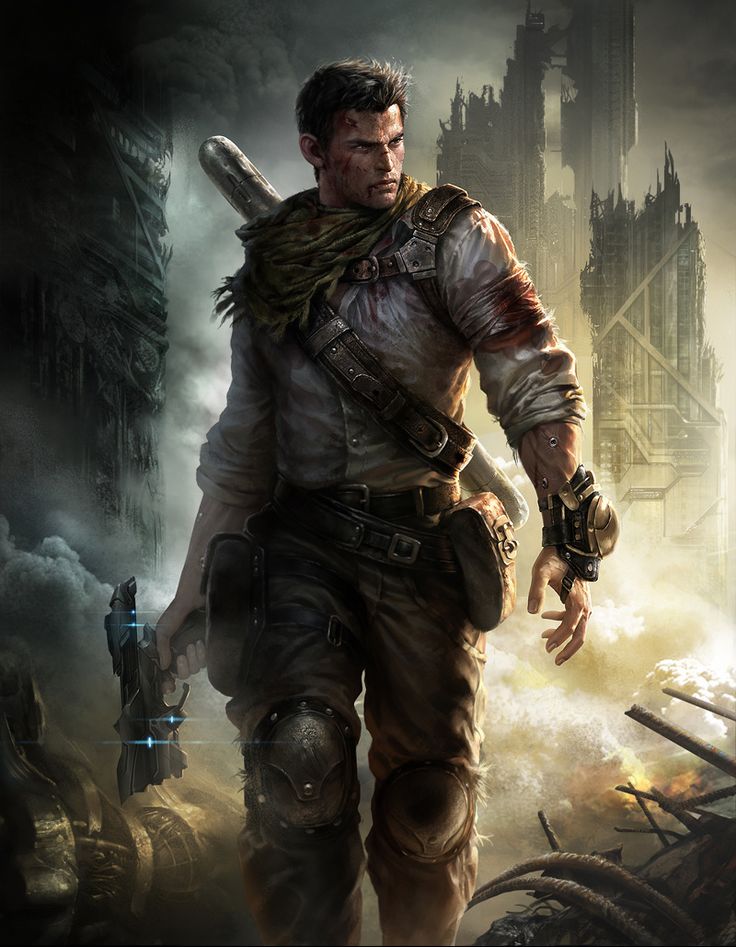
PC Spotlight — Zander Starlane, Aristocratic Assassin

When I showed the preview document to one of my Patrons, he found himself swarming with character ideas.  He created this one, Zander Starlane, and I offer it to you, dear reader, as a fun preview.

Zander grew up with Nova Sabine and believes in her cause.  However, visions of her death plagued her.  Desperate to prevent it, he found himself face to face with an ominous opponent to strong to defeat on his own.  Only through luck and the assistance of Asura Kain did he prevail.  But his visions didn’t stop, showing him a dangerous conspiracy that worked against the Alliance and his House.  Now, under the guise of a playboy, he works in the shadows to protect his House, and his Nova Sabine.

Attributes: ST 11 [10], DX 16* [100]; IQ 11 [20]; HT 11 [10]
Secondary Characteristics: Damage 1d-1/1d+1; BL 24 lbs; HP 11 [0]; Will 12 [5]; Per 13* [0]; FP 11 [0]; Basic Speed 7.00* [10]; Basic Move 7 [0].

Advantages: 
Acute Touch+1* [0]; Bloodline Purity 2* [0]; Craftiness +3 [15]; Cultural Familiarity (Galactic Federation) [0*]; Galactic Common (Native) [0*]; Honest Face [1]; Immunity (Golden Whin) [1]; Legal Immunity (Alliance Aristocrat) [2]; Luck [15]; Sabine Battle Trance (Combat Sense 1 [24]); Sabine Grace [16], Sabine Sensitivity [13], The Sabine Caress [1]; Status +1 [5], Title (Gentleman) [1]; Visions (Aspected (Death), Overwhelming) [5]; Wealth (Comfortable) [10]; Weapon Master (Force-Sword) [20].

Martial Arts Perks:
Style Familiarity (Graceful Form) [1]
Grip Master (Force Sword) [1]
Trademark move(The Counter step) [1]
Weapon Bond (Force Sword) [1]

Eugenic Perks:
20/20 hindsight (ESP) [1];
Bloodline Purity 2* [0]
Classic Appearance (Aristocratic) [1]
I feel them Watching Me (ESP) [1];
Sabine Bloodline [1];

Disadvantages:
Code of Honor (“Aristocrat”) [-10] ; Duty (House Sabine, Extremely Hazardous Duty, 9 or less) [-10]; Paranoia [-10]; Secret (“Sabine Assassin”) [-5]; Selfless [-5]; Sense of Duty (House Sabine) [-5]; Trademark (Northern Golden Whin) [-5]; Vow (“Nova Sabine may never know what I do for her”) [-5]

Quirks:
Dislikes (Empire) [-1]
Likes (Booze) [-1]
Lecherous when drunk [-1]
Debt (I owe House Kaine a favor) [-1]
Splatterpunk [-1]

Skills:
Acrobatics (H) DX [4]-16
Acting (A) IQ+4 [4] – 15*
Beam Weapons (Pistol) (E) DX [1]-16
Climbing (A) DX-1 [1]-15
Combat Sense (H) IQ-1 [2] – 10
Computer Operation (E) IQ [1]-11
Escape (H) DX-1 [2]-15;
Fast-Talk (A) IQ+1 [4] -12
Flying Leap (H) – IQ-1 [2] – 10
Force Sword (A) DX+2 [8] – 18
Gesture (E) IQ+1 [2] – 12
Holdout (A) IQ+4 [4] – 15*
Judo (H) DX [4]-16
Jumping (E) DX [1]-16
Karate (H) DX [4]-16
Navigation (Hyperspace) (A) IQ-1 [1]-10
Observation (A) Per-1 [1]– 12
Pilot (Starship) (A) DX-1 [1]-15
Poison (H) IQ  [4] – 11
Precognitive Defense (H) – IQ-1 [2] – 10
Savoir-Faire (High-Society) (E) IQ [1] – 11
Shadowing (A) IQ+3* [2] – 14
Stealth (A) DX+4* [4]-20
Vacc Suit (A) DX-1[1]-15

Techniques:
Acrobatic Stand (A) – Acrobatics-4 [2] – 12
Feint (Force Sword) (H) – Force Sword+2 [3] – 20
Timed Defense (Force Sword) (H) [2] – 11 (12 with Sabine Battle Trance)

Cadet Branch Starlane

His notes: They are less prestigious than the Sabine and only came into power after the corruption of the oracular order. Before the Empire took over they were performers, merchants and traders, finding new connections for the Sabine, while there was rumor behind the scenes that they also concerned themselves with smuggling, prostitution and *gasp* murder.

Patreon Preview: the Alliance

Not what I had in mind
but sure, why not?

Alright, I’ve been dribbling out Alliance details for awhile now, but now I’ve well and truly got it finished, and for those of you who aren’t patrons, it’s scheduled already through August (in what will prove to be a very hectic posting schedule!).  If you are a $3+ patron, though, you can have it now!  It clocks in at 45,000 words, plus a 15,000 word personnel file.  No wonder it took so damn long to write!

This explicitly includes aristocratic space knights, revised versions of the “dueling styles” (the destructive form, the graceful form and the swift form), and four new noble houses (the beautiful Sabine, the haughty Grimshaw, the tragic and lethal Elegans, and the gruff Kain).

If you’re a patron, you can check it out here!  If you’re not, as usual, I’d love to have you.

Support me on Patreon!

Alliance Militia Personnel

Militia Strategies

Militias focus almost exclusively on defense, and each militia has its own approach to defense (which makes coordinating between multiple militia somewhat difficult!). To simplify, consider three strategies below, each of which offers some optional traits that members of a militia following that strategy might have.

Hard

The militia uses trench warfare, embanked guns, minefields and planetary shields to create impenetrable zones of control that the enemy cannot bypass.

Optional traits:

  • Barricade Tactics [1]. Militia in cover apply an additional -1 to opponents attempting to shoot at them, giving opponents a -3 rather than -2.
  • Cool under Fire [1]. Militia ignore the -2 for pop-up attacks (this increases all “Fire from Cover” Tactics by +2!).
  • Enhanced Dodge (Dive for Cover) [5]. Militia have +1 to defend from explosions.

Mobile

The militia relies on mobility, vehicular supports and “defense in depth” to defeat the enemy. The create a flow, flexible defensive line that can absorb the enemy’s advance, and flow around the enemy lines for a counter attack.

Optional traits:

  • Move Under Cover [1]. Assume the NPCs always find cover, if any is remotely available, at the end of a move on foot.
  • Motorized Training [1]. Ignore penalties for firing from a moving vehicle if a passenger. Gain the following tactic:
    • Fire on the Move (+1 to base skill): While aboard a moving vehicle (-0) as a passanger, make an All-Out (+1) Sighted attack with your weapon, firing a single shot at your opponent. You may not defend (but your vehicle may).
  • Basic Move +1 [5].

Deceptive

The militia fights using asymmetrical tactics against a superior foe. They prefer to fade into the terrain, to break apart under attack and reform later, which makes them maddeningly difficult to defeat, though it does little to actually protect the land or infrastructure.

Optional traits:

  • Dead Eye [1]. The nameless NPC may aim for 4 turns for a maximum accuracy bonus of +3 (rather than +2). Gain the following tactic:
    • Careful Aim (+Accuracy+5 to base skill): After aiming for 4 turns, apply full accuracy +3 from weapon and make an All-Out (+1) Sighted attack with your weapon, firing a single shot at your opponent. You may not defend.
  • Sure-Footed (Terrain): Ignore up to -2 to attack penalties for a specific terrain, or -1 to defense penalties for a specific terrain.
  • Fit [5].


Alternate Militiamen

All militia listed below are designed with urban or plains environments in mind and represent “generic” militiamen. Most militia integrate more closely with their environment, including camouflage unique to the environments of their world. For alternate environments, consider adjusting the equipment as noted below.

Arctic or Mountain Militia

Replace standard uniform with a winter uniform or replace armor and uniform with arctic armor, which provides DR 45 (15 vs crushing) to the arms, legs and torso. Both typically wear goggles (Nictitating Membrane 10 and protected vision). For Mountain militia, add Climbing-12.

Desert Militia

Replace standard uniform with a summer uniform or replace armor and uniform with desert armor, which provides DR 30 (10 vs crushing) to the arms, legs and torso. Both typically wear goggles (Nictitating Membrane 10 and protected vision) and an airmask with filter. Airmasks, if worn, apply a -4 to all sighted attacks.

Forest Militia

Forest militia often wear nightvision goggles (4x magnification, night vision 9, nictitating membrane 10, protected vision), and a vibro-blade.They gain the following tactic:

  • Vibro Assault (16): Make an All-Out Attack (Determined) with your vibroblade. Opponent defends normally. On a hit, deal 2d+4 (5) cut to the torso.

Jungle or Swamp Militia

Replace standard uniform with a summer uniform or replace armor and uniform with expedition armor, which provides DR 15 (5 vs crushing) to the arms, legs and torso. Swamp militia often wear an airmask. Jungle militia often wear nightvision goggles (4x magnification, night vision 9, nictitating membrane 10, protected vision), an airmask and a vibro-blade. Airmasks, if worn, apply a -4 to all sighted attacks. They gain the following tactic:

  • Vibro Assault (16): Make an All-Out Attack (Determined) with your vibroblade. Opponent defends normally. On a hit, deal 2d+4 (5) cut to the torso.

Alternate Militia Weaponry

The Alliance has access to a far broader spectrum of equipment than the Empire does. They tend to draw most of their equipment from one of three sources:

  • Rook & Law: A centuries old industrial cooperative preferred by rural inhabitants for their reliability.
  • Startrodder: A corporation known for its military weaponry; it has a long tradition of arming the Federation and was one of the first corporations to side with the Alliance against the Empire.
  • Stellar Dynamics: A newer arms manufacturer with a focus on civilian markets, and with a sleek design aesthetic

The typical planetary militia uses Startrodder weaponry; rural or poor militia might favor Rook & Law, while sleek and well-funded militia might use Stellar Dynamics. In that case, replace the following weapons with:

Scattershot Blaster: GD 870 “Trench Blaster” Scattershot Blaster may be replaced with:

  • Rook & Law “Outlander” 683 Blaster Shotgun: Dmg 3d(2) burn, Acc 6, Range 400/1200, RoF 1×12, Bulk -4, Rcl 1 or Dmg 7d (3) burn, Acc 8, RoF 1, Rcl 2. May not fire hotshots;
  • Stellar Dynamics SB-87Suppressor” Scattershot Blaster: Dmg 2d+1(2) burn, Acc 6, Range 75/230, RoF 3×12, Bulk -4, Rcl 1 or Dmg 5d(3) burn, Acc 8, Range 75/230, RoF 3, Rcl 2.

Carbine: SC 760 Carbine may be replaced with:

  • Rook & Law Huntsman 844 Blaster Rifle: Dmg 6d+1(5) burn, Acc 8, Range 750/2100, ROF 1, Bulk -5, Rcl 2. May not fire hotshots.
  • Stellar Dynamics RB-5 Light Blaster Carbine: Dmg 4d+2(5) burn, Acc 8+1, Range 330/1000, RoF 10, Bulk -3, Rcl 2.

Rifle: SC 515 Blaster Rifle may be replaced with:

  • Rook & Law Huntsman 844 Blaster Rifle: Dmg 6d+1(5) burn, Acc 8, Range 750/2100, ROF 1, Bulk -5, Rcl 2. May not fire hotshots.
  • Stellar Dynamics RSB-1 Blaster Rifle: Dmg 6d(5) burn, Acc 8+3, Range 1100/3300, RoF 3, Bulk -5, Rcl 2.

Repeating Blaster: LRX-550 Repeating “Steam” Blaster may be replaced with:

  • Rook & Law Dragoon 870 Gatling Blaster: Dmg 7d (5) burn, Acc 12, Range 750/2200, ROF 16, Bulk -7, Rcl 2. May not fire hotshots

Alliance Militiaman

Militiamen make up the backbone of every planetary militia. While they train regularly, they serve primarily as reservists, keeping their arms and armor at home, and flying into battle at a moment’s notice. As a result, they tend to be less disciplined or devoted than a professional soldier, but that doesn’t mean they lack heart, fighting spirit or the ability to hold their ground.

Militiamen typically serve in all militia, regardless of preferred tactics or environment, but they do vary based on the typical environments of the world. The militiaman shown below is typical of militias that serve in plain, island or urban environments; for alternate militia, see Alternate Militiamen.

ST 11

HP 11

Speed 5.25

DX 10

Will 10

Move: 5 (4)

IQ 10

Per 10

HT 11

FP 11

SM -0

Dodge 8 (7)

Parry 9

DR: 80/50

Startrodder 760 Carbine (12): 5d(5) burn (Acc 8+1, Range 800/2400 RoF 3, Bulk -4)

Carbine Butt (12): 1d+1 cr

Grenade (12): 6dx5 cr exp inc

(Range 35 yards, +4 if you aim for the ground, 1 turn to ready, 2 seconds to blow)

Skills: Area Knowledge (Local)-10, Camouflage-12 (14), Hiking-12, Pilot (Contragravity)-12, Savoir-Faire (Soldier)-10, Soldier-10.

Traits: None

Notes: Human; Listed DR protects torso only; lower DR is vs crushing. Helmet provides skull with DR 60 and boots provide DR 40. Wears camouflage suitable for his homeworld, which provides +2 camouflage. Light Encumbrance.

Militiaman Tactics

Fire from Cover (11): Come out of cover and make a sighted, all-out (determined) pop-up (-2) attack against the enemy. Return to cover. You may not defend.

Focus Fire (21): While you have a weapon braced either on the ground or on cover, aim. If you have already aimed, make a sighted, all-out determined attack on your opponent’s torso. You may not defend, but because you are prone or behind cover, apply a -2 to any attempts to hit you.

Alliance Veteran

Typically, enthusiastic and idealistic volunteers make up the bulk of a militia, and militia tend not to train their soldiers to elite efficiency. However, the rigors of war can forge even the softest man into someone as hard at steel. Veterans have seen engagement after engagement, perhaps protecting a world in a hard-fought war, or perhaps after a long campaign serving beneath a nobleman. Either way, Veterans know and understand war well, making them far tougher to kill, far quicker, and able to rally men with their superior experience and leadership.

ST 12

HP 14

Speed 6

DX 12

Will 11/13

Move: 6 (5)

IQ 11

Per 10

HT 12

FP 12

SM -0

Dodge 10(9)

Parry 11

DR: 80/50

Startrodder 760 Carbine (15): 5d(5) burn (Acc 8+1, Range 800/2400 RoF 3, Bulk -4)

Carbine Butt (15): 1d+1 cr

Grenade (15): 6dx5 cr exp inc

(Range 35 yards, +4 if you aim for the ground, 1 turn to ready, 2 seconds to blow)

Skills: Area Knowledge (Local)-12, Camouflage-12 (14), Leadership-12, Pilot (Contragravity)-12, Savoir-Faire (Soldier)-12, Soldier-15

Traits: Combat Reflexes;

Notes: Human; Listed DR protects torso only; lower DR is vs crushing. Helmet provides skull with DR 60 and boots provide DR 40. Wears camouflage suitable for his homeworld, which provides +2 camouflage. Light Encumbrance.

Veteran Tactics

Fire from Cover (14): Come out of cover and make a sighted, all-out (determined) pop-up (-2) attack against the enemy. Return to cover. You may not defend.

Focus Fire (24): While you have a weapon braced either on the ground or on cover, aim. If you have already aimed, make a sighted, all-out determined attack on your opponent’s torso. You may not defend, but because you are prone or behind cover, apply a -2 to any attempts to hit you.

Rally (12): Every (mook) member of the ranger’s squad (up to 10 men) gain +1 to fright checks and may ignore disadvantages harmful to combat for the duration of combat, so long as the leader lives.

Strategem (12): If the tactician wins a contest of tactics with his opponents, he may grant one free reroll to his squad

Alliance Artillerist

Preferred Tactic: Hard

An artillerist operates the heavy firepower of the Alliance. While the Artillerist is most common in militias that use the “Hard” defense strategies of trench warfare, where he operates the heavy cannons and howitzers to blast his enemies to bits, most strategies find some use for a man who knows how to bring heavy firepower! The artillerist below is written from the perspective of man-portable firepower, but many make use of heavier guns.

ST 12

HP 12

Speed 5.25

DX 10

Will 10

Move: 5 (3)

IQ 10

Per 10

HT 11 (12)

FP 11

SM 0

Dodge 8 (6)

Parry 9

DR: 80/50

Startrodder LRX-550 Repeating “Steam” Blaster (12): 5d(5) burn, Acc 8, Range 600/1800, RoF 8 or 10d(5) burn, Acc 8, Range 600/1800, RoF 1; Bulk -4.

IML (12): 6dx10(10) cr inc + linked 8d cr ex [3d], Acc 3, Range 750/6000, RoF 1, Bulk -4

Skills: Artillery-12, Area Knowledge (Local)-10, Camouflage-12 (14), Gunner (Beams)-12, Pilot (Contragravity)-12, Savoir-Faire (Soldier)-12, Soldier-12.

Traits: None.

Notes: Human; Listed DR protects torso only; lower DR is vs crushing. Helmet provides skull with DR 60 and boots provide DR 40. Wears camouflage suitable for his homeworld, which provides +2 camouflage. Medium Encumbrance.

Artillerist Tactics

Suppression Fire (8): While firing from the hip, move up to 3 yards and make an unsighted All-Out Attack (Suppression fire) using RoF 8. Anyone under the suppression zone can be hit (to a maximum of 8 targets) and must make a Will or Will-based Soldier roll (Add Fearlessness as a bonus, +2 from Combat Reflexes, and characters with Unfazeable automatically succeed) to expose themselves to the suppression fire zone. Successful hits strike a random hit location. Gain +2 to Fast-Draw or to act first during a cascading wait. You may not defend.

Spread Fire (13): While you have a weapon braced either on the ground or on cover, make a sighted, all-out (Determined) attack, dividing your 8 ROF in up to two ROF 4 attacks against up to two targets. You may not defend, but because you are prone or behind cover, apply a -2 to any attempts to hit you.

Alliance Combat Engineer

Preferred Tactic: Hard

Combat Engineers dig trenches, set-up razor wire, and lay mine-fields. They also excel at Forced Entry and demolitions. They usually carry three to five charges, either 1.25 lb of HEX-6 (8dx4 cr ex) or a small plasma charge (6dx6 cr ex) as well as assorted engineering tools.

ST 11

HP 11

Speed 5.25

DX 10

Will 11

Move: 5 (3)

IQ 11

Per 11

HT 11

FP 11

SM 0

Dodge 8 (6)

Parry 9

DR: 80/50

Startrodder GD 870 Scattershot Blaster (12): Dmg 3d+2(2) burn, Acc 6, Range 350/1000, RoF 2×12, Bulk -4, Rcl -1 or Dmg 8d (3) burn, Acc 8, RoF 2, Rcl 2

Trench Tool (12): 1d+3 cr

Plasma Charge (12): 6dx6 cr exp inc (Must be planted and remotely triggered)

Skills: Area Knowledge (Local)-12, Camouflage-12(14), Engineering (Combat)-15, Explosives (Demolition)-15, Forced Entry-15, Pilot (Contragravity)-12, Savoir-Faire (Soldier)-10, Soldier-12, Traps-12.

Traits: None.

Notes: Human; Listed DR protects torso only; lower DR is vs crushing. Helmet provides skull with DR 60 and boots provide DR 40. Wears camouflage suitable for his homeworld, which provides +2 camouflage. Medium Encumbrance.

Pilot Tactics

Fire from Cover (13): Come out of cover and make a sighted, all-out (determined) (+1) pop-up (-2) attack against the enemy using ROF 12 (+2). Return to cover. You may not defend.

Focus Fire (28): While you have a weapon braced (+1 acc) either on the ground or on cover, aim (+6). If you have already aimed, make a sighted, all-out determined (+1) attack on your opponent’s torso using full ROF 24 (+4). You may not defend, but because you are prone or behind cover, apply a -2 to any attempts to hit you.

Alliance Pilot

Preferred Tactic: Mobile

The planetary defense forces of the Alliance often deploy their own vehicles, especially to provide air-support for the rest of their militia. Most militias will deploy some sort of vehicle, but those who focus on Mobile Defense use them to a far greater degree, and with greater effectiveness, than most other militias. The Alliance pilots generally work to protect their planet and aren’t well suited to surviving if they fight in space and suffer a catastrophic failure. Even so, they sometimes join greater alliance fleets and serve as back-up pilots for the elite of the Alliance Regulars.

ST 10

HP 10

Speed 5.5

DX 12

Will 11

Move: 5.5

IQ 11

Per 11

HT 10

FP 10

SM 0

Dodge 8

Parry 9

DR: 45/15

Stellar Dynamics PB-9 Blaster Pistol (12): Dmg 3d+1(5) burn, Acc 4, Range 370/1100, RoF 3, Bulk -2, Rcl 2.

Punch (12): Dmg 1d-3 cr

Skills: Artillery (Guided Missile)-12, Area Knowledge (Local)-12, Gunner (Beams)-12, Mechanic (Vehicle)-12, Pilot (Any)-12, Savoir-Faire (Soldier)-10, Soldier-10.

Traits: None

Notes: Human; Listed DR protects torso only; lower DR is vs crushing. Beneath flight suit vest, a coverall protects arms and legs with DR 5. Helmet provides skull with DR 60 and boots provide DR 40. Often wears an air-mask and has an emergency air supply that will last for 20 minutes. No Encumbrance.

Pilot Tactics

Fire from Cover (11): Come out of cover and make a sighted, all-out (determined) (+1) pop-up (-2) attack against the enemy. Return to cover. You may not defend.

Fire on the Move (10): Make a Move and Attack (-2) with full ROF (+0). Your target defends normally and any hits strike a random hit location. You may defend normally, but you may not drop.

Alliance Assault Strikers

Preferred Tactic: Mobile

Mobile tactics typically require strong, brave men willing to charge at the enemy, especially to get around their flanks or to drive them from cover. An Assault Striker imitates the core role of all Imperial Troopers in that they represent a form of shock trooper who pushes the fight to the enemy. The Alliance’s lighter armor and smaller weapons allow greater mobility at the cost of greater vulnerability and less staying power. They work best when combined with other soldiers who can support them. They also fulfill a scout role in militias that don’t also have rangers or commandos. Assault Strikers work best in terrain with plenty of cover for them to exploit or flank while still allowing relatively free movement, including forests, jungles and mountains.

ST 12

HP 12

Speed 6

DX 12

Will 10/12

Move: 7

IQ 10

Per 10

HT 12

FP 12

SM 0

Dodge 10

Parry 10

DR: 80/50

Startrodder LR 555-S Assault Blaster (15): Dmg 3d+2(5) burn, Acc 6, Range 400/1200, RoF 8, Bulk -2, Rcl 2, Cost $8500.

Grenade (12): 6dx5 cr exp inc

(Range 35 yards, +4 if you aim for the ground, 1 turn to ready, 2 seconds to blow)

Skills: Area Knowledge (Local)-12, Camouflage-12(14), Hiking-15, Observation-12, Pilot (Contragravity)-12, Running-15, Savoir-Faire (Soldier)-12, Soldier-12.

Traits: Combat Reflexes

Notes: Human; Listed DR protects torso only; lower DR is vs crushing. Helmet provides skull with DR 60 and boots provide DR 40. Wears camouflage suitable for his homeworld, which provides +2 camouflage. No Encumbrance.

Striker Tactics

Fire from Cover (15): Come out of cover and make a sighted, all-out (determined) pop-up (-2) at full ROF 8 (+1) attack against the enemy. Your target defends normally and any hits strike a random hit location. Return to cover. You may not defend.

Forward Assault (14): Make a Move and Attack (-2) with full RoF 8 (+1). Your target defends normally and any hits strike a random hit location. You may defend normally, but you may not drop.

Spotting (12): Make an observation roll against a target you can see and shout out some advice to a nearby ally. The observation roll acts as a complimentary roll for their attack (success provides +1, critical success provides +2, failure provides -1, etc). You may defend normally.

Alliance Ranger

Preferred Tactic: Deception

Some Alliance forces work more closely with their world’s terrain than others. Rangers often work as hunters or guides, who later join the local militia as scouts, turning their lethal skills against human prey. Rangers tend to work best with deceptive militias, as they can easily melt into rough terrain, spy on the enemy, and then harass then with sniper fire. They also often make use of traps, all of which require a Traps roll to set up (See DF 16 for more details!), including :

Covered Pit: Roll Per-based Traps vs Camouflage (12) or fall

Dead Fall: Roll Per-based Traps vs Camouflage (12) or have rocks/tree fall on you. Roll Dodge (-2 if no Danger Sense), +3 for Dive for Cover. Deals 10d cr damage.

Spring Snare: Roll Per-Based Traps vs Camouflage (12) or be trapped and “dangled” if you are ST 20 or less, until someone cuts the rope (DR 1, HP 2).

The Ranger listed below is generic, appropriate for “Urban” or “Plains” environments. They often adapt to their local environment; consider applying the alternate militia equipment for unusual terrain!

ST 10

HP 10

Speed 5.5

DX 10

Will 11

Move: 5.5

IQ 11

Per 12

HT 12

FP 12

SM 0

Dodge 8

Parry 9

DR: 45/15

Startrodder SC 515 Blaster Rifle (12): 6d(5) burn (Acc 8+2, Range 1000/3000 RoF 3, Bulk -6)

Vibro-Knife (12): 1d(5) imp or 2d (5) cut (Reach C)

Grenade (12): 6dx5 cr exp inc

(Range 35 yards, +4 if you aim for the ground, 1 turn to ready, 2 seconds to blow)

Skills: Area Knowledge (Local)-12, Camouflage-12(14), Climbing-12, Forward Observer-12, Hiking-12, Observation-12, Pilot (Contragravity)-12, Savoir-Faire (Soldier)-10, Soldier-10, Stealth-12, Survival-12, Swimming-12, Tracking-12, Traps-12.

Traits: Night Vision 2;

Notes: Human; Listed DR protects torso only; lower DR is vs crushing. Helmet provides skull with DR 60 and boots provide DR 40. Wears camouflage suitable for his homeworld, which provides +2 camouflage. No Encumbrance.

Ranger Tactics

Vanish (7): At the beginning of a fight, you may attempt to vanish and get the drop on his opponent. Roll Vanish (ignore modifiers for stealth at the beginning of a fight). Success means he may attack one opponent “from behind.” He may not do this at any other point in the fight.

Snipe (21): After a single aiming action, make an All-Out Attack (Determined). Successful hit strikes the torso. You may not defend.

Remove Sentry (16/11): If the target is unaware of your presence, make a telegraphic grapple for the head (16). You may defend normally. If your target is grappled, make an all-out (Determined) swing cutting attack with the blade on the target’s neck (11). Opponent dodges at -1 or parries at -2. If you hit, deal 2d(5) cut to the neck and double all damage that penetrates DR. You may not defend.

Spotting (12): Make an observation roll against a target you can see and shout out some advice to a nearby ally. The observation roll acts as a complimentary roll for their attack (success provides +1, critical success provides +2, failure provides -1, etc). You may defend normally.

Alliance Commando

Preferred Tactic: Deception

Commandos focus on infiltrating the enemy, often by making use of local civilian clothing or their exception stealth and camouflage mastery. Once close by, they can destroy communications, damage infrastructure, and ambush their disoriented targets. They tend to carry relatively light weapons better suited to attacking on the move (choose one of the Assault Blaster or the Scattershot blaster below). They usually carry charges, either 1.25 lb of HEX-6 (8dx4 cr ex) or a small plasma charge (6dx6 cr ex). Once they’ve blown their explosives, they’ll open fire from cover, and then retreat, usually under the cover of supporting snipers (such as Rangers).

The Commando below is a generic commando typical of an urban environment. Commandos certainly integrate with the local environment, and might carry alternate arms and armor appropriate to the sort of environment they find themselves fighting in. See Alternate Miltia for examples.

ST 10

HP 10

Speed 6

DX 12

Will 12/14

Move: 6

IQ 12

Per 12

HT 12

FP 12

SM 0

Dodge 10

Parry 11

DR: 45/15

Startrodder LR 555-S Assault Blaster (15): Dmg 3d+2(5) burn, Acc 6, Range 400/1200, RoF 8, Bulk -2, Rcl 2, Cost $8500.

Startrodder GD 870 Scattershot Blaster (15): Dmg 3d+2(2) burn, Acc 6, Range 350/1000, RoF 2×12, Bulk -4, Rcl -1 or Dmg 8d (3) burn, Acc 8, RoF 2, Rcl 2

Vibro-Knife (15): 1d(5) imp or 2d (5) cut (Reach C)

EMP Grenade (15): HT-8(5) 8 yard +2d cr ex

(Range 35 yards, +4 if you aim for the ground, 1 turn to ready, 2 seconds to blow)

Expendable Jammer (15): -10 to communications, 60-yard radius(Range 35 yards, +4 if you aim for the ground, 1 turn to ready, 2 seconds to blow)

Skills: Area Knowledge (Local)-15, Camouflage-15(17), Climbing-12, Explosives (Demolitions)-15, Forward Observer-12, Observation-15, Pilot (Contragravity)-15, Savoir-Faire (Soldier)-12, Soldier-15, Stealth-15, Survival-15, Swimming-12, Traps-15.

Traits: Combat Reflexes; Night Vision 2.

Notes: Human; Listed DR protects torso only; lower DR is vs crushing. Helmet provides skull with DR 60 and boots provide DR 40. Wears camouflage suitable for his homeworld, which provides +2 camouflage. No Encumbrance.

Commando Tactics

Vanish (10): At the beginning of a fight, you may attempt to vanish and get the drop on his opponent. Roll Vanish (ignore modifiers for stealth at the beginning of a fight). Success means he may attack one opponent “from behind.” He may not do this at any other point in the fight.

Fire from Cover (15 or 18): Come out of cover and make a sighted, all-out (determined) (+1) pop-up (-2) at full ROF 8 (+1) or 24 (+4) attack against the enemy. Your target defends normally and any hits strike a random hit location. Return to cover. You may not defend.

Remove Sentry (19/14): If the target is unaware of your presence, make a telegraphic grapple for the head (19). You may defend normally. If your target is grappled, make an all-out (Determined) swing cutting attack with the blade on the target’s neck (14). Opponent dodges at -1 or parries at -2. If you hit, deal 2d(5) cut to the neck and double all damage that penetrates DR. You may not defend.

Spotting (15): Make an observation roll against a target you can see and shout out some advice to a nearby ally. The observation roll acts as a complimentary roll for their attack (success provides +1, critical success provides +2, failure provides -1, etc). You may defend normally.

Alliance Militia Materiel

The Alliance military is defined by a strategy of distributed defense. Where the empire manages the defense of all member worlds, the Alliance expects their military forces to manage their own defense, and where they cannot, the alliance calls upon aristocrats to ride to the rescue of member worlds with their highly mobile fleets. Thus, we might expect that each world has unique armaments informed by the nature of their worlds. To keep things simple, I’d rather focus on some basic core strategies likely common to all worlds, and then expand it out a bit to emphasize the unique nature of each world.

The commonalities of strategy mainly come in that distributed defense. The Alliance offers very little money to its worlds for defense, expecting them to defend themselves and, of course, quietly enforcing a dependence on the nobility who can come in to “rescue them.” This means that most militia soldiers are less professional soldiers and more reservists with a modicum of training combined with enthusiasts who like to practice on their own. It also means that their gear tends to be cheap, and usually what they already had on hand. The result might be less disciplined than a typical BAD -2 army, but it’s close enough to BAD -2 for my purposes.

The uniqueness of each militia likely comes in the nature of the worlds they have, and the sorts of strategies they might employ. We might expect a different soldier-type per terrain:

  • Desert militia have to worry about shifting sands, heat and a lack of water
  • Arctic militia need to worry about the cold
  • Mountain need to deal with rugged and uneven terrain
  • Jungle and Forest militia need to navigate overgrown regions and make good use of cover
  • Swamp and Island militia need to deal with wet and harsh terrain
  • Plains and urban areas likely have “typical” soldiers.

The primary differences here aren’t as likely to be approach as it might be equipment. Desert soldiers face different needs than arctic soldiers, and thus will need different equipment.

Each world might have its own strategy, its own unique approach to combat. This likely won’t manifest in the form the common soldier takes, as we can assume that a common militiaman is useful in any strategy. Instead, the strategies we deploy will manifest in the most well-trained of soldiers who supplement the standard troopers. Given that the purpose of a militia is defensive, we’ll focus on three broadly defensive strategies:

  • Hard: the militia has specific points it must defend. It focuses on extreme fortifications, and it puts its men in trenches to do or die when the Empire comes.
  • Mobile: the militia is willing to sacrifice any particular point, and remains constantly mobile. If it has fortifications, these spread out across the terrain, creating a series of hard-points that an invader must overcome to reach a point of interest or, better, to simply make up any ground. Mobile forces excel at vehicular use, and often slip in behind enemy lines, and likes to engage in aggressive counter-attacks.
  • Deceptive: The militia blurs the line between a civilian and military force. Each soldier is as independent as possible, and can disperse into the terrain. They prefer scorched earth tactics, ambushes, traps and assassinations. They resemble nothing so much as a highly militarized insurgency, allowing the Empire to conquer their world, and then giving them hell.

Thus, we might need:

  • Typical Militiamen, who come in 5 flavors (one for each broad terrain type).
  • Heavy militiamen, who use machine guns and missile launchers to support militia squads
  • Veteran survivors who have been through many a campaign.
  • (Hardened) Artillerists who specialize in using embanked guns
  • (Hardened) Combat Engineers, who specialize in building and repairing fortifications
  • (Mobile) Pilots and drivers who man swift vehicles and can mount a counter attack
  • (Mobile) Scouts who specialize in observation and quick hit-and-run tactics, delaying the enemy until their allies are in position.
  • (Deceptive) Rangers who know the terrain especially well and can vanish into it
  • (Deceptive) Commandos, elite rangers who know how to sabotage Imperial technology.

For equipment, we’ll need:

  • A cheap, reliable and standardized carbine.
  • A common weapon people on the planet might use for non-military purposes, such as a rifle.
  • A reliable sniper rifle
  • A portable automatic blaster to support advancing soldiers and to lay down cover fire.
  • A missile launcher to defeat heavy imperial vehicles
  • A large weapon that the Militia can use to entrench and fortify their position, primarily for defeating vehicles that the militia cannot take out on their own.
  • Entrenchment gear, including mines and tools
  • Melee weapons for commandos, rangers and those who fight in jungles or forests.

For Vehicles we need

  • Boats or hovercraft for rapid sea transportation (island/swamp)
  • Walkers for rough terrain (Mountains, forests, jungles)
  • Some means of transporting heavy guns or troops
  • Quick, rapid-response vehicles patterned after vehicles most people know well (such as a jeep)

Armor

Camouflage

All militia soldiers may have camouflaged armor at the GM’s discretion. Since militia know their world well, they can afford to use “low tech” camouflage systems that work best for the specific terrains of their world.

Any armor or uniform below may be camouflaged for $300, which provides +2 camouflage for appropriate terrain, -1 for inappropriate terrain, and -2 for contrasting terrain.

Militia Tactical Vest

The cheapest way to armor someone is a simple tactical vest. It covers only the chest, but that covers all vitals; it won’t stop your opponents from dropping you, but it’ll prevent them from killing you. On top of this, we need helmets to protect the militia man’s skull (in principle, we also need a faceplate to protect the face, but good luck talking militia men into wearing cumbersome faceguards!). Finally, we need boots and clothing to go underneath the vest: the typical combat uniform of the militia.

The obvious design for the armor is 45 DR of battleweave on the chest with “tactical inserts” that provide 35 DR from nanocomposite laminate. The resulting vest is 5 lbs and costs $2500 and the inserts weigh 6 lbs and cost $1500. It comes with no accessories.

Desert Armor

The simplest “desert armor” would be basic summer clothing (thin, flowing robes, or simple thin “pajama” pants, loose shirt and hat, etc) with a tactical vest. A “summer uniform” weighs 1 lb and, if responsive, costs $200.

If we want a true “desert armor,” then we can use DR 30 battleweave coverall (torso, arms and legs) with a Desert Environment Suit option and Climate Control (-40 to 120) with a c-cell for 5 days of energy. The result is 14 lbs and $6500. This requires some kind of face mask to work: the most basic costs $50 and weighs 0.5 lbs. The armor is a bit on the light side, but that keeps the weight down, as fighters don’t want to overexhaust themselves in heavy armor!

Arctic Armor

The simplest “arctic armor” would be basic winter clothing (thick jackets and pants, warm face-coverings, etc) with a tactical vest. A “winter uniform” weighs 4 lbs and, if responsive, costs $600. True arctic clothing weights a staggering 15 lbs, which pushes our fighters up to 32 lbs of just clothing and armor. They’re better off with the armor below!

If we want a true “winter armor,” then we can use DR 45 battleweave coverall (torso, arms and legs) with Climate Control (-100 to 90) with a c-cell for 5 days of energy. The result is 18 lbs and $8000. The DR is higher here to reflect the fact that characters are less likely to overheat with heavier armor, and the climate control reflects a “heated armor.”

Expedition armor

If the militia primarily fights in swampy locations or in the jungle, they face regular exposure to toxins and diseases, as well as intense humidity and often heat. Covering all of these might require a very light (DR 15) full suit that is sealed and climate controlled (5 days on a C-cell and -50 to 120 degrees). This prevents anything from getting into the armor (even if the soldier doesn’t wear a helmet, it certainly reduces the amount of bug stings he can take, or how much can leech into his system from simply walking in toxic mud). The result is DR 15, covers all hit locations but the face and skull, weighs 7 lbs and costs $3000. This armor also features trauma plate carriers, and some soldiers integrate the tactical vest plate carriers (which cover only the chest!), giving them a DR of 40 on the torso and brings their weight up to 13 lbs, if weight is not a major concern.

Armor Accessories

Quite a few armors above require an airmask, including arctic and desert armor, and useful with expedition armor if the environment is toxic or full of allergens. These cost $150 and weigh 0.5 lbs, and filter air.

Basic goggles that protect the wearers eyes provide Protected Vision and Nictitating Membrane 10; these cost $60 and have negligible weight.

Nightvision goggles, which jungle or forest fighters might use, provide the same benefits of basic goggles (Nictitating Membrane 10 and Protected Vision), and additionally 4x magnification and Night Vision 9, cost $1000 and weight 0.5 lbs.

A helmet that provides 60 DR, made of nanocomposite laminate, and weighs 3 lbs and costs $300. It has no additional features.

A uniform is responsive (“one size fits all!”) status 0 clothing, so 2 lbs and $400.

Weapons

Vibro-Blade

The last time I looked at the Alliance, I gave them vibro-bayonets, but in retrospect, that doesn’t work out so well. First, bayonets are a somewhat brutal weapon and, second, they’re not very practical. However, for jungle or forest soldiers, having access to a blade that can be used to cut through undergrowth is very useful! A typical “machete” type blade is a falchion, and inflicts sw+1d+2 (5) cut, weighs 3 lbs and costs $4000.

Startrodder SC 767 Blaster Carbine

GURB was so kind as to give me a bunch of weapons, as well as some corporations behind those weapons, and I found myself particularly enchanted by the Startrodder corporation as both a kooky, old-sounding name, and as a supplier for cheap-but-reliable weapons. So, for our Alliance AK-47 blaster carbine, I’ve chosen them.

What I want for a blaster carbine is effectively what we already see in GURPS Ultra-tech (that is, 5d), but with the “reliability” of an AK-47. We could simply make it more reliable (which costs more), or make it “rugged,” which increases weight by 20% and doubles the cost, but I’m going to increase the weight by 1.5x, and call that “enough.” The 767 carbine is remarkably robust for its price-tag! The result is: Startrodder LR 740: Dmg 5d(5), burn, Acc 8+1, Range 400/1200, Wt 7/C, RoF 3, Shots 45(3), ST 6, Bulk -4, Rcl 2, Cost $9500, Verify

Rook & Law 73 “Huntsman” Blaster Rifle

Many militia men might use a standard “military” weapon, many others might use a common weapon, like a hunting rifle. This might be especially common on planets rife with hunters and a strong blaster-owning tradition, and it makes for excellent snipers, though it should be noted that what makes for a good hunting rifle doesn’t always make for a good combat rifle.

Rook & Law Huntsman 73: Dmg 6d (5) burn, Acc 8, Range 750/2100, Wt 9.5/C, ROF 1, Shots 25(3), ST , Bulk -5, Rcl 2, Cost $8,000. May not fire hotshots.

Startrodder SC 515 Blaster Rifle

I must admit that I’m in love with the design of the DC-15A blaster rifle, from the Clone Wars: this long rifle resembles a kentucky rifle in length, and I love the weird angles that the rifle places is ammunition (tibana cannisters). If I wanted to make a similar rifle, the result is effectively just a standard blaster rifle. The weapon needs to be about 10 lbs, and it’s “more powerful than” a carbine, meaning it should do about 6d damage. It also isn’t a repeater, but nor is it slow, giving it an ROF of 3. Given its described length, it should have a bulk of -6, which is worse than what Ultra-Tech or the Beam Weapon design system gives us, but we can also argue for a 10% decrease in weight, as the longer barrel makes the weapon more effective for the same power ratio.

The result is: Startrodder SC 515: Dmg 6d(5), burn, Acc 8+2, Range 1000/3000, Wt 10/2C, RoF 3, Shots 50(3), ST 7, Bulk -6, Rcl 2, Cost $18,000, Verify

Startrodder LR 550 “Steam” Blaster

Part of Erik’s work on Psi-Wars blasters also spawned a discussion of coolant. While I’m not really interested in actually tracking individual shots, it adds a lot of character, and it turns out not to take up much weight or cost. Imagine a “machine gun” that when it’s finished blasting, opens and vents a burst of steam for a couple of seconds with an impressive hiss. It gives the weapon a cool, steampunk feel and a sense of something older, while making a certain amount of sense. We can even give it a rule, stating that the “stoppage” critical failure effect, instead of being an electrical or mechanical failure for a blaster, is an “overheating” effect, and you can automatically get rid of it by venting the light repeater.

Similar to the Startrodder 888, the Steam Blaster has a d-cell backback and 1 lb of ultra-tech coolant, which is included with the d-cell. This allows it to fire up to 250 shots without overheating, after which it needs a minute to recover. It can also fire for 10d (5) burn with ROF 1 by using up 8 shots.

Startrodder 550 Light Repeating “Steam” Blaster: Dmg 5d (5) burn, Acc 8, Range 600/1800, Wt 10.5/Dp, ROF 8, Shots 250(5), ST 6, Bulk -4, Rcl 2, Cost $32,000.

Rook & Law 74 Gatling Blaster

Gatling Blaster: Dmg 7d (5) burn, Acc 12, Range 750/2200, Wt 20/Dp, ROF 16, Shots 160(5), ST 11M, Bulk -7, Rcl 2, Cost $80,000.

Alliance Militia

The Alliance believes strongly in independent sovereignty, and a key component of that sovereignty is independent military power, a feature of the Federation violated only once, a violation that caused the rise of the Empire. Each member world has the right to its own defensive force, called a Militia. In fact, the Senate sees a militia not as a right but as a duty, and typically sanctions worlds that leave their defense to the rest of the Alliance. One reason the Alliance has survived as long as it has is because a blaster lurks behind every blade of grass.

Because the Alliance tasks each world with its own defense, they naturally tailor their forces to the unique needs of their world and culture. They equip them with locally produced arms, they armor them with gear best suited to their local terrains, and they use strategies best suited to their own needs. Broadly, these can be broken into three categories:

  • Hard: Hard militias practice trench warfare and make extensive use of static fortifications. These militias tend to operate on worlds that have extremely vital locations, like key industrial facilities, major capitals, or domed cities. They place these key points under planetary shields, to protect from orbital bombardment and to force the enemy to attack on foot, and then ring them with extensive fortifications, mine-fields, trenches and embanked cannons, daring the Empire to come at them.
  • Mobile: Mobile militias practice defense in depth and rapid reaction forces. They have no specific locations that they value above another, and can scatter defensive installations and supply points all across the planet. They have heavily mechanized forces that can move quickly, allowing them to man local installations and fight off an imperial attack, and then retreat when the fight turns too hot, to another set of installations, forcing the invader to stretch his lines and to be in too many places at once, at which point the mobile force gathers itself and makes a counter attack at the weakened line.
  • Deceptive: Deceptive militias have no single point on their planet worth protecting and often have terrain that precludes the design of extensive defensive infrastructure. Instead, when attacked, their militias melt into the terrain, which itself can act as a defense, or into the population. In both cases, they harass the invaders, sabotaging his efforts, sniping his officers, and reporting the results back to the Empire. They defend their world by making it too costly to hold, and tend to blur the line between military action and insurgency.

Many militias blend and combine the strategies above, creating their own unique defense force. This makes coordination across the Alliance tricky, with each planet used to fighting in its own way. Even so, some worlds produce more effective militias than others, and some focus on working well with the others. When the Alliance as a whole needs to go on the offensive, the Senate might appoint a High Marshal to govern the military effort, and he might call upon local militias to support him.

The Alliance Senate has no direct control over these forces, though naturally they have a great deal of indirect control. When the Alliance wages war, it appoints a central authority (always an aristocrat) to oversee the coordination of all forces involved and issues a call to arms of its constituents. These nobles usually just call together their own forces, but they sometimes draw upon militias. In such case, whatever ships the militia has links up with the rest of the fleet, and cavernous troop transports land to bring those forces aboard.

Militia Agendas

The key, central role of a Militia is the defense of its world. The typical militia man acts in reserve. He works at a normal job day by day and resides with his family, but keeps arms at home and shows up for regular training, and receives a meager supplement to his salary from the planetary government. Militias typically lack money (The Senate offers little money to poor worlds for their own self-defense, and actively pushes wealthy worlds to keep their militias limited, to encourage dependence on aristocratic Regulars), and so must find ways to keep their defenses strong on a shoe-string budget, though they might find some backer (such as petitioning a major corporation for assistance), or try to subordinating their world to a noble for access to additional budget. Should a call to arms go out, they might go off world, usually on the transport of a noble whose titles and domains are associated with their particular world.

  • For a world rather far from the War against the Empire, low budgets paired with increasingly strict training regimens has dissuaded most youths from joining the local militia. The planet looks for some way to boost it: perhaps a nobleman can swing by for a whirlwind patriotic tour, or perhaps they can arrange for their militia to participate in some off-world battle (ideally one certain of victory) to lend their faltering militia a bit of glory to inspire the locals.
  • When you arm a bunch of common men scattered across a planet, a few of them are bound to get some weird ideas. After the Alliance Senate passed an unpopular ordinance, some of the more remote militia men have decided to protest the law by barricading themselves up and unilaterally declaring the law illegal. The soldiers need to be gently talked down, or the law altered to see to their demands. Or, of course, the planetary government can crack down on them, but given the popularity of the militia and the unpopularity of the law (as well as the planetary government’s relative inability to do anything about a senate law), that might create a dangerous reaction that might threaten to rip the world from the grasp of the Alliance…
  • The Empire? Here? This remote world hasn’t seen action in years and has grown complacent. Can the people be rallied in time to fend off the attack? The planetary militia needs to alert the Alliance to their peril, whip their soldiers into shape and mount as rapid a defense as they can while they hold out for reinforcement!

Alliance Militia as Opposition.

Militia informality usually means they lack consistent security protocols. They often leave garages unlocked, or openly talk about their plans in bars, or fail to bar their bases to friends they just met, etc. On the other hand, their informality means that they rarely keep detailed records, they tend to keep weapons at home and might even keep their combat vehicles locked up in their garage at home. They tend to be deeply connected to the populace, who usually see what they do as a patriotic duty. Thus, most populations have few people willing to betray the local militia, and their decentralized nature means that it’s hard to sabotage their weapons or vehicles, or to kill too many of them at a time with a bomb. They’re often BAD -0 to BAD -2 when it comes to security.

Serving in a Militia

Military Ranks

Rank

Militia

6

Brigadier

5

Commander

4

Captain

3

Lieutenant

2

Sergeant

1

Corporal

0

Private

Militia men never exceed rank 6, as they remain a planetary force, always subordinate to higher forces in major, interstellar operations. They tend to follow conventional military ranks, with basic soldiers as privates, with a squad (~10 men) headed by a corporal or sergeant, with a platoon (~50 men) led by a lieutenant, a company (~250 men) led by a captain, regiments (~1000 men) led by commander, and the planetary armies lead by Brigadiers, who answer, ultimately, to the planetary government. However, militia are one of the few places where non-noble military men can gain high (rank 4+) positions, which means that militia often have surprisingly talented leadership!

Favors of the Alliance Milia

Entry Clearance (Pulling Rank p 13): Militia tend to have armories and training grounds that one can access.

Consultation and Specialists (Pulling Rank p 15): the Alliance Military can offer Contacts with skills like Administration, Intelligence Analysis, Leadership, Strategy and Tactics, representing military attaches or military advisors. They’re usually between Skill 15 and 18.

Gear (Pulling Rank 16): Militia men usually need to provide their own gear, though a planetary government might provide some standard equipment. What equipment is available changes from world to world!

Treatment (Pulling Rank 17): All forms of the Alliance Military care about their soldiers, so provide hospital facilities for its wounded veterans.

Muscle (Pulling Rank 19): If a fellow soldier needs some unofficial support, troops can temporarily set aside their weapons to help. Militia tend to excel at this, often being strong, burly men even on their off hours. The result is 5-10 BAD 2 to 5 characters without major military hardware (Typically just their fists or some clubs, neurolash batons, etc).

The Cavalry (Pulling Rank 19): When the Alliance gets serious, it sends in the hard hitters. It will send a full platoon of troopers (BAD 2), between 10-15 elite troopers (BAD 5) or 5-10 fighters for a space-based request.

Character Considerations

Requirements: Characters serving in a Militia must have a minimum of Wealth (Struggling) [-5], Military Rank 0 [0], and Duty (9 or less or 12 or less, Extremely Hazardous) [-10 to -15].

A militia as a patron is worth 20 points, and -20 points as an enemy.

Alliance Constabulary: Personnel

Just as criminal players dealing with the Empire will need mooks to fight, so too will criminal players facing down the criminal justice of the Alliance.  But, again, we find that the Alliance has wildly varying law enforcement.  This results in a highly customizable set of mooks that require a little bit of work from you, dear reader, to put them into action.  Once again, we have three different broad sorts of law enforcement, and we also have three different sets of equipment (the most common being Rook & Law and Stellar Dynamics).  You’ll have to put the pieces together, just like you have to with insurgents, but I do have a “standard example” available for each entry.

Let me know what you think of the approach, and enjoy!

Alliance Constabulary: Personnel

Law Enforcement Types

Constabularies have their own set of laws and concerns that they focus on, which means each world has its own sort of police resources available. The various personnel below break down along law enforcement types, which act as suggestions, ways in which you might customize your force. Additionally, consider the following optional traits below.

Common Law

Common Law constabularies worry more about how the people see them. They tend to pursue justice for the sake of justice, and as a result, they quickly earn the trust of the people. As they see themselves as servants of the people, they tend to go for a lethal option last.

Optional traits:

Fastest Gun in the West [1]. Common Law constables tend to want to draw their weapon only at the last minute, to keep from escalating the situation. If the Common Law constable has this perk, also give them Fast-Draw at DX.

Good with Locals [1]: The Common Law constable understands his people. When dealing with the people of his world, he gains Sensitive: an IQ-3 roll to sense intent, and +1 to Detect Lies and Psychology.

Reputation (Good Cop) +1 [5]: Years of service have convinced the local populace to trust the constabulary. This grants a +1 to reaction rolls, but also a +1 to any rolls to talk someone into backing down or surrendering peacefully.

Diplomatic Law

Diplomatic constables worry first and foremost how their superiors, or the rest of the Alliance, will see their law enforcement. As a result, they tend to be deeply concerned with appearances and with non-lethal law enforcement, as the last thing they want to do is kill an off-world suspect!

Optional traits:

Looks Good in Uniform [1]: The constabulary cares a great deal about how their uniforms look, and how their constables look in those uniforms. Treat all constables in uniform as at least Attractive.

Handcuffing +2 [2]: The constabulary wants to subdue their opponents as quickly as possible. The constable gains the following tactic:

Instant Cuff (BAD): If the constable has grappled the target or parried a barehanded attack, they may roll Instant Cuff vs the better of the target’s DX or best grappling skill. Success means one limb has been cuffed. This counts as an attack; you may defend normally. See MA page 73 for additional details.

Law Enforcement Powers (Alliance) [10]: Replace the Law Enforcement Powers (Constable) with (Alliance), which grants the constabulary interstellar jurisdiction, allowing them to bypass the usual hassles that face most constables.

Procedural Law

Procedural constables focus first and foremost on maintaining the law. They know it inside and out, and follow it well. They also have careful procedures about how to go about arresting suspects, how they fight, and how they fill out paperwork. Thus, while the procedural constabulary might seem like a heartless machine, it is at least an efficient one.

Optional traits:

Battle Drills [1]: the constabulary has practiced teamwork until they have it down to a science. Constabularies with this optional trait can never accidentally hit one another with fire, they ignore penalties for firing through hexes occupied by other similarly trained constables, and they gain +2 to notice something another would notice.

Standard Operating Procedure (Paperwork Perfection) [1]: The constabulary always does its paperwork, and it uses airtight wording. Whenever some bureaucratic element of the arrest is described in ambiguous terms, the GM always errs on the side of the procedural constabulary.

Fit [5].

Constabulary Equipment

The Alliance has access to a far broader spectrum of equipment than the Empire does. They tend to draw most of their equipment from one of three sources:

Rook & Law: A centuries old industrial cooperative preferred by rural inhabitants for their reliability.

Startrodder: A corporation known for its military weaponry; it has a long tradition of arming the Federation and was one of the first corporations to side with the Alliance against the Empire.

Stellar Dynamics: A newer arms manufacturer with a focus on civilian markets, and with a sleek design aesthetic

The typical urban constabulary uses Stellar Dynamics weaponry; rural or poor urban constabularies might favor Rook & Law, while highly militarized constabularies might prefer Startrodder. In that case, replace the following weapons with:

Pistol: PB-9 Blaster Pistol may be replaced with:

Rook & Law Walker 049 Blaster Pistol: Dmg 5d(5) burn, Acc 4, Range 250/750, RoF 1, Bulk -2, Rcl 2. May not fire hotshots.

Startrodder PC 440 Blaster Pistol: Dmg 4d+2(5) burn, Acc 4+1, Range 400/1200, RoF 3, Bulk -2, Rcl 2. Malf 16. May not fire hotshots.

Scattershot Blaster: B-87 “Suppressor may be replaced with:

Rook & Law Outlander 683 Blaster Shotgun: Dmg 3d(2) burn, Acc 6, Range 400/1200, RoF 1×12, Bulk -4, Rcl -1 or Dmg 7d (3) burn, Acc 8, RoF 1, Rcl 2. May not fire hotshots;

Startrodder PC 870 Trench Blaster” Scattershot Blaster: Dmg 3d+2(2) burn, Acc 6, Range 350/1000, RoF 2×12, Bulk -4, Rcl -1. or Dmg 8d (3) burn, Acc 8, RoF 2, Rcl 2 Malf 16. May not fire hotshots;

Rifle: RSB-1 Blaster Rifle may be replaced with:

Rook & Law Huntsman 844 Blaster Rifle: Dmg 6d+1(5) burn, Acc 8, Range 750/2100, ROF 1, Bulk -5, Rcl 2. May not fire hotshots.

Startrodder SC 515 Blaster Rifle: Dmg 6d(5), burn, Acc 8+2, Range 1000/3000, RoF 3, Bulk -6, Rcl 2, Verify Malf.

Constable

A standard constable is the face of law enforcement in the city. They typically travel in grav-cars or grave-bikes, or even stroll about on foot. They perform most average arrests, issue most citations and respond first to crises. They represent the most common foe that criminals face in the Alliance.

ST 11

HP 11

Speed 5.25

DX 10

Will 10

Move: 5

IQ 10

Per 10


HT 11

FP 11

SM +0

Dodge 8

Parry 8

DR: 45/15


PB-9 Blaster Pistol (12): 3d+1 (5) burn (Acc 4, Range 370/1100 RoF 3, Rcl 2, Bulk -2)

Skills: Area Knowledge (Neighborhood)-12, Criminology-12, Law (Police)-10, Pilot (Contragravity)-12, Savoir-Faire (Police)-12, Search-12, Streetwise-10.

Traits: Legal Enforcement Powers (Constable) [5].

Notes: Human; Armor covers torso only; lower DR applies to crushing attacks. Carries communication device with 100-yard range, light source with 25 yard range, and a pair of electronic cuffs. No Encumbrance.

Constable Tactics

Cover Suspect (17): After aiming, announce that you have your target in his sights and demand that he give up. Make a Wait (Will fire if targets makes an Attack). If wait triggers, make a double-handed (Braced; +1 accuracy), sighted all-out attack (Determined) for your opponents’ torso. You may defend before your wait triggers, but not after.

Fire from Cover (11): When in cover, move from cover and make a pop-up (-2) all-out determined (+1) sighted shot using a double-handed grip. If you hit roll a random hit location if you hit. Return to cover. You may not defend.

Fire on the Move (11): While holding the pistol in two hands (reduce bulk by 1), make a Move and Attack. Move up to your full movement and attack, using full RoF 3. Successful hits strike a random hit location and deal deal 3d(5) burn. You may dodge, but you may not retreat or drop.

Takedown (16): Make an All-Out Attack (Slam). Move full movement +1 (6) and roll 16 or less to hit. Inflict 1d+1 cr damage and your opponent must roll DX or go prone. You may not defend. (On subsequent turns, most Constables will grapple (12) and then attempt to pin (quick contest of 13 vs ST).

Negotiator

Typical Law Enforcement Type: Diplomatic Law

Negotiators never carry weapons, because their role is entirely diplomatic, and if they carried weapons, it might threaten those they negotiate with. They talk suspects down, they negotiate with terrorists, they represent law enforcement on distant worlds as they argue for the extradition of criminals. Negotiators are no fools, of course: they tend to be backed up by generic constables or the superior hand-to-hand capability of Peace Officers.

ST 11

HP 11

Speed 6

DX 12

Will 10

Move: 6

IQ 10

Per 10


HT 11

FP 11

SM +0

Dodge 10

Parry 11

DR: 45/15


Trained Strike (12): 1d+1 cr (C, Parry 9)

Trained Kick (12): 1d+2 cr (C, 1, Parry 7,

Skills: Body-Language-15, Diplomacy-15, Criminology-15, Law (Police)-15, Pilot (Contragravity)-12, Psychology-15, Savoir-Faire (High Society)-15, Savoir-Faire (Police)-15, Search-12.

Traits: Legal Enforcement Powers (Constable) [5].

Notes: Human; Armor covers torso only; lower DR applies to crushing attacks. Carries communication device with 100-yard range, light source with 25 yard range, and a pair of electronic cuffs. No Encumbrance.

Negotiator Tactics

Control Suspect (16): After parrying a barehanded attack or after grappling, make an Arm Lock attempt (15). If successful, your opponent’s arm is trapped. You defend attempts to break free with a skill of 15, and you may roll a quick contest of Arm Lock (15) vs the higher or your opponent’s ST or HT, inflicting damage equal to the margin of success.

Draw Fire (15): Hurl some insults or make some pointed comments to a single target, and roll Psychology in a quick contest with the target’s will. Success makes the Inspector the focus of the NPC’s fire.

Talk Down (10): Discourage the suspect with pointed comments about his future if he continues hostilities! Roll Psychology (-5 after combat has begun) against the target’s Will (provided he is neither Unfazeable nor Indomitable). Success means the target becomes defensive (All-Out Defense), while success by 5 or more causes the target to flee or surrender peacefully.


Peace Officer

Typical Law Enforcement Type: Diplomatic law

In some circumstances, the constabulary cannot carry or use weapons. Instead, for whatever reason, they must use non-lethal means to arrest their targets. Constabularies typically deploy Peace Officers as discrete guards for VIPs, as a form of subtle riot control, or to arrest politically difficult targets.

ST 11

HP 11

Speed 6

DX 12

Will 10

Move: 6

IQ 10

Per 10


HT 11

FP 11

SM +0

Dodge 10

Parry 11

DR: 45/15


Neurostun Baton (15): 1d+1 cr linked HT-10(5) Neurolash effect (Seizure).

Trained Strike (15): 1d+1 cr (C, Parry 9)

Trained Kick (15): 1d+2 cr (C, 1, Parry 7,

Skills: Area Knowledge (Neighborhood)-12, Body-Language-12, Criminology-12, Fast-Draw (Shortsword)-12, Law (Police)-12, Pilot (Contragravity)-12, Savoir-Faire (High Society)-12, Savoir-Faire (Police)-12, Search-12.

Traits: Legal Enforcement Powers (Constable), Combat Reflexes.

Notes: Human; Armor covers torso only; lower DR applies to crushing attacks. Carries communication device with 100-yard range, light source with 25 yard range, and a pair of electronic cuffs. No Encumbrance.

Peace Officer Tactics

Control Suspect (16): After parrying a barehanded attack or after grappling, make an Arm Lock attempt (15). If successful, your opponent’s arm is trapped. You defend attempts to break free with a skill of 15, and you may roll a quick contest of Arm Lock (15) vs the higher or your opponent’s ST or HT, inflicting damage equal to the margin of success.

Precise Takedown (15): Make a Move-and-Attack (Slam). Move full movement (6) and roll 15 or less to hit. Inflict 1d+1 cr damage and your opponent must roll DX or go prone. You may defend, but you may not retreat. (On subsequent turns, most Constables will grapple (12) and then attempt to pin (quick contest of 13 vs ST).

Neurostun Discipline (15): Make a shortsword attack to the torso with your baton. Your opponent defends normally. If you hit, inflict 1d+1 cr damage and HT-10(5) seizure neurolash affliction. You may defend normally.

Inspector

Typical Law Enforcement Type: Procedural Law

Inspectors represent elite law enforcement with high levels of forensics skills and a focus on “fighting smart.” They might represent a local constabulary detective, or a senatorial inspector. Either way, they tend to ask a lot of questions and tend not to pick fights, and often have 2-5 constables with them, just in case someone decides to get violent.

ST 10

HP 10

Speed 5.25

DX 10

Will 12/14

Move: 5

IQ 12

Per 12


HT 10

FP 10

SM +0

Dodge 8

Parry 8

DR: 40/13


PB-9 Blaster Pistol (12): 3d+1 (5) burn (Acc 4, Range 370/1100 RoF 3, Rcl 2, Bulk -2)

Skills: Criminology-15, Diplomacy-12, Fast-Draw-12, Observation-15, Pilot (Contragravity)-12, Psychology-15, Savoir-Faire (Police)-15, Search-15

Traits: Legal Enforcement Powers (Constable)

Notes: Human; Armor covers torso only; lower DR applies to crushing attacks. Carries communication device with 100-yard range, light source with 25 yard range, and a pair of electronic cuffs. No Encumbrance.

Inspector Tactics

Cover Suspect (17): After aiming, announce that you have your target in his sights and demand that he give up. Make a Wait (Will fire if targets makes an Attack). If wait triggers, make a double-handed (Braced; +1 accuracy), sighted all-out attack (Determined) for your opponents’ torso. You may defend before your wait triggers, but not after.

Fire from Cover (11): When in cover, move from cover and make a pop-up (-2) all-out determined (+1) sighted shot using a double-handed grip. If you hit roll a random hit location if you hit. Return to cover. You may not defend.

Fire on the Move (11): While holding the pistol in two hands (reduce bulk by 1), make a Move and Attack. Move up to your full movement and attack, using full RoF 3. Successful hits strike a random hit location and deal deal 3d(5) burn. You may dodge, but you may not retreat or drop.

Spotting (15): Spend the turn watching target opponent and make an Observation roll, then shout out advice to an ally constable. This acts as a Complimentary roll (Success grants +1 to the ally’s attack roll, critical success adds +2, and so on, if the target can hear him and adjusts his shot based on the result).

Draw Fire (15): Hurl some insults or make some pointed comments to a single target, and roll Psychology in a quick contest with the target’s will. Success makes the Inspector the focus of the NPC’s fire.

Sharpshooter

Typical Law Enforcement Type: Procedural Law

Elite constables become sharpshooters. They tend to back up their fellow constables either at a distance, with their rifle, or up close, with their superior gunmanship. They sometimes act as a sort of “elite strike force,” the first in and the last out. In that case, they might wield the Stellar Dynamics RB-5 blaster carbine, but the Alliance tends to shy away from paramilitary weapons.

ST 11

HP 11

Speed 6

DX 12

Will 10/12

Move: 6

IQ 10

Per 10


HT 11

FP 11

SM +0

Dodge 10

Parry 11

DR: 40/13


PB-9 Blaster Pistol (15): 3d+1 (5) burn (Acc 4, Range 370/1100 RoF 3, Rcl 2, Bulk -2)

RSB1 Blaster Rifle (15): Dmg 6d(5) burn, Acc 8+3, Range 1100/3300, RoF 3, Bulk -5, Rcl 2

Skills: Area Knowledge (Local)-12, Criminology-12, Forced Entry-15, Gesture-15, Savoir-Faire (Police)-12, Stealth-15

Traits: Combat Reflexes, Legal Enforcement Powers (Constable).

Notes: Human; Armor covers torso only; lower DR applies to crushing attacks. Carries communication device with 100-yard range, light source with 25 yard range, and a pair of electronic cuffs. No Encumbrance.

Sharpshooter Tactics

Cover Suspect (Rifle) (26): After three successive aiming actions, make a wait action (will fire if target attacks anyone), which if triggered results in a braced, sighted All-Out Attack (Aimed). Successful hit strikes the torso and deals 6d+1(5) burn. You may not defend.

Fire from Cover (14): When in cover, move from cover and make a pop-up (-2) all-out determined (+1) sighted shot using a single-handed grip. If you hit roll a random hit location if you hit. Return to cover. You may not defend.

Fire on the Move (13): While holding the pistol in one hand, make a Move and Attack. Move up to your full movement and attack, using full RoF 1. Successful hits strike a random hit location and deal deal 5d(5) burn. You may dodge, but you may not retreat or drop.

Takedown (16): Make an All-Out Attack (Slam). Move full movement +1 (6) and roll 16 or less to hit. Inflict 1d+1 cr damage and your opponent must roll DX or go prone. You may not defend. (On subsequent turns, most Constables will grapple (12) and then attempt to pin (quick contest of 13 vs ST).

Gunslinger

Typical Law Enforcement Type: Common Law

When the situation gets dicey and could go either way, a good Gunslinger can help the situation. They can draw their weapons “at the last second,” which means the constabulary doesn’t have to escalate the situation with drawn weapons, but at the same time, if the suspect does get aggressive, the gunslinger can draw and fire immediately, if necessary.

ST 11

HP 11

Speed 6.25

DX 12

Will 10/12

Move: 6

IQ 10

Per 10


HT 11

FP 11

SM +0

Dodge 10

Parry 11

DR: 40/13


PB-9 Blaster Pistol (15): 3d+1 (5) burn (Acc 4, Range 370/1100 RoF 3, Rcl 2, Bulk -2)

Skills: Area Knowledge (Local)-12, Criminology-12, Fast-Draw (Pistol)-15, Gesture-15, Pilot (Contragravity)-12, Savoir-Faire (Police)-12, Stealth-12

Traits: Combat Reflexes, Legal Enforcement Powers (Constable).

Notes: Human; Armor covers torso only; lower DR applies to crushing attacks. Carries communication device with 100-yard range, light source with 25 yard range, and a pair of electronic cuffs. No Encumbrance.

Gunslinger Tactics

Cover Suspect (20): After aiming, announce that you have your target in his sights and demand that he give up. Make a Wait (Will fire if targets makes an Attack). If wait triggers, make a double-handed (Braced; +1 accuracy), sighted all-out attack (Determined) for your opponents’ torso. You may defend before your wait triggers, but not after.

Instant Shot (16/15): Wait (“If my opponent moves to attack, I’ll draw my weapon and attack first”). If your wait triggers, roll Fast Draw (+1 for Hip-shot) (16). If you succeed, you may immediately attack (15). A successful hit strikes the torso. You may defend normally.

Fire from Cover (14): When in cover, move from cover and make a pop-up (-2) all-out determined (+1) sighted shot using a single-handed grip. If you hit roll a random hit location if you hit. Return to cover. You may not defend.

Fire on the Move (13): While holding the pistol in one hand, make a Move and Attack. Move up to your full movement and attack, using full RoF 1. Successful hits strike a random hit location and deal deal 5d(5) burn. You may dodge, but you may not retreat or drop.

Strong Arm

Typical Law Enforcement Type: Common Law

Constables need to take their targets alive, and Strong arms excel at that. Big, strong and tough, strong Arms tend to act as superior prison guards, elite backup for typical constables, or as someone you bring when you want to make sure a particularly slippery target won’t get away.

ST 15

HP 15

Speed 5.5

DX 10

Will 10/12

Move: 6

IQ 10

Per 10


HT 12

FP 11

SM +0

Dodge 8

Parry 10

DR: 40/13


B-87 “Suppressor (12): 5d(3) burn (Acc 8, Range 75/230, RoF 3, Rcl 2, bulk -4) or 2d+1(2), ROF 3×12, Rcl 1).

Neurolash Baton (15): 1d+1 cr linked HT-10(5) Neurolash effect (Seizure).

Skills: Area Knowledge (Neighborhood)-12, Criminology-12, Intimidation-15, Law (Police)-10, Pilot (Contragravity)-12, Savoir-Faire (Police)-12, Search-12, Streetwise-10.

Traits: Fearlessness +2, Legal Enforcement Powers (Constable).

Notes: Human; Armor covers torso only; lower DR applies to crushing attacks. Carries communication device with 100-yard range, light source with 25 yard range, and a pair of electronic cuffs. No Encumbrance.

Strong Arm Tactics

Cover Suspect (21): After aiming, announce that you have your target in his sights and demand that he give up. Make a Wait (Will fire if targets makes an Attack). If wait triggers, make a double-handed (Braced; +1 accuracy), sighted all-out attack (Determined) for your opponents’ torso with ROF 1×12 (+2). You may defend before your wait triggers, but not after.

Fire on the Move (13): Move full movement and hipfire scattershot blaster, using full RoF 3×12 (+5). Successful hits strike a random hit location and deal deal 2d+1(2) burn. You may dodge, but you may not retreat or drop.

Takedown (16): Make an All-Out Attack (Slam). Move full movement +1 (6) and roll 16 or less to hit. Your opponent defends at -2! Inflict 1d+2 cr damage and your opponent must roll DX or go prone. You may not defend. (On subsequent turns, most Constables will grapple (15) and then attempt to pin (quick contest of 17 vs ST).

Neurolash Discipline (15): Make a shortsword attack to the torso with your baton. Your opponent defends normally. If you hit, inflict 2d+1 cr damage and HT-10(5) seizure neurolash affliction. You may defend normally.

Talk Down (14): Discourage the suspect with pointed comments about his future if he continues hostilities! Roll Intimidation (-5 after combat has begun) with a bonus equal to your weapon’s bulk against the target’s Will (provided he is neither Unfazeable nor Indomitable). Success means the target becomes defensive (All-Out Defense), while success by 5 or more causes the target to flee or surrender peacefully.

Alliance Constabulary: Materiel

Our space cops need guns.  While the Empire has a single supplier, the Alliance has many varied suppliers and needs, which means that what sorts of arms and armor our constables might have vary depending on their intent and on where they get their weapons from.

A huge variety of guns resulted from my working on this post, not all of which are listed below, but I want to thank GURB once again for providing much needed variety for my weapons.

This design process went through quite a few steps, so you’ll see me revisit again tomorrow when I look at Personnel, but that’s because Materiel articles are design journals, while personnel documents actually make it into the final work.

Alliance Constabulary: Materiel

The Alliance Constabularies, naturally, vary from world to world, but they tend to remain consistent in that their mission statement focuses first and foremost on the gathering of evidence to convince others of the legality of their case. Enforcing the law itself comes second to this, and so they lack the military-style hardware that defines Imperial Security. Instead, the constables of the Alliance arm themselves for self defense or for light combat against civilian criminals. If they face an entrenched, militarized threat, they call in the local militia or they call upon the aristocracy, who have the means of dealing with such foes.

As usual, we expect each sort of world to have their own arms and armor, but we can still create a few examples from which GMs can draw inspiration. In general, the weapons of the alliance constabulary must be either weapons they always carry for their own defense, such as pistols, weapons that give them a distinct edge over similarly armed criminals, such as shotguns or rifles vs pistols, and finally, some non-lethal way of taking down their opponent.

Beyond the approaches that constables might take, as noted in the Alliance Constabulary organization, we can further divide our constabulary into two broad categories: rural and urban. Rural constables resemble the lawmen of the wild west, while urban constables resemble modern police, both for immediate player understanding; this implies two sets of weapons “for flavor,” that largely perform the same role, but function slightly differently. This results in two “suppliers,” Rook & Law, which represents an older, more powerful and relatively reliable weapons with a “Cowboy” vibe: few shots and slow rates of fire, but favor one-shot kills. Stellar Dynamics, on the other hand, represents much more modern equipment, the blaster equivalent of what one might expect to find in a modern SWAT team, appropriate for “urban” law enforcement.

For equipment, we’ll need:

A variety of pistols for every need

A variety of shotguns, for dealing with things like doors or groups of criminals

Sniper rifles

Battleweave vests.

For Vehicles, we likely need the same sort of vehicles that the Empire had, but with less military hardware attached. This makes me want to revisit imperial security’s vehicles, but we’ll do that at a later time, and thus skip it here. But, as notes:

A prison transport van

A patrol grav-car

A patrol grav-bike

Armor

Constabular Tactical Vest

We can simply use the same tactical vest that militia use, just without inserts. That gives us 40 DR of battleweave on the chest. The resulting vest is 4.5 lbs and costs $2000. It comes with no accessories. If we give constables a responsive uniform (“one size fits all!”), this is status 0 clothing, so 2 lbs and $500. Complete constable kit, then, weighs about 7 lbs and costs about $2500.

Weapons

Neurolash Weapons, revisited

So far, I’ve left Neurolash weapons as agony only, but that seems to fit the Empire better than the gentler Alliance (plus, imagine the scandal if your cops tasered a noble heir with agony batons). Thus, I propose one new type of Neurolash weapon, with some additional rules:

Neurolash weapons are HT-10 (5) (increase the HT penalty by all neurolash weapons by 5). Failure inflicts an irritation, while failure by 5 or more inflicts the noted incapacitating condition for a number of minutes equal to (the margin of failure-5).

Agony: HT-10(5). If the target fails, they lose 1 fatigue and suffer Severe Pain (-4) for the next (HT-20) seconds. If the target fails by 5 or more, or if the loss of fatigue from the above effect would case them to go beneath 0 fatigue, they suffer Agony for a number of minutes equal to their margin of failure-5. On a critical failure, the target suffers a heart attack condition.

Seizure: HT-10(5). If the target fails, they take 2 points of fatigue damage (and -2 from shock); If the target fails by 5 or more, or if the loss of two fatigue from the above effect would cause them to go beneath 0 fatigue, they suffer Seizure for a number of minutes equal to their margin of failure-5.

Characters may target the face, vitals (in this case, nerve clusters on the torso) or the groin for an additional -5 to this roll (That is, apply the stun modifiers to the neurolash field rules). Attacks to limbs cause searing pain in the limbs: If the character suffers Severe pain in a limb as a result of an attack, he must roll Will (at a penalty equal to the pain he’s feeling) not to drop what he was holding in that limb, or to sink to kneeling if his leg was struck. Characters suffering Agony automatically fall to the ground and drop what they’re holding.

Pistols

Most constables will carry a standard issue blaster pistol, something not particularly special or remarkable, similar to the ubiquitous Glock 22. For that, I choose GURB’s Stellar Dynamics PB-9. Some police officers would prefer something a little heavier and a little more traditional. For that, I have the Rook & Law “Walker” 049 heavy blaster pistol.

Stellar Dynamics PB-9 Blaster Pistol: Dmg 3d+1(5) burn, Acc 4, Range 370/1100, Wt 2.2/C, RoF 3, Shots 135(3), ST 7, Bulk -2, Rcl 2, Cost $3400.

Rook & Law Walker 049 Blaster Pistol: Dmg 5d(5) burn, Acc 4, Range 250/750, Wt 3.7/C, RoF 1, Shots 50(3), ST 6, Bulk -2, Rcl 2, Cost $3200. May not fire hotshots.

Scattershot Blasters

A Scattershot blaster offers superior firepower in a cheap, light package that’s comparable to that of a pistol. In the real world, police use shotguns because they have multiple modes of fire that prove useful, and for a modest boost to firepower. The constabulary will use them for the same (though they only have two forms of fire, of course).

A typical urban policeman might use a “standard” police shotgun. Once again, we go to Stellar Dynamics:

Stellar Dynamics SB-87Suppressor” Scattershot Blaster: Dmg 5d(3) burn, Acc 8, Range 75/230, Wt 6.3/C, RoF 3, Shots 86(3), ST 7, Bulk -4, Rcl 2, Cost $10,700.

or 2d+1(2) burn, Acc 6, RoF 3×12, Rcl 1.

For more traditional, rural lawmen, we have Rook & Law again:

Rook & Law “Outlander” 683 Scattershot Blaster: Dmg 7d (3) burn, Acc 8, Range 400/1200, Wt 8/C, RoF 1, Shots 21(3), ST 6, Bulk -4, Rcl 2, Cost $7500. May not fire hotshots;

or Dmg 3d(2) burn, Acc 6, Range 400/1200, RoF 1×12, Rcl -1.

Rifles

The point of a police sniper rifle is to cover a suspect, or provide superior fire support for another constable on the ground. This is, effectively, as powerful a weapon the Alliance is comfortable with arming their constabulary with. Their weapons need to be highly accurate, to hit precisely what they mean to, and nothing else. Once again, we have two options:

Stellar Dynamics RSB1 Blaster Rifle: Dmg 6d(5) burn, Acc 8+3, Range 1100/3300, Wt 11/C, RoF 3, Shots 25(3), ST 7, Bulk -5, Rcl 2, Cost $21,000.

Rook & Law Huntsman 844 Blaster Rifle: Dmg 6d+1(5) burn, Acc 8, Range 750/2100, Wt 8.5/C, ROF 1, Shots 25(3), ST 7, Bulk -5, Rcl 2, Cost $8,000. May not fire hotshots.

Alliance Constabulary

The Alliance expects each planet to govern itself, which means it expects each planet to have its own laws and to enforce them.  That seems simple enough, until one crashes headlong into the fact that alliance members regularly intermingle and each has their own law.  What happens when a nobleman and members of an independent corporation run afoul of the law on their planet?  How do the locals handle that arrest?  How do they handle people who have fled justice on their world and have tried to find sanctuary on some other world?

Where the Empire allows its law enforcement to be judge, jury and executioner, the Alliance most definitely does not. It demands rule of law, not just out of sheer righteousness, but also out of the necessity of so many different legal systems rubbing elbows with one another.  If you’re going to accuse a nobleman of breaking the law, you must present evidence to the House that governs him if you want to see justice done!

The result of this is a wild variety of law enforcement systems and approaches to the law meant to deal with the veritable chaos of the Alliance legal system.  I offer a few ideas below.

The Alliance Constabulary

The Alliance does not have an explicit interstellar law enforcement agency. If the Senate suspects non-compliance or treachery from one of their own, they’ll send an inspector whose job it is to investigate, and that alone. He can report his findings back to the Senate, and he has the authority to arrest people on the behalf of the Senate, but he lacks the authority to deploy serious firepower on his own.

Instead, the Alliance typically relies on local law enforcement to protect the peace on its worlds, typically called a Constabulary. More than that, it allows each world to decide how law enforcement is handled on their own world. Each world is independently sovereign, after all, and thus may have its own laws (which typically vary from CR 2 to CR 4), and their own form of enforcement. However, the Alliance does demand certain considerations. The Alliance demands rule of law, that each sovereign member be allowed to be sovereign, and that one can only be judged by one’s peers. This means that houses worry about the law enforcement of houses, that planetary governments worry about the law enforcement of their citizens, etc. One can arrest someone belonging to another Alliance member, but doing so involves navigating treacherous waters and demands very tight evidence. Thus, most law enforcement in the Alliance has high requirements for proof of guilt, and focuses intently on collecting evidence to prove guilt.

Each Alliance member has their own form of law enforcement, but in practice, when discussing law enforcement in the Alliance, we discuss the law enforcement found on planetary governments, as organizations typically deal with them with internal audits and then punitive dismissals, while Houses have an entirely different form of justice and honor. When we discuss arrest, trials, prison and so on, our focus is on how planets within the Alliance handle these things.

Each world has its own form of justice and its primary concerns, and each planet’s code of justice is pulled between various poles, such as the need for actual justice or the control of the populace, as well as to fulfill their requirements to the Alliance, or their handling of criminal violators from other Alliance members in their local jurisdiction. Broadly, these can be broken down into a few categories:

Common Law: Common Law enforcement concerns itself less with law and more with justice. Their judiciary tends to use Trial by Judge, where the judge has considerable leeway to decide what needs to be done for himself and tends to be guided more by precedent and popular opinion than by strict reading of the legal code. Meanwhile, their constabularies tend to be deeply tied to the local populace; they tend to react to problems to neighborhoods and individuals and usually look first for impromptu solutions to crises and disputes before bringing the full force of the law. These tend to be the most common law enforcement systems on low CR worlds, Republics, or worlds far from the Senate with low populations and low law-enforcement budgets.

Procedural Law: Procedural laws focus on an extremely strict reading of the law as written. If a law turns out to be unjust, then it must still be enacted, but the populace should take this as a sign that they need to revisit the law! The law tends to be written to be carefully kept in accordance with the Alliance Concord. The judiciary tends to use Adversarial trials, but might use Trial By Judge. They take the need for evidence, the proper reading of rights and paperwork very seriously, which means that if they need to justify their actions before the senate, they can easily do so. These tend to be common law enforcement systems on high CR worlds, Corporate worlds, or worlds with enormous populations where you need a strict system to keep all of your constabulary in line.

Diplomatic Law: While the Alliance demands that all of its members must adhere equally to the rule of law, in practice, the law is more equal for some than for others. Diplomatic law enforcement tends to concern itself more with the practicalities of law enforcement, which means it must acknowledge the desires of the powerful elites in their midst more than they must acknowledge the demands of some abstract justice or true equality under the law. Their judiciaries tend to use Adversarial trials, but the trial itself is a technicality that rarely happens (and if it does, they’re usually sensational). Instead, the decision tends to be made by negotiation behind closed doors as both sides come to an agreement about matters of guilt and punishment. The Constabulary itself focuses on non-lethal means of defusing a crisis, and tends to be more concerned with the politics of an arrest than the procedure or the justice of it. As a result, while some law enforcement actions might be very questionable, they rarely get questioned by the Alliance, because such law enforcement inevitably subordinates itself to the will of the Alliance itself, rather than to the will of the people. These tend to be most common in Feudal or Monarchical worlds, where the will of the ruling class matters more than anything else, or on worlds that by their very nature, must integrate very carefully with Alliance will, such as trade worlds.

Constabulary Agendas

The Constabulary seek, first and foremost, to enforce the rule of law. They must walk within the lines laid out for them by the Senate and their alliance membership. This isn’t a particularly onerous burden, but it creates a culture that seeks high standards of proof, and demands honor from law enforcement. One corrupt cop might not cause a great issue, but a culture of corruption threatens to call a Senatorial inspector to see what’s going on with the local law enforcement, and if he can bring evidence of widespread corruption, this might result in sanctions or, worse, expulsion from the Alliance.

At the same time, Constabularies answer to local authorities, enforce local laws, and deal with local culture. As such, each planet has its own distinct flavor of law enforcement, with its own considerations. Fundamentally, law enforcement agencies in the Alliance seek to enforce local law and ensure local stability.

This can create conflicts with other Alliance members, especially in complex situations that involve numerous members in a single location, or when a criminal flees his world and takes shelter in another. As each member answers to their own laws, when a member violates the laws of another, careful diplomacy typically follows. The most common recourse is either to signal the problem to another member or expel the offender from the world before he causes too much of a problem. In cases where an offender has gone off world, the planetary government must attempt to persuade the allied member to extradite the criminal, or send in an agent (typically a marshal) to extract the offender. In all cases, high level constables must carefully engage in polite diplomacy and have a mountain of evidence to show to others, should they find themselves dragged before the Senate to explain why they’re going beyond their jurisdiction.

Because of the complexities of dealing with multiple members, the Right of Defense, and the strict requirements of evidence, the Alliance frowns on policemen who shoot first and ask questions later. The role of law enforcement in the Alliance is to investigate, report and arrest. While they certainly arm themselves and can fight when their lives or the lives of others are on the line, when it comes to real, large scale violence (such as invading a gangster den, or dealing with a hostage crisis), the Senate expects law enforcement to involve their local militia or, better, the aristocracy and their knights and regulars!

A serial killer stalks a downtrodden neighborhood in a bustling starport. The constabulary has uncovered evidence pointing to a recently arrived nobleman who has predatory predilictions and has evidently chosen to exercise them on the local poor. The noble’s House and his rivals both have a strong presence in the starport. Thus, the constabulary must investigate quietly, and they must gather enough evidence to bring it up to the noble’s house, or convince the government to expel the noble. Moreover, the constabulary must carefully ensure that this noble did the deed, and not that his enemies have planted evidence simply to discredit him. Finally, once he has this proof, he must present it before the noble’s house and persuade them to allow him to extradite him.

The local planet has their own way of doing things, which includes turning a blind eye to the actions of a powerful band of criminals and pirates who often engage in awful things, such as slavery. The local government tolerates this because the alternative would be a full blown war against the pirate nest, a war they honestly fear they would lose. However, after the kidnapping of a lady of a minor house, the Senate has caught wind of the piracy and has assigned an Inspector to investigate claims that they’ve corrupted the local government. The constabulary need to decide how they want to handle cooperation with the inspector: revealing their complicity may result in the sanctioning of their world, but it might also mean they can draw enough attention to the pirates to bring down the Houses and their military might to bear against the problem.

An interstellar corporation has a mining operation on the planet, and they work their laborers to the bone. They move within the law, especially their own law, and they have powerful allies in the Senate that prevent scrutiny. However, after safety disaster after safety disaster, or the disappearance of labor reformers on a planet, some of the locals have had enough, and have begun to attack corporate representatives. Local law enforcement must move to put down these riots and restore control, while local authorities, equally incensed corporate abuse, wants the corporation investigated.  The constabulary needs to carefully balance all interests and ensure justice is done (and sufficiently well documented that it can justify its actions to the Senate).

A notorious criminal has escaped prison, stolen a freighter and fled off-world. The local constabulary must uncover the whereabouts of the criminal, and then find a way to retrieve him. They might attempt negotiation, to see if they can persuade the allied member to extradite the criminal, but failing that, they’ll need to handpick a marshal who is diplomatic enough to extract the criminal without causing an interstellar incident!

The Alliance Constabulary as Opposition

Local Alliance law enforcement tends to have decent security protocols, though they often rely on informal, rather than deeply technical, means of keeping their own safe. Thus, they tend to be BAD -2.

Common Law constabularies tend to have very modest offices, and might even have small, local offices that double as modest armories and small jails, enough for temporary holding of a few suspects for questioning, at least. They rarely have surveillance or complex locks. As such, they tend to rely on less formal means of security: a local sheriff might keep particularly sensitive documents at their home, or in some isolated location known only to them. Likewise, they’ll often disseminate information in informal discussions among themselves, which means one can rarely tap remote channels or hack into their systems for their files (which might be scattered on disorganized data pads, if they exist at all!). Typically, the best approach to uncovering vital information is to infiltrate the group, have a good understanding of the members, or find some way to eaves drop. While security is easy to break into (typically BAD -0), there’s often few rewards for those who succeed.

Diplomatic Law: Diplomatic constabularies pride themselves on discretion. They make embarrassing files quietly disappear, and they often negotiate the sensitive details of a case between one another. The only time files or documents get created is when they are strictly necessary, and when they do, the constabulary creates those documents to tell the story they (or their superiors) want them to tell. As a result, even if one gains illicit access to a diplomatic constabulary, they often cannot trust what they find. Accessing a diplomatic constabulary is often harder than it first seems. A focus on secrecy often means the diplomatic constabulary offices serve as a front, with real action taking place elsewhere (a local, discrete restaurant or in a secret facility), and some diplomatic constabulary offices even have “secret” passages, or simply hard-to-navigate corridors. Security, thus, tends to be light (BAD -0, usually), but navigating the labyrinthine traditions of the constabulary tends to be far more difficult!

Diplomatic constabularies, with their carefully massaged truths, tend to be uniquely well-suited to dealing with psions. Consider giving them a BAD -0 for apparent security, BAD -2 to -5 for their “secret” security and PSI-BAD of -2.

Procedural Law: Procedural constabularies record everything. Every warrant, arrest, budgetary concern, interrogation and prisoner transfer has proper paperwork filed on a system maintained somewhere on the constabulary premise. They also have extensive surveillance of their own offices: they monitor every visitor, every interrogation and, if possible, every arrest. All of this is evidence, both to keep local constables honest, and to convince the rest of the Alliance that their procedures are just! They lock all doors and have careful procedures about who may or may not access their armories, prisons, garages, etc. The excellent security protocols mean that a Procedural constabulary is at least BAD -2 when it comes to security, and often BAD -5 if well-financed. The downfall of a procedural constabulary is that one may “hack” the procedures using forged credentials or forged holocam footage, as superiors are more likely to rely on their security procedures rather than their instincts or personal knowledge. This also creates an enormous “weak point” vulnerability, as someone who has broken into a local constabulary has access to a wealth of files, credentials, weapons and secrets!

Serving in a Constabulary

Law Enforcement Ranks
Rank
Militia
6
Commissioner
5
Deputy Commissioner
4
Marshal, Sheriff, Chief Constable
3
Deputy, Chief Inspector
2
Sergeant, Inspector
1
Senior Constable, Senior Watchman
0
Constable, Watchman

The Constabulary serve only local planetary governments, so never exceed rank 6. A commissioner and his deputies govern an entire planet’s constabulary. Beneath them, the names vary, but typically, a Marshal is an agent that is familiar with off-world travel, and can be sent to provisionally to represent the planetary government in off-world investigations. Sheriffs and Chief Constables tend to remain local, and run municipal investigations. Some worlds have only Sheriffs and Chief Constables with no overarching structure beyond the laws passed by the government and the oversight provided by Senatorial inspectors! “Deputies” directly answer to their superiors and represent them in the field. Their titles always associate with their superior’s title (“Deputy Chief Constable” or “Deputy Sheriff” or “Deputy Marshal”) but most people simply call them “Deputy” for ease. An inspector (distinct from a Senatorial Inspector) is a detective, who might answer to a Chief Inspector, if enough exist on a force. Finally, all the actual policing on the ground is done by constables, who answer to senior constables, who answer to sergeants.

All Allied Law Enforcement characters have Legal Enforcement Powers (Constable) [5], which grants them local jurisdiction, the right to carry arms, to make arrests and to search with a warrant. Marshals may have Legal Enforcement Powers (Marshal) [10] which allows interstellar jurisdiction, but only in regards to crimes committed on their own worlds. They have the full backing of the government of their world, should the matter come before the Senate.

Favors of the Alliance Military

Entry Clearance (Pulling Rank p 13): A member of a Constabulary can petition for access to a local prison, or to precinct houses, or to armouries, etc.

Warrant (Pulling Rank p 14): The Alliance holds the rule of law to be sacred. Thus, any arrest or search must come with a warrant!

Consultation and Specialists (Pulling Rank p 15): Alliance Constabularies have experts in Area Knowledge (Local), Current Affairs (Local), Criminology, Forensics and Streetwise and, in some cases, even in Tracking!

Files and Record Searches (Pulling Rank p 15): All Constabularies must keep case files that they can present to the authorities to justify a warrant or to help with a conviction. As a result, most Constabularies have extensive records of crimes committed on their world, mountains of evidence one can sift through, and detailed files on every convict on hand.

Gear (Pulling Rank 16): Many (but not all!) constabularies arm their constables with standard gear. Constables can petition for an upgrade, superior vehicles, and so on.

Facilities (Pulling Rank 18): Not every constabulary can afford to have top-of-the-line forensics facilities, but each world tries to have at least one and, if they cannot, try to have access to an off-world one that will help prove a crime beyond a shadow of a doubt.

Muscle (Pulling Rank 19): All constabularies can at least put together some well-armed constables armed with neurolash batons if you need some help dealing with trouble.

The Cavalry (Pulling Rank 19): If necessary, a Constabulary can send out a posse of well-armed constables to help put down trouble, but no Constabulary in the Alliance has paramilitary constables. They’ll need to contact the local militia if military-scale hardware or air-support is necessary. Fortunately, many Constabularies keep contact with local militias for just this scenario!

Character Considerations

Requirements: Characters serving in a Constabulary must have a minimum of Wealth (Struggling) [-5], Law Enforcement Rank 0 [0], Legal Enforcement Powers (Constable) [5], and Duty (12 or less or 15 or less, Extremely Hazardous) [-15 to -20]. Marshals (Law Enforcement Rank 4) have Legal Enforcement Powers (Marshal) [10].

A local constabulary as a patron is worth 20 points, and -20 points as an enemy.

Planetary Governments of the Alliance

As I wrote the Alliance, it became clear that the divide between planets and the aristocracy was a crucial element of the political landscape of the Alliance.  On a particular world, one faced the military and law enforcement of a planetary body, but that might technically fall under the purview of an interstellar aristocracy, and certainly off-world, one faced the naval power of the aristocracy.  So for the next couple of weeks, I want to stop and take a look at the sorts of worlds that exist within the Alliance, which will be a fairly generic exploration (given that any world that serves the Alliance could just as easily fall under the sway of the Empire, or be independent).  Today, we’ll kick off this little series with Planetary Governments themselves.

Planetary Governments

Unlike the Empire, which at most allows the fiction of self-rule, the Alliance expects its member worlds to govern themselves. The Senate, after all, only concerns itself with how members conduct business with one another, and how they present a unified front to the rest of the Galaxy. When it comes to taxation, law enforcement and defense, the Alliance expects each world to contribute on their own.

As a result, each world within the Alliance has their own government, their own agendas and their own needs. In practice, these tend to be subordinate to the needs and desires of corporations and, especially, the aristocracy, but each world has its own representation and some especially wealthy and powerful worlds have considerable pull.

While this document deals primarily with the worlds of the Alliance, one can use it as a template for any independent world.

Agendas of Planetary Governments

Planetary governments come in all shapes and sizes; see “Game Worlds” GURPS Campaigns for ideas. The Alliance tends to be choosy about what worlds it allows into its fold, as it wants to ensure that the Alliance retains a certain culture that benefits its pro-corporate, pro-aristocratic policies. Thus, most worlds tend to fall into one of the following categories:

Feudal: Many Alliance worlds are rules directly by the nobility of the Alliance. While those nobles have representation via the representatives sent to the Senate via their house, they might also have representatives from their world. Typically, the aristocrat appoints his Senators directly, and often appoints himself Senator, in which case he serves in the Chamber of Lords (this is a common way for a particularly powerful house to pack the Senate with more and more of its members). Such worlds tend to be CR 4.

Monarchies: The Alliance absolutely recognizes the prestige of aristocracy and power and absolutely accepts the idea of a single ruler of a planet, but expects that this ruler’s power is tempered by custom and tradition. Monarchies in the Alliance tend to be under the nominal thumb of an aristocrat, creating the unusual situation where a king seems subordinate to a duke; generally, the aristocracy evades this awkwardness by allowing the world’s king to place his world under the “protection” of a powerful noble, thus maintaining this fiction of an independent king. On such worlds, the king typically appoints his senators (almost never himself), usually with the advice of his “protector.” Such worlds tend to be CR 4.

Representative Democracies: The Alliance prefers democracies that resemble itself. Many independent worlds have their own senates, where they allow the powerful and influential to have a voice on how the planet is governed. Such worlds tend not to be ruled directly by an aristocrat; if a noble has power over the world, it is merely ceremonial, where he attends the senatorial meetings and then signs off on the agreements they make. Such worlds elect their senators, and tend to be CR 3.

Corporate: Just as nobles rule some worlds directly, so too do corporations. These tend to be common on worlds that began as mining colonies and that grew into prosperous worlds, but still fall beneath the thumb of the corporation that began them. Just as nobles use these worlds to bolster their representation, so too do corporations. On such worlds, corporations appoint their senators (typically via a vote from the board, but it depends on how the corporation operates), and they tend to be CR 3.

The Alliance rarely has worlds with the following governments:

Anarchy: The Alliance demands that worlds have the ability to send proper senators, and to have some sort of rule of law. Anarchies, free-ports and pirate havens definitely don’t fit the bill.

Athenian Democracy: The Alliance takes a dim view on “mob rule.” From their perspective, the great unwashed masses overthrew the Federation and installed an Emperor, and they see such things as inevitable. To them, an Athenian democracy is little better than anarchy.

Dictatorship: While the Alliance accepts one man, one rule in the case of worlds, they want that rule tempered by custom and tradition. A single strong-man who does as he pleases looks too much like an Emperor, and the Alliance disdains such worlds.

Technocracy (Especially Cyberocracy): The Alliance, especially its corporations, relies on the service and subjugation of robots for its service. The idea of giving them power is abhorrent, and while a Technocracy might be run by engineers and scientists, the idea still gives the Alliance hives, unless such worlds are nominally ruled by a noble, a monarch, a corporation, etc.

Theocracy: The Alliance doesn’t mind religion or philosophy per se, but sees them as something that one uses in one’s life, not as means of government. They also remember the crusader states of True Communion and the failure of the Oracular Order when it was too close to the Alexian Emperor.

Tribal: While a chieftain looks a great deal like a monarch, if the Alliance finds a government “too primitive,” it may turn its nose up at it. Such worlds, if they come under the Alliance, do so under the “protection” of a noble, as a technically feudal world.

Planetary Government as Opposition

Planetary governments tend to vary in competence, from effectively helpless worlds with inept management (BAD -0) to highly competent worlds with tight security and excellent technology (BAD -5). Most worlds average at BAD -2, but may vary depending on what part of the government one is messing with (the postal service? BAD -0. The king? BAD -5!)

Serving a Planetary Government

Political Ranks

Those who rule a planet tend to have Political Rank 7 [35]. Their actual title varies: monarchies have kings or queens; republics have prime ministers, chancellors, presidents, etc; corporate worlds have executives, chairmen, chief commissioners, etc. If a nobleman has ceremonial powers over a a world, while real power resides with his “advisors,” then he receives Courtesy Political Rank 7 [7]. This also applies to ceremonial monarchs when true power resides in the hands of some other body (the Alliance finds this an eminently acceptable compromise, and is perfectly find with Tribal or Democratic or Dictatorial worlds provided they have a fiction of a noble or monarchial rule!).

Many such rulers also have Military Rank 7, Law Enforcement Rank 7, and so on, though not necessarily, as each system may be unique. For example, a Republic might have a distinct leader for each branch of its government, all arranged together in an executive committee!

Naturally, every Alliance world also has two Senators. See the Alliance Senate for more details!

Additional Ranks

All planets have some form of Administration. See the Imperial Ministry for suggestions. They typically also have Law Enforcement Ranks (see the Alliance Constabulary) and Military ranks (see the Alliance Militia), as the Alliance expects each world to enforce its own laws and to have its own defense.

Being a member of the Alliance also requires extensive interactions with other worlds and other members of the Alliance. Thus, diplomacy is a mainstay of all Alliance members! The Alliance forbids foreign policies divergent from its own, thus Alliance diplomacy is entirely internal. Such diplomats have Legal Immunity (Diplomatic; Within the Alliance Only) [4], and the following ranks:

6: Ambassador

5: Special Envoy

4: Envoy

3: Secretary

0-2: Attache or Assistant

Favors of Planetary Governments

The following favors apply primarily to political, administrative and diplomatic favors that someone within a planetary government, or someone who has a favor with a planetary government, can seek. Democratic governments might require a further Reaction Modifier to grant the favor, as political will and popular opinion might change day by day.

Entry Clearance (Pulling Rank page 13): Planetary governments can typically open up governmental buildings, or even military or law enforcement buildings for “inspections.” They can also grant access to the world itself, in case there’s some sort of legal trouble.

License (Pulling Rank page 13): Planets with high CR might grant members of the planetary government (or their friends) special exemptions from their laws. This usually applies to landing permits or the right to carry weapons.

False ID (Pulling Rank page 14): The Alliance recognizes all forms of identification put forth by their members (which often vary considerably). Thus, if a planet wishes to issue someone a false identification, few will question it.

Cash and Funding (Pulling Rank page 16): Planetary governments generally have access to considerable funds; they can certainly put some together to assist an adventurer, if necessary.

Planetary Government Character Considerations

Requirements: Characters serving as a planetary governor must have a minimum of Very Wealth (Wealthy) [30] and Political Rank 7 [35]; They usually have titles and additional status, but not necessarily. Those who merely serve a political government might have Diplomatic Rank, Administrative rank, etc.

A Favor from a Planetary Governer is worth 7 points. A planetary government as a Patron is worth 25 points as a base and, as an Enemy, is worth -30 points.

The Senate of the Alliance

star-wars-age-of-rebellion-ambassador-by-anthonyfoti

The last time we looked at “the Senate,” it was a relic of the Federation’s past, a rubber stamp for the Emperor’s wishes.  Naturally, the Alliance, which claims to be the true heir to the Federation, has a Senate of its own, one with real teeth and real power.

Today, I’ll look at this ultimate government for the Alliance, the one point at which all members of the Alliance converge to air their grievances, to welcome new members, to plot the overthrow of the Empire, and to make panicked plans with the Empire finally turns its great military juggernaut upon them.

Governing the Alliance: The Alliance Senate

Where the Emperor and his Ministries rule the Empire directly, the remnants of the Federation still cling to their traditions. While the aristocracy might lack the power it once had, in the heart of its last bastion, its members still rule worlds directly, and where they do not, they still retain at least ceremonial power. The alliance also believes in autonomy, rather than direct, centralized control by the state. Aristocrats do not rule one another, but act as “Peers,” and likewise, they accept the sovereignty of individual worlds or corporations, and even grant them a degree of representation. These principles act as the bedrock upon which the old Federation, and the new Alliance, build their government: the Senate.
The Senate unifies the Alliance. Each world and noble domain is independently sovereign, and the Senate may not violate that sovereignty except in that worlds may not violate certain core principles of the alliance (for example, slavery is prohibited on all Alliance worlds, though some worlds follow this law more closely than others), and it make regulate what goes on between worlds and domains, such as immigration and trade. It also determines the foreign policy of the Alliance as a whole.
In principle, the Alliance is founded upon the idea of representation for everyone; in practice, it worries about representing everyone important, and in indirect representation. The senate has representatives from the major aristocratic houses, worlds or interstellar regions of critical importance, and major organizations (typically large, interstellar corporations), and the senate itself decides when and how to expand this, based on tradition, votes and advocacy. Currently, Senate representation is largely determined by the treaties worlds sign when they vote to enter into the Alliance (for example, if a block of worlds enter together, then only the most critical world might have representation, or the region might elect representatives as a whole, etc), and by later legal proposals if circumstances change; the Senate usually uses the ability to expand or contract representation as a political weapon to advance its own interests.
The Senate’s sole purpose to to arbitrate laws and disputes between its various members. To facilitate it, the Senate has three additional minor branches that serve it:
The Inspector Bureau, which investigates worlds for compliance with Senate law
The Diplomatic Bureau, which concerns itself with the foreign policy of the Senate (and, to a lesser extent, issuing the the edicts of the Senate to its own members)
The Knight Protectors, those appointed by the Senate to defend the Senate (and nothing more! The Senate can issue calls to war, but it cannot, itself, go to war, an exceedingly important limitation!)

Agendas of the Senate

The Alliance Senate faces two major pressing issues, which determines to the axes along which all senators can be measured. The first is how to deal with the Empire:
Reconcilers argue that what is done is done. The Empire has the galactic core and the Alliance has its arm of the Galaxy, and that the Alliance should seek to form a treaty with the Empire, making these boundaries official. They promote trade with the Empire, and mutual defense against the greater enemies of Humanity. They argue that, while the Empire is indubitably vile, idealistic conflict will cast the galaxy into a thousand year dark-age, “the Great Nightmare,” as they like to put it. As the war wears on, they slowly gain support, especially among border worlds.
Restorers argue that if the Empire is so abhorrent, it must be destroyed. They expound on the sins of the Empire, and hold vigils for the fallen. They argue that the Reconcilers are cowards or traitors, already in the pocket of the Empire. For them, nothing is acceptable except the toppling of the Empire and the restoration of the old Federation. These have the strongest support amongst nobles who lost everything during the fall of the Federation.
The second pressing issue is one of power and who should truly rule the Alliance
Elitists argue that the Alliance is the Federation, and that its laws should be retained. They argue that only the aristocracy has the right to rule the Alliance, and work to undermine the Lesser Senate, which they see as an advisory body at best, and an illegal travesty at worst. They point out that the real power in the Alliance resides in Aristocratic hands, who provide the wealth and firepower necessary to win the war.
Populists argue that the Alliance is a new entity, one not based on freedom for the aristocracy, but freedom for all. They further argue that the Alliance risks alienating allies and insurgents by demanding more power. For populists, the Aristocracy and Greater Senate are, at best, a relic of a bygone age and, at worse, symptoms of what gave rise to the Empire in the first place. They point out that the common man has as much at stake in the fight against the Empire as the aristocracy does.
Well defined parties don’t exist within the Senate, but instead alliances and cliques form and flow with time, usually centering on particularly powerful senators, especially those with ties to members of both Chambers (Houses, corporations and planetary governments often form voting blocs within the Senate as a whole if they’re already associated with one another. For example, a noble who has Courtesy Rank to rule a world and a seat on a corporate board might vote along with the senators from that world and that corporation). These tend to fall somewhere along the lines of the two axes above. Agreeing with a clique on one axis isn’t mutually exclusive with agreeing with a clique on another axis (that is, one can be a reconciler and an Elitist, or a Restorer and a Populist).

The Alliance Government as Opposition

The Alliance Senate has modest protection and security systems, though individual senators (especially aristocratic senators) may have superior protection and power. The Senate is BAD -2. The Knight Protectors, however, often represent the best of the best the Alliance has to offer, and easily reach BAD -5 when protecting members of the Senate from physical harm.

Serving in the Alliance Government

Political Ranks

Senators do not have political rank (they do not govern anyone directly), though they make an informal distinction between “Junior” senators and “Senior” senators. Instead, their power comes from their right to vote, and their increased social status, represented by Title [1] and Status +2 [10]. Furthermore, Senators are only answerable to the Senate and the polity that elected them, and thus have the equivalent to Legal Immunity (Diplomatic) [20], but as this only applies within the Alliance, it costs 4 points.
To avoid dealing with political minutia, the Senate appoints committees with the authority to decide minor issues. For example, rather than authorize every act of a war, a war committee might be empowered to make those decisions for the Senate. Characters appointed to a committee gain Political Rank 5-6, with the heads of those committees (the “Committee Chairman”) having one rank higher (6-7). The rank of those involved is determined by the importance of the committee (Major committees with sweeping powers have a chairman with rank 7, while minor committees with a narrow or geographically isolated focus have a chairman with rank 6). Each Chamber has a Speaker, who governs the procedure of his Chamber (which means he decides who may speak, calls for votes, and begins or ends sessions); Speakers have Political Rank 8. The Chancellor, elected to control the whole of the Senate, has Political Rank 9, and is the closest thing the Senate has to an executive leader.
For bureaucrats or senatorial staff, use Administrative ranks; see the Imperial Ministry for suggestions.

Law Enforcement Ranks

The Senate does not engage in direct law enforcement. Instead, the Senate has the ability to appoint inspectors to member worlds, where they investigate the planetary government to ensure that the government is fulfilling all the obligations of its Alliance membership, including paying proper taxes, having appropriate levels of defense (neither more nor less than expected), and protecting the rights guaranteed to the citizens of the Alliance. Inspectors only have the right to arrest if the Senate itself grants an interstellar warrant to bring a particular person before the Senate to answer for his crimes.
Inspectors may also be appointed to investigate other Senators, but this also requires political action, and they can only bring that evidence before the Senate, and only have the authority to arrest a Senator to bring him before the Senator to answer for his crimes. As always, the Senate decides on the punishment (which typically ends at impeachment, whereupon he is returned to his world as a free citizen, and barred from further service as a senator, though in particularly egregious cases, the Senate may vote for more explicit punishments).
Note that while they have the authority to make arrests, a typical inspector is not a combat character. If faced with an armed opponent, they have the legal right to demand assistance from local law enforcement or, in the case of serious opposition, the local military. Typically, though, if the Senate expects trouble, it either appoints a highly competent or powerful noble as an inspector, or requests that a noble lend his military to assist the inspector while he makes his arrest. This last, though, typically requires careful negotiation and considerations, though generally most worlds will go along with the aristocracy temporarily landing military forces on a world to remove a dangerous criminal. However, if that criminal is the leadership of the alliance member itself, the Senate finds it easier to just expect the corrupt or traitorous member.
While, in principle, the Senate may ordain anyone to be an inspector (and it often appoints particularly powerful nobles to do just that), the Senate finds it useful to maintain a bureau of inspectors for particular regions of the Alliance. The head of each bureau is an Inspector General, who answer directly to the Senate. These are assisted by a body of Secretaries, who handle specific bureaucratic departments within their Bureau. Large investigations might be run by a Chief Inspector, who might be assisted by Staff Inspectors if a particular investigation needs a host of inspectors.
8: Inspector General
7: Secretary of (Department)
6: Chief Inspector
5: Staff Inspector
4: Inspector

Diplomacy Ranks

The Senate, and the Senate alone, has the right to engage in foreign affairs with parties outside of the Alliance (diplomacy can and does exist within the Alliance, but this is usually handled by Senators, who can be seen as “diplomats to the Senate,” or by privately controlled diplomats; such diplomats have legal immunity with 1/5th cost, as only entities within the Alliance recognize their immunity). As with inspectors, above, the Senate may appoint anyone they wish to the role of Diplomat, though they generally prefer to appoint one of their own. To assist with their foreign diplomacy, the Senate has bureaus of existing diplomats and attaches who retain familiarity with the territory and can work to assist the appointed diplomat in whatever task they wish. Generally, to retain continuity, the Senate retains a diplomat until retirement, resignation or death, whereupon they appoint a new one closely associated with the old one (such as a member of the same house, corporation or planet), usually the Senator selected to replace the previous Senator!
Such diplomats have full Legal Immunity (Diplomatic) [20], as their status as diplomat is recognized across the Galaxy (though only grudgingly by the Empire)
6: Ambassador
5: Special Envoy
4: Envoy
3: Secretary
0-2: Attache or Assistant

Favors of the Senate

The Senate can generally only grant favors if they can vote for them. This depends on the current mood of the Senate and the populace of the Alliance. As a result, consider rolling an additional Reaction Roll for any request, with bonuses and penalties based on how the people might view such a request, which reflects how likely the Senate is to support such an action, a Bad or worse reaction delays or kills the request.
Senators do not generally have Political Rank, so any Senator may use the better of his Political Rank or Status when Pulling Rank in the Senate. This reflects the ability of a senator to push through a particular request, whether by procedure or raw influence.
Diplomats and Inspectors may also Pull Rank, but they tend to have access to a far more limited set of Favors, noted below.
Authorization (Pulling Rank page 13): The Senate may appoint inspectors to investigate worlds, granting anyone temporary Legal Enforcement Powers; they may also authorize investigations of crimes committed by member bodies or by other senators. The Senate may appoint diplomats to attend to foreign affairs in other worlds, granting anyone temporary legal immunity. The Senate may authorize the inclusion of a new member body (a world, a corporation or a noble house), or for the expulsion of the same. The Senate may authorize acts of war. The Senate may pass laws governing interstellar trade, taxation and other governmental minutia. These tend to be larger than most PCs need, and should take additional time unless they represent smaller elements, such as authorization for a quick strike, an investigation, or the revocation of some immunity.
Inspectors can apply for expedited authorization to investigate someone; diplomats can apply for expedited authorization for negotiation needs. Anyone can apply for gain free admission into the Alliance.
Warrant (Pulling Rank 14): If given sufficient evidence, the Senate may issue a warrant for the arrest of an interstellar criminal. The Senate typically only concerns itself with leaders of member worlds, heads of corporations, or major aristocrats. Such a warrant is only issued to duly appointed Inspectors, and only grants the legal ability to detain the arrestee for the purposes of bringing them before the Senate to answer for their crimes.
Consultation (Pulling Rank page 15): Senators do not “consult” with adventurers, but they have staff members who do, and their inspectors and diplomats can.
Staff Members can provide Administration, Accounting and Politics.
Inspectors can provide Administration, Accounting, Criminology, Forensics, Law (Alliance Criminal) and Politics.
Diplomats can provide Administration, Current Events (Local to their mission), Diplomacy, Law (International) and Politics.
Files (Pulling Rank page 15): Most senatorial proceedings and voting results are publically available, but the records of the Chamber of Lords are sealed except to the Houses, and both Chambers can have secret sessions and secret votes.
Inspectors also keep case files for ongoing or past investigations, and diplomats keep extensive records on current events in their negotiations and on the polity they have been sent to. All can be made available via Pulling Rank.
Cash and Funding (Pulling Rank page 16): Inspectors and Diplomats may ask their specific departments for cash. Senators may not ask for cash, but may ask for large-scale funding for major projects, up to and including war.
The Cavalry and Fire Support (Pulling Rank page 18): The Senate does have forces it an deploy on its own, its Knight Protectors, but being excessively aggressive with their forces could create a constitutional crisis. If a Senator needs direct assistance, the Senate can certainly send in the Knight Protectors, but if an ally of a Senator needs help, the Senate can issue a call of war, or even just ask some allies to send assistance. Either way, help could be on the way, though it will likely take time to get into place and, as usual, requires a reaction roll based on current political opinions!

Senatorial Character Considerations

Requirements: Characters serving in the Senate or as a governor must have a minimum of Wealth (Wealthy) [20], Title (Senator) [1] with Status +2 [10], unless they already have a title of equal or greater ascribed Status, and Legal Immunity (Alliance Senator) [4]. Unlike their imperial counterparts, they may purchase Political Rank.
Characters serving as Inspectors must take at least Legal Enforcement Rank 4 [20], Duty (9 or less) [-5], and Legal Enforcement Powers (Alliance Inspector) [5]which grants specific jurisdiction (determined by the Senate, though this can be changed later), the right to conduct searches with a warrant, the right to arrest (if issued a warrant), and the right to carry a concealed weapon for self-defense.
Characters serving as diplomats must take at least Diplomatic Rank 4 [20], Duty (9 or less) [-5] and Legal Immunity (Diplomatic) [20].
A Favor from a Senator is worth 1 point/status level of the Senator for a single successful use of Status as Pulling Rank. A single senator as a Patron is worth 15 points as a base. A Senator as an Enemy is worth -20 points, and is typically only a Rival and thus worth half points. An Inspector or Diplomat is a Patron worth 10 points as a base, and -10 points as an enemy.