I put up a patreon poll every month (when I remember to, anyway) and this time, I introduced no new elements, but brought up a bunch of old ones, and this one overwhelmingly. This will be a consulting occultist post, where I lay out some of my research into the worlds of the murky and the occult, and the most pressing question was: in the real world, in the real, and actual world, what is magic?
I’ve been slow in writing this post, not because I wasn’t sure what to write, but I wasn’t sure how to cut it down to something reasonable. Do you want more research and quotes? Do you want deeper explanations? How long should I make this post? The answer is, of course, that this is a rabbit hole without end, as can be seen from the occult section of any library, or the fact that Kenneth Hite has been writing about this my entire adult life. So I’ve chosen to focus on the barest of answers and analysis. The idea is to give you a feeling for what the real world occult actually is, how it actually works, and how you should try to treat it when researching it yourself.
As for what the truth of the occult actually is\, you already know the answer to that. It’s…
What is real world magic?
It’s all around you. You see it whenever you open the paper to the horoscopes, or when you see a fortune teller’s advertisement pop online, or when you try some homeopathic remedy, whenever you knock on wood, beg your computer to work after it freezes up or whenever you see magic performed on stage. That’s real world magic.
“Ugh, Mailanka, that’s not what I meant at all with the question.”
Oh? If so, dear strawman, why not? What did you mean by the question, such that examples of what sort of magic people use everyday in their day to day lives, does not satisfy you? I think pondering
that question, why, when you ask for real world magic, you mean something other than real world magic, gets to the heart of a lot of conundrums people have about magic, the occult, and the real world.
“Do you know what they call alternative medicine that’s been proven to work? Medicine” -Tim Minchin, Storm
The problem with discussing “real world magic” is that too often what we want is magic that does what it says on the tin, but if we came across magic that does what it says (alchemy, for example), then we stop calling it magic (“chemistry”). By definition magic can’t be “real” in the sense of doing what it says it does unless we found some entirely parallel set of physics that operated by completely different rules and we just somehow missed this whole time. Of course, a lot of fantasy worlds have that alternate physics, but therein lies one of my core complaints with a lot of magic systems: they treat it as alternate physics (“You’re manipulating thaumatological energy fields”) when real world magic doesn’t feel like that.
This brings us to what I think we should be looking for: the study of real world magic isn’t actually “wizardry,” (unless you try to put what you find into practice), it’s more like anthropology. You study these stories and claims and you accept that they’re an example of real world magic. We can look for common elements between them, which is what I’m going to do today, and we can discuss how to bring them into a game if we wanted to
At the end of the day, if you want to be a proper consulting occultist, you have to accept the magic that you find, not the magic that you wish to find (the latter tends to make on an actual occultist, rather than a consultant). You must learn to cultivate a sense of detached curiosity. “Do some people believe X? That’s neat!” So, when we look, what do we find? And if we look honestly at magic, how can we use what we find in our games?
Real Magic is a Story for Children
“For Entertainment Purposes Only” — Boilerplate Fortune Teller Disclaimer
We can readily recognize most forms of real-world magic in their fairy tale logic, what anthropologists and their like can “
Magical thinking.” I like to compare magical thinking to optical illusions: we see the world in a particular way because of hour our brain is wired by nature to see the world in a particular way. We tend to see causal connections where none exist and we see agency where none exist, because darwinian pressures mean that it’s better to have a false positive and mistake a rock for a predator than to mistake a predator for a rock, or to be overly cautious about what causes disease than not cautious enough.
This means we tend to see the world, on an intuitive level, as something we can manipulate with things we understand. This is a common theme among supersitions, which don’t treat in the strange and exotic, but in the familiar. Why do vampires hate garlic? Because house wives have garlic and can string it up around their house when they get scared. This means that our superstitions and magical thinking (and our conspiracy theories) tend to turn on what we can do about a problem, even an insurmountable problem.
- How do you get a girl to love you?
- How do you calm the weather and ensure a safe voyage?
- How do you stop a plague?
- Why do our kings always turn out to be so rotten?
The real answers to these are complicated and involve things well beyond your reach as a person, but with magical thinking, we look for causation where none might be, especially if that causation resonates with us on a symbolic level: this one time we had a king who was good, and he wore a silver crown rather than a gold crown. Perhaps silver is better! That girl liked a boy who wore a red shirt. Maybe if I wear red, she’ll like me? The people on the coast say if you beat a drum that they sold me the storm will go away, and once, when I tried it, after awhile, it worked! Thus, when faced with a complex situation we don’t understand, rather than sit down and do nothing, we grasp at straws and when circumstances changes, we tend to over-emphasize the importance of whatever straws we happen to be grasping at the time. This, incidentally applies to a lot more than just “magic.” You can see examples of people doing it all over the world, all the time.
Symbolism matters too. We tend to emphasize what we notice over what we don’t. If you mother kisses your boo-boo, you place a great deal of mental weight on “mother” and “kiss” and not nearly as much on, say, the fact that she left it out to dry so it would scab over properly after washing it to make sure it was clean and keeping you inside while it healed up a bit. Thus, a mother’s kiss is “magical,” not just because it seemed to do the trick, but because it’s what we focused our attention on. We can call this archetypal thinking: there are things we tend to naturally want to focus on. Things like:
- The relationships between people
- The spoken word
- Symbolic rituals
- Recognizable creatures and plants from the natural world
- Interesting looking locations
And so on. These might make up the core seeds of symbols, but culture also emphasizes certain symbols. If you tell your story about your mother kissing away your wound, your peers might scoff and point out the talisman she wore on her neck, or they might agree and talk about how their mother kisses away their wounds too. There might be a shrine to the “mother” goddess in a village away, and when people get really sick, they might go to that and receive a ceremonial kiss from the high priestess there.
A lot of magical thinking arises because we don’t know what’s going on, and when we don’t know what’s going on, we intuitively turn to our peers and our elders for explanations. If they have it (“Don’t be silly boy, go to a doctor”), they give it to us. If they don’t, though, they tend to repeat what they heard (“Well, people say a mother’s kiss doesn’t work, but Billy Bob said his cousin had cancer until his mother came back from a trip and kissed him, and then he was fine, so I think you should get your mother to kiss it.”) As nobody really knows how best to deal with the situation, the tradition of something that worked once gets repeated again and again, generation after generation, until it gets folded into the fabric of a culture as real.
I remember getting a great piece of advice for my professors once and how to see the ancient world differently; He said:”What about the impact of magic?”
And there was long pause as my brain tried to figure out the proper answer to that. I said “Well, there’s no such thing as magic”
And he says “I know that and you know that, but the people in this story didn’t know that and they believed otherwise and because they believe these things to be real and true, it impacts reality, because they act upon those beliefs.”
–Dan Carlin, Celtic Holocaust
But do people actually believe this stuff? I tend to be a little more skeptical, as I’m aware that it’s fashionable today to see the people of the far past as drooling morons. I think a lot of advice and traditions passed around actually worked (at least for a particular time and when their efficacy had passed due to changing circumstances but the belief stuck around due to the stubbornness of traditions), and those that didn’t were known to be false. We tell our children that a mother’s kiss will heal, but that’s because most wounds children cry over are not particularly bad, and the placebo effect of a kiss makes them feel better. We tell that to our children all the time, and we don’t wheel wounded soldiers back to their mothers for a kiss. We do this because children tend to be simpler in thought than adults are, and thus more open to a simpler, magical world, where things work a particular way because mommy and daddy say so.
Thus, a lot of magical stories are explicitly aimed and children. Stories of genies granting wishes or witches battling one another with a shapeshifting match, or wolves dressing up as grandmothers is more for the entertainment of children than a real-world statement of what people believed.
That said, there’s a blurry line there, as some children will believe in magic longer than other children, and might never outgrow it. Furthermore, even if you don’t believe in magic, a lot of traditions and superstitions “don’t hurt:” I seen ardently skeptical atheists literally knock on wood after stating something optimistic. Do they honestly believe that the wood sprites will hear and foul his luck? Probably not, but it doesn’t hurt. But he might do it for another reason: rhetorical flourish. He says it to emphasize the optimistic nature of what he’s describing. Magical thinking trades strongly in symbolism and those symbols, even stripped of their ritual significance, retain powerful cultural significance.
So, imagine an ancient Greek general preparing for a battle. One thing traditionally done before a battle was checking omens for whether the battle would be good or not. Say the omens suggested the battle would be bad. Do we really expect the general to believe that and hold off the battle because of it? Let’s say he’s an ardent skeptic, but what if he fights and loses? People will blame him for ignoring the omens. How will his soldiers feel knowing an ill omen hangs over them? How well will they fight? Even if you didn’t believe in the omens, might it not weigh on your thoughts, that when you saw your friend die in battle, some part of you would think back on the omens and wonder if you should have listened?
Even if adults know longer think like children, or don’t actually believe in shapeshifting wizards who summon up genies, they remember those stories, and if events conspire to make them look true, they might begin to question that skepticism. After all, it’s exciting when you learn that a story you enjoyed as a child might actually be real! A lot of magical traditions embrace this blurry line between belief and disbelief, because a lot of what they treat in have to do with things too complex for us to understand. Children think the way they do because they don’t understand the world, but in reality, adults don’t understand the world either, they only understand more of it than children do.
Real Magic is a Grift
So the most obvious observation about magic is that it isn’t real, which means most real-world magic is a con. There are certainly exceptions to this, but I think it’s a good rule of thumb to hold to.
At this point, we might say, “Okay, so what you’re saying is that real world magic isn’t real,” but the cons are real. It’s a little frustrating to have people just dismiss con artistry as “not real.” Con artistry is genuine, there really are people out there trying to take your money with fast-talk and misdirection, it’s totally a thing, and they often get quite complex. There are entire books discussing how best to perform a magic trick, or a bit of sleight of hand, or how to pull a fast one on people. It’s a very storied tradition
Not every magician is a con-artist, but a lot of them are. Some examples that leap to mind include:
Most of these operated in a time when courts had a great deal of money, people believed in magic, or at least entertained the notion (a lot of these, by the way, operated during the Enlightenment; so much for disenchantment). They tend to follow some common themes:
- They invoked traditional concepts (like Free Masonry or Alchemy or religion)
- They put an interesting twist on them (“You guys never heard of Egyptian Freemasonry?!” or “Of course, angels don’t speak English, they speak Enochian!”)
- They embraced the more modern concepts of the era (“Oh, of course, magic is hokum… but this isn’t magic, it’s magnetism. Animal magnetism.”)
- They were legitimately entertaining.
I suspect the reason for the enduring legends of
Le Comte de Saint-Germain is that he was such an interesting man. People might not have believed that he was a magician, but they
liked to pretend. They let themselves get caught up in his story, and played along, enjoying it. This allowed fiction and fact to bleed together,
a concept that people still often use today.
The fact that magic is often a grift means that it tends to share a few traits. First, It usually deals with uncertain things, rather than flashy, highly visible elements. That is, one goes to a sorcerer (literally derived from
sortilège or the casting of lots) to find out one’s
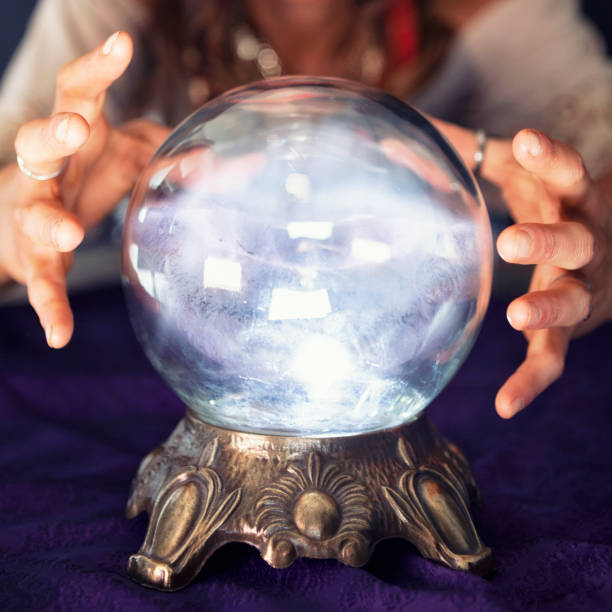
fate, and we still see magic used this way today with horoscopes. It needs to come baked in with reasons for it to fail, such as “the spirits aren’t with me” or “the stars weren’t right.” Ideally, this should profit from selection bias: try it 20 times or be very vague, and if you’re right once, you can say “See? And you doubted my powers.” Magic also typically deals with unusual threats that nobody else can help with, things like getting someone to fall in love with your or curing your illness. These are things people will pay a great deal of money for, but you can always find some way to obscure whether it worked or not. Finally, it should be entertaining. It should involve something of a mythos and something of a wink and a nod. If that gypsy fortune teller doesn’t really tell your fortune, does it matter if she’s beautiful and wraps you up in the romance of the encounter? She can claim it was for “entertainment purposes only,” but
if she gets it right (via the placebo effect, or giving you enough courage to ask that girl out, etc), then you’re hooked.
One of the things that I think is a shame about magic in a lot of fantasy games is that they never allow for this. The magic systems of GURPS and D&D tend to be strictly defined and clear. Spells have names, everyone knows them and how they work, and they visibly work: nobody doubts whether a magician can really throw a fireball, because he does all the time. I always enjoy it when a magic system leaves room for doubt, or for con-artists to step in. Maybe magic really is real, but is sufficiently subtle that liars can step in and claim to have magic even when they don’t. Magicians might have a bad reputation as liars when magic really is convoluted and tends to fail (“Look, the spirits really are capricious, there’s nothing I can do about it!”) and find themselves exiled to the edges of society, so the credulous people who come to visit them are often vulnerable to be preyed upon by real con-artists, and sorting out the real magic from the chicanery is a quest in and of itself. I see this sometimes, but more often in modern horror or, sometimes, urban fantasy. I think it’s an under-used concept, myself.
Real Magic is a boogey-man
There’s nothing darker than gypsy magic. — John Constantine, the Darkness Beneath
The Egyptians had a creation myth where the land arose from seas of chaos. You see a similar theme throughout many countries, but especially in the ancient Middle East, such as the legend of Marduk and Tiamat: the world is an island of stability in an endless ocean of chaos. Understanding this changes the dynamic of a lot of myths, such as why the biblical flood both comes down from the sky and arises from beneath the land (it’s effectively a second creation, as it’s not just that God is drowning the world, but that he’s cleansing it with the chaos of the ocean; the great antithesis to God in the old testament isn’t Satan, who’s barely mentioned, but Leviathan, the archetype of these chaotic oceans).
I mention this because it highlights an important concept we find a lot in modern fantasy fiction but, in fact, dates back to the dawn of time: the notion of order vs chaos. In the Egyptian myth, that land represents the rigidity of order and tradition, and we need it to survive, while the ocean is the fluid of change that we couldn’t survive if it overtook us. We have the good and rightly order and the dreaded other that must be suppressed.
I’m going to make a statement that will no doubt be controversial and clashes a bit with the first description of magic, but this is a model, a way of thinking about magic: the rituals, traditions and metaphysical world view that a community holds as good and right is “religion” while the rituals, traditions and metaphysical worldview that the community disagrees with or that represent a fictional “straw-man” antithesis of their beliefs, that they feel threatens their traditions and order, is “magic.”
It’s tempting for modern, Western audiences to see this as primarily a Christian thing, because the Bible demands that we “suffer not a witch to live” and thus went around suppressing the magical traditions of Europe. But you actually see this sort of demonetization of foreign traditions everywhere, from Chinese
Gu Sorcery to the overly dramatized depictions of druidism by the Romans. Humans the world over have expressed deep reservations about the traditions of other cultures.
They’ve also made up lurid stories of dangerous people who use the forces of chaos against the good and rightful keepers of order. Conspiracies and cabals use access to forbidden and dangerous powers to achieve their ends. Most cultures had traditions of monsters, usually strange, shapeshifting, trickster folk who lived on the edges of the world, from the Fae of Europe to the Jotun of Scandanavia to the Djinn of the Middle East to the Shedim and Se’irim of Jewish tradition. These monsters (chaotic beings with malleable forms, incomprehensible goals who lived beyond the edges of civilization) represented chaos and a threat to order. The magician and the witch traded with these monsters, borrowed power from them, and blurred the line between human and monster, bridging the game of chaos and order and, dangerously, inviting the chaos into order.
“Magic as Boogey-Man” is a bit of an moving goal, though. What was the sacred order can transition into spooky boogeyman and vice versa. Romans whispered lurid stories about “Atheist” Christians and their spells and orgies until Rome christianized, then it was all about the dangerous, demonic gods of the old Greek and Roman pantheons. Catholicism and Christianity, the former especially after the protestant reformation and anti-catholic propaganda, shifted from the de facto moral authority and into a favorite of horror movies. The West often depicts religion as dangerous and a source of horrors, usually contrasted with rational, scientific discourse which might be the growing new “grounded order and tradition” (though this isn’t always certain: sometimes the dark, chaotic force of a horror story comes from scientists meddling with forces beyond their ken, while good, wholecome, god-fearing boys fix the mess, though this sort of thing begins to feel dated today).
We also see magical traditions that spring whole-cloth from the stories other people tell. Satanists hate it when I point this out, but it’s true: there was no tradition of worshiping Satan before Christianity came along (one can make the case for the Yazidi, though that stretches the definition of “Satan” quite a bit, and most Satanists don’t adhere to Yazidi metaphysics or morality, but an inverted version of Christianity. Christians would tell lurid stories about satanic conspiracies (often depicting the devil as an Ethiopian, for some reason, and they had a fixation with satanists kissing the butt of the Devil), then when Christianity lost a lot of its sway, bored nobles (like Francis Dashwood) would borrow from the more interesting parts of these spooky stories for his own parties, and then people would begin to expand on the more exciting parts (orgies) and diminish the less exciting parts (kissing devil butts) and turn it into an actual tradition, rather than just a story. I would contend that most of our modern understanding of witchcraft comes not from an actual, pagan practice as some people contend (though I’m willing to believe that there are echoes of an ancient tradition in it), but from lurid stories by inquisitors made up to justify their jobs.
“Magic as a source of horror” is definitely a concept that RPGs understand well. We see it again and again, as well as the “outsider” nature of magicians. GURPS, for example, has a critical failure with magic summon malevolent demons. In Mage: the Ascension, overuse of magic undermines the underpinings of reality itself, creating paradoxes that threaten to unravel everything. In Warhammer, Magic is literally the power of chaos and hell, and in Lovecraftian works, it drives one mad and invites the attention of beings best left to their own devices.
Real Magic is a conspiracy theory

So, we have three conflicting perspectives on magic: it’s a simplistic and harmless worldview that works better for children than for adults, but that symbolism is nonetheless potent. However, this simplistic worldview leaves one vulnerable to grifters and con-artists who will manipulate you into believing that there are easy solutions for complex problems if you just pay them a bit of coin. Worse, all of this is probably dangerous. Either you believe monsters are real and magic users are treating with monsters, or you believe that magic users are all con-artists and thus believing in them is dangerous. You get continuous reports from the moral authority insisting on the presence of these dangerous elements, conspiracies, that use forbidden powers to bring down the government and the social orders: satanists have infiltrated day care, witches are trying to get the Pledge of Allegiance banned from schools, the Depublicrats secretly serve a psychic lodge put in place by aliens. And we need to do something about it.
This leaves one with two possible conclusions: either all of this is bunk and you can safely ignore it or maybe there’s something to it. The world is filled with strange things. Isn’t it possible that this is one of them?
Our childish beliefs might be childish, but they’re not necessarily wrong. They could hold bits of truth in them, half-remembered facts that got muddled and simplified over time. True, most “practicing magicians” are con-artists or entertainers, but this one time someone got it right! Did they get lucky? Maybe… or maybe not. The things magic deals with tend to be subtle and hard to pin down, like health or proper management techniques, and those are real, so why not luck manipulation or curses? Finally, we know evil forces and dangerous barbarians achieve success in the real world all the time. If good always triumphs over evil and if civilization always defeats barbarians, then they must have access to some trick, a cheat that lets them win (either that or you’re not as good as you think you are, or they’re more civilized than you think, or good doesn’t triumph over evil). Maybe most of it is bunk but not all of it, and perhaps there’s some secret that lets you access that cheat too.
Most conspiracy theories (and I use the term to describe fantastical beliefs about the way the world works, not “This one time the KGB assassinated a guy and covered it up,” because the latter actually does happen all the time) derive from a need to believe that, on some level, the world makes sense. Things don’t “just happen,” and there reasons for the events in your life. In a sense, this brings us full circle and back to childish beliefs, because of course things don’t “just happen” in the real world, but the cause-and-effect chains can be impossibly complex and largely beyond our control, and it’s easier for us to try to simplify it: the economy didn’t collapse because of complex economic forces, but because of hoarders and wreckers, and we didn’t lose that battle because of the details of arms, armor, discipline, geography, logistics and weather, but, you know, witchcrft.
But on some level we understand this. We understand that what’s really going on is something really, really complex, but when we don’t understand what that is, or are forced to admit we lack control, we seek some means of forcing control or understanding. We’ll try anything, even magic. So we cast about, looking for some secret, some hidden complexity that we can hang our beliefs on. By knowing this secret, we have an edge over everyone else. The rest of the beliefs people have are childish, the lies of a con-artist, or some primitive superstition but we know the truth of it, the very complex, nuanced, difficult-to-prove truth. Or, if we don’t, we suspect one is out there, one that the very successful and powerful have, which explains their success and power. The reason that the girl we like likes that boy is because he knows something we don’t.
I happen to believe a lot of real world occultists, like John Dee, believed what they were doing. It helped that Alchemy, popular at the time, produced real results (while also being subject to con artistry and was one of those dangerous traditions by outsiders, primarily Muslims). We also see it in when governments try to explore the paranormal. If you explore the careers of many famous occultists, like Aleister Crowley, they seem to veer from con-artist to conspiratorial philosopher at various times through their lives: they might not believe that the “magic” that they’re doing right now, for a quick buck, is real, but if it succeeds, they begin to wonder and try to explain it and create these complex, compelling systems in their effort, only to see them fail and then fall back on con-artistry. This is one of the reasons I hesitate to dismiss all fortune tellers as explicitly con-artists. They might be trying to con you, but that doesn’t mean they don’t believe that they have real world magical powers, they’re just not really sure how far those powers extend.
This is also probably why you’re reading this post. You hope, on some level, that there really is a secret, that there’s some form of magic out there. And there might be! But if it exists, I don’t know what it is, and I also predict that if we discover it, we won’t call it magic for long, because we reserve that term for hokum and not for working phenomenon.
Using the Occult in your Games
Given the model I’ve laid out, that magic:
- Is a set of simplistic symbols and stories meant to appeal to our intuition
- And is used by con-artists to manipulate us, who claim that it’s subtle and mercurial to explain their failures
- and represents a fear that our understanding of the world is dangerously incomplete and that our enemies use those forces against us
- and suggests that there’s some secret to the world that we just don’t understand and if we could just master it, we would have that power for ourselves
Can we use this in our games? Sure! I think any game, whether or not magic is real, would benefit from a good dose of the occult in it.
Every culture has superstitions, children’s stories and memetically potent symbols. They might not call them magic, but they should be there. They help define the culture. When your king tries to calm the people or rile them up, what metaphors does he use, and what symbols does he invoke? If you have a magic system, consider allowing it to exploit these symbols and simplistic paradigms to gain extra power. A great example of a system that does this is “The Magic of Stories” in Pyramid #3-13.
The magic, or the beliefs of the people, should allow for some flexibility. After all, not everyone knows everything, so it might be possible that magic works on some level that people don’t know, and this allows con-artists to work. Even if magic is real, there should be people who are trying to fake it, and consider making magic (or allowing forms of magic) that are sufficiently subtle that it becomes hard to tell if someone is a con-artist or not. Perhaps a con-artist in Dungeon Fantasy cannot pretend to be a fire-wizard who throws fireballs, but I bet she can pretend to be a fortune teller or an enchanter whose work takes a really long time and creates “subtle” works.
We should fear magic on some level. Not every belief in the paranormal must necessarily be malevolent, but its existence should imply that we don’t know everything, and that some of those unknowns are dangerous. Wizards should conspire, and even if they don’t, people should worry that they do. They should mutter about the danger of having people with ill-defined, subtle abilities that could be manipulating everything right now and you wouldn’t know it. There should also be forms of magic that are dangerous (or said to be dangerous). Even if your game features happy, playful, childish magic, there should be something out there that threatens to unravel the fabric of toyland if used improperly: a metaphysical threat to the carefully arranged order.
Whether or not magic is real, we should wonder about it. It should leave enough open for questions that if it isn’t real, we should wonder if, maybe, it is. If it is real, it should leave open questions as to how it really works, or if there are untapped possibilities. I would argue against carefully and thoroughly defined systems of magic, because it should always have some secrets lurking at the edges of the system, something for the grifters to exploit and for the paranoid to fear. Studying up on this body of things that may or may not be true is the whole point of the Occult skill in GURPS: it’s not a 100% correct understanding of the Paranormal (that’s Hidden Lore), but a complete grasp of this murky world of “Maybe true, maybe not,” an old and faded map to a mysterious country. Wizards might claim to know everything and teach a complete theory of magic in schools (the Thaumatology skill) but they should be wrong: there should always be some secret at the edge of the system that threatens to unravel the whole thing.
Unsurprisingly, GURPS Cabal and GURPS Voodoo probably come closest to depictions of “real world magic,” as they’re based on real world traditions or an actual study of the occult. I’ve tried to incorporate these ideas into Psi-Wars as well, with potent symbolism, rare and strange psychic powers, hidden Paths and secret cults, dangerous forms of Commmunion that threaten to undermine the premise of the system and leave open questions, and forms of power that allow con-artists to pretend to be psychic or to have access to Communion, and maybe to be right without realizing it.


 Mailanka's Musing