

If there’s one thing I’ve struggled with, it’s “How much should a Bounty be?” I even bought GURPS Old West to see if I could figure it out… and I think it helped. Given my troubles with it, I think you might have troubles with it too, so let’s walk through it together. If you want to put a bounty on a PC, or your players are Bounty Hunters and they catch that one high value dude at last, how much money do they make?
Continue reading “The Economics of Psi-Wars: Bounty Hunting”Tag: Bounty Hunter
Reminder: Backer Poll on the Fourth Bounty Hunter Lodge
Whenever I introduce a new faction, I like to run a Backer poll on it too. Once the poll is done, I’ll cobble together the results, and turn them into a faction that is present in the setting. Previous polls have resulted in:
- House Tan-Shai
- The Traders
- The current depiction of House Alexus
- The Emperor and his organization
- Domen Khemet and Domen Tarvagant, the competing Death Cults of the Divine Masks religion
Now we have a poll on the Bounty Hunter Lodge.
Of course, my real purpose with these polls isn’t to come together and create a particular, cohesive faction. Instead, the intent is to inspire you, to show you some of the things I think about when creating these groups, and to get you to think about creating your own. Thus, even if you don’t want to vote, it might be worth reading over the ideas, just to create your own faction.
The current leaders in the polling are:
- They are located in the Sylvan Spiral
- They primary hunt Communion users (they are “anti-Templars”)
- They hunt for money, and only for money
- They are trained experts in Neurolash weaponry
- They are secretive (you don’t contact them, they contact you)
- In addition to Bounty Hunters, they make heavy use of Spies
- Unsurprisingly, most of the Galaxy has never heard of these guys.
But there’s a lot more nuance than that in the polling results and the comments, and your own vote could change that too. The poll is open to $5+ Backers. If you’re such a backer, remember to vote!
Wiki Highlight: Bounty Hunter Lodges
As I was working on Bounty Hunters, I thought about organizations that might support them. Star Wars has its Bounty Hunter Guild, but I wanted more possible variety than that. In principle a bounty hunter needn’t be part of an organization (and so “rogue” and “independent” hunters are valid options), but I wanted to give Hunters the option of belonging to a dedicated group with an interesting tradition, and why not more than one? After all, I draw inspiration from the Mandalorian and Killjoys and the Witcher which are all, in their own ways, different traditions of bounty hunting.
Thus was born the idea of Hunting Lodges, something on which to hang the organizational hat of the Bounty Hunter. The premise here draws more from the Mandalorian and Killjoys than from what I see in the rest of Star Wars: a broker does the work of tracking down the bounty and handling the hassles of payment and exchange, and you can focus on hunting. Different groups might have access to different resources, areas of influence and secret knowledge to help the Hunter along.
There are four signature Lodges in Psi-Wars:
- The Hydra Lodge, which is just “the generic lodge.” If you want the benefits of being part of a lodge, but don’t want to dive into deep lore, this is the Lodge for you.
- The Exilium: diplomatic bounty hunters who handle sensitive assignments and bridge the gap between the Empire and the Alliance, serving neither.
- The Saruthim: an ancient tradition of monster-hunters dating to the First Tyranny, who are experts in a unique parasitic weapon, the Ferthe Dapolor, or the Flesh Carapace.
The fourth signature lodge, with a placeholder name of “Wyrmworks Cleaners” will be the last remnants of the Wyrmwerks corporation located in the Arkhaian Spiral who are experts in defeating the mad-genius AI that their corporation unleashed in their last days, rogue cyborgs and the last remnants of the Anacridian Scourge, who make excellent use of advanced Wyrmwerks technologies, such as Battlesuits. I need to put more work into the sort of opponents they fight before I can properly put them together.
I’d also like to put together a poll at some point for a fifth bounty hunter lodge, if my Backers are game.
NPC Highlight: Chet Starbeam and his Blazers
I’m not usually a fan of pre-generated NPCs, as I generally prefer to make bespoke campaigns with my own particular NPCs. I have noticed, though, that people do make use of them. They can be a nice way to quickly illustrate a particular element of a setting, and as an immediate encounter. So, I thought I’d try a new series, wherein I outline an NPC that I’ve whipped up. I usually make them for playtests I run, or to make sure a particular template “makes sense.” But they might prove useful to you, so I’ve created a new entry on the Wiki for them.
Of all the opponents that PCs might meet, I think Bounty Hunters are likely the most universal. We can justify them fighting just about anyone. In Jedi: Fallen Order, they sprinkle encounters with Bounty Hunters across the map as your adventure progresses to keep you on your toes. Having access to a variety of ready-made bounty hunters, then, could be useful to any Psi-Wars GM as someone to bust in the door and shoot up the place. After the initial encounter, the PCs can try to piece together who put the bounty on them.
I’ve started the series with an NPC that I created as part of my “Let’s kill Everyone” series, which was designed for the NPCs of the Tall Tales of the Orochi Belt. We never got to encounter them, but you can use them in your campaign. The first is Chet Starbeam, celebrity bounty hunter and total bro. I started with him because he is the most generic of the Bounty Hunters I’ve created, and he makes a nice, fun “first step” into being bounty hunted, as he’s not especially difficult to defeat, and can be entertaining to fight.
See what you think of him, and I’d love to hear if you think the series would be useful to you, and if there are particular sorts of NPCs you’d like to see.
Template Highlight: the Bounty Hunter
So, I had a poll running on Patreon about which template you guys would like me to wikify next, with a focus on “Rim” templates, though this highlighted to me just how few of the original Rim templates I have left to wikify! In any case, you guys let me off the hook and chose Bounty Hunter, which was especially easy because it’s already done.
What will follow will be a discussion of how the Bounty Hunter template has evolved and what I’ve added to it. This will kick off “the month of the Bounty Hunter,” because one of the reasons I’ve been so quiet lately is I’ve been building up material on the Bounty Hunter. It’s still not completely done, but you go to campaign with the material you’ve written, so here we are! I have plenty of material to show, so I think we’ll be busy for awhile! But if you’d like to skip all that and just look at the template, here it is:
Building the Bounty Hunter Up
I started work at the request of a Patron, who mentioned he was starting up a campaign, and wanted “Bounty Hunters, Assassins and Psi-Hunters,” which touched on several major issues I’ve had with that specific trio.
Assassins are increasingly tricky. They’re really more of a “martial artist” template, “the Space Ninja,” but I’ve seen a lot of calls for martial artists (gladiators, temple guards, Keleni stick-fighters) which may or may not fit the idea of an Assassin, so I’ve parked them on the back burner while I rethink martial arts other than force swordsmanship.
The Psi-Hunter speaks to an “overtemplating” problem that Patron Mavrick likes to point out: just because something is a valid concept doesn’t mean it’s a valid template. For example, what is a Psi-Hunter but a bounty hunter or an assassin with a focus on fighting psis?
This just leaves us with the Bounty Hunter, which I’ve always felt was a perfectly valid concept for Psi-Wars. Partially, this comes from our Star Wars DNA, where the other cool concept has always been the Bounty Hunter. But more than that, the division between “core and rim” always interested me, and I’ve drawn a lot of inspiration from other Bounty Hunter works, like Killjoys, for Psi-Wars. Killjoys really highlights a very interesting approach to Bounty Hunting, which is be a cute, pitiable girl who vamps her target until he’s drunk and tired and then arrest him without a shot fired and collect your reward. This got built into my original Bounty Hunter template, in part because the first Bounty Hunter was a cute cat girl (and the only actual in-game bounty hunter I’ve run thus far was a cute girl, though I don’t think she actually had Appearance).
However, I wanted to expand this out, especially after being exposed to the Witcher (finally) and I realized that he, too, was essentially a Bounty Hunter, just of a different sort. If we have anti-psi Psi-Hunters, and sexy bounty hunters going after criminals, and big tough not-Mandalorian brutes, why not monster hunters too?
This led me to the idea of Know Thy Enemy lenses, encouraging the player to realize that not all Bounty Hunters are made equal, and that there are lots of things one might bounty hunt. This also means that we now have two major candidates for “epic” campaigns. We already know that Space Knights tend to shake the universe with their street-level super-abilities as they wage conspiracy wars on one another; that’s part of the genre. But this also means that we might expect them to hire elite Bounty Hunters to take one another out, or if you have a monstrous infestation, you might hire a Bounty Hunter to deal with it.
This is probably the single greatest culprit for my slowdown. I’ve been working endlessly on not just the Labyrinth recently, but also various other monsters and opponents, which is something I imagine I could dump a year into. Perhaps I should park all of this and treat it to a later revision, which means we’ll come back to the Bounty Hunter.
Building Bounty Hunters as Encounters
But this also encouraged me to think about something else. Fortunately for me, one of my players in Tall Tales of the Orochi Belt (now finished) had a Bounty Hunter enemy, and he chose a group, so this encouraged me to think of ways to defeat him. This is something you see in some games, such as Jedi: Fallen Order, where the game will hit you with a variety of possible bounty hunters as you play through the game, like random encounters with mini-bosses. Bounty Hunters make an excellent “and suddenly, a guy kicks in the door and starts shooting up the place,” and this made me think about not just defeating monsters and bad guys, but how to use Bounty Hunters to defeat PCs, which has made the Know Thy Enemy an interesting exercise, especially since it forced me to rethink a couple elements of the template (such as the addition of the Witch Hunter, which needs some supporting mechanics).
Over the next couple of weeks, I’ll see about getting some of the behind-the-scene bounty hunters out and ready for play.
Building the Bounty Hunter Out
One of my core goals with Psi-Wars is to build a highly playable setting, and for RPGs, that often involves specialization. Specialization allows PCs to differentiate themselves from one another, but it also allows the GM to differentiate opponents. Movies often simplify things that an RPG needs to complicate.
I’ve done this with Space Knights. Star Wars has the Jedi, but Psi-Wars has the Templars and the Maradonian Space Knight (and the Akashic Knight), and the Ranathim Satemo, and the Templars and Maradonians have sub-groups (The various Chapters and Houses), creating variation within variation! We also expand out the “Sith” to include “Tyrants” and their various conspiracies and (again) the Satemo.
Why not do the same with Bounty Hunters? Star Wars has one vague “guild” and one real tradition (the Mandalorians). Why not create more for Psi-Wars? So I’ve added the concept of the Lodge: a group of unique hunters bound by a particular goal and a form of training. I’ll be dropping the Lodge-as-organization soon, and highlighting some different sorts of bounty hunters soon.
Backer Post: Bounty Hunter Factions Preview 2: the Saruthim

If you wondered why I’ve been so quiet, it’s been because I’ve been working on this monstrosity. I’ve wanted to give Ranathim “ancient bio-mecha” since I first read about them in Pyramid #3/24 and they’ve been a feature of the Dead Art since Iteration 6. Inspired further by my noodling about a Witcher/Mandalorian faction in my “How to run an RPG” posts, and the idea to explore Bounty Hunter factions as a part of the Bounty Hunter template release, I finally took the time to see what I could come up with.
It turns out to have a lot of moving parts, not all of which I could finish, but I need to shift gears, so I’ve wrapped up what I could and delivered it to you, dear Patron. This one is limited to $5+, like the previous update, not because I’m shafting my Fellow Travelers, but because it’s not finished and I want some feedback before I release it to the (relatively) more general public, but expect to see it, uh, soon-ish.
This is available to $5+ backers:
If you have feedback, I’d love to see it!
Alright, fine, let's kill Axton Kain too! Bounty Hunter Design Diary addendum

One of my players complained when the Bounty Hunter series ended, as he had hoped I would explore how to defeat all of them. This isn’t a bad idea, actually, as it informs the sorts of things bounty hunters should be able to do. The primary argument against it is a matter of time: how much of my time is better spent building sample bounty hunters vs building out more of the setting? This isn’t a rhetorical question, as I don’t know the answer, but I’ve had to balance it, and it does directly feed into Tall Tales of the Orochi Belt, even if we’re unlikely to see these hunters right away. So, shall we come up with one last bounty hunter to fight the legendary Axton Kain?
Some of my favorite people are bounty hunters — Greef Karga, the Mandalorian
This isn’t an entirely inappropriate question. Patrons have already seen the current state of the Bounty Hunter document, but one element I’ve begun to include are Bounty Hunter Lodges, organized groups of bounty hunters, and one of the three I intend to release is the Exilium, a group of hunters deeply embedded into Maradonian society, who have the diplomatic finesse to operate across several borders, including in Imperial Space, without being questioned or sanctioned. Thus, this asks the question: how do you hunt a Maradonian?
The Maradonian aristocracy aren’t Jedi by any stretch. In some ways, they’re far harder to hunt, and in other ways, far easier. On the one hand, their mastery of psychic power leaves much to be desired when compared to the psychic mastery of the Jedi and they’re not elite force swordsmen. On the other hand, they are all psychic force swordsmen, who also have armies and international influence networks and vast wealth available exclusively to them. When you fight a space knight, you’re not just fighting him, you’re fighting his house, thus you must move with caution. Presumably, a nobleman with a bounty on his head has been cast out of his house, and thus can be as easily caught as any aristocratic pretender, but this is not always the case, especially in circumstances where a rival has begun placing bounties on a member of the house.
Of course, Axton is a little different: he’s not psychic at all, but cybernetic. He belongs to a House that skirts the line between legitimate aristocracy and pirate-lord empire. Where the other aristocrats play at being a space knight, he’s trained in the Old Ways and has personally knocked genetically augmented super-soldiers off their feet with the full force of his cybernetic body, single-handedly taken on a dozen men and shrugged off plasma shots to his chest. He’s not an easy mark to take down, and still, someone in the Exilium must be able to take down a member of House Kain.
So how would you do it?
How to Fight Axton Kain
There are several possible acceptable strategies here, but we need to address a few core concerns: the support the character will have from their house, their mastery of their force sword, the fact that they’re likely to have several bodyguards with them, and whatever Kewl Powerz they have at their disposal, in this case, cybernetic powers.
For this build, we’re going to aim once again for ~300 points. We can go higher, but no higher than 450 and a good bit less would be nice. Of course, Axton has no Enemies, so any Bounty Hunter we sick on him is purely by GM fiat, and thus such a hunter could be any value, but ~300 is a nice value for a hunter.
In keeping with the diplomatic nature of the Exilium and in dealing with Houses, this will be a “polite” hunter, for whom this is “just business,” and will treat Axton in a manner he’d like to be treated. This is not to curry favor with Axton, though if done right, it might get his guard down. It’s also to ensure that no reprisals come from House Kain. If everything is “by the book” and the hunter inflicts no insult upon the House, then the House is unlikely to crack down on any Bounty Hunter group to avenge the loss of one of their scions. It also means that if he fails, he’s likely to be spared by Axton and his soldiers, and be free to hunt another day.
Some traits I’d like to try here:
- Diplomatic: Obviously, our bounty hunter moves through dangerous waters in hunting aristocrats. Thus, we might expect to see him have Diplomacy, Legal Immunity, and Law (Galactic) to know what he can and cannot do. Politics also helps you get a sense of where the wind is blowing.
- Polite: It’s not enough to have the law on your side. If a cybernetic space knight decides he doesn’t like you, and said space knight is already on the wrong side of the law, all that may keep him from killing you immediately is that he likes you. Savoir-Faire (Servant) might help ingratiate you, and also helps you glean some information about the character. Some positive reaction bonuses wouldn’t hurt either.
- Honorable: If you want a member of House Kain to like you, you’d best follow a code, just like they often do. The manlier, the better. The Bounty Hunter’s code is a good one: by fastidiously sticking to the rules of what it means to be a bounty hunter, then everyone knows where you stand, and you claims that it’s “just business” have a lot more weight behind them.
- Lodge Hunter: This hunter won’t be independent, but will have the benefits associated with being associated with a Lodge.
- Flanking: If we want to take down a member of House Kain, it’s important to understand their weaknesses. Almost all members of the House use either the Destructive Form or Knightly Force Swordsmanship, both of which are forward focused, which means if you can hit him in the back, you can take him out pretty quickly. The best way to do that is to hit him from two sides at once. With our set-up, I’ll focus on a “tank,” our primary hunter, who will occupy Axton’s attention, and a “sniper” Ally who will strike when the time is right.
- EM Disruptors: Obviously, our weapon of choice should be something, anything, that shorts out electronics. A stunner will work, and we can use EMP grenades too (as limpet mines, or from a payload rifle). We’ll need pretty high-grade stuff, as all members of House Kain tend to have a high HT and resistance to cybernetic threats, which means they need a really big penalty before they start to notice a problem and slow down. In the case of Axton, shutting down his cybernetics will likely shut him down, rather than just knock out an arm or a leg, as is often the case for most members of the House.
- Strength on Strength: If we’re going to “tank” Axton, we need to be tough. We need to be at least as strong as Axton, and we need the ability to withstand strikes from a force sword. That sort of armor is really hard to come by without serious cash or serious ST, preferably both. This suggests a cyborg, at some level, a “dark mirror” to Axton Kain. This also fits with being someone Axton would like: someone as tough as him, who thinks the way he does, but is respectful of the Kain and their way of thinking. Thus, the “tank” needs high ST and high DR.
- Tempered Cunning: Like all big game, if you’re going to catch someone like Axton Kain, you have to out think them. The core tactic as noted in the “flanking,” is to hit him from two sides at once. For this to work, you need to lead him, somehow, into an ambush without the support of his regulars or robot or, if they are, there, they need to be eliminated in such a way that it doesn’t draw reprisal from the house. Our Hunter will need to know our target well enough to figure out what would motivate him to leave the protection of his group (suggesting Psychology and perhaps Acting) and have some sort of ambush prepared (Tactics, Shadowing and Stealth, and perhaps Traps and Foresight).
Taken together, I see a character who would, after carefully watching Axton (Observation, perhaps) and getting a feel for him, would approach him directly to notify him of the hunt and give him a chance to surrender. He would lay out the terms of the hunt in such a way that it clarified to Axton how he could eliminate any potential harm to his allies, and under what circumstances the Hunter would leave empty handed, to create the sense that this was a game in which Axton could prove himself, and become the victor. Then, when it came to the hunt, the Hunter would quietly stack things in his favor; if he failed, he would likely follow the terms he laid out and walk away, as doing otherwise risks drawing down too much heat. He’d make an interesting contrast with the previous “generic” Bounty Hunter, who would come across as crass by contrast.
Hey guys, let's fight everyone! Bounty Hunter Design Diary Part III
So, as part of my Bounty Hunter designs, I’ve been picking on one of my Tall Tales players, Xerxes, because he actually has Bounty Hunters as an enemy, so it’s fun to tailor some opponents around him. But realistically one would not expect to see every bounty hunter tailored to their target. Certainly, if bounty hunters realized that a Witch Cat was their target, those who specialize in hunting Witch Cats would pick up their kits and rush out the door to take down their preferred target. But that anti-cyborg guy needs to put food on the table too. Sure, he might not be as good at it as the first guy, but he only needs to get lucky, right?
So, we should have at least one “generic” bounty hunter. This also makes it useful since you, dear reader, are unlikely to need a bounty hunter who specializes in hunting Witch Cats. Thus, of the three-ish hunters I’ve proposed this week, this is the one you’re most likely to actually use.
But what to do? Every hunter needs a schtick, and our first one already melds excess collateral damage with precision planning. Our second one melds melee excellence with a sympathetic character. Every hunter should feel different enough that they represent a unique challenge for the PC, so ours should feel different.
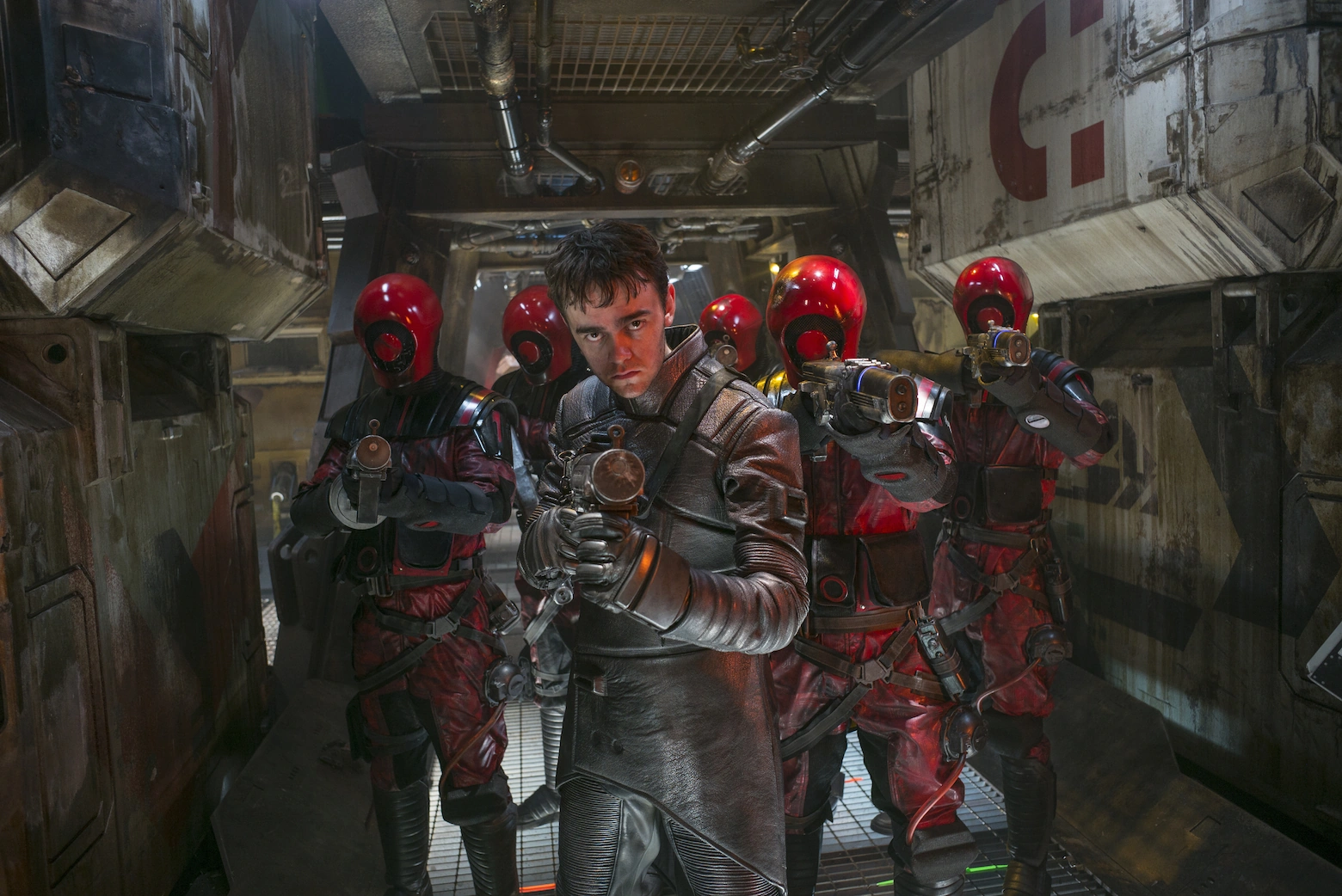
Well! I’ve been discussing Bounty Hunters with some of my Patrons, and Gentleman Gamer suggested that most bounty hunters are “either bosses or groups of mooks.” I corrected him on the latter: you’re unlikely to see a group of mooks. “Why?” he asked. Well, the real reason is that we expect to see highly competent loners doing these tasks, and that it’s hard to pay an entire crew off of the sorts of bounties most people collect. But that just means its rare, so why not have a bounty hunter with a group of mooks at his disposal? It offers some unique opportunities: when searching for the character, his posse can canvas an area as a group and when they close in for the kill (er, capture), they can “beat” the target towards the primary hunter, like dogs in a hunt. Gentleman Gamer went on to muse about drones, robot dogs and Shinjurai hunters, and I’m not going to dismiss any of those as ideas. There’s an entire world of hunters we could be making. I’m going to focus, for now, on a guy who uses human mooks to help him fight.
How to fight, like, literally everyone
So, we need one last hunter who uses a group of allies to help assist in his defeat of his target. This suggests a few traits already that should help differentiate him from the other hunter’s we’ve had so far. Mainly, what sort of hunter is it that has a bunch of people helping him? Such a hunter might lack the skills to do it himself, or he might prefer to have an audience, or he might be highly organized and runs his hunts like a business that he brings partner onto. I’m going to push more for the former two (especially since our hunter is worth no more than the 300 points that Xerxes is worth): he’s not that great of a hunter on his own, and he likes a bit of an audience. That said, he’ll make good use of his minions: they’ll make noise, push and chase the target and drive them into an ambush by our primary hunter.
This suggests some traits:
- Ally Group: Obviously, our hunter needs a group of hunters to assist him. I would say at least 5, but probably no more than 20. These would be mooks, of course, their BAD associated with his BAD, but likely between BAD 2 and BAD 5.
- Nothing without his minions: Our hunter should be at a heavy penalty when he’s lost his troops. He might have a trait like Chummy to represent this: if you can defeat enough of his mooks, he’ll retreat.
- Kind of a Dick: This is a hunter who sends “wave after wave of his own men” after the target, so he’s probably a bit egocentric, and he claims the lion’s share of the bounty once the mark has been taken, so he’s also probably selfish. I had mentioned yesterday that having an NPC that the players will relish defeating can be fun. This might be such a character. I see braggadocio in the character.
- Charisma and Good Looks: I picture Captain Laser from “I’m not a Monster.” This character needs to attract people willing to accept low pay for a high risk profession. He needs to be the sort of guy who talks the 10 campers into jumping the bear, claiming “only some of you will die,” and then claim to be the one who killed the bear. You need to have a nice smile and a lot of charm to pull that off.
- Command and Coordination: This is not a solo hunter who traps targets through cunning and research, but a middle manager who uses his employees to do the hard work for him, but that requires him to know how to get the most out of them. That suggests Leadership and Tactics.
- Ambush: If he’s going to have his minions make noise and drive your target towards you, you need to know how to take advantage of that. He’s likely a skilled ambusher, which mean he needs Stealth.
- Non-Lethal Take Downs: He’s likely the sort that wants to look like a hero, so he’d rather have a photo op getting a mark to do the perp walk than he would showing up at the bounty collection office with a body bag. Thus, he’d likely favor stunners and stun grenades, and perhaps good old fisticuffs, for taking his target down.
- Media Attention: If you’re good looking, trying to present yourself as a hero (to get more gullible mooks to join you), then it helps to have great media presence. It might also make a valid tactic to beat out the target from hiding: set yourself up as a glamorous bounty hunter, do some interviews about your latest target, offer a modest reward for information leading to the capture of this “dangerous fugitive,” (a tiny percentage of the award, obviously, like “Here’s 20 credits, thanks kid”) and otherwise plaster the area with holo-posters of your target. That lets you turn Propaganda into a research skill and get everyone else to do your work for you, which seems to be this guys schtick.
Put all this together, and you get an interesting and useful bounty hunter, in that despite his stealth, he’s really really obvious. When he joins in the hunt, wanted posters go up everywhere, he starts doing interviews, and his mooks start running around really obviously interviewing people and looking for the target. It’s a clear shot off the PC’s bow that he’s being hunted. It’s not the worst bounty hunting strategy, though it does tend to interfere with other hunters’ desire to keep the character from being aware of their presence and interest in the target, as it puts the target in a heightened state of awareness, but for an NPC vs a PC, it’s a pretty good GM strategy.
Hey Guys, Let's Annoy the Witch Cat: Bounty Hunters Design Diary Part II

Yesterday, in an effort to keep the blog from being empty and giving the impression that I’m not busy behind the scenes, I unveiled some of my thoughts on making an interesting and rather tailored challenge for a character who took Bounty Hunters as an enemy. The point, of course, is not to single him out for having the temerity to take the Enemy disadvantage, but to use his Enemy disadvantage as a spring board to create some interesting NPCs, because I expect you’ll want to feature Bounty Hunters in your campaigns too, and why not have some ready, on-hand ones, even if these are rather specific.
But not every game is D&D, and even D&D doesn’t really benefit from making every single encounter as lethal as possible. Yes, we can treat Bounty Hunters as random Boss encounters, but we don’t have to. An encounter, especially with something as “random” as a broad and general group of ill-defined enemies, offers us opportunities to explore and reveal some things about the setting. Not every enemy needs to be lethal. Some can really suck. A weak opponent not only reveals something about the world, but makes the game feel less like a mechanical series of ever more difficult encounters and more like a real world to interact with. And an inept enemy creates an interesting set of choices. Sure, you could just, you know, kill them, but are you the sort of person who would do that? Or you can leave them alive to threaten you further and eventually they might get lucky. Or you can try to talk them out of killing you. But suddenly, you have a more interesting set of choices beyond just “kill or be killed.”
So, I propose we introduce a bounty hunter or, actually, a team of bounty hunters that isn’t constructed to be a thoroughly dangerous opponent, but an interesting NPC encounter that happens to involve a strong desire to kill you. I want to introduce a “newbie” bounty hunter.
How to Annoy a Witch Cat
Okay, so, simple enough, we create a weak opponent that our PC can easily trounce. But, if we just do that, we leave our weak bounty hunter open to being killed. We put in a ton of work and then Xerxes, that sinister space pirate, rolls his eyes, shoots him dead and walks on. Boring, a waste of his time and ours. So, we need to tempt him not to kill his opponent. So, a better question is, then: how do we create a character that our Witch Cat won’t want to kill, despite them trying to kill the Witch Cat?
You make it a kid. Or better, a couple of kids devoted to one another. Even better, you make them misguided Asrathi kids who are hoping for a big break so they can chase their crazy dreams and they happen to see Xerxes as their ticket to the big time. It’s not Xerxes, it’s just business. Only they suck and they sort of need your help. That should be at least tempting.
Of course, the point here is not to put a Xerxes in front of a couple of waifs in rags, one of whom has a knife that he halfheartedly tries to shiv Xerxes with. They should represent a real threat. Not a major threat, but not such an easy opponent that Xerxes can just roll his eyes. Were they too easy to defeat, then Xerxes would just smack them around and set them on the straight and narrow path. No, we want to create a scenario where he knows he could win by killing them, but he doesn’t want to, so he must put himself at serious risk by attempting to capture them. His charity could result in their victory, creating an interesting choice.
There should be a consequence to not killing them. Mainly, they should become better. This fits with a story of green hunters trying to make a name for themselves. We can give them additional traits that the GM can start stacking onto them for each additional encounter as they learn with each fight.
There should also be a consequence for choosing to kill them: they should be very difficult to kill. Easy to defeat, of course, but you’ll have to really go out of your way to kill them, and by making two of them, we create a situation where vengeance becomes more likely. That way, we don’t just have to rely on Xerxes’ compassion to keep them alive, and we still get interesting play if he just blasts them.
So, some traits
The Brother
- Rogue Hunter: He’s not a true bounty hunter, he just pays close attention to the bounties. He lacks a license, which means he technically can’t arrest you and the cops can stop him. He hopes to make a score that will make a Lodge sit up and notice and hire him and thus ensure that he gets his license, but he doesn’t have one yet.
- Asrathi: Of course
- Obsession: He’s the one who really wants to become a hunter and is lost in the dream of it
- Gullible: He’s a big dreamer, so naturally he’s buying all the things he can to “look cool,” but some of his gear is surely substandard and he’s likely easily tricked. He is, after all, just a kid.
- Unluckiness: This might seem like a terrible trait to pair with a bounty hunter that we’re going to throw at a Witch Cat, but that’s rather the point. Maybe our hunter would make it if he just caught a break. Yet, he never seems to. Perhaps the Witch Cat could even cure his perpetual unluckiness… The only downside is that this isn’t a great NPC trait, as it relies on the GM deciding when it happens, but if the GM wants terrible things to happen to an NPC, they just do… So we might allow the players to contribute suggestions for bad luck. It might be fun!
- Hard to Kill: Obviously, he’s going to be at risk of death a lot, yet he never seems to die. We might pair it with some Rapid Healing and other traits that make him more likely to spring back after defeat. We might also consider Extra Life with limitations that require it to be used in a way that seems plausible, like a set of coincidences that keep him alive.
- Code of Honor or Pacifism (Cannot Harm Innocents): The point, of course, is to be the best bounty hunter, but we have an idealistic idea of what it means to be a bounty hunter. So we follow the niceties that many other “real” hunters neglect. He’s not a bad guy, he just happens to be your enemy.
- Natural Talent: He has real potential. Most PCs will optimize their character, but you can get a lot of interesting mileage out of not optimizing your character: characters with Talent 4 for skills they don’t have (or barely have), or too much DX for the amount of skills they have. If we give our Asrathi boy an extremely high DX, he’ll have a lot of unrealized potential.
- Total Lack of Skill: Paired with this, we should have sufficiently low skills that the character is fairly easy to beat. I think we should be aiming at a BAD of 2 or 3, so skill 12-13 where possible.
- Flashy Skills: Our Asrathi has cinematic ideas of what it means to be a bounty hunter, so likely focuses on “cool” skills: Acrobatics, Karate, parkour, and moves and techniques that make him fast, allowing for lots of quick, light, inept strikes. He might even have a Showoff Quirk, forcing him to take as many penalties as possible even when it’s not necessary. He shouldn’t have highly effective skills though: no feint, no highly lethal targeted attacks, no sniping from a distance.
- Ally (Sister): He’s part of a pair of hunters. They come as a package deal. The fact that his sister has his back is fundamental to the character.
- Sense of Duty (Sister): They’re in this together, and he’ll do whatever it takes to keep her safe, whatever her flaws. Just as long as it doesn’t interfere with his bounty hunting, of course.
What about Overconfidence? Well, the problem isn’t that he thinks he can do it, the problem is that he desperately wants to do it. He knows he’s outclassed, but he feels he doesn’t have a choice. He needs this. What about Daredevil? Well, that would give him a bonus for punching above his weight, and his problem is that he lacks those bonuses. It’s tempting to go the other direction: Low Self Image, where if he has everything lined up, he does great, but the moment things start to go south, they really go south for him. I think Low Self-Image is a criminally underutilized disadvantage, but I’m not sure it’s the right choice here.
The Sister
The sister needs to be both a contrast and complement to the brother. She needs to represent the other side of the coin, keep him stable, but also help explain why he is the way he is.
- Rogue Hunter
- Asrathi
- Pitiable or Beautiful or Honest Face: The point of the pair is to invoke sympathy, and few things push someone to reconsider murder than being pretty or cute. I also think having a high reaction modifier is an underrated bounty hunter tactic that I’ve not seen used outside of Killjoys. If the mark underestimates you, it’s easy for you to get close and use unarmed skills against them. She’s that sort of hunter.
- Debt: One of the reasons her brother might be desperate for a big win is because his sister might have built up a big debt and have pressures on her from the underworld to drag her into things she really doesn’t want. By hunting, they hope to pay it all back.
- Compassionate: Like her brother, she’s good people (which is one of the reasons killing her should be hard). She’s the sort of street rat that looks out for other street rats, even if it gets her into trouble. She might also pick fights that she can’t win, hence why her brother has picked up some combat skills.
- Smart: Where her brother is physical and skilled, she’s street smart and practical. She’s good at manipulation and avoiding scams. Where her brother has a lot of potential to be good at the physical end of bounty hunting, she has a lot of potential for the mental end of bounty hunting, but like him, only actually has skill 12-13.
- Thieving: Her hunger for material goods and class has led to a skillset in sticky fingers, which she can also turn to her benefit when helping her brother hunt. She’s also stealthy and observant.
- Scrapper: She’s competent at self-defense. She can handle a blaster and if a drunk guy tries to get handsy with her, she can handle herself. She’s not the real combat specialized of the pair, though.
- Sense of Duty (Brother): Were it up to her, she wouldn’t be a bounty hunter, but a smuggler or a con-artist, or something even classier, like a performer. Circumstances have forced her into this line of work, but especially her brother’s passion. She’s fiercely protective of him, and the people who try to manipulate him. If he dies, she’ll seek vengeance.
- Ally (Brother): They come as a paired set.
Together, they should make a nice one-two punch. She can try to shadow, then dazzle and bamboozle Xerxes into an ambush, and he can try to capture (not kill, of course!) Xerxes. They’ll fail, probably, and Xerxes will see through most of it, but it’ll be up to him to decide what to do with them. They make a great warning shot, a reminder that he’s being hunted and a definite inconvenience, but not the “OMG I’m going to die!” of the previous bounty hunter. Sometimes, non-stop death traps makes for a tedious set of encounters, and they make for a nice change of pace.
(Incidentally, you don’t have to make sub-par opponents “nice.” The tension between “Do I kill them or not?” isn’t nearly as fun as hitting a player with an annoying little bastard that squirms his way out every time, only for them to finally pin them down and relish actually eliminating them. I personally think the sub-par opponent is underrated. Yes, if your game lacks challenge people can lose interest, but constant high tension can be exhausting).
Hey guys, let's kill the Witch Cat

Pardon my silence. Both of my children were born this month, and there’s Easter, and a quarantine, so I’ve been busy. I’m also trying to figure out how to handle polls on multiple patron sites without spending $20 a month on the right to get more than a couple of answers, and I’m behind on my art comissions.
But the real reason I’ve been quiet is that a Patron asked me to work on bounty hunters, and they’re up there with Mystics and Space Knights for “You don’t know how much work you just asked for.” In any case, if you missed it, there’s a preview up for Subscribers and Patrons. One of the reasons it’s taking so long is that there’s a lot of reasonable “factions” and culture-groups that we might associate with bounty hunters and while we’ve worked out a ton of detail on mystics and space knights (and commandos and officers and etc) under the guise of working on philosophies and factions back in iteration 6, we haven’t really touched on bounty hunter or criminal factions yet, which are both things we really need to explore, but we only have so many hours in the day.
Bounty Hunters represent a whole host of interesting puzzles, especially in that they’re natural monster hunters (There’s even a lens for it: “Hired Gun”). A Bounty Hunter naturally specializes in their preferred prey, and so may have means of disposing of particularly troublesome aliens, robots or space monsters that the average person doesn’t have. That is, after all, why you pay them! But if we’re going to introduce Space Witchers, we need to think about monsters which, against, brings me back to a concept I’ve been tinkering with but haven’t had the time to really explore: Epic Psi-Wars. I’ve discussed it before, but the idea is that while running Psi-Wars for normal action heroes is fine (and the premise of many of its more procedural inspirations, such as Killjoys and Star Wars films like Rogue One or Han Solo), you can make the case for Psi-Wars-as-Monster-Hunters, also based on its less procedural inspirations (like the Old Republic or Metabarons). In fact, the Action Genre itself does this, as Monster Hunters Sidekicks points out, as well as the finest action-genre RPG ever written: Nights Black Agents, which clearly illustrates how one migrates from a bog standard action story to a deeper thriller.
Bounty Hunters tend to straddle that line pretty well, especially in a space opera setting. One session, they’re busting some guy out of prison, or taking down a crime boss. The next session, they’re using their specialized knowledge to kill a space vampire. This lets them walk between the world of the smuggler and commando, and the world of the space knight and the mystic. But this also means that in describing Bounty Hunters, I need to describe the things they hunt, and that means tackling some of the monsters of the setting, and that’s taking me awhile. Apologies.
The other thing I’ve been thinking about, and the real point of this post, is that Bounty Hunters make amazing enemies. Raymond Chandler famously said that his preferred technique for spicing up a story was to have two guys kick in the door and start shooting up the place whenever the story got stale. In space opera, the two guys who kick in the door and start shooting the place up are, of course, bounty hunters. They can reasonably show up at any time, they should always present a unique, flavorful challenge, and once you defeat them, you have to ask the question “Who put the mark on my head, and how do I get rid of it?”
Thus, I’ve been thinking about Bounty Hunters as a challenge. I asked one of my friends to see if he could make one, but then I decided that was an unfair challenge, because I wasn’t sure how best to make one myself. It’s not enough to slap some stats together and have a guy shoot at people. I mean, it is, but as we’ll see from the After Action Report of Tall Tales of the Orochi Belt, even a couple of BAD 1 Henchmen backed by 10 or so BAD 1 Mooks are not a serious challenge to starting PCs. We need more than big numbers: we need to think about what makes a bounty hunter a challenging encounter. How can they be difficult and interesting to defeat.
We should be able to finish the following sentence: “This bounty hunter always get his man because…” or “This bounty hunter is unstoppable because…”
It just so happens that on of the PCs, Xerxes, an Asrathi Witch Cat, has Bounty Hunters as enemies, so I thought it might be an interesting exercise to explore how a Bounty Hunter might defeat that specific PC and how we can make it an interesting encounter. Come, and let’s muse together on how to murder on of my PCs.
How to Kill a Witch Cat
So, some background: Xerxes is a Morathi (Witch Cat) pirate. The reason he has a bounty on his head is because he insists on attacking the Empire and stirring up trouble, hence his bounty. The Enemy he has, specifically, is the [-20] version of “Medium group of lesser opponents” which, in that context, suggests a group of 100% point value opponents, so 250-300 or so points; starting Bounty Hunters, then (but reduced to -10 with a “6 or less” frequency of appearance so we don’t have to hassle him all the time). We can easily justify at least one 300 point bounty hunter, which will be our focus.
With our basis settled, let’s look at what the bounty hunter needs to do: defeat an Asrathi Witch Cat. That might seem like a weirdly specific thing, but I bet there’s call for it. Per the Asrathi backstory, there’s a Pro-Asrathi, anti-Human movement, the “Asrathi Pride,” which hassles the Empire, and tend to look at the Witch Cats with awe and respect. Meanwhile the rest of the galaxy, those that are superstitious at least, tend to fear the Morathi. Thus, people who specialize in killing or capturing Witch Cats actually makes a lot of sense.
So how do you do it? The obvious answer is “Anti-Psi.” After all, Witch Cats are Probability Manipulators, right? That’s how they get their bad reputation, right? Well, partly. They have a deep connection to the Death Path of Broken Communion, which manifests as weird hauntings and curses that randomly manifest around them, hence their reputation for “Bad Luck.” Thus, it’s not enough to be anti-psi, one must know how to defeat Communion. So how do you defeat a Communion Wielder?
All forms of Communion have counter-measures. True Communion can be beaten by forcing your target to violate his own sacredness. Broken Communion can be defeated by “mundane countermeasures,” superstitious protections like charms or circles of salt. Dark Communion can only be beaten by other forms of Communion, which makes it both the weakest form of Communion and, for non-Communion-wielders, the strongest. Fortunately, our opponent doesn’t wield Dark Communion.
The other way to beat a Communion Wielder, at least before my revision, was with Anti-Path modifiers. If your opponent followed a particular path, you just invoked the trappings of its opposite. Said differently, you laid out for communion the story of your opponent’s defeat. If the Righteous Crusader must stand down before the law, then you must become the Law; if the Bound Princess is sacrificed unto the Hungry Beast, then you must become the Hungry Beast, and so on. I’ve removed this as overly complicated, but I clearly need to bring it back in, because it serves a useful role. I just need to think about it. We can at least explore the basics of how such a character would operate.
So, our Hunter would need to know a good bit about Asrathi Culture (especially their funerary customs) to help him recognize a practicing Morathi (as opposed to just a particularly pale or dark Asrathi). He’ll likely be trained in recognizing psychics, or in occultism in general, to know how best to protect himself from luck manipulation powers. In particular, he’ll probably want to simplify. The more chaotic the environment, the more variables, the more “rolls of the dice,” the more likely something, somewhere, will turn up in the Morathi’s favor. Alternatively, you could swamp the Morathi in so much chaos that his little tweaks of fate don’t amount to nearly enough to save him.
To defeat death, the Bounty Hunter needs to at least understand the sorts of superstitions that would prevent Broken Communion from harming him. He can also try to understand the “story” of the Path of Death and either undermine it, or bring it to its natural conclusion. In particular, “Death surrounds the Morathi,” so this aids the Bounty Hunter: those nearest the Morathi have a higher chance of dying, and the Bounty Hunter can just “help it along” to eliminate the Morathi’s companions. Of course, eliminating a Witch Cat’s friends doesn’t help one eliminate, or capture, the Witch Cat. But blackmailing him does! We can contact the Witch Cat, explain that he needs to turn himself in, and suggest that otherwise, the people around him will start dying. There’s nothing that the Witch Cat’s death powers can do to stop that: the whole point of a Witch Cat is to push death along! We need to get the Witch Cat to realize that they’re their own worst enemy, and then surrender to the hunter. Witch Cats that lack compassion can, instead, make enemies around them when the bodies start to mount, especially if it looks like accidents caused by the Witch Cat’s tendency to accidentally kill.
If it comes to a real fight, what sort of weapons is the Hunter best off using? Going over this description, it seems that you want either really, really reliable weapons, or weapons that cause a lot of collateral damage. The latter is much more fun, so let’s look focus on explosive weapons, but not weapons prone to self-destruction (that makes it too easy for the Asrathi to kill you with a curse that forces a critical failure); a Rook & Law “Outlander,” both explosive and Reliable, looks perfect.
So, what traits might this bounty hunter have:
- Will. One of the problems he’ll face will be Fright checks, but many of them will be Cosmic, so Unfazeable and Fearless won’t help him, but Will and Brave might: he might have a healthy respect for death, but be able to ignore it when the chips are down.
- Occultism: He’s more likely to know about superstitions than he is the science of psychic powers. Witch Cats, after all, aren’t very scientific. Hidden Lore (Communion) would be even better, but unlikely for a Bounty Hunter to have.
- Psychology: He needs to focus on wearing the Witch Cat’s psyche down. We need the Morathi to defeat himself. So we need to understand what makes the Witch Cat tick, and how to exploit any psychological loop-holes.
- Diplomacy: You’re never going to Intimidate a Witch Cat: they’ve seen some shit. But you might be able to talk them into seeing reason. You might also go with Fast-Talk. Note, though, they’re likely to have high Will, so the point of this is to carefully lay out what they need to do and why; influence attempts will likely fail (though not as badly as Intimidation), especially if backed up by Psychology. Given that Xerxes is a pirate, Streetwise might work as well. Savoir-Faire is unlikely be interesting: not many Asrathi Kings.
- Asrathi Cultural Skills: If your goal is the manipulation of the Asrathi, it doesn’t hurt to know some of their theology or their basic cultural norms, to act as complementary bonuses to your manipulation attempts.
- Traps: In addition to basic, functional combat skill, the Bounty Hunter will want to set things up so people die and it looks like the Asrathi did it. This will push his allies away from him and help him make enemies. Traps can go wrong, of course, especially with Morathi luck working against them, but with enough of them, you can start to make a difference. It also puts you far away from the scene of the action when the Witch Cat’s luck starts to attack the traps.
- Hand to Hand Skills: the final moments are almost certainly going to go to fisticuffs, as Asrathi have claws and excellent striking strength and will likely use both. You don’t have to be an expert karateka, but having a decent guard against claws and being able to execute a Judo Parry would be nice.
- Foresight: If you’re going to be the sort of person who lays out lots of traps, it would make sense that you tend to think ahead a lot. Where a Witch Cat relies on Serendipity to save him, this Hunter will need to rely on his wits.
- Luck: It wouldn’t hurt to be lucky. A Morathi’s probability manipulation powers will wreak havoc on unlucky characters or characters with only normal luck. A very lucky person might just get enough lucky breaks to survive the bad luck hurled at them.
- Delusions (Superstitious): A character who regularly fights against the forces of Broken Communion is probably better off being slightly paranoid than not paranoid. After all, maybe tossing some salt over your shoulder, or wearing a talisman won’t help, but it won’t hurt either and it might help. Paranoid might not be a bad trait either.
- Callous: If you’re going to be killing random people to get at one Witch Cat, you’re an asshole, and you need to be okay with that. You probably need to be a cold and calculating asshole, though, not a maniacal, sadistic one, because the latter has too many opportunities for things to go wrong which the Witch Cat’s luck will exploit. Bloodlust might be okay too, but probably not Bully or Sadism and certainly not Overconfidence!
- Intolerance (Asrathi): This is not strictly necessary, but pretty likely: if you make a living hunting down Asrathi, you’re probably not their biggest fans. A general intolerance of “Witches” might also work.
For race, the most likely candidates to fit this profile are Asrathi, Ranathim or Human. Asrathi, of course, already have all the requisite cultural traits, and have a pretty good understanding of what a Witch Cat is, and thus how best to defeat them. They’re unlikely to be intolerant of their own kind (but it’s not impossible). The Ranathim deal with evil forms of Communion all the damn time, and tend to be superstitious, and thus might reasonably have quite a few of the listed skills and traits. They tend to be less “cool and collected” though, being driven by their passions, and they often find themselves saddled with bad luck for violating an oath, which creates an opportunity for the Witch Cat to exploit. A human who has been at the wrong end of the Asrathi Pride movement might plausibly hate the Asrathi, and the “cold, calculating hunter” is a human specialty. Of the three variants of mankind, it definitely wouldn’t be a Shinjurai (they look down their noses at superstition). Maradonian might be possible, but he doesn’t really fit the above profile. But a Westerly could be superstitious enough, and be close enough to the Asrathi to see their dark side. They’re also the most likely to use an “Outlander” plasma carbine, so what we’re looking at is a human space cowboy who likes to think ahead and trap his prey, like a real hunter.
Thus, at the end of the day, we have a plasma shotgun wielding space cowboy who wears a lot of talismans and is superstitious and is deeply familiar with the imagery of death. He carefully studies his prey and asks around about them, builds a psychological profile, then begins to create “accidents” around the target to spook them and their comrades, and then finds some way to contact them, from a distance, to force a surrender. During the final confrontation, he peppers the area with traps that will cause a ton of collateral damage and death, and wields his shotgun and his unarmed skills to take out the outmaneuvered Asrathi. He likely prefers to kill his prey rather than capture them (no chains or anti-psi collar is going to stop Broken Communion), but if pressed, he has some sigils or something that suppress the ghostly power of broken communion.
Most of Xerxes’ skills are 14-16 (he’s got higher, but they’re all in space combat stuff). BAD 5 would be enough to flatten him to a coin flip without overwhelming him, and is a plausible skill level for a 250-300 point Bounty Hunter
 Mailanka's Musing