Wiki Highlight: Federation Remnant Culture (Galactic Culture)

 The winner of this month’s “Release the Balloon People” poll was Federation Remnant Culture, a lengthy document detailing the “standard” Galactic Culture of Psi-Wars.

I wanted to write it for a few reasons.  First, whenever I read up on a sci-fi game, I find myself at a loss as to how the world works.  With a fantasy setting, I assume it works like every fantasy novel ever written unless told otherwise (for example, I do not need to be told that taverns exist or how they work). For games set in the modern world, I can draw on real world experiences and cultures (and likewise, I can research historical settings).  But when it comes to sci-fi settings, I need to be grounded in how the day-to-day life works. Do kids go to school in Trinity: Aeon? What’s a day of work look like in Transhuman Space? What does romance look like in Eclipse Phase? How do people dress in Sufficiently Advanced? And so on.

The answer to these questions in Psi-Wars are “pretty much just like you’d expect,” and I wanted to emphasize that, to set the reader’s mind at ease. Psi-Wars is to space opera what D&D is to fantasy, after-all, but I find it helps to be told that explicitly, so I don’t have to worry.

That said, there are almost certainly in-universe things that tend to be very specific that players would like the option of name-dropping.  What TV shows do people watch in Psi-Wars? What drink does Space James Bond what shaken, rather than stirred? What game does a smuggler get caught cheating at? In principle, these don’t matter: the character likes some TV show, the spy likes some drink, and the smuggler plays some game, and we can abstract this away (Current Affairs (Pop Culture), Connoisseur (Alcohol) or Gambling) but players often like to name-drop.  So the last section of culture mostly references these things and consists of a variety of names and simple concepts and some traits that a player might tie into them.

I released it as a draft to my backers rather than on the wiki because the real reason I wrote it was to settle on a baseline before I started writing Lithian culture, which is the next big project (and likely most important non-standard culture in the setting), and I wanted to know what I was contrasting it with, and what topics I should cover.  So I wanted that written up, and then once I had Lithian culture written up, I could compare, contrast and edit them to work better.  But once my backers overwhelmingly chose this as an option, I realized they’re probably right: I can always go back in and edit Federation Remnant culture, it’s extremely useful already, and it’s going to serve as inspiration and a foundation for Lithian culture anyway.

So, I hope you enjoy it.  You can read it here.

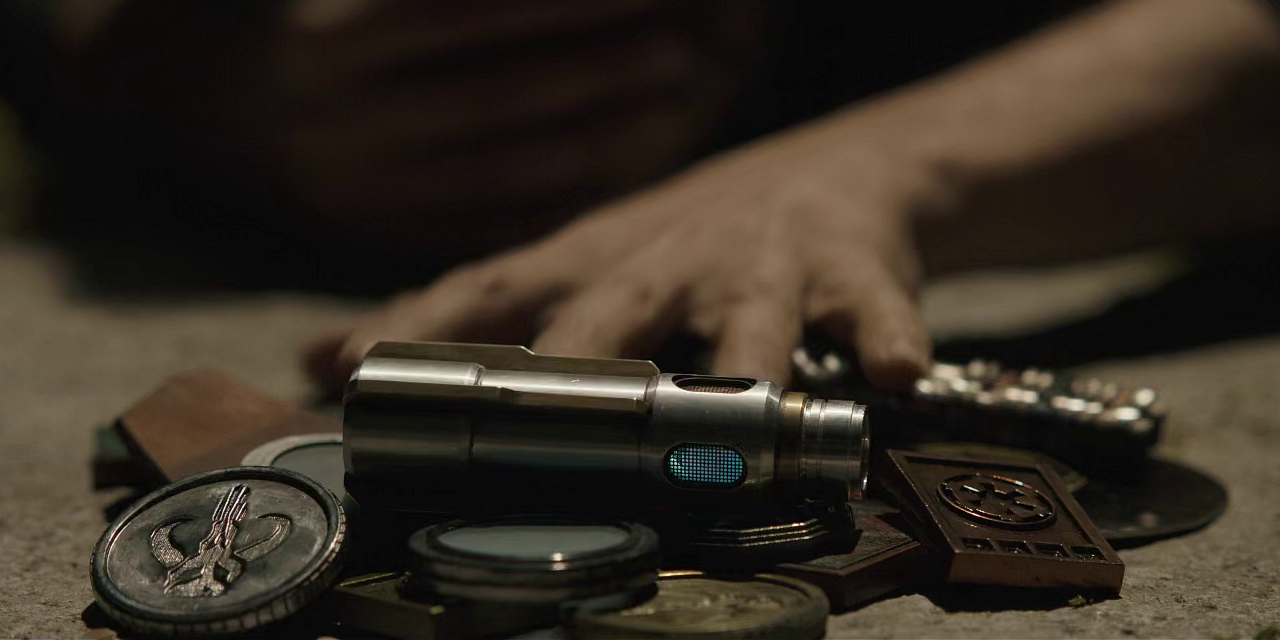
Wiki Spotlight: Psi-Wars Currencies


“I can do Calamari Flan… But I can only pay half.”


Greef Karga, the Mandalorian

Do you know what Psi-Wars needs more than anything? If you answered “Unnecessarily detailed rules on currencies in Psi-Wars that nobody will use” then you, my friend, have the same sort of problem my brain does late at night.  Because that’s what I wrote. 9,000 words of obsessively detailed currency rules.

Why would I do this? Well, first, because my brain wouldn’t shut up about it.  I kept coming up with new currency ideas, and I had to sketch them somewhere.  Believe it or not, these are somewhat edited down from what I originally had! But more than that, I got to thinking about the Heist, and what people would steal, and how they would expect to get paid. Combined with my recent explorations of finances for other things, I found myself coming up with all sorts of questions, questions like:

  • Do cash-based currencies even make sense in a sci-fi setting?
  • If they don’t, what do people on remote, “uncivilized” worlds use for money?
  • If they use cash, or commodity currencies, how much do they weigh?
  • How do you handle interstellar commerce? How do you balance the books of a star-spanning corporation or empire?
  • If the Empire controlled financial institutions, what prevents them from freezing the accounts of political dissidents?
  • Why would the Empire allow the Alliance to use the same financial institutions they do?
  • How do criminals get around various laws to buy stuff on the black market or get paid by fixers?
  • What does commerce in the Umbral Rim look like? How crazy can we get it?
  • Do the Keleni even need money?
  • What sort of money did various ancient empires use? Do they still use them?
I began to answer the questions for myself, writing out notes, looking up rules for these in other books, discovering the Flux rules in Cyberworld, diving into various financial concepts, and as I wrote out the notes, they became more and more detailed, and I had to trim them down further.  I had a noted down quick summary of every currency which, I notice, is no longer present in the article, but I could add it back, if you guys prefer.
I’ve separated this off for a reason.  I imagine the vast majority of people playing Psi-Wars just scratch off the word “Dollar” in GURPS and replace it with “Credit” and don’t think more about it.  And when they get to an alien world with alien commerce, they just stop for a moment, shrug and make up something on the spot.  And, you know, that’s fine.  I’ve listed that as a default set of rules in my currency article.  But some inspiration for some of these weirder currencies might be nice, and if you think about things like my questions above, you might want some answers to things like “How can a criminal do business in the Empire?” and “Do Keleni have money?”, so I’ve provided those. I’ve even added some rules to allow you invest your character more deeply into a particular currency, and to play up its impact on the setting, if you want.  I may further expand these, depending on what people want. But I don’t expect most people will ever use them, so everything about the article is self-contained. It’s a “nice to have” that you can explore at your leisure.

Psi-Wars Development Journal: it's just a Cultural Thing


I have a bad habit lately of not talking about what I’m doing with Psi-Wars.  This is partially because I’m busy with several different side-projects and I often get interrupted by kids and life in general, so I pick up a thing, make some progress on it, park it, and then come back to it later.  I also find that where Psi-Wars is right now, I benefit a lot from picking at small things, like little edits to a race (the Keleni, most recently) or adding some gear here and there. This doesn’t make for the exciting, focused sort of discussion like I had back back in the more “iterative” phase of Psi-Wars, and maybe I should find the discipline to return back to that, but in the meantime, this is working, so I stick with it.

But I wanted to at least add something to this blog, so people don’t get the sense that Psi-Wars is dead, so perhaps I should just do a journal whenever I run across something interesting, or I want to talk about what I’m working on.  For today, I wanted to bring up culture, especially day-to-day life.

With the coming Monster Hunter Psi-Wars game (which I’m far too slow on, frankly) set very deeply in the Umbral Rim, I’ve found myself trying to articulate what “Lithian” culture is like, but to really understand it, to explain how it’s different, I have to explain what it’s different from, which means tackling the core culture of Psi-Wars, which I’ve been calling “Galactic Culture” but that’s such a vague name I may change it to be “Federation Remnant” as it’s really the culture of the Empire and the Alliance, aka humanity (plus a few minor aliens that don’t have a culture of their own).  And man, did I underestimate the scale of that project.

I discussed in Iteration 5 the idea of social distancing mechanics, the idea that you can add a few small elements to show how unique and different something is, and I still stand by the value of that, but there’s an implicit assumption in that description, which is that everything you don’t describe is not worth describing.  In a lot of cases, this is true.  If I say “In the World of Darkness, set in Modern New York, vampires go to secret bars that serve blood instead of wine,” you implicitly understand what a bar is and what it looks like.  You expect it to be darkly lit, with some stools near a bar, perhaps some tables, perhaps some people playing pool, people standing or sitting and chatting while enjoying their drinks, and that there’s probably a bar tender you can talk to. I don’t need to tell you these things.  All I need to tell you is that there are secret vampire bars that serve blood, and you get the rest on your own, for free. Fantasy works this way too, to a slightly lesser extent.  If I say that the Kingdom of Luritania is a mediterranean kingdom where people wear togas and they have temples to Ishtar, the seductive warrior, Morrigan, the Witch-Queen of the Wilds, and Juno, the goddess of Hearth and Home, you have a bit of a view, and you might want to know more, but you can guess there are blacksmiths and that it looks something like a D&D-style polytheism and that there’s a king and princesses, etc.  We have a baseline we can work with, and thus we can note our divergences from that baseline.

Science Fiction, and I use that term loosely here to include space opera, lacks that assumed baseline, because there are so many possibilities that people can do.  When you go to sleep in a sci-fi setting, what are you sleeping in?  “A bed” you might say, but are you? I mean, it could be a cryopod, or this weird VR/Dreaming chamber, or on an “ultra-futon” on a spaceship bunk that responds to your comfort-needs directly. What do you eat? Just normal food? Or does the spaceship harvest spirulina and vat-grown protein mats and uses them to synthesize things that look like normal food? Or do people just munch of food-pills? Or do they have some sort of internally powered nanosymbiot system that somehow directly powers someone so they don’t need food anymore?  How do people keep time? Does our conception of time even make sense when we’re no longer tied to the astronomical objects, like the sun and the moon, on which literally all of our time-keeping mechanisms are based on?

These are the sorts of things I find people sometimes ask questions about, and what often trips me up in new sci-fi settings that I try to get into.  For example, I found Transhuman Space very frustrating in this regard, as it seemed to imply that the setting was vastly changed from what we knew today, but didn’t explain exactly how.  Do people still buy things with dollars in 2100? If I took a girl on a date to a diner, what would we eat? Do people even still date in THS? I don’t know.  I suppose in the long run it doesn’t much matter, as you can run it how you want, but I still find it disorienting to not be able to ground myself even in these basic assumptions.

With Psi-Wars, I mostly want to set the reader’s mind at ease.  The premise is that the culture is “basically 20th century earth, reskinned magically into space.” Obviously, they don’t use dollars, they use credits, but they come to the same. They use a clock much like ours, for some reason, and a dating system much like ours, for some reason (“I haven’t seen you in three standard years!”).  People meet at space port bars, go on dates, get married, have kids, and send those kids to space school.  Some of these might not be entirely realistic, but Psi-Wars isn’t an entirely realistic setting anyway.

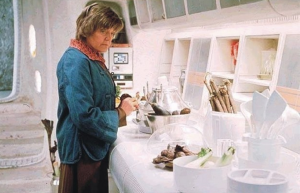
But I do find as I work on it, that there are lots of small things that pop up as necessarily different.  Like what your house looks like.  I don’t think anyone expects to walk into a Psi-Wars kitchen and see pots and pans.  They might expect to see some high tech gadgetry in there, as someone cooks some high tech food, like blue milk.  What does your bunk on a ship look like? When your pilot crew is done with their mission, and your wingman invites you to join the rest of the squadron playing a game.. what sort of game do you go play? If you want to flirt with a girl and take her on a date, where do you go?  If you guy to buy a blaster, what’s the shop like?  Even if we assume a minimum amount of detail or difference, there are still some questions that might have reasonable answers, and some of those answers will flow from the logic of the setting.

I had originally intended to set aside military tech to focus on “civilian tech” in this part of the tech cycle, and I’ve really found looking at these questions to be enormously useful in thinking about what sort of “civilian” tech there might be.  Of course, I have no plans to write up detailed descriptions of kitchen-tech, because nobody actually cares in an Action Game, and if you end up in a fight in a Psi-Wars kitchen, I trust your GM to be able to wing it (“Are there kitchen knives in here?” “Uh, sure!” “Do they have armor divisors?” “Uh… yeah, treat them as superfine.”), but do houses often have domestic robots? Probably!  Does Uncle Lars drive a repulsorlift car? Probably! If Uncle Lars decides to rip off a bank, can he do that? What does that look like? And when he’s trying to get away in his getaway repulsorlift car, how are the space cops going to stop him?

I also find that looking at “daily life” in Psi-Wars is helping to expand the idea of the “Humble Origins” background nicely.  I begin to see what sorts of jobs or background one might have in the setting, and these begin to collect into templates or lenses that I can offer, some of which are nice and fit neatly into mini-niches appropriate for “sidekick” templates that blur the line between an uninteresting NPC and an Action Hero, like a mechanic or a doctor.

So this exploration is providing unexpected dividends, but also taking more time than I expected or had hoped.  Thus, you’ll doubtless see some more cultural issues spilling out as I work on them, though hopefully I can keep the tedium to a minim.

Cultural Familiarity in Psi-Wars

So, I’ve been struggling a bit with Cultural Familiarity in the established world of Psi-Wars. I’ve touched on this topic before in Iteration 5, but that iteration was for general topics.  It was for you, dear reader, creating your own setting. Now that I have actual names and cultures (Maradonians, the Shinjurai, the Westerly, Lithian culture, the Keleni), we need to decide which of these have Cultural Familiarity penalties and which don’t. Is the difference between the Shinjurai and the Westerly like the difference between an American and a Frenchman, or the difference between an American and the Chinese?

Humanity

The poll results were close.  With the Empire as a base, Maradonians were voted to not have a unique culture by 5 to 3.  I can go with this result.  I tend to see the Empire as largely a successor culture to the Maradonian federation, so while there are differences, most of those differences come down to the fact that Maradonian culture acknowledges status (they focus on Savoir-Faire) and the Empire doesn’t (ostensibly, the acknowledge merit; in practice, they acknowledge the increasingly powerful bureaucracy that rules their lives).
The Shinjurai snuck through with standard culture by a 4 to 3 vote.  I can see why this one is tougher, because they’re clearly a distinct culture.  They follow a different philosophy that’s at odds with much of the galaxy, value very different things than Maradonian culture does, and have a very strong sense of identity.  On the other hand, they were one of the first on the scene, and set the stage for much of the rest of the galaxy, and the Empire “rejected Maradonian values in favor of Shinjurai values.” Neo-Rationalism is all the rage in the Empire!  This suggests a commonality.  And given the vote, that seems to be the case.  I can accept this.
Westerly are trickier. They’ve been developing their own culture in the game (Shepherdism and a ton of details crafted for Tall Tales of the Orochi Belt). But  “No distinct culture” won by 4 to 3 to 1, but if you combine the other two into a single option, it’s a tie.  So “No culture” is tied with “Some sort of culture.”  But then should we go with Westerly culture as a whole, or split them up?  I think the safest thing to do here is to allow most Westerly to have the same galactic culture, but there are some isolated pockets that might have their own culture, the tribes of Richat and the people of the Rogue Stars. We could give each culture it’s own familiarity, but it might be easier to give the isolated tribes one single cultural familiarity trait of “Westerly Tribal” and excuse it with a “shared origin” handwave.
Finally, as a general rule, planets may or may not have cultural penalties: this one tied.  So my take-away here is that isolated planets likely have their own cultures, but it’s probably rare.

And Yet…

We still have a problem, the “Jethro” problem.  See, on the one hand, this makes sense.  The galaxy is highly interconnected, and a Shinjurai philospher and a Maradonian space knight value different things, but when they both stop at a Westerly gas station, they all probably speak the same language and understand the same basic things.  If the Maradonian intentionally insults the Shinjurai, she’ll understand the insult.  The Westerly will recognize it too.  If the Westerly flirts with the Shinjurai, she’ll get it.  You rather have to: everyone is sharing the same space bars, fighting in the same wars, and speaking the same language.  That makes a strong case for shared culture; sure, there are class differences and value differences, but that’s no different from snooty French people who enjoy modern art and gourmet food looking down their noses at an American who loves guns and burgers; they’re different, but they understand one another.
But Tall Tales of the Orochi Belt included an NPC named Jethro, who was from a backwater world, St. Borlaug’s Star, that mostly farmed and hung out with fellow Westerly from the Belt. He’d never seen Maradonians or Shinjurai and didn’t understand them.  He’s very much the “Hill Billy” sort, and such a character makes sense and fits.   If you’ve never been out of the Undercity of Denjuku, would you understand any culture but Shinjurai? Or if you never left the ivory towers of Persephone, would you understand the first thing about the Westerly or the Shinjurai?  This argues for a cultural familiarity, but if we make one, in this case, we’re arguing that everyone should have cultural familiarity (Maradonian, Shinjurai, Westerly, Imperial) all the time unless you’re one of these isolated characters. Hmm.

And, as a general rule, I’d rather keep track of bonuses than penalties. 

–Nemoricus

 On the other hand, you can make the same case for people with the Western Culture in the real world.  I comment on how Jethro is “like a Hill-Billy.”  How do we handle a Hill-Billy? Or a snooty French girl who has never stepped outside of her estates in Provence? Well, we don’t handle it with Cultural Familiarity (American) vs Cultural Familiarity (French).  What if, instead, we minimized the penalties in such a way that only those sorts of characters had to worry about this? If your character is only familiar with a subculture, then you have a Quirk “Provincial” which applies a cultural familiarity penalty for you and you alone to everyone outside of your Subculture.  So Jethro would have “Provincial (Westerly)” and a Shinjurai girl who had never left the Undercity of Denjuku or the spires of Xen would have “Provincial (Shinjurai)” and so on.  This allows us to have our concept, without cluttering the game with unnecessary elements that everyone else in the world has to track.

Alien Culture

We have the broader “Lithian” culture for the Umbral Rim, which includes the Ranathim, the Slavers and the Gaunt (and I might do a poll at some point to create some minor other race, something no bigger or more involved than the Asrathi).  With a vote of 6 to 2, my backers decided the Keleni are their own culture, which makes a lot of sense to me. They’re pretty influential and scattered across the galaxy, and have their own “insider culture” that they cling to no matter where they go.  The Keleni of the Empire likely have both Cultural Familiarity (Keleni) and (Galactic Federation) and those in the Umbral Rim likely have both Cultural Familiarity (Keleni) and (Lithian).  If you’re a Templar, you’ll just make sure you study Cultural Familiarity (Keleni), rather than (Lithian). Likewise, if you’re a Tyrant, you’ll likely just study (Lithian) rather than (Keleni).
The Eldoth were overwhelmingly given a 2-point cultural familiarity by a vote of 8 to 0.  It’s unanimous.
And as a general rule, “Aliens should have one or more cultural familiarity specializations” won by 4 to 1.  This also makes sense; in a fantasy setting, we might expect each race to have its own culture; in the same way, we might expect all aliens to have at least one culture in Psi-Wars.  So the Sathrans and certainly the Mug will have their own Culture, and the Nehud will have one or more.
I had wanted to poll on the Asrathi too, but I forgot to include them on Patreon. On SubscribeStar, the Asrathi having their own culture won 1 to 0, and we have a general trend towards it with the “Aliens should have one or more cultural familiarity specializations.” I’ll need to think on it though (drop me a comment here or on the discord if you have strong feelings).  They’ve been written as a sort of an “integrated culture.” They’ve been dissolved by the galactic polity and so have little in the way of their own culture anymore but are trying to recreate it.  “Asrathi Pride” might work better as a Provincial Subculture, as a quirk, than as a true Cultural Familiarity, at least for now.

On Cultural Familiarity Proliferation

One concern raised by backers was the fear that Cultural Familiarity penalties would diminish the role of the Diplomat.  I happen to disagree strongly with that: if there are 50 cultures in a Galaxy, a Diplomat takes Cultural Adaptability for 10 points and is golden from then on.  The problem isn’t with Diplomats, it’s with soldiers and spies and space knights.  If you have cultural familiarity penalties every other planet, then you need a diplomat to get anything done, or you’re just going to run around force-swording everyone you meet, because that’s easier.
The case described by my Backers is this: if you’re in Human space: the Galactic Core, the Glorian Rim, etc,  and you’re human, you’re probably fine unless you’re from some backwater (then you have the Provincial quirk). If your space knight goes to the Umbral Rim, then obviously people get weird and different; same with the Keleni, the Traders, the Nehud, the Mug, etc.  The point of these races is to provide the exotic, so that makes sense. You need a Diplomat to deal with those, or to deal with the cross-class divide (as classism is definitely a thing).  There is some value, then, in Cultural Familiarity, but not too much.
Given that the rule is largely “only aliens have cultural familiarities” I think this greatly reduces the value of Cultural Adaptability;  you’re very rarely going to see anyone with more than 4, so that suggests to me the point cost of Cultural Adaptability in Psi-Wars should be 5.

Moving Forward

I’ve been trying to collect a last few pieces of art, though that will likely take awhile, but once I have them, I’ll start to build a set of entries for the major cultures of Psi-Wars, including what tech, philosophies and other elements are associated with them.  It’ll be a project for later, but I think it woudl be nice to say “I want to be a Shinjurai Commando” and click on a single page and reference everything associated with your particular culture.

Annara or Traditional Keleni Communion

Keleni traditionalists call Annara the pure form of Communion, the one that Keleni practiced in the past and still practice today. This may or may not be true; evidence suggests that the ancestral form of Communion gave rise to both Annara and True Communion, and that each has a piece of the original.

Annara, the Kelen word for “Communion,” (or more accurately, total unity of all things, or a sense of transcendence gained from feeling connected to all things), focuses more strictly on the natural telepathy of the Keleni people. It cultivates unity through telepathy and connection with one’s ancestors, and trains the Keleni in empathy for all beings, Alien or Keleni, sapient or animal. It also cultivates the ancient tradition of prophecy that traces its lineage back to the dawn of the Keleni faith-philosophy.

Unlike True Communion, Annara retains traditional Communion trappings, such as “folk healer” exorcisms and esoteric medicine. They also often learn Religious Rituals to better serve their community. Dogmatic traditionalists may teach their followers to fight with the resonance staff, and ancient Keleni weapon, but many also teach the force sword.

The intent focus on Keleni matters means that followers often learn a great deal about the language, history and culture of the Keleni. It also means that the religion attracts religious fanatics and xenophobic traditionalists. Many practitioners of True Communion hold Annara in awe, seeing it as the “lost half” of Communion secrets, but non-Keleni often find it difficult to win the trust of a Keleni master well enough to learn the style.

Required Skills: Esoteric Healing, Hidden Lore (Communion), Meditation, Philosophy (True Communion), Savoir-Faire (Dojo),Religious Ritual,

Required Psychic Skills: Telereceive

Additional Psychic Skills: Ancestral Recall, Aura Reading, Cure, Emotion Sense, Mind Shield, Telescan, Telesend

Techniques: Communion (Meditation), Introspection (Meditation), Penance (Meditation), Symbolic Lore (Bound Princess, Righteous Crusader, Exiled Master; Philosophy).

Psionic Techniques: Animalism (Emotion Sense), Expansion (Mind Shield), Full Communion (Telesend), Omniscan (Telescan), Multiplicity (Telerecieve), Secret Trait (Moral Intuition, True Investiture, Virtue), Send Senses (Telesend), Universal (Telerecieve, Telesend)

Secret Miracle: True Prophecy

Secret Psionic Techniques: Acausal Comm (Telerecieve or Telesend)

Secret Traits: Moral Intuition, True Investiture, Virtues (Asceticism, Charity or Justice)

Perks: Avatar, Daily Meditation, Deep Study, I Know What You Mean, Inner Mastery, Honest Face, Patience of Job, Ping, Rewards of Faith, Secret Miracle (True Prophecy), Secret Trait (Moral Intuition, True Investiture, Virtue), Synchronize, Technique Mastery (Introspection)

Optional Advantages: Clerical Investment, Devotion, Intuition, Language (Kelen), Mind Link (Telepathy -10%), Protected Power (Telepathy -10%), Telepathy Talent, Trained by a Master, True Communion, Weapon Master (Staff or Force Sword)

Optional Disadvantages: Charitable, Code of Honor (Virtue), Disciplines of Faith (Asceticism or Mysticism), Fanaticism (True Communion), Intolerance (Non-Keleni), Selfless, Sense of Duty (Keleni),

Removable Disadvantages: As True Communion;

Optional Skills: Connoisseur (Relics), Exorcism, Force Sword, Fortune Telling (Dreaming), Hidden Lore (Places of Power), History (True Communion or Keleni), Law (Keleni), Staff, Teaching

New Traits

Moral Intuition 12/27

True Communion teaches that true moral understanding comes not from without, but from within. Followers of True Communion learn to cultivate their moral intuition and, by listening to their moral instincts, intuitively know what choice is right. At level 1, when faced with a moral conundrum they may roll IQ to know what choice is the worst choice; at level 2, they may roll to uncover what is the best choice. In both cases, the character may roll Philosophy or Introspection (Meditation) to know why.

Statistics: Intuition (Aspect, Moral -20%) [12]; level 2 adds Inspired +100% for [27]

True Investiture 10/level

The character gains a bonus to all True Communion reaction rolls equal to his True Investiture level; this is cumulative with any Path Reputation he might have. A character may not take more than 4 levels of True Investiture without GM permission.

Statistics: Power Investiture (True Communion)

New Perks

Daily Meditation: The character always meditates if possible; thus the GM never has to ask if he has fulfilled his disciplines of faith; Furthermore, if the group does not explicitly track how much meditation a character practices during down time, assume that the character always starts with 3d6 more meditation points at the beginning of a new adventure than the GM normally offers to players who meditate.

Inner Mastery: Characters may substitute Meditation for any Will-based skill for Psionic Extra-Effort rolls.

Rewards of Faith: This is a leveled perk (maximum suggested value is 3). The GM can in form a player that he has a vision, a dream, or feels an urging or an instinct that he must do something, like a subtle Command from Communion. If the player willingly does as Communion requests, the GM may reward the player. This may be an impulse buy point or 2d6 “meditation” fatigue that he may use on Psionic Powers. This perk is effectively “Option: GM may reward players for good roleplay,” and the GM is encouraged to pick a standard reward: an impulse buy point is standard, but GMs who feel this might be unbalancing may choose instead to offer the bonus fatigue as the standard reward.

New Techniques

Communion

Hard

Default: Meditation;

Prerequisite: Meditation; May not exceed Meditation+4.

The character may attempt to gain a deeper connection with Communion. This allows him a +1 to petition rolls or, if done for 8 hours, grants him one point of Meditative Energy Reserves (If he has Communion; he may not use this benefit if he has Dark Communion or Broken Communion).

Deep Trance

Hard

Default: Meditation-4;

Prerequisite: Meditation; May not exceed Meditation.

The character meditates deeply for one hour and enters a trance. This trance either offers the same bonuses as Autohypnosis or +1 to all Psi skills plus an additional bonus equal to 1/3 of his margin of success, to a maximum of +5. He gains +4 for sensory deprivation, +2 for the Body Discipline perk, and may use Religious Ritual as a complementary roll.

Heuristics

Hard

Default: Philosophy -6;

Prerequisite: Illuminated and Philosophy; May not exceed Philosophy.

See Powers: the Weird page 6. Characters with Communion may only learn Heuristics for supernatural (e.g. related to psionic powers or Communion) or moral truths unless they are Illuminated.

Introspection

Average

Default: Meditation;

Prerequisite: Meditation; May not exceed Meditation.

This core skill of Meditation works as the basic book describes it: The character may roll meditation to gain moral (rather than practical) insight into what he should be doing.

Penance

Hard

Default: Meditation;

Prerequisite: Meditation; May not exceed Meditation+4.

The character may attempt to make amends for wrongs he has done. This typically requires 8 hours of meditation and upon success, the character may roll Meditation. On a success, he may either remove one point of corruption (either from Dark or Broken Communion), or attempt to regain Communion after violating one of its sins.

New Miracles

True Prophecy

Minimum Reaction: Very Good

Learned Prerequisite: True Communion 10

Learned Prayer Cost: 12

After spending five minutes meditating (they may claim the +1 for long meditation), the character receives a vision. The vision can contain any information the GM wishes and often is extremely exhaustive and informative, and may cover topics in the future or past, far away or nearby, often several at once and may impact a wide variety of characters, or entire nations, in scope. The imagery may or may not be symbolic, and the GM’s discretion; if so, the character may roll Philosophy (True Communion) to correctly interpret the imagery. The impact of the vision is such that it can temporarily throw the prophet into seizures: roll HT upon completion of the vision; failure causes seizures for one minute per margin of failure.

When the vision of True Prophecy comes into conflict with another form of precognition, it always wins. Against another character with True Prophecy, roll a quick contest of Philosophy.

Statistics: Precognition (Active Only -60%; Backlash, Resistible, Seizure -50%, Cosmic, no Die roll +100%; Cosmic, unlimited scope +50%; Cosmic, distant future or past +50%; Divine -10%; Reduced Fatigue Cost 2 +40%, Reduced Time, 5 minutes, +20%) [60]

The Symbols and Rituals of True Communion

Aniconism

True Communion believes that depictions of the supernatural, be they idols or symbols, tend to unduly distract one from his inner journey in understanding the world. One can hold onto an idol, put his faith in that idol, and forget that the physical thing he holds is an illusion, nothing worth having faith in. Moreover, once the divine is given a face, people begin to forget its cosmic qualities and begin to overly humanize it. Thus, True Communion often, though not universally, chooses to eschew any symbolism at all.

True Communion symbolism tends to focus on things that naturally guide on to right and proper conclusions. They tend to be known by their tools and their words, rather than their great idols or symbols. Thus, the temples of True Communion tend to be remarkable bare of baroque imagery, favoring instead creating a place of profound peace and introspection, a natural place where one can lose himself in his own introspection.

This is not a strict taboo, however. The Keleni traditionalists are more likely to eschew imagery than human/alien traditions, as Traditionalists believe that True Communion and Keleni culture go hand in hand. Alien traditions, especially human traditions, feel the need to differentiate themselves from others and humans especially, caught up in their empires and factions, feel the need to have some symbol of their faith that they can point to. Even more extreme versions, such as the cults inspired by True Communion found within the Divine Masks tradition, absolutely have idols, but arguably have fallen far from what True Communion stands for.

The World Triad

Some followers of True Communion, especially among humans, represent their faith with the World Triad. The three spirals represent either the three forms of Communion that flow into one another (traditionally True Communion on top, flowing into Broken Communion on the bottom, which flows into the unifying Dark Communion at the side) or the three paths or virtues of True Communion, with the Righteous Crusader triumphant at the top, the Bound Princess “kneeling” below, and the remote Exiled Master to the side, binding the two. In the latter case, they world triad might be colored blue, green and white. The circular nature of the world triad represents the unity of all within the bonds of True Communion.

LA

When asked what our ultimate purpose was, an ancient Keleni master once replied “La,” which is a Kelen relational that connects two words together, and roughly translates into “to be.” Some practitioners of True Communion have taking to intoning the word in a long, low voice to remind themselves of their purpose and to induce a deeper state of meditation, to “be” connected with the greatness of Communion. As such, some use the written kelen text of the word as a symbol of their faith, either as a single phrase, or the repeating characters in Kelen (for example, on their prayer beads)

The Tools of True Communion

Most symbols associated with True Communion aren’t symbols at all! Instead, they are tools for representing metaphors, or for assisting the practitioner on his quest of cosmic self-discovery.

Kelen

The language of the Keleni, Kelen, is an unusual language that replaces “verbs” with “relationals” that describe how things interconnect. In the Kelen language, things do not do, they are and they are in connection with other things. This frame of mind and way of thinking, according to True Communion, provides powerful insights into Communion and the true nature of reality. Typically, only Keleni practitioners really insist on using Kelen. Alien practitioners of True Communion have long since shifted to Common Galactic, as most of its practitioners speak it, but many temples still encourage students to study the language so they can better understand Kelen language and gain greater insights into communion.

Kelen Literature

True Communion has its roots in ancient holy texts. The most prominent and popular of these have been collected into Jathuna, the sacred book of the Keleni. These texts describe mythical imagery, spiritual truths and the history of the Keleni. This includes, among others:

  • The Forever Cycle (Jatewelre Janaren)
  • The Book of Grief (Nikan Anloral)
  • The Book of Exile (Nikan Anpera)

The core of True Communion philosophy, though, comes from other works, some of which act as commentary on the Jathuna, others simply discuss philosphical concepts outright. The most important of these philosophical treatises are a pair of books that combine together:

  • The Verses (Jaxisse Jilke)
  • Meditations (Antoli)

The first, the Verses, are a series of enigmatic aphorisms, offered without comment or context. Meditations details numerous small stories meant to expand upon the aphorisms and attempt to teach, through metaphor, a particular precept or belief; these stories, themselves, tend to be either condensed versions of the mythology outlined in the Jathuna, or attempts to explain precepts taught within that book. These books combine: a student reads Meditations and then understands the Verses, and then uses the smaller, more compact aphorisms of the Verses as reminders, pointers, to the lessons learned from Meditations.

Keleni traditionalists will often keep libraries of physical books, including the Jathuna and the commentaries. The Verses are much more popular with non-Keleni Communionists, who will often keep a copy of it (or similar works) on their personal datapad. It has become so popular, in fact, that many non-Keleni communionists have no knowledge of the original stories that the Verses refer to, and they attempt to determine for themselves what they mean.

Communion Path Symbolism

True Communion has unparalleled knowledge of the nature of Communion, including its paths. It believes that true mastery is gained not on a path, but in understanding the complete totality of Communion, but with that said, most people can and should walk a path at some point in their life. The philosophy makes liberal use of the colors, trappings and symbols of the paths, especially in relation to those who have destinies that align them with those paths.

Water

The Keleni are an amphibious race with a close relationship to water. They tend to use it and its natural flow often in their metaphors and in their places of worship. True Communion often uses pure water or a silver chalice with water in cleansing, healing, or initiation rituals, though this is more common in Annara than in non-Keleni True Communion.

Prayer Beads

Some True Communion practitioners will carry a rosary or prayer beads with them when they meditate. They will chant a particular mantra and then click a bead, not explicitly to keep count, but as a way of creating a lulling rhythm that helps to melt away the world. Such rosaries have become popular means of showing one’s faith, especially with a world triad hanging from such a rosary, or with the beads engraved with the kelen characters for “La.”

Memory Crystals

The Keleni, as natural telepaths, learned to craft crystals in which they could store their memories, thoughts and emotions. While a perfectly mundane technology to most Keleni, where they might store keepsake emotions (like how they felt after their first kiss or when they first held their newborn baby), many practitioners of True Communion will store moments of enlightenment or entire thought-chains that contain important knowledge of Communion. They usually store these in protective orbs that will unfold when telepathically commanded to open to allow someone to access the secrets within. Such memory crystals often form the bulk of the “material” in a True Communion library, especially during the old time of the original Templars.

Eloi Fragments

In places of extreme Communion Sanctity, the psionic resonance there can begin to crystalized into an Eloi, (or, in Kelen, an ankoreta). An Eloi can act as a powerful psionic lens; Kelen have the technology to harvest them and either use them directly, or break them up into Eloi fragments to power psi-blades, resonance staffs, or psi-boosters. Temples have specific constructions designed to focus the psionic energies of Communion to a single point, often housed in the center of a temple, it’s holiest point, where the crystal slowly accumulates, floating at the very heart of the temple.

Some archeologists speculate that the Keleni have been building these temples to facilitate the creation of Eloi long before they began to hold them in sacred regard. Today, most Keleni or True Communion temples hold their Eloi in such high regard that they will not harvest or break them up unless in dire need, or to construct the finest of psi-swords for a truly worthy hero.

The Force Sword and Resonance Staff

The Keleni long learned that they had to protect themselves. With the resonance staff, they learned the art of extending their psychic presence and connecting fundamentally with a psychic tool. The next step beyond this was their invention of the psi-sword, which eventually fused with the psionic force swords of the Templars of Communion. While not directly symbolic or meaningful for the faith of Communion, the image of a Keleni wanderer bearing a resonance staff, or a Knight of Communion bearing a psi-sword have become iconic for the faith.

The Temples of True Communion

Temples lie at the heart of True Communion. Masters might claim that they’re irrelevant except, but for the faithful lay person, they offer a place where the weak and suffering can go for solace, or where the student can go to learn at the feet of a master.

The purpose of a True Communion temple is to attempt to illustrate the path to enlightenment and the nature of the divine cosmic. All rest on ground with Very High True Communion sanctity. Each temple has a unique design. Most have a free, flowing structure that seems somewhat chaotic or organic to the uninitiated, but they tend to follow the natural contours of the land and may allow nature to mingle with their construction to create an even more harmonious atmosphere: vines may climb the walls of the temple, or the temple may be carved out of the stone of a cavern, or a river may cut directly through a temple. Some temples have fountains, whose water the faithful may believe can heal wounds, and whose pattering sounds may assist in meditation. Many temples have the words of their secret text carved onto the walls; as one winds through the unusual layout of the temple, the sacred words of True Communion may spill forth before you, so that your tour becomes a literal journey of enlightenment.

Temples also house Eloi gems at their heart. Their geomantic arrangement channels the psychic energies of Communion to a single point, creating a point deep within the temple of intense sanctity that crystalizes into material form. These most sacred point is typically only accessible to the High Priests of the temple.

Meditation

The devotees of Communion do not believe that they must pray to a distant god for relief, but that they must turn their mind and thoughts inward, to find the divine connection they have to their infinite cosmic deity, and to one another.

Meditation is generally done while kneeling or in a “lotus position,” with eyes closed. Meditation is preferably done in a holy place or in nature, but any private or undisturbed place will do. Masters of meditation will meditate in complete silence, but those less experienced might chant aphorisms from the Verses or the Mantra “La,” and once such a cycle is complete, may “count” the chant with the click of a prayer bead. Some practitioners, especially Templars, enter a meditative state through carefully practiced movements or katas. The slow, precise “practice” movements of a training templar is, in fact, a form of meditation.

Ordination

Those who wish to set aside the world and devote themselves to the practice of Communion may seek to become ordained as a monk or templar. This requires, first, finding a master who is willing to devote time to teaching a student all the ways of Communion. Once this has been done and the master believes the student has sufficient devotion and knowledge to begin life as a monk, he is brought before a council of elders, typically those who run a local temple, and if they find him worthy, he may join the temple.

To do so, he must first remove his old clothing, then take whatever oaths the masters requires of him, generally represented by the Disciplines of Faith that the practitioner will observe (generally Disciplines of Faith (Mysticism)). The intitiate is then ritually cleaned, either by dipping them into a font of water, or having a chalice of water poured over them, and then they are redressed in the robes of their new calling.

The Traditions of True Communion

True Communion, as a philosophy, is not especially prone to ritual. It concerns itself with an inward journey of spirituality that allows one to learn to silence the self and connect himself to the greater community around him. Thus True Communion demands no specific ceremonies. Even so, the communal nature of Communion encourages tradition and bonds across community and culture, and numerous traditional rituals have sprung up. These traditions often request the presence of a priest or monk of True Communion to enact a specific religious ritual. Most such spiritual leaders accept the request and assist their local communities in these traditions. This practice is far more common among the “Traditional Communion” of the Keleni than it is among the non-Keleni “True Communion” practitioners, who tend to separate themselves from their community.

Community Rituals

The intent of these rituals are to bring the community together and remind everyone of their belonging to a greater whole. As such, all such rituals take place before the community as a whole; they tend to be short affairs, after which most communities will celebrate with a party (such a party is not strictly religious, and so most monks will bow out). Such ceremonies include, but are not limited to:

The cleansing of a new born child with water, either dipping them into a temple font, in a natural body of water, or pouring water upon them from a chalice.

A marriage rite, which usually consists of a vow taken between both groom and bride with a witnessing priest, who then binds their hands together with a length of ribbon (typically white or violet).

A funerary rite, where the priest pronounces the virtues of the fallen, the community each voices their fondest memories of the deceased, and then the dead is either burned on a pyre or buried at sea.

Pilgrimage

The temples and holy places of True Communion hold within them the capacity to create great miracles that can heal the sick and restore the handicapped and bring enlightenment and peace to those who suffer. Thus, many followers of True Communion seek to visit a temple or holy site at least once in their life and the tradition of pilgrimage has arisen in True Communion. This is especially popular among non-Keleni practitioners, and the Crusades to free the Temple Worlds of the Keleni was part military exercise and part grand pilgrimage.

For most, a pilgrimage is just a matter of traveling to a temple, visiting with its priests and monks and perhaps meditating in a particularly spiritual point, such as near its central fountain, or at its highest peak. Pilgrims often make a donation to help support or maintain the temple, and some of the most popular temples become astonishingly wealthy from such donations. A common tradition for temples that find themselves hosts to many pilgrims, such as the temple in which the remains of Isa the Exile are kept, will offer pilgrims a single, simple memory crystal in which they can imbue their religious experience at the temple. They may then keep the memory crystal, so they can relive that moment of spiritual clarity or they may donate it back to the temple. Often, such temples have grand chambers in which thousands of memory crystals dangle from the ceiling, reflecting light and filling the chamber with a thousand memories of religious fervor.

Lineage

True Communion places great stock in family, and in family traditions. It also puts great weight upon the importance of master/student lineages. Most children can quote their lineages back several generations, as can most students quote their educational lineage. For the Keleni, this is a visceral thing, for they have a deep telepathic connection with their ancestors, and place great stock in the “clan” from which one comes. For all followers of True Communion, being a member of a lineage means belonging to something larger than yourself. One’s destiny and tradition is often inherited from your lineage: if your father was a great warrior, you likely will be as well, and if your teacher served as a great protector of the faithful, you will likely be as well. While followers of this tradition tend to pigeon-hole certain lineages, they try not to hold one lineage over another: one man may descend from kings and the other from commoners, but some of the greatest holy men came from common lines, as well as some of the greatest warriors: each lineage has its heroes and icons, just some are more globally famous than others.

Akashic Symbolism and Ceremonies

Akashic Symoblism

The Akashic Record

According to initiates of the deepest Akashic Mysteries, a successful initiate finds the Akashic Record at the end of a long and harrowing astral journey. Most initiates describe them as a single tablet of glowing light that once touched, floods the mind with knowledge, but some describe it as an old woman, a statue of an old woman, or an aging book bound in human flesh. Artwork commonly depicts the Akashic Record as a glowing tablet held a loft by an Akashic Oracle, at the highest point of the artwork. The Akashic Record represent enlightenment, and the highest degree of initiation.

The Tree of Time and the Golden Path

Initiates of the Akashic Mysteries describe their astral journey as walking a winding maze until they reach the foot of a mountain that brings them to the road to the Akashic Record. When they look back down, they can see the fullness of time laid out before them. Some describe it as like a tangle of yarn, or a labyrinth, but the most common description is like a tree.

Those who learn the see the future describe a similar “maze” of branching possibilities. For example, when asked about whether or not a woman should accept a marriage proposal, Oracles actually see a myriad possible outcomes, including many possible outcomes if she says yes and if she says no. The near present has the least possibilities, and they’re very likely, the “thickest” branches, while those far away are the least possible and the most numerous, the “thinnest” branches.

The Akashic Order, thus, likes to describe time as a tree, with the present as the trunk, the roots as the past, and the branches as the possible future. The tree of time is ultimately the symbol of the Akashic Mysteries.

When walking the paths of the astral maze, many Akashic Initiates describe being guided by the golden light of the Akashic Record. This makes the preferred path “golden.” This has created the term of “the golden path” as the one true set of choices everyone must make to reach the enlightenment of the Golden Record. Many who follow the Akashic Mysteries like to have a great tree in a garden with golden ribbons hanging from its branches, to symbolize their dedication to following this “golden path.”

The Coming Storm

Beyond a particular point, no Akashic Oracle can see the future. She sees instead the writhing strands of chaotic impossibility. Beyond this point, precognition is impossible, the “Time Horizon.” This may just mean that every precognitive has limits, but the horizon refuses to move past a certain point: it comes swiftly and closes in on the current generation! And events that Akashics can see shortly preceding the Time Horizon depict awful slaughter, mayhem and carnage, though their exact nature varies, and who inflicts this carnage is invisible to the eyes of the Akashics (they can see the burning cities and the dead strewn about, but not who will destroy human civilization). Most have concluded that they cannot see the future beyond this because, for humanity, there is no future.

Within this writhing chaos, some Akashics can see gaps, and can peek at futures just beyond them. These tend to show humanity in a terrible state of subjugation or slow dissolution, but on one, beyond which the Akashic Record is visible, they see a safe and surviving humanity.

Akashic Oracles have a difficult time relating the horror of the Coming Storm (the first time an Oracle witnesses it, the GM might call for a Fright Check), and dislike talking about it. In iconography, artists like to depict it as a literal storm or as a burning tree; Akashics who have seen the Coming Storm prefer the burning tree, as they describe the Coming Storm as “devouring the tree of time,” but feel it might confuse the lay person. Within the temple on Persephone, an obscure wall has been painted entirely black and seems to move and writhe in the torchlight, and has the hellish imagery of skulls and slavery depicted on it; the Akashic Oracles claim the horror of this wall in a dark and foreboding passage comes to the closest to accurately depicting the Coming Storm.

Veils

The Akashic Oracle must isolate herself from the world to make the best possible predictions. Knowing the future, she must refrain from interacting with the world more than necessary lest her actions introduce unforeseen consequences, and she must not let worldly concerns distract her, lest they impact her visions.

The Akashic Order uses veils to symbolize this separation from the “supernatural,” or the silent places where visions take place, and the “real” world, where the rest of us live, and what the visions speak of. Those who enter an Akashic temple must pass through a silken veil, and those who will be initiated must pass through multiple veils, while the Akashic Oracle wears a veil while out in public, especially over her eyes.

The Veil symbolizes innocence and the dividing line between the supernatural and the physical. By wearing a veil, the Akashic Oracle denotes herself as connected to the “supernatural.”

The Devils of Persephone

The Devils of Persephone, important to the origins of the Akashic Mysteries, remain a potent symbol for the Akashic Mysteries. Akashic artwork depicts the Devils as standing between the supplicant and the tree of time, or haunting the labyrinth of time, stalking those who would reach the Akashic Record. They appear twisted or phantasmal creatures with black or shadowy skin, white eyes or no eyes at all, and great, fang-filled maws and long, hungry tongues. If an artwork depicts a point of light (a knight’s upraised force sword, or the Akashic Record itself), they recoil from that light as though in fear. They often decorate the facades of Akashic Temples, and statues of them stand before the veils of initiation. While outsiders interpret them as the monster, Akashic imagery treats them as guardians, as those who stand between the supplicant and the ultimate truths they seek, testing the worthy and devouring the unworthy.

The Symoblism of Time

The standard Akashic symbols tend to represent metaphors for time itself, explaining its shape, the needs of the Akashic Order and the ultimate lesson of the coming galactic calamity and the need for enlightenment and knowledge. The Akashic Order uses these symbols to teach the layman and to enlighten the initiate, but they have additional, more specific symbols.

The visions of oracles tend to be highly symbolic and confusing and often deeply personal. The Akashic Order has compiled entire libraries full of that imagery, to help explain the visions of their oracles, but they also drill these symbols into their initiates. They find that those steeped in the lore of that imagery are more likely to see that imagery in their visions, and thus these symbols create a language of interpretation that makes the visions easier to understand.

The Akashic Order often uses this imagery, in addition to the imagery noted above, in their Mystery Plays, in their ceremonies, and they’ve found their way into the heraldry of the Alliance.

Animals: Small adorable creatures, who often speak. Represent the poverty stricken, the weak, those who need to be protected; also represent the struggles of the common world, and often live in a harsh nature. For powerful, frightening animals, see the Great Beast.

Blood: Guilt, failure, the consequences of a past action catching up to one.

Blossoms: Any number of the poison blossoms of Persephone make their way into the symbolism of the Akashic Order. Their meaning varies from blossom to blossom, but generally symbolize love, innocence or the price of power.

Chains: Symbolize the bonds of vows, or connections between two people.

Darkness, the Void: Calamity, the Coming Storm, the Unknown.

Fire: Chaos, rapid change, the destruction of rightful rule; the Coming Storm.

Stars, Astronomical Phenomenon: A new journey, the need to travel, appointing a desired location.

Shadows: That which could be, but is not

The Blind Woman: Symbolizes oracles, oracular knowledge, or self-sacrifice

The Crown: Symbolizes rightful rule.

The Eye: Symbolizes knowledge, insight, psionic power, or the Akashic Record.

The Fool: Symbolizes innocent violation of rightful rule, an accidental (and possibly fortunate) violation of rules; can also symbolize another perspective.

The Force Sword: If vertical or held aloft, symbolizes a force driving away “Darkness.” If held horizontally or across the body, symbolizes righteous defense. If lowered (at a downward angle) but active, symbolizes restraint or control.

The Great Beast: Symbolizes slaughter, murder, war crime and violent violation of rightful rule.

The King: Symbolizes rightful rule.

The Knight: Symbolizes a powerful ally, someone that will defend or protect rightful rule.

The Lover: Symbolizes temptation away from one’s duty; a violation of the sacred.

The Mask: Usually two toned, with the left dark and the right bright. Symbolizes deception, or a hidden/masked nature, or something that cannot be known.

The Princess: Symbolizes a powerful victim or pawn, someone who others should sacrifice to gain safety or prosperity.

Akashic Ceremonies

The Akashic Mysteries use rituals to induce trances in themselves, to impress their followers, and because by following rigid protocols, they can slowly strengthen destiny to ensure that the future occurs as they predicted. All ceremonies require Religious Ritual (Akashic Mysteries). Such ceremonies may be performed by a priest or priestess of the order, but traditionally an Oracle is always present and the ceremony takes place under her authority, even if she plays no more than a symbolic role.

Supplication

Those who wish to ask a question of the Oracles of the Akashic Mysteries must submit their request in advance. For off-worlders, the Oracles prefer that the request be submitted before setting foot on the world. The Order decides which questions to take and on what schedule, and then notify those whose questions have been accepted.

When the supplicant, the one who has a question he wishes answered, arrives at the Akashic Temple, he is greeted by his companion, a member of the Temple who will accompany him at all times. He is ritually bathed, purified and dressed in preparation for meeting the oracle. Most temples encourage fasting. When the appointed time arrives, the companion gives the supplicant a ceremonial wafer dosed with a hallucinogen (traditionally Dream Nymph, but as that’s a dangerous poison, some temples use a more mild hallucinogen; see B440), and then guides him into the bowels beneath the temple where the Oracle awaits him. To reach her, he must pass through corridors full of symbolic imagery and at least one veil. The exact course depends on the message the temple wishes to give the supplicant (which may be political rather than mystical, something like “Look how powerful we are” or “Behold how much you need us”).

Finally, he stands before the Oracle. She usually sits upon a chair, tripod or throne, often in a room full of vapors. She gives a dramatic display in telling the supplicant the answer to his question (Performance or Religious Ritual). Usually, the temple divines the truth in advance, as the best precognition occurs in silent sensory deprivation chambers. Once the truth is known, the temple then usually decides what they want to tell the supplicant, and the Oracle focuses more on the impact of her performance than on how correct the answer is.

The real purpose of the entire affair is to put the supplicant on the right path. Thus, a man might ask “Who should I marry?” The order then turns their attention to his future and divines how they might answer his question in such a way to best help the Order. For example, if he tricks a local duchess into believing that he’s noble and marries her, he might have a miserable marriage and die to assassination, but their child would be an important hero in the future. And thus, they’ll couch the prophecy in revealing his “lost” aristocratic bloodline, in convincing him to rule, and in setting him on a path where he will meet the duchess, and gives him clues so as to recognize her as the woman he should marry.

Matchmaking and Marriage

Matchmaking is such a common question that the Oracles generally don’t accept such questions, and instead take a pro-active approach. A whole branch of the Akashic Order dedicates itself to keeping tabs on the bloodlines and eugenic traits of the various houses. These “Matchmakers” regularly go out and visit noble houses and consult on the viability of particular matches. These matchmakers tend to be low ranking members of the Akashic Order and might not even be psionic, and do not wear veils. They consult on the genetics of proposed matches and even propose matches to houses that seek them.

Oracles do investigate good matches. Generally, far-seeing oracles will have found particular people in the future that they wish to ensure will come into existence, and the oracle and matchmakers will work together to trace a bloodline lineage to the prophesied child, the Oracle working from the future backwards, and the matchmakers working from the present forward. Once the right matches have been found, the matchmakers will propose the matches and if that doesn’t work, the whole Akashic Order may begin to leverage their influence to push for a particular match. As such, traditionally, one accepted a proposed match from a matchmaker on principle, because one never knew when the entire Akashic Order would throw its weight behind the match.

The Akashic Order does not need to oversee wedding, but the nobility likes their stamp of approval, so a matchmaker will usually attend. They like to use the symbolism of the princess and the knight, the chains of the vow made between the two, and veiling the bride, to represent her innocence and purity. Sometimes, an Oracle will arrive to oversee the wedding, a veiled figure who stands apart from the proceedings as a silent witness. At the end of the ceremony, she might foretell the results of the marriage (usually highlighting the glamorous elements of their coming life, rather than pronouncing doom and gloom).

Note that in the modern Alliance, matchmakers and oracles still exist, but in far fewer numbers and without the influence they had before. Many disregard their advice (and bloodlines decay as a result) and even those who wish to consult with Akashic matchmakers are often unable to find any. “Traditional” Akashic weddings are rare

Judgment

The Akashic Oracles have their roots in psychic criminal investigation, and have a long tradition of predicting crime before it occurs. When an Akashic Oracle uncovers a crime that matters in the context of the Coming Storm, the order will duly note the prophecy and then move into action. The Akashic Order accepts the sovereignty of the aristocracy, and thus leaves it to them to practice law enforcement, but in extreme cases, the Akashic Order will turn up on a noble’s doorstep with a fully veiled and ceremonially garbed Oracle, who pronounces the wickedness of a particular person and demands a specific punishment. As always, the punishment is meant to not only prevent the crime, but to push the rest of society in a particular direction. At times in the past, the Akashic Order has even condemned the innocent because doing so had an important and beneficial impact on the future.

Initiation

Initiation greatly resembles supplication. It begins with a request, the arrival at the temple, the assigning of a companion, purification, ritual garments, the ceremonial wafer and then being guided into the bowels of the temple.

Thereupon it changes, depending on the level of initiation. The Akashic Order has three levels of initation. The first, lesser initiation or noble initiation, either initiates someone as a member of the Akashic Order, or inducts a noble into the “true” mysteries of the Akashic Order and “gives him his purpose.” Traditionally, all ruling nobles underwent the noble initiation, but in the Alliance few bother. Note that this step is not necessary to consider oneself a follower of the Akashic Mysteries; it is, instead, the “next step,” closer to a pilgrimage than a baptism, an optional step that shows intense devotion, or a mandatory step for those who wish to join the religious organization and gain Religious Rank.

The Greater Initiation, or the Akashic Initiation, is open only to precognitives who have undergone the lesser initiation and serve the Akashic Order. It reveals the Akashic Record to the initiate. This step makes one an Akashic Oracle, and is necessary to learn the how to read Deep Time.

The Final Initiation, also called the Shadow Initiation or the Dying, can only be undertaken by predestined oracles who have undergone the Akashic Initiation and have seen the Akashic Record or by someone the Shadow Council wants as their personal assistant. This inducts them into the Shadow Council, the ruling body of the Akashic Order.

A lesser initiate is guided past a veil and into a chamber full of imagery of the Devils of Persephone. There he must prove his worth. The initiate is questioned. The priest demands the initiate answer his name and purpose and then tests the initiates knowledge of Akashic Theology (a basic Theology test at between +0 to +4, usually questions about basic imagery). If the supplicant passes, he must sacrifice. The Priest tests the initiate’s conviction with a test of pain using a ceremonial variant of a neurolash. The target must pass a Will roll at between -0 to -4. Fanaticism applies its usual +3, while High Pain Threshold halves the penalty. If he passes, he makes a vow of secrecy to never reveal what he is shown in the initiation.

If the initiate passes, his companion guides him past the next set of veils, to a room with labyrinthine imagery. There, a priest or priestess reveals symbols pertinent to the initiate, most commonly a small symbolic chain, flowers, and tokens etched with more abstract symbols. Akashic Knights receive their force sword at this time. The priest or priestess accompanies these revelations with seemingly nonsensical pronouncements that, in fact, illustrate something of the initiate’s future, and how that future is symbolized in the symbols shown here.

Then the Companion guides the initiate past a third set of veils to a room where an oracle stands before an image of the Akashic Record. The Companion instructs the supplicant and she pronounces his purpose, the role he plays in the Akashic Mysteries. Then, the Companion instructs the initiate in the words and actions he must say and perform in the Akashic Mystery.

Finally, the Companion guides the initiate past the final set of veils, returning him to the chamber of Devils. There, he must speak the words and perform the ceremonial actions (Religious Ritual at +4) to be allowed out. If the character fails, the Companion couches him quietly until he gets it right, and then he’s allowed to leave.

The Akashic Initiation matches the Noble Initiation, but in place of an oracle, the third chamber has a sensory deprivation chamber or a pool in which the would-be oracle must float The previous steps only prepare her for the rigors of the true test, which begins now. Her companion guides her into the trance necessary to find the astral space in which the Labyrinth of Time resides, and the initiate must locate and read the Akashic Record. The exact rule for this are left up to the GM: it might be a roll of the Prognostication skill, or it might be Akashic Theology with a bonus from ESP talent, or the GM might play out a highly symbolic astral adventure. If the character fails to find the Akashic Record, most of the time, they’re lost in the labyrinth and never return, becoming comatose. A few simply retreat in terror from the experience, and any oracle can tell at a glance whether the character has read the Akashic Record.

The Final Initiation resembles the lesser initiation, except the third chamber is the Shadow Council Chamber itself, and the Shadow Initiate “never returns.” After introducing herself to her fellow Shadow Councilors, she is allowed to leave an enter via a secret passage that all Shadow Initiates use to enter the Shadow Council Chamber, and thus does not “return” to the original chamber as in the other two forms of initiation.

The Akashic Mystery

The Akashic Mystery is a mass ceremony held every 4 Persephone years. The Akashic Order invites attendees, who must be initiates in the Akashic Mystery. As with the supplication, each attendee receives a companion, is ritually purified, given a ceremonial wafer, etc, and then brought to a vast chamber.

An oracle conducts the Mystery. First, she reveals powerful symbols and speaks a prophecy for the coming four years using those symbols. Then she conducts a grand play in which all attendees must play out the role given to them during their initiation. They use the symbols given to them, perform the actions taught to them, and speak the words told to them during their initiation, as directed by their Companion and the Oracle. This grand play reminds them of the role they play, casts their lives as but parts in the grand Akashic Mystery, and gives them insights into what they must do for the coming period of four years.

Afterwords, the Akashic Order treats everyone to a grand feast; the Akashic Order accepts donations from the nobles attending, and most nobles make a point of trying to one up one another by bringing the greatest foods they can, or so it was during the height of the Akashic Order’s influence. Modern Akashic Mysteries are much more somber affairs.

The Cultural Context of the Akashic Mysteries

The Akashic Mysteries deeply tied to the Maradon culture and its rise to Galactic dominion.  The roots of the Akashic Mysteries lie in the Maradon culture’s ancestral legacy of psionics, eugenics, and the discoveries made on the new world of Persephone.

Of the original three human worlds, Maradon had the strongest psionic culture. Their civilizatoin quickly discovered and thoroughly researched psychic phenomenon. They used precognition to uncover crime, telepathy to separate truth from a lie, and ergokinesis and psychokinesis to explore new physics. The eugenic experiments that eventually created the Maradonian aristocracy arose long before the formalization of the Akashic mysteries.

Because this early era had not yet perfected psionic eugenics (and their direct genetic tampering proved disastrous), the early psions of the Maradon Culture quickly became celebraties or power-brokers. If one wanted as many as three precognitives to uncover crime or predict the outcome of a business venture, one had to search far and wide, and either enslave the precognitive or give the precognitive whatever she wanted. Thus, psions quickly came to dominate the Maradon culture; eugenics and aristocratic bloodlines, over time, only cemented this power.

The Akashic Mysteries didn’t really get their start until Maradonian colonists settled the world of Persephone. There, vast networks of caverns hid within its volcanic islands and mountainous inlets, creating a complex “underworld.” And within this underworld, the colonists discovered “the devils of Persephone”, or the Kairoskia.

Time, and the Akashic Order, has obscured the early stories about the devils of Persephone, so that fact blurs with myth. They might be symbolic, a phenomenon uncovered by the colonists, or literal monsters, or a strange bloodline that arose on the planet. What seems clear is that the Kairoskia killed many colonists until they began sacrifice their maidens by sending them into the caverns. Those maidens eventually returned, having brokered some sort of understanding with the Kairoskia, and brought with them an understanding of deep time. They claimed to have “read the Akashic record,” and to have witnessed the shape of time.

Persephone began to produce the greatest precognitives in human space. People from across the local sector began to flock to Persephone to beg the Akashic Oracles for answers to their questions. The Akashic Oracles gave them the answers that they needed, but demanded high prices. They sought initiates into their order, demanded sacrifices and mysterious favors. Finally, Alexus Rex himself came to Persephone and demanded to know how to expand his dominion. The oracles greeted him and drew him deep into their caves. When he returned, oracles flanked him and Sissi Sabine stood at his side. He announced their engagement, the truth of the Oracles and described the prophecy the oracles had given him: they saw a “Coming Storm” that would tear apart the galaxy, and that only the Alexian bloodline could guide the galaxy through that storm safely.

Thereafter, the Akashic Order accompanied the Alexian fleet as it conquered the galaxy. They descended into their dreaming pods and consulted their shadow councils. They told the Maradonian elite where to fight, who to marry, and when to make allies. The Akashic Order guided the Maradon culture to dominion, shaped their aristocracy and set them on the path to eternity. Together, the Alexian bloodline and the Akashic Order created the “Eternal Empire.”

But the Eternal Empire couldn’t last forever. As time wore on, some within the Akashic Order took less interest in the “Golden Path” of the Akashic record and focused more on personal success and happiness. They began to make alliances with powerful nobles, describing what paths they could take for immediate gain, knowing that this slowly, bit by bit, pulled humanity off the Golden Path, but leaving it to future generations. Slowly, the Maradonian bloodlines began to lose their potency and the Empire its power.

Then the Akashic Order met the philosophy of True Communion. Their profound power allowed them to side-step destiny. They preached a vision of the world where no person was greater than another, that all people had potential. True Communion undercut the very principles upon which the Akashic Order were founded upon: the weight of destiny, the rarity of psionic power, the need for powerful authority. The lesser nobles and the common man took to this new, alien philosophy and founded the Knights of Communion.

At first, the Akashic Order refuse to tolerate this dissent. They saw it as a danger to their golden path. Knights loyal to the Akashic Order formed their own Order of Akashic Knights who openly fought against the Knights of Communion. Eventually, though, the Akashic Order lost control of their own degenerate members and the mad Emperor, Lucius Alexus, and all out war erupted with the Knights of Communion, a war that destroyed the Alexian bloodline and shattered the dreams of the Akashic Order.

In the fiery collapse of the “Eternal Empire,” the Akashic Order had no haven in the storm. The had no single bloodline they could ally with. The debts of the degenerate members came due and the timeline fractured into a million unnavigable paths. Some in the Akashic Order would side with one noble house, while another portion of the Akashic Order would side with another house. One side would win, and the other would blame the portion of the Order that backed him for giving him bad advice. Slowly but surely, the Maradonian elites lost faith in the Akashic Order. Some remained true, but the Akashic Order retreated back to Persephone while the aristocracy picked up the pieces of the Empire and welded it back together as the Federation.

The Akashic Order remained on Perspephone, in an archconservative part of the Federation that still believed in the old ways. The sight of a veiled girl flanked by robed defenders became a quaint reminder of a more superstitious past. Their loss of power meant that only those who believed fiercely in the need to protect the galaxy from the Coming Storm: the fires at the end of the Eternal Empire had purged the order of the unfaithful. The Akashic Order rededicated itself to its original purpose.

They foresaw the galactic invasion for what it was: the first rumbling of the Coming Storm. They tried to warn the Federation of the need to act, but they bickered instead. They foresaw the rise of the Emperor, and they warned the aristocracy to prepare. Some, like House Sabine and Grimshaw, did just that, and were ready for the Empire when it erupted. Suddenly, the old prophecies snap into clear focus and the Akashics of the modern era begin to wonder: is it possible to bring mankind back onto the golden path again? Perhaps the galaxy can yet be saved from the Coming Storm…

Akashic Culture and Values

The Order of the Akashic Mysteries are grounded in the culture and values of the Maradonian people. Thus, their basic preconceptions tend to be grounded in the same elitist prestige, value for innocence and purity and their sense of restraint that the rest of the Maradonian elites have.

The people of Maradon believe that some people are demonstrably better than other people. Their aristocracy are stronger, healthier, smarter and more attractive than the common man, and thus more suited to rule. Even if one disagrees with these assessments on subjective grounds, objectively the aristocracy have powers that mere mortals do not: they can see the future, shape your mind and toss around electricity. The rationalists might dismiss these as tricks, but the Maradonian people know better. Because the aristocracy has powers and insights that the common men do not, they obviously have the right to rule.

But this right to rule comes with an obligation. The reason the Maradonian elite have the right to rule comes because they’re the best suited to do the job right. Which means they must do the job right! This creates a compact between the ruled and the ruler, with each bound in turn by the other. The aristocrat must rule wisely and justly and use his power to expand not only his own wealth and happiness, but the wealth and happiness of all his people. This means that the elite must exercise restraint. He is not free to act as he sees fit. They should not use a wasteful, warlike or insulting solution where an elegant, peaceful and respectful solution could work just as well.

This fosters a paternal relationship between ruler and ruled. The elites shelter the common man from the dangers of the galaxy, and thus the elites begin to value the softness associated with a well-sheltered person. A delicate princess with flawless skin and long, long silken hair who has never faced an unkind word, to the Maradon people, is not a sign of indolent degeneracy, but a sign of the power of her protectors. To the Maradon people, the ideal world is an idyllic one, full of lush pastures and happy, fat commoners who never worry about war or theft.

The Akashic Order feels the same way. They see themselves and their self-appointed leaders, as the only elites capable of ruling the galaxy. Only the strongest, the fastest, the best can possibly do the job, and the Akashic already knows who the best are. However, a heavy hand on the timeline might have unexpected consequences, and if people become too aware of the realities of the hardships that they face, or the true content of prophecy, they might begin to act unpredictably. The Akashic Order wants people to be blindly obedient so that the Akashic order can move them to where they need to be with minimal danger to all, and this even applies to its own members. The Akashic Order is rigidly hierarchical, with the most prestigious and pure-blooded at the top of the Order; they exercise a restrained rule, seldom making appearances and making small, subtle moves, while they expect their followers to blindly obey and to pull back from the world, to make as little impact on it as possible, while also allowing to make as little impact upon them as possible (to best retain their objectivity).

Neo-Rational Symbolism and Ceremonies

Neo-Rationalists tend to be less formal than other philosophies. They lack strict organizations and what passes for Neo-Rationalism tends to change based on what is currently fashionable among the intellectual elite, united only by the Rationalist Canon and its antecedents. Neo-Rationalists do like ways to display their rational piety and to hone their minds, however, and so ceremonial actions do occasionally become popular and widespread.

Neo-Rationalist Scriptures: the Rationalist Classics

The Neo-Rationalist reveres the great minds that founded rationalism, and holds their works in equal reverence, often quoting from them to drive home a rational point. Later generations have come along and “clarified” the words of the original Rationalist Masters with commentaries and glosses. Modern Neo-Rational work does not break new ground, it only expands on the original ideas of the original masters. All Neo-Rationalist works exist in digital form, and most Neo-Rationalists have entire libraries on their datapad, but some Neo-Rationalists like the idea of books and have printed copies of the classics on their shelves or their desk, simply so they can hold that wisdom, physically, in their hands.

The works of the Rationalists and Neo-Rationalists are too numerous to name, and GMs and Players alike should feel encouraged to come up with their own titles and personages, as well as their own quotes. Some suggestions below:

Rationalist Works

Ad Astra: the Hope of Mankind, by Tai-Sun Saga

The Mirror of Consciousness, by Kun-Lun Kaku

Chaos: A Study of Emergent Systems, by Kun-Lun Kaku

Hyperphysica, by Tillika

Neo-Rational Works and Commentaries

The Rationalist Canon, by Avienna Kaku

God-Slayer, by Dawkins Nigh

Purity of the Mind: On Psycho-Social Analytics, by Zeb Lancaster

The Machinery of the Mind, by Calvin Del

The Original Rationalist Masters

Tai-Sun Saga, one of the original founders of the Denjuku colony, never lived to see its completion. Neo-Rationalists often consider him one of the greatest of the Neo-Rationalists, and many have holographic recordings of his awe-inspiring speeches in his deep and attractive voice. He had a strong presence, dark skin and a warm smile. He strongly advocated for exploring and colonizing the stars in his work Ad Astra: the Hope of Mankind.

Kun-Lun Kaku, an adviser to the Shinjurai royal family and tireless advocate of Rationalism wrote many works in his long, long life, and is the most quoted of all the Neo-Rationalist classics except for his decendent, Avienna Kaku. He lived to a ripe old age, and his withered visage with long, wild white hair and classic, Shinjurai features grace many Neo-Rationalist holo-sculptures. He wrote, among others, The Mirror of Consciousness and Chaos: a Study of Emergent Systems.

Tillika, a Trader logician and scientist, contributed greatly to the body of Rationalist lore, especially with her classic Hyperphysica which laid the groundwork for the modern hyperdrive, and her complex system of logic, which continues to be practiced in Neo-Rationalism to this day. She had a slender build even for a Trader, never showed her mouth, and her penetrating gaze could pin a fly to the wall.

Neo-Rationalist Commentators

Avienna Kaku is the most prolific and well-known of the Neo-Rational commentators and compiled her life’s work, the massive volume known as the Rational Canon, which is the basis of all modern Neo-Rationalist study. She lived long, like her ancestor, but retained a girlish charm in her features; her most common images show her in her 30s and prefer to show her in a youthfully nerdy light.

Zeb Lancaster still lives, though he has reached his twilight years and still runs the Rationalist Academy on Denjuku. Professor Lancaster is best known for his work in creating the field of Psyco-Social Analytics and his work, Purity of the Mind: Psycho-Social Analytics. The old man has a powerful voice and an upright posture, and his magnetic charm and sparkle-eyed wisdom draw people into a cult of personality that swirls around him, which has caused some scandal when he’s taken advantage of the trust other people have given him.

Dawkin Nigh still lives and works tirelessly within the Empire to hunt down and destroy the last vestiges of supernatural cults. Some regard him as a bloody-handed executioner, but Neo-Rationalists recognize that he does what he can to save mankind from the darkness of the irrational. He has a single work, a study into the words of the original Rationalists on their hidden truths on the supernatural called God-Slayer. Handsome, grey streaks his brown-gold hair, and his broad shoulders and chiseled features give the impression of a soldier, rather than a scholar.

Neo-Rational Symbolism and Motifs

For Neo-Rationalists, the greatest symbolism of their devotion to rationalism is the image of the Neo-Rationalist masters themselves. Holographic sculptures of bygone sages grace the homes of Neo-Rationalists, a flickering bust on a shelf, or a full image greeting visitors at the entrance. Most Neo-Rationalists have at least one “favorite” Rationalist, but the wealthy like to collect as many images of great Rationalists as they can. Academies typically have a full pantheon of them, and no greater honor can be bestowed upon a Neo-Rationalist than to see their image go up next to those hallowed saints of Rationality.

The works of those sages also carry great weight. Neo-Rationalists often decorate their walls with flat, flexible computer screens dedicated to prominently displaying the text of their favorite Rationalist classic, usually zoomed in on some particularly pithy passage.

While Neo-Rationalists don’t have explicit symbols in the way other philosophies might, they do have motifs that they return again and again, including:

The Star (and other Astronomical Imagery): Neo-Rationalists like the image of the star, especially the four-pointed star with a long tail. They often use it to represent a fascination with astrophysics and an inquisitive nature: the desire to explore the world and to understand all.

Math Equations: Nothing says “rational” to a Neo-Rationalist like a series of math equations. The old rationalist used complex mathematics to prove their physical laws, and modern Neo-Rationalists use their own logical calculus to prove their own postulates. Some Neo-Rationalists like to have emblazoned equations as decorations, which often look like cryptic, unfathomable characters to the uninitiated.

Robots: Neo-Rationalists like to compare humanity to robots or vice versa and argue that no fundamental difference exists between them (a precept that the Cybernetic Union is quick to use against any Neo-Rationalist opponents!). They like to be accompanied by robots, or use robotic metaphors in discussions of the human psyche.

The Color White; Barcodes: Neo-Rationalists like to wear white, or decorate their homes in stark colors. White represents cleanliness and the purity of a rational mind. They also like the high contrast of black symbols or black bars against white, which represents the clear lines in which a rational mind thinks and a contrast to the wild flux of chaotic colors that represents the irrational mind.

Misappropriate Religious Imagery: Neo-Rationalism loves to borrow the metaphors of other “irrational” philosophies and repurpose them for their own examples and metaphors. Realistically, these should borrow strongly from the Akashic Mysteries (“The economic crisis facing the Alliance is their true Coming Storm.”) or True Communion (“You could say we follow the path of science!”), but a GM might use real-world religious imagery so that players easily understand what’s going on.

Neo-Rationalist Ceremonies

Mindful Meditation

The Neo-Rationalist, having not yet completely escaped the bonds of irrationalism, centers herself, usually at the beginning and ending of her day. She takes up a lotus position on a mat and brings one hand before her, and recites a mantra. The mantra is typically a logical formula, perhaps a favorite logical formula that she finds especially beautiful or that proves a principle important to her, or perhaps one she has devised herself to reflect some personal truth. This usually takes no more than a few minutes and does little more than clear her thoughts.

Psycho-Analytical Mentorship

Zeb Lancaster’s Purifying the Mind synthesizes the ideas about achieving full rationalism and applies a system to it. The Neo-Rationalist seeks a “mentor,” or a “purity guide.” The mentor then arranges sessions with the Neo-Rationalist that resemble a sort of confession. The Mentor asks the Neo-Rationalist questions, starting with simple ones that grow increasingly pointed and personal until the Mentor finds some emotionally charged point and verbally presses on it until the character breaks down. The Mentor and Neo-Rationalist then explore this point, and the Mentor explains to the Neo-Rationalist why the Neo-Rationalist feels this way, explains that it’s okay, but offers a way that the Neo-Rationalist might purify this from his mind. This pairs especially well with Mindful Meditation.

Neo-Rationalist Conventions

A Neo-Rationalist Convention is a gathering of all (notable, invited) Neo-Rationalists to a single point to discuss findings, to share works, to have readings and, especially to listen to diatribes and lectures by Neo-Rationalist masters. A convention can last days and is often a free-wheeling affair where well-heeled Neo-Rationalists rub shoulders with the most admired Neo-Rationalist minds; new philosophers attempt to spread their ideas or sell their works, and avid students might arrange readings of beloved works, or attempt to even touch one of the great masters of Neo-Rationalism.

The Laureate

Should a Neo-Rationalist achieve a great intellectual feat, such as writing a great Neo-Rationalist work, a Neo-Rationalist academy may choose to honor her and add her to their rolls as one of their Laureates. Each Academy does this in a different way, but most generally announce their Laureates once per year (the most prestigious add only one per year). In the actual ceremony, three representatives wearing white robes mount a podium and speak to the gathered guests and explain who the laureate is and why her achievement is worthy of addition (often lavishing her with praise, or describing the story of her life in a deific manner). Finally, she is invited to come forward , wearing her white robes, and given some token associated with the academy, and invited to speak. The Laureate ceremony is usually bracketed by feast, party or a convention.

Aristocratic Culture

This is a bit of a last-minute addition.  When I wrote the Alliance, I finished it up and released it to my Patrons and then put all the posts up in advance.  Then, as my patrons read it, I got some feedback and one of the things I realized was that I lacked aristocratic culture.  What to aristocrats do with their spare time? How does one woo an aristocratic girl?  What offends and what does obligation demand you do? I’ve touched on some of these already, but I wanted to expand on those elements.

What I have turns out to be quite a bit of material, perhaps too much material.  I’d love your feedback on what you found useful and what you didn’t.  In the meantime, though, enjoy, and I hope this gives you a better vision of how the Alliance feels, at least from the perspective of an aristocrat.
After all, what’s the point of playing a space aristocrat if you can’t go to a space gala, get your space knickers in a twist because someone said something mean about one of your ancestors, then lose the girl you were trying to woo to some space jock, and then challenge him to a duel and accidentally kill him, right?

Aristocratic Culture and Character Concerns

Aristocratic Character Concerns

Legal Immunity (Alliance Aristocrat) 2 points

This advantage is the equivalent to the 10 point version of Legal Immunity (B65), but has 1/5 the cost due to being only pertinent within Alliance space. Characters with it, while in Alliance Space, are subject to one less level of Control Rating and, if accused of a crime, may demand to be tried by other aristocrats (who tend to be more sympathetic to other aristocrats). However, the character may be charged for failing to live up to his or her aristocratic obligations, including the obligation to defend his domain, the obligation to respect the titles of others, the obligation to honor duels, and the obligation to marry in such a way as to maintain the bloodline of his house.

Social Stigma (Disowned) -1 or -2 points

This is identical to Social Stigma (Disowned) [-5 or -10] but has 1/5 the cost, reflecting the fact that only fellow Alliance Aristocrats care whether or not you have been disowned. Characters with the -10 version of Social Stigma (Disowned) may not have any titles or ascribed status associated with his former house. Such exile is sometimes imposed as a punishment for a grievous crime where death is considered too extreme a punishment, or a horrible embarrassment. By disowning a member of the House, the House no longer recognizes that person and publicly repudiates their deeds.

Aristocratic Culture

Aristocratic Savoir-Faire

Knowing the general outlines of Aristorcratic Savoir-Faire merely requires Cultural Familiarity (Galactic Federation) and either 1 point of Savoir-Faire, or a Savoir-Faire roll at default. Knowing the particulars of course, is what Savoir-Faire rolls are all about!

Aristocratic Savoir-Faire turns primarily on honoring the rights and obligations of the aristocracy. Each right and obligation has customary acknowledgements associated with them. Violating Savoir-Faire is not the same as violating the law, but does carry a negative consequence with it. Characters who flout the rules of savoir-faire will certainly earn a negative reaction modifiers, and those who routinely flout the rules of polite society may find that they quickly earn a negative reputation with the aristocracy,

Right and Duty of Recognition

All nobles should be recognized by their titles. Only friends, in private conversation, may refer to one another by first name. In public and especially during formal events, the aristocracy expects others to refer to them by their titles. Generally, one only uses the full set of all of a noble’s titles when announcing the arrival of said noble (“Announcing his Highness Bale Grimshaw, Duke of Denjuku, Lord of the Shinjurai, Lord of the Grimshaw, Guardian of the Mysteries), otherwise, the basic form of address is sufficient (“Your highness.”).

The aristocracy order themselves by status. The last to arrive, the first to sit, the first to eat, the right to interrupt others (and to not be interrupted) depend on one’s status. Technically, only ascribed status matters, but in practice imputed status matters too. A wealthy and politically powerful commoner (say, an Imperial admiral who accompanies an ambassador during peace negotiations) might technically not have precedent over a mere knight, but in practice the aristocracy doesn’t want to offend a powerful potential ally. Reputation and social veneration matters to: the aristocracy might overlook the temerity of a mere knight speaking over a duchess if he just returned from a the front lines after winning a great victory.

Any character who wishes to act “out of turn” or attempt to interrupt someone, one-up someone, insult someone or otherwise assert social dominance over another may roll a quick contest of Savoir-Faire against his target, to see how well navigates the complex social situation. Add all forms of Status and any additional reaction modifiers the GM deems appropriate (typically appropriate forms of Reputation) to your savoir-faire roll. In strict circumstances (such as a highly formal ceremony), only add ascribed status. Alliance Aristocrats with Social Stigma (Disowned) for [-10] automatically lose all such contests. The character who wins may override or humiliate the other and suffers no general social backlash (people might be shocked or scandalized, but it seems appropriate given their stations and decorum); the loser must accept, or face general embarrassment (their defiance seems inappropriate, petty or out of place).

Right and Duty of Dominion

A noble must have an invitation to enter the domain of another noble, or he must ask permission (preferably in advanced, but allowances can be made for an emergency). The closer one gets to the person of a noble, the more urgently permission is needed. To slip across the border of a duchess’s territory and back without permission is worth an eye-roll, while touching a noble without permission may result in immediately drawn arms! “Permission” is this context can be anything from a formal invitation to a verbal summons to a physical beckoning t a flirtatious wink. If circumstances are uncertain, roll Savoir-Faire (with different in status as a modifier: a duke grabbing a knight without permission might be overlooked, but the opposite situation would almost never be).

When first entering the presence of a noble, especially in formal circumstances, the guest must be announced by another (one of the host’s servants, or a servant of his own, or the Master of Ceremonies in especially prestigious events), whereupon the host will acknowledge the guest, and invite them to enter. In informal circumstances, of course, this sort of thing is waived (a lover does not fill out paperwork in triplicate to slip into his mistresses bedroom and wake her with a kiss)..

Right and Duty of War

Martial nobles must be allowed to carry their arms and armor wherever they go. However, wearing full armor and a force sword in all circumstances tends to make people nervous. Unless wearing armor for ceremonial purposes, most nobles will wear only a single piece of diamondoid jewelry (which another noble might comment upon, if he wishes to praise the martial virtue of the other). Nobles typically voluntarily surrender their force sword to their host when visiting, and the host places it on a prominent display so that others may see it. As such, most nobles have elegant, attractive and distinctive force swords so that theirs can be easily picked out. The host must ensure the security of the force swords under her care, and any force swords missing at the end of the event are a black mark on her name! Nobles may keep their force sword with them; that is their right. But doing so sends a clear message to the host of mistrust, hostility or the belief that they cannot adequately protect the guest.

Right and Duty of Grace

The aristocracy must dress the part for any occasion. Showing up at a grand gala in dirty coveralls is a grave insult to the host, and a disgrace to oneself. Overdressing, though, means that one does not know their station. The aristocracy should wear no more ostentatious or fashionable an outfit than their station allows, nor should they be better dressed than their superiors. If two characters have conflicting outfits (“She’s wearing my dress!”), then seek social precedent as per the Right of Recognition. This only matters if someone wishes to assert their superiority in this matter.

Generally, outfits matter the most during an introduction. Aristocracy will often wear multi-piece outfits, and wear the full outfit for their entrance, and then slip away for a few moments to remove some of the less practical elements (for example, a knight who arrives in full armor, and then removes his helmet, in the very least, or even strips out of his armor and wears something more comfortable). This has limits though: the noble still needs to look their part.

Right and Duty of Satisfaction

An aristocrat may only reasonably challenge another noble to a duel if his rights have been besmirched. A violation of savoir-faire counts, though most people will care about the severity of the offense: challenging someone to a duel because his ship’s path technically crossed your terrain while in hyperspace and he didn’t say hello first would be a hard sell.

Treat a challenge to a duel as a Savoir-Faire roll. Apply a penalty or bonus based on the severity of the offense (most reasonable offenses, such as an insult against your person, or simply barging in without permission, are +0; clear and obvious violations, such as killing another member of your family, is up to +4. Sketchy and made-up violations generally go as low as -4; most nobles will accept even the flimsiest of reasons, provided the challenge is sufficiently polite). Add a bonus for innovative or florid public challenges. Generally, the challenger announces the crimes for which he is challenging the other; the other either accepts the charges and agrees to the challengers terms (which might be arbitrated by an aristrocratic court), or he defies the challenger, in which case the fight is on!

Right and Duty of Legacy

A noble must marry! A woman is expected to marry before she is 30 (The technology of Psi-Wars is sufficient to extend a woman’s fertility almost indefinitely, plus it can engage in artificial insemination or even cloning and the use of artificial wombs, but a woman who needs such things admits that she is an unfit mother). Failing to do so suggests that something is fundamentally with her, and she might get a negative reputation. Men who fail to marry by 50 has a similar problem.

Courtly romance is formal. The man seeks the permission of the family to “court” the woman (typically the father, but what matters is the master of the family, which may be female or, in the case of particularly young nobility, in the hands of a regent). Courtship consists of appearing at at least three formal events, publicly, as a couple and should generally take a year, long enough for people to gossip about it and get used to the idea of the new couple. Engagement involves an exchange of gifts, typically some piece of jewelry given to the woman, at least, to denote her intent to remain chaste and to be with no man other than her husband to be. The engagement also typically lasts a year, during which time everyone has sufficient time to ready for the wedding.

Most of this is mere formality, but it also provides plenty of time for jilted lovers to challenge (the aristocracy considers a broken heart ample reason to challenge, even calling it a violation of the right of legacy, but one typically challenges a member of the same gender: if a woman leaves a man for another man, then the first man challenges the second man; if a man leaves his wife for a mistress, then the wife challenges the mistress, not the man), and it allows time for people to ensure that genetic lineage, as well as social prestige, is a worthy match. Marrying below your station can cause for quite some scandal. A duke who marries a commoner won’t lose his status, but he’ll have a sufficiently low reputation that he may find exerting his full station increasingly difficult.

Aristocratic Ceremonies and Events

The aristocracy revel in festivals, party and ceremonies. They emphasize their prestige and importance, of course, but also allow them to mingle and interact. Event planning is overseen by a host and often a second, a junior aristocrat who acts as the lieutenant for the host. For formal ceremonies (especially honors and funerals), the actual events are conducted by the Master of Ceremonies, who often has high levels of skills necessary to perform the event. If the GM decides to require a roll to see if a ceremony goes without a hitch, roll against an appropriate skill with a penalty equal to the Status of the most prestigious character in attendance.

Aristocratic Celebrations

When the Alliance Senate is not in session, the “social season” begins, during which one may politely hold any sort of celebration. The most commonly celebrated events are the debut, where a young aristocrat is introduced into aristocratic society (generally on their 16th birthday for women, and on their 18th birthday for men), the wedding, and the birthday, but the aristocracy finds all kinds of reasons to celebrate.

A typical celebration begins with introductions. At the appointed hour, invited guests begin to arrive in reverse order of importance: the least important arrive the earliest and the most important arrive last. After their introductions, guests are invited into a parlor, sitting room or an event space and given refreshment and allowed to mingle.

Once the last, and most important, guest has arrived, typically the guests being celebrated (such as the bride and groom at a wedding, then the main event can commence, always conducted by the Master of Ceremonies. At a debut, or birthday the youth is publicly announced, a few speeches given, and then the youth may mingle; at a wedding, the couple exchange vows before witnesses. The ceremonial events typically last less than 15 minutes, after which anyone who wishes to give gifts to those being celebrated may do so, often accompanied with a speech. To perform a debut or a birthday without a hitch, roll Savoir-Faire. To perform a wedding, roll Religious Ritual.

After the events, the celebration moves on to dinner, where guests are seated at a grand table, or at tables sorted by importance and house, if the event is large enough, and the host offers an extravagant and creative feast. In particularly long parties, the host usually arranges for entertainment for after dinner, such a a show or a dance.

After the feast, mingling might resume and guests may reasonably excuse themselves. When the host announces that she is going to retire, that signals to everyone that the event is finished. Everyone should offer farewell to the host and depart soon (unless they’ve made arrangements to stay), unless the host passes hosting responsibilities to the second, typically by kissing their brow or informing the second explicitly that she is retiring for the night. Thereupon the second might announce an after-party, at which point the second becomes the new host for a new, less formal party, usually one full of alcohol and scandal, but any scandal (or glory) that comes from the after-party falls firmly on the shoulders of the second, not the host.

Aristocratic Accolades

During an Accolade, the aristocracy bestows recognition, an honor or a title on someone, called the “elect.” Accolades tend to be deeply formal, ritualistic ceremonies, and held most often when the Senate is still in session (as the Senate often plays a role). Sometimes an accolade is surrounded by a celebration above, such as when a debut also coincides with the conferring of titles, or when a proud parent wants to commemorate the event, but an accolade can occur on its own.

An Accolade requires someone receiving the honor, the elect, and someone who bestows the honor, the “conferrer.” The conferrer must be in a position to grant the honors or title: a lord can grant a title to a knight or a gentleman, the lord of a house may grant higher titles associated with the house, and the Speaker of the Senate may grant the title of Duke. The Senate itself appoints someone to confer the authority of the senate to a newly elected Speaker. The Master of Ceremonies conducts the actual ceremony, directing all participants in what they must do. If a roll is called for, an Accolade requires a Religious Ritual roll.

The Accolade is a simple even, usually finished in less than an hour. Upon the Master of Ceremony’s command, the elect approaches the conferrer and kneels. In the case of honor or recognition, the conferrer describes the deeds that the elect performed to earn the honor. In the case of a title, the conferrer describe the elect’s new duties and demands that the elect swears an oath to uphold them, which the elect then does (the Master of Ceremony usually states the vow, which the elect repeats). In the case of an honor or recognition, the conferrer give the elect a token of his esteem, typically a medal pinned to the chest. In the case of a new title, the conferrer gives the elect the badges of his new office: a force sword for a knight, a mantle or item of jewelry for a gentleman, or the various traditional regalia associated with a higher title (for example, the signet ring, mantle, traditional relics and the biometric keys of a duke). If no such token exists, one is created to be symbolic of the new position (for example, when making someone the grand marshal of the combined Alliance fleet, the font of honors might offer the honoree a banner). Upon receiving the token, the elect turns and raises up the token for the gathered people to see, which signals the end of the event. Most people cheer, and then rise to congratulate the elect.

Aristocratic Funerals

Funerals, like accolated, tend to be deeply formal, but far more somber. No introductions are held and while one should be appropriately fashionable, one should not wear anything that makes them stand out. Black is the traditional color for Alliance funerals. The focus of attention for the funeral is the dead, not the guests.

The funeral tends to be a simple affair where the Master of Ceremonies extols the heroism and virtues of the fallen and might invite another to speak, after which the dead is buried in the soil of his dominion, and given a final salute by spaceships either firing an arc through the atmosphere, or starfighters flying in such a way that they leave visible, ionized streams through the air. If a roll is required to see that the event goes without a hitch, roll Religious Ritual, while those giving a eulogy roll Public Speaking.

Most families have at least a mausoleum in which they can inter their dead, and the great families have entire an entire necropolis. The greatest necropoli lie on Old Maradon, and the most honored, heroes of the Alliance, are given a resting place on the now empty world. Only natives of Maradon may set foot on its soil so the funeral is held on Atrium, the moon of Maradon, whereafter the funeral workers take the body and fly it to Maradon, where they inter the body in its intended mausoleum.

Those who wish the honor the dead may continue to wear black and a sigil associated with the fallen. The Emperor wears black and the sigil of the Fallen War Hero because he honors his mentor to this day. He also has the body of the war hero carefully preserved and once Maradon has been conquered, intends to set foot on the planet and inter his mentor on that great world personally.

Aristocratic Dances

The Aristocrats have a wide variety of dances that they know, but three stand out as the most popular or culturally significant. Any character character with Cultural Familiarity (Galactic Federation) and at least one point in Savoir-Faire (High Society) can claim to be familiar with these dances.

The Persephone Waltz

The Houses regularly show their devotion to the Oracular Order with ceremonial “Plays” wherein at least one member of each House represents the symbolic role his house will play in reaching the culmination of the Golden Path and in averting the great galactic disaster. Over time, some plays have been done to music and a tradition of dancing the play out has arisen. These dances involve an entire group, at least two members from each house, and the coordination involved requires years to perfect.

The dance roll for each participant is at -2, and requires a director, who needs Group Performance (Choreography) or rolls the lower of Dance-2 and his Leadership to direct the dance. Each House has their own specific part to play, and each House has their own dance (thus learning to dance another House’s dance starts at -5 until successfully executed at least 3 times), with the exception of House Kain and other non-Maradonian houses, which are left out of the dance. A character might recover from a failure, but a single critical failure will certainly ruin the entire dance for everyone!

Because of the traditionally sacred nature of the dance, as well as the amount of room necessary to complete them, they tend to be restricted to grand events, and have fallen out of favor among most houses since the fall of the Oracular Order.

The Imperial (Alexian) Waltz

Many aristocrats enjoyed the idea of the Akashic Waltz, but wanted to strip it of its religious connotations so it could be danced in other contexts. The result is a stiffly formal, slow and stately, but an elegant dance for two that looks especially nice when an entire ballroom dances the same dance.

The Imperial Waltz imposes a -1 penalty, as it has very intricate and demanding steps. Characters may use it in place of Savoir-Faire to impress onlookers with their gentility and manners.

The (Caliban) Chase

House Kain takes love as seriously as it takes war. House Kain has danced the Chase since before they were a House, as it was a traditional dance from their homeworld, though it has fallen out of favor with the common masses and has evolved into a far more aristocratic dance in the hands of House Kain.

The Chase is a highly improvisational dance performed between a man and a woman. The dance is designed to be easy for a woman to pick up, and is only at -3 to an unfamiliar dancer (rather than -5) provided she has a skilled (at least 1 point in dance, plus familiarity) male partner. Men dance at no penalty or bonus.

The Chase has broadly five themes and movements, the greeting, the grace, the vigor, the charm and the farewell. Each dance begins with the greeting, which is a bow and a few typical opening moves initiated by the man, and thereafter the man can move into either the grace, the vigor or the charm. The woman can respond in kind, or refuse, and shift to a different movement (a “challenge”), in which case the man is expected to shift to match (“accepting the challenge”). Dancing the grace is a DX-based Dancing roll; dancing the vigor is an HT-based Dancing roll; dancing the charm is an IQ-based Dancing roll. The symbolism of the dance is that the man displays what he feels is his strongest trait, the reason the woman should love or admire him (“the chase”). If she responds in kind, this means she finds that trait appealing; if she shifts to a different form of dance, she declares that this trait interests her more and challenges him to prove that he’s capable enough to please her.

Finally, the dance ends with the farewell, which is a careful bow forward so that the faces and their hands almost touch. At no point in the dance may either physically touch the other except at the Farewell. The woman may, if she wishes, touch the hands of the man, or even kiss him (very forward!). The man may not initiate this (to do so is a gross faux pas). Touching in the farewell has different meanings, but most recently, the aristocracy has taken to seeing it as a declaration of romantic interest on the part of the woman.

The Chase has become increasingly popular across the Alliance as a romantic dance for would-be lovers. Most members of House Kain know it, but other houses have begun to take it up as well.

Aristocratic Games

The aristocracy often has a great deal of time, and needs to be seen as having a great deal of time on its hands. To maintain its prestige and to emphasize their difference from the common, working man, the aristocracy must play.

Courtly Games

Aristocrats often spend time waiting around at parties or for the decisions of more important aristocrats and need to come up with games to keep themselves amused. To pass the time, there is a large body of games that fall under the umbrella of “courtly games.” These tend to share common traits: they can be impromptu, they generally involve excuses to socialize or to be alone with one another for a few moments, and to get to know one another. Almost all such games are played with a small, disc-sized holographic communicator, which might contain pertinent data or their score. Aristocrats have been playing such games with one another since they were children and most know all the games and all the rules and how to turn them to their advantage. Most such games can be played innocuously enough during major events, so that players can have their fun under the noses of those conducting more important business (though most aristocrats are familiar with all such games and can readily identify when such a game is being played; in the very least, the giggles tend to give it away).

Courtly games tend to have simple rules, but if one wants to exploit a game for his benefit, he should roll Games (Courtly Games), which defaults to IQ-4 or Savoir-Faire-2. Most such games are sufficiently easy, granting a +2 to the roll, which means, in practice, characters roll IQ-2, Savoir-Faire or Games (Courtly Games)+2.

Some typical games include:

Inquisitor: One aristocrat announces that he’s the inquisitor and decides on a word that’s forbidden. He then begins to socialize with the rest, trying to tempt people into saying the forbidden word. If they do, he “marks” them by sending a code to their communicator that gives them a black mark. If they have three such marks, they’re out of the game. Others try to guess the word and, if they guess it, try to get others to say it while avoiding saying it themselves, and if they can do so, they report the violation to the inquisitor. The game ends when everyone has three marks or has correctly guessed the word. Games (Courtly Games) can be used to guess the word, or to try to get someone else to guess the word, or to use the game as an excuse to introduce yourself to someone.

Diplomacy: In diplomacy, each player selects a personal sigil, a holographic image that “represents them.” For a predefined time limit, players try to convince other players to give them a copy of their sigil (from holocomm to holocomm), with the winner the player who has collected the most sigils. The exchange must be done privately (so people don’t know who’s winning until the game has ended), and participants might demand whatever they want in exchange for the sigil. The simplest way to play is to simply exchange sigils but if everyone exchanges sigils equally, then everyone will tie. In practice, aristocrats swap small favors, often romantic ones (which is largely the real intent of the game), in exchange for sigils. At the end, everyone reveals what sigils they have collected (players may refrain from revealing their collected sigils, but doing so means they’re disqualified from winning). Who has what sigils often proves very illuminating, provided you can guess who belongs to which sigil. Characters may roll Games (Courtly) as an influence skill to persuade other players to exchange sigils or to offer a favor in exchange for sigils, or simply to be alone with them for a time. Characters may roll Savoir-Faire at the end of the game to “read the sigils” and see if they can define some secret liasons that might be behind the values.

Assassin: Assassin plays exactly like Diplomacy, except one or more player secretly has a “death” sigil, and all other players have an “arrest” sigil as well as their personal sigil. If the assassin gives you a “death” sigil, you’re out of the game. If you give the assassin the arrest sigil, he’s out of the game. If you give the wrong player the arrest sigil, his holocomm instantly recognizes this and throws up an alarm, and the player who wrongly accused the other is out of the game. Games (Courtly) may be used as a complementary roll to guess who the assassin is.

Stellar Dynamic’s Stratagem

The Stellar Dynamics corporation has long hosted a massively multiplayer strategy game which depicts stylized and simplified space combat on a broad, strategic level. In it, a player controls a fleet of ships and uses them to take systems with have certain resources he can use to construct more ships and continue to expand his domain. The game uses a holographic interface and can be rather expensive to run (though is easily affordable to anyone with Comfortable or better wealth). Each “campaign” runs for a year, has a buy-in cost, and at the end the winner is announced and given a prize. For those who want a quicker experience, or don’t want to participate in the total campaign, they can play quick one-on-one “battles.” Audiences can watch through holographic displays, and like to gamble on outcomes.

The full game is played with a regular contest of Games (Strategem), with Strategy acting as a complimentary skill. A quick battle is a quick contest of Games (Strategem), with Tactics (Space) acting as a complimentary skill. Characters who choose to gamble on an outcome may simply do so; the Gambling skill offers no benefits.

The game updates with new campaigns, ships and rules every year and has proven quite popular with the aristocracy. Bale Grimshaw has a huge holographic display that shows the current state of the game set in the parlor of his house, so that his guests can admire its beauty and comment on the state of the game. Sometimes, Stellar Dynamics releases historical campaigns, usually set during the Alexian Empire, or during its inception. They once released a campaign featuring a hypothetical match-up between the Empire and the Alliance, but the results proved very depressing and was quickly recalled.

Alexian Trumps

The aristocracy loves to gamble and to flaunt their wealth, and Trumps (or Alexian Trumps to the rest of the galaxy) allows them to do so with flair. Trumps is a card game that favors bold bidding and constantly upping the stakes. While it can be played with physical cards, the most common version of Alexian Trumps is played with completely randomly selected holocards transmitted to specialized holotransmitters that sit before a player and can be commanded by voice or (the especially luxurious ones) hand gestures that look like touching the cards.

Alexian Trump is a gambling game where one can win either with very careful strategic play, or simply outbidding all opponents. Each game consists of a quick contest between all participants Games (Trumps) or Gambling. Bidding is typically 1/10th of monthly living expenses, but characters can gain +1 to their rolls for each Wealth multiple they increase their bid by (2x grants +1; 5x grants +2, 20x grants +3, 100x grants +4, and so on); for a simpler version, add +1 per level of wealthy higher than average! To use Gambling the character must outbid everyone else, meaning he must be the wealthiest person at the table. Characters may bid more than they can afford, but doing so usually reveals a weakness of hand that other players can exploit: this requires a Fast-Talk or Acting roll with a penalty equal to how ever many wealth levels the character is inflating his roll (If a character with Average wealth makes bids consistent with someone who is Filthy Rich, or x100 the amount he can actually afford, he’s at -4 to convince people that he can back his bid). How much one wins varies (players tend to win and lose over the course of a game), but if a monetary value is needed, it is equal to the bid of the wealthiest character who isn’t the winner. A liar who loses and is unable to pay certainly faces dishonor or a duel challenge in the least, and may face prison time.

The game plays slowly and dramatically, with characters drawing and discarding cards to build sets and making increasingly intense bids, or revealing particularly effective card combinations to claim a hand or a bid. The most striking feature, though, is the ever increasing bid, which generally reveals the wealth of the bidder. A game of Trumps played in a public space (such as a casino) tends to attract quite an audience, especially from those who want to ingratiate themselves to the wealthy and powerful. Most aristocrats consider this part and parcel of a good game of Trumps, and after a dramatic victory, a wealthy winner generally spreads some of his winnings around to the crowd.