The Akashic Form

Ages ago, I finished transcribing all the Force Sword forms over to the Wiki. I dusted off my hands, patted myself on the back and announced I was done.  At which point, my Psi-Wars faithful said:

What about the Akashic Form?

Sigh.

Right, I had forgotten that one.  One especially faithful Psi-Wars faithful, calmquist, tried his own hand at it, creating his own updated power-ups.  They were not that great, though, and when I finally settled down to take a look at his version, and the original version, I quickly saw why: it’s not a good martial art; there’s just not much you can do with it.  Or, better, it’s been made obsolete by the Serene Form.

The central concept of the Akashic Form (and Three-Eye Fighting, from which it draws many of its concepts) is the integration of precognition and Combat Sense into force swordsmanship. It’s a nice concept, but that niche has been better filled by the Serene Form.

  • Want to use your precognition to better defend? Serene form does that.
  • Want to use your precognition to draw and attack the instant before your opponent does? Serene form does that.
  • Want to fight blind, relying on your psychic sense? Serene form does that.
The result is necessarily that the Akashic Form as written looks like an inferior copy of the Serene Form that requires you to be psychic while Serene Form doesn’t.
Thus, I had to largely scrap most of the original concept and shift to a different focus, not on what the Akashic Form had been, but what it was evolving into. I noticed that it’s original description had been about “layering over” Maradonian styles, and that became my central focus for design.  It became a utility style, a bit like the Simple Form, where its moves and exercises folded the religious practices and insights of the Akashic Order into whatever Maradonian form you already had.  This turned it into a “Super-form,” a higher-level technique that characters might aspire to, rather than a basic style one might start the game with (though that’s an option too).
As I designed the Labyrinth, I tried to add techniques and concepts for defeating creatures of the Labyrinth into the style.  I may revisit it to further update them, to make Akashic Knights into natural “Labyrinth Hunters” as that’s their obvious domain.

The Akashic Form

5 points

Alternate Names: Third-Eye Force Swordsmanship; the Art of the Devil; The Persephonean Way

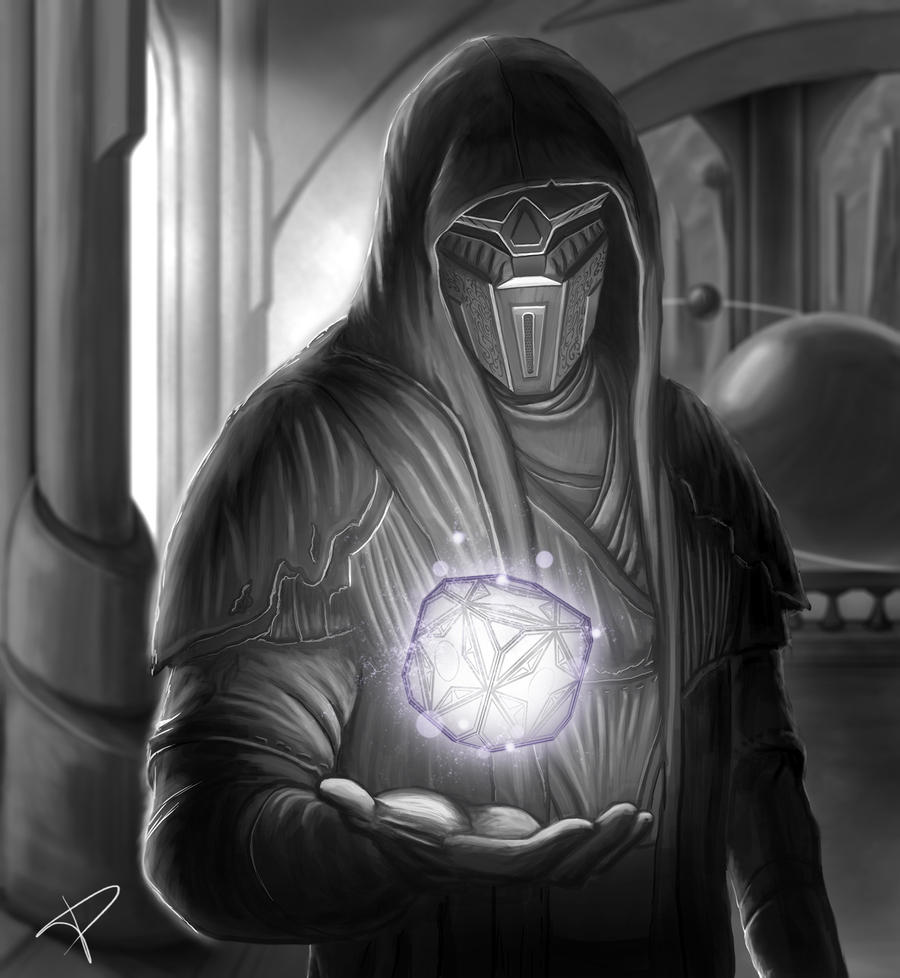
The Akashic Knights serve the Akashic Order as the defenders of their oracles and their shadowy agents of the Labyrinth. Most Akashic Knights are experienced in at least one Maradonian form (typically the Old Way or the Destructive Form) of force swordsmanship, and have adapted the principles of an old, traditional combat technique called “Third-Eye Fighting” to blend their natural ESP power with their force sword form and create a lethal combat technique.

The Akashic Form is slow, patient and ritualistic. Those who use the form make moves and attacks familiar to anyone who has studied Maradonian force swordsmanship, but they seem exaggerated, almost theatrical, and have a profound sense of hidden meaning behind their movements. Despite this, the technique is extremely effective: they always seem to know just where to strike, and just where to defend, and luck seems to favor Akashic Knights with happy coincidence or impossibly accurate or lethal strikes, as though Destiny itself ordained their victory.

The Akashic Form uses ESP. As the Order never allows men to undergo the Akashic Initiation, most male Espers instead learn the Akashic Form and become Akashic Knights. Non-espers can learn the bare essentials of the technique, and use some of its moves to enhance certain aspects of their existing force swordsmanship, but they cannot advance beyond student levels of the form.

Required Skills: Force Sword, Combat Sense; Religious Ritual (Akashic); Theology (Akashic)

Techniques: Resist Hallucination, Rite of Victory (Religious Ritual), Sense Vulnerability (Combat Sense);

Cinematic Skills: Blind Fighting, Breaking Blow, Mental Strength, Precognitive Defense

Cinematic Techniques: Dual-Weapon Defense, Timed Defense

Perks: Blind Fighter, Blind Psi, Hallucinogenic Fighter, Portentous Victory, Psi-Strike (ESP, Force Sword), Style Adaption (any Maradonian style), Tactical Listener, Triumph of Destiny, Veiled Gaze;

Additional Optional Advantages: Trained by a Master, Higher Purpose (Fulfill the Akashic Prophecy)

Optional Skills: Armoury (Force Sword),Awareness,Fast Draw (Force Sword), Hidden Lore (Labyrinth), Navigation (Underground)

Optional Psi Techniques: Extended Arc (Awarness)

Akashic Form Traits

Perks

Blind Fighting: A blind character gains +2 to all combat rolls; this does not eliminate the combat penalties for blindness! If the character can see via non physical means (Blind Fighting, Awareness, etc), the gains a +1 to all combat rolls instead of the +2.

Hallucinogenic Fighter: The fighter learns to allow hallucinations to guide him in combat. While Hallucinating (see p B429), if the characters successfully resists the effects of the Hallucination roll, theyignorethe -2 penalty to their DXand instead gain a +2 to their DX rolls in combat; they suffer the -2 to all other rolls. If they fail to resist the effects of hallucination, they suffer the normal penalties!

Portentous Victory: If the character uses the Akashic Rite of Victory, the complementary bonus to precognitive rolls counts as a Superior bonus (+2 on a success, +4 on a critical success, -1 on a failure, -2 on a critical failure).

Tactical Listener: The character treats Spottingrolls as superior complementary bonuses. They gain +2 on a successful roll, +4 on a critical success, -1 on a failure, and -2 on a critical failure.

Triumph of Destiny: Once per session, after defeating an opponent, make an Akashic Rite of Victory roll to “sanctify” your victory. On a success, you immediately gain one Impulse Buy point that must be spent before the end of the session. The GM can veto the use of this perk; in general, it should only be used against interesting opponents, not activated after defeating a single mook in a dark alley.

Veiled Gaze: The character nevermeets the gaze of others unless they explicitly state that they do so. Thus, the GM must explicitly ask them if they look into someone’s gaze. Refusing to do so can, in some cases, but off-putting and apply a -1 to reaction rolls. The character will never accidentally look into the eyes of someone who can use a psychic power that requires eye contact.

Techniques

Resist Hallucination

Hard

Default: Will; cannot exceed Will+4.

When attempting to resist the effects of Hallucination, you may substitute this technique in place of Will.

Rite of Victory

Hard

Default: Religious Ritual; cannot exceed Religious Ritual+4.

After defeating an opponent, the character may stop and take a turn to perform a Rite of Victory, sanctifying the defeat in the name of the character’s religion. The benefits of this action vary, but in the case of the Akashic Religious Ritual, this acts as a complementary roll to the Oracle advantage or Precognition rolls, and can immediately trigger a Vision or an Oracle roll (the victory itself counts as “an hour of studying omens”).

Sense Vulnerability

Hard

Default: Combat Sense5; cannot exceed Combat Sense.

When making a Combat Sense roll against an opponent, the character may choose to Sense Vulnerability instead. This works like a normal Combat Sense roll and the character gains the usual benefits (+1 defense/level of Combat Sense), but if the roll succeeds and the GM declares the character senses a moment of vulnerability in his target’s defenses, he can exploit it. He trades the +1 defense/level for a +2 modifier/level to hit his target. This bonus may be converted to Deceptive Attack penalties or a Feint bonus, etc. This is only possible if the GM declares that a vulnerability exists! This technique only costs 2 fatigue if the GM declares that a vulnerability exists and the character wishes to convert his defense bonus into an offense bonus.

For example: Shay Sabine, with Combat Sense at level 3 and Combast Sense skill-18, is fighting a Ranathim hunter and rolls Sense Vulnerability (a 13 or less). She succeeds, but the GM does not declare a vulnerability. Shay gains +3 to defense as normal. On the next turn, Shay rolls against her Sense Vulnerability (13 or less) and succeeds. The GM declares a vulnerability (“His neck is exposed”) and Shay pays 2 fatigue and to gain a +6 to hit the Ranathim hunter’s neck.

Spotting

Hard

Default: Observation; cannot exceed Observation+4.

When using the Spotting rules (GURPS Action 2 page 39), you may substitute this technique for your Observation skill.

Akashic Form as Power-Ups

Akashic Form – Student

20 points for Primary Style; 10 points for Secondary Style

Prerequisite: None

The Akashic Knight must learn to fight with their force sword, but they must learn that combat is more than just a means of defeating a foe, but a part of the cosmic dance of time and destiny. Their actions shape the future and are shaped by the past. The student of the Akashic Form learns to gain a greater appreciation for this, and studies the basic of Akashic rituals, to protect themselves from the dangers of the Labyrinth, and to prepare themselves for the Rites of Battle (see the Tarot of War for more).

Perks: Style Familiarity (Akashic Form) [1]; 1 pt something; probably something Labyrinthine.

Skills:

  • As Primary Style:

    • Force Sword (A) DX+3 [12]; Precognitive Defense (H) IQ-1 [2]; Religious Ritual (Akashic) (H) IQ-1 [2]; Theology (Akashic) (H) IQ-1 [2];

  • As Secondary Style:

    • Improve Force Sword one level for 4 points; Religious Ritual (H) IQ-1 [2]; Theology (Akashic) (H) IQ-1 [2];

Akashic Form – Adept

20 points for Primary Style; 10 points for a Secondary Style

Prerequisite:Akashic Form – Student; the Combat Sense ability.

To advance deeper into the Akashic Form, one must be psychically awake so that they can sense the flow of destiny in combat. This requires the ability to use Combat Sense, which forms the basis for many moves of the Akashic Form. Those who cannot sometimes seek to Open the Third Eye (see below), but if they are unable to, they cannot advance in the form.

Those who gain advance learn the secrets of Combat Sense and perfect their knowledge of Akashic Rituals.

Skills:

  • As Primary Style: Combat Sense (H) IQ [4]; Improve Force Sword to (A) DX+5 [20] for 8 points; improve Precognitive Defense to (H) IQ+1 [8] for 6 points; improve Religious Ritual to (H) IQ [4] for 2 points.

  • As Secondary Style: Combat Sense (H) IQ [4]; Improve Force Sword one level for 4 points; improve Religious Ritual to (H) IQ [4] for 2 points.

Akashic Form – Master:

20 points as primary style; 10 points as secondary style.

Prerequisite: Akashic Form – Adept; ESP Talent 1 or greater.

Those who seek to master the Akashic Form must have total facility with ESP: the space and time must lay bare before their mind. Those that cannot see with the totality of their Third Eye must seek to Open the Third Eye (see below) or abandon their quest for mastery.

Those who do master the form learn to use their ESP to great effect. Once per session, they can add their ESP talent to their attack or damage rolls with their force sword. Furthermore, they learn to truly become one with the prophecies of the Akashic Order (for what is an Akashic Knight if not a servant of the Oracles?) and gains a +1 to all rolls whenever their actions seek to further an Akashic Prophecy.

Perks: Psi Strike (ESP, Force Sword) [1]

Traits:Higher Purpose (Fulfill the Akashic Prophecy) [5]

Skills:

  • As Primary Style: Armoury (Force Sword) (A) IQ [2]; Improve Force Sword to (A) DX+7 [28] for 8 points; improve Precognitive Defense to (H) IQ+2 [12] for 4 points.

  • As Secondary Style: Improve Force Sword one level for 4 points;

Akashic Form Moves

Accept Fate (“the DeadStance”)

4 points

Prerequisite: Style Familiarity (Akashic Form), Combat Sense

The Akashic Knight learns to trust her instincts, to read the flow of combat through his Combat Sense, rather than her intellect and the benefits of his senses. His combat technique becomes “lazy” and seemingly slow, and yet she always manages to not be where her opponent strikes, and to strike exactly where she needs to strike. She allows fate, and her combat sense, to dictate the tempo of the fight, rather than trying to will her way to victory.

Trademark Move (The Dead Stance): Evaluate your target and roll Combat Sense+1; you gain a +3 to your next attack against your target and ignore up to -3 in defensive penalties from Feint or Deceptive attack. If your Combat Sense roll succeeds, you may apply your Combat Sense level as a bonus to all Defense rolls for this turn orthe GM may choose to “reveal an opportunity” to your character, in such case, you may choose to trade in your +1/level defense for a +2/level to your next attack against the specific target.

Perks: Trademark Move (Dead Stance) [1]

Technique:Sense Vulnerability (H) Combat Sense+0 [3]

The Guided Path

4 points

Prerequisite: Style Familiarity (Akashic Form)

The Akashic Knight submits her will to the Akashic Order, even during a fight! They learn to listen to the commands and orders of an oracle, to allow their visions to guide them in combat. They also learn to watch out for others, to call out commands of their own to guide others.

When making a Spotting roll (GURPS Action 2 page 39), they roll Observation+4. When receiving the benefits of Spotting, they treat a successful Spottingroll as a superior complementary bonus, gaining +2 on a success instead of +1.

Perks: Tactical Listener [1]

Technique: Spotting (H) Observation+4 [3]

The Tarot of War

5 points

Prerequisite: Style Familiarity (Akashic Form)

The Oracles of the Akashic Order learn to seek omens in the random moments of everyday life, but the Akashic Knight has learned, through the psionically resonant rituals of the Akashic Order, to create an opporunity for an oracle to find the omens they seek.

After defeating a target (at least a Henchmen), the character may make a Ready Action to roll Religious Ritual (Akashic) at +3. On a success, they perform the rite properly (typically a simple, ritually significant gesture of movement that takes no longerthan a second), they immediately gain a single impulse buy point that they must spend before the end of the session, or they lose it. Additionally, any character with Oracle may immediately roll to notice an omen in the events of the battle, and they gain a +2 to their roll; characters with Visions might have a Vision triggered and, if so, gain a +2 to their Visions roll to interpret their vision. A character may successfully invoke the Tarot of War no more than once per session.

The Tarot of War may onlybe invoked at the GM’s discretion. The character may perform the rite at the appropriate moment, but whether it has any impact depends on how momentous the victory was; the GM may decide that it didn’t matter or that there are no visions or destiny to be had in that moment!

This move synergizes with the knowledge of other Maradonian Styles. Characters who have a Style Familiarity in the Destructive Form, the Graceful Form, the Swift Form or Knightly Force Swordsmanship automaticallygain the appropriate additional benefit when using this move:

  • Knight of Swords (Destructive Form): also called the “Rite of Execution,” if the Henchmen (or better) was defeated by having their head severed (such as via the Reaping Stroke trademark move) or their arm/hand severed (such as via the Spirit-Killing Stroke trademark move), they may claim the bonus Impulse buy point and the complementary bonus for an Oracle who witnessed the victory without making a Religious Ritual roll.

  • Knight of Hearts (Graceful Form): also called “the Dancer’s Rite” the Akashic Knight may replace their Religious Ritual roll with a Combat Art (Force Sword) roll (such as the Triumph trademark move) or a Dancing roll.

  • Knight of Crowns (Swift Form): also called the “Rite of Law,” the Akashic Knight may explicitly make the Religious Ritual roll after defeating his opponent in a duel via a disarm (such as via the Gentleman’s Victory trademark move) or via a technicality (using Games (Dueling)).

  • Knight of Staves (Knightly Force Swordsmanship): also called the “Rite of Battle,” the Akashic Knight may perform the Religious Ritual after defeating three mooks, rather than a Henchman.

Perks: Portentous Victory [1]; Style Adaption (Maradonian Styles) [1]; Triumph of Destiny [1];

Technique: Rite of Victory (H) Religious Ritual (Akashic)+3 [2]

Akashic Form Exercises

The Cosmic Path

4 points

Prerequisite: Style Familiarity (Akashic Form), Trained by a Master or Weapon Master

The character has learned to experience a hallucination as psychic information that grants them superior insights into battle, provided they can maintain their focus and prevent themselves from becoming lost in the hallucination.

While Hallucinating, if the character successfully makes their Will roll to act, they gain a +2 to all combat rolls instead of the usual -2 (which still applies to non-combat actions); if they fail, they suffer the usual -5 to all rolls. When rolling Will to resist the effects of Hallucination, they roll at Will+4!

Perks: Hallucinogenic Fighter [1]

Techniques:Resist Hallucination (H) Will+4 [3]

The Veiled Stance

5 points

Prerequisite: Style Familiarity (Akashic Form), Awareness

The Akashic Knight has honed their psychic Awareness to total combat potency, allowing them to see behind as well as to the sides and the front with total ease. They learn to fight betterwithout their eyes than with them! So long as they cannot see their target with their physical eyes, they gain a +1 to all combat rolls, but they suffer the normal penalties for blindness to all other actions.

Perks: Blind Fighter [1]

Techniques:Extended Arc (H) Awareness-1 [4]

Open the Third Eye

3 points

Prerequisite: Style Familiarity (Akashic Form)

Some non-Esper Knights who serve the Order express frustration at being unable to further their skill beyond that of student thanks to their lack of facility of ESP. The Order, in response, sometimes suggests that the Knight is psychically latent and that, by studying the teachings of the Order diligently, he may “open his third eye.”

This is likelya lie, but if the GM decides it is true, then practitioners of the Akashic Form may indeed unlock a hidden latency in ESP which they may later develop into a full ESP ability, or even the ESP Talent!

Perks: Weak Psi Latency (ESP) [1]

Skills:Improve Theology (Akashic) to (H) IQ [4] for 2 points.

AkashicForm Secrets

Labyrinthine Revelation

1 + the cost of the Revelation.

Prerequisite: Style Familiarity (Akashic Form), Style Adaption (Appropriate Maradonian Style), Style Familiarity (at least one Maradonian Style), Trained by a Master or Weapon Master; ESP Talent 1 or better.

According to legend, those knights who have mastered the Akashic Form, especially the Tarot of War, complete their journey of self-knowledge and unlock the “cosmic secrets” of the other Maradonian styles that allows them to seize their own destiny in the heart of battle.

This move is not a single move, but a collection of four moves, each related to one of the four Maradonian styles. The character must have Style Familiarity with the requisite style, and have a Style Adaption perk associated with the style (the Tarot of War move is sufficient for this latter requirement). If so, the character may purchase the Labyrinthine Revelation for that style. All Labyrinthine Revelations cost an Impulse Buy point to use.

Labyrinthine Revelationof Swords (Destruction Form): The Labyrinthine Revelation of Swords allows the character to spend an impulse buy point to make his next attack with a force sword cosmic. The attack ignores non-cosmic DR and non-cosmic forms of injury tolerance or immortality. A mortal blow from the Labyrinthine Revelation of Swords will kill a character with the Unkillableadvantage. [15]

Labyrinthine Revelationof Hearts(GracefulForm): The Labyrinthine Revelation of Hearts allows the character to spend an impulse buy point to make his next dodgecosmic. The characterhalvesany penalties to their dodge roll, and may dodge any explicitly “undodgeable” attack, provided (barring the current circumstances) the character could normally dodge such an attack. Thus, the character could dodge other Cosmic attacks (such as the Labyrinthine Revelation of Crowns), surprise attacks, invisible attacks, etc, but they could not dodge a Malediction.[5]

Labyrinthine Revelationof Crowns (Swift Form): The Labyrinthine Revelation of Crowns allows the character to spend an impulse buy point to make his next All-Out Attack with a force swordcosmic. The attack becomesindefensibleand that target may not block, parry or dodge. The Revelation has an inferior effect against those trained in non-Maradonian force sword styles. A character with a style familiarity in a non-Maradonian force sword martial art (such as the Serene Form) instead apply a -5 to their defense rolls.[15]

Labyrinthine Revelationof Staves(Knightly Force Swordsmanship): The Labyrinthine Revelation of Staves allows the character to spend an impulse buy point to make his next Block (with a force buckler) or Parry (with a force sword)cosmic. The characterhalvesany penalties to their block or parry roll, and may block or parry any explicitly “unblockable” attack, provided (barring the current circumstances) the character could normally dodge such an attack. Thus, the character could block or parry other Cosmic attacks (such as the Labyrinthine Revelation of Crowns), surprise attacks, invisible attacks, etc, but they could not block a Malediction.[5]

Perks: Secret Technique (Varies) [1];

Shadow Knight Training

15 points

Prerequisite: Religious Ritual (Akashic) 14+; Style Familiarity (Akashic Form), Trained by a Master or Weapon Master.

The Akashic Order reserves these secrets for their Shadow Knights, those Akashic Knights who have received induction into the secrets of the Labyrinth. They have been trained to walk the labyrinth, made aware of its dangers, and learn to fight the perilous time shades within. Their force swords can always affect insubstantial beings, they learn the rites of exorcism, and they learn to avert their gaze from everyone, to avoid the dangerous, eyeless gaze of a time shade.

Perks: Veiled Gaze [1]

Advantages: Blessed (Ghost Weapons; Force Swords only -60%) [6]

Skills: Exorcism (Akashic) (H) Will [4]; Hidden Lore (Labyrinthine) (A) IQ [2]; Navigation (Underground) (A) IQ [2]

Into the Labyrinth: Time Shades

Here’s a rough draft of my first “monster” for the Labyrinths of Psi-Wars: the Time Shade.  If this gets enough approval, it’ll eventually move to the Wiki.

Time Shades

The Labyrinth wends its way through time as well as space, and certain “time-lost” beings within it walk just beyond the dimensional edges “between” timelines. Akashic documents refer to these beings as “in the walls” or “in between.” They represent possibilities,things that could exist, but don’t, and they can only operate within the confines of the unique geometries of the Labyrinth, where the possibilities of alternate timelines have a whisper of more reality than in the rest of the Galaxy.

Time Shadowsaren’t actuallyinsubstantial or invisible. Rather, they occupy a space on another “level,” an “upside down” plane of existence which follows its own rules. This alternate reality onlyexists within the Labyrinth: time shadows cannot leave! Furthermore, while they may seem to pass through walls or others, they cannot pass through the walls or being that exist “on their plane.” As a result, they tend to be constrained by natural labyrinthine caverns or ancient artificial tunnels, but not newer construction. They might ignore an ancient door closed by someone recently, but be unable to pass through a door opened by someone in the real world.

Time Shadows can be anything. The stats below are a convenience measure for a generic shade. But their actual stats should reflect what they would be if they were back in normal, mundane reality. Thus, the stats can be altered to represent a “time-lost” person of any sort.

Shades of Hunger

The primary desire of the Labyrinthine Shade is to exist.The most certain way to do this is to “align the timeline.” If certain events take place, the shade has the option of enforcing a broader reality, changing the past the reflect the events of the present, and inserting themselves into the timeline, thus becoming real. A shade who achieves this loses all ghostly traits and becomes a completely concrete being; they lose all memory of being a shade, or what they did to become real, and instead remember only the details of the newly altered timeline. The specifics of this vary from ghost to ghost. Some examples include:

  • Massacre: the shade is an “only survivor of a massacre.” They can truly manifest only if a party of 10+ people die in the labyrinth at a particular location. If this happens, their physical manifestation will crawl, traumatized and frightened, from the pile of corpses.
  • Archaeological Resurrection: the shade is “a lost king,” who can only manifest if there are sufficient records of him and someone discovers his tomb and releases him, after which, he will only remember the timeline in which he controlled this part of the labyrinth.
  • Marriage: The shade is “the true wife” or “the true husband” of a particular character. They need the character to ceremonially marry them in some way, after which, they will manifest as a real character “and have always been their” partner.
  • I am you”: The shade is some alternate reality version of a character. They must kill that character, and then replace them. After they have killed their target, they will remember always having been that character (others will notice a change in behavior).

Some shades have powers that let them immediately “trade places” with a target, forcing them into this inbetween stateand then occupying the real world in their place, or absorbing sufficient temporal energy from victims that they can materialize fully as a concrete being. These tend to require the touch of a manifest ghost, or eye contact with the victim.

Shades of Defeat

Temporal shades have several weaknesses. First, they can only exist and operate from within the Labyrinth. When they near what, in the physical world, would be the entrance of the labyrinth, they see only endless tunnels that continue on into the labyrinth. Second, they’re not actuallyinsubstantial, but simply occupy a different plane, and most operate by the geometry of that plane. The alternate labyrinths generally follow the same layout as the physical labyrinth, but there may be differences, places where a shade cannot go, and places where shades can ignore walls and doors.

Shades are invisible to all visual senses and generally silent, but they give away their presence in a few ways. First, they are not invisible to psychic senses: characters with True Sightcan see them, as can characters with Awareness, Mind Scan or Detect Life (though these latter two suffer a -3 penalty). They’ve also visible in reflections, and when they pass through sheer cloth, such as those used to curtain Akashic Temples, the cloth moves as though on a wind.

Time Shades have no unusual invulnerabilities or resistances beyond their intangibility. If struck by a weapon that can strike insubstantial targets, or struck by a weapon while materialized or manifest, they suffer the usual effects of their damage. If something on their same plane attacks them, they’re affected as normal.

Temporal shades are uniquein that they only exist as a possibility of a single timeline. As long as that timeline remains possible, they can manipulate the real world in some way. When that timeline becomes impossible, or so improbable as to move the ghost away from the current timeline, it effectively ceases to exist. Examples, based on the above timeline examples,might include:

  • Massacre: the shade expects to be a survivor of a massacre in a particular place. If that place is walled of and people prevented from entering it, then this effectively locks away the ghost.
  • Archaeological Resurrection: if all records of the “lost king” are destroyed, such that the “memory” of the non-existent “lost king” is completely lost, it effectively ceases to be.
  • Marriage: If the character marries another, then this seals their timeline and prevents the shade from entering it.
  • I am you”: The shade probably can’t exist in a timeline where the character has already died. Thus, the death of the character effectively ends the possibility of the alternate version from happening.

“But they’re really ghosts, right?”

Time Shades are technicallythe echoes of alternate timelines; they’re not the spirits of the departed, nor manifestations of Broken Communion. However, a campaign might be too broad to support the sort of niche abilities necessary to defeat them.

ESP and Anti-Psi should treat ghosts, time shades and hyperdimensional beings as effectively the same as far as True Sight is concerned. In regard to the Powers of Communion, whether or not Time Shades are affected by the Miracles of the Path of Death is up to GM discretion. While not literallythe dead, they could fall under the same symbolic umbrella as those of ghosts, and the Path of Death couldgovern (summon, exorcise, etc) Time Shades just as well as ghosts. If the GM prefers, the Path of Madness might be a better path, but in such a case, the Path of Madness should then gain access to miracles that work as the Ghost-summoning/manipulating miracles of Death, but only on Time Shades.

Necrokinesis abilities do not work on Time Shades.

The GM should decide if the exorcism traditions focused on ghosts (such as the Morathi rites of the Witch Cats, or the exorcisms of Domen Khemet, the Ranathim Death Cult) will work on Time Shades. If so, it’s likely only fair that the exorcism traditions of the Akashic Order also work on ghosts.  As a compromise, consider applying a -2 for ghost-based traditions to exorcise Time Shades, or for the Akashic tradition to exorcise ghosts.

Shades of Hell

Time shades occupy a plane of existence just “sideways” of the physical world. The physics of these “sideways” worlds might vary, which is especially interesting if the shades are “castling” with living targets. GMs can introduce this little bit of extra detail to make Castlingmore interesting, or to add additional flavor (and weaknesses) to shades. Different shades might be in different “hells,” and would be mutually insubstantial and invisible to one another, only able to interact with one another via manifestations in the physical world.

All “Hells” are suffused with a faint, omnipresent glow that obviates all darkness penalties. This is the source of the shade’s “darkvision.”

  • White Hell: the glow here is a pale white. This parallel is cold, and the closer the labyrinth is to the light of the surface or to the warmth of a flame, the colder it gets, while the deeper and darker in the Labyrinth the ghost is, the warmer. If the ghost is in direct sunlight or within a yard of an open fire, it takes 1 point of fatigue (cold) damage per second. In places with any natural light, the ghost must roll HT or lose fatigue to the cold once per hour. In places of total darkness or “deep” in the labyrinth, the ghost is “warm” enough not roll or lose fatigue. Shades in the white hell manifests its presence as cold spots in the physical world.
  • Red Hell: the glow here is a dull red or violet. This parallel is totally soundless. No sound will carry. The shade cannot speak, nor hear, anything that happens in the physical world or in the parallel. However, specific, loud sounds in the physical world can carry into the Red Hell, shattering the silence with a roaring cacophony of agony. In the presence of temple bells tuned to specific frequencies, the shade must roll HT-5 or suffer Terrible Pain (or Agony if it fails by more than 5) for a number of minutes equal to its margin of failure.
  • Black Hell: the glow here is an inversion of color. This parallel has no walls. In place of the tunnels of the labyrinth, the Black Hell has platforms floating in the void. The shade can “pass through walls” by jumping from one platform to another. If it misses, it will fall until it hits another platform (shades never seem to fall forever, and will always fall on some platform, though typically much deeper in the labyrinth).
     

Time Shades

Time Shades should use the stats of whatever creature (typically, but not necessarily, a Skairos) they actually are. The stats below are a simple “grab and go” example of a time shade, and not definitive of what all time shades should be.

ST: 10 HP: 20 Speed: 7
DX: 12 Will: 14 Move: 6
IQ: 10-15 Per: 10
HT: 12 FP: 20 SM: +0
Dodge: 10
Parry: NA
DR: 0

Skills: Stealth-14; One of Diplomacy, Intimidation or Savoir-Faire, all at 14.

Traits: Darkvision; Divine Curse (Cannot Leave the Labyrinth); Insubstantial (Not to things on its plane; no vertical movement; ghost air); Invisible (Only to substantial; Affects Machines; Visible Reflections) Supernatural Features (Eyeless; Flickering transparency); Mute (Substantial Only)

Fright Check: +0


Powers

Time Shades can have one or more of the following powers. All time shade powers are psionic, and can be prevented with Anti-Psi, as normal.

Castling: The time shade “switches places” with a target. The manifested time shade must touch the target orthe target must make eye-contact with the visible shade. If so, the shade can spend 5 fatigue to make a contest of Wills with the target. On a success, the shade materializes as a fully physical being (it loses the Insubstantiability trait and the Invisibility trait) and the target becomes a Time Shade, and follows all the rules for a time shade (including the rules for “Shades of Hell” above). The death of the manifest time shade will generally “bring back” the exiled target, but a successful contest of Exorcism with the shades Will will also generally work to restore the exiled target. At the GM’s discretion, the target might also gain the powers of the ghost for the duration of theirCastling exile.

Dark Fate: The Time Shade dooms the character to make changes in the world that will bring the Shade’s desired timeline into being. This requires a touch from the manifested time shade, or eye contact with the visible shade; the shade spends 5 fatigue and rolls a contest of Wills. If the shade wins, the character gains a disadvantageous Destinyto bring about the events necessary for the time shade to fully materialize. This Destiny can be worth -5 to -15; -5 is the most common and most subtle, but at -15, treat it as a variation of Weirdness Magnet, where the character is regularly plagued by weirdness that pushes the character towards the desired set of events (a discarded knife keeps showing up in their inventory, gibbering minions hail the character as their messiah, etc).

Devour: The time shade “steals” the temporal energy of the target. The manifested time shade must touch the target and spend 1 fatigue per 3dice of burn damage that ignores DR (with no upper limit). This damage is all or nothing. Either the target takes sufficient damage to die in one attack, in which case they simply vanish, or they take 1 point of burn damage from where the ghost touched them. If the target dies, the ghost is able to materialize a fully physical body. For the duration of the effect they are no longer insubstantial or invisible. The GM determines how long this lasts: 1 hour is a good duration, though it might be as short as a minute near the surface of the labyrinth, and days in the deep labyrinth. The shade can extend the time they remain manifest by using their power gain and again.

Illusion of Time: The ghost can manifest visions of its expected timeline or reality, or of the “Hell” that it currently occupies (see Shades of Hell). This can be as subtle as changing the words of a text to as dramatic and totally engrossing all the senses of the target with visions of hell. This requires a contest of Willsbetween the shade and their target. On a success, the character might roll IQ to “disbelieve” the illusion if they have any cause to disbelieve. While caught up in the illusion, they can suffer “real” damage, but if they realize the reality of it with a successful IQroll, convert all of this damage to fatigue damage instead. The effect lasts for 1 minute per margin of the Shade’s success, and costs 1 fatigue per minute to maintain.

Manifestation: The time shade can manifest an ectoplasmic presence. This costs 1 fatigue per minute and grants them a “body” with DR 0, HP 1 and Injury Tolerance (Homogenous, No Blood). If destroyed, any “excess” damage applies their own actual HP totals (but still apply the benefits of Injury Tolerance for this attack) and their manifestation is destroyed. This typically Stuns the shade for 1d seconds, after which it might manifest again, but all manifestations after being destroyed thus cost 2 fatigue until at least an hour has passed.

Power of Fear/Friendship: The shade can undermine a target’s defenses by provoking an emotional response of fear or trust. In the case of the former, the ghost must find some way to invoke its intimidation skill against the target (appearing in a terrifying way, pronouncing doom upon the part, or manipulating their environment in a frightening way). In the latter case, the shade must ask the target if they trust it and then reveal a secret to the target (generally the shade’s name), make an agreement, or otherwise assist the target. In both cases, the shade rolls their requisite skill (Intimidationfor Fear and one of Diplomacyor SavoirFairefor trust) and the target resists with Will. If the shade wins, it may apply a bonus equal to its margin of victory to any use of any of its powers against the target once, to a maximum of +5; the ghost may automatically apply the full +5 bonus against a target that has failed a Fright Check against the shade.

Presence: If the manifest shade touches a target, or the target makes eye-contact with the visible shade, then the Time Shade can spend 1 fatigue to roll a Contest of Wills with the target. If the win, they “haunt” the target. They may appear before the target whenever they wish, for free, but nobody else will see them. They may also use their powers on the target at will. The target counts as “the labyrinth” for the purposes of the shade’s traits, and thus they can “ride” the target out of the Labyrinth. Shades often do this if they need something done outside of the Labyrinth. This sort of haunting can be undone with an exorcism: roll the exorcists’ Exorcismskill in a contest with the Shade’s Will.

Probability Alteration: The shade can push probability more in line with their desired timeline. This manifests as a blanket -1 to all rolls that would negate the shades desired outcome. The ghost can only affect one target at a time with this power. More powerful ghosts can also spend 5 fatigue to turn a failure into a critical failure.

Revelation: The shadecan reveal themselves without the risks associated with Manifestation. This costs them one fatigue per second. They can attempt to pass themselves off as a living person, but they look transparent in bright light, and they must hide their eyeless appearance. If a power requires them to make eye contact, Revelationcan substitute for Manifestationfor allowing the target to see the shades’ eyes.

Terror: If the shade is visible, it may spend 1 fatigue to make its gaze terrifying. Anyone who sees its eyes must roll a Fight Check at a penalty determined by the GM (between 0 and -5). Victims who succeed are immune for an hour, and all victims get +1 per Fright Check after the first within 24 hours.

Zap: The shade can damage delicate electronics. The shade must touch the object in question (but an insubstantial touch is sufficient). They spend 1 fatigue and the object rolls its HTor it’s sufficiently damaged to require repairs (which requires, at the very least, a change out of any breakers in the system).

Notes: The powers of a time shade are listed with fatigue costs to give the GM a sense of scale; the GM needn’t actually worry about fatigue totals unless the players face a “boss” time shade. A typical time shade is not much of a challenge to a properly equipped party. Psychic characters will often pick them out fairly easily, and characters who have the ability to attack and destroy intangible targets will easily defeat them. They’re mostly a danger to unsuspecting or unprepared parties while they remain subtle. That said, a Castling or Devouring time shade can be devastating. The GM should allow player characters to use an Impulse Buy point to defeat a Devour attempt, and perhaps use a variation of the Imperial Stormtrooper’s Marksmanship Academy, where characters suddenly find burns materializing on their bodies and realize that they’re under attack before hitting them with the full effect.
Alternatively, hit the party with a legion of time shades. Many time shades manifesting at once represent a great example of a “mook threat” as each manifestation can be easily destroyed, but if paired with Probability Altering shades and Zapping shades, they can bring a party to their knees fairly quickly, enough to let their leader Devour or Castle a target.


Character Trait Notes

Veiled Gaze [1]: The character never makes eye contact unintentionally. By default, the GM should assume the character keeps their gaze away from a target’s eyes unless they explicitly say otherwise. The GM mayassess a -1 reaction penalty, though, in circumstances where eye contact is expected.
Standard Operating Procedure (Veiled Sanctuary) [1]: Whenever the character “beds down” or sets up a camp in the labyrinth, they always create windbreaks and leave sheer veils around the camp, so they can see if a time shade has passed into the camp, if at all possible. The GM should be lenient in allowing for such a set-up (for example, if the character lacks the resources, the GM might allow a retroactive scrounging roll to see if the character could have set up something similar). The GM should almost always allow the character at least one Perceptioncheck to see if they notice an infiltration by a time shade.
Exorcism (Akashic): This is a specialization of Exorcism specific for Time Shades. Any ordained character may use it, or a character with the Licensed Exorcist perk.
Hidden Lore (Labyrinth) or Hidden Lore (Deep Time): Both can be rolled to know something about Time Shades.

h1 { margin-bottom: 0.08in } h1.western { font-family: “Liberation Sans”, sans-serif; font-size: 18pt } h1.cjk { font-family: “Noto Sans CJK SC”; font-size: 18pt } h1.ctl { font-family: “Lohit Devanagari”; font-size: 18pt } h2.western { font-family: “Liberation Sans”, sans-serif; font-size: 16pt } h2.cjk { font-family: “Noto Sans CJK SC”; font-size: 16pt } h2.ctl { font-family: “Lohit Devanagari”; font-size: 16pt } h4.western { font-family: “Liberation Sans”, sans-serif; font-size: 13pt; font-style: italic } h4.cjk { font-family: “Noto Sans CJK SC”; font-size: 13pt; font-style: italic } h4.ctl { font-family: “Lohit Devanagari”; font-size: 13pt; font-style: italic } td p { margin-bottom: 0in } h3.western { font-family: “Liberation Sans”, sans-serif; font-size: 14pt } h3.cjk { font-family: “Noto Sans CJK SC”; font-size: 14pt } h3.ctl { font-family: “Lohit Devanagari”; font-size: 14pt } p { margin-bottom: 0.1in; line-height: 115% }

Into the Labyrinth: Musings on the Monsters Within

Last week, I talked about labyrinth and the Skairos.  I’ve been hard at work writing up the labyrinth as an environment.  But once I had done so, I found myself pondering the dangers of the environment, especially the monsters therein.  These things are all tied together, so I can discuss one element, but it’s hard to fully explain without exploring all of it, but we’ll have to take this one step at a time.

One of those steps was thinking about the Skairos, which we already did last week, but in particular, the Skairos as Monsters.  What sort of weaknesses do they have and what sort of motivations do they have? If we were playing a monster hunting game and trying to kill one of the Skairos, what would that scenario look like, while remaining true to the lore we’ve already created.

This creates a bit of a condundrum, though: are the Skairos actually monsters? I find the best metaphor for them to be the fair folk, as they tend to be “dark mirrors” of Maradonian society, just as the fae tended to be “dark mirrors” of medieval European society.  But in another sense, they’re also the angels of the Akashic Order: it is from them that the Akashic Order learned to explore deep time and to transcend temporal limits in their Shadow Councils.  But at the same time, during the tumultuous origins of the Akashic Order, the colonists of Persephone were being killed by the things within the Labyrinth.  Indeed, much of the Akashic Order’s imagery are things meant to protect the Order from the Skairos.  Their gargoyles at their temples are meant to “ward away” the monsters of the labyrinth, and while the veiled eyes of the Akashic Oracles might serve as a convenient way to allow a Skairos to slip into their midst, it might also act as a form of protection, a way of tricking some things into thinking the Oracle is Skairos, or it could be a way of protecting the oracle from making eye contact with something.

So, what conclusions can we draw from all of this to work out how our sci-fi time-lost race, how you kill them, and why you’d want to.

Are the Skairos Angels or Devils?

If we think of the Skairos as “like the Fair Folk,” then the answer to the above question is “Yes.”  The Skairos have the capacity to both help and hurt humanity.  And, I would expect, even the most benevolent would have the capacity to be evil enough that one would seek to destroy them.

I would rather leave the specifics of what the Skairos are and what they come from largely undefined, the sort of thing one speculates on in theory posts and creates a personal head-canon about, but I think the easiest way to model their motivations would be this: They are time-travelers from a distant future whose future is tied very strongly to the actions of humanity and have come back in time to ensure their own creation in the future.

(There are other possible models.  They could be parachronic travelers trying to “shift the quantum state” of the Psi-Wars timeline closer to theirs so they can colonize it, and the closer it gets, the more powerful their labyrinths are.  Or they could be an especially ancient race who have the capacity to see very, very far into the future, and see a few minor options for their return to a golden age of galactic dominion. Or they’re literally just mirrors of us, reflections created by the time-manipulating shenanigans of the Akashic Order, hence their obsession with humanity is actually our own obsession with us, and why their technology never seems better than ours.  But the above model works well for creating an obvious sense of how their motivations work).

Thus, the goal of the Skairos is to ensure their specific, desired future happens.  But which future?  Well, let’s break it down into three camps, since I like doing things in threes.

  • The White Court: This future is the familiar future.  A human race devoted to the Akashic Order listens to their wisdom and reshapes itself along lines devoted to a central, politically- and psychically-powerful emperor.  This humanity overcomes the Coming Storm and becomes the foundation for an enlightened, subservient society that spawns a crystal-spires-and-togas version of the Skairos.  These Skairos seek cooperation with humanity, but a humanity carefully controlled by the Akashic Order.
  • The Black Court: This might be the origins of the corrupted Akashic heretics.  Perhaps the desired future here is a galaxy dominated by a corrupt and degenerate humanity, one stripped of the protective insights of the Akashic Order.  This group does not want to see humanity falter or fail to control the galaxy, but to dominate it and then become weak enough that the Skairos can later overthrow them and take control of them.  This Skairos seeks to corrupt humanity, undermine the Akashic Order, but not so much that control of the Galaxy is lost.
  • The Red Court: In this version of the future, humanity overcomes the Coming Storm on their own, without help from the Akashic Order or the Skairos.  When the Skairos “return” or “arrive,” humanity is instrumental in destroying them.  This faction seeks the total destruction of humanity.

This helps explain why you might see the Akashic Order both embrace and fear the Skairos.  They are the source of the Akashic Order’s power, but also its greatest enemy.  This also suggests some infighting among the Skairos, which might be more complicated than we need, but at least it gives the GM a few options to play with.  In a sense, I see the Skairos as highly individualized based on the GM’s needs.  They are an enemy of quantum uncertainty about whom multiple contradictory things are true.  The above model helps emphasize this.

Shades of Peril

But I keep finding myself returning to the concept of the temporal shadow as the primary peril of the labyrinth.  These “ghosts” might represent beings on the edge of our timeline trying to push in. They’re trying to make their timeline, and thus themselves, real. Until then, they’re intangible, extra-dimensional beings pushing on the edges of our reality.

These seem to be the real threat. These are the things most driven the manipulate and control reality, so they can properly manifest.  And there’s likely a relationship between shades and Skairos, in that a shade is a Skairos who hasn’t yet made its way into the world. 

The original “Skairos-as-ghosts” write-up had material on them “dissolving” people by stealing their reality and then using it to step into reality.  A more interesting option might be “Castling,” where they “trade spots” with someone under specific circumstances.  They can find some way to draw you into their timeline, they can trade places with you.  This means that some shades aren’t Skairos at all, but human. If you let one of these Time Shades into the world, you might get a person instead of a monster, perhaps even an ancient, time-lost person.

If we’re going to accept people-as-time-ghosts, this opens up quite a few new possibilities.  What about alternate timeline versions of you?  An evil twin, or a fetch, who wants a particular Skairosian timeline to come into being because then they, too, will be in the timeline.  Perhaps they seek to replace you, and sometimes people go into the Labyrinth and “come back changed” because they’ve been replaced.  These temporal shadows might be other things too, things that the Skairos fight, the other monsters of the labyrinth.  We might also see “after images” of Oracles who are “walking the Labyrinth;” perhaps those journeys aren’t entirely in their own mind, but actually expressed as remote experiences in a physical place.

So these seem ripe as the primary “monsters” that the Akashic Order seeks to protect the world against. And their motivation is clear: they want in.

How do you kill the Skairos?

So, we have some imagery and some ideas about the monsters that might act as our primary antagonists.  What sort of weaknesses would “monster hunters” use against them?

The Labyrinth Trap: For ghosts, at least, it seems that the structure of the labyrinth itself is what allows these temporal shades to exist.  It’s only within the labyrinth that the walls of time grow thin enough to allow these shenanigans to take place. This explains why the colonists of Persephone weren’t overrun with monsters until they started exploring the tunnels, and even if something serving the Skairos were to “come out,” the goal would always be to pull the hapless victim into the labyrinth.  Thus, the labyrinth itself acts as a “trap.”  The patterns of it might further act as a trap for labyrinthine creations that are outside (or possibly even inside) the labyrinth.

Gargoyles: So, we know the Akashic Order protect themselves with images of “the Devils of Persephone.”  This might be symbolic, but I think this might be good fodder for a weakness, especially for the temporal shadows.  It seems likely that the temporal shadows don’t “see” or “interact” with the world the way the rest of us do, and perhaps the “skairosian beast” are dangerous to these ghosts, and thus they naturally tend to fear them and are easily fooled into retreating from them.  Alternatively, perhaps the presence of one of these beasts, or its psychically resonant facsimile in statue form, force the ghost into a state where it can be struck or attacked.

Veils: The original reason for the veils of the Akashic Order was to create symbolism for others, as well as an easy way for one of the Skairos to sneak into the order.  But perhaps the veils do more than that.  Perhaps the subtle placement of cloth blinds the time shadows, or prevents them from making attacks that require your direct site to work.  Perhaps the blind are safer from temporal shadows than the seeing are.

Noise: One of the themes of the fae is their vulnerability to “church bells.”  This rather makes sense for the Skairos, as they’re all blind and thus plausibly have sensitive ears. 

The Written Word: Less a vulnerability and more of a blind spot.  If the Skairos are blind, how do they read?  Does awareness let you pick up letters from a page?  Possibly, but it might be interesting to speculate that they interact with written mediums differently.  They might see meaning rather than words and it’s possible to deceive them with clever wording.  Their written language might more closely resemble the chimes of the Wankh of the Planet of Adventure: a set of complex symbolism that exemplified concepts, meaning, rather than specific semantics.  The Akashic Tarot might be based upon this language, preparing those who learn Fortune Telling to read the Skairosian language.

Iron?: Fair Folk tend to be vulnerable to iron, and their technology resembles ours, except for being more beautiful, but more fragile against “cold iron.”  Can we imagine an equivalent for our Skairosian technology?  What sort of material can humanity wield against time shadows and the Skairos to drive them back?  Episteel?  Diamondoid? Was the Force Sword and Diamondoid armor conceived as a way of defeating the Skairos, or a gift from them to us?  I’d need to think about this one.

Into the Labyrinth: Musings on the Skairos

At the same time that I wrote up the Akashic Mysteries, I also wrote up the Skairos, the “Devils of Persephone.”  Originally, I had intended them as a sort of “special option,” a unique “possible” race meant for mainly my patrons and “insiders,” as well as some possible hooks or monsters that they could use in a primarily Akashic game and a nice nod to one of the more creative Star Wars races: the Miraluka.

As with the rest of the Labyrinth, I’ve found interest in them has grown and, at least in my mind, they’re becoming more of a “central” part of Psi-Wars, though I think they’re exact nature and motivations should remain a mystery.  As I explore more of this idea of “Psi-Wars as Monster-Hunter game” the more i find myself revisiting works I had previousl created to provide interesting monsters to players, including the monsters of Broken Communion, the Gaunt, and now the Skairos.

(In particular, much of this was inspired by the moment I released the Skairos as a race, and one person commented on how they all had a “Secret,” and asked how they kept it. “So, do they wear armor all the time or what?” It’s a great question and one I’ve been pondering ever since.  It’s increasingly obvious that the Psi-Wars setting has “secret races” like the Eldoth and the Skairos and whatever pulls the strings of the Scourge.  So, let’s dive deeper into this particular race).

The Nature of the Skairos

When I first created the Skairos, I had created four possible interpretations for the “devils of persephone,” the grotesque, gargoyle-esque artwork that decorated Akashic temples and “defended” the symbolic labyrinths, based on the real alien monsters the original settlers of Persephone faced.  The four results I came up with were:

  • Actual monsters
  • “Time Shadows,” spirits of alternate timelines that dissolved the “reality” of those they came into contact with
  • A corrupted bloodline of the Sabines
  • An alien race

Of the four, the fourth by far seems to have the most traction and the third the least, which I find a bit of a shame, as it represents a unique set of customization options for Sabine players.  The first two don’t get much discussion but provide interesting possible fodder for our design.

What we get if we look at the total collection of creatures are something not dissimilar from the fae, which fits the Skairos-as-ultra-terrestrials: we have the Skairos themselves as the seelie/unseelie lords and ladies, their monsters as their hounds, the corrupted bloodline as their changelings and the time shadows as an expression of their otherworldly nature.

Let’s explore the ideas in more detail, but set aside the idea of a corrupted bloodline for now (our purpose here is to express new possible monster stat-blocks for the PCs to face, rather than nuanced player-character options).

The Hounds of the Skairos

This version of the Skairos space monster is a strange, dark-skinned creature, all long, lean limbs and an eyeless face dominated by a large, fanged maw that scuttles in the shadows of the caverns beneath Persephone.

The original Devil of Persephone is probably the most obvious: some sort of bestial hound-thing that raced through the labyrinthine caverns beneath Persephone, devouring colonists.  They were stealthy, preferred the shadows of the Labyrinth, had spectacular sensory abilities, and had a hallucinogenic venom that made the target “bright” to psychic senses (like their own).

Each interpretation of the Skairos was meant to be the possible interpretation for the beginning of the Akashic Order, and the venom of the Skairos, here, was meant to be that which gave the first oracles their first push into greater heights of temporal awareness.  I still like the idea of the venom, but at this point, I think the idea that the Skairos are intelligent agents is pretty central to their role in the setting.  They may have beasts, but they are not beasts.

The Shades of the Skairos

This version of the Skairos space monster is a hungry, dangerous, ghostly apparition that manifests as a dark haze of smokey shadows.  It represents either a manifestation of the dangerous astral energies the infuse the caverns of Persephone, or a dangerous fragment of a foreign timeline trying to draw people into it.  In this latter, improper use of temporal travel (see the “Secrets of the Skairos”) could result in someone “trapped outside of time” and becoming one of these time shadows.  At the GM’s discretion, should such a time shadow gather enough “temporal energy” by destroying enough people, it might manifest as a real being, a piece of lost time that has pushed itself into our universe.

 The Shades of the Skairos are were we first start to  get our idea of the Skairos-as-irruptors, beings who have “fallen outside of time” or who were never part of our timeline to begin with, seeking to find a away to force themselves in.  I find this a much more compelling idea, similar to the Ramices of Dungeon Fantasy or, of course, the Irruptors of the Madness Dossier.  Who doesn’t like a fragment of a broken timeline trying to slip its way into ours as a monster?

I think these are definitely worth exploring, though we’ll need to address the differences between a temporal shade, a hyperdimensional being, and a ghost and if that’s a distinction worth making, but I find that intangible beings are becoming more common in Psi-Wars, as are the tools for defeating them, so it’s less of a problem to more blatantly include them, especially if we allow the Akashic Order to have special means of protecting against their malign influence.

If we include all three at the same time, the Shades might not be “proper skairos,” but represent their enemies, or their exiles, or their recruits, trying to wend their way in.  They could, in fact, represent all sorts of things pushing at the thin, temporal boundaries found within the labyrinths.

The Faces of the Skairos

Ancient, and often fallen, alien races clutter the galaxy.  While the arm of the galaxy where humanity developed has a paucity of aliens, that doesn’t mean no such aliens exist.  Aliens could certainly have colonized the stars, had their wars and then fallen long before humanity ever reached them.

The Skairos could be one such race.  In this version, the Skairos have innate, racial ESP and perfected its use centuries ago.  They predicted their own fall, the rise of humanity, and the one hope their people had of weathering the Coming Storm: teaching humanity their art of deep time and guiding them over the hurdles that it would cause.

If you ask a Psi-Wars die hard “who are the Skairos,” this is the answer they would give.  They are a secret race of Espers who lurk within the labyrinth and pull the strings of the Akashic Order. They’re the only option directly included on the blog, making them about as canonical as they can get.

The original idea behind them was that they were just a particularly psychic race, not especially different from the Ranathim or the Keleni.  They’ve grown in stature and importance to match the Eldoth and, like the Eldoth, deserve a bit of a buff from “50 point racial template” to “OMG RUN!”

In my mind, they have changed from “Miraluka expies” to “ultraterrestrial conspirators who may have once ruled a part of the galaxy and sought to manipulate mankind through the Akashic Order, and can still be found in the Labyrinth.”  For example, what do you think my players expect to find in the Labyrinth beneath the botanical asteroids of the Orochi Belt?  Those asteroids, the Veridian Field, used to be a planet, Veridian, until something destroyed it.  Who do you think the players think lived on that world when it was destroyed? The answer to both is “The Skairos.”  And do they expect them to be yet-another-race?  I doubt it.  “The Skairos” have become, in the minds of my players, a race, and a very powerful race at that.

But what is the character of this new race?  I think they meld the best of the previous two entries: they have a “temporal irruptor” quality of the time shades, and a venomous, predator quality of the Skairosian hounds.  They’re dangerous and not be meddled with but you could negotiate with them.

I mention “Utraterrestrials” in conjuction with the Skairos a lot, mainly because they don’t come from another world so much as another dimension, or seem to at least draw their power and nature from things beyond our cosmic boundaries.  But I think the “fae” aspects of Ultra-Terrestrials fit too.  I don’t see the Skairos with ridiculously advanced technology.  Instead, I see them as wielding comparable technology to what the modern galaxy has, though it might seem anachronistically out of date, like they resemble the Maradonians of their height at the times of the Alexian Dynasty more than they do a modern noble, in the same way that we expect a “fae” to look medieval rather than modern.  We might expect them to be tricky and deceptive, which fits their motif as conspirators.  They are dark mirrors of humanity, possibly even projections of our own psyche, or the results of our ultimate evolution projecting back in time to help direct us towards their own creation (and are pissed that the Keleni and their True Communion managed to disrupt their preferred timeline).

One of my readers commented on how they keep their secret, and the obvious answer is a “Morphology Inducer” from GURPS Monster Hunters 5, some device that hides the Skairos’ true form and allows them to blend in as humans.  Their penchant for veils might be because their morphology inducers don’t hide their eyes (and perhaps their teeth and perhaps their shadows) especially well.  They might not even look human, and we only think they look like eyeless humans because that’s what we see with the morphology inducer which leaves open all sorts of interesting options for what they are as creatures.

I see three broad categories of Skairos to play with, especially if we treat them as “dark mirrors” of the Maradonian breed of humanity: the Skairosian Knight, the Skarosian Witch, and the Skairosian Lord.

The Knight is, of course, a dark mirror for the Maradonian Knight: an armored warrior wielding a force sword (or, perhaps, a crystal/glass blade?) who fights with one of the Maradonian styles, only differently, and in particular uses time-manipulating powers (similar to the Watcher at the Edge of time) to gain an advantage on his foes.

The Witch is, of course, a dark mirrors for the Akashic Oracle.  They would be female Skairos hidden behind veils who tell their knights what to do and offer them support via broader time-manipulation powers.

The Lords would represent the Maradonian lords or the Alexian dynasts.  They would be rare “super-bosses,” the beings in the deepest parts of the labyrinth who represent the culmination of a great hunt.  There might even be different, competing factions of Skairos, each serving their particular lord, whose psychic power and physical stature might push at the bounds of what it means to be “human-like.”

What Dwells Below

One last comment: I don’t think everything in the Labyrinth should be “Skairos.”  They created the labyrinth and rule them (or at least ruled them).  But twisted psionic energy has leaked into the labyrinth and corrupted them in the many dark aeons since the Skairos last walked the galaxy unimpeded.  Today, there are likely other monstrous beings who wander the labyrinth.  These might be standard ecological invaders, such as random space beasts who made burrows in the labyrinth or raiders who took refuge within.  There might be ghosts or the results of Broken Communion’s twisting influence in the bowels of the more monstrous parts of the Labyrinth.

But what killed the Skairos? What emptied their worlds of the race? Against what do the Skairos move in the shadows? Are some of these “great enemy” lurking within the labyrinth, and are they want the Skairos sharpen humanity to be a weapon against?

Into the Labyrinth: Musings on Labyrinth Worlds

I’ve not been as active on my blog lately not because I’ve been too busy doing other things, but because most of the things I’ve been working on aren’t “ready for primetime.”  That said, one of the points of the blog is to let people see “how the sausage gets made,” so revealing some of my thoughts and approach to things might not be a bad idea.  It at least shows you things going on behind the scenes and gives you material to chew on and perhaps do something with on your own.

Recently, the Tall Tales group chose to explore a route that brings them the most directly into contact with the Labyrinth and the Skairos.  I’ve been thinking about them for a long time, which likely is surprising to some, as the Labyrinth is just a foot note in other posts but in my head, it becomes increasingly central to the “mysteries, monsters and conspiracies” of the Glorian Rim.  They are:

  • The source and wellspring of the Akashic Mysteries
  • An initiation trial of House Kain
  • A means of exploring the galaxy without ever getting onto a ship.
  • A source of cool monsters and lost relics.

Thus the labyrinth is likely deserving of more attention than it’s getting and, with it, their creators (or, at least, the race most deeply associated with them, the Skairos).

Inspirations for the Labyrinthine Worlds

Ideas churn in my mind constantly, and I attempt to feed that churn by constantly consuming interesting works related to what I’m doing.  For the Akashic Mysteries in general, I had known I wanted something that felt a bit like the more conspiratorial versions of the actual paranormal research of the 60s and 70s paired with new age thought, mixed with the cthonic cults of ancient Greece (especially the Oracle of Delphi and the Elysian Mysteries).  I also knew I wanted something that involved multiple timelines crossing, like a council of time-shadows where people from the past consulted with people from the future.  All of this blended into the Akashic Mysteries.

Inspiration for the Labyrinthine Worlds came later, as I read the Hyperion Cantos, wherein they literally have Labyrinthine Worlds. As far as I can tell, these were just worlds hollowed out by mysterious builders who, I believe, intended to use them as mass graves for all of humanity. Pretty dark!  But I loved the idea of exploring a world of caverns and tunnels and ancient ruins deep beneath the Earth.  I think everyone does, and that’s one of the appeals of Tolkien’s Moria, which itself seems to have inspired most of D&D, which boasts some pretty vast “mega-dungeons.”  But what would sci-fi be if not offering what fantasy does, but turned up to cosmic proportions?

And if we combine this idea of worlds riddled with ancient tunnels with the ideas behind the Elysian Mysteries and the idea of seeking out the secrets of the labyrinth of your own mind, we create a nicely bisocciated mirror between physical caverns and cosmic self-experience.  To descend into the labyrinth is to descend into a metaphorical and literal underworld where one seeks to gain cosmic knowledge.  At least twice, I’ve used this metaphor, both for the initiation rites of House Kain, and for the initiation rites of the Akashic Mysteries and House Sabine, though one is martial and the other is sorcerous.

The Labyrinth as Dungeon

The Labyrinth also reveals another need in Psi-Wars, one which has been mounting for quite some time: Psi-Wars is as much a monster-hunting setting as it is an Action setting. In fact, I think you can make the case that it’s a “kitchen sink” setting, but it tends to embrace the themes of monster hunting and action more than it embraces the themes of Dungeon Fantasy and After the End.  Characters don’t descend into labyrinths to kill monsters and take their stuff (well, I mean, members of House Kain might, but that’s more of a background thing than something that’s explicitly the focus of the game design of the setting), but rather, they engage in Action-oriented stuff, like defeating the Empire or uncovering an insidious conspiracy, and sometimes that insidious conspiracy has its origins in something truly monstrous, at which point, the characters need to transition to more supernatural tasks.  Fortunately, we already have the core tools players might need to do that: this is a setting that already brims with psychic and divine power.  We just need to give them something to fight.

As we dig into the themes of the Glorian Rim, we find that we have layer after layer to explore.  We have the superficial layer of the war between the Alliance and the Empire, but beneath that we have the rivalries between the houses and the criminal empires that lurk just under the civilized veneer of the aristocracy.  Beneath that, and we start digging into the mysteries of the Alexian dynasty, and beneath that, the Akashic Order that stood behind the Alexian Emperors, and beneath that, underneath it all, beneath the feet of humanity, lie the labyrinths from which the Akashic Mysteries sprang.

If we’re going to explore them, we need to have a sense of how they work, and while I dismissed the themes of DF for Psi-Wars, they certainly provide a lot of inspiration for something like a Labyrinth or the monsters within it.  While our heroes wouldn’t descend into a Labyrinth for sweet loot and enchanted items (though a relic or two might be nice), the experiences they had in the labyrinth might not be much different from a slightly more ultra-tech version of what DF adventurers experience.  Thus, I’ve found myself buying more and more DF works, seeking inspiration.

How I currently see the Labyrinthine Worlds

I often find I accumulate layer and layer of thoughts and ideas on a topic that never actually reach you, dear reader.  Some of them come from things I’ve read, ideas I’ve had, thought about, researched and developed without ever actually writing down, or from conversations I’ve had on Discord in a heated flurry of exchanges that the rest of the community might miss, so it might be nice to lay out the rough ideas I have for the labyrinth at this particular moment.

  • The Labyrinth connects all Labyrinthine Worlds

 The Labyrinth is more than just a set of tunnels through a geologically dead world.  They are tunnels through space and time itself.  Once one descends into the labyrinth, one can travel through all the labyrinths of the labyrinthine worlds and arrive at some new destination in some profoundly remote world.  This will be especially interesting (and one of the core elements behind the adventure we’ll do in the Tall Tales) for the labyrinths of destroyed worlds, as their labyrinth might remain “whole” in the weird space-time that they occupy.

Navigating a labyrinth this way will require a unique skill, at least Navigation (Underground) and perhaps some unique perk or technique.

  • The Labyrinth is surreal

There are lots of “haunted locations” in Psi-Wars, from the Eldothic Deep Engine to regions of Twisted Psionic Energy, but they need to have their own unique feel, and the feel of the Labyrinth is a blurring of the real with the unreal.  The Labyrinth is not just physical tunnels, but some sort of metaphysical journey in search of enlightenment.  The dream-journeys of the Akashic Oracles have some sort of connection with and are reflections of the physical journeys of those who delve into the labyrinth.  Strange events occur in the Labyrinth that have portentous impact on the outside world.  The journey into the labyrinth begins to take on a symbolic nature, as though the entire experience could be a dream or a moment of religious ecstasy. When one completes a journey, they should be left wondering how much of it was real, and how much was delusion.

  • The Labyrinth holds secrets

This mixture between the real and the unreal, between the physical and the mental, contributes to one of the reasons one would go into the labyrinth.  You might seek to “get” somewhere, but for the most part, one goes into the labyrinth to understand something.  House Kain initiates seek to understand their limits, while House Sabine seeks to master the secrets of time and the future.  If the Labyrinth is a dungeon, it’s an occultish sort of dungeon, where the “riches” find within are riches of lore and wisdom, rather than physical wealth.

  • The Labyrinth explores themes of time and alternate realities

I had a lot of fun writing up the Skairos, and one of the themes of the Skairos was uncertainty. They were designed to be multiple possible things at once.  The original idea was to allow the GM to decide, and I still think that’s a good idea, but this uncertainty, the “quantum instability” of the concept of the Skairos has infected everything they were associated with, including the Labyrinth.  Obviously, they have something to do with time (hence their association with the time-exploring Akashic Order), but could they not have something to do with alternate realities and false possibilities?  When one walks the Labyrinth, is part of the surreal experience that one is walking through a maze of alternate possibilities?

Psi-Wars is still ostensibly sci-fi, and its “dungeons” should explore sci-fi themes.  I puzzled on this, because I kept returning to the imagery of stone and monsters, rather than steel and mutants, and I think I’ve settled on why: the sci-fi themes of the Labyrinth are not that it’s an ancient ruin of a long dead, highly-advanced civilization (such as the ruins of the Eldoth), or that it’s the results of a monstrous automation run amuck (as with Terminus).  Rather, it’s the result of some sort of temporal or time-line-shifting technology.  The Labyrinths represent a technology of temporal geometry; their mysteries and dangers more that of Fringe or the Twilight Zone than they are Blame!, Lovecraft or Event Horizon. The Skairos who created it are more Ultraterrestrial than Extraterrestrial.

  • The Labyrinth is a dungeon

It’s dark, it’s confusing, you must delve into it, and it’s full of traps and monsters. it’s definitely the sort of place where we can draw inspiration from DF, with the caveats of fulfilling the thematic requirements above.

I also happen to think Monster Hunters could really do with a series on “Bad Places,” the hell-catacombs haunted by a demon, or the tomb complex of a mummy or the decaying ruins home to a ghost or a vampire.  I find that as I work on the “monsters” of Psi-Wars, I also need to define the environments in which they live, which gives me a lot of ideas for Monster Hunters in general.

Epic Psi-Wars: A Conspiracy in the Making

This isn’t one of my regularly scheduled posts, and I hope my patrons will be patient with this, as their discussions have inspired me, and I find these thoughts racing through my head, so I need to get them out while it’s still fresh.

“Unless it’s a Templar.  Then you’re just effed” – A typical comment on the Templars

There is a fundamental disconnect between how people who know Psi-Wars talk about Psi-Wars, and what I know for a fact is written on paper and it mostly centers on the Templars.  There is this idea that Templars, or other forms of Space Knight connected with Communion, are on a completely separate level from other characters.  The see a team of commandos as dangerous, able to take on entire platoons of mooks and win, but a team of Templars should strike fear into the hearts of Imperial officials and threaten to turn the tides of a whole war. 

However, if you look back at the playtests back in Iteration 4 and earlier, you’ll note that Dun Beltain, Space Knight, is not really better than Leylana Grey, a spy, or Kendra Corleoni, a bounty hunter. Yes, they’re all cool, but the space knight isn’t on a different level. This is a fine and acceptable thing for Space Knights to be.  They could be people in armor with one subtle psychic power (“I an sometimes tell when I’m in danger and maybe dodge a little better” or “I can sense when people are sad”) and know enough about fighting with a force sword that they can hold their own with other combat templates and definitely take out a bunch of mooks.  On the other hand, the super-heroic space knight isn’t especially bad either.  It depends on what you want.

“What you want” is quite a question to ask.  You can’t even go back to the source material and get a fair answer.  Yes, the Jedi as depicted in the prequels are straight up super-heroes (sort of; they rarely really make use of the Force other than as a dramatic display of power; you see far more overt uses of telekinesis than subtle uses of telepathy or ESP), but their power-level in the original trilogy is much more understated.  When Obi-Wan defeats the thugs threatening Luke in the Mos Eisley Cantina, nobody freaks out like Clark Kent just took off his glasses, and you might think they would if you pondered the implications of a Jedi suddenly showing up after years of supposed extinction. Instead, they just go back about their business.  This makes more sense if you think of Obi-Wan, in his original conception, as more of a wandering ronin in a bar hanging out with a cowboy and a princess and a farm-boy-of-destiny.  Obi-wan is not dramatically more special than most heroes in A New Hope, as opposed to Jedi characters in most of the rest of Star Wars, who are on a completely different level.  No help there, then.

So, it’s up to us to decide for ourselves what we want out of Psi-Wars.  Do we see Space Knights as “just another character type?” or “setting defining super-heroes?” And the answer seems to be “Yes!”  The sense I get is that Dun Beltaine is fine, and we can imagine a lot of heroic aristocratic space knights on a similar power level, but Imperial Knights and Mystical Tyrants and Templars are on a different level.  Thus, we have two worlds and two different takes on the game: a modest, “street-level” game and a more dramatic “cosmic-level” game.

The question then becomes:

  • How do you handle that without making the game unbalanced?
  • Who gets to be epic-tier? Just space knights?
  • What do the epic-tier characters do?

 As Above, So Below

The first conclusion I can draw from how people talk about it and the sorts of games I see people proposing or running, or the way in which I see people play, is that, first of all, a lot of people like the street-level gameplay.  Not everyone who plays what’s a high level character who bestrides the world like a god.  A lot of people like playing cool street rats, bounty hunters who struggle to pay the bills, or commandos down in the trenches of the war.  It’s just that some people also want to be space knights of legend around whom the setting bends, who explore the deep mysteries of the setting.

So, we seem to be talking about two separate tiers of play, two different modes of play in the same game.  The current templates and power-level are more-or-less fine for the typical street character.  What we seem to need is a new level layered atop it for those who would prefer a higher octane experience.

This raises the question of what sorts of characters that we see in this higher tier.  Are we just talking about Space Knights?  That certainly seems to be the case in Star Wars: when it comes to “high level play,” whether or not you have the Force determines how cool you are.  With the Force? You get to be awesome; without the Force? You’re street-level.  I have seen a few cases where this rule is broken: Thrawn is sufficiently smart to exist in the same arena as the Jedi, and General Grievous has sufficient cybernetic modification to go toe-to-toe with the Jedi.

More than that, though, I always found the “Star Wars is all about the Jedi” to be overly restrictive.  It’s one of the things I’ve actively fought against by injecting the Akashic Order and the Divine Masks into the game.  Now, we can add witches and oracles into the mix.  We also have cyborgs, cool robots, neo-rationalists, and crazy aliens running around.  Any and all of these bring their own flavor to the game and I think they should be allowed to operate at this higher tier.

Then we must define what it means to be on the higher tier.  First, we must answer the question of point budget, and the easiest way to do that is to just write up some templates and see what they cost.  We can make some estimates, though.  If high tier cost 500 points and low-tier cost 250, then a 50% point ally for a street level character is a 25% point ally for a high-tier character, which is nice.  On the other hand, we’ve already playtested our characters at 300 points and it’s pretty solid: it’s enough to give us Action-level characters with a bit extra (like being an alien or having cybernetics or one minor psychic power) to fit the conceits of the setting.  By the same token, we actually do have a high level character: Vesper Tane 3.0, who is decidedly impressive at 400 points.  Thus more than 450 points strikes me as over-kill, and that gives us a 300-450 point range. Is that enough?  It remains an open question, especially since those point totals don’t create nicely compatible ratios.

What we might see at the epic tier would be:

  • Bespoke high tier templates:
    • Space Knight (Whether Templar or Imperial Knight)
    • Sage/Sorcerors (Divine Mask witches, Mystical Tyrants, Akashic oracles, etc
  • Unusual Alien Races
    • The Eldoth
    • The Skairos
    • The True Tarvathim
  • High powered power-ups that you could layer atop existing templates
    • Cybernetics
    • Psychic powers
    • Mover and Shakers
  • Low-level characters who go their “the hard way.”  It might be nice to provide some  guidance on what that might look like.

Unmasking the Conspiracy

Okay, so we have high-level characters.  What do they do?  Are they just more of the same?  Just ultimately better than everyone else?  I think that possible, but I also think its fundamentally an unsatisfying option.  I think the truth is staring us in the face, as it’s an element I’ve touched on over and over again but never really defined as a truly distinct play element, and maybe I should.

Psi-Wars is built on three pillars: war, spycraft and space opera occult conspiracy.  The first two have a strong Action vibe to them.  They are what a typical GURPS Action game focuses on, and what a lot of Action movies focus on, and they have a pulse: get mission, do some investigating to figure out how best to do it, do it, get screwed, improvise, succeed during explosions, turn in mission.

The space opera occult conspiracy stuff, however, seems much closer to GURPS Monster Hunters.  This is more like the sorts of things we find in urban fantasy, like the World of Darkness or GURPS Voodoo, GURPS Cabal or GURPS Black Ops.  In these, a secret world of violence, horror and monsters lurks beneath the mundane surface that we see and interact with daily, and larger-than-life champions have the secret knowledge to deal with this darker world.  This fits nicely with how we see the Templar and why the Templar seems so powerful: he battles mystical tyrants and Eldothic conspiracies and Broken Communion ghosts; what are a few security agents or criminals to him?  These have a different pulse: something weird happens (cheerleader gets murdered by a giant beast; people show up dead after losing blood; famous archeologist goes missing); deal with the immediate aftermath and calm everyone down (“Nothing to see here”), then investigate the cause, uncover the monster, lose your first fight, realize their ultimate nefarious plans and learn how to defeat them, then do so, and cover up that it ever happened.  As an alternative, they are the nefarious monster, in which case they need to keep their dark deeds from being discovered and they engage in secret wars with one another under the cover of night.

This gives us an obvious idea as to what our Templars and Imperial Knights are doing: they are uncovering or creating conspiracies, and Psi-Wars has more than enough secrets to support this sort of thing, but is it compatible with the rest of the game?  After all, if you have 4 players who are undertaking a heist and 1 player who is hunting a vampire, can it work?

Yeah, it can!

Action is so compatible with Monster Hunters that Monster Hunters has a section on converting Action characters into Monster Hunters.  In the end, the pulse isn’t that different: both involve investigation and then battle, it’s just that Monster Hunters places a deeper emphasis on investigation (and they have differently themed knowledge, with Action more worried about politics and technology while Monster Hunters are more worried about occult, conspiratorial and monstrous lore).  This is also the core of Night’s Black Agents or Black Ops, which takes explicitly action-oriented characters and reveals a deeper layer of vampires or aliens respectively and allows the players to defeat them.  Shadowrun explicitly combines the two, by setting its Action-style gameplay in an Urban Fantasy world.  When combined, the pulse tends to be: get a mission, do some investigating, go do the mission, something weird happens that screws you over, you succeed anyway, and the ground has suddenly changed underneath you (your client is dead or a traitor, what you have isn’t what you thought it was, etc) and you need to do a deeper layer of investigation to find out what the weird thing is, find the monster, face it, lose, figure out its real mission, figure out how to defeat it, face it again, win, and then figure out what to do with the rest of the pieces.

Not every story needs to work like this.  A purely street-level game might work like an action game, and a purely epic game might work like a monster hunter game, but we have a clear interface between both levels.  It’s possible to have bounty hunters and smugglers stumble across a Mystical Tyrant’s conspiracy and have a Templar show up to help them.  Its also possible, as a bunch of Templars, to run across some spies and commandos who find themselves in over their heads.  Thus, our two “layers” are fundamentally compatible and we can navigate between both of them pretty easily.

There is no Conspiracy

If we’re going to create a conspiracy level to the game, really give it the teeth it needs, then we need to do what Monster Hunters does, and define what sorts of conspiracies and monsters the heroes will hunt.  We need to define their gameplay.  This will also define the power-ups: becoming an epic cyborg commando is not just about adding +200 points of cybernetics atop your commando template.  You’re entering a higher level world, so you need to have the tools to deal with it: this means your epic commando cyborg might have things like security clearance, secret prototype technology, appropriate Hidden Lore, etc.

The problem with the Monster Hunter approach is that Psi-Wars is really nothing like Monster Hunters; where MH is a generic “Monsters be here in the modern world” setting, Psi-Wars is a distinct space opera setting.  This is one of the reasons you do space opera, so you can explore unconventional ideas that don’t fit perfectly in the classic urban fantasy set-up.  So what we need to do is set aside the categories of Monster Hunters (Ghost, Demons, Cryptids, etc) and use our own categories.  Fortunately, Psi-Wars has plenty.

The conspiracies/secret elements in Psi-Wars (this list subject to change and feedback!) are:

  • Psychic Conspiracies
    • The Templars
    • The Emperor and his secret projects (the Imperial Knights, Project Foresight, etc)
    • The Cult of the Mystical Tyrant
    • Domen Khemet, the Ranathim Cult of Death
    • The Akashic Mysteries and their Shadow Council
  • Aliens
    • The Eldoth
    • The Skairos
    • The Shapeshifter Race
    • The Anacridian Scourge
  • Technology run amuk
    • The inner workings of the Cybernetic Union
    • Neo-rationalist conspiracies?
  • Monsters and psychic phenomenon
    • Broken Communion ghosts
    • The Devils of Persephone
    • The Labyrinthine Worlds
    • Nasty plagues
    • Things found in the Morass of the Sylvan Spiral

 Reaching the Next Level

I’ve written this most more to sort out my thoughts while it was still fresh.  I find this an interesting idea, but it’ll be as time intensive as the technological elements I’m working on now, as it involves tinkering with templates and action rules.  I think it would be worthwhile, but I also think it should wait.  I’ll tag these posts “Epic Psi-Wars” so we can find them again later.