EM Guns Feedback Part 2: G-Verse Variants

So, last post, I offered the context of G-Verse, for those who need to know how the setting works and how games played out.  I’ve also tagged my Andromeda Incident After Action Reports from ye olden days if you want to go back and look at them.

Now, for the actual feedback.  How did G-Verse actually play and how would it play out with Pulver’s suggestions?

G-Verse Classic: with the Original Rules

We have a lot of guns I could cover, but I want to hit the four most popular, the ones my players would actually ask about if I made a universal change to firearms.

The Gauss Rifle

The standard weapon for infantry combat was the 4mm round, found in both the LSW and the gauss rifle.  The complete weapon, accessories and ammo cost $8,664, with the ammo making up a measly $54.  The weapon system weighed 17.15 lbs, with five and a half of that in ammo.
The 4mm gauss rifle round, whether from an LSW or the rifle, dealt 6d+2(3) pi-.  If it struck an unarmored target, it dealt an average of 11 damage, which was enough to knock someone  unconscious, but not enough to kill them,  With a ROF of 12 and a recoil of 2, though, usually more than one bullet hit, and two was enough to kill most people, or at least leave them deeply unhappy. 
Of course, most people weren’t unarmored.  A nanoweave tacsuit stopped 10 points of damage (1 point of blunt trauma), which meant the attack did about 7 damage, all things considered.  I liked this.  It meant that a tacsuit turned a very dangerous wound into something that knocked you off your feet, but didn’t necessarily put you out of the fight.  That was good.  Unless, of course,  it hit you multiple times, but that’s why you used cover and dodged when necessary.  A combat hardsuit would usually absorb everything that hit the torso, but the limbs were slightly vulnerable, taking 2-3 points of damage if hit.  Thus, a shock trooper might get hurt, but he could stand to charge a man who was firing straight at him, if only for a second or two.  Power-armor, at a DR of 100-150, was impregnable to gauss fire (one player commented that it might be like being in a tin shed during a rainstorm: you can hear it, and it’s very dramatic, but it isn’t actually bothering you).
Most infantry didn’t snipe with a gauss rifle, but recon specialists certainly did.  The Gauss Rifle had an accuracy of 7+2, meaning that a character who aimed for 3 turns gained 7+2+2 = +11 to his attack.  With targetting software, he had another +2, for a +13 to his aimed shots.  Assuming a skill of 15, a recon specialist could expect to hit you on a 15 or less 300 yards away (which is still within 1/2D).
Infantry would just open fire with the thing.  With an ROF of 12, it had a +2 to hit, and +2 from targetting software.  The enemy already knew you were there, so it’s often worthwhile to try to get a lock if you can, for another +3.  The net result is that a skill 14 infantryman has a 21 or less to hit you.  If he wants a 16 or less (for additional hits), he can afford to just fire without aiming out to 15 yards, and will hit an average of 4 times if he does so.  This might be typical for urban combat.

The Portable Railgun

Probably the most beloved weapon in G-verse, this was primarily a sniper’s weapon, used by commandos and infiltrators.  It dealt 5dx3(3) pi+, or an average of 75 damage against an unarmored foe.  It cost over $25,000 and weighed about 22.5 lbs.  Ammunition was not a major concern for it.
Against someone in a nanoweave tacsuit, it was one-hit, one kill.  It dealt around 60 damage, meaning your armor might as well not exist.  You just had a gaping hole in your chest.  Most snipers didn’t bother with average infantry, though, and if they did, they’d usually reduce the damage with a subsonic shot, dealing “only” an average of 37 damage, more than enough to kill someone.  Against a hardsuit, the chest plate protected for 25, meaning the shot still did 30+ damage, which was usually enough to take out shocktroopers (though a subsonic shot would usually fail against them).  The real trick was using it against guys in powered armor.  The average portable railgun shot is just deflected by heavy power armor, and if you did some damage, it wouldn’t be much, usually 1-3.  Most heavy troopers tended to take a hit, then turn and focus their fire on where the sniper had fired from.  Bad news!  If you wanted a sure shot, you had to aim for an armor weakpoint at -10, or for a limb.  This reduced the armor to DR 75, which means you did ~30 damage, enough for a kill, or a shot to the limb would usually deal enough to cripple it (hopefully you picked the right one!).  Most heavy marines carried trauma maintenance systems, meaning that if your shot didn’t take them out, it was highly likely they’d be spitting mad and still in the fight.  “Infiltrator vs Heavy Marine” was one of the more tense standoffs in our game, when they happened.  Boosted velocity also helped, but players seldom used it: +5 damage meant you’d do about 7 damage vs the marine, which might be enough to stun him.
Accuracy was the name of the game with a portable railgun.  4 turns of aiming gave it 7+2+3 or +12 to hit, and targeting software gave another +2.  Radar might help, but you didn’t want to tell people where you were, so most snipers didn’t bother.  The net result was an elite, skill-16 sniper could afford to attack an armor weakpoint out to 50 yards with a 11 or less, or simply hit a target out to 1500 on a 13 or less.

The Gauss CAW

While the UBGL was certainly an important weapon, people really liked the CAW, especially loaded with HEMP.  We loaded it with other stuff, but everyone just used all HEMP all the time when they could.  A CAW with 3 clips of HEMP came in at a little over $3500, which was cheaper than a rifle!  It also weighed about 15 lbs, about 5 lbs was the clips.
An 18.5mm HEMP round did 6dx2(5) imp inc + explosive damage that seldom amounted to anything meaningful (tacsuits always soaked it up.  Shrapnel was similarly unnoteworthy, even for large grenades).  Against someone in a tacsuit, it dealt 70+ damage: there’s no kill like overkill.  Against hardsuits, it dealt 50 damage, again splattering the target.  Heavy power armor was less impressive: it doubled its DR against HEMP (EM armor), which meant the average shot did absolutely nothing against power armor.  Doh!  Fortunately, they still have 25mm UBGLs, but the failure of a CAW to kill a guy in power armor always disappointed my assault guys.  Boosted or low-velocity options didn’t matter except for range, and most fights were close range and noise didn’t matter.
Accuracy mattered most “On the move.” The typical assault guy would be in a highly built up environment and needed to just respond with the pull of a trigger. With ROF 15, it had +3 to hit, +2 from targeting software, and +1 from its laser sight, giving a skill-15 shocktrooper  skill 21 to hit.  Most attacks were pretty close, so -3 or so, which hit on a 17 or less If he was “on the move” the bulk of 4 would drop his attack to 13. In both cases, one or more hits were probable.

The Gauss HMG and the Semi-Portable Plasma Gun

These were the two most popular heavy marine weapons, and while the plasma gun isn’t a gauss weapon, it’s worth noting that it often competed with the gauss HMG for attention.
The gauss HMG clocks in at around $50,000 and the plasma gun around $150,000.  Weight for neither really matters, and ammunition costs are a rounding error for both weapons.
The HMG did 16d(3) pi damage, which means a single shot did around 56 damage, making it almost as bad as the portable railgun.  Low-velocity shots did 28 damage, but it’s rarely necessary to reduce damage.  Boosted-velocity deals around 72 damage.  A standard shot will deal 45 damage to a guy in a tacsuit, 30 damage to a guy in a hardsuit, and around 6 to a guy in power armor.  A boosted shot will deal 22 damage to someone in power-armor, though I found it more useful to save energy and just rain steely death on other targets in power-armor.
The semi-portable plasma gun was a hot-shotted weapon that dealt an average of 91 explosive damage.  A direct hit would instantly kill someone in a tacsuit, an indirect hit (in the same hex) would also instantly kill someone in a tac-suit, and someone in a tacsuit one hex away would take an average of 15 damage.  A direct hit instantly killed someone in a tacsuit, and an indirect hit in the same hex would deal 15 damage.  A hit one hex away wouldn’t kill someone in a hardsuit.  A direct hit would deal ~15 damage to someone in power armor, certainly knocking them off their feet and perhaps tacking them out of the fight.  It was also excellent for setting cover on fire.
A heavy marine, usually skill-15 or -16, would usually walk and fire, thus he wouldn’t aim but he wouldn’t move and attack either.  With an ROF of 20, he had +4 to hit and his targeting software gave him +2.  Radar locks didn’t hurt anything, though often a guy in power armor was cutting through the enemy so fast that he didn’t have time to stop and make one.  Even so, that’s up to +3.  Thus, he has About skill-25 to attack.  That’ll hit on a 15 or less (thus, likely several times) out to 100 yards.  Most fights are much closer than that, removing the need for radar lock.
I had intended the plasma gun as another assault weapon, but those who had it liked to treat it as a sniper weapon.  They’d aim once, and between the acc of +12 and the targeting software of +2 and, what the heck, a radar lock of +3, a skill-16 marine could reach out an touch a target out to a mile on a 15 or less… and with three shots and a recoil of two, probably hit him several times in a row.  If the plasma gunner needed more accuracy, most of the time hitting the ground beneath the target (+4) was sufficient.  They often liked to spread their fire out, especially against unarmored infantry, just raining down plasma death from as far away as they could.  The one problem with the weapon is that it broke down on a 14 or more!

G-Verse Brutal: Using ETC Weapons

Originally, I had thought the post requesting feedback wanted feedback regarding ETK.  That seems not to be the case.  They want ETC, which is IMO a much more reasonable technology.  The post has been revised to accommodate that.

The Infantry Rifle: ETC Assault Carbine and the Storm Rifle

The Gatling Carbine, the Assault Carbine and the Storm Carbine could all work, but the assault carbine seems to “fit the image” best, especially as its the cheapest and lightest of the three.  An ETK assault carbine with the same gear as a gauss rifle would cost ~$4500 and weight 10 lbs by itself.  4 clips of standard 7mm ball ammo would cost $100 and weigh 6 lbs. The ETK weapon weighs slightly more and costs less (the ammo costs twice as much, but the weapon costs far less).
The ETC assault carbine deals 9d pi damage, or roughly 3dx3, which is about 30 damage.  A straight up round will fail to penetrate a tacsuit.  APHC rounds will add (2) and pi- but double ammo cost from $100 to $200.  Such a weapon will deal an average of 8 damage to someone in a tacsuit and will still fail to damage someone in a hardsuit.
Accuracy is weaker: The weapon has accuracy of 4, three less than the gauss weapon, which means everything above still applies (same ROF and everything), but it halves the engagements ranges, or reduces skill from 15-16 to 12-13.
Now, with gauss weapons, I stuck with a gauss rifle for recon specialists, but with the greater variety offered by conventional weapons, I’d upgrade my recon specialist to a storm rifle.  The weapon system would clock in around $6500 and weigh about 10 lbs.  Ammunition costs and weight aren’t a major concern, as the character prefers to snipe.
The ETK Storm Rifle deals 6dx2 pi+ damage.  That’s 40 damage.  If we load APEP (and why not? That makes one bullet $12, but a single clip is only about $150.  5 clips, which is enough to take out 60 people, costs you less than $500), a storm rifle deals 30 damage to someone in a tacsuit and 15 to someone in a hardsuit, but will fail to penetrate power armor on average.  A shot to a weak point will deal 15 damage to someone in power armor, though.  An ETC storm rifle is weaker than, but somewhat comparable to, a portable railgun.  Accuracy is only 5, -2 compared to a portable railgun (which typically halves engagement range).
Is this better than Gauss?  The Storm Rifle is arguably better than a portable railgun, but it’s close.  It does a similar job for much less $$ and lbs.  The assault carbine is largely the same, while slightly cheaper (though more expensive in the long run) and slightly heavier.  It’s certainly no quantum leap from TL 9 ETC to TL 10 gauss.

The Sniper Rifle: ETC Anti-Material Rifle

The obvious parallel to the portable railgun is the Anti-Material Rifle.  It comes with its own enhanced targeting scope, and costs $16,000 and weighs 30 lbs.  A single clip clocks in at a heavy 2 lbs (for only 10 rounds!). A full clip of APEP rounds will cost $400.

The ETC anti-material rifle with APEP round deals  22 pi++ damage. which is an average of 77 damage Against someone in power armor, this deals 75 damage, which is instantly lethal to someone in power armor. Power armor is no protection against an anti-material rifle.  That might be intentional: the intent might be to take out armored vehicles, and power-armor tend to be a step less protected than those.

The ETC anti-material rifle is…accuracy 6+3, exactly as a portable railgun with enhanced targeting scope! It’s only -1 when it comes to accuracy.

The net result is that the ETC anti-material rifle is completely superior to the portable railgun in cost, power, similar in accuracy, heavier, and worse for ammunition costs. Given its weight, I might favor storm rifles for commandos as well as recon specialists.

The CAW: ETC Close Assault Shotgun

I’ll sae you some time on this one: 18.5mm HEMP is 18.5mm HEMP.  While I included slugs and shotshell for it, most players didn’t bother with it.  The CAS might be superior to the CAW for raw slug damage, but raw shot damage isn’t enough to punch through most forms of armor, though a slug will deal 12 damage to someone in a tacsuit.
The bulk of the weapon is worse (-5), the ROF is worse, the recoil is worse, the number of shots are worse, the acc is the same, the weight is the same, and the CAS costs slightly less (though its ammunition surely costs more).  It’s all around a worse weapon than the Gauss CAW.

Heavy Weapons: The Heavy Chaingun and Assault Cannon

The obvious parallel to the Gauss HMG is the heavy chaingun.  This weapon costs ~70k, which is more expensive than its guass counterpart, and weighs about the same.  A clip is lighter, but much more expensive per shot (200 shot for the HMG is $48, while 50 shots for a chaingun is $200).
It also deals 22d pi++ damage.  It is, in short, a machine-gun with anti-material rounds.  Out of the box, it won’t punch through power-armor, but if we give it APHC rounds ($400 per clip!) it’ll deal 3  damage per hit to someone in power armor, which is… not great.  APEX rounds will deal 4 damage per hit, plus 1d-2 explosive (which triples in the body), thus an average of an additional 3 damage, for a total of 6.  That’s pretty respectable, but it doubles the cost of your clip again.  APEP rounds are as effective as an Anti-material round, but I question the practicality of cligs that costs $2000 apiece.
At RoF 12, it’ll hit with slightly less accuracy than a gauss HMG, but has largely the same recoil.   Given the superior damage, I think most players would happily make the trade.
What about an Assault Cannon in place of plasma?  The weapon is literally 1/10th the cost, though its rounds are much more expensive, and it’s also less error-prone.  However, it can fire shaped-charge rounds that deal 65(10) damage on average, and explosive shots that deal 18 damage on average. It’s also vastly less accurate than a plasma weapon.  All in all, probably an inferior weapon to a plasma gun.
How does this compare to gauss?  How does it change the landscape?  The chaingun is definitely a more expensive weapon, both for ammo and weapon, than the gauss HMG, and it’s slightly less accurate though I doubt most players would notice a 1-point difference.  Damage can be effective, but it needs expensive ammo to make it work.

G-Verse Refined: Using the Revised Gauss Rules

The new rules say: pi instead of pi- for smaller rounds, x1.25 damage, no armor divisor, but you can load one in.

The Gauss Rifle

Costs are the same.
The 4mm round now deals an average of 26 damage with no AP.  That’s not enough to punch through a tac suit, but if we add APHC rounds (reducing it to pi-), we’ll deal an average of 6 damage… about what we were doing before!  If we go with APEP rounds (which cost as much as Assault Carbine ball ammo!), we’ll deal 8-9 damage, and we’ll deal 1 point of damage per shot to someone in a hardsuit, on average.  With a boosted shot, we’ll deal about 7 damage to someone in a hardsuit.

The net effect is that the gauss weapon is roughly the same as it was before: ball ammunition isn’t interesting enough to use, but APHC or APEP rounds aren’t really that expensive, and could take down people in hardsuits.  Is it better than an ETC Assault Carbine?  Yes, definitely: It’s more accurate, and its ammunition is comparable in price, and it can afford to take out heavier opponents.  In fact, if we use APEP, we can eliminate most of the danger of hardsuits from the battlefield, which might not be what I want to see. I would definitely choose this gauss weapon over an ETC assault carbine.

The Portable Railgun

The new portable railgun deals an average of 63 damage.  With APEP rounds ($8 a shot, which is 1/5 the cost of 15mmCL APEP rounds), we’ll punch through power-armor to deal 13 damage, or ~30 damage with a boosted shot.  This makes it absolutely superior to a storm rifle, definitely, but not as good as an anti-material rifle.  On the other hand, an anti-material rifle round is much more expensive, and it’s a much heavier weapon.  If your portable railgun can kill someone in power-armor, why bring even more firepower?  Is it better? Yes.  Would I favor it over ETC?  Yes.

The Gauss CAW

Nothing has changed here except that its underlying damage is superior.  It now does 10d p++ with slugs making it even more absolutely superior to the conventional CAW.

The Gauss HMG and the Semi-Portable Plasma Gun

The Gauss HMG now does an average of 20d, or 70 damage.  This is almost exactly the same damage as a heavy chaingun plus we can make a boosted shot that deals 90 damage.  With APHC rounds, we’ll fail to penetrate power armor, but with a boosted shot we’ll deal 7 damage (note that this also becomes pi- in this case, not pi!), which is a major wound for someone in power armor. Note further that the round is too small to be an APEX round.  Each APHC round is $0.48 (that’s about 50 cents) compared to $8 for the Heavy Chaingun.  70 damage is enough for most cases, and when fighting a guy in power armor, you just boost your damage.  The Heavy Chaingun is potnetially more destructive, but the HMG is a cheaper weapon, with cheaper ammo, higher ROF and better accuracy, and it “does the job” just as well.  I think I would honestly favor it over ETC.

Would I use ’em?

Right, I must say I’m a little relieved that we’re looking at ETC, not ETK like I initially thought.  If i had included ETC in my original campaign, the numbers would have largely shaken out the same way.  In general, the old version of gauss vs ETC was more of a lateral shift from superior damage to superior logistics.  The new version is a definitively superior version, without being so much better that my entire battlefield is ruined.  I think I actually like it and would use it.

The one bit of weirdness I note is that 4mm rounds are pi and so are 7mm rounds.  That’s not necessarily a problem, just something I thought I would note

EM Guns Feedback Part 1: The G-Verse Context

Steve Jackons Games recently put out a call for feedback regarding EM guns and their damage and performance, specifically in comparison to ETK guns (Edit: There was a miscommunication, it was in comparison to ETC, because ETK guns are ridiculous and nobody should use them).  Now, lots of people have already busted out some math and done some comparisons, but that’s not really what they’re asking for, and that makes sense.  I’ll believe that Pulver is totally great at math and has already worked out the models necessary for his design.  What he needs is actual play, seeing how it works in a game.
Alas, I am not running anything with gauss weaponry at the moment, nor do I think I could spin one up in the near future.  I can do the next best thing, though, and see what the changes would do in a game that I already had that used gauss weaponry.
Psi-Wars is not my first foray into GURPS sci-fi.  Really, it’s probably my fourth or fifth exploration of what makes sci-fi works in GURPS, and one of the reasons I’ve been posting about sci-fi in GURPS is precisely because it can be so tricky if you don’t handle Ultra-Tech right.  Psi-Wars keeps technology at a minimum to keep innate character abilities front and center, but half the fun of sci-fi is playing with cool toys.  My last sci-fi campaign, G-Verse, really focused on detailed use of technology. I tried to blur the lines between action thriller, military sci-fi and cyberpunk in that players could and should geek out over their equipment.  In that campaign, I solved my abilities/tech dichotomy by minimizing crazy abilities and maximizing how cool your tech was.
One thing that became clear to me in that game was that technology exists within an ecosystem.  Sometimes, someone will ask why NATO uses the round it does, given its terrible stats in GURPS, and GURPS players will respond that NATO doesn’t use GURPS as its guide for appropriations.  But more to the point, the round was chosen based on assumptions about what other people would be wearing and the role it would play on the battlefield and how the logistics of the round would work.  It’s not a round all by itself, it’s a round interacting with armor, competing rounds, and living in a context of politics, economics and infrastructure.
I think one of the reasons Pulver is asking for “actual play” is that he needs to see this larger interaction.  Given that G-verse used gauss weapons in a world full of competing weapons and armor, that makes it a good choice for examining what those changes would make to my ecosystem and how it would play out in my campaign.
In part 1, I introduce the basics of how G-verse works, including a look at the weapons, soldiers, tactics and context of the setting, so you can find your footing.  In part 2, I’ll look at how my current model already worked, and then see Pulver’s proposed changes would have interacted with the setting and see what ETK weapons would do to the setting.

G-Verse: the Setting

Fortunately, I don’t have to tell you very much about G-verse, because I wrote it all down already.  You can find the pertinent material here:
I have additional notes, but they’re scattered across files and aren’t particularly well organized, but it should give you an idea of how the game worked.
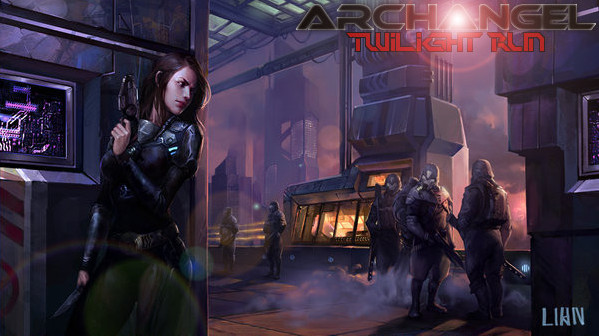
I ran three campaigns, two military and one a “spy action thriller” campaign (The poster headlining this post was part of an advertisement I used when I was looking for a group for the third campaign).  I designed G-Verse to feel like modern action thrillers (the Bourne Identity, Expendables, anything by Tom Clancy) but set in the future.  Set 200 years in the future, an advanced (TL 10^) Earth has finally developed FTL travel and colonized a few worlds, but tensions exist between the extremely urbanized and sophisticated Earth-born population and the increasingly independent, rural and survivalist colonies, when war breaks out between Earth and a warrior-poet alien empire called the Quetzali Tyranny.

Tactical Context: Humanity

Space travel in G-verse isn’t as casual as it is in other settings.  Imagine it as more like Mass Effect crossed with the Expanse than like Star Wars or Star Trek.  Thus, Earth relies on planets providing their own defenses in the form of decently well-equipped militia.  A typical member of a “planetary defense force” would the standard soldier template with a standard soldier loadout.  You might think of these as “the poor, bloody infantry.”
For the purposes of gauss weaponry, it’s important to note that:
  • They usually had a guns (rifle) skill of about 14
  • The used a 4mm gauss rifle with 4 clips
  • They had an underbarrel EMGL (25 mm) with HEMP rounds
  • They had sufficient electronics for a +2 to +3 to all shots with their rifle
  • They had a radar system that gave them an additional +3 if they locked on, but they also had electronics that gave them a +1 to dodge if someone locked onto them.
  • They work nanoweave tacsuits.
Planetary Forces had their elites, and they tended to specialize.  The most common were heavy support (often with a gauss LSW), veterans, recon specialists, and shocktroopers (usually armed with a gauss CAW, a gauss PDW and a combat hardsuit).  Different planetary defense forces would specialize in different ways.
The general tactical intent of the planetary force was to have recon look ahead and see what the enemy was up to and to radio this back to his forces.  Then, if necessary, to act as a sniper when his troops came into contact with the enemy.  Heavy Support would lay down cover fire or take on heavy vehicles, shocktroopers would rush the enemy (ideally in a built-up environment full of cover they coudl take), trying to outflank them from where they’ve taken cover (to escape the LSW of the heavy), and then destroy them, usually with the CAW (at least, players always chose a CAW loaded with HEMP).  Standard soldiers would fill in any necessary gaps, either supporting shock-troopers, plinking enemy, or using their EMGLs and rapid fire to join the heavy in taking down vehicles or putting down suppression fire.  The ideal planetary force is self-sufficient and can take care of itself.
Earth generally believed in keeping the enemy on front lines, fighting over colonies rather than over Earth, and so it designed its soldiers as special forces that could integrate with planetary forces, a layer that would be applied over an existing force.  These forces were few in number ,but exceedingly well-trained and well-equipped, so that Earth could get away with one or two shipments worth of troops to support an existing army, rather than shipping around thousands of troops.
The typical marine was always a veteran and they tended to split into one of three specializations, and officer who would act as adviser, a commando armed with a portable railgun and infiltrator armor, who would infiltrate enemy territory and engage in sabotage, technological disruption and sniper fire, and the “Heavy Marine,” who was armored in TL 10 Heavy Power Armor, carrying one of three heavy weapons, usually either a gauss HMG or a plasma gun.  Where the commando largely replaced the recon specialist, the heavy marine replaced the shocktrooper and heavy support.  His armor allowed him to disrupt most anti-infantry tactics, like suppression fire, while laying down a withering fire of his own. His role was arguably that of heavy weapon platform, moving quickly into place to lay down an absolutely destructive suppression fire of his own, or even destroying cover with his plasma gun.  Heavy marines were probably the most popular choice for players, and often the most memorably arrogant, but strangely beloved, characters of my games.

The Quetzali Context

All you really need to know about the Quetzali is that they’re a feathered-lizard race of pouncer carnivores with a harem reproduction style.   You have large, loud, smelly, and somewhat dumb males with magnificent plumage and slim, focused, smart, numerous and practical females with subdued plumage.  Both were stronger than humans, but the males were much stronger, and both lacked human endurance (in one memorable scene from the second campaign, the Quetzali ambushed the PCs and destroyed all their vehicles, leaving them stranded in the middle of a vast expanse, which is a typical Quetzali tactic, but it failed against humans because they just marched a hundred miles in a night and a day (and on much stims), which was inconceivable for the Quetzali),  The males tend to demand “glorious” and impractical roles, and act as charismatic leadership, while the females take more important and thankless roles, and usually provide the actual plans of attack that the male will propose.
Because they weren’t meant as PCs, I have convenient NPC packages for them available here.  The basic summary is this: Because of their superior ST, the “average quetzali” carries either an EMGL or a gauss LSW, meaning they can lay down a withering amount of firepower.  Infiltrators are almost exactly like human commandos, moving to a foreward position and laying down sniper fire with a portable railgun and disrupting communications and technology.  Finally, the more elite males wear “recon” heavy power armor, which offers them superior speed, on top of their already considerable speed, and they’re armed with shoulder-mounted PDWs (which lay down more suppression fire), vibro-claws (because they like them: males aren’t very practical, remember?) and limpet mine dispensers (the real killers).
The typical tactics of the quetzali is to mount up in vehicles, speed to wherever they need to be, and then attack (While still fresh and rested).  Grunts lay down a spectacular amount of suppression fire and shrapnel, forcing their enemy to take cover.  While that happens, the quetzali heavy assault rushes the enemy.  If you pop up to shoot back, you’ll probably miss the assaulters unless you’re using a rapid fire weapons, but those have two little caliber to really stop the assaulter.  If you really stand up and aim something like an underbarrel EMGL at them, then the suppression fire or a sniper will take you out.  If you just turtle up, the assault quetzali will get to you, and he will plant a limpet mine on you, and you will die.

After Action Report: Andromeda Incident, Session 6.5

The sixth session ran long, and given the limited time I have left to finish this campaign, I wanted to get the fighting out of the way before the role-playing intensive session I had planned next.  So, the players agreed to have “mini sessions” between the previous session and this one, and we had a sprinkling of one-hour/two-hour sessions throughout the week (and by “throughout the week” I mean “all on Tuesday, right before the next session”)

Overall, each fight went quickly and smoothly and everyone played well.  Each player achieved their mission, and I failed to kill as many characters as I had hoped (but I did manage to get one), and Icarus finally met his princess.

Mission 1: Rescue and Retrieval

Smoke billows from the fuselage of the dropship as it spirals through the air, alarms shrieking.  The pilot shouts out for everyone to brace themselves, and then, with a stomach-lurching stop, smashes into a building.  All goes dark.

The soldiers wake, the impossibly tough Rayner first.  His night vision visor displays the world in hues of green while scrolling lines of text on his HUD report the status of his computer as it reboots, following swiftly by the shifting lines of a status report.  His sleek, black cybernetic limbs hum as he shifts aside the rubble and hunts for the rest of his comrades, to find Bishop well and Strider already standing outside, his white-eyed sentinels watching over him while a small swarm of laser-pistol armed goblins explore the terrain.  In the distance, the flash of gunfire and tracers light up the skyline, with the distant booms of artillery reminding them of the battle that surrounds them.

“We must move.”  Stride removes his helmet, his glossy armor glimmering darkly in the night, his white hair fluttering in the wind.  “The princess cannot wait.  Cannot wait.  This is the…”

“Please…” The pilot hammers on the door between her compartment and the rest of the ship.  “Can someone help me?  I can’t get out.”  A quick glance in her direction reveals the buckled, broken slabs of metal between her.  The ships warmth grew ominous at the flow diagnostic display beside the door that suggested instabilities in the fusion reactor.  The group fell silent for a moment, and she called out “Is… is anyone out there?”

“…the highest priority.”  Strider coldly resumed, swiveling his gaze back to the two human soldiers.  “Let’s go.”

Sergeant Jack Bishop finished resealing his armor and readjusting his rifle on its strap, and then pointed a finger at Strider.  “No.  This is my command, my mission.  Nobody gets left behind.  Thompson, open the door.”

“Sir.” Rayner acknowledged with a snapped salute.

“Fine.”  Strider sniffed and replaced his own helmet.  “Do as you wish.  I am not under your command, and I will not forget the ultimate purpose of this mission.”  As one, the Tennin forces turned and moved out, quickly swallowed by the shadows of the abandoned section of the city.

With a quick heave, Raynor’s new, powerful arms make quick work of the door, forcing it open to reveal the bloodied pilot on the other side.  An unpleasant wound seeps through the rent in her combat suit.  Raynor finishes shifting the rest of the debris, and helps her to her feet.

“I heard what the elf said.”  She grumbles, trying not to lean on Raynor as she favors her uninjured leg.  “I won’t slow you down.  I’ll keep up, just don’t… don’t leave me behind.”  She coughs and pulls away the visor to her rounded, pilot-helmet, and wipes her mouth with the back of her hand.

Sergeant Bishop shakes his head and offers her his sidearm.  “You’ll be fine.  Raynor, carry her.”

“Sir.”  Thompson acknowledges once more and then takes the woman over his shoulder.

Bishop stepped out and surveyed the broken landscape around them.  A towering statue loomed above, it’s head broken and toppled by their crashing ship, and debris and broken glass crunched under foot.  Their drop ship had come to a stop in a large, ominous white building.  While Bishop watched it through narrowed eyes, a snarling growl alerted him to the presence of a large quetzali male staggering out of the ruins.  Thick, black fluid dribbled from blackened teeth, and he wore a smudged, white lab-coat.  Suddenly, the quetzali unsheathed its claws and charged and, casually, Jack lifted his rifle and fired a three-round burst into the male, killing him instantly…

… or not.

As though it had felt nothing, the quetzali continued its charge, howling ferociously.  Bishop fell back and fired a full spray of bullets, tearing the quetzali apart just as it was reaching him.  Thompson stepped out, carrying the pilot, and looked at the gore covered Bishop as he wiped his visor.

“What was that?”

“I don’t know.  I didn’t like it.  Let’s move.”

Bishop moved to take cover behind the debris of the statue, the pings on his radar warning him of incoming mobs rushing at their position down the winding alleys of the abandoned, city streets.  Bishop signaled for Raynor to go, and then erupted from his position.  The underbarrel grenade launcher thumped as it sent its deadly packaging arcing through the air at the first swarm of quetzali militia, poorly armed and armored insurgents rushing at them with all of their predatory speed.  His perfect shot blew away the first of the males, and then he laid down a hail of withering suppressive fire that tore through their ranks.

Raynor lifted his hand to salute his sergeant when the crack of not one but two portable railgun shots echoed through the air.  The first cracked against rock, but the second made Bishop jerk.  Bishop’s diagnostic hit red in a split second, and Raynor’s eyes widened as Jack slumped against the debris.

“Sir!”

“It’s fine.”  Bishop growled.  “Go.”

Private Thompson nodded and turned to go.  As he ran, he heard the hail of gauss rifle fire as the dying Bishop laid down more fire.  Finally, after long, silent seconds, he heard the detonation of several grenades, flare grenades arcing into the sky as Bishop ended his life in a fantastic fireworks display that took his foes with him.  Raynor squeezed his eyes shut as Bishop’s diagnostics flatlined.

“Goodbye, Sarge.”  He whispered.

(Sometimes, when you get hit in the torso, the GM rolls a 1 on a D6, and it means it was a vitals shot and it sucks to be you.  Jack had the Dramatic Death perk, and so went out with a bang).

Mission 2: Escort

Maddie, still riled from her “failed” date with Emerson joined Mackenzie (who flexed and played with her cybernetic limb, eager to prove her worth in battle), Amy (also emotionally uncertain), Sage (Surprisingly sober) in her IFV, Chaos and (of course) Seleya, and Snow, with Roughneck at the head of the column.  The tank rumbled to life down the winding boulevards of Grrarrashe-Ya, wending its way towards the central palace.  Tall buildings lined the sides of the streets, looming over the group.

Suddenly, swarms of quetzali militia erupt on the rooftops wielding old, chemical slughthrowers and heavy grenade launchers.

“Move move move.” comes Roughnecks command across the comm system, and everyone flows into motion.  Preternaturally aware of their surroundings, Maddie and Chaos move first.  Chaos shouts at Snow to top the building, shaking the marine from his surprise and sending his huge, power-armor clad form bounding up the side of the building with alarming speed.  Maddie’s gauss LMG charges with a whine and she lays down a torrential hail of bullets which spark against stone and shred uprotected flesh while the rest of the column moves forward quickly, the group trying to get behind the cover of the tank while the quetzali on a third, smaller building lay down fire.

(“This doesn’t seem so bad,” comments Maddy’s player.)

“Gonna blow the building.  Cover me.”  Mackenzie announces.  Chaos and Selena hit the ground, their twin portable railguns aimed at the third group while Snow and Maddie make quick work of the other two groups.  A few moments later, the third building explodes, with Mackenzie outrunning the blast radius, showering brick and mortar, removing the third group….

But not the threat.

From another side street, a quetzali assault craft and a squad of heavies charge forward.  The leader wears armor covered in baroque gold and murmurs prayers or poetry into his speakers.  Another group ambushes them from atop another set of rooves and lays down yet more fire, taking down one of the unnamed soldiers in a spurt of blood and spasms.  Amy rounds on the attacking force and, without thinking, fires her grenade launcher at one of the power-armored assault troops and, surprisingly accurate for the young novice, managed to kill him in one shot.  An instant later, starfire splits the sky in a terrible, thunderous roar as the tank destroys the assault craft in a shower of burned, metal parts.  Maddie’s ears ring for a second, but Chaos clutches at his ears, unable to hear anything and nearly floored by the pain.

The Assaulters sprint forward, impossibly agile and swift, leaping onto and over the tank, their long legs eating up the distance, except for the gold-clad leader, who turns his eyeless, dour gaze on Amy Carver.  Rushing forward, he catches her helmet and faceplate in his claws, lifts her from the ground, and runs with her, rushing across the street at full speed, directly at a wall, while she clutches at his claws and screams.

Maddie moves in slow motion, dropping her machine gun and reaching inexorably for her missile launcher.  She manages to have it on her shoulder just as the quetzali races across her sights.

(“Do you aim?” I ask.  “I can’t, I don’t have time!  They’re too fast!” she replies.  I nod “Then roll, but you’re at -6 for their IR cloaking).

The fire and fury rush out of the barrel, but zip helplessly past the rushing quetzali, unable to find her target.

(“You have luck, you can roll twice more.”  “I did, those missed too.”)

Amy’s head slams into the far wall with a sudden crack.  Blood spatters against her faceplate, which cracks under the pressure of the superhuman strength offered by the power armor.  Her vitals fluctuate rapidly and she whimpers over the comm systems as the quetzali raises his claws for the final blow.  Chaos struggles to shake himself free of his stupor, to aim down his sights at the quetzali, but can’t focus.  Maddie cannot reload in time.  They watch, helpless…

(“Right, so, that missile is still in flight and it might lock on to another target.  Roll.”  She rolled a three.  I kid you not.  So I sigh and say “So, who do you want it to hit, you can pick anyone.”  “I know just the target.”  She replies.)

Suddenly, a crash and an explosion rips the quetzali heavy.  The missile merely needed a moment to lock, spun a u-turn, and then zipped back, blowing away the surprised quetzali.  Amy slowly slid down the wall to the ground, sobbing in terror with the severed hand of the quetzali still grasping her helmet.

Mackenzie’s freshly set-up turret begins to lay down heavy suppressive fire, and Chaos manages to draw an EMP grenade and throw it at the base of the tank.  The moment it hits, it explodes in an electronic flash, killing the systems of several human soldiers, but also those of one quetzali heavy and actually causing the armor of a second to seize up so that he collapses to the ground.  Behind them, a new squad of quetzali militia sprint down the street, but they ignore the humans except to stop by Amy and patch up her wounds as best as they can, and to lay down fire against the other quetzali, momentarily confusing the human soldiers.

To deal with the final group on a rooftop firing at the squad, the tank turns and fires its plasma cannon once more, its roar threatening to damage the hearing of those nearby again, so that they can barely make out Roughneck shouting “No, no stop your fire!”

He rushes at the destroyed building, flames liking up its sides, and indeed, the shadows of small, childlike shapes writhe in the fire.  He pulls at the boards covering the windows and doors, trying to get at the innocent quetzali civilians.  Maddie and Chaos quickly join him, and when the innocents within refuse to go with the “alien” heroes, Chaos’ skill in Tyrannic quickly convinces them to trust the humans and flee the inferno.

Mission 3: Who Says Being In Reserves Is Boring?

Moments after the drop ship fell from the sky, command signals the reserve forces to ready themselves.  Icarus dons his powerful armor as swiftly as he can, but an officer informs him that he cannot bring his massive plasma cannon with him on a “rescue mission” as it would cause too much collateral damage.  After an “interesting” encounter with the supply clerk, Icarus arrives at the next drop ship carrying a supply of limpet mines and a dinky little pistol (dwarfed by his over sized gauntlets)

Ducky and Dr. Emerson wait for him, the latter once more surprisingly comfortable in his tacsuit, wielding his rifle skillfully. 

“Is this going to be a problem?  You and I, on the same team.” Emerson asks with a lifted eyebrow.  Icarus scowls and replies to the negative.

“Oh god, I’m going to die.”  Ducky rocks back and forth, clutching his rifle in his hands, the inside of his faceplate already steaming up from his insecurity.

“Hey!” Emerson growls.  “Don’t talk like that.  We have a duty to the rest, to your sister, to get through this.  No fear.  Just get the job done.”

Ducky calms, thinking of Mackenzie in battle, and resolves to stay strong “for her.”

Before long, the drop ship lifts off and speeds over the city, offering the heroes the vision of the war-torn city below, with pockets of resistance lighting up the night with sprays of tracer rounds, followed by the clap and flash of plasma fire or artillery ordnance.  Below, the beautiful, too-delicate Tennin embassy swings into view, it’s fragile pillars toppled, it’s elegant walls broken, and the rough shapes of the reptilian quetzali stalking through its halls.

“Pilot!” Icarus shouts.  “Swing low, I think I can just jump in.”  The pilot suddenly swerves and Icarus times his jump and then, after flying through the air, the familiar sensation of joyous freefall pleasing the spacer, he crashes through a hole in one of the walls, and rolls to a stop before three surprised quetzali soldiers.  Bouncing to his feet, he smashes the first through a wall and chases the second two away.  Outside, the drop ship slowly stabilizes, dropping cord so the soldiers within can disembark.

Icarus makes his way deeper into the embassy, limpet mine in hand, ignoring the desecrated beauty of the embassy and letting his computer system guide him through the schematics of the building.  He bursts into a once lovely chamber with an anti-gravity fountain sending sparkling beads of water up and down around spiraling, geometric shapes, with panes of frosted glass obscuring various parts of the large, vaulted room.

Quetzali gauss bullets shatter glass panes and bounced off of Icarus’ armor like rain off a tin roof, he sweeps the room with his radar, picking up multiple pockets of resistance, and charges the first like a steel-clad rhino.  The enemy scatter like leaves on the wind, and Icarus slams a limpet mine on the faceplate of the first male quetzali he can find.  After the terrible bang, the headless quetzali drops.  Icarus struggles with the remaining enemy when a HEMP grenades shatters a glass pane near him and, fearing for his safety, Icarus breaks through the delicate, internal walls of the embassy, accidentally crushing a burned Tennin corpse along the way.  Enjoying the cover, he scans the building and looks for a good route around the attackers, flanks through by charging through a variety of walls and then bursts back into the room just as Emerson and Ducky and the rest of the soldiers arrive on the scene.

“We’ve got this.  Go go!” Emerson shouts as his grenade launcher kills another quetzali.

Icarus agrees and charges deeper into the Embassy, hunting for the prized Ambassador.  Finally, he tears through a door to find her trembling form.  The light of artillery explosions outside paint her long, silken, silvery hair with the colors of fire.  A flowing, silken white dress accentuates and covers her soft, supple blue skin, and her liquid black eyes widen when she sees him.  He throws his hand towards her and shouts “Ambassador?” the echo of his loudspeakers booming through the room.  She rises to her delicate toes and flees the room as fast as he can.  He pursues her, smashing through inconvenient doors, his heavy armor thundering behind her.  Finally, he breaks open the door to her safe room to find her unconscious, fainted, on the floor.

Suddenly a small shape drops on him from above, it’s chubby, goblin legs wrapped around his neck and plants a limpet mine on his helmet.  Thinking quickly, Icarus removes his helmet and discards it, only to earn a knife stab directly where his neck and shoulder meet.  Shouting in pain, Icarus seized the goblin, ripping him from his position and dangling him above the floor.  The goblin glared back with feral teeth, a scar across one black eye, and long, ragged ears quivering with rage.  Then, suddenly, the goblin stops dead, staring at him.

“It’s you.”  He says.

Icarus narrows his eyes.  “What do you mean?”

The goblin squirms from his grip and drops to the floor, and then rushes to a fallen sketchbook.  Flipping through the pages, he brings it to the marine.  A sudden flash of a distant explosion briefly illuminates the ambassador’s artwork: a sketch of his own face.

“She’s been waiting for you.”  The gobling growls.  “What kept you?”

GURPS Andromeda Incident: After Action Report 3

My GURPS Military Space Opera continues, or rather, continued, as this took place several weeks ago and I’m only now getting around to posting about it.

The title for this chapter is “Cat and Mouse,” which hints at the strategic, maneuver warfare I hope to elicit from the group in this arc.  It’s a bit of an experiment, and we haven’t actually gotten to that part, but hopefully, it’ll work out well.

Instead, we ended up dealing a great deal with character development.  The story took place a few weeks after the initial landing, with the players regrouped at a supply point a few days journey (by IFV) from their destination.  While our beloved Lieutenant received the mission briefing, the players had a chance to reacquaint themselves with some of the NPCs.  As with the last session, I trimmed another “uninteresting NPC,” this time the logistics officer (“Who?” asked one of the players “Exactly,” I replied).  It’s not that she was a bad character, it’s that the players have fixated on others. 

In particular, this session turned around several NPCs and added depth.  Specifically, Mackenzie, our ladette, was joined by her loser brother, “Ducky,” which drove her into a motherly panic.  I hope this doesn’t mean Mackenzie loses some cool points, but at least Ducky’s irritatingly rude manner has won over the entire party, giving them someone to kick around.  Interestingly, this means that Amy is no longer the most useless NPC, which is something I’ll have to point out later (also the similarity between both wanting to prove themselves, but only Amy really making the effort necessary to do that). 

Doctor Emerson’s romance with one of the players continues, but his suspicious nature has come completely to the fore, including connections with the black market, a “criminal past,” and his proficiency in combat, which has made said player equally suspicious of him, adding a good dynamic to their relationship. 

Likewise, Sage Hackett’s romance with a player continues to drift between warm fuzziness and raging anger, appropriate to a Tsundere, though I’ve begun to worry that her character lacks depth.  Why is she the way she is?  Where will things go from here?  Still, the players enjoyed her, fought to make sure she stayed with the unit, and the love/hate spat between her and the player earned some laughs.

Finally, we had Kobayashi, who didn’t have a specific story, interacted with a few characters, and managed to make her mark on the players, which is important for the role she’ll be playing later on.  Interestingly, while the lieutenant’s player has decided she loves her (“Kobayashi can do anything!”) at least one player (the player of the most naive character) has grown suspicious of her.  We’ll have to see where that goes.

We ended with the players out in the wilderness, Amy telling another tall tale about her father, with one of the players ordering his recon squad to “establish a perimeter” (the smartest thing anyone did, incidentally) when the Quetazli ambush struck.  The players only had a chance to see smoke engulf the entire camp sight (artillery strike with EM smoke) and one of the recon players (the unlucky one) shot by a sniper (we’re using the blow-through rolls from High Tech, so he “only” took 11 points of damage and -10 to all checks to stop bleeding), and then the curtain closed.

The session was so popular that people have been pushing for the next session, but there’s a few things I’m worried about.  First, my plans for a strategic, rather than tactical, battle are so new I’m not sure how it’ll fare.  I also hope to establish a rapport with some of the Quetzali enemies they face, and that’s always difficult.  Finally, I get the impression that the players would like to spend much more time getting to know the NPCs and exploring relationships.  I’ve been keeping the story moving, due to tight time constraints and the desire to “leave them wanting more,” but while this has been well-received, I still feel it’s lacking something, a sense of depth, a certain |X-factor.  The NPCs from Frozen War felt like they had more depth, like they were more real, while the Andromeda characters feel either like caricatures or unexplored, like they have so much more potential than I can show.

Still, I shouldn’t complain.  None of the players are.

GURPS Andromeda Incident: After Action Report 2

Our first session ran long, so I cut out the final battle.  Knowing that my players would need extra time to put together their characters, I focused entirely on the final battle and then character creation, and that worked well.

We don’t have MapTool (yet), so I made up some of my own little tokens and a hex map, and it was BEAUTIFUL.  Not nearly as awesome as MapTool, but it certainly did the job.  The battle focused entirely on a 25 Quetzali “mooks,” Heavies and standard Soldiers, with two Assault Hovercraft and a contragravity Dropship.  The players, unsurprisingly, slaughtered all of them.  To a man.  I did manage to leave some wounds on the players and some of the NPCs, however, giving them (rightfully) the impression that they could have died.  Hooray!  Appropriately epic.
Some highlights:

  • After crashing to the ground in the middle of the battle, Icarus (a battlesuited Heavy Marine played by Raoul) from ORBIT blew one of the Hovercraft out of the air with his Semi-Portable Plasma Gun, and then leaped in the way of the Dropship’s Semi-Portable Plasma Gun blast, taking the full hit and suffering a mere 5 damage.
  • Jack Bishop (played by Pascal) used 3 grenades to take out 2 Quetzali heavies and heavily damage one Hovercraft
  • Maddie Madison (played by Maartje) blew the Dropship out of the sky with a single missile and a string of foul-mouthed curses (seriously).

I made one change from my previous G-verse military campaign that, despite it not working well for this group yet, I liked well enough that I will keep:

Grenade

So I’m playing Modern Warfare, and it occurs to me, while I’m chucking grenades, that they’re on a timer.  This is, of course, obvious in retrospect, but in most games, with 3 second (or longer) turns, this seldom comes up.  You throw a grenade, they blow up, and they kill lots of people.  First, however, this isn’t how grenades actually work (grenades seldom kill people, what they do is flush people out of cover so that you can kill them properly: With bullets), and second, GURPS has single second turns, so it has the granularity necessary to make grenades actually work properly.

But it gets better: G-Verse Humans use smart grenades which can be programmed.  They can be programmed for a very long countdown (say, like setting a charge), to blow up on impact or, my favorite, to blow up when it receives a particular radio signal.  This allows you to throw your grenades and treat them like mines, blowing them when people get close, which, of course, encourages them to keep their distance.  In our game, grenades worked this way, either keeping the Quetzali at bay, or forcing them to run.  So, I’ll be keeping my token-style grenades, I think.

I did a few things wrong.  I always do, of course.  This time, there were two errors that I can think of.  First, the players hit the ground after the Quetzali opened fire.  I declared that while they stayed down, they would avoid fire, but as soon as they came up to fire back, they would expose themselves to the suppression fire.  So they aimed (safely) and then fired (in danger).  I don’t think it works that way:  If you’re aiming, you’re exposing yourself to Suppression Fire.

Second, the Quetzali ran at 8 yards per turn.  Most Quetzali soldiers have a Basic Move of 8 or 9, but they also have encumbrance, reducing their Basic Move to 6 or 7.

Next week, we’ll start with the second major adventure: Cat and Mouse.  Every session, I’ve been exploring new tactical “puzzles” that the players can enjoy.  I’ve been gaining alot of inspiration from this site, if you’re interested.  Good stuff, especially if you’re a 40k player.

GURPS Andromeda Incident: After Action Report

If I hadn’t mentioned it before, I’ve dug deep into my Generic Space Opera material (G-Verse) again because I’ve decided to run a short campaign for the local RPG association. I’ve been enjoying my time with them, lacking in gaming (particularly with the slow disassociation of my Kansas group) and figured “Heck, why not?  I already have the military templates, let’s give it a go!”

The game definitely benefits from the previous run-through (Frozen War).  The templates and loadouts have slowly tightened (making premades and NPCs definitely helped as well).  Knowing the ins and outs of Ultra-Tech GURPS combat also helps, though we didn’t come to that right away.

Tonight was a “one shot” introduction to the game, meant to teach the players how to play, and to introduce them to the world, the storyline and the NPCs.  Everyone who played wanted to play again, including an old friend I never expected (he saw what I was running, attached himself at the hip, and now intends to be there for every session.  In retrospect, I should have seen this coming: He loves space opera, especially the “dark” stuff, and military games).

So: Andromeda Incident: Crash Course opened with a debriefing that introduced the world and the premise.  Each scene thereafter introduced an NPC or two and a key aspect of the game (How to fire and aim a gun, how to use first aid, how to fight in melee, and so on) as well as interesting NPCs: A tough tom-boy demolitions marine, a tempermental mechanic, a brooding doctor, an arrogant heavy marine, and so on.  Then, once everyone was set, we unleashed all hell as the orbital defense grid of the planet they were invading tore apart their ship.  The players had to choose which NPCs to rescue, with each rescue becoming more difficult and lethal, until the final set, wherein I informed players I would be actively trying to kill them.  They, of course, rescued all the NPCS without losing a character.  The bastards.

I had hoped to play out their rough landing and a short battle, but alas, we started late and while I got alot done in 3 hours, I called it quits.  We’ll get more done later.  As I said, everyone enjoyed themselves immensely.  I probably should have played hard ball, but GURPS, IMO, works best when the GM makes quick calls and focuses on “roll & shout” style play, and I did so.  The result was spectacularly cinematic rather than grim and dark, but players had the sense of impending doom and, to be frank, it was Luck that kept them alive.

A success, but hardly surprising: G-verse usually works well.  I am surprised how many people wanted to play, and how vociferously they demanded another game.

After Action Report: Frozen War, Final Thoughts

As the relationship between Sasha and Walter’s character grew, I began to consider the possibility that Walter might shortchange my finale, and I was right. Given a choice between killing a mad psionic god, and abandoning the military and the planet to save his shy sweetheart, he chose the latter… and the rest of the group agreed.

But I have no complaints. The final session was as smooth as a man could ask for. We had a dramatic, climactic battle that claimed the lives of at least one named NPC (Heavy), nearly destroyed another (Katje), and despite overwhelming odds, the players managed to snatch victory from the jaws of defeat. My anti-defeat failsafe wasn’t even necessary, though it was dramatically appropriate and fun.

The players appreciated the final choice offered to them, the role-playing opportunities, and the slow shift of tone away from military drama to full space opera. Incidentally, for those who played, the Madness Bomb was pulled straight from the pyramid.

I had zero rules complaints. This session felt like the first session where everything came together. The players enjoyed their full technological advantages, nobody fudged or messed up a die roll. Everything went well. The players demand more, and are disappointed that I’ve put everything on hold for now.

But I wanted to talk about GURPS instead. The whole point of this campaign was to sort of playtest a sci-fi game, and get an idea if I was “doing it right.” I wanted to share my thoughts.

1. GURPS is fiddle

Alot of GURPS haters complain that GURPS is too complicated. You know what? I kinda think they’re right. There’s lots of little things to remember. Consider just shooting. We had to remember: Range penalties, vision penalties, weather penalties, gravity (which we ditched), speed penalties, size modifiers, RoF modifiers, bulk, accuracy, radar aiming bonuses, computer bonuses, and weapon bonds. Unsurprisingly, we tended to miss bits. Now, it’s true that other games can be just as fiddly (I’m still learning new things about WotG and WoD), and GURPS doesn’t scatter its rules in a dozen books the way some systems do, so when I want to find something, it’s easy to do. Still, I can see their point.

2. GURPS is rugged

The typical response to the above by a GURPS fan is dismissing all those funky modifiers as unimportant, and it’s kinda true. I mean, my players certainly enjoyed the last session, where I had all my rules down pat, but they didn’t exactly hate the first session, where I made lots of mistakes. If you mess things up and wing it in GURPS, it works just fine. I like to have all that detail there, but it’s not strictly necessary. It has been and always will be “Roll three dice and look at how pretty they are.”

3. GURPS is powerful

So, I fudged the Forward Observer rules for the sake of the game. But, of course, Walter had to play expert and tell me that I was “wrong.” So, I grabbed the High Tech book, whipped out the full Forward Observer rules and beat him over the head with them. He gave in. Now, this wasn’t strictly necessary. I could have just given him the Disapproving Gaze of Death, but it’s nice that it was there. It satisfied Walter, it satisfied me, and the whole group enjoyed the (slightly) more detailed rules we used as a result. We had the same thing turn up again and again. Whenever there was a question, a doubt, or an argument, we could flip open the book, and it answered all of our questions. It was pretty amazing.

4. Templates and Loadouts rock

GURPS has been fun for ages anyway, but I really have to say adding templates and loadouts at the beginning of the game smoothed everything out nicely. It did this in two ways. First, it made the game alot easier for players to get into. Just pick a couple of templates at go! Worried about gear? Don’t! It’s all right there. Second, it ensured that players had things that I felt they should have. Everyone had luck, serendipity, useful skills and solid gear. This is part of the reason you didn’t see people using tech early in the game (they didn’t know what it all did), but blossoming into it later (because it was there). If they had chosen their own gear, it would have been “Power armor, guns guns guns,” and the infiltrators and mines would have destroyed them. They would never have thought of targeting computers, radar, survival gear, cuff-tape, first aid kits, trauma maintenance gear, and so on. I’m using templates and loadouts all the time now.

5. GURPS has awesome supplements

I look at my WoD collection and despair. Invictus? Never used it. The setting books? Discarded. Coteries, Nomads, the Lodge Books, the Bloodline books, Sanctum and Sigil, the Tome of the Watchtowers, the Banishers, book after book that I bought because I just wanted a book, but never used and barely read. When I do run WoD, I end up using the core books and maybe one or two additional books. And WoD is one of my favorite games. Don’t get me started on 7th Sea or oWoD or games I bought and never used.

GURPS, on the other hand, has some wicked awesome supplements. In this campaign alone, I used: GURPS Space, GURPS Ultra-Tech, GURPS Bio-Tech, GURPS High-Tech, GURPS Psionic Powers (PDF), GURPS Loadouts (as inspiration, another PDF), GURPS Action 2 (PDF), and Pyramid issue 9: Space Opera (also a PDF). Now, some people will look at this list and think “I have to buy all that to play?” No, of course not. But if you did, you’d be as well supported as I was, instead of poor and pissed off like you might be with other games.

6. Maptool rocks

Byler introduced us to it, and while it’s been a pain, it’s also been a huge boon. I’ve never really messed with GURPS tactical combat until now, but at Walter’s insistence, we started grabbing maps, and boom, the entire shape of the game changed. It does take longer to figure things out. For example, our fight in front of the secret lab took the better part of two hours, but instead of fudging and saying that there were more than they could deal with, I showed them that there were more than they could deal with, and they dealt with them anyway.

Miniatures are great, but in a game like GURPS, people want to play what they want to play, and I want to use what I want to use. We would never limit ourselves to the creativity of some modeler somewhere, and we could never afford all the pewter necessary to make our game work. I could not POSSIBLY use Quetzali if I had to rely on models. But in Maptool, it’s pretty easy to just clone pretty pictures and use them again and again.

And miniature combat has so many benefits. It provides constant tactical feedback. It helps you remember where everyone is, what they are doing, and that they are there (cough). It’s really reshaped the way we play GURPS.

So the big question is, was it a success? Did I enjoy GURPS? Would I run it again?

Yes. Yes. Yes.

It’s fiddlier than I would have liked, but the Newton crowd doesn’t care, so we’re alright. I wouldn’t run it for the Eindhoven crowd, but that’s ok. It was quite a pleasure to unveil a full setting to my players and have them eat it up and want more. Being the first GURPS game we’ve ever truly finished (with the possible exception of RG), I think this one definitely goes in the annals as a legend of a game.

Frozen War: After Action Report 4

It’s been a crazy busy week. I’ll tell you about it tomorrow after I finish my last test. But, I have some breathing room, so I should post while I still can.

So, after previous games had been delayed again and again, it was nice to play *gasp* two weeks after the last game. This time, we focused much more on combat combat combat, with almost no characterization, but it still turned out very well. I don’t think I forgot any rules, though I did skip out on a few. For example, I ignored the fragmentation damage on some IEDs some ebil partisans had rigged up but the players are so loaded up with armor that I decided it didn’t matter. Roomie also died until someone used Serendipity to make sure he lived (be careful of snipers!), which might have been an excessive fudge, but I’m willing to let it stand. Finally, Byler got pitched by a robot’s Force blaster and took 6 damage (blunt trauma), and I didn’t give him a -4 on his next roll. It didn’t really matter (he beat his attack roll by bunches and bunches… or he ran around the corner and tried to recover, I don’t remember which), so I’m not too worried about it.

The players are also adapting alot more to their technology. Roomie started passing along sensor readings, other characters did sensor sweeps to find mines and snipers, and Byler had a nice game of cat-and-mouse with some partisans in the pine jungle.

In a way, this was the game where the players really grasped that we were playing Space Opera. Each session has been a careful revealing of more plot: First, an invasion, then the revelation of sabotage, then the revelation of a spy, then the revelation of a secret government project and the nature of the planet. The next session will reveal the nature of that project. If the last session was when players finally understood their characters, this was the session where they finally started to really see the setting.

The one thing I feel I have neglected thus far is disadvantages. I’ve smacked a few players with theirs (Byler and his Sense of Duty disadvantage, and Roomie and his Fanaticism), but I’m kinda dejected I don’t remember more. It occured to me, the other night, that in WotG or WoD, I usually sit down and plan a game around a player’s disadvantage. Perhaps I should do that in the next session. Rather than try to remember the disad in the middle of the game, I should find some way to work it into the planning before hand.

I asked Byler and Walter if they agreed with me, and I think they do: This is the best GURPS game I’ve run. Shawn claims Dark Souls was better, and Dark Souls was pretty good, but this game feels the most tightly designed, cleanly run, and the addition of things like templates really smooths things out. I’m very pleased with it, especially since I’m gonna finish it up nicely.

As an addendum: I’m very pleased that my efforts in persuading my players to schedule ahead is finally paying off. Last session, Roomie and Walter revealed when particular gun shows would be, and the timing involved. As a result, we’re playing again this weekend. Wonderful!

Frozen War Session 3 After Action Report

Treachery

Another solid session, I dare say better than the last.

The session consisted primarily of PC/NPC interaction for like 90% of the game, with a wild, swift and very bloody battle at the end (2.5 seconds of complete and total death for the other side). I find it interesting that my players respond best to these, as the first session reminded me much of that, while the second session was far more mechanics and had less of a visceral response, in my opinion. Even so, some players commented that it was “alot like NCIS,” by which I believe they mean “It has a mystery!”

We’re starting to hand out “Whiney” awards, and Byler earned it this time, though honestly, it wasn’t as bad as last sessions. Even so, I note a trend: My players, while they most certainly love the hell out of this game, and others express interest in joining, they sure find alot to complain about during the game. Today, we had a gun against a player’s temple, he attempted to throw the guy, and was shocked when he discovered that a man with a gun at your temple can pull a trigger faster than you can position your entire body for a throw. Fortunately for Byler, the guy liked him, so lowered the gun last minute and hit him in the shoulder (They were trying to recruit him). This did not stop Byler from wishing death on him.

The problem, I think, is that they have grown used to very high powered games: 7th Sea, Marvel, Weapons of the Gods, where character point totals would range from 500 to a couple thousand points. Let’s be honest: putting a gun to Spider-Man’s temple wouldn’t slow him down, but putting a gun to James Bond’s temple would (he’d surrender at that point). At 200 points, the players aren’t even on James Bond’s level, but I think they have a hard time grasping that mortality. GURPS is not a happy happy feel-good system, it’s a lethal, scary system where mistakes can get you killed (and the thrill comes from repeatedly not dying as bullets are flying, as Roomie commented on as he waded through partisans completely safe in his armor. A critical hit might have killed him, incidentally, but I’m sure he’d point out that he could be struck by lightning too). So there’s a tendency to approach every problem with a sudden, awesome act of violence or a big speech, and that doesn’t fly as well in this game as it does in a supers game, and so there’s a disconnect.

As Roomie mentioned, the players are still getting into their characters. They’re still getting into the world too (Byler was far more conscientious of this during the first two sessions. It’s easy to forget this sort of thing after a month of not playing). Still, the complaints lasted until he had a smoke, then he was fine, even happily commenting on the fact that even with, what was it, four bullets in him (He’s taken the most damage in the entire game so far), he managed to subdue his attacker. If he hadn’t passed out from blood loss, he probably could have kept going.

No serious rules problems. We used Maptool as an actual minis game at Walter’s request, and it went rather well. I’m a little leery of getting too dependent on Maptool, but I must admit, it really highlighted some things well: I didn’t forget anyone, provided they were already on the map. I was able to show the players how many enemies they faced, and they more cleanly stated things like “I spray my fire at those four guys,” and the players got to see how fast a Quetzali in power armor really is (though I made a mistake: He attacked with his full skill, and that was a move-and-attack. I believe you can make that a Heroic Charge, which would have exhausted him even more, but that would also just highlight how much less endurance a Quetzali has, which I’m fine with).

There was a debate about Luck, though. Byler and Roomie both have a tendency to call out “Luck!” whenever a roll goes bad, and I called him on it, and there was a disagreement. The roll in particular wasn’t that important (do you go unconscious now or later? Once you get out of combat time, it’s basically certain a negative HP character will pass out), so that didn’t matter much, but what about next time? What if I’m wrong and I disallow someone their luck roll in the middle of the battle because I mistake one player’s use of luck for another player’s use? I need to find a way to mark this. I’ll look in maptool, and when someone calls luck, note on their character the time they can use their next one. Since maptool is already there, that’s not very hard (just glance to see if they can).

Shawn wants to play. He claims he didn’t make a character because “he heard this was going to be a one shot.” I think the real reason is, as usual, a hypothetical game is less appealing than a game right in front of you, and listening to people battling and falling in love and kicking ass made him yearn to join in again. In a couple of weeks, the game returns to being hypothetical, so this fervor might not last. We’ll see. Even so, it was very nice to hear him laughing and hanging out again. This is more the Shawn I remember from years back. Perhaps he’s getting his groove back and pulling out of the depression that has been haunting him for awhile now.

EDIT: Woah, strange error. Anyway: Seems like I can add notes to PCs during Maptool, provided I add them to tokens. I’d rather add them straight to “characters,” but this will have to do. This way, I just mark the time when their luck recharges, and if there is a question, check the time. If it has elapsed, they may use their luck again.

Once More Into The Breach

As mentioned in my previous post: Frozen War! We played another session.

Between my classes and my 40k obsession, it’s hard to focus on my standard Space Opera, but thankfully, I managed to find the attention to do so, got it together, and we played it out again. All in all, it went well and was well received by my players. But just as before, there are places I could have done better.

I’m still really uncertain of gravity. I think I might just ditch it in my main Space Opera game, as it doesn’t really seem to bring much to the game except alot of mathematical hassle. Gunplay improved alot, but I made another mistake here: Byler went “down” when he was under suppressive fire. So far, so good. He thereafter tried a “pop up” shot, which put him under suppressive fire for one turn and gave him a -2 to hit. Again, so far so good. Unfortunately, Gunslingers don’t suffer that penalty. He’s even more badass than I realized.

In another colossal screw-up, I really underestimated the defenses of Caldera City, and as a result, the attacking forces were slaughtered. I lied to my players, something I had decided I didn’t want to do: by the rules, they actually should have killed every last man, woman and child that attacked the players, through a combination of the Quetzali leader’s stupidity and the sheer power of Caldera’s defenses. The old rule of thumb is that you need 3 times your defender’s strength during a siege, and I should have used that, but I figured 1.5 times was more than enough. However, with players making heroic actions and the massive defenses of a city, I should have placed alot more firepower in the hands of the Quetzali.

The lowest point of the game, alas, was a player. During an early battle, they managed to ambush some Quetzali, wound their leader, take down two of their infantry, and run them out of town, and Walter qualified it as a “defeat.” He complained when their non-infiltrator types couldn’t detect an infiltrator, when his APC HMG couldn’t blow a flying APC out of the sky. He complained that he’s always losing (despite the fact that the players have won every battle they were allowed to influence), that Quetzali have superior technology (they have essentially identical technology to humans, much to my annoyance), that the Quetzali are superior themselves (They are worth more points, but I’ve designed them to be weak in certain, important areas), and complained that he couldn’t possibly defend his city (“I’m out-numbered!”).

The other guys didn’t complain. They even got on his case for doing so, so it’s clearly not the game itself. To me, the most grating thing about this is that it destroys the illusions I’m trying to create. Now that they won that battle, it sounds like I toned things down based on his complaints, and his victory is now hollow because he won by whining, and that’s just not so. He won through his own grit and (reluctant) determination.

I suspect I know where the real problem is. In the previous session, Walter actually lost, but didn’t complain. This session, he won and complained. The difference, I think, is the role of his character. Byler and Roomie have both slipped into their roles perfectly, and know exactly how to play their characters, and achieved some serious badassery. Walter, once again, finds himself in a sidelined support position, and he does not do well there. Only, he’s not really in a “support” position. His character is just as good with a rifle and UBGL as before. He’s just as well armored as before. And he hasn’t yet mastered the arts of leadership in GURPS. Walter hates to feel useless, and not knowing how to achieve victory is a form of that. As he learns better, he’ll relax. I just wish he’d trust me. I think I’ll have Sasha suggest to him to “get involved” in the next fight as much as possible, commenting that he doesn’t enjoy “leading from the rear.”

I trusted him last session and gave him a nuke when he requested it, having visions of epic uses of it later in the game. He threatened to use it on a squad of 5 Quetzali at the risk of his own men. Wow. Then he threatened to use it on the city he was defending. Wow. You should never give someone a toy unless you’re willing to let them use it, but man, this is really not how I intended him to use his nuke. I’m not generally a fan of “punishing” a player, but this might be a case to pull out some dirty tricks: All his loud, boisterous threatening of the Quetzali with a nuke has told them that he has a nuke. If they can take it from him, the enemy general who just lurves holocausts can use it on the city. Hopefully, that will make him think twice about blabbing confidential info at the enemy, especially in the form of empty threats.

But beyond this, I think it was, overall, a very good game.

UPDATE: I feel the need to add that, as pointed out by Byler (I believe), Walter’s complaints are a good sign. They mean he cares about the game. If he didn’t, he’d just shrug and disregard any setbacks. Instead, he wants to see his lieutenant succeed! And that means he actually likes the game.

UPDATE 2: I might have given the impression I was mad at Walter, and I wasn’t. I’ve seen players get frustrated with their characters before (Erik, a friend from the Netherlands, was very frustrated with his Dragon-Blooded sorcerer before we fiddled and found a way for his generic Occult to be useful). I’m quite sure Walter is in the same situation.

In fact, he contacted me and apologized. This is what I mean when I say I have good players. According to him, his real frustration is the lack of a decent MAP, since visual input really helps him formulate strategies, so we’ve figured out how to sketch out some stuff on MapTool, and we should be ok. His comment about the nuke was this: “A Nuke is a bluff, a MAD device. Thus, it’s useless if you don’t announce it.” Which is true, come to think of it! I suggested that he might save that bluff for more useful times, however, not overestimate it (You can’t demand the surrender of an entire army just because you have a nuke and you’re in their midst), and to better understand his opponent psychology (Quetzali tend to be skeptical of physical danger, both a great asset and a grave problem for them)