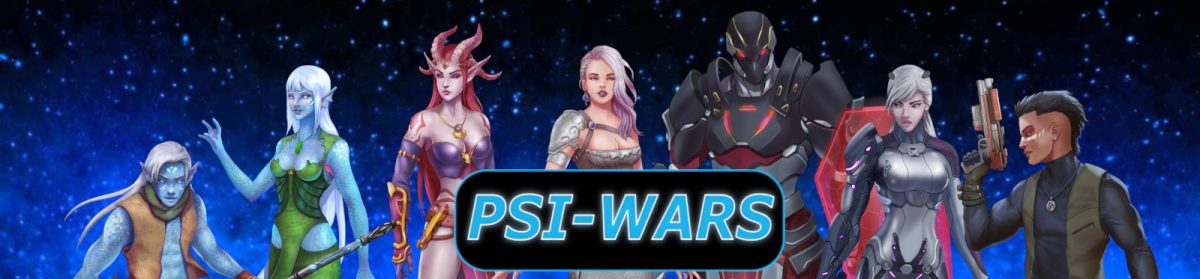
Gaunt Tribe: The Hadeans

The Hadeans were the last and hardest of the Tribes to write. I knew I wanted an inherently superior tribe, to replicate the Unliving “Zomb” tribe, one that was inherently better than all the other tribes. But what else could they be? I slowly settled on the idea of a “merchant” tribe that might swap antiquities with Mithna Zatharos, and a servant tribe that would represent Mithna Adivasta. This last was especially important to me: I wanted a tight representation of Mithna Adivasta among the tribes, which likely meant some adaption to the cold, given the arctic fortress from which Mithna Adivasta ruled.

The problem was all these different pieces didn’t want to come together. Why did they swap antiquities? That might imply they are sorcerers, but the Getics felt better as sorcerers for a variety of reasons. Did I want two sorcerer-tribes? Not really. They could be stealthy and assassin-like, but eventually, that got pushed to the Abertach. There were a few elements I knew I wanted for sure:

  • Ghoulish Memories: One of the purposes of the tribes was to break up the Gaunt power-ups and give them a home, and the Hadeans would be the ones dining on brains to gain deep insights. It would also explain what sort of things they liked to trade for.
  • Better Than You: I wanted to give them some sort of Higher Purpose that let them win all contests or competitions against other Gaunt, and act as a sort of elite among elites.

But that wasn’t enough, so I settled on a few other things: where the Wasters were the “hot” Gaunt, I wanted someone to be a “cold” Gaunt. I had another (discarded) tribe that was “bony” because Bone Knights are popular and I wanted to explore it. Then I realized they might be interesting if they had skull faces or ornate, bony armor. Truly, a magnificent set of villains. And if they were “better than you,” perhaps they could occupy a place of “discount True Tarvathim.” Many Highborn Tribes vibe like “cheap” Tarvathim: the Getics are beautiful, the Legionnaires competent, the Hadeans could be cunning. But perhaps they could also be, lightly, immortal? I borrowed and dumbed down True Tarvathim immortality and grafted it onto them.

This informed their talents: Antiquary to represent how they operated as merchants and Thanatologist to reflect their skill with removing brains. Truth Seeker was grafted on, because investigation suited the talents of a clever Gaunt with the ability to read the mind of the dead by noshing on neurons. If they were going to be merchants, though, they needed some sort of reaction improvements, so I went with an imposing sort of Charisma and, for fun, an improved appearance that applied only to Gaunt. The result, I think, is more darkly villainous than I had expected. They make a magnificent sort of Skeletor, or a high priest for Domen Tarvagant.

Some people seem to have noticed the tossed together nature of the Hadeans, and it’s true: they had less vision than the rest, but I’m still fairly happy with the results. The arbitrary nature of the Gaunt Tribes means it works fine for them to be a bit of a grab-bag, but I hope they still appeal to people as an interesting PC possibility. I think they’ll make reasonable PC options, but mostly in games that focus in on the Gaunt as Gaunt (which, hopefully, the existence of the tribes will encourage) or that benefit from higher IQ and investigation, as they suffer from the same combat problems as “vanilla” Gaunt do with few of the compensating factors that other “combat” oriented Gaunt, like Wasters, Getics, Legionnaires or Horlocks get.

Gaunt Tribe: the Wilwatika Legion

While the Gaunt Legion came late in the tribal design process, in a very real way, they were the first Gaunt tribe. As I wrote Wilwatikta, it became obvious that the elite Gaunt of that desert world were a group apart. To my mind, they represented what the Tyranny once was, preserved beneath that sands of that blasted world. Where humanity had expected Gaunt to be dim-witted, slack-jawed creatures, they faced elite bio-tech soldiers with glittering eyes and excellent training. I even wrote up an alternate template for them, at the time. Thus, they were the first tribe written up, before tribes were even a thing.

Once I had realized that creating something like the Getic would require creating something like the Legionnaires of Wilwatika, which meant they, too, would be their own tribe. They fit neatly into the concept of a Higher Tribe, given their elite status and their role as the leaders of the Gaunt factions of Wilwatikta. This also meant between the Warstock and the Legionnaires, we had two different perspectives on how a Gaunt force might fight.

Someone called the first iteration of Legionnaires boring, and I’m afraid I’ve not fixed that. One of their defining features is that they are so similar to one another. They are designed to fit, machine-like, into their military operations, so I wouldn’t expect them to have a great deal of variation. When one looks out at the Wilwatiktan Legion, a surprisingly uniform set of faces look back.The original design mitigated a lot of Gaunt weaknesses, but that costs a lot of points, and the Talent option also fixes those issues, so I had a little room to maneuver. I knew what I wanted: the Fighter’s psi: Chi. I love the idea of them as the most finely honed physical machine of the Gaunt. This gives them access to cool powers that feels psi-like, but with an intense focus on combat prowess. It also felt like an interesting experiment: what would players do with this? 15 points/level still feels staggeringly steep to me, but Chi Talent is one of the better 15 point talents, as it covers a wide range of attributes. I’m not sure if players will want enough Chi skills to make the point cost worthwhile; it might help if I gave them some Chi abilities, but I’ll leave it as is for now and see what people do with it.

They would certainly benefit from additional fatigue or levels of fitness. One of the things I miss by restoring Gaunt fatigue is the idea of tireless Gaunt. In particular, the Legion would really benefit from a tirelessness: they could use more chi skills, as well as march endlessly across their burning deserts, their eyes on the prize. I’ve added them as optional traits, but I couldn’t fit it into their core abilities.

Gaunt Legionnaires also continue the trend of higher tribes as highly local. While I struggle to limit the Lower Tribes to a single location, the Higher Tribes seem to be more heavily bound to specific settings and locations, which also makes them interesting. One of the things that makes Dhim interesting is the presence of the Getics, and what makes Wilwatikta interesting is the presence of the Gaunt Legion. I suspect as a result, though, that the Gaunt Legion will only interest players associated with Wilwatiktan. Still, they make interesting Commandos, mercenaries and Bounty Hunters once they can get off their desert world.

Gaunt Tribe: the Getics

A very rough draft, by Jose

Today, we begin a look at the Higher Tribes of the Gaunt.

The premise of the Higher Tribes dates back, once again, to the Unliving of Coraabia. In that game, they discuss the different tribes, and the “Zomb” in particular were noteworthy as more powerful than the rest. Part of this reflected its cardgame nature: “lower” tribes like the Dung were “common” cards, while “higher” tribes like the Zomb were “uncommon” or “rare.” But I liked the concept and I wanted to explore it.

The Getics were the first higher tribe that I made in this round of design (the Legionnaires are, theoretically at least, the first Gaunt tribe ever created, if we set aside the Malgalm). They had been a long time in coming, and their design was one of the things that precipitated the design of the Gaunt Tribes at all.

See, a certain subset of players really wanted “pretty Gaunt,” for a variety of reasons. Some have a deep love of princesses, others want the option to play a pretty Gaunt, which I call the Blood Elves rule, after the fact that World of Warcraft introduced the Blood Elves to the Horde to even out the factions, as a lot of players specifically gravitated towards pretty races. They had asked questions about whether or not beautiful Gaunt were possible. I thought they were, but they would have to be bundled into a package, like a lens, because they would come with a collection of traits. Describing that required a lens system, and thus the need for tribes was revealed.

But why are “Beautiful Gaunt” possible, or even worth talking about? Isn’t “being ugly” a central Gaunt theme? We could certainly say so, but to me, the core element is not their ugliness, but their artificial nature. They are part of a broader technological niche, and this is less obvious until I release the rest of the technology, though the existence of Saruthim tech helps illuminate the broader landscape of necrotech. As a technology, they can be designed to be what you want, and certainly the True Tarvathim, the Gaunt who are designed by hand by a Necrocrafter could be beautiful, in the same way the Bride of Frankenstein was beautiful, in her own way. So why couldn’t an entire tribe of Gaunt be beautiful? Well, someone would have to take the time to craft such Gaunt. But why would you?

I have two broad answers to the question of “Why beautiful Gaunt?” The first is that people, especially Lithian people, like beautiful beings. Lithians, of course, are a notorious slave culture, and the ability to swap dancing girls and hunky gladiators is an important aspect of their culture, especially for powerful warlorlds. In Ballad in the Blasted Lands, when Maishan forged her alliance with Elamon the Exile, she eventually offered him a beautiful Gaunt concubine. She was, of course, a spy, and didn’t much interest him, but he kept her around. She was created because I realized the value of a necrocrafter being able to conjure up beautiful women (or men!) for others.

The second reason, and the second thing I wanted to explore, was Gaunt reproduction. Of course, the Gaunt don’t reproduce like people… but couldn’t they? They are organic beings crafted in the shape and function of the humanoids whose bodies fuel their creation. Wouldn’t sexual reproduction be a part of that? Well, my general answer is “Yes, but…” after all, such reproduction risks triggering degradations like mitosis or worse, but it is possible! The Loroko are proof of it! They are, after all, breeding beings originally created from the Flesh. How would one go about creating the process that resulted in them? Well, I would imagine it would look something like what I did with the Getics.

This raised a whole slew of questions that I’m going to evade with my usual defense of “We don’t usually talk about that sort of thing in public,” but Jose, when working on that (very rough) draft asked questions about anatomical features: do Getics have belly-buttons? Normal Gaunt certainly shouldn’t, but Getics might! It is possible for them to be born rather than made. And to please one of my players/artists who loves to draw cross-breeds, I explicitly made them extraordinarily genetically compatible.

But they had to be more than just pleasure slaves. For one thing, they’re unusually difficult to make, and thus a deeper investment than, say, an Eros clone from Ys. The character in Ballad in the Blasted Lands was a sorceress, after a fashion, and with my strategy of focusing on Talents as a Gaunt advantage, I thought a deep degree of Sorcery talent might be an interesting benefit for some Gaunt Tribe. Why not the Getics? That might make them more interesting! From that, spun the idea of general openness to psychic energies, which informed most of the rest of their abilities, except for Possessed by Grace, which I added because high DX seemed to suite them, it gives them a creepy “marionette” quality, which reminds you of how unnatural they actually are, and because, let’s be honest, these are going to be a prime PC option. PCs love to be tragic and pretty.

While they’re the first Higher Tribe I’ve released, the eagle eyed may notice they’re incorrect: a Higher Tribe should have 50 points and 3 talents, while they have 25 points and 2 talents. This is intentional. They are the inversion of the Horlocks: weaker than their status would suggest. I’ve gone this route to reflect the difficulty and delicacy of designing “beautiful Gaunt” as they run against the basic premise of what Gaunt are and what they can do, which means they are more valuable than their power-level would suggest.

The character from Ballad of the Blasted Lands was named the Moth, so she is, in principle, the first Getic. Given the amount of interest in them, I suspect there will be more, but this is why I settled them on Dhim, and had them crafted at the hands of Maishan in her Eternal City. I see them as excellent PC options: in addition to being pretty enough to ignore most of the negative reaction modifiers (other than their Social Stigma, and they still have to deal with a “spooky” Dishonest Face), but they have a reasonable DX, and while their IQ remains reduced, their Talent suite lets them overcome that problem, at least in some limited ways.

Gaunt Tribe: the Horlock

While the Horlock weren’t the first tribe I wrote, I probably wrote the Tribes so I could write the Horlock. A lot of people don’t get the Gaunt, don’t understand what’s so great about them or why you’d play as one, but some people really get them, and really want to lean into how crazy they are. I wanted to expand the Gaunt so that this sort of player could really lose themselves in the Gaunt. I wrote the Horlock for the true Gaunt aficionado.

I drew inspiration from several sources. The Unliving, of course, have their own tribes that are sewer dwelling cannibals, or that consume other Unliving: the monsters other Unliving fear. I also had a Gaunt in Undercity Noir, Skinsack, who contained a multitude of ghosts within him and he could tap into their power to swell to huge size and become extra-powerful. I wanted to find a place for them. Finally, the stories of these PCs, especially Luckpicker, and the zany antics their player tried, needed to find some sort of (at least somewhat controllable, canon-supported) place in the setting. Luckpicker’s player directed me to a comic about a saintly zombie wizard who protected a prince, and could become truly horrifyingly monstrous when necessary to protect his charge. I wanted that same sort of “Monstrous sage.” Finally, the Gaunt themselves inspired the Horlock: I wanted to turn Degradation into a source of power, and explore the idea of a group that was meant to die and leave flesh blooms behind.

Thus, the Horlock. They’re a complex group with a huge number of power-ups, though Self-Degradation hides a lot of those powers, as it’s a modular ability that allows you to access any degradation temporarily. I’d love to see how players interface with this ability. The ghost powers aren’t meant to be so central, but there’s no way to write that much wordcount and not have people take it seriously. I’d be cautious with those powers, though: taking them assumes they’ll matter a lot to your game. If they do, though, if your game is about ghosts, you still have to decide how you want to use the ghosts: interacting with them as a medium, or consuming them for power. Finally, I wanted to offer generic flexibility as a “serial killer” faction: they can be huge, they can be small, they are always strange and potentially lethal. But you can’t offer a doomed faction like this, especially with Psychometabolism, and tell the player character that they’re doomed to an early death, so I offered the option to become a “Horlock Sage” and escape your doom, and name-checked two PCs that I knew of that loved the Gaunt.

The eagle-eyed among you might notice the Horlock break the rules. They’re listed as a “Low Born” Tribe, but where other Low Born tribes have 25 point lenses and 2 Talents, the Horlocks have a 50 point lens and 3 talents. This is intentional: “low born/high born” is a guideline and an illustration of how people might see you, Gaunt are more likely to exile a Horlock than gush over their craftsmanship, and Horlocks are “common” enough that you’ll encounter far more of them than you would a Hadean or a Getic, but they’re definitely more powerful and capable than the average “low born” Gaunt. I like to “break my own rules” in ways that illustrate useful exceptions. The other Lowborn represent what most Lowborn look like, but Horlocks reflect what a high power “lowborn” might look like. Their mirror, the Getics, offer insight into what a low-power “highborn” might look like.

Of course, I definitely see Horlocks as PC fodder. Not exclusively, of course: they make great NPCs or even the seeds of monsters. But they’re a highly flexible, powerful group that I created for those who love the idea of the Gaunt and want to explore all the aspects of them, especially taking a chance to play with degradation. They do present the constant risk of degradation and losing control of your character: they have a lot of Corruption mechanics and they’re susceptible to Degradation, which means incautious PCs may find themselves loaded down with degradations, but the Horlock’s have options to escape them. I definitely recommend trying one, but talk to your GM first, especially about whether ghosts will be central enough to the game, or how they’ll handle potential degradation (are there a lot of healers available? Are they okay with giving you a Necrocrafter NPCs? Can you take one as an ally? etc). If you do, let me know how you found them. They’re a group I want to work really well in the hands of a player.

Gaunt Tribe: the Abertach

The Abertach were a late addition, and competed with the Hadean for narrative themes. I realized I needed a servant Gaunt for groups like Mithna Adivasta, and I had built up a collection of small, childish Gaunt, and I noticed I tended to want to put Craftiness on all of my various Gaunt tribes, so I created a group that was focused on stealth primarily. From this was born the Abertach.

Mithna Adivasta plays a pretty big role in Wanderers of Dhim, which made me think about them a lot. They are one of the only Mithna to retain control of a world (though Khalli is similarly pronounced, just not in direct control), and as naturally talented Necrocrafters, they would have a close relationship with the Gaunt, and with Moros having such a focus on Gaunt, it seemed fitting to tie some Gaunt tribes directly to Mithna Adivasta. What were they making in their vast, arctic vatting facilities? Well, one thing would be servants, elegant, slender and mysterious: their spies and inconspicuous manservants.

I drew a lot of inspiration from the Sluagh from Changeling the Dreaming: Silence, toothless, slipping through cracks and lurking in the shadows, creatures of shadows. So, I gave them hair and I should probably go ahead and give them the option to buy off their appearance penalty, the option to remove their fangs, and since Sluagh cannot speak above a whisper, I gave them the option for failing vocal chords, as another Gaunt deficiency. Their shadow manipulation was covered with some umbrakinesis abilities and variants. I represented their ability to slip through cracks as Double Jointed and the option to add more Disintegration Degradations, which means they have a secret set of power-ups as they degrade:

  • Engulfing Flesh: Constriction Attack (Engulfing +60%) [25]; Cotton Stomach [1]; Degradation 5 [-5]; 21 points.
  • Flesh Tentacle: Extra Arm (Flexible +50%) [15]; Gaunt Degradation 3 [-3]; The Gaunt may take this multiple times. 12 points per tentacle.
  • Sloughing Flesh: Slippery 5 [10]; Gaunt Degradation 2 [-2]; 8 points.
  • Tenuous Flesh: Basic Move +2 [10]; Double-Jointed [15]; Gaunt Degradation 6 [-6]; Stretching 1 [6]; 25 points. (Though note this one would only cost an Abertach 4 points)
  • Degraded Baleful Gaze: Replace Night Vision 2 with Infravision [10] for 8 points; Intimidation Gaze [1]; Bright (+1 to see; Glowing Eyes) [-1]; Gaunt Degradation 1 [-1]; 6 points.
  • Degraded Bonelessness: Compact Form [1]; Double Jointed [10]; Gaunt Degradation 2 [-2]; 9 points.
  • Degraded Rubber Neck: Double Jointed (Neck Only -80%) [3]; Gaunt Degradation 1 [-1]; Stretching 2 (Neck only -80%) [4]; 5 points
  • Degraded Scuttler: Clinging [20];Enhanced Ground Move 0.5 (Only when character has 4+ legs, -10%) [9]; Extra Legs (4 legs; Temporary Disadvantage, No Fine Manipulators -40%) [3]; Gaunt Degradation 7 [-7]; 25 points.

I added some of these as natural power-ups too.

In Ballad in the Blasted Land, I introduced two Gaunt, Sinister and Dexter, who were child-sized Gaunt “twins” who would creepily complete one another’s sentences. I had wondered what might happen when not all Gaunt would “finish growing.” This isn’t necessarily to say they were children, just that they were too small, unfinished products. I had Hulking Gaunt, what about especially small Gaunt? It also seemed likely that mitosis might occur in the vat, creating two beings that were closely associated with one another. I gave both of these to the Abertach, and added some

All of this fit great for spooky assassins, but what else could they be? What would their second talent be? Well, I settled on a strange choice that felt cheeky, but the more I ponder it, the more I like it: Talker. This is a GURPS Mysteries Talent that, of course, does make them good at talking, but it mostly makes them good at understanding people: It offers Detect Lies and Psychology and Savoir-Faire, all useful even if you do not speak, so you can notice facts about others or comport yourself properly. For those that can speak and do not suffer from Shyness, Fast-Talk or Diplomacy might be handy and I gave them Soft-Spoken to reflect a subtle menace about them.

I tend to describe them as Assassins, but I think the Spy template suits them better. They can fade into the background and observe others, sharing their thoughts with a twin and then vanishing into shadows, though their stink may give them away. Where most of the other Gaunt, to me, feel more tragic or monstrous, the Abertach feel creepy, which is something the Gaunt really need: they are a spooky sort of people. As far as PCs go, they’re quite tolerable. They have more than enough options to compensate for their reduced DX and IQ to make them competent at PC-focused tasks like stealth and social perception, and they have some built in narrative hooks. But at the same time, they work fine as disposable background NPCs: of course the Adivasta are surrounded by spooky servants who mumble and then vanish when you’re not looking, and one or two might be especially dangerous. I think they offer a good contrast to the Warstock as an alternative take on a “minor tribe.”

Gaunt Tribe: the Wasters

I said the Mongers were my second tribe, but the Warstock eventually split into Wasters. Dhim is a very desert-heavy planet, and originally I had envisioned Trencher with special reflexes. Eventually, I decided I was trying to do too much with one group and split them off into two groups: Warstock and Wasters.

Aevestitation and leathery-skinned Gaunt who could endure the desert heat was an essential concept for me: the Lithian world is full of harsh deserts and the Gaunt can “survive anything” so clearly there needed to be a group that endured the desert well. This alone was not enough for a tribal concept, but I added the idea of boosted reflexes, better claws and the tendency to scuttle. I had conceived of two major groups of Gaunt on Wilwatikta: the Legionnaires, and desert scavengers who would attack stragglers and make their own abattoirs of the remains of fallen travelers. This group seemed to fill that niche nicely. But I also wanted to give Cog Thonis, the Gaunt mystic of the ashen wastes of Grist, a tribal home. Cog Thonis is probably a True Tarvathim, but I still wanted a conceptual space for desert mystics and the Wasters seemed a great place for that, especially when you combine them with the weirdness of the Madness Cults of Wilwatikta. To fit with the concept of “uncontrolled power,” they have no special divine connection other than randomly getting visions, perhaps, if they are on holy ground. This makes them tend to want to protect holy ground, but have no real idea of what is going on. If they were going to be mystics and dangerous desert scavengers, better connection with the “wild” beasts of the Flesh and the ability to sniff out psychic power seemed a natural fit.

Just as the Mongers embraced the gas-mask aesthetic, I wanted to have a place to emphasize the Gaunt with their cataract-filmed eyes or their tendency to hide their eyes behind large helmets or strange, metal bands. If the Mongers struggled with lung issues, perhaps the Wasters struggled with their eyes. So I gave them a bunch of blindness issues, and, of course, as with every “blind group” in Psi-Wars, they get some sort of special perception ability.

I mostly see Wasters as a useful NPC tribe. They make good opposition and can easily clutter up the wilderness in a weird way. Their affinity for Flesh monsters, their religious nature, their devotion to sacred sights and their eldritch insights all create hooks for GMs who want to populate a desolate wasteland with strange creatures. Their lethal, quick attacks with razor talons, rapid reflexes and their snuffling ability to sniff out psychics all make them dangerous hunters and worrisome encounters. Their religious power and uncontrollable connection to sacred sites (even those not of their own making) offers ideas for a tribal culture, or how their leaders might operate. This isn’t to say they can’t be good PCs: their superior reflexes and mystical connections suggests a solid assassin, frontier marshal or space knight. They have a lot of abilities that PCs would find interesting, though personally they work best in settings with a lot of (dry, hot) nature and/or Flesh creatures.

Gaunt Tribe: the Mongers

The Monger were the second tribe I designed, also inspired by a Gaunt on Dhim, but not exclusively. The Hulking Gaunt is popular, because it maximizes what makes a Gaunt good. They’re bigger, stronger, have more HP and tend to be tougher, which means they have the time necessary to make an extra couple of swings with whatever oversized weapon they have. I used one in an encounter in Tinker Titan Rebel Spy (which I really should revisit after I rewrite Grist), and it was a very memorable encounter. So, I wanted to give the concept a home, and I chose the Mongers.

But I didn’t want them to be yet another combat Gaunt. To be sure, players would want another combat Gaunt, because fighting is fun, but their principle, the reason they were created, should be different, and I wanted to emphasize brute labor. This required a new Talent to emphasize the role, and I gave them a few Common Sense or other “labor” traits to make them feel like a humble, docile sort of Gaunt whose utility was subtle and nuanced, more than just “big guy smash.”

But big guy should smash! I wanted to explore the idea of combat talents, and so I picked out Mr Smash, which would allow them to max out their accuracy with vastly oversized weapons despite their inferior DX. I combined with this the idea of psychic affinity with metal, and they gained additional encumbrance exclusive to metal and additional striking power with metal, which meant these already extremely strong Gaunt could cart around absurd amounts of armor and metal-crafted heavy blasters.

Their core inspiration was a Gaunt named Deadweight, who was a massive heavy weapons expert in Ballad of the Blasted Lands, close friend to Rawhide, and a party favorite, as he has a strange quirk that whenever the “camera” is on him, we never hear what he has to say. He can speak, of course, and I mention him in conversation with background characters, but when he attempts to speak directly, someone or something always interrupts him and his meaning is intuited or assumed by someone else (typically Rawhide). The other major inspiration was the aforementioned Hulking Gaunt from TTRS, and I think Grist makes an ideal world to settle the Mongers on, as it’s covered in metal.

Gaunt also tend to be depicted with gas masks and respirators, because it looks cool, but Gaunt are the last sort of person to need a gas mask, so I experimented with Gaunt infirmities, as they are often as defined by their weakness as their strength: where Mongers had their frustration, Mongers would have degrading lungs, which means they often wear gasmasks or respirators to protect them.

With the Warstock, I suggested you give them a second look and reconsider them as PC characters. Mongers, though, were designed more as support characters. To be sure, you can make a powerful Monger covered in cybernetics and extra heavy armor and a massive sledgehammer. They make amazing warriors! But they weren’t designed to be intentional heroes. I imagined them more as accidental heroes and good friends, a contrast to the greater menace of other Gaunt.

Gaunt Tribe: The Warstock

The first tribe I wrote were the footsoldiers of the Ranathim. The original design ended up splitting into the Warstock and the Wasters, with Wasters gaining the superior reflexes and desert adaption, and the Warstock gaining the stubbornness and additional combat prowess.

The Warstock were designed to try to fix several problems with the combat-oriented Gaunt. Gaunt have a -1 to DX and a -1 to IQ, of course, but with Tough Guy or Born Soldier, they can overcome most of the IQ disadvantage in those specific roles, and with a “built in” Weapon Bond, they could cover their loss of DX to approximate a competent human level fighter, with the added bonus of insane survivability. As soldiers, I added a Teamwork perk for their entire Tribe, because I love the idea of a host of Warstock Gaunt simply “falling in line” like a ready-made host of zombie soldiers.

The Warstock were heavily inspired by two characters from Ballad of the Blasted Lands: Rawhide and Trencher. Rawhide was a generic, relatively useless Gaunt soldier with an old rifle and oversized helmet who was reasonable at following orders and surviving a fight, but little else. Trencher was a highly competent bounty hunter/soldier with a Startrodder hyanide, a blaster pistol, and a simmering discontent at the incompetence of his Gaunt allies. A lot of the “stubbornness” powers were inspired by him.

The Warstock will likely be the most overlooked Gaunt tribe, but I encourage you to try one. Their talents pushes them into competence at a lot of PC-appropriate options: Tough Guy for Bounty Hunters and Born Soldier for Commandos. They’re excellent choices for “ranged combat” Gaunt, with their weapon bond, weapon fixation, and weapon mastery. Their stubbornness powers also helps them achieve success despite failure, and creates a humorous feedback loop where the Gaunt does worse and worse until they do dramatically better. This is not to say that you must take every power-up to make a Gaunt tribal work. The Warstock are fairly narrow in design, so it’s tempting to see them as actually worth ~75 points with all their power-ups, and you can play a Warstock that way, but such a Warstock is the pinnacle of their tribe: more a “Trencher” than a “Rawhide.

The concept of “Gaunt as soldier” is probably the most well-trodden concept in my tribal designs: the Legionnaire represent an elite soldier, the Waster’s a desert-focused scout, the Warstock rank and file soldiers, Horlock’s as weapons, and even Mongers serve well in an army. Still, if one was designing their own soldier tribe, these four or five represent good sources of inspiration, as do some of the biotech templates. Some interesting ideas might be even more overtly monstrous Gaunt, or weaponing, hulking behemoths like mini-necro-titans, or Gaunt designed to work explicitly with the Saruthim carapace.