

Sometimes when I’m looking at my statistics, I notice that I’m getting a number of views from a particular source, such as a blog. These are usually GURPS blogs (special shoutouts to Dungeon Fantastic, GURB and Let’s GURPS for sending traffic my way) and I noticed one I hadn’t seen before called the Disoriented Ranger. It seems my post on the Riddle of Systems triggered some thoughts from him. It’s not really a rebuttal, so much that the post inspired him.
The thing that inspired him is a comment I often make about “the game” of D&D being about “killing monsters and taking their stuff,” vs other elements that other games do better. He wonders if D&D needs those elements and slides into a discussion on metanarratives and how RPGs are a sort of “controlled language,” which is an interesting discussion.
But it did get me to thinking about how many people reject the label of D&D being “about killing monsters and taking their stuff.” He doesn’t seem to, not explicitly, but I do think about it. And while I was thinking about it, I came across an idea that I wanted to offer you to sort of show something I think is critical to understanding the bounds of RPGs, what they do, and why people often get into arguments about whether a game is “broken.” It’s a conversation about what the game of an RPG is, and what isn’t “the game” of an RPG. It’s an arbitrary distinction as you’ll see, but it’s useful for having a particular sort of conversation about RPGs.
What is a game?
This is where things already begin to go horribly wrong, especially since a “game” is hard to define. What I want to do is set an arbitrary definition, one that I think a large segment will agree with and the rest, I ask you to humor me, because while you might not agree with the model, the model is useful for what we’re discussing. It creates an interesting distinction.
For our purposes a game is a series of interesting choices and options, a sort of constructed theoretical space through with a player can mentally explore by making a series of interesting choices. The game of an rpg is that mental space which the rules put most of their focus on.
Rouges do it from behind.
Necromancers do it with the dead.
Barbarians do it better when they’re angry.
Clereics pray so they can do it.
Rangers do it with two hands.
Fighters do it hard and sometimes with chains.
Druids do it with animals.
Bards do it with music.
Wizards read books to do it.
Sorcerors do it spontaneously.
Illusionists pretend to do it.
Enchanters convince you to do it.
Psions do it with their minds.
Monks do it with out wearing a thing.
Mindflayers do it with tentacles.
Shadowdancers do it in the dark. -Ned the Undead, OotS Forum
When I say “D&D is about killing monsters and taking their stuff,” I mean that the game of D&D is mostly focused on killing monsters and taking their stuff. The bulk of the page count, the majority of interesting options, focus on choices you make in how you want to go about killing monsters and taking their stuff, and in how you want to overcome the obstacles that the GM places between you and killing monsters and taking their stuff.
Most of D&D’s rules concern themselves with combat, dungeon exploration, trap evasion, etc. Most of your character creation options, magic spell choices and loot mechanics (for example, the fact that there’s loot and that you get it by killing monsters and raiding dungeons) centers on how you choose to interact with the game. The rogue chooses to use stealth, perception and physical agility to bypass most traps and monsters and, during combat, to outmaneuver opponents and attack them from a vulnerable state, for example. A barbarian will choose to attack straight forward with rage and strength and a giant weapon. These are alternative approaches, alternative strategies, to the same problem of “How do I kill monsters and take their stuff?”
Okay, What’s a Frame
A frame, in this context, refers to a framing device, a narrative concept where you wrap the actual story you want to tell in a different story. An example might be that we’re reading a horror story, but the events of the horror story are told through the personal experiences of the journalist who tracked down the horror story in the first place. It is, if you will, the story around the story.
You can think of RPGs as having narrative “framing devices” around their central core gameplay. A common D&D example of this might be:
You’re in a tavern. There’s a mysterious stranger in a shadowy corner. He offers to sell you a map to {the dungeon}. You buy the map and you go to {the dungeon}. {Gaming things happen}. You return and sell loot.
But frames don’t have to be boring. They can be terribly interesting in and of themselves. For example, the frame might be:
During this darkest hour of a kingdom, as the vile forces of the evil Orc warlord Gutterash gathers on the plains beyond, the magical princess Feylana falls ill with some malefic sorcery, cast by Gutterash’s ally and traitor to the kingdom, the former vizier Alistair von Evilstein. However, the good wizard of the kingdom may know of a cure, but it requires the blood of the dragon found in the dreaded {dungeon}. Others have tried and failed to plumb its depths, here are the maps they drew. And so, the heroes begin their long and perilous journey to {the dungeon}. {Gaming things happen}. The heroes return, haggard but triumphant, bearing not only the necessary dragon’s blood, but also an enchanted blade and a tome that outlines the keys to Alistair von Evilstein’s power, and where those keys lay {in other dungeons of course}, which offers the kingdom hope of stymying his wicked rise.
They can be as detailed and nuanced as you want them to. They might even include their own “gameplay elements,” in that the GM might ask you to roll for something during them, or he may offer you choices that affect the rest of the campaign or change the tenor or themes of the eventual “actual gameplay.” And this is where, in my experience, the conversation tends to break down: for some people, the “actual gameplay” of a particular RPG is the draw, but for others, the frame they put around the “actual gameplay” is the real draw.
A Metaphor: JRPGs
Consider, for a moment, the time-honored gameplay of your typical JRPG. The “game” is pretty obvious in these: you have characters lined up on one side, and bad guys on the other and you both take turns whacking one another or using items or trying to run. If you lose it’s usually game over, and if you win, you get loot and experience. What characters you choose, how you build them, and what monsters you face, all determine your preferred tactics.
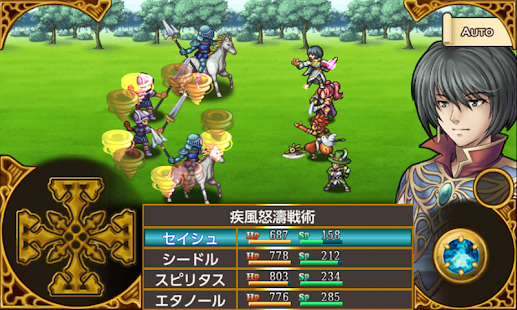 |
| A JRPG fight |
This is “the game,” but most JRPGs aren’t just an endless stream of such encounters. Such a game is possibe! But they tend to be rare. Instead, they wrap them in a frame: you walk around, you explore, you talk to people, or alternatively it can be beautiful, hand-drawn pictures with dialogue beneath them (like a visual novel) or it can be vivid cut-scenes. The purpose of all of these are to provide narrative context for all of the combat-based gameplay (for example, introducing you to the personality and agenda of the boss you’re about to fight, or the peril of the princess you’re trying to rescue).
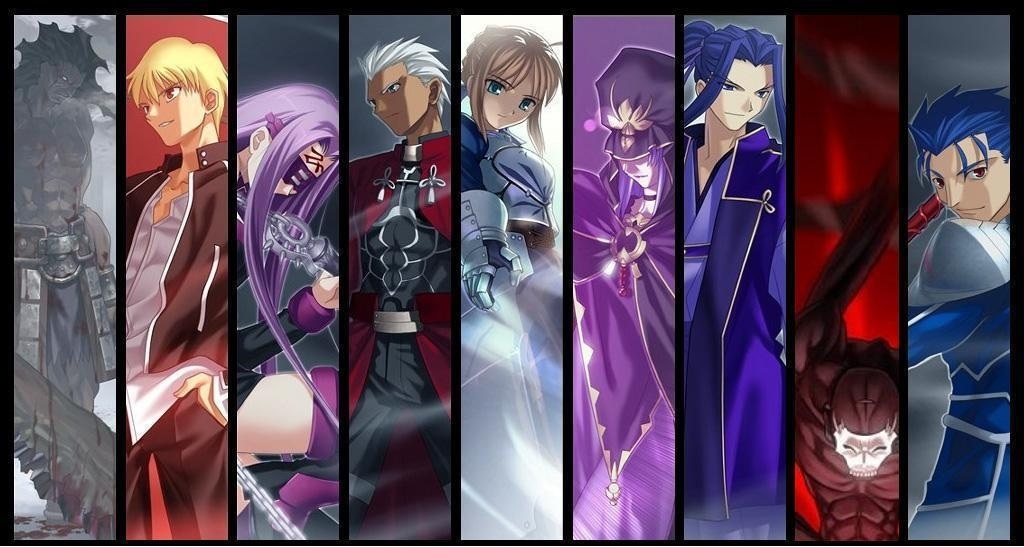 |
| A visual novel |
These frames can have their own gameplay elements, such as choices you make, or the opportunity to explore which can be rewarded with more combat-oriented gear, or the chance to “romance” on of your companions and get an, um, rewarding cut scene. These “frame gameplay elements” can become outright mini-games: if they themselves can hold the players’ attention and they also have “builds” and “rewards” that allow the player to explore that specific “game space,” then they begin to rival the “central game” in value to the player. Taken together, these can make for a pretty complex and rich experience:
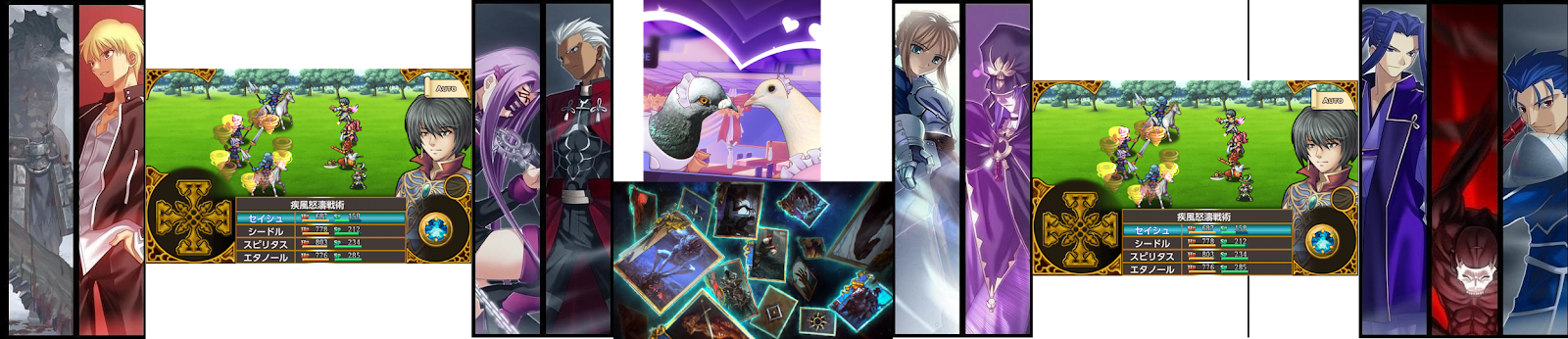
So, we might begin with our visual novel frame, have some action, have some additional visual novel exposition, break it up with some minigames and dating sims, go back to exposition, then more combat, then more cut scenes, etc.
How people interact with these will vary, and you run the risk of cluttering your game or drawing attention away from what was meant to be the core of your game. What if your JRGP combat is boring, but the visual novel compelling, so people grind through the combat so they can see more of the visual novel? What if they really like the dating sim or the strategy layer, or the card game, and want to focus on playing that all the time? This isn’t necessarily a problem for a computer game: people can play it how they like. It does suggest maybe that your core mechanics aren’t very good, or that you’ve built a disjointed, broken-up sort of game that different people experience very differently, with everything but the bit they like getting in the way of their fun.
There’s sort of this conceit that because the core gameplay is the most important, and the core gameplay of JRPGs are traditionally combat-oriented, that combat is necessary or “more prestigious” than the rest, which can only be “frame.” However, I would argue that if your combat sucks but some other element rocks, maybe you should make a different game. Visual novels, dating sims, card games, strategy games, breeding games, etc, are all perfectly fine games. If your “frame” is the most interesting part of your experience, maybe it shouldn’t be “the frame” at all. Maybe it should the game.
The Frame is the Game?
Addressing the disconnect
Tabletop games are a bit less forgiving of this sort of thing than single-player games because they’re fundamentally cooperative. A pretty good example of a game with a divided focus might be Shadowrun, which is primarily about “killing corporate goons and taking their stuff,” but has these magical and hacking “mini-games” that, for some players, are more interesting than the core draw of the game. In a computer game, they would just play characters that focus on those mini-games, but at the tabletop, their gameplay actively intrudes on other people’s gameplay because it takes time away from people. One of the core elements that I understood came out of the indie Gameforge scene was the notion that you should know what your core gameplay is about and focus on it, and I highly recommend that.
For many RPG groups, the frame is the game. This is especially true of overtly broken games. A hopefully uncontroversial example of a broken game would be the classic Palladium Rifts game, which “has a great setting but terrible mechanics” as people love to say. This dichotomy is largely born out of the fun people have in the frame. Like many games from the 90s, it offers some sops towards “frame gameplay,” like non-combat skills, but the bulk of the game and its rules all turn around fighting monster or soldiers or soldier monsters or aliens or whatever. This part is broken, with classic examples of weird, arbitrary and highly exploitable rules that tend to break suspension of disbelief, wildly unbalanced classes that make creating cohesive challenges difficult, and tedious gameplay that turns into slug matches where two fighters just use the same attacks over and over again until the other person runs out of MDC.
Why would people like the game? Because of the context of their game. They loved the imagery of oppressive Chi-Town with dogboys sniffing out psychics and stealing gifted children from wailing mothers while hackers, mystics, mutants and rogue scholars lurk in the underground, waging a resistance against the forces of intolerance and oppression, while exploring a dangerous, wild world of resurgent magic, high weirdness, apocalyptic ruin and uncharacteristically violent, shapeshifted baby dragons. I played in many games where the core gameplay was dispensed with entirely and, if you will, the game turned entirely into a visual novel. For these sorts of people, claims that Rifts (or whatever game) isn’t broken, because they had a good experience with the game. They’re not deluded, they’re not crazy, they’re not fanboys, they’re just interfacing with the game differently, in a way that cuts out the parts they don’t like.
I’m not going to tell you that it’s wrong to play a game this way. The point of many posts I’ve made in this vein is not that this sort of gameplay is wrong, but to highlight that this difference exists, that the frame is not the game, and that when people like me complain about the game, we’re complaining about the game, not the frame. I’m also trying to encourage you to see the difference and if you’re the sort that prefers the frame to the game, to realize what you’re doing, and once you do, I want you to ask yourself this question:
What is the core gameplay actually doing for me?
Is it okay to run D&D were no combat takes place? Sure! No gaming police are going to take your books from you, but I have to ask you this: why are you using a game where 90% of the rules are about combat? Wouldn’t your game be better supported by more closely aligning it to the actual gameplay that you find cropping up at your table? (The examples below aren’t meant as necessarily to be replacements for D&D in this context, just a few RPGs I know that fit the description. I’m sure there are better, more precise examples out there).
- Is the most interesting part of your D&D game actually about political intrigue and uncovering a conspiracy against the good kingdom? Why not use a game that really offers interesting mechanics for political intrigue and investigation?
- Is the most interesting part of your D&D game actually about exploring a magical world, meeting the magical creatures in it? Why not use a game that’s really focused on differentiating the creatures of a magical world and interacting with them in non-violent ways?
- Is the most interesting part of your D&D game actually the extremely detailed medieval realism you’ve injected, such as extremely detailed courtly life, or extremely accurate villages, etc? Why not use a game that rewards detail and offers suggestions for historical accuracy?
- Is the most interesting part of your D&D game the story that you’re telling, and how your creative group keeps jumping in to add their own elements, creating a sort of shared story that’s way more interesting than combat? Why not use a ruleset that tends to favor that sort of thing, or even skip using rules entirely?
By all means, keep D&D at your table if it provides you with value. For many gamers, while the core mechanics might no longer be interesting, the book’s artwork and setting conceits provide inspiration, and the mechanics provide a sort of shared language that they can all understand (“My character is really strong!” “How strong?” “A 16.” “Oh, so really strong, but not like the strongest ever?” “Yeah.”). Running D&D this way is a bit like “running Harry Potter” where everyone has access to those books and has sort of system they’ve agreed to, and they’re “playing” the game. It’s fine and don’t let anyone tell you otherwise.
But there people who sort of lock themselves into a familiar space. They want to do something fundamentally different than what the RPG they have on hand really does, but it’s all they know, so they sort of ignore the game and run what they’re going to run while “fighting the system.” Don’t do that, man. If you’re trying to do something specific, trust me, there’s a game out there for you.

 Mailanka's Musing