GURPS Action: How Balanced are BAD Guys?

 At the GM’s option, henchmen without character sheets have an effective skill of 10 + absolute value of BAD: 11 at -1, 12 at -2, and so on. As with all BAD things, this is abstract. Actual skill, equipment quality, extra time, and anything else that might matter is all rolled into one handy number. — GURPS Action 2, page 5

Last time, I looked at BAD.  I meant to look at Mooks too, as that’s the real point of this exercise for me, but I took so much wordcount just looking at BAD itself. With that out of the way, let’s look at Mooks themselves.
I will note, as I noted last time, that Mooks in Action, don’t actually have (Absolute BAD)+10 skill; per page 45-46 of Action 2, they have skill 10-15, which might be completely unrelated to the BAD.  Skill seems to be all that matters: they have a static Dodge of 8, Parry of 8, and ST of 10.  The game largely takes damage out of the equation, and that makes sense: with guns available, characters who get hit tend to get removed from the fight pretty quickly, so we’ll largely dispense with weapon other than to note melee vs ranged and focus on chances to hit.  
We’ll focus almost entirely on combat capabilities (Action even suggests not using BAD for combat), as that’s the point of balance I’m most interested in.  When it comes to things like “I try to Fast-Talk the guards” I’m fine with just applying a BAD penalty.

PC Baselines

So what are the combat stats of the PCs?  Well, a quick breeze through the templates shows that no character has a dodge lower than 9 and there are quite a few 10s; also, nobody has Combat Reflexes, so given how common that will be, we can expect PCs to generally have Dodge 10.  When it comes to combat skills, most templates have at least Guns 14; only non-combatants like the Medic and the Wirerat had Guns 12, and Brawl tends to center around 14.  So I think it’s fair to say that specialists will have combat skill 18 to 20, and generally favor ranged weapons.  Most characters will have melee skill of 14, and at least Guns 14.

How Dangerous are Mooks in Melee

So, let’s assume a melee of about 4 mooks focused on a PC; not enough to force them to lose their defense because of attacks from behind, but enough to start to overwhelm the PC.  I’ll believe that basically any mook will lose one-on-one with the PC.  I will assume that any hit takes the mook out (we’ll ignore concerns like damage).  I won’t worry about how much damage the PC will take, only note the average number of hits they’ll likely take before they defeat all the mooks.

Skill 10

“BAD 0” mooks will hit their target 50% of the time in melee. A skill 14 character with combat reflexes will have a parry of 11. So, their first parry will succeed 62% of the time, and after that, they’ll be forced to Dodge, which will succeed half the time. They can spend fatigue to improve their odds, which they may, depending on how dangerous the fight is.  So, on average, 4 mooks will hit the PC twice, and without Feverish Defense or Retreats, he’ll parry or dodge about 1 attack.  If he makes Feverish Defenses and Retreats, he’ll defend most of the attacks (he’ll get hit only about 40% of the time).
In return, a skill 14 character can afford to apply a -2 to his attacks to apply a -1 to their defense, which drops them below a level that is reasonable to expect a defense.  So, they’ll take out about one mook a turn.
Thus, in practice, it’ll take about 4 turns to defeat all the mooks, and given the reduced number of actual hits, there’s a solid chance they’ll take no damage at all.  A specialist will almost certainly walk away without being touched: dodge 11 and/or parry 12 means they don’t even need to make a feverish defense to avoid being hit, and with TBAM or Wearpon Master and skill 16 to 18, you can plausibly defeat two a turn.
Sheer numbers pose a moderate risk of a bruise or two to a generalist when it comes to Skill 10 mooks.

Skill 11

Skill 11 Mooks are essentially the same as skill 10 mooks, except they have a slightly higher chance of getting three hits in with four of them.  Five mooks would certainly get 3 out of 5 hits.  Otherwise, everything is the same: the Specialist walks away without a scratch, and the generalist gets hit once maybe twice.

Skill 12

This starts to get a little interesting. On average, the mooks will hit 3, rather than 2, times, and without Feverish defense or Retreats, will get hit once per turn.  With retreats and/or feverish defense, the Generalist will still get hit more than 50% of the time (per turn, not per attack).  At this level, it behooves the generalist to find ways to cut down his opponents, which is interesting and better than I expected! Otherwise, they’ll walk away tired and bruised, but probably not dead.
A specialist still has little to fear.  They can still typically take out two per turn, but even with feverish defenses and retreats, they start to approach a 50% chance of being hit in a turn.  They’ll want to work quickly to take these mooks out if they don’t want to be hit.

Skill 13

This gets even more interesting, because it starts to become reasonable to make deceptive attacks, though I’m not sure how much it improves the odds.  Their cumulative chances of hitting a feverishly defending generalist is better with a greater number of attacks, but as their numbers diminish, deceptive attacks become more valuable.  Otherwise, they are to 12s what 11s are to 10s.

Skill 14

At this level, almost all 4 of the mooks will hit every attack, but they can also apply a deceptive attack and hit as well as a 12, so hitting with 3 out of the four attacks. The generalist can almost certainly expect to have at least one attack get through their defenses per turn and perhaps two attacks, even with Feverish Defense and Retreats.  This is dangerous, but that’s not surprising, is it? The mooks are as good as the generalist and they outnumber him 4 to one.  The specialist has better odds, but will still take a hit per turn about 2/3rd of the time, but it’ll require that opening salvo to hurt him, as he’ll quickly whittle their numbers after that.

Skill 15

This is like Skill 13 but with a deceptive attack.  Most of the attacks will hit and the target will find it hard to defend. 4 skill 15 mooks would probably overwhelm a generalist who isn’t burning impulse buys, and a specialist, unless a deep specialist (someone from Furious Fists) will find themselves struggling.

How Dangerous are Mooks at Range

This is a little easier to calculate, because we can assume some static values and just note chances to hit.  At pistol range (-2 to hit), assuming Mooks never bother to aim and never use AoA (Determined) with their ranged attacks, and that our heroes dodge half the time, then we’d expect the following chances of success
  • Skill 10: ~15% chance
  • Skill 11: ~20% chance
  • Skill 12: ~25% chance
  • Skill 13: ~30% chance
  • Skill 14: ~35% chance
  • Skill 15: ~45% chance
If we have them roll individually, and we assume 4 mooks per PC, we expect the Skill 10 mooks to hit once every coupld of rounds, the Skill 12 mooks to hit at least once a round, and the skill 14 mooks to his twice about half the time.
If we assume they each fire three times and combined all of their shots at a target like a single high ROF weapon, setting aside the chances of the PC dodging and assuming RCL 2, we get:
  • Skill 10: ~50% chance (average 1 hit on a ten)
  • Skill 11: ~60% chance (average 1 hit on a ten)
  • Skill 12: ~75% chance (average 2 hits on a ten)
  • Skill 13: ~80% chance (average 2 hits on a ten)
  • Skill 14: ~90% chance (average 3 hits on a ten)
  • Skill 15: ~95% chance (average 3 hits on a ten)

Conclusion

So, mooks are scarier than I thought, provided there are enough of them.  Broadly speaking, I still think Skill 10 mooks are mostly a joke (Even with mass fire, there’s a good chance they’ll hit nothing but air, especially if the character can dodge) and even a whole group of them will probably lose to a generalist Action hero. Skill 12 becomes a reasonable challenge: a good chance of hitting with enough attackers both in melee and at range. At Skill 15, you’re starting to combine quality with quantity, and they’ll give PCs a real headache. I see why GURPS Action caps mooks at this level! So, I suppose BAD works out better than I expected, for both combat and generic challenges. 
I wrote this because I often centered at BAD 2 for my Psi-Wars challenges and found the fights “too easy.”  But Psi-Wars characters are 300 points, rather than 250, and I often see parties bringing their specialists forward.  The generalists generally “do better than they thought” at BAD 2, while the specialists clean up, but we can see that here in these results: -2 to your rolls isn’t much of a problem if you’re starting at skill 14, and a few mooks at Skill 12 aren’t a real problem unless they can gang up on a generalist and the specialist usually works to get between them and the more vulnerable members of the party.
I’ve not often got to the point where we see BAD 5, but I think based on these results, I’ll be more cautious at that point, as that seems a real challenge even for specialists: they’ll succeed, of course! But they’ll be hurting and things can go sideways quickly in such events.  I think I’ll also put more thought into intermediary ranges, with more focus on -4 and -6 and skill 13 and 14 mooks, rather than my usual “12 or 15” cutoffs.

GURPS Action: How Balanced is BAD?

As an alternative to detailed modifiers, the GM can set a sin- gle difficulty – the Basic Abstract Difficulty (BAD) – that covers all aspects of a particular phase of the adventure. This is simply a penalty from 0 to -10 that replaces detailed situational modifiers. The only other modifiers that apply are those that the PCs bring into the picture: bonuses for equipment, penal- ties for disadvantages, etc. — GURPS Action 2, page 4

At the GM’s option, henchmen without character sheets have an effective skill of 10 + absolute value of BAD: 11 at -1, 12 at -2, and so on. As with all BAD things, this is abstract. Actual skill, equipment quality, extra time, and anything else that might matter is all rolled into one handy number. — GURPS Action 2, page 5
I have long taken these words as gospel and applied them to Psi-Wars verbatim.  Should I?  That might seem like an odd question, because the value of BAD, it’s simplicity, seems obvious on its face.  You have a single difficulty and you apply to (almost) everything.  What’s wrong with it?
Well, nothing specific, but I often find that what I think of as a reasonable bad per what GURPS Action tells me, the PCs will absolutely blow through.  That’s not necessarily a problem.  Sometimes, the heroes really do blast past the issues they face like they’re nothing. Action heroes are, after all, larger than life.  Even so, knowing you’ll pass every check makes the game somewhat tedious and drains all the fun out of a scenario, especially if it happens unintentionally.  Sometimes I find it useful to meditate on these values and what they mean.
This goes double for mooks.  Should we just give mooks absolute BAD +10 for their stats? I will note that if you go to the back of Action 2 and look at the actual stats for Mooks, they don’t explicitly follow this. What’s a good, base value for a mook? And what sort of challenge levels are we looking for.

Setting a baseline

How often should heroes succeed? The most obvious answer is “Whatever is realistic.”  GURPS has some base modifiers and some hard-and-fast rules that it applies, and you build your skill around that. But with BAD, we’re doing something other than applying “realistic” modifiers.  For example, realistically, if you go into a highly secure military complex, you might expect it to be BAD 5, but complex locks usually cap out at -4 to skill, and the locks someone might have in a small, personal lockbox that just holds some odds and ends might be +0.  We are, instead, applying a blanket difficulty, so we always just roll -5, which means we’re setting some assumptions about difficulty.  So, it behooves us to think about how often we might expect someone to fail.
When it comes to answering that question, I can find no useful answers in GURPS, as it mostly just assumes the above answer (“The difficulty is what it is”), so we’re instead feeling things out.  So here are some thoughts I have.
Skill 15+: Characters with skill 15+ will fail only about 5% of the time, and willgenerally assume their skill will always work.  It can fail, of course, but they generally expect such a failure to be catastrophic.  For example, if someone with skill 15+ in lockpicking fails to pick a lock, they rather want it to be because there’s something wildly unexpected, such as a recently revamped security system or a broken pick.  Thus, we almost want at this level for the characters to either succeed or critically fail.  At this level, Luck will result in success 99.99% of the time: virtually a certainty if the roll really matters. Skill 15 and 16 are usually more about improved crits than ensuring they don’t fail.
Skill 14: Characters with skill 14 will fail only about 10% of the time; they’ll likely consider this near certain, but find failure less shocking.  With luck, this succeeds 99.9% of the time, making the difference between 14, 15 and 16 almost a quibbling difference.
Skill 13: Characters with skill 13 will fail about 17% of the time.  At this level, I notice players tend to be surprised at how often they succeed, as they already consider this a rather low level, but not so surprised that they consider this especially risky. Luck skill gives ~99.% chance of success.
Skill 12: Characters with skill 12 will fail only about 25% of the time, and will succeed 98% of the time. I notice most players won’t reduce their attack skill below this when making deceptive attacks, thus I think most players see this as risky, but “an acceptable risk.” They’re not surprised if they fail, but they expect to succeed most of the time.
Skill 11: Characters fail a bit more than a third of the time, and will fail around 5% of the time with Luck. Most players see this as a bit riskier than they like, but they expect success more than failure. Things get interesting at this level.
Skill 10: Players intuit this as a complete crapshoot.  Of course, it’s a bit better than 50% chance, especially when Luck is brought into the equation, as they will only fail about 10% of the time.  This is a nail-biting roll, if it matters.
Skill 9: Players assume failure at this level, and they’re right: they’ll succeed only about a third of the time, but with luck, they’ll succeed about 3/4 of the time, which will surprise them.
Skill 8: Players bemoan these numbers, as they’ll fail 3/4 of the time, and with Luck, they’ll still only succeed 60% of the time.
Skill 7: Players are completely correct that by this level, they are hopeless. They will succeed  only about 15% of the time, and even with luck will succeed less than half the time.  This level and lower is mostly about how badly you fail, rather than whether you succeed.
So if I can note some interesting breakpoints: Skill 14+ is generally an assumed success, Skill 12 is “an acceptable risk,” skill 10 is “very chancy” and skill 8 is as low as players would be willing to risk most things, and even then, only in desperate circumstances.  At skill 8 and 10, I would expect to see a lot of impulse buys, and players trying to push their skill back to 12.  So, Skill 10 and 8 are where the excitement happens, but perhaps a bit too much excitement.  Skill 11 to 12 is a reasonable level for “challenge the players” while occasionally dipping into worse difficulties.

How Good are the Characters

If we look at the primary skills of typical Action character we can see a trend.  Extremely specialized characters have skill 18 to 20: the Assassin has Stealth 20, the Infiltrator has Climbing-18, the Hacker has Computer Hacking 18, the Wheelman has Driving 18 and the Medic has Physician 20.   Other less specialized characters have Skill 16 at their peak skills, and often the option to purchase traits (talents) that will push them to 18 to 20.  The Face has social skills at 16 (and can buy two more levels of Smooth Operator) and the Infiltrator has Stealth 16 (and can buy up to 4 levels of Craftiness). Most of the Investigator’s Primary Skills are 15 to 16.
When it comes to Secondary and Background Skills, characters tend to be all over the map.  The average seems to aim at their base stats (DX or IQ), but I find 13-15 is typical for things they expect to be good at, and 11-13 for things they don’t expect to be good at.  For anything else, we expect to see Defaults, which will generally push around Attribute-5, so typically 8 or so.
So we might break the competencies of an Action character down thus:
Primary Competence for Specialist: Skill 18 to 20.
Primary Competence for Generalists: Skill 16
Minor Competence:Skill 14
Trained: Skill 12
Default: Skill 8

Breaking down BAD

Alright, so given these basic assumptions what might we expect at a few choice levels of BAD
BAD 0: At this level of BAD, nobody will expect to fail at anything other than their Defaults, and given that most groups of players will try to cover all their bases, someone may take Wild Talent, and players will generally try to avoid using defaults unless forced to, I would generally say BAD 0 is no challenge at all.  Hardly a surprise.
BAD 2: This is usually my go-to, but how scary is it?  Well, at -2, no primary competence will fail more than 5% of the time.  Minor competence (dedicated secondary skills) will fail only about 1/4 of the time.  Minor background skills become chancy and defaults hopeless.  So it looks like BAD 2 is no challenge if players are smart about it. They’ll need to work together a bit to makes sure all their bases are covered, but provided that, they should be fine.
BAD 5: I tend to see this as a challenging difficulty, but is it?  At BAD 5, specialists will almost always succeed (though guys with 18 are getting a little nervous).  Skill 16 doesn’t cut it anymore, and the generalists need to push a bit and look for positive modifiers, but they’ll still tend to succeed more than they fail.  Your Minor Competence becomes risky, though.  Skill 9 isn’t too bad (it’s still doable) but all the rest of your skills will start to fail regularly, and being “Trained” just doesn’t cut it. This sort of scenario pushes for the specialists to handle everything that they can; the generalists can still pull their weight, but they’ll make a lot of use of Luck and Impulse Buys.
BAD 8: I tend to assume this level is “very hard” and only really suitable for advanced characters, and it’s not hard to see why.  Here, only the most dedicated specialists will succeed regularly, and even generalists will fail more than they succeed.  I think default Action characters start to drown at this level.
BAD 10: Yeah, it’s not happening.  Even the dedicated specialist needs to lean on Luck to have more successes than failures.
So what we can see here is that the sweet spot is around BAD 5.  Bad 2 is almost not worth your time, and BAD 8 is too hard.  But we run into a problem if “every scenario is BAD 5.” I think, based on this and my own experience, I would suggest throwing away the idea of a strict BAD and use a floating scale of BAD.  So instead of saying “All rolls -2” use -2 as a base, and sometimes apply -1 or -3.  This lets you scale things slightly, depending on the tension of the moment.
So a better breakdown for a typical game might be:
BAD 0: This is only okay for “comedy” scenarios, such as the Action heroes breaking out of a county jail or for trashing some street punks who threaten a granny. These are scenarios where the heroes get to shine fully.
BAD 2: These can be “Easy” scenarios, but use -2 as the base and push them up to a -3 and -4 as the scenario gets more intense.
BAD 5: This can still be the “medium difficulty,” but I would “center” it at -5, and push it down to -4 and up to -6 as the scenario dictates.
BAD 8: This can be the “hard mode” but I would cap it at -8: the scenario might base at -6, and then ramp up to -7 and -8 for the truly tense moments.
We can push them into harder scenarios as they gain more skill. I tend to notice players, with some notable exceptions, don’t go above 20 in much other than combat skills, and tend to broaden out, rather than go deep on most non-combat skills, so what happens as the players get more experienced is not so much that they need BAD 12 and BAD 15 as they will start to need less cooperation as a single character can handle more and more.
So, in a sense, your real difficulties should be floating values between BAD 2 and BAD 8, with a preferred center around BAD 5.

GURPS PDF Challenge 2021: GURPS Action Adventure 1: Templar's Gold

 So, here we are, the PDF challenge completed!

This has one chapter;

  • The Adventure: which is the adventure.
I was really looking forward to this adventure, and delighted to see it unlocked. The actual thing didn’t quite live up to my expectations (I liked Green Madonna better), but it’s not bad. The adventure is somewhat barebones, you’ll need a good knowledge of Action to make it work, and the adventure suffers from an incomplete understanding of Action’s core mechanics, but there’s nothing really deal breaking here, and it makes up for it in rich historical context and detail that, I think, really sells the adventure. Recommend

The Adventure

The Adventure consists of 5 sections.

The Setup

The setup risks being superfluous in a book with a very tight word count. It launches into a discussion of the sort of character that sounds so implausible that they must be real (I’ve got a long list of “implausible-sounding but real” characters from history), so I went to double check, but I couldn’t find anything. So, I presume he’s our Indiana Jones stand-in.  He’s the old friend of the adventurers, and his death kicks off the adventure.
I applaud evocative descriptions, and I think it’s good not to let your flavorful and implausible character dominate the actual adventure, and I don’t think people are going to mind reading it.  But they also can’t do anything with it, and it’s half a page to a page or largely redundant information. This wouldn’t be a problem except we have a very tight word count. So every time I note something as underwritten, there’s a part of my mind that goes back to this section and says “But did we have to know that Sam Butler was a skilled jazz and blues player? Why was it so important for us to know that he served in the French Foreign Legion as an American? Was that really worth not squeezing out another couple of words here?”  
So I don’t object specifically to how awesome Sam Butler is; this is, after all, an Indiana Jones adventure.  Taken on its own, he’s a decent way to set up the story, but unlike with the Green Madonna where every character introduced in the intro is either directly plot relevant or in the plot as an NPC the PCs can encounter, Sam Butler stops being relevant as soon as he dies, and so this feels like wasted word-count.  I think you could replace the first page or so “There’s this old family friend who dies” and sprinkle whatever  additional context the players need at the relevant parts. I like that I have a sense of who Sam Butler is, and I like “the dead NPC” concept quite a lot (I use it in my own games).  But we’ve got such a tight wordcount that I’m left wondering whether this was necessary at all.
I suppose I’m complaining less about the section than the fact that tight, strict word counts have a suffocating effect on this sort of adventure filigree.

The Characters and Zone Rouge

The next two sections discuss how to adapt GURPS Action to this pulpy adventure, including a reference to Pyramid #3/8, discussions of how various lenses would work and how Sam Butler might have known them (which, for example, finally draws a thread between why it’s relevant that Sam played the blues, but it’s enough to discuss it here, I think). It also discusses Pulling Rank and how Pyramid #3/8 discusses how it’s different.  A lot of this is just quick references to an existing work, but I feel it’s fair to point this out.  This is a cliffhanger adventure, so you need cliffhanger material, and that exists, and you need to reference it.
Zone Rouge is also good, and it made me check the author.  Yup, this is classic S. A. Fisher.  From what I’ve seen of his material, he runs his adventures less in a strict, narrative way so that you can see every scene shot by shot like a cinematographer, but more as an exercise in improvisation.  Zone Rouge discusses what France is like during WW1 and offers a variety of random encounters or issues the players might face.
Taken together, this is largely what sold the adventure to me. In contrast with the Setup, this is a a single page that punches above its word count when it comes to how much impact it’ll have on the adventure.  It creates a historical backdrop that is, in and of itself, interesting to explore and layers the adventure itself over the top of. This is a stunningly good use of setting, something a lot of adventure writers (myself definitely included) forget. It’ll be up to you to figure out how to use it, but it’s a great way to add meat, which allows you to remove a lot of detail from the rest of the adventure, because you’ve provided a core meat to the adventure that the GM can use to fill out any “blank” spots.  Well done.
A friend of mine would run GURPS and one of the players, unfamiliar with GURPS, would describe his adventures as “Action Documentaries,” because they were a lot of fun, but also the player learned a lot of things from the game.  This section reminded me of that strong point of GURPS: how its well-written supplements merge with tight mechanics to create a fairly unique experience in the RPG world, and this adventure, in a lot of ways, exemplifies that.

Events

The adventure references Pyramid #3/17, for understanding what Paris looks like at the time.  And then it essentially does the “Adventure as outline” approach to adventure-writing. We have a series of one to three paragraph quick references to what happens.  The events themselves paint a wild adventure that follows the correct pulse of adventure: the price of knowledge is danger, the reward for knowledge is more danger.  So you get a constant flow of “find a thing, get attacked, attack leads you to finding another thing, you have to fight again” and so on. It works.
There are a couple of problems I have with this section.  First, I don’t think Fisher understands what “BAD” is.  I see bits like:

A Per-based Soldier roll, at BAD -3, helps avoid the hazards in the Zone Rouge

(Though, to avoid a quibble, this is actually from  Zone Rouge, not Events, but it’s illustrative, you’ll see a lot of references like this through the section).

But BAD is not “a modifier” it’s the modifier. Here’s what Action 2: Exploits says on the matter

 Looking up and assessing these penalties can be time-consuming… When the team is poised to blow the vault door or raid the villain’s mansion, it’s boring and frustrating for things to grind to a halt while the GM consults rules and tallies modifiers… As an alternative to detailed modifiers, the GM can set a single difficulty – the Basic Abstract Difficulty (BAD) – that covers all aspects of a particular phase of the adventure.

The whole point of BAD is that I don’t want to stop what I’m doing and go back and check the adventure to see what the modifier for a Per roll is, or what what the difficulty for breaking into an airplane is. I usually just declare an adventure to be BAD X, and then it applies to everything.  If and when it changes, note that. Like the initial battle over the journal seems to be BAD -2, and then the actual encounter with the Templar’s Gold seems to be BAD -5.  Just say that.

In my mind’s eye, I see an interplay between Fisher and the Editor.  Fisher writes “A Per-based Soldier roll, at -3, helps avoid the hazards in the Zone Rouge.”  And the editor says “It’s Action; use BAD.” So Fisher amends it: “A Per-based Soldier roll, at BAD -3, helps avoid the hazards in the Zone Rouge.”  

There are also lots of bits where knowing the BAD would be useful:

Butler has hidden de Molay’s journal in a drawer under the pilot’s seat. This is locked. Lockpicking will be handy!

But at what penalty? It doesn’t say.  In fact, the whole section for Paris-Le Bourget Aerodrome (as one example) references skills with no penalties.  So what’s the penalty? Well, I would infer a -2, from the fact that when we get penalties, he uses the words “BAD -2” (though I see -3 in quite a few other places, so perhaps it’s BAD -3?) They’re not in reference to these, this BAD is not listed in anyway that would imply it’s meant to cover all penalties.  Obviously, it wasn’t hard for me to infer one, but the adventure should really specify it. Hardly a deal breaker, but it’s something Fisher could improve upon.

The other problem has to do with the nature of the outline structure of the adventure.  Everything in it amounts to quick suggestions that sound good but, in my experience, risk tedium in practice. An example:

If more than half of the goons are put out of action or driven off, their leader will flee to a nearby biplane and try to escape (he and his backseater both have Piloting-13 and Gunner-13). If the PCs notice, they may follow in the two-seat Black Eagle for another chase scene. A couple more two-seaters are ready for flight near the hangar, so additional team members can join in the chase, though they’ll be restricted to using handheld weapons or simply following the mook to his destination. For vehicle stats, use the TL6 biplane on p. B465.

Setting aside the fact that this sort of thing makes me wish I had more biplane stats (we actually have quite a few in HT), I’ve run aerial chases and they can be pretty boring.  You roll pilot, they roll pilot, you roll better and eventually, you roll five better and you catch up.  Of course, you can shoot at them, but then what you really need is Dogfighting Action (pyramid #3/53) and you can make the chase scene much more dramatic with The Thrill of the Chase (pyramid #3/112), but we don’t even get a reference to them here.  There’s this consistent habit throughout the adventure to suggest that there is action here, but not to specify what takes that action to the next level.  Have a chase here, fight some mooks here, have another chase, fight more mooks. We get the stats on the mooks, and we get references to the stats for the vehicles, but no suggestions as to what makes those particular moments more exciting than “We shoot” or “we fly.”  And this is where I start to grit my teeth, remembering Sam Butler’s elaborate description and thinking “But perhaps that word count would be better used here.”

There is one exception to this: the battle climaxes with a confrontation of a tank, and we get a detailed description of the stats of the tank, and we get a discussion of some explosives and some likely ways to defeat the tank if the players have trouble.

This section is the core of the adventure and it has the requisite action moments, and it is more than just action: there is at least one interesting NPC, and when you combine it with the more intricately designed events from Zone Rouge, and you’ve got quite a serviceable and fun adventure.  But to really make use of it, you need to apply your own knowledge of GURPS Action.  If you’ve read through as much as I have, it’s pretty easy to say “I know what you mean” and “I can fill the gaps here.” If you’re new to Action, though, you might get a little lost, or find some of the fights seem overly easy or uninteresting.

Aftermath

So the players get the gold, get rich, and then die.  Unless they figure out the curse! Which they will. And then it’s revealed: if Butler had given away half of his treasure to charity, he would have lived.
I found this very unsatisfying and thematically dissonant. “Give half of it to charity” feels like an obvious way to get around a “curse” on a Christian treasure. Like, of course.  But, worse, it retroactively paints Butler in a bad light.  We set him up as this really swell guy, but evidently he died because he didn’t give enough of it away to charity? Of course, the adventure doesn’t call that out, and if you’re pressed, I’m sure you can think of all sorts of reasons for it: he’s nice, but he just didn’t get around to it, or he had more pressing concerns at the moment, or he gave some to charity, it just wasn’t technically enough to stop the curse, and anyway if he didn’t die we wouldn’t have the adventure. etc.  But the theme of this curse is that it will only kill you if you are selfish.  That’s the theme.  A selfless, “good man” wouldn’t die from the curse. But we set up the whole of Sam Butler as this selfless good guy who was enamored of chivalry and puts his life at risk to defend other countries, but the curse killed him anyway? It’s an unfortunate and, I think, unintentional implication.
I would have gone with a different curse, one that wouldn’t create this thematic dissonance. I’m not sure what, but something more obscure, like “Put at least one of the gold coins in the votive box as an offering to god, but it has to be in this specific cathedral that was important to the templars, but fell into ruin centuries ago.” That has the high weirdness we might expect from a magic and be the sort of thing Butler never could have known or done by accident, and it wouldn’t have this unfortunate side effect of implying “Hey, maybe Butler was a bit of a jerk.”

Conclusion

After reading this, I came to two conclusions.  First, we need more word count for these.  I suppose I get it.  I mean, I have Lair of the Fat Man, but I’ve never run it. Nobody buys big, 30-page adventures so we get these abbreviated adventures bundled in a challenge, but after this and Green Madonna, I’m willing to entertain the notion of buying and running a 30-page adventure. This is why we have frameworks like Action and Dungeon Fantasy, and Dungeon Fantasy Adventures sell, so why not Action adventures?
My second conclusion is that Fisher is a better HT writer than an Action writer, and that I’m okay with that.  Neither this nor Mercenaries were stellar at advancing the mechanics of Action and this could have used a better understanding of Action mechanics or references.  What we get, instead, is lots of references to real-world things, and I’m fine with that. What makes Fisher’s stuff great is the real-world grounding.  Sure, yes, I’d like to know if I should be using BAD -2 or BAD -3 for Templar’s Gold, but I can figure that out myself pretty easily.  What I would never think of would be what Zone Rouge would look like, or who the Apaches were and how they would be relevant to this adventure.
Is it a good adventure? It’s alright. It’s a little bare-bones, and you’ll have to fill out the meat yourself, but he’s written up a pretty good recipe for doing that and given you the ingredients.  It’s less of a “out of the box” adventure that Green Madonna was, but (while I found the curse unsatisfying), it doesn’t just stop mind adventure. It builds to an appropriate climax and then rounds it off.

Patreon Special: Minion Enhancements

As I began working on the combat scenes of Tall Tales of the Orochi Belt, I hit on the idea of expanding them from the drab rules of GURPS Action (though there is much to be said for their simplicity) in favor of the more intriguing options found in After the End and Dungeon Fantasy. I had touched on this already with the “Trademark moves” on some of my mooks found in previous iterations of Psi-Wars, but I wanted to explore the concept more fully, as discussed in this blog post

As this one the most recent patreon poll, I now present to you Minion Enhancements. This is a 20-page document discussing how to use advantages and disadvantages to make more interesting combat encounters with mooks and henchmen, as well as about 20 worked examples of more detailed enhancements, and 6 worked examples that you can drop directly into a generic Action game.

This is a Patreon special for all Dreamers ($1+ patrons; yes, just $1).

Epic Psi-Wars: A Conspiracy in the Making

This isn’t one of my regularly scheduled posts, and I hope my patrons will be patient with this, as their discussions have inspired me, and I find these thoughts racing through my head, so I need to get them out while it’s still fresh.

“Unless it’s a Templar.  Then you’re just effed” – A typical comment on the Templars

There is a fundamental disconnect between how people who know Psi-Wars talk about Psi-Wars, and what I know for a fact is written on paper and it mostly centers on the Templars.  There is this idea that Templars, or other forms of Space Knight connected with Communion, are on a completely separate level from other characters.  The see a team of commandos as dangerous, able to take on entire platoons of mooks and win, but a team of Templars should strike fear into the hearts of Imperial officials and threaten to turn the tides of a whole war. 

However, if you look back at the playtests back in Iteration 4 and earlier, you’ll note that Dun Beltain, Space Knight, is not really better than Leylana Grey, a spy, or Kendra Corleoni, a bounty hunter. Yes, they’re all cool, but the space knight isn’t on a different level. This is a fine and acceptable thing for Space Knights to be.  They could be people in armor with one subtle psychic power (“I an sometimes tell when I’m in danger and maybe dodge a little better” or “I can sense when people are sad”) and know enough about fighting with a force sword that they can hold their own with other combat templates and definitely take out a bunch of mooks.  On the other hand, the super-heroic space knight isn’t especially bad either.  It depends on what you want.

“What you want” is quite a question to ask.  You can’t even go back to the source material and get a fair answer.  Yes, the Jedi as depicted in the prequels are straight up super-heroes (sort of; they rarely really make use of the Force other than as a dramatic display of power; you see far more overt uses of telekinesis than subtle uses of telepathy or ESP), but their power-level in the original trilogy is much more understated.  When Obi-Wan defeats the thugs threatening Luke in the Mos Eisley Cantina, nobody freaks out like Clark Kent just took off his glasses, and you might think they would if you pondered the implications of a Jedi suddenly showing up after years of supposed extinction. Instead, they just go back about their business.  This makes more sense if you think of Obi-Wan, in his original conception, as more of a wandering ronin in a bar hanging out with a cowboy and a princess and a farm-boy-of-destiny.  Obi-wan is not dramatically more special than most heroes in A New Hope, as opposed to Jedi characters in most of the rest of Star Wars, who are on a completely different level.  No help there, then.

So, it’s up to us to decide for ourselves what we want out of Psi-Wars.  Do we see Space Knights as “just another character type?” or “setting defining super-heroes?” And the answer seems to be “Yes!”  The sense I get is that Dun Beltaine is fine, and we can imagine a lot of heroic aristocratic space knights on a similar power level, but Imperial Knights and Mystical Tyrants and Templars are on a different level.  Thus, we have two worlds and two different takes on the game: a modest, “street-level” game and a more dramatic “cosmic-level” game.

The question then becomes:

  • How do you handle that without making the game unbalanced?
  • Who gets to be epic-tier? Just space knights?
  • What do the epic-tier characters do?

 As Above, So Below

The first conclusion I can draw from how people talk about it and the sorts of games I see people proposing or running, or the way in which I see people play, is that, first of all, a lot of people like the street-level gameplay.  Not everyone who plays what’s a high level character who bestrides the world like a god.  A lot of people like playing cool street rats, bounty hunters who struggle to pay the bills, or commandos down in the trenches of the war.  It’s just that some people also want to be space knights of legend around whom the setting bends, who explore the deep mysteries of the setting.

So, we seem to be talking about two separate tiers of play, two different modes of play in the same game.  The current templates and power-level are more-or-less fine for the typical street character.  What we seem to need is a new level layered atop it for those who would prefer a higher octane experience.

This raises the question of what sorts of characters that we see in this higher tier.  Are we just talking about Space Knights?  That certainly seems to be the case in Star Wars: when it comes to “high level play,” whether or not you have the Force determines how cool you are.  With the Force? You get to be awesome; without the Force? You’re street-level.  I have seen a few cases where this rule is broken: Thrawn is sufficiently smart to exist in the same arena as the Jedi, and General Grievous has sufficient cybernetic modification to go toe-to-toe with the Jedi.

More than that, though, I always found the “Star Wars is all about the Jedi” to be overly restrictive.  It’s one of the things I’ve actively fought against by injecting the Akashic Order and the Divine Masks into the game.  Now, we can add witches and oracles into the mix.  We also have cyborgs, cool robots, neo-rationalists, and crazy aliens running around.  Any and all of these bring their own flavor to the game and I think they should be allowed to operate at this higher tier.

Then we must define what it means to be on the higher tier.  First, we must answer the question of point budget, and the easiest way to do that is to just write up some templates and see what they cost.  We can make some estimates, though.  If high tier cost 500 points and low-tier cost 250, then a 50% point ally for a street level character is a 25% point ally for a high-tier character, which is nice.  On the other hand, we’ve already playtested our characters at 300 points and it’s pretty solid: it’s enough to give us Action-level characters with a bit extra (like being an alien or having cybernetics or one minor psychic power) to fit the conceits of the setting.  By the same token, we actually do have a high level character: Vesper Tane 3.0, who is decidedly impressive at 400 points.  Thus more than 450 points strikes me as over-kill, and that gives us a 300-450 point range. Is that enough?  It remains an open question, especially since those point totals don’t create nicely compatible ratios.

What we might see at the epic tier would be:

  • Bespoke high tier templates:
    • Space Knight (Whether Templar or Imperial Knight)
    • Sage/Sorcerors (Divine Mask witches, Mystical Tyrants, Akashic oracles, etc
  • Unusual Alien Races
    • The Eldoth
    • The Skairos
    • The True Tarvathim
  • High powered power-ups that you could layer atop existing templates
    • Cybernetics
    • Psychic powers
    • Mover and Shakers
  • Low-level characters who go their “the hard way.”  It might be nice to provide some  guidance on what that might look like.

Unmasking the Conspiracy

Okay, so we have high-level characters.  What do they do?  Are they just more of the same?  Just ultimately better than everyone else?  I think that possible, but I also think its fundamentally an unsatisfying option.  I think the truth is staring us in the face, as it’s an element I’ve touched on over and over again but never really defined as a truly distinct play element, and maybe I should.

Psi-Wars is built on three pillars: war, spycraft and space opera occult conspiracy.  The first two have a strong Action vibe to them.  They are what a typical GURPS Action game focuses on, and what a lot of Action movies focus on, and they have a pulse: get mission, do some investigating to figure out how best to do it, do it, get screwed, improvise, succeed during explosions, turn in mission.

The space opera occult conspiracy stuff, however, seems much closer to GURPS Monster Hunters.  This is more like the sorts of things we find in urban fantasy, like the World of Darkness or GURPS Voodoo, GURPS Cabal or GURPS Black Ops.  In these, a secret world of violence, horror and monsters lurks beneath the mundane surface that we see and interact with daily, and larger-than-life champions have the secret knowledge to deal with this darker world.  This fits nicely with how we see the Templar and why the Templar seems so powerful: he battles mystical tyrants and Eldothic conspiracies and Broken Communion ghosts; what are a few security agents or criminals to him?  These have a different pulse: something weird happens (cheerleader gets murdered by a giant beast; people show up dead after losing blood; famous archeologist goes missing); deal with the immediate aftermath and calm everyone down (“Nothing to see here”), then investigate the cause, uncover the monster, lose your first fight, realize their ultimate nefarious plans and learn how to defeat them, then do so, and cover up that it ever happened.  As an alternative, they are the nefarious monster, in which case they need to keep their dark deeds from being discovered and they engage in secret wars with one another under the cover of night.

This gives us an obvious idea as to what our Templars and Imperial Knights are doing: they are uncovering or creating conspiracies, and Psi-Wars has more than enough secrets to support this sort of thing, but is it compatible with the rest of the game?  After all, if you have 4 players who are undertaking a heist and 1 player who is hunting a vampire, can it work?

Yeah, it can!

Action is so compatible with Monster Hunters that Monster Hunters has a section on converting Action characters into Monster Hunters.  In the end, the pulse isn’t that different: both involve investigation and then battle, it’s just that Monster Hunters places a deeper emphasis on investigation (and they have differently themed knowledge, with Action more worried about politics and technology while Monster Hunters are more worried about occult, conspiratorial and monstrous lore).  This is also the core of Night’s Black Agents or Black Ops, which takes explicitly action-oriented characters and reveals a deeper layer of vampires or aliens respectively and allows the players to defeat them.  Shadowrun explicitly combines the two, by setting its Action-style gameplay in an Urban Fantasy world.  When combined, the pulse tends to be: get a mission, do some investigating, go do the mission, something weird happens that screws you over, you succeed anyway, and the ground has suddenly changed underneath you (your client is dead or a traitor, what you have isn’t what you thought it was, etc) and you need to do a deeper layer of investigation to find out what the weird thing is, find the monster, face it, lose, figure out its real mission, figure out how to defeat it, face it again, win, and then figure out what to do with the rest of the pieces.

Not every story needs to work like this.  A purely street-level game might work like an action game, and a purely epic game might work like a monster hunter game, but we have a clear interface between both levels.  It’s possible to have bounty hunters and smugglers stumble across a Mystical Tyrant’s conspiracy and have a Templar show up to help them.  Its also possible, as a bunch of Templars, to run across some spies and commandos who find themselves in over their heads.  Thus, our two “layers” are fundamentally compatible and we can navigate between both of them pretty easily.

There is no Conspiracy

If we’re going to create a conspiracy level to the game, really give it the teeth it needs, then we need to do what Monster Hunters does, and define what sorts of conspiracies and monsters the heroes will hunt.  We need to define their gameplay.  This will also define the power-ups: becoming an epic cyborg commando is not just about adding +200 points of cybernetics atop your commando template.  You’re entering a higher level world, so you need to have the tools to deal with it: this means your epic commando cyborg might have things like security clearance, secret prototype technology, appropriate Hidden Lore, etc.

The problem with the Monster Hunter approach is that Psi-Wars is really nothing like Monster Hunters; where MH is a generic “Monsters be here in the modern world” setting, Psi-Wars is a distinct space opera setting.  This is one of the reasons you do space opera, so you can explore unconventional ideas that don’t fit perfectly in the classic urban fantasy set-up.  So what we need to do is set aside the categories of Monster Hunters (Ghost, Demons, Cryptids, etc) and use our own categories.  Fortunately, Psi-Wars has plenty.

The conspiracies/secret elements in Psi-Wars (this list subject to change and feedback!) are:

  • Psychic Conspiracies
    • The Templars
    • The Emperor and his secret projects (the Imperial Knights, Project Foresight, etc)
    • The Cult of the Mystical Tyrant
    • Domen Khemet, the Ranathim Cult of Death
    • The Akashic Mysteries and their Shadow Council
  • Aliens
    • The Eldoth
    • The Skairos
    • The Shapeshifter Race
    • The Anacridian Scourge
  • Technology run amuk
    • The inner workings of the Cybernetic Union
    • Neo-rationalist conspiracies?
  • Monsters and psychic phenomenon
    • Broken Communion ghosts
    • The Devils of Persephone
    • The Labyrinthine Worlds
    • Nasty plagues
    • Things found in the Morass of the Sylvan Spiral

 Reaching the Next Level

I’ve written this most more to sort out my thoughts while it was still fresh.  I find this an interesting idea, but it’ll be as time intensive as the technological elements I’m working on now, as it involves tinkering with templates and action rules.  I think it would be worthwhile, but I also think it should wait.  I’ll tag these posts “Epic Psi-Wars” so we can find them again later.

Let's talk Ranges: Remote Combat and the Casaba Howitzer

Something hitting from Remote range strikes me as best used as a plot device. – Brett Tamahori

First, let me apologize for my lack of posts lately.  My wife’s having a rough pregnancy which means I sometimes need to step in, and this is happening more and more lately, so I get in posts when I can.  I’m almost finished with the rules, and I have one last “playtest” I’d like to post and then I’ll move onto something much more fun, I promise. In the very least, I’ve been looking forward to it.  In the meantime, I wanted to take a moment to post something I’ve really wanted to since I saw a discussion on my discord channel, so if you’ll humor me, I’d like to jump in and tackle it.

I feel like the ranges offered in GURPS Action and GURPS Dogfighting and my own system are pretty abstract.  What is Remote range anyway? For that matter, what is “Extreme” when it comes to space combat?  And what sort of ranges should you allow in your games?  As a bonus, I wanted to talk briefly about the “Casaba Howitzer” that one poster brought up, and whether it “breaks” Psi-Wars.

What Ranges are What?

So, GURPS Action and its derivatives offer a variety of “range bands” which I’ve expanded a bit to include “Remote” which is one step beyond the “Beyond Visual” of GURPS dogfighting, which is two steps beyond the “Extreme” of GURPS Action.  What, exactly, do these ranges mean in space combat?
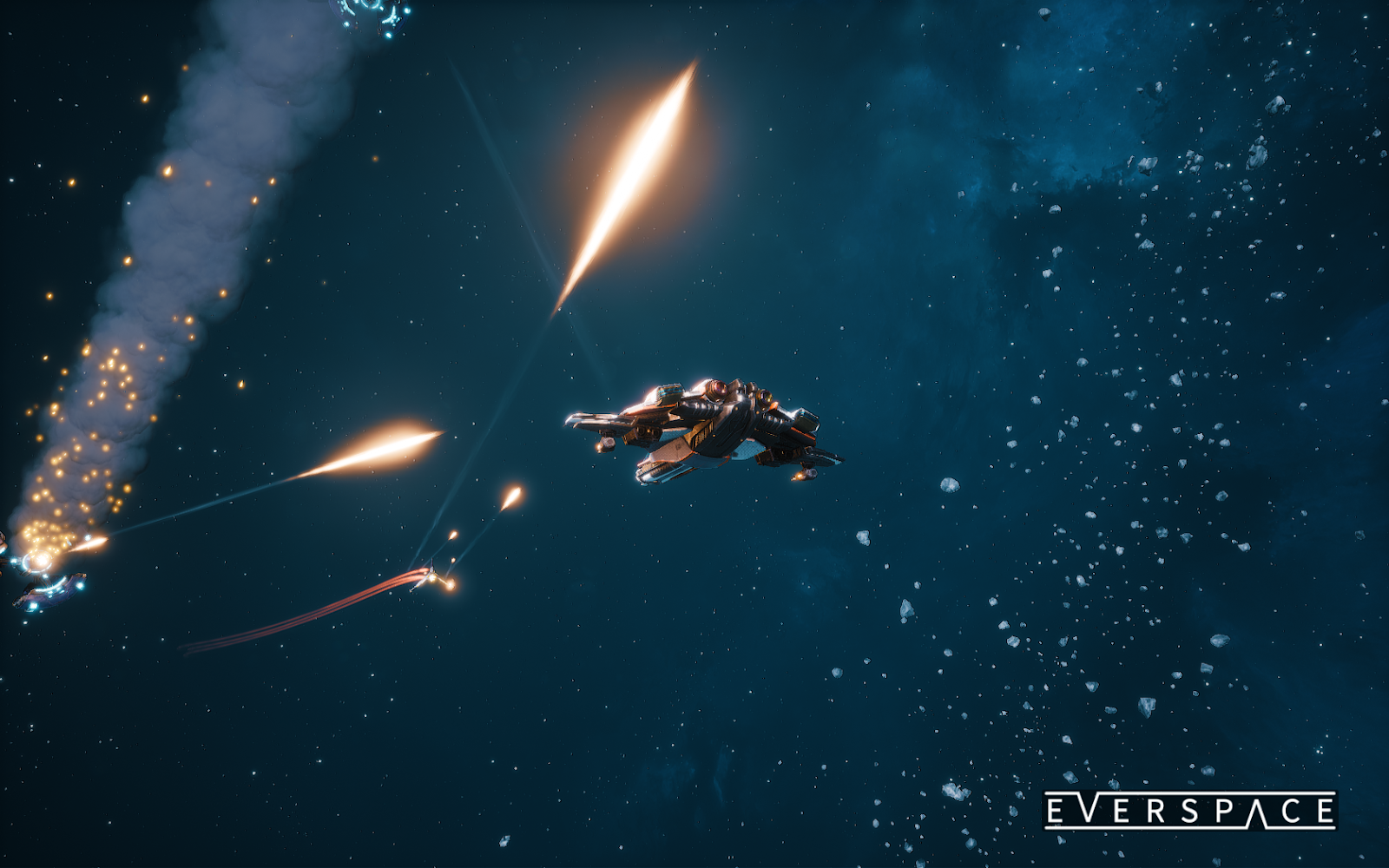
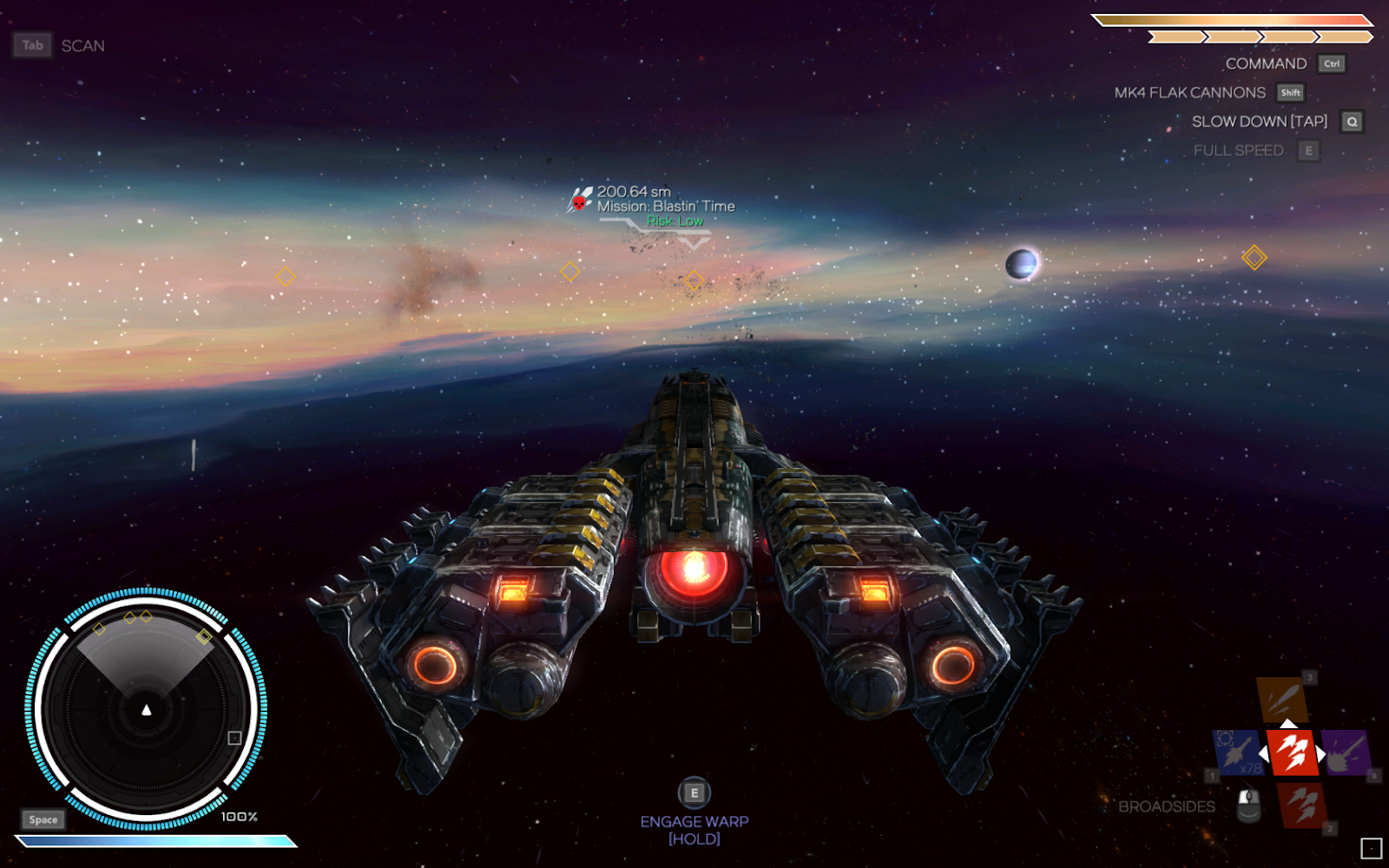
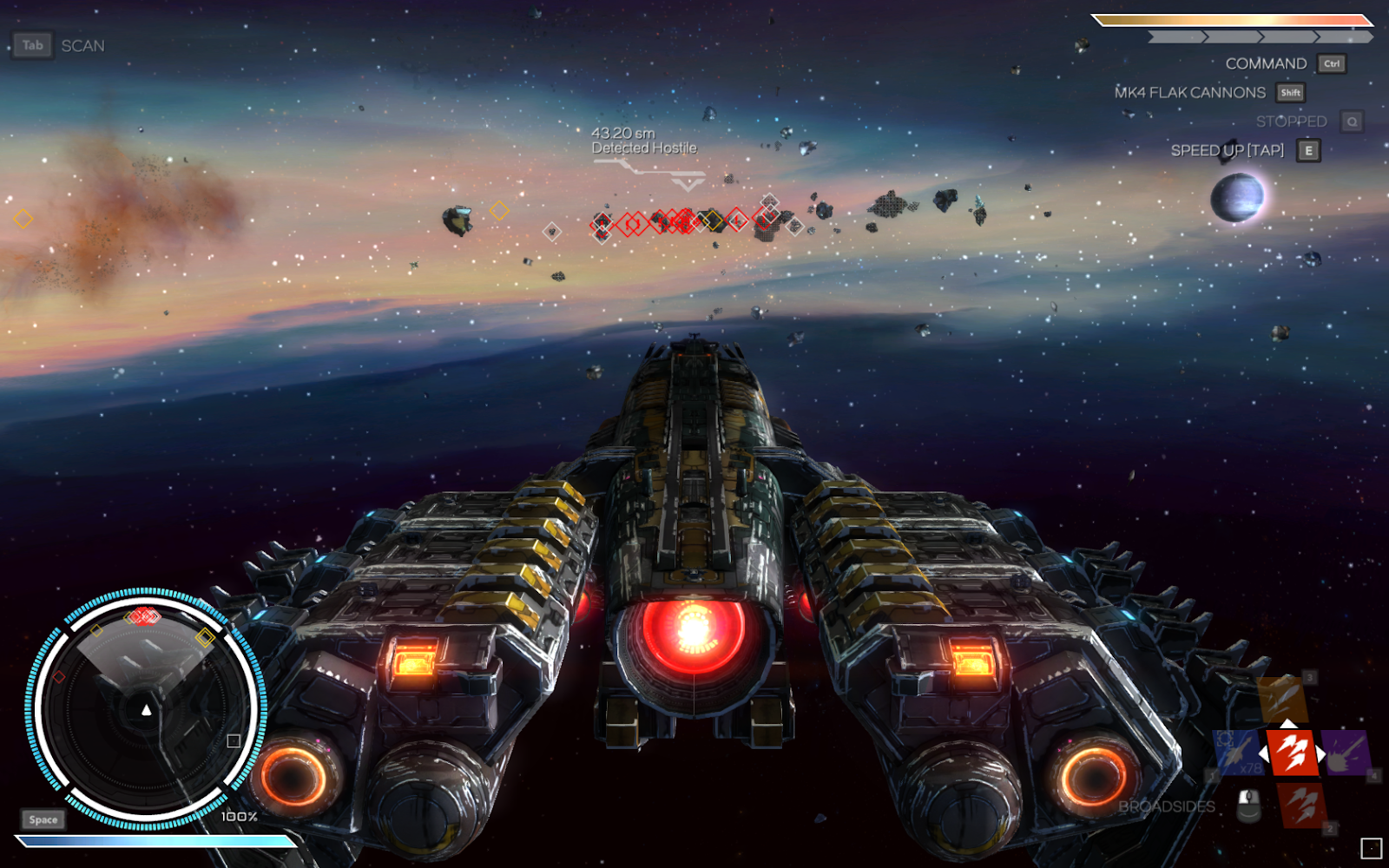
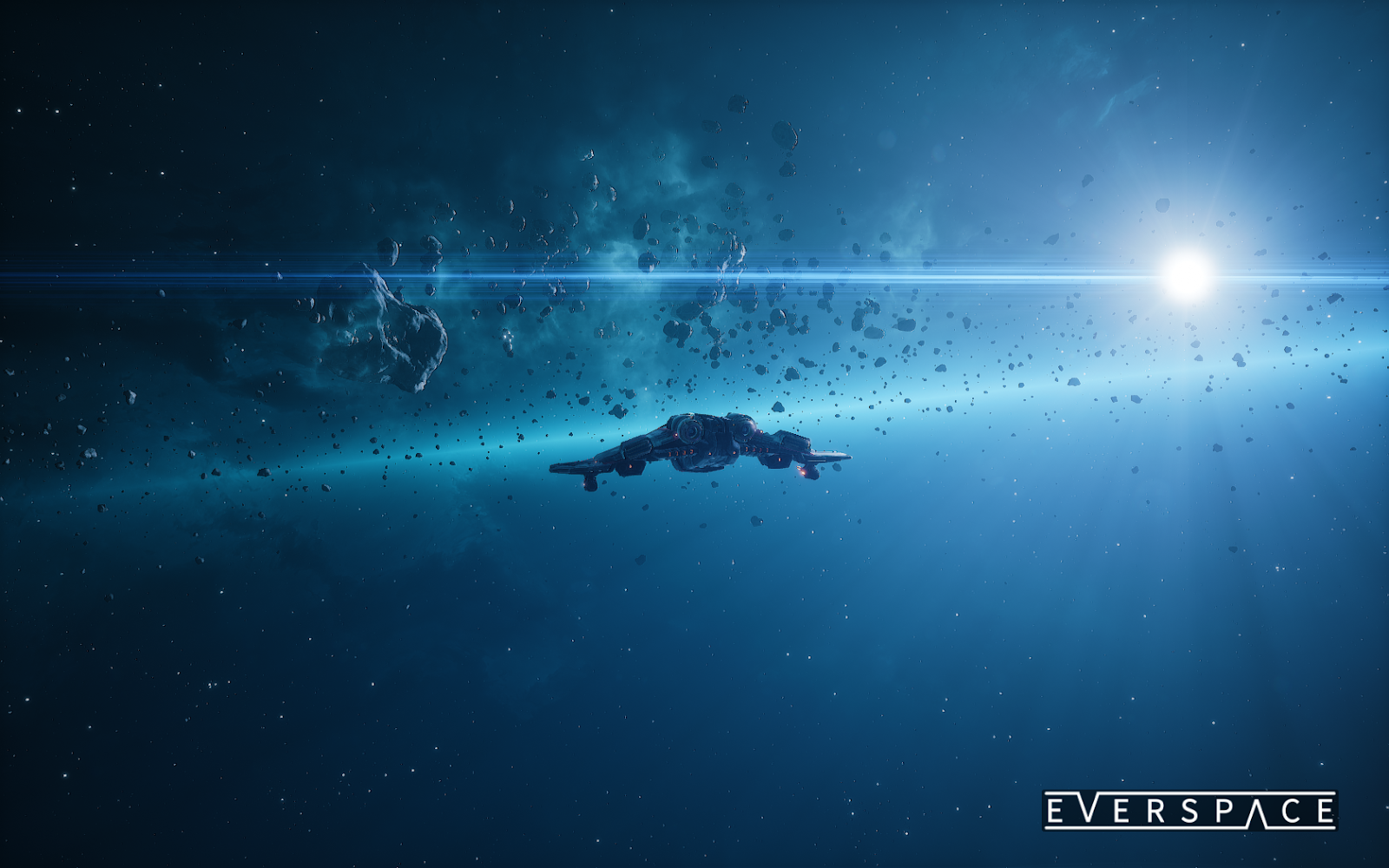
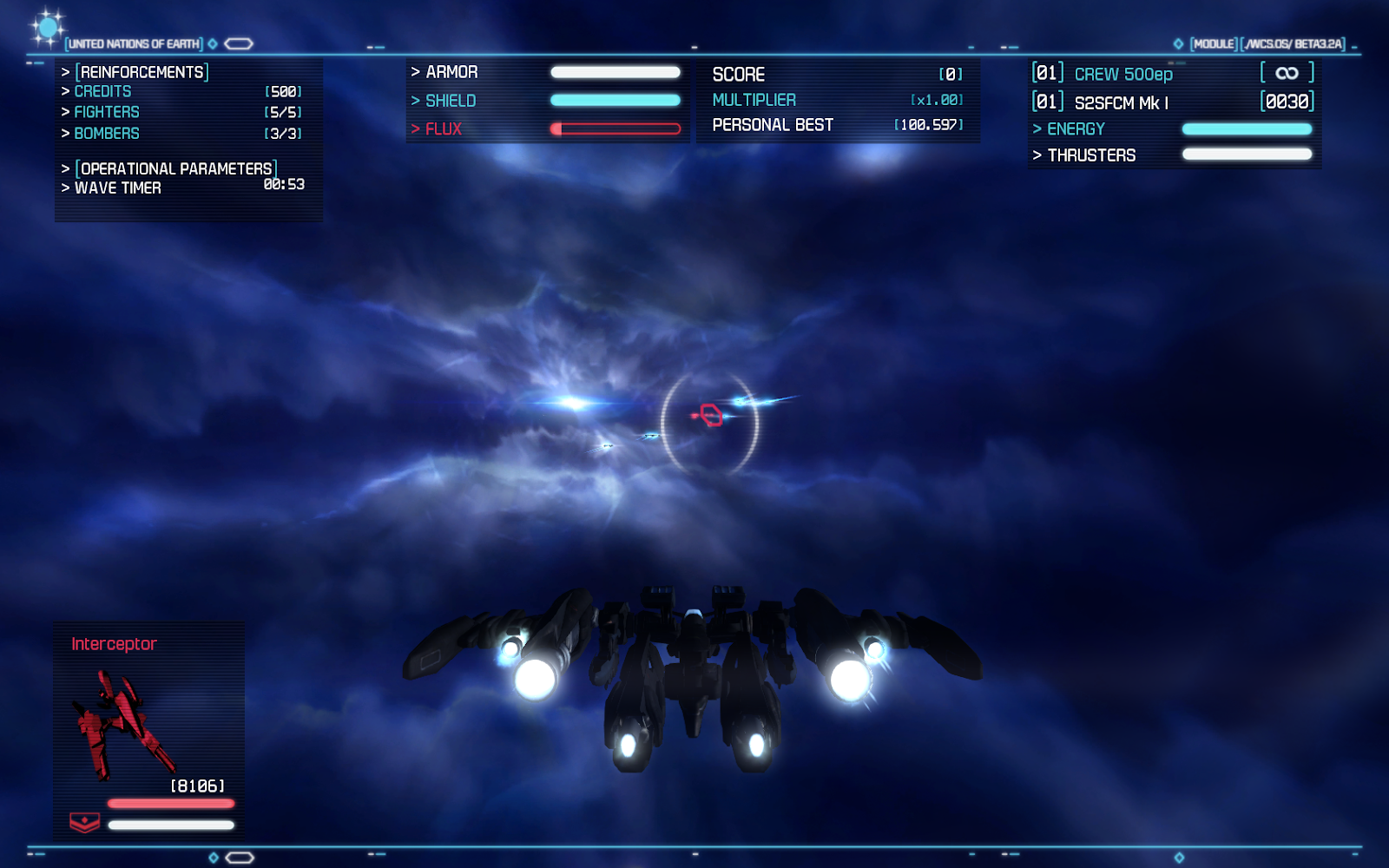
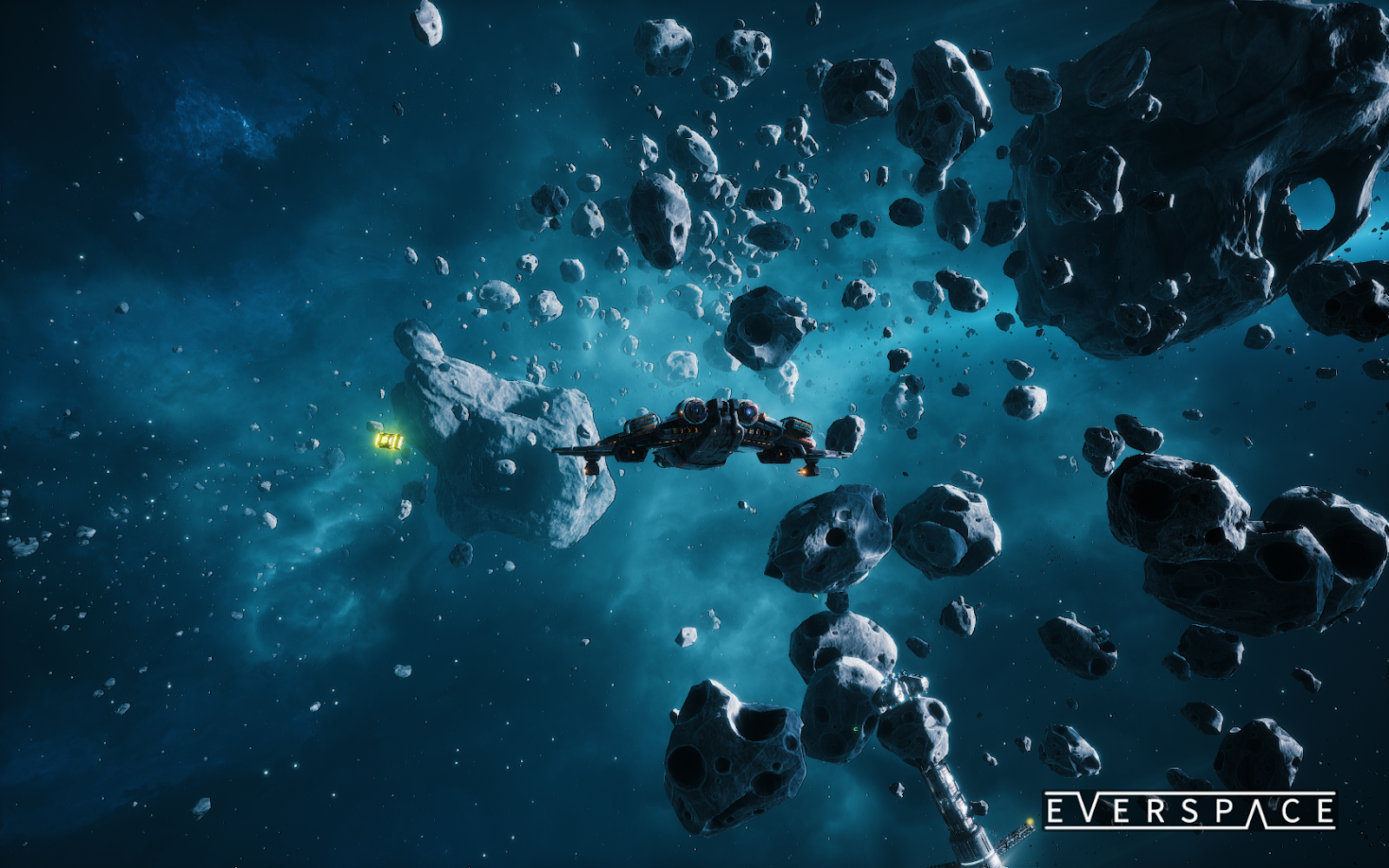
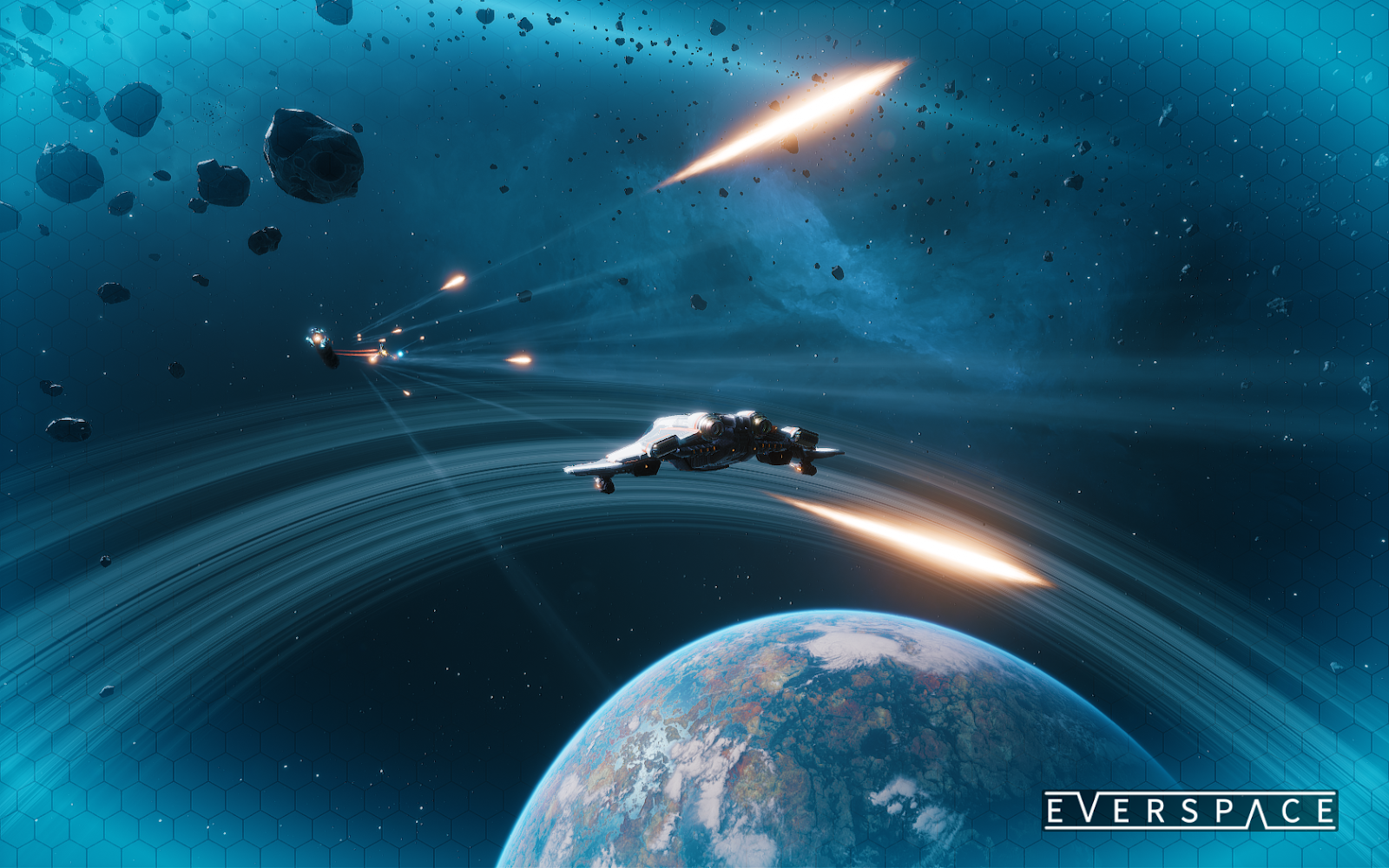
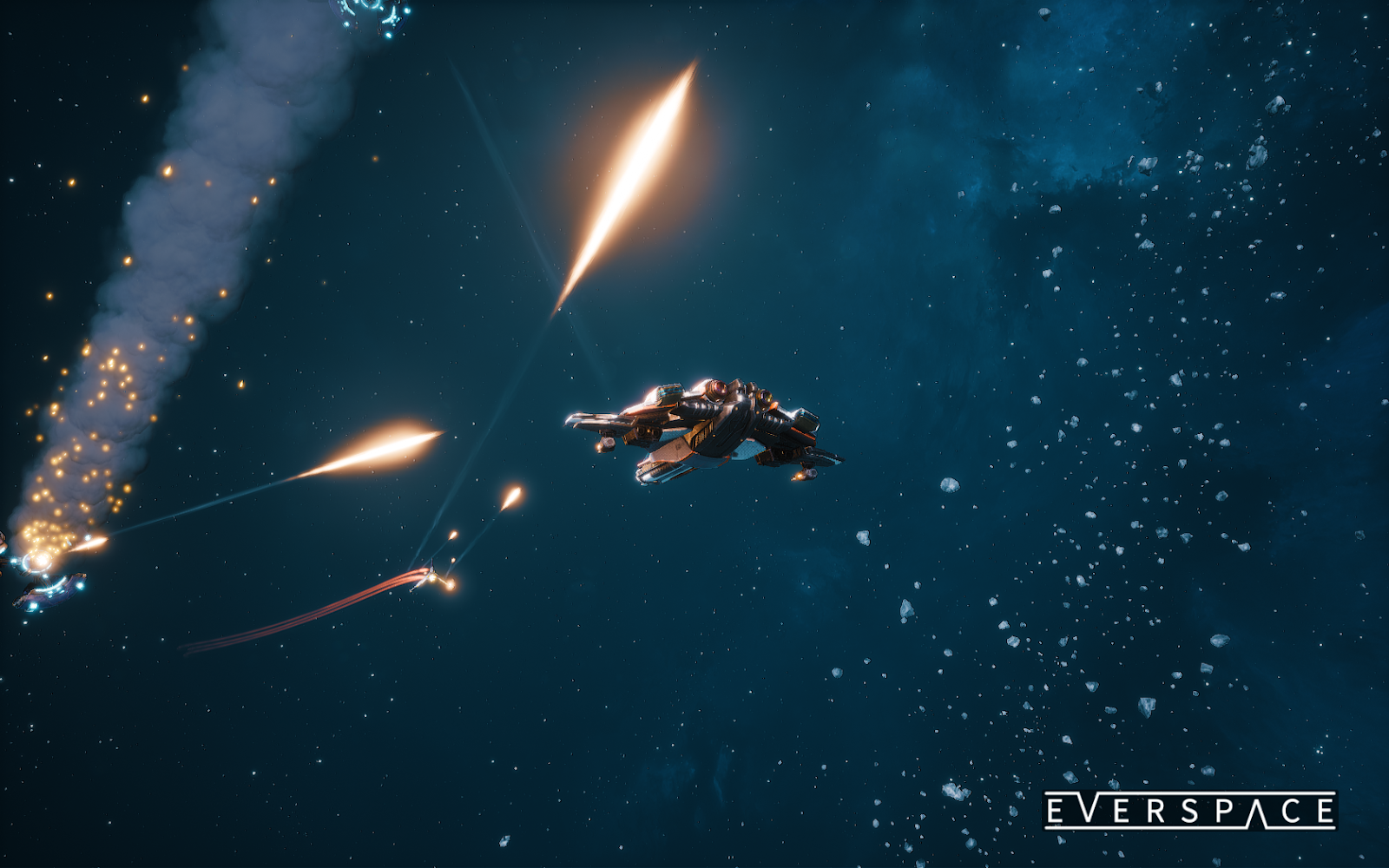
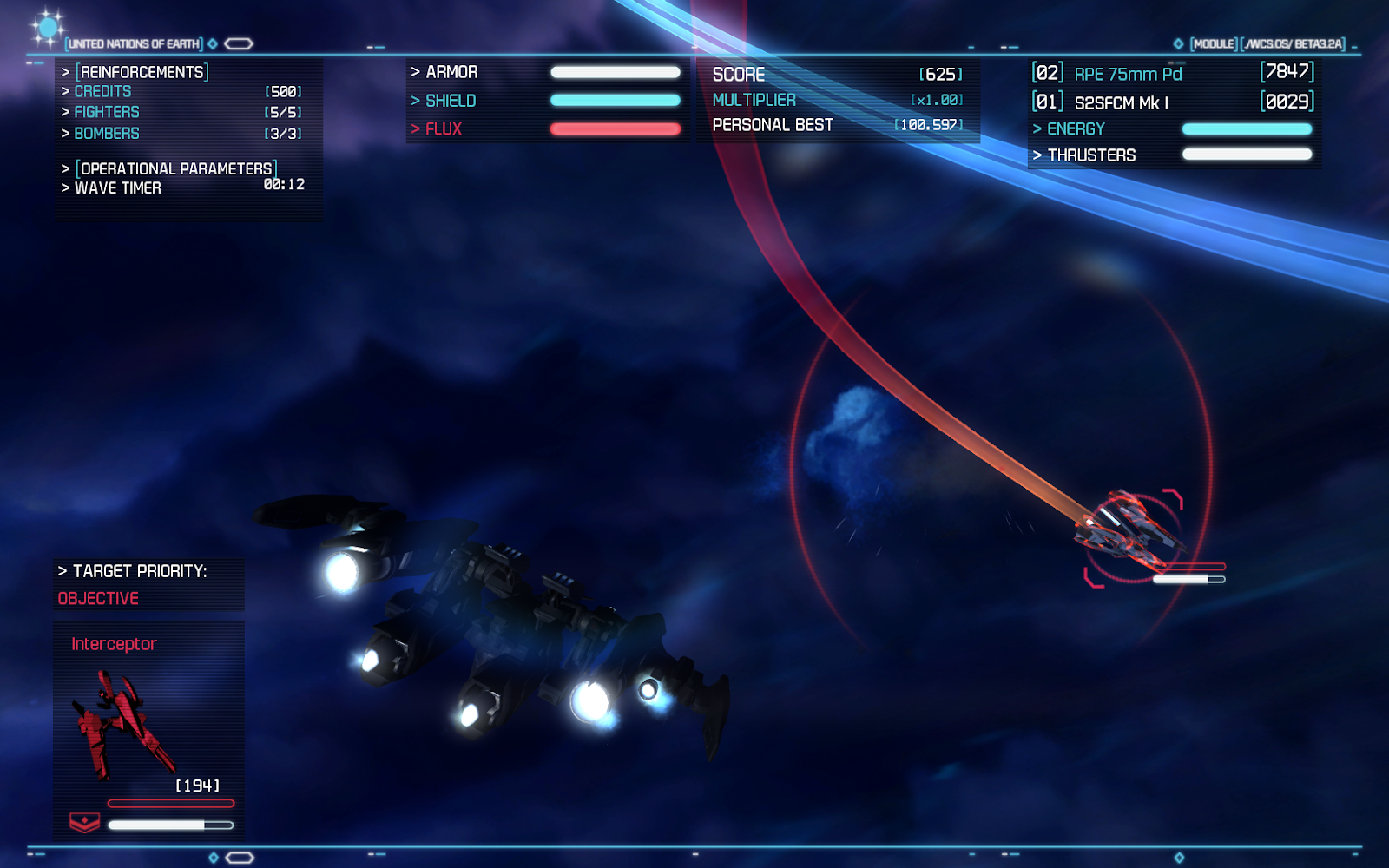
To answer that, let’s turn to Space Combat games.  I spun up Everspace, Strike Suit Infinity and Rebel Galaxy.  The first definitely measures in “kilometers,” while the second measures in some unnamed unit while Rebel Galaxy uses “SM” as its unit of measure, but it seems likely that the unit of measure in Strike Suit Zero are “meters”and Rebel Galaxy seems to line its SM up with kilometers, assuming this is the case, then:

Remote to Beyond Visual

This is about 200,000 yards, or about 100 miles.  It’s actually farther than that, by a bit, but it’s roughly on the edge of Remote.  It’s possible to see the asteroid belt where the target will be.  If we push to the inner edge of this, it becomes possible to make out targets.
These are closer than the minimum 50,000 yards, or about 25 miles, putting this just inside Remote and into Beyond Visual.  It gives you a sense of what Remote Combat might look like: Essentially, everything is via targeting as targets are too small to really make out.
You can almost make out a large “satellite”in this image, which is 11km away, or just over 10,000 yards (if you can’t see it, it’ll become clearer in future picture), putting it on the inside of “Beyond Visual.” In principle, larger vehicles are definitely “visible”at Beyond Visual.  A fighter definitely isn’t though.

Distant

The target fighter here is around 8000 yards away, putting it in “Distant.” The drive signature is visible at this range, and combat might be possible, but a blaster is going to have a scant chance of hitting.
It’s very difficult to see, but there’s a relatively small fighter at about 5,000 yards lurking in that asteroid tunnel.  It’s much easier to pick out if you have radar running, but it’s just barely visible, which is typical of these ranges: engagement is possible, but difficult, though a missile could certainly do it.

Extreme and Long

The ships here are about 1000 yards away, putting them definitely in the Ëxtreme range.  As you can see, I’m being fired upon, and this is a pretty decent attack range.
This is actually long, the fighters here are less than 500 yards away, and it’s a very hard range to catch an opponent at when it comes to a screenshot.  This is closer to what we think of as a “close in dogfight,”and it is, indeed, quite close, which highly visible targets.  We can get closer, though:
This target is about 200 yards away, which puts it on the shorter end of Long (at less than 100, we’re in medium).  Here, the opponent fighter is clearly visible, but again, we rarely keep targets this close for long.  Nonetheless, we can clearly see that in “cinematic” Star Wars fights, this is also “close.”

The Cinematic Dogfight Range

If you look through the screen shots or play through a space combat game with fighters, and you’ll notice you almost never engage targets farther than about 5000 yards, and usually closer to 2000 yards, which means most combat occurs at between Distant and Long ranges.  I definitely include ranges longer than this, but should you?
If you really want the “cinematic” Star Wars experience, the answer is clearly no.  The main purpose of “Beyond Visual” is escape from combat and maybe first scanner contact with the enemy.  You can handle this by simply starting all combat at either Beyond Visual (with no shots possible) and actual combat engagement at Distant or closer.  This will give you a fairly decent experience:
  • Beyond Visual is the range when you first start to ping targets, maybe
  • Distant is where you might be able to fire on targets, assisted with your radar which highlights your opponent.  Missiles mostly at this range.
  • Extreme is “distant” dogfighting ranges
  • Long is “close in” dogfighting distances, where you really have to fight to keep your target this close (thus your difficulty in hitting the target is more based on how quickly he moves rather than how far away he is).
If you want to go this route, note that I ran my calculations assuming “Extreme” as the most common distance, so everything should work just fine.

Why Remote? The “Realistic” Dogfight Range

Nothing in Psi-Wars space combat is really realistic, but it does touch on some realities.  In truth, aerial fights don’t happen at the “knife-fight” ranges that we often see in cinematic combat.  Most Rebel Galaxy fights get very serious at about 5000 yards, or solidly in the Distant range, and this makes sense giving the considerable size of its ships.  When you see a battleship firing its massive cannons, it’s not firing them broadside at a target right next to it, but at a target on the distant horizon.  They are artillery craft, and most naval ships are about projection of power, not standing toe-to-toe with an enemy.
We get a glimpse of this in Top Gun where the final battle is about handling a MiG at stand-off ranges, hundreds of miles away armed with an anti-ship cruise missile that could take out the carrier.  I imagine Psi-Wars battles operating in a similar way.
A Psi-Wars battle does not actually begin when two ships meet at Distant range, but far sooner.  The moment a ship “drops”out of hyperspace, your ship will pick it up, and the maneuvering begins. This is a strategic phase, with ships “beyond Remote.” That does not mean they don’t know about one another or care, but rather, that the fight at this point is in planning stages, with commanders showing up in briefing rooms.  At this point, fighter squadrons might launch, because while enemy ships are “beyond range,” they’re not beyond a fighter strike.  What’s critical to grasp here is that a Psi-Wars space battle is not like a D&D fight scene where combat begins when initiative is rolled. It’s an unfolding strategic encounter that will get “hot” once your enemy enters firing range.
If the ships close on one another, they’ll eventually reach “Remote” range.  This range is only relevant if you want it to be, and if the ships involved have firepower capable of attacking one another at that range: battleships and dreadnoughts do.  You can also typically adjust your force screens to take the hit, and most such attacks are sufficiently long-ranged that few will hit. If you have a super-weapon or you’re an especially vulnerable ship, the battle can be decided at this range.  If the battle is between a carrier and a dreadnought, the purpose of the bomber squadrons is to kill or cripple the dreadnought before it even reaches this range.  Technically, when the fighters or torpedo corvettes reach this range with the dreadnought, it can fire on them, but it’s unlikely to hit.  Fighters can usually cross from Remote to Beyond Visual in a single turn; corvettes might do this.
 
Beyond Visual is when the fight begins to become interesting because almost all vehicles involved have the sort of firepower necessary to attack one another here.  This is more an “Artillery and missiles”fight, and torpedoes have been designed to struggle to function at this range, though ships might struggle to really land seriously damaging hits at this range.  Even so, a battleship becomes fairly lethal at this range so, again, if you’re a carrier, the idea is to send a sortie long before it ever reaches this point.  
Once we hit Distant, we’re in familiar “dogfight” territory, and Distant and Extreme are where torpedoes come into play and fighters can begin to engage one another, and we’re back to our “cinematic”fight.  It might be worth it for capital ships to engage one another at this range, but this is more typical of Destroyers vs Corvettes than Battleships vs Battleships.
What’s critical to grasp here is that carriers, battleships, dreadnoughts and other “large”capital ships operate more on the “Remote and Beyond Remote” level.  They have the space for large ops centers so they can make strategic decisions.  They are the launching platforms of fighters that can reach out and attack a target from hundreds of miles away, or they are artillery platforms that can punish a target from 100 miles away. A capital ship is designed to be a slow-moving war-platform rather than a major, close-up tactical asset.
This suggests that there’s a “strategic” chase level, and this is actually true, sort of like how at some point, the fugitive from the law leaves the “close up” chase rules and turns the “chase” into a contest of hiking, stealth and tracking rather than running and driving.  However, rather than suggest hard rules here, I’m going to suggest this is best handled with ominous pronouncements of things like “One hour until the Arc of Dominion is in firing range,”or the captain suggests diving his carrier deep into a nearby nebula to escape the approaching attack force.  You can handle large-scale strategic concepts with dice rolls if you want, but make them rolls of Strategy and Navigation, and give them sweeping results rather than tense, nail-biting moments of cinematic glory.  The strategic layer gives context to and sets the stage for the tactical moments of cinematic glory.  They are the space equivalent of a general chomping a cigar in his tent while looking over maps and a shot of artillery firing that both lead to a zooming close up of the hero fighting in the trenches with explosions around him.  Naturally, the game focuses on the hero in the trenches (the starfighter pilot dogfighting), but there is still a broader role for the general in his tent (or the Officer on his bridge).

The Casaba Howitzer

Casaba-howitzers break /any/ SF game setting…. -Innocence Achieved

So, in a recent discussion, someone brought up the Casaba Howitzer.  What is it?  I didn’t know, so I did some research.  It turns out to be a nuclear shaped-charge, an idea that arose from research into the Orion Drive.  Will Psi-Wars crumble under the power of the Casaba Howitzer? Probably!  But one of the ideas behind the Isomeric Torpedo was that it could compete with a nuclear weapon, so that Psi-Wars could at least sort of approach the sorts of energies we might expect from a Sci-Fi setting.
From what I could find, we expect to see the following energies from a Casaba Howitzer:
  • Small Howizter: 2 TJ (about 7000 damage)
  • Large Howitzer: 200 TJ (about 50,000 damage)
  • Super Howitzer: 800 TL (about 70,000 damage)
For Psi-Wars, we have:
  • Small Isomeric Torpedo: 3500
  • Large Isomeric Torpedo: 5500
  • Capital Isomeric Torpedo: 14,000
Only the Capital Isomeric Torpedo compares, but none of these are “directed charge” weapons.  We could easily double their damage, in which case the Small Howitzer is comparable to the small Isomeric Torpedo. The small howitzer also has ranges between 1-10 km, which is in the Distant ranges; a super-dreadnought scale pulsar does about 12,000 damage at much longer ranges, so Psi-Wars does edge into the scale of the Small Casaba Howitzer.  It’s not disdainfully brushing aside all of these examples of technically TL 8-9 technology with its mighty TL 11^ tech, but it’s not so far off that it’s completely laughable either.

Psionic Powers in Dogfighting Action!

“The Force guides my controls!”

―Delta-7 pilot

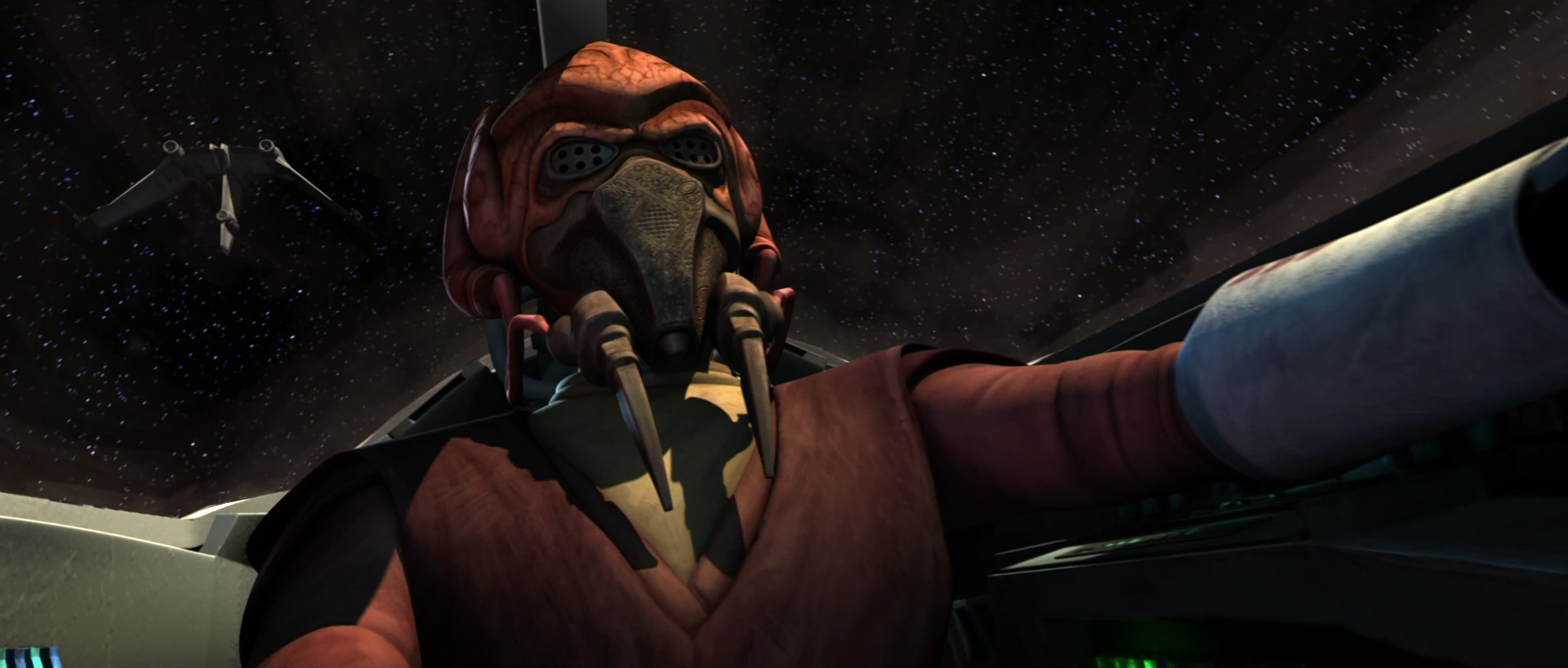
Star Wars often discusses the fact that Jedi made amazing pilots, and during the Clone Wars, they even employed different starfighters than the rest, precisely because of the advantages their force sensitivity gave them. In principle, Psi-Wars should be the same, and we expect Templars and Space Knights to be exceptional pilots. However, while Star Wars offers nebulous reasons for Jedi excellence as pilots (“The force guides them,”) in an RPG, we need more concrete reasons for that excellence. Hence, we need to discuss how psychic powers and offer advantages to a pilot.

I wanted to move away from GURPS Spaceships Combat for a few reasons, but the big one is that it involved “incomprehensible distances.” That is, I certainly didn’t understand how to handle the scale of distances involved, and I notice that when I start talking about remote ranges, people get uncomfortable and talk about it causing problems even though it’s the shortestrange of GURPS Space Combat, which highlights the problem. Worse, GURPS doesn’t really operate that well on those ranges. It can, of course, but most material out there assumes more terrestrial, rather than celestial, distances, because that’s the distances in which the average human character operates in.

This definitely applies to psionic powers. This was a topic I intended to visit at some point, and when I finally did, I immediately noticed that the change from Spaceship combat to GURPS Action chase rules immediately made a lot of psychic powers more relevant “for free” precisely because we reduced ranges to something that GURPS Psychic Powers could handle “out of the box.”

Common Concerns

For the most part, you don’t need a point-by-point discussion of every single psionic power. For example, if you want to use Clairvoyance to project your vision into a ship that’s two miles away, that’s ultimately no different than wanting to project your vision into a building that’s two miles away. We can get a sense of how most psychic powers work on the scale of space combat with a few quick comments and general conversions

Range

Most psychic powers operate on one of five range scales: touch, short-range penalties, normal range penalties, long-range penalties and “psychic range.” Touch and short-range penalties (that is, -1 skill/yard) are too “short” to matter on most vehicular scales, whether in space or on the ground, they are ranges that quickly become untenable beyond what GURPS Action calls “Close” range. Normal range penalties are just the standard range penalties for all ranged attacks, which means if you can hit it with a blaster, you can hit it with a psychic power. The one caveat is that most ranged weapons get bonuses from things like size modifier, accuracy and scanner locks, while psychic powers rarely do, thus I suspect we won’t see much use of these sorts of powers at Extreme or farther ranges.

Some powers at very high level operate with the Long-Distance Modifiers found on page B241 (examples include Telereceive at level 5, Dampen with Projection, or TK-Crush). This makes psychic powers extremely effective at the ranges of space combat. If we translate these to the GURPS Action range bands, we get: Everything up to Medium is -1; Long is -1; Extreme is -2; Distant is -4; Beyond Visual is -5; Remote is -6. Obviously, you need to have some means of targeting your opponent at Beyond Visual and Remote, but most psychic powers with long-distance modifiers have options to handle this.

The Psionic Range table mostly covers ESP and the maximum range of things like Clairvoyance or Awarness. These aren’t penalties so much as maximum distances your abilities can affect. These follow a fairly simple progression: You need level 3 to fully access “Close” range, and every range band beyond that requires +2 levels.

  • Close: level 3
  • Short: level 5
  • Medium: Level 7
  • Long: Level 9
  • Extreme: level 11
  • Distant: level 13
  • Beyond Visual: 15
  • Remote: Level 17

Volume

Quite a few powers will project the ability’s effects in a radius around the character; this includes powers like Screaming, Dampen and PK shield or EK shield with the “Expansion” technique. The core question here is “How much volume do I need to apply my power to the entirely of my vehicle?”

The answer, it turns out, involves some complicated geometry calculations, in that we need to convert a yard radius to cubic yards, and then to cubic feet, and then compare these values to SM modifiers to get a reasonable answer.

The actual numbers look thus:

SM

Yard Diameter

4

3

5

3

6

5

7

7

8

10

9

14

10

21

11

30

12

45

13

65

14

96

15

139

So one needs about a three yard radius to “fill an SM +5” vehicle, and all the way up to a 139 yard radius to fill an SM +15 ship. In principle, this assumes a perfect radius, while many of these ships will be unusual shapes, and it also assumes that the ship is the maximum possible volume for a ship of that SM, which will rarely be the case. Furthermore, some Expansion techniques start with a radius of 2 yards, while others start with a radius of 4 yards.

For simplicity, I propose the following rule: any technique or power that affects at least a 2 yard radius will “cover” a vehicle of up to SM +4. Each doubling of the radius will increase the total SM of the vehicle by +2. It’s a bit of a forgiving rule, but should give us the values we want.

Specific Psionic Abilities

I will not discuss all powers, just those most relevant to the Action Chase/Dogfight rules.

Anti-Psi

Anti-Psi needs no special discussion, as most of its interesting abilities either have some option for using them at great distances (Cancellation at level 5) or the ability to expand the ability to defend the full space of a ship (Screaming with Expansion). These are generally sufficient for any uses in a space combat/chase scene.

Electrokinesis

Electrokinesis is obviously the most interesting psychic power for manipulating vehicles and starships. The ability to reach out and directly disable a craft or, more interestingly, directly control a vehicle. Thus, this power requires the largest discussion.

Ultimately, the core benefits of EK are that the psion can disable his opponents’ fighter or even larger craft, or assume a deeper control of his own vehicle, flying it with the same precision that someone else would move their own body.

Remote Control

Obviously, this allows you to directly control a computer aboard a vehicle, and any vehicle with Computerized Controls (which is most of them) allows you to control any aspect of the vehicle that can be computer controlled. This allows direct driving of the vehicle, but is not the same as vehicle possession. Targets of this may, of course, switch off the computer. Assume that all vehicles with computerized controls have a “back-up” electronic control structure, but switching off the vehicle computer results in -1 handling, the removal of all large facility bonuses, the elimination of the targeting software (thus reducing the sensor lock bonus from +5 to +3) and vehicles with Controlled Instability simply cannot fly.

Dampen

This requires sufficient level to “cover” the vehicle, using the Volume rules above. If using Dampen from a distance (and not from within the vehicle), the Project technique is required; note that in most cases, they will use Long Distance modifiers.Characters mayspecifically target subsystems of the ship, cutting off all power to them. This only provides a benefit if electrical power is needed to run the system (it will, thus, disrupt impulse drives, grav drives and ion thrusters, but not plasma thrusters). If the reactors are targeted, all power in the system is shut down. Targeting a subsystem applies an additional-5 to the Projection technique but reduces the required level necessary to affect the vehicle: treat a subsystem as the SM of the ship -2.

Note that “High Psi” in Pyramid #3/97 includes the “Blanket” technique, which dampens for miles, for when you want to completely power down a dreadnought…

Machine Invisibility

A reader once commented that he included a sort of “machine invisibility” in his Psi-Wars game, and I find this an interesting idea, one that definitely fits here, not just because it allows one to hide from cameras, but because it allows you to shroud your entire ship from an ultrascanner.

It will work like Mind-Clouding except for the need to remove yourself from line of sight; it can only be resisted with Will with sapient machines (aka robots); that is, it affects the machineand not the person using the machine. Finally, it applies to sight, sound andultra-scanners.

Statistics: Chameleon with Extended (Ultra-scanners), +20%, Machines Only -50%, Electrokinesis -10% [3/level] + Silence (the same) [2/level]

To cover a ship, we need an Expansiontechnique. This is a little trickier, because we need to conceive of the technique differently. Ultimatley, we need to use the Obscure advantage rather than Chameleon. The net result is that it halvesthe effectiveness of your level, but allows you to extend it to people around you orto your ship. Treat this as effectively an ECM modifier; it replacesthe distortion jammer!

Expansion

Hard

Default: Machine Invisibility -6; May not exceed Machine Invisibility

Expansion is Obscure Sight with the following modifiers: Extended (Ultra-Scanners) +20%, Machines only -50%, Defensive (+50%), Stealth (+100%), Electrokinesis-10%) [4.2/level] + Obscure Sound, Machines only -50%, Defensive (+50%), Stealth (+100%), Electrokinesis-10% (3.8/level); thus it’s 8/level rather than 5/level making it +30% or -6 technique and halves effectiveness.

EK Shield

If you use Expansion to match the size of your ship, treat it like a layer that appliesbefore the force screen. It only works against energy attacks, of course.

Soul of the Machine

Cost: 30 for level 1, 5 points per level thereafter.

I had previous removed Netrunning as a power because it over-emphasizes computers in the setting. However, the idea of an electrokinetic psionically interfacing with their starfighter or corvette is an especially appealing option. This is detailed W.A. Frick’s “One with the Ship” in Pyramid #3/30 starting on page 11.

This is a 30 point power, using the Soul of the Machine skill (IQ/H); sapient ships (those controlled by neural nets) may resist with Will. To activate it, the character must be inside the ship, spend a single turn concentrating and must succeed at their skill roll. On a success, the character gains total control over the vehicle, and gains the following benefits:

  • The Vehicle gains +1 handling
  • The character may make Per-based Electronics Operation (Sensors) rolls to detect targets and may do so freely, rather than as a passenger action.
  • Passenger actions that use ship systems have a -1 multitasking penalty instead of a -3.
  • He adds a bonus equal to his Soul of the Machine level -1 to all skill rolls with the vehicle and its systems, including all attack rolls, all piloting rolls (dodge is only increased by half this value), Electronics Operations (ECM), etc.

ESP

ESP is primarily focused on information gathering, and this remains true when used in conjunction with a starfighter or a dreadnought. Broadly speaking, what an Esper brings to the table in such encounters is intelligence: they can overhear secret plans, or uncover future fleet positions, but they can rarely use their ESP directly in combat, with a few exceptions. The result of those exceptions are that Espers tend to sense attacks before they’re coming, turn off their targeting computers to “trust their feelings” when they make an attack, and to have an uncanny knowledge of the battlefield long before they arrive.

Combat Sense

When Star Wars describes the Jedi as “good pilots,” it most likely refers to their “uncanny reflexes,” which is almost certainly a function of Combat Sense. Combat Sense operates like Danger Sense and Combat Reflexes, which already provides advantages during ambushes, but I see no reason that Combat Sense should not also apply its defensive bonus to vehicular dodge. Enhanced Dodge (Vehicular) may or may not be a distinct advantage, but Combat Sense uses “Defense Bonus” which explicitlyadds to all defense rolls. I don’t think it’s much of a stretch to extend that to vehicular dodges too!

Prognostication

This is a good example of a broadly useful ESP ability finding some use in combat. Prognostication does not directly impact chase scenes, as its generally too slow and too vague for moment-by-moment combat advantage, but it does have a direct use in gaining free uses of Foresight, and Foresight can be used to get a free Lucky Break. Thus, a Espers often seem to get lucky but, in reality, the knew what was coming and took advantage of it!

This needs no special rules, as it’s just a natural extension of the Planningand Foresight rules.

Awareness

Awareness is technically a scanning sense, and thus can be used to “lock on” to targets. We could simply create a basic “Tactical Awareness” technique that gives us the tactical enhancement to allow us a +3 to hit. This is a rather situational trait, as the +5 from ultrascanners + targeting computers are superior, but Awareness cannot be jammed or fooled by distortion jammers, nor interfered with by pulsar flares or nebula storms, and a tactical ESM won’t pick up the fact that you’re scanning someone.

The main problem with Awareness is that it’s very short-ranged, all things considered. To make it useful at Beyond Visual, like a standard starfighter’s ultrascanner, you need level 15, which will run you 39 points. Now, most powers “get cool” around 50 points, and this is just one example, but it seems reasonable to make this easier for a few reasons. First, the idea is to hit only “big” targets (SM +3 or larger), first because this is the intentof the ability and, second, because we don’t want to encourage “Sniper Jedi” who get a +3 to hit a target with their sniper rifle thanks to their Awarrness Lock. Thus we can apply a limitation to represent “only large things:” -30% seems fair. The Tactical Enhancement is worth +20%, and we’ll add +50% increased range (×50 range, or really, +5 levels). This means someone with level 10 awareness (29 points) who can normally perceive out to 1000 yards can sense SM+3 craft or vehicles with sufficient precision to target them with a bonus.

Tactical Awareness

Hard

Default: Awareness -5; May not exceed Awareness

The character’s supernatural awareness gains sufficient precision that he gains a +3 to hit them with ranged attacks. This is notcompatible with the bonus from a scanning sense lock (it isa scanning-sense lock!), but the bonus cannot be overcome with Electronics Operations (ECM) or defeated by environmental elements that normally prevent a scanning sense lock, nor can it be detected by electronic means (but it can be detected by psychic means as normal). Tactical Awareness can only focus on “large,” (SM +3 or larger) targets; smaller than that and the sense becomes too vague to target with precision. However, tactical awareness increases the range of Awareness by ×50 (or, effectively adds 5 levels for determining maximum range).

Psychokinesis

Psychokinetics are less obviously useful in space battles, despite being the most popular and dramatic power seen in Star Wars. Psi-Wars tends to treat psychokinesis with more subtlety: a psychokinetic uses it to pick a lock or to pull a pin from a grenade more often than he uses it to smash up dreadnoughts. That said, Psychokinetics can do a few interesting things with psychokinesis, often damaging machinery with just a glance, and making his own fighter surprisingly robust simply through sheer will.

TK-Crush

TK-Crush uses long-range modifiers, which means if you’re allowed to target it, you’re allowed to kill it! This mayrequire some means of long-range targeting, such as via Detect Life. Additionally, nothing prevents you from using TK-Crush directly on a fighter.

Rend Machine

Hard

Default: TK-Crush -5; May not exceed TK-Crush

The telekinetic reaches out and crushes the delicate machinery of one specific sub-system within a target machine. This inflicts double damage on a machine, bypasses all DR and the machine resists with HT rather than Will; if used against vehicles with specific subsystems, if the attack deals enough damage to destroy a subsystem, the attacker chooses which subsystem is destroyed.

PK Shield

PK shield operates like TK shield: if you use the Expansion technique to generate enough area coverage to cover your vehicle, you can apply this DR before you apply your force screen DR. This only works against projectiles; this explicitly includes all missiles!

Its also conceivable that a telekinetic might “stave off” damage by holding parts in place. For example, if a habitat has a hole punctured in it, exposing it to vacuum, the TK might “plug” the hole with his telekinetics, or if a tube has burst free of its proper place, he might replace it. We might imagine a Tker flying a starfighter riddled with damage, and when he finally lands and steps out, then and only then does the starfighter collapse under its damage.

The easiest way to handle this is as an alternate technique that changes the DR applied by PK shield (or a different power, like TK-grab, but PK-Shield feels the most intuitive, as it “makes things robust”) into a beneficial Affliction that grants bonus HT to the ship. Every 2 levels of PK shield would grant +1 HT for one minute, with a skill penalty based on the SM of the ship.

However, one might intuitively expect it to look different: to cover an entire dreadnought with such a technique might require enormous powerrather than skill, and you might replace the HT roll with the skill roll, thus a skillful character is better at keeping a ship alive. This is a much more complicated design: it requires a variable HT result based on your skill roll, a bonus based on the level of your PK shield to your PK shield skill roll that’s only to compensate for size with some arbitrary nuisance limitation that doesn’t let you use the power unless you completely cover the SM penalties, the reflexive enhancement with a limitation that means the bonus only applies for a single roll and, naturally, a limitation that allows this to apply to only machines and machines you happen to be inside. Whew!

So I’m just going to fudge it and make up a new technique that works this way.

Mechanical Robustness

Hard

Default: PK-Shield -3; May not exceed PK-Shield

When the machine the telekinetic is operating or is within or is touching begins to break down due to gross mechanicaldestruction, the telekinetic can will it to keep functioning by forcing components to remain in place or even replacing the functionality of lost components. The character may apply this benefit to a machine whose SM does not exceed half of his PK-Shield level; when the vehicle needs to make an HT roll due to gross mechanical damage (that is, to see if it remains functional or is destroyed or if it suffers cumulative wounds, but not to see if an EM disruptor disables it), the character may replacethat HT roll with his Mechanical Robustness technique, with a bonus equal to how much the vehicle’s HT exceeds 10, or a penalty equal to how much lower the vehicle’s HT is from 10 (that is add HT -10 to the technique roll).

Telepathy

Telepaths don’t directly manipulate starships or vehicles, and thus have limited utility when it comes to chase scenes or dogfights. The main benefit is that it allows the user to replace electronics with psychic powers, thus a telepath can communicate with wingmen through comm disruptors by connecting mind to mind, rather than comm to comm. Beyond that telepaths can manipulate pilotsand enemy crewmen directly. This means telepathic fighter pilots often seem uncannily coordinated with one another and their opponents often become confused or disrupted, or the fighter pilot seems to know what his enemies will do before they do it.

Telerecieve

Telerecieve notes that it grants a +2 to “anything where reading an opponent’s mind could be useful” and cites Tactics as an example. If you can read the enemy tactical officer’s mind, you explicitly gain a +2 to contests against him.

The Synchronize Perk

If everyone in a formation has the Synchronize perk, grant +1 to Tactics rolls for that Formation.

Mental Blow

I’ve vacillated on Mental Blow, but I seem to have allowed it with Ishen Denshin, thus it should be allowed here too. You’ll need a high level to operate at the ranges of space combat, however (typically level 5 is sufficient, as then you have Long Range modifiers). A successful mental blow inflicts a -4 on chase rolls from the target (see “Damage to people” Action 2 page 35), while the Neurological Damage technique effectively disables the target, the same as unconsciousness.

Mind Clouding

In The Return of the Jedi, when their shuttle arrives at Endor, Luke Skywalker closes his eyes and focuses so that people will not look too closely at the ship. This could be any number of things (most likely some variation of Suggestion) but it seems possible that one might “cloak” a vehicle in Mind Clouding, but this requires an Expansiontechnique. We’ll use the same design process as for Machine Invisibility:

Expansion

Hard

Default: Mind-Clouding -3; May not exceed Mind Clouding

You may expand your Mind-Clouding effect to an area around you with a 2-yard diameter. For every 5 points by which you make your (modified) skill roll, you can double this radius, cumulatively. This replaces the bonus to stealth with a flat -1 to see or hear those within the expanded area per level; this replaces the encumbrance rules of Mind-Clouding and no bonus is gained for remaining still.

Telepathy Sense

This allows the telepath to detect minds and to target them with particular abilities, such as mental blow, telereceive or TK-Crush. Very useful if the telepath seeks to affect targets locked away in a distant spaceship.

Psychic Healing and Psychic Vampirism

Neither of these abilities directlyimpact piloting skills or chase abilities, beyond the utility of things like using Drain DX on a target. Psychic Vampirism has several “Far” techniques that can be used, and Detect Life offers the option to “target” individuals so sensed, thus most vampires will use these techniques to assist them in space combat, similar to how telepaths operate with Telepathy Sense.

Psi-Tech and Space Combat

The following Psi-Tech might be useful in space combat; they’re not explicitly or generally available, though certain psi-focused civilizations (the Ranathim, the Eldoth and the Alexian secret technology) might use some of the following:

Sensory Deprivation Tank (PT 10): When combined with other psi-tech, this might replacecockpits or control chambers, as it isolates the psi, who gains feedback via the their own powers and controls from directly within the tank. This might work well, for example, for those who want to provide psychic power to the ship, or who navigate through hyperspace.

Psi-Interface Technology (PT 11): A psi-interface allows the user to directly interface with the ship. It might allow the user to act as though they had the Soul of the Machine power. This works especially well with a sensory deprivation tank, above.

Psi-Amplifiers (PT 12): A spaceship offers the user the ability to haul around a spectacularly large amplifier. Corvettes and fighters might carry a Psi-Amplifier throne, while an Alexian throneship might bea Psi-Amplifier Citadel! These might be dedicated to specific functions that the ship needs to perform.

Psychotronic Battery (PT 14): GURPS Spaceships 7 includes the option for psychotronic power systems. Many ancient spaceships might use this approach, granting themselves enormous power provided a psi is willing to pilot it, or is willing to sacrifice themselves to the hungry generator.

Null-Field Generator (PT 16): The Semi-Portable Null Field and the Null-Field Tower are both large enough to cover corvettes and capital ships, stripping an opponent of their ability to target it directly with psychic abilities.

Psychotronic Para-Stealth (PT 17): If psychic techniques for target discovery, such as Tactical Awareness, become common, Psychotronic Para-Stealth can be built directly into ships to hide them from their foes.

Psionic Mind Shield (PT 29): The Telepathic Barrier entry can cover an entire vehicle, shielding all occupants from harmful telepathic intrusions.

Psychic Lock (PT 29): These can be used to secure machines from entry by any but the rightperson, perhaps checking for some virtue, secret knowledge or mental state. This is likely common among ancient and powerful technology that will only work “for the worthy.”

Telepathic Switches (PT 30): Like Psychic Locks, these can require a psychic for activating the machinery and, with a Telepathic Control Panel, can control all the machine directly with telepathy.


Why Capital Ships: Space Artillery and Tactical Command (Part 2 of 2)

Yesterday I dove into the basic theory of capital ships in my GURPS Action chase update. Today, I round it out with a look at truly long range combat, and gaining a tactical advantage on your opponent.

Remote Combat

Lando Calrissian: Yes, I said *closer*! Move as close as you can, and engage those Star Destroyers at point blank range!

Admiral Ackbar: At that close range we won’t last long against those Star Destroyers!

Lando Calrissian: We’ll last longer than we will against that Death Star! And we might just take a few of them with us!

–Return of the Jedi

GURPS Action’s Chase rules do not extend beyond “Extreme,” because we begin to struggle with horizons and ground clutter at some point. However, Dogfighting Action! includes two new ranges: Distant and Beyond Visual, which represent ranges made possibly by the extreme distances of air combat. I want to add two more: Remote and Beyond Remote.

Once we get into space combat, ranges begin to widen to an impossible degree. Orbital bombardment takes place from distances up to 100 miles away! In principle, one should be able to blast another target in space from such a distance. Of course, this is “point-blank” in GURPS Spaceships, and too extreme a distance begins to diminish the “in your face” visuals of Star Wars and Psi-Wars, but nonetheless, I think there is room for powerful artillery ships blasting one another from a phenomenal distance, or at least a seeminglyphenomenal distance.

Every range band in the Action system is roughly five times as far as the previous band. Extreme is up toa mile, while Distant is up to5 miles, and Beyond Visual is “beyond that.” If we follow the progression, Beyond Visual would end at up to 25 miles, and “Remote” would end at up to ~125 miles or -27 to -31.

We need to answer a few questions before we can introduce a new range band, as there are always degrees of distance between ourselves and every object in existence, but most such distances are not tactically relevant. We need to know if Remote is tactically relevant: can a ship at that distance coordinate others, can it attack, can it be attacked, and can people reach it on the time-scales of GURPS Action Chase sequences?

For coordination and attack, the answer is an easy yes. We can easily have communications and sensors devices with ranges at about 100 miles, which is roughly the range of Remote. We can also easily attack out to that distance with pretty much any blaster weapon of any reasonable size. In fact, it’s so easy to attack from 100 miles away that I’ve reducedthe ranges of blasters. I’ve included the details in the new version of my Vehicles conversion. Suffice it to say, only Super-Heavy capital turrets and most super-weapons have this sort of range now, as opposed to even fighter-level cannons.

A greater problem with an attack are the accuracy penalties. For a capital ship firing an aimed blaster cannon at another capital ship from 100 miles away, we’re looking at an average crew skill of 12 + an SM of 13 + 5 from sensor lock and targeting computer and +9 from accuracy – 30 from range penalties, or 9, which is less than a 50% chance of hitting. We’ll need some ways to improve this, as well as some reasonable ways to defend from such a long-range attack.

The trickier question is if it can be attacked or if a ship can reach it on the GURPS Action time-scales. In principle, we can say a ship is unreachable(say, 10,000 miles away) but is freely able to shoot you. This does not create fun gameplay, naturally, as combat occurs on vast, strategic distances and over exceedingly short time-scales, similar to how an ICBM-based nuclear war would go. This is not what we want. So, can we reach a ship that’s about 100 miles away in a minute? Or, more accurately, can we go from between 125 and 26 miles away to between 25 and 5 miles away from a target within a minute at our chosen speeds?

Our target speeds are about 1000 mph for a fighter, 600 miles per hour for corvettes, and between 300 and 100 miles per hour for a capital ship, and an action turn takes one minute. In a single minute, a fighter can cover 15 miles, a corvette can cover 10 miles, and a capital ship can cover between 5 and one-and-a-half miles. Frankly, this already begins to cause problems at dogfighter distances because going from beyond visual (minimum of 5 miles away) to distant (minimum of 1 mile away) is beyond the possibility of slow capital ship. In the best case scenario, a fighter reach a target at 26 miles away in two minutes; 125 miles takes closer to 10 minutes. A corvette can reach a target 26 miles away in up to 3 minutes, while 125 miles away takes nearly 15 minutes. At 300 miles per hour, a capital ship will reach a target 26 miles away in ~5 minutes and 125 miles in nearly half an hour. It is not possible in any account to really interact with a remote target in exactly one minute, though it’s not so far away that it’s really beyond the chase rules: in most cases, you could hand wave things away and suggest that the target is reachable on a 5-minute scale rather than a 1-minute scale, or that you can reach the target, but you’ll suffer several attack attempts.

If we take all of this together, it suggests we should treat remote carefully if we’re going to use it at all. To be useful in combat, we might add an “aiming” action which represents something similar to using the Dead

All of this together suggests we should treat remote carefully, if we’re going to handle it at all. First, remote requiressome sort of time-consuming “precision aiming” action where you carefully line up your shots, the same idea as Precision Aiming from GURPS High-Tech; we can grant a +4 to hit, but also a +2 to dodge, representing the fact that at such distances, even a slight evasive action can offer considerable defensive benefits, and also mimics the Telegraphic attack rules. This gives a capital ship a roll of 13 or less to hit a target, but improves another capital ship’s dodge from an average of a pointless 2 to a possible 4, while corvettes and fighters are effectively impossible at that range. Second, I would require a minimum of 100 mile range on weapons, comms and sensors to effectively operate at that range. Third, I would argue that a Remote vehicle cannotgain advantage on another target (you’re too far away to meaningfully outmaneuver your target at any speed). This helps reduce the lethality of the remote ship: you’re firing with a more limited number of your guns, your target is hard to hit, and your opponent can adjust his force screens so they face your direction. A generic battleship is only going to hit with two or three of this super-heavy cannons, and against a target with 10k force screens, he’ll fail to penetrate DR at all. You really need a super-weapon to operate at such a range, or you need to target a less well-defended vehicle. Fourth, when it comes to movement, we can treat moving from Remote to Beyond Visual as a two-shift move. This is a littlecinematic, as it means that a fighter can move from remote to beyond visual in a single minute with a good roll, while corvettes will typically require two minutes, and capital ships will require a lot of rolling to successfully chase down their target, unless their target is static (which is possible). Finally, I would make this an optional rule: it’s an interesting scenario when dealing with orbital bombardment or when tackling a super weapon, and it’s a good place to park your carrier if you want it help coordinate your battle, but it’s probably more detail than necessary in any other cases.

Formation and Tactics

One important element of GURPS Spaceships is the ability of the commanding officer to exert his tactical acumen to grant his vessel a benefit over his opponent. The Officer template excels at Tactics, and thus we would expect them to be able to bring their excellence to bear against opponents here too.

The first and most obvious way in which an Officer can gain the strategic upperhand against his opponent is with the already existent foresight rules. I’ll talk more about Lucky Breakslater, but suffice it to say, Foresight can translate directly into a Lucky Break, in the same way that Serendipity can.

However, I’d like to make tactics more directly useful, moment by moment. I can simply borrow the tactics rules from GURPS Spaceships, but I want to revisit them and see if we can return to base principles and see whether or not they still fit. After all, the Chase rules don’t use tactics, nor does the Dogfighting rules. Why should we? What sort of benefits would they provide?

In reality, I do think you see tactics in chase scenes! Random mooks who simply point their vehicles at the enemy and drive as fast as they can tend to be less effective than, say, law enforcement officers who coordinate their various vehicles, from helicopters to a fleet of squad cars, to catch their opponent, or back them into a blockade. This feels likea form of tactics that might offer some sort of complimentary bonus to chase rolls.

When it comes to dogfights, we definitely see the use of tactics as well. A good example of this was the “Thatch Weave:” if a less agile fighter had a zero on its tail, it would “weave” with its wingman to bring the zero into the sights of its wingman. Larger capital ships would also maneuver with one another to maximize their firing arcs while minimizing their opponent’s firing arcs.

All of these examples of coordination have something in common: they involve coordination between multiple craft. GURPS Spaceships doesn’t require this, but it assumes teams of characters on one ship, while we’re going to see teams of characters on multiple ships, and thus requiring formations might be an interesting idea.

Formations are a concept also from GURPS Spaceships, but is semi-visible in the GURPS Chase rules in the concept of “chase groups” with leaders. We can call these formations. We can do a few more things with formations: consider that the job of many smaller capital ships are as “escorts,” we can allow a ship in formation to “block” another ship in formation. We can also allow an area jammer to protect everything within that formation. Finally, formations of two or more ships can engage in tactics.

GURPS Spaceships gives tactics the ability to apply a +1 or -1 to dodge, but this is often not useful to the very ships that will want to use tactics the most: Capital Ships, as they often have an abominable dodge. Instead, I suggest the following: in a formation of two more ships, a character within the formation may make a Tactical Coordinationaction against a single target (either a single vessel, or a single formation); if the target is a formation, that target may roll Tactics to resist in a Quick Contest. If successful, the formation may gain one of the following benefits

  • Defensive Tactics: Opponent either has -2 to hit the vessels of the formation, or the vessels of the formation gain +1 Dodge.
  • Defensive Tactics: Opponent either has -1 to dodge the attacks of the vessels of the formation, or the vessels of the formation gain+2 to hit the target vessel or formation.
  • Pursuit Tactics: +2 to chase rolls against the target for this turn

In practice, this allows capital ships to reduce their opponents’ barrages by a hit or two, which might mean the difference between life and death.

Action Vehicular Rules 1.1

Currently on my Patreon, if you’re a Patron, you get a one week preview of the Action Vehicular Rules, the Space Opera update for the Action Chase rules into a full dog-fighting and space combat system.

If you’re a patron, you can check it out here.  If you’re not, come back next week, and it’ll be available to you!  As always, I want to make a shout out to my patrons, and give them a big thank you.  I know it’s been a quiet few months.

Why Capital Ships? New Rules for Dreadnoughts in GURPS Action Chase rules (Part 1 of 2)


My apologies for my absence.  Between illness and family, I’ve been busy, but also, the topic I had selected to tackle turned out to be exceptionally large, so large that I’ve had to break it down into several smaller posts.

The core issue I want to tackle are Capital Ships and how they fit into our new combat paradigm.  I had intended for this to be a single post, but it turned out to be nearly 4500 words, so I’m going to break it down into a two parter.  Today, we start with some theory, and then dive into a greatly expanded set of rules on Passenger Actions.

Why Capital Ships?

Most space-based combat games find that they naturally center around a “sweet spot” of design. For games like Wing Commander, this is the fighter; for settings like Star Trek, this is the capital ship. For settings like Star Wars (and thus Psi-Wars) we need to justify multiplesweet spots to make our visions of our desired form of space combat come to life.

Psi-Wars focuses mostly on the model of “one character, one ship,” and this works best with starfighters, and thus starfighters are probably theprime form for participating in space combat. Thus the other models, the corvette and capital ship, need their justification. I’ll put off justifying the corvette, except to note that it offers an opportunity for multiple characters to lend their skill on a ship that is competitivewith starfighters.

The Dreadnought offers a far greater concern when it comes to justification. They represent enormous resource investments that lack the speed and agility of a fighter, and sport similar firepower, and are vulnerable to starfighters. Why, then, would someone field capital ships at all, instead of fielding fleets and fleets of starfighters? Moreover, how does the capital ship fit into the model of “one character, one ship?” How can our GURPS Action Vehicular Combat model all of this, making the dreadnought useful while still keeping it focused on a single character? To make dreadnoughts function, we need to answer these questions.

The justification of the dreadnought is perhaps the easiest question to answer. The word “capital ship” arose to describe the sort of “dreadnought ironclads” that arose during the heady naval years before WW1 (and thus, in a sense, “Dreadnought” and “Capital Ship” are synonymous, at least if we use the former term to describe a class of ships). I don’t know the logic of justification behind the term “Capital Ship,” but capitalis a term used to describe the great industrial machines in which a nation would invest, suggesting that a capital shipis a great industrial machine of war, a giant mobile fortress from which the rest of your operation can be staged.

This is certainly an apt description for a carrier. A starfighter lacks long-term accommodations and the capacity of long hyperspace journeys, and people and tanks certainly lack the ability to travel through space. The carrier offers room, accommodations and transport capacity for starfighters and soldiers, ferrying them across the galaxy. In a game, they often serve as a “mobile base.” In Tinker Titan Rebel Spy, a playtest I ran to test whether a dreadnought was “too much ship for players to handle,” I found they mostly used their dreadnought this way: they slept in its cabins, flirted in its cantina, planned in its briefing room, and launched their starfighters from its hangars.

We should also consider the capital role of flagship. The great size of a capital ship allows it to carry far more electronics and expert crew members than the average starfighter or corvette. With access to megacomputers, FTL communication and huge sensor arrays, the capital ship has unparalleled ability to see and command a battlefield. They can coordinate fighter squadrons or ground troops, and they can put expert strategists and spies to answering any questions the members of the arrayed force might have.

Finally, the capital role of the battleship remains valid because a blaster shot is much cheaper than an expensive isomeric nuclear torpedo! While a starfighter can defeat a capital ship, so can another capital ship, and it can do so over and over again without needing to refuel or reload, and can do so from a fairly extreme distance. This is less important for swift “first strikes” against other capital ships, but it’s vital to be able to pour on firepower against hardened ground targets, ideally from orbit where you are far away from anti-air defenses.

What the Fighter Ace is to the starfighter, the Officer is to the Dreadnought. Naturally, a fighter ace can directly control his vehicle, while the officer must command his crew to carry out his orders and must coordinate that crew effectively and efficiently. But where a corvette, with a crew numbering typically no more than ten, can afford to allow a handful of heroic characters to shine (one top notch pilot with a couple of highly skilled gunners and a single, desperate scavenger trying to keep the ship flying), a capital ship can have crews in the literally thousands, making it nearly impossible for the singular actions of a character to make a difference. Thus, we must treat out crew as natural organic extensions of heroic characters.

The rest of this post naturally arises from my attempt to adjust the action chase rules to fit these changes. GURPS Action assumes small vehicles with a single driver and a passenger or three: a car chase with perhaps motorcycles and a helicopter or a tank; they do not envision “chase scenes” with battleships and carriers. We need them because they impact battle, but they should do so on a larger, more strategic scale.

Passenger Actions

While a starfighter flies under the direct control of a single player character, perhaps with a single co-pilot or tech-bot assistant, the corvette and the dreadnought fly with the assistance of a crew. The corvette does so with a crew that typically numbers less than ten, making it a good ship for a collection of heroic player characters to directly manage, but capital ships are beyond the scope and scale of a few characters.

For both, we need passenger actions. GURPS Action 2 already has a list of passenger actions on page 33, but this is treated as an aside, appropriate for a game that focuses on car chases. Here, our passenger actions become much more central, so we need to get a grasp of everything a crew member who is not directly involved in shooting turrets or piloting the craft might be doing. For inspiration, we can turn to GURPS Spaceships and look at all the options under “Actions during a turn” starting on page 50. While not everything is suitable, it gives us a sense of what crew members might be doing.

When it comes to a passenger action undertaken by a player character, we simply need to know what skill they’ll roll. For a capital ship, this is harder because we have teams of crewman carrying out those tasks. Thus, we’ll need a concept for this:

Crew Skill: On any capital ship, any and all passenger tasks may be undertaken by the “crew,” a large collection of nameless NPCs sufficiently suited their tasks to undertake it professionally. The skill of a crew is stat to a standard value, similar to BAD. By default, this skill level is 12. Particularly novice crews have a skill of 10, while the finest crews might rise to skill 15.

The Passenger Actions are:

Attack: See GURPS Action 2 page 33. Characters onboard sealed vehicles (most space vehicles) generally cannot make attacks with their own weapons against other vehicles, but they may man turrets and attack with them, using all the normal rules for passenger attacks (including the standard -1 penalty for a passenger making an attack).

Board: Boarding a ship is automatic if the character is aboard a vehicle that has embarked via a launch pad. If the vehicle has attached itself to the hull of the target ship or the character has somehow made it through space on his own to land on the vehicle, assume that a handy airlock is somewhere nearby and the character may enter via an Electronics Operations (Security),Forced Entry orLockpicking roll with a difficulty equal to BAD.

Chart Hyperspace Route: Before making a hyperspace shunt, someone must successfully calcuate a hyperspace route. Calculating a hyperspace route requires 5 minutes (or 5 turns in Action Vehicular Combat), a successful Navigation (Hyperspace)roll and either a computer capable of hyperspatial navigation or a robot with the proper programming. In addition to other navigational penalties, the navigator may accept time spent penalties at -2 per turn reduced (calculating a hyperspace route in one turn/minute imposes a -8 penalty).

Command and Coordinate: A high rank character may attempt to coordinate the efforts of characters making another Passenger Action. He may roll Leadershipas a complementary roll or use the lowerof his Leadershipor the required skill to replacethe crew skill of the crew undertaking the task (for example, the crew is trying to perform emergency repairs; normally this requires the Mechanic skill, and they have a standard crew skill of 12, but a PC has Mechanic-18 and Leadership-15, and so may coordinate the repair crews so that they repair with skill 15 rather than 12).

Emergency Repairs: If a vehicle has a disabled system, the crew can attempt to jury-rig repairs in a single turn. This requires a single person on a starfighter, shuttle or corvette, but requires a substantial crew on a capital ship (assume such crew is available unless circumstances dictate otherwise). Attempting to jury-rig repairs requires a roll against an appropriate specialty of the Mechanicskill at a -10 penalty. Characters with Quick Gadgeteermay halve this penalty! A jury-rigged component is not a permanent fix, and must roll HT the first time it is used in a battle (one such roll is sufficient for the entire battle). Complete repairs, or the repair of destroyed systems, are beyond the capabilities of characters currently locked in a cinematic fight.

Operate Electronics: If a character is at a proper control system, he may supportthe vehicle by operating its electronics. This allows the character to engage in contests with opposing electronics operators: the character may attempt to communicate through a distortion scrambler (Electronics Operations (Comms)) or to detect a target that is actively jamming sensors (Electronics Operations (Sensors)) or to actively a jam both sensors and comms of another vehicle (Electronics Operations (ECM)). For more detail, see electronics and jamming below.

Seize Control:To seize control, the character must be at the controls of the vehicle (see Internal Movement below). See GURPS Action 2 page 33.

Internal Movement

To perform an action, one must be located in the proper location to perform that action (at the controls of a turret to fire it, etc). If the character is not at his location, he needs to spend a number of turns “moving” to reach that location. The number of turns depends on the size of the ship:

  • Starfighters and shuttles: 0 turns (Free movement, assuming movement is possible within the craft)

  • Corvettes: 1 turn

  • Capital ships: 2 turns

For especially large ships, the GM may require three or more turns of movement, but too many turns may slow the game down too much! For additional detail, see GURPS Spaceship page 63 (using 1-minute turns).

These rules assume unimpeded movement, but the GM may create obstacles for characters to bypass. Such obstacles can be handled by a roll against a single skill with a difficulty equal to BAD; success generally means the character can move unimpeded, but failure increases the travel time by a single turn as the character is forced to bypass the obstacle. Examples include locked or damaged doors (Lockpicking, Electronics Operation (Security) or Forced Entry), damaged corridors that require clever movement to bypass (Acrobatics, Climbing,Jumping), or enemy patrols (Stealthor a combat scenario).

If a combat scenario occurs during such movement, the GM may wish to abstract it away with a single roll (Tactics, with bonuses or penalties based on how outnumbered or outgunned one side is), or play it out as a detailed scenario. Technicallysuch a fight can last for up to 60 turns, but consider limiting the fights to know more than ten to twenty turns, so as not to bog down the game with scenarios within scenarios unless the fight is central to the game (such as the climactic duel between Tyrannic Cultist and True Communion templarfor the fate of a world).

The Ops Center

An interesting option presented by GURPS Spaceships is the concept of an ops center. The idea behind it can be found on 18 of GURPS Spaceships, in that you have certain habitats you can dedicate to particular functions, such as an office for administration rolls or a laboratory for gene-testing or what have you. These provide all of the basic toolsnecessary for a job. A 10-room equivalent (an “Ops Center”) applies a +1 to the skill roll and a 100-room equivalent (“a Large Ops Center”) applies +2. This dovetails nicely with the concept of a facilityfrom Pulling Rank and the computer programs that act as superior tools, which I integrated into my base requirements for computers.

What I like about this particular idea is that it emphasizes the importance of a Capital Ship, in that a corvette is unlikely to have an Ops Center, and a ship that is large enough to have a Large Ops Center would be most impressive indeed. Thus I propose we allow them to add specific bonuses to Passenger Actions to emphasize this, whether those are crew skill rolls or NPC rolls:

  • A “War Room” Ops Center improves all Tactics and Strategy rolls
  • A “Star Chart” Ops Center improves all Navigation
  • A “C3I” Ops Center improves all Electronics Operations (Comms, ECM and Sensors) rolls
  • A “Work Center” Ops Center (really a combination of Workshops) improves Mechanic rolls.