All I Want for Christmas: Kronos Faction 2: The Indigo Brotherhood (and the Crimson League)

So, yesterday I dropped the least interesting of my faction ideas for Kronos. Today, I drop my favorite: the Indigo Brotherhood.

The Indigo Brotherhood is old. It takes to Undercity Noir 1, where a member of the faction helped out one of the Ranathim PCs escape from her Bloodsider pursuers. I didn’t have a strong idea of what they were like that point, other than that I knew:

  • They were psychic
  • They were a rebel faction
  • They were inspired by the Indigo Academy for the Gifted

This Indigo Academy was, of course, a reference to a secretive catspaw cult of the Cult of Revalis White, which dates back to Iteration 6.

What exactly they were like, I had several different conflicting ideas, not all of which made it in.

The earliest inspiration was an idea for Telepathic Blaster Combat that combined the teamwork of the Final Form with the tactical precision of Combat Geometrics. I liked the idea of this being a highly coordinated group of scrappy rebels using their telepathy to outmaneuver the Empire. The problem I had with this idea is that, first of all, the Indigo Brotherhood teaches more than just Telepathy, as it teaches everything, and second, there’s another rebel faction that I think would do far better at this sort of thing (The Warmaidens).

The second inspiration came from my work with cybernetics. I wanted an Ergokinetic Cyber-Mysticism that allowed the psychic to interface with their cybernetics and make them more powerful, a cybernetic equivalent to the Keleni breathing forms. The problem, again, was the Brotherhood teaches more than just Ergokinesis. I could have two different styles, but what about the other psychic disciplines? And how big is this organization going to be?! So this was spun off into its own organization.

The third idea came from Mob Psycho 100, probably one of the best psychic anime I’ve ever seen (and I’ve seen quite a few!). The character above used a toy sword as a focus for their psychic power, and it was a great example of these sort of quirky psychic powers that felt like something unique and a hook on which I could base a style, except it had the problem of “how do I even define something like that?” I can just tell you to apply a Gadget limitation to a psychic power and call it a focus, but that doesn’t let you rapidly make a character, and doesn’t tell that much a story about the organization. I still liked the idea.

The final inspiration was the powers-system of To Be Hero X, an excellent Chinese/Japanese super-hero “anime.” While I’m not convinced the power system makes as much sense as the writers think it does, the “trust/fear” system of the setting interfaces neatly with Communion, especially some speculations as to how it could work. An extremely canny individual with a deep understanding of Communion could manipulate events to make certain psychics align with a Communion Path, and then super-charge their connection with it by broadcasting their feats to a sufficiently large population, say, the population of Kronos. They’d need to arrange for dramatic narratives, rivalries and arrange for situations where a hero was needed, but the result, if handled well, could fasttrack a psychic onto some unconscious form of Communion.

If we combined these last two concepts into the idea of a school for psychics, and a secret rebellion, and I think we’ve got something GMs can really use.

“So they’re the X-men?”

No! They’re not the… look…. I’m… okay fine.

So, I wasn’t setting out to make the X-men. I do a lot of deep dives into psychic sci-fi, and one thing I’ve noticed is that it hit its peak around the same time as the X-men were being made, and if you stop and go back and look at the X-men, the parallels are obvious. There is lots of secret conspiracy experiments on rare, advanced people who have unique abilities to manipulate the world around them, and much of the story turns on telepathy and other psychic abilities, and the technologies that augment them. And when you take those psychic powers to their natural extreme, they start looking a lot like super-powers (in fact, there is a nWoD 2.0 game, Deviant, which focuses on, among other things, psychics, and you bet you can make super-heroes with that).

There’s really no way to create an underground school for illegal psychics that doesn’t vibe like the X-men. Rifts had similar vibes because it tried a similar thing. Of course, I didn’t need to then split the group into two factions, but there were other reasons for that. But on the other hand, their focus on experiments, psychic drugs, conspiracy theories, the edge of indoctrination, all pulls the vibe back towards the paranoid paranormal sci-fi of the 60s and the 70s that I was aiming for.

With my innocence established, I would like to pitch that having super-heroes in Psi-Wars might not be such a bad thing. Psi-Wars is, like most space opera settings, is designed to be a trope stew, where a samurai and a cowboy team-up to fight a dragon and rescue a princess. Why not add super-heroes into the mix?

Kronos is also the perfect place to put them. It’s highly urbanized, the ideal haunt for “super-heroes,” and if you take the psion template and its inherent weirdness, mix it with the concepts of a psychic focus, the inherent self-deception of the Indigo Brotherhood, the media manipulation, and the drugs and experimentation in a night city saturated in crime and neon, I think, I hope, we have something Psi-Wars players can mess with. It’s also an organization that brings psychics to the fore as more than just discount sorcerers, which is how I’ve seen people use them.

They’re also a nice contrast to yesterday’s post: from the intolerance of Silver Faction to the idealism of the Indigo Brotherhood.

The Indigo Brotherhood

The Indigo Brotherhood is broken into two pieces: the Organization and the Esoteric Style

With the Organization, I tried to replicate the ideas from the Slaver cartels by including some sample NPCs; between those, some implications of the various powers and the tasks the needed by the organization, and the agendas/storyhooks, I hope this gives people enough to easily drop into the organization and get started.

The Indigo Academy was a struggle, because it could potentially teach anything, but I wanted to capture the thrust of what sort of training they generally do, and give some “worked examples” if powers they might teach.

This is the second, officially detailed rebel organization of the setting (though Mech Mob could use some revisiting)

Patreon Post: Mech Mob, the Rebellion of Grist

Last month, I gave my $5+ patrons a chance to vote on a rebellion, and I chose Dun Beltain’s homeworld of Grist, as it was the only world that had serious details available for it already.

Today, for all $3+ patrons (as it’s a preview!), you can now see the result of the poll, the fractious and idealistic Mech Mob, and the various tools they use (or seek to use) against the Empire in their pursuit of indepedence.

If you’re a patron, check it out!  If you’re not, I’d love to have you (Have I mentioned lately that we just reached our second goal of art work!  More about this soon).

Support me on Patreon!

Patreon Post: The Rebellion of Grist Poll Results

Last month, after we finished discussing insurgencies, I put up a poll where my Patreons could vote on the Rebellion of Grist, a junk world in the Empire near the dangerous border with the Cybernetic Union.  Today, after  along delay, I have the poll results and notes on how I’ve chosen to synthesize them.

If you’re a $5+ Patron (a Companion or better), check it out!  If not, I’d love to have you (but note that this’ll likely be less interesting for you, as you didn’t participate in the original poll.  Tomorrow, however…)

Support me on Patreon!

Patreon Post: The Rebellion of Grist

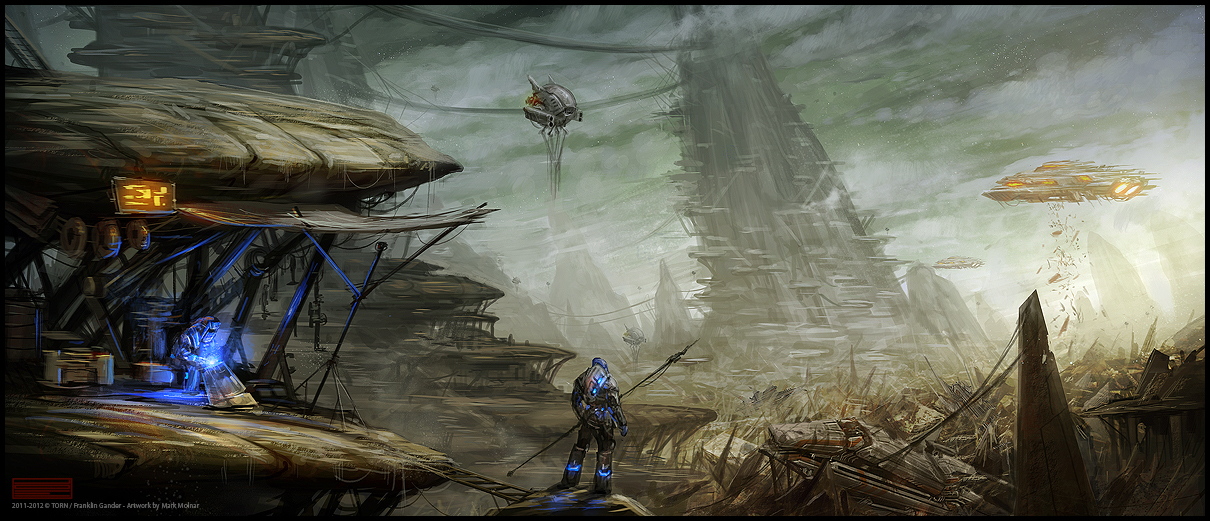
Junk World by Mark Molnar

For today’s Patreon post, I’ve finished off my series on Insurgents by letting you, my dear Patreons, design the Rebellion of Grist, via a series of polls, including who leads the rebellion, what their great assets are, their great weaknesses, and what sort of rebellion they are.  These polls are available to all Companions ($5+).  If you’re a patron, go check it out!  If you’re not, I’d love to have you.

For the rest of you, I’ve included a cultural discussion of Grist below, which is a copy of Grist’s culture from Iteration 5, which may have slipped past people unnoticed.

Support me on Patreon!

Local Color: The People of Grist

Grist is a “junkworld,” once a dumping ground for ancient civilizations and also the site of several major battles. Now, the denizens of the polluted world dig through the discarded remains of bygone eras in search of treasure or artifacts.
Grist is populated primarily by humans and a race of mutants that are well adapted to the more toxic parts of the world. It’s not a truly distinct culture, but differs in a few small ways from the galactic standard culture. Namely, it tends to celebrate innovative solutions and clever discoveries (Cunning) and rugged survival on a harsh world (Independence).

Language

The people of Grist have a unique accent, “Gristy.” It is non-rhotic, in that they tend to skip the final R sound of a word. They often add diminuitives or vowel sounds on the ends of their words anyway, especially nouns, as in “Hand me that wrenchie over theya, will ya, hey?” They often “pronounce” questions with “hey?” at the end, especially if it’s a rhetorical question or one where you want to emphasize that you already know the answer (“You can loan me some credits, hey?”). Finally, they have two words unique to Grist: “Dugga,” which is a term of respect for fellow scavengers, and “Gef” or “Geffy” which means “Off-worlder” or “Client,” though it has negative connotations, and some Gristians prefer to shift to the more polite galactic standard of “Sir” or “Mister” which are inevitably pronounced “Sirah” or “Mistah”. Gristy is a low-prestige accent, the accent of the uneducated working-louts of Grist. Those who leave the world (like Dun Beltain) do their best to shake the accent, but some of them keep it, so they can use it when they get back home.
Gristy might sound something like this “Hey dugga! I got a crazy geffy that’s askin’ fo a spaya hypa-drive. You got one, hey?”

Cuisine

Grist is sufficiently industrialized that it has food paste regularly served from spigots or in packets. Most scavengers bring in their daily find and either exchange it for credits, or exchange it directly for food. Food paste is cheap and plentiful. Interesting flavors aren’t. Thus, smart entrepreneurs make a living out of finding local food they can serve up.
Street vendors often carry smoked “scuttle-rat,” a ubiquitous, chitinous vermin about the size of a small dog. When properly smoked and pried free of its shell, it has a soft. lobster-like texture and a smokey, ham-like taste. Most vendors will leave it in the shell when selling it (to keep it better preserved), and carry it on strings or chains danging from a coat. Their smell and the thump of bouncing scuttle-rats on their bodies tend to announce their presence, as well as their opening of their coats to show their haul and saying “Kido, you want a scuttle-rat, hey?”
The water on Grist is absolutely not safe to drink. Gristians will either purify it (or better, get it off world), and the purified water is sometimes referred to as “Geffy water.” Given its expensve, Gristians who want to flaunt their status often make a point of drinking crystal clear water, and might even spend a great deal of money tracking down pristine water imported from interesting worlds. The rest tend to get their liquid from “sludge-wine,” an alcoholic slurry made from rarified food paste and until it looks a thick black (or more rarely, brown or green; one community is very pleased with their luminescent green sludge-wine). It contains plenty of liquid and nutrients and has been through a distillery enough to ensure that any toxins have been removed and has sufficient alcoholic content to kill any bugs in it.

Games

The people of Grist love adventure and a chance to show off how scavenging skills. They do this with yearly Scavenger Runs. A community will design an obstacle course and place some high value parts therein, and the object is to find such a part and return with it. Generally, the part is at the far end of the obstacle course, but the observant or the clever might notice a way to short-circuit the race by getting the part early. Otherwise, the participants need to make it past all obstacles, get the item, and return with it before anyone else. This is generally a test of Observation, Scrounging and general parkour skills or, for really big courses, vehicular skills. Violence is frowned upon, but characters with decent levels of Games (Scavenger Run) can know how much they can get away with, and under what circumstances it’s alright to accidently bump another contestant off into the sludge.
Most communities will maintain their own course, and particularly adept sportsmen will go from community to community (which often stagger their yearly scavenger runs to allow for the most interesting participants to make it). The sport is definitely filmed and broadcast into nearby homes.

Insurgency Summary and Retrospective

When I started writing the Insurgency, I really had no idea where to start.  I had to dig around.  How are rebellions fought?  What are some good examples of rebellion?  What popped out, and I hope this doesn’t reflect too badly on my material, were terrorists, from the IRA to the Taliban to the Vietcong, which served as the primary resources for my material, plus general discussions on how guerrillas win wars, and a look at the French Resistance.  I didn’t use more classic inspirations, such as the American Minute Men or the various rebellions of the Americas, primarily because the technology, and thus the needs of war, differ so much.

One element that I find fascinating about the whole affair is how few changes I had to make to get these elements to fit into Psi-Wars.  Perhaps I’m not thinking about the technological differences enough, but I happen to think that’s the strength of Psi-Wars: as it’s essentially modern action thrillers with a thin, space opera veneer, our rebels don’t use molotov cocktails and clubs, but plasma cells and neurolash batons, but otherwise everything looks very similar.  I think you have to knock the setting for originality, but at least give it marks for ease of entry.

The hardest part of this exercise was the realization that there’s no such thing as a “typical” insurgency.  The Vietcong, French Resistance, Taliban and IRA all fight very differently, so your insurgency should fight very differently from my insurgency.  When I hit upon the design of four arbitrary “types” of insurgency, though, that made it work well in my mind, as well as a “grab bag” of various insurgent characters and tactics that you could grab for designing your own.  When I worked on the Empire, I came up with “Tactics” to help me sort out my thoughts on how the Empire fought.  I had initially dismissed doing the same for insurgencies, as they all fight so differently, but then I realized I could show those differences, use them to contrast.  The result is, perhaps, a bit long, but hopefully useful in giving you, my dear reader, how an insurgency might conduct itself and why it might actually be a serious threat.

So, how are we doing? Is the insurgency useful, appropriate and fitting?  Let’s take a look, with a bonus “Insurgency Summary” for those who want to jump right in.

A Guerrilla Retro

As I’ve said before, I have three major target audiences: Star Wars fans who are open to something different, GURPS Sci-Fi fans looking for ideas, and people who just want to game and are willing to borrow whatever they can get.
I think the Star Wars fans might find this either the hardest or the most interesting part, depending on their perspective.  I’ve tried to take a carefully neutral tone when it comes to morality, not because I am loathe to pass judgement, but because I don’t know what sort of game you’re going to run.  Traditionally, Star Wars is about heroic rebels fighting off an evil Empire, and some of this has slipped through into my wording of both the rebellion and the empire, but I know many people (myself included) like the Empire, and I would feel it a failure if the Empire wasn’t playable.  So, in addition to heroic Freedom Fighters, I’ve added the wicked Terrorist as an insidious opponent for heroic Security Agents to defeat, and the more morally uncertain anarchists and ideologues, whose nature depend very much on what you choose to do with them.
But this is also a reflection of the fact that the rebellion of Star Wars just doesn’t work.  The franchise wants it both ways, with desperate heroes barely surviving imperial onslaught after onslaught, trying to gather supplies and constantly on the run but at the same time having secret bases, numinous figures like Mon Mothma, and huge cruisers and squadrons of fighters.  Mountain insurgents who make deals with arms dealers do not, as a rule, have their own aircraft carriers complete with jet fighters that are a match for the jet fighters of the USAF!  I’ve only really seen insurgencies handled properly twice: in Rogue One (especially in that the Jeddah insurgents were diplomatically at odds with the “core” of the rebellion) and in the fifth season of Clone Wars, which introduced Saw Gerrera (I’ve just started Rebels).
So, our insurgencies couldn’t look anything like what we see in Star Wars, because Star Wars doesn’t really deal much with insurgencies, despite its bold “rebellion” advertising.  The result must necessarily be different.
The sci-fi fans might be disappointed that my material doesn’t really include that much sci-fi ideas, though the Anarchist insurgency is riddled through with cyberpunk ideas that you could certainly borrow for your games.  Still, I found it extremely enlightening for any Action game.
It doesn’t grab-and-play quite as well as the Empire does, for my “GURPS fans who don’t want to do any homework,” but it is somewhat grab-and-play.  You’ll need to devise your own insurgency, but that shouldn’t be too hard.  Hopefully, the material is obviously usable and thought-provoking, and I think it is, but I had some pushback on Imperial Intelligence and Imperial Black Ops for being too sparse on details: what’s obvious to me isn’t always obvious to my readers, so we’ll see.
That lack of hard detail likely hurts all four of our “typical gamers,” from Willow (“But what do they fight for?”) to Bjorn (“But what cool stuff do they have?”) to Desiree (“But why does my character care?”), though Brent probably understands “Insurgents, fighting the Empire, right, got it.”  For all of these, you need to bring your own level of simplicity and complexity.  It’s up to you to pick a world, design the insurgency and create their context in the world.  I think a few worked examples will help, and I’ll work on one with my Patrons, but the rest will have to wait until I have worlds to populate with insurgencies, which will happen later in the iteration.
So, by and large, I’m pleased… but I think I need to see this in the hands of players before I’m convinced its the right approach.

The Rebel Insurgency: Summary

Many who suffer under the oppression of the Empire, or who watch that oppression fall upon the shoulders of the innocent, can no longer stand idly by. They take up arms and fight the Empire from within the Empire. They resist with words, speaking out against the tyranny of the Empire so others know they are not alone. They resist with sabotage, undermining the Empire’s military-industrial complex with sabotage and well-placed bombs. They resist with arms, laying bombs before the convoys of the Empire, or assassinating its officials with sniper rifles or holdout blasters, or mounting full-scale insurrections with guerrilla armies.

Despite their best efforts, insurgencies amount to little more than behind-the-lines commando actions at best, and no single insurgency has managed to collect more power than a few star systems under their belt. Insurgencies need to coordinate with one another to achieve any kind of success or, better, to coordinate with an outside power, such as the old Houses of the Federation or alien powers willing to wage war upon the Empire, like the Cybernetic Union.

Unfortunately, no single, unified insurgency exists. Each group bands together for their own reasons and have their own agenda. True Communion Fundamentalists fight for total dominion of the peace and unity their faith offers; Cybernetic sympathizers fight for the total liberation of robots; veterans of the old wars fight for a return to the honor of the Federation; and some rebel insurgencies either had no honor to begin with, or slowly lose it over time and become little different from criminal organizations and roving bandits. Only hatred for the Empire unifies these disparate groups, but with careful diplomacy, a hero might temporarily forge these fractious factions into a single fighting force capable of paralyzing the Empire for long enough for its enemies to strike and unseat the wicked Emperor.

The insurgencies of Psi-Wars break down into four broad types:

  • Anarchists, who fight against the Empire for the sake of fighting. They love to stir up trouble, to tweak the nose of arrogant officials, and to reveal Imperial hypocrisy to the world. They prefer to rile up populations, to sabotage the Empire, and it steal its secrets.
  • Freedom fighters, who fight against the Empire because they cannot stand its oppression. They tend to be common people or old veterans pushed too far by Imperial injustices. Now, they fight to restore what they see as right and proper. They tend to see themselves in militaristic terms and focus their fights directly on the Imperial military, rather than on its civilians.
  • Ideologues, who fight for a particular ideal with fanatical zeal. They might be religious fundamentalists, or determined patriots fighting for the survival of their species, or they might be philosophical die-hards. They prefer to preach their particular philosophy, to weed out the unworthy through targeted assassination, and then die martyrs to their cause.
  • Terrorists claim to fight for any of the above reasons, but in practice fight only for the sake of power. They seek to replace the Empire’s injustice with their own or, at best, they’re willing to go to any lengths, no matter how extreme, to enact the justice that they see the galaxy needs. For them, no target is forbidden, and none are innocent. Their preferred weapons are terror and crime, and they embody the propaganda the Empire promulgates to tar the whole the rebellion.

Playing an Insurgent

Members of an insurgency must have Criminal Rank [0] and Secret (Rebel, Imprisonment) [-20]. Rank 1+ members must have Duty (12 or less, Extremely Hazardous) [-15] or better.
Insurgents typically have specific disadvantages that emphasize their focus on a particular ideology; that is, why they fight. Members of a specific insurgency may add the following to their template’s disadvantage options.

Anarchists: Bad Temper [-10*], Impulsiveness [-10*], Intolerance (Authority Figures) [-5], Overconfidence [-5*], Pyromania [-5*], Stubbornness [-5], Trickster [-15*].

Freedom Fighters: Charitable [-15*], Code of Honor (Soldier’s or Rebel) [-5 or -10], Gullible [-10*], Pacifism (Cannot Harm Innocents) [-10], Sense of Duty (Comrades or Specific community) [-10]

Ideologues: Disciplines of Faith (Any), Fanaticism (Rebel Cause) [-15], Hidebound [-5], Intolerance (Non-Believers) [-10], Selfless [-5*], Sense of Duty (Nation) [-10],

Terrorists: Bloodlust [-10*], Bully [-10*], Callous [-5], Greed [-15*], Jealousy [-10], Selfishness [-5*]

Preferred Templates

Insurgents tend to be Commandos (Freedom fighters, Terrorists), Spies (any, but especially Anarchists and Ideologues), Assassins (Terrorists and Ideologues), Smugglers (any!) and Scavengers (Anarchists and Freedom Fighters). Mystics work particularly well for Ideologues focused on a specific religion or philosophy.

Insurgents, by their very nature, tend to be Outcasts. They come from the edges of society and experience the full weight of the Empire’s injustice. Escaped Slaves, especially if they came from an Imperial work camp, definitely have a bone to pick with the Empire and happily join insurgencies. Survivors can represent characters who spent a great deal of time in the wilds of some world evading Imperial justice and now take the fight against the Empire. Wanderers tend to have less of a specific problem with the Empire (they can just pick up and move), but their high mobility makes them excellent assets and contacts for insurgencies. Finally, most characters with Humble Origins have no bone to pick with the Empire, but a few might want to stand against the Empire on principle, and often either end up joining Freedom Fighters or naively find themselves in the hands of terrorists.

Insurgent Power-Ups

Most Insurgents take the Heroic power-up, with emphasizes their sheer pluck. Veteran insurgents might have the Experienced power-up. Some Insurgents have Cybernetics or Psionics, depending on their ideology, though neither are explicitly emphasized by insurgency.

Agent Provocateur 25 points

Insurgents aim every attack, protest and riot directly at public opinion. An insurgency cannot possibly hope to win by defeating the much larger, more dangerous Empire. Instead, they hope to turn enough of the public, or enough key personnel, against the Empire that it becomes easier for the Empire to accommodate the rebel wishes, rather than continue to fight.

In pursuit of this, Insurgencies often use Agent Provocateurs, charismatic (or sleazy) preachers who exhort their cause to the public. All exceed at making grand speeches, but some focus on persuading individuals to join their cause, while others focus on broader political opinion.

Traits: Choose one of Charisma 3 [15] or Smooth Operator 1 [15]; Public Speaking (A) IQ+1*† [4]; Choose three of Acting†, Fast-Talk†, Propaganda, or Streetwise† all (A) IQ [2], Diplomacy† (H) IQ-1 [2], Carousing† (E) HT+1 [2], Sex Appeal† (A) HT [2], or Observation (A) Per [2], or improve any of the above by one level for an addition 2 points.

* Add +3 if Charisma is chosen.

† Add +1 if Smooth Operator is chosen.

Clandestine Insurgents 25 points

Insurgents must remain undiscovered to survive. They make use of drops, they vanish into crowds, they know how to secret weapons and messages on their person. In short, they’ve mastered the art of “tradecraft.”

Traits: Choose one of Foresight (Ambush, Getaways, Loyalty, or Swaps) [5]; Choose four of Filch (A) DX+1 [4], Acting, Forgery, Holdout, Shadowing or Smuggling all (A) IQ+1 [4], Observation or Urban Survival both (A) Per+1 [4].

Counter-Interrogation Training 15 points

Insurgents always expect to be captured at some point; the wisest prepare for that inevitability by practicing evasion, escape and counter-interrogation tactics. The best even allow themselves to be captured, just so they can get an idea of what the enemy wants, or to bring themselves into close contact with the enemy so that they can persuade them to switch sides!

Traits: Will +1 [5]; Lockpicking (A) DX [2]; Choose two of, Acting, Fast-Talk, Holdout all (A) IQ+1 [4], Observation (A) Per +1 [4], Mind-Block (A) Will+1 [4], Meditation (H) Will [4].

Munitionist 25 points

The insurgent has trained in building explosives, armor or weapons from nearly anything, often a feature of insurgencies that cannot rely on outside assistance.

Traits: Gizmo 1 [5]; Explosives (Demolition) (A) IQ+2 [8]; Scrounging (E) Per+2 [4]; Choose two of Armoury (Body Armor or Small Arms), Electrician, Machinist, Mechanic (Hovercraft), Streetwise, or Traps all (A) IQ+1 [4] or Chemistry (H) IQ [4]

Elite Munitionist 25 points

Prerequisite: Munitionist

The cinematic insurgent can rain destruction upon his foes if you give him 20 seconds and access to assort office supplies. Elite Munitionists represent these sorts of cinematic heroes, able to construct weapons from nearly anything,

Traits: Quick Gadgeteer (Munitions -50%) [25];

Rogue Agent 25 points

Coordinating an insurgency often proves the most difficult task. Many insurgent leaders deploy elite “rogue agents,” though their names vary from insurgency to insurgency (“Apostles” or “The Black Hand” etc). These answer directly to either a high-level commander, or the leader himself, and go out among the insurgency, offering spot assistance and checking to see if everyone is truly faithful to the cause.

Traits: Criminal Rank 4 [20], Security Clearance (Insurgency) [5]

Insurgency Traits

Quick Gadgeteer (Munitionist -50%): Munitionists may use Quick Gadgeteer to build, invent or improvise any explosives, small arms and body armor. Any attempt to build “Dirty Tech” explosives, small arms or body armor gains a +5, and uses the Quick Gadgeteer invention rules rather than listed rules; all Dirty Tech automatically counts as “simple.”

Code of Honor (Rebel): Only attack military targets or collaborators, never unassociated civilians. Never leave a fellow rebel behind. Die before you betray your cell. If necessary, sacrifice yourself for the rebellion. When the conflict has finished, put aside your weapons and return to civilian life. -10 points.

Insurgency Tactics

Unlike the Empire, insurgencies do not have a single, cohesive doctrine. Each has their own strategy, approach and tactics. Thus, the following list of tactics represents suggestions of tactics and agendas that an Insurgency mightuse to fight the Empire. No insurgency will use all tactics, rather, they are offered so that a GM can pick and choose from among them when designing his insurgency movement.

Each contains common insurgency types associated with the tactics. These are offered only as suggestions, to allow a GM to pick an insurgency type or two and quickly get an idea of how it might operate; GMs who wish to mix and match strategies and ideologies are free to do so! Each tactic also contains a list of suggested contact skills, which represent the sort of training necessary to carry out the tactic. Consider adding some of these to an insurgencies contacts or personnel.

Bedlam

Common Insurgency Types:Anarchists and Terrorists
Common Contact Skills: Explosives (Demolitions), Forced Entry, Mechanic, Throwing.

Few things disrupt a society like the sudden and total disruption of their peace. For some insurgencies, this is the whole of their goal: proving the ineffectiveness of the Empire at keeping them safe and demanding change in exchange for freedom from terror and chaos. For most insurgencies, though, bedlam is a form of distraction, a way of keeping the authorities busy while the insurgency gets on with more important matters.

Bedlam requires bombs. Some insurgencies will steal or rent hovercars, rig them with bombs, and park them in the city. Others will simply rove through the city with pockets full of weaponized c-cells or other explosives and plant them in interesting locations. On the appointed hour, they’ll blow their bombs. This is usually simultaneous, but some organizations gain great mileage out of staggered explosions, or even having multiple bombs in the same area, so that when first responders arrive to help the injured, the second bomb can hurt themtoo!

Once the bombs have been set off, some particularly aggressive insurgencies rove the chaotic streets, attacking civilians or authority figures. This is particularly popular if they’ve already incited a riot (above).

Box Ambush

Common Insurgency Types:Freedom Fighters and Terrorists
Common Contact Skills:Explosives (Demolitions), Tactics.

If an insurgency wants to hit a mobile convoy, a column of troops, or get at a target in a moving vehicle, some use a “Box Ambush.”

First, the insurgency insurgency needs to know the target’s route, the general area and ideally the composition of its guard. The insurgents must prevent the target from simply escaping during the attack, and so looks for some location with an obvious ingress and egress that can be blocked off, and with walled-sides, such as a narrow alleyway, a bridge or a canyon. If they cannot find such a location on the route, then they must find a way to change the route, either via people on the inside rerouting the convoy, or with sabotage that forces a detour.

Once they got their location, they need to block the entrance and exit. The exit can be blocked with a simple blockade, provided that this isn’t sufficiently obvious that the target is warned before going into the “box.” for example, the alley or canyon has twists and turns so that the blockade isn’t obvious until the convoy is already inside. Alternatively, the insurgents plant mines at both ends: when the convoy reaches the exit, the insurgents blow up the first vehicle, blocking the exit with burning wreckage, and then do the same at the exit, blocking the convoy in. Those with heavy vehicles may instead, suddenly move their vehicles into the entrance and exit; this has the added advantage that it can happen nearly anywhere: insurgents with access to large vehicles can swoop in to block a vehicle on all four sides.

Once they have the vehicles blocked, they erupt from their hiding places. Insurgents place forces at both the entrance and the exit, opening fire to prevent people from approaching either exit. From above or to the sides, the force unleashes its snipers or rocket-armed soldiers. Some groups also place anti-personnel mines in the center of the “box” and once security personnel or soldiers have disembarked to fight back, they blow the mines.

Caught in a four-way cross-fire, most convoys or targets simply die. However, hardened security or military vehicles might stand up to the fire and call for reinforcements. After the initial barrage, the rebels will usually quickly depart, ending the attack almost as quickly as it began.

Incite Riot

Common Insurgency Types:Anarchists and Ideologues
Common Contact Skills: Current Affairs (Local), Observation, Propaganda, Public Speaking, Streetwise

Insurgencies often need to incite riots, in the least to remind the people of the need to fight, but often as a distraction for a larger operation.

Riots do not arise in a vacuum. They require some grievance from the populace. Characters with Area Knowledge might already know of a common grievance, otherwise, the character might need to uncover something irritating the people. Current Affairstells the character of any unusual recent events that might stir up the people, and Streetwise gives the character the “word on the streets.” If no grievance can be found, one can generally drummed up with a Propaganda campaign, which can stoke existing tensions to a breaking point.

Once a grievance has been found, the insurgency needs a large crowd. They can arrange for some kind of event (Propaganda, again), or they can look for an existing event (a sporting event, a parade, a speech by an imperial official). Then, at that event, the Insurgents can attempt to incite the people to riot. A quick survey of the crowd tells the insurgent if they’re ready to riot (Observation or Per-based Public Speaking). If the possibility exists, the character can make a Public Speaking roll, with a bonus or penalty depending on the mood of the crowd, +1 to +4 if they have a legitimate greivance and +2 if the propaganda campaign succeeded. Success opens the floodgates of existing animosity.

The Empire often defends against this by placing large numbers of riot troopers between the citizens and any event arranged by the Empire. While the Empire intends to prevent riots before they start, this show of force can have a detrimental effect, especially if the Empire suddenly opens fire on its own people. Insurgencies can use the same mechanics for inciting a riot to put imperial officials on edge. Once the imperial troopers become convinced that it’s “us or them,” then the insurgents have only to mask up, draw weapons and attack. If they do it from within a crowd, the Empire won’t know who started it, and will lay into the entire crowd, which will turn a previously peaceful event into a full-blow riot.

Hostage Crisis

Common Insurgency Types:Terrorists
Common Contact Skills:Diplomacy, Electronics Operation (Media), Explosives (Demolition), Intimidation

Some insurgents want to strike home just how vulnerable the populace is, and how helpless the Empire is to help them. They choose a well-populated environment that they can reasonably secure. Then, they simply march in (usually without visible weapons or armor), close all the doors, and open fire until they have everyone’s attention. They’ll secure each hostage, usually using electronic cuffs or cuff tape.

Insurgents who wish to take hostages usually bring two additional tools. The first is a bomb of sufficient size as to seriously damage, or destroy, the building. The second is a holo-cam that they can use to film the proceedings. Once they have the bomb set up (usually deep in the heart of the building, set to a dead-man’s switch), they’ll begin to film the hostages and send out information about the affair to the outside world, and open up lines of communication with the Empire (or other local authorities) to negotiate for their release.

The point of the hostage crisis is theater. If the Empire is cold and refuses to negotiate (as is usually the case), then the insurgents record this and send it out as proof that the Empire doesn’t care. If the Empire tries, instead, to negotiate, the insurgents can use this as proof of imperial weakness. Meanwhile, every sobbing hostage is carefully filmed and holograms of the atrocity sent out to terrify the populace; terrorists then drag a hostage up and executem them for dramatic impact when necessary.

The hostage takers constantly face the danger of reprisal. A complete cell typically takes on the task, with the cell leader handling negotiations, and at least one handling the filming. The remaining split their duties between roving among the hostages to check for escape attempts or to silence conversation, while others, carefully away from the windows to frustrate snipers, keep an eye on how the Imperial response unfolds.

The end-game of a hostage crisis is the trickiest part, and many young insurgencies neglect this and die. Smarter insurgencies coordinate with other cells. First, they might have a hidden escape route that they can use to escape once they’ve received their demands or (more likely) when it’s clear that the Empire intends to attack. During the latter scenario, the insurgents blow the bomb after they’re clear, killing the hostages and many Imperial security agents. Alternatively, they’ll have other cells positioned in the area as snipers and attackers, or they’ll arrange for some distraction (see Bedlam or Sabotage for examples). Once the Empire is in position to attack, the other cells ambush the Empire, causing sufficient confusion that the insurgents can make their escape and, again, blow the building.

Mobile Strike

Common Insurgency Types:Anarchists and Freedom Fighters
Common Contact Skills:Pilot (Contragravity), Tactics.

If an insurgency wants to hit a mobile convoy, a column of troops, or get at a target in a moving vehicle, some use a “Mobile Strike.”

The insurgents need to either know the target’s route, or they need to find him and trail him. Once the target reaches a stretch of relatively open road, moving at speeds that make a quick stop to fight a treacherous one, the insurgents speed up and intercept.

Treat this as a Chase Scene. The insurgents make Moveor Move and Attackrolls while their passengers simply make Attack rolls, preferably using pistols, assault blasters and missile launchers. The ideal situation is to catch directly up with the target vehicle (that is, travel along side it) and open fire on the occupants. Alternatively, especially if the insurgents have access to heavy vehicles, they’ll Forcethe target vehicles into a dangerous situation (such as off a bridge), or towards a Box Ambush.
Once the attack is complete, all the insurgents have to do to escape is drive in a different direction from the authorities, as they’re already at full speed and in full motion.

Sabotage

Common Insurgency Types:Anarchists and Freedom Fighters
Common Contact Skills: Computer Hacking, Electronics Operation (Electronic Warfare, Security, Surveillance), Explosives (Demolitions), Forced Entry.

Rather than inflict damage on random civilians, some insurgencies prefer a more carefully targeted approach, directly hitting onlywhat they want to hit. This professionalism tends to intimidate the Empire more, and does nothing to harm the image of the insurgency. It requires superior infiltration and demolition skills, however. This is rarely done “for its own sake,” but in coordination with some other action. The most common targets for sabotage are surveillance systems, propaganda machinery, the power grid and military infrastructure (especially defense systems).

First, the insurgents must gain access to the system they wish to undermine. They use a variety of techniques from GURPS Action, but far the two most common are either directly storming the facility or subverting a target. If directly storming the facility, heavily armed insurgents simply kick in the doors and open fire on the security forces inside. This works best when attacking poorly defended facilities (such as propaganda studios, rather than planetary shield facilities). Alternatively, they find someone “on the inside” who has a grievance against their employers, and then Subvert them. When it comes time to sabotage the system, the traitor simply holds the door open for them.
The most common means of sabotage is simply to blow a well-placed charge or, alternatively, to place an EMP round a strategic location. Alternatively, once on the inside, the insurgents can access central Imperial computers, where they can directly hack into them to take control of them. Some insurgents particularly enjoy uploading propaganda messages up onto the Empire’s own mass screens and holograms, subverting their message.

Either way, the Empire will soon be alerted to the attack. The entire sabotage event must complete in minutes.

Targeted Assassination

Common Insurgency Types:Ideologues and Terrorists
Common Contact Skills: Observation, Shadowing, Stealth.

Rather than create a huge, paramilitary assault to get at a single target, some insurgencies prefer greater levels of stealth. This makes the attack more difficult to prevent, and creates the perception that anyone, anywhere, can be killed, and often avoids the collateral damage of more extreme attacks.
The ideal of a sniper taking his target out from hundreds of yards away, or slipping directly into the target’s house at night, evading all security systems and then slitting the target’s throat, are beyond the skill of most typical insurgents. Instead, they prefer to use blasters (especially blaster pistols or holdout blasters), grenades and blades.

Most assassins case their target (Observation and Shadowing). Once they know their target’s routine, a team of assassins will arrange themselves in the target’s path, or make their way to the target (say, at the cantina where he enjoys his lunch, or to his office) while wearing plainclothes. Once they have their target surrounded, they’ll spring into action, opening fire from a relatively close distance (less than 10-20 yards), or closing in to stab their target or, for insurgencies that care nothing about civilian casualties, by tossing grenades at their target.

The attack takes only seconds, and once they’ve finished the attack (success or failure), they immediately disperse.

Coordination Tactics

Clandestine Cells

Suggested Insurgency Types: All
Common Contact Skills: Filch, Observation, Smuggling

If an insurgency leader wishes to coordinate his entire insurgency, he must issue orders via a carefully isolated hierarchy. He divides up his “big picture” strategy into parts, and gives each part of his strategy to one of his commanders. His commanders each command a team of agents, and they further break up the orders they have into tasks and give them each to one team. These teams run cells, and they divide up their orders and give specific instructions to each of their cells.

Each member of a cell knows his direct superior and his direct subordinates (that is, a cell leader knows his controlling officer and his cell members), and everyone in a particular unit knows one another but nobody else (all members of a cell know one another, but of no other cells). This isolates groups from one another so that if one part of the organization is compromised, the other parts of the insurgency survive.

This approach is by far the most common. It protects the organization from infiltration and betrayal, but it demands total loyalty of subordinates, who have no “greater picture” to explain why they need to do what they do. It can also break down if vital links between organizational elements die or are captured. For example, if a cell leader is killed in combat, who contacts the controlling officer?
Individual cell members know each other and can communicate in person or via common means (wrist comms). Between vital, organizational links, communication occurs via either the use of predefined communication devices that they only use for that purpose (for example, a dedicated holographic communicator), or an agreed upon drop site where the cell leader can pick up his orders and drop off his reports. To prevent a total break down should a cell leader be compromised or his means of communication broken off, all members of both sides of an organizational link (that is, all members of a cell and of a controlling team) know of an “emergency drop site” where new communication equipment or orders will be dropped of in case of emergency. This site is more vulnerable to interception (if Imperial Security nabs a single member of a cell, they’ll learn of the drop site), so it tends to change from time to time, and it never takes precedence over the standard means of communication; it is only to be used in times of emergency.

Flash Insurgency

Suggested Insurgency Types: Anarchists and Ideologues
Common Contact Skills:Propaganda, Teaching

Some insurgencies prefer to avoid the fragile bonds of cell structures by creating a far more robust, but far more difficult to control, decentralized structure. In this version, a leader directly commands a small cadre of agents who act as provocateurs, advisers and trainers. Instead of issuing direct commands, the leader and his cadre create training material, contact points and strategic suggestions. They then disseminate them. Agents might directly bring this information to known sympathizers, or they might create temporary “flash” documents on the data-net, or they might spread “black data chips” with the information.

Whatever form they take, the information provides details to whomever reads them on how to engage in insurgency, in method, means and goals. Those who follow the instructions soon learn how to build bombs, acquire weapons, and what vital weaknesses in the Imperial command structures might be. The information usually includes illicit ways of maintaining anonymous contact with one another, such as bulletin boards or graffiti tags; a common trick is to create a data-net account and store “drafts” of documents on it, and then disseminate the account information. Members can log in, read and write drafts that contain vital information, and then delete the drafts when finished; this means no information actually passes over the data-net for security to intercept.

The result is an amorphous mass of resistance that’s difficult for Imperial Security to pin down, as it has no hierarchy, no command structure, to dismantle. As long as the information spreads, like a virus, rebellion ripples in its wake. Even coordination occurs, albeit spontaneously, as various isolated groups find ways to contact one another and forge temporary alliances.

This approach has several downsides. Namely, the leader can quickly lose control of his own movement; most leaders of such organizations either see themselves as initiators and trend-setters rather than as commanders, or they only use the chaos caused by these splinter groups as a distraction for a better organized branch of his resistance. Second, the information is very easy to intercept; agents who disseminate the information attempt to be discrete, but it only takes one bad egg to reveal the whole plot to Imperial Security. Decentralized insurgencies must always assume that their information falls into enemy hands, and thus they put nothing that can deliberately harm the organization in their sedition-how-to documents. Finally, because the training documents almost always fall into Imperial hands, the insurgency must always treat their central communication means as corrupted; the result creates an instant tension between cells, as no cell knows which communication they can trust. Decentralized organizations take all such communications with a grain of salt, and this creates an ever-evolving internal lingo as insurgents learn to read between the lines and to say what they want to say without outsiders picking up on their true meaning.

Irregular Command

Common Insurgency Types: Freedom Fighters and Terrorists
Common Contact Skills:Leadership, Soldier

If an insurgent leader can bring enough of his fighters together to form an army, he can command his fighters directly. Insurgencies which follow Irregular Command structures behave like military organizations, except they keep all commands close and personal. Most leaders have a cadre of elite agents as well as strategic commanders. Commanders directly command their soldiers, often in meetings wherein he can see each and every person to whom he gives information, while agents go out and give commands to more distant sections of the organization and enforce the will of the leader. Irregular militaries do use communication equipment (especially wrist communicators or dedicated holographic communication), but expect regular “meet-ups” to discuss major strategic initiatives.
Irregular command is more difficult to infiltrate than most other coordination forms, but once infiltrated or compromised, the lack of compartmentalization can inflict a great deal of damage. Insurgencies that prefer this method operate beyond the reach of the Empire, usually in rural areas, and have sufficiently large numbers that they can begin to act as cohesive military forces.

Supply Tactics

Criminal Enterprise

Common Insurgency Types:Anarchists and Terrorists
Common Contact Skills: Freight Handling, Merchant, Smuggling and Streetwise

An insurgencies weapons and supplies need to come from somewhere. Some insurgents cultivate contacts in the criminal world and directly buy their weaponry. Agents need to get to the location (usually off-world), find a seller, negotiate for a decent price, and then make the exchange and then either return with the weapons (which requires Smuggling), or arrange for a trusted courier to deliver the weapons. This works best when the insurgency isn’t directly under the eye of the Empire, or when the insurgency operates in an area rife with crime.

Naturally, the insurgency needs to be able to pay for their equipment. The money can come from anywhere, but given that insurgencies that buy from criminals have already cultivated contacts in the criminal world, most such insurgencies turn to crime to pay for their weapons.

From On High

Common Insurgency Types: Freedom Fighters and Ideologues
Common Contact Skills: Diplomacy, Savoir-Faire and Smuggling

Rather than purchasing or crafting one’s weapons, insurgencies can ask for donations. This typically involves going to a larger political power (most often the Houses of the old Federation) and pleading your case. If the political organization is amenable to your plea, they may agree to supply your insurgency or even assist you in your fight, but they alwayshave conditions that, if allowed to go too far, turn the insurgency into the arm of the political body. Some insurgencies do not mind this and, in fact, already wanted to work closely with this larger body, but for those who fight for indepedence, this often involves a deal with the devil.

Once the deal has been closed, the larger political organization usually handles the details of delivery.

Home-Made Munitions

Common Insurgency Types:Anarchists and Ideologues
Common Contact Skills: Armoury (Body Armor, Heavy Weapons, Small Arms), Chemistry, Electrician

Reliance on outside organizations, whether they be criminals or political entities, always opens an insurgency up to betrayal, and too often, the insurgency finds itself on its own. So, rather than rely on outsiders, the insurgencies builds its own weaponry and, especially, bombs.

This requires access to fabricators and parts, which still requires swaps, trades and scavenging, but tends to alert the authorities less quickly to your intentions than trying to get through customs with your ship’s belly full of missiles. It also requires extensive training, making it more popular with decentralized flash insurgencies or irregular paramilitary groups. The resulting weapons tend to have distinctive signatures and appearance, meaning that the Empire will never mistake who engaged in an attack.

Imperial Loot

Common Insurgency Types:Terrorists and Freedom Fighters
Common Contact Skills:Electronics Operation (Security and Surveillance), Forced Entry, Lockpicking

Why hunt for weapons when you’re presented with weapons everyday in the hands of Imperials?These insurgencies regularly fight and kill Imperial soldiers, and regularly raid their bases, giving them access to their armories. Once they’ve finished, they simply take the Imperial weapons with them, which means every successful attack leaves the Empire weaker and the insurgency stronger.
The Empire quickly picks up on this sort of tactic, especially when it realizes it’s fighting enemies with Imperial weaponry and armor, and so begin to booby trap their equipment with tracking devices. Insurgencies who use this tactic must remain constantly vigilant against any such tricks. They also have to find ways to differentiate themselves from Imperials: if your insurgency all wear imperial armor and wield imperial carbines while fighting imperials in imperial armor and wielding imperial carbines, friendly fire becomes much easier! Thus, they need to not only eliminate any lingering security traps, but they need to personalize the gear so that it stands apart from Imperial equipment.

Influence Tactics

Blackmail

Common Insurgency Types:Anarchists and Terrorists
Common Contact Skills: Fast-Talk, Diplomacy, Intimidation.

Why rely on the good will of others? Instead, some insurgencies prefer to expose the hypocrisy of the Empire, or to simply turn that hypocrisy against itself. The insurgency seeks evidence of wrong-doing on the part of a useful target or, if none can be found, manufacture some (common examples include having an attractive woman suddenly kiss a married target while capturing the moment with a holo-cam, or smuggling illegal goods past a lazy customs official, then depositing credits in his account to make it look like he was bribed). If neither of these can be done, they can also kidnap someone beloved by the target.

Once the secret has been uncovered or manufactured, the insurgents reveal the evidence they have to the target and make a Diplomacy or Intimidation roll to either negotiate or demand compliance, with a bonus equal to how severe the secret is (typically a bonus worth 1/5th the value of the Secret) or how beloved the target is and a penalty based on how extreme the demands are, in a quick contest with the target’s Will. Success forces the target to capitulate to their demands.

Brainwash

Common Insurgency Types:Idealogues and Terrorists
Common Contact Skills: Brainwash, Intimidation, Pharmacy (Synthetic), Psychology

Rather than persuade someone to assist, some insurgencies break a person down and rebuild him from the ground up.

First, they kidnap the target and bring him to an isolated location. Thereafter, they use a variety of techniques to brainwash him. Some brutalize the target whenever they do something “bad,” and reward them when they do something good, instilling a deep terror for his captors and a subconscious desire to please them; others “love-bomb” the target, encouraging a deep sense of connection with his captors, and then ostracizing him (tossing him back in a cell, taking away privileges, expressing deep dissatisfaction) when he fails to assist properly; yet others will directly address the target in hour after hour of exhausting interviews where the interviewer pounces on mistakes the captive makes and uses them to leverage deeper into the psyche of the captive and force the captive to rethink his perspective until he begins to see the world the way the interviewer wishes. Once the subject has become sufficiently submissive, he is released and given his task, to be activated later.

All such efforts use Brainwash, and some use Intimidation or Psychology as complementary skills. The right drugs offer an addition a +1 to +2, and psionic characters can directly manipulate the brain of the target for +2 for most powers, or +4 for extreme powers (like Suggestion).

Note that brainwashing in this manner is best used against NPCs as a plot device, or a way of explaining how an insurgency subverts targets.  PCs should generally be able to resist brainwashing attempts.

Preach and Protest

Common Insurgency Types:Ideologues
Common Contact Skills: Acting, Carousing, Public Speaking, Writing

Insurgents need to bring entire crowds to their side, and some do this through personal magnetism. First, they cultivate a persona(Social Engineering page 61) for a +1 to Public Speaking rolls for persuading people. Then they make a point of interacting with the average person, speaking to him, persuading him, either via the written word (in pamphlets or on the data-net) or directly in person, addressing large crowds about the evils of the Empire (Public Speaking). Success turns some portion of the crowd to the speaker’s side, and can result in an impromptu protest.

Preaching creates high-profile insurgents, which paints a target on the back of anyone who does it. Insurgencies either use this tactic naively, not realizing what the Empire will do to their spokesmen, or consciously intending to create martyrs of their preachers.

Service

Common Insurgency Types:Freedom Fighters and Ideologues
Common Contact Skills: Acting, Architecture, Carousing, Electrician, Engineering (Civil), First-Aid, Mechanic, Propaganda, Savoir-Faire

All organizations engage in propaganda, but some do so via direct service to their community. They stop and listen to the ills of the people, they make a point of expressing sympathy, they give candy to kids, they offer medical assistance and rebuild ruined homes. Some insurgencies engage in these acts out of love for their community (indeed, many insurgencies beginbecause of a love of a community, and to right the wrongs inflicted by the Empire), but successful insurgencies who engage in service seek to benefit from it, reminding the citizenry that they act in their best interests, where the Empire does not. All such acts offer a complementary bonus to Propagandarolls.

Subversion

Common Insurgency Types:Freedom Fighters and Ideologues
Common Contact Skills: Acting, Body Language, Carousing, Diplomacy, Sex-Appeal, Psychology

Insurgents need allies. The Empire is rife with disgruntled minions, citizens and officials, all of whom make excellent additions to a insurgency cell, or as a temporary ally. Those insurgents who prefer to subvert targets typically learn to flirt and chat and in what sort of circles the most disgruntled tend to travel. There, they float through and look for someone who seems particularly unhappy and chat them up. They seek both common ground (manufacturing it if necessary) and a reason the target might oppose the Empire. Once they’ve found a mark who have both traits and whom hits it off with the agent, they agent continues to build a relationship with the target over days, similar to a courtship: “accidentally bumping into them,” offering gifts, performing favors, sharing “secrets” and so on, until they feel they have earned the trust of the target enough that they can approach them with a request. This request usually combines the depth of their relationship with the anger the target feels towards the Empire to “flip” the target.

Evasion Tactics

Disinformation

Common Insurgency Types:Anarchists
Common Contact Skills: Acting, Fast-Talk, Obseration, Lockpicking.

Rather than evade the enemy, some insurgents allow themselves to be captured or, in the inevitable event that they are captured, use the opportunity to spread disinformation. While being interrogated, the insurgent does not resist questioning, but instead answers the questions directly with a careful mixture of lies and truths, constantly spinning yarns that are compelling enough that the interviewer cannot afford to dismiss them outright. The fact that the insurgent answers all questions makes it pointless to torture him, and forces the interrogator to instead focus on parsing truth from lie while the insurgent stalls for time.

The insurgent also takes the opportunity to note what the interrogator already knows, based on the direction of the questions (faking appropriate shock and fear to make the interrogator feel as though he’s in a position of strength), as well as observe what he can about the Imperial facilities. Then, once he’s done, he attempts to escape.

Endless Patience

Common Insurgency Types:Idealogues
Common Contact Skills: Meditation, Mind Block, Philosophy, Public Speaking.

In the inevitable event that the insurgent is captured, some make good use of their time in prison. When interrogated, the insurgent “shuts down.” He begins to meditate (and, if skilled enough, reaches Autohypnosislevels of meditation, giving him extreme levels of pain resistance and increased Will). This allows the insurgent to resist all but the most expert forms of interrogation and even torture in stoic silence.

Once returned to the prison populace, if word of his resistance gets out (as the frustration of the guards inevitably shows), the insurgent takes advantage of his improved visibility to preach to the gathered crowds of prisoners, spreading his ideology and his particular brand of insurgency. He may even do the same to his guards, or his interrogator, attempting to convert anyone and everyone he comes into contact with, until the Empire is forced to kill him (making him a martyr) or release him to just get hi out of their hair.

Go to Ground

Common Insurgency Types:Anarchists and Ideologues
Common Contact Skills: Acting, Disguise, Forgery, Holdout, Shadowing, Stealth

Once an operation has been completed or uncovered, it’s time to vanish. Insurgents with this strategy never rely on technology that really makes them stand out. Once the operation completes, they simply discard whatever weapons they used, or secret them on their person, ditch whatever mask they wore, and simply vanish into local crowds, becoming indistinguishable from the rest of the citizenry. This has the advantage of turning the insurgent into a needle in a haystack, but it can also frustrate the Empire enough that they start inconveniencing or attacking innocent citizens, further emphasizing their oppressive ways. This works best in large crows (Shadowing), or when the populace has a high opinion of the insurgency.

If the Empire uncovers the actual insurgency and comes to arrest its members, insurgents never keep anything more incriminating in their “base” or homes than a few easily disposable weapons, perfectly innocent technology that happens to be useful during an insurgency, and some forged ident-chips and cred-sticks. They have only to pocket anything incriminating, make a few changes to their appearance, and walk away with their new ident-chip, head to a new safe house and notify the insurgency of the crackdown.

Retreat and Regroup

Common Insurgency Types:Freedom Fighters and Terrorists
Common Contact Skills: Explosives (Demolition), Hiking, Pilot (Contragravity), Running, Survival.

Once an operation has been completed, or the Empire has discovered your larger operation, it’s time to high-tail it out of there. If they’ve finished with an operation, they’ll simply run: they’ll physically run away as quickly as they can, or either steal a vehicle or use their own vehicle to put as much distance as possible between their pursuers and themselves. This typically involves a Chase scene, where the pursued makes use of his superior Area Knowledgeto help him get away. All insurgencies of this type has an agreed-upon “regroup” point, and a maximum duration that the rest will wait.

Insurgencies that follow this tactic keep loaded vehicles in their base (or their base itself is just a set of tents and vehicles that can easily pick up and move), ready to go at a moments’ notice. They also rig any incriminating material with explosives. Should the Empire suddenly raid their facilities, all non-mobile items and incriminating evidence is immediately destroyed (though some insurgents wait until the imperial troopers are right on top of the explosives, to take some of the bastards down with them), and the insurgent escapes on foot of by vehicle to regroup at the “regroup” point.


Insurgency Personnel Part 2: Veteran Insurgents

Amateur Insurgents with sufficient experience or training, or Insurgents who come from more violent walks of life pose considerably more risk to security forces than their amateur counterparts, but still don’t represent the full lethality of a completely professional fighting force. Some insurgencies have just a few veterans sprinkled among amateurs, while others are composed entirely of veterans.
Some insurgencies are rumored to have even more elite agents, usually associated with the leader, and have ominous names like “the Black Hand” or “the Twelve Apostles.” These tend to be named NPCs or player characters, but the GM may instead treat them as skill 15 minions instead.
As before, each insurgent comes with a suggested insurgent type.  I provide these as guidelines, to get a perspective on different ways insurgencies might fight, and to emphasize that not all veteran insurgents appear in all insurgencies.  Feel free to mix, match and adjust.

Arsonist

Common Insurgent Types: Anarchists and Terrorists

The single greatest weapon available to an insurgency is the bomb. Carefully placed explosives can assist every insurgency, from a freedom fighter’s targeted strike at a piece of military infrastructure to a terrorist killing as many civilians as he can. Arsonists master the art of bomb-making and bomb-placement. They can destroy an establishment, sow terror and discord throughout a populace and create bedlam for an attacking forces.

Though Freedom Fighters and Ideologues will scoff, in truth all insurgencies need access to Arsonists. That said, Anarchists and Terrorists use Arsonists more than most insurgencies.

ST 10 HP 10 Speed 5.25
DX 10 Will 11/13 Move: 5
IQ 11 Per 11
HT 11 FP 11 SM +0
Dodge 8
Parry 8
DR: 0

@page { margin: 0.79in } td p { margin-bottom: 0in } h5.western { font-family: “Liberation Sans”, sans-serif; font-size: 11pt } h5.cjk { font-family: “Noto Sans CJK SC Regular”; font-size: 11pt } h5.ctl { font-family: “FreeSans”; font-size: 11pt } h3.western { font-family: “Liberation Sans”, sans-serif; font-size: 14pt } h3.cjk { font-family: “Noto Sans CJK SC Regular”; font-size: 14pt } h3.ctl { font-family: “FreeSans”; font-size: 14pt } h1 { margin-bottom: 0.08in } h1.western { font-family: “Liberation Sans”, sans-serif; font-size: 18pt } h1.cjk { font-family: “Noto Sans CJK SC Regular”; font-size: 18pt } h1.ctl { font-family: “FreeSans”; font-size: 18pt } p { margin-bottom: 0.1in; line-height: 120% }

Blaster Pistol (12): 3d(5) burn sur (Acc 5, Range 300/1000 RoF 3, Bulk -2)

Hand Flamer (12): 4d (Jet; Range 30/90)

Weaponized C-Cell (12): 6dx4 burn ex sur (Acc 1, Range 40); Unstable!

Skills: Area Knowledge (Local)-10, Chemistry-12, Electrician-12, Explosives (Demolition)-12, Forced Entry-12, Running-12

Traits: Fearlessness +2; Gizmo (Explosives); Pyromania (15)

Notes: Human; Trained; Will always argue for and attempt to blow things up unless it’s obviously a bad idea for the group. Always has at least on explosive gadget on hand: may be an explosive charge, a unique detonator, or anything else appropriate for the organization. The weaponized C-Cell is a modified power-cell that explodes when thrown. A strike against the cell, or a critical failure could set it off!

Arsonist Tactics

Burn Baby Burn (12): The arsonist throws a plasma charge or first his hand flamer at the target. On average, a single shot from his hand flamer will instantly ignire anything flammable (dry wood, oil) or flame-resistant materials (seasoned wood, clothing, most electrical equipment), and will ignite anything that can burn, no matter how resistant (flesh), with 10 seconds of continuous contact on a 16 or less. Plasma charges will ignite anything in the same hex that can burn instantly, and anything resistant within 1 yard of the blast, and anything flammable within 2 yards, etc.

Cover Fire (11): While in cover, move one step out of cover, make an All-Out (Determined) Sighted, Pop-Up (-2) attack with ROF 3 at the target with your blaster pistol, and then return to cover. If you hit, strike a random hit location. You may not defend.

Assassin

Common Insurgent Types: Ideologues and Terrorists

Only the most ideologically minded insurgents lift their nose at the idea of committing murder. In the end, removing the Empire requiresbloodshed. The assassin does this with greater precision than his more aggressive comrades, but he still isn’t the elite death-dealer found on the rim. Instead, he’s someone trained with a sniper rifle, who understands how to stay quiet when approaching his opponent

ST 10 HP 10 Speed 5.5
DX 11 Will 10/12 Move: 5
IQ 10 Per 10
HT 11 FP 11 SM +0
Dodge 8
Parry 8
DR: 0

Blaster Rifle (10): 6d(5) burn sur (Acc 10+2, Range 500/1500 RoF 3, Bulk -4)

Hold-Out Blaster (12): 2d(5) burn sur (Acc 5, Range 100/300 RoF 3, Bulk -1)

Skills: Area Knowledge (Local)-10, Fast-Draw-12, Observation-12, Shadowing-12, Stealth-12.

Traits: Fearlessness +2; Bloodlust (12)

Notes: Human; Trained; Will always push to kill targets, even if not strictly necessary.

Assassin Tactics

Snipe (19):After three successive aiming actions, make a braced, sighted All-Out Attack (Determined). Successful hit strikes the skull and deals 6d(5) burn sur. You may not defend.

Quick Kill (12):Fast-Draw your weapon to a hip-shooting position (13); if successful, immediately open fire with your holdout blaster. If successful, hit a random hit location and deal 2d(5) damage. You may defend normally.

Vanish (7):At the beginning of a fight, you may attempt to vanish and get the drop on his opponent. Roll Vanish (7 or less). Success means he may attack one opponent “from behind.” He may not do this at any other point in the fight.

Child Soldier (Hardened)

Common Insurgent Types: Terrorists

Many insurgent forces favor, or even exclusively recruit, children over adults. Despite their small size, they’re difficult to hit, don’t require as much food and, most critically, they’re easily molded by the leadership of the insurgency into lethal killing machines. Many veteran fighters of the insurgency began as child soldiers, and evolved into superior, and thoroughly loyal combatants.

ST 8 HP 8 Speed 5
DX 9 Will 9/11 Move: 4
IQ 9 Per 10
HT 10/8 FP 11 SM -1
Dodge 8
Parry 7
DR: 0

Hold-Out Blaster (10): 2d(5) burn sur (Acc 5, Range 100/300 RoF 3, Bulk -1)

Cheap Assault Blaster (10): 4d(5) burn sur (Acc 8, Range 250/750 RoF 8, Bulk -3)

Skills: Area Knowledge (Local)-12, Observation-12, Running-12, Stealth-12, Urban Survival-12.

Traits: Pitiable; Fanaticism; Fearlessness +2; Easy to Kill -2; Social Stigma (Minor);

Notes: Human; Untrained and largely unready for combat. Willing to die for the cause; +3 to resist attempts to persuade him away from his cause. Alwayscount as “innocent” for the purposes of Pacifism (Cannot Harm Innocents).

Child Soldier Tactics

Spray Fire (7): With an assault blaster, make a hip-fired All-Out (Suppressive Fire) attack against a one-yard zone. A successful attack strikes a random hit location. You may not defend.

Focused Burst (20): While prone, after aiming for one turn with an assault blaster, make a All-Out (Determined) sighted attack against a single target with RoF 8. A successful attack strikes a random hit location. You may not defend.

Spot (10): If you notice something, say something! Shout out advice to an ally and roll Observation (10). On a success, if your ally listens to your advice, he gains +1 to his next attack roll.

Vanish (7):At the beginning of a fight, you may attempt to vanish and get the drop on his opponent. Roll Vanish (7 or less). Success means he may attack one opponent “from behind.” He may not do this at any other point in the fight.

Fighter

Common Insurgent Types: Freedom Fighter and Terrorists

Insurgents fight a war, and so many of them act like true soldiers. They practice with military grade weapons, they wear armor, and they make heavy use of explosives. For a fighter, an insurgency isn’t about careful espionage or maneuvering, but about bringing fire down on the enemy. They tend to be the most broadly dangerous of the insurgents.

ST 11 HP 11 Speed 5.25
DX 10 Will 10/12 Move: 5 (4)
IQ 10 Per 10
HT 11 FP 11 SM +0
Dodge 8
Parry 9
DR: 20

Cheap Assault Blaster (10):4d(5) burn sur (Acc 8, Range 250/750 RoF 8, Bulk -3)

IML (15): 6dx8(10) cr inc + 8d cr ex [3d cut] (Acc 3, Range 750/30k, RoF 1, Shots 1, Bulk 4)

Skills: Area Knowledge (Local)-10, Soldier-12, Observation-10, Stealth-10.

Traits: Combat Reflexes

Notes: Human; Trained; Lightly Encumbered

Fighter Tactics

Spray Fire (7): With an assault blaster, make a hip-fired All-Out (Suppressive Fire) attack against a one-yard zone. A successful attack strikes a random hit location. You may not defend.

Focused Burst (22):While prone, after aiming for one turn with an assault blaster, make a All-Out (Determined) sighted attack against a single target with RoF 8. A successful attack strikes the torso. You may not defend.

Fire from Cover (12):While in cover, step from cover, make an All-Out (Determined) sighted RoF 8 pop-up (-2) attack against a target. Return to cover, A successful attack strikes a random hit location. You may not defend.

Hunter

Common Insurgent Types: Freedom Fighters and Ideologues

Most insurgencies that survive for a long period of time do so by establishing themselves far from the urban centers of the Empire, deep in the wilderness where the Empire cannot easily reach them. They’ve mastered using the land to avoid their enemies, and in laying out traps for their opponents.

ST 10 HP 10 Speed 5.5
DX 11 Will 10/12 Move: 5
IQ 10 Per 10
HT 11 FP 11 SM +0
Dodge 8
Parry 8
DR: 0

Cheap Blaster Rifle (10):6d(5) burn sur (Acc 10, Range 500/1500 RoF 3, Bulk -4)

Vibro Blade (10):2d+3(5) cut (Reach 1, parry 0)

Skills: Area Knowledge (Local)-12, Hiking-12, Observation-12, Stealth-12, Survival (Any)-12, Tracking-12, Traps-12.

Traits: Fearlessness +2; Bloodlust (12)

Notes: Human; Trained; Will always push to kill targets, even if not strictly necessary.

Hunter Tactics

Vanish (7):At the beginning of a fight, you may attempt to vanish and get the drop on his opponent. Roll Vanish (7 or less). Success means he may attack one opponent “from behind.” He may not do this at any other point in the fight.

Remove Sentry (16/11):If the target is unaware of your presence, make a telegraphic grapple for the head (16). You may defend normally. If your target is grappled, make an all-out (Determined) with the blade on the target’s neck (11). Opponent dodges at -1 or parries at -2. If you hit, deal 2d+3(5) cut to the neck and double all damage that penetrates DR. You may not defend.

Quick Snipe (24): While prone, after a single aiming actions, make a braced, sighted All-Out Attack (Determined). Successful hit strikes the torso and deals 6d(5) burn sur. You may not defend.

Trap (12):Deployed guerrillas may have already prepared a variety of traps. Ideas:

Sensor Wire: Roll Per-based Traps to detect. Signals to Hunter when tripped.
Trip-Wire Grenade: Roll Per-based Traps to detect. Triggers grenade (6dx4 cr ex)

Saboteur

Common Insurgent Types: Anarchists and Freedom Fighters

The Empire and it citizens use vast, technological infrastructure to power their civilization. A saboteur knows how that infrastructure works and, given an opportunity, can turn that technology against the Imperials who use it. Generally, insurgency movements bring a saboteur with them as they attempt sabotage missions, but they have a few tricks up their sleeves even in combat.

ST 10 HP 10 Speed 5.25
DX 10 Will 11/13 Move: 5
IQ 11 Per 11
HT 11 FP 11 SM +0
Dodge 8
Parry 8
DR: 0

Blaster Pistol (12): 3d(5) burn sur (Acc 5, Range 300/1000 RoF 3, Bulk -2)

Improvised EMP (12): HT-8(5) (8 yard radius, Acc 1, Range 40); Unstable!

Skills: Area Knowledge (Local)-10, Computer Hacking-12, Electrician, Electronics Operation (Comms, EW Security, Surveillance), Explosives (Demolition), Mechanic

Traits: Fearlessness +2; Gizmo (Sabotage); Trickster (15)

Notes: Human; Trained; Will always try to play games with their opponent unless truly problematic to do so. Always has at least on electronic gadget on hand, including jamming equipment, distortion chips and tools for electronic meddling. The improvised EMP is a modified power-cell that shorts out violently when thrown. A strike against the cell, or a critical failure could set it off!

Saboteur Tactics

Jam (12): While he focuses on jamming enemy signals, any attempts to communicate with the outside world must succeed at a Quick Contest of Electronics Operations (Comms) vs the Saboteurs Electronics Operations (EW).

Cover Fire (11): While in cover, move one step out of cover, make an All-Out (Determined) Sighted, Pop-Up (-2) attack with ROF 3 at the target with your blaster pistol, and then return to cover. If you hit, strike a random hit location. You may not defend.

Insurgency Personnel Part 1: Amateur Insurgents

The combatants who make up resistance movements vary as much as the movements themselves. Thus, the following list offers suggestions to help guide a GM who wishes to create his own resistance movement, or as a grab-bag of “generic” rebels he can throw at his PCs.

The characters listed below have no specificweapons. I have chosen genericweapons for GURPS Ultra-Tech or from previous iterations of Psi-Wars. These can be replaced with any similar or appropriate weapons.

Between the Insurgent Type and the suggested traits associated with each Personnel, a group might have a wide variety of disadvantages associated with them. These represent suggestions. Feel free to ignore, mix, or swap as you see fit. In principle, each Insurgency should have a unique character, and some flaws that a clever Imperial can exploit.

Lens: Insurgent Type

Different cells have different philosophies and approaches. Choose one of the following lens to represent the approach of a particular movement. Sometimes, multiple philosophies live within a particular movement, so a GM can mix and match as he sees fit. Furthermore, the lenses below offer a basic guideline on how to handle a particular philosophy, but also options for giving each movement some unique flavor.

Anarchist

Anarchists live for chaos. They rebel for the sake of rebellion and their fight with the Empire ultimately boils down to a disdain for authority. By default, their critical weaknesses are a lack of planning and an unwillingness to listen to others. Many anarchists fight for their own amusement and may have Trickster, while others do it for the sheer pleasure of watching things burn (Pyromania), or just to spite authority figures (Intolerance (Authority Figures)), or just because they’re so angry(Bad Temper). While most such characters do not last long, Anarchists, especiallyyoung ones, often have Overconfidence.

Default Traits: Impulsiveness (12), Stubbornness (12)

Freedom Fighter

Freedom Fighters fight for principles. They resemble Ideologues in this way, but they’re less devoted to a specific cause than that they’re just righteously indignant at the crimes of others. By default, they will not harm anyone not directly associated with the conflict, but nor can they just stand aside and do nothing as injustice is inflicted on those they know and love. This devotion to principles might manifest instead as Code of Honor (Rebel), and the drive to help others might become Charitable. Freedom Fighters tend to be derided by other factions as Gulliblefor their idealism; this may or may not be true.

Code of Honor (Rebel) [-15]: Only attack military targets or collaborators, never unassociated civilians. Never leave a a fellow rebel behind. Die before you betray your cell. If necessary, sacrifice yourself for the rebellion. When the conflict has finished, put aside your weapons and return to civilian life.

Default Traits: Pacifism (Cannot Harm Innocents), Sense of Duty (Community)

Ideologue

Ideologues fight for a purpose. By default, they devote themselves wholeheartedly to this ideal or, at their most generic, to the rebellion itself. What explicit purpose they fight for varies, and often determines the exact nature of their Fanaticism. Patriots devote themselves to the ideal of an independence movement or the safety of their people, and often have Sense of Duty (Nation). Fundamentalists devote themselves to religious ideals, and have some version of a Discipline of Faith. Ideologues who hold to more abstract ideals (like a deep devotion to some particular philosophy or economic model) might have a strict Code of Honoror be Hidebound. Those Ideologues who aren’t fanatics tend to be at least Selfless or have Intolerance (Outsiders or Nonbelievers).

Traits: Fanaticism.

Terrorist

Terrorists do whatever it takes to win; for them, atrocity is just part of the game! By default, Terrorists suffer (benefit?) from an overeagerness to shed blood and a complete disregard for the safety of others. Terrorists often enjoy the violence they inflict, and might have Bully or even Sadism. Most willingly engage in warcrimes for a reason, which might be Greed, Jealousyor Selfishness.

Traits: Bloodlust (12), Callous.

Amateur Resistance Members

Not every member of a resistance organization is a hardened warrior. In fact, mostmembers lack decent training and believe that enthusiasm can make up for a lack of combat experience. In the most idealistic resistance movements, these eager allies assist on the edges of the battle until they’re skilled enough (or old enough!) to join on the front-lines. In more scrupulous resistance movements, they become cannon fodder, used to tire out the enemy before the resistance brings in its veteran fighters.

Child Soldier (Innocent)

Common Insurgent Types: Ideologues and Terrorists

Rebellion is often a family affair! Whether or not resistance members want children involved, children usually find a way to involve themselves. They might admire a big, strong resistance fighter that rescued them and want to be just like him or help him out. They might have lost their homes and only survive under the protection of the rebellion and seek to help however they can.

Innocent child soldiers don’t generally participate in combat, though they can; instead, they usually act as spotters, guides or distractions for the primary combatants. The stats below assume a human child of about 10 years of age.

Few resistance movements go out of their way to use Child Soldiers, but they’ll show up most often with Ideologues, who respect their devotion, and terrorists, who don’t care about the fate of the children. Anarchists tend to be dismissive of children, and Freedom Fighters actively oppose their use (It violates their principles!).

ST 8 HP 8 Speed 5
DX 9 Will 9/7 Move: 4
IQ 9 Per 10
HT 10/8 FP 11 SM -1
Dodge 8
Parry 7
DR: 0

@page { margin: 0.79in } td p { margin-bottom: 0in } h5.western { font-family: “Liberation Sans”, sans-serif; font-size: 11pt } h5.cjk { font-family: “Noto Sans CJK SC Regular”; font-size: 11pt } h5.ctl { font-family: “FreeSans”; font-size: 11pt } h3.western { font-family: “Liberation Sans”, sans-serif; font-size: 14pt } h3.cjk { font-family: “Noto Sans CJK SC Regular”; font-size: 14pt } h3.ctl { font-family: “FreeSans”; font-size: 14pt } h4.western { font-family: “Liberation Sans”, sans-serif; font-size: 13pt; font-style: italic } h4.cjk { font-family: “Noto Sans CJK SC Regular”; font-size: 13pt; font-style: italic } h4.ctl { font-family: “FreeSans”; font-size: 13pt; font-style: italic } h2.western { font-family: “Liberation Sans”, sans-serif; font-size: 16pt } h2.cjk { font-family: “Noto Sans CJK SC Regular”; font-size: 16pt } h2.ctl { font-family: “FreeSans”; font-size: 16pt } h1 { margin-bottom: 0.08in } h1.western { font-family: “Liberation Sans”, sans-serif; font-size: 18pt } h1.cjk { font-family: “Noto Sans CJK SC Regular”; font-size: 18pt } h1.ctl { font-family: “FreeSans”; font-size: 18pt } p { margin-bottom: 0.1in; line-height: 120% }

Hold-Out Blaster (9): 2d(5) burn sur (Acc 5, Range 100/300 RoF 3, Bulk -1)

Rock (Thrown) (9): 1d-3 cr (Acc 1, Range 6)

Skills: Area Knowledge (Local)-10, Fast-Talk-10, Observation-10, Running-10, Stealth-10, Urban Survival-10.

Traits: Pitiable; Combat Paralysis; Easy to Kill -2; Pacifism (Reluctant Killer); Social Stigma (Minor);

Notes: Human; Untrained and largely unready for combat. Apply a -4 to shoot any recognizable humans (or other galactic sapients generally considered non-monstrous) with visible faces, or -2 if no face is visible. If they killed someone with a visible face, roll against Will or break down. If faced with imminent bodily harm, roll HT; on a failure, you are mentally stunned. The lower Will value applies to all fright checks. Alwayscount as “innocent” for the purposes of Pacifism (Cannot Harm Innocents).

Child Soldier Tactics

Distract (10): Wave your arms, hurl insults and shout at the target. Roll a quick contest of Fast-Talk (10) vs your target’s will (if you hit the target with an attack in the past few seconds, including a thrown rock, add +1 to your Fast-Talk roll). On a success, the target must either chase you, attack you or suffer a -2 to combat for as long as you continue shouting at him.

Spot (10): If you see something, say something! Shout out advice to an ally and roll Observation (10). On a success, if your ally listens to your advice, he gains +1 to his next attack roll.

Partisan

Common Insurgent Types: Freedom Fighters and Ideologues

The common man and woman serves as the backbone of the rebellion, not trained soldiers. The Partisan represents the civilian who takes up arms (whatever arms he or she can find) against the Empire. They tend to make poor soldiers, with an inability to handle direct confrontation well and, despite their enthusiasm, they falter when they come face to face with an enemy they must directly kill.

Partisans can show up in any resistance movement group, but they tend to be most common among Freedom Fighters, as they represent the every-day person pushed too far, or ideologues, as they represent the relatively common people who have given themselves over to some religious or philosophical cause.

ST 10 HP 10 Speed 5
DX 10 Will 10/8 Move: 5
IQ 10 Per 10
HT 10 FP 10 SM +0
Dodge 8
Parry 8
DR: 0

Blaster Pistol (10): 3d(5) burn sur (Acc 5, Range 300/1000 RoF 3, Bulk -2)

Cheap Assault Blaster (10): 4d(5) burn sur (Acc 8, Range 250/750 RoF 8, Bulk -3)

Cheap Blaster Rifle (10):6d(5) burn sur (Acc 10, Range 500/1500 RoF 3, Bulk -1)

Blaster Butt (10):1d+1 (Reach 1)

Skills: Area Knowledge (Local)-10, Observation-10, Professional Skill-12, Stealth-10, Urban Survival-10.

Traits: Combat Paralysis; Pacifism (Reluctant Killer);

Notes: Human; Untrained and largely unready for combat. Apply a -4 to shoot any recognizable humans (or other galactic sapients generally considered non-monstrous) with visible faces, or -2 if no face is visible. If they killed someone with a visible face, roll against Will or break down. If faced with imminent bodily harm, roll HT; on a failure, you are mentally stunned. The lower Will value applies to all fright checks.

Civilian Militia Tactics

Potshot (17, 20 or 22): After taking an Aim action, make a single, sighted, All-Out (Determined) attack against the target (+5 Acc with a pistol, +8 with an assault blaster and +10 with a rifle). If the target has a visible face, apply an additional -4 penalty. A successful hit strikes a random hit location. You may not defend.

Spray Fire (7): With an assault blaster, make a hip-fired All-Out (Suppressive Fire) attack against a one-yard zone. A successful attack strikes a random hit location. You may not defend.

Panicked Strike (10):Make an All-Out Attack (Determined) with your Rifle Butt at the nearest target to pose a risk to you. Because this is close combat and a “non-lethal” attack, it does not suffer from Pacifism. You may not defend.

Punk

Common Insurgent Types: Anarchists and Terrorists

Often, the angriest members of society, too young or too unstable for military service, find their way into resistance movements as an outlet for their rage. Punks serve on the front lines of riots, inciting violence and bringing the fight directly against the Empire. They also act as “strong arms” for less professional insurgency cells. They push for violence, and rarely consider the possibility of defeat at the hands of the Empire, until that inevitably happens. Punks often don’t survive long, or quickly evolve into harder opponents, like Fighters.

Punks are too undisciplined for Ideologues and too violent for Freedom Fighters; they tend to be most often found among Terrorists and Anarchists. Some particularly brutal Punks (especially working with Terrorists) exchange their clubs for vibro-blades or neurolash batons.

ST 11 HP 11 Speed 5.25
DX 10 Will 10 Move: 5
IQ 10 Per 10
HT 11 FP 11 SM +0
Dodge 8
Parry 8
DR: 0

Club (10): 1d+2 cr (Reach 1)

Neurolash Baton (10): 1d+2 cr + linked HT-5 (5) (Reach 1, parry 0)

Vibro Blade (10): 2d+3(5) cut (Reach 1, parry 0)

Weaponized C-Cell (10): 6dx4 burn ex sur (Acc 1, Range 40); Unstable!

Skills: Area Knowledge (Local)-10, Intimidation-10, Forced Entry-10, Running-11

Traits: Bad Temper (12); Overconfidence (12)

Notes: Human; Untrained; Highly likely to use tactics not properly trained for or to make unforced errors; Never resists distraction or “Draw Aggression” attempts. The weaponized C-Cell is a modified power-cell that explodes when thrown. A strike against the cell, or a critical failure could set it off!

Punk Tactics

Shoving Match (14): Make an All-Out (Determined) Shove. Your opponent may defend normally. If you hit, inflict 1d-1 dbk only(no damage!). If the target is pushed at least one yard, they must roll DX, Acrobatics or Judo or fall prone. You may not defend.

Beat Down (10): Against a prone target, make an All-Out (Strong) attack with your club. Your opponent defends at -3 for being Prone. Inflict 1d+4 crushing damage to the torso (or random hit location). You may not defend.

Night Nurse

Common Insurgent Types: Ideologues and Freedom Fighters

If an insurgent movement needs anything, it’s medical personnel who can help deal with wounds, whether those inflicted on the insurgents themselves, or upon poor civilians. Some such nurses amount to little more than local medical personnel with a strong stomach and a little medical training, but who find themselves sympathetic to the insurgents who come through their door and fail to report them to the Empire. They may even find themselves joining in battle, just to keep an eye on their fighters to make sure none of them go down.

@page { margin: 0.79in } p { margin-bottom: 0.1in; line-height: 120% }
Night Nurses tend to be most common among Freedom Fighters or Ideologues, as most medical personnel will only join their local insurgencies if their philosophies align, and both such organizations see a direct need for tending to the wounds of civilians. Terrorists and Anarchists tend to be too violent to attract civilian medical personnel, and generally don’t see the point in assisting wounded civilians or, worse, wounded Imperials.

ST 10 HP 10 Speed 5
DX 10 Will 12/10 Move: 5
IQ 12 Per 10
HT 10 FP 10 SM +0
Dodge 8
Parry 8
DR: 0

Blaster Pistol (10): 3d(5) burn sur (Acc 5, Range 300/1000 RoF 3, Bulk -2)

Pneumohypo (10): HT-3; penetrates up to 1 DR, Reach C, cannot parry.

Skills: Area Knowledge (Local)-10, Diagnosis-12, First-Aid-12, Physician-12, Pharmacy-12, Stealth-10

Traits: Combat Paralysis; Pacifism (Reluctant Killer);

Notes: Human; Untrained and largely unready for combat. Apply a -4 to shoot any recognizable humans (or other galactic sapients generally considered non-monstrous) with visible faces, or -2 if no face is visible. If they killed someone with a visible face, roll against Will or break down. If faced with imminent bodily harm, roll HT; on a failure, you are mentally stunned. The lower Will value applies to all fright checks.

Night Nurse Tactics

I don’t want to shoot you” (17): After taking an Aim action, make a “Wait” maneuver; if your target moves to attack you, you may attack first. If your wait triggers, you may make an All-Out (Determined) sighted attack. Success hits the torso. You may not defend.

Pnuemohypo KO (14): Against an unaware target, make a Telegraphic Attack with Knife or DX-4 (14). Unaware targets may not defend; other targets may defend at +2. A successful attack injects the drug, generally Morphazine or Soothe (both UT205), which can be resisted with an HT-3 roll. Failure generally puts the target out of commission for awhile.

Medic! (12): You attend to someone’s wounds. This takes 10 minutes; at the end, roll IQ-4, First-Aid or Physician (12). Success heals 1d+1 damage. You may use Medic at most once per victim for a given set of injuries.

Amateur Errors

Amateur insurgents don’t present much of a challenge. They largely serve as a back-up for superior forces, or as a story element, allowing the players to train plucky villagers into a decent fighting force, or forcing imperials to question the morality of slaughtering women and children. As such, the GM may wish to emphasize their lack of professionalism. The following represent ideas that the GM can inflict on Amateur forces, if he wishes. A successful use of Leadershipinstantly snaps an amateur insurgent out of this unprofessional behavior.

Action Hero

Many amateur insurgents only have an idea of what combat feels like from watching the holo-vids, and might have even joined an insurgency so they could feel like a hero. They expect a blaster to be a fire-hose spewing brilliantly colored shards of death at their opponents, who simply fall before they like grass before a mow-bot. Action Heroes will step out from cover, hurl some insult at the enemy, and then open fire. If they have a rapid fire weapon, they will make an All-Out Attack (Suppression Fire) at the nearest group of enemies. If they have two pistols, they will draw both, and make a Dual-Weapon All-Out (Suppression Fire) Attack by combining the ROF of both weapons. This is at -7 and has a maximum value of 7. Those with a single pistol or a single RoF 3 long arm will make a Fast-Firing All-Out (Suppression Fire) Attack. This applies a -4 to the roll, increases recoil to 2, and has a maximum value of 7. In all cases, the character cannot defend and those who target him have no penalty to hit him (he’s not behind cover).

Big No

Many insurgents have family ties with one another, but only an amateur allows that bond to override his good sense during battle. When an ally falls (especially a child soldier), the amateur insurgent runs up to the fallen ally, cradles them, touches them, weeps and wails and may only choose Do Nothingfor the next 1d6 turns. Thereafter, the amateur either retrieves the body and quits the field, or goes berserk (treat as the Berskerk disadvantage, but only against those who harmed the ally).

Charge!

For many, blasters don’t “feel real.” When their adrenaline pumps, especially in close combat, they react on a primal level and lash out physically with their weapon. They’ll move right up against their opponent and either attack with the rifle butt (1d+1 cr for most insurgents), or turn it around and swing it from its barrel, often while screaming (1d+2 cr for most insurgents, and unbalanced). Treat this as an All-Out (Determined) Attack, giving most amateur insurgents a skill roll of 14 to hit.

Gangsta Shootin’

Some amateur shooters have peculiar notions about how best to fire their blaster pistols. Holding them at odd, dramatic angles to fire applies a -1 to all ranged attacks with the weapon, it reduces the Malf to 16, and the character cannot make All-Out Attack (Determined) sighted attacks or use a two-handed grip with his blaster pistol.

Gape and Point

Unless an untrained combatant has explicit orders to attack, if he sees the enemy, he may simply observe them in a detached way, without realizing the danger he is in. Unless the enemy is immediately violent (for example taking shots at the target), the amateur merely observes them, and makes comments to anyone nearby, saying things like “Hey, is that an Imperial trooper? Woah, I think it is. Gosh, I’ve never seen one this close. What do you think he’s doing?” When violence breaks out, the amateur is immediately mentally stunned for the next 1d seconds, as though totally surprised, not because he didn’t realize the enemy was there, but didn’t truly grasp the danger it implied.

Go Away!

The average person wants to survive, but feels a strong instinct preventing him from killing unnecessarily. When faced with combat, the character shouts at his opponents and makes an Attack, but deliberatelymisses, aiming over their heads, or even up into the air. Treat this as an Intimidationattempt.

Horrors of War

Most amateur insurgents have never seen the true brutality of war. The first time such an insurgent is the target of an attack or sees an ally hit or killed, they must make a Fright Check without the +5 bonus from combat. Remember to apply a -2 penalty if the amateur has Combat Paralysis! If the amateur passes, he still hunkers down and avoids conflict unless he gets a stern rebuke or hears a sharp command shouted at him.

Organizations of the Alliance: Rebel Insurgencies

Rebel Insurgency and Resistance Movements

“I’m not a terrorist. I’m a patriot. And resistance is not terrorism.” ―Saw Gerrera

Star Wars drew a great deal of inspiration from the “heroic patriots” who resisted great and powerful enemies, such as the American Revolutionaries vs the British Empire, the French Resistance against Nazi Germany (I have found no references to equally interesting Eastern European resistance movements), or the Viet Cong resisting the “Imperial” Western powers (America in particular). However, the Rebellion of Star Wars doesn’t really depict an actualresistance movement, but rather hard-pressed soldiers of a power fighting a more powerful army. We see well-supplied starfighters, vast warships run professionally, soldiers fighting in formation, and grand and elegant award ceremonies, led a princess!

In reality, insurgencies rely not on soldiers, but on irregulars. They fill their ranks with old veterans, women, even children; anyone who can or will fight. They lack funding, so they must resort to homemade weaponry, whatever citizen-legal weaponry they already had, or hand-me-downs from a stronger power (or even stolen from their enemy). To make ends meet, they often need to resort to criminality, such as bank robberies or kidnapping rackets. Because they fight a superior opponent while they lack the funds, training or firepower to meet them head on, they must resort tothe underhanded tactics of asymmetrical warfare, such as hit-and-run tactics, sabotage, assassination and terrorism. In short, they act like nothing in the Rebellion exceptthe rebels as depicted in Rogue One.

By their very nature, this sort of organization represents a challenge, because there is no one rebel resistance movement. While any organization has variation throughout its ranks (not every Imperial Security Bureau is identical, of course), they still have common protocols, ranks, tactics and equipment. With a rebel insurgency, I lump everyone from minutemen-type patriots laying down their lives for their planet to extremist terrorists willing to blow up anyone who disagrees with them to criminal organizations with pretensions at governmental legitimacy. Not only can one resistance movement be completely differnet from another , several of these might operate at the same time on the same planet! The French Resistance was notoriouslyfractured, with some cells even coming to blows over resources! While nearly anyone, from a band of pirates to mutinous soldiers to secretive assassins could be an insurgency, I want to focus on a very specific subset: the unskilled, untrained and underfunded “citizen soldier” that tend to be the first thing we think of when we discuss such movements. For me, when people wax poetic about “rebellion,” as they do about Star Wars, they have visions of Red Dawn and the Patriot more than Inglorious Basterds or Anthropoid. They mean these sorts of rebels.

I’ve mentioned it before, but I want to mention it again: I take no moral position as I write these organizations. I think my write-up of the Empire tended towards the “villainous,” but I tried to leave room for a heroic interpretation. I want the reverse for the rebellion, and especially resistance movements like these. While I will happily accept that Rebellion of Star Wars clearly drew inspiration from the American Revolution, I cannot help but draw parallels with ISIS, the IRA or FARC, because all represent the same sort of approach to warfare. This is not to say that I believe all are the same, but that all have a lesson to offer us about how these sorts of soldiers fight. Moreover, a heroic Imperial game needs bad guys to fight against, and perhaps some resistance cells really are terrorists! This is especially important for organizations as fractured and divided as resistance cells can be, as even in a Rebel-focused game, a rogue movement might prove to be an interesting and thought-provoking opponent. If you smell moral relativism in this piece, it’s not because I’m trying to “bust the myth” of Rebel heroism or that I’m an Imperial partisan (I mean, I totally am, but that’s not why I’m doing this). Rather it’s to provide the GM with the tools he needs and, often, organizations in an Action game tend to be complex and full of hypocrisy. I want to give you, dear reader, the room to explore whatever it is you might wish to explore.


Insurgencies

Once the common people of the Galaxy faced the tyranny of the Emperor and the dickering delay tactics of the Houses of the Federation, some realized they have to stand up for themselves. These everyday people raise their fist in defiance of their own oppression. They don’t wait to be rescued; they rescue themselves!

Alas, the common man lacks combat training or access to military equipment. So, he or she must fight asymmetric warfare. A freedom fighter might harry the enemy as a sniper or a poor man’s commando, fighting behind enemy lines. Just as often, though, they act as saboteurs, using their intimate knowledge of the Empire to undermine it directly. They hack media data-nets to plaster anti-imperial propaganda, or they break into factories to destroy the robotic machinery. They remind their fellow citizens that they needn’t suffer, that they can fight, rather than endure slavery.

Once you’ve infected a man, woman or alien with the ideals of freedom, though, they become a stubborn lot. Resistance movements, by their very nature, defy authority, and thus struggle to organize. No single resistance movement dominates the rebellion of the Galaxy, as much as the Alliance would like to pretend otherwise. Instead, a vast patchwork of rebel cells eachfight for their own grievance, united by only one thing: mutual hatred of the Empire. Thus, the resistance movements here must be described in broad, generic detail. Actual, concrete examples of a resistance movement must necessarilydiffer!

A rebel movement could be anything from a mutinous unit of former imperial soldiers, to roving criminal gangs with anti-imperial tendencies to pro-Communion religious fanatics. The resistance movements discussed here are explicitly those of the “everyman,” the workaday civilian and the social misfit who band together on the edges of society and civilization to fight the good fight. Other examples may well follow similar lines, but typically have slightly different objectives, equipment and tactics.

Resistance movements come in a bewildering variety of philosophies, ideologies and approaches. A few examples might include:

  • Anarchists: Anarchists rebel for the sake of rebellion. They tend to be the most visible of the resistance movements, as they love to humiliate the authorities, foment chaos, incite dramatic riots and set the world on fire. They might offer lip service to an ideology, but at their heart, they tend to believe that chaos is better than order, and thus their presence threatens any regime, whether Imperial or Alliance, and so the Alliance fully intends to wipe their hands of them once they stop being useful.
  • Freedom Fighters: For some, injustice and oppression itself must be wiped from the world. They care little about what comes after, and often have an ultimately conservative or reactionary ideology, in that the only end game they see is “to restore what came before.” They tend to be the most easy going of rebel movements, but they also tend to be the least well-equipped, emotionally or strategically, to handle the rigors of a long conflict.
  • Ideologues: Also called patriots, fundamentalists and die-hards, ideologues believe fanatically in an ideal and are willing to do anything to fulfill that ideal. Their unwillingness to deviate from their strict code endears them to those who believe in that ideal, alienates them from those who oppose it, and makes them predictable.
  • Terrorists: While the Empire calls all insurgencies “terrorists,” some actually deserve the label. Terrorists are willing to whatever it takes to win. They aren’t constrained by an anarchist’s childishness or a freedom fighter’s principles. If mass murder, terror and atrocity will win the day, then that’s what the terrorist will use. Most other resistance movements decry the Terrorists extreme acts, but Terrorists scoff that other movements don’t have what it takes to win this war. Terrorists without a core ideology act out of self-interest. They push less for major social change, and more to put themselves in a position of power. These facts together might harm their image, but terrorists use the stick of terror with the carrot of ambition to draw in recruits and to finance their operations.

Agendas of Insurgencies

A resistance movement exists to fight the Empire (or whatever power it rebels against). But before it can do this, it needs weapons and manpower, and to get those, it needs money. Furthermore, if the Empire uncovered its activity, they would crush the resistance movement, therefore they must execute all of their plans as discretely as possible. Finally, no resistance movement has sufficient firepower to make a serious difference on its own, but if it works in conjunction with better armed, better equipped allies, their effect can be devastating, and to do this, the resistance movement must organize its attacks with other (sometimes rival!) cells or with the greater rebel Alliance.

Money frequently proves a major sticking point for any resistance movement. Some movements rely on the generosity of their community or wealthy donors, but this tends to dry up quickly. Instead, resistance cells often have to take more proactive measures to secure capital. Some raid the Empire itself, hitting imperial payrolls or robbing imperial banks. Some of the more professional resistance movements offer their temporary services as mercenaries for other factions. Finally, some turn to outright racketeering, kidnapping rings or support of illegal activities like smuggling, drug-trade, slavery or arms dealing to make ends meet. Other resistance cells often accuse these sorts of resistance movements of being little more than criminals who wrap themselves in the flag of patriotic resistance, but every resistance movement who has felt a financial pinch has been tempted to take a quick step over that line “for the greater good.”

Resistance movements, because they are in the Empire, must necessarily take far more risks than the rest of the rebellion. This has perks, in that they can often turn imperial officials or sympathetic soldiers, but they also risk vanishing into an Imperial gulag, or having their stronghold evaporated by an orbital blast from a dreadnought. Thus, they take their secrecy very seriously, breaking up into distinct cells, engaging in very carefully communication, going to ground or picking up and leaving as soon as they’re spooked, and if one of their own turn on the group and rat them out to the Empire, well, then the resistance movement knows what it has to do…

When it comes to actually hitting the Empire, resistance cells generally focus on propaganda, sabotage and violence. A “resistance cell” might be nothing more than underground agitators, quietly protesting the Empire anyway they can. They might whisper to others, or find ways to counter propaganda feeds by revealing events censored by the media, or they might plaster their city with cheap posters. Those more inclined to action might damage the Empire’s logistics. They might disrupt factory lines, spike transport systems, blow-up data-net stations, or damage naval shipyards. But, eventually, if any resistance movement means business, it must take human lives. The most devoted resistance cells ambush and kill soldiers, assassinate officials and may even engage in terrorism against civilians that they see as “collaborators.”

Insurgency movements tend to have their own unique agendas and concerns. These serve as the ultimate purpose for the organization and most only fight the Empire because it represents the greatest obstacles to the things the movement wants. Examples might include the restoration of the Oracular philosophy or the faith of True Communion as the “one true governing principle,” or a fair redistribution of wealth, or independence for an oppressed alien race, or the total abolition of slavery (possibly including the “enslavement” of robots!) or the restoration of the “rule and order” of the previous golden age of the Federation. Often, they use the local popular support for these agendas to drive recruitment and donations, and they further integrate themselves into the community by acting as a vigilante force that deals with the problems that the Empire won’t.

A single insurgency movement is nothing before the might of the Empire. Those factions able to set aside their differences long enough to see the advantages of working together need some means of coordinating their actions with the firepower of the larger Alliance. This means maintaining lines of communication. Communication is complicated by the secretive, cell-like structure of most cells, but also by differing ideologies and approaches. A terroristic, criminal cell on the same planet as an idealistic and noble cell will almost certainly come to blows, each believing the other undermines the overall rebellion.

Examples Agendas include:

  • As the war wears on, food and power cells both grow scarce. Fortunately, the resistance cell has learned of a mysterious imperial shipment, one that is “off the books” and surely full of lucrative loot, if the resistance cell can locate them, ambush them and take their supplies. The resistance cell must do these three things in order and, once they’ve done that, figure out what to do with their ill-gotten gains!
  • A major imperial VIP is scheduled to arrive on the planet within the next week, and the resistance cells has received his itinerary. This represents an unparalleled chance to strike a blow for the rebellion! The cell is divided, though, on what to do with him. Some want to approach him and try to convert (or blackmail!) him to the cause, while others want to use the chance to embarrass him and the Empire, while, of course, the most bloodthirsty want to wait until he gives his grand speech, and then kill him. Nothing, they say, sends a message like blood.
  • The resistance cell’s exploits have reached the ears of those who run the Rebel Alliance, and they seek to ally with the resistance cell. Through middle men, they have arranged a meeting in a well-populated part of the local starport. The resistance cell needs to ensure that it isn’t a trap by Imperial Security, and then figure out a way to get in, negotiate a proper means of communication with the rebel agent, and then get out again without being detected.
  • A rival cell has really gone off the deep-end. They’ve begun murdering civilians and engaging in blatant crimes. The Galaxy in the hands of men like this would be worse than the Galaxy in the hands of the Emperor! The resistance cell needs to convince the rebellion to cut off all financial and logistical support to this rival cell, and then move against them or, of course, snitch on them to the Empire and let the Empire kill them off!
  • Someone snitched! The Empire draws a noose around the resistance cell! The cell must break down all operations, pick up and move. That requires them to burn contacts, ditch old equipment and find new matériel at their new base of operations. And, of course, they need to figure out who told, and silence him, one way or another.

Resistance Movements as opposition

The people who make up resistance cells make up their lack of military training with enthusiasm, but this is a poor substitute. Most resistance cells are BAD -0. Some survive long enough to learn enough espionage tricks to become real thorns in the side of the Empire, but even these lack the equipment and high level training to rise above BAD -2.

Insurgency Physical Security

Insurgents lack the resources to really put together truly secure sites, and even if they could, the Empire has more than enough firepower to destroy them. An insurgent base’s best defense is secrecy. If the Empire cannot find it, they cannot destroy it. The second key ingredient to a good insurgent base is mobility. If the base has been uncovered, the insurgents need to be able to scramble, leave and quickly build a new facility once they’re safe. All the mobility in the world won’t help you if you’re not aware of a sudden imperial raid. Thus, insurgents needs some form of security system, usually improvised! Finally, sometimes insurgents do need to fight when their bases come under attack, sometimes to give their allies the chance to escape, and sometimes to fend off minor attacks (such as attacks from local law enforcement, criminals or rival insurgencies)

Most urban insurgents prefer to hide in plain sight. They’ll build installations in a cell-member’s house, if he has space, or find some abandoned facility on the edge of a colony or deep in the bowels of some forgotten part of the colony’s infrastructure, or possibly lurking in some unused part of a sympathizer’s establishment, such as hiding out in the back of a night-club, or an unused floor of a corporate skyscraper. The poorest rely on off-the-shelf security measures like locked doors and look-outs who keep an eye on the installation (usually “playing children,” or shop-keepers across the street who can tap their wrist-comms and alert the base if necessary). The better funded insurgencies might build secret bases, disguising doors as walls, festooning the place with secret passageways and cunning security systems. This latter works best when the insurgency is an open secret among society, as the insurgents can then openly ask contractors to help them construct their base.

Rural insurgents tend to build far away from urban areas, favoring “shatter zones”, terrain that one cannot easily access via a spaceship landing or a hovercar, such as mountains, islands, swamps and jungles. There, the insurgents build fortification, both in the form of scattered “ambush” bunkers that surround a larger “fortress” where a commander or the insurgent leader makes camp. Security here tends to come in the form of patrols of roving, paramilitary insurgents, or in trip-wire traps that either set off plasma charges, or alert the wrist-communicator of all insurgents.

In both cases, insurgents always maintain close access to vehicles. An urban base will house a garage full of vehicles that always stay in a state of half-loaded readiness, and secret escape routes. Rural bases have large gates that can be opened quickly, or launchpads with dropships ready to take-off and transport insurgents elsewhere. Some rural insurgent bases will be little more than a temporary camp filled with vehicles and quick-fab fortifications. The insurgents will pick up and move week to week or day to day, to prevent their destruction from orbital fire.

All insurgent bases come with self-destruct features. They rig their equipment, hidey-holes and base exits with explosives. If they do get raided, once they have the all-clear, they’ll blow everything, destroying any evidence that the Empire might have used against them.

Insurgency Organizational Security

Most insurgencies protect themselves by forming clandestine cell structures. Each group of 5-8 insurgents work together as a squad or a cell, and answer to a single cell leader. This cell leader, and only the cell leader communicates with a higher-level officer, who only knows the identities of his cell-leaders and his direct team-members. This means that if the Empire uncovers the identity of a cell member, the worst he can do is betray the rest of his cell. Only the cell leader can betray someone higher up in the organization.

Insurgent cells compartmentalize more than just their organization structure, but also their information. Each cell knows what it needs to do in a particular operation and nothing else. A cell leader gets his orders from his officer, and transmits those to the cell. To get a total overview of what an insurgency movement intends, one must capture high-level officers, and low-level insurgents usually have no idea who those people are, much less their location.

How cautiously insurgencies operate varies from group to group. The weakest end don’t bother to use a clandestine cell structure at all, but behave more like a club or an army. They meet at some central, agreed-upon location and swap stories, relying on standard alliance procedures of introductions and the security of their buildings to keep them safe. Such insurgencies rarely last long against the heat of a determined Imperial special agent.

Other movements eschew centralization entirely. The “leader” creates a training bible and then distributes it to key allies. These agents diffuse themselves throughout the populace and recruit and train cell-members and then perform basic acts of terrorism, sabotage or propaganda without any orders from on high. These sorts of cells tend to frustrate the Empire the most, as the Empire keeps hunting for a larger organization when none exists. Some insurgencies like to use these as a “fifth column,” sowing the knowledge for rebellion into the Empire’s disgruntled populace, and once chaos has erupted, they move in witha paramilitary wing that isorganized! Anarchists love to use this trick, as do agents working for the Houses of the Old Federation.

Serving Resistance Movements

Resistance Ranks

6: General or “the Leader”
5: Commander
4: Agent or Team Leader or Captain
3: Officer or Lieutenant
2: Cell Leader or Sergeant
1: Fighter or Corporal
0: Volunteer or Sympathizer
Resistance movements lack the formal ranks of the military or intelligence organizations (though they will often ape those ranks) and have a form of Criminal Rank called “Rebel Rank”, worth 5 points per level. Despite their variety, most organized resistance movement that survives Imperial investigation has some form of cell structure, and cells tend to be consistent in form.
At the lowest level are “Volunteers,” civilians who have joined the resistance movement, but who have not yet fought for it. While many civilians are sympathetic, in broad terms, with the cause of a rebel cell, they might not know any details of actual rebel activity. A “Volunteer” does. They may be the kid sister or the best friend of a rebel fighter, or a wannabe who’s looking for his chance to really join the rebellion. These typically answer to a fighter within the cell, who give them small tasks they can do, and who will, in turn, act to help them if they find themselves in danger. These tend to blur the line between those who belong and those who merely sympathize.
Fighters are those who well and truly belong in a resistance cell. They dedicate themselves wholly to the cause, acting as front-line soldiers for the battles and attending meetings with a cell of 5-8 other members. Their cell leader will encourage them to cultivate contacts in the civilian world, “Volunteers,” who can be inducted more completely later, after they have proven themselves.
Each cell has a leader, to whom all members of the cell answers. Some resistance organizations get no larger than a single cell, but most belong to a larger organization, represented by an officer. The cell leader, and no on else in the cell, knows who this officer is, and thus only he knows what the cell orders are.
Resistance officers represent trained partisan leaders. They generally recruit cell leaders and help them organize their cells, or they handle other logistical or bureaucratic concerns (including quartermasters who ensure cells receive supplies, combat instructors who might teach cell members the basics of combat if necessary, and so on). For those who command cells, they maintain strict discipline to stay in touch with their cell leaders only, to protect their identity
A team leader commands a team of resistance officers. This gives him total operational control over an entire area; he can decide where supplies go, what each cell’s mission is (which he then gives to his officers); and so on. If an officer or cell leader dies, all cells have a “drop point” they can check to get additional information about their officer or their new cell leader, and the team leader usually decides what to do in such cases. Some resistance movements get no larger than this, but for those that have cells across an entire planet (or even a few planets!), Rank 4 can also represent free roaming rebel agents. Not every insurgency uses someone like this, as they represent a risk to the movement, but they act as elite, expert trouble shooter who can inspect resistance teams, send additional resources, train new recruits or provide his own high-level expertise to solve problems. They represent serious targets of opportunity for the Empire, but they tend to be deeply devoted and highly resourceful, making them very difficult men to track down.
At the highest levels, agents and team leaders answer to Commanders, who run and coordinate the rebellion at the behest of its ultimate leader. If a resistance movement needs to be mobilized into a rag-tag army, commanders march his new soldiers into battle. Resistance movements never gain the legitimacy or scope necessary for more than 6 ranks

The rank names given above represent generictitles. In the least formal organizations, while a clear hierarchy exists, no one within the movement actually usesrank titles. Some will use different rank titles, or only for specific rolls (such as calling certain logistical officers “Quartermasters,” or referring to Fighters as “Martyrs”). Those who prefer more formal ranks usually borrow titles from military, police or intelligence organizations.

Some insurgencies act more like irregular military organizations. Such insurgencies tend not to break down into cell structures like those described above, but rather classical military lines, having multiple rank 0 fighters in squads, three to five of which make up a platoon, and three to five of which make up a company, which is often lead by a Rank 5 “Commander.” Paramilitary organizations like this tend to exist far outside of the reach of the Empire, usually far from urban city centers.

Yet other organizations will blur the lines between these two. Resistance cells lurk in the city, acting as intelligence, recruiting assets, sabotaging infrastructure, and distracting the Empire while the remote, paramilitary arm takes advantage of their momentary weakness to strike in force.

Favors of Resistance Movements

Entry Clearance (Pulling Rank p 13): If a resistance movement has a secret base, it obviously refuses entry from just anyone. Convincing the resistance to let you visit, or to let you bring in a guest, could require Pulling Rank.

Bribe or Hush Money (Pulling Rank p 14):Rebel movements tend to be Poor, and so have 1/5th as much money as most organizations would. Nonetheless, if a resistance movement needs to scrape up money to pay off a crook, they can usually find the funds somewhere.

Cover-Up (Pulling Rank p 14): Resistance movements know how to hide, and that means they know how to hide bodies. They usually have the assets necessary to break into wherever evidence is held and spirit it away. They also have the propaganda skills to imply to everyone that the Empire is trumping up charges against someone, which means the populace can be convinced that a guilty man is, in fact, innocent.

False ID (Pulling Rank p 14):Resistance cells regularly need to ferry questionable people in and out of planets, and so excel at putting together whatever credentials someone needs. How long those credentials last is another matter.

Insertion/Extraction (Pulling Rank p 14):Resistance agents can bring you whatever you need (provided it isn’t expensive), or can even transport you via their more secretive routes, to get you to where you need to go!

Safe House (Pulling Rank 15): Every resistance movement worth discussing has secret strongholds, fall-back points and a sprinkling of safe-houses full of fake credentials, a little bit of cash and some stashed weapons, in case their agents need them.

Consultation and Specialists (Pulling Rank 15): The sort of people who make up an insurgency varies substantially from group to group. All Insurgencies can offer contacts with Skill 15-18 of Area Knowledge and Streetwise; depending on the organization, some can offer contacts with skill 15-18 in a few of Armoury, Chemistry, Computer Hacking, Electrician, Engineering (Combat), First Aid, Intelligence Analysis, Mechanic, Survival (Any), Tactics, Tracking or Urban Survival.

Cash (Pulling Rank 16): Rebel movements do have some money, if not much. They offer 1/5th of the typical values listed here (thus, for rank 0, they can afford $50)

Gear (Pulling Rank 16): Resistance movements also typically have blasters, explosives and hover cars, they just won’t be the best you’ve ever seen. Their equipment tends to be a rag-tag collection of stolen vehicles or patchwork weapons, but they’ll offer them up, if you ask.

Introduction (Pulling Rank 18): A resistance movement is exceptionally picky about who meets who. Pulling Rank might allow you to meet someone higher up, or even to get in touch with other resistance movements or the rebellion itself!

Muscle (Pulling Rank 19): Resistance movements can usually drum up some local strong-arms, often unarmed or armed with nothing heavier than blaster pistols, who can nonetheless help intimidate some locals.

The Cavalry (Pulling Rank 19): Some of the more military resistance movements have reasonably well-trained fighters at their disposal. After Pulling Rank, you can call upon a squad of 5 blaster-armed veteran fighters

@page { margin: 0.79in } p { margin-bottom: 0.1in; line-height: 120% }
Propaganda: Given sufficient time (say, a week ahead of time, but it’s ultimately up to the GM), a local insurgency can spread a rumor campaign or illicit posters. Treat this as Compliments of the Boss: A successful request applies +1, a critical success applies +2, a failure applies -1 and a critical failure applies -2. This applies to appropriate influence rolls and to Communion reactions for path-based miracles for the appropriate path. This effect is temporary: usually no more than one adventure (usually lasting no longer than a week: for more permanent effects, buy some manner of Reputation), and only to a single world. The player needs to define the nature of the propaganda up front and it only applies as appropriate (for example, if you spread the idea that you are the reincarnation of a world’s savior, you cannot use it to impress off-worlders or the non-religious, or when you behave “out of character”).

Character Considerations

Requirements: Characters serving a Resistance Movement must have a minimum of Wealth (Poor) [-15], Rebel Rank 0 [0] and Secret (Rebel, Imprisonment) [-20]. Characters with Rebel Rank 1+ must have and Duty (12 or less or 15 or less, Extremely Hazardous) [-15 to -20].

An entire resistance movement as your enemy is worth -20 points, while having them as a Patron is worth 15 points.
@page { margin: 0.79in } h5.western { font-family: “Liberation Sans”, sans-serif; font-size: 11pt } h5.cjk { font-family: “Noto Sans CJK SC Regular”; font-size: 11pt } h5.ctl { font-family: “FreeSans”; font-size: 11pt } h4.western { font-family: “Liberation Sans”, sans-serif; font-size: 13pt; font-style: italic } h4.cjk { font-family: “Noto Sans CJK SC Regular”; font-size: 13pt; font-style: italic } h4.ctl { font-family: “FreeSans”; font-size: 13pt; font-style: italic } dd { margin-left: 0.39in } h1 { margin-bottom: 0.08in } h1.western { font-family: “Liberation Sans”, sans-serif; font-size: 18pt } h1.cjk { font-family: “Noto Sans CJK SC Regular”; font-size: 18pt } h1.ctl { font-family: “FreeSans”; font-size: 18pt } p { margin-bottom: 0.1in; line-height: 120% }