Hey guys, let's kill the Witch Cat

Pardon my silence.  Both of my children were born this month, and there’s Easter, and a quarantine, so I’ve been busy.  I’m also trying to figure out how to handle polls on multiple patron sites without spending $20 a month on the right to get more than a couple of answers, and I’m behind on my art comissions.

But the real reason I’ve been quiet is that a Patron asked me to work on bounty hunters, and they’re up there with Mystics and Space Knights for “You don’t know how much work you just asked for.” In any case, if you missed it, there’s a preview up for Subscribers and Patrons. One of the reasons it’s taking so long is that there’s a lot of reasonable “factions” and culture-groups that we might associate with bounty hunters and while we’ve worked out a ton of detail on mystics and space knights (and commandos and officers and etc) under the guise of working on philosophies and factions back in iteration 6, we haven’t really touched on bounty hunter or criminal factions yet, which are both things we really need to explore, but we only have so many hours in the day.

Bounty Hunters represent a whole host of interesting puzzles, especially in that they’re natural monster hunters (There’s even a lens for it: “Hired Gun”). A Bounty Hunter naturally specializes in their preferred prey, and so may have means of disposing of particularly troublesome aliens, robots or space monsters that the average person doesn’t have.  That is, after all, why you pay them!  But if we’re going to introduce Space Witchers, we need to think about monsters which, against, brings me back to a concept I’ve been tinkering with but haven’t had the time to really explore: Epic Psi-Wars. I’ve discussed it before, but the idea is that while running Psi-Wars for normal action heroes is fine (and the premise of many of its more procedural inspirations, such as Killjoys and Star Wars films like Rogue One or Han Solo), you can make the case for Psi-Wars-as-Monster-Hunters, also based on its less procedural inspirations (like the Old Republic or Metabarons).  In fact, the Action Genre itself does this, as Monster Hunters Sidekicks points out, as well as the finest action-genre RPG ever written: Nights Black Agents, which clearly illustrates how one migrates from a bog standard action story to a deeper thriller.

Bounty Hunters tend to straddle that line pretty well, especially in a space opera setting.  One session, they’re busting some guy out of prison, or taking down a crime  boss.  The next session, they’re using their specialized knowledge to kill a space vampire.  This lets them walk between the world of the smuggler and commando, and the world of the space knight and the mystic.  But this also means that in describing Bounty Hunters, I need to describe the things they hunt, and that means tackling some of the monsters of the setting, and that’s taking me awhile.  Apologies.

The other thing I’ve been thinking about, and the real point of this post, is that Bounty Hunters make amazing enemies.  Raymond Chandler famously said that his preferred technique for spicing up a story was to have two guys kick in the door and start shooting up the place whenever the story got stale.  In space opera, the two guys who kick in the door and start shooting the place up are, of course, bounty hunters.  They can reasonably show up at any time, they should always present a unique, flavorful challenge, and once you defeat them, you have to ask the question “Who put the mark on my head, and how do I get rid of it?”

Thus, I’ve been thinking about Bounty Hunters as a challenge.  I asked one of my friends to see if he could make one, but then I decided that was an unfair challenge, because I wasn’t sure how best to make one myself. It’s not enough to slap some stats together and have a guy shoot at people.  I mean, it is, but as we’ll see from the After Action Report of Tall Tales of the Orochi Belt, even a couple of BAD 1 Henchmen backed by 10 or so BAD 1 Mooks are not a serious challenge to starting PCs. We need more than big numbers: we need to think about what makes a bounty hunter a challenging encounter.  How can they be difficult and interesting to defeat.

We should be able to finish the following sentence: “This bounty hunter always get his man because…” or “This bounty hunter is unstoppable because…”

It just so happens that on of the PCs, Xerxes, an Asrathi Witch Cat, has Bounty Hunters as enemies, so I thought it might be an interesting exercise to explore how a Bounty Hunter might defeat that specific PC and how we can make it an interesting encounter. Come, and let’s muse together on how to murder on of my PCs.

How to Kill a Witch Cat

So, some background: Xerxes is a Morathi (Witch Cat) pirate.  The reason he has a bounty on his head is because he insists on attacking the Empire and stirring up trouble, hence his bounty.  The Enemy he has, specifically, is the [-20] version of “Medium group of lesser opponents” which, in that context, suggests a group of 100% point value opponents, so 250-300 or so points; starting Bounty Hunters, then (but reduced to -10 with a “6 or less” frequency of appearance so we don’t have to hassle him all the time).  We can easily justify at least one 300 point bounty hunter, which will be our focus.

With our basis settled, let’s look at what the bounty hunter needs to do: defeat an Asrathi Witch Cat.  That might seem like a weirdly specific thing, but I bet there’s call for it.  Per the Asrathi backstory, there’s a Pro-Asrathi, anti-Human movement, the “Asrathi Pride,” which hassles the Empire, and tend to look at the Witch Cats with awe and respect.  Meanwhile the rest of the galaxy, those that are superstitious at least, tend to fear the Morathi.  Thus, people who specialize in killing or capturing Witch Cats actually makes a lot of sense.

So how do you do it?  The obvious answer is “Anti-Psi.”  After all, Witch Cats are Probability Manipulators, right? That’s how they get their bad reputation, right? Well, partly.  They have a deep connection to the Death Path of Broken Communion, which manifests as weird hauntings and curses that randomly manifest around them, hence their reputation for “Bad Luck.” Thus, it’s not enough to be anti-psi, one must know how to defeat Communion.  So how do you defeat a Communion Wielder?

All forms of Communion have counter-measures.  True Communion can be beaten by forcing your target to violate his own sacredness.  Broken Communion can be defeated by “mundane countermeasures,” superstitious protections like charms or circles of salt.  Dark Communion can only be beaten by other forms of Communion, which makes it both the weakest form of Communion and, for non-Communion-wielders, the strongest.  Fortunately, our opponent doesn’t wield Dark Communion.

The other way to beat a Communion Wielder, at least before my revision, was with Anti-Path modifiers.  If your opponent followed a particular path,  you just invoked the trappings of its opposite. Said differently, you laid out for communion the story of your opponent’s defeat.  If the Righteous Crusader must stand down before the law, then you must become the Law; if the Bound Princess is sacrificed unto the Hungry Beast, then you must become the Hungry Beast, and so on.  I’ve removed this as overly complicated, but I clearly need to bring it back in, because it serves a useful role.  I just need to think about it.  We can at least explore the basics of how such a character would operate.

So, our Hunter would need to know a good bit about Asrathi Culture (especially their funerary customs) to help him recognize a practicing Morathi (as opposed to just a particularly pale or dark Asrathi). He’ll likely be trained in recognizing psychics, or in occultism in general, to know how best to protect himself from luck manipulation powers.  In particular, he’ll probably want to simplify.  The more chaotic the environment, the more variables, the more “rolls of the dice,” the more likely something, somewhere, will turn up in the Morathi’s favor. Alternatively, you could swamp the Morathi in so much chaos that his little tweaks of fate don’t amount to nearly enough to save him.

To defeat death, the Bounty Hunter needs to at least understand the sorts of superstitions that would prevent Broken Communion from harming him.  He can also try to understand the “story” of the Path of Death and either undermine it, or bring it to its natural conclusion.  In particular, “Death surrounds the Morathi,” so this aids the Bounty Hunter: those nearest the Morathi have a higher chance of dying, and the Bounty Hunter can just “help it along” to eliminate the Morathi’s companions. Of course, eliminating a Witch Cat’s friends doesn’t help one eliminate, or capture, the Witch Cat.  But blackmailing him does!  We can contact the Witch Cat, explain that he needs to turn himself in, and suggest that otherwise, the people around him will start dying.  There’s nothing that the Witch Cat’s death powers can do to stop that: the whole point of a Witch Cat is to push death along!  We need to get the Witch Cat to realize that they’re their own worst enemy, and then surrender to the hunter.  Witch Cats that lack compassion can, instead, make enemies around them when the bodies start to mount, especially if it looks like accidents caused by the Witch Cat’s tendency to accidentally kill.

If it comes to a real fight, what sort of weapons is the Hunter best off using? Going over this description, it seems that you want either really, really reliable weapons, or weapons that cause a lot of collateral damage.  The latter is much more fun, so let’s look focus on explosive weapons, but not weapons prone to self-destruction (that makes it too easy for the Asrathi to kill you with a curse that forces a critical failure); a Rook & Law “Outlander,” both explosive and Reliable, looks perfect.

So, what traits might this bounty hunter have:

  • Will. One of the problems he’ll face will be Fright checks, but many of them will be Cosmic, so Unfazeable and Fearless won’t help him, but Will and Brave might: he might have a healthy respect for death, but be able to ignore it when the chips are down.
  • Occultism: He’s more likely to know about superstitions than he is the science of psychic powers.  Witch Cats, after all, aren’t very scientific. Hidden Lore (Communion) would be even better, but unlikely for a Bounty Hunter to have.
  • Psychology: He needs to focus on wearing the Witch Cat’s psyche down.  We need the Morathi to defeat himself.  So we need to understand what makes the Witch Cat tick, and how to exploit any psychological loop-holes.
  • Diplomacy: You’re never going to Intimidate a Witch Cat: they’ve seen some shit.  But you might be able to talk  them into seeing reason.  You might also go with Fast-Talk.  Note, though, they’re likely to have high Will, so the point of this is to carefully lay out what they need to do and why; influence attempts will likely fail (though not as badly as Intimidation), especially if backed up by Psychology.  Given that Xerxes is a pirate, Streetwise might work as well.  Savoir-Faire is unlikely be interesting: not many Asrathi Kings.
  • Asrathi Cultural Skills: If your goal is the manipulation of the Asrathi, it doesn’t hurt to know some of their theology or their basic cultural norms, to act as complementary bonuses to your manipulation attempts.
  • Traps: In addition to basic, functional combat skill, the Bounty Hunter will want to set things up so people die and it looks like the Asrathi did it. This will push his allies away from him and help him make enemies.  Traps can go wrong, of course, especially with Morathi luck working against them, but with enough of them, you can start to make a difference. It also puts you far away from the scene of the action when the Witch Cat’s luck starts to attack the traps.
  • Hand to Hand Skills: the final moments are almost certainly going to go to fisticuffs, as Asrathi have claws and excellent striking strength and will likely use both.  You don’t have to be an expert karateka, but having a decent guard against claws and being able to execute a Judo Parry would be nice.
  • Foresight: If you’re going to be the sort of person who lays out lots of traps, it would make sense that you tend to think ahead a lot.  Where a Witch Cat relies on Serendipity to save him, this Hunter will need to rely on his wits. 
  • Luck: It wouldn’t hurt to be lucky.  A Morathi’s probability manipulation powers will wreak havoc on unlucky characters or characters with only normal luck.  A very lucky person might just get enough lucky breaks to survive the bad luck hurled at them.
  • Delusions (Superstitious): A character who regularly fights against the forces of Broken Communion is probably better off being slightly paranoid than not paranoid.  After all, maybe tossing some salt over your shoulder, or wearing a talisman won’t help, but it won’t hurt either and it might help. Paranoid might not be a bad trait either.
  • Callous: If you’re going to be killing random people to get at one Witch Cat, you’re an asshole, and you need to be okay with that. You probably need to be a cold and calculating asshole, though, not a maniacal, sadistic one, because the latter has too many opportunities for things to go wrong which the Witch Cat’s luck will exploit.  Bloodlust might be okay too, but probably not Bully or Sadism and certainly not Overconfidence!
  • Intolerance (Asrathi): This is not strictly necessary, but pretty likely: if you make a living hunting down Asrathi, you’re probably not their biggest fans. A general intolerance of “Witches” might also work.

 For race, the most likely candidates to fit this profile are Asrathi, Ranathim or Human.  Asrathi, of course, already have all the requisite cultural traits, and have a pretty good understanding of what a Witch Cat is, and thus how best to defeat them.  They’re unlikely to be intolerant of their own kind (but it’s not impossible).  The Ranathim deal with evil forms of Communion all the damn time, and tend to be superstitious, and thus might reasonably have quite a few of the listed skills and traits.  They tend to be less “cool and collected” though, being driven by their passions, and they often find themselves saddled with bad luck for violating an oath, which creates an opportunity for the Witch Cat to exploit.  A human who has been at the wrong end of the Asrathi Pride movement might plausibly hate the Asrathi, and the “cold, calculating hunter” is a human specialty.  Of the three variants of mankind, it definitely wouldn’t be a Shinjurai (they look down their noses at superstition).  Maradonian might be possible, but he doesn’t really fit the above profile.  But a Westerly could be superstitious enough, and be close enough to the Asrathi to see their dark side.  They’re also the most likely to use an “Outlander” plasma carbine, so what we’re looking at is a human space cowboy who likes to think ahead and trap his prey, like a real hunter.

Thus, at the end of the day, we have a plasma shotgun wielding space cowboy who wears a lot of talismans and is superstitious and is deeply familiar with the imagery of death.  He carefully studies his prey and asks around about them, builds a psychological profile, then begins to create “accidents” around the target to spook them and their comrades, and then finds some way to contact them, from a distance, to force a surrender.  During the final confrontation, he peppers the area with traps that will cause a ton of collateral damage and death, and wields his shotgun and his unarmed skills to take out the outmaneuvered Asrathi.  He likely prefers to kill his prey rather than capture them (no chains or anti-psi collar is going to stop Broken Communion), but if pressed, he has some sigils or something that suppress the ghostly power of broken communion.

Most of Xerxes’ skills are 14-16 (he’s got higher, but they’re all in space combat stuff).  BAD 5 would be enough to flatten him to a coin flip without overwhelming him, and is a plausible skill level for a 250-300 point Bounty Hunter

NPC Gallery: Deformity

“All dwarves are bastards in their father’s eyes.”
-Tyrion Lannister

Game of Thrones made its rounds here in my part of the world ages ago, reshaping the way several of my friends run games (and leaving a few utterly obsessed with historical political intrigues).  I didn’t take the time to read the books, my life focused on other things but, of course, when the television series came out, I had to give it a look, and I immediately fell in love with the character of Tyrion Lannister, who is a perfect candidate for the NPC Gallery.

When’s the last time you saw a midget as the star of a series?  When’s the last time you saw a midget treated as a human (as opposed to a member of “another race”) or as something other than comic relief?  I’ve read discussions of Tyrion that express frustration with trying to express who and what he is, because if you discuss “dwarf” in the context of fantasy, so often people assume you mean a guy sitting under a mountain, drinking beer and hammering our magic swords, and most people wouldn’t assume that such an admirable and crafty character would be a midget.

If you think about it, however, Tyrion’s character makes perfect sense given his stature. In his words, he’s terrible at physical activity because of his size, so he sharpens his mind to defeat his foes.  He holds everyone at arms length because, naturally, people treat him differently. He’s no Casanova, so he sates his desire for company with whores.  He’ll never be the tall, noble, handsome knight that one expects in fantasy literature, but by god, he’s going to make his impact on the world.  He’s no stereotype based on his condition.  He’s a political chess-master, canny and cunning, and a more competent noble than many of the characters in the series (certainly more competent than Joffrey).  Such a character is entirely in place for a series like Game of Thrones, and such a character is reasonable as a dwarf, but most people wouldn’t expect the two elements to combine into such an evocative character.

I used the word “deformity” above not derisively, but because I can’t find another, simple word to express what I really want to describe: People who physically deviate from “the norm,” but who are not so handicapped that they are incapable of acting as competent or interesting characters. I’m not talking about the sad paraplegic girl that the players have to protect, here, or the hunchback worthy of your pity (though perhaps competent hunchbacks are a good example of what I’m talking about…).  Those characters are rife throughout literature and RPGs.  Dwarfs, albinos, people afflicted with gigantism and other individuals whose bodies don’t conform to the human physiological mainstream suffer from their condition, to be sure: a dwarf has a harder time getting proper clothes and reaching things on the highest shelves, or interacting with a world built for people with different proportions, but unlike a truly handicapped person, these are minor issues and, by and large, they can live life normally.  Their condition shapes them, but it doesn’t dominate them.

Many characters in RPGs deviate from the physical norm, but most of them fall into certain stereotypes.  Consider defying those stereotypes and treating them as something other than a freak or a joke.  I’m not saying that there’s anything wrong with wildly deformed comic-book mutants running around in your campaigns, but I’m pointing out that few people have included, for example, a dwarf as a dangerous and powerful warlock, or as the wise sage who guides the player, or the faithful servant secretly in love with the beauty he serves.  Just imagine the players’ reaction when this unusual character gets so much play time, when he’s treated as a complete and full character with depth, reason and a background.  Imagine how they would feel, for example, when the enemy that threatens to topple their nation is barely over four feet tall and is no laughing matter.  They’ll remember that character forever, if you treat him properly.  

There is, after all, a reason Game of Thrones is legendary in the circles its travels: George R. R. Martin is skillful enough to treat a character like Tyrion properly and turn a dwarf from a stereotypical joke into a character that one would admire.

NPC Gallery: My Father's Legacy

Harry was the only one who saw me, really saw me. So he taught me to hide and that’s what’s kept me safe. But sometimes I’m not sure where Harry’s vision of me ends and where the real me starts. If I’m just a collection of learned behaviors, bits and pieces of Harry, maybe my new friend is right. Maybe I am a fraud.
– Dexter Morgan, Dexter

(I wanted an older picture for this, a better quote, but this is the best I have.  Perhaps I’ll find something more suitable later).
So, on RPG.net, this one fellow says he’ll never include a family member in a back story again, because his DM always turns them into hostages.  I found that a terribly tragic statement, as family, legacy, can be a profoundly important hook for any character.  We are, after all, the products of our past, the products of our parents, and they are the products of their past.  The orphaned dungeon crawler misses out on so much story potential.
I chose Harry Morgan, above, because Dexter cannot go an episode without discussing how his father shaped who he is, but more than that, as the series progresses, we learn that Harry Morgan wasn’t squeaky clean, and that stain of sin may have been the very thing that led Harry to Dexter in the first place.  But Dexter is hardly the only tale where we see the impact a father makes on his son.  Legacy matters so much in Wuxia that it practically defines the genre.  Every Wuxia character has family, and that family matters.  Even an orphan child had some mysterious, important and powerful parent and will be driven to find vengeance for that their parent’s death.  By the end of the story, the martial artist will have a child of his own to pass his legacy on to (Ip Man 2 couldn’t help but show Bruce Lee in a tiny vignette at the end, showing us who would uphold Ip Man’s legacy).  The Tudors portrayed legacy wonderfully, with initial comparisons of Henry to his father, and the constant weight of history in our mind as we watch events unfold.  We all know what will happen to Anne Boelyn and we all know that her daughter would become England’s greatest queen, and yet, we’re mesmerized by the tale.
Legacy matters.  History matters.  The past shapes the present in one constantly unraveling tale.  Perhaps the next time you’re creating a character, stop to ponder where he came from and how his family impacted him.  Think of your character as a continuation of someone else’s story.  What does your father think of delving into dungeons?  Did he do it himself?  Does he try to stop you because he knows of the dangers that might befall you?  Is he perhaps disappointed that you chose a life of adventure over the path he chose?  Perhaps your parents are connected to the events of the story, and the necromancer who strikes at the very heart of the kingdom to raise some fallen despot is raising the very tyrant your father and his band of heroes slew.  You may find that, as you create your character’s heritage, you bind him deeply into the setting and the story, and become part of a much greater, much grander story.
If that fellow sat down in my game and declared that he was an orphan, I’d want to know about how his parents died.  I’d want to drag them into the story, change them from victims into heroes that he could appreciate.  Even dead, a father or a mother can have an enormous impact on a character (just look at Dexter!).  Such ripe fields cannot be left unharvested.

NPC Gallery: The Spoiled Queen

 
“If his Majesty thought me frivolous, then why did he marry me?”
– Katherine Howard, The Tudors

We don’t often deal much with queens in our roleplaying games.  We sometimes see kings, distantly, on the far side of the throne room engaged in rather ceremonial roles.  He signs laws.  He waves at people.  He gives the adventurers a reward for bringing back his beautiful daughter and offers them her hand in marriage.  Occasionally, the king gains more character.  He might be the naive, heroic figure of King Cailan of Dragon Age, or a brooding, one-eyed veteran of wars, or perhaps a more human figure in a more politically driven game (say, a typical game of 7th Sea), where he becomes not just a figure head, but a personality people deal with every day.  But you don’t often hear much about his wife. Most queens I’ve seen in games, if they’re present at all, are unimportant figures, a woman who sits upon the throne beside the king.  The players have no real reason to interact with her (she’s not rewarding them, they can’t marry her, and she has no reason to try to tangle them in her plots like the vizier might… uh, right?).  When she’s given a personality, she’s generally matronly and wise, the mother of the nation, a neat and tidy creature who remains properly in her place.

But why could a queen not have as much, or even more, personality than her king?  After all, there’s a reason he married her, and if a king is sufficiently powerful that he doesn’t need to make an alliance, he might marry her for relatively base reasons: she is beautiful, athletic, buxom, and air-headed.  In the character of Katherine Howard, we have a vapid, self-important, indulgent queen who does as she pleases “because she can” (in her own words).  If she wants a man, she crooks her finger and has him, the inevitable consequences (including her own execution and yours, if you are so unlucky as to catch her attention) be damned.  Tamzin Merchant’s portrayal of Katherine Howard was nothing short of genius.  I swear, that’s as close to a Valley girl as a British woman can get.

So the next time you ponder a king, perhaps ponder the queen.  And instead of making her a matronly, wise companion for the king, what if she was his decadent plaything, a bored and venomous creature who spies our brawny heroes (who have just rescued her similarly aged step-daughter from the grips of a dragon, necromancer or whatever) and hungers for them.  She’s bored, without anything in her life but empty formality and pretty dresses and yearns for a little adventure, and if you attempt to prevent that, she has nothing but time to be as spiteful and petty as she wishes.  After all, she has the ear of the king, and you’ve just been mean to her.  Thus, if she wants you and you reject her, she’ll have you executed.  If she wants you and you accept her advances, the king will find out and have you executed.  Suddenly the court becomes a very dangerous place filled with lascivious, lethal delights, virtue and vice, the potential for great reward and sudden condemnation.  Courts of power should be a dangerous place, and few show just how dangerous it can be for the unprepared quite like Katherine Howard.

Of course, there are many other possibilities than just a spoiled, gold-digging brat for a queen.  In the very least, I hope this entry encourages you to ponder other possibilities.  RPG games, especially adventure games, tend to focus on a “man’s world” of hunting, travelling and war.  They sometimes forget a “woman’s world” of harem politics, gossip and emotional blackmail, which can also be rich fodder for great stories.

NPC Gallery: Shoes!

Before you criticize someone, you should walk a mile in their shoes. That way when you criticize them, you are a mile away from them and you have their shoes.
 – Jack Handey
This NPC gallery is devoted to, more than anything, those NPC features and ideas that most of us don’t think about.  I don’t discuss eyes or hairstyles not because they’re not worth talking about, but because people already think about them (these features are often the first thing someone comes up with).  But when’s the last time you noticed someone’s shoes?  Ever played a D&D game where the DM noted what the barmaid wore on her feet?  Few people look down, few people notice, and that’s a shame, as shoes tell us alot about a person.  They can tell you how much money he makes, what he believes in, what he cares about, where he’s been.
Really, I could stop here.  Already, you’re thinking about shoes, and that’s all this article seeks to accomplish.  Still, an NPC gallery article should be longer than a single paragraph, and so I’d like to discuss some shoe specifics.  I won’t touch on all shoes (there’s far too many out there), and I’ll focus entirely on modern shoes, leaving it up to the reader to ponder medieval or sci-fi shoes (and already, I can imagine one of my players pondering what G-Verse shoes look like.  You know who you are).
Sneakers

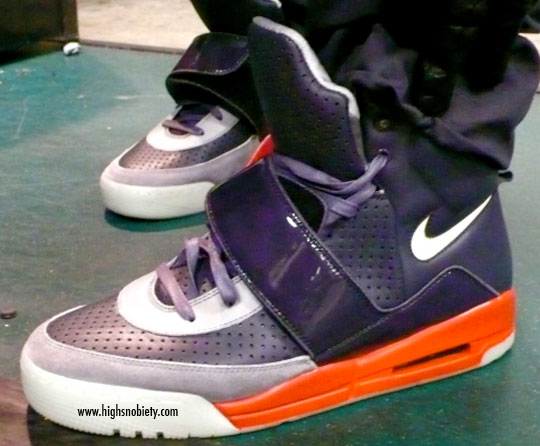
The ubiquitous sneaker, the iconic shoe of the modern American.  While common, the modern sneaker is far from low-profile.  As they’re highly commercialized, they tend to have garish designs, often sporting more logos than a NASCAR.  Sneakers aren’t just eye-catching, but ear-catching, for when their complex design fails, they often squeak.  One can hardly imagine an inner-city gangster without sporting some of the more absurd sneaker designs.  More conventional sneakers speak of athleticism… of faux-athleticism.  A man with bright white pants, sparklingly clean white sneakers and a too-broad smile probably only wears sneakers to give the impression of fitness, while some exhausted youth with well-worn, well-loved sneakers threatening to fall apart probably lives up to the promise of his excellent running shoes.

Canvas Sneakers
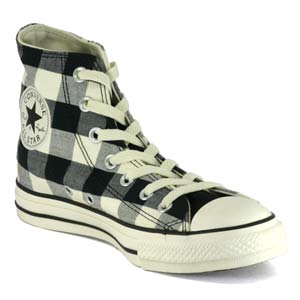
  Before the advent of the crazy, modern sneaker, we had these.  As a child, we often called these “basketball shoes.”  Nowadays, they seem more strongly associated with the indie music movement and skater punks.  They provide an interesting contrast with sneakers: A player might wonder why you’re bothering to point out that someone is wearing sneakers, but canvas shoes stand out, worthy of note.

Loafers
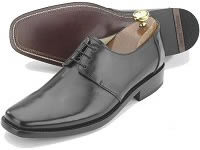
To Americans, leather shoes speak of formality.  No business suit would be complete without a pair of well-shined loafers.  In contrast to squeaky sneakers, loafers make manly clicks whenever they take a step.  In Europe, I’ve found loafers to be far more common.  An American would not think to wear a pair of leather shoes with a pair of jeans, but Europeans do so commonly.  Such considerations might drive home to a player that he’s in a different culture.

Heels
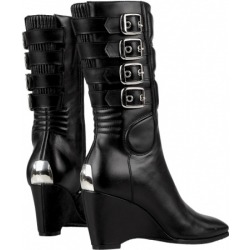
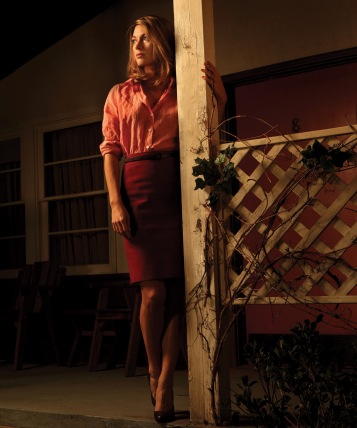
If the world were to name their favorite pair of shoes, heels would probably top the list.  These beautiful shoes look elegant on a woman’s feet and shape her legs, thus forever associating them with profound sex appeal.  High heels also lift a woman up, bringing her eye to eye with taller men, and thus speaks of power.  Some women wear shoes that combine both, creating an imperiously enticing appearance.  However, high heels require practice to walk in and can hurt the feet if worn for too long; women who wear high heels sacrifice for their fashion.  Why would your NPC do that?  Something to consider.  And always remember the iconic “click” of a woman’s heels as she walks.
Flats
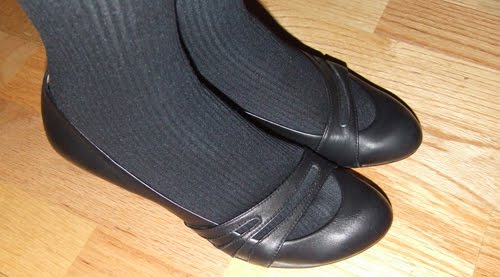
Not everyone can or wants to wear heels, and flats represent a perfectly respectable alternative.  Because flats lack the complexity, challenge and the appeal of heels, they tend to suggest a humility, a simplicity, or a shyness.  A woman who wears flats is either practical, or doesn’t believe she can pull off heels, or doesn’t want to be seen as a sex symbol, but she’s still a woman who believes in looking good, or in formality (after all, she could be wearing sneakers with that skirt, if she was truly casual).
Flip-Flops
Most shoes require at least some effort to wear.  Flip flops are slippers one can wear outside.  They protect the soles of the feet just enough to count as shoes, but they offer little in the way of comfort or fashion.  Thus, flip-flops (as opposed to sandals) tend to suggest a certain laziness or a desire to keep cool (like sandals).  Alternately, flip-flops and sandals can offer a somewhat practical way to show off bare feet, if your NPC is the kind that likes to wiggle her toes in public.
Boots

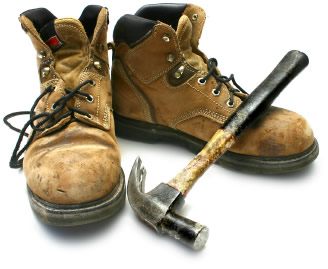
Boots vary wildly.  Heavy footwear like boots often suggest an enormous practicality.  A man wearing a pair of work boots wears them not because they look good or because they are comfortable, but because they protect his feet from injury or from exhaustion after long kikes.  Because the heaviness of boots shape the feet and lower leg, they can also support some heavy-duty fashion.  Heeled boots can have all the same appeal as high heels with none of their delicacy or girlishness, giving them a certain ferocity.

Shoes?
Some characters won’t bother with shoes at all.  Shoes separate the wearer from the ground and they cage the feet.  While bare feet aren’t very practical (stones can wound the soles), those who don’t wear shoes embrace that very impracticality. They tend to be free souls who want to feel the wet grass between their toes.  On the other hand, poverty-stricken characters, or particularly poor characters (often both) won’t wear shoes because they can’t afford them or don’t need them.  A bare-foot swordsman, for example, probably isn’t a free spirit.
Shoes!
As I said before, there are many kinds of shoes: Slippers, moccasins, cowboy boots, combat boots, mules, walking shoes, fashion faux-pas, and stranger.  If you poke around, doubtlessly you can find something for your NPC.  Not every NPC needs highly detailed shoes, of course, but what a man wears says alot about him.  Consider mis-matching expectations: A businessman with an Italian suit and barefeet, or a girl with a mini-skirt and sneakers. Consider, too, that shoes impact several senses at once: Old shoes can smell musty, while new shoes can have a wonderful, leathery scent.  Heels tend to click, while sneakers tend to squeak.  A good pair of shoes feels wonderful on the feet, while a bad pair of shoes pinch and leave blisters.
So the next time you’re pondering an NPC, ponder what they wear on their feet.  Let those shoes tell a story for them, and let those shoes announce their presence with the sound of their steps.  I think you’ll find they add alot of character.

NPC Gallery: The Sleazy Apprentice


I won’t let you down, Don.
– Pete Campbell, Mad Men
I’ve been struggling with the surprisingly popular Mad Men, as it’s slower and more introspective than most shows I really enjoy.  In particular, I’ve quickly established a love/hate relationship with Pete.  Initially, I felt his character existed to show us what a terrible time the 60s were, but as I’ve come to understand the show, I’ve come to understand that the character is simply a spectacular jerk, and that this is entirely the point of him.

Ostensibly, Pete works for Don Draper, hero of the series.  To Don’s face, Pete offers compliments and servitude. Behind his back, Pete’s ambition blooms in full, and he constantly seeks to undermine Don’s position to that he may overtake it.  Rarely, when Don grasps for straws, Pete will openly undermine him, under the thin guise of “helping.”  Pete’s family once held a position of power and prestige in New York, but lost all their money during the Great Depression.  Thus, he has all the social graces of a princely aristocrat but none of the power, and his frustration with the lack of respect he receives constantly leaks to the surface.  He married his wife for her money, and slept with another woman on the night before his wedding.  He constantly serves himself and goes through the motions of working with others, but inwardly fails to grasp why Don Draper is his superior, coming as close to saying “Why doesn’t anybody appreciate my genius” as one can in a sophisticated, mature television show like Mad Men.
Thus, Pete combines sycophant and rival into a single, unique character.  His constant and obvious attempts to undermine his superior and supplant him brings characters like Starscream instantly to mind, but unlike such characters, Pete constantly attempts to make himself useful, and never questions his superior to his superior’s face, preferring back-room positioning and (inept) conspiratorial politicking.  Because he’s ostensibly Draper’s ally, Don can’t simply remove him from the group (and, indeed, when he tries, the story concocts a reason to force Don to work with him, in this case the prestige of Peter’s family), but because all of Peter’s help is poisoned with ambition, Don can’t afford to trust him either.
Games too seldom exploit the Master/Apprentice social dynamic, and when they do, they usually place the player in the role of apprentice.  The role of Master can be interesting too, especially for experienced characters.  Generally, when a flawed apprentice enters the picture, we tend to see the Resentful Apprentice, but Peter isn’t that.  A Sleazy Apprentice kisses the player’s ass.  He sings his praise in public while privately seething that the player doesn’t see him as an equal, and conspires against him, though not necessarily in a way that betrays the party’s goals, but in a way that seeks to replace the player: If the group seek to fight a dragon, the Sleazy Apprentice seeks to destroy the dragon in such a way that proves that the player is not necessary for the group, and that the group should discard him in favor of the Sleazy Apprentice, though he’s likely to fail (due to his inexperience) and possibly fail in such a way that makes things worse for the group as a whole.  When the players seek to eliminate him from the group, the GM should have a reason in place that prevents him from being removed (and, in general, should keep him useful: he’s a Sleazy Apprentice, not a Useless Apprentice).
The tension between his servility and his treachery should create an interesting dynamic for the players, as it instantly creates layers and complexity for the character, giving the players a chance to explore the character and providing fertile room for growth, should the character prove to be popular (as in, he brings alot to the story.  Doubtlessly, he’ll be despised by the group)

NPC Gallery: The Funeral Director

You can pump him full of chemicals. You can put makeup on him. You can prop him up for a nap in the slumber room; but the fact remains, David, that the only father we’re ever gonna have is gone! Forever …
– Nate Fisher, Six Feet Under 
I discovered Six Feet Under while enjoying some of the other works of Alan Ball, the series’ creator.  I didn’t find it a particularly engrossing series (far too slow for my tastes), but I found the subject matter, the running of a funeral home, fascinating.
I think people prefer not to think about death, and certainly not the fiddly details of what happens after death.  It’s an unpleasant reality that happens, vaguely, at some point in the future, but in the meantime, we prefer to focus on less grim details of life.  Even so, many RPGs deal with death regularly.  Player characters die, player characters tend to slaughter NPCs in droves and, most importantly, death and its consequences are a major fixture of most horror games.  Funeral directors and undertakers feature in quite a few genres, like westerns, and I find it rather surprising that I’ve never seen one show up in a game.
A good funeral director understands death and he understands grief.  He eases the mourning for the family, helps them move on.  A wicked funeral director takes advantage of the families grief to strip them of their wealth and disrespects the dead.  While an evil, necromantic cemetery lord instantly springs to mind, imagine a horror game where a funeral director acts as a literal agent between death and life, listening to the concerns of ghosts and passing messages on to the living.  Or consider an undertaker working with vampires or against zombies, using his excellent knowledge of cadavers to help or hinder the undead.  Even in a more mundane game, he can represent death.  His presence can bring a grey pallor to the atmosphere or serve as an omen.  Conversely, a funeral director is a real person, rather than a symbol.  He may understand why people react to him the way they do, but that does not mean he doesn’t still fall in love, need companionship, or grieve when those near him die.  By bringing a funeral director into a game, you can rivet the players’ attention on the themes of death, and perhaps shape up some of their expectations.

NPC Gallery: The Regretful Ex

It’s kind of hard to stay mad at Raylan

– Winona Hawkins, Justified
One of my players turned me on to an excellent series, Justified.  The entire series is worth your time for not just the drama but for the rich cast of character, though sadly the main character won’t make it onto the Gallery: the stoic gun-fighter isn’t exactly an uncommon character that needs highlighting.
I find his relationship with Winona Hawkins fascinating, however.  She’s his ex-wife, but far from being a hateful harridan as ex-wives are often portrayed, her reasons for leaving seem sound enough, and while she expresses happiness at her current state of affairs, an undeniable spark remains between them.  Anyone who has broken up with a long time companion or seen such a break up knows how profoundly a couple can become tied together, and even if they are genuinely happier apart, it’s so easy, so tempting, to fall back into old habits.
Justified plays with this dynamic very well, with the pair struggling to come to grips with their past and their present.  They fight, toss accusations about who left who, but they also linger and glance.  It makes for riveting watching.
How often does an ex-wife come up in a tabletop game?  In all my years of running games, I’ve never seen one, never even heard of one in another game.  Players, I think, prefer to see their character as free, so that (should they be interested in romance at all) they can pursue romance with a free conscience.  Once they fall in love, they typically imagine a happy ending, and all of the drama occurs when the two try to get together.  It never occurs once they are together.  But how many dramatic opportunities does this miss?  An Ex-wife fills so many roles at once: Companion, long-standing friend, rival, enemy, love and lost love.  She says something about your character’s past and she offers the chance to find redemption and fall in love all over again.
I doubt players will think of this on their own, but it’s the sort of thing that works well in a long-standing game.  Let a player fall in love, let him win his woman, let them marry, and then tear them apart, and then bring them back together.  It’ll require working closely with the player (it’ll be easy for him to simply hate the NPC for her “betrayal” unless you handle it very carefully), but it might be very rewarding if it works out.  The Ex doesn’t have to be an Ex-Wife either: She can be an ex-girlfriend too (Or ex-husband, or ex-boyfriend), which can allow you to initiate a slightly less intimate version of this story a little faster.

The NPC Gallery: Freckles

If there be nothing new, but that which is
Hath been before, how are our brains beguiled,
Which, labouring for invention, bear amiss
The second burden of a former child. 

We artists, be we game-master or writer, tend to grab the ordinary and familiar.  We have soaked in tons of culture from TV, books, movies and video games, and we tend to repeat what we see.  We’ve all seen the brooding anti-hero, the blond femme fatale and the treacherous vizier.  They show up again and again, until our creations grow predictable.

But the world brims with interesting ideas ripe for the plucking, and that’s what this gallery is.  Whenever I find some new character or some interesting idea, I think to myself “Why didn’t I come up with that?” and I begin to study the concept, adding it to my games and my creations.  This takes time, though, and the process can be difficult as I tire and fall-back to familiar ground.  

Hence: the NPC Gallery.  Here, I shall place whatever interesting concepts I stumble across, partially for my own use, but also for those who read my blog and seek inspiration of their own.  And we start, today, with Freckles

 We’re all familiar with the alabaster-skinned or olive-toned beauties from TV and Movies, but how often have we been enchanted by some freckled girl with wrinkled nose and sparkling eyes?  Freckles suggest an innocence (since they’re more common in children than adults), a commonness typical of a “Girl Next Door,” and sometimes, just a hint of magic (thanks to an association with those of Irish heritage).

Of course, freckles don’t just have to be “cute,” they can be sexy or beautiful as well.  They’re rare, making freckles women exotic and unusual.  They naturally draw ones eyes to cheeks (which can blush) and eyes (which brim with emotion).  A friend once described her character with “her cheeks dusted with freckles;” what an enchanting turn of a phrase.

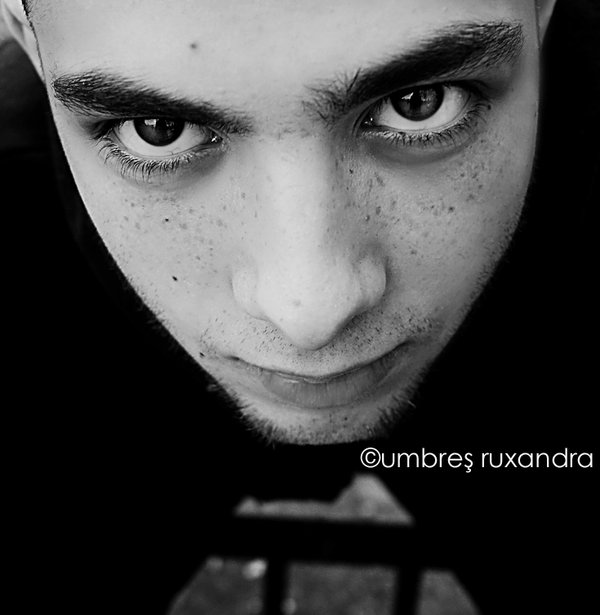
 I’ve described mostly freckled women so far, as the child-like innocence suggested by freckles works better for doe-eyed damsels than it does burly knights, but that’s not to say freckles on a man is a bad idea.  It suggests youth and roguish charm.  Imagine a sandy-haired swashbuckler with a billowing shirt, a lop-sided grin and a light sprinkling of freckles.  As with women, its rareness makes it exotic.

So, the next time you’re considering how to make a character unique, rather than pondering hair or eye color, race or creed, stop and consider the character’s skin.  A few freckled characters might surprise and delight your players.