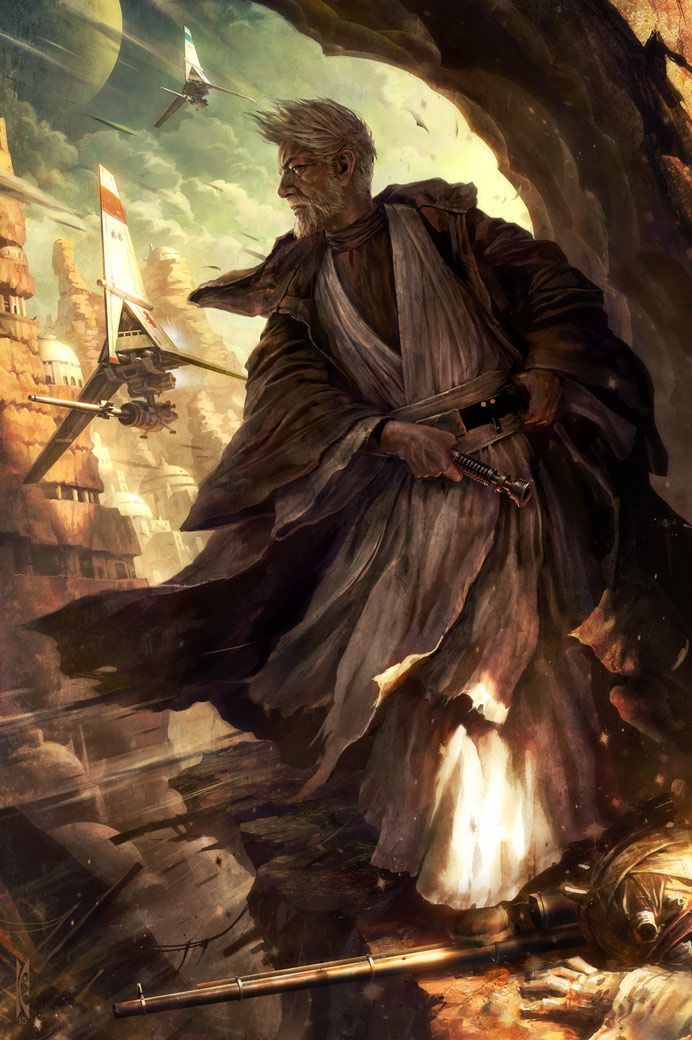
All I Want for Christmas: Kronos Faction 2: The Indigo Brotherhood (and the Crimson League)

So, yesterday I dropped the least interesting of my faction ideas for Kronos. Today, I drop my favorite: the Indigo Brotherhood.

The Indigo Brotherhood is old. It takes to Undercity Noir 1, where a member of the faction helped out one of the Ranathim PCs escape from her Bloodsider pursuers. I didn’t have a strong idea of what they were like that point, other than that I knew:

  • They were psychic
  • They were a rebel faction
  • They were inspired by the Indigo Academy for the Gifted

This Indigo Academy was, of course, a reference to a secretive catspaw cult of the Cult of Revalis White, which dates back to Iteration 6.

What exactly they were like, I had several different conflicting ideas, not all of which made it in.

The earliest inspiration was an idea for Telepathic Blaster Combat that combined the teamwork of the Final Form with the tactical precision of Combat Geometrics. I liked the idea of this being a highly coordinated group of scrappy rebels using their telepathy to outmaneuver the Empire. The problem I had with this idea is that, first of all, the Indigo Brotherhood teaches more than just Telepathy, as it teaches everything, and second, there’s another rebel faction that I think would do far better at this sort of thing (The Warmaidens).

The second inspiration came from my work with cybernetics. I wanted an Ergokinetic Cyber-Mysticism that allowed the psychic to interface with their cybernetics and make them more powerful, a cybernetic equivalent to the Keleni breathing forms. The problem, again, was the Brotherhood teaches more than just Ergokinesis. I could have two different styles, but what about the other psychic disciplines? And how big is this organization going to be?! So this was spun off into its own organization.

The third idea came from Mob Psycho 100, probably one of the best psychic anime I’ve ever seen (and I’ve seen quite a few!). The character above used a toy sword as a focus for their psychic power, and it was a great example of these sort of quirky psychic powers that felt like something unique and a hook on which I could base a style, except it had the problem of “how do I even define something like that?” I can just tell you to apply a Gadget limitation to a psychic power and call it a focus, but that doesn’t let you rapidly make a character, and doesn’t tell that much a story about the organization. I still liked the idea.

The final inspiration was the powers-system of To Be Hero X, an excellent Chinese/Japanese super-hero “anime.” While I’m not convinced the power system makes as much sense as the writers think it does, the “trust/fear” system of the setting interfaces neatly with Communion, especially some speculations as to how it could work. An extremely canny individual with a deep understanding of Communion could manipulate events to make certain psychics align with a Communion Path, and then super-charge their connection with it by broadcasting their feats to a sufficiently large population, say, the population of Kronos. They’d need to arrange for dramatic narratives, rivalries and arrange for situations where a hero was needed, but the result, if handled well, could fasttrack a psychic onto some unconscious form of Communion.

If we combined these last two concepts into the idea of a school for psychics, and a secret rebellion, and I think we’ve got something GMs can really use.

“So they’re the X-men?”

No! They’re not the… look…. I’m… okay fine.

So, I wasn’t setting out to make the X-men. I do a lot of deep dives into psychic sci-fi, and one thing I’ve noticed is that it hit its peak around the same time as the X-men were being made, and if you stop and go back and look at the X-men, the parallels are obvious. There is lots of secret conspiracy experiments on rare, advanced people who have unique abilities to manipulate the world around them, and much of the story turns on telepathy and other psychic abilities, and the technologies that augment them. And when you take those psychic powers to their natural extreme, they start looking a lot like super-powers (in fact, there is a nWoD 2.0 game, Deviant, which focuses on, among other things, psychics, and you bet you can make super-heroes with that).

There’s really no way to create an underground school for illegal psychics that doesn’t vibe like the X-men. Rifts had similar vibes because it tried a similar thing. Of course, I didn’t need to then split the group into two factions, but there were other reasons for that. But on the other hand, their focus on experiments, psychic drugs, conspiracy theories, the edge of indoctrination, all pulls the vibe back towards the paranoid paranormal sci-fi of the 60s and the 70s that I was aiming for.

With my innocence established, I would like to pitch that having super-heroes in Psi-Wars might not be such a bad thing. Psi-Wars is, like most space opera settings, is designed to be a trope stew, where a samurai and a cowboy team-up to fight a dragon and rescue a princess. Why not add super-heroes into the mix?

Kronos is also the perfect place to put them. It’s highly urbanized, the ideal haunt for “super-heroes,” and if you take the psion template and its inherent weirdness, mix it with the concepts of a psychic focus, the inherent self-deception of the Indigo Brotherhood, the media manipulation, and the drugs and experimentation in a night city saturated in crime and neon, I think, I hope, we have something Psi-Wars players can mess with. It’s also an organization that brings psychics to the fore as more than just discount sorcerers, which is how I’ve seen people use them.

They’re also a nice contrast to yesterday’s post: from the intolerance of Silver Faction to the idealism of the Indigo Brotherhood.

The Indigo Brotherhood

The Indigo Brotherhood is broken into two pieces: the Organization and the Esoteric Style

With the Organization, I tried to replicate the ideas from the Slaver cartels by including some sample NPCs; between those, some implications of the various powers and the tasks the needed by the organization, and the agendas/storyhooks, I hope this gives people enough to easily drop into the organization and get started.

The Indigo Academy was a struggle, because it could potentially teach anything, but I wanted to capture the thrust of what sort of training they generally do, and give some “worked examples” if powers they might teach.

This is the second, officially detailed rebel organization of the setting (though Mech Mob could use some revisiting)

All I want for Christmas: Kronos Factions 1: Silver Faction

I asked my backers to give me a month to write what I would like, and they kindly obliged by giving me the space I need to do what has weighed on my mind for awhile. In fact, since I’ve been working on the Trader Band, I’ve thought about Kronos a lot, and rather enjoyed fleshing out this part of the Psi-Wars galaxy (and this approach to fleshing it out, so I might do it more often for other parts of the galaxy). I have noticed some holes in the faction structure of Kronos, not that every niche needs to be filled, but there were a few I really wanted to touch on, three to be precise. I haven’t finished the third yet, and I might shift it to be a broader faction, and it might not be finished by the new year but the other two are done, and today, I present the least interesting of the three. Tomorrow, I’ll present the most interesting (to me) of the three.

A Gap In Tolerance

This first faction arose from a discussion with Autumn Rain about the Shinjurai of Kronos. I was discussing how the Shinjurai of Kronos are more tolerant than the Imperials, and thus better at administrating the highly heterogeneous environment. To me, Kronos reminds me a lot of Hong Kong: a highly successful port full of crime, innovation and a melting pot of multiple different groups rubbing shoulders while an older administration tries to keep the piece and a newer administration comes in and imposes its will. Naturally, the older administration had a better handle on keeping a lid on the tensions, and the newer administration stokes tension. I think if you look at the history of Kronos and the role the Shinjurai played in it, that makes sense.

Except Autumn Rain pointed out that when Ren Valorian conquered the world, the lore states there was a riot in which many members of alien minorities were killed and their businesses ruined. Ah. Hm. Good point!

I can go back and change that, of course, but I don’t think I should. I think it’s possible for both to be true. You can have a highly tolerant society that has adapted to living with multiple cultures and the tension that comes with it, but also have large parts of that society that does not tolerate others. In fact, if you look at some of the major factions of Kronos (the Bloodsiders, the Asrathi mafia) ethnic tension is written in. It’s a challenge, and not everyone handles it as well as others. Shouldn’t that apply to the Shinjurai too?

I had a long post diving into the sociology of how a larger group can be both highly tolerant yet have large factions that are not at the same time, but I don’t think I’ll waste time with that. Suffice it to say that I think it’s plausible for both to be true.

The problem, though, is we don’t really talk about this faction of Shinjurai and/or Kronos natives that aren’t as high minded when it comes to inter-ethnic harmony. Who were the people who rose up against the aliens of Kronos? What do they do now? How do they feel about the Empire? I would expect the Empire would at least tacitly encourage this sort of thing, because of Ranathim, Asrathi and Shinjurai are fighting one another, they are not fighting the Empire. It would also give me one more criminal faction, and the seedy underbelly of Kronos can’t have too many criminal organizations.

Silver Faction

And so, I came up with Silver Faction. The initial inspiration was the Freikorps of (post WW1) Germany and their equivalent Silver Shirts of the US: a group of people who align with the dictatorial government, but where that government acts with the legitimacy of the state, these “Brown shirts” act as a vigilante arm. They serve an important role in dictatorship: an authoritarian government exerts top down control, but struggles to convince people that a person’s neighbors all agree with the dictator, which is a vital part of control. Having uninformed people who exuberantly and violently act out the wishes of the government implies that the government aligns with the will of the people, and also intimidates dissenters into silence, fearing that their neighbors agree with the violence of these pro-government gangs.

If you dig around in such groups, you can find they infiltrate prisons where the act as informers for the government, and fertile recruitment grounds for the military and security forces of the regime. The Empire already forcibly recruits prisoners into their services, why not also have a mercenary company that recruits the most fanatically loyal and “misguided” members of the prison populace and pitches them into the most dangerous battles as a sort of cannon fodder? That seems historically plausible.

The downside of such a group is that even if they’re ostensibly doing what the government wants, they’re an uncontrolled group of criminal, vigilante extremists. Sure, it’s arguably useful to the dictator to have “self-policing communities” this way, but a group that violently destroys businesses, even the businesses of the disenfranchised, harms the economy. Sometimes, the government needs to handle political dissent carefully, lest they trigger a mass uprising, and having a frustrated vigilante group step in and force the issue by murdering the guy in his home may trigger the very problems the regime hoped to avoid. GURPS Mass Combat accurately notes that Fanaticism is a double edged sword, producing amazing results, but locking in the administration of those units into the most straightforward courses of action.

Worse, it is also inevitable that the faction produces “losers.” When the Nazi party rose to power, the Freikorp became the SS and SA, that is, they were recruited and folded into the government, but the vigilante actions didn’t stop! If someone is fanatically devoted to your ideals, and they are effective, talented, fit and useful, you recruit them. The only reason someone would serve in Silver Faction rather then the military or the Imperial ministry is that they’re unsuitable. So you get a weird dichotomy of these being the most devoted followers of the Emperor, but also some of the worst.

I worry the faction will feel like a bad copy of the Empire. They would naturally fetishize imperial equipment and tactics, but also necessarily perform them worse. Fighting them would be like fighting the Empire, only far easier, and with them doing even worse things. If the Empire defeats you, they’ll arrest you and interrogate you and toss you in a prison. If Silver Faction defeats you, they’ll kill your family and burn your house down. Is there anything Silver Faction offers that the Empire already doesn’t?

Well, I think so, at least enough to justify a relatively quick faction page. It says something useful about the setting, in that not all the people ruled by the Empire disagree with it; some strenuously agree with it, and I think this is a truth about dictatorship that not enough fiction tackles: yes, it is the nature of dictatorship to deceive its populace into thinking more people agree with it than really do, but that doesn’t mean nobody agrees with it! Also, having an inferior copy can be useful for certain games, especially low power. Psi-Wars has “degrees of threat” based on its BAD, and BAD 0 to 2 is good for starting characters or sidekick campaigns. Finally, having “the Empire, only slightly different” is useful, in the same way that having multiple different Maradonian Houses is useful. After all, PCs in the core will often fight “the Empire” and having slightly different flavors of it keeps the game from growing stale. In this case, it’s much more integrated into the criminal world, and a Asrathi Mafioso can kill Silver Faction members with relatively impunity in a way that they can’t kill Imperial Security.

But I wanted at least one twist, and I dove into religion to find it. I figure Silver Faction has either accidentally configured itself into an Imperial Cult, or has been manipulated into it by members of the Imperial inner circle who understand how Communion works, even if these guys don’t. This gives us some interesting Communion Oaths and hints at how we might tie them into bigger campaigns, as spies and Imperial Knights find ways to manipulate these chumps into rampaging with their strange power at a specific enemy as a distraction for their real agenda.

“Can I Play A Racist Asshole?”

I felt awkward writing the character considerations. These guys are clearly bad news. Even if you want to depict Ren Valorian as an ultimately good man who is using ruthlessly practical means to save the Galaxy from itself, I find it hard to justify these guys. They undermine whatever good he’s doing with their fanaticism. And, of course, if you want to depict the Empire as bad, there’s nothing redeemable about these guys. So I wanted to talk about why I went into detail on the character considerations.

First, I have no idea what you guys are doing. Just because I see a faction as irredeemable doesn’t mean they are. As a rule, I don’t tell you what you are or are not allowed to play, unless templates become too unwieldy (hence “no PC dragons” which is more about “I don’t know how to support that” than “I find that morally repugnant.”) People see things I don’t, and may notice some elements, an approach, that I’m missing. People often come up with interesting ideas I don’t think of. Perhaps you may want to play a former member of one of these factions who still bears some of the Oaths, and is struggling to expand his or her worldview now that they’re out of the cult-like environment. Finally, a lot of people slice my ideas up and extract the marrow and use it for other things. Perhaps they’ll see the oaths and concepts and translate it to something else more PC friendly.

Second, I regularly make deep character details for groups and factions that I see as unplayable. Slavers get a ton of details, even though I doubt anyone actually wants to play them (naturally, some people do, because of course, but in that case, see point one). Even if a faction is intended as an NPC faction, GMs often build NPCs as PCs first, and so those “PC options” are really NPC options, explaining how an elite Silver Faction fighter might work.

This is the real reason I wanted this section, not to assuage guilt at writing an abhorrent faction (I, after all, write a lot of abhorrent factions. We need bad guys!), it’s to point out the design behind their oaths and to make some suggestions. While they have a point cost, I designed them to make for interesting encounters: it gives you henchmen that will refuse to die, minions whose minds rebel when you try to read them, fighters who tend to cause your non-imperial weapons to malfunction, or a thug who pauses and sniffs the air and then instantly recognizes your alien presence. I primarily gave them these powers to make them interesting, unusual encounters.

I want to finish with a suggestion: even if you want to run an Empire-focused game, where the Empire is more “morally grey” than absolutely bad, I suggest keeping these guys as bad guys. After all, “morally grey” suggests shades of good vs evil. Yes, there are imperial soldiers heroically sacrificing themselves to save people from the genocidal wrath of the Cybernetic Union, or fleet admirals who are seizing hellish slave worlds in the Umbral Rim and liberating the aliens there while doing everything they can to preserve the Lithian past. But on the other end of the spectrum, you have selfish, entitled, small-minded people who resent the success of everyone who doesn’t look like them, who see you and your insignia and your years of service, and then grin and jab a thumb at their overweight belly and say “We’re the same.” No matter how worthy your cause is, there’s always someone who takes it way too far, and these are those guys for the Empire

Backer Update: Khedu the Hunter Released!

A couple of months ago, I issued a poll for the “Fifth Slaver Cartel.” Last month I released the poll results. Today, I release the actual cartel.

Khedu was interesting, especially given how aggressively social he turned out to be. He has a (dishonest) philosophy of “Slavery Apologetics” that I worked out in some detail, but I didn’t bother to include it because I’m not sure how much detail you actually need on “Khedu brainwashes his slaves using vile techniques.” But if there’s interest, I can put some additional detail in it. Khedu also uses really sweet custom power-armor. I didn’t bother to stat up that armor, or Khedu himself, because none of the other slavers got such an extensive write-up, but as I write out more bounty hunters, I might give him a full write-up too.

I had originally intended 5 underlings, but I ran out of steam at three. I’m not really excited by the idea of a slaver privateer, not enough to give him a full write up (plus I feel like that would really ask for some details on a ship), and I’m struggling with creating a slave-catcher bounty hunter underling that is sufficiently distinct from Khedu himself. So I stuck with the standard three, which does tend to push things in a more courtly direction, but still, I think you’ll like it.

The astute may notice a reference and some lenses for a “Liaison Theory” and “Shinjurai Companions.” What’s that? Well, stay tuned, dear backer! It’s a preview for the next backer post!

Finally, I’ve written up a small change for Hordokai, replacing Krull, the Warlord of Dhim, with Grimluk, the Black Krokuta, who has a more “Uruk-Hai” feel that I originally wanted from Hordokai, but evidently forgot.

All of this has been codified into a single work, the Book of Hunger, which includes all nine Slaver Cartels. It’s available to all $3+ backers.

Organizing the Psi-Wars Organizations

 So, I paused my grand Umbral Rim rollout to write up some basic corporations, because I’ve noticed people sometimes ask questions about them and I have those answers and it would be nice if they were on the wiki.  Also notice that despite my best efforts to keep Psi-Wars from devolving into Cyberpunk, it’s definitely taking on some elements of that, and that means giant megacorps.  I suspect this is because I “let GURPS be GURPS” and Ultra-Tech + Action skews heavily towards Cyberpunk, and even Star Wars does, once you ditch the movies and go to the EU (which even introduced hackers slicers).

Then I found myself staring at the Patron cost for a Corporation and the rank levels.  And this has been bugging me for awhile.  Way, way back in the day, I argued that Psi-Wars should aim at the 15-point Patron and the 8 Rank structure.  Why? Because this is how Action worked: the Pulling Rank request numbers line up at the 15 point patron level, and GURPS typically settles on an 8 Rank structure by default.  But does this actually make sense?

One of the things I learned from discussing Psi-Wars melee with my community is they tend to like Psi-Wars as full on GURPS Ultra-Tech space opera, where all the numbers are big. People don’t wield swords because of a handwave about how it looks on screen, but because they have some sort of crazy, over the top technology that will absolutely destroy you from up close.  They want the aesthetic of space opera, but they want some sort of excuse for it so it has the veneer of plausibility, preferrably in a way that sounds comic-book-awesome.

So ages ago, I whipped up a Patreon special on the scale of the Empire where I muddled through how large the Empire would be. I tend to downplay things from literally millions of stars with trillions of people per star to “just” thousands of stars with millions of people, but you still end up with crazy numbers like multiple fleets of 5-25 multi-billion dollar dreadnoughts, and when I say that, the response is not “Wow, that’s unwieldy” but “COOL!”

The question then becomes can Psi-Wars handle more extensive organizations, and should it handle more extensive organizations?

Ugh; Social Traits are the worst when it comes to world building!

Hierarchy: How Big is Big?

A macrosociety may support much larger organizations, allowing up to Rank 12; if so, Rank 11-12 gives +4 to Status. See The Arithmetic of Rank (below) for a more detailed approach. — GURPS Social Engineering, Page 14

Realistically, the 8-rank system works fine on a planetary scale. If you’re the most powerful military commander on Earth, rank 8 is a reasonably high rank.  It covers up to 200,000 soldiers. You can make the case for even larger (one million soldiers at rank 9 and so on), but it’s sufficient for my purposes.  This seems to imply that much smaller organizations (the militia of Luxembourg, a municipal police force) might have smaller organizations.

 In Psi-Wars, I had gone with a 6-rank organization for a planet (a house, a criminal cartel, a corporation), an 8-rank organization for a vast, interstellar faction (the Alliance) and 10 for the Empire, as it was by far the biggest. The idea was that the “focused” scale of Psi-Wars, the balance point, was large interstellar organizations, so we just scale everything down to match it.  Does this line up with the Arithmetic of Rank?

Of course not. Now, if you assume that each “level” has 10 individuals, the arithmetic of rank works out okay: planetary cap out at 6, interstellar at 8 and galactic at 10. If you stick with the traditional 5, then you need something more like 8, 10 and 12, which is what Social Engineering suggests.  So the question then is: do you want to preserve the number of ranks, or do you want to preserve the interactions between individuals?

In practice, I think most people will only actually care about the lower levels of rank. People talk about the Emperor and the Grand Admiral and the Imperial Hand, but they interact with captains and lieutenants. What I’ve noticed in all of my games is that players rarely deal with anything larger than the top planetary ranks, because while the Grand Admiral exists, other than a cameo, he’s rarely going to show up on a specific world to interact with characters that didn’t explicitly take him as an Enemy or a Patron. In a lot of ways, his rank is irrelevant. What I’m really doing is creating broader, more complex rank tables.

So does higher levels of rank make sense at least from a world-building perspective?  Well, if we peg a basic admiral at rank 8, and argue that he’s as powerful as an entire planetary governor by himself, we could put a “Minister of Defense” or a “Fleet Admiral” above him (Rank 9), someone who governs all the fleets in a constellation. And above that, we could put High Minister, who governs an entire part of the galaxy (Rank 10), and above that, we could put the Grand Admiral himself (Rank 11) and the Emperor at Rank 12.  The Emperor, of course, rules over up to 5 different aspects of the Empire, of which the Navy is only one.  The Grand Admiral, then, would govern up to 5 High Ministers, who would handle one of the five major regions of the galaxy, each of whom would command up to 5 fleet admirals who control five major sub-regions in an arm or the galactic core, and each of those would have up to 5 admirals (thus, fleets) at their disposal.    This implies up to 125 fleets in the Empire, which actually scales pretty nicely with what I have in mind.  Realistically a galactic civilization should have much more, but the Psi-Wars galaxy is more space opera than aggressively realistic sci-fi, and “125 fleets of multi-billion dollar dreadnoughts” pushes at the edges of what most readers would find comprehensible; that’s a “woah!” number that feels appropriate for a galactic empire.

Rather Patronizing

The problem with this approach is it starts to imply that these organizations exceed the levels discussed in the Patron Advantage.  For example, a 25-point Patron can have (in Psi-Wars numbers) up to $50 billion in assets, $100 billion if we’re being generous.  That’s less than the cost of a single dreadnought! This implies at least a 30-point Patron, who would have about $500 billion to a trillion, which gets into the regions appropriate for a typical Admiral. If we follow the progression, then ranks 9-10 should be a 35 point Patron, the Grand Admiral a 40-point Patron, and the Emperor himself a 45-point Patron. In fact, a 30-point Patron is listed as having “incalculable” wealth” so suddenly everything flattens out at 30-points: an Admiral, a Minister of Defense, the Grand Admiral and the Emperor are all 30-point Patrons. To some extent, I can understand that: does it really matter how many fleets someone can send your way?  An admiral is already bringing enough firepower to level a continent, which is already more than most PCs care about in a typical adventure 

“Oh no, an SM +3 Space Dragon! Quick, call the Admiral to bring in 5 dreadnoughts to blanket the region in plasma.”

“Naw fam, I got a line to the Grand Admiral; we’re going to have 25 dreadnoughts blanket the region in plasma!”

At some point, the difference between the levels is academic.

But I would argue that the Emperor himself has even greater degrees of power than this. Not only can he command an admiral to offer fire support, he can also offer considerable knowledge at the secret conspiracies of the galaxy, enact Dark Communion miracles for you, and so on.  Of course, the Patron Advantage actually covers this: it has a +50% modifier for people with extraordinary power and political reach. He doesn’t have magic in a setting without magic, but he does have access to a lot of magic and a lot more tools than most other Patrons.  Of course, if you treat him as a 30-point patron with a +50% modifier you get… a 45-point patron, which precisely lines up with what we expect to see in the above extrapolation.

Pulling in the Ranks

Alright, so what about Pulling Rank, aka Assistance Requests? GURPS Social Engineering: Pulling Rank has us covered! We go to the Assistance Roll Table on page 6. If we assume our interstellar organizations are 30-point patrons at a minimum, and we want to keep 5-point ranks, we get Rank 0 characters Pulling Rank on a… -3 or less.  Riiiight.  Contrast this with GURPS Action which lists Rank 0 as a 3 or less.  I rather like the GURPS Action values, because players will already be familiar with it, and it creates a pretty decent spread.

Well, the other option would be to raise the price of Rank. At 8/level, we get back to the normal GURPS Action spread of 3 or less for Rank 0.  Great! So we only have to rework the cost of Rank and mess up every template I’ve ever written.

Or… what if we lie? What we if we say your 30-point interstellar patron just charges 5 points per rank?  Well, there’s a few problems with this. First, the AR rules center on the fact that 3 levels of rank at 5/level comes to 15 points and gives you an AR roll of 9 or less, which is identical to a 15-point Patron with a 9 or less Frequency of Appearance.  If we charge 15 points to access a 9 or less to get help from a 30-point Patron organization, then players are getting quite a discount! Furthermore, everything in Pulling Rank is balanced around this idea, such as how much funding the PC can access, or easy it is to get Cash, etc. If we just ignore those differences, then characters who have 3 levels of Rank in a minor constabulary get the shaft compared to characters who have 3 levels of Rank in the Imperial Navy.

However, I have some counter-arguments to this. First, I’ve done survey of my organizations, and almost all of them would qualify as 30-point organizations.  The wealth available to a Maradonian House, or a Communion cult or an interstellar corporation all put them at the 30+ range.  All of them. The only exceptions are very small or very informal organizations, such as street gangs or bounty hunter lodges.  So everyone would get a discount. Second, the FoA to Rank conversion is already a little screwed up, because now we can add the Smooth Operator Talent or Complementary Rolls or Reputation as modifiers, so there’s some level of Minimal Intervention already worked in.  And this seems to track with my initial impulse on how to handle the difference between Patron and Rank: a Patron is a close, personal relationship who maintains a more active role in the PCs life than an AR request does.

I tend to imagine if a character had 6 levels of Rank in the Imperial Navy, yes, they would be able to call for Naval support on a 12 or less. That means soldiers or fire support or access to files, etc. For the same point cost, one could have the Grand Admiral show up on a 9 or less to help the PC, and I think the first impression most people would have is that’s pretty balanced, because the Grand Admiral is not going to just grant fire support or soldiers or access to files. He’s going to give you some scotch, listen to your problems, and then solve them. He’s only really going to act like what the Rank 6 guy is getting on a 12 or less if he has Minimal Intervention which means the point values line up again.

So maybe lying won’t cause a problem. In the case of less balanced organizations (street gangs, etc), we can just lower the point cost if it matters that much.

Do You Even Care about Favors?

As I’ve been writing organizations, I write pretty extensive treatments on what favors, from Pulling Rank, they can do.  For example, a corporation can offer Entry Access to secret labs or vaults that it controls, but it can only expedite a license.  What I find myself wondering is: “Who cares?”

When someone does Pull Rank, which I think has happened precisely once in all my playtests, it tends to go more like this:

“Hey, I need some mooks. Can I Pull Rank to get them?”

Generally, players just assume if they have high rank they can order people around.  Someone who works for a corporation just assumes they can’t call for fire support, and if they ask for troops, it’ll be corporate security goons, not full soldiers (but they might try to work out a mercenary contract).  That is to say, these values are pretty intuitive to most GMs and PCs.  I’m not sure what the extensive treatment is doing other than padding word count. I considered switching to something where I discuss the details of Funding or Cash modifiers and how many troops people can request, but GURPS Action didn’t really nail these things down, and I’m not sure who’s going to bother to look up hard numbers. Does it actually matter if you can have 10, 12 or 15 troopers as the result of an AR to your respective military force? The player asks for troops and succeeds at their roll, and the GM supplies them as they see appropriate, and at most they’ll use the rules I write down as a rough guide, and GURPS Action and GURPS Pulling Rank already have some rough numbers of a GM needs them.

So I may greatly simplify those sections.  As a rule, I think I should remove niggling modifiers where none are needed (This seems to be a trend, where I research what X should be according to GURPS, and a lot of times the UT items or huge organizations offer some sort of bonus that requires looking up or memorizing, and is completely unnecessary. It’s not actually important if your organization gives you exactly X amount of cash and offers a +1 to those specific rolls, or that a UT lock gives you a +4 to open locks that apply a -4. You just make an AR roll and get the money you need, and you roll Lockpicking and open the lock.

Oh, and if we’re expanding our ranks, don’t we need to worry about the AR numbers for ranks 9-12? Well, Social Engineering has those numbers, but PCs shouldn’t go higher than Rank 5 or so anyway, so the fact that the Emperor can successfully order people around on a 16 or less is pretty irrelevant to most games. But I can list them if people care.

Red in the Ledger

So this implies some editing work, but as I’ve gone over some, it turns out not to be that bad. A lot of the organizations felt a little squished, and mostly it involved removing and simplifying some content (which is always good) and either coming up with more rank titles or just suggesting that they get rather fuzzy at certain ranks, which is definitely true in many cases (seriously, rank titles are the thing that takes the longest about writing up an organization).  It also gives me an excuse to revisit a few old organizations as we finish rounding out the galaxy’s major powers.

Wiki Highlight: Slaver Cartels

 I’ve been hard at work on the Umbral Rim and the organizations, technology and monsters native there. I’ve finally worked out detail on the Slaver Empire and the sort of organizations the Slavers, aka the Temkorathim, naturally form, which I call “Slaver Cartels.”  I’ve described them in detail on the wiki.

For Backers, I’ve offered up additional details for four sample Cartels, the ones described in the wiki entry itself.  I may eventually release these to the wiki as well, but I feel like the wiki has enough of an information overload and I’m not sure how necessary this level of detail is. But in any case, as a thank you to all $3+ Backers (Fellow Travelers) I have uploaded the Book of Hunger

Wiki Highlight: the Criminal Organizations of Psi-Wars

 Man, this has been a thing I’ve been thinking about for literally years now, so it’s nice to finally get it down on paper, so to speak.  At last, I have a sketch of the Criminal Organizations of Psi-Wars up and available. Not all of them, of course: rebellions and pirate fleets will (probably) have their own discussion, as will occult conspiracies.

This is one of those posts that leaves me feeling like it’s simultaneously “too much” with too many “example” organizations with too much detail included, but at the same time, not enough, as people will doubtlessly want to know more about particular organizations, and want more organizations.  That’ll come though.  As an extra treat, Subscribers and Patrons can vote on what organizations I give greater detail to, and later, if the stars align, I’d like to do a poll wherein we create our own criminal organization.

Enjoy!

Psi-Wars Corporate Briefs: Orion Arms


Some eagle-eyed fans have noticed the slow additions of Orion Arms gear to the wiki. I wanted to stop and take a moment to talk about them.  While I don’t have “corporations as organizations” worked out yet, I think it might be something I focus on later, because a lot of it has been coming into view.

Every arms manufacturer in Psi-Wars has a theme: Syntech has the coolest, cutting edge-gadgets; Wyrmwerks goes beyond cutting edge and into prototype tech, with all the attendant issues; ARC is the High Street of arms manufacturers (it wouldn’t surprise me if they had literal butlers taking your measurements before manufacturing your armor to spec), etc.  The original intent of Orion Arms was to be where I parked the arms manufacture of the Umbral Rim, the Slaver aliens and their associated races and the technology they produce to wage their wars.  I intended to base them on the military industries of “the third world,” any place that produces military equipment that wasn’t cutting edge, and part of the less stable, more chaotic parts of the world, as that’s what I wanted to emulate with the Umbral Rim.  So I dived into my research, and didn’t find what I expected.

What sorts of arms industry does the third world have? The short answer is “None.” The long answer is: they have some arms industry, but it mostly exists to either convert/update the military materiel they get from other countries, to maintain that materiel, to create ammunition or, in advanced cases, to make one or two simpler forms of materiel (think tanks and guns rather than fighter craft or carriers).  In practice, the third world gets its arms from the first (and if we’re being technical, the second) world.

If you dig into African militaries, or the military forces of the Middle East or South America or anywhere else that you wouldn’t be remotely tempted to assign the label “super-power” to, you’ll find that most of their military gear comes from America or Russia.  China is making some headway, though most of its materiel is just Russian or American gear with the serial numbers (sometimes literally) filed off, though they’re starting to actually make things that you might call “uniquely Chinese.” Israel, Korea and Europe have some genuine native arms manufacture, and I think you can definitely make the case for Turkey, but pretty much everywhere else I looked had marginal arms manufacture, and a lot of the “big” arms manufacturers that weren’t America, Russia or China weren’t making them for domestic consumption: daewoo is not manufacturing the USAS-12 for the Korean military; they’re making it for you. While this was a little disappointing, it also intrigued me and began to change the character of Orion Arms.  I always knew they were going to be the subpar arms manufacturer, but I began to have a better understanding of why and what they were trying to do.

A lot of Psi-Wars’ technological design is inspired by games like Star Trek, Starcraft or 40k where we think about human technology vs eldar technology vs the technology of that race over there.  Each race, each faction, sits in a self-contained little technological boxes. This isn’t a bad design; it’s actually good design, because it lets you easily differentiate, say, humanity from the Eldar from the Tyranid.  When you have factions that mix and mingle Federation, Klingon and Romulan tech, that creates an interesting tension.  But it’s not really realistic: gun nuts like to talk about the differences between American and Russian gear, but in the end, they’re not really that different, not to the scale of Imperium-vs-Eldar, because a tank is a tank, and a gun is a gun, and tactics are tactics.  If some country got rich and wanted a lot of military power quickly (cough Saudi Arabia cough), what would pop out wouldn’t be a novel way of fighting; instead, they’d just purchase the firepower of other countries.  They would start to look American or Russian or both in how their forces were equipped; there are real differences, but they tend to involve fine details rather than coarse grain concerns, or they’re visible on very large scales (like navy composition).

So, if you’re a powerful, rich Slaver who just hit it rich thanks to hyperium deposits and a particularly lucrative raiding year, and you have money to burn and rivals to impress and/or conquer.  What do you do? Well, you probably don’t invest in a massive military complex on your own planet.  You might, but that requires the sort of political stability your region of the Galaxy just doesn’t have: the planet that you pick might not be your planet tomorrow and worse, having a massive industrial complex there makes it a tempting target.  You’d want to buy your military equipment, and you’d want to buy the most impressive tech you could.  Ideally, you’d want imperial equipment, because nothing quite says “power!” like wielding the same technology as the ruler of the Galaxy.  But the Empire’s never going to sell to you, alien scum.  So who do you buy from?

  • ARC has some nice gear, but it’s extremely expensive, and from very far away.  It’ll never get to you. It’s also deeply culturally bound to a faction of humanity that look like the losers of this war. Not a force that inspires confidence. Plus they’re mostly a domestic military producer.  They build arms for the Alliance, and you’re not part of the Alliance.
  • Syntech produces really sweet weapons, and with an eye towards selling them to others too!  You’d do well to buy Syntech, but it’s very far away, and it’s the sort of gear that has everyone’s attention: their intended target audience is the Alliance and/or Empire, not a warlord in the Umbral Rim, plus you lack the technological base to maintain the tech (or, to be honest, the money to buy a lot of it).
  • Stellar Dynamics is an option, but they aim most of their materiel at the civilian and police market.
  • Startrodder is also primarily an arms dealer, but it’s already out of date. Sure, you can buy their stuff, but their tanks are already obsolete.
  • Redjack is good, it can get around most blockades to get their materiel to you, and it’s great stuff for pirates, but it seeks to solve the problems of belters living on the edge of space, not conquerors who seek to rule a section of the galaxy and impress others with their sweet gear.
So we have a niche: someone who produces military-grade equipment that looks like, that screams, military equipment.  We need someone who makes knock-off imperial equipment, stuff that’s not so good that they’d have to charge an arm and a leg or would catch the eye of the Empire and shut down your operation.  We need a cut-rate, tacticool producer.  I know tacticool is a joke about redneck gun-nuts, but there’s very real value to it for minor powers: fielding soldiers decked out in nightvision gear, advanced-looking rifles covered in accessories and sweet armor that evokes the image of more powerful factions has the same effect as prey animals that adopt the coloration and behavior of a dangerous predator: it confuses your foe and makes them hesitant to attack you.
So ultimately what we need is a corporation that focuses on arms dealing to mob bosses and minor warlords.  They might not be exclusive to the Umbral Rim, but the Umbral Rim would be one of their major customers: the Empire, the Cybernetic Union and the Alliance (for the most part) have access to better gear, and the Sylvan Spiral isn’t advanced enough to really know what to do with it (except for Xen and Ys, who prefer Syntech gear).  So the Umbral Rim becomes their primary target, though low-scale mob-bosses and pirates in all parts of the galaxy might also like their materiel.
Why does the Empire tolerate a corporation like this smuggling military-grade equipment and freaking battleships around? That’s a good question.  I imagine a lot of their arms manufacture isn’t in the Empire and their supply lines don’t cross it.  But I also imagine the Empire negotiates with Orion Arms: they look the other way sometimes, provided Orion Arms worked with them. By supplying arms to the Umbral Rim, the Rim lacks the incentive to develop its own arms industry. By picking “winners and losers” Orion can keep various factions from gaining too much power: if one guy starts to build up his own military industry, he’ll stop buying from Orion, or Orion can stop selling to them and start offering discounts to other factions.  It doesn’t even need to be part of a vast conspiracy to do this: one faction gaining too much power and bringing peace and stability to the Umbral Rim is bad for business.  That’s why the Empire doesn’t really care, just as long as nothing Orion puts out can seriously rival the gear the Empire has.
This suggests a human-run corporation with some very seedy morals and some insidious goals, that is slowly entangling the Umbral Rim in its dangerous business practices.  It’s a corporation that would work closely with smugglers that might leave them feeling conflicted after. It has representatives that would rub shoulders with alien warlords and gangsters one day, and then Imperial senators the next.  I found the idea compelling, and it’s what I went with.  So far it’s only guns and armor, though some weapon accessories will come out soon, and they’ll get vehicles, those are just lower priority at the moment.
I don’t think they’re the only gear available in the Umbral Rim.  There’s still some ancient “Tyrannic Tech” kicking around, and I still think there’s room for native military industry in the Umbral Rim, because Slavers and some of the other aliens have sufficiently unique physiologies that they could design technologies to exploit their alienness for a military advantage, and Orion would be hard-pressed to match it.  But they’re one part of the puzzle of the military industrial complex of the Umbral Rim.

Wiki Highlight: Bounty Hunter Lodges

As I was working on Bounty Hunters, I thought about organizations that might support them.  Star Wars has its Bounty Hunter Guild, but I wanted more possible variety than that.  In principle a bounty hunter needn’t be part of an organization (and so “rogue” and “independent” hunters are valid options), but I wanted to give Hunters the option of belonging to a dedicated group with an interesting tradition, and why not more than one?  After all, I draw inspiration from the Mandalorian and Killjoys and the Witcher which are all, in their own ways, different traditions of bounty hunting.

Thus was born the idea of Hunting Lodges, something on which to hang the organizational hat of the Bounty Hunter.  The premise here draws more from the Mandalorian and Killjoys than from what I see in the rest of Star Wars: a broker does the work of tracking down the bounty and handling the hassles of payment and exchange, and you can focus on hunting.  Different groups might have access to different resources, areas of influence and secret knowledge to help the Hunter along.
There are four signature Lodges in Psi-Wars:
  • The Hydra Lodge, which is just “the generic lodge.”  If you want the benefits of being part of a lodge, but don’t want to dive into deep lore, this is the Lodge for you.
  • The Exilium: diplomatic bounty hunters who handle sensitive assignments and bridge the gap between the Empire and the Alliance, serving neither.
  • The Saruthim: an ancient tradition of monster-hunters dating to the First Tyranny, who are experts in a unique parasitic weapon, the Ferthe Dapolor, or the Flesh Carapace.
The fourth signature lodge, with a placeholder name of “Wyrmworks Cleaners” will be the last remnants of the Wyrmwerks corporation located in the Arkhaian Spiral who are experts in defeating the mad-genius AI that their corporation unleashed in their last days, rogue cyborgs and the last remnants of the Anacridian Scourge, who make excellent use of advanced Wyrmwerks technologies, such as Battlesuits.  I need to put more work into the sort of opponents they fight before I can properly put them together.
I’d also like to put together a poll at some point for a fifth bounty hunter lodge, if my Backers are game.

Patreon Poll: the Fourth Chapter

Who is this mysterious Templar?  That’s up to you!

Patreon Week continues.  If you’ve enjoyed the Templar Chapters, now it’s your chance to make your own!  My patreon now sports no less than 10 polls that, put together, will introduce the 4th Chapter.  Are they a secret cabal waging a shadow war on the Akashic Order?  Perhaps they are an order of librarian knights preserving long-lost lore of ancient dynasties.  Perhaps they are a militant group of zealots on the edge of the galaxy, safeguarding the Keleni royal line and preparing to restore both the Knights of Communion and a new Communion Golden Age, with the last Grand Master preserved in cryostasis below, ready to be awoken.

The final results are up to you!

If you’re a patron (this is for my Companions, thus $5+), check it out!  And thank you so much for your continued support.  If you’re not, don’t worry, I’ll unveil the results when we collate all the documents of the new version of Psi-Wars.  Have fun!

The Templar Chapters: the Far Striders

Alternate Names: The Templar Vagabonds

The rim of the Galaxy has more than its fair share of beggars and religious pilgrims. One can find them in a cantina drinking quietly, or sitting in the street with a raised bowl, begging for credits or scraps of food. They seldom stay in one place long, often wending their way to some distant temple, or to richer planets. They make easy pickings for thugs or pirates, but most criminal scum native to the rim tend to leave religious itinerants alone, for they know who travels with pilgrims. Those who violate this taboo may find themselves casually disarmed by a staff-wielding pilgrim or wake up in a gutter with no memory of what happened after they first uttered a threat. The religious itinerants of the Rim enjoy the protection of the Templar Vagabonds of the Far Strider Chapter.

The Templar Vagabonds resemble the pilgrims they protect. Many wear simple brown robes, belted with a sash over a tunic and pants and sturdy, serviceable walking shoes. Others might wear an old, well-worn, patchwork vacc-suit. They often wear hats, to keep the sun off their face, or a scarf over their face to keep out dust. They typically wield either a staff, usually just a very long length of pipe or some rough-hewn wooden walking stick, or a cobbled-together force sword at their belt. Many mistake them for scavengers, beggars or wandering trash; the Templar Vagabonds prefer it that way.

Origins of the Far Strider Chapter

Shortly after the liberation of the Temple Worlds by the Communion Crusade, the Knights of Communion turned to the protection of pilgrims who wished to journey to said worlds. As the reach of the faith spread farther and farther over the galaxy, the Templars found they needed to journey even greater distances. The Sparriel sage-knight Rokoonooda took it upon himself to build a new chapter of Templars, one trained in the art of survival and navigation, so that they could travel to the most distant part of the Rim and back, even if it took years, to escort pilgrims from the most remote regions and to answer the calls for assistance from the most isolated temples. His chapter became self-sufficient, able to recruit, train and arm themselves with very little support from the broader Templar hierarchy. He named them the Far Strider chapter.

As a result, when the Knights of Communion fell, the Far Strider chapter barely noticed. They hadn’t needed the support of the larger organization of the Knights of Communion for some time, so when the execution squads of the Alexian empire came hunting for them, they simply cast aside what remained of their armor and dignity and merged into the population. Nonetheless, they retained their identity; what had been an overt chapter of the Knights of Communion became a covert chapter. They secretly inducted new members, introduced them to fellow Templar Vagabonds, quietly accepted calls for assistance, and distributed ancient Templar secrets amongst themselves.

Today, they maintain their old role of defenders of the faithful. Remote monasteries know they can call upon the Far Strider Chapter when in need, and pilgrims will “hire” the Templar Vagabonds to guide them safely to their destination. Their secretive ways and their ability to casually travel the galaxy makes them one of the few chapters in some form of contact with other chapters, which makes them a vital glue for holding the remnants of the Templars together.

Personalities of the Far Strider Chapter

Chapter Master Dindee Ooda

Dindee Oodao is an elderly and irksome Sparriel. Throughout his long tenure (the longest in the chapter’s history), he played pranks upon his own disciples, laughed heartily with his fellow templars during gatherings, and taught the Templar Vagabonds not to take themselves too seriously, and each of his jokes and riddles contained a profound truth within them.

Thus, when Dindee Ooda disappeared, the Far Striders did not notice at first, for the Grand Master, like the rest of his chapter, could fall off the radar for months at a time. But months turned into years, and no prank seemed forthcoming. Finally, the Templar Vagabonds began to panic and hunt for clues as to what happened to their Chapter Master. They uncovered journals and memory crystals which revealed Dindee Oodao’s personal quest to recover the lost relics of Isa the Exile and put them under the protection of the Far Strider chapter. Each cache found by a Far Strider investigator pointed to further caches of information, maps to suspected relics, and hints of a larger conspiracy. Some of the memory crystals contained cryptic messages suggesting that Dindee Ooda expected fellow Far Striders to discover these caches and instructing them directly to carry on the quest.

The Far Strider Chapter is divided as to what to do. Some wish to carry out the quest, while others feel it more important to find their Chapter Master first and foremost. Some continue to treat him as their Chapter Master, merely on an extended absence, while others have begun to discuss the need for succession. The general consensus seems to be that this is Dindee’s greatest trick, and that in doing it, he has put the chapter to the test.

The Knight Commander, Shimada Jack

The Knight Commander of the Far Strider chapter is a native of the Alliance world of Persephone, and served under Chester Sabine, father of Nova Sabine, during the Great Galactic Invasion, whom he introduced to True Communion. With the death of Leto Daijin, Shimada Jack left the Federation in disgust and devoted himself to the Far Strider Chapter, where he trained under Dindee Ooda himself. His strategic acumen and logistical skill made him a natural for tending to the needs of the Templar Vagabonds, and he became their Knight Commander

Recently, Nova Sabine contacted Shimada Jack, begging for help against the Empire. Knight Commander Jack has become increasingly concerned with the Empire’s oppression of the Galaxy and feels inclined to turn the Far Strider’s resources to openly declare for the Alliance and help defeat the Empire. More than this, he feels that Dindee’s quest was an effort to re-unite all of the Templars, to restore the Knights of Communion, a task that the Far Striders are well-suited for, given their contact with most other chapters.

Shimada Jack, appears as a distinguished and handsome old man. He keeps his hair cut short and wears a beard. Despite his humble birth, he speaks with more than a hint of an aristocratic accent, likely picked up from his years of service to the Federation, and has an infectious smile that readily disarms conflict. The Templar Vagabonds adore him, and readily approach him for advice. Many in the chapter call for his ascendance to the role of Chapter Master, but Shimada has refused, believing that Dindee Ooda still lives and that he is unsuited for the role.

The Swordmaster, Mysterious Kitha

Mysterious Kitha (with the full name Anxamorte Kitharn) serves as the Far Strider Swordmaster. Despite his role, he prefers to go unarmed, and often claims that Communion will provide him with whatever weapon he needs to defeat his foes. As swordmaster, he trains Far Striders in the art of improvisation and tactics. He often starts with basic chores to toughen his student up, then moves on to evasion, situational awareness and diplomacy, often neglecting actual combat training until the very end of the student’s education. He firmly believes that teaching students to fight will make combat their first resort when it should be their last. His preferred technique is the Simple Form, which he combines with Keleni stick fighting to create a highly unpredictable style.

Mysterious Kitha dismisses all discussion about whether or not the Chapter Master has died or not and who should succeed him as irrelevant. When the time comes for a new Chapter Master, Communion will let them know. Instead, he tries to focus the Chapter on the task clearly given to them by Dindee Ooda, and gathers up willing Templar Vagabonds to begin the quest for Isa’s relics.

Mysterious Kitha is Keleni, but with remarkably dark blue skin, the color of the ocean at night. An unruly and tangled mane of white hair surrounds his face, catfish-like whiskers surround his mouth, and he wears rags. He enjoys wine, and the scent of it often lingers near him.

The Warden-Nun, Teleku Lili

The Warden of the Far Strider chapter is traditionally a Trader born on the Teleneku Ark, the closest thing the Chapter has to a home, and Teleku Lili is the latest in a long line of such Wardens. She acts as the first line of defense of the Ark and sees to the needs of those aboard, as well as maintains contact with the rest of the Templar Vagabond. When the grand master calls a gathering of the Chapter, as the Warden, Lili acts as host.

Lili believes that Dindee Ooda is dead, and that a new Chapter Master should be called, and advocates for Mysterious Kitha to take that position (much to his annoyance). She argues further that the ultimate purpose behind Dindee Ooda’s quest is to carry on Isa’s legacy of converting new races to Communion. She believes that Communion wishes to be spread beyond the bounds of the Galaxy, and she works to prepare the Teleneku Ark for an intergalactic journey that will take them far beyond the stars that they know.

Lili is a young albino Trader with white skin and red eyes that resemble finely polished rubies that carry within them the glint of stars. She wears a lightly armored Trader skinsuit beneath a simple brown robe, and carries the heritage force sword that all Far Strider Warden’s carry. She speaks softly, but with a very pleasant voice and speaks Galactic Common with a velvet fluidity. She has the bearing and demeanor of a librarian, both shyly quiet and profoundly knowledgeable. Traders tend to find her less attractive, seeing her albino skin as unhealthy, but aliens and humans both describe her as “cute,” and she has a small circle of admirers, none of whom she entertains, as she feels a proper Warden should dedicate herself to her job.

The Chaplain, Abbot Isikaia, “The Grasshopper”

Abbot Isikaia is the “Grandather” of the Teleneku Ark (see below), though by now, its social structure resembles nothing of a typical Ark. He sees the journey of the Ark as the compliment to the journey of pilgrims: where they seek to go to holy places, Isikaia tries to bring holiness to the pilgrims. He accepts any who wish to take an audience with him, and speaks in the typical, impossibly clipped manner of the Traders, but those who are true to the faith of Communion an always understand what he means: what seems to be a single syllable becomes, to their ears, a deep and intricate truth that is nearly impossible to explain to others.

Isikaia has deep green skin and wears nothing but a cloth over his loins, eschewing the typical Trader garb of a vaccsuit and gasmask, allowing others to see him in his true Trader nature, including his distended jaw. He often goes without food for long periods, and resembles a bundle of frail sticks wrapped in stretched green leather.

Resources of the Far Strider Chapter

Organizational Resources

The Far Strider Chapter is a poor chapter. They can offer very little in the way of material resources, and expect their members to improvise when the need arises. They have no standard issue gear (they expect their members to scavenge or build their own, or inherent their weaponry from a previous Templar Vagabond), they offer no cash or funding and have no facilities.

The Far Strider chapter has numerous “Safe-Houses,” (see Pulling Rank page 15), but these resemble flop-houses more than safe-houses. Local communities or passing Templar Vagabonds maintain the small sanctuaries so that the next Templar Vagabond has a place to rest. Such Safe Houses tend to sport caches of equipment, information and money, but exactly what is in each varies from house to house and moment to moment; such caches are whatever the last Templars could scrounge up and store, in case they or any other templar might need them, often including notes on local events and star-maps for the local area. Safe houses tend to be secured either by the local community, or are hidden from sight and noted with sigils and symbols known only to members of the Far Strider Chapter.

What the Far Strider Chapter lacks in wealth, it makes up for in social connection and knowledge. The Far Strider Chapter has an excellent reputation among communities of dispossessed and religious communities (including True Communion communities, but remote Akashics and minor folk religions like Shepherdism all tend to have a positive opinion of Templar Vagabonds). With appropriate groups that have a positive association with the Far Strider Chapter, Templar Vagabonds may Pull Rank for a complimentary roll on Reactions, or to gain an Introduction (see Pulling Rank 18).

The Far Strider Chapter has a deep knowledge of the remote areas of space. They often have high levels of Area Knowledge, and may act as guides. Treat guides as Consultants (Pulling Rank p 15) with Area Knowledge 21. The Far Strider Chapter can also provide members with excellent star charts to “lost” worlds on the rim. Treat this as Files (Pulling Rank page 15).

The Far Strider Temple: The Teleneku Ark

The Far Strider Chapter travels from temple to temple as their needs and quests dictate, but if they called any temple home, it would be the Teleneku Ark. Scuttled during the early Alexian wars with the Traders, True Communion faithful, repaired it, and built a great, mobile temple to True Communion within. It travels the Galactic Rim to this day, bringing the sanctity of True Communion to remote communities and after centuries of offerings, minor repairs and additions it is, by far, the largest and most ornate temple of True Communion.

The Teleneku Ark, like most Trader Arks, is enormous and is capable of hosting entire city within it. Broadly speaking, it does so: it brims with refugees and pilgrims who may ask for passage on the ship if it plans to head in the same direction as their particular journey. The Ark also houses considerable monastic complexes, libraries and monastic schools, making it one of the larger temple and monastic communities to True Communion still in operation. “Operation” may be a strong word, as the centuries old ark groans in need of proper maintenance, and its underbelly swims in corrosion that the monks can barely handle, and disrepair is a constant concern of Temple Wardens.

The Astral Gardens, the Teleneku Ark’s most celebrated feature, serve as the spiritual center of the great Temple-Ark. They reside in a dome atop the Ark, where they may bath in starlight during the “night” cycle of the artificial lighting. Fountains and streams flow through the meandering and peaceful gardens, and at its center, surrounded by the artificially supported life, an enormous eloi crystal slowly spins on its anti-gravity platform.

When the Teleneku Ark arrives in a system, its shuttles spill forth from it in a great, religious armada that descend upon a planet. The monks of the Teleneku Ark treat planet-fall like a religious festival, and they entertain the populace with hymns, religious dancing and sprinklings of water. They tend to the sick where they can, proselytize, and bring the message of True Communion with them. But, in particular, theybeg. The Teleneku Ark relies on the generosity of the faithful for its repairs, maintenance and its stores of food. The Ark’s denizens work to repair the Arks factories and food vats so they need rely on no one, but in the meantime, their begging, dancing and loudly proclaimed religious messages irritate local officials, who usually drive off the Ark after a short time.

The Templar Vagabonds claim no specific temple as their home, but the Teleneku Ark has a special place in their heart. The Warden of the Ark, always a female Trader, is treated as a Master of the Far Striders, and when the Far Striders gather for a conclave (typically once a decade or whenever a major matter, such as the disappearance of the Grand Master or Shimada Jack’s call for rebellion, comes before the Chapter), they meet at the Teleneku Ark and gather in the Astral Gardens. For many novice Templar Vagabonds, their first moments on the Teleneku Ark are their most cherished memories.

The Far Strider Community

Pilgrims of the Rim

Any religious person from the Rim has at least heard stories of the Far Strider Chapter. The Far Strider Chapter continues to offer their services to religious individuals who travel the stars, whether as pilgrims or refugees, and see them safely through their journey. These travelers inevitably remember the act and wish to return the favor. Far Striders, by convention, refuse personalfavors, but accept organizational ones, so a Far Strider may claim a favor for the deeds of another Templar Vagabond. As such, the Far Strider Chapter has built considerable good will among the religious communities of the Galactic Rim, and can generally count on safe passage or even the hospitality of these groups.

The Gutter Fraternity

As one goes farther and farther from the bright center of the galaxy, the harder life becomes, and many people fall through the cracks and find themselves homeless wanderers of desolate worlds. Inspired by the example of the Far Striders, many of the poverty stricken peoples of the Rim have taken to emulating them: they share tips with one another, swap favors, engage in mutual defense and recognize one another by certain hand signs or code words. They have formed an informal organization that the Rim has dubbed the Gutter Fraternity, though some outsiders mistakenly believe it to be the Far Striders; despite this error, the Gutter Fraternity and the Far Strider Chapter do have close ties: the Templar Vagabonds often recruit from the Gutter Fraternity or get tips about a particularly psychic child from them, and in return, the Templar Vagabonds go out of their way to protect the poor wherever they go, whether those beggars are actual members of the Gutter Fraternity or not.

The Patchwork Fleet

The Empire faces insurgencies all across its edges, but few more resilient than the Patchwork Fleet. What started as a collection of crusty old asteroid miners, merchants and part-time pirates found themselves backed into a metaphorical corner by some particularly ham-fisted and overreaching decisions by local Imperial authorities. When they moved to defend themselves, the Empire took it as a full blown insurgency and acted. Shimada Jack happened to be nearby and gathered a group of Templar Vagabonds to help resist the Imperial attack and to get the remnants of this group to safety.

The insurgents dubbed themselves the Patchwork Fleet and now move from system to system as a patchwork fleet, training locals in how to build and maintain their own starfighters or convert their corvettes to small attack vessels. They help defend locals from pirates and hit imperial convoys. While not overtly devoted to True Communion, the ideology begins to spread throughout their ranks, and their work with other insurgencies also spreads True Communion ideals, until it’s not uncommon to hear quotes from Communion literature bandied about, either casually or formally, in the regions the Patchwork Fleet is known to operate in.

Many in the Far Strider chapter have connections with, friends within, or have served with, the Patchwork Fleet, and thus the two organizations often collaborate. The Far Striders have numerous connections across the galaxy, and support or assist numerous rebels, but the Patchwork Fleet is perhaps their most well-known and most successful rebel contact.

The Virtues of the Templar Vagabond

The Far Strider Chapter practices three virtues:

  • Tolerance
  • Humility
  • Asceticism

Isikia teaches all three; Shimada Jack teaches Tolerance, Mysterious Kitha teaches Humility and the Warden-Nun Lili teaches Asceticism.

The Far Strider Chapter embraces an ideology of self-denial. Following True Communion and, especially, becoming a Templar Vagabond means setting aside your mortal life and mortal concerns and pursuing a higher path. They often quote aphorisms from the Verses that refer to removing oneself from the world. They believe that monks and Templars alike should understand that what mattersis not how much one has, but how much one can do for others.

When it comes to the “others” they should do good deeds for, this means everyone. The Theology of the Far Striders Chapter argues that True Communion is a philosophy of universal brotherhood. Everyone should be welcomed into their ranks, no matter how poor, how low-born, or how alien. Furthermore, they see everyone as equal in True Communion. An aristocratic lord who joins the ranks of the Templars Vagabond must learn to roll up their sleeves and clean the Teleneku Ark or their local safe house by hand, along side a former slave and a poor street urchin.

The Heresy of the Far Strider Chapter

The Far Strider Chapter embraces more heterodox virtues than orthodox virtues, which makes for a tense relationship with Keleni Traditionalists. Their tolerance of other traditions means unusual ideas leak into the culture of the Chapter, and their remoteness from one another means that each Templar Vagabond has their own unique take on Communion. The rest of the Chapter accepts this as a matter of course, believing that each master brings with him unique insights into Communion; this also makes it easier for specific Templar Vagabonds to embrace the peculiar brand of theology that another Chapter has, and thus more easily interact with them. Taken as a whole, though, the Chapter embraces strange ideas about Communion that bother other, purer chapters, particularly their belief in the extinction of self, devotion to chastity, translation of Communion texts into other languages, and their tendency to try to connect True Communion theology into other faiths, especially folk religions or the Akashic mysteries.

This tolerance means they tend not to be especially vigilant against those who would harm Communion with their ideals. The Templar Vagabond have largely lost their fighting spirit: they canfight, and will to defend their pilgrims, but they shy away from crusades and tend to leave more vile traditions alone. They have little interest in shadow wars with the Akashic Order or the Cult of the Mystic Tyrant.

The Martial Arts of the Far Strider Chapter

Rokoonooda believed in flexibility and taught the chapter to try to understand the underlying principles of war and, if possible, to avoid conflict. The Far Strider Chapter teaches:

  • The Simple Form
  • The Graceful Form
  • Keleni Stick Fighting
  • Guidance

Templar Vagabonds tend to learn from one another in close master/student relationships, or train with one another when their paths cross. They also try to learn from whatever temple or martial tradition they come across in their travels.

The Simple Form tends to serve as the basis for almost all Templar Vagabonds, as it has the flexibility to integrate almost any style. A master will teach it to his student and then the student will learn other force sword styles (or other martial arts) in his journey and find a way to integrate the Simple Form into those styles, or to integrate those styles into the Simple Form. As a result, most Templar Vagabonds have extraordinarily fluid approaches to combat, where no two fight the same.

The most common styles to supplement the Simple Form are Keleni Stick Fighting and the Graceful Form of the Alliance. Keleni Stick Fighting allows the Templar Vagabond to defeat a foe without killing him, which many Templar Vagabonds prefer: a resonance staff is as common a weapon among them as a force sword. The Graceful Form teaches agility and defeating an opponent through intimidation rather than injury, and integrates well with the Simple Form.

Finally, many members of the Chapter study Guidance as a means of dissuading an opponent from fighting with a simple wave of their hand and negotiation. The humbleness inherent in Guidance serves their virtue of humility well. The swordmaster, Mysterious Kitha, is especially fond of the style. Many other chapters point out that a devotion to Humility and mastery of telepathic Suggestion make the Templar Vagabonds exceptional conspirators, but the Chapter laughs their concerns off as paranoia: the Far Strider Chapter has no desire to rule the Galaxy.

Vagabond Tactics

The Templar Vagabonds don’t worry about supply. They tend to make do with whatever they have on hand, and if they must engage in some covert activity, try to limit themselves to missions they already have the equipment to undertake. If they need more, they typically beg for it: they will call on favors, ask for it from the local religious community, or simply walk up to others who would benefit from the act and strike up an alliance on the spot.

When it comes to organization, the Templar Vagabond act as de facto independent clandestine cells. A higher ranking Templar Vagabond may see a need for action and then remotely contact various groups to perform tasks necessary for the completion of that plan: Dindee Ooda was particularly fond of this, giving particular Templar Vagabonds seemingly nonsensical missions that accumulated into a major action that defeated an opponent. Vagabonds often do not know why they must do what they do, but accept it on faith. Such orders come from mutual acquaintances or via “drop points” that all local vagabonds know.

When trying to accomplish a mission, Templar Vagabonds prefer violence as a last resort or as a means of defense. They would rather persuade others, and persuade they do! They are accomplished speakers who can draw crowds, create whisper campaigns, or even incite riots. If things go wrong, Templar Vagabonds can simply drop what they’re doing and fade into the populace, but they also learn to survive on any planet in the harshest of climates. They can simply leave whatever population center they are in and take to the deep wilderness. If they do end up captured, they can take advantage of the toughness built up in the pursuit of asceticism and endure their captivity in stoic silence.

Typical Templar Vagabond Traits include:

Advantages: Cultural Adaptability, Cultural Familiarity (Any), Honest Face,Forgettable Face, Language (Any), Language Talent

Skills: Acting, Area Knowledge (Any), Carousing, Current Affairs (Local), Diplomacy, Filch, Hiking, Holdout, Navigation (Any), Meditation, Mind Block, Observation, Panhandling,Public Speaking, Pilot (Starship)Savoir-Faire (Servant), Stealth, Smuggling, Survival (Any)

Relics of the Far Strider Chapter

The Staff of Rokoonooda

Rokoonooda struggled to walk in his last days, and carried a crooked cane with him wherever he went. This cane has been passed down to each chapter master of the Far Strider chapter, as a reminder of infirmity and the importance of service. Those who bear gain a bonus +4 to True Communion creation rolls to invoke miracles of the Exiled Master, but tend to suffer unfortunate fates, often suffering humiliation, injury, set-backs or encountering truly bizarre phenomenon. The Chapter Masters of the chapter refer to this as “taking the burden of Rokoonooda.”

Price: $50,000

Statistics: Reputation 4 (Exiled Master) [20]; Unluckiness [-10]

The Warden-Blade

The Far Striders have lost the secret of the resonance blade, but they still have a few, including the traditional blade all Wardens of the order have always carried: the Warden-Blade. The ancient weapon is more than a weapon, it is a badge of office, and as such, it grants the bearer the ability to enter anyfacility, temple or monastery associated with True Communion. The bearer must be worthy, but if they are, doors automatically open for them.

Price: $150,000

Statistics: Accessory (TK Lockpicks; True Communion Locks only) [1] + Telekinesis 2 (One Task, Picking Locks associated with True Communion, -80%; Reduced Time 10, +200%; Divine, -10%) [21] + One Task Wonder (Lockpicking, True Communion facilities only; Cosmic, no die roll required) [2]

The Relics of Isa the Exile

The most famous figure of the schism of True Communion followed by the Templars, according to tradition, Isa the Exile brought True Communion to humanity and all alien kind. He is the most beloved sage of True Communion to all Templars. Dindee Ooda sought out relics associated with him, and believed he had located many.

All of Isa’s relics are instantlyrecognizable as very holy to the faithful; the relic itself and the bearer both gain +2 reaction from the faithful. Furthermore, the relic itself counts as “holy” for any purpose that might benefit it, but will explicitly only work “for the worthy;” precisely what this means is up to the GM.

The Mantle of Isa

According to legend, Isa was a masterful healer. His very touch restored health to the plagued and protected the weak from psionic malediction. He fearlessly faced vile spirits or wicked psychics and ministered to the weak and dying. According to legend, his simple robes carry these same effects: the wearer, or anyone touching the garment, is protected from all hostilepsychic effects; the garments also provide the wearer an additional 10 HP in the form of “vitality reserves.” The garment also heals any who touches it: the wearer cannot control this, the garment, instead, decides who it will heal; when the garment heals, the wearer takes on the wounds or disease or the disease of the healed target; this is first paid out of vitality reserves. The vitality reserves of the mantle “heal” at 1 HP per day. At the GM’s option, rather than suffer the effects of the disease, the wearer instead pays an amount of HP (either his own or out of the Vitality reserves) determined by the GM.

Shady antiquities dealers regularly peddle scraps of the mantle of Isa; if such scraps are genuine and have real power, they typically grant the keeper a vitality reserve of 1 and a +1 to resist hostile psionic abilities.

Price: $1,000,000; scraps are worth $4,000.

Statistics: Healing (Cosmic, no die roll required +100%; Divine -10%; Empathic -50%; Unconsious -30%) [33]; Static (Psi; Area Effect (Requires Contact -30%) +35%; Discriminatory +150%; Divine -10%) [81]; Vitality Reserve 10 (Divine -10%) [18]; Holy [1]; Social Regard 2 (Venerated; Blessed) [10]

The Staff of Isa

The staff of Isa is, perhaps, his most recognizable relic, as he carried it wherever he went. The staff would most likely have been a resonance staff that he used for self-defense, but it has gained a tradition as a “tool of miracles.” Those who bear it receive visions of what Communion would have them do, are unusually lucky when serving the will of True Communion, and may invoke powerful miracles, gaining a +4 reaction from Communion.

Price: $500,000

Statistics: Destiny 3 (Serve Communion) [30]; Holy [1]; Social Regard 2 (Venerated; Blessed) [10]; True Investiture +4 [20]; Visions (Overwhelming; Divine rather than Psionic) [15]/

The Crown of Isa

Isa belonged to the Kihita clan, the royal clan from whom the rulers of the Keleni were drawn before the destruction of their interstellar polity at the hands of the Eldothic Empire. As such, many True Communion faithful claim that Isa the Exile was a prince who gave up his prestige and position to bring True Communion to the whole of the galaxy. According to this legend, he inherited a crown that, if worn, would reveal his full glory and fill him with the full might of Communion.

If the Crown exists, it might grant the wearer the ability to invoke the Primordial Avatar miracle at will; the wearer may choose which Avatar to invoke: Righteous Crusader, Bound Princess or Exiled Master.

Price: $2,500,000.

Statistics: Alternate Form (Bound Princess) [209]; Alternate Form (Exiled Master) [15]; Alternate Form (Righteous Crusader) [15]; Holy [1]; Social Regard 2 (Venerated; Blessed) [10].