Noble Houses as Organizations, and an Introduction

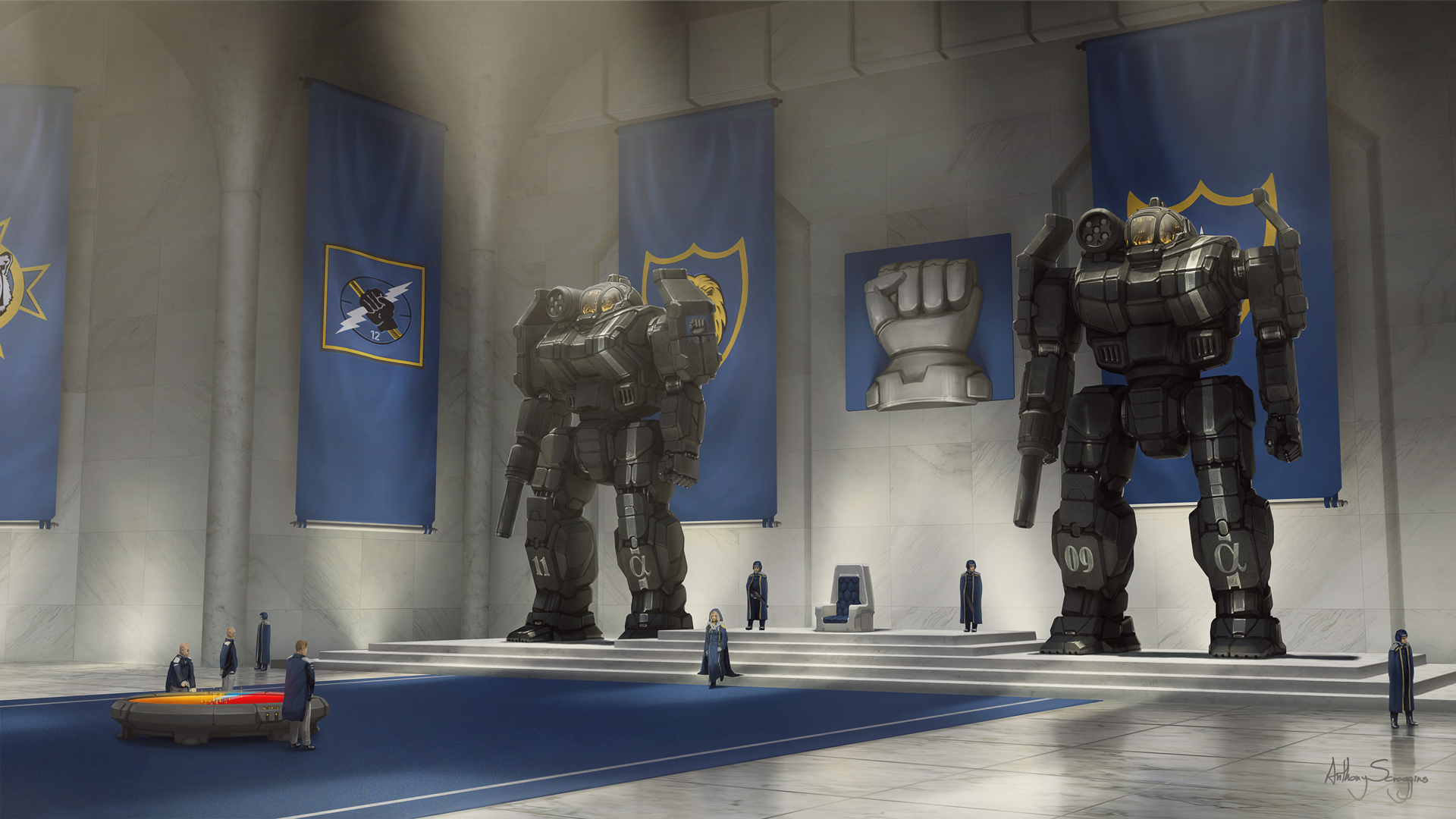
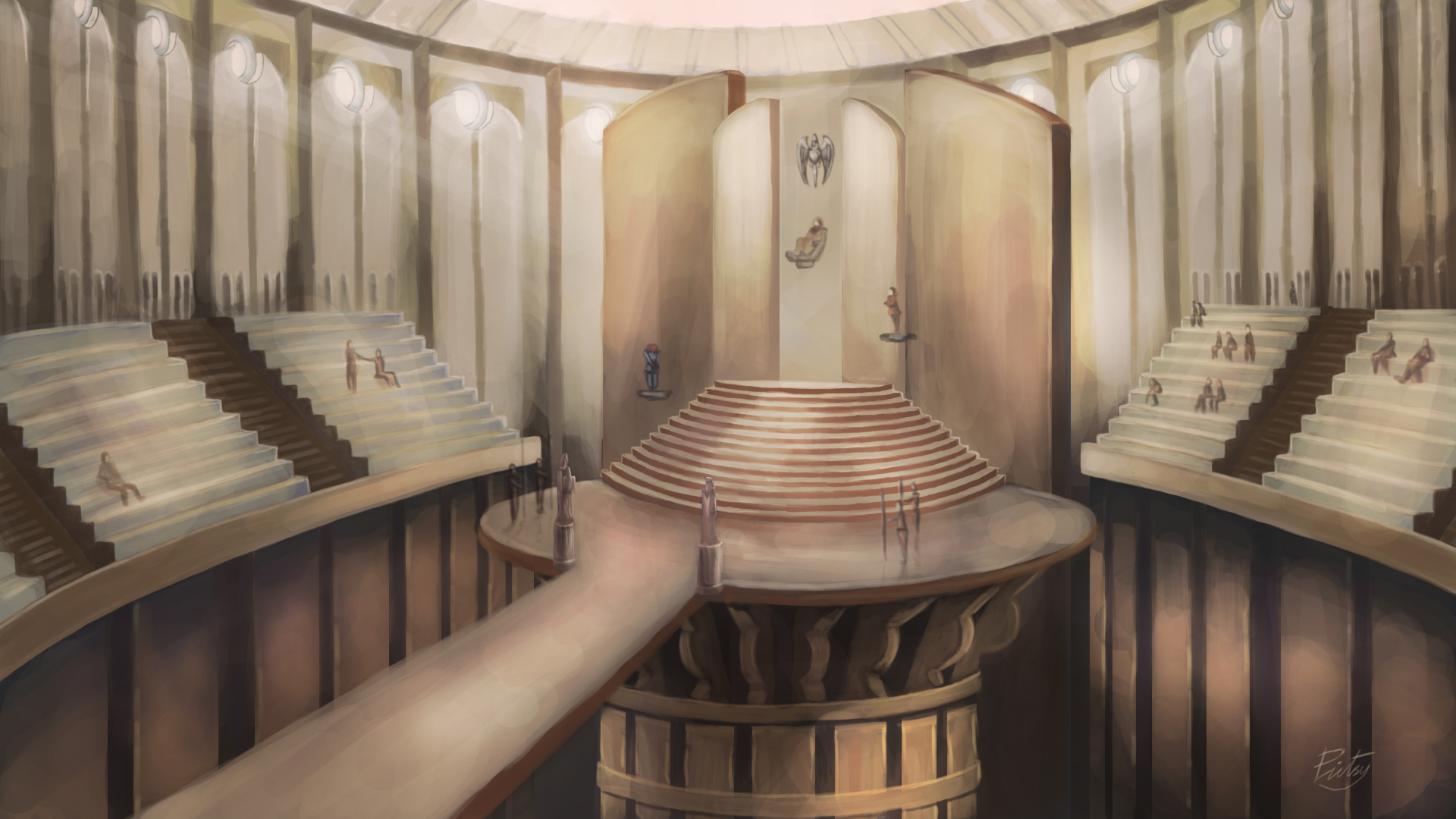
I’m not saying it was a great movie, but it does a good job
capturing how sci-fi aristocracy might look.

The aristocracy of the Alliance served as the foundation for the Federation that came before the Empire, and the Empire that came before the Federation.  It has ruled the galaxy for over a thousand years, and does not intend to stop now.  They represent both the golden age of the past, and a chance to bring about a new era for the Galaxy.  Today, I kick off a surprisingly long series that takes a deeper look at them, both as organizations and as characters.

Today, I start with noble houses as organizations, what it means to belong to one, and what they can do for you.  I want to note that this is a “first draft,” and that the following is incomplete.  The deeper I dived into all of this, the more I realized I needed greater detail on spycraft and law enforcement, but I already had the latter for the Alliance in the form of the Constabulary, and the former will require a thorough look at all organizations.  Thus, take all that follows as my first stab, just as everything else I’ve written in Iteration 6 has been.  I’ll take another look at everything before the iteration wraps up.

I’m also trying something new with how I generate these posts, so you might notice that this is much earlier than the past month’s worth of posts have been.  That’s because it was actually scheduled, again.

Noble House

A Noble House isn’t an organization in the classic sense, but rather, consists of a dynasty of powerful and influential nobles who share a collection of titles and a similar lineage. The Noble Houses discussed in the context of the Alliance refer specifically to the noble lineages of the Old Alexian Empire, who created the Federation, and now stand in opposition to the Empire, having formed the Alliance.

When Alexus rose to dominate Maradon and forge his interstellar empire, he had two major assets. First, he had the assistance of wealthy warriors skilled in the art of the force sword, and he had the assistance of the Oracular Order, who foresaw not just the ultimate victory of Alexus, but the desperate need for not only that victory, but the eternal reign of his dynasty. These two elements combined to create the Noble Houses of the Alliance.

The Oracular Order foresaw a million branching “paths” that the galaxy could take, and chose one winding and complex path called “the Golden Path” as the best hope for humanity’s ultimate survival. Alexus could never achieve this victory on his own: his line would need mates that would help breed the line true, allies who would fight at their side, rivals who would sharpen their skills and mentors who would remind them of their purpose. The Oracular Order needed not just the Alexian Dynasty, they needed a host of heroes. For this purpose, they turned to the best of the best among the Maradonian nobility and began to breed them for their ultimate roles. As a result, modern nobility, where its bloodline has remained pure, who have access to specific psionic abilities and have distinct advantages over the common man, with a focus on achieving a specific role within the Oracular Order’s vision of the future.

A Noble House has legal privilege and dominion over certain worlds. As Alexus conquered his Empire, he distributed the rights to rule those worlds in his names to the warriors who helped lead his armies to victory. Their right to rule became cemented by the machinations and blessing of the Oracular Order, who needed their eugenically engineered nobility to shepherd the rest of humanity down the Golden Path.

Taken together, a noble house, then, is political, genetic, psionic and martial tradition dating back millennia. They ruled over the galaxy, and rule over the Alliance today, and fight the Emperor, all in the name of their inherent supremacy and the mandate given to them by the Oracular Order to protect all of mankind. However, the death of the Alexian dynasty and the general dissolution of the Oracular Order ended any hope of fulfilling the experiment they began at the dawn of their empire. Now, the noble houses cling to the tatters of that dream, cast adrift without the guidance of the Oracular Order, with their traditional domains stripped from them by the Emperor, and their genetic purity drifting and dissolving back into the common masses.

Taken in another sense, a noble’s house is literally his estate and those who maintain it. In this sense, a house very much represents a classic organization, but this organization exists to serve the lord. This represents the lord’s armies, the lord’s servants, and his networks of spies and assassins. Described in this way, a noble house consists of servants, commanded by a single lord who governs the entire house. The other lords of a House do not strictly speaking belong to this hierarchy, but that hierarchy does exist to serve them.

The Federation and Old Empire contained dozens of noble houses. The Alliance contains fewer houses (and many houses within the alliance have lost a great deal of their former glory). This document details four houses, meant to be a representative, rather than exhaustive, list.

  • House Sabine: A royal house engineered by the Oracular Order to provide a pool of Espers to draw into their ranks and to serve as the consorts to House Alexus. They’re known for their exceptional beauty and fecundity, and the fact that they produce far more female than male children. They have a knack for ESP. The head of their house, the numinous Nova Sabine, Duchess of of Persephone currently serves as the speaker for the Senate.
  • House Grimshaw: Technically a cadet branch of the royal house of Daijin, the Grimshaw family rose to dominance during Shio Daijin’s ill-fated attempt to re-unite the Alexian Empire under his rule. The Oracular Order engineered house Daijin (and Grimshaw) to serve as purifiers of the noble houses, ensuring they stayed true to their purpose, and Grimshaw remains a deeply conservative house, often in opposition to Sabine’s more egalitarian politics. They have a talent for ergokinesis. Their head, Bale Grimshaw, Duke of Denjuku is considered the most powerful noble of the Alliance.
  • House Elegans: This knightly house lost all of their domains to the Empire, and have returned to the Alliance seeking allies in reclaiming them. The Oracular Order engineered them to be the left hand of Alexus, willing to explore new ideas and to violate social norms to achieve success; they’re a somewhat controversial and complex house, plagued with rumors of regicide and abandonment of the Oracular Order in favor of True Communion, all of which they hotly deny. They have a talent for emotion manipulation and empathy, and make for fearsome duelists (and created the Swift form of force swordsmanship). Their current head is the young Anna Elegans, Marchessa of the Tangled Expanse.
  • House Kain: The House of Kain is not a “true” Maradon House. Instead, the original warlord of Caliban, Lothar Kain, blocked a key route from the Maradon arm of the Galaxy to the galactic core. Rather than fight these exceptional warriors, Alexus offered them a place at his side. The Oracular Order tried to turn them into Alexus’ right hand, his faithful hounds that would devotedly follow his orders, but the House of Kain has always forged their own path, and remains a barely tolerated faction within the Federation and Alliance. They have no innate psionic potential and lack the blood purity of other houses, but they have a robust line and a tradition of excellent cybernetics. Their current head is Kento Kain, Archbaron of Caliban.

Agendas of the House

A house exists to serve the interests of its nobles. The nobility must retain and expand their power, so the House guards over their titles and quietly push for new acknowledgment. The nobility must retain the purity of their bloodline, so the House seeks acceptable mates and helps to arrange marriages (and alliances!) between them. The nobility must assert its dominion over the galaxy, so the House invests in powerful corporations and expands their military power.

  • A noble has traditionally ruled over a world now dominated by the Empire. He must advocate for its liberation, as well as send agents to the world to support (or foment) like-minded insurgencies, and then once the world has been liberated, ensure that everyone understands his role in its liberation, and restore himself as its proper ruler (even if only as a courtesy).
  • A beautiful young courtier has been making the rounds of the Alliance courts recently, and she’s caught a young noble’s eye. The noble needs to be assured that she is genetically compatible with his glorious bloodline and, if so, needs to properly court her, while ensuring that such a marriage remains politically beneficial to him. What is her family like, do they have a noble lineage, and what agenda lurks behind her mask of innocence?
  • A rival noble has purchased considerable shares in the corporation that a House has traditionally monopolized. The House must press its legal and traditional dominance of the corporation, while undermining the rival noble’s claims. They must also attempt to uncover the reasons behind the rival’s action, and see if they can find some sort of compromise that leaves the House’s power intact.
  • A rival noble looks poised to achieve some victory over an important noble of the house (perhaps winning the hand of a beautiful courtier, gaining control of a valued corporation, or achieving some great honor slated for the House). The house must move to find a way to discredit him. The easiest would be to contrive some insult and challenge the noble to a duel, but that requires martial excellence in the House. Alternatively, the House can find some scandal or some legal violation and bring him up on charges before either the Senate, or the aristocratic courts.
  • A noble has tangled himself in some unfortunate scandal! Local planetary authorities demand justice, or a corporation threatens to throw him off the board, or the Senate has begun to murmur about charges. The House has a few options. They can counter accusations with accusations of their own, slinging so much mud that everyone seems dirty, though that threatens to besmirch the house itself. If they can focus on a single target to accuse, they can turn this into a duel. Alternatively, they can focus on protecting the house itself, and leave the noble to stand on his own and sink or swim in the face of the Alliance’s rule of law, but this sends a dangerous signal to the allies of the House, that the House will abandon you as soon as the going gets tough.

A House as Opposition

The stability and power of a House varies. Some Houses are little more than tattered shells of their former glory, while others retain almost all of their political and social clout. The weakest houses, full of little more than puffed up courtiers are BAD -0, but most Houses have at least paramilitary security and defenses, giving them BAD -2 to BAD -5! Given their psionic legacy, most Houses have superior psionic defenses, and should have at least a PSI-BAD of half their BAD, rounded up.

Serving in a House

Servant Ranks

As an organization, a House exists to serve a noble, and in this sense, a noble isn’t in a house so much as a focus of his house. Instead, the actual organization of a house is made up of the servants of that noble. These servants guard the noble’s interests, and help facilitate any actual political rule the noble may have.

5: Steward, Chamberlain, Marshal, Spymaster, Herald, Seneschal

4: Butler, Chief of Staff, Valet, Attendant, Lady-in-Waiting, Guard

3: Head Chef, Footman, Handmaiden, Groundkeeper

0-2: Maid or Servant

The lowest ranks represent a variety of servants serving in different roles. Rank 0 servants tend to work “out of sight” or do “dirty” work, such as scrubbing floors or maintaining infrastructure in the bowels of a space station. Higher level servants work visibly, which means they can catch the eye of the lord and more easily gain higher level positions. Rank 3 represents the most prestigious of the base servant ranks, either running a local department, assisting those who serve the lord directly, or being present at highly visible events attended by numerous nobles. All of these ranks can be replaced with robots, which is especially common among the least prestigious nobles.

Rank 4 represents those who serve the lord directly, attending to his needs, such as dressing him, fetching things at his request, or acting as a bodyguard, if necessary. This is amongst the most coveted positions as a servant, as it allows one close access to a powerful noble. The Butler or the Chief of staff managed all staffing of a noble House, and may choose who to hire and fire, and who to promote to particular positions. The noble overrides his Butler or Chief of Staff when he wishes, especially when it comes to the those who attend him directly; technically valets and such answer to the Butler, but in practice, they fall outside of the typical hierarchy.

Rank 5 servants act as proxies for their lord, or run major elements of his domain. The Steward or Chamberlain represent their lord in domestic affairs, ruling his estate in his stead. They might attend corporate board meetings in his place, handle his finances, or advise their lord on matters of administration (and might have Administrative Rank of 5).

Marshals represent and advise their lord on law-enforcement or military matters and might have Law Enforcement Rank of 5. They usually represent their lord’s legal concerns on other worlds, such as pursuing or arresting criminals in his lord’s name even off-world. They might have subordinates of their own, as deputies or lieutenants (Typically rank 3-4). The enforcers of a house typically have Law Enforcement Powers (Noble Enforcer) [5], which allows them to perform searches (with a warrant!) and arrest people, but only under the jurisdiction of the aristocrat he serves, and the right to kill if necessary, but killings often invite investigation and oversight and may cause a scandal for the ruling noble!

Heralds (or simply “Ambassadors”) represent their lord among other nobles or in foreign courts, and may have Diplomatic Rank of 5. Heralds generally have Diplomatic Immunity [20]; while executing their duties, their lord is responsible for their misdeeds and misbehavior, and the worst a body can do is expel the diplomat at the risk of angering the noble. This means that the heralds of weak nobles must tread more carefully than the heralds of powerful nobles! These characters also often have their own subordinates, called Secretaries and Attaches.

“Spymaster” is an informal position, and those who have it often have a different title (usually Herald or Ambassador). They govern the highly important spy rings that the noble uses to monitor his rivals and, especially, his traditional holdings within the empire. Spymasters don’t usually have a formal subordinate structure, but often recruit Agents who control specific spy assets. These characters might have Intelligence Ranks.

Rank 4+ servants are often Titled nobles with an Ascribed Status of +1.

The master of a House generally has at least Political Rank 6; treat all servant ranks as subordinate to this political rank.

Favors of the House

Servants can certainly pull rank, when in service to their lord, but nobles may also pull rank. Treat them as having a Rank in the house as equivalent to their Status (or, in the case of the ruling noble, the higher of his Status or his Rank of 6). This does mean that a chamberlain has more pull within his house than a poverty stricken knight without rank in any other organizations, but that makes a certain amount of sense: because of his low position, the Chamberlain (or Marshal or whomever) can argue that he serves a greater lord directly; it is not the Chamberlain’s will that is overriding that of a lesser knight, but the pressing concerns of the House Lord.

You’ve probably already worked through Pulling Rank for nobles, but here’s a list of ideas that you might find useful for that:

Entry Clearance (Pulling Rank 13): An aristocrat owns considerable swathes of property, including fleets of ships, industrial complexes and vast palaces. Servants might gain access to any of these as part of their duties, while nobles of the house can expect direct entrance.

License (Pulling Rank 13): Servants often need additional legal permissions to perform their duties, especially Heralds and Marshals. Houses do not grant these permissions, but can expedite them!

Cover-Up (Pulling Rank 14): Nothing may besmirch the honor of his highness! A noble house excels at covering up embarrassments, whether they’re ill-advised trists or completely illegal activity. They definitely perform this for their ruling or associated nobles, but also for servants who are acting in the interest of their lord.

Consultation and Specialists (Pulling Rank page 15 and 19): Noble houses have servants who specialize in fasion (Connoisseur (Fashion) and Fashion Sense), proper etiquette (Savoir-Faire), the history of the house (History) and various mundane household tasks (Administration, Housekeeping, etc).

Bribe/Hush Money, Cash (Pulling Rank page 14 and 16): A noble house has access to extensive tax receipts and corporate profits, and it will happily hand over a “cash allowance” to members of the house if they need a little extra, but this generally applies more to servants, who need some discretionary funds for some of their tasks, especially the less public ones. Note that how much money is available to a house varies from house to house, with Grimshaw and Kain among the wealthiest and Elegans (currently) among the poorest.

Funding (Pulling Rank page 16): Noble houses act as prime centers of funding throughout the Alliance. They tend to fund major war efforts, archaeological digs or major architectural projects out of their own (very deep) pockets. While they rarely fund requests brought to them by servants, they absolutely fund requests made by member nobles.

Gear (Pulling Rank page 16): Noble houses provide whatever materials their servants need to perform their tasks, but they also have access to ancient relics and powerful technology specific to that house. Nobles associated with the house may certainly request access to these features!

Introduction (Pulling Rank 18): The Alliance relies on introductions as its primary form of security. Noble Houses make a point of introducing their members to the members of other houses, sometimes through something as simple as a letter of introduction, or a direct introduction from one noble to another, but preferably through a grand event where the noble is introduced the aristocratic community as a whole. Servants tend not to be formally introduced to other nobles (though heralds will definitely receive letters of introduction, as will marshals in pursuit of justice), but they rub shoulders with nobles regularly. A servant who wants to meet a particular noble might ask very nicely (though likely at a penalty).

Invitation (Pulling Rank 18): Nobles regularly hold grand, and very exclusive, events which serve both to expand the glory of the house, and to Servants rarely get invited to parties or introduced to nobles as such, but they’re often asked to attend events to assist others, and this can bring them into very close proximity to other nobles, where they can be noticed, asked questions, or have a chance to ingratiate themselves to the elites of the Alliance. Noble Houses can also offer “letters of introduction” on the behalf of their servants, or even their nobles, to ensure that the noble is properly accepted by another, more important noble.

Facilities (Pulling Rank 18): The aristocracy controls some of the mot beautiful architectural space in the galaxy, available for the most elegant of soirées. They also control naval shipyards, war rooms and their legendary cathedral-factories, capable of constructing bespoke arms and armor.

Travel (Pulling Rank 19): The aristocracy owns ships. Naturally, they own many military ships, but for that, see Aristocratic Regulars. They also have access to diplomatic transports and personal yachts, all of which can be used to get people from one world to another, and often with a measure of legal immunity to boot! The aristocracy sees itself as interstellar, and can provide that access to the stars to any of their servants or members.

Muscle (Pulling Rank 19): Noble houses have access to military assets, but for that, see Alliance Regulars. This assumes instead that a servant needs some muscle, or a noble doesn’t want to pull on his military forces to push some people around. Most noble houses have some well-muscled men on staff, people who double as bodyguards in a pinch, and a house can generally rustle up some well-dressed knuckle-crackers, if necessary.

Propaganda: Given sufficient time (say, a week ahead of time, but it’s ultimately up to the GM), a noble house can spread a particular idea. Treat this as Compliments of the Boss: A successful request applies +3, a critical success applies +6, a failure applies -1 and a critical failure applies -2. This applies to appropriate influence rolls and to Communion reactions for path-based miracles for the appropriate path. This effect is temporary: usually no more than one adventure (usually lasting no longer than a week: for more permanent effects, buy some manner of Reputation), and only to a single world. The player needs to define the nature of the propaganda up front and it only applies as appropriate (for example, if you spread the idea that you are the reincarnation of a world’s savior, you cannot use it to impress off-worlders or the non-religious, or when you behave “out of character”).

Servant Character Considerations

Requirements: Characters serving in a House as a servant generally have a minimum of Wealth (Average) [0]. This is true of even poor noble houses, as they’ll typically just employ less servants. Diplomatic servants usually have Legal Immunity (Diplomatic) [20], while law-enforcement servants usually have Law Enforcement Powers (Noble Enforcers) [5].

Servants often act as Allies, and typically cost either Ally (Servant; 75 point character; 15 or less) [3], or Ally (Servant; 150 point character; 15 or less) [6]. “Houses” rarely act as patrons, but the ruling noble might. A ruling noble as a patron is 15 points for a powerful house, or 10 points for a weak house, while any ruling noble is worth -20 points as an enemy.
Alliance Militia

The Alliance believes strongly in independent sovereignty, and a key component of that sovereignty is independent military power, a feature of the Federation violated only once, a violation that caused the rise of the Empire. Each member world has the right to its own defensive force, called a Militia. In fact, the Senate sees a militia not as a right but as a duty, and typically sanctions worlds that leave their defense to the rest of the Alliance. One reason the Alliance has survived as long as it has is because a blaster lurks behind every blade of grass.

Because the Alliance tasks each world with its own defense, they naturally tailor their forces to the unique needs of their world and culture. They equip them with locally produced arms, they armor them with gear best suited to their local terrains, and they use strategies best suited to their own needs. Broadly, these can be broken into three categories:

  • Hard: Hard militias practice trench warfare and make extensive use of static fortifications. These militias tend to operate on worlds that have extremely vital locations, like key industrial facilities, major capitals, or domed cities. They place these key points under planetary shields, to protect from orbital bombardment and to force the enemy to attack on foot, and then ring them with extensive fortifications, mine-fields, trenches and embanked cannons, daring the Empire to come at them.
  • Mobile: Mobile militias practice defense in depth and rapid reaction forces. They have no specific locations that they value above another, and can scatter defensive installations and supply points all across the planet. They have heavily mechanized forces that can move quickly, allowing them to man local installations and fight off an imperial attack, and then retreat when the fight turns too hot, to another set of installations, forcing the invader to stretch his lines and to be in too many places at once, at which point the mobile force gathers itself and makes a counter attack at the weakened line.
  • Deceptive: Deceptive militias have no single point on their planet worth protecting and often have terrain that precludes the design of extensive defensive infrastructure. Instead, when attacked, their militias melt into the terrain, which itself can act as a defense, or into the population. In both cases, they harass the invaders, sabotaging his efforts, sniping his officers, and reporting the results back to the Empire. They defend their world by making it too costly to hold, and tend to blur the line between military action and insurgency.

Many militias blend and combine the strategies above, creating their own unique defense force. This makes coordination across the Alliance tricky, with each planet used to fighting in its own way. Even so, some worlds produce more effective militias than others, and some focus on working well with the others. When the Alliance as a whole needs to go on the offensive, the Senate might appoint a High Marshal to govern the military effort, and he might call upon local militias to support him.

The Alliance Senate has no direct control over these forces, though naturally they have a great deal of indirect control. When the Alliance wages war, it appoints a central authority (always an aristocrat) to oversee the coordination of all forces involved and issues a call to arms of its constituents. These nobles usually just call together their own forces, but they sometimes draw upon militias. In such case, whatever ships the militia has links up with the rest of the fleet, and cavernous troop transports land to bring those forces aboard.

Militia Agendas

The key, central role of a Militia is the defense of its world. The typical militia man acts in reserve. He works at a normal job day by day and resides with his family, but keeps arms at home and shows up for regular training, and receives a meager supplement to his salary from the planetary government. Militias typically lack money (The Senate offers little money to poor worlds for their own self-defense, and actively pushes wealthy worlds to keep their militias limited, to encourage dependence on aristocratic Regulars), and so must find ways to keep their defenses strong on a shoe-string budget, though they might find some backer (such as petitioning a major corporation for assistance), or try to subordinating their world to a noble for access to additional budget. Should a call to arms go out, they might go off world, usually on the transport of a noble whose titles and domains are associated with their particular world.

  • For a world rather far from the War against the Empire, low budgets paired with increasingly strict training regimens has dissuaded most youths from joining the local militia. The planet looks for some way to boost it: perhaps a nobleman can swing by for a whirlwind patriotic tour, or perhaps they can arrange for their militia to participate in some off-world battle (ideally one certain of victory) to lend their faltering militia a bit of glory to inspire the locals.
  • When you arm a bunch of common men scattered across a planet, a few of them are bound to get some weird ideas. After the Alliance Senate passed an unpopular ordinance, some of the more remote militia men have decided to protest the law by barricading themselves up and unilaterally declaring the law illegal. The soldiers need to be gently talked down, or the law altered to see to their demands. Or, of course, the planetary government can crack down on them, but given the popularity of the militia and the unpopularity of the law (as well as the planetary government’s relative inability to do anything about a senate law), that might create a dangerous reaction that might threaten to rip the world from the grasp of the Alliance…
  • The Empire? Here? This remote world hasn’t seen action in years and has grown complacent. Can the people be rallied in time to fend off the attack? The planetary militia needs to alert the Alliance to their peril, whip their soldiers into shape and mount as rapid a defense as they can while they hold out for reinforcement!

Alliance Militia as Opposition.

Militia informality usually means they lack consistent security protocols. They often leave garages unlocked, or openly talk about their plans in bars, or fail to bar their bases to friends they just met, etc. On the other hand, their informality means that they rarely keep detailed records, they tend to keep weapons at home and might even keep their combat vehicles locked up in their garage at home. They tend to be deeply connected to the populace, who usually see what they do as a patriotic duty. Thus, most populations have few people willing to betray the local militia, and their decentralized nature means that it’s hard to sabotage their weapons or vehicles, or to kill too many of them at a time with a bomb. They’re often BAD -0 to BAD -2 when it comes to security.

Serving in a Militia

Military Ranks

Rank

Militia

6

Brigadier

5

Commander

4

Captain

3

Lieutenant

2

Sergeant

1

Corporal

0

Private

Militia men never exceed rank 6, as they remain a planetary force, always subordinate to higher forces in major, interstellar operations. They tend to follow conventional military ranks, with basic soldiers as privates, with a squad (~10 men) headed by a corporal or sergeant, with a platoon (~50 men) led by a lieutenant, a company (~250 men) led by a captain, regiments (~1000 men) led by commander, and the planetary armies lead by Brigadiers, who answer, ultimately, to the planetary government. However, militia are one of the few places where non-noble military men can gain high (rank 4+) positions, which means that militia often have surprisingly talented leadership!

Favors of the Alliance Milia

Entry Clearance (Pulling Rank p 13): Militia tend to have armories and training grounds that one can access.

Consultation and Specialists (Pulling Rank p 15): the Alliance Military can offer Contacts with skills like Administration, Intelligence Analysis, Leadership, Strategy and Tactics, representing military attaches or military advisors. They’re usually between Skill 15 and 18.

Gear (Pulling Rank 16): Militia men usually need to provide their own gear, though a planetary government might provide some standard equipment. What equipment is available changes from world to world!

Treatment (Pulling Rank 17): All forms of the Alliance Military care about their soldiers, so provide hospital facilities for its wounded veterans.

Muscle (Pulling Rank 19): If a fellow soldier needs some unofficial support, troops can temporarily set aside their weapons to help. Militia tend to excel at this, often being strong, burly men even on their off hours. The result is 5-10 BAD 2 to 5 characters without major military hardware (Typically just their fists or some clubs, neurolash batons, etc).

The Cavalry (Pulling Rank 19): When the Alliance gets serious, it sends in the hard hitters. It will send a full platoon of troopers (BAD 2), between 10-15 elite troopers (BAD 5) or 5-10 fighters for a space-based request.

Character Considerations

Requirements: Characters serving in a Militia must have a minimum of Wealth (Struggling) [-5], Military Rank 0 [0], and Duty (9 or less or 12 or less, Extremely Hazardous) [-10 to -15].

A militia as a patron is worth 20 points, and -20 points as an enemy.

Alliance Constabulary: Personnel

Just as criminal players dealing with the Empire will need mooks to fight, so too will criminal players facing down the criminal justice of the Alliance.  But, again, we find that the Alliance has wildly varying law enforcement.  This results in a highly customizable set of mooks that require a little bit of work from you, dear reader, to put them into action.  Once again, we have three different broad sorts of law enforcement, and we also have three different sets of equipment (the most common being Rook & Law and Stellar Dynamics).  You’ll have to put the pieces together, just like you have to with insurgents, but I do have a “standard example” available for each entry.

Let me know what you think of the approach, and enjoy!

Alliance Constabulary: Personnel

Law Enforcement Types

Constabularies have their own set of laws and concerns that they focus on, which means each world has its own sort of police resources available. The various personnel below break down along law enforcement types, which act as suggestions, ways in which you might customize your force. Additionally, consider the following optional traits below.

Common Law

Common Law constabularies worry more about how the people see them. They tend to pursue justice for the sake of justice, and as a result, they quickly earn the trust of the people. As they see themselves as servants of the people, they tend to go for a lethal option last.

Optional traits:

Fastest Gun in the West [1]. Common Law constables tend to want to draw their weapon only at the last minute, to keep from escalating the situation. If the Common Law constable has this perk, also give them Fast-Draw at DX.

Good with Locals [1]: The Common Law constable understands his people. When dealing with the people of his world, he gains Sensitive: an IQ-3 roll to sense intent, and +1 to Detect Lies and Psychology.

Reputation (Good Cop) +1 [5]: Years of service have convinced the local populace to trust the constabulary. This grants a +1 to reaction rolls, but also a +1 to any rolls to talk someone into backing down or surrendering peacefully.

Diplomatic Law

Diplomatic constables worry first and foremost how their superiors, or the rest of the Alliance, will see their law enforcement. As a result, they tend to be deeply concerned with appearances and with non-lethal law enforcement, as the last thing they want to do is kill an off-world suspect!

Optional traits:

Looks Good in Uniform [1]: The constabulary cares a great deal about how their uniforms look, and how their constables look in those uniforms. Treat all constables in uniform as at least Attractive.

Handcuffing +2 [2]: The constabulary wants to subdue their opponents as quickly as possible. The constable gains the following tactic:

Instant Cuff (BAD): If the constable has grappled the target or parried a barehanded attack, they may roll Instant Cuff vs the better of the target’s DX or best grappling skill. Success means one limb has been cuffed. This counts as an attack; you may defend normally. See MA page 73 for additional details.

Law Enforcement Powers (Alliance) [10]: Replace the Law Enforcement Powers (Constable) with (Alliance), which grants the constabulary interstellar jurisdiction, allowing them to bypass the usual hassles that face most constables.

Procedural Law

Procedural constables focus first and foremost on maintaining the law. They know it inside and out, and follow it well. They also have careful procedures about how to go about arresting suspects, how they fight, and how they fill out paperwork. Thus, while the procedural constabulary might seem like a heartless machine, it is at least an efficient one.

Optional traits:

Battle Drills [1]: the constabulary has practiced teamwork until they have it down to a science. Constabularies with this optional trait can never accidentally hit one another with fire, they ignore penalties for firing through hexes occupied by other similarly trained constables, and they gain +2 to notice something another would notice.

Standard Operating Procedure (Paperwork Perfection) [1]: The constabulary always does its paperwork, and it uses airtight wording. Whenever some bureaucratic element of the arrest is described in ambiguous terms, the GM always errs on the side of the procedural constabulary.

Fit [5].

Constabulary Equipment

The Alliance has access to a far broader spectrum of equipment than the Empire does. They tend to draw most of their equipment from one of three sources:

Rook & Law: A centuries old industrial cooperative preferred by rural inhabitants for their reliability.

Startrodder: A corporation known for its military weaponry; it has a long tradition of arming the Federation and was one of the first corporations to side with the Alliance against the Empire.

Stellar Dynamics: A newer arms manufacturer with a focus on civilian markets, and with a sleek design aesthetic

The typical urban constabulary uses Stellar Dynamics weaponry; rural or poor urban constabularies might favor Rook & Law, while highly militarized constabularies might prefer Startrodder. In that case, replace the following weapons with:

Pistol: PB-9 Blaster Pistol may be replaced with:

Rook & Law Walker 049 Blaster Pistol: Dmg 5d(5) burn, Acc 4, Range 250/750, RoF 1, Bulk -2, Rcl 2. May not fire hotshots.

Startrodder PC 440 Blaster Pistol: Dmg 4d+2(5) burn, Acc 4+1, Range 400/1200, RoF 3, Bulk -2, Rcl 2. Malf 16. May not fire hotshots.

Scattershot Blaster: B-87 “Suppressor may be replaced with:

Rook & Law Outlander 683 Blaster Shotgun: Dmg 3d(2) burn, Acc 6, Range 400/1200, RoF 1×12, Bulk -4, Rcl -1 or Dmg 7d (3) burn, Acc 8, RoF 1, Rcl 2. May not fire hotshots;

Startrodder PC 870 Trench Blaster” Scattershot Blaster: Dmg 3d+2(2) burn, Acc 6, Range 350/1000, RoF 2×12, Bulk -4, Rcl -1. or Dmg 8d (3) burn, Acc 8, RoF 2, Rcl 2 Malf 16. May not fire hotshots;

Rifle: RSB-1 Blaster Rifle may be replaced with:

Rook & Law Huntsman 844 Blaster Rifle: Dmg 6d+1(5) burn, Acc 8, Range 750/2100, ROF 1, Bulk -5, Rcl 2. May not fire hotshots.

Startrodder SC 515 Blaster Rifle: Dmg 6d(5), burn, Acc 8+2, Range 1000/3000, RoF 3, Bulk -6, Rcl 2, Verify Malf.

Constable

A standard constable is the face of law enforcement in the city. They typically travel in grav-cars or grave-bikes, or even stroll about on foot. They perform most average arrests, issue most citations and respond first to crises. They represent the most common foe that criminals face in the Alliance.

ST 11

HP 11

Speed 5.25

DX 10

Will 10

Move: 5

IQ 10

Per 10


HT 11

FP 11

SM +0

Dodge 8

Parry 8

DR: 45/15


PB-9 Blaster Pistol (12): 3d+1 (5) burn (Acc 4, Range 370/1100 RoF 3, Rcl 2, Bulk -2)

Skills: Area Knowledge (Neighborhood)-12, Criminology-12, Law (Police)-10, Pilot (Contragravity)-12, Savoir-Faire (Police)-12, Search-12, Streetwise-10.

Traits: Legal Enforcement Powers (Constable) [5].

Notes: Human; Armor covers torso only; lower DR applies to crushing attacks. Carries communication device with 100-yard range, light source with 25 yard range, and a pair of electronic cuffs. No Encumbrance.

Constable Tactics

Cover Suspect (17): After aiming, announce that you have your target in his sights and demand that he give up. Make a Wait (Will fire if targets makes an Attack). If wait triggers, make a double-handed (Braced; +1 accuracy), sighted all-out attack (Determined) for your opponents’ torso. You may defend before your wait triggers, but not after.

Fire from Cover (11): When in cover, move from cover and make a pop-up (-2) all-out determined (+1) sighted shot using a double-handed grip. If you hit roll a random hit location if you hit. Return to cover. You may not defend.

Fire on the Move (11): While holding the pistol in two hands (reduce bulk by 1), make a Move and Attack. Move up to your full movement and attack, using full RoF 3. Successful hits strike a random hit location and deal deal 3d(5) burn. You may dodge, but you may not retreat or drop.

Takedown (16): Make an All-Out Attack (Slam). Move full movement +1 (6) and roll 16 or less to hit. Inflict 1d+1 cr damage and your opponent must roll DX or go prone. You may not defend. (On subsequent turns, most Constables will grapple (12) and then attempt to pin (quick contest of 13 vs ST).

Negotiator

Typical Law Enforcement Type: Diplomatic Law

Negotiators never carry weapons, because their role is entirely diplomatic, and if they carried weapons, it might threaten those they negotiate with. They talk suspects down, they negotiate with terrorists, they represent law enforcement on distant worlds as they argue for the extradition of criminals. Negotiators are no fools, of course: they tend to be backed up by generic constables or the superior hand-to-hand capability of Peace Officers.

ST 11

HP 11

Speed 6

DX 12

Will 10

Move: 6

IQ 10

Per 10


HT 11

FP 11

SM +0

Dodge 10

Parry 11

DR: 45/15


Trained Strike (12): 1d+1 cr (C, Parry 9)

Trained Kick (12): 1d+2 cr (C, 1, Parry 7,

Skills: Body-Language-15, Diplomacy-15, Criminology-15, Law (Police)-15, Pilot (Contragravity)-12, Psychology-15, Savoir-Faire (High Society)-15, Savoir-Faire (Police)-15, Search-12.

Traits: Legal Enforcement Powers (Constable) [5].

Notes: Human; Armor covers torso only; lower DR applies to crushing attacks. Carries communication device with 100-yard range, light source with 25 yard range, and a pair of electronic cuffs. No Encumbrance.

Negotiator Tactics

Control Suspect (16): After parrying a barehanded attack or after grappling, make an Arm Lock attempt (15). If successful, your opponent’s arm is trapped. You defend attempts to break free with a skill of 15, and you may roll a quick contest of Arm Lock (15) vs the higher or your opponent’s ST or HT, inflicting damage equal to the margin of success.

Draw Fire (15): Hurl some insults or make some pointed comments to a single target, and roll Psychology in a quick contest with the target’s will. Success makes the Inspector the focus of the NPC’s fire.

Talk Down (10): Discourage the suspect with pointed comments about his future if he continues hostilities! Roll Psychology (-5 after combat has begun) against the target’s Will (provided he is neither Unfazeable nor Indomitable). Success means the target becomes defensive (All-Out Defense), while success by 5 or more causes the target to flee or surrender peacefully.

Peace Officer

Typical Law Enforcement Type: Diplomatic law

In some circumstances, the constabulary cannot carry or use weapons. Instead, for whatever reason, they must use non-lethal means to arrest their targets. Constabularies typically deploy Peace Officers as discrete guards for VIPs, as a form of subtle riot control, or to arrest politically difficult targets.

ST 11

HP 11

Speed 6

DX 12

Will 10

Move: 6

IQ 10

Per 10


HT 11

FP 11

SM +0

Dodge 10

Parry 11

DR: 45/15


Neurostun Baton (15): 1d+1 cr linked HT-10(5) Neurolash effect (Seizure).

Trained Strike (15): 1d+1 cr (C, Parry 9)

Trained Kick (15): 1d+2 cr (C, 1, Parry 7,

Skills: Area Knowledge (Neighborhood)-12, Body-Language-12, Criminology-12, Fast-Draw (Shortsword)-12, Law (Police)-12, Pilot (Contragravity)-12, Savoir-Faire (High Society)-12, Savoir-Faire (Police)-12, Search-12.

Traits: Legal Enforcement Powers (Constable), Combat Reflexes.

Notes: Human; Armor covers torso only; lower DR applies to crushing attacks. Carries communication device with 100-yard range, light source with 25 yard range, and a pair of electronic cuffs. No Encumbrance.

Peace Officer Tactics

Control Suspect (16): After parrying a barehanded attack or after grappling, make an Arm Lock attempt (15). If successful, your opponent’s arm is trapped. You defend attempts to break free with a skill of 15, and you may roll a quick contest of Arm Lock (15) vs the higher or your opponent’s ST or HT, inflicting damage equal to the margin of success.

Precise Takedown (15): Make a Move-and-Attack (Slam). Move full movement (6) and roll 15 or less to hit. Inflict 1d+1 cr damage and your opponent must roll DX or go prone. You may defend, but you may not retreat. (On subsequent turns, most Constables will grapple (12) and then attempt to pin (quick contest of 13 vs ST).

Neurostun Discipline (15): Make a shortsword attack to the torso with your baton. Your opponent defends normally. If you hit, inflict 1d+1 cr damage and HT-10(5) seizure neurolash affliction. You may defend normally.

Inspector

Typical Law Enforcement Type: Procedural Law

Inspectors represent elite law enforcement with high levels of forensics skills and a focus on “fighting smart.” They might represent a local constabulary detective, or a senatorial inspector. Either way, they tend to ask a lot of questions and tend not to pick fights, and often have 2-5 constables with them, just in case someone decides to get violent.

ST 10

HP 10

Speed 5.25

DX 10

Will 12/14

Move: 5

IQ 12

Per 12


HT 10

FP 10

SM +0

Dodge 8

Parry 8

DR: 40/13


PB-9 Blaster Pistol (12): 3d+1 (5) burn (Acc 4, Range 370/1100 RoF 3, Rcl 2, Bulk -2)

Skills: Criminology-15, Diplomacy-12, Fast-Draw-12, Observation-15, Pilot (Contragravity)-12, Psychology-15, Savoir-Faire (Police)-15, Search-15

Traits: Legal Enforcement Powers (Constable)

Notes: Human; Armor covers torso only; lower DR applies to crushing attacks. Carries communication device with 100-yard range, light source with 25 yard range, and a pair of electronic cuffs. No Encumbrance.

Inspector Tactics

Cover Suspect (17): After aiming, announce that you have your target in his sights and demand that he give up. Make a Wait (Will fire if targets makes an Attack). If wait triggers, make a double-handed (Braced; +1 accuracy), sighted all-out attack (Determined) for your opponents’ torso. You may defend before your wait triggers, but not after.

Fire from Cover (11): When in cover, move from cover and make a pop-up (-2) all-out determined (+1) sighted shot using a double-handed grip. If you hit roll a random hit location if you hit. Return to cover. You may not defend.

Fire on the Move (11): While holding the pistol in two hands (reduce bulk by 1), make a Move and Attack. Move up to your full movement and attack, using full RoF 3. Successful hits strike a random hit location and deal deal 3d(5) burn. You may dodge, but you may not retreat or drop.

Spotting (15): Spend the turn watching target opponent and make an Observation roll, then shout out advice to an ally constable. This acts as a Complimentary roll (Success grants +1 to the ally’s attack roll, critical success adds +2, and so on, if the target can hear him and adjusts his shot based on the result).

Draw Fire (15): Hurl some insults or make some pointed comments to a single target, and roll Psychology in a quick contest with the target’s will. Success makes the Inspector the focus of the NPC’s fire.

Sharpshooter

Typical Law Enforcement Type: Procedural Law

Elite constables become sharpshooters. They tend to back up their fellow constables either at a distance, with their rifle, or up close, with their superior gunmanship. They sometimes act as a sort of “elite strike force,” the first in and the last out. In that case, they might wield the Stellar Dynamics RB-5 blaster carbine, but the Alliance tends to shy away from paramilitary weapons.

ST 11

HP 11

Speed 6

DX 12

Will 10/12

Move: 6

IQ 10

Per 10


HT 11

FP 11

SM +0

Dodge 10

Parry 11

DR: 40/13


PB-9 Blaster Pistol (15): 3d+1 (5) burn (Acc 4, Range 370/1100 RoF 3, Rcl 2, Bulk -2)

RSB1 Blaster Rifle (15): Dmg 6d(5) burn, Acc 8+3, Range 1100/3300, RoF 3, Bulk -5, Rcl 2

Skills: Area Knowledge (Local)-12, Criminology-12, Forced Entry-15, Gesture-15, Savoir-Faire (Police)-12, Stealth-15

Traits: Combat Reflexes, Legal Enforcement Powers (Constable).

Notes: Human; Armor covers torso only; lower DR applies to crushing attacks. Carries communication device with 100-yard range, light source with 25 yard range, and a pair of electronic cuffs. No Encumbrance.

Sharpshooter Tactics

Cover Suspect (Rifle) (26): After three successive aiming actions, make a wait action (will fire if target attacks anyone), which if triggered results in a braced, sighted All-Out Attack (Aimed). Successful hit strikes the torso and deals 6d+1(5) burn. You may not defend.

Fire from Cover (14): When in cover, move from cover and make a pop-up (-2) all-out determined (+1) sighted shot using a single-handed grip. If you hit roll a random hit location if you hit. Return to cover. You may not defend.

Fire on the Move (13): While holding the pistol in one hand, make a Move and Attack. Move up to your full movement and attack, using full RoF 1. Successful hits strike a random hit location and deal deal 5d(5) burn. You may dodge, but you may not retreat or drop.

Takedown (16): Make an All-Out Attack (Slam). Move full movement +1 (6) and roll 16 or less to hit. Inflict 1d+1 cr damage and your opponent must roll DX or go prone. You may not defend. (On subsequent turns, most Constables will grapple (12) and then attempt to pin (quick contest of 13 vs ST).

Gunslinger

Typical Law Enforcement Type: Common Law

When the situation gets dicey and could go either way, a good Gunslinger can help the situation. They can draw their weapons “at the last second,” which means the constabulary doesn’t have to escalate the situation with drawn weapons, but at the same time, if the suspect does get aggressive, the gunslinger can draw and fire immediately, if necessary.

ST 11

HP 11

Speed 6.25

DX 12

Will 10/12

Move: 6

IQ 10

Per 10


HT 11

FP 11

SM +0

Dodge 10

Parry 11

DR: 40/13


PB-9 Blaster Pistol (15): 3d+1 (5) burn (Acc 4, Range 370/1100 RoF 3, Rcl 2, Bulk -2)

Skills: Area Knowledge (Local)-12, Criminology-12, Fast-Draw (Pistol)-15, Gesture-15, Pilot (Contragravity)-12, Savoir-Faire (Police)-12, Stealth-12

Traits: Combat Reflexes, Legal Enforcement Powers (Constable).

Notes: Human; Armor covers torso only; lower DR applies to crushing attacks. Carries communication device with 100-yard range, light source with 25 yard range, and a pair of electronic cuffs. No Encumbrance.

Gunslinger Tactics

Cover Suspect (20): After aiming, announce that you have your target in his sights and demand that he give up. Make a Wait (Will fire if targets makes an Attack). If wait triggers, make a double-handed (Braced; +1 accuracy), sighted all-out attack (Determined) for your opponents’ torso. You may defend before your wait triggers, but not after.

Instant Shot (16/15): Wait (“If my opponent moves to attack, I’ll draw my weapon and attack first”). If your wait triggers, roll Fast Draw (+1 for Hip-shot) (16). If you succeed, you may immediately attack (15). A successful hit strikes the torso. You may defend normally.

Fire from Cover (14): When in cover, move from cover and make a pop-up (-2) all-out determined (+1) sighted shot using a single-handed grip. If you hit roll a random hit location if you hit. Return to cover. You may not defend.

Fire on the Move (13): While holding the pistol in one hand, make a Move and Attack. Move up to your full movement and attack, using full RoF 1. Successful hits strike a random hit location and deal deal 5d(5) burn. You may dodge, but you may not retreat or drop.

Strong Arm

Typical Law Enforcement Type: Common Law

Constables need to take their targets alive, and Strong arms excel at that. Big, strong and tough, strong Arms tend to act as superior prison guards, elite backup for typical constables, or as someone you bring when you want to make sure a particularly slippery target won’t get away.

ST 15

HP 15

Speed 5.5

DX 10

Will 10/12

Move: 6

IQ 10

Per 10


HT 12

FP 11

SM +0

Dodge 8

Parry 10

DR: 40/13


B-87 “Suppressor (12): 5d(3) burn (Acc 8, Range 75/230, RoF 3, Rcl 2, bulk -4) or 2d+1(2), ROF 3×12, Rcl 1).

Neurolash Baton (15): 1d+1 cr linked HT-10(5) Neurolash effect (Seizure).

Skills: Area Knowledge (Neighborhood)-12, Criminology-12, Intimidation-15, Law (Police)-10, Pilot (Contragravity)-12, Savoir-Faire (Police)-12, Search-12, Streetwise-10.

Traits: Fearlessness +2, Legal Enforcement Powers (Constable).

Notes: Human; Armor covers torso only; lower DR applies to crushing attacks. Carries communication device with 100-yard range, light source with 25 yard range, and a pair of electronic cuffs. No Encumbrance.

Strong Arm Tactics

Cover Suspect (21): After aiming, announce that you have your target in his sights and demand that he give up. Make a Wait (Will fire if targets makes an Attack). If wait triggers, make a double-handed (Braced; +1 accuracy), sighted all-out attack (Determined) for your opponents’ torso with ROF 1×12 (+2). You may defend before your wait triggers, but not after.

Fire on the Move (13): Move full movement and hipfire scattershot blaster, using full RoF 3×12 (+5). Successful hits strike a random hit location and deal deal 2d+1(2) burn. You may dodge, but you may not retreat or drop.

Takedown (16): Make an All-Out Attack (Slam). Move full movement +1 (6) and roll 16 or less to hit. Your opponent defends at -2! Inflict 1d+2 cr damage and your opponent must roll DX or go prone. You may not defend. (On subsequent turns, most Constables will grapple (15) and then attempt to pin (quick contest of 17 vs ST).

Neurolash Discipline (15): Make a shortsword attack to the torso with your baton. Your opponent defends normally. If you hit, inflict 2d+1 cr damage and HT-10(5) seizure neurolash affliction. You may defend normally.

Talk Down (14): Discourage the suspect with pointed comments about his future if he continues hostilities! Roll Intimidation (-5 after combat has begun) with a bonus equal to your weapon’s bulk against the target’s Will (provided he is neither Unfazeable nor Indomitable). Success means the target becomes defensive (All-Out Defense), while success by 5 or more causes the target to flee or surrender peacefully.

Alliance Constabulary

The Alliance expects each planet to govern itself, which means it expects each planet to have its own laws and to enforce them.  That seems simple enough, until one crashes headlong into the fact that alliance members regularly intermingle and each has their own law.  What happens when a nobleman and members of an independent corporation run afoul of the law on their planet?  How do the locals handle that arrest?  How do they handle people who have fled justice on their world and have tried to find sanctuary on some other world?

Where the Empire allows its law enforcement to be judge, jury and executioner, the Alliance most definitely does not. It demands rule of law, not just out of sheer righteousness, but also out of the necessity of so many different legal systems rubbing elbows with one another.  If you’re going to accuse a nobleman of breaking the law, you must present evidence to the House that governs him if you want to see justice done!

The result of this is a wild variety of law enforcement systems and approaches to the law meant to deal with the veritable chaos of the Alliance legal system.  I offer a few ideas below.

The Alliance Constabulary

The Alliance does not have an explicit interstellar law enforcement agency. If the Senate suspects non-compliance or treachery from one of their own, they’ll send an inspector whose job it is to investigate, and that alone. He can report his findings back to the Senate, and he has the authority to arrest people on the behalf of the Senate, but he lacks the authority to deploy serious firepower on his own.

Instead, the Alliance typically relies on local law enforcement to protect the peace on its worlds, typically called a Constabulary. More than that, it allows each world to decide how law enforcement is handled on their own world. Each world is independently sovereign, after all, and thus may have its own laws (which typically vary from CR 2 to CR 4), and their own form of enforcement. However, the Alliance does demand certain considerations. The Alliance demands rule of law, that each sovereign member be allowed to be sovereign, and that one can only be judged by one’s peers. This means that houses worry about the law enforcement of houses, that planetary governments worry about the law enforcement of their citizens, etc. One can arrest someone belonging to another Alliance member, but doing so involves navigating treacherous waters and demands very tight evidence. Thus, most law enforcement in the Alliance has high requirements for proof of guilt, and focuses intently on collecting evidence to prove guilt.

Each Alliance member has their own form of law enforcement, but in practice, when discussing law enforcement in the Alliance, we discuss the law enforcement found on planetary governments, as organizations typically deal with them with internal audits and then punitive dismissals, while Houses have an entirely different form of justice and honor. When we discuss arrest, trials, prison and so on, our focus is on how planets within the Alliance handle these things.

Each world has its own form of justice and its primary concerns, and each planet’s code of justice is pulled between various poles, such as the need for actual justice or the control of the populace, as well as to fulfill their requirements to the Alliance, or their handling of criminal violators from other Alliance members in their local jurisdiction. Broadly, these can be broken down into a few categories:

Common Law: Common Law enforcement concerns itself less with law and more with justice. Their judiciary tends to use Trial by Judge, where the judge has considerable leeway to decide what needs to be done for himself and tends to be guided more by precedent and popular opinion than by strict reading of the legal code. Meanwhile, their constabularies tend to be deeply tied to the local populace; they tend to react to problems to neighborhoods and individuals and usually look first for impromptu solutions to crises and disputes before bringing the full force of the law. These tend to be the most common law enforcement systems on low CR worlds, Republics, or worlds far from the Senate with low populations and low law-enforcement budgets.

Procedural Law: Procedural laws focus on an extremely strict reading of the law as written. If a law turns out to be unjust, then it must still be enacted, but the populace should take this as a sign that they need to revisit the law! The law tends to be written to be carefully kept in accordance with the Alliance Concord. The judiciary tends to use Adversarial trials, but might use Trial By Judge. They take the need for evidence, the proper reading of rights and paperwork very seriously, which means that if they need to justify their actions before the senate, they can easily do so. These tend to be common law enforcement systems on high CR worlds, Corporate worlds, or worlds with enormous populations where you need a strict system to keep all of your constabulary in line.

Diplomatic Law: While the Alliance demands that all of its members must adhere equally to the rule of law, in practice, the law is more equal for some than for others. Diplomatic law enforcement tends to concern itself more with the practicalities of law enforcement, which means it must acknowledge the desires of the powerful elites in their midst more than they must acknowledge the demands of some abstract justice or true equality under the law. Their judiciaries tend to use Adversarial trials, but the trial itself is a technicality that rarely happens (and if it does, they’re usually sensational). Instead, the decision tends to be made by negotiation behind closed doors as both sides come to an agreement about matters of guilt and punishment. The Constabulary itself focuses on non-lethal means of defusing a crisis, and tends to be more concerned with the politics of an arrest than the procedure or the justice of it. As a result, while some law enforcement actions might be very questionable, they rarely get questioned by the Alliance, because such law enforcement inevitably subordinates itself to the will of the Alliance itself, rather than to the will of the people. These tend to be most common in Feudal or Monarchical worlds, where the will of the ruling class matters more than anything else, or on worlds that by their very nature, must integrate very carefully with Alliance will, such as trade worlds.

Constabulary Agendas

The Constabulary seek, first and foremost, to enforce the rule of law. They must walk within the lines laid out for them by the Senate and their alliance membership. This isn’t a particularly onerous burden, but it creates a culture that seeks high standards of proof, and demands honor from law enforcement. One corrupt cop might not cause a great issue, but a culture of corruption threatens to call a Senatorial inspector to see what’s going on with the local law enforcement, and if he can bring evidence of widespread corruption, this might result in sanctions or, worse, expulsion from the Alliance.

At the same time, Constabularies answer to local authorities, enforce local laws, and deal with local culture. As such, each planet has its own distinct flavor of law enforcement, with its own considerations. Fundamentally, law enforcement agencies in the Alliance seek to enforce local law and ensure local stability.

This can create conflicts with other Alliance members, especially in complex situations that involve numerous members in a single location, or when a criminal flees his world and takes shelter in another. As each member answers to their own laws, when a member violates the laws of another, careful diplomacy typically follows. The most common recourse is either to signal the problem to another member or expel the offender from the world before he causes too much of a problem. In cases where an offender has gone off world, the planetary government must attempt to persuade the allied member to extradite the criminal, or send in an agent (typically a marshal) to extract the offender. In all cases, high level constables must carefully engage in polite diplomacy and have a mountain of evidence to show to others, should they find themselves dragged before the Senate to explain why they’re going beyond their jurisdiction.

Because of the complexities of dealing with multiple members, the Right of Defense, and the strict requirements of evidence, the Alliance frowns on policemen who shoot first and ask questions later. The role of law enforcement in the Alliance is to investigate, report and arrest. While they certainly arm themselves and can fight when their lives or the lives of others are on the line, when it comes to real, large scale violence (such as invading a gangster den, or dealing with a hostage crisis), the Senate expects law enforcement to involve their local militia or, better, the aristocracy and their knights and regulars!

A serial killer stalks a downtrodden neighborhood in a bustling starport. The constabulary has uncovered evidence pointing to a recently arrived nobleman who has predatory predilictions and has evidently chosen to exercise them on the local poor. The noble’s House and his rivals both have a strong presence in the starport. Thus, the constabulary must investigate quietly, and they must gather enough evidence to bring it up to the noble’s house, or convince the government to expel the noble. Moreover, the constabulary must carefully ensure that this noble did the deed, and not that his enemies have planted evidence simply to discredit him. Finally, once he has this proof, he must present it before the noble’s house and persuade them to allow him to extradite him.

The local planet has their own way of doing things, which includes turning a blind eye to the actions of a powerful band of criminals and pirates who often engage in awful things, such as slavery. The local government tolerates this because the alternative would be a full blown war against the pirate nest, a war they honestly fear they would lose. However, after the kidnapping of a lady of a minor house, the Senate has caught wind of the piracy and has assigned an Inspector to investigate claims that they’ve corrupted the local government. The constabulary need to decide how they want to handle cooperation with the inspector: revealing their complicity may result in the sanctioning of their world, but it might also mean they can draw enough attention to the pirates to bring down the Houses and their military might to bear against the problem.

An interstellar corporation has a mining operation on the planet, and they work their laborers to the bone. They move within the law, especially their own law, and they have powerful allies in the Senate that prevent scrutiny. However, after safety disaster after safety disaster, or the disappearance of labor reformers on a planet, some of the locals have had enough, and have begun to attack corporate representatives. Local law enforcement must move to put down these riots and restore control, while local authorities, equally incensed corporate abuse, wants the corporation investigated.  The constabulary needs to carefully balance all interests and ensure justice is done (and sufficiently well documented that it can justify its actions to the Senate).

A notorious criminal has escaped prison, stolen a freighter and fled off-world. The local constabulary must uncover the whereabouts of the criminal, and then find a way to retrieve him. They might attempt negotiation, to see if they can persuade the allied member to extradite the criminal, but failing that, they’ll need to handpick a marshal who is diplomatic enough to extract the criminal without causing an interstellar incident!

The Alliance Constabulary as Opposition

Local Alliance law enforcement tends to have decent security protocols, though they often rely on informal, rather than deeply technical, means of keeping their own safe. Thus, they tend to be BAD -2.

Common Law constabularies tend to have very modest offices, and might even have small, local offices that double as modest armories and small jails, enough for temporary holding of a few suspects for questioning, at least. They rarely have surveillance or complex locks. As such, they tend to rely on less formal means of security: a local sheriff might keep particularly sensitive documents at their home, or in some isolated location known only to them. Likewise, they’ll often disseminate information in informal discussions among themselves, which means one can rarely tap remote channels or hack into their systems for their files (which might be scattered on disorganized data pads, if they exist at all!). Typically, the best approach to uncovering vital information is to infiltrate the group, have a good understanding of the members, or find some way to eaves drop. While security is easy to break into (typically BAD -0), there’s often few rewards for those who succeed.

Diplomatic Law: Diplomatic constabularies pride themselves on discretion. They make embarrassing files quietly disappear, and they often negotiate the sensitive details of a case between one another. The only time files or documents get created is when they are strictly necessary, and when they do, the constabulary creates those documents to tell the story they (or their superiors) want them to tell. As a result, even if one gains illicit access to a diplomatic constabulary, they often cannot trust what they find. Accessing a diplomatic constabulary is often harder than it first seems. A focus on secrecy often means the diplomatic constabulary offices serve as a front, with real action taking place elsewhere (a local, discrete restaurant or in a secret facility), and some diplomatic constabulary offices even have “secret” passages, or simply hard-to-navigate corridors. Security, thus, tends to be light (BAD -0, usually), but navigating the labyrinthine traditions of the constabulary tends to be far more difficult!

Diplomatic constabularies, with their carefully massaged truths, tend to be uniquely well-suited to dealing with psions. Consider giving them a BAD -0 for apparent security, BAD -2 to -5 for their “secret” security and PSI-BAD of -2.

Procedural Law: Procedural constabularies record everything. Every warrant, arrest, budgetary concern, interrogation and prisoner transfer has proper paperwork filed on a system maintained somewhere on the constabulary premise. They also have extensive surveillance of their own offices: they monitor every visitor, every interrogation and, if possible, every arrest. All of this is evidence, both to keep local constables honest, and to convince the rest of the Alliance that their procedures are just! They lock all doors and have careful procedures about who may or may not access their armories, prisons, garages, etc. The excellent security protocols mean that a Procedural constabulary is at least BAD -2 when it comes to security, and often BAD -5 if well-financed. The downfall of a procedural constabulary is that one may “hack” the procedures using forged credentials or forged holocam footage, as superiors are more likely to rely on their security procedures rather than their instincts or personal knowledge. This also creates an enormous “weak point” vulnerability, as someone who has broken into a local constabulary has access to a wealth of files, credentials, weapons and secrets!

Serving in a Constabulary

Law Enforcement Ranks
Rank
Militia
6
Commissioner
5
Deputy Commissioner
4
Marshal, Sheriff, Chief Constable
3
Deputy, Chief Inspector
2
Sergeant, Inspector
1
Senior Constable, Senior Watchman
0
Constable, Watchman

The Constabulary serve only local planetary governments, so never exceed rank 6. A commissioner and his deputies govern an entire planet’s constabulary. Beneath them, the names vary, but typically, a Marshal is an agent that is familiar with off-world travel, and can be sent to provisionally to represent the planetary government in off-world investigations. Sheriffs and Chief Constables tend to remain local, and run municipal investigations. Some worlds have only Sheriffs and Chief Constables with no overarching structure beyond the laws passed by the government and the oversight provided by Senatorial inspectors! “Deputies” directly answer to their superiors and represent them in the field. Their titles always associate with their superior’s title (“Deputy Chief Constable” or “Deputy Sheriff” or “Deputy Marshal”) but most people simply call them “Deputy” for ease. An inspector (distinct from a Senatorial Inspector) is a detective, who might answer to a Chief Inspector, if enough exist on a force. Finally, all the actual policing on the ground is done by constables, who answer to senior constables, who answer to sergeants.

All Allied Law Enforcement characters have Legal Enforcement Powers (Constable) [5], which grants them local jurisdiction, the right to carry arms, to make arrests and to search with a warrant. Marshals may have Legal Enforcement Powers (Marshal) [10] which allows interstellar jurisdiction, but only in regards to crimes committed on their own worlds. They have the full backing of the government of their world, should the matter come before the Senate.

Favors of the Alliance Military

Entry Clearance (Pulling Rank p 13): A member of a Constabulary can petition for access to a local prison, or to precinct houses, or to armouries, etc.

Warrant (Pulling Rank p 14): The Alliance holds the rule of law to be sacred. Thus, any arrest or search must come with a warrant!

Consultation and Specialists (Pulling Rank p 15): Alliance Constabularies have experts in Area Knowledge (Local), Current Affairs (Local), Criminology, Forensics and Streetwise and, in some cases, even in Tracking!

Files and Record Searches (Pulling Rank p 15): All Constabularies must keep case files that they can present to the authorities to justify a warrant or to help with a conviction. As a result, most Constabularies have extensive records of crimes committed on their world, mountains of evidence one can sift through, and detailed files on every convict on hand.

Gear (Pulling Rank 16): Many (but not all!) constabularies arm their constables with standard gear. Constables can petition for an upgrade, superior vehicles, and so on.

Facilities (Pulling Rank 18): Not every constabulary can afford to have top-of-the-line forensics facilities, but each world tries to have at least one and, if they cannot, try to have access to an off-world one that will help prove a crime beyond a shadow of a doubt.

Muscle (Pulling Rank 19): All constabularies can at least put together some well-armed constables armed with neurolash batons if you need some help dealing with trouble.

The Cavalry (Pulling Rank 19): If necessary, a Constabulary can send out a posse of well-armed constables to help put down trouble, but no Constabulary in the Alliance has paramilitary constables. They’ll need to contact the local militia if military-scale hardware or air-support is necessary. Fortunately, many Constabularies keep contact with local militias for just this scenario!

Character Considerations

Requirements: Characters serving in a Constabulary must have a minimum of Wealth (Struggling) [-5], Law Enforcement Rank 0 [0], Legal Enforcement Powers (Constable) [5], and Duty (12 or less or 15 or less, Extremely Hazardous) [-15 to -20]. Marshals (Law Enforcement Rank 4) have Legal Enforcement Powers (Marshal) [10].

A local constabulary as a patron is worth 20 points, and -20 points as an enemy.

Planetary Governments of the Alliance

As I wrote the Alliance, it became clear that the divide between planets and the aristocracy was a crucial element of the political landscape of the Alliance.  On a particular world, one faced the military and law enforcement of a planetary body, but that might technically fall under the purview of an interstellar aristocracy, and certainly off-world, one faced the naval power of the aristocracy.  So for the next couple of weeks, I want to stop and take a look at the sorts of worlds that exist within the Alliance, which will be a fairly generic exploration (given that any world that serves the Alliance could just as easily fall under the sway of the Empire, or be independent).  Today, we’ll kick off this little series with Planetary Governments themselves.

Planetary Governments

Unlike the Empire, which at most allows the fiction of self-rule, the Alliance expects its member worlds to govern themselves. The Senate, after all, only concerns itself with how members conduct business with one another, and how they present a unified front to the rest of the Galaxy. When it comes to taxation, law enforcement and defense, the Alliance expects each world to contribute on their own.

As a result, each world within the Alliance has their own government, their own agendas and their own needs. In practice, these tend to be subordinate to the needs and desires of corporations and, especially, the aristocracy, but each world has its own representation and some especially wealthy and powerful worlds have considerable pull.

While this document deals primarily with the worlds of the Alliance, one can use it as a template for any independent world.

Agendas of Planetary Governments

Planetary governments come in all shapes and sizes; see “Game Worlds” GURPS Campaigns for ideas. The Alliance tends to be choosy about what worlds it allows into its fold, as it wants to ensure that the Alliance retains a certain culture that benefits its pro-corporate, pro-aristocratic policies. Thus, most worlds tend to fall into one of the following categories:

Feudal: Many Alliance worlds are rules directly by the nobility of the Alliance. While those nobles have representation via the representatives sent to the Senate via their house, they might also have representatives from their world. Typically, the aristocrat appoints his Senators directly, and often appoints himself Senator, in which case he serves in the Chamber of Lords (this is a common way for a particularly powerful house to pack the Senate with more and more of its members). Such worlds tend to be CR 4.

Monarchies: The Alliance absolutely recognizes the prestige of aristocracy and power and absolutely accepts the idea of a single ruler of a planet, but expects that this ruler’s power is tempered by custom and tradition. Monarchies in the Alliance tend to be under the nominal thumb of an aristocrat, creating the unusual situation where a king seems subordinate to a duke; generally, the aristocracy evades this awkwardness by allowing the world’s king to place his world under the “protection” of a powerful noble, thus maintaining this fiction of an independent king. On such worlds, the king typically appoints his senators (almost never himself), usually with the advice of his “protector.” Such worlds tend to be CR 4.

Representative Democracies: The Alliance prefers democracies that resemble itself. Many independent worlds have their own senates, where they allow the powerful and influential to have a voice on how the planet is governed. Such worlds tend not to be ruled directly by an aristocrat; if a noble has power over the world, it is merely ceremonial, where he attends the senatorial meetings and then signs off on the agreements they make. Such worlds elect their senators, and tend to be CR 3.

Corporate: Just as nobles rule some worlds directly, so too do corporations. These tend to be common on worlds that began as mining colonies and that grew into prosperous worlds, but still fall beneath the thumb of the corporation that began them. Just as nobles use these worlds to bolster their representation, so too do corporations. On such worlds, corporations appoint their senators (typically via a vote from the board, but it depends on how the corporation operates), and they tend to be CR 3.

The Alliance rarely has worlds with the following governments:

Anarchy: The Alliance demands that worlds have the ability to send proper senators, and to have some sort of rule of law. Anarchies, free-ports and pirate havens definitely don’t fit the bill.

Athenian Democracy: The Alliance takes a dim view on “mob rule.” From their perspective, the great unwashed masses overthrew the Federation and installed an Emperor, and they see such things as inevitable. To them, an Athenian democracy is little better than anarchy.

Dictatorship: While the Alliance accepts one man, one rule in the case of worlds, they want that rule tempered by custom and tradition. A single strong-man who does as he pleases looks too much like an Emperor, and the Alliance disdains such worlds.

Technocracy (Especially Cyberocracy): The Alliance, especially its corporations, relies on the service and subjugation of robots for its service. The idea of giving them power is abhorrent, and while a Technocracy might be run by engineers and scientists, the idea still gives the Alliance hives, unless such worlds are nominally ruled by a noble, a monarch, a corporation, etc.

Theocracy: The Alliance doesn’t mind religion or philosophy per se, but sees them as something that one uses in one’s life, not as means of government. They also remember the crusader states of True Communion and the failure of the Oracular Order when it was too close to the Alexian Emperor.

Tribal: While a chieftain looks a great deal like a monarch, if the Alliance finds a government “too primitive,” it may turn its nose up at it. Such worlds, if they come under the Alliance, do so under the “protection” of a noble, as a technically feudal world.

Planetary Government as Opposition

Planetary governments tend to vary in competence, from effectively helpless worlds with inept management (BAD -0) to highly competent worlds with tight security and excellent technology (BAD -5). Most worlds average at BAD -2, but may vary depending on what part of the government one is messing with (the postal service? BAD -0. The king? BAD -5!)

Serving a Planetary Government

Political Ranks

Those who rule a planet tend to have Political Rank 7 [35]. Their actual title varies: monarchies have kings or queens; republics have prime ministers, chancellors, presidents, etc; corporate worlds have executives, chairmen, chief commissioners, etc. If a nobleman has ceremonial powers over a a world, while real power resides with his “advisors,” then he receives Courtesy Political Rank 7 [7]. This also applies to ceremonial monarchs when true power resides in the hands of some other body (the Alliance finds this an eminently acceptable compromise, and is perfectly find with Tribal or Democratic or Dictatorial worlds provided they have a fiction of a noble or monarchial rule!).

Many such rulers also have Military Rank 7, Law Enforcement Rank 7, and so on, though not necessarily, as each system may be unique. For example, a Republic might have a distinct leader for each branch of its government, all arranged together in an executive committee!

Naturally, every Alliance world also has two Senators. See the Alliance Senate for more details!

Additional Ranks

All planets have some form of Administration. See the Imperial Ministry for suggestions. They typically also have Law Enforcement Ranks (see the Alliance Constabulary) and Military ranks (see the Alliance Militia), as the Alliance expects each world to enforce its own laws and to have its own defense.

Being a member of the Alliance also requires extensive interactions with other worlds and other members of the Alliance. Thus, diplomacy is a mainstay of all Alliance members! The Alliance forbids foreign policies divergent from its own, thus Alliance diplomacy is entirely internal. Such diplomats have Legal Immunity (Diplomatic; Within the Alliance Only) [4], and the following ranks:

6: Ambassador

5: Special Envoy

4: Envoy

3: Secretary

0-2: Attache or Assistant

Favors of Planetary Governments

The following favors apply primarily to political, administrative and diplomatic favors that someone within a planetary government, or someone who has a favor with a planetary government, can seek. Democratic governments might require a further Reaction Modifier to grant the favor, as political will and popular opinion might change day by day.

Entry Clearance (Pulling Rank page 13): Planetary governments can typically open up governmental buildings, or even military or law enforcement buildings for “inspections.” They can also grant access to the world itself, in case there’s some sort of legal trouble.

License (Pulling Rank page 13): Planets with high CR might grant members of the planetary government (or their friends) special exemptions from their laws. This usually applies to landing permits or the right to carry weapons.

False ID (Pulling Rank page 14): The Alliance recognizes all forms of identification put forth by their members (which often vary considerably). Thus, if a planet wishes to issue someone a false identification, few will question it.

Cash and Funding (Pulling Rank page 16): Planetary governments generally have access to considerable funds; they can certainly put some together to assist an adventurer, if necessary.

Planetary Government Character Considerations

Requirements: Characters serving as a planetary governor must have a minimum of Very Wealth (Wealthy) [30] and Political Rank 7 [35]; They usually have titles and additional status, but not necessarily. Those who merely serve a political government might have Diplomatic Rank, Administrative rank, etc.

A Favor from a Planetary Governer is worth 7 points. A planetary government as a Patron is worth 25 points as a base and, as an Enemy, is worth -30 points.

The Senate of the Alliance

star-wars-age-of-rebellion-ambassador-by-anthonyfoti

The last time we looked at “the Senate,” it was a relic of the Federation’s past, a rubber stamp for the Emperor’s wishes.  Naturally, the Alliance, which claims to be the true heir to the Federation, has a Senate of its own, one with real teeth and real power.

Today, I’ll look at this ultimate government for the Alliance, the one point at which all members of the Alliance converge to air their grievances, to welcome new members, to plot the overthrow of the Empire, and to make panicked plans with the Empire finally turns its great military juggernaut upon them.

Governing the Alliance: The Alliance Senate

Where the Emperor and his Ministries rule the Empire directly, the remnants of the Federation still cling to their traditions. While the aristocracy might lack the power it once had, in the heart of its last bastion, its members still rule worlds directly, and where they do not, they still retain at least ceremonial power. The alliance also believes in autonomy, rather than direct, centralized control by the state. Aristocrats do not rule one another, but act as “Peers,” and likewise, they accept the sovereignty of individual worlds or corporations, and even grant them a degree of representation. These principles act as the bedrock upon which the old Federation, and the new Alliance, build their government: the Senate.
The Senate unifies the Alliance. Each world and noble domain is independently sovereign, and the Senate may not violate that sovereignty except in that worlds may not violate certain core principles of the alliance (for example, slavery is prohibited on all Alliance worlds, though some worlds follow this law more closely than others), and it make regulate what goes on between worlds and domains, such as immigration and trade. It also determines the foreign policy of the Alliance as a whole.
In principle, the Alliance is founded upon the idea of representation for everyone; in practice, it worries about representing everyone important, and in indirect representation. The senate has representatives from the major aristocratic houses, worlds or interstellar regions of critical importance, and major organizations (typically large, interstellar corporations), and the senate itself decides when and how to expand this, based on tradition, votes and advocacy. Currently, Senate representation is largely determined by the treaties worlds sign when they vote to enter into the Alliance (for example, if a block of worlds enter together, then only the most critical world might have representation, or the region might elect representatives as a whole, etc), and by later legal proposals if circumstances change; the Senate usually uses the ability to expand or contract representation as a political weapon to advance its own interests.
The Senate’s sole purpose to to arbitrate laws and disputes between its various members. To facilitate it, the Senate has three additional minor branches that serve it:
The Inspector Bureau, which investigates worlds for compliance with Senate law
The Diplomatic Bureau, which concerns itself with the foreign policy of the Senate (and, to a lesser extent, issuing the the edicts of the Senate to its own members)
The Knight Protectors, those appointed by the Senate to defend the Senate (and nothing more! The Senate can issue calls to war, but it cannot, itself, go to war, an exceedingly important limitation!)

Agendas of the Senate

The Alliance Senate faces two major pressing issues, which determines to the axes along which all senators can be measured. The first is how to deal with the Empire:
Reconcilers argue that what is done is done. The Empire has the galactic core and the Alliance has its arm of the Galaxy, and that the Alliance should seek to form a treaty with the Empire, making these boundaries official. They promote trade with the Empire, and mutual defense against the greater enemies of Humanity. They argue that, while the Empire is indubitably vile, idealistic conflict will cast the galaxy into a thousand year dark-age, “the Great Nightmare,” as they like to put it. As the war wears on, they slowly gain support, especially among border worlds.
Restorers argue that if the Empire is so abhorrent, it must be destroyed. They expound on the sins of the Empire, and hold vigils for the fallen. They argue that the Reconcilers are cowards or traitors, already in the pocket of the Empire. For them, nothing is acceptable except the toppling of the Empire and the restoration of the old Federation. These have the strongest support amongst nobles who lost everything during the fall of the Federation.
The second pressing issue is one of power and who should truly rule the Alliance
Elitists argue that the Alliance is the Federation, and that its laws should be retained. They argue that only the aristocracy has the right to rule the Alliance, and work to undermine the Lesser Senate, which they see as an advisory body at best, and an illegal travesty at worst. They point out that the real power in the Alliance resides in Aristocratic hands, who provide the wealth and firepower necessary to win the war.
Populists argue that the Alliance is a new entity, one not based on freedom for the aristocracy, but freedom for all. They further argue that the Alliance risks alienating allies and insurgents by demanding more power. For populists, the Aristocracy and Greater Senate are, at best, a relic of a bygone age and, at worse, symptoms of what gave rise to the Empire in the first place. They point out that the common man has as much at stake in the fight against the Empire as the aristocracy does.
Well defined parties don’t exist within the Senate, but instead alliances and cliques form and flow with time, usually centering on particularly powerful senators, especially those with ties to members of both Chambers (Houses, corporations and planetary governments often form voting blocs within the Senate as a whole if they’re already associated with one another. For example, a noble who has Courtesy Rank to rule a world and a seat on a corporate board might vote along with the senators from that world and that corporation). These tend to fall somewhere along the lines of the two axes above. Agreeing with a clique on one axis isn’t mutually exclusive with agreeing with a clique on another axis (that is, one can be a reconciler and an Elitist, or a Restorer and a Populist).

The Alliance Government as Opposition

The Alliance Senate has modest protection and security systems, though individual senators (especially aristocratic senators) may have superior protection and power. The Senate is BAD -2. The Knight Protectors, however, often represent the best of the best the Alliance has to offer, and easily reach BAD -5 when protecting members of the Senate from physical harm.

Serving in the Alliance Government

Political Ranks

Senators do not have political rank (they do not govern anyone directly), though they make an informal distinction between “Junior” senators and “Senior” senators. Instead, their power comes from their right to vote, and their increased social status, represented by Title [1] and Status +2 [10]. Furthermore, Senators are only answerable to the Senate and the polity that elected them, and thus have the equivalent to Legal Immunity (Diplomatic) [20], but as this only applies within the Alliance, it costs 4 points.
To avoid dealing with political minutia, the Senate appoints committees with the authority to decide minor issues. For example, rather than authorize every act of a war, a war committee might be empowered to make those decisions for the Senate. Characters appointed to a committee gain Political Rank 5-6, with the heads of those committees (the “Committee Chairman”) having one rank higher (6-7). The rank of those involved is determined by the importance of the committee (Major committees with sweeping powers have a chairman with rank 7, while minor committees with a narrow or geographically isolated focus have a chairman with rank 6). Each Chamber has a Speaker, who governs the procedure of his Chamber (which means he decides who may speak, calls for votes, and begins or ends sessions); Speakers have Political Rank 8. The Chancellor, elected to control the whole of the Senate, has Political Rank 9, and is the closest thing the Senate has to an executive leader.
For bureaucrats or senatorial staff, use Administrative ranks; see the Imperial Ministry for suggestions.

Law Enforcement Ranks

The Senate does not engage in direct law enforcement. Instead, the Senate has the ability to appoint inspectors to member worlds, where they investigate the planetary government to ensure that the government is fulfilling all the obligations of its Alliance membership, including paying proper taxes, having appropriate levels of defense (neither more nor less than expected), and protecting the rights guaranteed to the citizens of the Alliance. Inspectors only have the right to arrest if the Senate itself grants an interstellar warrant to bring a particular person before the Senate to answer for his crimes.
Inspectors may also be appointed to investigate other Senators, but this also requires political action, and they can only bring that evidence before the Senate, and only have the authority to arrest a Senator to bring him before the Senator to answer for his crimes. As always, the Senate decides on the punishment (which typically ends at impeachment, whereupon he is returned to his world as a free citizen, and barred from further service as a senator, though in particularly egregious cases, the Senate may vote for more explicit punishments).
Note that while they have the authority to make arrests, a typical inspector is not a combat character. If faced with an armed opponent, they have the legal right to demand assistance from local law enforcement or, in the case of serious opposition, the local military. Typically, though, if the Senate expects trouble, it either appoints a highly competent or powerful noble as an inspector, or requests that a noble lend his military to assist the inspector while he makes his arrest. This last, though, typically requires careful negotiation and considerations, though generally most worlds will go along with the aristocracy temporarily landing military forces on a world to remove a dangerous criminal. However, if that criminal is the leadership of the alliance member itself, the Senate finds it easier to just expect the corrupt or traitorous member.
While, in principle, the Senate may ordain anyone to be an inspector (and it often appoints particularly powerful nobles to do just that), the Senate finds it useful to maintain a bureau of inspectors for particular regions of the Alliance. The head of each bureau is an Inspector General, who answer directly to the Senate. These are assisted by a body of Secretaries, who handle specific bureaucratic departments within their Bureau. Large investigations might be run by a Chief Inspector, who might be assisted by Staff Inspectors if a particular investigation needs a host of inspectors.
8: Inspector General
7: Secretary of (Department)
6: Chief Inspector
5: Staff Inspector
4: Inspector

Diplomacy Ranks

The Senate, and the Senate alone, has the right to engage in foreign affairs with parties outside of the Alliance (diplomacy can and does exist within the Alliance, but this is usually handled by Senators, who can be seen as “diplomats to the Senate,” or by privately controlled diplomats; such diplomats have legal immunity with 1/5th cost, as only entities within the Alliance recognize their immunity). As with inspectors, above, the Senate may appoint anyone they wish to the role of Diplomat, though they generally prefer to appoint one of their own. To assist with their foreign diplomacy, the Senate has bureaus of existing diplomats and attaches who retain familiarity with the territory and can work to assist the appointed diplomat in whatever task they wish. Generally, to retain continuity, the Senate retains a diplomat until retirement, resignation or death, whereupon they appoint a new one closely associated with the old one (such as a member of the same house, corporation or planet), usually the Senator selected to replace the previous Senator!
Such diplomats have full Legal Immunity (Diplomatic) [20], as their status as diplomat is recognized across the Galaxy (though only grudgingly by the Empire)
6: Ambassador
5: Special Envoy
4: Envoy
3: Secretary
0-2: Attache or Assistant

Favors of the Senate

The Senate can generally only grant favors if they can vote for them. This depends on the current mood of the Senate and the populace of the Alliance. As a result, consider rolling an additional Reaction Roll for any request, with bonuses and penalties based on how the people might view such a request, which reflects how likely the Senate is to support such an action, a Bad or worse reaction delays or kills the request.
Senators do not generally have Political Rank, so any Senator may use the better of his Political Rank or Status when Pulling Rank in the Senate. This reflects the ability of a senator to push through a particular request, whether by procedure or raw influence.
Diplomats and Inspectors may also Pull Rank, but they tend to have access to a far more limited set of Favors, noted below.
Authorization (Pulling Rank page 13): The Senate may appoint inspectors to investigate worlds, granting anyone temporary Legal Enforcement Powers; they may also authorize investigations of crimes committed by member bodies or by other senators. The Senate may appoint diplomats to attend to foreign affairs in other worlds, granting anyone temporary legal immunity. The Senate may authorize the inclusion of a new member body (a world, a corporation or a noble house), or for the expulsion of the same. The Senate may authorize acts of war. The Senate may pass laws governing interstellar trade, taxation and other governmental minutia. These tend to be larger than most PCs need, and should take additional time unless they represent smaller elements, such as authorization for a quick strike, an investigation, or the revocation of some immunity.
Inspectors can apply for expedited authorization to investigate someone; diplomats can apply for expedited authorization for negotiation needs. Anyone can apply for gain free admission into the Alliance.
Warrant (Pulling Rank 14): If given sufficient evidence, the Senate may issue a warrant for the arrest of an interstellar criminal. The Senate typically only concerns itself with leaders of member worlds, heads of corporations, or major aristocrats. Such a warrant is only issued to duly appointed Inspectors, and only grants the legal ability to detain the arrestee for the purposes of bringing them before the Senate to answer for their crimes.
Consultation (Pulling Rank page 15): Senators do not “consult” with adventurers, but they have staff members who do, and their inspectors and diplomats can.
Staff Members can provide Administration, Accounting and Politics.
Inspectors can provide Administration, Accounting, Criminology, Forensics, Law (Alliance Criminal) and Politics.
Diplomats can provide Administration, Current Events (Local to their mission), Diplomacy, Law (International) and Politics.
Files (Pulling Rank page 15): Most senatorial proceedings and voting results are publically available, but the records of the Chamber of Lords are sealed except to the Houses, and both Chambers can have secret sessions and secret votes.
Inspectors also keep case files for ongoing or past investigations, and diplomats keep extensive records on current events in their negotiations and on the polity they have been sent to. All can be made available via Pulling Rank.
Cash and Funding (Pulling Rank page 16): Inspectors and Diplomats may ask their specific departments for cash. Senators may not ask for cash, but may ask for large-scale funding for major projects, up to and including war.
The Cavalry and Fire Support (Pulling Rank page 18): The Senate does have forces it an deploy on its own, its Knight Protectors, but being excessively aggressive with their forces could create a constitutional crisis. If a Senator needs direct assistance, the Senate can certainly send in the Knight Protectors, but if an ally of a Senator needs help, the Senate can issue a call of war, or even just ask some allies to send assistance. Either way, help could be on the way, though it will likely take time to get into place and, as usual, requires a reaction roll based on current political opinions!

Senatorial Character Considerations

Requirements: Characters serving in the Senate or as a governor must have a minimum of Wealth (Wealthy) [20], Title (Senator) [1] with Status +2 [10], unless they already have a title of equal or greater ascribed Status, and Legal Immunity (Alliance Senator) [4]. Unlike their imperial counterparts, they may purchase Political Rank.
Characters serving as Inspectors must take at least Legal Enforcement Rank 4 [20], Duty (9 or less) [-5], and Legal Enforcement Powers (Alliance Inspector) [5]which grants specific jurisdiction (determined by the Senate, though this can be changed later), the right to conduct searches with a warrant, the right to arrest (if issued a warrant), and the right to carry a concealed weapon for self-defense.
Characters serving as diplomats must take at least Diplomatic Rank 4 [20], Duty (9 or less) [-5] and Legal Immunity (Diplomatic) [20].
A Favor from a Senator is worth 1 point/status level of the Senator for a single successful use of Status as Pulling Rank. A single senator as a Patron is worth 15 points as a base. A Senator as an Enemy is worth -20 points, and is typically only a Rival and thus worth half points. An Inspector or Diplomat is a Patron worth 10 points as a base, and -10 points as an enemy.

Orphans of the Stars: Organizational Gameplay

We know what the overall themes of gameplay are now, but we need to know what the PCs, themselves, do with it.  The ruling noble might decree that the planet is to wage war upon a rival while also changing the ideology of the people, but what organizations wage war? Who changes the ideology of the people?  And how and when do the PCs improve their organizations?  How does all of this translate into, you know, something fun like an action scene or a dramatic seduction or a cunning infiltration?

Eventually, less of this material made it into the final draft because it turned out to be more complicated than necessary, but I present the whole thing for your consideration.

Organizational Game Design

In the previous article, I established the core gameplay of our political system at its highest level: the character’s lord sets agendas for a year, and the players attempt to support that agenda with their organization, and can receive profits as a result. This gameplay occurs on a month-by-month basis.

Next, I want to climb down a step in our fractal and take a look at what supporting an agenda with an organization looks like, and the simple answer is this: Once a month, players can set the agenda for their organization, and then attempt to support it with personal action. That is, gameplay works exactly like it does for high-level play, only on a more immediate time-scale.

So what do players do with their organizations?

They set a monthly agenda for them, just as lord sets a yearly agenda for his world

They use their organizations as tools to advance the lord’s overall agenda

They se their organizations as weapons to stall the agendas of others.

Organizational Agendas

So, just as a lord sets the agenda for his domain, so too should a player be allowed to set an agenda for his organization. But we have a couple of differences here. First, this belongs to the player, therefore, there’s no “loss of control” in the sense of the player being unable to control his organization. A player who does not want to fail his organizational rolls can simply invest more character points into the appropriate skills!

However, just a with lordly agendas, I suggest we use a similar model for gameplay at this level:

We can gain a +1 bonus to an agenda by performing some immediate action to support it

Our reforms almost always succeed, but failure might create a crisis (“Fail forward”)

We can send out subordinates to assist us.

Subordinates?

The first two are relatively self-explanatory, but let me dive deeper into the third option. A lord sets an agenda and then sends his minions out to do his bidding. But those minions, the players, themselves rule organizations, therefore, they do the same thing: they set an agenda and then send their minions out to do their bidding! Now, we can treat this generically, and we should definitely do that: If you want your soldiers to do something they do that, en masse. We don’t need to stop and think about individual personalities in that bunch. That said, a commander will have direct subordinates: your armies may seem a mass, but you don’t command your armies, you command your colonels, and they command their subordinates, and so on. That’s how organizations actually work.

Thus, I propose that every player get 2-3 detailed characters that assist them. We detail them to a degree somewhere between allies and contacts. That is, they have a few pertinent skills set to some standard levels based on the organization’s training level (that is, if your standard contacts are skill 12, so are your officers! If your standard contacts are skill 21, so are your officers!) and a few traits that give them specific personality (disadvantages based on the culture of the organization, plus their own particular talents and foibles).

These represent the faces of the organization beneath the PC. The player might know that he has an army of mixed Fremen and Space Knights, but having an actual Fremen with an actual name and actual goals and agendas makes the Fremen side of his organization more concrete and specific. It also gives the player someone he can argue with, someone whose betrayal feels more personal, and someone whose loss feels tragic.

They also represent tools in themselves. The player character can dispatch them to serve him and gain a +1. Given that sending NPCs off to have amazing adventures might detract a little from the centrality of the players, so I recommend that you can send off your NPCs to support no more than 1 agenda; whereupon the player rolls their subordinate’s pertinent contact skill as a complementary skill for their own roll to advance their agenda. That’s it! A subordinate represents a useful way to improve your agendas (making them good tools for administrating your organization) and people you can foist the less interesting elements onto (“Here, subordinate, do this paperwork while I race off to assassinate my enemies!”)

Example Agendas

The agendas for improving your organization should be exactly the agendas given in Boardroom And Curia. In our previous step, we needed to work out why this mattered to the players, but here we know exactly why it does. A player wants to improve, say, his organization’s resources so that his organization as more resources. There’s no need to make it more complicated than that!

That said, we do need to integrate it with our ideology rules and our resource rules. In addition to improving wealth, we can also use use the same rules to gain access to specific, high-value resources. It might also be worthwhile to look into improving specific aspects of resources (constructing buildings and such), but I’m leery of that, as I’d rather handle that on the higher level (build improvements on the City Stat level, then exploit them with organizations). For recruiting members, we need to choose from which demographics we recruit, and it would be worthwhile to note which demographics we have in our organization and what their cultures are, just like planets have detailed demographics. When we apply traits to our groups, we can also apply ideological precepts as we work to change the culture of our organization.

Supporting Overarching Agendas

As an organizational agenda, you can send your organization out to act on the behalf of the lord, fulfilling his needs and granting him a bonus to his final roll. But what precisely can organizations do? Well, in my Boardroom and Curia post, I offered 6 things:

War

Construction

Propaganda

Administration

Law Enforcement

Espionage

Naturally, an organization only has so many resources, the lord will need to decide where to send what resources. The final difficulty (for things other than straight-up mass combat) should be based on how many resources are applied to a job vs how many are necessary. If we take the required resources and compare them to the resources applied and use the ratio table from Mass Combat, we might get a good idea of the bonuses and penalties to a PC’s final roll.

Each organizational approach should have their own themes and guidelines. Briefly: Military and Espionage organizations attack other agendas; Law Enforcement protects the land, mitigates crises, and enforces the will of the master; Construction organizations build improvements and represent industrial capacity (they build everything!); Propaganda organizations both persuade and understand the people (they also act as something of an espionage group, though less aggressively); Administration and Finance organizations handle the paperwork, bureaucracy and management of larger actions, and sort of represent the legal side of law enforcement. Construction, Administration and Propaganda will generally directly impact agendas the most.

Population and Search Modifiers

Improving your population requires a propaganda campaign, so propaganda organizations can do research to assist the lord in how best to tailor his message, or they can run carefully targeted propaganda campaigns of their own. New populations explicitly need housing (City Management has specific rules). Construction can either add a bonus, or be seen as a prerequisite for improving population. New immigrants need paperwork, visas and the like; Administrative organizations can begin setting up legal frameworks for the new influx of people, including discussing the new budgets for welfare, the logistics of their entry, and what their legal status will be.

Wealth

Construction is probably best seen building improvements, but we can also treat it as industrial capacity. This means that we focus on building sellable products, increasing general production (“Everyone works overtime!”), or temporarily employing more people.

Propaganda can shift how people spend; it might encourage them to save, or to invest in particular things that the lord believes will boost the economy and so on.

However, improving Wealth is where administration and finance really shines. They can reduce budgetary excess, investigate markets and secure beneficial deals.

Appearance, Hygiene and Defense

Here, Construction comes to the fore. It literally builds the improvements! An improvement is much more than a single building, but a whole network of buildings and infrastructure. By directly building a portion of this, the construction organization can add a +1 to the overall roll.

Administration matters a great deal here too. The new infrastructure needs to be zoned and planned and new laws need to be put into place to secure them (especially for Hygiene!). Construction contracts also need to be assigned, if construction organizations can’t handle the entire load.

Military organizations can contribute to the construction of defense, either by directly manning said defenses, or by offering their advice on the tactical usefulness of a particular defense.

Literacy and Search Modifiers

The education of a people is handled, according to City Management, by an Administration roll, so an Administration organization can directly do their part by tackling some aspect of the overall program. They can hire teachers, arrange for lessons, set up education funds, etc.

Propaganda campaigns can also interest people in education and specific ideas. For example, if you want to push a particular form of combat training, a propaganda organization can disparange “namby-pamby” pacifism and show endless programs about how “totally cool” a particular combat system is, encouraging impressionable youths everywhere to sign up and learn to become badasses!

Any organization that already has the pertinent traits can contribute by sending its own skilled members out at advisors and instructors.

Control Rating and Corruption

Passing laws represents a central, core activity of an Administrative organization. They can draft the new laws, advocate them in the local legislative body, ensure that bureaucratic organs exist to handle the new legislation and so on.

Propaganda can push the people to accept the new law, or even to persuade them that it was their idea in the first place. This makes public acceptance of the law much easier.

Law enforcement will have to actually enact the law. They’ll need to audit affected organizations, put more patrols out to ensure that nobody is violating it, and so on. Ultimately, they ensure that corruption stays down. Removing corruption by rounding up known criminals is definitely the sort of thing they do. Consider having a “Mass Combat” scenario where law enforcement tackles a specific gang!

Loyalty

Loyalty comes down to belief and legitimacy, which a propaganda organization can absolutely support. They can check the pulse of the population and then drum up campaigns and photo-ops that make dear leader seem heroic and worth supporting.

Espionage and Law Enforcement can also work together on this. Espionage can spy on the population to check to see if they can find any sedition and, if they do, inform Law Enforcement, who can move to arrest them. Again, this can be a Mass Combat scenario where the organization cracks down on “terrorists” or “seditionists.”

Supporting your Organization

So, you’ve chosen your agendas, whether you’re trying to improve it, or you’re trying to advance the agenda of your master. What can you do to personally support your organization? The point here is to have an adventure. Everything from a lordly agenda to an organizational agenda is necessarily abstract. We are, in effect, playing a board game, which is fine, but ultimately, it should translate into something personal, something the player deals with directly. The point of a roleplaying game is that we might be playing a wargame, but we play it from the perspective of a single individual. How do these agendas impact the player character directly?

We can look at this from one of to angles. We can, first of all, ask what the players do? This is a question best answered by the “Orphans of the Stars Characters as Action Heroes” portion of the design phase, which is out of the scope of this document. But we can also look at what organizations are doing, and for that, we can look at our organizational types.

War

Mass Combat already has plenty of places for individual action, but if we zoom even closer, the obvious thing that a player character can do is kill bad guys and take their stuff! If the PC has instituted an agenda attacking an opponent (more on that later), he can directly participate via the sort of fight scenes that we love out of action scenarios. He can take the fight to the enemy, defeat key points, take on harrowing and dangerous missions behind enemy lines, and so on.

While veering into administrative and propaganda concerns, military organizations also constantly struggle with morale and logistical problems. The player can break up fights, arrange for games/entertainment, and make impassioned speeches to bolster his troops.

If our subordinates do this, the key skill is either Tactics (if leading their own raid), or a pertinent combat skill (if fighting directly). They (or the PC himself) can use Strategy to come up with a perfect battle plan, Administration for logistical concerns, and Leadership for handling morale.

Construction

Boring! Who wants to build things all day long? Oh, gadgeteers of course! The typical heroic action supporting construction organization should draw inspiration from heroic inventors like Tony Stark. Let the character conceive of an invention, search for unique parts of resources necessary for it, design the prototype, test it (at great personal risk!) and then release the prototype to assist his organization.

Maintaining machinery also matters. If something, say, were to suddenly break down, our hero could fly to the rescue, hunting down some obscure part and then wading into a dangerous part of the machinery to dramatically fix it just in the nick of time!

More mundane support might come from design work (Engineering), handling the logistics of construction (Administration), or keeping machinery in repair (Mechanics). Subordinates could also do this.

Propaganda

Propaganda adventures tend to depend on two things: information and persuasion. The first requires investigation: How do people feel about things? What’s the man-on-the-street worried about? What’s really going on here? Propaganda-assisting PCs get a chance to listen to people, to hunt into the heart of a problem and come back with interesting answers.

But more importantly, they persuade people, and they can do this with key individuals rather than trying to persuade the masses. The character might debate a hardliner, or find a troubled character on the fence and talk him down to his own ideology. Scenes like this can represent a single moment in a larger picture. If, for example, the character’s organization is trying to promote tolerance between two demographics, the player character might stumble across a fight between two members of that demographic, break it up, shout about how they’re tearing this society apart, and then more quietly persuade them of the folly of their ways. This certainly won’t change the minds of everyone, but it represents a single moment in a larger movement, much like a single fight scene represents a moment in a war. That’s definitely worth +1!

This sort of approach should definitely apply when trying to boost the loyalty of your own organization, or recruiting new members.

More mundane support might come from creating beautiful works (Artist), doing some political research (Sociology or Expert Skill (Political Science), giving a series of speeches (Public Speaking), writing op-eds or show scripts (Writing). Subordinates could also do this.

Administration

Heroic paperwork is out of the question, but not politics. A great deal of administration involves talking people into acting on your behalf, whether its gaining the support of an influential power-broker, pushing for change against a recalcitrant bureaucrat, or arguing your stance before a judge. Social engineering discusses these sorts of scenes in greater detail, but the heart is always the same: Identify a key power-broker and talk them into joining your side. Thus, administration “action scenes” involve socializing. You need to know what your target wants, you need to use that to leverage his compliance, and you need the social graces to pull it off. These sorts of scenes always involve things like wine, women, parties, and possibly even scandal and blackmail.

More mundane support might come from drafting or reviewing specific laws (Law), analyzing budgets (Accounting) or what’s hot on the marker (Finance, Market Analysis, Current Affairs). Palling around with politicians might be Politic or Savoir-Faire, while arguing with Bureaucrats is Administration. Subordinates could also do this.

Law Enforcement

Law Enforcement action scenes write themselves: perps need to be arrested, gangs need to be fought, crimes need to be solved. Any one of these things can serve as a benefit for an overall agenda cleaning out corruption or hunting down those who would subvert the local order.

More mundane support might come from basic detective work (Criminology), making sure your organization stays within the bounds of the law (Law) and knowing how to motivate your fellow officers (Leadership, Savoir-Faire (Police)). Knowing the streets (Current Affairs or Streetwise) doesn’t hurt. Subordinates can also do this.

Espionage

Like military and law enforcement scenes, these are the bread and butter of action scenarios. The players can infiltrate enemy organizations, ferret out traitors, moles and conspiracies and then defeat them, or they can uncover dangerous plots and rush to protect the targets of those plots from assassionation.

More mundane support might come from intelligence Analysis (Intelligence Analysis), forensic accounting (Accounting), pestering the man on the street (Streetwise) or other contacts, and simply being in the know (Area Knowledge, Current Affairs) Subordinates can also do this.

Organizational Crisis

So an agenda fails, but the PC really wants it to succeed. We could include the same rules for “failing forward” with an organization that we do for larger political gameplay. This offers us a few interesting possibilities.

The first is that your action might interfere with some other larger agenda. That is, if you fail your roll, your agenda might succeed, but only by applying a penalty to one of the lord’s higher agendas. Thus, you can unintentionally sabotage your master’s plans for the private benefit of your organization. This works best when you set your organization’s advancement against your lords’ desires, but it could also represent harming one of your lord’s agendas while helping another.

The second possibility is that we harm the organization in some meaningful way. Rather than fuss with small-scale stuff like we did last time, we can simply apply a penalty directly: Your organization loses loyalty, or loses wealth, or loses members, etc. This works best when supporting your masters’ agendas, as you run your organization into the ground to make sure he gets what he wants.

Finally, a crisis could affect you personally. Perhaps a subordinate revolts against you, trying to depose you. Perhaps you gain a negative reputation. Perhaps you need to cover up some wrong-doing and gain a Secret. This represents the leader suffering for the sake of his organization.

These create interesting choices, where the player needs to weight his master’s agenda and the overall health of the world, or even his own health, against the needs of his organization. How much do you want to succeed?

Orphans of the Stars: Boardroom and Curia as Organizations

The Imperial Court by Pictsy

The next of our triumverate is organizations, the people who actually build, maintain and attack the capital nobles use to enhance their power.  For this, the obvious choice is to tackle GURPS Boardroom and Curia, which was designed for running organizations.

So, today, I take a look at what these organizations can do for us, and how PCs will maintain them (as that’s the core premise of Orphan of the Stars: You run one of your lord’s major organizations to enact his will).

Orphans of the Stars

Boardroom & Curia

Alright, so the next step in Varys’ riddle is that of King, and organization. Most of my previous work in this regard has been focused on Pulling Rank, but that assumes characters work for an organization in an Action-like context. In Orphans of the Stars, our characters will head organizations: we’ll have a spymaster who runs the spies, and a general who runs the military, and so on. Thus, our characters are less concerned with how to get the organization to do something for them, and more concerned with how to turn it into a weapon they can use against their enemies.

Of course, my mandate is a little less clear on this point. Are they the heads of organizations or part of a larger organization, but this belies the real nature of organizations. A true organizational is not linear, but fractal. That is, you do not have a general above a colonel above a major, but a general in charge of several colonels, who are each in charge of several majors. And the nature of the organzation differs depends on which branch you look at. The House rules over its military, its spies, and its bureaucrats, and the general runs the military and the spy master runs the spy rings, and the chancellor runs the bureaucries, and so on. Thus, I would argue that it’s within my mandate that the player characters both serve their house and run their organizations at the same time.

Some Vampire: the Masquerade fans joke that they’re playing “Middle Management: the Roleplaying Game,” and that principle isn’t far off from what we want for Orphans of the Stars. The PCs do not represent grunts who act on the whim of their superiors, but at the same time, they do not each run their own house. They have people who answer to them, and they answer to someone, though it should be noted that they’re very high up the chain (they answer directly the the master of the House or, barring that, to someone very close to the master of the House). Thus, they must both manage their own organization, and they must “manage” their master and, in this way, steer the great ship of their noble house through the courses of the fraught politics of their setting.

So, for this reason, I’ve chosen Boardroom and Curia as the basis for my organizational gameplay, and I’m going to look at it as a source of research. Let’s see what’s in it.

Organization Stats

Organizational Name and Mission Statement

Names aren’t that important, though you need them and they’ll serve as an anchor for how your players talk about the organization. Personally, I find mission statement more profoundly important. Some might be fairly obvious, like “Spies spy” and “Soldiers soldier,” but I don’t think every organization will or should break down so easily. Perhaps soldiers build, or spies fight, or you have weird religions or conspiracies that do all kinds of things.

Mission statements might also include something of a philosophy within it, which is something I definitely encourage for houses: the “motto.” You see these in Game of Thrones, and I used them in Cherry Blossom Rain, grabbing typical Japanese sayings (or things that sounded like them) and turning them into one-line statements about the philosophy of the house, such as “Even a blind man can see the path of duty,” or “Bushido is the art of war” or “In victory, all is forgiven.” Each says a lot about the house, and as the players get to know that house more and more, the deeper their understanding of the motto becomes.

Organization Capabilities

Tech Level is 10. No need to dive deeper.

Members represents the population of the organization. This ultimately tackles the complexity too, because more people means more heirarchy and more management necessary to coordinate all the people. The total number of ranks will have a logarithmic association with the number of people (typically, a 5 man organization will have 1 rank, a 25 man one will have 2 ranks, a 125 one will have 3 ranks, and so on).

Wealth governs how many resources the organization has, overall. Here, it’s rather vague, but it goes into much more detail later.

Contacts determines the skill-set the characters typically have and how much skill. Incidentally, these fall in line with Mass Combat skill levels (as noted later in the book): Poor is skill 12 (for contacts) or 9 (for soldiers), Basic is skill 15 (or 12), Good is skill 18 (or 15) and Elite is skill 21 (or 18). Later on, we’ll see that Administration contact level determines how agile and flexible an organization is. That is, more “elite” organizations respond faster to a crisis.

Member Traits: This isn’t something I really want to dive into right now. It’s mostly “Cops get Legal Enforcement, priests get Clerical Investment” and so on. It has a very interesting section on self-imposed mental disadvantages and how you cannot expect them to be mandatory. I think that’s true, but it’s a topic I’d like to revisit when we get to ideology.

Notable Resources represent physical capital available to your organization: training facilities, secret headquarters, spy satellites, etc.

Reaction Time modifier: Personally I find this trait a little irritatingly hard to pin down. Does this sort of time-scale really matter? Still, it highlights an interesting relationship: the larger an organization gets (the more members), the slower it gets, but the better trained it is, the faster it responds. A commando army of 1000 soldiers with Admin skill 21 turns on a dime (Reaction Time at TL 10 = -1), while a swollen army of a million poorly trained soldiers with Admin 12 moves very slowly (Reaction time +4 at TL 10). I find it an interesting confluence, and I’d like to use it, but perhaps not the way the book does.

Costs and Values

Startup Costs: This seems irrelevant, but it ties into values that come later. It’s effectively base pay for TL times wealth times population, so an average TL 11 earner brings in $5000, and if you have a million strong and they’re all Comfortable, you’re looking at a startup cost of $10 billion. This is further modified by improvements made to Contacts (that is, training) or mandatory traits.

Resource Value is 0.5% of the starting cost (so, in our example, $25 million), though this uses full starting cost, including the price of having a more elite set of contacts or having mandatory traits, like Legal Enforcement Powers. That rule I’m not sure I agree with, though it should definitely be noted that better Administration should definitely improve your resource value, as it determines how much wealth you can throw at a problem.

Patron Value might seem irrelevant, and it’s probably not something we should pay too much attention to, but it affects the height or cost of rank, if you’re using Pulling Rank, thus it might be worth looking into. Enemy value is less useful, but interesting for opponents, and Ally and Dependent Value might be interesting if we want to create a “typical attache.”

Social Attributes

Type: the sort of organization it is. We’ll probably have a few standard ones. Most political powers (like a lord) needs an Enforcement organization to enforce his will on the people, a Government organization to handle the minutia of day-to-day administration, Investigative to uncover the secrets of their enemies, and Military to protect sovereignty and to conquer rivals. Given the themes of the setting, we might see Aid, Criminal, Fraternal, Religious, Research, Secret and Teaching organizations as well.

Control Rating determines how much power the leader has over the organization, and how much power the organization has over its members.

Loyalty determines, when combined with CR, how likely a member of that organization is to betray the organization (or its master).

Rank determines how many levels of rank the organization has and what costs those have. This requires us diving into Pulling Rank or Social Engineering to suss out, but for now, I’d just using 5/rank and the Arithmetic of Rank. If we do that, and the masters of our organizations are Rank 8, then they have 200,000 members under their control. If we go up to rank 10, our organizations have up to five million under their control. If we go with Social Engineering’s “alternate rank costs,” then we expect to have Nominal Heierarchial Position with Title, Chain of Command, Typical Resources, lacks Uniqueness (the players won’t have the only army in the world) and has Legitimacy for 5 points/level.

Income Range determines what levels the individual members might expect to have.

Reputation represents how society sees the organization, which reflects on members of the organization. The easiest way to handle this is to apply organizational reputation directly to the players, as they’ll represent the organization in its entirety, though they might have their own reputation (“No, I mean, I love the Church of the Remnants, they do such good work! I’m just saying Bob as the Robopope… I don’t like him”)

Notes

Notes seems something we can ignore, and several points, like distinctive activities and membership requirements are more fluff than crunch, and thus while important, not important yet. “Likely self-imposed member traits” and “Unusual demographic aspects” will tie directly into ideology, relationships with other organizations will generally be the house to whom you belong, and specific technologies of interest ties into the infrastructure available to an organization.

Organizations in Play

This deals with three points: facing an organization, starting an organization, and running an organization. Given that our heroes will be running traditional organizations rather than spinning up cabals and conspiracies, I’ll skip starting an organization.

Facing an Organization

Wealth and Resource Value gives us a rubber-meets-the-road of what Wealth and Resource value does for you, mainly in the form of security.

Contact Skills determines what it’s like to face down a specific member of the organization.

Control Rating and Loyalty determines how likely someone is to betray the organization.

Reaction Time: alright, let’s dive into this one a little. While I’d be surprised if we used it straight, it strikes me that this is rather useful for determining the “initiative” of an organization and how well it deals with strange situations. If we take Rank 10 as our starting point, at TL 10, we get +4 as a base.

Incompetent organizations have +6

Semi-Competent organizations have +5

Competent organizations have +4

Skillful organizations have +3

Elite organizations have +2.

This gives us an average response time of between 1 day (elite) and 5 days (Incompetent). If the person making the demand is the PC, then we take -5 off (the lord himself would probably take off -6!). Doing something like asking for readily available information as the master of your elite organization would take 15 minutes to get that info. On the other hand, you were the master of an incompetent, hidebound organization making a very unusual request, it’ll take 10 days to fulfill the request.

Two things leap out at me about this. The first is that I can’t imagine these times mattering in the scale of our game, not to the point where I’d want to stop and look up what those reaction times actually were. The second is the idea of a “Versatile” or “Hidebound” organization. B&C covers Hidebound on page 7, and it represents a rigid internal culture. Such an organization that resists change or unusual requests (-2), as well as evidently increasing reaction time on unusual requests, but granting a +2 to making requests “through proper channels.” In a sense, this represents a streamlined organization. Versatile isn’t addressed. I expect it would add +1 to making unuusal requests (off-setting some penalties) and it would react more dynamically, granting a bonus to reaction times on unusual requests.

Running an Organization

A note on how characters interact with organizations: they may “take extra time” to gain a bonus on their rolls, but this also involves additional cost: x2 time has x2 cost, etc. All actions take 1 month standard (or, better said, you can attempt one per month)

Who’s in Charge Here: This just states that the PCs will make the relevant “running the organization” rolls, of course.

The Limits of Power: this creates an interesting interplay between loyalty and control rating. If the PCs do something the rank and file of the organization find objectionable, this triggers a loyalty roll (with a bonus equal to half the CR) and failure means this information gets out and “the authorities are notified.” Well, the latter is important if a player is attempting to betray the lord, but I suspect that will be unlikely (I suspect this won’t be a cutthroat game, so if the players, as a whole, decide to off their boss, I expect he’ll be gone soon enough). Information getting out, though, that’s dangerous, because it means rivals will realize what the PCs are up to, and might use it to exploit the anger the organization feels at the player characters.

This emphasizes that the leader himself has limitations placed upon him by his organization. Master and servant serve to check one another, so however the players design their organization shapes how they have to play with their organization. More on this in Ideology.

Change Reputation: this is a basic propaganda campaign.

Change Traits: This allows the organization to improve contact skills, gain new traits, etc. For a rank 10 (2 million) organization of average wealth, this comes to about $1 billion per character point. This takes one month, and it requires an Administration roll. Assuming that we have planets of about 2 billion people, and our organizations are about 2 million strong, this is at no penalty.

Embezzlement: You can steal from your own organization! This also requires Administration, but triggers Loyalty rolls. It can be done once a month.

Improve Moral: This is a basic propaganda campaign against your own organization. Assuming a 2-million strong organization of average TL 10 people, it runs $10mil and grants +1 loyalty for 1d/2 months.

I want to pause here and point out how initial loyalty works: It’s based on a reaction modifier roll against the leader, using half of his reaction modifiers., with a “bonus” equal to (1-CR). Thus, a handsome (+2) Charismatic (+4) leader of a low-control organization (CR 0) averages Good (+1) loyalty, but gets no bonus from his control rating with loyalty rolls (he holds his organization together with personal magnetism). An unattractive and callous (-2) leader of a CR 6 organization averages Bad (-5) loyalty, but has a +6 to keep people in line!

Increase Resources: This can improve the assets available to an organization for a single month. This requires a Finance roll, but a failure reduces the resources of the organization and a critical failure means the reduced assets lasts for months.

Recruit Members: In principle, this is just an Administration roll with a cost of $5000 per member you want to recruit (modified by wealth, of course, or any additional skills/points the organization has).

Thoughts on Running Organizations

Does any of this look familiar? We have a population of members and their aggregate wealth, plus their physical capital. We have control ratings and loyalty levels. This contains many of the same ingredients as City Stats do. This makes sense, because a city is itself made up of organizations, but clearly there are similarities in what political power actually means. At its heart, we’re discussing large, powerful organizations and who runs them. This means that what works for managing a city should also work for managing an organization. This means that our masters of organizations need city-management skills because both skills ultimately do the same thing.

The standard skills look familiar too:

Administration for general management

Propaganda for shaping how people see your organization

Finance for improving assets and resources.

The other thing Boardroom and Curia focuses on is what a typical member of your organization might look like. This will be much more interesting as we get into ideology. In fact, as I look more deeply into this, the more clear it is to me that we’re zooming from large scale to small. City stats gives us an idea of what the whole House looks like, Boardroom and Curia shows us what each individual organization looks like, and ideology will dive into why this person serves that organization and how he feels about it.

Organizations as Tools

So, what can an organization do for you? It’s got lots of assets but… so what? What does it matter from a player’s perspective? Why does he want the biggest and baddest organization? At the end of the day, what matters is not the organization itself, but how you can use it to achieve your objectives. After all, if you need to defeat your enemies and you can do that on your own, you don’t need an organization at all! Or, if you need to get elected and your organization is useless for that, then why are you spending all of this time and energy on the organization in the first place? An organization needs to advance the agenda of its master, otherwise its just a fancy debate club that hangs as a huge, administrative burden around the neck of its master.W

Fortunately, we already have two sources that we can draw on. The first is Pulling Rank, which gives us an idea of what an organization can do for someone, but is written from the perspective of people mostly tangentially associated with their organization, at lower levels, and who want to see an immediate benefit. That is, Pulling Rank is mostly for the detective whose gameplay isn’t really about day-to-day police administration and more about solving crimes, and he wants to know why it’s better to be a cop than a PI. Answer: he can pull rank. This doesn’t help us with Orphans of the Stars because we are the masters of the organization and we are, in fact, deeply concerned with the day-to-day operations. We are, if you will, the police chief. Do we need to pull rank to order some cop cars to show up somewhere? No. We have Loyalty Checks if we’re pushing our organization too far, and reaction time if we’re making strange requests. Even so, Pulling Rank is useful for giving us an idea of what an organization is broadly capable of.

Mass Combat represents the other, obvious utility of an organization. Can two million soldiers help you advance your agenda? Oh most assuredly! The problem with Mass Combat is that it’s very focused on one thing: kicking tail. What about spying on people? Or making mass arrests? Or building infrastructure? For this, we’re largely on our own.

Organizations and Organizational Tasks

Before we can answer the question of what organizations can do for us, we need to know what organizations generally do. This is little more than a moment’s thought, but writing it all out will help us see the actual impact of organizations. Then it’s just a matter of working out how to handle the specific mechanics.

War

The blindingly obvious thing to do with an organization is to wage war on ones opponents with them. This, I would argue, is the least of what should happen in Orphans of the Stars, and, in fact, if we did nothing else, this would make Orphan of the Stars an interesting system. Consider the balance between building your infrastructure, building up your army, ensuring their loyalty and discipline, and then waging war upon ones opponent to destroy his facilities and undermine his military. In fact, I would argue, at its core this is what Orphan of the Stars is. So much so, that I would stop here except that there’s more than one way to defeat one’s opponents. If Orphans of the Stars was nothing but a war game, then why have spymasters and propaganda machines? Because we have other ways of taking down our opponents.

Still, when it comes to this, we have the Mass Combat book, replete with units and neat rules ideas; it shouldn’t be very difficult to devise armies, though I’d like to carefully balance one against another to make sure the game plays out well. It’s also important to understand how those forces might move (Why can’t we just pitch our entire army against an enemy?). I’d also want to balance it against what other organizations can do and, we might even begin to see other organizational efforts via the lens of mass combat.

Build

So, in City Stats, we can use wealth to build up defenses or improve the economy or what have you. We simply shift funds in that direction and it simply happens, because we’ve abstracted away the specific details. We can continue that way, but if we’re going to stop and look at organizations, why not stop and look at the organizations that take up the building tasks? After all, we might have contractors who build our research facilities for us (and drama can even turn around that, as the first season of Daredevil turns on corruption within a contracting organization), or our soldiers could build our defenses for us.

How would we treat this? How does this integrate with Boardroom and Curia? For example, do you actually have enough qualified builders to design what you want (It doesn’t matter how many devoutly loyal Fremen you have on your side if you want to build a starship and none of them know how to build a starship), and does quality matter (will an organization with Engineering (Civil) 12 perform just as well as an organization with Engineering (Civil) 21?)

I would treat an organization as a literal tool (in the GURPS sense) for mass construction. That is one cannot do massive projects without a suitable organization. It’s just not possible! And if we treat them as tools, we can apply Equipment Modifiers.

An untrained and/or poorly equipped organization is the equivalent to improvised equipment and applies a -2 (for most skills) or -5 (for technological skills, like Engineering!)

If you have a functional organization with the basic training and equipment necessary to do the job, you have basic equipment and that’s +0.

If you have a skilled and well-equipped organization, you enjoy the benefits of good tools, and you gain a +1 to your rolls.

If you have a highly skilled and very well-equipped organization you enjoy the benefits of fine equipment for a +2 to your roll.

Finally, if you have the most elite organization with the best possible equipment, you have the best equipment possible for your TL and gain +5 to your rolls!

But what determines your organization’s quality level? Wealth? Training? If we use Mass Combat as our basis, it turns out a little of both. Troop quality is measured by both equipment and skill level. We also have access to both in Boardroom and Curia. Quality is contact skill level (B&C 18):

12 is the equivalent to Inferior

15 is average

18 is Good

21 is Elite

Wealth level doesn’t track very well with Mass Combat, so we’ll have to use the guidelines in B&C on page 18. A Rifleman unit has a Raise cost of $60k, and the number of riflemen (10) times the average monthly income of TL 10 ($5000) gives us 1.2x, which is average.

Poorly equipped troops cost $45k, and according to the same ratio, makes them Struggling

Troops with Good equipment cost $90k, and are still Average

Troops with Fine equipment cost $120k and are Comfortable

Troops with Very Fine equipment cost $180k and are Comfortable

So, equipment level and wealth level aren’t that closely related. I would say, then, that:

Contact skill 12 is improvised (-2)

Contact Skill 15 is basic (+0)

Contact Skill 18 is Fine (+1)

Contact Skill 21 is Very Fine (+2)

And that being Struggling or Poor lowers your quality by one level, while being Comfortable improves your quality by one level (making Skill 21 into “Finest” quality).

But how much of your organization do you need to build something? I think the case here is equally clear, at least if we look at Mass Combat, and our hint here is logistical troops. Logistical troops express logistical support in terms of dollars. That is, if you need to spend $12k a month to maintain your riflemen, you need sufficient logistical troops to express $12k a month to your troops. You could make the case for building forces: that is, if you want to spend $1 billion building up a colony on another world, you need Strength $1billion building capacity that has interstellar ability. If we follow the same guidelines that Mass Combat offers, we get a sort of natural flow of ability: It’s easy to express power locally, harder to express it on a remote location on your planet and very hard to express it across space.

This might be more detail than we strictly need, but it offers insights into an interesting Mass Combat/B&C parallel that gives us an idea of how far away we can do things, and how remotely we can express our power.

It’s also a useful model for how we can handle other organizational ideas.

Propaganda

We’ll want organizations who tackle advertisements, or who convince our troops to believe in a particular ideology, etc. How will that work? Why, we can use the Building rules above to handle Propaganda, as your organization is “just a tool” you use to make those specific rolls.

Administration and Finance

What about bureaucrats who do the bean counting and make sure every soldier gets his pay, or the advisers and financiers who work out the plans for your plans to improve a city’s finances? Well, once again, why not use the Building rules above and treat them as tools? Why not indeed.

Law Enforcement

We must express the will of our lord! But how does that look, when rubber meets the road? Well, it looks like cops, of course! And fortunately, we actually have rules for that! Pyramid #3-93, starting on page 4, has Mass Combat in the City, which introduces the “LEO” tag that allows us to treat soldiers as law enforcement. Pulver argues that this is “just” an accounting feature to keep them from being too cheap, but we legitimately have several tasks important for our Law Enforcement organizations. First, we need them to “keep the peace,” so there’s likely a certain number of cops we might want for a given populace, and they need to enforce the law, which means they embody your chosen Control Rating. If you want to raise the Control Rating, you necessarily need more cops! How exactly we handle that, I’m not sure, but my first thought would be to take the Troop Strength of characters with the LEO tag and treat that as like Logistical Strength applied to CR rating changes.

This does mean that law enforcement can double as soldiers in a pinch… but that’s both what you’d expect and historically accurate. In fact, military forces were police forces for a long time, which means that we might be able to use normal military forces as law enforcement officers in a pinch, but likely at some penalty (they’re more likely to shoot first and ask questions later, aren’t very good at figuring out who is responsible for a crime, maintaining ties with people, etc).

Espionage

This largely breaks down into three parts

Investigation (Finding out what the enemy is doing)

Subversion (Undermining the enemies efforts by infiltrating his organizations)

Sabotage (directly harming his infrastructure)

The obvious tool here would be the Recon tag from Mass Combat, but it has a few problems. First, it doesn’t really give you information so much as give you the ability to ambush your opponent. This is fine for Sabotage, and we can make the case that “Sabotage” missions boil down to very quiet mass combat, with defensive recon forces and LEO forces keeping an eye out for such attempts, and success meaning you’ve destroyed some facility. Mass Combat doesn’t really discuss staying hidden despite suggesting that soldiers like to do just that, but we can treat a victorious recon roll as allowing the force to remain hidden, provided he achieved surprise (after all, if your opponent doesn’t know you’re there, you can simply choose not to attack). Not that, by the rules, this means they need to succeed by 3+.

Subversion is probably best handled as similar to propaganda rules, or attempts to increase Corruption or diminish Loyalty, or attempts to gain access to a traitor (by rolling some skill against the loyalty rating of the organization). I’m not sure what skill this would use (probably not propaganda, unless you’re running around blaring advertisements about how stupid and ugly the enemy lord is), but I lean towards Psychology, based on some suggestions from Social Engineering. Obviously, skills like Brainwashing and Interrogation and Intimidation make a big difference here, but these represent the tools individual agents use, not the tools the spymaster uses to govern them (that is, interrogation is to psychology what guns (rifle) is to tactics or strategy).

For information gathering, Mass Combat offers no good tips, but this blog post by mlangsdorf offers a good starting point.

http://noschoolgrognard.blogspot.nl/2016/11/gathering-intelligence-in-gurps-mass.html

In short, he melds the research rules of Monster Hunters with the rules for recon contests, though what his system still lacks are reasons to deploy legions of spies at your enemy, which is something I’d have to investigate more thoroughly. The simplest approach might be to have the spy force make their recon contest and, if they’re successful, the margin of success represents raw data they bring back, in the form of prisoners, stories, photos and etc that the intelligence officer can go over to piece together interesting information.

Even so, all of these together mean that we can treat all aspects of espionage as a form of mass combat, resisted by enemy spies (recon) and LEOs. This has the added benefit of, again, allowing us to treat our spies as soldiers in a pinch, which is also a traditional set of affairs.

The Organization Man

So, if players run organizations, they’ll need to use the same sorts of skills that they use in City Management, namely Administration, Finance and Propaganda (but not Politics, which is interesting and something I’ll have to look into more deeply). They’ll also have skills that turn their organizations into useful tools, including Engineering, Strategy, Intelligence Analysis and Propaganda.

Given the close ties we can make with mass combat, I personally recommend expanding that further. Any organization that a player runs should be sufficiently interesting that the player definitely enjoys running that organization. Furthermore, given the close ties between law enforcement, intelligence operations and war, I’d recommend using these as the basis of your organizations, with things like Finance, Propaganda and Building representing subsidiary arms. That way, all characters can engage in “exciting” and “immediate” combative actions (our political equivalent to action scenes), and “careful” and “long-term” actions like adjusting the broader strategic picture (our political equivalent to downtime self-improvement).

That’s not to say that every organization needs to be military, but if you had (as three examples):

A military/combat engineering organization

A criminal organization skilled in finance, subversion and construction.

An organization of assassins, spies and commandos

An organization of paramilitary police enforcers with “inquisitors” who issue propaganda

You hit almost all of the above points in various needs for City Stats, and still allow the players to “send out forces” to do various things.

Insurgency Tactics

Unlike the Empire, insurgencies do not have a single, cohesive doctrine. Each has their own strategy, approach and tactics. Thus, the following list of tactics represents suggestions of tactics and agendas that an Insurgency mightuse to fight the Empire. No insurgency will use all tactics, rather, they are offered so that a GM can pick and choose from among them when designing his insurgency movement.

Each contains common insurgency types associated with the tactics. These are offered only as suggestions, to allow a GM to pick an insurgency type or two and quickly get an idea of how it might operate; GMs who wish to mix and match strategies and ideologies are free to do so! Each tactic also contains a list of suggested contact skills, which represent the sort of training necessary to carry out the tactic. Consider adding some of these to an insurgencies contacts or personnel.

Bedlam

Common Insurgency Types:Anarchists and Terrorists
Common Contact Skills: Explosives (Demolitions), Forced Entry, Mechanic, Throwing.

Few things disrupt a society like the sudden and total disruption of their peace. For some insurgencies, this is the whole of their goal: proving the ineffectiveness of the Empire at keeping them safe and demanding change in exchange for freedom from terror and chaos. For most insurgencies, though, bedlam is a form of distraction, a way of keeping the authorities busy while the insurgency gets on with more important matters.

Bedlam requires bombs. Some insurgencies will steal or rent hovercars, rig them with bombs, and park them in the city. Others will simply rove through the city with pockets full of weaponized c-cells or other explosives and plant them in interesting locations. On the appointed hour, they’ll blow their bombs. This is usually simultaneous, but some organizations gain great mileage out of staggered explosions, or even having multiple bombs in the same area, so that when first responders arrive to help the injured, the second bomb can hurt themtoo!

Once the bombs have been set off, some particularly aggressive insurgencies rove the chaotic streets, attacking civilians or authority figures. This is particularly popular if they’ve already incited a riot (above).

Box Ambush

Common Insurgency Types:Freedom Fighters and Terrorists
Common Contact Skills:Explosives (Demolitions), Tactics.

If an insurgency wants to hit a mobile convoy, a column of troops, or get at a target in a moving vehicle, some use a “Box Ambush.”

First, the insurgency insurgency needs to know the target’s route, the general area and ideally the composition of its guard. The insurgents must prevent the target from simply escaping during the attack, and so looks for some location with an obvious ingress and egress that can be blocked off, and with walled-sides, such as a narrow alleyway, a bridge or a canyon. If they cannot find such a location on the route, then they must find a way to change the route, either via people on the inside rerouting the convoy, or with sabotage that forces a detour.

Once they got their location, they need to block the entrance and exit. The exit can be blocked with a simple blockade, provided that this isn’t sufficiently obvious that the target is warned before going into the “box.” for example, the alley or canyon has twists and turns so that the blockade isn’t obvious until the convoy is already inside. Alternatively, the insurgents plant mines at both ends: when the convoy reaches the exit, the insurgents blow up the first vehicle, blocking the exit with burning wreckage, and then do the same at the exit, blocking the convoy in. Those with heavy vehicles may instead, suddenly move their vehicles into the entrance and exit; this has the added advantage that it can happen nearly anywhere: insurgents with access to large vehicles can swoop in to block a vehicle on all four sides.

Once they have the vehicles blocked, they erupt from their hiding places. Insurgents place forces at both the entrance and the exit, opening fire to prevent people from approaching either exit. From above or to the sides, the force unleashes its snipers or rocket-armed soldiers. Some groups also place anti-personnel mines in the center of the “box” and once security personnel or soldiers have disembarked to fight back, they blow the mines.

Caught in a four-way cross-fire, most convoys or targets simply die. However, hardened security or military vehicles might stand up to the fire and call for reinforcements. After the initial barrage, the rebels will usually quickly depart, ending the attack almost as quickly as it began.

Incite Riot

Common Insurgency Types:Anarchists and Ideologues
Common Contact Skills: Current Affairs (Local), Observation, Propaganda, Public Speaking, Streetwise

Insurgencies often need to incite riots, in the least to remind the people of the need to fight, but often as a distraction for a larger operation.

Riots do not arise in a vacuum. They require some grievance from the populace. Characters with Area Knowledge might already know of a common grievance, otherwise, the character might need to uncover something irritating the people. Current Affairstells the character of any unusual recent events that might stir up the people, and Streetwise gives the character the “word on the streets.” If no grievance can be found, one can generally drummed up with a Propaganda campaign, which can stoke existing tensions to a breaking point.

Once a grievance has been found, the insurgency needs a large crowd. They can arrange for some kind of event (Propaganda, again), or they can look for an existing event (a sporting event, a parade, a speech by an imperial official). Then, at that event, the Insurgents can attempt to incite the people to riot. A quick survey of the crowd tells the insurgent if they’re ready to riot (Observation or Per-based Public Speaking). If the possibility exists, the character can make a Public Speaking roll, with a bonus or penalty depending on the mood of the crowd, +1 to +4 if they have a legitimate greivance and +2 if the propaganda campaign succeeded. Success opens the floodgates of existing animosity.

The Empire often defends against this by placing large numbers of riot troopers between the citizens and any event arranged by the Empire. While the Empire intends to prevent riots before they start, this show of force can have a detrimental effect, especially if the Empire suddenly opens fire on its own people. Insurgencies can use the same mechanics for inciting a riot to put imperial officials on edge. Once the imperial troopers become convinced that it’s “us or them,” then the insurgents have only to mask up, draw weapons and attack. If they do it from within a crowd, the Empire won’t know who started it, and will lay into the entire crowd, which will turn a previously peaceful event into a full-blow riot.

Hostage Crisis

Common Insurgency Types:Terrorists
Common Contact Skills:Diplomacy, Electronics Operation (Media), Explosives (Demolition), Intimidation

Some insurgents want to strike home just how vulnerable the populace is, and how helpless the Empire is to help them. They choose a well-populated environment that they can reasonably secure. Then, they simply march in (usually without visible weapons or armor), close all the doors, and open fire until they have everyone’s attention. They’ll secure each hostage, usually using electronic cuffs or cuff tape.

Insurgents who wish to take hostages usually bring two additional tools. The first is a bomb of sufficient size as to seriously damage, or destroy, the building. The second is a holo-cam that they can use to film the proceedings. Once they have the bomb set up (usually deep in the heart of the building, set to a dead-man’s switch), they’ll begin to film the hostages and send out information about the affair to the outside world, and open up lines of communication with the Empire (or other local authorities) to negotiate for their release.

The point of the hostage crisis is theater. If the Empire is cold and refuses to negotiate (as is usually the case), then the insurgents record this and send it out as proof that the Empire doesn’t care. If the Empire tries, instead, to negotiate, the insurgents can use this as proof of imperial weakness. Meanwhile, every sobbing hostage is carefully filmed and holograms of the atrocity sent out to terrify the populace; terrorists then drag a hostage up and executem them for dramatic impact when necessary.

The hostage takers constantly face the danger of reprisal. A complete cell typically takes on the task, with the cell leader handling negotiations, and at least one handling the filming. The remaining split their duties between roving among the hostages to check for escape attempts or to silence conversation, while others, carefully away from the windows to frustrate snipers, keep an eye on how the Imperial response unfolds.

The end-game of a hostage crisis is the trickiest part, and many young insurgencies neglect this and die. Smarter insurgencies coordinate with other cells. First, they might have a hidden escape route that they can use to escape once they’ve received their demands or (more likely) when it’s clear that the Empire intends to attack. During the latter scenario, the insurgents blow the bomb after they’re clear, killing the hostages and many Imperial security agents. Alternatively, they’ll have other cells positioned in the area as snipers and attackers, or they’ll arrange for some distraction (see Bedlam or Sabotage for examples). Once the Empire is in position to attack, the other cells ambush the Empire, causing sufficient confusion that the insurgents can make their escape and, again, blow the building.

Mobile Strike

Common Insurgency Types:Anarchists and Freedom Fighters
Common Contact Skills:Pilot (Contragravity), Tactics.

If an insurgency wants to hit a mobile convoy, a column of troops, or get at a target in a moving vehicle, some use a “Mobile Strike.”

The insurgents need to either know the target’s route, or they need to find him and trail him. Once the target reaches a stretch of relatively open road, moving at speeds that make a quick stop to fight a treacherous one, the insurgents speed up and intercept.

Treat this as a Chase Scene. The insurgents make Moveor Move and Attackrolls while their passengers simply make Attack rolls, preferably using pistols, assault blasters and missile launchers. The ideal situation is to catch directly up with the target vehicle (that is, travel along side it) and open fire on the occupants. Alternatively, especially if the insurgents have access to heavy vehicles, they’ll Forcethe target vehicles into a dangerous situation (such as off a bridge), or towards a Box Ambush.
Once the attack is complete, all the insurgents have to do to escape is drive in a different direction from the authorities, as they’re already at full speed and in full motion.

Sabotage

Common Insurgency Types:Anarchists and Freedom Fighters
Common Contact Skills: Computer Hacking, Electronics Operation (Electronic Warfare, Security, Surveillance), Explosives (Demolitions), Forced Entry.

Rather than inflict damage on random civilians, some insurgencies prefer a more carefully targeted approach, directly hitting onlywhat they want to hit. This professionalism tends to intimidate the Empire more, and does nothing to harm the image of the insurgency. It requires superior infiltration and demolition skills, however. This is rarely done “for its own sake,” but in coordination with some other action. The most common targets for sabotage are surveillance systems, propaganda machinery, the power grid and military infrastructure (especially defense systems).

First, the insurgents must gain access to the system they wish to undermine. They use a variety of techniques from GURPS Action, but far the two most common are either directly storming the facility or subverting a target. If directly storming the facility, heavily armed insurgents simply kick in the doors and open fire on the security forces inside. This works best when attacking poorly defended facilities (such as propaganda studios, rather than planetary shield facilities). Alternatively, they find someone “on the inside” who has a grievance against their employers, and then Subvert them. When it comes time to sabotage the system, the traitor simply holds the door open for them.
The most common means of sabotage is simply to blow a well-placed charge or, alternatively, to place an EMP round a strategic location. Alternatively, once on the inside, the insurgents can access central Imperial computers, where they can directly hack into them to take control of them. Some insurgents particularly enjoy uploading propaganda messages up onto the Empire’s own mass screens and holograms, subverting their message.

Either way, the Empire will soon be alerted to the attack. The entire sabotage event must complete in minutes.

Targeted Assassination

Common Insurgency Types:Ideologues and Terrorists
Common Contact Skills: Observation, Shadowing, Stealth.

Rather than create a huge, paramilitary assault to get at a single target, some insurgencies prefer greater levels of stealth. This makes the attack more difficult to prevent, and creates the perception that anyone, anywhere, can be killed, and often avoids the collateral damage of more extreme attacks.
The ideal of a sniper taking his target out from hundreds of yards away, or slipping directly into the target’s house at night, evading all security systems and then slitting the target’s throat, are beyond the skill of most typical insurgents. Instead, they prefer to use blasters (especially blaster pistols or holdout blasters), grenades and blades.

Most assassins case their target (Observation and Shadowing). Once they know their target’s routine, a team of assassins will arrange themselves in the target’s path, or make their way to the target (say, at the cantina where he enjoys his lunch, or to his office) while wearing plainclothes. Once they have their target surrounded, they’ll spring into action, opening fire from a relatively close distance (less than 10-20 yards), or closing in to stab their target or, for insurgencies that care nothing about civilian casualties, by tossing grenades at their target.

The attack takes only seconds, and once they’ve finished the attack (success or failure), they immediately disperse.

Coordination Tactics

Clandestine Cells

Suggested Insurgency Types: All
Common Contact Skills: Filch, Observation, Smuggling

If an insurgency leader wishes to coordinate his entire insurgency, he must issue orders via a carefully isolated hierarchy. He divides up his “big picture” strategy into parts, and gives each part of his strategy to one of his commanders. His commanders each command a team of agents, and they further break up the orders they have into tasks and give them each to one team. These teams run cells, and they divide up their orders and give specific instructions to each of their cells.

Each member of a cell knows his direct superior and his direct subordinates (that is, a cell leader knows his controlling officer and his cell members), and everyone in a particular unit knows one another but nobody else (all members of a cell know one another, but of no other cells). This isolates groups from one another so that if one part of the organization is compromised, the other parts of the insurgency survive.

This approach is by far the most common. It protects the organization from infiltration and betrayal, but it demands total loyalty of subordinates, who have no “greater picture” to explain why they need to do what they do. It can also break down if vital links between organizational elements die or are captured. For example, if a cell leader is killed in combat, who contacts the controlling officer?
Individual cell members know each other and can communicate in person or via common means (wrist comms). Between vital, organizational links, communication occurs via either the use of predefined communication devices that they only use for that purpose (for example, a dedicated holographic communicator), or an agreed upon drop site where the cell leader can pick up his orders and drop off his reports. To prevent a total break down should a cell leader be compromised or his means of communication broken off, all members of both sides of an organizational link (that is, all members of a cell and of a controlling team) know of an “emergency drop site” where new communication equipment or orders will be dropped of in case of emergency. This site is more vulnerable to interception (if Imperial Security nabs a single member of a cell, they’ll learn of the drop site), so it tends to change from time to time, and it never takes precedence over the standard means of communication; it is only to be used in times of emergency.

Flash Insurgency

Suggested Insurgency Types: Anarchists and Ideologues
Common Contact Skills:Propaganda, Teaching

Some insurgencies prefer to avoid the fragile bonds of cell structures by creating a far more robust, but far more difficult to control, decentralized structure. In this version, a leader directly commands a small cadre of agents who act as provocateurs, advisers and trainers. Instead of issuing direct commands, the leader and his cadre create training material, contact points and strategic suggestions. They then disseminate them. Agents might directly bring this information to known sympathizers, or they might create temporary “flash” documents on the data-net, or they might spread “black data chips” with the information.

Whatever form they take, the information provides details to whomever reads them on how to engage in insurgency, in method, means and goals. Those who follow the instructions soon learn how to build bombs, acquire weapons, and what vital weaknesses in the Imperial command structures might be. The information usually includes illicit ways of maintaining anonymous contact with one another, such as bulletin boards or graffiti tags; a common trick is to create a data-net account and store “drafts” of documents on it, and then disseminate the account information. Members can log in, read and write drafts that contain vital information, and then delete the drafts when finished; this means no information actually passes over the data-net for security to intercept.

The result is an amorphous mass of resistance that’s difficult for Imperial Security to pin down, as it has no hierarchy, no command structure, to dismantle. As long as the information spreads, like a virus, rebellion ripples in its wake. Even coordination occurs, albeit spontaneously, as various isolated groups find ways to contact one another and forge temporary alliances.

This approach has several downsides. Namely, the leader can quickly lose control of his own movement; most leaders of such organizations either see themselves as initiators and trend-setters rather than as commanders, or they only use the chaos caused by these splinter groups as a distraction for a better organized branch of his resistance. Second, the information is very easy to intercept; agents who disseminate the information attempt to be discrete, but it only takes one bad egg to reveal the whole plot to Imperial Security. Decentralized insurgencies must always assume that their information falls into enemy hands, and thus they put nothing that can deliberately harm the organization in their sedition-how-to documents. Finally, because the training documents almost always fall into Imperial hands, the insurgency must always treat their central communication means as corrupted; the result creates an instant tension between cells, as no cell knows which communication they can trust. Decentralized organizations take all such communications with a grain of salt, and this creates an ever-evolving internal lingo as insurgents learn to read between the lines and to say what they want to say without outsiders picking up on their true meaning.

Irregular Command

Common Insurgency Types: Freedom Fighters and Terrorists
Common Contact Skills:Leadership, Soldier

If an insurgent leader can bring enough of his fighters together to form an army, he can command his fighters directly. Insurgencies which follow Irregular Command structures behave like military organizations, except they keep all commands close and personal. Most leaders have a cadre of elite agents as well as strategic commanders. Commanders directly command their soldiers, often in meetings wherein he can see each and every person to whom he gives information, while agents go out and give commands to more distant sections of the organization and enforce the will of the leader. Irregular militaries do use communication equipment (especially wrist communicators or dedicated holographic communication), but expect regular “meet-ups” to discuss major strategic initiatives.
Irregular command is more difficult to infiltrate than most other coordination forms, but once infiltrated or compromised, the lack of compartmentalization can inflict a great deal of damage. Insurgencies that prefer this method operate beyond the reach of the Empire, usually in rural areas, and have sufficiently large numbers that they can begin to act as cohesive military forces.

Supply Tactics

Criminal Enterprise

Common Insurgency Types:Anarchists and Terrorists
Common Contact Skills: Freight Handling, Merchant, Smuggling and Streetwise

An insurgencies weapons and supplies need to come from somewhere. Some insurgents cultivate contacts in the criminal world and directly buy their weaponry. Agents need to get to the location (usually off-world), find a seller, negotiate for a decent price, and then make the exchange and then either return with the weapons (which requires Smuggling), or arrange for a trusted courier to deliver the weapons. This works best when the insurgency isn’t directly under the eye of the Empire, or when the insurgency operates in an area rife with crime.

Naturally, the insurgency needs to be able to pay for their equipment. The money can come from anywhere, but given that insurgencies that buy from criminals have already cultivated contacts in the criminal world, most such insurgencies turn to crime to pay for their weapons.

From On High

Common Insurgency Types: Freedom Fighters and Ideologues
Common Contact Skills: Diplomacy, Savoir-Faire and Smuggling

Rather than purchasing or crafting one’s weapons, insurgencies can ask for donations. This typically involves going to a larger political power (most often the Houses of the old Federation) and pleading your case. If the political organization is amenable to your plea, they may agree to supply your insurgency or even assist you in your fight, but they alwayshave conditions that, if allowed to go too far, turn the insurgency into the arm of the political body. Some insurgencies do not mind this and, in fact, already wanted to work closely with this larger body, but for those who fight for indepedence, this often involves a deal with the devil.

Once the deal has been closed, the larger political organization usually handles the details of delivery.

Home-Made Munitions

Common Insurgency Types:Anarchists and Ideologues
Common Contact Skills: Armoury (Body Armor, Heavy Weapons, Small Arms), Chemistry, Electrician

Reliance on outside organizations, whether they be criminals or political entities, always opens an insurgency up to betrayal, and too often, the insurgency finds itself on its own. So, rather than rely on outsiders, the insurgencies builds its own weaponry and, especially, bombs.

This requires access to fabricators and parts, which still requires swaps, trades and scavenging, but tends to alert the authorities less quickly to your intentions than trying to get through customs with your ship’s belly full of missiles. It also requires extensive training, making it more popular with decentralized flash insurgencies or irregular paramilitary groups. The resulting weapons tend to have distinctive signatures and appearance, meaning that the Empire will never mistake who engaged in an attack.

Imperial Loot

Common Insurgency Types:Terrorists and Freedom Fighters
Common Contact Skills:Electronics Operation (Security and Surveillance), Forced Entry, Lockpicking

Why hunt for weapons when you’re presented with weapons everyday in the hands of Imperials?These insurgencies regularly fight and kill Imperial soldiers, and regularly raid their bases, giving them access to their armories. Once they’ve finished, they simply take the Imperial weapons with them, which means every successful attack leaves the Empire weaker and the insurgency stronger.
The Empire quickly picks up on this sort of tactic, especially when it realizes it’s fighting enemies with Imperial weaponry and armor, and so begin to booby trap their equipment with tracking devices. Insurgencies who use this tactic must remain constantly vigilant against any such tricks. They also have to find ways to differentiate themselves from Imperials: if your insurgency all wear imperial armor and wield imperial carbines while fighting imperials in imperial armor and wielding imperial carbines, friendly fire becomes much easier! Thus, they need to not only eliminate any lingering security traps, but they need to personalize the gear so that it stands apart from Imperial equipment.

Influence Tactics

Blackmail

Common Insurgency Types:Anarchists and Terrorists
Common Contact Skills: Fast-Talk, Diplomacy, Intimidation.

Why rely on the good will of others? Instead, some insurgencies prefer to expose the hypocrisy of the Empire, or to simply turn that hypocrisy against itself. The insurgency seeks evidence of wrong-doing on the part of a useful target or, if none can be found, manufacture some (common examples include having an attractive woman suddenly kiss a married target while capturing the moment with a holo-cam, or smuggling illegal goods past a lazy customs official, then depositing credits in his account to make it look like he was bribed). If neither of these can be done, they can also kidnap someone beloved by the target.

Once the secret has been uncovered or manufactured, the insurgents reveal the evidence they have to the target and make a Diplomacy or Intimidation roll to either negotiate or demand compliance, with a bonus equal to how severe the secret is (typically a bonus worth 1/5th the value of the Secret) or how beloved the target is and a penalty based on how extreme the demands are, in a quick contest with the target’s Will. Success forces the target to capitulate to their demands.

Brainwash

Common Insurgency Types:Idealogues and Terrorists
Common Contact Skills: Brainwash, Intimidation, Pharmacy (Synthetic), Psychology

Rather than persuade someone to assist, some insurgencies break a person down and rebuild him from the ground up.

First, they kidnap the target and bring him to an isolated location. Thereafter, they use a variety of techniques to brainwash him. Some brutalize the target whenever they do something “bad,” and reward them when they do something good, instilling a deep terror for his captors and a subconscious desire to please them; others “love-bomb” the target, encouraging a deep sense of connection with his captors, and then ostracizing him (tossing him back in a cell, taking away privileges, expressing deep dissatisfaction) when he fails to assist properly; yet others will directly address the target in hour after hour of exhausting interviews where the interviewer pounces on mistakes the captive makes and uses them to leverage deeper into the psyche of the captive and force the captive to rethink his perspective until he begins to see the world the way the interviewer wishes. Once the subject has become sufficiently submissive, he is released and given his task, to be activated later.

All such efforts use Brainwash, and some use Intimidation or Psychology as complementary skills. The right drugs offer an addition a +1 to +2, and psionic characters can directly manipulate the brain of the target for +2 for most powers, or +4 for extreme powers (like Suggestion).

Note that brainwashing in this manner is best used against NPCs as a plot device, or a way of explaining how an insurgency subverts targets.  PCs should generally be able to resist brainwashing attempts.

Preach and Protest

Common Insurgency Types:Ideologues
Common Contact Skills: Acting, Carousing, Public Speaking, Writing

Insurgents need to bring entire crowds to their side, and some do this through personal magnetism. First, they cultivate a persona(Social Engineering page 61) for a +1 to Public Speaking rolls for persuading people. Then they make a point of interacting with the average person, speaking to him, persuading him, either via the written word (in pamphlets or on the data-net) or directly in person, addressing large crowds about the evils of the Empire (Public Speaking). Success turns some portion of the crowd to the speaker’s side, and can result in an impromptu protest.

Preaching creates high-profile insurgents, which paints a target on the back of anyone who does it. Insurgencies either use this tactic naively, not realizing what the Empire will do to their spokesmen, or consciously intending to create martyrs of their preachers.

Service

Common Insurgency Types:Freedom Fighters and Ideologues
Common Contact Skills: Acting, Architecture, Carousing, Electrician, Engineering (Civil), First-Aid, Mechanic, Propaganda, Savoir-Faire

All organizations engage in propaganda, but some do so via direct service to their community. They stop and listen to the ills of the people, they make a point of expressing sympathy, they give candy to kids, they offer medical assistance and rebuild ruined homes. Some insurgencies engage in these acts out of love for their community (indeed, many insurgencies beginbecause of a love of a community, and to right the wrongs inflicted by the Empire), but successful insurgencies who engage in service seek to benefit from it, reminding the citizenry that they act in their best interests, where the Empire does not. All such acts offer a complementary bonus to Propagandarolls.

Subversion

Common Insurgency Types:Freedom Fighters and Ideologues
Common Contact Skills: Acting, Body Language, Carousing, Diplomacy, Sex-Appeal, Psychology

Insurgents need allies. The Empire is rife with disgruntled minions, citizens and officials, all of whom make excellent additions to a insurgency cell, or as a temporary ally. Those insurgents who prefer to subvert targets typically learn to flirt and chat and in what sort of circles the most disgruntled tend to travel. There, they float through and look for someone who seems particularly unhappy and chat them up. They seek both common ground (manufacturing it if necessary) and a reason the target might oppose the Empire. Once they’ve found a mark who have both traits and whom hits it off with the agent, they agent continues to build a relationship with the target over days, similar to a courtship: “accidentally bumping into them,” offering gifts, performing favors, sharing “secrets” and so on, until they feel they have earned the trust of the target enough that they can approach them with a request. This request usually combines the depth of their relationship with the anger the target feels towards the Empire to “flip” the target.

Evasion Tactics

Disinformation

Common Insurgency Types:Anarchists
Common Contact Skills: Acting, Fast-Talk, Obseration, Lockpicking.

Rather than evade the enemy, some insurgents allow themselves to be captured or, in the inevitable event that they are captured, use the opportunity to spread disinformation. While being interrogated, the insurgent does not resist questioning, but instead answers the questions directly with a careful mixture of lies and truths, constantly spinning yarns that are compelling enough that the interviewer cannot afford to dismiss them outright. The fact that the insurgent answers all questions makes it pointless to torture him, and forces the interrogator to instead focus on parsing truth from lie while the insurgent stalls for time.

The insurgent also takes the opportunity to note what the interrogator already knows, based on the direction of the questions (faking appropriate shock and fear to make the interrogator feel as though he’s in a position of strength), as well as observe what he can about the Imperial facilities. Then, once he’s done, he attempts to escape.

Endless Patience

Common Insurgency Types:Idealogues
Common Contact Skills: Meditation, Mind Block, Philosophy, Public Speaking.

In the inevitable event that the insurgent is captured, some make good use of their time in prison. When interrogated, the insurgent “shuts down.” He begins to meditate (and, if skilled enough, reaches Autohypnosislevels of meditation, giving him extreme levels of pain resistance and increased Will). This allows the insurgent to resist all but the most expert forms of interrogation and even torture in stoic silence.

Once returned to the prison populace, if word of his resistance gets out (as the frustration of the guards inevitably shows), the insurgent takes advantage of his improved visibility to preach to the gathered crowds of prisoners, spreading his ideology and his particular brand of insurgency. He may even do the same to his guards, or his interrogator, attempting to convert anyone and everyone he comes into contact with, until the Empire is forced to kill him (making him a martyr) or release him to just get hi out of their hair.

Go to Ground

Common Insurgency Types:Anarchists and Ideologues
Common Contact Skills: Acting, Disguise, Forgery, Holdout, Shadowing, Stealth

Once an operation has been completed or uncovered, it’s time to vanish. Insurgents with this strategy never rely on technology that really makes them stand out. Once the operation completes, they simply discard whatever weapons they used, or secret them on their person, ditch whatever mask they wore, and simply vanish into local crowds, becoming indistinguishable from the rest of the citizenry. This has the advantage of turning the insurgent into a needle in a haystack, but it can also frustrate the Empire enough that they start inconveniencing or attacking innocent citizens, further emphasizing their oppressive ways. This works best in large crows (Shadowing), or when the populace has a high opinion of the insurgency.

If the Empire uncovers the actual insurgency and comes to arrest its members, insurgents never keep anything more incriminating in their “base” or homes than a few easily disposable weapons, perfectly innocent technology that happens to be useful during an insurgency, and some forged ident-chips and cred-sticks. They have only to pocket anything incriminating, make a few changes to their appearance, and walk away with their new ident-chip, head to a new safe house and notify the insurgency of the crackdown.

Retreat and Regroup

Common Insurgency Types:Freedom Fighters and Terrorists
Common Contact Skills: Explosives (Demolition), Hiking, Pilot (Contragravity), Running, Survival.

Once an operation has been completed, or the Empire has discovered your larger operation, it’s time to high-tail it out of there. If they’ve finished with an operation, they’ll simply run: they’ll physically run away as quickly as they can, or either steal a vehicle or use their own vehicle to put as much distance as possible between their pursuers and themselves. This typically involves a Chase scene, where the pursued makes use of his superior Area Knowledgeto help him get away. All insurgencies of this type has an agreed-upon “regroup” point, and a maximum duration that the rest will wait.

Insurgencies that follow this tactic keep loaded vehicles in their base (or their base itself is just a set of tents and vehicles that can easily pick up and move), ready to go at a moments’ notice. They also rig any incriminating material with explosives. Should the Empire suddenly raid their facilities, all non-mobile items and incriminating evidence is immediately destroyed (though some insurgents wait until the imperial troopers are right on top of the explosives, to take some of the bastards down with them), and the insurgent escapes on foot of by vehicle to regroup at the “regroup” point.

Organizations of the Alliance: Rebel Insurgencies

Rebel Insurgency and Resistance Movements

“I’m not a terrorist. I’m a patriot. And resistance is not terrorism.” ―Saw Gerrera

Star Wars drew a great deal of inspiration from the “heroic patriots” who resisted great and powerful enemies, such as the American Revolutionaries vs the British Empire, the French Resistance against Nazi Germany (I have found no references to equally interesting Eastern European resistance movements), or the Viet Cong resisting the “Imperial” Western powers (America in particular). However, the Rebellion of Star Wars doesn’t really depict an actualresistance movement, but rather hard-pressed soldiers of a power fighting a more powerful army. We see well-supplied starfighters, vast warships run professionally, soldiers fighting in formation, and grand and elegant award ceremonies, led a princess!

In reality, insurgencies rely not on soldiers, but on irregulars. They fill their ranks with old veterans, women, even children; anyone who can or will fight. They lack funding, so they must resort to homemade weaponry, whatever citizen-legal weaponry they already had, or hand-me-downs from a stronger power (or even stolen from their enemy). To make ends meet, they often need to resort to criminality, such as bank robberies or kidnapping rackets. Because they fight a superior opponent while they lack the funds, training or firepower to meet them head on, they must resort tothe underhanded tactics of asymmetrical warfare, such as hit-and-run tactics, sabotage, assassination and terrorism. In short, they act like nothing in the Rebellion exceptthe rebels as depicted in Rogue One.

By their very nature, this sort of organization represents a challenge, because there is no one rebel resistance movement. While any organization has variation throughout its ranks (not every Imperial Security Bureau is identical, of course), they still have common protocols, ranks, tactics and equipment. With a rebel insurgency, I lump everyone from minutemen-type patriots laying down their lives for their planet to extremist terrorists willing to blow up anyone who disagrees with them to criminal organizations with pretensions at governmental legitimacy. Not only can one resistance movement be completely differnet from another , several of these might operate at the same time on the same planet! The French Resistance was notoriouslyfractured, with some cells even coming to blows over resources! While nearly anyone, from a band of pirates to mutinous soldiers to secretive assassins could be an insurgency, I want to focus on a very specific subset: the unskilled, untrained and underfunded “citizen soldier” that tend to be the first thing we think of when we discuss such movements. For me, when people wax poetic about “rebellion,” as they do about Star Wars, they have visions of Red Dawn and the Patriot more than Inglorious Basterds or Anthropoid. They mean these sorts of rebels.

I’ve mentioned it before, but I want to mention it again: I take no moral position as I write these organizations. I think my write-up of the Empire tended towards the “villainous,” but I tried to leave room for a heroic interpretation. I want the reverse for the rebellion, and especially resistance movements like these. While I will happily accept that Rebellion of Star Wars clearly drew inspiration from the American Revolution, I cannot help but draw parallels with ISIS, the IRA or FARC, because all represent the same sort of approach to warfare. This is not to say that I believe all are the same, but that all have a lesson to offer us about how these sorts of soldiers fight. Moreover, a heroic Imperial game needs bad guys to fight against, and perhaps some resistance cells really are terrorists! This is especially important for organizations as fractured and divided as resistance cells can be, as even in a Rebel-focused game, a rogue movement might prove to be an interesting and thought-provoking opponent. If you smell moral relativism in this piece, it’s not because I’m trying to “bust the myth” of Rebel heroism or that I’m an Imperial partisan (I mean, I totally am, but that’s not why I’m doing this). Rather it’s to provide the GM with the tools he needs and, often, organizations in an Action game tend to be complex and full of hypocrisy. I want to give you, dear reader, the room to explore whatever it is you might wish to explore.


Insurgencies

Once the common people of the Galaxy faced the tyranny of the Emperor and the dickering delay tactics of the Houses of the Federation, some realized they have to stand up for themselves. These everyday people raise their fist in defiance of their own oppression. They don’t wait to be rescued; they rescue themselves!

Alas, the common man lacks combat training or access to military equipment. So, he or she must fight asymmetric warfare. A freedom fighter might harry the enemy as a sniper or a poor man’s commando, fighting behind enemy lines. Just as often, though, they act as saboteurs, using their intimate knowledge of the Empire to undermine it directly. They hack media data-nets to plaster anti-imperial propaganda, or they break into factories to destroy the robotic machinery. They remind their fellow citizens that they needn’t suffer, that they can fight, rather than endure slavery.

Once you’ve infected a man, woman or alien with the ideals of freedom, though, they become a stubborn lot. Resistance movements, by their very nature, defy authority, and thus struggle to organize. No single resistance movement dominates the rebellion of the Galaxy, as much as the Alliance would like to pretend otherwise. Instead, a vast patchwork of rebel cells eachfight for their own grievance, united by only one thing: mutual hatred of the Empire. Thus, the resistance movements here must be described in broad, generic detail. Actual, concrete examples of a resistance movement must necessarilydiffer!

A rebel movement could be anything from a mutinous unit of former imperial soldiers, to roving criminal gangs with anti-imperial tendencies to pro-Communion religious fanatics. The resistance movements discussed here are explicitly those of the “everyman,” the workaday civilian and the social misfit who band together on the edges of society and civilization to fight the good fight. Other examples may well follow similar lines, but typically have slightly different objectives, equipment and tactics.

Resistance movements come in a bewildering variety of philosophies, ideologies and approaches. A few examples might include:

  • Anarchists: Anarchists rebel for the sake of rebellion. They tend to be the most visible of the resistance movements, as they love to humiliate the authorities, foment chaos, incite dramatic riots and set the world on fire. They might offer lip service to an ideology, but at their heart, they tend to believe that chaos is better than order, and thus their presence threatens any regime, whether Imperial or Alliance, and so the Alliance fully intends to wipe their hands of them once they stop being useful.
  • Freedom Fighters: For some, injustice and oppression itself must be wiped from the world. They care little about what comes after, and often have an ultimately conservative or reactionary ideology, in that the only end game they see is “to restore what came before.” They tend to be the most easy going of rebel movements, but they also tend to be the least well-equipped, emotionally or strategically, to handle the rigors of a long conflict.
  • Ideologues: Also called patriots, fundamentalists and die-hards, ideologues believe fanatically in an ideal and are willing to do anything to fulfill that ideal. Their unwillingness to deviate from their strict code endears them to those who believe in that ideal, alienates them from those who oppose it, and makes them predictable.
  • Terrorists: While the Empire calls all insurgencies “terrorists,” some actually deserve the label. Terrorists are willing to whatever it takes to win. They aren’t constrained by an anarchist’s childishness or a freedom fighter’s principles. If mass murder, terror and atrocity will win the day, then that’s what the terrorist will use. Most other resistance movements decry the Terrorists extreme acts, but Terrorists scoff that other movements don’t have what it takes to win this war. Terrorists without a core ideology act out of self-interest. They push less for major social change, and more to put themselves in a position of power. These facts together might harm their image, but terrorists use the stick of terror with the carrot of ambition to draw in recruits and to finance their operations.

Agendas of Insurgencies

A resistance movement exists to fight the Empire (or whatever power it rebels against). But before it can do this, it needs weapons and manpower, and to get those, it needs money. Furthermore, if the Empire uncovered its activity, they would crush the resistance movement, therefore they must execute all of their plans as discretely as possible. Finally, no resistance movement has sufficient firepower to make a serious difference on its own, but if it works in conjunction with better armed, better equipped allies, their effect can be devastating, and to do this, the resistance movement must organize its attacks with other (sometimes rival!) cells or with the greater rebel Alliance.

Money frequently proves a major sticking point for any resistance movement. Some movements rely on the generosity of their community or wealthy donors, but this tends to dry up quickly. Instead, resistance cells often have to take more proactive measures to secure capital. Some raid the Empire itself, hitting imperial payrolls or robbing imperial banks. Some of the more professional resistance movements offer their temporary services as mercenaries for other factions. Finally, some turn to outright racketeering, kidnapping rings or support of illegal activities like smuggling, drug-trade, slavery or arms dealing to make ends meet. Other resistance cells often accuse these sorts of resistance movements of being little more than criminals who wrap themselves in the flag of patriotic resistance, but every resistance movement who has felt a financial pinch has been tempted to take a quick step over that line “for the greater good.”

Resistance movements, because they are in the Empire, must necessarily take far more risks than the rest of the rebellion. This has perks, in that they can often turn imperial officials or sympathetic soldiers, but they also risk vanishing into an Imperial gulag, or having their stronghold evaporated by an orbital blast from a dreadnought. Thus, they take their secrecy very seriously, breaking up into distinct cells, engaging in very carefully communication, going to ground or picking up and leaving as soon as they’re spooked, and if one of their own turn on the group and rat them out to the Empire, well, then the resistance movement knows what it has to do…

When it comes to actually hitting the Empire, resistance cells generally focus on propaganda, sabotage and violence. A “resistance cell” might be nothing more than underground agitators, quietly protesting the Empire anyway they can. They might whisper to others, or find ways to counter propaganda feeds by revealing events censored by the media, or they might plaster their city with cheap posters. Those more inclined to action might damage the Empire’s logistics. They might disrupt factory lines, spike transport systems, blow-up data-net stations, or damage naval shipyards. But, eventually, if any resistance movement means business, it must take human lives. The most devoted resistance cells ambush and kill soldiers, assassinate officials and may even engage in terrorism against civilians that they see as “collaborators.”

Insurgency movements tend to have their own unique agendas and concerns. These serve as the ultimate purpose for the organization and most only fight the Empire because it represents the greatest obstacles to the things the movement wants. Examples might include the restoration of the Oracular philosophy or the faith of True Communion as the “one true governing principle,” or a fair redistribution of wealth, or independence for an oppressed alien race, or the total abolition of slavery (possibly including the “enslavement” of robots!) or the restoration of the “rule and order” of the previous golden age of the Federation. Often, they use the local popular support for these agendas to drive recruitment and donations, and they further integrate themselves into the community by acting as a vigilante force that deals with the problems that the Empire won’t.

A single insurgency movement is nothing before the might of the Empire. Those factions able to set aside their differences long enough to see the advantages of working together need some means of coordinating their actions with the firepower of the larger Alliance. This means maintaining lines of communication. Communication is complicated by the secretive, cell-like structure of most cells, but also by differing ideologies and approaches. A terroristic, criminal cell on the same planet as an idealistic and noble cell will almost certainly come to blows, each believing the other undermines the overall rebellion.

Examples Agendas include:

  • As the war wears on, food and power cells both grow scarce. Fortunately, the resistance cell has learned of a mysterious imperial shipment, one that is “off the books” and surely full of lucrative loot, if the resistance cell can locate them, ambush them and take their supplies. The resistance cell must do these three things in order and, once they’ve done that, figure out what to do with their ill-gotten gains!
  • A major imperial VIP is scheduled to arrive on the planet within the next week, and the resistance cells has received his itinerary. This represents an unparalleled chance to strike a blow for the rebellion! The cell is divided, though, on what to do with him. Some want to approach him and try to convert (or blackmail!) him to the cause, while others want to use the chance to embarrass him and the Empire, while, of course, the most bloodthirsty want to wait until he gives his grand speech, and then kill him. Nothing, they say, sends a message like blood.
  • The resistance cell’s exploits have reached the ears of those who run the Rebel Alliance, and they seek to ally with the resistance cell. Through middle men, they have arranged a meeting in a well-populated part of the local starport. The resistance cell needs to ensure that it isn’t a trap by Imperial Security, and then figure out a way to get in, negotiate a proper means of communication with the rebel agent, and then get out again without being detected.
  • A rival cell has really gone off the deep-end. They’ve begun murdering civilians and engaging in blatant crimes. The Galaxy in the hands of men like this would be worse than the Galaxy in the hands of the Emperor! The resistance cell needs to convince the rebellion to cut off all financial and logistical support to this rival cell, and then move against them or, of course, snitch on them to the Empire and let the Empire kill them off!
  • Someone snitched! The Empire draws a noose around the resistance cell! The cell must break down all operations, pick up and move. That requires them to burn contacts, ditch old equipment and find new matériel at their new base of operations. And, of course, they need to figure out who told, and silence him, one way or another.

Resistance Movements as opposition

The people who make up resistance cells make up their lack of military training with enthusiasm, but this is a poor substitute. Most resistance cells are BAD -0. Some survive long enough to learn enough espionage tricks to become real thorns in the side of the Empire, but even these lack the equipment and high level training to rise above BAD -2.

Insurgency Physical Security

Insurgents lack the resources to really put together truly secure sites, and even if they could, the Empire has more than enough firepower to destroy them. An insurgent base’s best defense is secrecy. If the Empire cannot find it, they cannot destroy it. The second key ingredient to a good insurgent base is mobility. If the base has been uncovered, the insurgents need to be able to scramble, leave and quickly build a new facility once they’re safe. All the mobility in the world won’t help you if you’re not aware of a sudden imperial raid. Thus, insurgents needs some form of security system, usually improvised! Finally, sometimes insurgents do need to fight when their bases come under attack, sometimes to give their allies the chance to escape, and sometimes to fend off minor attacks (such as attacks from local law enforcement, criminals or rival insurgencies)

Most urban insurgents prefer to hide in plain sight. They’ll build installations in a cell-member’s house, if he has space, or find some abandoned facility on the edge of a colony or deep in the bowels of some forgotten part of the colony’s infrastructure, or possibly lurking in some unused part of a sympathizer’s establishment, such as hiding out in the back of a night-club, or an unused floor of a corporate skyscraper. The poorest rely on off-the-shelf security measures like locked doors and look-outs who keep an eye on the installation (usually “playing children,” or shop-keepers across the street who can tap their wrist-comms and alert the base if necessary). The better funded insurgencies might build secret bases, disguising doors as walls, festooning the place with secret passageways and cunning security systems. This latter works best when the insurgency is an open secret among society, as the insurgents can then openly ask contractors to help them construct their base.

Rural insurgents tend to build far away from urban areas, favoring “shatter zones”, terrain that one cannot easily access via a spaceship landing or a hovercar, such as mountains, islands, swamps and jungles. There, the insurgents build fortification, both in the form of scattered “ambush” bunkers that surround a larger “fortress” where a commander or the insurgent leader makes camp. Security here tends to come in the form of patrols of roving, paramilitary insurgents, or in trip-wire traps that either set off plasma charges, or alert the wrist-communicator of all insurgents.

In both cases, insurgents always maintain close access to vehicles. An urban base will house a garage full of vehicles that always stay in a state of half-loaded readiness, and secret escape routes. Rural bases have large gates that can be opened quickly, or launchpads with dropships ready to take-off and transport insurgents elsewhere. Some rural insurgent bases will be little more than a temporary camp filled with vehicles and quick-fab fortifications. The insurgents will pick up and move week to week or day to day, to prevent their destruction from orbital fire.

All insurgent bases come with self-destruct features. They rig their equipment, hidey-holes and base exits with explosives. If they do get raided, once they have the all-clear, they’ll blow everything, destroying any evidence that the Empire might have used against them.

Insurgency Organizational Security

Most insurgencies protect themselves by forming clandestine cell structures. Each group of 5-8 insurgents work together as a squad or a cell, and answer to a single cell leader. This cell leader, and only the cell leader communicates with a higher-level officer, who only knows the identities of his cell-leaders and his direct team-members. This means that if the Empire uncovers the identity of a cell member, the worst he can do is betray the rest of his cell. Only the cell leader can betray someone higher up in the organization.

Insurgent cells compartmentalize more than just their organization structure, but also their information. Each cell knows what it needs to do in a particular operation and nothing else. A cell leader gets his orders from his officer, and transmits those to the cell. To get a total overview of what an insurgency movement intends, one must capture high-level officers, and low-level insurgents usually have no idea who those people are, much less their location.

How cautiously insurgencies operate varies from group to group. The weakest end don’t bother to use a clandestine cell structure at all, but behave more like a club or an army. They meet at some central, agreed-upon location and swap stories, relying on standard alliance procedures of introductions and the security of their buildings to keep them safe. Such insurgencies rarely last long against the heat of a determined Imperial special agent.

Other movements eschew centralization entirely. The “leader” creates a training bible and then distributes it to key allies. These agents diffuse themselves throughout the populace and recruit and train cell-members and then perform basic acts of terrorism, sabotage or propaganda without any orders from on high. These sorts of cells tend to frustrate the Empire the most, as the Empire keeps hunting for a larger organization when none exists. Some insurgencies like to use these as a “fifth column,” sowing the knowledge for rebellion into the Empire’s disgruntled populace, and once chaos has erupted, they move in witha paramilitary wing that isorganized! Anarchists love to use this trick, as do agents working for the Houses of the Old Federation.

Serving Resistance Movements

Resistance Ranks

6: General or “the Leader”
5: Commander
4: Agent or Team Leader or Captain
3: Officer or Lieutenant
2: Cell Leader or Sergeant
1: Fighter or Corporal
0: Volunteer or Sympathizer
Resistance movements lack the formal ranks of the military or intelligence organizations (though they will often ape those ranks) and have a form of Criminal Rank called “Rebel Rank”, worth 5 points per level. Despite their variety, most organized resistance movement that survives Imperial investigation has some form of cell structure, and cells tend to be consistent in form.
At the lowest level are “Volunteers,” civilians who have joined the resistance movement, but who have not yet fought for it. While many civilians are sympathetic, in broad terms, with the cause of a rebel cell, they might not know any details of actual rebel activity. A “Volunteer” does. They may be the kid sister or the best friend of a rebel fighter, or a wannabe who’s looking for his chance to really join the rebellion. These typically answer to a fighter within the cell, who give them small tasks they can do, and who will, in turn, act to help them if they find themselves in danger. These tend to blur the line between those who belong and those who merely sympathize.
Fighters are those who well and truly belong in a resistance cell. They dedicate themselves wholly to the cause, acting as front-line soldiers for the battles and attending meetings with a cell of 5-8 other members. Their cell leader will encourage them to cultivate contacts in the civilian world, “Volunteers,” who can be inducted more completely later, after they have proven themselves.
Each cell has a leader, to whom all members of the cell answers. Some resistance organizations get no larger than a single cell, but most belong to a larger organization, represented by an officer. The cell leader, and no on else in the cell, knows who this officer is, and thus only he knows what the cell orders are.
Resistance officers represent trained partisan leaders. They generally recruit cell leaders and help them organize their cells, or they handle other logistical or bureaucratic concerns (including quartermasters who ensure cells receive supplies, combat instructors who might teach cell members the basics of combat if necessary, and so on). For those who command cells, they maintain strict discipline to stay in touch with their cell leaders only, to protect their identity
A team leader commands a team of resistance officers. This gives him total operational control over an entire area; he can decide where supplies go, what each cell’s mission is (which he then gives to his officers); and so on. If an officer or cell leader dies, all cells have a “drop point” they can check to get additional information about their officer or their new cell leader, and the team leader usually decides what to do in such cases. Some resistance movements get no larger than this, but for those that have cells across an entire planet (or even a few planets!), Rank 4 can also represent free roaming rebel agents. Not every insurgency uses someone like this, as they represent a risk to the movement, but they act as elite, expert trouble shooter who can inspect resistance teams, send additional resources, train new recruits or provide his own high-level expertise to solve problems. They represent serious targets of opportunity for the Empire, but they tend to be deeply devoted and highly resourceful, making them very difficult men to track down.
At the highest levels, agents and team leaders answer to Commanders, who run and coordinate the rebellion at the behest of its ultimate leader. If a resistance movement needs to be mobilized into a rag-tag army, commanders march his new soldiers into battle. Resistance movements never gain the legitimacy or scope necessary for more than 6 ranks

The rank names given above represent generictitles. In the least formal organizations, while a clear hierarchy exists, no one within the movement actually usesrank titles. Some will use different rank titles, or only for specific rolls (such as calling certain logistical officers “Quartermasters,” or referring to Fighters as “Martyrs”). Those who prefer more formal ranks usually borrow titles from military, police or intelligence organizations.

Some insurgencies act more like irregular military organizations. Such insurgencies tend not to break down into cell structures like those described above, but rather classical military lines, having multiple rank 0 fighters in squads, three to five of which make up a platoon, and three to five of which make up a company, which is often lead by a Rank 5 “Commander.” Paramilitary organizations like this tend to exist far outside of the reach of the Empire, usually far from urban city centers.

Yet other organizations will blur the lines between these two. Resistance cells lurk in the city, acting as intelligence, recruiting assets, sabotaging infrastructure, and distracting the Empire while the remote, paramilitary arm takes advantage of their momentary weakness to strike in force.

Favors of Resistance Movements

Entry Clearance (Pulling Rank p 13): If a resistance movement has a secret base, it obviously refuses entry from just anyone. Convincing the resistance to let you visit, or to let you bring in a guest, could require Pulling Rank.

Bribe or Hush Money (Pulling Rank p 14):Rebel movements tend to be Poor, and so have 1/5th as much money as most organizations would. Nonetheless, if a resistance movement needs to scrape up money to pay off a crook, they can usually find the funds somewhere.

Cover-Up (Pulling Rank p 14): Resistance movements know how to hide, and that means they know how to hide bodies. They usually have the assets necessary to break into wherever evidence is held and spirit it away. They also have the propaganda skills to imply to everyone that the Empire is trumping up charges against someone, which means the populace can be convinced that a guilty man is, in fact, innocent.

False ID (Pulling Rank p 14):Resistance cells regularly need to ferry questionable people in and out of planets, and so excel at putting together whatever credentials someone needs. How long those credentials last is another matter.

Insertion/Extraction (Pulling Rank p 14):Resistance agents can bring you whatever you need (provided it isn’t expensive), or can even transport you via their more secretive routes, to get you to where you need to go!

Safe House (Pulling Rank 15): Every resistance movement worth discussing has secret strongholds, fall-back points and a sprinkling of safe-houses full of fake credentials, a little bit of cash and some stashed weapons, in case their agents need them.

Consultation and Specialists (Pulling Rank 15): The sort of people who make up an insurgency varies substantially from group to group. All Insurgencies can offer contacts with Skill 15-18 of Area Knowledge and Streetwise; depending on the organization, some can offer contacts with skill 15-18 in a few of Armoury, Chemistry, Computer Hacking, Electrician, Engineering (Combat), First Aid, Intelligence Analysis, Mechanic, Survival (Any), Tactics, Tracking or Urban Survival.

Cash (Pulling Rank 16): Rebel movements do have some money, if not much. They offer 1/5th of the typical values listed here (thus, for rank 0, they can afford $50)

Gear (Pulling Rank 16): Resistance movements also typically have blasters, explosives and hover cars, they just won’t be the best you’ve ever seen. Their equipment tends to be a rag-tag collection of stolen vehicles or patchwork weapons, but they’ll offer them up, if you ask.

Introduction (Pulling Rank 18): A resistance movement is exceptionally picky about who meets who. Pulling Rank might allow you to meet someone higher up, or even to get in touch with other resistance movements or the rebellion itself!

Muscle (Pulling Rank 19): Resistance movements can usually drum up some local strong-arms, often unarmed or armed with nothing heavier than blaster pistols, who can nonetheless help intimidate some locals.

The Cavalry (Pulling Rank 19): Some of the more military resistance movements have reasonably well-trained fighters at their disposal. After Pulling Rank, you can call upon a squad of 5 blaster-armed veteran fighters

@page { margin: 0.79in } p { margin-bottom: 0.1in; line-height: 120% }
Propaganda: Given sufficient time (say, a week ahead of time, but it’s ultimately up to the GM), a local insurgency can spread a rumor campaign or illicit posters. Treat this as Compliments of the Boss: A successful request applies +1, a critical success applies +2, a failure applies -1 and a critical failure applies -2. This applies to appropriate influence rolls and to Communion reactions for path-based miracles for the appropriate path. This effect is temporary: usually no more than one adventure (usually lasting no longer than a week: for more permanent effects, buy some manner of Reputation), and only to a single world. The player needs to define the nature of the propaganda up front and it only applies as appropriate (for example, if you spread the idea that you are the reincarnation of a world’s savior, you cannot use it to impress off-worlders or the non-religious, or when you behave “out of character”).

Character Considerations

Requirements: Characters serving a Resistance Movement must have a minimum of Wealth (Poor) [-15], Rebel Rank 0 [0] and Secret (Rebel, Imprisonment) [-20]. Characters with Rebel Rank 1+ must have and Duty (12 or less or 15 or less, Extremely Hazardous) [-15 to -20].

An entire resistance movement as your enemy is worth -20 points, while having them as a Patron is worth 15 points.
@page { margin: 0.79in } h5.western { font-family: “Liberation Sans”, sans-serif; font-size: 11pt } h5.cjk { font-family: “Noto Sans CJK SC Regular”; font-size: 11pt } h5.ctl { font-family: “FreeSans”; font-size: 11pt } h4.western { font-family: “Liberation Sans”, sans-serif; font-size: 13pt; font-style: italic } h4.cjk { font-family: “Noto Sans CJK SC Regular”; font-size: 13pt; font-style: italic } h4.ctl { font-family: “FreeSans”; font-size: 13pt; font-style: italic } dd { margin-left: 0.39in } h1 { margin-bottom: 0.08in } h1.western { font-family: “Liberation Sans”, sans-serif; font-size: 18pt } h1.cjk { font-family: “Noto Sans CJK SC Regular”; font-size: 18pt } h1.ctl { font-family: “FreeSans”; font-size: 18pt } p { margin-bottom: 0.1in; line-height: 120% }