The Rebel Alliance: Overview

We know what the Empire looks like.  Now we need the other half of our war, the heroic resistance that struggles to free the Galaxy from the tyrannical grip of the Empire.  As before, we must look at the Rebellion through the lens of an organization, because what matters to our campaign more than anything is what the Rebellion can do for our players, what it might be like to work for the Rebellion, and what sort of stories the Rebellion might offer us.

As with the Empire, Star Wars doesn’t really define the details of the Rebellion except in the broadest outline, which gives me an opportunity to dive in deeper and pull on actual historical details for real-world rebellions.  We do know George Lucas drew on the romantic imagery of the American Revolution, the French Revolution, and that he glamorized the Viet Kong uprising against the “Imperial” Western Powers.  We can also draw parallels from nearly any rebellion or revolution we wish, including the Senatorial side of the Roman Civil War and the Confederate side of the American Civil War.  These were the losing sides of their respective rebellions and they’re not nearly as “justified by history” as George Lucas’s glamorized revolutions, which is good, as they remind us of the dark side of rebellion, and highlight a key point: that revolutions tend to fail more than the succeed.  If our rebellion is going to succeed, it’ll do so against the forces of history and with the help of our plucky, heroic player characters.

The Vision of Rebellion

James Dean might afford to be a Rebel without a Cause, but our Alliance, like any organization, needs a purpose.  That purpose, however, is pretty clear: bring down the Empire.  But even that isn’t enough, and this is where the sparseness of Star Wars begins to cause us problems, where we need to fill in the blanks.  Of course, the reason is that “the Empire is evil,” but we make moral compromises everyday, and real people live in real dictatorships without throwing firebombs (for that matter, people who live in democracies do throw firebombs).  In fact, even in Star Wars, most people don’t rebel, otherwise the Rebellion would be flooded with recruits.  So, what drives these unique people to rebel?  For what are they risking death?  And what do they see replacing the Empire once they are, presumably, victorious?

Righteousness


When dictatorship becomes a fact, revolution becomes a right
– Victor Hugo
 

The only thing necessary for the triumph of evil is for good men to do nothing
-Edmund Burke

The core premise of Star Wars is that the Empire is Evil, and it goes out of its way to show us this, torturing innocent princesses, blowing away worlds full of civilians, murdering uncle Owen and aunt Beru and so on.  The Rebellion, by contrast, must be good.  In fact, it represents the good that happens when evil pushes us too far, when we can no longer keep our mouths shut, when we must speak up for justice and freedom and against those who deal in slaughter and corruption.  This is illustrated again and again, when characters (Luke Skywalker, Han Solo, Jyn Erso) first turn their back on the Rebellion, only until their conscience demands that they risk their lives in service to the Rebellion.

This contrast between rebellion and empire is not accidental.  To rebel, one must draw a contrast between yourself and your enemy.  You have to make the case, first, that the current situation is bad, so bad that one must act and, second, that your organization represents the best and the only alternative to the current status quo.  You must point to the flaws of the Empire, such as totalitarianism, injustice and cruelty, and point out that you offer the opposite, the solution: freedom, justice and tolerance.

This means that the Rebellion lives and dies by legitimacy.  Should the Empire begin to appear righteous and just, or the Rebellion sinister and corrupt, then people will begin to wonder whythey risk their lives for this cause.  Furthermore, once someone’s righteous rage has been stirred, if it turns against you, it will fracture the delicate web forged by the Alliance.  In the films, the rebellion turns its back on Saw Gerrera, or he turns his back on them, and there’s a fracture between the two.  The films depict this as no major loss, but in reality, once your rebellion begins to fracture, it might be impossible to stop, or to get anything done.

This means the Alliance lies.  It must!  No organization is perfect.  Surely, the people who run the Alliance have personal ambition and character flaws, just as anyone else, because nobody is perfect, not even the airily majestic Mon Mathma.  Likewise, surely among the governors and admirals of the Empire, there walk good men who use Imperial power to right wrongs.  The Rebellion cannot let people know this.  It  must spin these acts, it must disavow “terrorists” like Saw Gerrera while still quietly employing men like Cassian Andor to kill for them. Meanwhile, it must spin the acts of the Empire in the worst possible light, lest people grow too comfortable with dictatorship.  The Rebellion needs the Empire to be tyrannical, because without that tyranny, none would serve the Rebellion.

Nostalgia

A hostility to modernity is shared by ideologies that have nothing else in common – a nostalgia for moral clarity, small-town intimacy, family values, primitive communism, ecological sustainability, communitarian solidarity, or harmonies with the rhythms of nature.-Steven Pinker 

A conservative is someone who stands athwart history, yelling Stop, at a time when no one is inclined to do so, or to have much patience with those who so urge it.-William F. Buckley Jr.

George Lucas compares the Rebellion of Star Wars to the French Resistance in WW2, the American Revolution and the Viet Cong of the Vietnamese War.  However, in all of these wars, the rebels fought against foreign occupation (While the British technically ruled the American colonies, that government was far across the sea and had been hands-off until circumstances changed and suddenly it imposed its will on the populace).  The Rebellion of Star Wars, however, isn’t.  In fact, the official name in the setting for this conflict is the Galactic Civil War; this is a conflict between brothers, not against an outsider.

The point these two factions fight over is the course of their civilization.  While George Lucas’s personal politics might swing to the left, the heroic Rebels he depicts ulitmately hold more conservative opinions. The Empire, with all of its modernity and science and revolutionary change, represents progress, while the Rebellion represents resistance to that change.  The Rebellion celebrates the past, not the future.  It seeks to restore the Galaxy to its previous (and possibly fictitious) golden age.

For this reason, I compare it to the American and Roman Civil War; in both, we have a side that’s trying to preserve their previous way of life: the Senatorial forces of the Roman Civil War try to cling to the privilege of the Senate that has held sway in Rome for hundreds of years, while the American South tried to cling to the institution of slavery that gave its elites their power.  This latter almost certainly strikes most right-thinking people as repugnant, but this reaction highlights an important fact: my golden age might not be your golden age, and that we tend to glorify the past when we are not in it.  Moreover, these factions represented the elite, not the downtrodden, or their relative societies, who were being ousted by changes from an authoritarian pushing those changes onto them.  If you’re one of those “noble” elites, you naturally resist that change; if you’re among those downtrodden by those elites (the plebians of Rome, the slaves of the American South), you’ll embrace that change.

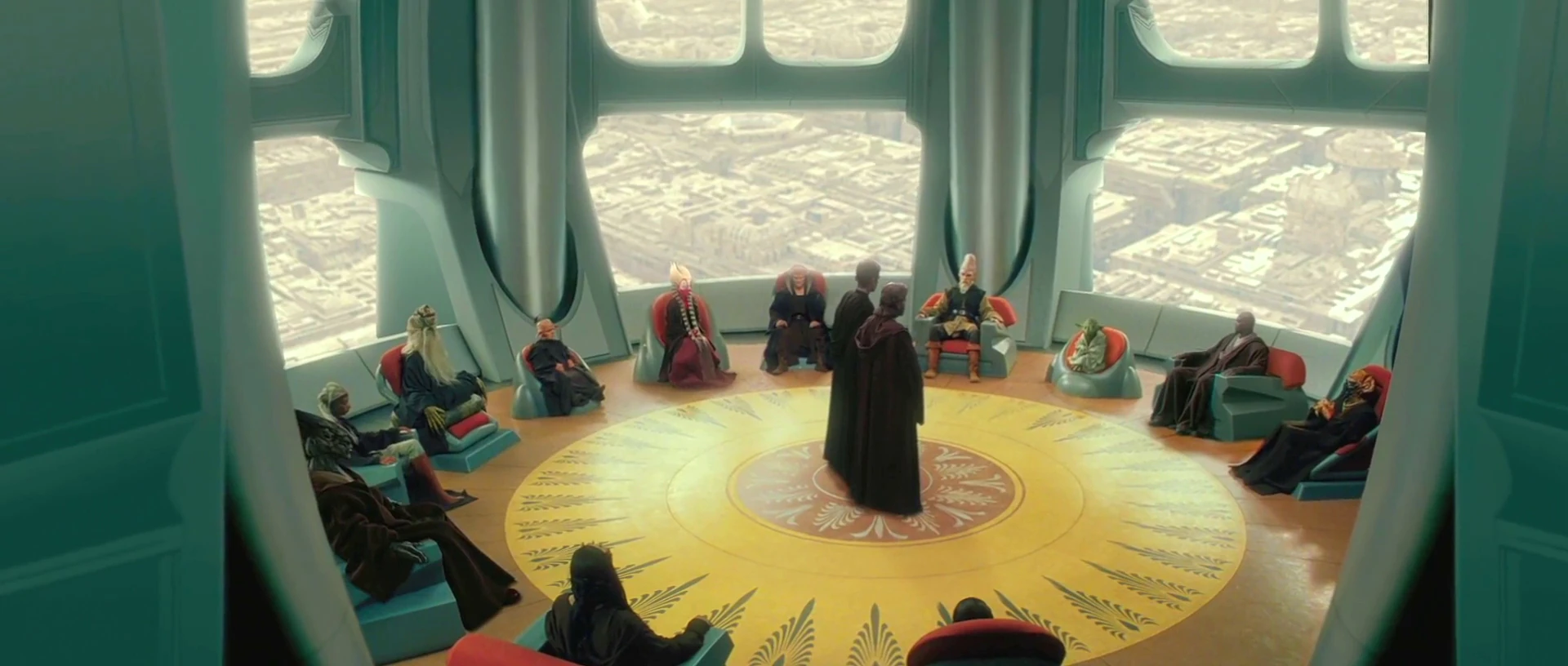
Consider the presence of “Princesses” and “Senators” among the ranks of the Rebellion.  Bail Organa thinks the Republic is worth restoring, but he was a senator in that Republic, so of course he does.  Obi-Wan Kenobi and Yoda also seek to restore the Republic, but the Jedi Council had direct access to the government and enormous privilege back in that era, so of course they do.  Those who run the Rebellion of Psi-Wars naturally follow suit: They represent the dispossessed elite of the former era, the era they call a golden age, and who use the resentment of the common man to restore that golden age for them.  Are they right to call it a golden age?  That depends on your perspective.

Power

Political power grows out of the barrel of a gun
-Mao Zedong

In the end, once you’ve stripped the Rebellion of its moral pretense, you see beneath it a struggle of for who has the right to rule the Galaxy.  This war might well turn on moral principles (the American Civil War certainly did, as did the fight against Nazi Germany), but even the most moral force fighting a war ultimately must have political power when they win their war, and must have political power to win their war.
Wars cost money.  Wars cost lives.  People dedicate themselves to a cause like this because they wish to advance their own personal fortunes.  Even the most virtuous of men must sometimes surrender those virtues “for the greater good.”  Where do you get your funding from?  Perhaps the people you protect!  And you might engage in free trade, but the most lucrative trade is forbidden trade (trade that requires smuggling!) like drugs or slaves.  And if you already have military power, why not trade on that military power to expand your ability to wage war?  And then, soon, you’ve turned from revolutionaries into an organized criminal gang, which is often the fate of revolutions that neither succeed in their arms nor are completely stamped out.  What compromises is the Rebellion willing to make to get its job done?
Even virtues like “freedom, justice, tolerance” ultimately boil down to a promise that you will allow someone to pursue power.  Rebellions often begin when individuals see their power decreasing to the point where they are unable to fulfill their ambitions. Thus, unsurprisingly, many revolutions and rebellions, once complete, turn into dictatorships, because those at the top have more ambition than they let on.  The reforms they promise may well be a ploy to get you to follow them, to lift them up, so that they might become the next dictator.  The “Liberty, egalitarianism and brotherhood” of the French Revolution very quickly turned into murder and dictatorship.  The Empire itself rose as a rebellion against the previous golden age!  How is this new rebellion any better? On that question, much will turn.

Who Serves the Rebellion

Because of its goals, the rebellion tends to attract those who have strong moral fiber, but perhaps with more endurance and sophistication than moral characters who serve the Empire.  Imperial morality is easy, as they surrender their power to the dictator and ask him to fix the ills of the world.  A rebel sees something wrong with the world and is willing to fix it himself, even if it costs him his life.  This also means many in the rebellion have strong, independent streaks,which means they may need to be constantly convinced of the rightness of their cause, which means that all sides must carefully compromise, and it keeps potential corruption in check.
The rebellion also tends to attract the desperate.  From some, the Empire has taken everything.  They have no families left, or worse, they have only a few loved ones left, for whom they are willing to do anything.  They might even serve the Empire, if they thought that was an option, but the Empire’s intolerance has closed the door to that, so their only choice is to fight or die; those that die simply vanish from history; those that fight join the rebellion.  Or, at least, a rebellion.
What counts as “desperate” can come in degrees.  For some, being unable to fulfill one’s ambition is itself a fighting offense. These are the formerly powerful dispossessed, the nobles of the old order, or powers who are otherwise unable to gain traction in the current regime and wish to gain power.  This includes the exiled former rulers of the old Republic, and alien powers with whom the Empire refuses to deal.  From these, the Rebellion receives most of its funding.  Where did you think Starhawks came form?  Surely not from the peasants!
(A note on “The Republic.”  I feel I should stop using this term, as it feels too like Star Wars.  GURPS Space uses many different terms for governments, and I think Federation is probably the closest to what the old “Republic” was, in the classic sense of what a Federation was: a sharing of power between equal powers who share sovereignty with a central pwoer. These powers were the former Noble Houses spawned by the old Empire.  The masters of these Houses represent the powers that shared their power to create the state that ruled the Galaxy, and they represent the nexus around which the Rebellion has crystalized, so from here on out, I’ll refer to it as a Federation or, perhaps, a Concordium; I haven’t decided which I like better).

The Rebel Alliance as Organization

Star Wars refers to the Rebels as the “Rebel Alliance,” something I’ve continued.  I suspect that George Lucas meant to evoke the imagery of the “Allies” defeating Nazi Germany, but I use it for a different reason: I think the rebels aren’t really an organization, not in the sense that the Empire is, but rather a loosely knit group of organizations that form common cause against the Empire.  That is, the rebellion is literally an alliance between disparate groups, all aiming towards a common goal.
These groups are, broadly speaking:
Insurgencies: The people under the thumb of the Empire sometimes rise up to fight its tyranny of their own accord.  They lack funds and training, but make up for it in drive and passion.  These rag-tag bands of orphan-soldiers, bitter old men and wronged women come together to become guerrilla fighters, terrorists and organized resistance that sabotage the Empire and offer their services to the Rebellion.  They become its idealistic foot soldiers and its cannon fodder, not because of the Rebellion’s sinister motives, but the sheer facts of how resistance movements usually end.  They also often fission off, being too extreme for the Alliance, or not devoted enough to its cause.  Finally, this blanket term covers dozens or even hundreds of smaller resistance movements with little or no connection to one another except their shared goal of defeating the Empire, which means organizing them can be a little like herding cats.
The Noble Houses: The elites of the former Federation, now dispossessed.  They have a shadow of their former power, but that still represents real power.  They provide real leadership and they have the money and training necessary to engage in a genuine, “symmetrical” warfare.  This group is deeply traditional and increasingly clings to its status, which creates a tension for its need to connect to the dispossessed commoners who often serve them.  Worse, they have traditionally been rivals with one another, and have only set aside those rivalries to defeat the greater threat of the Emperor, but petty feuds can easily fuel tension between groups.  At their strongest, they use nobless oblige paired with the glamour and prestige of their former positions to impress upon others the need for their leadership; at their weakest, they acknowledge that their traditions gave rise to the Emperor, and that they must be willing to let go and accept new ways if the Galaxy is ever to be set right again.
Alien Powers: The Empire wants to Make the Galaxy Great Again, but only certain, privileged parts of the galaxy.  Many alien powers wanted to partake of the wealth and sophistication of the Federation, only to be shut out by the Empire.  These aliens have turned to the Alliance as a way of undoing this wrong.  These, too, provide material support for the rebellion, offering up soldiers and ships to the war effort, and coordinating with the Noble Houses and Resistance Movements to strike a blow against the Empire.  They represent the power that comes from tolerance, but they also represent external influences seeping into the galactic core, with their own ideals and their own ambitions.  Can we really trust all the alien powers willing to sign up to watch the one power that’s been keeping them in check fall?

Which aliens?  Well, that’ll have to wait until I’ve worked out aliens.  I suspect it’ll also depend on the GM and the players, as this is doubtlessly a set of shifting alliances!

Rebel Challenges

The Rebellion is a patchwork of allied organizations, and thus each head of the hydra is best tackled on its own, which I’ll do over the coming weeks.  Here, let’s look at the joints between them, how they connect with one another.  That is, how do these organizations meet up and plan together, and how to they decide, as a group, what to do? And how might a wicked Imperial agent break into the organization and uncover their machinations?
Generally, the Alliance is only as strong as its weakest links, and it has some pretty weak links.  It relies on civilian sympathy to provide its security, and it has serious financial problems.  Generally, fighting or infiltrating the rebellion is only BAD -0, though it might rise to BAD -2 on more professionally rebellious worlds.  Individual organizations might be more BAD!

Physical Security

This is generally provided by whatever sub-organization is hosting a meeting.

Informational Security

The Rebellion needs to be able to communicate plans across a scattered organization, with many of its agents behind enemy lines.  How does it prevent the Empire from unraveling its plans?
First, the Alliance relies primarily on human (or robot!) hands to transmit information.  Individuals, preferably individuals the Empire has no reason to investigate, such as senators, imperial ministers or complete nobodies on the street, carry whatever vital information directly to its destination, or even engage in a series of relays to make sure it reaches its destination.  This way, an individual would have to deliberately betray the Rebellion, or be visibly arrested, for the information to fall into enemy hands.
Should information fall into enemy hands, the Alliance codes the information, not with cryptography, but with steganography.  That is, the Alliance will send its vital plans for attacking the Empire in the form of a seemingly innocent shopping list or in a hologram of a friend.  To intercept the information, the Empire has to know who will have the information, in what form the message will take, and how to decode it.
Despite all of this, the Alliance always assumes that some messages are intercepted.  As a result, it further layers its informational security with redundancy, red herrings and compartmentalization.  First, the Alliance will send several copies of a message via multiple channels.  Second, some messages will be false, designed to trigger an imperial action of some kind that the Alliance can see (for example, that a meeting will take place at a particular location).  You can watch the results of imperial action, and if they act on a red herring, you know which channels have been compromised.  Finally, no message contains a complete message.  The final message is meant to be cobbled together at its final destination from several sources, or the final message doesn’t contain enough information to compromise an entire operation.  Thus, traitors cannot stop the message from getting through, they’ll be uncovered by red-herrings, and the Empire will only ever have a piece of the larger puzzle.  The trade-off is that a lot of messages need to be sent out to get a complete message to the target, which increases the chance of Imperial interception.
The downside to all of this is that it must be arranged in advance, which typically takes place when the alliance gets together to decide policy, or when agents meet with resistance cells.  Participants are expected to memorize the details pertinent to themselves, though sometimes they’ll be given bots with the appropriate instructions.  Should they be captured, they’re expected to commit suicide rather than divulge the details to the complex scheme, or the robots will self-wipe.  This does mean that if Imperial Agents collect enough high-level people from a rebel network, the alliance needs a considerable amount of time before it can revisit its codes and security procedures.
Finally, the Alliance consists of many people who have a deep understanding of Imperial infrastructures.  Rebels often co-opt or hack Imperial resources, like their data-net, to transmit and communicate right under Imperial noses.  The rule of thumb for the Alliance is “hidden in plain sight.”  They use standard channels, hacked channels, and innocuous steganography to make it virtually impossible to tell what is really a threat and what isn’t.  If this results in imperial officials going on a mad, paranoid rampage ripping up personal correspondences and confiscating entire shipments of hologram-lockets, all the better.

Organizational Security

As already stated, the rebellion relies on compartmentalization to secure its communication channels and its information.  “Nobody” knows enough to destroy the entire rebellion.  In practice, though, this applies more to resistance cells than to the Imperial Houses, which have removed themselves far enough from the Empire and are sufficiently well-defended that they can act as a nexus for decision making for the rebellion.  They tend to know more than most, explaining the Imperial ambition to wipe out those independent worlds.
Beyond that, the Alliance relies on bonds of trust and local sympathies.  The Alliance wants at least two other members of the Alliance to vouch for someone before he’s trusted with major secrets.  Usually, one needs to work ones way deeper into the organization before he’s exposed to anything vital (treat as Security Clearance).  Thus, one might join a resistance cell and fight several battles or perform missions without knowing any larger context before he’s introduced to a higher resistance figure or an external alliance member (such as a member of a house, or a senator) and given more secure (but less vital) missions as a test of loyalty, and once the rebel has confirmed his loyalty, then he might be inducted into upper ranks, introduced to more people, allowed to carry messages, and so on.  
Members of the alliance know each other personally.  They form networks of friendship and trust.  They make a point of socializing with one another, introducing each other to their family, and inducting them into their social circles.  To betray the alliance is to betray your friends and family.
This also explains how their recruitment works.  They generally blanket the area with propaganda (at least in the form of whisper campaigns, if media is heavily censored), and they make a point of seemingly anonymous magnanimity and friendship, only to reveal later the source of that generosity.  They might also ask for favors that only later turn out to be for the rebellion, thus indicting the unwitting accomplice, which is usually revealed at the same time as the source of the generosity, creating a carrot and stick situation (“We helped you, and also, you’ve already betrayed the Empire.  Why not work for us to take them down?”)  
For example, a senator might assist a security agent with personal problems, and then invite him over for dinner, introduce him to his children, help the agent’s children get a superior post in a ministry, offer a sympathetic ear when ever the agent discussed imperial corruption (even encourage such talk), and then ask for a small favor (smuggling a small knick-knack through customs that’s technically forbidden because it’s from an imperial-sponsored archaelogical dig, but it isn’t actually anything of real value, like a potsherd), and then reveal that the senator has been working for the rebellion the whole time, and that the potsherd contained a stenographic message, that most of the agent’s friends and family are also part of the alliance now, and that the agent is fed up with corruption within the Empire.  He could turn the Senator over to the authorities, but not without raising questions about his own involvement, and also, it would perpetuate the problems in the Empire.  Why not work to help bring about a better age?  If he agrees, of course, he’s only given low-risk missions, with the assumption that he may well be working undercover now, but the alliance continues to work him, to build trust and camaraderie and point out the flaws of the Empire, so that even if the agent quietly reported the contact to his superiors, he might change his mind and commit fully to the alliance.
This network extends throughout the whole civilian population.  Many sympathizers are nothing more than children or house wives or old men who keep their eyes open.  Their lack of importance makes them invisible to Imperial eyes, and they keep their eyes on imperial and alliance agents alike, ensuring that allied agents stay loyal and they watch for wavering imperial loyalty, or simply report on dangerous imperial activity, like a coming crack-down.  They also buddy up to rebels, offering them praise, asking for stories and treating them like heroes.  Rebels often feel like rock-stars because the rebellion treats them as such; it might help to think of the rebellion as a cross between an extended, if distant, family, and a cult.

Allied Agendas

The alliance wishes to destroy the Empire, and then transition to ruling the galaxy itself.  First, though, it needs to lay the groundwork for both that destruction and transition.  To do this, it needs to undermine the Empire, convince the Galaxy that its better off without the Empire, then it needs to convince the Galaxy that it’s better off with the Alliance at its head, that the Empire was an abberation and the Alliance restores the Galaxy to its former golden age. Then it needs the power necessary to destroy the Empire, and it needs to work out who will be in charge of what, to prevent a mad scramble for power at the last moment that will precipitate a new galactic civil war, or result in a new Emperor.

Subvert the Empire

First, the Alliance needs to undermine Imperial power and legitimacy.  It might:
  • Reveal (or concoct) evidence of warcrimes or corruption.
  • Sabotage Imperial infrastructure in such a way that it looks like Imperial incompetence and that inconvencies and/or causes the suffering of millions of civilians
  • Subvert major officials via bribery of blackmail
  • Destroy Imperial infrastructure dedicated to the building of military capability
  • Free prisoners

Gather Power and Legitimacy

The Alliance must do more than prove the Empire unfit for governance; it must prove its own fitness, and it must have the power necessary to unseat the Empire.  To this end, it might:
  • Destroy pirates threatening ignored worlds (providing law and order)
  • Provide (smuggle?) medical aid to ignored worlds
  • Secure an alliance with a foreign power, with a powerful house, or with a rich corporation
  • Steal wealth to finance its own ends (ideally Imperial finances, of course, but any finances will do in a pinch)
  • Spread a whisper campaign of the right to rule of the exiled noble houses, or otherwise use propaganda to convince people of the rightness and nobility of the Alliance.

Destroy the Empire

Once the Galaxy has been converted to the Allied cause, the Alliance must actually unseat the Empire.  To this end, it might:
  • Assassinate a powerful official
  • Sabotage and destroy a major military project
  • Ambush imperial forces and destroy them
  • Conquer an imperial world and declare its sovereignty, then negotiate for its induction into the Alliance “of its own free will.”

Ensure Smooth Transition

Once the Empire has been removed, a power vacuum will form, and the Alliance must step smoothly into that vacuum, “restoring” the old Federation.  To do that, it must:
  • Secure binding treaties with its allies
  • Arrange ahead of time which Allied leaders will have what positions (“Carve up the Empire”)
  • Spread propaganda depicting what the new Federation would already look like, to cement the idea in the minds of the people.


Imperial Black Ops

When I realized I needed imperial intelligence, it occurred to me that the Imperial Navy would never trust Imperial Security to handle its intelligence needs.  The rivalry between these two, heavily armed sides of the Empire simply wouldn’t allow it.  While I expect Imperial Security has the Emperor’s personal sanction to spy on its enemies and hand that information up the chain of command, which then could be passed down to the Imperial Navy, the Admiralty would want its own intelligence assets, ostensibly for immediate, battlefield intelligence, but in practice, also as a check against the growing power of the security bureau, and for the benefit of individual admirals.  “You have assassins?  I have assassins too!”

The Imperial Navy and Imperial Security work fundamentally differently, which means I’d expect their intelligence branches to work differently as well.  Imperial Security works within the Empire, and uses the Empire against itself.  It captures prisoners and uses their information.  It terrorizes the citizens and uses that power to expand itself.  The Admiralty, by contrast, is independent and self-contained.  It sends out its fleets far from the Empire, and cannot rely on local Imperial resources to work for it.  It also has a different mission: Imperial Security needs to keep the Empire in line, while the Imperial Navy needs to destroy opposition to the glorious Empire.

The result is a new intelligence branch: Imperial Black Ops.  This answers to the Admiralty directly, and uses its own assets and resources to perform its tasks, which primarily consist of sabotaging enemy installations and assassinating enemy leadership.  This is the commando arm of the Imperial Navy.  It doesn’t have the official status that Imperial Intelligence has, but the Grand Admiral implies that he has a secret edict from the Emperor himself allowing it to exist, and Imperial Black Ops does receive “black book” funding from the Empire, and its actions have evaded any imperial audit thus far, suggesting that it really does have the stamp of approval of the Emperor.  If this is untrue, however, it may well mean that the Grand Admiral has taken his first step against the Emperor.

This is also a great spot for PC Imperial Commandos to work, which is a nice side-effect!

Imperial Black Ops

Imperial Black Ops Agendas

Imperial Black Ops exists primarily to provide intelligence to the Imperial Navy.  It generally does this by monitoring foreign signals (“signal intelligence”) and with lightning raids against information-rich targets, though this latter definitely tips Black Ops’ hand, as these raids are singularly violent.
While not explicitly in their charter, Black Ops’ excellence at lightning raids make them an excellent choice for assassinations and sabotage.  They also need a place to keep all of their ill-gotten gains, such as information-rich prisoners or detailed enemy plans, which means Black Ops has highly secure “Black Sites.” The security and secrecy of these “Black Sites” allow Black Ops to act with plausible deniability, and which means it can investigate illegal and immortal weapons technologies, which it can use to empower the Imperial Navy.  If these technologies pan out, the Imperial Navy can “normalize” them by “discovering” them in their own labs.
Example Agendas include:
  • The Grand Admiral has reason to believe that an alien world is planning to defect and join the Rebel Alliance.  Interstellar chatter puts a particular official at the center of the conspiracy and as a central contact point for the Alliance.  Black Ops needs to raid the alien world, capture this official so they can interrogate him and learn what he knows, but they need to do this in such a way that the Empire can plausibly argue that some local faction did the deed, while also bearing enough Imperial hallmarks that the alien king can draw his own conclusions about going against the Empire.
  • Imperial Intelligence cultivates criminal empires beyond the borders of the Empire, and an Agent that Intelligence claims they burned sits at the heart of this criminal syndicate, which has been regularly interfering with Naval activities at the behest of Imperial Intelligence, or so the Grand Admiral is convinced.  Black Ops is to raid the criminal syndicate, destroy several key sub-orginizations, and then to assassinate the head of the Syndicate and to deliver the head of its leader back to Imperial Intelligence.
  • The daughter of a high-ranking Ministry official has been taken prisoner by an alien race on trumped up charges.  The race is currently engaged in delicate, diplomatic negotiations that would be ruined by the visible display of a major military action to rescue the girl, but the alien potentate is definitely using her as leverage against the Ministry official.  Black Ops is to slip on the planet undetected, and then break the girl out of prison and return her to her father, while ensuring that no specific evidence is left that the Empire, itself, did the deed.
  • Black Ops has perfected a prototype viral weapon which should be capable of destroying a particular alien populace without touching humans.  Naturally, deploying such a weapon would greatly benefit the Empire, but also blacken its name.  Furthermore, it has not yet been tested “in the wild.”  One world lies under Imperial interdiction, and thus no people can get on or off, which makes for a great quarantine, and contains both humans and this alien race.  Black Ops needs to slip past the Imperial blockade undetected, deliver the viral weapon without detection (it can never get out that the Empire did this) and then report the results back to Black Ops.

Imperial Black Ops as opposition

Black Ops can afford to be the best of the best.  It lacks the raw recruits of the rest of the Empire, and has extremely secure facilities.  It’s universally at least BAD -5, but might, at its highest levels, be BAD -8.
Black Ops definitely deploys high powered personnel and materiel, discussed in tomorrow’s post.

Serving Imperial Black Ops

Black Ops Ranks

Black Ops characters have the same ranks as the Imperial Navy, they just have different missions and different priorities.  In principle, they represent a parallel branch of the military, up to rank 8, which means black ops have their own admirals that answer to the Admiralty and, especially the Grand Admiral himself. The infamous, traitorous “Black Fleet” was one such fleet.
Black Ops characters usually have Security Clearance (Black Ops) [10], which represents access to Black Ops secrets only.  Black Ops commandos know of the entire shadow military lurking at the heat of the Imperial Navy. This is usually only granted to officer-rank characters, with Black Ops “grunts” unaware that of their true allegiance, or the real importance of a particular mission.  The result is that Black Ops rarely uses armies of grunts, preferring to use elite, officer-level commandos.

Black Ops Favors

Entry Clearance (PR 13): Black Ops has scattered “black sites” where they hold prisoners, experiment on secret weapons, and have their own, special military installations.  Entrance onto this might require Security Clearance.
Cover-Up (PR 14): Black Ops have the capacity to cover-up missions gone wrong, or to wipe out anyone who has uncovered one of your secrets.  They tend to do it with much less finesse than Imperial Intelligence, though: expect much carnage.
Disappearance (PR 14): Black Ops is far better at murdering people than capturing them, but it can try the latter, if that’s what you need.
Insertion/Extraction (PR 14): Black Ops has access to uniquely stealthy vessels that can slip in behind enemy lines to drop you off or pick you up for your stealthy mission.  In fact, this is largely the purpose of Imperial Black Ops!

Safe House (PR 15): Black Ops has a scattered “fall-back” positions throughout space, usually secured to highly specific codes.  If you need one, they can open it up to you.  Such safe houses feature arsenals of weapons and automated medical facilities.

Technical Means (PR 15): Black Ops has less blatant access to Imperial resources than Imperial Intelligence does, but it still has considerable resources.  It can engineer poisons or viral weapons, crack codes, analyze enemy movements, etc.
Consultation (PR 15) and Specialists (PR 19)Black Ops has access to many of the same strategic specialists that the Imperial Navy does, but they also have military weapons researchers, which give them access to specialists with Bioengineering,  Engineering (Any), Hazardous Materials (any), Pharmacy (Synthetic) or Poison.
Gear (PR 16): Imperial Black Ops have access to most Imperial Naval resources, but they also enjoy their own exclusive gear.

Treatment (PR 17): Imperial Black Ops has access to top-of-the-line medical facilities, and can even treat relatively unknown diseases and poisons, as they have extensive knowledge dealing with the more insidious poisons and diseases of the galaxy!

Facilities (PR 18): Imperial Black Ops has numerous “black sites,” including “black” repair sites, secret facilities for repairing ships, which likely have additional resources available to its commandos.

Travel (PR 19): Imperial Black Ops has access to the same resources as the Imperial Navy for getting you to your final location.

Fire Support (PR 19): Imperial Black Ops does have access to its own special brand of Dreadnoughts and Vanquishers, which means it can engage in orbital strikes.  It doesn’t usually have artillery, though.


The Cavalry (PR 19): Imperial Black Ops employs crack commandos, which it can offer to any officer serving it.

Character Considerations

Prerequisites: Characters serving Imperial Black Ops need at least Wealth (Average)Military Rank 0 (Though 3+ is more common), and Duty (15 or less, both extremely hazardous) [-20]. Black Ops officers (Military Rank 3+) may take Security Clearance (Black Ops) [10].  They also need Secret (Black Ops Commando) [-10], which represents the fact that technically nobody is supposed to know about the existence of Imperial Black Ops.  Generally, being revealed as a secret commando of the empire results in your dismissal from the service and disavowal by the Empire.  This might be escalated to a “war crime” or “insubordination” if that’s necessary to hide the tracks of Black Ops, but in general the Empire is satisfied to simply state that you were a rogue commando and then gently release you into the public (In fact, quite a few Black Ops commandos seem to be retired commandos, possibly even outed commandos, who still quietly work for the Empire from their apparent exile).

Black Ops, as a whole, taken as an enemy, is worth -30 points.  A single black ops admiral is worth -20 points.  A single black ops admiral (and his fleet!) as a patron is worth 20 points.

Imperial Intelligence

Imperial Intelligence evidently does end up in Star Wars, and is evidently explicitly mentioned in Rogue One, though I haven’t found an explicit reference to it. This makes sense, as a dictatorship needs to rely on secret police, which means it needs to spy on outsiders, as well as its own population.  The line between Imperial Security and Imperial Intelligence, thus, probably blurs, and that’s how it’s going to be in Psi-Wars as well.

I had just finished my Imperial work when I realized that I was missing Imperial spies, which is definitely a gross oversight, but at the same time, I also realized that the Imperial Navy would never trust Imperial Security to gather its intelligence for it.  Thus, just as the US government has a variety of intelligence agencies that sometimes come into conflict, so too does it make sense for the Empire to have multiple intelligence agencies, highlighting the fault lines of Imperial power.

Today, though, I want to focus on the “conventional” spies, that of Imperial Intelligence.

Imperial Intelligence

Imperial Intelligence works side-by-side with Imperial Security, two sides of the same coin.  Both answer to the Emperor’s Hand, and both follow the same organizational designs.  Intelligence ostensibly focuses on protecting the Empire from external enemies, while Imperial Security protects them from internal enemies.  In practice, Imperial Intelligence regularly spies on its own citizens, works with the Emperor’s Hand to concoct secret plans, and raids Imperial Security for access to useful and interesting prisoners.  In a sense, Imperial Intelligence is everything that Imperial Security is and more, except they lack legitimacy. They cannot legally make arrests, or legally detain people.  For that, they rely on Imperial Security.
The primary purpose of Imperial Intelligence is to spy on the enemies of the Empire. In this role, they infiltrate alien governments, uncover plans against the Empire, and bring back any information they find about threats to the Empire.  They also act to sabotage the enemy, and in this broader role, they receive broad powers from the Emperor.  If the enemy already has agents acting within the Empire (say, the Alliance has infiltrated the Empire), then they may act upon Imperial soil, though if they need to make actual arrests, that remains in the jurisdiction of Imperial Security.
In practice, this need to quietly act against the enemies of the Empire means that Imperial Intelligence often quietly builds small, “black” empires among the criminal community.  They use information gained in Imperial prisons to form connections with black markets, rebels and criminals, and then infiltrate, form alliances with or extort assistance from these groups to take down their enemies.
This creates a strange dichotomy within Imperial Intelligence.  Cultural intolerance for outsiders mean many imperial agents look down on the very people assisting them, using them as disposable pawns to advance their own agendas for the good of the Empire.  But this constant interaction with non-imperial criminals rubs a bit of their culture off on the Empire’s spies, who begin to speak the languages and practice the customs of the very aliens the Empire supposedly abhors.  They begin to become criminals and warlords, and the line can become exceedingly fuzzy, especially with the lack of oversight the empire has over its spies, made necessary by the need to keep their actions quiet.  When an Imperial betrays the Empire, usually, it’s one of the Empire’s own spies, though sometimes, this is only because the Imperial has become a double agent.

Imperial Intelligence as Opposition

Imperial Intelligence works much as Imperial Security, and is typically BAD -2 to -5.  Imperial Intelligence does not have legions of minions at its disposal.  Instead, it deploys elite agents (treat them as PC-level Spies and Assassins) or, sometimes, it offers criminals a chance at freedom by serving Imperial Intelligence for a few “suicide” missions, after which they’re sometimes freed, or sometimes executed.  These tend to be BAD -2 and desperate for their freedom.

Serving Imperial Intelligence

Imperial Intelligence Ranks

These mirror the ranks of Imperial Intelligence, except the Ranks 0-3 tend to lack military connotation and have more civilian names like “Operator” and “Manager.”  Like with the Ministry, the titles of low, “non-commissioned” ranks are unofficial, made more true by the fact that many of Imperial Intelligence’s spies don’t officially work for Imperial Intelligence.  Instead, they’re run by a controller who handles whatever intelligence they have to offer to the Empire.
Ultimately, Imperial Intelligence answers to the Ministry of Justice and the Emperor’s Hand, just as Imperial Security.  However, the directors (Rank 6) usually gather together as a Board of Directors, headed by a Chief Director who answers to the Emperor’s Hand directly.  He represents a rank 8 Intelligence Rank position.
Imperial Intelligence also deploys Special Agents, but these do not have Law Enforcement Powers but, instead, Security Clearance (Total) [15].  This negates any penalties for asking for access to anywhere within the Empire!
Additional roles within Imperial Intelligence include interrogators and controllers.  The first work closely with Imperial Security, torturing prisoners to get at vital information.  If necessary, they’ll ply their brutal arts in remote “black sites,” though the state of imperial human rights are such that this is seldom necessary.  Controllers manage imperial intelligence assets.  While Imperial Intelligence definitely employs “James Bond”-style special agents, most of its information comes from human assets, like prisoners, traitors or informants.  When the Empire identifies a useful potential asset, they convert them (often with bribes or blackmail), and then a controller is assigned to them, who milks them for information and gives them tasks to expand imperial power.  Controllers often work closely with the Ministry of Affairs, sometimes without the knowledge of the ministry.

Imperial Intelligence Favors

Entry Clearance (PR 13): Imperial Intelligence has “black sites,” secret research facilities and secret prisons.  Gaining access to any of these might require pulling rank.
Bribe or Hush Money (PR 14): Imperial Intelligence has nearly bottomless “black funds” that aren’t earmarked for anything.  Agents can ask for nearly anything with very few questions asked.
Cover-Up (PR 14): Imperial Intelligence regularly engages in anti-propaganda campaigns and hides imperial war-crimes.
Disappearance (PR 14): The enemies of the empire sometimes vanish into the night.
False ID (PR 14): Imperial Intelligence has limited resources outside of the Empire (though it does have some pull), but it can easily provide you with any Imperial credentials you need.
Insertion/Extraction (PR 14): Imperial Intelligence doesn’t have access to unique ships, but it can send any Security vessel to pick you up, but more often it employs confiscated civilian vessels: sometimes a smuggler is really just an imperial agent!
Technical Means (PR 15): The Empire has vast computational resources at its disposal.  If an Agent needs extremely well-forged documents or codes to be cracked, the Empire can easily provide.
Consultation (PR 15) and Specialists (PR 19): Imperial Intelligence employs well trained specialists, with skills between 15 and 18.

  • Analysts have mastered Intelligence Analysis, and usually have Research and Current Affairs (Politics and others) at solid levels.
  • Interrogators have mastered Interrogation, and are often skilled in Diplomacy, Intimidation and Psychology.
  • Controllers have mastered Psychology and are often skilled in Diplomacy, Intimidation and perhaps even Brainwashing, but their real benefit is their ability to access useful intelligence assets.
    • Intelligence Assets might be nearly anything, from criminal informants to turncoat rebels to desperate housewives.  They usually have a specialized skillset, but their real benefit is the knowledge they can provide.

Files (PR 15): Imperial Intelligence keeps extensive tabs on foreign governments and has access to numerous state secrets, which it might offer up, though be sure to note that most of this is highly sensitive and will result in a penalty without Security Clearance.

Gear (PR 16): Imperial Intelligence might boast cool gadgets at the GM’s discretion (especially covert gear from the gear list), but it more often has access to numerous confiscated and disguised vehicles, weapons, armor, etc, which it can offer an agent who is infiltrating enemy organizations

Muscle (PR 19): Imperial Intelligence prefers using highly skilled agents (read, PCs or named NPCs) rather than swarms of commandos.  That said, it regularly offers pardons to prisoners in exchange for black ops suicide missions.  If pushed, Imperial Intelligence can provide such a “Suicide Legion” for the players.

Character Considerations

Prerequisites: Characters serving Imperial Intelligence need at least Wealth (Average), Intelligence Rank 0 (Though 3+ is more common), and Duty (12 or less or 15 or less, both extremely hazardous) [-15 or -20].  Special Agents (Intelligence Rank 4+) may take Security Clearance (Imperial) [15].

Imperial Intelligence is too compartmentalized to take the entire organization as an enemy.  A single enemy special agent is worth -10 points, and an ally Special Agent costs the same.  For patrons, see Ministries.

The Imperial Navy

We find that the Romans owed the conquest of the world to no other cause than continual military training, exact observance of discipline in their camps, and unwearied cultivation of the other arts of war.
Publius Flavius Vegetius Renatus


When the tyrant has disposed of foreign enemies by conquest or treaty, and there is nothing more to fear from them, then he is always stirring up some war or other, in order that the people may require a leader.
-Plato

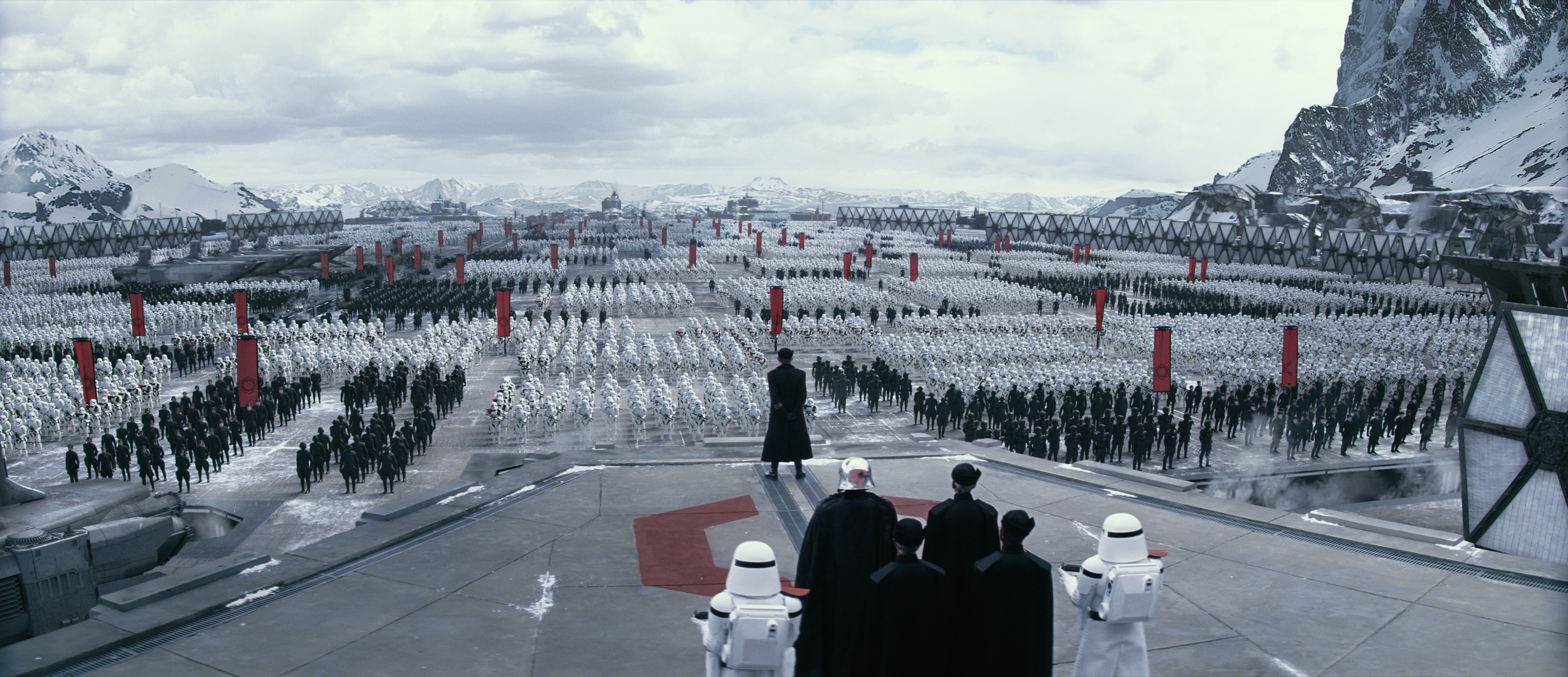
The Empire is, at its core, a militaristic organization. The motion towards empire began with the adoration of a military leader, resulting in sufficient military power and the worship of that power to topple the democracy that had so long ruled the Galaxy, and now, that military power serves its empire by constantly expanding its borders and acquiring their wealth to feed its own war machine.

Most of the rest of the Imperial organizations exist either to support the military or to keep its power in check.  The Imperial Ministry researches military weapons, provide propaganda to support its recruiting efforts, and manage the tax revenue that pays for its acquisitions and soldiers. Justice and Imperial Security watch over the might of the Imperial Navy, ensuring that it doesn’t turn its power on the Emperor and overthrow him.

In Star Wars, the Empire was its military force.  We never saw any aspect of the Empire except its Star Destroyers, its stormtroopers and its tie fighters.  This means I had a paucity of material to work with when it came to other aspects of the Empire of Psi-Wars, but too much to work with here.  Now, I need to strike a slightly different note… or not worry about it excessively.  Between technology and more careful work on military doctrine, we have a somewhat unique force forming.

The Imperial Navy

Ostensibly, the Imperial Navy falls under the purview of the Ministry of Defense, but in practice, the Ministry of Defense acts as the bureaucratic toadies to the true movers-and-shakers of imperial power, the Admiralty, headed by the Grand Admiral himself, who answers directly to the Emperor.

The Imperial Navy safeguards the Empire, and it does so preemptively and proactively.  If the Empire judges that something is a threat, or that something could be a threat, the Navy flies to the Empire’s “defense.”  They often work with the Ministry of Affairs, using military force as an extension of diplomatic pressure and vice versa.  If a world is under genuine threat, the Imperial Navy should always move to protect or relieve it

The Imperial Navy divides into fleets, and each fleet is run by an Admiral, who has a great deal of leeway in how he runs his military.  The Empire, constantly aware of how dangerous military power is, keeps close tabs on its admirals and expects them to follow Imperial orders: the Empire would rather risk defeat than have an excessively proactive officer on its hands.  That said, galactic distances being what they are, admirals often have enough of a leash to act on their own, conquering worlds without official Imperial permission and then gaining sanction after the fact, and usually some honors in the process and, of course, if some treasure disappeared from the conquered world, the Empire isn’t going to look too closely into it.  Thus, a post in the Admiralty is perhaps one of the fastest tracks for personal advancement in the Empire.

Ground forces fall under the purview of the Navy.  They have their own leadership hierarchy and administration and is classified differently under the Ministry of Defense paperwork, but ultimately, the army falls under the jurisdiction of the Grand Admiral, and thus serves the navy; there is no “Grand General.”

Agendas of Imperial Navy

The Imperial Navy, like any other organization in the Empire, works to advance the interest and careers of its top brass, but it also serves to protect the Empire from external threats and, more importantly, to expand imperial power by invading other worlds. Examples of Naval Agendas might be
@page { margin: 0.79in } p { margin-bottom: 0.1in; line-height: 120% }

  • Diplomacy has failed. The Ministry of Affairs has already quietly evacuated the most important personnel from the world under the pretense of a change of staff and brought with it vital intelligence about the location of garrisons and the layout of the land, plus evidence (fake or otherwise) of the local regime’s cooperation with the Rebel Alliance. The Empire wants to strike now. Thus the local admiral is tasked with arranging sufficient manpower to conquer an entire planet, which must be coordinated with the timetable of the Ministry of Affairs, for their release of their evidence, and allowing for the installation of the leader they wish to have in place, all while keeping the affair quiet enough to keep from tipping off the locals. After all, the last thing the Empire wants is actual cooperation with the Rebel Alliance.
  • An alien power has ambushed and defeated a flotilla of Imperial ships, even going so far as to capture a dreadnought and its commodore. While the Ministry of Heritage scrambles to spin the defeat, the Imperial Navy must assign responsibility for the debacle (ensuring that no blame gets back to the Grand Admiral), then reinforce its position to prevent further incursion, then dispatch a new flotilla to recover, or destroy, the captured ship and officer.
  • A world proved too difficult to take or to hold, so the admiral ordered it cleansed. Total destruction followed as an entire Imperial fleet opened fire on the rebellious world and left nothing but a burning carcass of a world behind. And now, the Populists in the senate cry foul. The Navy needs to concoct evidence of weapons of mass destruction and imminent threat from the now-dead world to explain the fierce action, or, barring that, find a way to pin the blame on a lower officer. Either way, the admiral who ordered the destruction has no intention of going down for the deaths of a mere billion rabble!

Imperial Navy as opposition

 The Ministry of Defense, like most Ministries, won’t field anything more dangerous than aggressive secretaries and is seldom a major threat.  It’s usually BAD -0 to -2.  On the other hand, it seldom has anything more interesting than accounting books, payment schemes, personnel files, and communiques to the other Ministries.  It seldom has anything extraordinarily interesting or useful, though particularly cunning investigators might begin to suss out larger plans from the dregs of Defense data.

Real power rests with the Admiralty, which is typically Bad -2 to -5.  Where possible, the Imperial Navy tries for BAD -5, but often, the huge demands for personnel and reality being what it is pushes its forces down to BAD -2, though high level Admiralty is usually surrounded by BAD -5 minions and security.

The Imperial Navy bristles with combat-oriented personnel and military vessels.  Personnel includes:

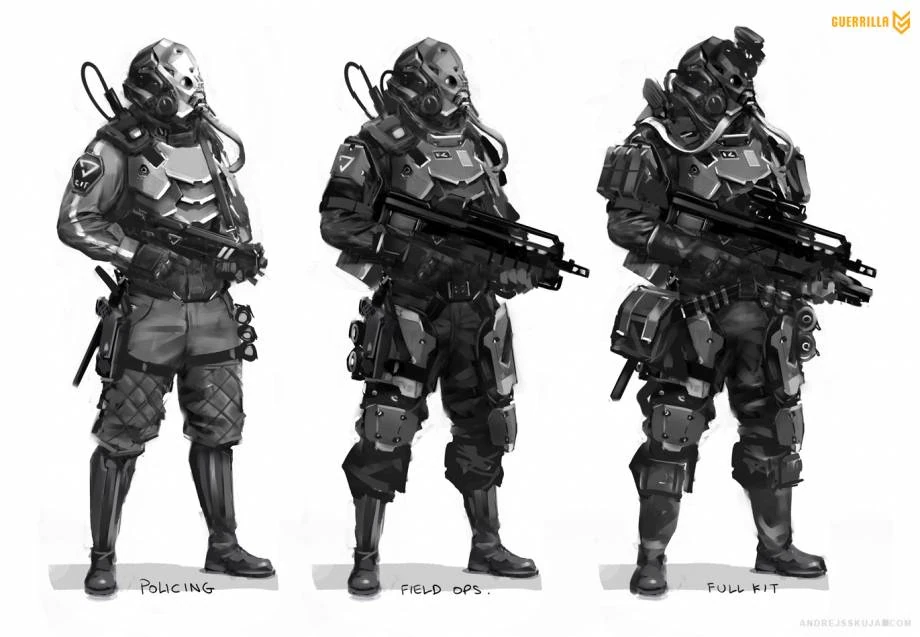
  • Troopers armed with combat carbines and light hardsuits
  • Elite troopers armed with cutting-edge blaster carbines and heavy hardsuits
  • Combat Engineers armed with flamers, explosives, mines and construction equipment
  • Recon commandos armed wtih sniper rifles and forward observation gear
  • Combat Pilots
The Imperial Navy also fields vehicles including:
  • Recon grav bikes
  • Tanks
  • Infantry Fighting Vehicles
  • Mobile Artillery
  • Close Air Support ships
  • Drop Ships
  • The Typhoon-Class fighter and its variants
  • The Empire-Class Dreadnought
  • A Planetary Assault ship
  • Imperial Cruisers that support the larger dreadnoughts

Serving The Imperial Navy

Imperial Security Ranks

10: Emperor
9: Grand Admiral
8: Admiral
7: Vice Admiral, General
6: Commodore, Colonel
5: Captain, Major
4: Commander, Captain
3: Lieutenant
2: Midshipman, Chief Petty Officer, Sergeant
1: Petty Officer, Corporal
0: Crewman, Trooper
Enlisted naval crews begin as Crewmen, who serve any role required of them (Gunners, janitors, technicians, etc).  Teams of crewmen fall under the leadership of Petty Officers, who serve under the guidance of the Chief Petty Officer.

Naval officers begin as Midshipmen, who command enlisted directly, often acting as crew leads in smaller vessels and assistants to lieutenants in larger vessels.  Lieutenants serve as bridge crew assisting the command of a vessel, or commanding a department on the ship.  Commanders either serve as Executive Officers, assisting the Captain of the vessel or command smaller vessels, such as Corvettes or fighter squadrons.   Captains command capital ships or dreadnoughts.  Commodores always command at least a dreadnought and usually command formations of capital-class or dreadnought-class ships.

Beyond this we move into the Admiralty.  Admirals command entire fleets which serve in interstellar regions.  They’ll subdivide their fleet into task forces and place these under the command of Vice Admirals, who usually govern all the ships in a star system, or Commodores, if it’s a very small task force.  All the Admiralty answer to the Grand Admiral himself, who answers to the Emperor.

Ground forces, because they need to be transported from world to world, fall under the jurisdiction of the Admiralty.  Even so, they have their on ranks and classifications.

A given trooper is a trooper.  Troopers form fire teams of 3-5, headed by a corporal, and then into squads of 10, lead by a sergeant.  Together, three to five squads form a platoon, led by a lieutenant and his sergeant.  2-4 platoons for a company, which serve under a Major, with a Captain as his second in command (who may lead one of the company’s platoons directly).  Beyond this runs into regiments, run by Colonels (who will often command all troops on a particular dreadnought) or a General, who acts as the administrative head for all ground forces under an Admiral’s command, and may command the forces of a Legion-class Assault Carrier directly.

Tanks are generally run by troopers and commanded by sergeants, just like squads.  A group of three tanks is a “tank platoon,” and is governed by a Lieutenant with a sergeant assisting him.

Favors of the Imperial Navy

Entry Clearance (Pulling Rank p 13): The Imperial Navy has secured facilities, such as its shipyards or fortresses, that it doesn’t allow just anyone to enter.
Consultation and Specialists (Pulling Rank p 15): The Imperial Navy can offer Contacts with skills like Administration, Intelligence Analysis, Leadership, Strategy and Tactics, representing military attaches or military advisors.  They’re usually between Skill 15 and 18.
Files (Pulling Rank p 15): The Imperial Navy (and the Ministry of Defense) has detailed personnel documents.  The Imperial Navy itself has deployment records and the specifications of its ships.
Gear (Pulling Rank 16): The Imperial Navy can offer up its astonishing arsenal to its members.  Because it’s a 30-point patron, this comes in with a default +6.  This generally includes nearly any trooper gear or access to a combat vehicle like a fighter.
Evacuation (Pulling Rank 17): The Imperial Navy to the rescue!  Dreadnoughts will descend from the sky and send shuttles racing to pick you up.

Treatment (Pulling Rank 17): 
The Imperial Navy also maintains extensive hospital facilities for its wounded soldiers, who will happily patch up its members..
Facilities (Pulling Rank 18): The Imperial Navy has superior ship-repair yards, which it might open up to those who serve it.

Fire Support (Pulling Rank 19): The Imperial Navy backs up its words with firepower, and its commandos can call down that inferno upon their enemies.  The most common forms of Fire Support are artillery fire, close air support, a flight of typhoon fighters or bombers, or an orbital strike from a dreadnought’s spinal cannon.

The Cavalry (Pulling Rank 19): The Imperial Navy doesn’t to anything gentler than this.  It will send a full platoon of troopers (BAD 2), between 10-15 elite troopers (BAD 5) or 5-10 fighters for a space-based request.

Character Considerations

Requirements: Characters serving the Imperial Navy must have a minimum of Wealth (Average) [0], MIlitary Rank 0 [0], and Duty (12 or less or 15 or less, Extremely Hazardous) [-15 to -20].
Taking the whole of the Imperial Navy as one’s enemy is too much.  A single Admiral as an Enemy is worth -20 points by default.  Admirals also make interesting Patrons, worth 10 points.

Imperial Security

You are under arrest, my lord. 

-Mace Windu, Revenge of the Sith 

I never broke the law! I AM THE LAW! 

-Judge Dredd

I must admit surprise that Star Wars almost never deals with the police (The films; the EU references the Imperial Security Bureau).  Sure, I realize that Star Wars is, of course, about war, but so much of what Star Wars deals with actually falls under something a police officer would deal with: A smuggler should fear the port authority (and not Storm Troopers), and a conspiracy of evil Sith should be uncovered by detectives, not by space knights.  In fact, we regularly see military personnel or the Jedi acting in a police role that the sudden and inexplicable abscence of the police becomes rather transparent, at least to me.  That, alone, is enough to justify the inclusion of Imperial Security (something the Old Republic does as well, by the way).  But I have more reasons.

Hannah Arendt, who wrote the classic analysis of totalitarianism,said that totalitarian societies had three characteristic institutions:massive propaganda efforts directed at their own populations, secretpolice forces, and concentration camps that caused mass deaths.   

-Bill Stoddard, Social Engineering

A police force imposes the will of the government on the people.  The Imperial Ministry may make the law but Imperial Security enforces those laws.  More than that, dictatorships need police, taken to extreme levels.  The Empire is almost certainly CR 6, and it must therefore police its people to make sure that no “sedition” or “corruption” has seeped in, and that nobody threatens to topped the delicate structure upon which the Emperor has settled his throne.  All must embrace the cause, all must understand the divine purpose of the Emperor, and all who do not must be found, convicted and shipped off to labor camps to die out of the public eye.

More than any single force, I expect the players will run up against Imperial Security.  When they try to assassinate officials, or smuggle medical supplies onto a rebellious world, or when they’re trying to make sure their machinations aren’t uncovered by the empire, it’s Imperial Security, not the Imperial Military that they’ll face.  Thus, we need them, both as someone to serve (especially if you’re a Bounty Hunter), but especially as opposition.

Imperial Security

Imperial Security, or the Ministry of Justice, enforces the Emperor’s will.  They act as guard dogs, rooting out sedition, conspiracy and crime, and anything that would undermine the Emperor setting the Galaxy right again.
Arguably, the Empire enforces its laws on three levels.  First, it relies on local law enforcement to enact the will of the Emperor.  The Empire allows conquered (or “allied”) worlds to police themselves, using their existing law enforcement structures, provided they don’t step out of the imperial line.  
Imperial Security itself serves broader roles.  It acts as a supplementary force for existing law enforcement, bringing additional firepower if locals don’t have enough, and it investigates crimes in an interstellar jurisdiction.  That is, if a known criminal escapes off-world, he’s Imperial Security’s problem.  Imperial Security enforces the law with people who are “beyond” the reach of local law enforcement, such as making arrests of corrupt Viceroys or other ministers.  Finally, Imperial Security is tasked with the protection if the Imperial Ministry.
The Ministry of Justice governs Imperial Security, and it also passes sentence on criminals on the Emperor’s behalf.  “Trials,” such as they are, follow the Trial by Judge rules on page B508, and the Empire presumes guilt.  That is, if a Security Agent believes you are guilty, he probably has good reasons for doing so, and generally a trial consists of the Security Agent explaining what you did, perhaps offering some evidence to emphasize the severity of his claims, and the magistrate typically passes sentence.  If the magistrate finds the arrestee innocent, that’s an enormous repuditation of the Security Agent!

Agendas of Imperial Security

Like any ministry, the agents of Imperial Security often work tirelessly to promote their own self-interest, but they work less to hide corruption within their own organization because, as the ultimate imperial watchdog, they can turn a blind eye to their own wicked deeds. What sets the agendas of Imperial Security apart is that they often work to advance their interests by exploiting the crimes of others, and they dowork to uncover corruption, especiallyif it advances their careers. Most Imperial Security agendas however, simply advance investigations against known criminals. Examples include:
@page { margin: 0.79in } p { margin-bottom: 0.1in; line-height: 120% }

  • Imperial Security builds evidence against a smuggler. They have collected numerous interviews, confessions from family members and former associates, and now gather resources to mount a raid against his entire operation. This requires nothing less than a light cruisers and several corvettes, plus an entire platoon of assault troopers, of course.
  • An Imperial Security Agent believes that a powerful minister has ties to the rebel alliance. However, the minister enjoys a powerful position, the favor of the Emperor and friends in the Ministry of Justice. To take him down will require both incontrovertible proof of his guilt, which the agent can use to justify the next step, which is concocting a scandal sufficient to make the minister untouchable, and thus cut him off from his political ties, making him vulnerable to an arrest.
  • An Imperial Security Agent has integrated himself with the local crime gangs. He gains kickbacks in exchange for turning a blind eye, and some of those kickbacks, vitally, include information regarding criminal activity, or the coming and going on known rebels and traitors. As a result, higher ups in the Ministry of Justice have quietly worked with the Security Agent to hide evidence of the agent’s useful corruption, including hits taken out at the request of the crime boss, or concentrated efforts to hide evidence of wrong-doing on the part of the crime boss. However, Imperial Security does keep around just enough black-mail that should they wish, they can pressure the crime boss, or arrest him if he stops cooperating.

Imperial Security as opposition

 The Ministry of Justice, like any Ministry, lacks serious opposition and is seldom a major threat.  It’s usually BAD -0 to -2.  Imperial Security, on the other hand, offers substantially more challenge for players, and is typically between BAD -2 and BAD -5.

Imperial Security also supplies direct muscle.  In keeping with the heavy militarization of the Empire, most such “troopers” are heavily armed and well-trained, and likely to shoot first and ask later.  These consist of:

  • Troopers, armed with pistol and neurolash baton
  • Paramilitary response teams, including
    • Lethally armed response teams
    • Riot suppression squads
    • Snipers
Imperial Security also fields vehicles including:
  • Armored grav bikes
  • Armored grav cars
  • Surveillance drones
  • Riot suppression tanks
  • Aerial support vehicles
  • Patrol Starships
The starships fielded by Imperial Security tend to be Corvettes meant for the transport of a single Imperial Agent and his team.
More on this tomorrow.

Serving Imperial Security

Imperial Security Ranks

10: Emperor
9: Emperor’s Hand
8: High Minister
7: Minister
6: Director, High Magistrate
5: Special Agent in Charge, Assistant Director, Magistrate
4: Special Agent
3: Lieutenant, Junior (Pro Tem) Agent
2: Sergeant
1: Corporal
0: Trooper
Low level Security Agents follow their paramilitary role and primarily represent muscle used by actual agents. Security Rank 0 through 2 represent paramilitary security soldiers and follow similar names and ranks.  Men with pistols and armor are “Troopers” and those who lead them, or more elite troopers, are corporals or sergeants.  Security Rank 3 represents a unique role: Lieutenant, which is a uniformed officer who might act as a local investigator and takes on a local administrative role, akin to a police chief.  He almost never takes the field, except to supervise less dangerous tasks, such as supervising customs.  These “paramilitary security agents” have Legal Enforcement Powers (Imperial Security) [10].  These agents may make arrests and perform limited search and have a local jurisdiction, but any violence they commit isn’t looked into in great depth or detail.
The “real” security agents begin at Security Rank 3 with the Junior (or Pro Tem) Agent.  These can only assist a genuine Security Agent (Security Rank 4) and only act within the bounds they give them, but otherwise have the same Legal Enforcement Power as above.
All Imperial Security Agents Security Rank 4 and above have Legal Enforcement Powers (Special Imperial Security) [15] and are free to do as they please with very loose guidelines.  Their jurisdiction covers the whole of the Empire (within the constraints placed upon them by their superiors), they may kill with impunity, engage in covert investigations and are under no obligation to support any “civil rights.”  They are the long arm of Imperial Security.  They may seize command of any local law enforcement or security assets and use them to further their investigations.
Higher levels represent administrative ranks.  Directors run entire planetary security departments or cover specific sorts of cases (interstellar murders, missing persons, seditious acts, etc), and are assisted in their largely administrative role by Assistant Directors.  Collections of these departments answer to a Minister of Justice, who all answer to the High Minister of Justice, who answers to the Emperor’s Hand, who answers to the Emperor himself.

Magistrates (Security Rank 5) and High Magistrates (Security Rank 6) represent a special role, that of judge.  They belong to the Ministry of Justice, rather than Imperial Security, and oversee the actions of Agents.  That is, they verify that the Agent has done the job he set out to do and arrested the right person.  In practice, this is typically a rubber-stamp (so much so that Agents who summarily judge and sentence their convicts when a magistrate is unavailable are almost never sanctioned by the Ministry).

Favors of Imperial Security

Entry Clearance (Pulling Rank p 13): Imperial Security bases aren’t public, and their prisons certainly aren’t.  Imperial Security can grant players access to a particular criminal or facility.
License (Pulling Rank p 13): Bounty Hunters who want to work with the Empire will first need to gain a license (Legal Enforcement Powers (Bounty Hunter) [5]) with Imperial Security.  The Ministry of Justice also issues licenses to carry weapons within the Empire.  Treat this as a License [1].
Warrants (Pulling Rank p 14): It should be noted that the Empire generally doesn’t believe in warrants and that its security agents are free to do as they wish.  Warrants might be necessary to go after high level officials, but only if a Security Agent wants to be sure he’ll face no blowback for his actions.  In this case, it represents the fact that the whole Ministry stands behind him in his actions.
Consultation and Specialists (Pulling Rank p 15): Imperial Security can offer Contacts with skills like Criminology, Electronics Operation (Surveillance), Forensics, Intelligence Analysis, Law (Imperial Law Enforcement), and Observation.  They’re usually between Skill 15 and 18.

Imperial Security also has access to confidential informants and criminals with interesting insights, and they’ll certainly make use of them!  Treat that as a “Specialist” request.

Files and Record Search (Pulling Rank p 15): The Empire has nearly every citizen and immigrant recorded in a database, as well as criminal records, evidence, locations of prisoners and incriminating surveillance on just about everyone.
Cash (Pulling Rank 16): Imperial Security can offer agents funds for minor expenses, using the noted values (that is, rank 4 agents can expect $25k, Rank 5 Special Agents can expect $75k and so on).
Gear (Pulling Rank 16): Imperial Security can offer access to any of the vehicles, equipment or weapons noted in tomorrow’s post.

Bailout (Pulling Rank 17): The Ministry of Justice, via the Emperor’s will, decides all sentences and thus may commute a sentence or even absolve a criminal of his guilt.  This certainly includes Security Agents who went too far, but it’s more interesting when it’s applied to other criminals that a Security Agent wants released.  Note that the Ministry of Justice does not have pull in foreign countries.  For that, you need the Ministry of Affairs.

Evacuation (Pulling Rank 17): Imperial Security has access to vehicles, starships and paramilitary attack squads.  If you’re in trouble, they can pull you out.  Rescue work and bodyguard duty is one of their primary purposes.
Facilities (Pulling Rank 18): Imperial Security offers top-level surveillance and forensics facilities (both offering +5 to such rolls), but they can also offer to hold prisoners in extremely high security prison cells, at least BAD -5.
Muscle (Pulling Rank 19): Imperial Security offers 5-10 basic troopers, armed with neurolash batons and blaster pistols.
The Cavalry (Pulling Rank 19): Imperial Security offers 5-10 paramilitary agents, such as riot troopers or armed response troopers.

Character Considerations

Requirements: Characters serving Imperial Security must have a minimum of Wealth (Average) [0], Security Rank 0 [0], and Duty (12 or less or 15 or less, Extremely Hazardous) [-15 to -20]. and must take Legal Enforcement Powers (Imperial Security) [10]. Imperial Security Agents must have Legal Enforcement Powers (Special Imperial Security) [15] and Security Rank 4 [20] or higher.
Taking the whole of Imperial Security as one’s enemy is too much.  A single Special Agent as an Enemy is worth -10 points by default (equivalent to a PC’s power level, generally).  This is true as an Ally as well, which is more common than Patron.  For Patrons, see the Imperial Ministry.

The Imperial Ministry and Senate

Turmoil has engulfed the Galactic Republic. The taxation of trade routes to outlying star systems is in dispute.Hoping to resolve the matter with a blockade of deadly battleships, the greedy Trade Federation has stopped all shipping to the small planet of Naboo.While the congress of the Republic endlessly debates this alarming chain of events, the Supreme Chancellor has secretly dispatched two Jedi Knights, the guardians of peace and justice in the galaxy, to settle the conflict….  

-The Phantom Menace

“Control the coinage and the courts—let the rabble have the rest.” Thus the Padishah Emperor advised you. 

-Dune

Dreary politics and statecraft is probably the furthest thing from the minds of the players of any action scenario, and yet politics feeds into every action scenario: The Expendables features a political coup against a South American dictator at its core, and James Bond stories revolve around Cold War politics.  The action hero might not be a politician, but politics often drives the context of his action.

Thus, I’d like to  get the “least exciting” of our Imperial triumvirate out of the way first, and take a look at imperial politics.  Of all the character types, I expect only the Diplomat will really invest deeply into the organ of state within the Empire, but any character with an aristocratic background might find himself or herself tied into it.

But everyone and anyone might find themselves at the beck and call of a powerful imperial official or a wealthy imperial senator.  They’ll call upon Assassins to destroy their rivals, or find themselves the marks of the Con Artist, or they’ll confer quietly with their personal Spies.  The point of this organization, more than anything, is to provide context for the actions of our characters.

The Imperial Ministry

The Imperial Ministry represents a large collection of smaller organizations that run the day-to-day affairs of the Empire.  Given the somewhat incestuous nature of appointments and competing agendas, treat it as a single, large organization with the understanding that it has competing sub-organizations all vying for funding and the political clout of their masters.
Some example ministries within the Empire:
  • Ministry of Finance: Tasked with collecting taxes, governing business and expressing Imperial will to galactic corporations.
  • Ministry of Heritage: Tasked with creating and censoring art, this ministry is the core of imperial propaganda efforts, as well as the indoctrination of the youth.  They’re also tasked with antiquities and museums, and thus psionic conspirators seeking to uncover ancient relics often co-opt the ministry.
  • Ministry of Science: This branch of the government competes with the Ministry of Culture and Legacy over universities and handles funding for major research projects, usually for military purposes.  This ministry is a hot-bed of Neo-Rationlists.
  • Ministry of Affairs: The most powerful of the ministries (outside of Justice), this governs diplomatic efforts both inside and outside of the Empire.  In practice, internal “diplomacy” means the indirect governance of worlds, and those highest in its ranks can become legally untouchable and virtual dictators.
  • Ministry of Justice: This governs Imperial Security and is handled separately.
  • Ministry of Defense: This governs the Imperial Navy, in principle, and is handled sparately.

Agendas of the Imperial Ministry

The Imperial Ministry typically engages in the same agendas as any Imperial group, mainly that of covering up its own corruption and attempting to ruthlessly expand their own personal power.  The Ministries certainly bicker with one another, arguing over who has what jurisdiction in a particular, specific case.  But individual ministries might have unique agendas based on their actual roles within the empire.
  • Ministry of Finance and Commerce: 
    • A minister has long been skimming from tax funds from a backwater world that has turned out to be more lucrative than expected, which he launders through bogus contracts to a company; An auditor has decided that something strange is going on, and now the Minister needs evidence his crimes and connections hidden, or the auditor conveniently assassinated.
    • A corporation, with ties to an outspoken senator has grown powerful and, with their rise, so too does the senator’s power increase.  The Emperor wants the senator’s power-base eliminated without visibly eliminating the senator himself. This requires concocting evidence of criminal activity on the part of the company (or even finding legitimate wrong-doing) or, barring that, create new policies that hurt the company’s profits.
  • Ministry of Heritage: 
    • Due to imperial infighting and incompetence, the rebellion won a great victory!  The Emperor moves swiftly to shore up his defenses, but meanwhile the increase in military spending paired with the high profile win for the rebel alliance has pushed many people on neighboring worlds to reconsider their position against the rebellion.  Thus, the ministry must censor all reports of the rebellious victory and step up efforts to paint the rebellion in a negative light.  Confessions of a known rebel to terroristic warcrimes would certainly help!
    • Archaeologists of the Ministry of Heritage have uncovered the location of a temple sacred to the local population, and this temple might contain psionic secrets the Emperor desperately wants.  However, a full Imperial dig on the site will certainly incite local revolt amongst the populace.  The minister plans to censor any reports of the dig, paired with propaganda about the unity of the Empire and the local faith, to provide cover stories for the sudden Imperial presence on the supposedly hidden temple (for example, co-opting a local priest and showing footage of him inviting them into the temple).
  • Ministry of Science: 
    • A plague wiped out an entire imperial garrison to a man!  The Ministry of Science sends in its researchers, backed by Imperial Chem Troopers, to investigate the plague the caused the sudden death, and to see if they can find some way to weaponize it.
    • A planet known for its top-notch university and data-libraries has finally fallen under imperial sway.  The Ministry of Science intends to remove old administrators and education programs and replace them with their own, and neo-rationalists within the Ministry want to be sure that their particular philosophy is spread among the students.
  • Ministry of Affairs: 
    • An alien king, despite reservations, has finally allowed an Imperial embassy onto his world.  Now, the real work begins: first the ministry must build ties with locals sympathetic to the Empire and ensure that they’re dazzled and glorified by invitations to the Imperial Capital, while those who support the King are consistently undermined.  Then, once informal alliances have been made, maneuver one into a position of inheritance under the king, and then have someone assassinate him: Bonus points if you can pin the assassination on the Rebellion as a response to the King’s diplomatic gestures to the Empire.
    • An old ally of the Empire demands both senatorial representation and citizenship for his people, both of which are opposed by nearby worlds which are senatorially represented and citizens, for fear that their unique status will be watered down.  Neither really matter much to the Empire, but this is a perfect opportunity for a minister to advance his career by carefully “negotiating” a compromise among the various parties.

Imperial Ministry as Opposition

The Imperial Ministry has no minions of its own: it relies on the Imperial Security (the Ministry of Justice) to handle its security. If one can penetrate its velvet ropes, they’ll find that he ministry is rarely difficult to deal with, usually no worse than BAD -0 or -2.  They’re not the true source of power in the Galaxy, but rather, they are used (or protected) by worse or more powerful organizations and conspiracies

Serving the Imperial Ministry

The Imperial Ministry is a Galactic Organization with 10 Administrative Ranks and a Patron cost of 30 points.  An individual ministry is smaller and has a Patron cost of 20 points.
The Imperial Ministry has Comfortable wealth: If you serve the Ministry, you’ll be well-compensated with a cushy job and not much responsibility.

Ranks of the Imperial Ministry

The Ranks of the Imperial Ministry are as follows:
10: The Emperor
9: The Chancellor
8: High Minister
7: Minister
6: Director, Viceroy or Ambassador
5: Deputy Director or Special Envoy
4: Auditor or Envoy
3: Secretary
2: Supervisor
1: Attache or Assistant
0: Civil Servant
The titles for Administrative Ranks 0-3 are informal, though the ranks themselves definitely matter.  The actual names might well change from Ministry to Ministry.  Administrative Rank 0 represents the average schlub working a desk-job for the Empire.  These are your wretched bean-counters who put in their 8 hours before dragging themselves back home.  Administrative Rank 1 and 2 represent supervisors or managers of higher level positions in the management of a particular office, while Administrative Rank 3 represents someone who governs an entire office, and usually have explicit titles like “Secretary of the Office of Indigenous Taxation for Grist.”
The title of Attache at Administrative Rank 1 represents someone with unique powers and is often attached to higher level ministers as personal assistants, or to diplomatic missions.  They do not generally govern people directly, but gain special legal privileges or security clearances.  This represents things like the bodyguard or intelligence liaison of a more powerful official.  Characters with the title might have higher levels of rank, but no higher than 3 (if you need to break them down, do so into Deputy Attache, Attache and Special Attache at 1, 2 and 3 respectively).
Administrative Rank 4 of Auditor represents a special position: Auditors investigate their own ministries, looking for signs of corruption or deviation from the Imperial will.  Auditors have ranks as well, answering to Special Auditors at rank 5, and Chief Auditors at rank 6.  They have Legal Enforcement Powers (Auditor) [10] which means they may make arrests within the purview of their own, specific ministry, but are not required to obey your civil rights while investigating you (that is, they can peer into your private life, raid your private communications, etc; the ministers of the empire must be beyond reproach!). They are the boogeymen of the Ministry.
Administrative Rank 4 also contains the lowest rank of imperial diplomats.  Envoys, Special Envoys, Ambassadors and Viceroys all receive Legal Immunity (Diplomatic) [20].  This grants them complete immunity to all laws and access to a “diplomatic pouch” as well as the ability to extend some of this legal protection to some of their subordinates (typically attaches and assistants), in that if they do something on the diplomat’s behalf (or the diplomat can claim that they were), they might be able to get them out of trouble.  The difference between the ranks of Ambassador and Viceroy is that the former is sent to external powers and the latter to internal powers.  That is, if the Empire wants to open up negotiations with, say, the Cybernetic Union, they send an Ambassador because the Empire has no sovereignty there.  But if they want to “send an ambassador” to a conquered world that lives under the fiction of their own sovereignty, the empire will send a Viceroy, who rules through the local ruler.
Administrative Rank 5 and 6 represent regional ministry command.  Directors and Deputy Directors have complete command over a planetary-scale branch of the ministry, such as total taxation of a world (or even a limited region of space) or some specific element of the ministry (such as an entire course of research).
Administrative Rank 7 and 8, the ranks of Minister and High Minister, represent complete control over a ministry itself.  The Ministers make up a council that advise the High Minister, and the directors of several subsidiary ministries will report to a single Minister.
Beyond those ranks, we reach the Imperial Court; The Chancellor handles the domestic affairs of the Empire, and all Ministries other than the Ministries of Defense and Justice answer to him. And he, ultimately, answers to the Emperor.

Favors of the Imperial Ministry

Authorization and License (Pulling Rank page 13): The Imperial Ministry, as a legal body, can authorize anything within their purview:
  • The Ministry of Finance can grant license to form a corporation or to collect taxes on their behalf, or authorize a trade deal.
  • The Ministry of Heritage can authorize archaeological digs or the distribution of a “news” story.
  • The Ministry of Science can license a particular scientific institution or allow research into “forbidden” topics.
  • The Ministry of Affairs can grant an individual full Imperial citizenship, or allow a foreigner access to the Empire (a visa).
Entry Clearance (Pulling Rank 13): Most ministry buildings are, technically, open to the public, though in practice many of them have security layers that prevent the public from gaining access to the deepest recesses.  For the most part, actual employees are allowed free access.  The Ministry of Science and Research, though, usually has top-secret research facilities, and the Ministry of Culture and Legacy has libraries of forbidden knowledge.  Both could require Pulling Rank to access.
Consultation and Specialists (Pulling Rank page 15 and 19): The Imperial Ministry has access to skilled bureaucrats and attaches who can assist you.  A typical Contact within the Ministry has skills such as Administration, Current Affairs (Politics), Diplomacy, Savoir-Faire (High Society), Law, Politics and Propaganda. Specific ministries have access to specific skills:
  • Ministry of Finance: Accounting, Finance
  • Ministry of Heritage: Archaeology, History, Literature
  • Ministry of Science: Engineering (Any), Expert Skill (Psionics), Research
  • Ministry of Affairs: Current Affairs (High Society or Regional), Law (International)
Files (Pulling Rank page 15): Each ministry has pages and pages of diplomatic dossiers, accounting books, or top-secret research documents or archaeological finds, that one can access via the proper channels.
Cash and Funding (Pulling Rank page 16): Ministries regularly grant money to their officials for some specific cause (and double the values shown: a Rank 4 diplomat can access $50k on a successful pulling rank roll), but they’re more likely to fund a major expedition, such as an archeological dig or a prototype warship.  For those purposes, treat the funds as effectively unlimited.
Facilities (Pulling Rank 18): The Imperial Ministry can grant access to top-of-the-line Archaeology, Engineering. Propaganda and Research tools, as well as the ideal places to throw a party.  These facilities all grant +5 to any roll for these purposes.
Transportation and Travel (Pulling Rank 19): The Imperial Ministry will help  you get to anywhere you need to go, inside the Empire and, to some extent, outside of it too.  Transporation is generally limited to the Ministry of Affairs (private shuttles will move literally anything you want and bypass any customs agent), but all the Ministries have things like they like to transport, from valuables to antiquities to secret prototypes.

Propaganda: Given sufficient time (say, a week ahead of time, but it’s ultimately up to the GM), the Ministry of Heritage or Affairs can spread a particular idea.  Treat this as Compliments of the Boss: A successful request applies +3, a critical success applies +6, a failure applies -1 and a critical failure applies -2.  This applies to appropriate influence rolls and to Communion reactions for path-based miracles for the appropriate path.  This effect is temporary: usually no more than one adventure (usually lasting no longer than a week: for more permanent effects, buy some manner of Reputation), and only to a single world.  The player needs to define the nature of the propaganda up front and it only applies as appropriate (for example, if you spread the idea that you are the reincarnation of a world’s savior, you cannot use it to impress off-worlders or the non-religious, or when you behave “out of character”).

Character Considerations

Requirements: Duty (Imperial Ministry, 9 or less or 12 or less) [-5 or -10], Wealth (Comfortable) [10].
Administrative Rank: 0-10 (Galactic)
For those serving ministries, Auditors (Administrative Rank 4-6) can gain Legal Enforcement (Auditor) [10] which allows them to investigate a single ministry with complete impunity, able to do anything necessary within the jurisdiction of that ministry, to uncover corruption.
Those serving as envoys, ambassadors or viceroys (Administrative Rank 4-6) may purchase Legal Immunity (Diplomatic) [20], granting them total legal immunity to any group where they represent the Empire, including a diplomatic pouch, with the full weight of the Empire’s disapproval to anyone who overrides this immunity.
Most characters won’t directly serve a ministry, but might have a minister who looks out for them.  Having a Favor with the ministry is 1 point/rank for a single successful use of Pulling Rank with a ministry.  A single minister as a Patron is worth 10 points as a base.  Most Contacts in the ministry are skill 12-15.  A Minister as an Enemy is worth -20 points, and is typically only a Rival and thus worth half point, and is usually only on a 6 or less, and this is at default -5.

The Imperial Senate

In principle, the Imperial Senate is not an organization so much as it is a body of elected representatives of the Imperial worlds who introduce, debate and approve or veto laws and imperial policy.  Each world (that has been granted senatorial rights by the Ministry of Affairs) may elect a single senator who will represent their world to the whole of the Empire.  In practice, the Senate has no real power, and can be legally overridden by the Empire.  Nonetheless, the appearance of blatant dictatorship still does not set well with a galaxy still convulsing with revolution, and thus the Senate has some weight in granting legitimacy to the Emperor, though senators who stand against the Emperor with too much forcefulness will find the political engines of the Empire turned against them, and they’ll be arrested for sedition in short order, or simply vanish mysteriously and tragically in the night (and the Emperor will mourn  your passing quite public ally, of course).

Agendas of the Senate

Individual Senators want to ensure that they continue to be elected and that their rivals are not.  The actual mechanics of elections are too tedious for Psi-Wars; instead, they’ll hire the characters to sabotage, assassinate or scandalize their opponent, while digging up any information that their rivals might use against them.
Broadly, the Senate all toes the Imperial line (to do otherwise is to invite death or arrest), but they break down into a few parties:
  • Militarists, who vocally support the Empire’s expansion, regularly call for the defeat of the Rebellion and generally celebrate any Imperial conquest.  They tend to be those most pro the Emperor himself, but they can be critical of him when the Empire’s warmachine slows down, and often express dissatisfaction with the direction the suppression of the rebellion has taken.
  • Industrialists who support increases subsidies for corporations and increased cooperation between corporations and the Empire.  They tend to be in the pocket of various corporations and lobby on their behalf before the Senate (and thus, by extension, the Emperor).
  • Populists worry about the plight of the people.  They tend to come from worlds recently granted senatorial status and whose people are the worst off.  They remind the Emperor of his promises of populism, and are the most ardent opponents of the old aristocracy.  They’re the most likely to criticize the Empire and to express support for the rebellion, on account of the fact that the Emperor and his Ministries often don’t follow through on their promises for the people.  Those who remain loyal to the Emperor make excuses for his lapsed promises and laud any movement made towards the people as an example of the Emperor’s grand magnanimity, making him sound more generous than he is. 

The Senate as Opposition

The Senate lacks minions or even major security systems beyond what the Senators themselves bring.  Going up against the Senate is strictly BAD -0.

Serving on the Senate

Being a Senator requires election by a planetary population that has been granted senatorial status by the Ministry of Affairs.  “Senator” is a Title [1] with a Status of +4.  This can be granted and revoked by the changing political climates of the planet, but in practice, the politics of planets and their interactions with imperial bureaucracy means that once a senator, you’re often a senator for a very long time, unless some terrible scandal means the Emperor must retract his protection and your people throw you out.

Senatorial Ranks

The Senate doesn’t have ranks, though they do differentiate between “Junior” and “Senior” senators, but this is a purely informal distinction that makes no difference to one’s status.  However, they do integrate in the Ministry, in the form of oversight committees that theoretically have the ability to demand information from a particular ministry as well propose regulations, hire or fire ministers. In practice, as all of this must go through Imperial channels, this is (again) a role without real power.  Thus, Senators may gain Courtesy Administrative Rank worth 1 point per level.  For those who have high ranks in their party, they have Courtesy Political Rank, also worth 1 point/level.
Rank 6: Committee member
Rank 7: Committee Chair, Party Whip, Party Secretary
Rank 8: Party Speaker
Rank 9: Speaker
A Committee Member has the right to sit on a board overseeing a specific ministry.  They are managed by a Committee Chair. Parties have their own ranks as well.  Being a member of a committee allows one to Pull Rank with the overseen ministry via Common Courtesy: It counts as full rank for minor, cosmetic things (gaining access to buildings or insecure files), but as rank 0 for more substantial requests (but the senator can make them).
The minority parties have Party Secretaries (who govern day-to-day affairs of the party) and Party Whips (who ensure that everyone falls in line and votes properly) at Courtesy Rank 7, while the head of the entire party is Courtesy Rank 8.  The majority party has the same roles, but one rank higher (8 for Majority Party Secretary and Whip), and they have the Senate Speaker, the highest rank within the Senate, who determines the agenda of the Senate himself and answers directly the Emperor.

Senatorial Favors

The Senate has no power, and thus can grant no favors.  In practice, it acts as a social club, so ranks within the Senate can replace Status when it comes to “Status as Pulling Rank” in regards to the Senate alone.  Thus, if one wants to be invited to the Senatorial ball, then naturally the Speaker will be invited, but when it comes to, say, getting funding for planetary renovations, a Senator is as stuck as anyone else.
That said, most clever Senators learn to curry Favor with the Ministry, and can usually pull more strings than people realize.  The Senate can lend considerable legitimacy to a cause, after all, and so wise Senators learn to turn their symbolic weight into real (if delicate) power.

Senatorial Character Considerations

Minimum Wealth: Comfortable.
Courtesy Political Rank: 0-9 (Galactic)
Being elected Senator is a Title [1] worth Status +4 [20].
A Favor from a Senator is worth 1 point/status level of the Senator for a single successful use of Status as Pulling Rank. A single senator as a Patron is worth 10 points as a base.  A Senator as an Enemy is worth -20 points, and is typically only a Rival and thus worth half point, and is usually only on a 6 or less, and this is at default -5.

Designing Organizations: Overview and Empire

New Empire by Adam Burn

Organizations represent the heart of every Action game.  Organizations (the police, the CIA, a spooky cabal) hire heroes to fight other organizations (the Mob, terrorists, a spooky cabal).  While organizations aren’t central in the sense that they’re not the mechanics that drive the action, they encompass, surround and provide the context for the action.

So, more important for Psi-Wars than planets, or alien races, or cool technology are organizations. Of course, some organizations will be unique to planets or regions of space, but a few major organizations so thoroughly saturate the setting that they must be defined before the rest of the setting can be: the Empire, the Rebellion and the Space Knight Order.

All of them need the same sort of questions asked and answered to work in a proper Action context, so in this introduction, I’m going to start with the Empire itself as an example of Organization design.

The Components of an Organization

When we commit to setting work, like an organization, it behooves us to remember that this work serves a purpose: It needs to be useful to us.  What, from the perspective of an Action scenario, do we need from an organization?
  • People to fight
  • Challenges to overcome
  • Benefits for loyal heroes.
  • Competing agendas to exploit
  • Secret agendas to uncover
  • Personalities within the organization to give it a face
  • Vision and a sense of purpose to unit the organization into a cohesive whole
That is, in an Action scenario, we need people trying to put bullets in us while we put bullets in them, reasons its difficult to just walk into a place and take what you need, a driving force behind the organization that we need to stop, or possibly multiple so our more social characters can play one side off of the other, and secret information we can uncover in our incursions.  Of course, not every organization will be antagonistic, so sometimes we want to know what an organization can do for us.  And we don’t want to deal with an organization in its abstract, but face-to-face: James Bond might work for MI6, but the face of MI6 are people like M, Q and Moneypenny.  Finally, the organization should serve some purpose.  People join it, support it and expand it for a reason.  What is that reason?

Also,  I intend for Psi-Wars to be useful to more gamers than just myself.  Thus, a broader, more flexible concept of the Empire is more useful, as it lets more people make use of it.  In principle, the Empire is “villainous,” but some GMs might prefer to see it as heroic, or morally grey.  Alternately, we can show a variety of faces depending on how the scenario and the GM wishes to interact with his preferred organization: perhaps even though the leadership is rotten, the rank-and-file can be heroic, or vice versa.

The Vision of the Empire

Every organization should serve a purpose, even a vast, sweeping government like the Empire.  Its ruler needs a reason to get up out of bed in the morning, and its soldiers need a reason to grab their weapons and go and suppress a populace.  Ultimately, at their very core, even a government exerts its power through ideas, even if that idea is only “If I don’t obey, they’ll kill me.”
We already know some of the history of the empire so we know some of its ideals: It had its roots in an increasingly insecure galaxy, in opposition to an increasingly self-absorbed elite that refused to deal with problems and then martyred those who did, and finally in a sense that the elites stopped caring about the common man.

Those Who Sacrifice Liberty For Security Deserve Neither. 

-Benjamin Franklin

Security: The Empire arose from the fear and panic caused by a terrible, galactic incursion.  Its founders promised to do what the previous Republic could not: Protect its citizens and the status quo.  In a sense, the Galactic Republic knew it was fading and dying, and the Empire is an attempt to rejuvenate the dream of a united Galaxy.  This, probably more than any other aspect of the Empire, explains its popularity, and to support this goal, it needs to present a strong military presence and at least make a show of defending its people from clear and present threats.

On the idealistic side, this means the empire and its legions heroically charge headlong into danger and rescue its citizens.  More cynically, this acts as an excuse for huge military spending (which empowers the military elites and the industrial complex that profits from eternal war), and requires the Empire to manufacture enemies where none exist.  If the rebellion didn’t exist, the Empire would need to invent it.  It also explains why the empire needs to constantly expand: it needs to capture territory to pacify dangerous locals and create a buffer between itself and the barbarian outsiders, only eventually that new territory becomes part of the Empire and itself needs to be protected, which means more territory needs to be conquered to pacify the locals and act as a buffer, etc.

Power to the people: The prime source of discontent in the old Republic was the growing economic disparity between the aristocratic elites and the common man.  The rise of robots made it possible for capital-owners to dispense with labor entirely, leaving an entire swath of galactic demography without a way to participate in their civilization. The Emperor promised to change that by redistributing the means of wealth among the people once more.  This means the Empire must, first of all, seize excessive wealth and, second of all, be seen to redistribute it. This almost certainly means increased welfare benefits (the Roman Empire had the “grain dole”) and likely the forced restructuring of planetary economies.

Idealistically, the Empire dismantles corrupt and top-heavy institutions and redistributes their wrongful gains to the everyman: the local farmer sees increased land and free robotic labor, while local workers find more and more work available for them (certainly in the form of more jobs building Imperial war machines), and those with crushing debts see their debts wiped away by government-mandated debt-relief.  Cynically, all of this generosity has to come from somewhere, so redistribution always creates winners and losers, and if the losers are aliens, rebels and outsiders, nobody cares.  Thus, this drives the forces of conquest.  And, of course, the one who decides where all of this wealth goes is the Emperor himself, and the ability to redistribute becomes a fantastic source of power.  Rather than use it to benefit “the people,” why not benefit his allies?

Incidentally, this raises the question of “power to what people?”  The Star Wars fandom contains persistent but unconfirmed allegations of racism towards the empire, given the fact that all Imperials we see are (white, British) humans, while the Republic conspicuously contained powerful aliens.  What about our Empire?  Well, Germany definitely had a racist element to it, but in some ways that racism was a unifying factor: it suggested that “the German people” were a “race,” which implied that the previously disunited people were, in fact, one.  Rome had a similar approach, uniting Rome and the Italian Allies under the special, privileged banner of “Roman Citizens.”  Germany was never really an Empire, though, not in any lasting sense.  Realistically, an Empire must consist of a variety of races and cultures, all ruled by a central point of power.  I’d argue that the Empire definitely privileges a group, the central core of the former Republic, who receive special privileges over “non-citizens.”  This, by the way, suggests the existence of Social Stigma(Second Class Citizens).   Our prime citizens are definitely human, but I’ll wait to decide if it’s exclusively human (though there’s a conceptual advantage into making it so, as its simple: No need to remember the 3 Imperial Races or something like that).

Power tends to corrupt, and absolute power corrupts absolutely. Great men are almost always bad men 

-Lord Acton

Absolute Power: The Emperor makes the case that his reforms require absolute power (perhaps because of a history of suppression by the Senate).  He needs to be able to override the old laws and old traditions (the “constitution” if you will) to make necessary institutional changes.  He also needs secrecy, to prevent the enemies of the Empire (who are numerous!) from knowing what he’s doing.  After all, spies and conspiracies lurk around every corner.  The Emperor, thus, must be seen to be powerful, with grand parades, and seen to be competent and trustworthy.  Proof to the contrary is necessarily seditious and must be quashed.

Idealistically, these two things work together to create a situation where a benevolent dictator that you can trust works behind the scenes to fix all the problems you face, and everyone needs to work with him to protect his vision of a greater Empire.  Cynically, yeah, can you really trust someone with absolute power and absolute secrecy?  Redistribution and rampant militarism become a source of absolute power: if you resist, the Empire will seize your wealth and park a fleet at your door.  If you tell people about their crimes, the Empire will declare your words to be seditious, censor them, and throw you in prison.  We have a recipe for absolute power, and thus absolute corruption.  This also means the most common “secret agenda” would be one of personal advancement.

Who serves the Empire?

The cumulative effect of the vision of the Empire is that it generally attracts two groups of people.  The first generally benefited from the largess of the empire: They saw their worlds saved, traitors rooted out from among their midst, saw the rich toppled and their property redistributed among their people, and saw the chaos at the end of the Republic era defeated by the unity and order of the Empire.  They see the ideals of the Empire as worth fighting for, worth dying for, and are willing to support the new order. The second also enjoys the largess of the Empire, but they have subverted the ideals of the Empire: they seize property for themselves, they invent enemies to justify their actions, they hide their misdeeds behind the veil of state secrets, and they grow enormously in power.  Because of their concentration of power, they tend to reach higher ranks more quickly than the idealists, and they use the idealist’s own idealism against himself to exploit and control him.

How does the Empire achieve its goals?

The Empire is too large to be comprised of a single organization.  Instead, we can think of the Emperor as a capstone on three different organizations.

The Imperial Military

The Empire needs to secure its borders, protect its people from external threats and, of course, crush rebellion.  For that, it needs a military force that can move swiftly to respond to threats and deal with incursions, as well as be suitably impressive to remind everyone of the power and grandeur of the Empire (he is, after all, making the Galaxy great again).  The Empire has at its disposal a galaxy worth of industrial mass production and generally the love (and/or fear) of the people.
This represents the military side of our Imperial Conflict, something for our Fighter Aces, Officers and Commandos.

The Senate and the Imperial Ministry

The Empire needs to run.  That is, taxes must be collected, laws passed, honors passed out, and so on.  A functioning bureaucracy is vital to the running of an empire, but isn’t something particularly exciting to play out.  It matters in the context of scandal and potential sources of files and data, but it will rarely result in characters who exuberantly join in and depend upon it for favors.

When Augustus Caesar became princeps, he didn’t dissolve the Senate as Palpatine does in Star Wars, but instead allowed it to continue, carefully rehabilitiating the egos, but not the power, of the senators.  In principle, Hilter also allowed the German Parliament to continue… only the only legal party was the Nazi party, and he had the sole right to pass law.  Still, I choose for a Senate here, at least for now, representing the high society of the Empire, and carefully packed with Imperial supporters and gently stripped of any real power.  It amounts to a large debating society that can vote on its own laws, or laws given to them by the Emperor, but only the laws passed by the Emperor come into effect, and he can bypass the Senate to pass his laws.  Thus, at best, it becomes a propaganda move, where the senate can only express disapproval by voting against the Emperor.

Together, we’ll call it the government of the Empire, and it contains Administrative rank.  It also includes diplomats, who arguably negotiate with allies and enemies, but in practice typically dictate surrender terms to beleaguered worlds, and then act as governors, allowing the local rulers to issue edicts on the Imperial behalf.  Imperial Propaganda also issues from the government.

Imperial Security

If the Empire passes laws, it needs those laws enforced.  We need people who will chase down smugglers, hire bounty hunters and arrest con artists.  We also need people to root out the internal “enemies of the people,” who uncover spies, traitors and dissidents in their midst.  The Roman example fails us, and Star Wars doesn’t get much into this, but we can borrow from the German model, where party enforcers (the SS) became embedded into the very heart of the legal enforcement arm of the government, as concerned with party loyalty as with ensuring all laws were followed.  And, of course, given their absolute power, elite security agents became judge, jury and executioner.  The government would turn a blind eye to their personal empire building, provided they toed the party line.

A Mystical Conspiracy

The Empire of Star Wars is actually a secret conspiracy of evil space knights and wizards trying to take over the Galaxy.  By including such a conspiracy in our galaxy, we give our Space Knights and Mystics something to do, so it seems to suit both Psi-Wars-as-Star-Wars-Knockoff, and Psi-Wars-qua-Psi-Wars. What conspiracy is an interesting one, though.  Obviously, our orthodox space knights, our Jedi, oppose the Empire, because they’re good and the Empire is evil.  They also worked to overthrow the last Empire, the Alexian dynasty.  This suggests that the upholders of the Alexian dynasty, the Oracular Order, would support the Empire, but the Alexian Oracles supported elites over the people.  They don’t support the Empire either.  That leaves a Sith analog, which fits best anyway: a group of dissident space knights who have come to serve the Id instead of the Super-Ego, and work to turn the Emperor into the Mystic Tyrant and then to re-establish their power across the galaxy.  If the Empire are the Nazis, this order is the Ahnenerbe.

If the the Jedi are the Christians of the Roman Empire, and the Sith the Cult of the Emperor, then it might be nice to have a third philosophy.  We have our old Oracular Order, but the Empire of Star Wars seems very scientific without making much progress.  I propose a philosophy of neo-rationalism.  This philosophy is common both in the Cybernetic Union and among the educated elite of the Empire, and for inspiration, I’m borrowing a bit on the idea of Neo-Platonism, at least in the sense that the original, questing nature of Platonism had, in the hands of some Neo-Platonists, turned into mysticism and founder-worship.  Neo-Rationalism pretends to be about science and progress but, in fact, is more interested in quoting the sages of Rationlism to sound clever, and then engaging in very unsafe Mad Science.

I’ll come back to philosophies and Space Knights when we tackle philosophies in more detail.

Imperial Challenges

So, you’re up against the Empire.  What does that entail?  Well, for opponents, that depends on who you’re facing (typically Imperial Security or the Imperial Military).  But we can present some unified security ideas.
The Empire is typically BAD 2 to 5, though going up against the Emperor himself is going to be BAD 8, at least.

Physical Security

The Empire prefers to rely on a combination of superior industrial capacity, superior manpower, and omni-present surveillance to keep its installations secure.
First, the Empire typically constructs very large and imposing buildings around its points of defense.  Even a military campaigning on a planet will typically include engineers who will build up some kind of fortification for when the military sleeps, resulting in impromptu bases an fortifications the military can retreat to if necessary.  For handling materials, doors and gates tend to be Security and attached hardware tend to be tough (see p21 of Action 2).
The Empire has more than enough soliders and police forces to engage in patrols.  These typically consist of between 4 and 10 men, who report in at regular intervals, usually once every 15 minutes or at checkpoints along their route.  Killing a patrol will result in an investigation within 15 minutes.
The Empire also believes in constant surveillance.  They prefer to construct their installations with long hallways allowing a single IR camera to watch long stretches of corridor.  The Empire prefers to have every corridor monitored thus, but this might not always be practical. Naturally, humans watch these cameras, which means the destruction of a camera alerts watching guards that something has gone wrong, and that not all cameras are watched with perfect attention and, of course, that you can kill the people in a camera room to evade detection, though again, you’ve got at most 15 minutes until someone needs to check in again.
The empire prefers electronic locks.  It might use a number pad, but the most common lock requires a key-swipe.  These keys might be issued to individuals, but they’re often associated with their security chips (see below).

Information Security

Computers in the Empire are typically huge, centralized mainframes with access terminals all throughout the installation.  Local terminals have access to standard services (a map of the area) or local security concerns (the local work roster, access to local cameras or lock overrides).  To hack them for anything more central than that (total system access, highly classified files, etc) is either impossible, or requires double BAD penalties.  The central mainframe contains access to all information on all local terminals plus all vital and important information, which makes them the prime target for attack and are thus usually hidden at the heart of an installation, surrounded by thick walls and locked doors, and they always have a self-destruct function that will ruin the computer and its data if the Empire decides they’ve been compromised.
Data can be transmitted to interstellar locations by the Imperial Data-Net.  This involves relay stations, usually small stations (often completely automated or with only a few people) in orbit around a star.  The destruction of a relay station can remove a system off from the Imperial Data-Net, but they usually have a few redundant stations and they keep their locations secret.
All imperial transmissions are encoded and those codes come in multiple levels (Code White, Code Red and Code Black).  Officers cleared for a given code level receive the necessary codes on a security chip that they carry with them, which looks like a thick, clear plastic card with colored stripes denoting its level of clearance. This security chip can be inserted into a console to gain access to higher security levels and is often used to unlock doors.  The security chip also contains the officer’s data, so the Empire records which person accesses which data.  These codes are updated daily: the officer inserts his card into an encoder in the morning and receives his new codes.
The concept of the security chip has been expanded across the empire: all citizens need to have an identity chip, a similar card that they must carry with them that Imperial Security can check at any time to verify that they are who they say they are, as well as any other pertinent information the empire wants to keep on them (criminal record, etc).  The chip, of course, does not carry that information directly, but rather, the imperial data-net has all the necessary information in their databases and the card contains an identifying sequence that points to the right entry.  That means that you need to hack into an imperial database to change your credentials.  Good luck!  Sometimes, imperial officials will issue temporary identity chips that contain allof the necessary information on them.  This is usually the case with things like tourist visas or temporary permits for new Security Agents or recent recruits, or any time there needs to be a stop-gap measure between the issuance of an identity chip (or a change to an identity chip) and an update to the central Imperial data core.  Typically, once the change has been made, no new card is issued: the card contains identifying information that is only accessed if it’s more recent than any database information found based on the card.  These cards are checked at computers at stations, or run against hand-held devices and then signaled back to hearquarters.  The total time to run an identity chip is a minute or two at most.

Social Engineering Security

The Empire relies on its Identity Chips to prove identity.  If someone has a chip that verifies who he says he is, most officials will simply believe you.  The Empire’s greater concern is treachery and disloyalty.
Imperial Security regularly deploys security agents who will audit officials suspected of criminal or seditious activity.  Primary concerns are supporting the rebellion by any means or undermining imperial rule in some way (such as taking bribes).  If found guilty, the official is very publicly punished, making an example of him.  The Security Agency is definitely allowed to commit torture to extract a confession, and thus the very presence of Security Agents are enough to encourage cooperation.  Those who do cooperate are given much lighter sentences and allowed to maintain their dignity to some degree and let off the hook, depending on what they did (taking bribes and then explaining what you did and turning the bribes over to the Empire results in forgiveness.  If you gave away major imperial secrets, you’re probably screwed).  The net result is that if you want to turn an Imperial official, you have to make him more afraid of you than he is of Imperial Security, or you have to offer him something that makes him think he can escape justice.
Typical punishments include public execution or service in a labor camp (the Empire doesn’t condone slavery, but it will force you to work to death extracting resources for the state if you break its laws).  Lesser crimes typically just result in fines or imprisonment.  The laws of the Empire are sufficiently convoluted that Imperial Security can usually find some law that a family member has violated, and thus the threat of arresting someone’s daughter, son or wife is also a typical punishment: Those who betray the Empire, even if they escape, inevitably find that Imperial justice will fall upon their friends, family and allies.

Psionic Security

Psionics haven’t been such a cause of concern that the Empire has felt the need to move against them.  The days of Space Knights are long behind the Galaxy.  Typically, this is left to our secretive conspiracy of evil space knights to root out when funny things begin to crop up.  That said, neo-rationlist scientists and the Empire’s academic body have been busily rediscovering psi-tech, and will certainly begin to put it into practice soon.

Imperial Agendas

The primary concerns of the Empire are securing its power, personal advancement and hiding/rooting out corruption.

In general, the Empire will move to secure itself, and in so doing, open up an opportunity for corruption, and then hide that corruption via a cover-up.  Characters investigating the Empire might first start trying to prove the innocence of a party, and thus discover a cover-up, which means they uncover corruption in a plan that was meant to help the people of the empire, but has been subverted.  They might uncover a hidden agenda against the rebellion, or a secret weapon program, hidden at the heart of the conspiracy.

Securing the Empire

The empire seeks to defeat the Rebellion and bring all of the Galaxy under its dominion.  Most “secret Imperial plans” will, thus, be of this flavor.  Some examples:
  • Secret attack plans on an independent world
  • Details on a spying operation into the Rebellion
  • Details on a new secret super-weapon that will end the Rebellion once and for all.
  • Diplomatic negotiations with an independent world containing secret subversion plans to make sure the world will definitely fall into Imperial hands

Personal Advancement

The powerful of the Empire will seek to become more powerful, often at the expense of the Empire, of independent worlds, or of political rivals.  These plans are invariably individual plans rather than overall plans of the Empire, but they’re still relevant to an Action-inspired scenario.  Some examples:
  • Plans to assassinate a rival
  • Details of a secret agreement between a corporation and a powerful political figure
  • Details of a secret agreement between an enemy faction and a powerful political figure
  • Proof of bribe-taking, corruption or embezzling of Imperial funds
  • Proof of subversion of public programs for the enrichment of a specific elite

Corruption and Enforcement

Corruption represents a two-edged sword for the Empire.  On the one hand, it threatens to undermine what the Empire presents itself as.  It needs its officials to toe the public line about securing justice and peace for its people.  On the other hand, corruption is what the Empire is all about.  It entices powerful generals and politicians into service by promising them fantastic rewards that violate the promises the Empire made to its own people.  Thus, it needs to expose that which threatens the Empire, hide hypocrisy, and create scapegoats when that deception is uncovered.
Personal advancement covers most of the actual corruption the Empire might seek to expose.  This covers how the Empire goes about uncovering that corruption and what it does when it finds it.
  • Information on a pending investigation on a potentially corrupt politician
  • Information on a current, or completed, investigation on a corrupt (or innocent!) politician
  • Information as to the current whereabouts of an incarcerated or enslaved family member.
  • Details of an organized cover-up of a politicians corruption or a general’s war crimes
  • Proof of a doctored report that shifts blame from a guilty politician to an innocent party

Designing Organizations

Building Organizations

The two books together give us plenty of ideas as to how we might build an organization.  We need to simplify, though.  In a Psi-Wars scenario, PCs are largely concerned about the following:
  • How much rank is there (How large is the organization?)
  • How much does it cost as a Patron or an Enemy?
  • How much BAD does it typically apply
  • What sort of minions will I face/can it supply me?
  • How much wealth does it have?
  • What is required to join?
  • What cool tricks will it teach me?
  • What sorts of benefits can it offer should I pull rank?
The first five all essentially boil down to the same thing: How big is the organization?  I’d like to combine BAD, contact skills, difficulty of getting in, difficulty of persuading people away, the cost of the Patron/Enemy and how many ranks you have all into one single thing.  If you know one, you know the rest.
Patron cost and rank already have an obvious relation.  If I leave the cost of rank at 5/level, then Rank 4 means something else in a 10 point organization than in a 30 point organization.  That means if the highest rank for one organization is rank 6, and for another is rank 10, we might expect both to command equal levels of power in their organizations.  That is, maximum rank is maximum rank and offers the same chance of success.  Page 6 of Social Engineering: Pulling Rank has a handy table for us.  A 10-point patron’s rank 6 is roughly on par with a 20-point patron’s rank 8, and a 30-point patron’s rank 10. Action has the 15-point patron as its standard, judging from Pulling Rank difficulties.  This suggests that the Psi-Wars standard is a little larger than the Pulling Rank standard, but it will do.
What does size get you here?  Well, if we use “Complements of the Boss” then a “small” organization is worth +1 on complementary rolls, a standard organization is worth +2, and a large organization is worth +3.  Furthermore, when it comes to Muscle or Cavalry (page 19 of Pulling Rank), small organizations send 5 guys, medium 10, and large 15.  Maximum funding is also determined by organization size. Beyond that and it becomes mostly a matter of GM discretion.
How do be fold BAD into organization size?  Well, it becomes immediately obvious that this might not be the best idea.  The Nahudi warriors are likely a small organization full of skill-18 warriors, while the Empire is a vast organization full of skill-12 soldiers.  It does seem to make sense that different groups have different BAD levels, and things like loyalty, difficulties breaking in and minion strength might be tied together for ease of play, but that just means that organizations should simply have a “BAD” rating.
Pulling Rank ties maximum available wealth to Patron cost, as does Boardroom and Curia, and Boardroom and Curia ties BAD (at least for infiltration) to wealth level.  This might be a good indication of BAD.  We might expect Struggling Organizations to be BAD 0, Average to be BAD 2, Comfortable to be BAD 5 and Wealthy to be BAD 8, but obviously these can be shifted around (the Nehudi are probably not very wealthy, but have some fairly BAD warriors).
The rest of the elements that players care about from an organization largely come from what type of organization it is.  Boardroom and Curia has plenty, but we need to pare them down to size.  For that, I’d like to turn to GURPS Space.

Rank?

Before I do that, I want to stop and take a quick look at rank.  What does it actually mean? Social Engineering discusses the arithmetic of rank, but often rank has nothing to do with direct command of inferiors, but it always has something to do with the general respect an organization offers you.  For example, your rank in a monastary might have to do more with your spiritual command than the number of monks you control or command.
If we’re going to create a variety of organizations, we need a variety of rank-titles to populate our various ranks, and I’d like to offer a few observations.  First, while ranks might be thoroughly codified, they might not have any actual title.  For example, in the US Civil Service, there are no less than 15 pay grades that corrospond to US military ranks, but the actual title might vary from organization to organization, or you might have no formal title at all!  That said, we can draw some broad conclusions about what ranks tend to look like.  I should also note that rank structures and heirarchies are often very arbitrary, redundant and strange, and thus hard to fit into the smartly defined GURPS rank heirarchy.  Any examples I offer are meant more as inspirations than hard facts, are certainly open to interpretation and represent a couple hours of research into often very arcane systems, and thus unlikely to be accurate.
Rank 0 is typically your first, “enlisted” rank, with little actual priviledge and very few responsibilities.  This is someone who might call upon the organization for help, but typically is commanded, rather than issues commands.  For the military, this might be a private, but for a commercial organization, it might be “sales” or just “employee”
Rank 1-3 are generally non-commissioned ranks.  They represent advanced enlisted ranks, and tend to be focused on leadership tasks that focus directly on the rank and file, and tend to be leadership on the “front lines” or where the action takes place.  For a military example, this is typically a sergeant, but a commercial organization focused on sales might have “Sales team lead” or some such title.  This role often assists administrative ranks.
Rank 3-4 represent “Company”-level or administrative ranks.  They interface between the rank-and-file and the high level management, passing commands down from on high and situation reports from down below.  The lieutenant is a classic example of such a rank, but a “store manager” might be one for a commercial venture, as he needs to tend to the basic unit in an administrative fashion, but might sometimes get “stuck in” with the day-to-day.  These also represent characters who might enjoy special privileges outside of the normal structure, like field agents, high-level commandos or diplomats or other characters who enjoy act as individual agents but enjoy considerable organizational support.
Rank 5-6 represent the pinnacle to a small-scale organization, like criminal gangs, tribes, small ventures, etc.  These tend to be Field Officers or Regional Command.  They’re separated from day-to-day concerns, generally, and focus more on administrative concerns.  If they deal with day-to-day affairs, they represent highly competent specialists, like corporate trouble shooters and the like, usually leading a team of elites.
Rank 7-8 represent the pinnacle to most organizations.  They’re universally removed from rank-and-file concerns and typically control an organization that spans several star systems at a minimum.  This is your General Officer.
Rank 9+ represent the pinnacle of any possible organization in Psi-Wars and only covers the largest of all possible organizations and are utterly removed from day-to-day concerns and often never see anything below the regional scale.  They concern themselves with grand theaters at the smallest, and are generally out of scope for most games.  I won’t reference such ranks in my examples below, as I leave them to you to fill in as necessary.

GURPS Space

GURPS Space has a mess of suggestions starting on page 202 in regards to organizations.  Not all of them will be relevant to Psi-Wars, and many that are might not be interesting to players (There’s probably a postal service, but we don’t care much about from the perspective of the PCs). Let’s look through a few.

Diplomatic Corps

I initially dismissed the diplomatic core as irrelevant to Psi-Wars, as this was a game about action, but no less than two characters in Star Wars focus strongly on diplomacy (Leia and Padme), while the Jedi themselves often acted as diplomats.  Furthermore, the description in the book on diplomats offers an intriguing glimpse into how the Empire might use diplomats:

A powerful empire with no real rivals would have diplomats who act more like viceroys, bossing local rulers around on behalf of the all-powerful emperor.  

Which reminds me that an Empire is not the same thing as a Dictatorship: an empire controls the internal and external politics of another nation.  Thus, we’d expect the empire to manipulate and control the Space Elves, or whomever, often via viceroys rather than direct governance.

This suggests the Diplomatic Corps as sort of a stand-in for larger governance and politics, which fits Star Wars, where Padme behaves sometimes as an ambassador and sometimes as a senator (in a sense, she must be both, as she represents her people to the rest of the Galaxy).

This makes it an advocacy and government organization.  Thus, it typically grants Funding, Introduction, Invitation and Authorization favors, and provides contacts with Administration, Influence skills, Propaganda, Current Affairs, Law and Politics.

Specifically, we might allow such an organization to offer:

  • Entry Clearance (SEPR 13, similar to Base Access from Action 1), 
  • Consultation (SEPR 15, Treat it as access to a Contact with the appropriate skill), 
  • Files (SEPR 15, as Files from Action 1, generally regarding political assessments, personnel dossiers, etc)
  • Cash (SEPR 16, similar to Cash from Action 1, but multiply values by 2.5) 
  • Funding (SEPR 16: $500k for small organizations, $50 million for standard organizations, and $5 billion for large organizations), 
  • Bailout (SEPR 17, same as Bailout from Action 1, but in this case is covered by Legal Immunity), 
  • Introduction and Invitation (SEPR 18, Unique form of Entry Clearance, largely to social events).
  • Facilities (SEPR 18-19, As facilities for Action, but in this case provides top-notch dining, entertainment or propaganda. Small organizations add +2 to applicable skill and reaction, normal organizations apply +4 to applicable skill and reactions, and vast organizations apply +4 to reaction and +6 to skill, representing the best money can possibly buy).
  • Shipping and Transportation (SEPR 19, similar to Transportation from Action 1, but represents the superior accomodations and discretion offered to administrative VIPs or diplomats.  Discrete shipping requires Legal Immunity).
Prerequisites for membership to such an organization might include low-frequency Duty, Legal Immunity, low-level Security Clearance, and possibly Claim to Hospitality, for less formal diplomatic organizations.

Ranks
Diplomatic and civil service ranks are scattered and vary highly from group to group.  Furthermore, being a diplomat, specifically, is more of a function of having Legal Immunity and authority to represent your country to another, rather than any specific rank. The title “Ambassador” is usually assigned to the head of an entire embassy and said person is considered to be

Rank 0-2 have numerous names and typically vary from function to function, especially in a civil service.  In a service strictly concerned with foreign affairs, such characters are typically attaches, and have a variety of roles (“technical attache” “security attache” and so on).  At the lowest levels, these characters rarely have Legal Immunity, and even at high levels, only a more limited degree of Legal Immunity.

Rank 2-4 tend to concern themselves with administration tasks, and hence usually have a title like “3rd Secretary” or “Assistant Minister”.  Diplomats might start around this level, having title like “Ambassador,” “Counselor”, “Diplomat” or “Envoy.”

Rank 5-6 tend to be your ultimate levels of diplomatic rank and include titles like “Minister.” For actual ambassadors, they might retain the titles of lower levels if their embassy is simply larger or has higher status, but they might gain loftier titles, like “Special Envoy,” “High Counselor” or “Viceroy” especially if they govern other ambassadors. For civil servants, rank 5 might have titles like “Comptroller”, “Coordinator,” and “Regional Director” while rank 6 might have put “Assistant”, “Deputy” or “Vice” in front of said title (“Deputy Regional Director” or “Vice Coordinator”).  Small organizations might push this down to rank 3-4.

Ranks 7-8 tend to fall outside the direct purview of diplomats and into full cabinet-level positions within the government. Rank 8 tends to include titles like Secretary, Director, Administrator, Chairman, while rank 7 tends to put “Assistant, Deputy or Vice” in front of them.

 The Navy

And the broader military.  This obviously matters, because it fights the wars of Psi-Wars.  Even so, I find Star-Wars leans overly much on the military.  For example, we regularly see Stormtroopers, who are supposed to be the Imperial elite, acting as policemen, which is weird.  On the other hand, we see almost nothing of the rebel military, which is equally odd.  Even so, I expect many players will want to either belong to some major military organization, or fight against one.

The Navy is a military organization, and might be a government organization, broadly speaking.  That means it offers Violence and Authorization.  It tends to offer soldiers rather than contacts, but if it offers contacts, they’ll typically have Administration, Law and Politics.  They offer favors like fundint, authorization, and violence.

Specifically, we might allow such an organization to offer:

  • Entry Clearance (SEPR 13, similar to Base Access from Action 1), 
  • Consultation (SEPR 15, Treat it as access to a Contact with the appropriate skill), 
  • Files (SEPR 15, as Files from Action 1, generally regarding military units, personnel dossiers, etc)
  • Gear (SEPR 16, as Replacement Gear from Action 1, whatever equipment is appropriate to a military, up to and including starships)
  • Evacuation and Treatment (SEPR 17, as medevac from Action 1), 
  • Facilities (SEPR 18-19, As facilities for Action, but in this case provides top-notch military planning facilties. Small organizations add +2 to applicable skill and reaction, normal organizations apply +4 to applicable skill and reactions, and vast organizations apply +4 to reaction and +6 to skill, representing the best money can possibly buy).
  • Fire Support, the Cavalry (SEPR 19, as Fire Support and SWAT from Action, but dependent on the sort of equipment/typical NPCs the organization offers).
Prerequisites for membership to a military organization usually requires high frequency Duty.

Ranks
Military ranks tend to be highly specific and well-documented.  For reference:

Rank General Obersvations Army Navy
0 Enlisted Private Recruit
1 Enlisted Corporal Seaman
2 NCO Sergeant Petty Officer
3 NCO/Company Officer Chief Master Sergeant, Lieutenant Chief Petty Officer/Ensign
4 Company Officer Captain Lieutenant
5 Field Officer Major Commander
6 Field Officer Colonel Captain
7 General Officer Major General Rear Admiral
8 General Officer General Admiral

The Patrol and Security Agencies

I’d argue that these two can be combined into a single element that’s largely absent from Star Wars.  We know there must be port authorities for the smuggler to dodge, or some sort of space cop who tries to arrest people like Jabba the Hutt (without cops, you don’t have skulking criminals, you have warlords).  Psi-Wars, with its evident focus on lawmen vs criminals, definitely needs this sort of organization as a separate entity from the military, which suggests new sorts of ships, new sorts of troops, and so on, some of which we’ve already touched on.  For our purposes, include Spy agencies in here.  They often do different things, but from the perspective of Boardroom and Curia, there’s little difference between the NSA and the CIA.
These are typically Enforcement and Investigative organizations, usually associated with the Government.  They tend to offer contacts with influence skills, combat skills, administration, politics and law, and a bevy of investigative skills, including Criminology, Forensics, Intelligence Analysis, Observation, Search and Streetwise.  They offer favors like authorization, minions, covert activity and information.

Specifically, we might allow such an organization to offer:

  • Entry Clearance (SEPR 13, similar to Base Access from Action 1), 
  • License and Warrant (SEPR 13, similar to Warrant from Action 1, either temporary or long-term rights to do something specific). 
  • Consultation (SEPR 15, Treat it as access to a Contact with the appropriate skill), 
  • Files or Records Search(SEPR 15, as Files from Action 1, generally regarding arrest records, secret documents, biometric databases, etc)
  • Cash (SEPR 16, similar to Cash from Action 1, but multiply values by 2.5) 
  • Gear (SEPR 16, as replacement gear)
  • Evacuation and Treatment (SEPR 17, as medevac from Action 1), 
  • Facilities (SEPR 18-19, As facilities for Action, but in this case provides top-notch surveillance or forensics facilities. Small organizations add +2 to applicable skill and reaction, normal organizations apply +4 to applicable skill and reactions, and vast organizations apply +4 to reaction and +6 to skill, representing the best money can possibly buy).
  • Muscle, the Cavarly (SEPR 19, as Backup and SWAT from Action, but dependent on the sort of equipment/typical NPCs the organization offers).
Prerequisites for membership to a secrity organization usually requires high frequency Duty and necessarily Legal Enforcement Powers. Some variants might offer Security Clearance.

Official Intelligence Agencies offer all of the above, plus additional options:

  • Cover Up (SEPR 14; This is limited to either normal/huge organizations, or organizations with BAD 5+/Comfortable wealth)
  • Disappearance (SEPR 14, as Disappearance from Action 1)
  • False ID (SEPR 14, as False ID from Action 1)
  • Insertation/Extraction (SEPR 14, as Insertion/Extraction from Action 1)
  • Safe House (SEPR 15, as Safe House from Action 1)
  • Technical Means (SEPR 15; This is limited to either normal/huge organizations, or organizations with BAD 5+/Comfortable wealth)
  • Bailout (SEPR 17, same as Bailout from Action 1, but in this case is covered by Legal Immunity), 
Prerequisites for membership to an intelligence organization usually requires high frequency Duty. Security Clearance, and sometimes high levels of Legal Enforcement Powers
Ranks:
Ranks in a security or intelligence organization are often hard to pin down.  Alphabet Agencies typically have a wide variety of low-level ranks, while police forces often use military-style ranks.  Higher level ranks tend to blend into administrative ranks.
Rank 0 for police tend to be “Trooper” or “Officer” or “Deputy” or “Constable”

Rank 1 for police tend to be “Detective” or “Inspector”

Rank 2 for police tend to be “Sergeant”

Rank 3-4 for police tend to be “Lieutenant”. “Deputy Inspector” or “Major”. For Security/Intelligence Agencies, we get agents: Junior Agents, Field Agent, Special Agent.

Rank 5-6: For police, we cap out at our organizational size: Rank 5 might be Chief Inspector, or Deputy Chief-of-Police, while Rank 6 might be Chief-of-Police or Commissioner.  Intelligence and security agencies tend to see “Special Agent In Charge” or “Regional Director” at this level.

Rank 7-8 tend to resemble administrative ranks, as we get into Directors and Commissioners and Administrators and Secretaries at this level.

Corporations

While I doubt players will often want to serve corporations, they’re almost certainly a major player in the setting.  Dune features the CHOOM company, and Star Wars has quite a few manufacturing companies or trade federations that serve a vital role in driving the plot.  In Psi-Wars, players might break into corporations, or seek their assistance, or try to gain access to their prime resources.
A corporation is, obviously, Commercial, but I would argue that it’s also an Advocacy organization.  That’s why you see Trade-Federation types sitting down with Senators for dinner, and why they come across as seamy, at least in Star Wars and most cyberpunk settings.  Given Psi-Wars’ focus on conspiracies and crime, it seems our corporations might be a touch shady and ready to engage in regulatory capture.  That means they typically provide contacts with Influence Skills, Propaganda, Current Affairs, Law, Connoisseur and Merchant.
News organizations might be a subset of Corporations.  Star Wars doesn’t feature reporters, but it’s not entirely clear why not.  FTL might be too slow for immediate telecasting of events on other worlds, but everyone in the empire will eventually need reports of what’s going on.  Consider treating them as Investigative Corporations.  They’ll usually have more focus on Advocacy and Investigation, so they might offer contacts with skills like Observation, Search, Streetwise, Intelligence Analysis, Propaganda, Current Affairs, and various Influence skills.  They offer favors like Material Aid, Transportation, funding, introductions, invitations, etc.

Mercenary Companies

Mercenaries (and pirates!) definitely fit into Psi-Wars.  The typical bounty hunter from Star Wars is little more than a mercenary, and in a game about war, groups will definitely run around offering their services to the highest bidder.

A mercenary company is typically just a small military organization that just provides contacts with combat skills.

The Organization

What a terrible name in the context of everything else we’re discussing here!  In any case, Star Wars definitely has criminal organizations in the form of the Hutt Cartel, and Psi-Wars will definitely want to follow suit, what with my criminal minions and pirates.
Criminal organizations are, of course, Criminal, and that’s probably enough for most… but you might consider using the criminal tag for other organizations.  Heavily mercantile syndicates might act like Corporations, while highly militarized ones might be Mercenaries, and secretive ones might be Secret.  In any case, criminal organizations always offer thugs and contacts with Streetwise.  They offer favors like Covert Activity and minions.

Specifically, we might allow such an organization to offer:

  • Consultation (SEPR 15, Treat it as access to a Contact with the appropriate skill), 
  • Cash (SEPR 16, similar to Cash from Action 1, but multiply values by 2.5) 
  • Muscle (SEPR 19, as Backup from Action, but dependent on the sort of equipment/typical NPCs the organization offers).
  • False ID (SEPR 14, as False ID from Action 1)
  • Insertation/Extraction (SEPR 14, as Insertion/Extraction from Action 1)
  • Safe House (SEPR 15, as Safe House from Action 1)
  • Bailout (SEPR 17, same as Bailout from Action 1, provided the criminals have their some lawyers or judges in their pocket)/
Criminal organizations tend to expect some level of Duty from their membership, and Social Stigma (Criminal Record) is common, but not necessarily required.

Ranks:
Criminal organizations tend to be less formal with ranks, and how their ranks work vary greatly from group to group.  I offer the Mafia and the Yakuza as examples below.
Rank 0 tends to be for “associates” (Mafia) or Shatei (Little Brothers), your low-level initiates or those who wish to be initiated.  These serve the organization, often directly, but from the perspective of the organization, they don’t “truly belong.”  These are the drug dealers, the gang-bangers, etc.

Rank 1-2 is reserved for Soldiers (Mafia) and Kyodai (Big Brothers), those who have been initiated and are genuinely part of the organization: made men, if you will.  They tend to command respect from associates, who want to be them.

Rank 3-4 might be your capos or lieutenants, who run whole gangs at the behest of a larger boss.  In a larger organization, these might be rank 5-6, and run planets at the behest of a larger cartel boss.

Rank 5-6: Given that most organized crime doesn’t exceed a planetary scale, I’ve limited this to the highest ranks for organized crime.  This tends to be your boss or oyabun and his right-hand men and closest advisors.  For an interstellar syndicate, this might be pushed up to rank 7-8.

Scientific Foundations

Star Wars doesn’t really focus on research and depicts a very static society, but it does display (slow) progress, such as the development of the Death Star, or the creation of Clone Troopers and so on.  It’s not that Star Wars never progresses, it’s that the progress is very incremental, and that the universe seems to go through cycles of renewal and collapse.  Thus a foundation investigating or expanding technology certainly fits into the design of Psi-Wars, but primarily as targets for infiltration or heists.
Such organizations are typically Research organizations and offer contacts with a specific skill appropriate to their focus, typically an Expert Skill or some other Academic skill, typically at high levels.  They typically offer favors like superior facilities or healing or information.

Religious Organizations

Not depicted in GURPS Space, but nonetheless vital to both Psi-Wars and Star Wars, is the religious  society.  The Jedi Order is definitely such an organization, and Psi-Wars can use those as a place to slot in interesting Psionic Styles.
Such organizations are obviously religious.  If we’re going to include the ability to teach characters cool martial arts, they should also be focused on teaching.  Such an organization would provide contacts with Theology (or Philosophy!) and Religious Ritual, as well as Area Knowledge, Public Speaking and Teaching. 
Similar Occult societies might exist, if their focus on Psionic styles and such had a slightly different flavor.  They might offer Hidden Lore and Occultism.  Obviously, this can and will mix and mingle with the Religious benefits above.
All of the above will typically offer benefits like greater information, better gear (relics), access to holy spots, introductions and invitations to special events.

Specifically, we might allow such an organization to offer:

  • Entry Clearance (SEPR 13, similar to Base Access from Action 1), 
  • License and Warrant (SEPR 13, similar to Warrant from Action 1, either temporary or long-term rights to do something specific). 
  • Consultation (SEPR 15, Treat it as access to a Contact with the appropriate skill, usually with an eye towards instruction) 
  • Files (SEPR 15, as Files from Action 1, generally ancient documents or training manuals)
  • Gear (SEPR 16, as replacement gear, but typically relics or appropriate religious equipment)
  • Treatment (SEPR 17, as medevac from Action 1, using psionic power to heal someone.), 
  • Facilities (SEPR 18-19, As facilities for Action, but in this case provides high or very high sanctity locations)
  • Introduction and Invitation (SEPR 18, Unique form of Entry Clearance, largely to social or religious events).
Prerequisites for membership to such an organization might include some level of Duty, Clerical Investment, and often Disciplines of Faith.

Ranks
Religious ranks tend to be less formal than those of major institutions, but this can vary depending on how formal a religious organization is!  I offer as three examples, the Catholic faith, where rank definitely impacts how many people your organization tends to, and two strands of Buddhism, Tibetan and Japanese Zen Buddhism, which tend to focus more on ones advancement/knowledge of the faith as well as inner enlightenment.

Rank 0: This represents those who have not yet been fully initiated into the institution of the faith, but definitely work with/for the faith as an institution.  For the Catholic faith, this might include Lay clergy, clerks, or even deacons.  For Zen buddhism, this might include the Joza, a monk-in-training.

Rank 1: This represents someone definitely initiated into the faith.  For the Catholic faith, this might be a Deacon.  For Zen Buddhism, this might include the Zagen (monk).

Rank 2: This represents someone who has full authority to act on the behalf of the faith, or a high level assstant.  For Catholics, this might be Priests/Pastors or Assistant Priests, or high-level Deaconds.  For Zen Buddhism, this might be the Susho (head monk) or Osho (A priest, teacher or “technologist of spirit”).

Rank 3: This represents someone who is an independent master of their faith and can command others while serving his clergy.  For the catholic faith, this is definitely a Priest/Pastor, while in Zen Buddhism thismight be a Dai-Osho (a “resident priest” at a temple).

Rank 4: This is a high level master of the faith, one who can command Rank-3 characters, or who has special privileges.  In the catholic faith, this might be an archpriest or a dead, and in Zen Buddhism this might be a Kyoshi (an instructor)

Rank 5: This is someone who commands a small-scale organization or a division of an organization.  In the catholic faith, this might be an abbot (commanding a monastary) or a vicar.  In Zen buddhism, this might be a “Daikyoshi”, a senior instructor.

Rank 6: Is the highest level of a small-scale religion: an Abbot in both Zen and Tibetan Buddhism, and a Bishop in the Catholic faith.

Rank 7: Is limited to faiths with considerable organization, and typically represents priviledged versions of rank 6 characters: the archbishop, the cardinal, the patriarch, the Panchen Lama.

Rank 8: Typically heads the religious organization: the Pope and the Dalai Lama.

Secret Organizations

Secret Organizations deserve special mention, as conspiracies seem to abound in both Action and Star Wars.  Nearly any of the above might be secret in addition to their normal benefits (the Jedi Order eventually became a secret Religious organization, and the Sith Order always was; Secret agencies might be secret investigative organizations; subtle criminals might be secret criminal organizations, and so on).  In Boardroom and Curia, this typically just means they react madly to outsiders.  A clearer way to treat them would be to increase their BAD by one level, as a benefit gained from their secrecy.
Secret groups also typically offer covert benefits.

Pulling Rank in Psi-Wars

The next step in looking at our Social Engineering rules is to take a deeper look at Organizations.  This would be the bit where I would first try to argue against Organizations, but I cannot. First, Pulling Rank is right there in GURPS Action.  It’s a fundamental element of how Action plays (and, in fact, largely spawned later works on the topic).  I’d need a really good, Star Wars-backed reason to remove it, only Star Wars itself is largely about organizations.  One might describe Star Wars as a battle between the heroic Rebellion (an organization) and the sinister Empire (an organization) while plucky heroes seek the last remnants of the Jedi Order (an organization) for help.  Unlike your typical murder-hobo game, and rather like most modern action thrillers, the characters’ actions largely take place in a larger context of a conflict between organizations, and often involves interacting with organizations (like the Hutt Cartel, or the Galactic Senate).

Thus, Psi-Wars is necessarily a game that features organizations as one of its foundations.  This is convenient for us, though, because you may have noticed that organizations serve as natural containers for things like martial arts, cultural distancing mechanisms. military doctrines, and opposing minions.  We might say things like “The empire fights differently than the rebel alliance,”  or “The Order of True Communion offers a different understanding of Communion than the Oracular Monks”.  In all these cases, we were already talking about organizations.  Now, we can talk about them in more detail.

As I look into this in more detail, I’ll be primarily using three books: GURPS Action 1, and its section on Pulling Rank, then GURPS Social Engineering: Pulling Rank, for an even deeper look at that, and then Boardroom and Curia, for a look at building organizations from the ground up.  Finally, I’ll be using GURPS Space for some thoughts on what sorts of organizations to populate my setting with.

GURPS Action 1 and Pulling Rank

GURPS Action 1 introduced me to the idea of pulling rank, which made rank much, much more concrete to me.  Since Psi-Wars uses Action rules as straight as possible, then naturally, we should include these as well.  So how does it currently work?
GURPS Action 1 includes Rank 0-8, and allows bonuses for using your Adminstration skill, having the Smooth Operator Talent (no bonus for Charisma, despite such a reference in GURPS Social Engineering!), and then various additional modifiers.  Success offers a variety of examples of assistance, much of which is highly specific to Action, such as cash amounts, the sort of backup you might get, or references to helicopters and SWAT teams.
All of that is fine, but we’ve added a few additional caveats, such as Intuitive Statesman adding its benefit, and we might expect some slightly different benefits one can gain from Pulling Rank.   We might also have different rank levels, as Social Engineering suggests that ranks might run all the way up to 12(!) for a galactic organization. Finally, we know back from Psi-Wars and Economics in Iteration 3 that we’ll need organizations to have their own wealth level

Social Engineering: Pulling Rank and Boardroom and Curia

“Hey, I wanted to use Communion, but I had to modify it, because I don’t own as many books as you.”
A Ladder, paraphrased.

Right!  I have a rather extensive collection of books and I regularly reference them but do not publish anything in them, because I want to encourage you to buy them, but this can make Psi-Wars rather difficult to run.  Ideally, I think you should be able to get away with just GURPS, GURPS Action 2, Ultra-Tech, Psionic Powers, Spaceships and Martial Arts, which is already a rather extensive collection (but the sort of collection a lot of GURPS gamers have).  If I start running around asking you to have more obscure books, it might cause a problem. Nonetheless, Social Engineering: Pulling Rank and Boardroom and Curia are pretty key to understanding and building organizations, so I’ll have to find some compromise point between using (and encouraging you to use) the tools available to me, and in requiring you to add yet more works to your library.

So what’s in these books?

Pulling Rank

Pulling Rank discusses, first, variant rank prices. I’d like to avoid this.  Action and everything else prices Rank at 5/level, which is nice, simple and easy and doesn’t require extensive fiddling.  That said, it also has rules for various Patron costs interact with 5-point Ranks.  Social Engineering suggested mini-societies and macro-societies, which we can extrapolate into small organizations that cap out at Rank 6 and large organizations that cap out at Rank 10, and then work out what levels of rank buy you.

The rules for calling on assistance add new optional skills (which might be specific per organization), Charisma is returned, and Reputation is added, if the organization adds formal reputation.

Finally, Pulling Rank looks at the sort of assistance an organization can provide.  This strikes me as the most interesting.  It varies from organization size to the sort of organization it is.

Thus, Pulling Rank allows us to customize our organizations: We can have variant organization sizes, variant skills to call on their assistance, and unique benefits for accessing organizations.

Boardroom and Curia

Boardroom and Curia is more about designing organizations themselves.  A lot of this falls outside of the scope of what matters for Psi-Wars, as our characters aren’t conspirators or movers and shakers who conjure up and manipulate whole organizations so much as people who fight with a backdrop of organizations.  That said, Boardroom and Curia has some interesting advice.
When it comes to Orgnaization Stats, TL is obviously TL 11^ and wealth definitely matters. It represents how much money an organization can offer you, and how much you have to have to join is (That is, it will raise you to that minimum level should you join).  Contact Skill is hard to peg down, but they recommend later in the book of allowing organizations to provide NPCs with combat stats equal to their contact skill-3.  This captures what we’ve been doing for Minions all along: Contact skill 12 = skill 9, Contact-skill 15 = skill 12, and so on.  Member Traits represent some interesting options and minimums a character who joins the organization might have.  This mostly encourages us to think about traits we might associate with the organization, if any.  Costs and Values includes a lot of irrelevant information that I would rather bake into the Patron Value.  The Empire is big, the Alliance is smaller, that’s all that really matters, though I suppose Resource Value might change some based on wealth.  Social Attributes are very interesting, as they provide a basis to look at what sort of Pulling Rank benefits an organization might provide. Control Rating and Loyalty have to do with trying to manipulate or control members of the organization.  I’d rather bury this behind BAD.  Then we have rank, which covers how much rank an organization has, and what sort, income range which is again more detail than we need, reputation which we probably won’t need to discuss (obviously, our Jedi Order has a better reputation than the Empire, but I’m skeptical of the need to reflect that in play), and Notes, which is a tiny little section full of great little ideas, like cool technologies or techniques you can access, or membership requirements, or other organizations, and so on.  All worth considering: mostly fluff, but useful fluff!

When it comes to Organization in play, everything in Facing an Organization looks like something that should be covered by BAD.  That is, rather than worrying about specific loyalty or the difficulty of infiltrating an organization, just determine the BAD of an organization and use that.  Note that this can and should vary: Trying to corrupt or infiltrate the Emperor’s Elite is an entirely different matter than getting past the worst two imperial troopers stationed alone in an imperial backwater.   The section on Pulling Rank is golden and we’ll use it at the basis for determining what an organization can do.  Reaction Time is not interesting to us (Aid shows up when the GM says, usually either immediately or “in the nick of time). Starting and Running an organization do not interest us.  That’s not what the PCs generally do.

For the rest, I’m afraid, you’ll have to tune in tomorrow.  It turned out to be more than I could handle in a single post.