
The Heterodox Virtues of True Communion

No! My heresy is just beginning!

Comprehending the fullness of True Communion lies beyond the reach of any single individual. While the three orthodox virtues capture perfectly the three paths of True Communion some among the practitioners of True Communion argue that they do not capture the totality of the virtues of True Communion or, perhaps, that they are but lesser virtues or distractions from the true virtues of Communion. The practitioners of Traditional Communion naturally have a low opinion of such attitudes and note that such heresy became rampant in the Knights of Communion shortly before their demise, but those who adhere to these heterodox Virtues seem to achieve genuine connection with True Communion in new and innovative ways!

Treat Heterodox virtues as identical to Orthodox virtues except for social attitudes. They may present a risk to the saint who adheres to them, but orthodox virtues have a similar risk in dogmatic devotion to ancient ideals. Importantly, following a Heterodox Virtue is not a violation of True Communion, nor a one-way ticket to a fallen state and becoming bound by Dark or Broken Communion.

The Knights of Communion have lost much since their fall, and the lingering chapters often only have a fragment of the original truths of Communion, and may have picked up new and innovative (or “heretical”) ideas about what true unity with Communion involves! Most such chapters have access to one or two Heterodox virtues!

Heterodox Virtues are not “invented” but “discovered,” usually through intense philosophical study and deep, meditative introspection. A GM who wishes to allow players to explore new heterodox virtues might use the invention system, with the governing skill being Philosophy; any such virtue is an Amazing “invention.”

Humility

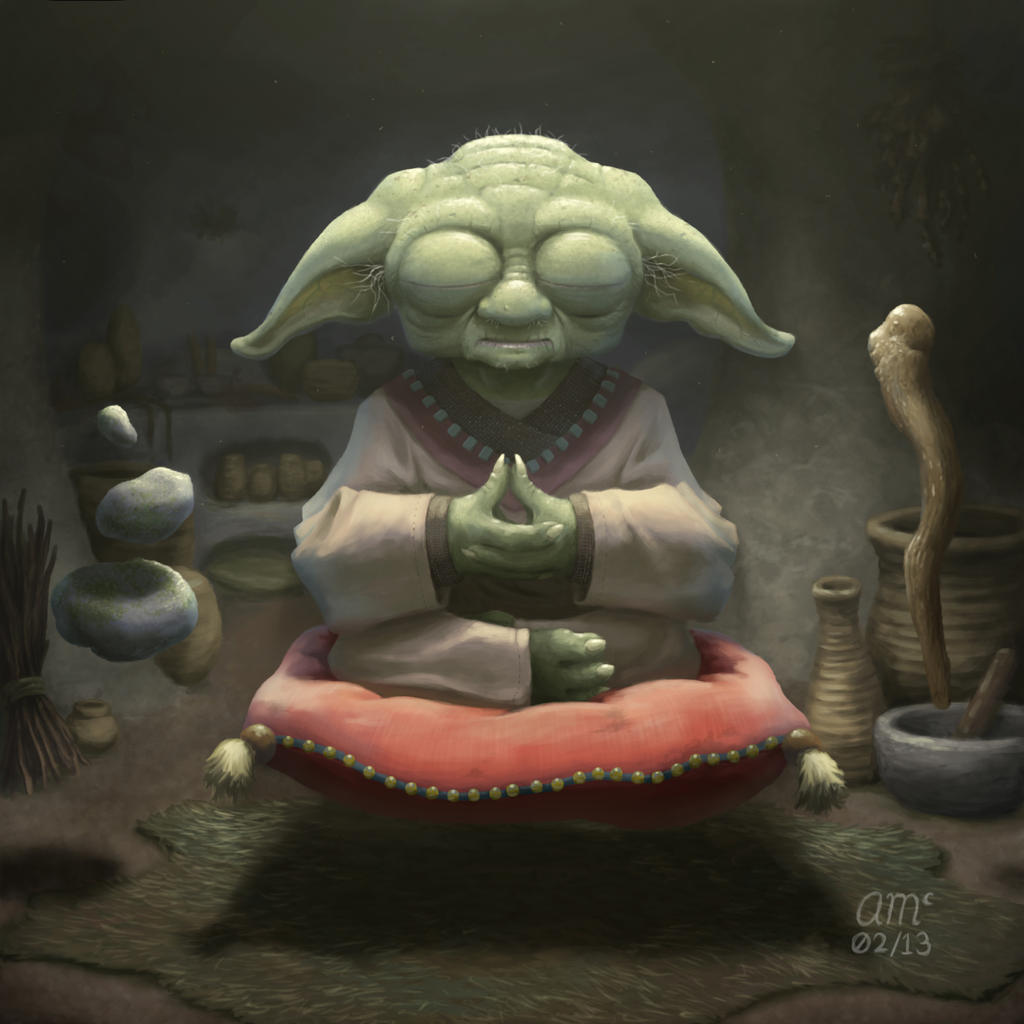
The True Communion philosophy argues that the self is less important than the connections one has to others. The Virtue of Humility takes this a step further and argues that the self should not exist, that true masters of Communion should immerse their self in the grand psychic collective of the cosmic infinite until they become nothing but an extension of Its will.

The Traditionalists of Communion argue that the Virtue of Humility goes too far, that the total extinction of self risks treading into the realms of Broken Communion. Adherents disagree, arguing that the extinction of self is a necessary step to completing true communion with the cosmic infinite, that it logically follows from the virtue of Asceticism.

Humble Communities

Communities that embrace humility tend to be exceedingly modest and egalitarian. They tend to bristle at the idea of status or hierarchy, believing each to be equal; even so, if they do have a rightful leader (typically the leader of a temple), they will obey his commands without question. They often wear simple garments and engage in simple labor. Even the leaders of such communities will roll up their sleeves during the harvest season and join in.

The Code of Humility

Justice is best represented by Code of Honor (Humility) which has the following tenets:

  • DO NOT accept fame or honor for your deeds.
  • DO NOT disobey the commands of your temple
  • DO NOT give anyone outside the faith your true name

  • DO lift up and honor others for their deeds

  • DO obey the urging of Communion

The Power of Humility

Blind Investiture 5/level

Masters of the Virtue of Humility try not to exert their will through Communion, but allow it to exert Its will through them. As such, they can achieve enormous power with True Communion by allowing True Communion to enact whatever miracle it wishes! Those with Blind Investiture may add its value to the Reaction Roll from True Communion provided they do not specificy what miracle they want. This is cumulative with all other forms of reaction modifiers for True Communion, including True Investiture. Characters may have no more than 4 levels of Blind Investiture.

Statistics: Power Investiture (True Communion; Accessibility, only for General Prayers -50%; Divine Virtue +0%) [5/level]

Communal Regard 5/level

Those who follow the precepts of Humility accept no fame, honor or reputation, which means that none should admire or love them. But Communion honors those who honor them. Despite lacking any name or fame, the masters of the virtue of Humility find that the faithful intuitively sense their devotion and will readily listen to them or assist them, even if they do not know why. Such characters gain a bonus to all Reaction Modifiers from those who follow or believe in True Communion equal to their Communal Regard level; characters may have a maximum of 4 levels.

Statistics: Holy Regard (see Pyramid #3/78 page 7)

Empty Self 5/level

The saints of Humility become empty vessels for the will of True Communion, and this can manifest as a peculiar absence of identity. All attempts to identify the saint will automatically fail. Their identity cannot be discerned via psionic efforts, digital records will fade, corrupt or simply become lost. Even those who have seen the character will find themselves forgetting details. Nothing can prevent this effect save a cosmic means of identification.

Statistics: Zeroed (Cosmic; Both informational and magical +50%; Divine Virtue -15%) [19]

Patience

True Communion teaches a principle called “The Eternal Now,” which argues that all moments exist and that their separation, no matter how large or how fine, are but illusions. The saints of Patience attempt to gain the same temporal perception that True Communion itself has, and to them, time seems to flow differently: they can pluck out a moment and crystallize it, and have phenomenal perspectives on the future. This allows them to cultivate an intense patience and act precisely when they choose to.

The traditionalists of Communion have few direct complaints with the precept of Patience; they argue mainly that it serves as a distraction from more important work. Why have an eternal perspective when one should work on their inherent spirituality and love of others? Followers of the precept of Patience argue that the eternal perspective is critical to graping the nature of spirituality and that a great deal of harm can be done via impatience of impulsiveness.

Patient Communities

Communities that embrace patience tend to value the counsel of their elders and take time to enjoy the moments of life. There is, of course, an appointed hour for all things, so they work when they must work and sleep when they must play, but they take their time with each, and often plan ahead, storing grain or saving money for a rainy day. Such communities often engage in communal meditation or wistfully watch the setting of their planet’s sun. They tend to have a stoic outlook on life, proving surprisingly resilient to the grief of loss or the demands of duty.

The Code of Patience

The Code of Patience is best represented with the Code of Honor (Patience), which has the following precepts:

  • DO NOT act without forethought.
  • DO NOT lose our temper or show undue emotion.
  • DO accept the inevitable (death, judgment of the law, etc)
  • DO counsel patience in others.

The Power of Patience

Eternal Foresight 9/level

The Saints of Patience have a keen sense of past, present and future, and this allows them to anticipate events long before they happen. Those who have mastered Eternal Foresight may reveal once per session per level that they had anticipated this precise moment and can retroactively declare what actions they had taken provided those actions could realistically have been taken, do not directly contradict any established facts, and would not have been obvious. Such actions automatically succeed. Characters may take no more than two levels of Eternal Foresight.

Statistics: Foresight (see Pyramid #3/53 page 33; Divine Virtue -15%) [9]

Eternal Instant 12/level

Saints of Patience know how to turn a moment into an Eternity, at least for themselves. This allows the normally patient and slow-moving masters of Patience to react with blinding speed, often moving faster than the eye can see. Each level of Eternal Instant allows the character to enact Bullet Time once per session.

Statistics: Impulse Buy points (Recharge per Session; Accessibility, Bullet Time Only -50%; Divine Nature -15%) [12]

Eternal Perspective 43 points

The Saints of Patience see time differently than others. For them, each moment is distinct and they can soak in as much detail of that moment as they wish. They also know precisely when they are: they can sense the precise time of every moment they perceive and automatically know if something is amiss. This last makes them especially attuned to the shades of time sometimes discussed by the Akashic Order. Characters with an Eternal Perspective have the benefits of Enhanced Time Sense and Time Sense. Characters with Combat Reflexes may replace that advantage with Eternal Perspective.

Statistics: Enhanced Time Sense (Divine Virtue -15%) [38.25] + Time Sense (Divine Virtue) [4.25]

Purity

True Communion demands strictly controlled behavior from its adherents; they must learn to discard “sinful” thoughts and behaviors. Inherent in this, argue advocates of the virtue of Purity, is the need to be unblemished and perfectly in line with the nature of Communion. Those who believe in the Virtue of Purity live strict lives, refusing to indulge in sex or recreational drugs, following strict diets and keeping themselves apart from those who do not follow True Communion. As a result, they often have a pristine and incorruptible quality to them, making them “beyond reproach.”

The traditionalists of Communion find themselves divided on the topic of Purity. Strict traditionalists can find little support for the specific ideas of Purity in their ancient texts and note that it seems to have arisen as a result of the schisms among the Templar as a reaction to the infiltration of their ranks; they further see it as a corruption of Asceticism, replacing physical suffering for social disdain. Others, Keleni purists in particular, argue that traditional Communion already embraces Purity and should move to do so formally. Of all the heterodox virtues, this is the most popular among Keleni traditionalists. Human and Alien communities find a tension between it and the Virtue of Tolerance; if such a community practices one, they rarely practice the other.

Pure Communities

Communities that embrace Purity embrace a deeply ritualistic form of piety. They often engage in ritual cleaning (fountains may be a common fixture, or small basins of water at the entrance of a domicile, for visitors to clean themselves, at least ritually, before entering). They tend to concern themselves with whom they allow into their community, expecting newcomers to prove themselves before gaining entrance. They tend to value chastity and visible acts of piety.

The Code of Purity

The Code of Purity is best represented either with Disciplines of Faith (Ritualism) and a few appropriate vows similar to those from Asceticism, or with the Code of Honor (Purity), which has the following tenets:

  • DO NOT indulge in pleasures of the flesh.
  • DO NOT associate with those who are not members of the True Communion community.
  • DO celebrate the rituals and traditions of Communion
  • DO follow a strict diet of some kind.

The Power of Purity

Purity of Flesh 22

The Saints of Purity perfect not just their soul, but their physical form. By following the strictures of Purity, they become perfectly clean, which means no taint can touch them. They may embrace the diseased and drink poison without fear (though in the case of the later, such acts generally violate their strict dietary requirements!).

Statistics: Immunity (Poison; Divine Virtue -15%) [12.75] + Immunity (Disease; Divine Virtue -15%) [8.5]

Purity of Soul 20

The Saints of Purity follow their strict behavior for a reason. They see the temptation of Dark Communion as destructively dangerous, and by following the strictures of Purity, they can shut out its siren song. Those who gain a Purity of Soul can never take any level in Dark Communion and thus cannot even be tempted by Dark Communion. Furthermore, they are immune to its miracles. In the visions or prophecies granted by Dark Communion, those with Purity of Soul appear as incandescent beings of light about which they can make out no detail.

Statistics: Static (Divine; Dark Communion only -20%; Divine Virtue -15%) [20]

Edit: This post seems to have attracted some attention, and I wanted to address it. I do not claim that everything in this post is correct, because I can point to a few other flaws and things that need to be addressed, but there’s a misunderstanding here about the Divine Modifier that I wanted to highlight and address.

There are, in fact, two Divine modifiers.  We can call them “Holy and Unholy.” The “Holy” Divine Modifier is the one we find in GURPS Powers, where you must maintain -10 points worth of “holy” disadvantages that they stick too.  However, Divine Favor introduces an “Unholy” variation in the “Good and Evil” sidebar on page 12.  The Unholy version does not require -10 points worth of disadvantages, but instead treats holy miracles as an “Opposed Power” and allows “Holy” advantages to prevent unholy miracles.  This means that the “anti-power” rule is included in the -10% of the Unholy version of the Divine Modifier, and Dark Communion makes use of this variation.

I think we could clarify it better and we might make the argument that the Aspect limitation is redundant (it’s a bit like having Static (Psi; Psi Only -20%)), but the notion of having an anti-divine power is not incorrect, provided you’re talking about the right divine modifier.

Purity of Visage 17

The Saints of Purity cultivate beautiful, aloof souls and their virtue rewards them by letting that inner beauty shine forth. As the follow the precepts of Purity, their hair becomes more lustrous, their blemishes fade, their limbs grow straighter and finer until they become nearly angelic in appearance, gaining Transcendent Appearance. Should they violate their purity, their appearance does not immediately revert; instead, over the course of a week, they slowly lose their numinous quality, an outward sign of their sinfulness.

Characters who already have positive levels of Appearance may reduce the cost of this trait by their “normal” appearance level (and should note what that appearance level was); characters with negative appearance levels should pay extra. At the GM’s discretion, characters with this virtue who manifest an avatar with a transcendent Appearance may add +2 levels to any Awe associated with that avatar, or replace Terror with Awe at +2 levels.

Statistics: Appearance (Transcendent; Divine Virtue -15%) [17]

Tolerance

True Communion preaches against discrimination, arguing that all sapient beings are fundamentally part of True Communion. Precisely what this idea of tolerance means varies from group to group, with Traditionalists opening up True Communion only to fellow Keleni, while even the more open practitioners of True Communion would never open the faith to the great galactic menace or robots. The followers of the virtue of Tolerance argue that the True Communion’s philosophy of tolerance should be interpreted as expansively as possible, and seek to embrace all races, classes and traditions, finding wisdom in all things, and embracing all beings.

Opponents of Tolerance argue that such a stance leads to a dangerous amorality, that one must eventually draw a line between the righteous “us” and the wicked “them.” They point out that embracing “all traditions” is exactly the sort of thinking that led Revalis White astray. The followers of Tolerance argue that one can be tolerant of other beings without necessarily being tolerant of what they do, and that intolerance is both a violation of the ideals of Communion and a path to stagnation.

Tolerant Communities

Tolerant communities tend to be a wild patchwork of diversity. While they may not truly celebrate individuality, they embrace the traditions of others, and often send their children out to “see the world” and expect them to return with new ideas and stories of their adventures, which the community can then incorporate into their own practices. Such communities tend to be highly dynamic, changing quickly over time, and may be seen by other communities as a tad eccentric, or having unusual (unorthodox!) Communion practices.

The Code of Tolerance

The Code of Tolerance could be treated as Sense of Duty (all sapient beings) or a Code of Honor with the following tenants:

  • DO NOT discriminate others based on class, race, tradition, etc
  • DO NOT sacrifice your core principles while exploring the ideas and traditions of others
  • DO defend others from discrimination
  • DO explore new ideas and beliefs from beyond the bounds of your own traditions

The Powers of Tolerance

Communal Brotherhood, 10 points

Those who practice Tolerance find that they receive it in kind. Saints of Tolerance with Communal Brotherhood will not be attacked by others provided the character leaves them alone and/or stays out of their way. This is an intuitive, instinctive reaction: the ghosts of Broken Communion will ignore the character, slavers will pick a different target, imperial soldiers will simply ignore the character, etc, whether or not they know who the character is. This only applies so long as the character does not antagonize his opponents in any way: the protection disappears if he mocks, belittles, attacks or violates the rules (etcetera) of the targets; a saint of Tolerance cannot expect to walk into a restricted imperial facility and be ignored, for example.

Statistics: Brotherhood (Cosmic, Universal +700%; Cosmic, Universal Truth +100%; Cosmic, applies to supernatural +100%) [7]

Infinite Communion, 20/level

Normally, those who use Communion may only have a single miracle active at a time, typically either a miracle or a single learned prayer. The Saints of Tolerance have learned to hold many thoughts in their minds and can maintain multiple learned prayers while enjoying the full benefits of unfettered Communion. Each level of Infinite Communion allows the saint to have one additional learned prayer active.

Statistics: Dual Prayer (See Pyramid #3/50 page 18) [20]

Language of Communion, 8 points

Language separates races and cultures from one another, making it difficult to connect with other members of the same faith. The Saints of Tolerance learn to bridge these gaps and may converse fluently with any adherent or believer of Communion, regardless of what languages they know, and suffer no cultural familiarity penalties when interacting with other members of Communion.

Statistics: Language of Faith (see Pyramid #3/78 page 7) [6]; Cultural Adaptability (Accessibility, Members of True Communion only -60%; Divine Virtue -15%) [2]

True Prodigal Knight 5/level

As an optional power, if using the Mystical Tyrant transcendent path of the Prodigal Knight, then the path of the Prodigal Knight may embody the Virtue of Tolerance. He explores all forms of Communion and embraces all ideals. True Prodigal Knight acts as Legendary Reputation (Prodigal KNight), is cumulative with it, and may be purchased without completing milestones, nor is it dependent on the character remaining true to Path requirements. It may be purchased up to 4 times.

Statistics: Legendary Reputation (Prodigal Knight; Divine Virtue +0%) [5/level]; The additional restrictions of a Virtue balance out the benefit of being able to ignore the normal restrictions of Legendary Reputation.

The Orthodox Virtues of True Communion

A true master of Communion seems nigh divine in power, but this unstoppable power comes not from their command of Communion, but their unity with it. Its will is their will, and they are a living manifestation of Communion itself.

To achieve this level of oneness requires a deep mastery of the very nature of Communion, called virtues by the True Communion philosophy. After a student has learned to Commune with the infinite cosmic, their master begins to teach them one of the virtues of True Communion. At first, such a virtue seems limiting, requiring the student to strictly control their behavior, but eventually, as their behavior perfectly aligns with a virtue, they find that their facility with Communion grows and expands and they begin to manifest miraculous abilities within themselves. This is the source of the true power of all the great masters of Communion.

The True Communion faith has splintered under the weight of oppression. Without a singular guiding figure or doctrine, most followers of Communion turn to a local temple and a local abbot for spiritual guidance. However, each temple emphasizes its preferred facet of True Communion. Mastery of a virtue is the internal, spiritual equivalent to mastering a martial art or a powerful psionic skill: no living master of Communion has mastered every Virtue, and indeed, temples disagree as to which virtues should be mastered! As such, while all True Communion faithful accept the same basic precepts, the specifics and the depth of their devotion to particular values vary greatly. This can create conflict between temples, thus far little more than hurled accusations of heresy or dogmatic literalism, but on the other hand, some devotees to True Communion believe wisdom comes from a multitude of perspectives. Modern masters often take to wandering from temple to temple, learning the unique principles found in the scattered remnants of the faith and try to weave together a better understanding of the totality of Communion through the experience.

The Rules of Virtue

A virtue resembles a Communion Oath in that it represents a required disadvantage that the character must maintain. These required behaviors are very intense, typically manifesting as a -15 point Code of Honor that describes a strict code of behavior, but other -15 point disadvantages, such as certain forms of Pacifism, extreme Sense of Duty, or Disciplines of Faith.

Aligning one’s self with a proper virtue takes at least a month of meditation and appropriate behavior, or a major quest. Truly understanding a virtue is typically a major ephiphany! Once such a virtue is gained, it is not easily lost; while a virtue can be violated, what will precisely violate a virtue is uncertain, and the practitioner often finds he can push the boundaries of his particular virtue if necessary, but if he does it too often, he’ll sense that his control over it is fading. He can attempt to strengthen his connection to Communion and restore his virtue, but once his connection to the Virtue is lost, it requires being restored from scratch, typically requiring a major quest or a month worth of dedication and focus.

Each Virtue has suggested things that one should not do, but also includes acts that the character can do to reinforce his connection and, in general, should be attempting to do when possible. If the character has Rewards of Faith, they can also act as inspiration for what sorts of acts Communion might request for them. Note that these are suggestions meant to invoke the spirit of the virtue. The intent of virtues is not strict, literal interpretation, with a player noting that he can technically get away with an act, nor a GM demanding rigid, legalistic adherence to virtues. They represent ideas that point to the true nature of the virtue.

The intent of Virtues is for both character and GM to explore what a virtue means, hence when one is gained, it should be difficult to lose. The player should be warned if his character is going to go over a line, and may negotiate with the GM as to how best to perform his desired action without violating his virtue; characters may roll Philosophy (True Communion) for inspiration, and moral intuition can always give guidance on appropriate actions to avoid violating one’s virtues. Direct and gross violations of a Virtue (an ascetic character accepting a large bribe to do something wicked, etc) and any violation that causes the character to lose access to True Communion itself will result in the loss of the virtue, though the character should be warned before the virtue is lost. When it comes to edge cases, the character should get a warning and a chance to adjust behavior, but if he chooses to act on it anyway, he should get a pass, but after three such edge violations (the “three strike” rule), he loses the virtue as per a direct and gross violation.

The Divine Virtue power modifier is worth -15% unless such a modifier is naturally considered part of the advantage already (as is the case for Blessed, Legendary Reputation, or certain Communion meta-traits); such powers, like Communion Oaths and Divine Path modifiers, are all Communion Powers, and are thus subject to any similar restrictions associated with Communion.

Orthodox Virtues

The Orthodox Virtues represent the vision of True Communion as laid out in Traditional Keleni doctrines. They represent a deep understanding of the three Paths of True Communion, and anyone who follows Traditional Communion may cultivate these three virtues. According to lore, the Knights of Communion also followed these virtues, but may have strayed into other, newer principles, misguided (the Keleni traditionalists would say) by their alien culture. Modern Templar Chapters typically have access to no more than two Orthodox Virtues, and many have one, or even no, Orthodox Virtues.

Asceticism

True Communion understands that the world is no different from a dream. True Communion seeks to look past the illusion of dream and reality and look to the truths that lie beyond them. Those who wish to truly understand Communion must cast off the illusion of the real and seek to understand the true nature of the universe and the connection between all things by looking within. Thus, they must discard the pleasures of the flesh and, through weakening the flesh, gain a deeper spiritual connection with the cosmic infinite.

Ascetic Communities

Individuals, rather than communities, practice asceticism, but communities who embrace the ideals of asceticism tend to have inordinate respect for the ascetics in their midst. They may bring them just enough food to continue their meditations and venerate them as sages. They tend to look down upon gross displays of the pleasures of the flesh, and value chastity, frugality and modesty.

The Code of Asceticism

Asceticism is best represented with the Disciplines of Faith (Asceticism) disadvantage.

DO NOT keep more than you strictly need

DO NOT accumulate wealth

DO NOT indulge in physical pleasure

DO engage in lengthy meditations in remote locations

DO punish yourself for your moral failings.

The Power of Asceticism

True Exiled Master 5/level

The Path of the Exiled Master embodies the virtue of Asceticism. He masters leadership by discarding status; he finds enlightenment not in the palace or ostentatious temple, but in the quiet serenity of nature; he does not seek answers from without, but provides answers to others from within. True Exiled Master acts as Legendary Reputation (Exiled Master), is cumulative with it, and may be purchased without completing milestones, nor is it dependent on the character remaining true to Path requirements. It may be purchased up to 4 times.

Statistics: Legendary Reputation (Exiled Master; Divine Virtue +0%) [5/level]; The additional restrictions of a Virtue balance out the benefit of being able to ignore the normal restrictions of Legendary Reputation.
Repeat Petitioner 5/level

The Ascetic has a deeper connection to Communion than most others; he listens deeply to Communion and Communion responds! For each level of Repeat Petitioner, the character may call upon communion one additional time before incurring cumulative penalties for previous successful miracles. For example, a character with no Repeat Petitioner would be at -2 to invoke Communion if he had successfully invoked Communion twice that day already; while a character with Repeat Petitioner 2 would be at -0. Characters may not take more than 4 levels of Repeat Petitioner.

Statistics: Repeated Petitioner (Divine Virtue +0%) (see Pyramid #3/36 page 8).

Living Temple 68 pointts

The Ascetic needs no temple, for he is a temple. Wherever he goes, True Communion sanctity follows, and others nearby him may even benefit from his natural holiness. Treat an area around the practitioner out to 1 yard as one level higher True Communion Sanctity.

Statistics: True Communion Sanctity Enhancer (Area Effect +50%, Divine Virtue -15%)

Charity

Communion is the accumulation of all thoughts, fears and beliefs of all sapients! Those who connect deeply with Communion connect with all living beings, and as such, they must learn not to cut off the suffering of others, for the suffering of others is your own suffering. Those who cultivate the virtue of Charity have a deep and abiding compassion for all living beings. They must never deny another a request of aid, or needlessly inflict violence.

Charitable Communities

Communities that embrace Charity as a virtue tend to engage in neighborly generosity and hospitality. They will freely open their homes to visitors, do favors for one another, give liberally to the local temple, and donate to beggars. Such communities and temples often have a small crowd of beggars at the temple gates.

The Code of Charity

Charity can be represented with Sense of Duty (all sapient life) [-15], or Pacifism (Self-Defense Only), or by Code of Honor (Charity) which encompasses the following precents:

DO NOT deny any honest request for assistance

DO NOT inflict violence except for the defense of others or for the good of the community

DO keep your word

DO relieve the suffering of others

The Power of Charity

True Oathbound 5/level

The Path of the Bound Princess embodied the Virtue of Charity. Those who follow the virtue, like the Bound Princess, learn to sacrifice themselves for the sake of others and, indeed, for the sake of their entire community. True Oathbound acts as Legendary Reputation (Bound Princess), is cumulative with it, and may be purchased without completing milestones, nor is it dependent on the character remaining true to Path requirements. It may be purchased up to 4 times.

Statistics: Legendary Reputation (Bound Princess; Divine Virtue +0%) [5/level]; The additional restrictions of a Virtue balance out the benefit of being able to ignore the normal restrictions of Legendary Reputation.
Know the Heart 29 points

The character learns to connect with others on a deeper level. They can sense the emotional state of anyone in their presence and automatically gain a +3 to Detect Lies and Psychology rolls, which helps them differentiate an honest request from a dishonest one, and to know what sort of aid someone needs. The saint may also intuitively detect lies when it comes to those who make requests for assistance; even if the character lacks the Detect Lies skill, she may roll against IQ+3 for this one purpose.

Statistics: Empathy (Cosmic, no Die Roll Needed +100%; Divine Virtue -15%) [28] + One Task Wonder (Detect Lies for requests of assistance only) [1].

Sense the Flock 10 points

Those with the Virtue of Charity intuitively know where they are needed. For them, the pain of others is like a lance through their mind. They can intuitively sense the state of a community faithful to True Communion as a whole, including threats to that community, whether it be to their sense of community, or an existential threat (such their enslavement or the deaths of many). Exactly what constitutes a community is ultimately up to the GM, but this can extend all the way up to “all followers of Communion,” or to something as small as a local temple and its adherents. At the same time, the community senses the state of the practitioner as well, and will intuitively know if they need help.

Statistics: Sense of Faith (see Pyramid #3/78 page 7)

Justice

Communion discriminates between those who belong, and those who do not. Communion adheres to laws and traditions and uses those laws and traditions to bolster and protect communities. Those who violate those laws must be cast out. Those who embrace the Virtue of Justice understand the need for law and embody it. They sacrifice their own will in service to their community in protecting them from those who would undermine them, from without or from within.

Just Communities

Communities that embrace justice tend to have a deep appreciation for the law. They honor and obey the law set out by their local government (and if that is deemed oppressive, the laws given by the temple) and they expect others to do the same. If they violate the law, they accept the judgement of a rightful judge (again, the local government or the temple), and they expect others to do the same. Such communities, at their extreme, can become very legalistic, often engaging in law-as-ritual, and can be brutal in their judgments of law breakers (especially if combined with Asceticism).

The Code of Justice

Justice is best represented by Honesty or Code of Honor (Justice) which has the following tenets:

DO NOT violate the law

DO NOT harm the innocent

DO protect the innocent from harm

DO bring lawbreakers to justice

The punishment must fit the crime.

The Power of Justice

True Righteous Crusader 5/level

The Path of the Righteous embodies the virtue of Justice. He senses sin, and uses his supreme mastery of warfare to destroy those who would harm the innocent and to hold up the law, and is ultimately willing to die for the code he believes in. True Righteous Crusader acts as Legendary Reputation (Righteous Crusader), is cumulative with it, and may be purchased without completing milestones, nor is it dependent on the character remaining true to Path requirements. It may be purchased up to 4 times.

Statistics: Legendary Reputation (Righteous Crusader; Divine Virtue +0%) [5/level]; The additional restrictions of a Virtue balance out the benefit of being able to ignore the normal restrictions of Legendary Reputation.

Demon Hunter 28 points

Those who will serve the Virtue of Justice must willingly enter unholy domains to root out and slay the wicked. The saint of Justice is less affected by the blasphemies of Dark or Broken Communion and can enter areas sacred to them with less fear. Treat all such areas, with a reach out to one yard around the character, as one sanctity level lower.

Statistics: Sanctity Damper (Dark Communion; Area Effect +50%; Divine Virtue -15%) [14] + Sanctity Damper (Broken Communion; Area Effect +50%; Divine Virtue -15%) [14]

Holy Warrior 8 points

The practitioner becomes the living embodiment of divine wrath against abominations in the eyes of Communion. The character’s very touch or the stroke of his weapon become anathema to those whom True Communion has the capacity to destroy. The character’s touch or attacks with a melee weapon count as “a Communion Miracle” for the purpose of vulnerabilities. This explicitly counts as “mundane countermeasures” for ghosts, and it allows the Holy Warrior to kill any character with any form of Unkillable that True Communion can defeat.

Statistics: Holy Touch (see Pyramid #3/78 page 7)

Patreon Post: More Transcendent Principles

At the culmination of the Cult of the Mystical Tyrant, I released three “transcendent principles,” visions that followers of the path of the Mystical Tyrant could attempt to enforce upon the world to grant themselves unique powers.  Since then, I’ve had discussions with Patrons and fans alike about additional possible Transcendent Principles, and I wanted to share a preview of two more: Acausality (which allows the manipulation of time) and Inhumanity (which allows the manipulation of the mystic himself).

This post is available to all $3+ patrons. If you’re a patron, check it out!  If not, as always, I’d love to have you!

Patreon Post: the Cult of the Emperor

The Cult of the Mystic Tyrant has existed for millennia, though its form has changed over time from an imperial cult of a sacred king to a nihilistic philosophy to a deeply personal morality.  With the rise of the Valorian Emperor, the Cult has changed again into a movement of imposed rationality, vision and progress.  As the Valorian Emperor’s fist has closed around the Galaxy, so too has he come to dominate the remnants of the Cult of the Mystic Tyrant, with only a few splinter sects still in defiance of his ideology.

Last month, my Patrons voted on the fourth Schism of the Mystical Tyrant: the Cult of the Emperor; yesterday, I gave you the results.  Today, I give you the actual cult, including how to handle it as a lens on the Cult of the Mystic Tyrant esoteric skill, what oaths it demands, what its symbolism is, and its “mask” conspiracies within the Empire.

This post is available to all Fellow Travelers ($3+, as a preview).  If you’re a patron, check it out.  If not, I’d love to have you!

Patreon Post: The Cult of the Emperor – Poll Results

Last month, I had a poll of the last schism of the Cult of the Mystic Tyrant: The Cult of the Emperor.  Herein, you guys voted not just on what the substance of the Cult was, but who the Emperor is, who the War Hero was, and who the Emperor’s Hand is.

Today, those results are revealed!  Behold the Emperor unveiled.  This Patreon Post is available to all Fellow Travellers ($3+ patrons); If you’re a patron, check it out; if not, as always, I’d love to have you!

Annara or Traditional Keleni Communion

Keleni traditionalists call Annara the pure form of Communion, the one that Keleni practiced in the past and still practice today. This may or may not be true; evidence suggests that the ancestral form of Communion gave rise to both Annara and True Communion, and that each has a piece of the original.

Annara, the Kelen word for “Communion,” (or more accurately, total unity of all things, or a sense of transcendence gained from feeling connected to all things), focuses more strictly on the natural telepathy of the Keleni people. It cultivates unity through telepathy and connection with one’s ancestors, and trains the Keleni in empathy for all beings, Alien or Keleni, sapient or animal. It also cultivates the ancient tradition of prophecy that traces its lineage back to the dawn of the Keleni faith-philosophy.

Unlike True Communion, Annara retains traditional Communion trappings, such as “folk healer” exorcisms and esoteric medicine. They also often learn Religious Rituals to better serve their community. Dogmatic traditionalists may teach their followers to fight with the resonance staff, and ancient Keleni weapon, but many also teach the force sword.

The intent focus on Keleni matters means that followers often learn a great deal about the language, history and culture of the Keleni. It also means that the religion attracts religious fanatics and xenophobic traditionalists. Many practitioners of True Communion hold Annara in awe, seeing it as the “lost half” of Communion secrets, but non-Keleni often find it difficult to win the trust of a Keleni master well enough to learn the style.

Required Skills: Esoteric Healing, Hidden Lore (Communion), Meditation, Philosophy (True Communion), Savoir-Faire (Dojo),Religious Ritual,

Required Psychic Skills: Telereceive

Additional Psychic Skills: Ancestral Recall, Aura Reading, Cure, Emotion Sense, Mind Shield, Telescan, Telesend

Techniques: Communion (Meditation), Introspection (Meditation), Penance (Meditation), Symbolic Lore (Bound Princess, Righteous Crusader, Exiled Master; Philosophy).

Psionic Techniques: Animalism (Emotion Sense), Expansion (Mind Shield), Full Communion (Telesend), Omniscan (Telescan), Multiplicity (Telerecieve), Secret Trait (Moral Intuition, True Investiture, Virtue), Send Senses (Telesend), Universal (Telerecieve, Telesend)

Secret Miracle: True Prophecy

Secret Psionic Techniques: Acausal Comm (Telerecieve or Telesend)

Secret Traits: Moral Intuition, True Investiture, Virtues (Asceticism, Charity or Justice)

Perks: Avatar, Daily Meditation, Deep Study, I Know What You Mean, Inner Mastery, Honest Face, Patience of Job, Ping, Rewards of Faith, Secret Miracle (True Prophecy), Secret Trait (Moral Intuition, True Investiture, Virtue), Synchronize, Technique Mastery (Introspection)

Optional Advantages: Clerical Investment, Devotion, Intuition, Language (Kelen), Mind Link (Telepathy -10%), Protected Power (Telepathy -10%), Telepathy Talent, Trained by a Master, True Communion, Weapon Master (Staff or Force Sword)

Optional Disadvantages: Charitable, Code of Honor (Virtue), Disciplines of Faith (Asceticism or Mysticism), Fanaticism (True Communion), Intolerance (Non-Keleni), Selfless, Sense of Duty (Keleni),

Removable Disadvantages: As True Communion;

Optional Skills: Connoisseur (Relics), Exorcism, Force Sword, Fortune Telling (Dreaming), Hidden Lore (Places of Power), History (True Communion or Keleni), Law (Keleni), Staff, Teaching

New Traits

Moral Intuition 12/27

True Communion teaches that true moral understanding comes not from without, but from within. Followers of True Communion learn to cultivate their moral intuition and, by listening to their moral instincts, intuitively know what choice is right. At level 1, when faced with a moral conundrum they may roll IQ to know what choice is the worst choice; at level 2, they may roll to uncover what is the best choice. In both cases, the character may roll Philosophy or Introspection (Meditation) to know why.

Statistics: Intuition (Aspect, Moral -20%) [12]; level 2 adds Inspired +100% for [27]

True Investiture 10/level

The character gains a bonus to all True Communion reaction rolls equal to his True Investiture level; this is cumulative with any Path Reputation he might have. A character may not take more than 4 levels of True Investiture without GM permission.

Statistics: Power Investiture (True Communion)

New Perks

Daily Meditation: The character always meditates if possible; thus the GM never has to ask if he has fulfilled his disciplines of faith; Furthermore, if the group does not explicitly track how much meditation a character practices during down time, assume that the character always starts with 3d6 more meditation points at the beginning of a new adventure than the GM normally offers to players who meditate.

Inner Mastery: Characters may substitute Meditation for any Will-based skill for Psionic Extra-Effort rolls.

Rewards of Faith: This is a leveled perk (maximum suggested value is 3). The GM can in form a player that he has a vision, a dream, or feels an urging or an instinct that he must do something, like a subtle Command from Communion. If the player willingly does as Communion requests, the GM may reward the player. This may be an impulse buy point or 2d6 “meditation” fatigue that he may use on Psionic Powers. This perk is effectively “Option: GM may reward players for good roleplay,” and the GM is encouraged to pick a standard reward: an impulse buy point is standard, but GMs who feel this might be unbalancing may choose instead to offer the bonus fatigue as the standard reward.

New Techniques

Communion

Hard

Default: Meditation;

Prerequisite: Meditation; May not exceed Meditation+4.

The character may attempt to gain a deeper connection with Communion. This allows him a +1 to petition rolls or, if done for 8 hours, grants him one point of Meditative Energy Reserves (If he has Communion; he may not use this benefit if he has Dark Communion or Broken Communion).

Deep Trance

Hard

Default: Meditation-4;

Prerequisite: Meditation; May not exceed Meditation.

The character meditates deeply for one hour and enters a trance. This trance either offers the same bonuses as Autohypnosis or +1 to all Psi skills plus an additional bonus equal to 1/3 of his margin of success, to a maximum of +5. He gains +4 for sensory deprivation, +2 for the Body Discipline perk, and may use Religious Ritual as a complementary roll.

Heuristics

Hard

Default: Philosophy -6;

Prerequisite: Illuminated and Philosophy; May not exceed Philosophy.

See Powers: the Weird page 6. Characters with Communion may only learn Heuristics for supernatural (e.g. related to psionic powers or Communion) or moral truths unless they are Illuminated.

Introspection

Average

Default: Meditation;

Prerequisite: Meditation; May not exceed Meditation.

This core skill of Meditation works as the basic book describes it: The character may roll meditation to gain moral (rather than practical) insight into what he should be doing.

Penance

Hard

Default: Meditation;

Prerequisite: Meditation; May not exceed Meditation+4.

The character may attempt to make amends for wrongs he has done. This typically requires 8 hours of meditation and upon success, the character may roll Meditation. On a success, he may either remove one point of corruption (either from Dark or Broken Communion), or attempt to regain Communion after violating one of its sins.

New Miracles

True Prophecy

Minimum Reaction: Very Good

Learned Prerequisite: True Communion 10

Learned Prayer Cost: 12

After spending five minutes meditating (they may claim the +1 for long meditation), the character receives a vision. The vision can contain any information the GM wishes and often is extremely exhaustive and informative, and may cover topics in the future or past, far away or nearby, often several at once and may impact a wide variety of characters, or entire nations, in scope. The imagery may or may not be symbolic, and the GM’s discretion; if so, the character may roll Philosophy (True Communion) to correctly interpret the imagery. The impact of the vision is such that it can temporarily throw the prophet into seizures: roll HT upon completion of the vision; failure causes seizures for one minute per margin of failure.

When the vision of True Prophecy comes into conflict with another form of precognition, it always wins. Against another character with True Prophecy, roll a quick contest of Philosophy.

Statistics: Precognition (Active Only -60%; Backlash, Resistible, Seizure -50%, Cosmic, no Die roll +100%; Cosmic, unlimited scope +50%; Cosmic, distant future or past +50%; Divine -10%; Reduced Fatigue Cost 2 +40%, Reduced Time, 5 minutes, +20%) [60]

True Communion as Esoteric Skill

A True Communion disciple first learns to meditate. True Communion teaches that, through introspection, self-knowledge and self-discipline, one can begin to understand the world around him. They learn to listen to their own inner voice, then to their instincts, then to Communion itself. Through obedience to Communion, they can learn who they truly are, how they connect to the world, and what their true purpose is. Once one has mastered this art, the next step is to teach others. Teaching methods vary, but True Communion strongly favors teaching through example, riddles and challenges. It seeks to get the student to discover a principle for himself, rather than to simply be told something that they will soon forget, or learn only superficially. By teaching others, the student masters Communion more deeply and, more importantly, learns to connect with his own students and thus finds himself in an unbroken chain of masters and pupils extending back to the birth of True Communion.

True masters of Communion have deeply powerful meditative techniques that allow them to reach a trance-like, to empower their connection with Communion, and to even regain their psychic energy more quickly. They learn to discard their own selfish needs and, as they become more attuned to Communion, to become more attuned to their community around them and to being to understand the deepest secrets of spirituality. Those who masters the art of teaching, according to legend, have the ability to unlock the psionic potential of anyone, and can even teach those forever locked away from Communion to overcome their limitations and join the greater galactic gestalt.

The galaxy will forever associate True Communion with the Templars, and so many monasteries and temples also teach the force sword as part of True Communion. Most also teach the history of the faith, or give insight into the holy places and relics of the faith. Communion often holds that inner knowledge can come from dreams, and those who believe this teach their students to interpret their dreams.

This form of Communion is the Communion of the Templars and the one most commonly practiced across the galaxy. It is assumed to be the “default” form of True Communion.


Required Skills: Meditation, Philosophy (True Communion), Savoir-Faire (Dojo), Teaching, Hidden Lore (Communion)

Techniques: Communion (Meditation), Deep Trance (Meditation), Introspection (Meditation), Penance (Meditation).

Secret Traits: Moral Intuition, True Investiture, Virtues (Varies)

Secret Skill: Psychic Recovery (Meditation)

Secret Technique: Heuristics (Philosophy), Legendary Teaching (Teaching),

Perks: Daily Meditation, Focused (Meditation), Honest Face, Inner Mastery, Patience of Job, Rewards of Faith, Secret Skill (Psychic Recovery), Secret Technique (Heuristics (for Moral and Supernatural Phenomenon only), Legendary Teaching), Secret Trait (Moral Intuition, True Investiture, Virtue), Saintly Vampire, Style Adaption (Traditional Communion), Technique Mastery (Introspection)

Optional Advantages: Clerical Investment (True Communion), Devotion, Destiny, Empathy, Intuition, Language (Kelen), Trained by a Master, True Communion, Weapon Master (Force Sword)

Optional Disadvantages: Charitable, Code of Honor (Any Virtue), Disciplines of Faith (Asceticism or Mysticism), Selfless, Sense of Duty (All communion-compatible species), Pacifism (Any).

Removable Disadvantages: Bad Temper, Bloodlust, Bully, Callous, Compulsive Behavior (Any), Destiny (as disadvantage), Gluttony, Greed, Impulsiveness, Jealousy, Intolerance, Lecherousness, Loner, Obsession, Overconfidence, Selfish, Unluckiness

Optional Skills: Connoisseur (Relics), Diplomacy, Esoteric Healing, Exorcism, Force Sword, Fortune Telling (Dreaming), Hidden Lore (Places of Power), History (True Communion), Religious Ritual

New Traits

Moral Intuition 12/27

True Communion teaches that true moral understanding comes not from without, but from within. Followers of True Communion learn to cultivate their moral intuition and, by listening to their moral instincts, intuitively know what choice is right. At level 1, when faced with a moral conundrum they may roll IQ to know what choice is the worst choice; at level 2, they may roll to uncover what is the best choice. In both cases, the character may roll Philosophy or Introspection (Meditation) to know why.

@page { margin: 0.79in } p { margin-bottom: 0.1in; line-height: 120% }
What counts as “moral” is ultimately up to the GM, but Psi-Wars by default makes no base assumptions. The safest default for the guidance of Moral Intuition is internal (what your character thinks is moral) and associated with your powers. One intention of Moral Intuition is that it will warn a character before he takes an action that may lead to violation of one of his moral limitations for True Communion or his Virtues.

Statistics: Intuition (Aspect, Moral -20%) [12]; level 2 adds Inspired +100% for [27]

True Investiture 10/level

The character gains a bonus to all True Communion reaction rolls equal to his True Investiture level; this is cumulative with any Path Reputation he might have. A character may not take more than 4 levels of True Investiture without GM permission.

Statistics: Power Investiture (True Communion)

New Perks

Daily Meditation: The character always meditates if possible; thus the GM never has to ask if he has fulfilled his disciplines of faith; Furthermore, if the group does not explicitly track how much meditation a character practices during down time, assume that the character always starts with 3d6 more meditation points at the beginning of a new adventure than the GM normally offers to players who meditate.

Inner Mastery: Characters may substitute Meditation for any Will-based skill for Psionic Extra-Effort rolls.

Rewards of Faith: This is a leveled perk (maximum suggested value is 3). The GM can in form a player that he has a vision, a dream, or feels an urging or an instinct that he must do something, like a subtle Command from Communion. If the player willingly does as Communion requests, the GM may reward the player. This may be an impulse buy point or 2d6 “meditation” fatigue that he may use on Psionic Powers. This perk is effectively “Option: GM may reward players for good roleplay,” and the GM is encouraged to pick a standard reward: an impulse buy point is standard, but GMs who feel this might be unbalancing may choose instead to offer the bonus fatigue as the standard reward.

Sacred Vampire: You may access True Communion despite having the Psychic Vampirism power.

New Skills

Psychic Recovery

Will/Hard

Default: meditation-6

See Pyramid #3/97 “Strange Powers” page 6.

New Techniques

Communion

Hard

Default: Meditation;

Prerequisite: Meditation; May not exceed Meditation+4.

The character may attempt to gain a deeper connection with Communion. This allows him a +1 to petition rolls or, if done for 8 hours, grants him one point of Meditative Energy Reserves (If he has Communion; he may not use this benefit if he has Dark Communion or Broken Communion).

Deep Trance

Hard

Default: Meditation-4;

Prerequisite: Meditation; May not exceed Meditation.

The character meditates deeply for one hour and enters a trance. This trance either offers the same bonuses as Autohypnosis or +1 to all Psi skills plus an additional bonus equal to 1/3 of his margin of success, to a maximum of +5. He gains +4 for sensory deprivation, +2 for the Body Discipline perk, and may use Religious Ritual as a complementary roll.

Heuristics

Hard

Default: Philosophy -6;

Prerequisite: Illuminated and Philosophy; May not exceed Philosophy.

See Powers: the Weird page 6. Characters with Communion may only learn Heuristics for supernatural (e.g. related to psionic powers or Communion) or moral truths unless they are Illuminated.

Introspection

Average

Default: Meditation;

Prerequisite: Meditation; May not exceed Meditation.

This core skill of Meditation works as the basic book describes it: The character may roll meditation to gain moral (rather than practical) insight into what he should be doing.

Legendary Teaching

Hard

Default: Teaching -5;

Prerequisite: Illuminated and Teaching; may no exceed Teaching.

See Social Engineering: Back to School page 24. This trait may be able to teach non-psionic characters psionic abilities at the GM’s discretion.

Penance

Hard

Default: Meditation;

Prerequisite: Meditation; May not exceed Meditation+4.

The character may attempt to make amends for wrongs he has done. This typically requires 8 hours of meditation and upon success, the character may roll Meditation. On a success, he may either remove one point of corruption (either from Dark or Broken Communion), or attempt to regain Communion after violating one of its sins.

The Symbols and Rituals of True Communion

Aniconism

True Communion believes that depictions of the supernatural, be they idols or symbols, tend to unduly distract one from his inner journey in understanding the world. One can hold onto an idol, put his faith in that idol, and forget that the physical thing he holds is an illusion, nothing worth having faith in. Moreover, once the divine is given a face, people begin to forget its cosmic qualities and begin to overly humanize it. Thus, True Communion often, though not universally, chooses to eschew any symbolism at all.

True Communion symbolism tends to focus on things that naturally guide on to right and proper conclusions. They tend to be known by their tools and their words, rather than their great idols or symbols. Thus, the temples of True Communion tend to be remarkable bare of baroque imagery, favoring instead creating a place of profound peace and introspection, a natural place where one can lose himself in his own introspection.

This is not a strict taboo, however. The Keleni traditionalists are more likely to eschew imagery than human/alien traditions, as Traditionalists believe that True Communion and Keleni culture go hand in hand. Alien traditions, especially human traditions, feel the need to differentiate themselves from others and humans especially, caught up in their empires and factions, feel the need to have some symbol of their faith that they can point to. Even more extreme versions, such as the cults inspired by True Communion found within the Divine Masks tradition, absolutely have idols, but arguably have fallen far from what True Communion stands for.

The World Triad

Some followers of True Communion, especially among humans, represent their faith with the World Triad. The three spirals represent either the three forms of Communion that flow into one another (traditionally True Communion on top, flowing into Broken Communion on the bottom, which flows into the unifying Dark Communion at the side) or the three paths or virtues of True Communion, with the Righteous Crusader triumphant at the top, the Bound Princess “kneeling” below, and the remote Exiled Master to the side, binding the two. In the latter case, they world triad might be colored blue, green and white. The circular nature of the world triad represents the unity of all within the bonds of True Communion.

LA

When asked what our ultimate purpose was, an ancient Keleni master once replied “La,” which is a Kelen relational that connects two words together, and roughly translates into “to be.” Some practitioners of True Communion have taking to intoning the word in a long, low voice to remind themselves of their purpose and to induce a deeper state of meditation, to “be” connected with the greatness of Communion. As such, some use the written kelen text of the word as a symbol of their faith, either as a single phrase, or the repeating characters in Kelen (for example, on their prayer beads)

The Tools of True Communion

Most symbols associated with True Communion aren’t symbols at all! Instead, they are tools for representing metaphors, or for assisting the practitioner on his quest of cosmic self-discovery.

Kelen

The language of the Keleni, Kelen, is an unusual language that replaces “verbs” with “relationals” that describe how things interconnect. In the Kelen language, things do not do, they are and they are in connection with other things. This frame of mind and way of thinking, according to True Communion, provides powerful insights into Communion and the true nature of reality. Typically, only Keleni practitioners really insist on using Kelen. Alien practitioners of True Communion have long since shifted to Common Galactic, as most of its practitioners speak it, but many temples still encourage students to study the language so they can better understand Kelen language and gain greater insights into communion.

Kelen Literature

True Communion has its roots in ancient holy texts. The most prominent and popular of these have been collected into Jathuna, the sacred book of the Keleni. These texts describe mythical imagery, spiritual truths and the history of the Keleni. This includes, among others:

  • The Forever Cycle (Jatewelre Janaren)
  • The Book of Grief (Nikan Anloral)
  • The Book of Exile (Nikan Anpera)

The core of True Communion philosophy, though, comes from other works, some of which act as commentary on the Jathuna, others simply discuss philosphical concepts outright. The most important of these philosophical treatises are a pair of books that combine together:

  • The Verses (Jaxisse Jilke)
  • Meditations (Antoli)

The first, the Verses, are a series of enigmatic aphorisms, offered without comment or context. Meditations details numerous small stories meant to expand upon the aphorisms and attempt to teach, through metaphor, a particular precept or belief; these stories, themselves, tend to be either condensed versions of the mythology outlined in the Jathuna, or attempts to explain precepts taught within that book. These books combine: a student reads Meditations and then understands the Verses, and then uses the smaller, more compact aphorisms of the Verses as reminders, pointers, to the lessons learned from Meditations.

Keleni traditionalists will often keep libraries of physical books, including the Jathuna and the commentaries. The Verses are much more popular with non-Keleni Communionists, who will often keep a copy of it (or similar works) on their personal datapad. It has become so popular, in fact, that many non-Keleni communionists have no knowledge of the original stories that the Verses refer to, and they attempt to determine for themselves what they mean.

Communion Path Symbolism

True Communion has unparalleled knowledge of the nature of Communion, including its paths. It believes that true mastery is gained not on a path, but in understanding the complete totality of Communion, but with that said, most people can and should walk a path at some point in their life. The philosophy makes liberal use of the colors, trappings and symbols of the paths, especially in relation to those who have destinies that align them with those paths.

Water

The Keleni are an amphibious race with a close relationship to water. They tend to use it and its natural flow often in their metaphors and in their places of worship. True Communion often uses pure water or a silver chalice with water in cleansing, healing, or initiation rituals, though this is more common in Annara than in non-Keleni True Communion.

Prayer Beads

Some True Communion practitioners will carry a rosary or prayer beads with them when they meditate. They will chant a particular mantra and then click a bead, not explicitly to keep count, but as a way of creating a lulling rhythm that helps to melt away the world. Such rosaries have become popular means of showing one’s faith, especially with a world triad hanging from such a rosary, or with the beads engraved with the kelen characters for “La.”

Memory Crystals

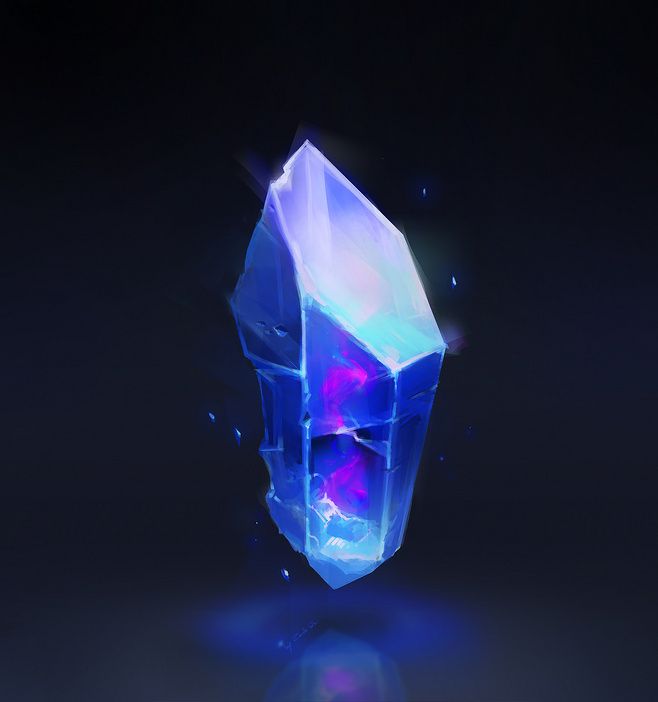
The Keleni, as natural telepaths, learned to craft crystals in which they could store their memories, thoughts and emotions. While a perfectly mundane technology to most Keleni, where they might store keepsake emotions (like how they felt after their first kiss or when they first held their newborn baby), many practitioners of True Communion will store moments of enlightenment or entire thought-chains that contain important knowledge of Communion. They usually store these in protective orbs that will unfold when telepathically commanded to open to allow someone to access the secrets within. Such memory crystals often form the bulk of the “material” in a True Communion library, especially during the old time of the original Templars.

Eloi Fragments

In places of extreme Communion Sanctity, the psionic resonance there can begin to crystalized into an Eloi, (or, in Kelen, an ankoreta). An Eloi can act as a powerful psionic lens; Kelen have the technology to harvest them and either use them directly, or break them up into Eloi fragments to power psi-blades, resonance staffs, or psi-boosters. Temples have specific constructions designed to focus the psionic energies of Communion to a single point, often housed in the center of a temple, it’s holiest point, where the crystal slowly accumulates, floating at the very heart of the temple.

Some archeologists speculate that the Keleni have been building these temples to facilitate the creation of Eloi long before they began to hold them in sacred regard. Today, most Keleni or True Communion temples hold their Eloi in such high regard that they will not harvest or break them up unless in dire need, or to construct the finest of psi-swords for a truly worthy hero.

The Force Sword and Resonance Staff

The Keleni long learned that they had to protect themselves. With the resonance staff, they learned the art of extending their psychic presence and connecting fundamentally with a psychic tool. The next step beyond this was their invention of the psi-sword, which eventually fused with the psionic force swords of the Templars of Communion. While not directly symbolic or meaningful for the faith of Communion, the image of a Keleni wanderer bearing a resonance staff, or a Knight of Communion bearing a psi-sword have become iconic for the faith.

The Temples of True Communion

Temples lie at the heart of True Communion. Masters might claim that they’re irrelevant except, but for the faithful lay person, they offer a place where the weak and suffering can go for solace, or where the student can go to learn at the feet of a master.

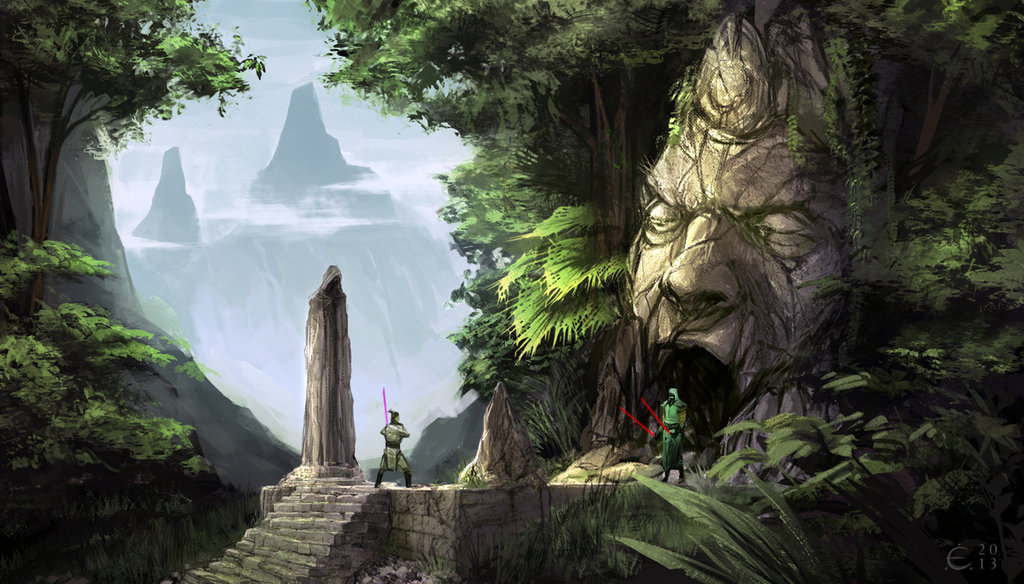
The purpose of a True Communion temple is to attempt to illustrate the path to enlightenment and the nature of the divine cosmic. All rest on ground with Very High True Communion sanctity. Each temple has a unique design. Most have a free, flowing structure that seems somewhat chaotic or organic to the uninitiated, but they tend to follow the natural contours of the land and may allow nature to mingle with their construction to create an even more harmonious atmosphere: vines may climb the walls of the temple, or the temple may be carved out of the stone of a cavern, or a river may cut directly through a temple. Some temples have fountains, whose water the faithful may believe can heal wounds, and whose pattering sounds may assist in meditation. Many temples have the words of their secret text carved onto the walls; as one winds through the unusual layout of the temple, the sacred words of True Communion may spill forth before you, so that your tour becomes a literal journey of enlightenment.

Temples also house Eloi gems at their heart. Their geomantic arrangement channels the psychic energies of Communion to a single point, creating a point deep within the temple of intense sanctity that crystalizes into material form. These most sacred point is typically only accessible to the High Priests of the temple.

Meditation

The devotees of Communion do not believe that they must pray to a distant god for relief, but that they must turn their mind and thoughts inward, to find the divine connection they have to their infinite cosmic deity, and to one another.

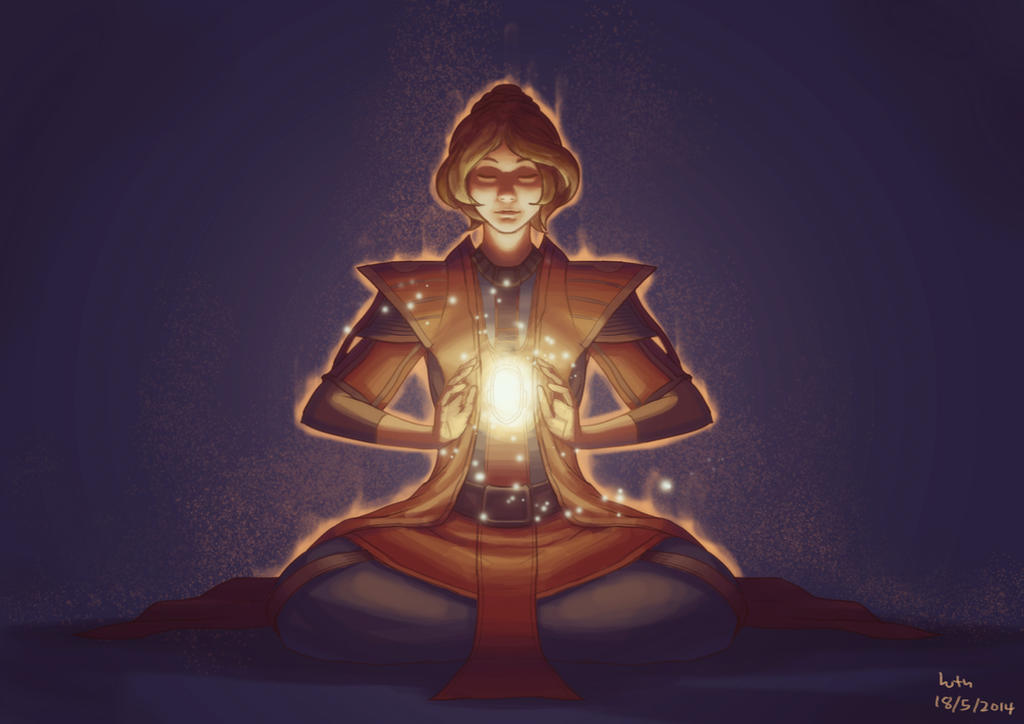
Meditation is generally done while kneeling or in a “lotus position,” with eyes closed. Meditation is preferably done in a holy place or in nature, but any private or undisturbed place will do. Masters of meditation will meditate in complete silence, but those less experienced might chant aphorisms from the Verses or the Mantra “La,” and once such a cycle is complete, may “count” the chant with the click of a prayer bead. Some practitioners, especially Templars, enter a meditative state through carefully practiced movements or katas. The slow, precise “practice” movements of a training templar is, in fact, a form of meditation.

Ordination

Those who wish to set aside the world and devote themselves to the practice of Communion may seek to become ordained as a monk or templar. This requires, first, finding a master who is willing to devote time to teaching a student all the ways of Communion. Once this has been done and the master believes the student has sufficient devotion and knowledge to begin life as a monk, he is brought before a council of elders, typically those who run a local temple, and if they find him worthy, he may join the temple.

To do so, he must first remove his old clothing, then take whatever oaths the masters requires of him, generally represented by the Disciplines of Faith that the practitioner will observe (generally Disciplines of Faith (Mysticism)). The intitiate is then ritually cleaned, either by dipping them into a font of water, or having a chalice of water poured over them, and then they are redressed in the robes of their new calling.

The Traditions of True Communion

True Communion, as a philosophy, is not especially prone to ritual. It concerns itself with an inward journey of spirituality that allows one to learn to silence the self and connect himself to the greater community around him. Thus True Communion demands no specific ceremonies. Even so, the communal nature of Communion encourages tradition and bonds across community and culture, and numerous traditional rituals have sprung up. These traditions often request the presence of a priest or monk of True Communion to enact a specific religious ritual. Most such spiritual leaders accept the request and assist their local communities in these traditions. This practice is far more common among the “Traditional Communion” of the Keleni than it is among the non-Keleni “True Communion” practitioners, who tend to separate themselves from their community.

Community Rituals

The intent of these rituals are to bring the community together and remind everyone of their belonging to a greater whole. As such, all such rituals take place before the community as a whole; they tend to be short affairs, after which most communities will celebrate with a party (such a party is not strictly religious, and so most monks will bow out). Such ceremonies include, but are not limited to:

The cleansing of a new born child with water, either dipping them into a temple font, in a natural body of water, or pouring water upon them from a chalice.

A marriage rite, which usually consists of a vow taken between both groom and bride with a witnessing priest, who then binds their hands together with a length of ribbon (typically white or violet).

A funerary rite, where the priest pronounces the virtues of the fallen, the community each voices their fondest memories of the deceased, and then the dead is either burned on a pyre or buried at sea.

Pilgrimage

The temples and holy places of True Communion hold within them the capacity to create great miracles that can heal the sick and restore the handicapped and bring enlightenment and peace to those who suffer. Thus, many followers of True Communion seek to visit a temple or holy site at least once in their life and the tradition of pilgrimage has arisen in True Communion. This is especially popular among non-Keleni practitioners, and the Crusades to free the Temple Worlds of the Keleni was part military exercise and part grand pilgrimage.

For most, a pilgrimage is just a matter of traveling to a temple, visiting with its priests and monks and perhaps meditating in a particularly spiritual point, such as near its central fountain, or at its highest peak. Pilgrims often make a donation to help support or maintain the temple, and some of the most popular temples become astonishingly wealthy from such donations. A common tradition for temples that find themselves hosts to many pilgrims, such as the temple in which the remains of Isa the Exile are kept, will offer pilgrims a single, simple memory crystal in which they can imbue their religious experience at the temple. They may then keep the memory crystal, so they can relive that moment of spiritual clarity or they may donate it back to the temple. Often, such temples have grand chambers in which thousands of memory crystals dangle from the ceiling, reflecting light and filling the chamber with a thousand memories of religious fervor.

Lineage

True Communion places great stock in family, and in family traditions. It also puts great weight upon the importance of master/student lineages. Most children can quote their lineages back several generations, as can most students quote their educational lineage. For the Keleni, this is a visceral thing, for they have a deep telepathic connection with their ancestors, and place great stock in the “clan” from which one comes. For all followers of True Communion, being a member of a lineage means belonging to something larger than yourself. One’s destiny and tradition is often inherited from your lineage: if your father was a great warrior, you likely will be as well, and if your teacher served as a great protector of the faithful, you will likely be as well. While followers of this tradition tend to pigeon-hole certain lineages, they try not to hold one lineage over another: one man may descend from kings and the other from commoners, but some of the greatest holy men came from common lines, as well as some of the greatest warriors: each lineage has its heroes and icons, just some are more globally famous than others.

The Beliefs of True Communion

  1. Everyone matters, no matter how lowborn
  2. We are defined by our connections with others.
  3. True knowledge can be found within, by listening to one’s intuition and accepting the morality one already knows in their heart.
  4. The “real” world is an illusion; only the “inner world” of thought, dream, perception and connection is “real.”
  5. All people are but facets of an infinite cosmic divinity; through introspection, we can understand the infinite cosmic and understand how it connects all people together.
  6. Virtue is found through aligning one’s self with the will of Communion, and in accepting one’s true purpose in life, one’s destiny.
  7. Time is as much an illusion as the world: there is only the Eternal Now.

True Communion on the Self

Who forged your crown?
-The Verses

The king cried “Who is greater than I?”
The sage asked “Who crafted your fine tunic? Who serves your army? Who brings you food? Who built your throne? Who forged your crown?”
-Meditations

The core principle of True Communion morality centers on the notion that everyone matters. It delights in the imagery of a farmer or a thief elevated above a king or a high priest, creating a sense of social inversion, but in reality, everyone, from farmer to king, matters to True Communion. The faith sees community as the weave of a tapestry, and each individual within that tapestry as a thread: while a community might survive without a few individuals, some character is certainly lost, and should you destroy too many lives, the tapestry itself will unravel entirely.

I am all things; I am nothing.
-The Verses

The woman asked “When I was a child, I was my father’s beloved daughter. When I was young, the men flocked to my beauty. When I married, I became the beloved of my husband. When I gave birth, I became my child’s mother. Now, I am an old widow. Who am I really, sage? Am I all of these things? None of these things?”
The sage nodded and replied “You begin to understand.”
-Meditations

Despite the claim that “everyone matters,” an important lesson that True Communion wishes to impart to its followers is that you, as an individual, aren’t important. True happiness comes not from clinging to self-hood, but releasing it and recognizing that when seeking true self-definition, who you are, you are best defined by your relationships with others. A woman may be a daughter, a sister, a mother, a friend and a rival, but when you remove all of those things, in truth, you have nothing left, and seeking to find what one is bereft of those things is foolhardy. We are our relationships, the connections we have to one another, and to the larger world. We matter not because an individual thread is important, but because the tapestry of relationships could not be woven without all the threads, but ultimately, the tapestry is what matters.

True Communion is careful when it uses the term “happiness.” The sages of True Communion do not mean the happiness of a selfish thrill, such as from sex or drugs or the satiation of one’s hunger or a victory in battle. Rather, they mean the happiness of watching your children grow up healthy and strong, or knowing that your victory (or sacrifice) in battle means that your family, your kin, your nation, will survive, or watching your student succeed where you failed. They define happiness as that sense of satisfaction and peace gained from knowing that the world will carry on because of your efforts.

True Communion defines morality in a similar way. What matters is the integrity and strength of your community and relationships, and that you learn your role within your community and play it. A good mother raises strong children and tries to be a good mother. A good king empowers his subjects and protects them from invaders, and understands that his role is to be king, and to attempt to be the best king one can be.

Beyond these specifics, True Communion defines general virtues such as compassion for others, respect for life, tolerance for others, a sense of justice and equality, and non-violence where possible. A king who protects his subjects through careful and magnanimous diplomacy is a better king than one who projects his subjects through conquest and the enslavement of his enemies. This is because, ultimately, everything connects to one another: a king is a father who must care for his family, while the royal dynasty, as a whole, must care for their subjects to create a unified nation, but his nation lives in an international community, which exist in an ecosystem of life. To beggar one’s neighbors at any level beggars oneself and damages that greater “tapestry” of community.

True Communion approaches morality as it approaches knowledge and metaphysics: what matters is not the universe around you, but your inner state. Thus, for True Communion, intention and character matters more than results and consequences: consequence is ultimately in the hands of fate, and we can only control our inner world, our intentions, and that is what we must cultivate. A king who mistakenly arrests and punishes an innocent man is still righteous because carefully maintaining rule of law is a vital part of being a good king, he was merely misfortunate in making the mistake he did; meanwhile, a thief who breaks into a house and accidentally scares off a murderer is still a thief and a wicked man, that he scared off a murderer and saved a life was pure luck.. Those who seek to be good should concern themselves with cultivating virtue and character and making sure their intentions, within, are correct.

True Communion on Knowledge

I hold no stone in my hand
-The Verses

I held the stone in my hand and proclaimed “This is real.”
“How do you know?” the sage asked.
“I can touch it, I can feel it, it has weight in my hand.”
“You know you can feel it, but do you know that it is real?” He asked. Then he snapped his fingers and I awoke from my dream. I held no stone in my hand.
-Meditations

True Communion radically departs from most other philosophies in that it denies the reality of the world. A True Communion sage will point out that while we can be certain that we touch and feel, that we perceive, we cannot be certain of what we perceive or of its reality. The only thing we know for sure is that we exist and that we perceive.

This means that ultimate knowledge is not found by examining one’s surroundings, for those may be as ephemeral as a dream. Instead, one must turns one’s perception inward and come to know oneself. In so doing, one can better understand one’s own reality, one’s own ability to perceive, and thus better understand the difference between dreaming and wakefulness, what is real and what is self-delusion.

Fish swim. Children laugh. I find enlightenment.
-The Verses

True knowledge is not learned, but intuitively remembered, naturally acquired by removing our own self-deceptions. According to True Communion, all the answers we might seek already lie within is. Whether we wrestle with a difficult moral question, try to find our true purpose in life, or know what course to take in a dangerous situation, the correct answer is always the intuitive answer, one buried deep within our character. Children often know the right thing to do or say, especially morally, because they have not yet cluttered the purity of their knowledge with preconceptions and self-deceptions. The goal of a teacher in True Communion is not to teach, but to help the student unlock what they already knew and either didn’t wish to face, or had forgotten (“You must unlearn what you have learned”). A student knows when what he has learned (or better said, realized) is true because he feels it within the core of his being. True Communion cultivates that self-realization.

The Cosmology of True Communion

The infinite looked upon the void and asked “Why must there be loneliness?”
The void answered “This is the secret.”
The infinite looked upon the void and asked “What is the cost of knowledge?”
The void answered “You must create.”
The infinite looked upon the void and asked “What is the cost of creation?”
The void answered “Suffering.”
And so the infinite tore itself apart. With its eyes it made the stars. With its limbs it set them spinning. With its blood it made worlds full of life. With its mind, it gave all creatures souls. With its breath, it gave the command:
“Return with knowledge. Answer the question.”
-The Forever Cycle

True Communion believes in God. Not an anthropomorphic deity like those of the Divine Masks, but a cosmic, infinite intelligence that pervades the universe. It is found within every rock, within the hearts of men, within the whisper of the wind. Every person capable of self-reflection is a facet of this divine presence, one spark of self-awareness, one neuron in its cosmic mind. Therein lies the reason that knowledge is found within. Each person is a facet of God: within their hearts lies a reflection of the universe. By understanding themselves, they understand this divine presence, and by understanding the divine presence, they understand everything.

True Communion does not believe in psychic powers, at least not as a distinct and separate or unnatural “power.” Given the unreality of the world, given that the world is better understood through self-perception, seeing it as a “dream,” those who display psionic powers are not exerting an internal force on the external world. No, they are those who begin to understand that the external and the internal are not separate, distinct things. They have sufficient enlightenment to change themselves and in so doing, seemingly change the world around them. Those who achieve even higher levels of enlightenment begin to unify their sense of self with their understanding of infinite oneness. As they merge their identity with the infinite, they achieve communion with the divine, hence the name of the philosophy.

They are all you.
-The Verses

The high priest proclaimed “My flock sins! Heretics defile the land and whisper deceptions! My children are foolish! My wife is lazy! All about me fail me!”
The sage replied “They are all you.”
-Meditations

The notion that each person is a thread in the fabric of their community, so too is each person a fragment of divine consciousness and self-reflection. The divine will that surrounds all and binds all is not a thing that controls the fates of mankind, it is the accumulation of our innate humanity. Every choice everyone makes, every wrong one does to another, shapes the face of the cosmic infinite. If we hate the universe we live in, we have nobody to blame but ourselves.

This means that the “God” of True Communion is not a flawless, perfect being. Instead, this infinite divinity is broken, fragmented into a million consciousnesses and fallen into slumber, forgetting what it was. True Communion describes three stages of self-understanding, which the infinity of Communion itself struggles with. At the basest level, one has no conception of self: a drunken man staggers about not knowing what he does, and feeling a sense of self-loathing and self-destructiveness. This manifests as Psychosis, or Broken Communion. At the next state of consciousness, one recognizes one’s self, and overly treasures it. They realize how close to extinction they are and lash out in fear, mistakenly, at others in an effort to survive. This creates self-perpetuating cycles of destruction, as the harming of others creates more suffering which will eventually drag the guilty back down into the Psychosis from which he had emerged. This manifests as Id, or Dark Communion. Those who let go of the terror of losing their newly found sense of self, and realize that their self spreads across all people, that all are distinct selfs that connect with one another into a beautiful fabric of community, only then is a delicate harmony reached, one that can be disrupted by the selfishness of Id, but if allowed to thrive, will succeed in creating an awakening, in which the cosmic remembers itself and everyone returns to their state of divine bliss. This is the Super-Ego, or “True” Communion.

Each person is vitally important because they are a piece of God; all people have within them a fragment of the infinite cosmic within them. The ultimate goal of all who follow Communion is to fully align oneself with the infinite divine, and to do so, they must begin to perfectly embody the virtues represented by the divine in its greatest and most enlightened state (that of “True” Communion). The path to this self-perfection is through introspection, finding the voice of the infinite cosmic within themselves and listening to the guidance it offers their intuition. Those who do this may find their true purpose.

For True Communion, “Destiny” is not a foregone fate, but ones true purpose in life, the path one must follow to achieve enlightenment and bring the infinite cosmic one step closer to restoring It to its ultimate glory. Such a destiny is always good and righteous; those who deny this destiny fall away from True Communion and find themselves trapped in the lies of their baser or self-destructive nature; all “unrighteous” destinies arise from those who deny their true purpose in life.

The widow buried her child and wept.
She asked “Where has his laughter gone?”
She heard his laughter on a distant wind, and she remembered.
-The Book Of Grief

This view also informs the unusual perspective True Communion has on what happens after we die. As all things are part of the cosmic gestalt that pervades the world and all things fundamentally connect, then “time” is as illusory as the world. Because the cosmic exists across all of time and space, and all people are part of and connected through the cosmic, then people cannot be said to cease to exist. They still exist, only the illusion of time separates the “living” from the “dead” in a similar manner to how the illusion of space separates the “near” from the “far.”

There is no “future” or “past,” only the “Eternal Now.” The illusion of the world, as an artifact of our own preconceptions, creates alternate perspectives. Just as one can seem to be “far away” from someone in space, one can seem to be “far away” from someone in time. From the perspective of a descendant, his ancestor is unreachable, and thus “dead.” From the perspective of an ancestor, a descendant may be unreachable and thus “unborn.” In reality, both experience their own personal “now,” but have only a limited capacity to interact with one another. True Communion can bridge this gap, allowing the “dead” to commune with the “unborn.”

Is True Communion True?

The default assumption of Psi-Wars is that True Communion is genuinely true and describes the way the world actually works. The Space Templars are the true heroes of the setting. True Communion recognizes and better explains psionic activity than Neo-Rationalism, and has greater insights into the future and how best to deal with it than the Akashic Order. The Divine Masks skirts around the truths of the setting, but fails to go deep enough to recognize that the divinities they worship are but reflections of our own will and desire. Finally, the Cult of the Mystic Tyrant fails to generalize the experience of Communion the way True Communion does, and over-emphasizes an ultimately illusory physical world, which fails to properly account for why psionics works.

But True Communion makes rather extreme claims about the true nature of Communion, morality, knowledge and the illusory nature of the world, which may not sit well with a particular group. Furthermore, it applies a moral judgment to Broken and Dark Communion and dismisses them as containing no real value. The ultimate result of True Communion’s beliefs are to create a sense of selfless conformity of thought and character. It is, then, possible that True Communion has blind-spots brought on by its assumptions of what is acceptable at what isn’t.

At its worst, True Communion might make promises it cannot keep. It claims that everyone is psionic, that everyone is connected, that everyone is worthwhile, and that everyone has a true purpose (which, if followed, supposedly means the universe will achieve an ultimately desirable utopia). This can easily manipulate the dispossessed who feel lost and powerless, as adherence to the dictates of the philosophy, including self-sacrifice will ultimately result in both power and purpose. Such a philosophy could easily be misused by would-be messiahs and religious hucksters to prey on the vulnerable. In such a case, the harder realities presented by Neo-Rationalism and the Akashic Mysteries represent a possible antidote for the empty promises of a false Communion.

On the other hand, True Communion could be essentially correct except for its moral judgment. Why should the utopia envisioned by True Communion necessarily be “good?” The Cult of the Mystic Tyrant has a much more flexible, and thus potentially expansive, morality, which means everyone can find their own purpose and their own power not through faith, but through their own hard work and the enlightenment gained through personal responsibility. For those who want to chart their own fate and take personal responsibility for their own beliefs, then the Cult of the Mystic Tyrant, even without invalidating the cosmology of True Communion, allows its adherents to live with true freedom.

In a sense, True Communion and the Cult of the Mystic Tyrant don’t really disagree: both argue that the world is fundamentally psionic (and that no division between supernatural and natural exists); neither really believes in an afterlife in any meaningful sense, and both believe that moral knowledge is acquired through introspection. The core difference between the two is how they view the value of people and their relationship with Communion and morality. True Communion believes all people have judgment, and that we should curtail our free-will to serve the “greater good” represented by the “will” of True Communion. The Cult of the Mystic Tyrant believes that people have no value except what value they have for themselves, and that one should exert his own will over Communion, and exercise his own morality. Ultimately, which is “true” might ultimately come down to a personal preference!

The Cultural Context of Communion

The Origin of Communion

A race native to the same region of the Galaxy as the Ranathim, the Keleni, first discovered the phenomenon of Communion and, around it, created the philosophy of True Communion. Naturally telepathic, this race has an innate connection to one another and to their own ancestors. The origins of the idea of communion came from studying ways to deepen this connection, allowing communication across vast distances of space and time. Eventually, the Keleni discovered that they could interact with this inherent connection itself, that they could do more than just commune with one another, but that they could commune with the state of communion itself, this great unconscious gestalt that surrounded them and bound them to one another.

The Keleni had a rough history with other races. First, the great and terrifying Monolith Empire conquered them and shattered their temples and scattered them in an attempt to “cleanse” their temple-worlds. The rise of the Ranathim Empire broke the Monolith Empire, and the Ranathim allowed the Keleni to return to their worlds and rebuild their temples, but they introduced their own strange religions that they demanded the Keleni acknowledge, and they demanded slaves of the beautiful and graceful race. Whenever an Empire has arisen, the Keleni have found themselves under the boot of oppression. They became an oddity in the galaxy, an insular race often found in enclaves on alien worlds where they practiced their unique meditations and ceremonies regardless of what the prevailing ideology. Oppression only made martyrs of the Keleni faithful, or drove their faith underground, but it remained, made resilient through adversity and empowered by the legitimate enlightenment that True Communion gave them.

During their diaspora and while interacting with these great empires, the Keleni discovered that most other races lacked their innate psionic abilities and those who had innate psionic abilities, such as the Monolith or the Ranathim, were bound to entirely different, alien and dangerous forms of Communion (Broken Communion and Dark Communion respectively), leading the Keleni to conclude that their access to Communion was unique to them. Even so, other races, especially the dispossessed among the galaxy, watched the miracles worked by the Keleni with awe and wonder. Many began to treat them as sages, begging at their temples for a miracle cure, or to learn at their feet.

The debate over what to do with aliens who petitioned to join the ranks of True Communion sowed the seeds for the first true schism in True Communion. Traditionalists claimed that because only the Keleni could naturally access Communion, only the Keleni should practice it. They argued that despite the tenets of tolerance native to their faith, that all “people” should be brought into “Communion,” only fellow Keleni counted as “people.” They pointed angrily to their mistreatment at the hands of other races, to the unique Keleni bond, and to the need to protect their culture and way of life. On the other side of the debate, Keleni argued that true tolerance required patiently forgiving the sins of others. Some among them had managed to teach other aliens, such as the Ranathim, the means of Communion. They advocated strenuously that if the Keleni were a special and chosen people, then their destiny was to bring Communion to the entire Galaxy.

The Communion Crusades

This schism reached a head during the apex of one of the few golden ages of Keleni civilization. After the fall of the Ranathim Empire and during the rise of the Alexian Empire, the new Empire had largely left the Keleni alone and in a vacuum of oppressive states, the Keleni began to rebuild their temples and congregate around their homeworlds, and some became more open to instructing others in their faith. Humans, in particular, displayed an affinity for psionic powers, but had the capacity to reach True Communion and were willing to do so. As a result, splinters of Keleni sages, most famously the “Heretic” an-Kihata Istelen, also known as “Isa the Exile,” who brazenly accepted any alien as a pupil, even non-psions, claiming that Communion could unlock the psionic potential of anyone. He also preached against the excesses of the Alexian Empire, the moral cowardice of Keleni traditionalists and the encroaching menace of the criminal warlords of the Cult of Satra Temos

Not long after the excecution of Isa the Exile, warlords and slavers conquered the Keleni temple-worlds, slaughtering many and casting even more into the chains of slavery. The Alexian Empire did nothing, but the now numerous human and alien devotees to Isa’s preaching grew incensed and members of the Alexian aristocracy denounced the Akashic Order for its cowardice and short-sightedness, publicly converted to True Communion and abdicated their positions within the aristocracy. They lent their wealth and prowess to an impromptu crusade to secure the independence of the Keleni temple-worlds. This crusade drew former aristocrat and commoner alike, human and alien, in a grand wave of faith and zeal that succeeded in creating a new “Crusader State” between the chaos of the Dark Arm and the Alexian Empire. The great heroes of the crusade openly ruled the worlds as adherents to this new form of True Communion that accepted all races into its mix. The former aristocracy understood how to rule, and took up de facto leadership of the new interstellar state, acting as the first Templars, the Knights of Communion.

A tumultuous and often mythologized period followed. The Space Templars, not the Keleni, ruled the Keleni temple-worlds. They rebuilt old temples and threw open the worlds to pilgrimages which brought aliens from across the galaxy to worship at and see the temples of True Communion. They brought wealth, new ideas and new cultures with them. The Keleni found themselves further divided: many reveled in the greater freedom and status afforded to them by this development and openly embraced this new, more tolerant and vibrant form of Communion, while traditionalists bristled at the corruption of their faith by outsiders, and the occupation of their native worlds by aliens. The shadowy forces of Satra Temos’s insidious cult conspired against them, while the Akashic Order brooded over their fading influence over the Alexian aristocracy and used their influence over the Alexian Emperor to slowly turn the Empire against the Templars of Communion. The Templar Worlds were doomed, and when it fell, it sent shockwaves across the galaxy.

The Fall of the Knights of Communion

The last Alexian Emperor, Lucian Alexus, declared war upon the Space Templars, while the Cult undermined them from within by turning Revalis White, a famous Space Templar, to their side. The Templars marshaled their strength, not just from their own Crusader worlds, but from the vast, galactic pool of faith that they had cultivated. The Templars slew the last Alexian Emperor and thus shattered his corrupt Empire. They unveiled the machinations of the Cult of Satra Temos and broke their power in the dark arm of the Galaxy. The Crusader worlds fell, the Order of the Knights of Communion vanished from history, but their sacrifice laid the groundwork for the era of peace and harmony in the form of the Galactic Federation that followed.

The fall of the Space Templars did not destroy The faith of True Communion. The Keleni still practice their traditional version of the faith in their scattered enclaves. Human and alien devotees hid their worship for a time, but many openly proclaim their faith, especially on the edges of the galaxy. As the Restored Empire of Emperor Ren Valorian weighs down the galaxy with its brutal oppression, more and more turn to the legends of the old Templars and their heroic deeds in freeing the galaxy from the tyranny of the last emperor, and hope that they might return to repeat the feat.

According to legend, five great masters survived the destruction of the Templars:

The Traitor, the human Revalis White

The Grand Master, the human Gladius Tao

The Kingslayer, the human Jax Elegans

The Laughing Sage, the Sparrial Rokoonooda

The Beautiful Nun, the Keleni An-Kihita Laelin, or Leala the Beautiful

With the exception of Revalis White and, possibly, Jax Elegans, each went on to found their own, smaller Chapter of the Knights of Communion, to hold onto their old lore and knowledge and when the time would come for the Space Templars to rise again, they would be ready to do just that.