Mystical Tyranny as Esoteric Skill

Those who practice the philosophy of Mystical Tyranny gain unprecedented knowledge of and access to Dark Communion. While Dark Communion is listed as an “optional trait,” it is definitely the reason one studies Mystical Tyranny. It also grants (even requires!) Hidden Lore Communion, and offers the unique trait of Dark Investiture which grants even greater facility with Dark Communion. It does not offer any “signature miracles” or special facility with any path (including, despite its name, the Mystical Tyrant), because the cult-like practices of the actual Cult of the Mystic Tyrant are but a relic of this philosophies past. It treats with all of Dark Communion and does so with unparalleled skill.

The philosophy demands that all practitioners come to understand what drives them, through meditation, and to focus on it. The style helps practitioners remove disadvantages that might “weaken” them with undue regard for their fellow man, and helps guide them towards their ultimate, self-focused drives. In addition to gaining “selfish” disadvantages, the GM might allow characters to “improve” their selfish disadvantages by taking them at lower and lower control ratings.

Finally, the philosophy focuses intently on the nature of truth and power. Those who master themselves become intimately familiar with what drives people, and they can use this against others, and to protect themselves. Many practitioners of Mystical Tyranny become Indomitable or gain additional Will, or learn to disregard any influence, social or supernatural, that relies on the flawed foundation of language. In turn, Mystical Tyrants become excellent manipulators of others, and are especially good at non-verbal manipulation, controlling others through fashion, architecture, art and even just their stance or where they choose to place their gaze.

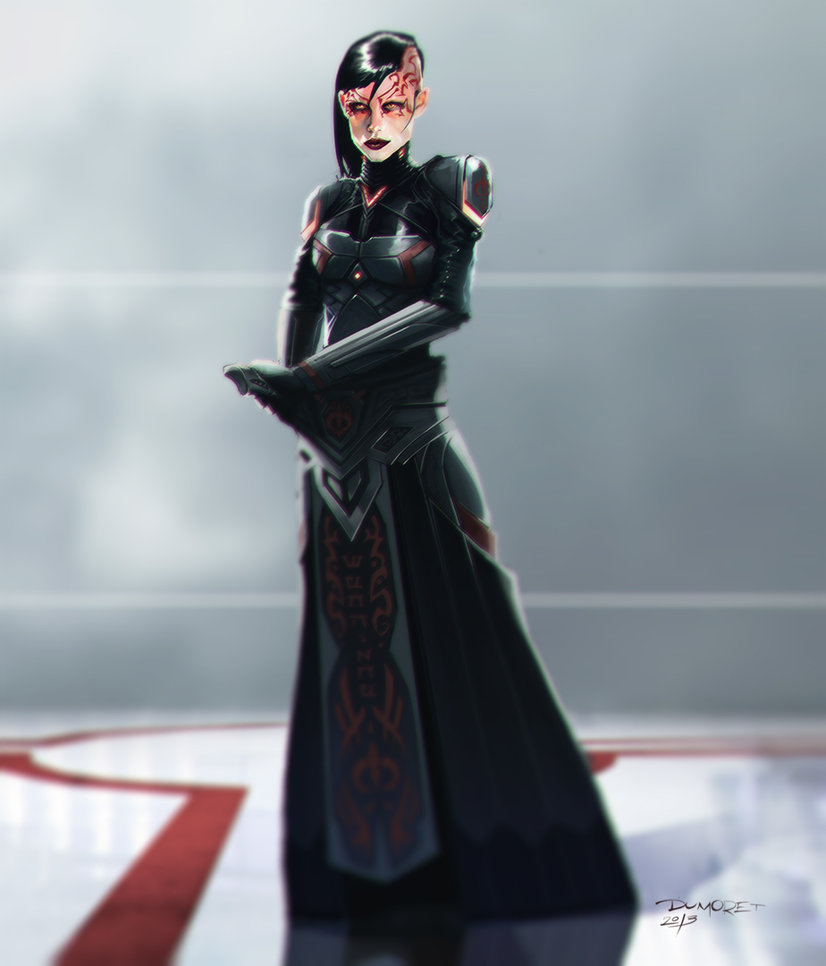
Put together, masters of Mystical Tyranny cut imposing and confident figures who know what they want and never hesitate to seize it. They understand the flawed underpinnings of other philosophies and tear them apart, cutting straight to the personal motivations of their subject. And, of course, they command the dark power of Communion, which both fuels their power and allows them to call down amazing and terrifying miracles upon their foes. Those who truly master the teachings of the Mystic Tyrant learn that reality itself is flexible to their will and they learn to impose their vision of the world, both moral and physical, to create new universal laws that grant them amazing and unnatural powers. Those who follow them and swear oaths to them can also gain access to these powers.

Mystical Tyranny 5 points

Required Skills: Hidden Lore (Communion), Meditation, Philosophy (Mystical Tyranny), Psychology

Cinematic Skills: Mental Strength

Secret Traits: Dark Investiture; Futility of Language, Transcendent Master

Techniques: Aesthetic Appreciation (Philosophy), Comparative Philosophy (Any Philosophy), Inner Journey (Meditation), Philosophical Argument (Any Philosophy), Symbolic Communion Lore (Philosophy)

Perks: Aesthetics of Power, Cloaked, Controllable Disadvantage (Any Mental), Dark Contract, Looks Good in Uniform, High Heeled Heroine, Influence Schtick (Any), Inner Mastery, Passionate Psi, Secret Knowledge (Mental Strength), Secret Power (Any Transcendent Power); Secret Trait (Dark Investiture, Futility of Language), Signature Symbolism, Special Exercise (Will may exceed 20).

Optional Secondary Characteristics: Will

Optional Advantages: Charisma, Dark Communion, Fashion Sense, High Pain Threshold, Indomitable, Intuitive Statesman, Occultist, Rapier Wit, Transcendent Master, Voice.

Optional Disadvantages: Callous, Bad Temper, Bully, Greed, Intolerance (Any), Jealousy, Obsession (Any), Overconfidence, Lecherousness, Selfish, Secret (Member of the Cult of the Mystic Tyrant), Stubbornness, Vow (Loyalty to a master).

Removable Disadvantages: Charitable, Cowardice, Clueless, Delusions (any superstition), Easy to Read, Guilt Complex, Gullibility, Honesty, Oblivious, Pacifism (Any), Selflessness, Sense of Duty (Any), Shyness, Truthfulness

Optional Skills: Acting, Archaeology, Architecture, Body Language, Connoisseur (Fashion, Relics), Expert Skill (Conspiracy Theory), Detect Lies, Diplomacy, Fast-Talk, Law (Any), Leadership, Hidden Lore (Places of Power), History (Any), Intimidation, Intelligence Analysis, Occultism, Politics, Propaganda, Savoir-Faire (Any), Sex Appeal, Streetwise, Strategy, Teaching

New Perks

Aesthetics of Power: Prerequisite: Aesthetic Appreciation 16+, Fashion Sense; Increase the bonus granted by Fashion Sense to +2 in circumstances where the character wishes to portray personal power and gravitas.

Dark Contract: The character may draw upon Dark Communion for additional psychic energy only using the Dark Communion Contract rules. This perk is unnecessary for characters with Dark Communion.

Inner Mastery: Characters may substitute Meditation for Will for Psionic Extra-Effort rolls.

Passionate Psi: Whenever the character fails to resist a mental disadvantage with a self-control value (voluntarily or otherwise), the character gains +1 to his psionic rolls for every -5 points the disadvantage is worth. This works best when using the Ham Clause.

Signature Symbolism: The character has a unique symbol associated with his path, as he slowly diverges from it and creates a new path. A character may have no more levels of Signature Symbolism than his Legendary Reputation, and upon achieving 4 signature symbols, the GM might consider creating a new, unique path for the character, with new milestones and new powers. The various schisms have their own symbolism as each Tyrant walked his own version of the path of the Mystic Tyrant.

New Techniques

Inner Journey (Hard)

Prerequisite: Meditation.

Default: Meditation; May not exceed Meditation+4.

During an intense bout of meditation, the character may turn his eye inward and undergo an “inner journey.” He perceives his own mind and may wrestle, metaphorically, with his inner demons. This acts as a complimentary roll for a Psychology roll to understand one’s own mind, and allows one to perform psychological therapy upon oneself. Multiple, extended uses of Inner Journey can be used to justify spending points to remove a controllable or self-imposed disadvantage, or to acquire a new one.

New Advantages

Dark Investiture 10/level

The character gains a bonus to all Dark Communion reaction rolls equal to his Dark Investiture level; this is cumulative with any Path Reputation he might have. A character may not take more than 4 levels of Dark Investiture without GM permission.

Statistics: Power Investiture (Dark)

Futility of Language 7/10/20 points

The character has learned that words have no meaning except what we assign to them. At level 1, the character applies +3 to Will Rolls to resist any influence roll that involves using the spoken or written word to influence the character, or any form of supernatural influence (such as Enthrallment or Suggestion) that requires the character to understand the words that the influencer says; at level 2, this effect increases to +8, and at level 3, the character is fully immune to such effects. This advantage provides no protection against unspoken influences (such as influence rolls made with an Influence Schtick).

Statistics: Resistant (Influence; cosmic, includes supernatural influence +50%; Aspect, linguistic influence only -20%) [20].

Transcendent Master 15 points

The character has achieved sufficient mastery of his own psionic potential that he can manifest his vision and will upon the world in such a way that the very laws of physics change for him and those who follow him. This allows the character to access transcendent powers or create their own. Such a character is the culmination of the Mystical Tyranny philosophy, having achieved total self-mastery, and will likely gain a following within the Cult. If the GM allows characters who follow the philosophy of Mystical Tyranny to gain Illuminated, then Illuminated replaces Transcendent Master, and characters with Illuminated my access or create their own Transcendent Powers.

This trait may be PC inappropriate, depending on campaign considerations; it also requires considerable insights into the true nature of Communion. Players should ask the GM before taking it, and the GM is free to apply any prerequisites he sees fit. Suggested prerequisites include Philosophy (Mystical Tyranny) 20+, Dark Communion 15+ and Dark Investiture 4, and typically characters only gain this after experiencing some profound insight.

Statistics: Unusual Background (May create own transcendent powers)

The Cult and Conspiracy of the Mystic Tyrant

The Cult of the Mystic Tyrant has existed since before the dawn of the Ranathim Empire, making it older than even humanity’s time among the starts, and among the oldest continuing institutions in the Galaxy. While it has changed somewhat over history, adding new ideas and changing form, it has always paired religion and its secret mysticism with real political power, and understands the importance of secrecy in achieving mastery of both.

Stark philosophy lies at the heart of the Cult of the Mystic Tyrant. This philosophy drives its members, who seek to master themselves and thus master their own psionic power and learn to express their inner divine will through the force that others call “Communion.” The greatest masters achieve transcendental mastery and learn to rewrite the very laws of nature for their own benefit. The cult seeks to spread its philosophy, but only to the worthy, and to induct them into their ranks so that they may guide and shape the masters of a new generation and, perhaps, find the next transcendental master.

The philosophy of the Mystic Tyrant serves a purpose, and that purpose is power. The members of the Cult of the Mystic Tyrant are, in keeping with their philosophy, deeply ambitious men who believe that only they have the capacity to rule the galaxy, and that the galaxy must be ruled. The cult might be better described as a conspiracy of powerful men who meet behind closed doors to kneel at the feet of a psychic master and then divvy up the thrones of the Galaxy amongst themselves. The Cult seeks to empower its members and those who learn of it often seek it out, eager to bend knee to its masters in hopes of being set up as a warlord or corporate master or to learn what real, ultimate power feels like. That they become slaves to dark lords with powers beyond their ken is, often, seen as a worthwhile trade.

The Cult knows the important difference between power wielded openly and power wielded secretly. The masses naturally seek strong leadership, but they recoil at the costs and horrors of true leadership. Understanding this, the Cult sets up powerful and obvious leaders, and then retreats in the shadows to perform all of the dark deeds necessary to maintain that power without besmirching the clean image of their chosen leader. This secrecy also serves their mystical pursuits, as the uninitiated neither understands, nor respects, the true power of the Mystic Tyrant. Because of its long history of secrecy, many of the great secrets of the Cult lie buried in ancient ruins or hidden in encrypted tomes with codes known only to the Cult of the Mystic Tyrant.

To maintain their secrecy and power, the Cult maintains a layer between itself and the rest of the world, which it calls “masks.” A Mask of the Tyrant is a conspiratorial cell that infiltrates other organizations. It manipulates the infiltrated organization, subverting it and turning it to the needs of the Cult. Posing as a secret society, it also recruits new members, including the rich, powerful and influential, as well as the psionically talented. Low level initiates know nothing of the true purpose of their new secret society (They believe they’ve found “the” secret heart of the organization they were recruited from); only the leadership interacts with the Cult of the Mystic Tyrant at large, though members occasionally find themselves visited by mysterious, dark-clad psions who may have special orders for their eyes only, or who may wish to recruit them into the Cult itself, revealing the true extent of the tyrannical conspiracy.

Those who achieve ultimate mastery of their inner self and of Communion itself gain the right to call themselves master (or “Thamara” in Lithian), and in some traditions, take a new (usually Lithian) name and the title “Thamet.” Those who serve the cult typically serve a specific master, and each master forms his own sub-faction within the cult, commanding lesser conspiracies and his own cadre of psionically trained spies, inquisitors and assassins. The greatest masters come together to form the Inner Circle, which ostensibly governs the Cult, but in practice, acts as a safe place where the most powerful Masters of the Cult may come together to bicker and negotiate about the future of the Cult and where their resources will go.

The Schisms of the Cult of the Mystic Tyrant

The Cult has existed for millennia and in that time has changed and splintered. The Cult prefers to present a united front, but precisely how united it is depends on the GM. There may be a singular cult that quietly rules the Galaxy with the Emperor as their puppet (or true master), or their may be a variety of Cults, all competing with one another or unwittingly united behind a True Secret Master.

The Cult of Anthara: The first Divine Emperor of the Ranathim, the Cult of Anthara follows the original genius of the Cult’s founder. It is an exclusively Ranathim cult, one that more closely resembles the Nadomen of the Divine Mask and focuses heavily on the ritualistic nature of political rule.

The Cult of Satra Temos: With the fall of the Ranathim Empire, a Ranathim named Satra Temos revisited the theology of the Mystic Tyrant and stripped it of irrelevant ceremonies and rites and focused intently on the heart of the philosophy: power. Under his guidance, the Cult restored its dominion over the Dark Arm of the Galaxy, at least for a time, using covert, rather than over, rule; it uses control of criminal organizations and occult circles as a means of expanding its power. This is the most common version of the Cult of the Mystic Tyrant (and the default)

The Cult of Revalis White: The first known human transcendental master once served Knights of Communion before betraying them to the last Alexian Emperor. He believed the Knights of Communion had reached a moral dead-end and sought out what he saw as the superior morality of the Mystic Tyrant, which he saw as necessary for saving the Galaxy. The Cult of Revalis White accepts that morality may be a lie, but that a true master can lend truth to anything and seek to create their own personal morality; they also seek to gain mastery over all forms of Communion, rather than limiting themselves to just Dark Communion. The Traitor’s Cult infiltrates religions, knightly orders and schools (where it recruits children) as the basis of its power, and maintains a strong presence in the Alliance.

Agendas of the Cult of the Mystic Tyrant

The Cult of the Mystic Tyrant prizes power, philosophical clarity and self-perfection, and secrecy. Each conspiracy-within-a-conspiracy performs its own roles within the Cult, and each master has his own personal agenda to serve, but ultimately all serve the might of the Tyrant, and all submit to the totality of the Cult’s vision for the future.

  • Treachery! A former slave of the cult has fled, carrying with her secrets of the Cult which she may offer up to the powers-that-be as a bargaining chip for her safety. The Cult must rally its resources to track her down, discover what secrets she has divulged and then end her life. After all, she swore an oath of secrecy to the Cult…

  • Discovery! The crypt of a lost Transcendental Master has been recently uncovered by a bumbling Imperial archaeologist who does not know what he’s uncovered. The Cult must move quickly to silence the discovery and then secure the crypt so that they may control the priceless secrets found within.
  • A young woman with prodigious ESP talents has revealed herself on the edges of Alliance space, and the Akashic Order moves to recruit her into their order. The Cult wants to get to her first and induct her into one of their conspiracies and begin to teach her how to access Communion. She can thereafter be kept as a powerful member of the Cult, or slipped into the Akashic Order as a plant.
  • A young firebrand has managed to gain sufficient popularity to run for election as a senator, but lacks the funds necessary to unseat his more entrenched but less popular opponent. The Cult could induct him into one of their secret societies, allowing him to rub shoulders with financiers and offer their services to “quietly influence” certain bureaucrats to make sure he has ever advantage he needs to become elected. Thereafter, he could do a small favor for his new secret society…
  • Rivalry! A rogue master has killed the apprentice of your master in blatant disregard for the commands of the Inner Circle, and they, cowards, do nothing, revealing their power for the farce your master long knew it was. Your master sees the opportunity to both gain his revenge and to move himself into the inner circle in one fell swoop, but he needs you to be the hand the wields a force sword on his behalf! Finally, your chance to be raised to the rank of apprentice.

The Cult of the Mystic Tyrant as Opposition

The Cult of the Mystic Tyrant has tied itself into almost every power-base across the Galaxy that it can. The Emperor himself subscribes to their philosophy. They have infiltrated criminal cartels and corporations alike. Even charities and religious orders aren’t exempt from their influence. They have power, they have prestige, they have secret knowledge of Communion and even darker powers. They represent one of the most competent threats in the Galaxy.

A Mask of the Cult, one of their secret societies, tend to make more modest opponents, typically representing BAD -2 to -5. The actual Cult of the Mystic Tyrant is BAD -8 or worse; in both cases, Psi-BAD is equal to BAD, as the Cult of the Mystic Tyrant is a fundamentally psionic organization.

When it comes to security, the Cult relies on layers of secrecy as their primary form of defense. Their secret societies aren’t as well-defended as the rest of the Cult, but nor do they keep any harmful secrets. Instead, the Cult uses them as catspaws, attacking and defending with them, and then letting them die if they become compromised, allowing their opponents to think they’ve defeated the menace while the real Cult continues its work in the shadows. Even so, most such societies have code phrases, excellent security (including privacy fields, cameras and traps), and their leadership are trained psions. The Cult’s secret societies prefer to “hide in the open,” by meeting in public to discuss matters in an innocuous manner, or by using other organizations as covers for their agenda.

In the heart of the Cult itself, cultists make extensive use of both psionic powers (especially Telepathy) to ferret out who they can trust and who they cannot. They also use Communion to gain insights into potential threats and then move to act against them. The Cult generally relies on individual skill over technology for security. They tend to meet in either places of obvious power, such as corporate headquarters or in ancient temples, and in such meetings speak openly and brazenly of their objectives. They trust their minions to keep such meetings and their archives or facilities secure, and this generally works well; non-psions tend not to see the agents of the Cult coming, and even anti-psions tend to be blindsided by the inviolate power of Dark Communion, which is immune to anti-psi. Only other masters of communion really pose a serious security threat to the Cult, hence their hatred and fear of the Knights of Communion.

Serving in the Cult of the Mystic Tyrant

Religious Ranks

Ranks:

Religious

8

Emperor or Tyrant

7

Inner Circle

6

Master

5

Apprentice

4

Slave

3

High Priest

2

Priest

1

Initiate

The Cult arranges itself in degrees of initiation, one religious rank per degree. No “Rank 0” exists. Many unknowingly serve the Cult, but they cannot call upon its resources. Only those who have been inducted into the cult itself may call upon its resources. Traditionally, these titles had Lithian names, but most modern Cultists use Galactic Common terms, but some still use the Lithian names in formal settings. Power outside of the Cult does not necessarily translate into power within the Cult. Some members of the Cult may have high rank within the Cult and be virtually unknown outside of it, and some members of the Cult may be powerful men outside of the Cult and have very little sway (or rank) within the Cult. This also applies to the associated organizations of the Cult: a CEO of a corporation fully under the sway of the Cult may have little or no rank in the Cult at all!

All members of the Cult, whatever their rank, are sworn to secrecy upon pain of death. This doesn’t necessarily mean that they cannot reveal the existence of the cult or their membership in it, but does mean they cannot reveal the secret dealings of the cult. Those who do so are invariably hunted down and killed by the inquisitors of the Cult.

Rank 1: Initiate (Khaftilin)

The lowest level of initiation within the Cult, such members are brought into one of the Cult’s secret societies and are shown only fragments of the real truth of the Cult. Such an initiation typically begins with a careful recruitment process, with a recruiter offering the character favors and suggesting the possibility of a secret society. If the character expresses interest and shows trustworthiness, the secret society kidnaps the target and gives them an initiation rite, during which the character swears an oath of secrecy and loyalty to the cult.

The degree of initiation represents, by far, the most common rank within the Cult. The Cult tends to part powerful men at this rank. The Cult expects initiates to bring information to their secret society and to perform favors and, in return, can expect the cooperation of the Cult in securing their power and position. This is the highest rank a non-psion can aspire to in the Cult: the Cult wants men of power in its rank, but it’s more interested in men who can impose their vision upon the world. Initiates typically learn nothing of the greater Cult, though they might be spoon-fed some of its philosophy to see how they take to it.

Rank 2: Priest (Chiva)

The title of the second rank varies depending on the position or role of the character, but the common term is “priest,” a holdover from the old era when the Cult was a strictly religious organization. A priest is expected to preside over rituals and ceremonies within his secret society. Priests also tend to be naturally psionic and the Cult might help hone their psionic power.

Priests tend to be Initiates with psionic potential who seem amenable to the Cult’s philosophy, or who are especially useful to the secret society. They tend to be openly approached about their interest in a higher position by the leadership of their secret society, and if they agree, once again undergo an initiation ritual, though usually one with more direct symbolism pertaining to the Cult of the Mystic Tyrant. This step is taken as a way of slowly revealing the Cult to the initiate and making him more comfortable with the Cult as a whole.

When the Cult sends agents to approach one of its secret societies, they most often deal with the leadership directly, but might also deal with its Priests.

Rank 3: High Priest (Chivaga)

The third rank within the Cult is the highest position within their secret society, and always commands the secret society (if secret societies have an alternate ranking scheme, the High Priest may or may not be the visible leadership, but the Cult will always contact and command the secret society through the High Priest, whatever the “actual” leadership structure of the secret society).

The High Priest is chosen by the Cult itself from among the Priests of the secret society, generally from those who seem most aware of the existence of a greater society, and who remain discrete about the Cult’s existence. They will be approached by higher cult leadership and asked if they wish to command the secret society, usually when the previous leadership has been given a position within the cult itself, or when it has been disposed of in some means. If they agree, they undergo an initiation rite, but this time they must explicitly swear loyalty to the Cult itself, and they are shown true imagery of the Cult.

Rank 4: Slave (Seva)

Technically, all cultitst below the rank of Master are “slaves” in the eyes of the Cult, but the term “Slave” most often applies to those Cultists who have graduated from their secret society but have not yet been taken on as an apprentice yet. All slaves serve a master, rather than a secret society, and they tend to act as agents for the Cult, and may carry official titles such as Inquisitor (who ensures ideological purity and loyalty from the membership), Hound (a foot soldier for the Cult) or Eye (a spy for the Cult), and tend to be associated with their Master (“I am a Hound of Satra Temos”).

Slaves have real access to the information and power of the Cult, and often act on its behalf. By the same token, the Cult is quick to offer its resources to slaves who need power for the completion of their mission. Slaves also typically begin to learn the ways of Dark Communion (though some Priests and High Priests might already have instruction in Communion). While they might be degraded and called “slave” and even dressed in a demeaning or understated manner, they have far more power at their fingertips than those who rule the Masks of the Cult, and many initiates express fear and surprise as they watch their high priest, in all his glory, bowing before a mere slave.

A master chooses his slaves and recruits them directly. Most slaves arise from the ranks of priests or high priests, as they have proven their usefulness to the Cult already, but an especially promising character might be recruited directly by a master and bypass secret societies altogether! Typically, the master approaches the character directly and if the character is amenable, they undergo an initiation ritual that involves a test that would kill any normal, non-psionic person; if they succeed and survive, they swear an oath of loyalty directly to their specific master.

Rank 5: Apprentice (Petale)

An Apprentice (sometimes a “Hand” of the Master) is technically a slave who has been elevated by a master to represent him in all cases where he is not present. A Master only has one apprentice, but an apprentice is also on the fast-track to becoming a Master himself. He is introduced to the Masters of the Cult and allowed to see and interact with the Inner Council, etc.

An apprentice is anyone a master wishes to be his apprentice, though generally they are drawn from among the ranks of the slaves, and an apprentice who has not gained access to Communion is a scandal (or sign of weakness in the master). An apprentice has no special initiation ceremony (assuming he’s already been initiated as a slave; otherwise, he is initiated as a slave); instead, a master simply declares before the Cult that a character is his apprentice.

Rank 6: Master (Thamara)

A master is not recruited, nor inducted or initiated. They are self-made and self-evident. Anyone can declare themselves to be a master, but to be recognized by the cult, one must prove their mastery. Some members of the cult will submit their petition to be recognized as master before the Inner Circle, wheerupon they undergo a potentially lethal test that someone without a strong connection to Dark Communion would surely fail. The presentation of new transcendental powers, or the killing of one’s master also serve as acceptable credentials, under the right circumstances. What matters is that one can prove oneself master.

Masters have the right to take slaves. Most masters have, by this point, accrued enough contacts, friends and experience that they already have an entourage of allies, but if they do not, they begin to build them now. Their power within the cult is less a representation of the cult’s willingness to help them, and more their own considerable assets within the cult moving to help them. A master is the Cult!

Rank 7: The Inner Circle (Gemile)

The most powerful masters serve in the inner circle of the Cult. They represent its leadership and, as with Mastery, are self-made rather than chosen. The inner circle has a limited number of openings (typically 12) and a master who wishes to rise to a seat at the inner circle must ensure the retirement of one of the existing members of the inner circle and then assert his right to join them. This is typically the focal point of numerous shadow wars fought within the Cult of the Mystic Tyrant, though part of the point of the Inner Circle is to keep such conflicts from becoming excessively bloody, so when several contenders appear the Inner Circle usually negotiates a contest between the two, with the winner gaining a seat on the Inner Circle.

The Inner Circle wields power over the entire Cult and, more importantly, must be seen as wielding power over the entire Cult. A weak master on the Inner Circle invites strife and war which, while it might be good for the cult, can be very disruptive.

Rank 8: The Mystic Tyrant (Reluke Lithe)

Only a transcendental master may hold the title of Mystical Tyrant. Transcendental Masters always have at least the rank of Master and typically sit on the Inner Circle, and may be rare enough that only one exists within the cult at a given time. In such a case, they become the Mystic Tyrant (in the case of two more more Trasncendental Masters, the most powerful, by right of strength, takes the position). A Mystic Tyrant has total control over the Cult. The Inner Circle acts as his advisory body and serves his commands enacting his vision. The relationship between Mystic Tyrant and Inner Circle is not one of slave and master, though smart masters will choose to swear an oath of direct loyalty to a transcedental master in hopes of gaining transcendence themselves, but of first among equals. The transcendental master is what all masters of the Cult aspire to be, and thus the masters naturally serve him, but ultimately so that they can be like him.

Rank 9: The True Secret Master?

The Cult trades in secrecy and influence, so some wonder if secret powers influence the Cult in some hidden way. If multiple cults exists across the galaxy, a rumor may persist of a single unifying force manipulating all of them. Such a master would necessarily be a transcendental master, typically with powers most members of the Cult can barely conceive of. While no real rank of “True Secret Master” exists, conspiratorial whispers like to suggest that one of the ancient masters, Anthara, Satra Temos or Revalis White, have found some way to cheat death and that they manipulate the entire Cult from beyond the grave.

Favors of the Mystic Tyrant

The Cult of the Mystic Tyrant has numerous, far-reaching assets at its disposal. It excels at covert activity requests (PR 14), especially Cover-Ups, which it is preternaturally good at. It has access to psionically trained super-assassins and space-knights, which make for exceptionally powerful Violence favors (PR 19). As an ancient conspiracy with tendrils in nearly every part of the galactic economy, it has vast sums of money available, which can help a great deal with Material Aid requests (PR 16).

However, it’s truly unique strength lies in the supernatural favors it can offer, as well as its more conspiratorial ones. These favors include, but are not limited to:

Dark Miracles: Slaves of the Cult can petition their masters for a Dark Miracle. In general, a Minor Blessing is +5, a Major Blessing is +2, a Miraculous Power is -2, and a World-Shaking Miracle is -5.

Places of Power: the Cult has access to many temples and places where the Sanctity of Dark Communion is High or Very High. Treat requests for access to such places as requests for access to Facilities (PR 18)

Relics: The Cult has knowledge of and access to many ancient relics in its vast vaults; generally such relics seek out their destined masters naturally (the Cult likes to put them on display before newly recruited cultists, praise the virtue of the relics, and then deny the cultist access to them, to see which cultists have the strength of purpose necessary to align their destiny with the destiny of the relic). If a character temporarily needs a relic, though, treat it as a Gear request (PR 16).

Dark Secrets: The cult knows many ancient secrets. They can Consult (PR 15), typically with Expert Skill (Conspiracy Theory), History, Hidden Lore (Places of Power), Hidden Lore (Communion) and Occultism at skill 18-21. If they know something outright (such as requesting access to a specific file that contains some dark secret), threat this as a Files request.

The masters of the Cult have access to unique powers and martial arts, which they will train students in. Treat this as a Services request, though Transcendent powers apply an additional -5 to gain access to.

Conspiratorial Power: The Cult has access to numerous sub-conspiracies and to the organizations they control too. They Cult excels at Introductions and Invitations (PR 18); at the GM’s discretion, characters in the cult may attempt to use their Cult connections to make a request from subordinate organizations; typically this applies a -5 if it goes beyond a mere introduction and into the cult as the whole strong-arming an organization into assisting the character.

Cult of the Mystic Tyrant Character Considerations

Requirements: Characters serving the Cult of the Mystic Tyrant must have Secret (Cultist of the Mystic Tyrant; Potentially Lethal) [-30], representing his oath to keep the secrets of the Cult. They must also have Duty; initiates and masters typically have it to the Cult and have it at 9 or less, while Slaves have extremely hazardous duty to a specific master at 15 or less. Finally, all characters need Religious Rank (Cult of the Mystic Tyrant) 1 at a minimum.

Characters who serve a specific master may have him as a Patron. Most Cult Masters are Patrons worth a base of 15 points, though Transcendental Masters typically have access to special abilities and cost at least 25 points!

Symbolism of Mystical Tyranny

The Cult of the Mystic Tyrant originally draws most of its imagery and symbolism from the Divine Masks system, though it treats its symbols as just that: symbols. For the Cult of the Mystic Tyrant, symbols exist to help frame your mind, or to fool the poor, ignorant masses. No true master of the Cult of the Mystic Tyrant truly believes in the symbolism of the Cult.

Divine Mask Imagery

The Cult of the Mystic Tyrant began as a Ranathim Dark Communion cult, and it tends to retain that imagery. The Ranathim have a powerful cultural impact on much of the galaxy and modern humanity tends to be impressed by their exotic, ancient imagery. That doesn’t mean that the Cult won’t co-opt imagery and symbolism from other philosophies; the Cult believes in focusing your mind, and symbolism acts as tools to do just that. If a dacifferent culture has different symbols that would better suit them, the Cult borrows those. The same goes for language: while many rites and rituals in the Cult of the Mystic Tyrant were originally in Lithian, the Cult translates them into other languages as necessary, and Galactic Common is, by far, the most used language of the Cult of the Mystic Tyrant.

Common Divine Mask imagery includes:

Fire: The Divine Masks makes use of brazier and incense to represent the presence of the divine, preferring to light their temples with the “divine light” of fire rather than artificial, electric light. The Cult prefers this approach, but also use fire as a symbol for passion, and “burning away” distractions, or to teach lessons about the importance of embracing pain.

The Gate: The Divine Masks philosophy often has symbolic gates and doorways that separate the sacred space of the temple from the mundane space of the outer world. The Cult of the Mystic Tyrant is less concerned with the concept of “sacred space,” but uses gates, labyrinths and thresholds as metaphors for hidden self-knowledge and power, and the means by which one may acquire them.

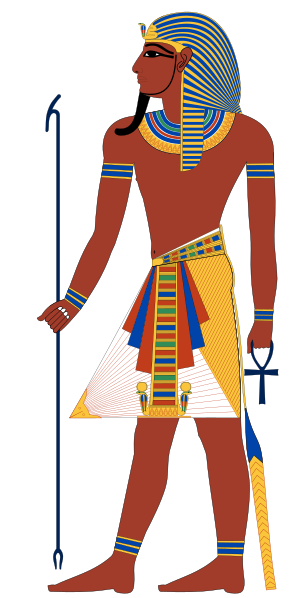
The Lash and Scepter: Traditionally held in the hands of the divine emperor of the Ranathim empire, with his arms crossed over his body, the scepter represents power and the lash represents submission. The original imagery was meant to convey that the emperor represented both the enslaved classes and the master classes, but for the Cult of the Mystic Tyrant, they represent the fact that all men must choose between self mastery or service to another, and that both principles reside within all people.

The Crown: The Divine Emperor of the Ranathim wore a complex, composite crown that represented all people that he ruled. Since the fall of the Empire, the Cult of the Mystic Tyrant continues with the tradition of a crown, but typically simpler, usually just a circlet with a psionic-boosting gem, worn by those who symbolically represent the Mystic Tyrant, such as those leading an initiation rite.

The Psi-Sword: Originally, the royal guard of the Divine Emperor wore these powerful weapons, but after its fall, all members of the Cult began to practice with them. They represent a natural focus for one’s psionic potential, and directly manifest that as physical power. Those taken as an apprentice by a Tyrant, or inducted into the Cult directly, typically craft (or steal!) their psi-sword themselves. With the increasing inclusion of humanity into the Cult, the force sword, or the combined technology of both, has become more common.

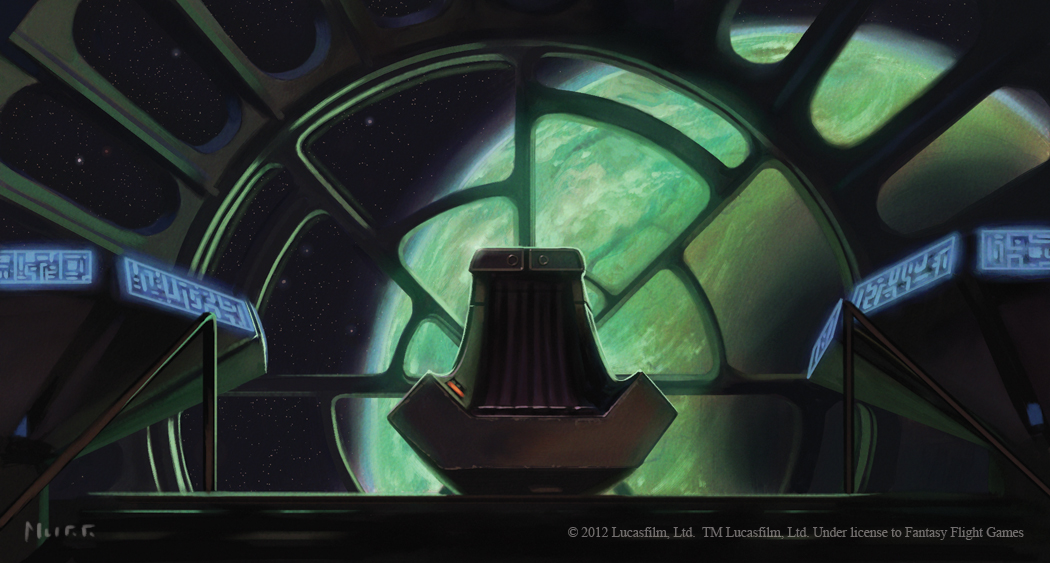
The Tower and Throne: The Cult of the Mystic Tyrant never had an idol to their “God,”for their “God” was a living and breathing Emperor. Likewise, they lack temples and replace them with places of political power. The most iconic image of this is either a tower or throne (a tower or throne surmounted by a crown of fire is a common pictoral symbol for the Cult). Such towers tend to naturally accumulate sanctity to Dark Communion, and their thrones are often built with psi-booster technology.

The Bones of Tyrants: Because a tyrant is a living embodiment of the divine power of the Mystic Tyrant, and because the Cult seeks to find some means to transcend death, they often treat the bones of their dead with respect… and fear. Dead tyrants tend to be interred in strong, fortress-like mausoleums… often with safeguards meant to prevent some unexpected force from either getting in to steal those bones, or from the Tyrant using some means to rise again and getting out (especially if he was an unpopular Tyrant). Devoted apprentices and slaves often carry fragments of the bones of their masters in phylacteries worn around their neck.

The Many Worlds: The Cult of the Mystic Tyrant does not believe in other worlds, but finds the imagery of the many worlds to be a useful parallel to self-understanding. Those who understand physics and mundane concerns have gained mastery of “Jenteku,””or the physical, while those who have mastered psionic power have gained access to “Akaleku,” or the “Astral, those who have mastered Communion have mastered “Falineku,”and those who have transcended all limitations to become a true tyrant are said to have mastered “Lithe,” to have become “Divine.”

The Labyrinth: The Labyrinth is unique to the Cult of the Mystic Tyrant and a late addition to its imagery. It represents the mind, set against itself in turmoil. The Tyrant must “delve into the labyrinth” to become a master of his own mind and passions, and finds at the heart of the labyrinth his truest desire, which becomes the burning flame the consumes all other passions and ambitions.

The Tetrahedron: Usually just called a “Pyramid,” the three-sided pyramid contains the rich symbolism of all three forms of Communion, each represented by a side, with each side containing three points, which represents the three paths of each form of Communion. The base of the pyramid represents slave and the masses and the pinnacle of the pyramid, where all forms of Communion join, which looks down upon all the rest, represents the transcendent master and the ultimate goal of all cultists of the Mystic Tyrant.

Game of Thrones Redesign by tryingtofly

The Aesthetics of Power

The Cult of the Mystic Tyrant understand that power is perceptual. If one believes that one has power, one does. They use their symbolism and their philosophical aesthetic to emphasize this. They build vast buildings with steps that raise the tyrant over those who approach him, surround him with banners and dress in garments that project their own majestic power.

The Colors of Tyranny

The Cult of the Mystic Tyrant uses color in its decoration and fashion both as a symbol for self-understanding, and to signal to others one’s level of initiation, or one’s purpose in the Cult.

Black is the color of the physical world and the color of shadows. It represents the lowest level of initiation and the blur of shadows that cloud the minds of men. It is worn by the lowest initiates, but also by those whose role is stealth, obfuscation or hiding the Cult from outsiders, such as enforcers or assassins.

Red is the color of the astral world and the color of fire and passion. It represents those initiated into the deeper secrets of the Cult, those who have gained sufficient passion that they can drive themselves towards greatness. It is worn by the apprentices of masters, but also those who wage war on the behalf of the Cult, its foot soldiers, agents and guardians.

White is the color of Communion and the color of clarity and ashes; it represents those of the highest degree of initiation, the leaders and masters of the cult, and whose wisdom has given them clarity to see the truth. It also represents those who keep or advance the knowledge of the Cult, such as archivists or archaeologists.

Gold is the color of the Mystic Tyrant, and the color of the divine; it represents those who have transcended the limitations of the Cult to become true tyrants. Cultists with a strong religious devotion to the Cult often wear gold as a reminder of their faith, but most who wear it do so to express power. They tend to be the absolute leaders of the Cult.

Names

Names, in the Divine Mask system, have power. The Divine Emperor would take a new name upon his ascent to the throne, representing his ascension to a divine state. The Cult continues this practice: those initiated to a sufficient degree gain a new name from their master, typically a Lithian one, and the title “Thamet.” In this case, it represents his parting from mundane ignorance and his first steps onto a path of true enlightenment. Those who claim to have achieved transcendence take on a new name of their own, representing how they forge both the universe and themselves with their new vision.

Oaths, and Master/Slave relationships

The concept of slavery and mastery is central to the Mystic Tyrant ideology, as represented by the scepter and lash. Each Tyrant must make himself a slave to his own ambition and passion, and thus becoming his own master, and anyone who can master himself can master others. Slaves shelter in the power of their master.

A master/slave relationship is one of patronage rewarded with obedience and vice versa. A slave bends knee to the master, and the master may do with the slave what he wishes. In turn, the master trains and protects the slave. The greatest of slaves is the apprentice (sometimes called a “prince” or “princess”), the right-hand of the master, who is groomed to take his place, or to join him as a master.

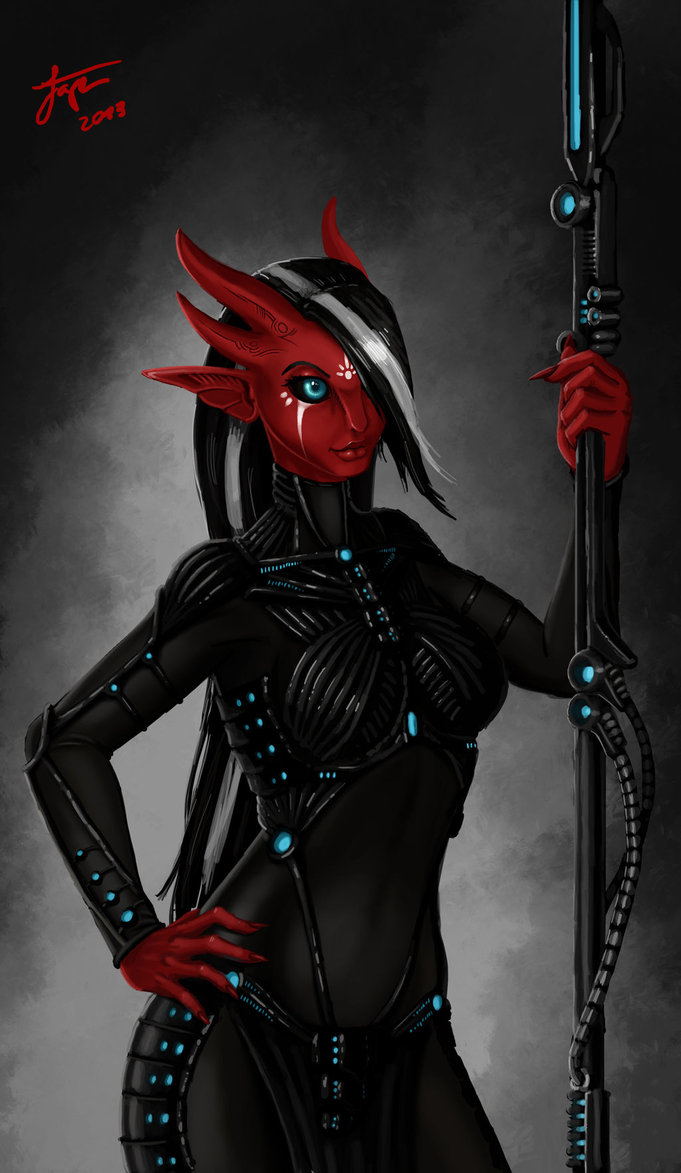
The Cult treats the master/slave relationship very seriously, and makes a show of dominance and submission. Those who are slaves often wear the sigils or names of their master and other items displaying submission, such as slave colors, chains or constricting (or revealing) clothing. They must supplicate themselves before their master and refer to him as “master” (or, in Lithian, “Thamara”) For his part, the master is expected to maintain an air of regal dignity, and to refer to his slaves by their position, rather than their name (the exception is the apprentice, who has earned a position of importance).

The Rituals of the Cult of the Mystic Tyrant

Meditation (“Delving into the Labyrinth”)

The Cult of the Mystic Tyrant concerns itself with self-mastery above all other things. Only those who master themselves can master others. They define this self-mastery as the elevation of one passion over all others, or the alignment of all desires in a single, central focus. This allows the achievement of greatness. The Cultist achieves this alignment through self-knowledge, which includes harrowing inner journey using meditation.

The Cult typically describes the journey as “wandering through a labyrinth.” The character confronts his own weaknesses and passions, often in vivid, hallucinatory detail, and must wrestle with them, flee from them or negotiate with them. They often describe some of their own passions as “monsters.” Some argue for battling and conquering one’s inner demons, but many suggest, instead, submitting to or sacrificing yourself to your inner demons; after all, they’re the most powerful passions and drives within you.

The exact experience varies from person to person and is entirely a metaphorical journey of psychological self-discovery. The Cult may speak of this as “a journey into inner worlds,” but they don’t actually believe this.

Rite of Initiation

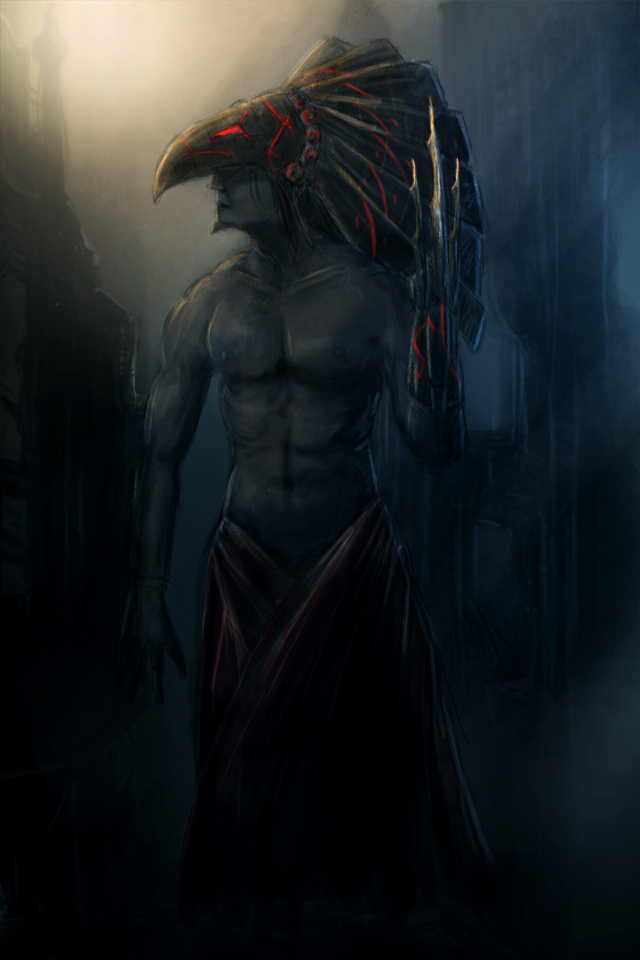
Horus by Merl1ncz

The Cult has always kept secrets from outsiders, whether it was the political decisions of the Divine Emperor, or the conspiring of the cult that came after his fall. Those who wish to gain access to those secrets must prove their worth to the Cult through an initiation ritual.

The exact parameters vary based on the specific cult and the level of initiation the initiate is achieving, but certain commonalities pervade all such rituals. First, the initiate is kidnapped and blind-folded and then brought to an undisclosed location where he is confronted by black-clad masters. First, they demand to know his name. Then they test the initiate. The exact nature of the test varies; at the lowest levels, these might be simple questions about Cult doctrines or tests of loyalty; at higher levels these might be extremely demanding riddles, extreme demands (such as killing a loved one) or extreme, nigh-lethal tests. Once these have been surmounted, the initiate is walked through a threshold and before a crowned master, typically with the lash and scepter and seated upon a throne. The crowned master issues an oath of loyalty (to the Cult) and secrecy to the cultist, and when the cultist has completed his oath, the crowned master grants him the color appropriate to his initiation and, if appropriate, pronounces his new name.

Oath of Submission

When a cultist swears an oath to the Cult or to a Master, this is called an oath of submission. To perform an oath of submission, the cultist kneels before his new master, or a crowned master representing the cult as a whole (depending to whom the cultist is swearing loyalty). The cultist states his name and makes a solemn oath (“upon punishment of death”) to absolutely obey the commands of their new master and to keep their secrets. They then make an offering to their master, typically an offering of their own blood, but possessions or wealth are also acceptable, or an offering of a symbol prepared for the occasion. The Master then accepts the offering, accepts, states his own obligations (to protect and guide his new slave/apprentice) and then offers a hand to lift the slave up.

The Metaphysics of Mystical Tyranny

The Principles of the Cult of the Mystic Tyrant

  1. There is no truth; the true nature of reality cannot be understood by mortal minds, nor express with mortal language.
  2. There is no morality; morality is a lie told by the weak to the weak to justify their weakness, and to the powerful to hobble them. The only true “good” is power. True power lies in the knowledge of what you want, and the strength to seize it.
  3. The world has no purpose; The world is chaotic, primal and unfathomable, and it is the only world that exists; there are no supernatural worlds, nor an afterlife. The only purpose the world has is one imposed upon it through will.
  4. All that matters is power; power is the expression of will and knowledge; All living beings have the ability to express will; the greater the being, the greater the will. Thus, psionic beings are inherently better than non-psionic beings (they have “greater will.”)
  5. Passion and pain indicate our true desires desires and thus our will. True power requires the alignment of all desire and will in the same direction; to impose your vision upon the universe, you must first impose your vision upon yourself.
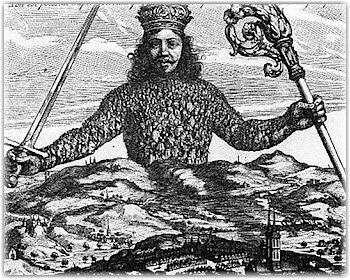
  6. Those too weak to impose their vision on the universe crave having the vision of others imposed upon them. Through the power of the state and the submission of the people to the vision of a powerful tyrant can order be brought to a disordered universe.

The Beliefs of the Cult of the Mystic Tyrant

The Cult of the Mystic Tyrant on Morality

“The universe knows only power. Nothing else matters.” – the Emperor

At its core, the Cult of the Mystic Tyrant is nihilistic. It is defined not by what it embraces, but by what it rejects, and while it rejects a great deal, its core rejection is that of morality. It sees morality as a crutch used by the weak to justify their lack of strength, or to hobble those greater than themselves. Only when freed from the shackles of morality can men truly achieve greatness. From this, all other precepts naturally flow.

For the Tyrant, “good” is that which brings him power, and makes him better able to express his will and satisfy his desires. “Bad” is anything that weakens him or causes him problems, preventing him from being able to achieve his desires. The Cult is careful not to apply moral terms to these, often preferring to term them “fortunate” or “desirable”, and “unfortunate” or “undesirable.” What a tyrant, and all people, should seek is self-empowerment, and anything “good, desirable, fortunate” helps him achieve those ends. Note, critically, that what impact a Tyrants actions has on another is considered irrelevant from a Tyrant’s viewpoint. Let others worry about their own well-being; if they are too weak to take care of themselves, then they should either make themselves stronger, or accept their weakness and offer service to their betters in exchange for protection.

“The priest defies the king and says he does it not for his own glory, but for the glory of his followers, but is this true? No, all men lie! Then why don’t the whimpering masses question his lies? Because the priest’s lies flatter them, for he whispers that weakness is strength, which frees the lazy masses from all responsibility to better themselves. –The Tyrannical Manifesto, Satra Temos

Moral systems, according to the Cult of the Mystic Tyrant, lie. They assign moral weights to actions for the explicit purpose of balancing your personal interests with some perceived metaphysical reward. Now, the Cult of the Mystic Tyrant doesn’t necessarily view deception as “bad.” The Cult views eternal or universal truths as impractical at best (They see them as unlikely, and if they exist, the mind is too limited to contain them and language too limited to express them), and sees, again, no moral weight in truth or deception; instead, it tends to view “truth” as things that useful models. Deception is a problem in so far as it prevents you from achieving self-mastery (and can be useful if that deception helps you achieve mastery, say, over another). This can be an external deception, but is most often an internal deception. The “evil” of morality is not that a priest will use it to advance his self-interests (the Cult believes that this is the fundamental purpose of religion: to advance the self-interests of its priests), but that people use it to deceive themselves.

The first deception of morality is that self-interest is wicked. The Cult notes that history tends to label the ambitious and powerful as wicked. No emperor forged an empire without the slaughter of millions; no scientist ever achieved great discoveries without transgressing the boundaries of the well-understood or accepted; transformative leaders never accept the status quo. When the weak confront this fact, when they find themselves too afraid to transgress, or too weak to achieve their desires or to stop a great man from achieving his ambition, they label those ambitions as evil, and their own inability to achieve that ambition as “good.” The inability to get the girl becomes “chastity,” and the inability to get money becomes “prudence,” while the guy who seduces a woman is guilty of “lechery” and the business man who achieves success is guilty of “greed.” In this way, weakness becomes celebrated over strength, up becomes down, slavery becomes freedom.

The second great deception of morality is that pain and suffering are negative consequences associated with evil actions (that is, the lecherous man or the greedy man will come to suffer for their actions). Moral systems suggest that refraining from immoral action will lead to freedom from suffering. The Cult of the Mystic Tyrant reject this entire line of logic as backwards and counterproductive. First, one should understand the importance of suffering. Yes, one should seek to avoid it, but pain is important. Pain and suffering teach one what not to do, and goad one to action. Jealousy and loneliness reveal a need for companionship; greed and ambition reveal a need for power. Suffering ignites passion, and passion drives one to achieve greatness. That this greatness leads to more suffering is irrelevant. That is the nature of the world! Life is a cycle of achievement and then suffering and passion that points one to his next great conquest. Moral systems attempt to short-circuit this and place someone in a state of complacency.

This leads to the third great deception of morality, that the world is not as it should be. Moral systems point to the natural state of the world, where predator consumes prey, as wicked and point to a supernatural world where all is “as it should be.” The Cult of the Mystic Tyrant rejects this. They see the chaotic nature of the world, full of suffering and predation, as beautiful. What moralists call “predation” they call “competition.” What the moralists call “suffering” the cult see as a call to action. Moralists see a purpose to the world. The Cult sees no purpose to the world, other than the purpose you choose for it, and for yourself. Moralists demand a God or “destiny” or “Communion” that holds the secret purpose for everyone. The cult calls this self-imposed slavery and argues that once you accept that the world has no secret purpose for you, you realize you have the freedom to forge your own destiny.

“Mewling prey! You tremble before the predator and cry out for mercy from an uncaring universe! Why do you not save yourself? Do not condemn the predator that eats to survive, nor the pain that brings you to tears. Learn from them! Become a predator yourself, or suffer the fate you deserve!” The Tyrannical Manifesto, Satra Temos

So, the Cult calls upon all cultists to cast off the shackles of self-limiting morality, but to what end? Once a cultist has grasped the deep lie of morality, has seen his own weakness, has been made to face his own suffering and fears and grasps the futility of existence, then the true work can begin.

First, the Cultist must learn that he, like the universe, is a wild, chaotic mess of conflicting desires. A being has no singular “soul,” no “true core of consciousness,” but is instead a complex machine of parts that each have their own desire. The Cultist must learn to understand this and learn to understand himself. He must embrace the many conflicting passions within him, and choose the desire which he feels drives him the most. This passion must come to subordinate all other passions until it burns like a brand. Through the singular drive this passion (be it hatred, lust or ambition), he can achieve truly great things.

Next, the Cultist must embrace the doctrine of power. He must gain the skills of war, leadership, strategy and personal insight that will allow him to manipulate others and the universe itself to achieve the ends he wishes. He must cast aside that which holds him back or limits him. He must come to embrace the cycle of passion and success that drive all truly great men and in so doing, become great himself.

Finally, once greatness has been achieved, the Tyrant must grasp the ultimate virtue of self-direction. Morality, the Cult teaches, is a lie, but no one, not even the Cult, has the full truth. Lies can be useful, when you understand that they are lies. The Tyrant learns that if no purpose exists for the universe, he can impose his own; where no truth exists for the universe, he can impose his own. The Tyrant constructs his own code of conduct, his own morality, born of his own wishes and vision, and then imposes it upon himself and upon the world.

“The universe has no order but that which I impose upon it. Then I choose to give truth to the lie of morality. And why not? Is my truth of a just universe less glorious than your truth of a cynical one?” -The Gospel of Revalis White

The Mystic Tyrant and the Nature of the World

Mei luimen medra moritelor je namereu melvet; mei nimen imatikta va shane “Je hem medra, mei marvania merielum.”

I beheld a chaotic sea of writhing serpents; I raised my sword and said “With this sea, I shall forge the world.” -The Codex Anthara

The Cult of the Mystic Tyrant preaches a realistic vision of the world, one which embraces a harsh, chaotic and unrelentingly cynical view of the world. They categorically deny the existence of a “supernatural world,” of a God, or of an afterlife. All that exists to the Cult of the Mystic Tyrant is the world that they can touch, see, hear and reflect upon. The Cult of the Mystic Tyrant accepts the reality of psionic powers, of course, and practices them regularly, but they do not see them as “apart” from the physical world, like a supernatural overlay atop unfeeling, unthinking matter. Psionics, consciousness and physical material are all real and expressions of one another.

All things seek to empower themselves. Everything from the greatest mind to the lowest rock have either the ability to express will, passion and intent, or the capacity to do so if properly organized. They see the universe in a hierarchy. Base matter makes up the most fundamental layer, which contain within them only fragments and pieces of the possibility of will and desire, while chaotic chemistry has organized matter into life, which has the ability to express undirected will, and then sapient species have the capacity to express directed will (even if they rarely do so), and the greatest and most evolved of sapient minds have learned to direct all of their passion to a single goal and this manifests to the uninitiated as “psionic power.”

“Communion” to the Cult of the Mystic Tyrant is not distinct from psionic power, which to them is not distinct from thought and motion; all moves on a continuum of the expression of will and desire. The Cult accepts the notion that the universe brims with psionic power, but rejects that this somehow connects to the mighty power that brims from true Tyrants. The godlike power of the Tyrant stems from their supreme enlightenment and their transcendence of the limitations that sapientkind places upon itself.

The Cult of the Mystic Tyrant sees no purpose for the universe. It churns unthinkingly like a boiling cauldron, or writhes and lashes out like a wild animal. The universe has no eventual goal, no underlying secret, no “true destiny” in mind for each person. It has only the raw material of passion and desire turning in on itself, unsated. The greatest Tyrants accept this and then forge meaning out of the chaos. The Cult rejects the idea of Destiny as something bestowed to one by the universe, and sees it as something one forges for himself.

Eventually, all things die, though the Cult rejects this as some predestined, fundamental truth. They see nothing beyond death. Consciousness is tied to the machinery of the body and it ends when that machinery breaks down. No afterlife awaits the Cultist. The Cult argues that one should not seek to live for rewards in the afterlife, but for rewards in the present. If they can find a way to transcend mortality, they do so, and according to Cult lore, all of the greatest Tyrants have done just that.

The Mystic Tyrant and the State

Mei hediren va dri sevene dudia mei

I rose and all knelt before me –The Codex Anthara

The Cult of the Mystic Tyrant is fundamentally a philosophy of the state, at least in its original conception. It applies its skepticism on morality to all people and argues that all people act out of some mixture of ignorance and self-interest. The primary thing that keeps people from acting in perfect self-interest is a lack of knowledge about what course is genuinely in their best interest, or out of sheer weakness and inability to act out of one’s best interest. For example, if one makes a bad deal that loses money, this is either because one did not read the fine print (ignorance) or because the other party strong-armed you into accepting the bad deal.

The purpose of the state, in the eyes of the Cult, is to forge a code of morality for the weak and ignorant. This code, or laws, is not “true” in the sense of an inherently correct form of morality. Instead, it seeks to tame the wild mass of conflicting self-interest and ignorance of the populace and channels all of that self-interest in useful ways. In the same way that the Cultist seeks to direct and sate his own inner passion, the righteous ruler seeks to direct and sate the passions of the populace.

The Cult advocates outright deception of the population. To the Cultist, “the people” are fools, slaves to the Tyrant, but they are slaves by choice. True men, great men, would rise up against the Tyrant, or set out on their own to forge their own place in the galaxy beyond the reach of the Tyrant. Those who willingly suffer the scourge of the Tyrant ultimately accept their fate and even want it. Weak men find it easier to accept the orders of others than to command themselves. The Cult of the Mystic Tyrant does not argue things like “Slavery is freedom, freedom is slavery,” but does note that many people happily enslave themselves to kings, priests and kindred and call it freedom. The Master simply seeks to exploit this tendency for his own purposes.

The power of the state and the laws of the Tyrant forge order where none exists. Without the state, without the social contract, mankind falls into its natural state of anarchy. Just as the Cultist learns to impose his vision upon the shapeless mass of the universe by expressing his psionic will, so too must the Tyrant learn to impose his vision upon the shapeless mass of people by expressing his political will. Without so doing, neither mankind nor the universe has any purpose, direction or meaning, and mankind craves meaning.

And should the Tyrant take advantage of his position to enrich himself or indulge in his vices, is this wrong? No, because the Tyrant, and the leader of a state, defines what is right or wrong with his law. But beware! A tyrant who pushes his populace farther than he his power allows will find himself torn apart by the wild forces his will has unleashed. The Cult of the Mystic Tyrant does preach restraint but only when the Tyrant has reached the limits of his power, in which case the Cult expects the Tyrant to find some way to expand his power. War, taxation, slavery, executions and oppression are all justified if it serves the vision of the Tyrant and creates order and stability throughout the universe.

The Cult of the Mystic Tyrant and other Philosophies

“The time for superstition has passed. The time for justice, equality and rational government dawns today. Henceforth, let us set aside the old ways and embrace a long forgotten future.” –The Emperor

Broadly speaking, the Cult of the Mystic Tyrant sees the other philosophies of the Galaxy as exercises in self-deception. Each philosophy believes it understands the truth of a world that nobody can ever truly understand, or even properly express, and seeks to express that truth using the fallible medium of language. Even so, while Cultists often express amused disdain at other philosophies, they do respect what they try to do, even though they think they go about it the wrong way.

The Cult seeks to forge order out of chaos, while other philosophies deceive themselves into believing that the universe has some fundamental order. If the philosopher can set aside this one fundamental misunderstanding and accept that the universe is fundamentally disordered, they can then go about applying the order they believe the universe should have. The Neorationalist can create a rational universe; the Akashic Order can create a universe where humanity survives; the Divine Masks can create their Gods and their Divine Wrath.

In this way, the Cult of the Mystic Tyrant can act as a parasite on other philosophies. While it believes that all such philosophies lie, and that they lie for their own cynical self-benefit (whether they admit this or not), the Cult sees itself no differently, just a little more self-aware. An astute cultist, then, learns the underlying beliefs of another philosophy and then either embraces them as the vision he wishes to impose, or twists them to serve his own purposes.

Only True Communion really falls outside of this vision. True Communion’s basic tenets of self-denial, elevating the other above the self, and ultimate unity of all beings stands in total contradiction to the tenets of the Cult of the Mystic Tyrant. To believe one denies the other. At first, the Cult of the Mystic Tyrant just ignored the philosophy, but True Communion’s utopian vision of freedom and equality put it into direct conflict with the followers of the Cult when the Knights of Communion uncovered their machinations and made war with them. That secret war tore apart the Eternal Empire, and continues in secret even now.

The Cult does what it can to unveil hypocrisy it believes must lie at the heart of True Communion, and tries to draw away its members into the fold of the Cult, but the efficacy of True Communion and the purity of some of its members has shaken some Cultists to their core and made them question their faith in faithlessness.

Is the Cult of the Mystic Tyrant correct?

The default assumptions of Psi-Wars is that either the Cult of the Mystic Tyrant or True Communion is correct. Even if one decides that the Cult of the Mystic Tyrant is not correct, consider allowing them to have the Illuminated advantage anyway, as it fits their belief in “true enlightened masters” very well.

The Cult of the Mystic Tyrant can easily take on a true position, as it can slip behind any other philosophy and act as the underlying truth behind that philosophy: the world is not really rational/doomed/full of superstitions and Gods, but if you believe in it enough, you can make it so! They accept all the fundamental realities of the game mechanics, including Communion, and have secret knowledge of Communion that brings them real power. Their outlook on the world is also “realistic” enough that most modern, materialistic players will find their philosophy relatively easy to swallow, especially given the reality of psionic powers within the game. Finally, their deeply cynical take on the human condition is also an easy one to swallow.

The problem with making the Mystic Tyrant correct is that it can strike many players as hopeless. Ot\s a little on the nose to argue that the reality of a gaming world is “what you make of it,” and it offers nothing to truly have faith in. To argue that the world is chaotic and bad things “just happen” and you should just become as powerful as you could may disappoint players. It’s a universe where the Emperor is right, the rebellion is wrong, and eventually everyone will die eventually and there’s nothing you can do about it.

On the other hand, you can play down its cynicism and play up its belief in self-empowerment. If you dislike anything about the philosophy, it’s up to you to change the universe. The Cult of the Mystic Tyrant argues that nothing, not even immortality or divine power, is beyond your grasp, you just need the vision and strength to seize it. Perhaps the players will decide that the Empire’s oppression is wrong, and that they have an even greater vision. The players can argue, from within the philosophy of the mystic tyrant, that their morality is correct, and they might enjoy that, especially the sort of group that wants to revel in personal power!

The Cultural Context of the Cult of the Mystic Tyrant

The Cult of the Mystic Tyrant has its foundations in the Divine Masks philosophy of the Ranathim Empire. Early in Ranathim Culture, the race of psychic vampires stumbled across the phenomenon of Dark Communion and began to embody and worship the various archetypes, paths, of Dark Communion as gods. Among these paths was the path of the Mystic Tyrant, and the ritualistic priesthood of the Mystic Tyrant became indistinguishable from the rulers of the Ranathim people, forging the role of the God-Emperor of the Ranathim ultimately codified by their greatest ruler, Anthara.

The original conception of the Cult of the Mystic Tyrant was largely no different from any other Divine Mask cult. The Mystic Tyrant had oaths that his servants could take and laws that they must follow to avoid His Divine Wrath, and the head of the cult would physically embody the Mystic Tyrant, becoming its divine avatar. But where the other cults were strictly supernatural, the Cult of the Mystic Tyrant blurred the lines between physical and supernatural. The Mystic Tyrant did not “draw down” the supernatural into himself so much as elevate himself into the ranks of the divine. The cultists did not worship some ethereal “ruling god” that each Emperor embodied, they worshiped the Emperor himself. The oaths they swore were to the state, and the laws they obeyed were the laws of the state, and the wrath they risked was the punishment meted out by the state. Nonetheless, this created a deeply ritualistic rulership, where the role of the divine emperor was as much ceremonial as legal or political. He issued edicts and sat in judgment, true, but he also ritually married the high priestess of the Cult of the Beautiful Fool, ritually dined with the Cult of the Rebellious Beast, and governed over his own rituals. The merging of the political with the religious allowed the Cult of the Mystic Tyrant to merge the competing faiths of the Ranathim people and their conquered subjects into a single, unified system: the Divine Masks.

But it could not last. Eventually, with the destruction of their homeworld, the rule of the Ranathim collapsed. The Cult of the Mystic Tyrant, stripped of its political power, lost its power and prestige, but the truths uncovered about the Mystic Tyrant remained. No longer could he be the ceremonial ruler, but instead, a secret master who transcended law and limitations. Where the Mystic Tyrant had once welded together a new paradigm, the Cult needed to do that again, but for itself. Thus began the shadow reign of Satra Temos.

The fall of the Ranathim Empire resulted in the eruption of long simmering resentment and rage at Ranathim excesses. With the shattered hyperspace routes and the lost base of the Ranathim homeworld, the Ranathim had no hope of reforging their empire and an entire generation vanished in the chaos of the collapsing empire. In this storm of anarchy, a warrior-sage Satra Temos acquired the secrets of the Cult of the Mystic Tyrant, both through careful investigation and archeology and intense introspection. He restored the Cult, but with his own, deeply cynical and deeply ambitious take on power. Rather than rule the Galaxy openly, the Mystic Tyrant would rule it in secret. His cult forged a criminal empire of slavers and gangs all beholden to their terrifying new masters who silently killed those who opposed them, or twisted the minds of their enemies. Anyone who encountered this shadowy power even in passing was either destroyed or inducted into its ranks. The Cult of Satra Temos accepted Ranathim and alien alike, even inducting the first few humans into its number.

The tendrils of Satra Temos extended even into the Galactic Core and, on its boundary, finally exerted power over the homeworld of True Communion and, in so doing, unwittingly triggered a crusade from the Alexian Empire, where knights and commoners alike who had come to believe in True Communion rallied in defense of those sacred worlds and cast off the puppet empire of the Cult of the Mystic Tyrant and triggered a new shadow war as the new Knights of Communion began to unravel the conspiracy of their enemy.

Eventually, the two sides destroyed one another in the climactic cataclysm that ended the Alexian Empire. The Cult managed to corrupt some of the members of the Knights of True Communion, the traitor Revalis White, but not before the Knights scattered their numbers and managed to destroy the inner circle of Cult of the Mystic Tyrant and shattering its powerbase.

And so it remained for centuries, the Galaxy thriving in the newly born federation while the Cult regathered its strength and explored new ideas, always wary of the possible return of the Knights of Communion, until one day, they came across a young officer serving in the war against the Galactic Invasion, a psychic with the sort of insight and wisdom not seen since Satra Temos. The Cult of the Mystic Tyrant forged him into the new Galactic Emperor and once again, rule the Galaxy.

The Cult of the Mystic Tyrant and the Galaxy

The Cult of the Mystic Tyrant has few visible adherents. The Ranathim world of Sarai has a Mystic Tyrant in the classic mold of the sacred king Anthara, but the followers of Satra Temos and other great Mystic Tyrant philosophers tend to keep their head down and exert their power silently. Thus, one cannot find a temple to the Mystic Tyrant in the galactic capital of Sovereign, but even so, most people are at least dimly aware that a shadowy and powerful force exerts considerable conspiratorial influence.

Many in positions of power have heard whispers of the Cult of the Mystic Tyrant. Sometimes, a criminal organization will adopt the legendary trappings of the Cult of the Mystic Tyrant to evoke the fear that its name carries, but the true Cult usually destroy those who seek to steal their name. Those who seek, instead, to join the Cult may find themselves inducted into some secret organization where they can rub shoulders with other prestigious men, but only a few ever slip past this conspiratorial curtain and find themselves counted among the true ranks of the Mystic Tyrants.

Generally, though, the Cult manages to silently infiltrate organizations or philosophies that interest it, where they find useful members to induct into puppet-organizations a few steps removed from the true cult, and when those new recruits prove sufficiently resourceful, they may be inducted into the cult itself. Generally, the fresh recruits of the Cult of the Mystic Tyrant don’t even know they’ve joined until the truth is revealed to them and they become the apprentice to a powerful master.

To make matters more confusing, there might be more than one cult of the Mystic Tyrant. While Satra Temos’ vision of the Cult is by far the most prevalent, it is not the only. The Cult of the Emperor is another such Cult, with its own vision and take on the Cult of the Mystic Tyrant, and all such cults are mutual rivals and allies. Taken together, they represent a formidable conspiratorial force throughout the Galaxy: while they surely do not run everything, their influence can and does shape Galactic politics.

Patreon Preview: Cult of the Mystic Tyrant

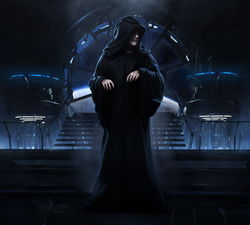
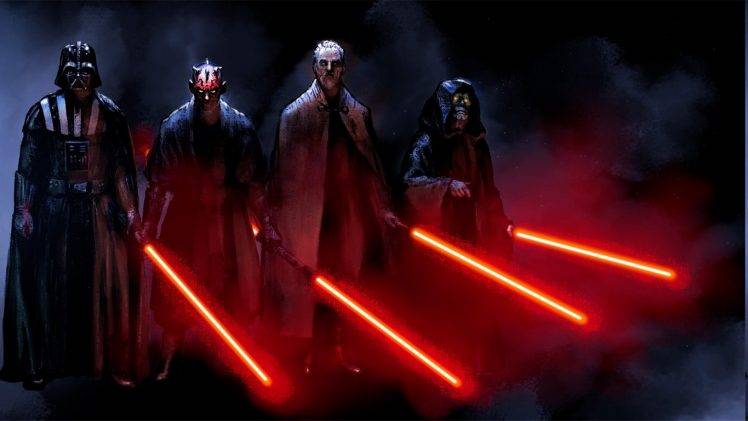
A space opera setting inspired by Star Wars wouldn’t be complete without a Jedi and Sith stand-in, and today, I’ve started the series on the first of those two: the Cult of the Mystic Tyrant, a philosophy dedicated to the transcendence exemplified by the Dark Communion path of the Mystic Tyrant and to ruling the Galaxy from the shadows.  The Emperor himself subscribes to this philosophy, perhaps explaining his lightning rise to dominant force in the Galaxy.

I’ve been wanting to work on this particular philosophy for ages (it was one of the first philosophies I had a rough draft for even before I started working on the Philosophy sub-iteration), so I’m pleased to present the Patreon preview of the Cult of the Mystic Tyrant, which is available here for all $3+ patrons.  This includes:
  • A look at the beliefs, history and symbolism of the Cult
  • A look at the core organization of the Cult of the Mystic Tyrant and it’s secret “face” organization
  • The Cult of the Mystic Tyrant as an Esoteric Skill
  • The Schisms of the Cult of the Mystic Tyrant, including 
    • The original Ranathim God-King, Anthara
    • The criminal philosopher, Satra Temos
    • The True Communion Traitor Knight, Revalis White

I still have yet to complete additional psionic styles, martial arts, alternate paths and, most critically, the transcendent principles.  These will be available later.  In the meantime, thank you, Patrons, for supporting me, and be sure to check it out! 

The Cult of the Mystic Tyrant: an Intro

Peace is a lie, there is only passion. Through passion, I gain strength. Through strength, I gain power. Through power, I gain victory. Through victory, my chains are broken. The Force shall free me. -The Sith Code, Knights of the Old Republic

Star Wars follows a very simple sort of morality. On the one side, you have the good guys, the Jedi, who are good, and on the other, you have the Sith, who are bad. The films rarely stop to discuss the inherent morality of one side or the other. Even when the Jedi are at their most decadent and corrupt, all that really means is that they lose their ability to oppose the true source of evil, and at their best, the Sith can only offer lies. The latest films seem to suggest an effort at “balance,” which we’ll have to wait to see, but only in video games, where players may want real choice, do we get a glimmer of value or worth from the Sith philosophy, and even there, I often find how it’s treated to be incoherent (and I’m not the only one). I find little true balance in how Star Wars treats its philosophies.

That said, Psi-Wars needs their Sith. We need a dark, conspiratorial force that seeks to undermine the moral systems of the Galaxy and throw everyone in chains. We need a reason for our not-Jedi to keep their tradition alive and a force for them to defend against. We need the sort of villain who draws upon Dark Communion and TK-Squeezes the throats of his enemy while wielding a terrifying, red force sword.

But I personally find the black/white morality of Star Wars limiting when it comes to setting design. I do not object to GMs wishing to make True Communion the good guys with the Cult of the Mystic Tyrant as the bad guys. After all, that’s my default stance! And it’s likely the stance of anyone hewing close to Star Wars as inspiration. But I find that mustache-twirling villainy to strain plausibility for most mature audiences and, on the flip side, I see many players who chafe at the false choice presented by the Jedi/Sith split. Why would you, as a player, ever choose the dark side if it isn’t better, demands you kill a loved one, and leaves you irredeemably corrupted? For cool powers? Speaking of which, why precisely must one kill loved ones and become irredeemably corrupt to gain access to force choke? And if the GM is going to include dark villains who choose this dark path, he may want better motivation for that choice than “Mwahaha, I’m so evil!”

At the same time, a GM who doesn’t want the black and white morality of Star Wars may well want to make the “Sith” the legitimate good-guys without turning them into Jedi who just wear black. What does that look like? What options does he have? I’ve not spoke of him much, partly because I liked him so much, but a character like Vesper Tane, who embraces Dark Communion in his effort to end the Empire should be a feasible choice. What sort of philosophy might he follow?

To me, choice is the heart of an RPG, not just the choice of a player, but the choice of a GM in how he wishes to depict his setting. I know players will want to choose the dark side, and I know GMs will want a more nuanced and sympathetic depiction of its villains. As such, I feel that the Cult of the Mystic Tyrant, while dark, should be potentially seen as not villainous. One should be able to see their perspective and, with a few tweaks, make them into the good guys, if one wishes.

So, here begins the Cult of the Mystic Tyrant, a cynical path that denies morality, that denies truth, that seeks to enslave others, and to become master over everything in the Galaxy. It hides in the shadows and builds its power while whispering honeyed words into those who will listen and then, like a parasite, co-opts the philosophical system of others. This, then, is your villain’s philosophy. But it’s a philosophy that strips away the comforting lies we tell ourselves and forces its practitioners to either admit their cowardice or face the full, terrifying truths of reality head on. It demands individual responsibility from those who would be king, and demands that those who seek answers forge them for themselves. It embraces the here and now, rather than promising a fairy-tale where everything’s gonna be okay. This, then, is a philosophy of misunderstood heroes, men who lead when the rest of the world cowers at their feet.

The Philosophical Inspiration: Hobbes and Legalism

For the Lawes of Nature (as Justice, Equity, Modesty, Mercy, and (in summe)doing to others, as wee would be done to,) of themselves, without the terrour of some Power, to cause them to be observed, are contrary to our naturall Passions, that carry us to Partiality, Pride, Revenge, and the like. And Covenants, without the Sword, are but Words, and of no strength to secure a man at all. – Thomas Hobbes, Leviathan

I have not read nearly as much of Hobbes as I would like, but he serves as the foundation for a great deal of modern statecraft and international politics. He has cousins in the East in the form of State Mohism, which I first encountered as the very Sithian “Legalism” of Legends of the Wulin.

The core premise of all of these is that morality is not inherent to the human condition, but rather an artificial construct we impose upon ourselves. The natural state of man is wild and bestial, or “nasty, brutish and short.” Nothing at all prevents one man from killing another, and indeed the state of affairs, in their natural state, is that it is often better to do so than to risk being killed in turn. But such a state of endless “war of all against all” wearies men and destroys any possibility of cooperation. And so, all civilization and all morality is built upon a social contract, wherein men give up some measure of their power and freedom in exchange for security and order. In this context, theft and murder aren’t evil because “God says so” or because of some inherent moral calculus, but because allowing it will break down social order and foment the anarchy of all against all, and we agree that it’s bad, and we agree to give up our right to take stuff from others for the chance to ensure that we get to keep what we have. Thus, law and morality can be seen as a peace pact made by all men who join into a civilization for their mutual prosperity.

But men cannot be trusted to enforce their own accords. They must have a third party, a king who stands above them in judgment. He wields the power necessary to maintain and enforce the social contract. Whatever is done to maintain this social order is justified: the genocides committed by men like Alexander the Great, Julius Caesar or Qin Shi Huangdi (or the Imperium of Man in 40k) are righteous, in this estimation, because they helped forge empires, and bring everyone together, ending dark ages and bringing about new eras of prosperity and order. In principle, it doesn’t matter who holds this position so long as someone does, and everyone respects that man’s word, but in practice, he must be disciplined enough not to use his power to commit acts that break the very social contract that gave him power, strong enough to enforce that social contract, and savvy enough to walk the line between the two.

Nietzsche and the Death of God

While every noble morality develops from a triumphant affirmation of itself, slave morality from the outset says No to what is “outside,” what is “different,” what is “not itself”; and this No is its creative deed. – Nietzsche, the Genealogy of Morality

Nietzsche is a hard man to pin down. Much of his philosophy, to my ear, reminds me of the philosophies of Buddhism, in that it seems to seek mainly to reject common thinking, to shake people out of their ruts, and to remind us that so much that we assume to be real and obvious are just illusions we created for our own comfort and convenience. When you try to pin him down on what he actually stands for, though, he’s mercurial, and thus it’s easy to read whatever you want into his philosophies. It doesn’t help that his sister, after his death, repurposed much of his works to support the anti-semitism that was sweeping Germany at the time, and much of this was later embraced by the Nazi party, making Nietzsche, unfairly, the “evil” philosopher. As such, some Nietzschean ideas do make it into the Sith Code, and it’s worth exploring them further, but on the other hand, much of Nietzscheanism is fundamentally life-affirming. He has an inordinate disdain for ideas about “other worlds,” exhorting us to embrace the here and now, to live life, to not fear pain or misery, but to crave experience. This might be useful to us, especially if we want to push the Cult of the Divine Monarch in a less villainous direction. But, more importantly, you must understand that what I present as Nietzschean philosophy is really inspiration I draw for the Cult of the Mystic Tyrant, rather than an explicit discussion of Nietzsche’s ideas.

Nietsche talks a great deal about morality and truth. The latter, he argues, is really a short hand for useful bits of information, like “Those berries are poisonous” or “Power corrupts,” rather than mystic, fundamental truths. Likewise, he dismisses most morality as a crutch, things we simply repeat to ourselves, or lies we tell ourselves to justify our own misery. Perhaps you are not rich, but you tell yourself that it would be wicked for you to be rich anyway, so it’s not that you’re poor, but rather, that you are humble and frugal. He describes a “master” morality that takes what it wants and sees that which makes one strong and powerful as “good” and what makes one weak and miserable as “bad.” Those who embrace this morality tend to run roughshod over the weak, who invert this morality. The strength of the masters is “evil” and the humility of weakness is “good.” Nietzsche’s actual opinion on which morality is “better” seems complicated, but for the purposes of the Cult of the Mystic Tyrant, we’re going to embrace this idea of “master morality” as superior to “slave morality.”

Nietzsche also argues that ultimately, we have will to power, that we wish to become strong enough to get that which we want. Pain and jealousy and greed are motivators that point us away from things we don’t really want and towards things we do. That flash of pain and anger you feel when your mate gets the girl you’ve set your eyes on? That’s a goad to push you to get off your ass and get a girlfriend of your own!

The greatest of men are those who recognize this, who see conventional morality as the crutch that it is. This does not mean that Nietzsche believes in no morality, nor does the Cult of the Mystic Tyrant. Rather, once one accepts that morality is an artificial code, and that we must seek self-empowerment, we can begin to forge our own codes. This requires profound self-mastery, so that our conflicting passions and desires do not drag us down in internal squabbling. Once that mastery has been gained, once your passions have lined up with laser like precision on what you want, you can exercise that power to seize the day. You transcend morality and forge your own morality. You are moral not because people tell you that you should be, how you should be; you become moral out of personal desire to fulfill your own personal form of morality. You forge your own truth.

Rex Nemorensis: the Sacred King

The Mystic Tyrant is, himself, a magical king, and the concept of a magical king has resonance throughout all of history. Sir James George Frazer discussed his theory of the sacred king in the Golden Bough, and you can find imperial cults all throughout history. Most of these focus on cementing the power of the king by suggesting an infallibility to his wisdom and power; they become cults of personality. But just as often, kingship becomes deeply ritual and ceremonial. The king becomes a religious figure as more than just a convenience measure. Consider, for example, the British Monarchy, which wields little real power, but considerable symbolic power. The assassination of the Queen of England would likely do little to stop her government from functioning, but would be a devastating blow to the morale of her people. And if you study the rules she and her family must follow, everything is carefully orchestrated to put on a show.

Kingship almost always involves this sort of ritual ceremony, placating the egos of the many people ruled by integrating their symbolism together into the majesty of the king. They claim the power to bring prosperity to the people and should they lose the favor of the Gods, then their people will suffer, as seen in the idea of China’s “Mandate of Heaven,” or the European ideal of the “True King” whose rule literally brings prosperity to the land.

The Cult of the Mystic Tyrant is ultimately an extension of the Divine Masks philosophy, where one embodies the will of the divine. The divine will embodied here is that of the Mystic Tyrant, that of the all-powerful king. Such a king would fuse religion and rulership directly. While I doubt modern Cultists of the Mystic Tyrant follow such an ideology, this is where their origin lies, and it doubtlessly shapes their mythology.

A Sinister Conspiracy: GURPS Cabal

Secret societies maintain their secrecy because they have
access to knowledge and power that would be misunderstood
or misused if known to everyone.–Kenneth Hite, GURPS Cabal

Finally, for our Sith to be truly sinister, they must conspire to rule the world, and influence the world from the shadows. They represent the Templars of Assassin’s Creed, or the Illuminati or, most especially, Kenneth Hite’s Cabal.

I favor the Cabal not just because I’m an enormous fan of Kenneth Hite, but because of their unapologetic mysticism. They seek power for the sake of power, and they seek knowledge for the sake of power. They immerse themselves in dreamquests and cloak themselves in mysterious, sacred imagery, all for power. This absolutely fits with the image of Palpatine as Evil Space Wizard, but I think it fits the concept of what we build here nicely. As a secret organization, they should share the Cabal’s secrecy and ability to infiltrate other institutions until one slowly realizes that one’s company or criminal organization is secretly being controlled by a sinister cabal of pyshics with powers you can barely fathom. As a mystical organization, they accept no boundaries on their pursuit of knowledge, no matter how profane or dangerous that knowledge. Finally, they believe themselves uniquely equipped to defend the world from a terrible menace that nobody but them really understands. In their eyes, their pursuit of power is always justified.

So, if I need anything to pillage for imagery, GURPS Cabal is a wonderful place to start. And to be clear, I did more than pillage. The structure of the Cult of the Mystic Tyrant, as an organization, is drawn almost word-for-word from GURPS Cabal.

What is the Cult of the Mystic Tyrant

The Cult of the Mystic Tyrant is a secretive conspiracy that claims special and unique understanding of Communion and the working of the Universe. They use their power and insight to spread their influence, quietly, so that they may rule the universe, which they feel is vitally necessary: an unruled universe descends into chaos and an eternal state of war. They also have insight into the threats posed by unknown forces to the Galaxy and its inhabitants and know that everyone continues to follow the same path, only doom can result. They offer a new path, a way to transcend the common understanding of psionics, communion and even the universe, and to forge one’s own power and miracles: rather than serve gods, the cultists of the Mystic Tyrant become gods. And they will offer you some of their protection, but in return, you must bend knee, and if you bend knee, they lose respect. The lot of the slave is to serve the master and suffer and in suffering, learn what it is they want. The weak will lose themselves in that suffering, trying to repress it, or falling into self-conflict, while the mighty will begin to focus on their ambition with laser-like focus and transcend the limitations placed upon them, becoming divine tyrants in their own right.

State of the Patreon: December

Another month, another State of the Patreon.  Where are we as 2017 closes out?

November, for views, was a disaster.  I haven’t been this low in views since I started Psi-Wars (perhaps the first couple of months were worse, but this is definitely the worst month of 2017).  Why was it so bad?  Well, I cut my posting rate from 4 a week to 2 a week, and for a few weeks in the middle, due to illness, I failed to promote my posts across various social media platforms, and with the Philosophy series I’ve been giving all of my material to my Patrons up front, which means they don’t view it as much.  It might also be that Divine Masks was just a less interesting philosophy for most people, but I’ve heard some vocal interest in it, so I suspect it’s more the first three.

Am I worried?  No.  My Patreon is up again, which suggests to me that interest hasn’t dropped.  I’ve halved the posting schedule and thus halved my views, I think it follows pretty logically. Moreover, there’s nothing I can really do about this right now.  Slowing my posting schedule means I can take up side projects and continue to produce material at a reasonable pace while being a responsible husband and father. If circumstances change, I may go back to my previous pace, but I think I have to accept that this is the new normal.

Nevertheless, my approach is already paying dividends.  In December, I have the Cult of the Mystic Tyrant almost complete.  By “almost complete” I mean that I have more than enough material to fill up the month, but that I keep thinking of new ideas that I’m not sure if they should be Patreon specials, or if I should keep going with the Cult of the Mystic Tyrant into January.  We will see!

So, for you faithful viewers, I have the Cult of the Mystic Tyrant this month, including a minimum of:

  • An Introduction, including a discussion of the Sith, Thomas Hobbes, Friedrich Nietzsche and GURPS Cabal
  • Cultural Context, including how the Cult went from a Ranathim imperial cult to a pan-galactic conspiracy.
  • The Beliefs of the Cult of the Mystic Tyrant, which will dive into their moral and metaphysical nihilism as well as their views on the state.
  • The Symbolism of the Cult of the Mystic Tyrant, including their initiation rites and their master/slave relationships
  • The Cult and Conspiracy, a look at their global organization and their conspiratorial sub-organizations.
  • The three schisms of the Cult, including the imperial cult of Anthara, the criminal conspiracy of Satra Temos, and the grey path of the former Knight of Communion, Revalis White
I have more, but I’ll get back to you on how I intend to release it.
For you, my dear patrons, I already have one post up for you on a new expansion for Anti-Psi, Negative-Psi, which seeks to expand the utility of Anti-Psi from just screwing with psions and moving it into something broadly useful, more closely themed with Broken Communion, and with a more complex relationship with the rest of Psi.  It was inspired by a discussion on Discord and, in part, by Darth Nihilus as a “wound in the Force.”  This is available now for all $1+ patrons! Check it out!
Soon (at the latest, when the Intro for the Cult of the Mystic Tyrant drops), I’ll decide how I want to put together the Mystic Tyrant document and it will be available to all $3+ patrons.  It will either contain the additional material that I’m working on directly, as an addendum later (when it finishes), or they’ll be stand-alone Patreon specials for all $3+ patrons.  One way or another, you’ll have them.  They may (no promises!) include:
  • Psionic Styles unique to the Cult
  • Martial Styles unique to the Cult
  • New Communion Paths carved out of Communion by the self-serving will of its Transcendent Masters
  • Transcendent Powers available to the Transcendent Masters of the Cult (I already have a first draft of this document).

By the end of December, I will have a poll on the fourth schism of the Cult of the Mystic Tyrant: the current Galactic Emperor and the true power and philosophy behind his throne!  This will be available to all $5+ patrons!

So, I’ve been busy!  This month should be hopping! I hope you enjoy reading this stuff as much as I wrote it.  If you’re a patron, my family and I want to thank you for supporting me while writing this blog, especially as the Christmas season comes up.  I hope you, all of you, enjoy what I have in store for you.

Necro-Psionic Technology: The Legacy of the Dead Art

Necro-Psionic Technology

The Ranathim mastered the Dead Art and used it and its synthetic flesh to craft unliving biological machines that fed off of psionic energy to empower their uses. This technology gave them the edge they needed to forge their empire, but also had drawbacks, both in slowly twisting and corrupting their users, and in the intense specialization and skill needed to train necrocrafters. Thus, after the Ranathim Empire fell, most of its Necro-Psionic technology fell with it. Even so, some practitioners of the Dead Art still exist in the Galaxy, and many Ranathim relics still use this technology, or the living warmachines created by the Ranathim Empire still roam the decaying remnants of their great empire.

In essence, Necro-Psionic technology is bio-tech with a highly specific focus (synthetic flesh or dead flesh), and shaped with a specific technique (Necrokinesis). In a sense, it’s similar to “Variant Biotech” from BT 30, except that we use psionics instead of magic, and the Dead Art has a very distinc thematic flavor. Anything, from plague engineering to human engineering to bio-tech gadgets and bio-mods can be made using synthetic flesh or dead flesh and necrokinesis. The following represents a catalog of “common” technology as inspiration.

Necro-Psi Gadgets and Implants

Necro-Psi gadgets can function like Biogadgets (BT 95). The most common “pwer-sources” are Bio-Convertor, Nutrient Bath (either by keeping it stored in a flesh vat, or soaking it in blood), or it is “vampiric,” typically demanding HP or FP per use, per hour or per day. Vampiric devices are x1 cost.

Flesh Armor (Ferthe Dapolor)

One of the more complex Necro-Psionic creations, this uses carefully manipulated synthetic flesh that’s been hardened into sturdy, organic armor (as strong as nanocomposite, though more brittle), and powered by internal sinews that draw their strength from the life force of the wearer, allowing him to be stronger and faster. The result appears to be an imposing suite crafted of bony, organic armor covered in tarry, black or bony, white plates.

Statistics. This armor provides the wearer with Super-Jump 1, +2 Basic Move, +10 striking and lifting ST, 100 Semi-Ablative DR on the torso and head, and 75 Semi-Ablative DR elsewhere; it heals its semi-ablative armor naturally, at 1/10th of its armor once per day provided it has access to life force or a nutrient bath. It must be bathed once a week in a mixture of synthetic flesh or it starts to suffer (treat this as maintenance), and it draws upon the life force of its wearer, draining on HP per day of use. It weighs 50 lbs and costs $50,000.

Variants of Flesh Armor exist. Some have helmets that offer a visual depiction of the Detect Life, and others have claws, equivalent to long talons with armor divisor 3, or a large, heavy set of horns (that usually exaggerate the wearer’s horns) that act as strikers and offer additional skull DR.

Dead Arm (Radin Tarvasis)

Synthetic flesh can be used to replace living flesh, and thus rather than use cybernetics, one could replace his limbs with necro-tech limbs. For additional ideas to those below, see Pyramid #3/1 “Necromantic Tools” starting on page 13. All such arms have the Psionic disadvantage and are subject to anti-psi powers or to anti-psi devices. Anything that suppresses a power can be used to switch off a necro-tech limb. This applies as a -10% Psionic limitation rather than a -20% cybernetic limitation, and applies a -70% mitigator, rather than a -80% mitigator. They can still apply corruption, in this case from grafting unholy, unliving, psionically-empowered flesh to your body, rather than “cyberpsychosis.” If using the Cybernetics and Corruption rules, apply the corruption of one procedural level higher (With radical inflicting 6dx10 corruption!). Additional ideas include Dead Legs, Dead Eyes (typically with infravision and glowing red) or a dead jaw (extensible, with savage, black fangs with an armor divisor of 3).

Synthetic flesh replacements have largely fallen out of favor in the modern galaxy, thanks to the scarcity of those with the Dead Art (most people don’t even know they exist), but in the heart of the Dark Arm of the galaxy, one can still find people who use them.

A classic Radin Tarvasis is pallid and leathery, with grotesque black veings and savage, tarry black claws jutting from the fingers. The arm is exceedingly obvious and unnatural to those who see it.

Statistics: Arm ST +2 (One Arm, Psionic -10%) [6]; Claws (Talons; Armor Divisor 3) [13]; DR 10 (One Arm, Tough Skin -80%) [2], Injury Tolerance (Unliving, One Arm -40%) [12], One Arm (Mitigator, Psionic -70%) [-6], Pestilent Arm [1], Unnatural Features 2 [-2]. 26 points. $12,000.

Availability: Minor Procedure; $12,000.

A classic Radin Tarvasis is pallid and leathery, with grotesque black veings and savage, tarry black claws jutting from the fingers. The arm is exceedingly obvious and unnatural to those who see it.

Dead Heart (Gitra Tarvasis)

The Dead Art holds at its heart one of the great secrets of immortality in the old Ranathim Empire, though its price was steep indeed. A heart crafted of synthetic flesh and then permanently animated with necro-kinesis could potentially “beat” forever. Moreover, it spread its influence through the bearers body, giving him distinct black veins and black blood. While the bearer wasn’t unliving, he became nigh immortal, no longer aging and very difficult to kill. However, instead of aging, the dead heart would slowly corrupt the user, or rapidly if it preserved the bearers life after a serious beating. Every point of damage the character takes past -1xHP afflicts an equal amount of corruption. The character also gains 1d6 corruption every year he ages, though this is noted only for narrative effect (player characters should never take this latter form of corruption), to note that ancient beings with dead hearts are likely monstrous and insane.

If the heart is destroyed, however, it can no longer preserve the character. Attacks to the heart will rapidly kill the target (inflicting x4 damage) and his psionic immortality will not last.

Statistics: Terminally Ill (Up to One Month, Mitigator, Psionic -70%) [-30], Unkillable 1 (Corrupt -20%, Achilles Heel: Attacks to the Heart -10%) [35]; Unnatural Features (Black blood, black veins) 2 [-2], Vulnerable (Heart, x4) [-20]. 7 points.

Availability: Minor Procedure; $20,000.

Black Blood (Dehan Tarvasis)

Synthetic flesh can be engineered to act as a sort of bio-drug, healing or augmenting some aspect of a character’s performance. The easiest application is healing the target. A dark, tarry substance, called “Black Blood” because of its similar appearance to the blood of the Gaunts or those who bear a Dead Heart can seek out wounded points and “step in,” acting as replacement cells and stitching a wound together. A single injection gives the character Regeneration (Fast) for the next hour, but each point of injury healed this way inflicts 1 point of Corruption. $1000 per dose; LC 2.

Necro-Psi Monsters

The Dead Art can be used to bioengineer corpses with specific properties, either working from existing corpses or creating something wholecloth from synthetic flesh, and then bringing it to life. Many such monstrosities simply rampage in a blind frenzy, but the greatest are docile for their masters, and ruthless in disposing of their enemies.

The limits of a Necro-Psi’s ability to create one of these monsters comes from how much Necrocraft they have mastered. The smallest creations, little larger than insects, can be crafted by apprentices, but the greatest monstrosities, weighing tons, require masters of the craft, or prodigious use of Extra Effort, exhausting the Necro-Psion.

Styxian Scarab

Alternate Name: Viktus Vasulor

Among the simplest creatures to return to life are small insects, or palm-sized pieces of synthetic flesh. The so-called Styxian Scarab is one such Necro-Psionic creation. It appears as a white beetle with bony,thick plates and particularly menacing mandibles. They have the ability to transmit what they see directly to their master using their Sense Senses skill; they use long-range modifiers (B241) and suffer a -1 if they cannot see their master; they automatically succeed and do not need to roll, provided they have a modified skill of at least 3. They may also receive their masters commands in the same way, making them an extension of their master’s will.

Their real horror is when deployed en masse. A single yard-sized swarm can strip the flesh from the bones of a man in less than 10 seconds. Their powerful jaws can even shred metal, albeit slowly, so even fully sealed armor only holds them at bay for a time. Their tough carapaces and their unliving nature make them extraordinary difficult to deal with. The stats below represent a swarm.

Styxian Scarabs aren’t “for sale,” but a necro-psionic character may “purchase” a Styxian scarab swarm as signature gear for 1 point ($25,000).

ST: 4

HP: 20

Speed: 5

DX: 10

Will: 10

Move: 2

IQ: 4

Per: 11

HT: 10

FP: NA

SM: +0

Dodge: NA

Parry: NA

DR: 0

Skills: Telespeak 5, Send Senses-8

Traits: Frightens Animals; Mindlink (Master), Pestilent; Reprogrammable Duty, Psi-Susceptibility -5, Telerecieve (Shallow) 1, Telesend 5; Swarm

Fright Check: -0

Bite (NA): 1d(3) corr; only sealed armor protects

Ranathim Bale Hound

Alternate Name: Gerluk Vaika

Jackal by WhiteFoxClub

The pointy-eared, broad-shouldered Gerluk is a common companion to many Ranathim; with their innate psionic powers, they bond well with their masters, and prove to be exceptional hunters. Unsurprisingly, the Ranathim who practice to Dead Art feel the same way about the capabilities of the Gerluk as a hunter and often steal the corpses of these large, tiger-sized hounds to forge the Gerluk Vaika, the Bale Hound.

A Bale Hound appears as a native Gerluk, but with a pale, hairless hide and with spikes and plates of tarry, black “bone” jutting from its white flesh. The plates fail to cover it completely, and they only protect the hound on a 4+ (-2 to any attack to avoid the plates outright). It has long, black fangs and a mouth that drips with black bile, and similarly tainted claws. Its teeth and claws can both infect a target with whatever disease the unliving hound carries, and all Ranathim Bale Hounds have the uncanny psionic ability to detect disease and to track by disease. If someone is infected, they can detect it, and where they are, and then narrow in on finding them. Thus, a bale hound’s master usually commands a pack to attack enough to scratch or bite their prey, and then calls them off. If he ever wishes to find his target again, he can usually do so, if whatever disease the hounds carry hasn’t killed them off by then.

ST: 20

HP: 40

Speed: 8

DX: 12

Will: 10

Move: 12

IQ: 5

Per: 13

HT: 12

FP: NA

SM: +1

Dodge: 11

Parry: 9

DR: 40 (on roll of 4+)

Skills: Detect Disease-12

Traits: Born Biter (+1 SM); Bright (Glowing Eyes; -2 to Stealth if eyes visible); Carrier; Combat Reflexes; Detect Disease; DR 40 (Bone plates; partial, 4+, or -2 to avoid); Discriminatory Smell; Frightens Animals; Hard to Kill +3; High Pain Threshold; Infravision; Injury Tolerance (Unliving); Penetrating Voice; Pestilent; Psi-Susceptibility -5; Quadruped; Reduced Consumption 1 (Cast-Iron Stomach -50%); Reprogrammable Duty; Resistant to Metabolic Hazards +8; Sharp Claws; Sharp Teeth (Fangs); Silent 1; Spines (Long); Unfazeable; Wild Animal.

Fright Check: -1

Bite (12): 2d(3) imp; Reach C; -3 to resist disease/infection.

Claw (12): 2d(3) cut; Reach 1; -3 to resist disease/infection.

Spines (8): 1d imp; Reach C; -3 to resist disease/infection. Free attack in close combat!

Styxian Death Wurm

Alternate Name: Devourer, Tarvatemkor

The Death Wurm is slightly misnamed and is better termed a “Devourer,” though even that doesn’t quite capture it’s true horror. The Necrocrafters of the Ranathim Empire crafted these not during the great war with the Monolith, but after. The purpose of the Styxian Death Wurm is not to slay the enemy, but to terrorize others into submission and to capture prisoners.

The Styxian Death Worm appears as a giant, thick, pallid worm with its “face” ringed with great “tusks” and burning red “eyes.” It has a long, tendril-like tongue, and four tendrils ringing its body. In battle, it either lies in wait, or it erupts out of the ground beneath its prey’s feet. It uses its tendrils to rapidly grapple its prey and then slowly draws it, still struggling and alive, into its waiting maw and then down into its body where it keeps it. The Death Wurm eats only dead flesh, but once its prey has been devoured (it is large enough to contain a single human, or two if it crushes them close together), it can squeeze them to death, or it can use its psychic vampirism to slowly drain the life from them. More commonly, though, it tunnels away once more and brings the still-living prey back to its master. The most common use of the Death Wurm was to capture fleeing prisoners or, more commonly, to recapture escaped slaves.

After the fall of the Ranathim Empire, the Death Wurm should have fallen away, but its construction facilities was one of the few to remain active, and they proliferated across the dead world of Styx, hence their name. The slaver empire also found them particularly useful, and so keeps some around to terrorize slaves, or for “gladiatorial matches.”

ST: 20

HP: 40

Speed: 5

DX: 12

Will: 9

Move: 6

IQ: 2

Per: 9

HT: 12

FP: NA

SM: +2

Dodge: 5

Parry: NA

DR: 40/20

Skills: Steal Life-12, Stealth-12, Tracking-12

Traits: 360 Degree Vision; Bright (Glowing Eyes; -2 to Stealth if eyes visible); Constriction Attack (Engulfing); Damage Resistance (Tough Skin) 20, Damage Resistance (Crushing Only) 20, Discriminatory Smell, Extra Arms (5 total, Long, Flexible); Frightens Animals; High Pain Threshold, Infravision, Injury Tolerance (Unliving), Payload 20, Penetrating Voice, Psi-Susceptibility -5, Reduced Consumption 1 (Cast-Iron Stomach -50%), Reprogrammable Duty, Resistant to Metabolic Hazards +8, Sensitive Touch, Silent 1, Striker (Limited Arc, Forward), Steal Life 1, Tunneling (Move 6), Unfazeable, Vermiform, Wild Animal

Fright Check: -2

Tusk Strike (12): 2d(3), Reach 1

Grapple (15): Each tentacle after the first adds +2 to hit and control. Reach 2.

Devour (20): After successful grapple, attempt to pin target (+3 if more tendrils free than target has hands, +3 per SM difference). Success means target is devoured. Death Wurm may target is pinned and the Death Wurm may, as a free action, roll ST (20) vs ST or HT to inflict 1 crushing damage per margin of victory.

The Styxian Dragon

Alternate Name: Belwale Nuthija, Lafthe Makte

The original dragons of Styxia are no more. With the death of the Ranathim homeworld, the great and majestic beasts of that world are no more. All that remains are their pale shadow, the tattered plague serpents enslaved by the flesh crafting of the Dead Art.
The Styxian Dragon resemble their once majestic counterparts, but thinner, with a starved look. They have the white underbelly of a worm, and their scales have bleached like bones in the sun, while their mouths and claws drip with black, tarry bile, and their eyes burn a fierce red. A Styxian Dragon is the size of a tank and phenomenally lethal with its claws and fangs, even its tail, able to crush a man to dust with a smash of its tail, or bissect a man with a lash of its claws: even the heavy armor of an Imperial soldier will fail before the talons of a Styxian dragon. They can make two attacks per turn, using different body parts.
But a Styxian Dragon’s true terror is not its brute power; indeed, an actual tank is typically more dangerous. Instead, a Styxian Dragon relies on its innate psychic vampirism and its miasma of disease. Those who get too near it find themselves afflicted with an illness; the precise nature of the disease varies from dragon to dragon, but they tend to be minor, with mild symptoms other than obvious physical changes such as the skin growing clammy and the eyes red and irritated. The real danger posed by the Styxian Dragon is not the disease it carries with it, but what it can do with the disease. All Styxian Dragons can sensedisease, which lets them track anyone who has caught any plague, but especially their own. They can further use plague as a conduit for their natural psychic vampirism, allowing them to drain targets they can’t even see of life, even though behind cover or buried under the armor of a tank.

@page { margin: 0.79in } p { margin-bottom: 0.1in; line-height: 120% }
Finally, the Styxian Dragon is nigh unkillable. They can take a staggering amount of punishment, and only complete bodily destruction will actually destroy them. They will not die unless they are reduced down to -10xHP; given their DR, their 30 HP and their injury tolerance, this can require a prodigious amount of damage.

ST: 150

HP: 30

Speed: 5

DX: 9

Will: 12

Move: 10

IQ: 9

Per: 12

HT: 12

FP: NA

SM: +5

Dodge: 8

Parry: 10

DR: 100/60

Skills: Detect Disease-12, Steal Life-15, No Contact-15

Traits: Born Biter (+1 SM); Bright (Glowing Eyes; -2 to Stealth if eyes visible); Carrier; Claws (Talons), Combat Reflexes; Detect Disease (Lock-On); Disease Miasma; DR 40 (Bone plates; partial, 4+, or -2 to avoid), DR 60 (Tough Skin); Extra Attack; Frightens Animals; High Pain Threshold; Infravision; Injury Tolerance (Unliving); Penetrating Voice; Pestilent; Plague Vampire; Psi-Susceptibility -5; Quadruped; Reduced Consumption 1 (Cast-Iron Stomach -50%); Reprogrammable Duty; Resistant to Metabolic Hazards +8; Steal Life 4, Striker (Tail, Crushing), Teeth (Fangs); Unfazeable; Unkillable 1; Wild Animal.

Fright Check: -3

Bite (12): 5dx2 (3) imp; -3 to resist disease/infection.

Claw (12): 5dx3 (3) cut; -3 to resist disease/infection.

Tail Smash (12): 5dx4 cr.

Miasma (NA): Anyone who gets within 10 yards of a Styxian dragon must roll HT-2 or catch “Styxian Plague.” Characters need to only roll to resist the miasma once per day (this limitation only applies to the miasma itself, not to those struck by fang or claw or who choose to eat the flesh of a Styxian dragon). The miasma acts like a gas, and so the dimensions of the miasma change based on the wind, and the dragon can “breath” his miasma upon the targets. It typically has a very bad smell.

Notes: Plague Vampire applies a -2 to anyone attempting to resist the character’s Psyshic Vampirism powers if they’re afflicted with a specific sickness (in this case, the disease that the Styxian Dragon carries). The disease inflicted by their claws and bite is identical to their miasma, but apply the additional -3 to resist. “Styxian Plague” has a 7 daily cycles; at each cycle, the target must roll HT-2 or suffer 1 point of fatigue damage, 1d6 corruption, and minor irritations (itchy eyes, sniffles, etc) for the remainder of the day (The GM can apply an additional -1 to all rolls for one scene in a day to represent an “attack of the Styxian plague.”). Styxian plague is mildly contagious. Anyone exposed to the Styxian Dragon’s miasma or blood, or who eats its flesh or are struck by their claws or fangs must roll HT-2 to resist (-5 if eating its flesh or wounded by its claws or fangs).

The Dead Art: Necrocrafting

The Dead Art

Alternate Names: Anala Ivasur, Anala Ikafri, Dapomarvan, Jiburre, Necrocrafting

When the great armies of the Monolith marched on the nascent Ranathim Empire, they brought with them the secrets of Necrokinesis, a dark science gained from their deep understanding of Broken Communion and twisted psionic energy. The Ranathim stole a portion of that secret, Thanatokinesis, which resonated well with their powers of psychokinesis and psychic vampirism. Using it, one of their great mystic-technicians, Thamet Kafri, created synthetic flesh, vat-grown flesh that responded to the dark prompting of Thanatokinesis, and she mastered the art of embedding the animating force of Thanatokinesis into the synthetic flesh, or even into corpses, to create permanent half-living servitors. She also mastered the art of reshaping dead flesh, to give it a property she wanted.

This great breakthrough allowed the Ranathim to create strange, biological machinery that they crafted into war engines, monsters and soldiers that they used to defeat the Monolith. With the fall of their empire, Kafri’s art largely vanished, as much of the universe considered it and its creations abominations. Nonetheless, the ability to conquer death offers tantalizing possibilities and the relics of Kafri’s experimentations still litter the part of the Galaxy where the war was fought the fiercest, and she created one of the races of the Galaxy, the Gaunts (or the Tarvathim). It is, thus, the rarest and most controversial of the Zathare practices.

The Dead Art as Esoteric Style: 6 points

Requires Skills: Biology, Chemistry, Necrocraft, Surgery, Weird Science.

Additional Psionic Skills: Corpse Sense, Necrocontrol, Necroblast

Techniques: Animalism (Necrocontrol), Chronic (Necrocontrol), Distant Use (Necrocontrol), Electronic Disruption (Necroblast), Exclusion (Corpse Sense), Flashes of Insight (Corpse Sense), Increased Range (Corpse Sense), Independent Animation (Necrocontrol), Inspired Development, Inspired Research, Permanent Animation (Necrocontrol), Spiritual Suppression (Necroblast), Work by Touch (Surgery)

Perks: Controllable Disadvantage (Callous), Corpse Whisperer, Good with Tarvathim, Secret Technique: Permanent Animation, Technology Secret (Synthetic Flesh)

Advantages: Corpse Sense, Necroblast, Necrocontrol, Necrokinesis Talent, Quick Gadgeteer (Dead Flesh only -80%).

New Traits

Necrokinesis is found in Pyramid #3/99, in the article Necro-Psi by Christopher Rice

New Perks

Technological Secret: Synthetic Flesh: The character may use Chemistry to create “synthetic flesh,” which counts as generic “corpse” material for the purpose of Thanatokinesis, and applies a +4 to all Necrokinetic skill uses against it. This is an Amazing invention.

Necrocraft

2/level

Skill: Necrocraft (IQ/Hard)

Necrocraft allows extremely fine control of the flesh of a corpse. Instead of the gross movement of Necrocontrol, Necrocraft reshapes the dead flesh, allowing for precise “genetic engineering” as it transmutes the nature of the flesh from one sort of corpse flesh to another. This can change the genetic signature of a corpse, or even transmute a corpse (changing the corpse of a human to the corpse of a man, or changing a corpse to very closely resemble the corpse of a specific person), but it’s more commonly used to apply genetic engineering to corpses or to synthetic flesh. Treat this as the Bio-Engineering (Genetic Engineering) skill but apply a +10 to all rolls (thus the character can engage in Bio-Engineering with no tools at all, normally a -10, at base skill), and it only applies to actually changing the flesh; it doesn’t help in designing a genetic prototype, only in its creation. Each attempt takes a minimum of one minute of careful manipulation of the flesh, and requires touch. The maximum amount of flesh that the character can manipulate is determined by their level; see the table below.

Statistics: Control (Small Category, Dead Flesh; Transmutation only -50%; Necrokinesis -10%, Preparation Required, 1 minute -50%) [2/level]

Level

Flesh, in lbs

1

10

2

40

3

90

4

160

5

250

6

360

7

490

8

640

9

810

10

1000

New Techniques

Permanent Animation

Hard

Default: Necrocontrol-15

This secret technique allows the Necro-Psi to imbue the corpse with permanent unlife. The corpse gains a life of its own and is no longer controlled by the Necro-Psi (though, of course, it still counts as a corpse and may be directly controlled by the Necro-Psi via a normal use of Necro-Control). The traits gained are up to the GM (see the Gaunt race for a typical example), and can be pre-determined to some degree with the use of Necrocraft. Note that this power is not resurrection! A character re-animated in this way becomes a new character, only moderately influenced by his previous personality, and likely imprinted by events surrounding the re-animation of the body, and the re-animator himself.