We need to talk about the Eldoth. Outside of humanity, has three “foundational races” that represent certain core elements of the setting: The Keleni and their faith in Communion, the Ranathim, their sorcery and the Cult of the Mystical Tyrant and represent the selfishness of Dark Communion, and the Eldoth, who represent the eldritch weirdness of Broken Communion. With humanity detailed, we can discuss the Glorian Rim and the Galactic Core. The Keleni and Ranathim give us the Umbral Rim. We cannot discuss the Arkhaian spiral without talking about that region’s most influential race: the Eldoth.
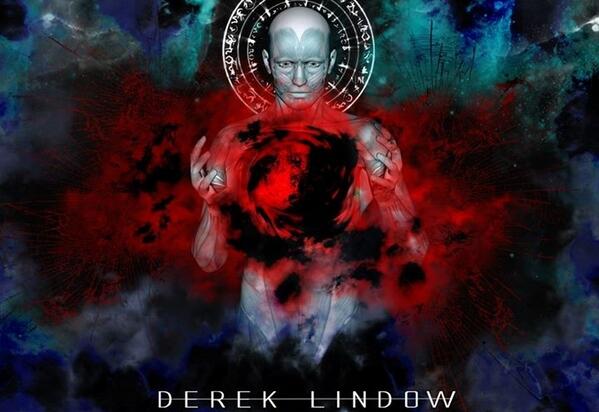
Specifically, we must discuss the Deep Engine. This is the “sufficiently advanced” technology that the Eldoth wove into the fabric of space-time via the horrors of genocide and the haunting energy of mass graves. They channeled the spooky power of these horrors to allow them to travel across the galaxy, power their civilization and win their wars until the Galaxy, appalled by the nature of their civilization, turned on them and destroyed them in the Monolith War.
The death of Eldothic civilization did not end the Deep Engine. The strange necropoli of cenotaphic monoliths continue to pinion the power of the Deep Engine, allowing anyone who has the correct access (legitimately or, more often, stolen via trickery, deception and physical intrusion into the Deep Engine itself) to generate specific technological effects. The Ranathim would call this Sorcery. The Eldoth would scoff at such superstitious and backwards perspectives, but we’re going to side with the Ranathim on this one and treat it as a unique form of Sorcery.
The Oldest Sorcery
The Deep Engine is an old element in Psi-Wars, dating back to the foundational Iteration 6. Back then, I attempted to cobble together a simple system using the Runes of Power system from GURPS Powers: Weird Powers, but it never really took off. I think people found it too complicated. The simpler “Daemon” system seems to have been more popular. I took one look at all of this and concluded that, obviously, the way to fix this was to make it even more complicated.
I am probably being too hard on myself, but the Deep Engine has a problem in that the concept it represents does not lend itself to a quick, casual treatment. It represents some sort of sufficiently advanced technology, but how does that technology work? It has a powerful “hacker” metaphor, where sorcerers are like “thieves in the night” who find a way to break into the Deep Engine. Well, how do they do that? And what happens when they fail? And how do people who have legitimate access differentiate from those who do not? How does the Deep Engine allow Eldoth, who cannot have psychic powers, to use Psychic Sorcery? And when I introduced the concept of Daemons, the represented avatars of autonomous processes within the Deep Engine: Occult AI, in essence. So how do they work? Can you fight them? And I talk about the Deep Engine “Breaking down,” but in practice, what does that do? I mean, certainly, I can represent in games the way I did in Undercity Noir with lots of ghosts and weird weather, but how can I codify it?
Answering all of the questions made it obvious that what I described was a Domain. What makes the Deep Engine complicated is not the system associated with it, but the weight of all of these ideas and how they interact with the world, and how to make them directly accessible to players. Could I take the inherent complexity of the Deep Engine and make it accessible?
Sorcery should, in principle, allow me to do that. If you can understand Chivare and the Deep Engine works the same way, then you can understand the Deep Engine. Simple anough.
So let’s add in some more complexity. To me, the coolest thing about Sorcery is free spells, ideally rewarded through research and study, or occult adventures or spirit quests. I can easily cobble together a a few different schools of sorcery and say “See? The Deep Engine.” But I wanted to offer “free spells” that sorcerers could explore. For this, I expanded the concept of the Deep Engine Locus and this idea of occult hacking that I called, in my system, “Induction” where characters can gain access to the inner workings of a specific deep engine locus and pillage its secrets at the risk of raising the ire of the local security Daemons. If I combine with this with a “glitch” system, I think I’ve completed the picture of what the Deep Engine should be.
That single paragraph makes it sound easy, but what we’re functionally doing is creating a second, layered world over the first that only Deep Engine sorcerers interact with. The Deep Engine was always going to be such a world, but making the whole thing is such an exhausting process. I’ve been working on it for well over a year now.
Recently, though, thanks to some help from Jose Fernandez, I was able to compile some of my thoughts into a straightforward manner and streamline everything into a single document which, I hope, is not too overwhelming. There’s still more to discuss, but it’s a beginning and enough that one could start playing a Deep Engine Sorcerer now.
Releasing the Deep Engine
Because the Deep Engine is such a big topic, I must break it up into pieces. There are four “primary” schools of Deep Engine Sorcery. This release will include the first of the four: Whisper Sorcery, the sorcery that manipulates the telepathic neurocomm communication system the Deep Engine uses, which enables the sorcerer to “hack” into the Deep Engine and act as a communication relay hub for his friends. This release also comes with two smaller “Protocol” schools, Polarity Protocols which manipulate electro-magnetic fields and sub-atomic charges, and Subliminal Override protocols, which manipulate the subconscious, instinctive “lizard brain” of most organic beings. With this release, I’ll see what my feedback is like if this is a disastrous approach, or what changes I can make to make it more straight forward.
The future releases will expand both the available spells and protocols and the domain of the Deep Engine. The current plan is:
- Daemonic Sorcery and additional details on the Daemons of the Deep Engine, and at least two more protocol sets.
- Cenotaphic Sorcery and more details on the physical Deep Engine components and eldothic technology and at least two more protocol sets.
- Glitch Sorcery and more detail on whatever remains for the Deep Engine (Glitch Daemons will probably drop with Daemonic Sorcery), at least one sample “Deep Engine Pattern,” and ideally the remaining Protocol sets.
I suspect I can release once every two months, but we’ll see.
These will start as Backer Posts, but they are previews and will eventually be available to all readers. They’ll be available for all $3+ subscribers; I may make it available for $1 $3 (Patreon will not allow cheaper than that, sorry) as a single download on sites that allow that sort of thing. This drop includes: Deep Engine Sorcery, Deep Engine Loci, Whisper Sorcery, Polarity Protocols and Subliminal Override Protocols. The total content is a bit over 25k words.
Feedback
If you are a reader, I would very much appreciate any feedback I can get. In particular:
- What did you think?
- Can you understand it?
- Do you think you could make a Deep Engine Sorcerer?
- Is the Deep Engine induction roll simple enough that it doesn’t slow your game down?
- Do you think the 6-protocol libraries of the Deep Engine Loci? Do you think they’re large enough? Should I add a set of “common” protocols to each?
- How do you feel about the Daemonic Security Response system?
- How do you feel about the Glitch system?
- What are you missing in the system?
There are several components I’d like to add as we move forward, but I don’t want to sheer weight of it to slow it down, and then drop a 150k word bible on everyone and demand they read the whole thing to understand it. It should be at least tolerably playable now with these three schools of sorcery.
Sample Loci
One of the core elements of the Deep Engine is that it involves interaction between the sorcerers and loci of the Deep Engine. It would be helpful to have at least something to play with. Without a huge array of protocols, the scope must be necessarily narrow, but here’s three Deep Engine Loci located on Kronos that Deep Engine sorcerers might start with. The details for how these stats work can be found in the Deep Engine Locus document.
These loci are not final, and subject to change.
The Shield Spire
This central spire of Grand Nexus is the most prominent and powerful Deep Engine locus on Kronos. It is the one to which most Deep Engine sorcerers on Kronos are aligned.
Power: 15
Glitch: 6 or less (Critical Failure)
Glitch Theme: Corruption
Protocols:
- Electron Beam (Polarity)
- Anti-Polarity Field (Polarity)
- Polarity Cycling (Polarity)
- Subliminal Cloak (Subliminal Override)
- Dominance Aspect (Subliminal Override)
- Local Aversion (Subliminal Override)
Connected Loci: The Storm Spire (Kronos), the Dead Spire (Kronos)
The Storm Spire
A spire located at the heart of the “Eye of Kronos,” a perpetual hurricane that sometimes brings it torrential rains into Grand Nexus.
Power: 12
Glitch: 12 or less (15+)
Glitch Theme: Surge (Secondary: Noise)
Protocols:
- Neural Network Investion (Polarity)
- Pulsar Beam (Polarity)
- Wrench Portal (Polarity)
- Polarity Affinity (Polarity)
- Polarity Overcharge (Polarity)
- Polarity Storm (Polarity)
Connected Loci: The Shield Spire (Kronos), the Dead Spire (Kronos)
The Dead Spire
A spire located in the arctic region, it is widely considered lethally haunted, and restricted from common travel.
Power: 9
Glitch: 15 or less (14+)
Glitch Theme: Dead (Secondary: Ice)
Protocols:
- Fear Blast (Subliminal Override)
- Subliminal Pariah (Subliminal Override)
- Sleeper’s mark (Subliminal Override)
- (Three hypothetical Necrokinetic Protocols)
Connected Loci: The Storm Spire (Kronos), the Storm Spire (Kronos)






 Mailanka's Musing