Wiki Update: Character Creation and the Saruthim

My schedule has been wonky, so Wiki Week got pushed back a week! Maybe next month I’ll outline my schedule, so you know what’s coming.

“Wiki Clean-Up: Newbie Onboarding” won the wiki week poll for July. Given the number of new people I’m seeing flowing in, and the sudden press for questions on character creation, I thought it might be nice to sit down and explain the precise process of character creation in Psi-Wars, since there’s a lot of assumptions that the Psi-Wars community just casually makes that most newbies aren’t aware of, such as the common 300-point value, the existence of trait lists, or how power-ups work.

So, to help with this, I re-organized the character creation material, fully ported in the trait lists from previous iterations and updated them slightly, and integrated all of it into a single article that links to the various elements, so if you’re running a Psi-Wars game, you can just point a new player to this single article, and it will walk them through the process. The Primer also points new players to the Character Creation article now.

I also cleaned up the house rules, to bring them all under one article, as they were far too scattered before. This new structure should help organize such information moving forward too.

Iteration 5 Documents

I’ve been bombarded over the past few months by requests to access the Iteration 5 documents on my Google Drive. I’ve put up a new access point, in case my Google Drive goes down (which is likely will, because I’m less a fan of Google than I used to be). I’ll try to update the links sooner than later, but for now, you can find Iteration 5 documents on the wiki (there are links in the Primer). But you can also find them here:

The Saruthim Update

Saruthim popularity remains quite high (I’m quite proud of their success), but I’ve received some feedback and requests that I wanted to fulfill.

First, I’ve noticed most people neglect elements of the transformation process and regularly push back against the time it takes. People don’t want to wait 1d seconds to transform, they want it to take a single turn, tops, and I notice players tend to conveniently forget the 4 HP cost, which felt excessive to me anyway. So I’ve reduced the cost to 1 HP, and adjusted the build slightly, which actually reduced the cost! Then I added a Saruthim upgrade that allows them to manifest the armor in a single turn with no HP cost. It’s expensive! But Saruthim players don’t seem to mind.

In Wanderers of Dhim, I had a player ask for “partial transformation.” Of course, at some point we just have to admit that Pulver’s possession designs are just Alternate Form with extra steps, but okay. How do we handle accessing an internal Ally for a little bit of help, rather than fully manifesting the ally? Well, how about a Modular ability similar to Epigenetics? I’ve reduced the modular swap time to 1d seconds per ability, and made it an alternate ability to the Carapace Bond and Ally, because if you’re manifesting just an arm blade, you’re not using your carapace (specifically, you are, just in a different way). The cost turned out surprisingly affordable, and it made my other Saruthim player sit up and notice. I’m not sure how useful it really is, but they’re happy.

It wasn’t a specific request, but I’ve seen a few people in the Psi-Wars community complain about Extra Life, and I think they have a point. Penalizing a player 25 points to keep playing the same character rather than rolling up a new one seems harsh and pointlessly antagonistic. So instead, I updated Parasitic Restoration to use Unkillable 1 instead, with some achilles heels (kill the carapace, kill the saruthim, that sort of thing), and an arbitrary aftermath effect that mimics the deleterious effects of Extra Life, but more temporarily (you might have Amnesia or neurological disorder for awhile, but only as long as the GM finds it interesting, then you’re back to full fighting strength). The result is a touch more expensive, but frankly cleaner than using Extra Life.

I also cleaned up the Gifts of Flesh in general. I’m a fan of the Racial Gifts perk, but in retrospect, being heavily invested in an expensive trait like Symbiotic Carapace Bond should be plenty to fulfill a prerequisite. So, in addition to the Parasitic Carapace being reduced in cost, the Saruthim lens is itself just slightly cheaper.

Finally, I’ve had a request to make the Saruthim better ghost-hunters. The result is a new Mind Sliver set: Shadows. It makes use of Necrokinesis with a focus on Animakinesis and Umbrakinesis, with a little light counter-psi strategies and tools, and the result is a great “shadow ninja” power set.

I’ve had further requests, mostly around the Miasma set, but I ran out of time. I also saw requests for necrocrafted “cybernetics,” which I actually have notes on, and there’s a mess of Gaunt stuff that I really should finish updating. But again, I ran out of time.

As usual, Patrons will be able to choose the next wiki week in the first week of the month, so sometime next week. Thanks as always for supporting this project!

Patreon Special: Sample Broken Communion Ghosts

Yesterday, I released a document on Broken Communion ghosts, including the means of creating your own. I want to follow this up with a few sample ghosts, in part to test how such rules work and make sure that I have all necessary pieces in place, and also to offer you, dear reader, an idea of what such ghosts might look like.  Naturally, any of these can be dropped into your Psi-Wars game, but they can also be adjusted and used in a horror or Monster Hunters game.

This is a publicly available document, available for free and it should be fairly easy to divine how these ghosts are intended to work, but if you’re not yet a patron and would like a better understanding of the system behind their creation, the design document is available to all $1 patrons, and can be accessed via the link above.

If you’re a patron, check it out.  If you’re not a patron, you can still check it out!  And enjoy.

Patreon Special: Space Ghosts Revisited

Ghost Cvlt by Ramsesmelendez

When I first dove into Communion itself, I wanted to break up the simplistic duality of “good and evil” that Star Wars offered. I don’t necessarily object to “good and evil,” I just find that it can sharply limit the sort of stories GMs might want to tell or what sorts of characters people want to play. I conceived of Broken Communion as the crux of that change, as it introduced something that both “Good” and “Evil” could face off against, (the “Ugly” of “the Good, the Bad and the Ugly”), or something that could redefine “evil.” What’s worse, someone who is selfish but mostly hurts themselves, or a broken person who hurts others without meaning to? I wanted Broken Communion to offer both a terrible evil to fight, and a terrible pain to heal, creating a tension that was neither really evil, nor really good, but still a potential problem.

The core of that “problem” would be in its effects on the psionic characters who interacted with it the most. Those who wielded it would find themselves corrupted by it, and those who entered areas sacred to Broken Communion would find their psychic powers twisted by it. I also suggested that Broken Communion, unlike other forms of Communion, might “create miracles on its own.” In principle, any form of Communion might do this (Miracles “just happen” all the time), but Broken Communion seemed especially prone to doing that.

I left the details up to the GM, but the theme of “haunting” definitely arose from the ideas in Broken Communion and the nature of its miracles. Where True Communion had themes of the holy and sacred and Dark Communion had themes of fantasy-esque “cool evil,” with raging orcs and demonic seductresses and dark wizards, Broken Communion had distinctly horrific imagery. The haunted spaceship, the mass grave, or the terrifying jungle full of stalking, squamous things might all be places steeped in Broken Communion. But I left the details of this up to the GM.

I have found, though, from the feedback of my fans, that many of you don’t really like this “leave the details up to the GM” mentality. It’s rife through GURPS, especially in books that don’t really succeed, while books that make those details much more explicit, including catalog books like GURPS Magic, or campaign frameworks like GURPS Dungeon Fantasy, tend to do really well. In retrospect, this makes sense: if you knew how to do it, you would, and you could ignore any details I give you that you dislike. If you can’t, a vague suggestion is of no help, but a highly detailed discussion of how it might work helps a great deal. Thus, it’s better to favor too much detail over not enough (provided that detail doesn’t become mandatory).

Thus, I came upon the handle of ghosts.

Ghosts

Star Wars already has ghosts, though rarely the spooky sort that bang on windows and drip blood down the walls. Even so, it features plenty of “haunted” stories, though it rarely dives into the mythology as to why these sorts of things occur. It is, perhaps, the “dark side of the force,” or it might be an ancient “force spirit” of a Sith lord. Nonetheless, it has a solid precedent in how Star Wars works.

Even if it didn’t, Star Wars certainly does, as Broken Communion feels like a haunting, and “haunted ships” are a staple of space opera, while “haunted ruins” are a staple of planetary romance, both of which Psi-Wars draws heavily on.

So, about a year ago, in Iteration 5 (6 has been a long iteration!), I wrote of space ghosts. The initial idea was that by treating an area of high Broken Communion sanctity not as a vague energy field of evil, but as a specific haunting with specific powers and specific motivations, you could better tell a story. The Broken Communion that arose from a murder in downtown Denjuku will feel very different from the Broken Communion that one finds on an ancient ship set adrift a century ago after all of its occupants died from a mysterious ailment and every scavenger who boarded the ship also died horribly. By thinking about the Broken Communion in this way, by putting a motivating force, an actor, behind the Broken Communion, one could more easily think of what might occur within the area. At the site of a murder, weird coincidences and visions might reveal the murderer and attempt to take revenge. The abandoned ship might hungrily devour all who come aboard, with a strange mutation of machinery at its heart.

This also meant that rather than being an arcane concern for psionic characters alone, they presented genuine threats to all characters, psionic or not! Instead of “just” presenting a problem for psionic powers, Broken Communion could chuck debris at people or given them harrowing visions until they dealt with the problem. And that meant we needed a means of dealing with the problem, things like exorcism or solving the murder, etc.

Thus, in my article, I noodled over all of this, made some suggestions and then walked away.

Space Ghosts Revisited

So, why come back to it? For a few reasons. First, as I mentioned before, I find that my audience wants specifics, and my article was very short on that. Second, the more I pondered the idea, the more I realized how central it was to a proper treatment of Broken Communion and rather than be a suggestion, it should be worked into the rules themselves. Finally, as I worked on the various philosophies, I realized that most of them discussed or dealt with ghosts in some concrete way: Fringe Rationalism would experiment on them, the Akashic Order literally has time-ghosts and the Divine Masks has the Cult of Death, which increasingly looks focused on dealing with and controlling ghosts. Thus, I needed to make these rules concrete.

First, I wanted to define precisely what I meant. What sort of powers might ghosts have exactly? How powerful would a ghost be? When I talk about different ways of dealing with ghosts, what exactly do I mean? Thus, I created a list of “Sources of Broken Communion” (which took up the majority of my time, if I’m honest) which detailed where these ghosts might come from and how they might behave, and rules for creating ghosts, including power-level suggestions, Will values, and a list of typical powers, plus a few atypical powers.

Second, I wanted to carefully define the precise rules governing ghosts and broken communion. What powers could players use to defeat ghosts? How do exorcisms work? What miracles affect ghosts? In particular, I wanted miracles that allowed the summoning of and the control of ghosts.

Finally, I wanted to at least briefly talk about how various philosophies see ghosts, and I wanted to create some concrete examples of ghosts that you could use as worked examples, inspiration for your own ghosts, or just drop directly into a Psi-Wars game.

The resulting document is Psi-Wars specific, but it borrows heavily from GURPS Horror and GURPS Monster Hunters. I made some assumptions that work best for Psi-Wars, but you could easily reverse engineer this material for a Horror or Monster Hunters game.

The Patreon Special

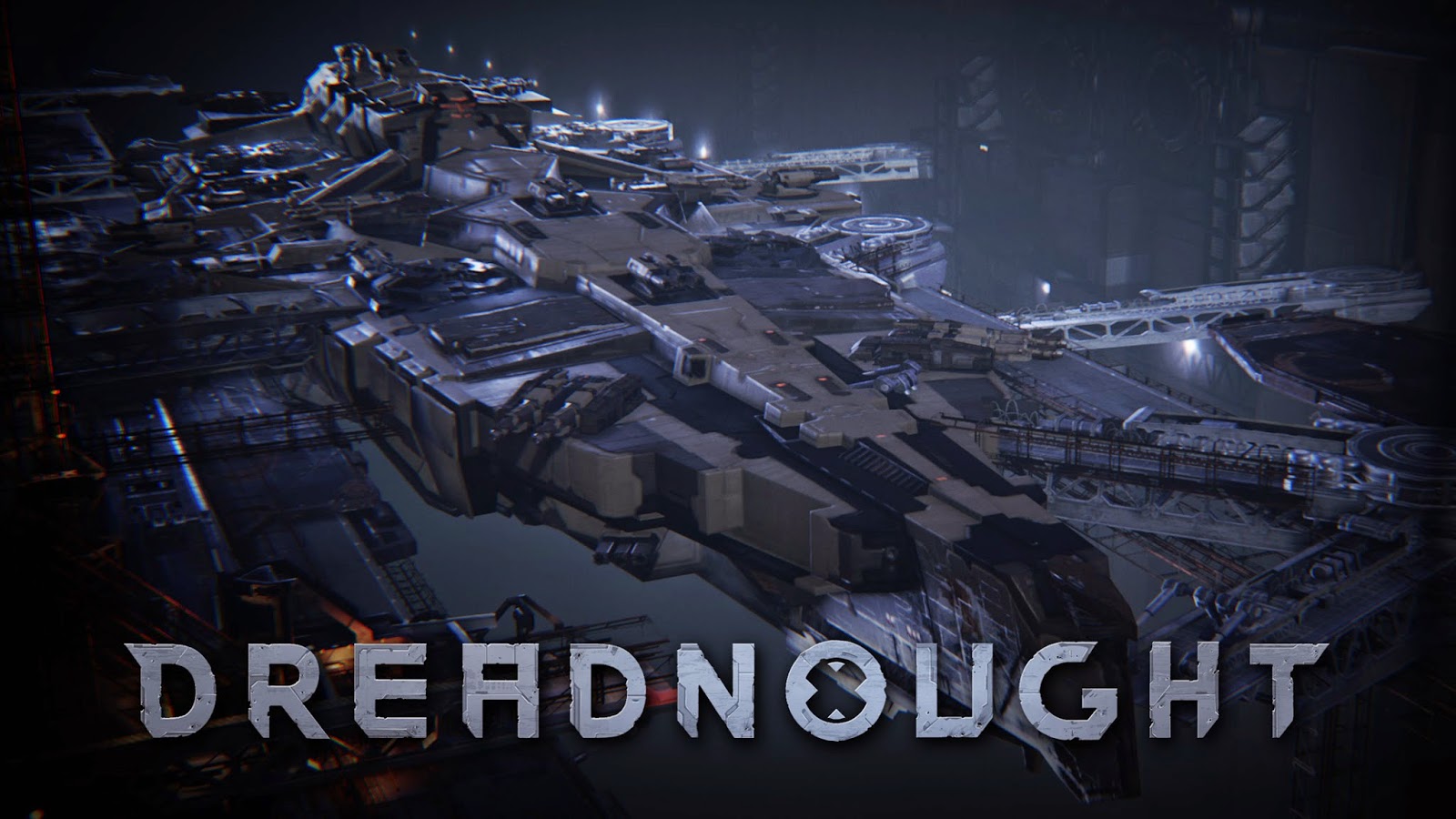
Patreon Post: (Old) Dreadnought Playthrough

I’ve wanted to take some time to look at spaceships again, because I see more points where they need work, and especially as dive into the specifics of Iteration 6, I want to take greater control over my setting (using generic Starhawks and Typhoons is fine if we want to just rapidly prototype a setting, but if I’m going to build it in detail, why not build my ships as well?)

This is likely to go on for awhile, and this week is mostly cleaning up loose ends.  This also means I need to dive into whatever changes I propose to make sure they work, so I hope you like playtests! Most of these will be $1+, because, they’re mainly mechanical asides and technical discussions, but when I start building ships for the final version, those will be $3+.

Today’s post is a companion post to an old post, going back to the dawn of my Patreon, back, I think, to literally my first Patreon exclusive.  It’s the playtest between dreadnoughts that confirmed the rules I documented in Dreadnoughts Revisited. I’ve gone ahead and included the resulting document here, for ease.  I’m posting this because a few of my Patrons heard it existed and were very curious about it. Note that by the time my update is finished, a lot of the rules contained herein will be invalidated, but I find it a fun read, especially the battle between the Reaper and the Rain of Fire (the third one), which is the first time I think I’ve ever shown dreadnoughts at their actual scale of power.

It’s for $1+ Patrons, so if you’re a Patron at all, check it out!  If not, as always, I’d love to have you.

Support me on Patreon!

A Psi-Wars Round-Up

I should pay better attention.

I wrote Psi-Wars for people to use, so when I see people using it, that warms my heart.  I also believe in the Death of the Author, in the sense that I do not believe my way is the only way to run Psi-Wars, or even that it’s my own setting (that’s why Iteration 5 was a very good stopping point, because it gives GMs the tools they need to write their own material).  Thus, when someone creates new material or goes in a new direction, I feel that adds to Psi-Wars.  It can also highlight weaknesses and things I need to shore up, which makes it good feedback for me as well.

Today, I’ve got two blogs for you, both of which have been delving into Psi-Wars.  The first is adding lots of optional rules to everyone’s favorite mechanic: Communion. The second is actually using Psi-Wars for a campaign. Fun!

Nemoricus’ Libris Ludorum

Nemoricus has been working behind the scenes with me quite a lot on Psi-Wars and has turned into a sort of de-facto editor, often browsing my material and then returning with suggestions to tighten the writing or improve the formatting.  We also discuss the direction of the setting, and sometimes he has ideas of his own, which he’ll post to his blog, Libris Ludorum.
The bulk of his most recent material has tackled relics, objects imbued with psionic power by Communion.  His posts include:
  • Empowering Artifacts, which is a more detailed discussion on how to work out the power-level of relics
  • Empowering Artifacts in Play, which tackles how to use Named Object-style mechanics to upgrade your items with more power.
  • Balancing Player-Created And Found Relics, which returns to the previous post to discuss how to ensure that there’s ultimately no “point-crock” with one or another strategy.
  • Gotta Collect Them All: Relics as Sets, which is my personal favorite. Nemoricus suggests breaking up power across a set of relics, especially high powered relics, so that when players collect a complete set, they whole becomes more than the sum of its parts, similar to Diablo 2’s approach with sets.  Going on epic quests to collect lost relics becomes more interesting when you know that a variety of legendary items are fundamentally bound to one another.
Nemoricus has also branched out to tackle Impulse Control in Psi-Wars, which takes an article from Pyramid #3-100 which expands greatly on Power-Ups 5: Impulse Buys.  Nemoricus offers suggestions on how to rewrite templates and use the rules within to make full use of Impulse Control.

Bliss Authority’s Octopus Carnival

Bliss Authority was one of my earliest fans, and really understands how and why I chose to create Psi-Wars the way I did, and attempted to do the same with Mekton Zeta, until evidently some disaster resulted in the loss of his project.
Still, undeterred, he pushed for a campaign on RPG.net, and talked Bira (of Octopus Carnival) into running it.  Octopus Carnival has just announced his new Psi-Wars campaign, likely the first: Golko Wants You Dead.  You can find the pitch and character creation on RPG.net here, and the OOC chatter here.

Campaign Commentary

It’s not up to me to judge a campaign, but I can offer advice, make observations and definitely accept actual play as feedback.
In post 10, Bliss Authority comments on running it in Fate rather than GURPS.  I’m in a Fate Core campaign at the moment (a political fantasy campaign inspired by Houses of the Blooded) for which I wrote the mechanics, and I have to say I’m pretty impressed by it.  I think you could do a pretty good Psi-Wars in Fate, and I actively weighed doing this blog on Fate rather than GURPS, but I chose GURPS because I’m more involved in that community and more keenly aware of the problems they face.  I also think my mechanics-heavy approach, while totally acceptable in Fate-as-system might not be as well received by the Fate community.
In post 21, it turns out that “Golko” is a slaver alien; clearly, he’s going to be inspired by some sort of Hutt.  I actually really really want a race like this.  One of the key elements for the Psi-Wars setting will be a once-proud race steeped in Dark Communion who once ruled a great empire, but now they’ve been reduced to slavery at the feet of this slaver race. I’ll be curious to see where they go with Golko.
In post 46, Bliss Authority comments that ‘Average Wealth in this game is also “more money than I will ever need,”‘ which I find unfortunately true, even after cutting it down to TL 10 wealth levels.  Unless you’re fully armed and armored Commandos, you’re going to have tons of money.  I’ll be curious to see how that plays out, though.
In post 57, Kelly chooses an interesting direction for Lady Maya: Fighter Ace, Aristocrat, Magnate.  I still haven’t seen what her title is (“Lady”, I suppose), and she has Administrative Rank 4, but I don’t see what organization she belongs to.  What I see is a character deeply integrated into the setting, without the setting built around her, and I’m curious how that will work (though I suspect it’ll be something that grows over time, provided the group wants to explore her deep connections to the power-structures of the setting).  I’m also curious how well a Fighter Ace does, because they’re one template that concerns me because while they’re awesome in space combat, not every scenario is space combat.  I’ll be curious to see how it goes.
In post 61, Bira (who is the GM) lays out his vision of Communion, namely that True Communion is good, and Dark and Broken Communion is bad.  Now, it’s not my place to disagree with the GM of your campaign… so I won’t.  His view is totally valid, and one that’ll I’ll explore more deeply when I get into the philosophy of the actual faith, True Communion.  They argue that Broken Communion represents the chaos of unaware life, and when consciousness has pulled itself together, it achieves Dark Communion, and when it has transcended self, it has achieved True Communion, and they would whole-heartedly agree with Bira.
Bliss Authority holds a different vision, where there’s no real moral connotation applied to each. This is also accurate, and intentional on my part.  I wanted to create a framework for philosophy without stamping my own vision of morality.  That’s why there’s a cycle (Id beats Ego beats Psychosis beats Id) and carefully neutral language, so that you can come in and argue what you want and have enough evidence to back it up.  Nemoricus has said he intends to look at the more dangerous side of True Communion (including its need for people to conform) and the importance of Dark and Broken Communion (the first can shake up stagnant cultures, and the latter is key to understanding those things that fall outside of our usual, every day experiences).  None of this is to say that Bira is wrong, because Bira isn’t, but that if you disagree with Bira, you’re “right” too.  Your game, your vision, is yours, not mine.
However, in a discussion about the Mystic template, Bira argues that it’s fine to replace Communion with Psionic Powers, and that’s fine as it goes, but if you’re going to do that, I suggest you take a second look at the talents and the skills of Meditation and Philosophy, which the mystic has to use Communion.  They’re much less useful without it!  It might be worth revisiting the Mystic and allowing an option for “I’m nothing but psionics” characters that takes all of this into account.
In post 64, lordmcdeath creates a technopathic scavenger with weirdness magnet, which I find funny because I was just thinking about a race that would have exactly those traits.  I’ll watch his career with interest.
In post 66, Reality Glitch breaks my heart by expressing frustration at the cost of joining a Psi-Wars game and drops out.  Were it entirely up to me, I’d put all the rules into my Psi-Wars documents, but they’re not my rules to publish, so I can’t.  And naturally, to make full use of GURPS materials, I’ve cast my net pretty wide, which means I use a lot of supplements.  That’s pretty normal for us old GURPS veterans, but I can absolutely see where it’s frustrating for someone just stepping in.  I also agree with a comment he has later where this would probably be a lot easier face to face.  No doubt.  Still, a black mark upon Psi-Wars!  In the ideal world, Reality Glitch would be sitting happy with a character!
In post 73, lordmcdeath has an idea about playing a robot that’s pretending to be “just a cyborg.”  Does it fit the setting?  Bira decides it does not, and that’s that. How do I feel about it?  I’ve been aware for a while that someone is going to want to play a robot.  One of the elements in the Psi-Wars setting will be the Cybernetic Union, which will absolutely feature some interesting characters and features, and players might want to explore it as more than just an enemy to fight.  I’m not entirely clear on how best to handle this yet, but it’s something I want to look into.
Another aspect of the question would be: Can robots pass themselves off as human?  So far, I’ve not allowed the use of synthetic flesh, so we don’t have scenarios where someone who seems to be human turns out not to be.  I’ve avoided that because Psi-Wars isn’t really a cyberpunk exploration of what it means to be human, which is really facilitated by those sorts of games. On the other hand, it would make a ton of sense of the Cybernetic Union to construct synethetic humans as perfect spies.  I’ll have to see how it shakes out in the future, but I think lordmcdeath’s unasked question of “Is it okay to play a robot?” is one that needs to be more thoroughly supported and discussed by Iteration 6.
In post 94, GaoGaiGar wants to be a pirate!  Do you know what Psi-Wars doesn’t have?  A pirate template!  It looks like he’s figured out a way to muscle through, but I think this is another black mark.  I’ve worked out fighter combat in great detail, and dreadnought combat, but not corvette combat, and corvettes are where I expect to see a lot of players focused.  That’s the next major step into space combat I want to look at, and part of that will be creating a pirate template, as they tend to operate in a fundamentally different way than Smugglers.
In post 96, Bira discusses the viability of using a giant space monster to do your fighting for you.  Personally, this is something I’ve also put a lot of thought into.  With the inclusion of ghosts and space monsters in Iteration 5, I’ve wanted to revise the Path of Death and the Path of the Other (and perhaps the Path of the Bound Princess) to include the ability to summon and interact with space monsters to some degree. I’d also very much like to include a race, like the Navi from Avatar, who run around primarily on space monsters kicking butt, because that’s very planetary romance.  The problem is that I think my current iteration of space monsters just aren’t good enough for that, and I’ll need to find a way to standardize values so that we can buy space monsters as reasonable allies.
That said, a previous comment noted that removing combat abilities I’ve put under primary and secondary might be a bad idea.  It’s not to say that you can’t, but indeed, I’ve carefully built these templates around an action-oriented gameplay model.  A non-combatant will spend a lot of time twiddling their thumbs (especially Mystics who choose not to take Communion).
In post 127, GaoGaiGar wonders about Piloting defaults.  He’s right!  But I haven’t noted this anywhere in the documents.  Errata!  I’ve added it to the Iteration 6 version.
And that’s it from their first thread.  I hope their campaign takes off, and I’ve subscribed to their thread.  I find it extremely useful to see how people use my material “in the real world,” and I’ll use it to hone Psi-Wars.  I hope you enjoyed it as much as I did!

Ending Iteration 5… and Beginning Iteration 6

I’m going to tell you what I should do.  I should take all of the stuff I’ve just given you, and then offer some worked examples.  For example, perhaps I could fully detail the Dun Beltain’s homeworld, the World of Grist: I could show you the culture, the terrain, a few strange critters lurking in the bowels of the sewers, some of the races that frequent the world, etc.  Why not do that? Because if I’m going to do that, I might as well build the entire setting!

As always, when I end an iteration, I explain why we can just stop here, and Iteration 5 is no different.  With this iteration, I created the tools we need to build our own planets, organizations, cultures, etc, which means that if our players need to visit some Random New World, we can build one with a little bit of work.  There’s no explicit need to create a cohesive setting, since we can just keep making up stuff as we go (which is precisely what I’ve been doing up until now).  After all, each piece can stand on its own.

But if I’m going to show you how to create a world, or an organization (say, the Empire), why not go all the way and make it official and part of my completed setting?  Setting elements might interrelate in some way (How does the history of Grist interact with the history of the setting?  How does it feel about the Empire?  Does it house sites sacred to a widespread faith?), and when building a setting, it’s often easiest to create a great framework and then begin to plugin the holes.  If I’m going to think of the details of a specific world (its history and its religion and how it relates to the larger setting), I might as well go ahead and detail those other parts of the setting along with it. That’s not the intention of Iteration 5, of course.  We should be able to get away with not doing that, but it kills two birds with one stone, and I’m beginning to tire of Psi-Wars.  I want to finish it sooner than later.  So, I’m going to do it this way.

Iteration 6 thus becomes Psi-Wars as a Specific Setting and doubles as “the playtest/worked example of Iteration 5.”

Oh, and are you here for the downloads?  You can find them here (and in the Primer).  Note to my Patrons: This material includes the most up-to-date stuff, including your feedback.

Winding Up Iteration 5

What is there left to do?  Well, we didn’t introduce enough mechanics to really allow a playtest.  Or, better said, we didn’t create the sort of cohesive, vital system in need of careful balancing that requires a playtest.  There are a few bits we could probably playtest: How do the space monsters play, in practice? Probably on the weak side.  How well do the new social mechanics work? Probably not that much different from how Action already operates.  But for the most part, most of Iteration 5 is just a detailed discussion of how to conjure fluff with a few deeper forays into existing mechanics.  In principle, there’s lots of things I could playtest but haven’t, like the robot armies, or the commando template, or various warships, or various psionic styles.  That’s because, in practice, I have only so much time and I want to hit the highlights (a “smoke test” as us programmers like to call them).  The material I have here isn’t so vital to your game that if it breaks down, your game will break down (as opposed to psionic powers or spaceship combat).
All that’s left, then, is to revise the documents, and put them in your hot little hands.
Knowing what to put in has been tricky.  I personally don’t think a huge document full of articles on how to build setting bits is worthwhile, though if you disagree feel free to put it in the comments.  I think that GMs generally already have an idea of what their worlds are like,or will zip to specific articles if nosing around for inspiration.
What’s far more interesting are the more specific mechanics, like:
  • The Officer Template
  • The Diplomat Template
  • The Con Artist Template
  • Expanded power-upgrades (the Magnate, the Conspirator, and a mess of tricks for the Frontier Marshal)
  • New Psionic Powers and revised talents to take advantage of ghosts
  • Rules for handling disease
  • Space Monsters!

Kicking Off Iteration 6: Psi-Wars as a Specific Setting

The point I’m trying to make is that published content is useful and interesting, but doing anything more than scratching the surface has consistently been hard for me, and I might not be alone in this.
-Brandes Stoddard, Tribal Knowledge

Confession time: I’ve been looking forward to this Iteration ever since I started writing Psi-Wars.  I have an old draft from December of 2015 where I already began sketching out details.  Thus, forgive me if I’m a little impatient to begin! Normally, I’d wait until next week to kick off the Iteration, but why waste time?  The two iterations strongly correlate with one another, so let’s just get straight to it.
Over on Discord, I occasionally get a question as to whether or not I intend to keep Psi-Wars “generic.” The answer is “No, not at all!”  I have a very specific, very non-Star Wars setting in mind.  The problem with having a specific setting in mind is that the more specific my setting gets, the narrower my target audience must become.  Most of you reading this will never use Psi-Wars straight out of the box and have no interest in what I specifically find interesting.  You’re here for campaign creation, or alternate tech rules, or thoughtful articles, or for building your own not-Star Wars campaign.  Some of you are here just to play my Psi-Wars, but I expect you’re a minority (though I love you to pieces). Thus, I’ve put off a detailed setting as long as I could (which isn’t to say that I haven’t been thinking about it: One of my very first drafts detailed setting material!).  I want my articles to remain as useful to as many of you as possible for as long as possible.
I can get around this problem by making Iteration 6 about creating your own setting, which is why I did Iteration 5 first.  It gave us the pieces to build our setting, and now we’ll just put those pieces together, discuss the how and why of what I’m doing, and the finished result, which will go into a document is just for those who want the Psi-Wars setting.  Those who just like reading about campaign creation will have what they need to get started.
Iteration 6 probably won’t include any major rule changes (I’ve been largely satisfied with my rules since Iteration 4), but it should result in a completely new setting document.  The iteration itself will consist of “mini-iterations,” starting with me detailing the setting in broad strokes, then going deeper on various elements to expand them out, and then going even deeper to give a complete look at a particular element.  Once it’s all done, then we’ll stitch everything together so we have a complete, cohesive setting.
And that should largely finish Psi-Wars.  I’ll see where I am when Iteration 6 finishes (I expect it to be a lengthy process, probably on par with Iteration 4), but we might look into an Iteration 7, where I put some adventures together, which will make a nice “final playtest” of the complete framework.

The Traders Part 2: Culture

Last week, I introduced a series of polls for my Patrons for the creation of a new alien race known as “the Traders.”  An ancient race, the Traders had once warred with humanity for control of the galactic center and lost, the Carthage to humanity’s Rome.  I wanted them to be a clever “mastermind” race, but without a focus on psionic abilities, but beyond that, I had no idea what they should be.

The poll proved to be a hit, and I realized I had more room for user input.  I intended to use Part 1 to illustrate the precepts of alien design: We need to know what they’re like, we need to give them an obvious visual (“Weird-Pretty”) and narrative signature (“They trade”), a mechanical schtick (ETS, Hyperdimensional Meditation, physical frailty), and then bind them into the setting (They look out for themselves).  The result is a nice and trim template, but with lots of flavor, which is ideal.

But what I missed still was culture.  If you hang out with Traders, what do you see?  How do they dress?  What do they eat?  They’re alien because they’re physically alien, sure, but are they culturally alien? That’s an open question, of course.  Some aliens will just integrate with the local populace and loose any sense of unique identity, but others retain a deeply unique culture, and based on the polls, it seemed clear that the Traders were a unique culture that retained a sense of identity.

So that brings us to step 2: Trader Culture.  Using the cultural checklist, I picked out a variety of values that I found potentially appropriate, a few distancing mechanisms (I have a couple more in mind: Trader language is very unique, for example, as is their life on starships), a question about how Traders organize themselves, and what cool additional secret techniques and arts they get.  With that complete, we should know not just what they look like, but what life with them is like, at least enough to have space adventures with them, which is what matters.

If your a Companion-level Patron ($5+), come over and vote.  If you’re not, we’d love to have you, and the eventual results will be in the final setting document.
Support me on Patreon!

Patron Post: The Traders (First Draft)

Last week, I put together a poll for the $5+ patrons to help me design the first Psi-Wars race, named “the Traders,” an ancient race of wandering space merchants that once warred with humanity over dominion of the galactic center.  Now, I offer the results of the poll, with a few edits where I had to best interpret what my voters wanted.  This material is available to all $3+ patrons!

If you’re a patron, check it out!  If you’re not a patron, I’d love to have you.

Patron Post: Power-Up Previews

A lot of my work lately has been on organizational power, and I think some players will really want to embrace that beyond what the Officer and the Diplomat can do.  They’ll want to be more than action heroes, and become the movers and shakers of the setting who happen to also be action heroes.  In that line, I’ve worked on a few new power-ups, one associated with the Spy and the Diplomat, which you may have already seen, and an entirely new power-up anyone can take for 50 points: the Conspirator and the Magnate.

If you want to look at the design notes and get a deeper look at the logic of them, become a $1+ patron!

Support me on Patreon!

Psi-Wars: Extreme Aliens!

Hmmm, a little outside of your point budget

For the most part, alien templates work perfectly fine in Psi-Wars: Kendra is a bounty-hunter first and foremost, and she just happens to be felinoid.  This works like in Star Wars where the “jedi” part of “twi’lek jedi” matters more than the “twi’lek” part.  But, for some aliens, this isn’t so.  Chewbacca isn’t a smuggler who happens to be a wookie, he’s, you know, just a wookie who happens to be a smuggler.  All you have to say about Chewbacca is that he’s a wookie.  Likewise, Hutts are Hutts.  If you introduce a Hutt into your game, players don’t stop and ask “Hutt what?  A Hutt security agent?  A Hutt Jedi?  A Hutt Bounty Hunter?”  No, it’s just a Hutt.  And this sort of makes sense.  A twi’lek is just a human with tentacles on her head, but a Hutt’s huttness, or a Wookie’s wookienss is so dominant that it occupies our attention.  I’m not saying they never have variation, I’m arguing that the central element of these characters isn’t their occupation, it’s their race.

On a related note, some of the templates I pointed you to back on Monday were too expensive for a mere 50 point template.  None of the racial templates from Monster Hunters 5, for example, are remotely affordable on a 50-point budget, and your horrific Things Man Was Not Meant To Know certainly don’t fit on that level of a budget. And, in a sense, that’s fine, because they don’t really need to fit into 50 points because, like Hutts and Wookies, their race is obviously their dominant trait.  One does not introduce a Thing Man Was Not Meant To Know knowing you’ll have to field questions like “What? Like a Thing Man Was Not Meant To Know Cop?  Or maybe a Thing Man Was Not Meant To Know Scientist?”).  But if they don’t fit in our current model of character design, how do we play them?

We need a way to handle both of these problems, which are clearly interconnected.  Fortunately, we have an answer and, as before in this iteration, it’s Dungeon Fantasy that rides to our rescue.  Specifically, Pyramid #3-50 Dungeon Fantasy II, with its article “Races as Professions.”  Here, Sean Punch rewrites Elves and Dwarves as occupational templates worth 250 points.  For our extreme races, we can do the same.  We don’t have Hutt Bounty Hunters, we just have Hutts, because a Hutt costs 250 points, and he’s a self-contained template.

Designing an Extreme Racial Template

We know our budget: 300 points.  All we need to do is design an appropriate template.  Yesterday, I outlined the rules for racial template design, and those still largely apply, but many of them are moot:
  • The Extreme Racial Template obviously matters, because it’s the entire character
  • The Extreme Racial Template is obviously accessible, because a player can afford it (provided it stays under 250 points, or at most, 300 points)
  • The Extreme Racial Template definitely still needs to fulfill its narrative fluff (which is easier to do with 250 points!)
  • The Extreme Racial Template obviously “shapes gameplay” as represents the whole of your character.
But we run into a problem with simplicity and cohesion, and we might need to look back at how we shape gameplay.

Simplicity must fall to the wayside because, suddenly, we have a 250 point template that needs to contain everything a race can be.  If all Hutts are crime-bosses, then the Hutt template needs to include skills like Savoir-Faire(Mafia) and Streetwise.  If all Wookies are brawlers, or can be brawlers, they must have access to Brawl, and so on.  But at the same time, the rule about minimal player knowledge still applies!  The uninitiated player does not want to look at a giant stat-block and have to decipher it to understand what the race is.  While your stats cannot be simple, the themes should still be.  In a sense, everything should be even simpler, because one should see an Extreme Race, and know that it’s all about its gimmick and little more.

But this can create a problem related to cohesion.  In principle, a racial template represents a mandatory set of traits required to be a member of a race.  Extreme races break this rule, as a Hutt doesn’t spring from the womb as a crime boss.  The answer, as seen in Races as Professions, is that all Extreme Races still include a racial template buried in their advantages.  This contains the minimum necessary elements to be a member of the race, following all the standard racial template rules I outlined.  The only difference here is that we’re not limited to 50 points.  We can build a 200 point template and then layer 50 points of optional skills, advantages and disadvantages atop it. In a sense, that’s all an extreme racial template is: A racial template, with a supporting character structure around it.  In a sense, then, extreme races work like robots do: both are a giant template with a small skill package bolted onto the side.

Naturally, though, players who choose such a race will want some personalization.  Of course, the racial template can handle this directly.  The “Races as Professions” article certainly does, allowing us to build an Elf-as-swordsman or Elf-as-magician, it’s just that the unique, elf-quality of these skillsets are sort of baked into the racial template.  But we could pull those elements free and treat them as a lens atop the racial template.  For example, we might have a 200 point “racial template,” and then allow the player to choose from a specific set of 50 point “skill package lenses” that might be specific to the race.  We might have a shapeshifting race that’s known for being tricksters, assassins, thieves, spies, or spooky cultists.  The “I’m a shapeshifter” might come to 200 points, and the various roles they play might come to 50 points.  Then we have a 250 point character, plus another 50 points of power-ups the character can take (which might include a boost on his skill-template!).  These skill templates also give us a way of better defining what the race is, by encouraging us to look at a specific race from multiple angles, to ensure that there’s more than one way to play them, and gives the players an idea of what sort of culture this race might have.

A Worked Example

The theory is simple enough.  Let’s see it in practice.  Applied Xenology includes quite a few interesting racial templates, but designed from a Monster Hunter perspective, with things like a “Basic Morphology inducer” to keep people from knowing that you’re a monster.  Space opera aliens don’t need anything like that.  We can also remove the social stigma (monster) as people are perfectly comfortable with our Reptoids as a race, but they dislike them for specific reasons (say, because they eat sapients). A DR of 4 is just not interesting; that could be a DR of 20 for the same price in Psi-Wars and would be more appropriate, but we can go with our Space Monster rules and give them DR 10 with Hardened and Flexible for 12 points.  We’ll also remove their Immunity to Metabolic Hazards: the fact that drugs work differently on them than on humans is a feature, as it’s a known quantity (“Oh, that’s a reptoid.  You need to use reptoid medicine on it.”)

The net result is 300 points at its complete value, all things considered, which is just enough for a character. Note that Monster Hunters 5 has a suggestion for how to treat Reptoid Enhanced Time Sense.  I encourage you to use it!  Note that this final template is quite monstrous, which is fitting, as it’s derived from a monster template.  Thus, this race might be better suited to NPCs than to PCs, on the final analysis, but I leave it here anyway, to give an idea of how this particular approach might work.  I would like to note that this requires a considerable amount of work and isn’t very compatible with the other templates (that is, we cannot have a Reptoid Assassin or a Reptoid Space Knight).  Thus, if you use this technique, I recommend doing so sparingly.

Reptoid Racial Template 150 points

Attribute Modifiers: ST+3 [30]; DX+1 [20]; HT+2 [20].

Secondary Characteristic Modifiers: Basic Speed+1.25 [25].

Advantages: Danger Sense [15]; DR 10 (Hardened +50%, Flexible -20%) [12]; Enhanced Time Sense [45]; Night Vision 6 [6]; Peripheral Vision [15]; Regeneration (Regular) [25]; Sharp Claws [5]; Sharp Teeth [1].

Disadvantages: Appearance (Ugly) [-8]; Bad Temper (12) [-10]; Bloodlust (12) [-10]; Chauvinistic [-1]; Clueless [-10]; Odious Racial Habit (Eats Sapients) [-15], Oblivious [-5]; No Sense of Humor [-10];

Features: Taboo Trait (Voice).

Reptoid Template: 300 points

Attributes: ST 13† [0]; DX 13† [40]; IQ 12 [40]; HT 13† [10]
90
Secondary Characteristics: Dmg 1d/2d-1; BL 39; HP 13; Will 12; Per 12; Basic Speed 8.0 [5]; Basic Move 8; FP 13;

5

Advantages: Reptoid [150]; Cultural Familiarity (Reptoid) [0]; Cultural Familiarity (Galactic Common) [1]; Language (Reptoid; Native) [0]; Language (Galactic Common; Accented) [4];
155

Disadvantages: Choose -20 of Bully [-10*], Callous [-5], Disturbing Voice [-10], Duty (Criminal, 9, 12 or 15 or less) [-5, -10 or -15], Gluttony [-5*], Greed [-15*], Intolerance (Specific race) [-5], Odious Personal Habit (Staring unblinkingly, referring to non-Reptois as “the fleshlingssss”, etc) [-5], Overconfidence [-5*], Reputation (Race-traitor, Reptoids Only) [-2.5/level], Reputation (Monster, non-Reptoids only) [-3/level], Selfish [-5*], Sense of Duty (Team) or (Reptoid Race) [-5 or -10], reduce your Bad Temper or Bloodlust to (9) [-15] for -5 points or 6 [-20] for -10 points, or reduce your Appearance to Hideous [-16] for -8 points

Skills: 20 point background lens, 50 point skill package

Reptoid Power-Ups

Reptoid Hypnotism 25 points
Advantage: Mental Blow (Psionic Powers 65, Requires Eye Contact -40%) [19]
Skill: Mental Blow (H) Will [4]-12
Technique: Neurological Damage (Daze), Mental Blow-3 [2]-9


Reptoid Scientist 50 points

Attributes: IQ +1 [20]

Advantages: Toxicologist 4 [20]; Choose 5 points from among Per +1 [5], Acute Taste/Smell [2/level], Cheaper Gear (Poison) [1], Contact (Fence, Researcher, Smuggler, Supplier; skill 12, 15 or 18, somewhat reliable) [1, 2 or 3], Gizmo (Drug or Poison only -20%) [4], Hard to Kill [2/level], Precautions [1], Resistant to Poison +3 [5], 

Disadvantages: Choose -20 from among standard Reptoid disadvantages or from ST -1 [-10], HT -1 [-10], Curious [-5*], Loner [-5*], Obsession (Complete specific formulate) [-5], Odious Personal Habit (unwashed gore/chemicals) [-5], Trademark (Specific design methodology) [-5 or -10], Truthfulness [-5*], Workaholic [-5]

Primary Skills: Diagnosis (H) IQ+3* [2]-16; Pharmacy (Synthetic) (A) IQ+3* [1]-16; Physician (Drugs) (A) IQ+3* [1]-16; Poison (H) IQ+3* [2]-16; Research (A) IQ [2]-13;  Hazardous Materials (Chemical or Biological) (A) IQ+3 [1]-16;

Secondary Skills: Beam Weapons (Pistol) (E) DX [1]-13; Stealth (A) DX-1 [1]-12; One of Brawling (E) DX+1 [2]-14 or Karate (H) DX-1 [2]-12; One of Wrestling (A) DX [2]-13 or Judo (H) DX-1 [2]-12; Choose three of Area Knowledge (Any), Cooking, Current Affairs (Science and Technology) or House Keeping both (E) IQ+1 [2]-14, Connoisseur (Poison or Sapient Flesh), Criminology, Holdout, Streetwise or Smuggling all (A) IQ [2]-13, Chemistry (H) IQ+3* [2]-16, Forensics, Surgery (H) IQ-1 [2]-12, Search (A) Per [2]-13

Background Skills: Computer Operation (E) IQ [1]-13;  Navigation (Hyperspace) (A) IQ-1 [1]-12; Pilot (Starship) (A) DX-1 [1]-12;Vacc Suit (A) DX-1 [1]-12.

New talent: Toxicologist [5/level]
Skills: Chemistry, Diagnosis, Hazardous Materials, Pharmacy (Synthetic), Physician (Drugs), Poison;
Alternative Benefit: To detect the presence of drugs or poison.

Reptoid Scientist Power-Ups:

Mad Scientist: 25 points
Advantage: Quick Gadgeteer (Pharmaceutical -50%) [25]

Reptoid Slaver 50 points

Attributes: ST +1 [10]; DX +1 [20];

Secondary Traits: Basic Speed -0.25 [-5]

Advantages: Divide 10 points among +1 ST [10], +1 HT [10], +1 to +2 Will [5/level], +1 Basic Move  [5], Ally (Slave; Sidekick or Full Character, 12 or less, Unwilling -50%) [2 or 5], Ambidexterity [5], Contact (Slaver, Criminal Contact, Smuggler; Skill 12, 15 or 18. somewhat reliable) [1, 2 or 3], Contact Group (Gang, Pirates, Skill 12 or Skill 15, somewhat reliable) [5 or 10], Craftiness +1 to +2 [5/level], Fearlessness +1 to +3 [2/level], Fit [5], Hard to Kill [2/level], Hard to Subdue [2/level], High Pain Threshold [10], Quick Sheath [1], Signature Gear [varies], or remove Bloodlust for 5 points.

Disadvantages: Choose -20 from among standard Reptoid disadvantages or from -1 IQ [-20], Compulsive Brawling [-10*],  Impulsiveness [-10], Intolerance (Slaves) [-5], Laziness [-10], Lecherousness [-15*], Obsession (Enslave specific sort of target) [-5], Odious Personal Habit (Checks teeth, tells people what price they’re worth on the market) [-5], Sadism [-15*].

Primary Skills: Beam Weapons (Pistol) (E) DX+2 [4]-16, Fast-Draw (Pistol) (E) DX+1* [1]-15; Stealth (A) DX [2]-14; One of Brawling (E) DX+2 [4]-16 or Karate (H) DX [4]-14; One of Wrestling (A) DX+2 [8]-16 or Judo (H) DX+1 [8]-15; Choose one of Shortsword or Whip both (A) DX+1 [4]-15 or improve Brawling, Karate, Wrestling or Judo by +1 level for 4 points;

Secondary Skills: Streetwise (A) IQ [2]-12; Choose three of Jumping (E) DX+1 [2]-15, Climbing (A) DX [2]-14, Acrobatics (H) DX-1 [2]-13, Area Knowledge (Any) (E) IQ+1 [2]-13, Holdout, Merchant, Smuggling, Shadowing all (A) IQ [2]-12, Psychology (H) IQ-1 [2]-11, Swimming (E) HT+1 [2]-14, Lifting, Running both (A) HT [2]-13, Observation, Urban Survival both (A) Per [2]-12 or Intimidation (A) Will-1* [2]-11

Background Skills: Computer Operation (E) IQ [1]-12;  Navigation (Hyperspace) (A) IQ-1 [1]-11; Pilot (Starship) (A) DX-1 [1]-13;Vacc Suit (A) DX-1 [1]-13.

Reptoid Conspirator 50 points

Attributes: IQ +2 [40]

Advantages: Improve Language (Galactic Common) to Native [6] for 2 points; 

Disadvantages: Choose -20 from among standard Reptoid disadvantages or from -1 ST [-10] or -1 HT [-10], Compulsive Lying [-15*], one of Overweight, Fat or Very Fat [-1, -3 or -5], Jealousy [-10], Laziness [-10], Megalomania (“The Reptoid Empire shall rise again!) [-10], Paranoia [-10], Trickster [-15*], Unfit or Very Unfit [-5 or -15], Vow (Protect a secret) [-5], 

Primary Skills: Expert Skill (Conspiracy Theory) (H) [4]-14; Intelligence Analysis (H) IQ [4]-14; Psychology (H) IQ [4]-14;

Secondary Skills: Beam Weapons (Pistol) (E) DX [1]-13; Stealth (A) DX-1 [1]-12; One of Brawling (E) DX+1 [2]-14 or Karate (H) DX-1 [2]-12; One of Wrestling (A) DX [2]-13 or Judo (H) DX-1 [2]-12; Choose three of Area Knowledge (Any) (E) IQ+1 [2]-15; Acting, Administration, Gambling, Leadership, Merchant, Propaganda, Shadowing, Streetwise all (A) IQ [2]-14, Forgery, Strategy, Tactics all (H) IQ-1 [2]-13, Body Language, Lip-Reading, Observation all (A) Per [2]-14, Detect Lies (H) Per-1 [2]-13.

Background Skills: Computer Operation (E) IQ [1]-14;  Navigation (Hyperspace) (A) IQ-1 [1]-13; Pilot (Starship) (A) DX-1 [1]-12;Vacc Suit (A) DX-1 [1]-12.

Reptoid Conspiorator Power-Ups:

Conspirator: 25 points
As Diplomat Conspirator