The Psionic Arts of Communion

Traditional Keleni Healing Arts (Jalteran) 5 points

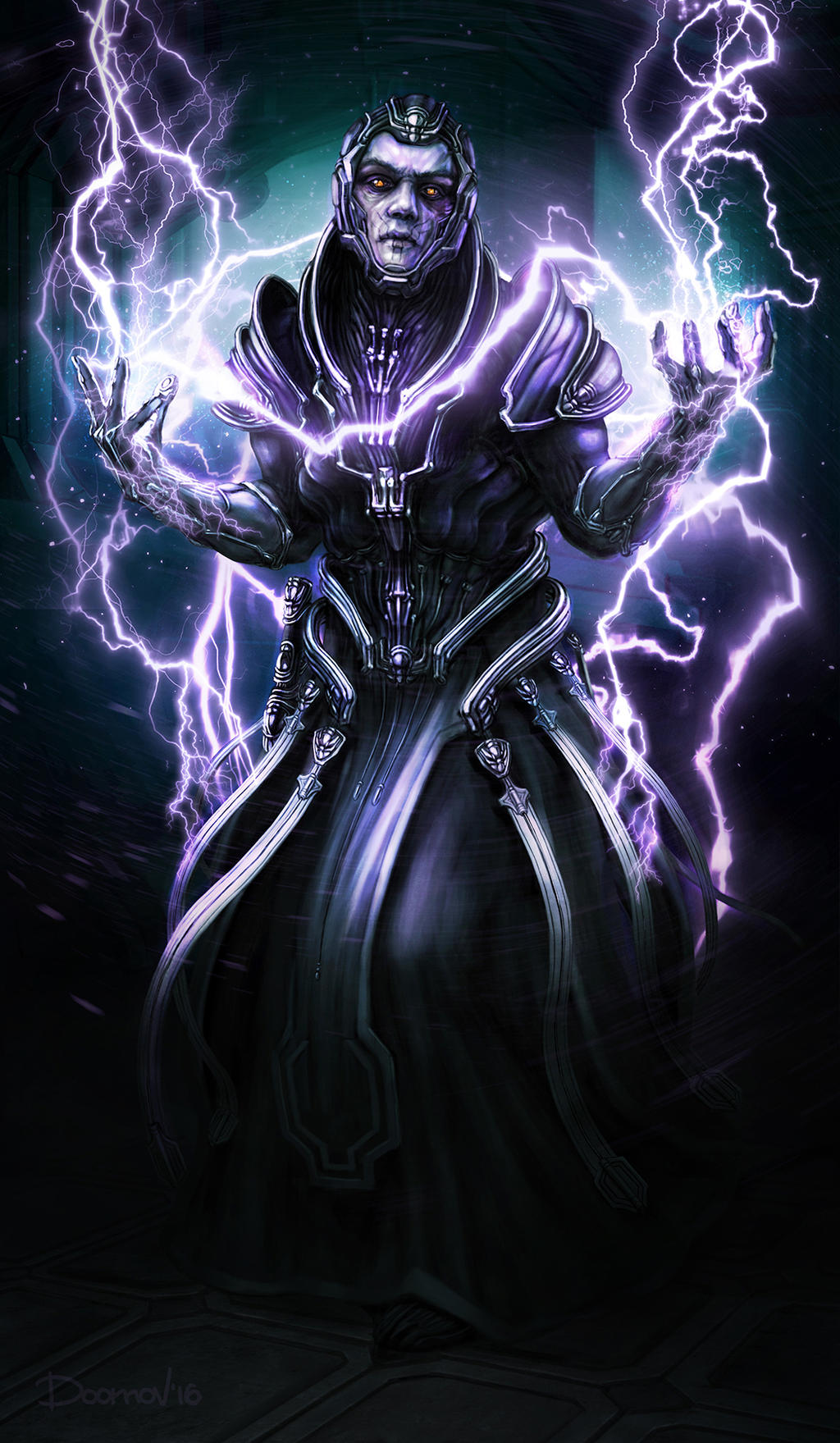
King Kashekim Nedakh by DrMistyTang

Jalteran refers to a specific guild of healers within the Keleni culture, thus referring to their preferred style of healing would be like calling Western medicine “Doctoring,” but nonetheless the word has stuck around. Jalteran is the unique practice of “folk healing” that the Keleni have been practicing for centuries and has become virtually synonymous with True Communion, to the point that those who practice the art might even call the location of practice a “temple,” and those who regularly attend for treatments might refer to themselves as “Followers of Communion.” Some healers embrace this, and alsohold religious services on the side or act as mentors, while genuine Communion temples will also learn Jalteranto fulfill the dual expectations of those who come to their temple.

The Keleni healing arts derive their premise from the core principle that the physicalis just a manifestation of the mental; this means that the health of the body is ultimately a reflection of the health of the mind. To purge someone of an illness requires that person to at least calm their mind and find harmony between their conscious mind and the subconscious id that rules their physical manifestation.

The most common forms of treatment are meditative. The healer first diagnosis the illness and what might be causing it; such diagnoses are often abstract, but some Keleni healers are astute psychologists and can find genuine psychological issues that the patient currently suffers from. Next, the healer guides the patient through meditative exercises, teaching them to turn their eye inward and calm whatever inner turmoil they have to better improve their physical state. To facilitate this, some healers learn the art of massage and interior decoration (creating a calm space will help create a calm mind). What effects this has tends to be questionable and ultimately depend on what the GM will allow Esoteric Medicine to do: it will certainly helps heal psychic issues (such as psychic crippling) and curing diseases that are psychic in origin as well as physician would cure the physical equivalent; for physical ailments, it generally does little more than provide a +1 to HT rolls to naturally recover.

While not requiredto learn the Keleni healing arts, most Keleni who practice them alsostudy the Psychic Healing power, something Keleni naturally excel at. By putting the patient in a meditative state, they have a far easier time practicing their craft and their study of esoteric, psychic principles prevent them from ruining their target’s psyche or body during delicate procedures. Their near miraculous ability to heal nearly any problem via psychic healing contributes to the belief that anyone who engages in the trappings of the Jalteran will be as effective, which has led to a reputation of quackery. Rumors also persist of Jalteran sages who can cure aging and are thus both immortal and capable of granting that immortality to others. At the GM’s discretion, this can be true! But even if it is not, the perceptionof its truth drives many a wealthy or powerful man to seek out the finest Jalteranphysician.

Keleni practitioners of Jalteranoften have the honorific suffix –altaadded to their name.

Required Skills: Diagnosis, Esoteric Medicine, Meditation, Philosophy (True Communion).

Additional Psionic Skills: Aura Reading, Cure, Disease Shield

Cinematic Skills: Mental Strength, Pressure Points

Secret Psionic Skills: Life Extension

Techniques: Introspective Ceremony

Perks:Auric Squint, Healing Bond, Healing Massage, Healthy Decoration, Meditative Massage, Secret Power (Life Extension, up to level 2), Sacred Healing, Soothing Touch, Stabilizing Skill (Psychic Healing, Esoteric Medicine), Wishful Medicine,

Optional Advantages: Psychic Healing Talent, Sensitive or Empathy

Optional Disadvantages: Charitable, Disciplines of Faith (Asceticism or Mysticism), Delusion (“Holistic medicine can cure anything”), Reputation (Quack)

Optional Skills: Artist (Interior Decorating),Exorcism, Expert Skill (Psionic), Teaching, Professional Skill (Massage), Psychology

Sacred Body Mastery (Jatuste Jakexa) 6 points

From the perspective of True Communion, the body is an extension of the mind. Just as the mind can heal the ailments of the body, so too can it control its motions and rhythms. Furthermore, by bringing the mind into unity with Communion, the body itself becomes healthier and stronger, until it becomes a sacred extension of the divine gestalt.

Sacred Body Mastery represents a series of exercises and forms that one can use while meditating to achieve greater unity with Communion and deeper mastery over the body. This is a fundamentally psionic art, and centers around the Psychic Healing ability of Psychometabolism and a variety of secret techniques that allow the practitioner to reshape how the psychic flow of his life force moves through his body. Masters also learn to regenerate their body with their own psychic energy and, according to legend, to greatly extend their life. Many templars practice the technique, and it explains many of their more legendary feats, such as their prodigious leaps, their phenomenal speed, or their ability to survive horrible wounds or even seemingly “return from the dead.”

Non-psionic characters may also practice the motions and learn some aspects of the style. The GM may allow non-psionic practitioners to replace Psychometabolism with Body Control, provided they are Trained by a Master.

Required Skills: Acrobatics, Esoteric Medicine, Meditation, Philosophy (True Communion).

Required Psionic Skills: Psychometabolism

Cinematic Skills: Flying Leap, Immovable Stance, Light Walk, Power Blow, Pressure Points

Techniques: Body Mastery, Deep Trance

Secret Psionic Skills: Life Extension

Secret Psionic Techniques: Metabolic Coordination, Metabolic Might, Metabolic Power, Metabolic Speed, Metabolic Tenacity.

Perks:Afflicted Concentration (Pain), Attribute Substitution (Power Blow from HT), Body Discipline (Acrobatics), Life-Force, Life-Force Burn, Psi-Strike (Psychic Healing, Unarmed Strikes Only),Secret Power (Life Extension, level 1 only), Skill-Assisting Psi (Psychic Healing: Auto-Hypnosis), Skill-Assisting Psi (Psychic Healing: Power-Blow), Stabilizing Skill (Psychic Healing, Esoteric Medicine), Special Exercise (HP may exceed ST by 100%)

Optional Secondary Traits: HP

Optional Advantages: DR with the Tough Skin limitation (up to 5 levels), Fit or Very Fit, Flexibility or Double-Jointed, High Pain Threshold, Inner Healing, Perfect Balance, Trained by a Master.

Optional Disadvantages: Disciplines of Faith (Asceticism or Mysticism), Odious Personal Habit (Finnicky Eater or Fad Dieter)

Optional Skills: Breath Control, Climbing, Judo, Jumping, Karate, Savoir-Faire (Dojo), Running,

Optional Cinematic Skills: Body Control

Guidance (Jalaseran) 5 points

Alternate Names: The Art of the Host, The Great Keleni Conspiracy, JatusteJalamen

The Keleni have long been an oppressed and enslaved people. Despite their low status, again and again, they find themselves in high positions: rulers, emperors and warlords often raise them to the position of adviser, healer, or even beloved companion in reward for their loyalty, intelligence and wisdom or, perhaps because they have fallen under the influence of the Keleni’s natural telepathic powers!

The enemy of the Keleni, including those who would keep them enslaved or those who feel alienated by their unusual culture and their refusal to submit to the beliefs of others like to whisper stories of Keleni conspiracies. They spin every example of a successful Keleni merchant or influential Keleni administrator as proof of some sinister ambition of the Keleni as a whole. They suggest that the Keleni use their telepathy to read the minds of others, to influence with subtlety until they achieve a position of power and then plan on usurping that position and throwing society into chaos!

This paranoia has a core of truth to it. The Keleni have long practiced social techniques focused on humility, understanding and careful suggestion that would allow them to achieve their social ends (whether that be speaking on the behalf of their community or drawing the interest of a powerful aristocrat in search of a good servant). Ultimately, Guidance is a form of humble diplomacy that allows the practitioner to defuse fights and petition those in positions above him to assist them and his community or, at least, spare them. Some Templars like to study the style so as to solve a crisis without resorting to bloodshed; they see it as an act of mercy rather than a means of conspiracy.

The style below presents a compromise; it contains somemeans of manipulation and some means of diplomacy. GMs who wish to emphasize a more conspiratorial form of Guidance can add more conspiratorial optional traits.

Required Skills: Acting, Detect Lies, Diplomacy, Savoir-Faire (Servant)

Additional Psionic Skills: Emotion Sense,Mindwipe, Mind Clouding, Mind Shield, Sleep, Suggestion.

Techniques: Cutting Out, Elevated Speech, Elicitation, Hinting

Psionic Techniques: Amnesia (Suggestion),Hide Signature (Any), Independent (Suggestion), Mass Wipe,

Cinematic Techniques: Beguilement, Personal Guarantee

Perks:Cultural Familiarity, Disarming Smile, Honest Face, Ignorable, Political Hack, The Buzz

Optional Advantages: Pitiable,Smooth Operator, Voice

Optional Disadvantages: Secret (Conspirator)

Optional Skills:Administration, Brainwashing, Expert Skill (Conspiracy Theory), Fortune Telling, Hidden Lore (Conspiracies), Law (Any), Mind Block, Observation, Politics, Psychology, Public Speaking

Optional Psionic Skills: Mental Surgery

New Traits

New Psychic Healing Abilities

Life Extension

1/level

Skill: Life Extension (IQ/Hard)

The character may use the Life Extension power on page 48 of GURPS Psionic Powers; the mechanics are identical, only the cost is lowered to 1 point/level because aging is not a major mechanical issue in Psi-Wars, only a narrative concern. Despite its low cost, the GM is encouraged by make learning this ability difficult!

Statistics: Special Option (May live longer than normal) [1]; Level 2 adds “May effect single external party +100%”.

Inner Healing

9/23/45/69

Skill: None

The character has internalized his own psychic healing ability, strengthening the connection between mind and body such that he automatically draws healing energy from the psychic energies around him. At level 1, the character heals 1 HP every 12 hours; at level 2 he heals 1 HP every hour; level 3 heals 1 HP every minute and level 4 allows the character to either heal 1 HP per minute or up to 10 HP per second at a cost of 1 FP per HP.

Statistics: Regeneration (Slow; Psychic Healing -10%) [9; level 2 improves this to Regeneration (Normal; Psychic Healing -10%) [23]; level 3 improves this to Regeneration (Fast; Psychic Healing -10%) [45]; Level four is Regeneration (Extreme, 1-10 FP per second -50%, Psychic Healing -10%) [60] with Regeneration (Fast, Psychic Healing -10%) as an alternative ability [9].

Psychometabolism

4.5/level

Skill: Psychometabolism(HT/Hard)

You can psychically control your normally involuntary biological functions. Each level grants +1 to any HT rolls where such control would benefit the character. See B68 for additional details. The Psychometabolism skill may be used to fool doctors while in a deathlike trance, to perform First Aid upon oneself, and replacesBody Control for all purposes.

Statistics: Metabolism Control (Psychic Healing -10%) [4.5]

New Perks

Healing Decoration: The character may use interior decorating skills to create a “healing space” for a patient. One hour of work and an Artist (Interior Decorating) skill roll will create a space in which the character gains +1 to all Esoteric Medicine or Psychic Healing rolls.

Healing Massage: The character is proficient in using massage to heal patients. Professional Skill (Masseuse) acts as a superior complimentary roll to Esoteric Medicine or any Psychic Healing rolls, adding +2 on a successful roll (or +3 on a critical success, -1 on a failure, and -2 on a critical failure).

Life Force: Magic allows players the option to spend HP instead of HP, applying the same -1 to skill per HP spent.

LifeForceBurn: See Thaumatology: Magic Styles page 27

Meditative Massage:The character has mastered the art of using massage to bring a sense of enlightenment and inner peace to their client. The character may either roll Professional Skill (Masseuse) as a complimentary roll to the target’s Meditation roll, or may roll their own Professional Skill (Masseuse) skill in place ofthe target’s Meditation, as with a meditative ceremony.

Political Hack: See Social Engineering page 79

Sacred Healing: Improve all rolls to recover from an injury, or to Esoteric Medicine rolls by +1 if in an area of High True Communion Sanctity, or +2 if in an are of Very High True Communion Sanctity.

Wishful Medicine: Thinking good thoughts actually works! After receiving an esoteric treatment, you may roll IQ in place of HT to recover from an injury or from sickness or posion.

New Techniques

Beguilement

Hard

Default:Prerequisite Skill-5

Prerequisite:Voice and any of Diplomacy, Fast-Talk, Performance, Politics, Public Speaking, Sex Appeal, or Singing; cannot exceed prerequisite skill

See Pyramid #3/54 page 6.

Cutting Out

Hard

Default:Prerequisite Skill-4

Prerequisite:Any Per-Based social interaction skill; cannot exceed prerequisite skill

See Social Engineering page 81

Elevated Speech

Average

Default:Savoir-Faire (High Society or Servant).

Prerequisite:Savoir-Faire (High Society or Servant); May not exceed Savoir-Faire (High Society or Servant)+5.

See Pyramid #3/54 page 5.

Elicitation

Hard

Default:Prerequisite Skill.

Prerequisite:Any Influence Skill except Intimidation; May not exceed Prerequisite Skill+5.

See Pyramid #3/54 page 5.

Hinting

Hard

Default:Prerequisite Skill.

Prerequisite:Any Influence Skill; May not exceed Prerequisite Skill+5.

See Social Engineering page 81

Personal Guarantee

Hard

Default:Diplomacy -2;

Prerequisite:Charisma 1 (or Telepathy Talent 1) and Diplomacy; cannot exceed Diplomacy.

See Pyramid #3/54 page 7.

New Psionic Techniques

Body Mastery

Hard

Default:Psychometabolism-4;

Prerequisite:Psychometabolism; May not exceed Psychometabolism.

The character may apply the benefit of Psychometabolism to HT for any roll HT uses. While the character must still pay fatigue, this technique may be used reflexively and unconsciously (for example, to improve a roll to see if the character dies while said character is unconscious).

Metabolic Coordination

Hard

Default:Psychometabolism-10;

Prerequisite:Psychometabolism level 5; May not exceed Psychometabolism skill.

You split the psychic flows within your body so that you may do multiple things at once; this technique allows you to attack twice, provided those attacks use two separate parts of the body. Once initiated, this effect lasts for a minute and replaces the normal benefits of Pyschometabolism.

Metabolic Might

Hard

Default:Psychometabolism-4;

Prerequisite:Psychometabolism; May not exceed Psychometabolism.

You may, for the next minute, gain a bonus to your Lifting ST equal to your Metabolic Control level in place of your usual HT bonus.

Metabolic Power

Hard

Default:Psychometabolism-8;

Prerequisite:Psychometabolism; May not exceed Psychometabolism.

You may, for the next minute, gain a bonus to your Striking ST equal to your Metabolic Control level in place of your usual HT bonus.

Metabolic Speed

Hard

Default:Psychometabolism-8;

Prerequisite:Psychometabolism; May not exceed Psychometabolism.

You may, for the next minute, gain a bonus to your Basic Speed (improving your reaction time, your basic move and your dodge) equal to ¼ yourMetabolic Control level in place of your usual HT bonus.

Metabolic Tenacity

Hard

Default:Psychometabolism-8;

Prerequisite:Psychometabolism; May not exceed Psychometabolism.

You may, for the next minute, gain extreme resistance to pain in place of your usual HT bonus. If your Metabolic Control level was 2, gain High Pain Threshold. If your Metabolic Control level was 3, gain High Pain Threshold with an additional +5 to resist knock-down rolls, stunning rolls, and afflictions related to pain or stunning and all HT rolls to recover form being stunned. If you Metabolic Control level was 6 or higher, you may ignore all the above effects.

True Communion as Esoteric Skill

A True Communion disciple first learns to meditate. True Communion teaches that, through introspection, self-knowledge and self-discipline, one can begin to understand the world around him. They learn to listen to their own inner voice, then to their instincts, then to Communion itself. Through obedience to Communion, they can learn who they truly are, how they connect to the world, and what their true purpose is. Once one has mastered this art, the next step is to teach others. Teaching methods vary, but True Communion strongly favors teaching through example, riddles and challenges. It seeks to get the student to discover a principle for himself, rather than to simply be told something that they will soon forget, or learn only superficially. By teaching others, the student masters Communion more deeply and, more importantly, learns to connect with his own students and thus finds himself in an unbroken chain of masters and pupils extending back to the birth of True Communion.

True masters of Communion have deeply powerful meditative techniques that allow them to reach a trance-like, to empower their connection with Communion, and to even regain their psychic energy more quickly. They learn to discard their own selfish needs and, as they become more attuned to Communion, to become more attuned to their community around them and to being to understand the deepest secrets of spirituality. Those who masters the art of teaching, according to legend, have the ability to unlock the psionic potential of anyone, and can even teach those forever locked away from Communion to overcome their limitations and join the greater galactic gestalt.

The galaxy will forever associate True Communion with the Templars, and so many monasteries and temples also teach the force sword as part of True Communion. Most also teach the history of the faith, or give insight into the holy places and relics of the faith. Communion often holds that inner knowledge can come from dreams, and those who believe this teach their students to interpret their dreams.

This form of Communion is the Communion of the Templars and the one most commonly practiced across the galaxy. It is assumed to be the “default” form of True Communion.


Required Skills: Meditation, Philosophy (True Communion), Savoir-Faire (Dojo), Teaching, Hidden Lore (Communion)

Techniques: Communion (Meditation), Deep Trance (Meditation), Introspection (Meditation), Penance (Meditation).

Secret Traits: Moral Intuition, True Investiture, Virtues (Varies)

Secret Skill: Psychic Recovery (Meditation)

Secret Technique: Heuristics (Philosophy), Legendary Teaching (Teaching),

Perks: Daily Meditation, Focused (Meditation), Honest Face, Inner Mastery, Patience of Job, Rewards of Faith, Secret Skill (Psychic Recovery), Secret Technique (Heuristics (for Moral and Supernatural Phenomenon only), Legendary Teaching), Secret Trait (Moral Intuition, True Investiture, Virtue), Saintly Vampire, Style Adaption (Traditional Communion), Technique Mastery (Introspection)

Optional Advantages: Clerical Investment (True Communion), Devotion, Destiny, Empathy, Intuition, Language (Kelen), Trained by a Master, True Communion, Weapon Master (Force Sword)

Optional Disadvantages: Charitable, Code of Honor (Any Virtue), Disciplines of Faith (Asceticism or Mysticism), Selfless, Sense of Duty (All communion-compatible species), Pacifism (Any).

Removable Disadvantages: Bad Temper, Bloodlust, Bully, Callous, Compulsive Behavior (Any), Destiny (as disadvantage), Gluttony, Greed, Impulsiveness, Jealousy, Intolerance, Lecherousness, Loner, Obsession, Overconfidence, Selfish, Unluckiness

Optional Skills: Connoisseur (Relics), Diplomacy, Esoteric Healing, Exorcism, Force Sword, Fortune Telling (Dreaming), Hidden Lore (Places of Power), History (True Communion), Religious Ritual

New Traits

Moral Intuition 12/27

True Communion teaches that true moral understanding comes not from without, but from within. Followers of True Communion learn to cultivate their moral intuition and, by listening to their moral instincts, intuitively know what choice is right. At level 1, when faced with a moral conundrum they may roll IQ to know what choice is the worst choice; at level 2, they may roll to uncover what is the best choice. In both cases, the character may roll Philosophy or Introspection (Meditation) to know why.

@page { margin: 0.79in } p { margin-bottom: 0.1in; line-height: 120% }
What counts as “moral” is ultimately up to the GM, but Psi-Wars by default makes no base assumptions. The safest default for the guidance of Moral Intuition is internal (what your character thinks is moral) and associated with your powers. One intention of Moral Intuition is that it will warn a character before he takes an action that may lead to violation of one of his moral limitations for True Communion or his Virtues.

Statistics: Intuition (Aspect, Moral -20%) [12]; level 2 adds Inspired +100% for [27]

True Investiture 10/level

The character gains a bonus to all True Communion reaction rolls equal to his True Investiture level; this is cumulative with any Path Reputation he might have. A character may not take more than 4 levels of True Investiture without GM permission.

Statistics: Power Investiture (True Communion)

New Perks

Daily Meditation: The character always meditates if possible; thus the GM never has to ask if he has fulfilled his disciplines of faith; Furthermore, if the group does not explicitly track how much meditation a character practices during down time, assume that the character always starts with 3d6 more meditation points at the beginning of a new adventure than the GM normally offers to players who meditate.

Inner Mastery: Characters may substitute Meditation for any Will-based skill for Psionic Extra-Effort rolls.

Rewards of Faith: This is a leveled perk (maximum suggested value is 3). The GM can in form a player that he has a vision, a dream, or feels an urging or an instinct that he must do something, like a subtle Command from Communion. If the player willingly does as Communion requests, the GM may reward the player. This may be an impulse buy point or 2d6 “meditation” fatigue that he may use on Psionic Powers. This perk is effectively “Option: GM may reward players for good roleplay,” and the GM is encouraged to pick a standard reward: an impulse buy point is standard, but GMs who feel this might be unbalancing may choose instead to offer the bonus fatigue as the standard reward.

Sacred Vampire: You may access True Communion despite having the Psychic Vampirism power.

New Skills

Psychic Recovery

Will/Hard

Default: meditation-6

See Pyramid #3/97 “Strange Powers” page 6.

New Techniques

Communion

Hard

Default: Meditation;

Prerequisite: Meditation; May not exceed Meditation+4.

The character may attempt to gain a deeper connection with Communion. This allows him a +1 to petition rolls or, if done for 8 hours, grants him one point of Meditative Energy Reserves (If he has Communion; he may not use this benefit if he has Dark Communion or Broken Communion).

Deep Trance

Hard

Default: Meditation-4;

Prerequisite: Meditation; May not exceed Meditation.

The character meditates deeply for one hour and enters a trance. This trance either offers the same bonuses as Autohypnosis or +1 to all Psi skills plus an additional bonus equal to 1/3 of his margin of success, to a maximum of +5. He gains +4 for sensory deprivation, +2 for the Body Discipline perk, and may use Religious Ritual as a complementary roll.

Heuristics

Hard

Default: Philosophy -6;

Prerequisite: Illuminated and Philosophy; May not exceed Philosophy.

See Powers: the Weird page 6. Characters with Communion may only learn Heuristics for supernatural (e.g. related to psionic powers or Communion) or moral truths unless they are Illuminated.

Introspection

Average

Default: Meditation;

Prerequisite: Meditation; May not exceed Meditation.

This core skill of Meditation works as the basic book describes it: The character may roll meditation to gain moral (rather than practical) insight into what he should be doing.

Legendary Teaching

Hard

Default: Teaching -5;

Prerequisite: Illuminated and Teaching; may no exceed Teaching.

See Social Engineering: Back to School page 24. This trait may be able to teach non-psionic characters psionic abilities at the GM’s discretion.

Penance

Hard

Default: Meditation;

Prerequisite: Meditation; May not exceed Meditation+4.

The character may attempt to make amends for wrongs he has done. This typically requires 8 hours of meditation and upon success, the character may roll Meditation. On a success, he may either remove one point of corruption (either from Dark or Broken Communion), or attempt to regain Communion after violating one of its sins.

Psionic Disciplines of the Cult of the Mystic Tyrant

The Cult of the Mystic Tyrant concerns itself with more than just warfare. Beyond its mastery of Dark Communion, It requires the subtlety and majesty of Telepathy to enforce its dominion and secrecy and thus teaches many of its members in the arts of hiding their own thoughts, in controlling the thoughts of others and in ferreting out traitors and destroying them.

Discipline of Kings: 8 points

Most of the Cult of the Mystic Tyrant has moved past the ritualistic rulership of the Cult of Anthara, but nonetheless found many of its psionic techniques useful, and folded in the style and approach of the Ranathim’s psionic leadership with their own brand of social manipulation.

The Discipline of Kings is taught to anyone the Cult wants to move into a leadership position, and most Masters have learned at least the basics of the style before they reached the rank of Master. It focuses on a domineering form of social manipulation, where the character’s sheer weight or presence can seize control of a room and hold the gaze of others and extract concessions through polite intimidation. It then augments it with telepathic abilities, namely Aspect and Suggestion, allowing the character to directly control others.

Most schools also work the expand the characters’ facility with telepathy and teach students general principles of diplomacy, law and administration, and some go even further and include more of the Cult of Anthara’s ritualism.

This is both a Psionic Style and a Civil Style. In addition to the normal benefits of Psionic Style Familiarity, the Style Familiarity for the Discipline of Kings grants the character a +1 to resist influence attempts from influence skills learned via this style.

Required Skills: Intimidation, Leadership, Philosophy (Mystical Tyranny), Politics, Public Speaking, Savoir-Faire (High Society)

Required Psionic Skills: Aspect

Additional Psionic Skills: Mind Shield, Suggestion,

Techniques: Aura Extension (Aspect), Dangerous Request (Savoir-Faire), Elevated Speech (Savoir-Faire), Expansion (Mind Shield), Hinting (Intimidation, Politics or Savoir-Faire), Independent (Suggestion), Pressed Attack (Suggestion)

Cinematic Techniques: Beguilement (Politics or Public Speaking), Power Gaze (Intimidation)

Perks: Avatar, Cloaked, Fearsome Stare, Haughty Sneer, Honest Face, High-Heeled Heroine, Penetrating Voice, Ping, Soft-Spoken, Style Adaption (Cult of Anthara).

Optional Traits: Charisma, Fashion Sense, Fearlessness, Indomitable, Telepathy Talent, Voice

Optional Skills: Administration, Brainwashing, Diplomacy, Law (Any), Leadership, Propaganda, Psychology, Strategy

The Discipline of Secrecy: 4 points

By far the most common of the Cult of the Mystic Tyrant disciplines, some masters insist that their slaves learn it as part of their induction into the Cult proper. The Cult is well-aware of how easily others break to torture or mental intrusion, and given True Communion’s facility with telepathy, see it as utterly imperative that their members be able to protect their minds.

The Discipline of Secrecy involves a deep dive into his psionics work, and how interrogation works, and how to defeat both. It involves no knowledge of anything sensitive to the Cult, and thus may be taught to junior members in safety, though it does make them more resistant to the Cult’s own inquisitors. Masters of the technique go beyond merely feigned innocence, careful double checking to see if their mind has been infiltrated and careful double-think that prevents a superficial mind-reading from learning of their true intentions, and begins to expand telepathic awareness and adds hostile techniques that can trap those who would read the target’s mind.

Required Skills: Acting, Expert Skill (Psionics), Mind Block

Additional Psionic Skills: Mind Shield

Cinematic Skills: Mental Strength

Techniques: Camouflaged Mind-Block, Notice Psi Use

Additional Psionic Techniques: Mind Trap

Perks: Bug Hunter, Honest Face, Personal Awareness, Special Exercise (Mental Strength for resisting Telerecieve only).

Optional Advantages: Hard to Subdue, High Pain Threshold, Perception, Will

Optional Skills: Electronics Operation (Security, Surveillance), Escape, Fast-Talk, Gesture, Observation, Search

The Discipline of Silence: 7 points

The Cult of the Mystic Tyrant demands secrecy. Even when it rules openly, it buries many of its true policy decisions, alliances and powers behind layers of secrecy so as best to monopolize power. It guarantees this secrecy through the use of some of its most dreaded slaves: the inquisitors.

An inquisitor must have a facility with Telepathy, and the Discipline of Silence gives detailed instruction in the art of mind-reading, especially probes. This is combined with interrogation skill and Detect Lies to perfectly learn whether or not someone has betrayed the Cult, or whether a particular target knows anything about the Cult. This is usually combined with training in investigative skills, so the inquisitor can determine whether there has been a breach.

Once a breach has been discovered, the inquisitor must silence those who know or who betrayed the Cult. The latter typically involves death, and many inquisitors study combat skills as part of a separate discipline, though they often learn infiltration techniques to get close to their prey. The former typically involves training in intimidation, mind wiping (to erase memories), and forgery techniques to either fabricate evidence that points the authorities in a different direction, or they learn to destroy evidence so nobody can prove the involvement of the Cult.

This is both a Psionic Style and a Civil style. Those who have the Style Familiarity Perk for the Discipline of Silence, in addition to gaining the usual benefits of Psionic Style Familiarity, gain a +1 to resist interrogation, lie detection and intimidation attempts by a fellow inquisitor.

Required Skills: Detect Lies, Expert Skill (Psionics), Interrogation, Intimidation, Shadowing

Required Psionic Skills: Telerecieve

Additional Psionic Skills: Instill Fear, Mental Surgery, Mind Clouding, Mind Wipe, Telepathy Sense, Telescan

Techniques: Bulk Compensation (Mind Clouding), Deep Probe (Telereceive), Group Scare (Instill Fear), Indirect (Group Scare), Mass Wipe (Mind Wipe), New Approach (Instill Fear, Telereceive), Notice Psi-Use, Quick-and-Dirty (Mental Surgery)

Cinematic Skills: Mental Strength

Perks: Fearsome Stare, Forgettable Face, Intimidation Factor, Soft-Spoken

Optional Traits: Craftiness, Eidetic Memory, Perception, Telepathy Talent, Zeroed

Optional Skills: Brainwashing, Electronics Operation (Media), Expert Skill (Conspiracy Theory), Forensics, Forgery, Holdout, Housekeeping, Intelligence Analysis, Observation, Psychology, Search, Smuggling, Stealth

New Traits

Perks
Soft-Spoken: See GURPS Social Engineering, page 79

Techniques

Beguilement

Hard

Default: Prerequisite Skill-5

Prerequisite: Voice and any of Diplomacy, Fast-Talk, Performance, Politics, Public Speaking, Sex Appeal or Singing; May not exceed default skill.

See Pyramid #3-54 “Social Engineering” page 6

Dangerous Request

Hard

Default: Savoir-Faire (High Society)-3

Prerequisite: Savoir-Faire (High Society); May not exceed default skill.

See Pyramid #3-54 “Social Engineering” page 5

Elevated Speech

Average

Default: Savoir-Faire (High Society)

Prerequisite: Savoir-Faire (High Society); May not exceed default skill+5.

See Pyramid #3-54 “Social Engineering” page 5

Hinting

Hard

Default: prerequisite skill

Prerequisite: Any Influence Skill; May not exceed default skill+6.

See GURPS Social Engineering page 81

Hinting

Hard

Default: prerequisite skill

Prerequisite: Any Influence Skill; May not exceed default skill+6.

See GURPS Social Engineering page 81

Notice Psi Use

Average

Default: Expert Skill (Psionics)

Prerequisite: Expert Skill (Psionics); May not exceed default skill+5.

You may replace Per or Per-Based Expert Skill (Psionics) with Per-based Notice Psi-Use when using the “Noticing Psi Use” rules from GURPS Psionic Powers from pages 11-12.

Anti-Psi Styles

In a world full of psionic powers, characters will seek to protect themselves from that power.  Mundane countermeasures (like Mind Block) exist and mundane characters will certainly seek to train themselves in its intricacies.  Anti-Psi characters will also seek to improve their talents, studying the art of anti-psi as deeply as psions study the arts of psi.

I originally designed the following styles with non-psions in mind.  They focus mostly on Expert Skill (Psion), Meditation and Mind Block.  However, given that Anti-Psi characters need something to counterbalance powers like True Communion or Psionic Witchcraft, I’ve added some Anti-Psi and Broken Communion powers as well.  Treat these as examples.  There might be simpler, smaller mundane styles, or more baroque and sinister anti-psi styles.

Mental Extinction: 3 points

Also called the hymn of the Void, this style focuses primarily on silencing all thought.  Characters learn to still their thoughts with Meditation, and therein, create a place of isolation that protects themselves from psychic intrusion.  What begins as a peaceful calm can be enhanced into a gaping void of thoughtlessness, which can be most disconcerting to stumble across for telepaths.  Masters of the technique have even gained something approximating a true Mind Shield.

Anti-Psi characters expand this power, creating endless mental landscapes of nothing in which one can become lost, or even blanking themselves completely, not just to telepathy, but to all psionic perception.

Required Skills: Meditation, Mind Block
Additional Psionic Skills: Psi Shield, Para-Invisiblity
Additional Skills: Mental Strength, Mind Shield
Techniques: Deep Trance, No-Mind
Psionic Techniques: Mind Trap
Perks: Gaze into the Abyss, Patience of Meditation, Personal Awareness, Special Exercise (Requires Mind Block and Meditation 15: May purchase Mind Shield), Special Exercise (No-Mind doesn’t require Invisibility Art)

Optional Advantages: Danger Sense, Mind Shield.

The Principle of Noise: 5 points

This more scientific approach to psionic defense seeks first to understand how psionics works, and then seeks to uncover it where it is found, and then finally to use advanced-yet-intuitive principles to hide thoughts.  This allows the psi-hunter to openly hunt for nearby psis without tipping his hand as to what he is doing, though anyone reading his mind will certainly notice his unusual way of thinking.  This sort of defense tends to be a natural outcropping of societies where individuals take on heavy mathematical tasks (think “Mentats as psi-hunters”).
Anti-Psi characters learn to expand upon this principle, taking the random numbers generated by the psychic cryptography technique and blasting it all around them.  The result showers those who interact with the anti-psi technique with weathering and mentally exhausting meaninglessness.
Required Skills: Cryptography, Expert Skill (Psionics), Mathematics, Mind Block
Additional Skills: Mental Strength
Additional Psionic Skills: Interruption, Screaming
Techniques: Coded Thoughts, Tiring Scream
Secret Technique: Tiring Interruption
Perks:Personal Awareness, Simple Defense, Skeptic, Special Exercise (May purchase Mind Shield), Tolerance (Any Telepathic Power), Stabilizing Skill (Anti-Psi; Mathematics), Standard Operating Procedure: Memory Check.
Optional Traits: Will;
Optional Advantages: Eidetic Memory, Intuitive Mathematician

New Techniques – Art of Noise

Tiring Interruption: Defaults to Interruption-5. May not exceed Interruption.
As Tiring Scream, but applies to Interruption. Any psi interrupted by your technique also loses 1 FP.

The Way of the Grey Mask: 5 points

This technique focuses on being someone else.  The practitioner doesn’t learn to hide his thoughts so much as pretend he is someone else.  They learn to bury their secrets beneath persona so richly created, they temporarily forget who they actually are!  This is obviously a preferred technique among spies and shapeshifters.
In fact, this anti-psi technique is a faded remnant of a now-lost Cult to the Murmuring Angel.  Anti-psi practitioners learned to perfectly emulate someone else, even gaining a weird, twisted version of that person’s powers, if they have any.  Broken Communion assists them by making their lies more believable, changing their features to match their internal image, and blanking the mind with horrifying images.  If one joins the Cult of the Grey Mask, they lose who they were, and slowly begin to lose any sense of identity to the corrosive power of the Path of Madness.
Required Skills: Acting, Dancing, Meditation, Mind Block
Additional Psionic Skills: Psionic Overload
Secret Psionic Skills: Power Theft
Additional Skills: Mental Strength, Mind Shield
Techniques: Camouflaged Mind-Block, Communion, Deep Trance, Mind Trap, No-Mind, Penance, True Sight
Additional Psionic Techniques: Crippling Attack (Overload), Crippling Attack (Precision Attack),
Secret Psionic Techniques: Improved Theft (Anti-Psi Power Theft), Precision (Anti-Psi Power Theft)
Learned Prayers: Servant of Unreality, Broken Window, Mask of Madness
Perks: Avatar, Body Discipline (Dancing), Controllable Disadvantage (Mind-Block Based; Delusions (False Memories) or Split Personality), Personal Awareness, Secret Power (Power-Theft as Anti-Psi), Secret Prayer (Mask of Madness without following the Path of Madness)
Optional Advantages: Compartmentalized Mind
Optional Skills: Occultism, Theology

Communion Styles

Divine Favor can absolutely have its own traditions and cultures and techniques, and should!  Just as Catholicism has a different body of supernatural lore and power than Appalachian folk-religion, so too should Communion have a rich variety of worship and empowerment.

Communion Style Familiarity

Communion styles are just psionic styles with a greater focus on communion.  Treat them as the same, except they gain the following, should it be relevant:
  • You may acquire any non-secret learned prayer with earned points in play without having to seek instruction.

Communion styles have a greater focus on skills and perks than on powers, as miracles rarely require skills outside of Meditation, Philosophy and Religious Ritual.  Even so, we gain “Learned Prayers” as style abilities, which characters may purchase the same way they could purchase “style skills and techniques.”

True Communion

“Communion” is itself a religious term… but from what religion?  The answer would be “the Jedi Order” if this was Star Wars, but it isn’t.  So we have to devise our own “Jedi Order.” Personally, I never liked the idea of mystic knights without first separate mystics and knights.  True Communion represents the predecessor to the Space Knight, the faith and belief from which they drew their power and understanding of Communion, making it the ur-Communion.
True Communion focuses primarily on the worthiness of its practitioner.  It believes in the extinction of self native to Ego Communion, and seeks to bring the follower “into oneness with Communion.”  The character subsumes himself in service to all of sapient-kind.  Many such characters will take a different name (sufficient for Obscure True Name, were that relevant to Psi-Wars) to represent that extinction of self in service to society.  Most of a Monk of True Communion’s training focuses on understanding meditation, the philosophy of communion, and in understanding Communion itself.
Once so trained, a master of True Communion has a deep relationship with Communion itself, and is able to better serve the world.  He’s also an excellent master of his own psionic potential: The Way of True Communion does not teach one how to master psionics, but how to master Communion and in that greater understanding, his mastery of psionics will come (which probably explains why masters of True Communion keep saying things like “I can show you the ways of Communion” when they mean “I can train your psionic skills”).
Required Skills: Expert Skill (Psionics), Meditation, Philosophy, Hidden Lore (Communion)
Learned Prayers: Confidence, Psionic Focus, Gift of the Life Force, the Tao of Communion, the Wisdom of Communion, Sense Communion, Consecrate Ground, Mastery of Ego, Dominion of Ego
Techniques: Introspection, Penance, Communion, Moral Insight, Philosophical Argument
Secret Technique: Communion Heuristics
Perks: Inner Mastery, Technique Mastery (Instrospection), Technique Mastery (Moral Insight), Stabilizing Skill (Meditation; Any Psionic Power)
Optional Traits: Will
Optional Skills: Mental Strength, Religious Ritual, Teaching

New Techniques – True Communion

Communion Heuristics: Defaults to Philosophy-6. May not exceed Philosophy.

See Heuristics, GURPS Powers: the Weird on page 6-7, except this requires Communion 4 rather than Illuminated.

The Death Cult

While researching Star Wars, I made the unfortunate mistake of subscribing to the Star Wars feed on Google+, only to be flooded with “Who would win in a fight…” polls.  For a certain (younger) segment of the Star Wars fandom, what matters most is “who is badass?” These players will most assuredly sit at your table and want to play something like a “Sith.” They want to be Death on a Stick, and Dark Communion comes close to that desire, and so does the Path of Death.
So why not a practice that combines both?
This makes sense even within the setting of Psi-Wars.  Dark Communion seeks real, ultimate and selfish power, and command over death is definitely one of those forms of power.  The Mystic Tyrant himself is destined to conquer Death.  By following the Path of Death, one becomes a destroyer of all of his opponents, similar to the Rebellious Beast, “but cooler.”
The Death Cult worships the power of the Path of Death as a selfish force of Dark Communion.  They seek to understand death and spread it to others (not to themselves).  This cult has powerful, religious trappings, including blood-letting, sacrifices and terrifying idols.  Training in the Death Cult results in a psychic vampire of enormous psychic power, able to destroy with a touch and to vastly self-empower.  However, the Path of Death, while accessible to Death Cultists with Dark Communion, remains a Broken Communion path: It still Corrupts those who use it, so it will slowly destroy all of those who seek to empower themselves with it.  If the Way of True Communion represents the Jedi Order, the Death Cult might represent the Sith order.
The Death Cult replaces Philosophy with Theology.  They preach a selfish ideology that argues that injustice has filled the galaxy and that they have been choses as the assassins of the Great Devourer who lies in the center of the Galaxy to purge His galaxy of the unworthy.  Dark Communion itself will direct the user to the unworthy, which usually just means “Those the cultist believe have personally wronged him.”
Required Skills: Expert Skill (Thanatology), Meditation, Theology, Religious Ritual
Psionic Skills: Aspect, Instill Fear, Mind Clouding, Mind Shield, Steal Life, Sense Life
Learned Prayers: Psionic Focus, Primordial Expertise (Death), the Tao of Hyperspace, Dark Storm, Eclipse, Inured Mind, Paths of Broken Communion, Sense Death, Corrupting Touch, Extinction of Communion
Techniques:Aura Extension (Aspect), Group Scare (Instill Fear), Indirect (Instill Fear), New Approach (Instill Fear), Exclusion (Mind Clouding), Mind Trap (Mind Shield), No Contact (Steal Life).
Perks:Alien Path (Death in Dark Communion), Blood Healing, Controllable Lifebane, Frightening Side Effects (Aspect, Steal Life, any Death Miracle), Life Force, Life Force Burn, Mind Games, Power Bond (Steal Life), Psionic Adaption (Aspect to Psychic Vampirism), Psionic Adaption (Instill Fear to Psychic Vampirism), Psionic Adaption (Mind-Clouding to Psychic Vampirism), Psionic Adaption (Mind Shield to Psychic Vampirism), Psychic Symbolism (Death; Psychic Vampirism), Rule of 17 (Steal Life), Sanctity Compensation, Secret Miracle (Inured Mind as Dark Communion Miracle), Secret Miracle (Path of Broken Communion as Dark Communion Miracle), Signature Miracle (Psychic Nova, Lesser or Greater Avatar of Death), Signature Symbol (Death: the color Red), Stabilizing Skill (Expert Skill (Thanatology), Psychic Vampirism), Symbolism Mastery (Death), Twisted Energy Compensation.
Optional Skills: Esoteric Medicine, Intimidation, Philosophy.

Ancestor Worship

Some faiths might take their worship of Communion in entirely different directions, and Ancestor Worship is one such example.  Each person, living or dead, has made their impact on Communion, and their echo remains their still.  Those who follow the path of Ancestor Worship seek to surround themselves with relics of the past.  They have shrines to the deceased, great rooms full of images depicting famed ancestors, and libraries full of the history of their own kind.  They seek to keep their bloodline pure and practice genetic profiling and eugenics to create the ideal incarnations of their most famed ancestors.  Some even go so far as to directly clone their deceased, breathing new life into them both physically and symbolically.
Ancestor Worship is focused on Ego Communion, as its adherents seek to subsume their self into the greater community of their family and bloodline.  The result of this worship are entirely new Paths, usually inspired by the archetypes, but based on specific ancestors that followed them.  That is, an ancestor might have followed, say, the Path of the Righteous Crusader and made his mark on it, but his descendants do not follow the Path of the Righteous Crusader, but the path of their ancestor.  They study their ancestor’s life, they study his genetics, his symbols, and they mimic those.  In this way, they gain a symoblic connection with their ancestor.
The result of this practice are entirely new paths, unique to the specific bloodline that follows it.  To follow these paths, a character must be either literally descended from that original ancestor, or symbolically descended from that ancestor.  Thus, marrying into the right house, or being adopted with proper religious ceremony is suffucient to allow one access to these paths.  Characters use History (Bloodline) in place of Philosophy to understand the symbolism of the paths of their Ancestors.  Clones of specific ancestors might also gain access to Communion, at least for the purposes of accessing an ancestor’s miracles.
Required Skills: History (Bloodline), Meditation
Techniques: Communion, Symbolic (Path) Lore,
Perks: Alien Paths (Any to Communion), Beloved Aberrant (Clone), Secret Miracles (Commune with Dead), Secret Path (Bloodline Paths), Signature Symbolism (Bloodline), Skill Adaption (History (Bloodline) replaces Philosophy for understanding Path symbolism), Symbolism Mastery (Any path)
Optional Skills: Architecture, Biology, Connoisseur (Places of Power, Relics),Biology, Electronics Operation (Medical), Expert Skill (Thanatology), Heraldry, Religious Ritual

Dougal Ran – A sample new path

The General by Ninjatic

Prerequisites

As with all paths, following the Path of Dougal Ran requires an additional -5% pact modifier “Disciplines of Faith (Ritualism)”, representing how the character must spend every moment of his life carefully engaging in the symbolism of the Righteous Crusader.
Furthermore, the descendant of Dougal Ran must have a Sense of Duty (Nation) worth -10 points.

Symbols

  • Color: Vermillion
  • Regalia: The crest of the House of Ran; armor; A shoulder-cape; The mark of Tyrian nobility.
  • Tools: a vibro-blade; a battle-scarred capital- or dreadnought-class warship, a battle standard.
  • Locations: a battlefield for a sanctioned war
  • Opposing Path: Thanatos (Broken Communion) and anyone from the House of Alexia: Dougal Ran was a Righteous Crusader, thus faces the same limitation.  He was slain in battle with House Alexia, and thus their symbolism is especially powerful against him.

Milestones

  • As a youth, before the age of 20, Dougal Ran had commanded his first soldiers and won his first battle.  He carried a vibro-blade and a battle-standard into victory, and gained a scar across his eye.  Those who will follow his path must also win a great battle while under the age of 20, while carrying a battle standard and gaining a scar on their face.
  • When the House Ran conquered Tyria from the Alexian dynasty, the House took their alien royalty as their slaves and prisoners.  Dougal fell in love with one of the alien nobles, freed her and married her.  His descendents carry the mark of this alien heritage to this day.  Those who will follow his path must enslave, then free, then marry an attractive, and noble, member of the opposite sex, who belongs to a different race than their own.
  • Dougal Ran was chosen over his elder brother to rule the House of Ran.  Upon his coronation day, his brother assassinated him in open court, and started a war that tore the House of Ran apart, where it remains divided to this day.  Those who follow the Path of Dougal Ran must gain a promotion over another, less worthy but more traditional member of the House.  Their sudden death after this event is optional… but common!

Associated Talents

Born Warleader: [5/level] (Lesser Primordial Expertise). Found in GURPS Power-Ups 3: Talents, on page 12 (and various other places).

Intuitive Statesmen: [10/level] (Greater Primordial Expertise). Found in GURPS Power-Ups 3: Talents, on page 11.

Associated Powers

Stoicism

Reaction Required: Neutral
Learned Prayer Prerequisite: Communion 6, Legendary Reputation (Dougal Ran) 1
Learned Prayer Cost: 5 points

As stoicism on page 10 of Divine Favor, except instead of requiring constant concentration, once this prayer has been invoked, it costs the character 1 fatigue per minute to maintain it. He may pay this cost out of his Energy Reserves (Psionic).

Statistics: Immunity to Pain (Divine: Path -15%, costs 1 fatigue -5%) [24]

Guide My Hand

Reaction Required: Good
Learned Prayer Prerequisite: Communion 8, Legendary Reputation (Dougal Ran) 2
Learned Prayer Cost: 8 points

As Guide My Hand (Pyramid #3-36, page 12) but with the additional Path modifier. This reflects the Dougal Ran’s’s aptitude with all weapons! Remember, Weapon Masters have exceptional defaults!

Statistics: Weapon Master (All; Divine, Path -15%) [39]

Mayhem

Reaction Required: Neutral
Learned Prayer Prerequisite: Communion 6, Legendary Reputation (Dougal Ran) 1
Learned Prayer Cost: 5 points

Things can always get worse around Dougal Ran, and he always seems to profit from it. After making this prayer, something terribly destructive always shortly happens, usually an expansion of the damage Dougal Ran has already caused. The rule of thumb for this miracle is that it can only make things worse, except for Dougal Ran, who freely profits from it.


Statistics: Serendipity (Wishing +100%, Divine, Path -25%, Aspect “Only wishes that directly result in greater mayhem or collateral damage” -20%) [24]

Psionic Styles

Psionic Styles focus primarily on exploring a few specific or interrelated concepts within the world of psionic powers.  Most should offer some kind of secret power or technique, or at least a few interesting perks, but their most important aspect is adding in cultural context.  Psionic styles say something about a setting.

For building a psionic style, follow the guidelines in Thaumatological Styles:

  • Styles have Required Skills to learn, and might have Required Psionic Skills to learn.  Don’t bother to list a power as a prerequisite: it’s assumed when you include the skill.
  • Styles may have Additional Skills and Techniques which represent psionic skills and techniques that the character can learn as they wish.
  • Styles may have Perks.  A character may learn 1 perk for every 20 points invested into style-related skills and techniques but not powers.
  • Styles may have Secret Skills and Secret Techniques which represent lore available only to that school. Each has a perk associated with them, and must be learned at the feat of one of the style’s masters.
  • Styles may have Optional Traits, which represent advantages, skills or techniques that a specific school of a style may or may not teach.

The Visionary Path: 5 points

Precognition represents a potent source of power, especially for an interstellar leader, and it also serves as a great source of narrative.  Destiny ultimately comes from precognition, and rather than fade it into the background, as Star Wars has, I’d rather bring it up front and center, as Push did.
So, Psi-Wars needs Bene Gesserit-style oracles, characters who wear blindfolds about their eyes and lose themselves in visions of the deep future, and use those visions to reshape the world.  The Visionary Path represents a temple tradition that searches out potential seers, brings them to their temple, and teaches them everything they can about using Precognition.
Precognition only goes so far, however: A single week.  Visions can potentially go much further if the GM wishes.  So, the followers of the Visionary Path have learned to push the limits of their visions, looking into the deep, deep future with a Secret Technique, and to look for Omens using the Secret ESP Power of Oracle.
The preferred approach of the Visionary Path involves sensory deprivation, drug-induced hallucination, and meditation to gain maximum ability to see into the future.  The gathered prophecies and destinies are recorded in their libraries.  All practitioners have access to these libraries and are expected to memorize their contents, and they can use this knowledge to understand where the world is going, or could be going.  Practitioners may roll History (Future) to see if they know anything or profound about future events that might be impacted by current events (This knowledge is enough to know the general shape of history, not specific enough to know what will happen on a specific, given day).
The Philosophy of the Visionary Way is a version of Utilitarianism.  They seek to create the “greatest good” by helping as many people (defined by Communion-normal sapients) as possible. They seek  an eventual state of galactic enlightenment and oneness with Communion, and anything is acceptable in the pursuit of that final goodness.  They also believe that certain key symbols and Communion images are sacred, and that certain “fixed points” in the future must not be changed, even if it delays that eventual state of enlightenment, because the future itself must have “a sacred shape.”
Required Skills: Expert Skill (Psionics), History (Future), Meditation, Philosophy (The Visionary Way)
Required Psionic Skills: Prognostication
Additional Skills: Danger Sense, Psychic Hunches, Retrocognition
Techniques: Competitive Precognition, Deep Trance (Meditation), Directed (Prognostication), Event Search (Retrocognition)
Secret Skill: Oracle
Secret Techniques: Deep Time (Prognostication)
Perks: 20/20 Hindsight, Ecstatic Psi, Exposition Sense, Inner Mastery, Know-It-All, Psycho-Babble, Secret Power (Oracle), Secret Technique (Deep Time), Special Exercise (ESP Talent may go to up to 6).
Optional Traits: Destiny
Optional Skills: History (Any), Religious Ritual, Research.

New Techniques – Oracle

Deep Time: Hard. Defaults to Prognostication-5. May not exceed Prognostication.
Precognition is limited to a single week. This technique violates that rule, allowing the character to search farther into the future (subject to the limitations noted in ESP in Action). Apply the “success by” rules from retrocognition as additional penalties for looking farther into the future: Looking 10 days ahead is -1, 100 days is -2, 3 years is -3, 30 years is -4, 300 years is -5, and so on. Thus, looking 300 years into the future is a -10. Note that the further into the future one looks, the less certain the future becomes!

Prana-Bindu

yoga by wyv1

Masters of psychic healing understand that the mind can master the body, and that psionic energy is as important to healing the body as physical medicine.  Those who follow the way of Prana-Bindu (shamelessly stolen from Dune) have learned to master their own body rather than the bodies of others, turning their Psychic Healing inwards.  This manifests mostly as the powers of Regeneration and Metabolism Control.  Prana-Bindu refines Metabolism control from base improvements of health into a total control of their body.  With it, they can manifest astonishing speed, strength and the ability to ignore terrifying wounds.

Masters of Prana-Bindu use their mastery of this connection between the body and mind to improve more than their health.  The relationship turns the other way around to allow their bodies to fuel and power their psionic mastery.
Prana-Bindu is an in-depth understanding of a specific psionic discipline rather than a philosophy.  Even so, many schools teach a philosophy to go with the student’s introspective meditations.

Required Skills: Acrobatics, Esoteric Medicine, Meditation
Required Psionic Skills: Metabolism Control
Additional Skills: Autohypnosis, Power-Blow, Regeneration
Techniques:Body Mastery
Secret Techniques: Metabolic Might, Metabolic Power, Metabolic Speed, Metabolic Tenacity.
Perks: Afflicted Concentration (Pain), Attribute Substitution (Power Blow from HT), Body Discipline (Acrobatics), Dark Healer, Life-Force, Life-Force Burn, Inner Mastery, Skill-Assisting Psi (Psychic Healing: Auto-Hypnosis), Skill-Assisting Psi (Psychic Healing: Power-Blow), Stabilizing Skill (Psychic Healing, Esoteric Medicine)


Optional Traits: HT
Optional Advantages: Flexibility, Perfect Balance, Resistant (Diseases)
Optional Skills: Philosophy
Optional Techniques: Breakfall

New Techniques – Prana-Bindu

Metabolic Might: Hard. Defaults to Metabolic Control-4. May not exceed Metabolic Control.
You may, for the next minute, gain a bonus to your Lifting ST equal to your Metabolic Control level in place of your usual HT bonus.
Metabolic Power: Hard. Defaults to Metabolic Control-8. May not exceed Metabolic Control.
You may, for the next minute, gain a bonus to your Striking ST equal to your Metabolic Control level in place of your usual HT bonus.
Metabolic Speed: Hard. Defaults to Metabolic Control-8. May not exceed Metabolic Control.
You may, for the next minute, gain a bonus to your Basic Speed (improving your reaction time, your basic move and your dodge) equal to 1/4 your Metabolic Control level in place of your usual HT bonus.
Metabolic Tenacity: Hard. Defaults to Metabolic Control-8. May not exceed Metabolic Control.
You may, for the next minute, gain extreme resistance to pain in place of your usual HT bonus. If your Metabolic Control level was 2, gain High Pain Threshold. If your Metabolic Control level was 3, gain High Pain Threshold with an additional +5 to resist knock-down rolls, stunning rolls, and afflictions related to pain or stunning and all HT rolls to recover form being stunned. If you Metabolic Control level was 6 or higher, you may ignore all the above effects.

Psionic Witchcraft

If we set aside science fiction for a moment, believe in psychic powers are real, and the most common claimant of their use are real-world witches and fortune tellers.  Little should change in a far-future featuring savage aliens and ramshackle villages.  Someone with psionic powers offers a welcome relief from various ailments and a source of answers.  Even if a character lacks all the necessary psionic abilities, or any, knowledge of the occult, of esoteric medicine and fortune telling can themselves provide a good living and even be productive for the society in which the witch lives.  What psionic powers she lacks, she can make up for with a few tricks and sleight of hand.
But truly psionic witches can benefit from deeper study of the specific things people seek.  She can arrange for love, she can sooth ills, she can curse those who affront her.  This form of Psionic Witchcraft allows Probability Alteration, representing someone who has gone beyond just Psionics, but has not yet fully developed a true relationship with Communion; in a sense, witches are “hedge communionists.”  Psionic Witches embrace the tropes of their profession, enacting engrossing rituals, using crystal balls or the sci-fi equivalent to tarot cards, etc.
While this is presented as a single tradition, use it as inspiration for specific traditions.  The dark witches of Styxia would have a different school than the grunge-witches of Grist.
Required Skills: Esoteric Medicine, Fortune Telling, Occultism,
Psionic Skills: Prognostication, Seekersense, Coincidence, Curse, Weather Control, Aura Reading, Cure, Disease Shield
Techniques:Directed (Prognostication), Pinpoint (Seekersense), Remove Curse (Curse), Cure Affliction (Cure),
Perks: Dark Healer, Ecstatic Psi, Forecast (ESP or Probability Manipulation), Good Neighbor (Probability Alteration), Natural Doctor (Psychic Healing), Postmortem (Psychic Healing), Power Bond (Any), Psionic Focus (Any), Psionic Ritual, Secret Power (Probability Manipulation), Soothing Touch (Psychic Healing).

Optional Skills: Dancing, Herb Lore, Naturalist, Psychology, Sleight-of-Hand,