What Even Is A Word of Power?

I hate apologizing for being sick, because it feels like an excuse, but I offer it as an explanation for my absence. I have been wrestling with a bad viral infection for a month. It’s still bad enough that I can’t work, and I’m taking it easy, but one of the things I do when I take it easy is write what I want as a sort of soothing comfort, so I’m producing material, just not releasing it. My apologies for that. I will be back up and running at some point, and then more material will come out! I have not abandoned the project.

But I had a thought that I wanted to explore further, and a blog post seemed a good way to do that, and a way to show you that I’m still alive.

The Deep Engine and Words of Power

So, I’m working on Deep Engine Sorcery, and I’ve hit some breakthroughs. I’m reaching the point of actually releasable content, so that’s exciting. I have at least one nearly fully realized school of sorcery for it, in fact, though I want at least two more smaller ones before I reveal it, because all of this interlocks in a way that needs to be presented in a block before people understand what’s going on (why is my sorcery sooo biiiig?!).

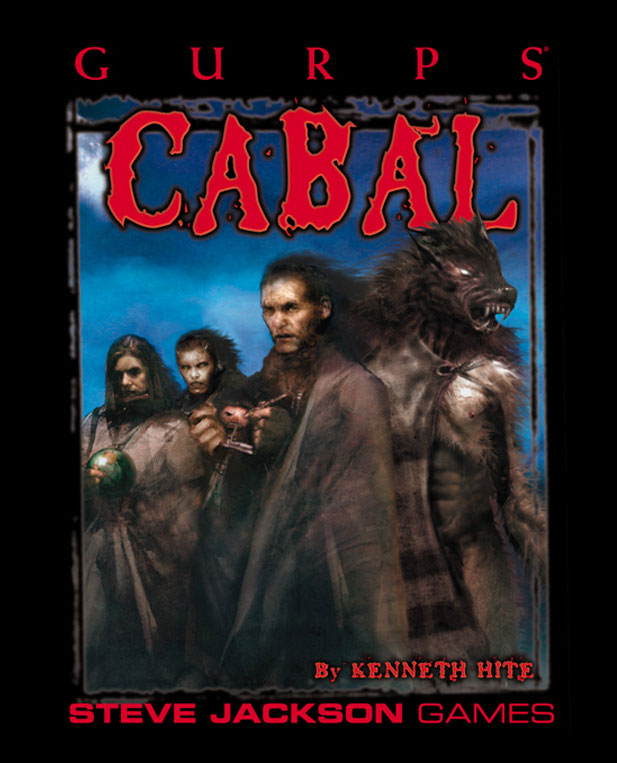
One of the original ideas I had for the Deep Engine was the Word of Power, originally from GURPS Cabal, but repeated in GURPS Thaumaturgy. Because the written and spoken word, information, is so essential to the Deep Engine, giving it a “Word of Power” system to the Deep Engine felt like an interesting idea. The original intent of a Word of Power is that you’re speaking in the Language of God that He used when creating the world, and thus creating similar effects, but uncontrolled (because, you know, you’re not God). I don’t think I can justify such an extreme take with the Deep Engine, but I love the idea of the occult tactical nuke, and I can’t think of a better place for it than the Deep Engine in Psi-Wars. Perhaps they’re some form of Priority Override, where you trigger a massive, uncontrolled response from the Deep Engine, sort of like how with a computer, you can use Power Word “sudo.” Power Word: Kill has an entirely different connotation in a Linux system! (“sudo kill -9!”)

So while I’m not 100% certain I’ll include it, I really like the idea, but whenever I try to use it, I run into some problems.

Continue reading “What Even Is A Word of Power?”

The Revenge of Space Ghost

Happy Halloween! I’ve taken some time away from the blog to get my life sorted out, and it’s been sorted out for the foreseeable future, but while I waited, I did some light righting on the side, which of course means I have roughly 50k words of a half-finished supplement sitting on my computer. What is it about? Ghosts. Specifically, ghosts in Psi-Wars, though I think non-Psi-Wars fans might enjoy it too.

Continue reading “The Revenge of Space Ghost”

Do you Craft in GURPS?

I’ve been playing a great deal of Book of Hours, the spiritual successor to Cultist Simulator (I love it, but it’s a very slow, patient game of matching up aspects and discovering unexpected combinations to unlock hidden lore in the game, so it has to be the sort of game you like), and it got me to thinking a lot about crafting.

I tend to associate crafting in RPGs with “Things best left to downtime.” I have some players who insist on doing crafting mid session, which means while the other characters are falling in love, rescuing damsels, denouncing the wicked vizier and destroying their enemies, the crafter is… at their workbench, saying “And in 48 more hours, I’ll get to make a roll.” So I tend to discourage that sort of thing heavily.

But downtime is an underrated aspect of gaming. I tend to like the idea of players engaging with the game even when the game is not ongoing. Examples can include D&D players planning out their progression, or reading up a magic items book to find the next bit of loot they want their GM to give them, or Psi-Wars players brushing up on their deep lore after deciding they like the game. Crafting can be a part of that, I think. We can set up what players do between sessions, and crafting can be part of it.

Where I tend to find crafting the most interesting are in games like Book of Hours, though other games have similar elements (like Minecraft). See, in some of these games, you have to go exploring, by some means, to find more ingredients, by whatever means, to create the next thing. In Minecraft, its delving into a new biome or dungeon to see what you can find, while in Book of Hours, it’s delving into uncatalogued books to see what secrets and lores they hold. Once you have those ingredients, there are numerous things, but not limitless things they could be applied to. It’s not that learning a fireball spell takes 4 “lores,” it’s that it takes 4 fire lores or, better, 4 fire or destruction lores, so if you have a fire/earth lore, a fire/destruction lore, a destruction/death lore and a destruction/space lore, you can build a fireball, but are there other things you could do with earth or space or death? You’re making a choice, and often in such a way that has longer term consequences, because building one thing is often a ladder to building another thing.

I don’t think I’ve ever seen anything like this in an RPG. I’ve tried to come up with something similar for my Heroes of the Galactic Frontier, and you can see echoes of it in some Pyramid Articles (there’s Mr Fixit and an excellent alchemy article). I think After the End has some whispers of this, but I don’t think I’ve ever seen a system built out with something like this in any detail, and I’m not sure people would follow it even if there was one, because they want X (“I want a fireball spell”) and I think most players are just looking at ways to get at that thing in the shortest amount of time possible, and any hassle they have, like finding a tutor or engaging with training time, is generally seen as a hassle. They’d rather find a disintegrator cannon than go through a process of cobbling together loot to create new technology and ideas that will later allow them to later cobble together other interesting things, one of which is a disintegrator cannon.

So I tend to think it’s a bad idea, even though I’m drawn to it myself. But I wonder what other people think. Do you use crafting in your GURPS games? How does it work? Does loot play a role in it? Are there “technology trees” that players need to escalate along? Or is it limited to Quick Gadgeteers whipping up The Solution To The Current Problem with Whatever They Have On Hand? If you do have crafting, how do you find your players engage with it? Is it a hassle? Do they love it? Do many of them delve into the nitty gritty details?

A Sorcerous Obsession


Sometimes, I just can’t get something out of my head.  Back in the good ol’ days of the blog, it would end up as a blog series.  Lately, since I need to curate my material more, I hesitate to just brainstorm on the blog, but perhaps that’s a bad approach.  After all, the point of this blog is to blather on in a way that gets my juices flowing, which helps me to think, and helps you to think about your own setting, and often starts a conversation. So while this post may or may not result in some changes to Psi-Wars, it will be useful for me to get some thoughts straightened out, and perhaps to inspire you as well, dear reader.  Consider this less of an “article” and more a musing.

So here it goes: The though I can’t get out of my head is “Does Psi-Wars need magic?”

Why Would Psi-Wars Need Magic?

Psi-Wars has psychic powers and divine favor.  Does it really need yet another powers system? What would “magic” add that psychic powers and divine favor already don’t?  If you want to curse someone, you use your powers, or you call on God.  If you want to wiggle your fingers and mutter incantations, you buy your curse ability with some additional limitations, right? Or you add a bunch of ritual trappings to your divine favor and it feels like magic. An additional system would clutter things up.

And yet, it lingers, in my mind.  Why?

I’ve noticed a few things.  The first was a discussion about the nature of psychic powers and their expense.  There was an argument in favor of using Psi-As-Magic.  The argument was that psychic powers cost so much that you can’t really get much in the way of flexibility and I personally find this to be true.  A wizard might be able to light a candle, put someone to sleep, remove a curse, and bind someone from speaking a particular truth, while a psychic rarely works that way. Magic users are broad and flexible while psychics tend to be narrow and focused.

If I can expand upon this point, I notice that people tend to invest deeply in psychic powers, and they tend to start to revolve conceptually around a single point.  For example, if you play as a telepath, chances are, you’re going to buy a single telepathy ability.  For example, you might take Telerecieve.  You will begin to dump more and more points int Telerecieve, as it can get quite expensive, and you may begin to invest in the skill and its techniques.  You can easily invest 50 points in telerecieve and associated tricks.  And if you do decide to expand beyond that, it’s more likely that you’ll invest in another related telepathy ability, such as Telesend, or maybe Mental Blow, rather than something completely off-theme, like Visions or TK-Squeeze.  This is partially because of the way psionic talents work, but it’s also conceptual. Once you decide to play as a telepath, you begin to think of your character as a telepath. With a limited number of points, and the high cost in abilities, you’re not going to transition over into, for example, TK-Grab, because not only does your talent not help, but you’d need to invest a good 25+ points into it before you really started to see decent results in that new arena, and it wouldn’t necessarily synergize with your Telepathy.

Magic, by contrast, seems to be more conceptually eclectic. We have less difficulty imagining a sorcerer who learns to magically open locked doors and also how to understand the language of birds.  They’re just two different spells.  We may tend to focus our wizards in particular directions: one wizard might be more focused on fire while another on necromancy, but we also expect these spells to have a low buy-in cost: if igniting a flame or sensing a corpse is only a couple of points, then it’s easier to justify a brief excursion outside of your central premise, because you don’t need to make a major investment.

A magic spell is also more of a self-contained concept.  Like we might imagine a spell that lets a character understand the speech of birds, or determine who somebody loves.  It tends to be discrete, highly specific and done with great intention: “I cast detect love interest” and then you detect someone’s love interest. Psionic powers, by contrast, are part of who you are. If you are a telepath, you can presumably sense what people are thinking without even meaning to.  You can reach out to another with just a thought. You need no special incantations or unique conditions anymore than a swordsman needs special conditions to will his hand to draw his blade. It’s a part of you, and this is part of why it has a more ingrained conceptual element, and a higher cost.

And this brings us to the second unique element I see: where psychic powers seem mostly based on innate potential, magic seems mostly based on knowledge.  To be sure, psychic powers involve skill and training, but the premise of psionics is that your character can read minds (or see the future or heal with a touch, etc), and they need to train this inherent talent, and then they can expand its power and flexibility. It is like a super-power. Magic, by contrast, is more about knowledge of the world.  We usually see wizards as somehow set apart, typically by the magery trait, but in principle, if one wizard can do something, another wizard can do it, all that separates them is knowledge. The specifics here vary: magic could be an inherent force in the world and those with magery are just more naturally attuned to it, or magery is sort of a single “power” that all mages share, but in the end, what differentiates one wizard from another is not what their potential talent is, as these are more-or-less the same for all wizards, but the strength of that talent and the number of secrets they have mastered and their understanding of the lore of the setting.

If a psychic is a super-hero, a wizard is a scholar (and someone who uses Divine Favor is a conduit and a pawn of vast powers they can never fully control).

And Psi-Wars definitely has this niche.  We have two traditions that are literally magic users: the Zathan sorcerers and the Chiva witches. Both are associated with the Umbral Rim, but when you start looking very close at things like the Asrathi Witchcat traditions, or people who use the Deep Engine, or archaeologists who go out looking for arcane secrets in lost ruins, and it starts to feel like there’s a real niche for a character with a broad and eclectic blend of smaller, more subtle powers that are based more on knowledge of a tradition and secrets than of a discipline and body of techniques for a specific power.

What Would Psi-Wars Magic Look Like?

For the sake of argument, let us say that I have convinced you that Psi-Wars needs magic.  Okay, now what?  What would it look like?

First, some hard constraints. I don’t want to use GURPS Magic; there’s a reason I reference sorcery in the title.  Psi-Wars is heavily invested in advantage-based effects, and magic would threaten to short circuit that.  Also, the work in creating a bunch of advantage-based spells is made much easier by the fact that so many effects already exist in Psi-Wars.  Presumably, whatever rules this magic works by would somehow be related to the phenomenon of psionic powers and communion, as they’re all extensions of the same sort of thing.  Ergo, the ability to heal people or curse them would look similar if it were a psychic power or a divine favor or a magic spell.  So, we’d use Sorcery, though perhaps a heavily modified version, or perhaps even entirely unique.

Second, I don’t want a bunch of independent systems for each magical tradition.  Whatever this would be would fold the Deep Engine, Chiva witchcraft and whatever else I come up with, as much as possible, into a single set of rules.  If something doesn’t fit into that set of rules (Perhaps Morathi Witchcraft is best treated as just a discipline focused on Probability Alteration), it should fit into one of the other existing rule sets of Psi-Wars.  Rather than proliferating systems, I’d want to use this approach to streamline things.

So, if we want to use a single system, what system should we use?

Sorcery is the obvious choice.  It’s advantage based magic. So we just use that, make some new spells and we’re done, right? Sorcery can even handle multiple traditions.  We have alternative rituals and we can set up spell lists unique to particular traditions.  Easy.  In fact, one of the things that really draws me to this is struggling with the idea that a lot of psychic powers feel like all of them should be alternate, but then you run into “but technically,” like you might want to read someone’s mind while also healing them, and this ties into the “innate trait” nature of psionic powers.  They’re there and they’re always a part of you, but the ability to will one particular minor ability at a time seems a very applicable approach to tackling this problem.

But just using Sorcery out of the box might not be the best fit.  For example, it lets you cast spells quite quickly, and the point of this would be to create a system whereby people are always chanting and waving their hands around. We might also look for other ways to differentiate it from psionic powers.  For example, I rather like the idea of spells taking awhile to prepare.  To my eye, what the occultist of Psi-Wars do looks more like Path/Book magic than straight up sorcery (or vanilla GURPS Magic). It’s probably slow, patient and weak compared to psychic powers, but makes up for that weakness with broad flexibility.  

Fortunately, Sorcery is more than flexible enough to allow us to rework it.  The core premise is that you have some advantage that you pay full cost for, and everything else is an alternate to that one advantage. You can improvise with that core advantage, somehow, if need be.  And you have a standard modifier that represents the basis by which all spells work.  In the case of sorcery, the core advantage is a modular power, and the modifier is “It’s magic and it always costs 1 fatigue.” Our version could replace the modular ability with something else, if we wanted, and use the Psionic modifier rather than the Magic modifier, and we could change the rules on the fatigue-based spell casting (I lean towards requiring chanting and rituals by default, and perhaps some additional preparation, but I’d have to think about it).

Consequences

Okay, so say I’ve convinced you, we bring Sorcery into Psi-Wars and rejigger it a bit.  What changes in the setting?
The first thing I think you’ll notice is that Psi-Wars already has Magic: it has the Deep Engine, which is an advantage-based, modular-ability based power system that requires deep mastery of various skills. It’s ritual magic, just a weird and bespoke one.  We’d want to fold that into this system, and so the net effect is that we wouldn’t actually be expanding the game into a new direction so much as standardizing the mechanical concepts behind the Deep Engine, and then generalizing them for a broader audience.
The second thing is people would shift away from psychic powers and towards sorcery.  But who? I don’t think Maradonian nobles would shift.  Psionics makes sense for them.  And I don’t think Akashic Oracles would shift: it makes sense for them to naturally have ESP.  I don’t think most aliens would change either: the Mogwai, Keleni and Ranathim aren’t magic, they’re psychic.  This is their innate talent.
I think what you’d see, though, is a push for a new character type: the occultist.  We’d split off a template from the Psion and the Mystic, someone who specifically uses magic.  And that pulls a lot of pressure off the Mystic template.  Suddenly, we have three “mage” templates: those who have 100+ points in psychic powers (the Psionc), those with 100+ points in Communion (the Mystic) and those with 100+ points in magic.  The question I would have is “would they feel different” but to my eye the differences look obvious: psions deal with experiments and fight like super-heroes and have strict focuses, mystics meditate and spend time with god and call down massive, uncontrollable miracles, and occultists use a variety of subtle powers based on their knowledge of forbidden secrets.  So I don’t think you’d lose your niches.  I think you’d more cleanly define one.
But is this really just a template for Deep Engine users? Can we conceive of other traditions? Well, Chiva magic makes sense.  These are your Dathomir Witch expies.  But if the Deep Engine types are manipulating the Deep Engine, what are Chiva witches manipulating? Small-scale psionic powers? Dark Communion? If they’re manipulating Dark Communion, can we have a “necromatic” sorcery that manipulates Broken Communion? That actually makes more sense than manipulating Dark Communion, as we know Broken Communion will just randomly do things and there’s no reason you couldn’t just tap directly into that.  If they’re manipulating subtle psionic tricks, such as everyone has the potential to unlock very small psychic powers through study, then why not have a Neo-Rational version of that? If Fringe Rationalists believe in detailed study of these strange energy fields and would create repeatable processes to ensure that they can manifest the same effect again and again, do you get “Weird, Secret Lab Techno-Magic?”  Is that something we want?
How would we define these? Well, for the most part, unique traditions would have unique rituals and unique “spell lists.” Especially strange ones, like the Deep Engine, might have a different underlying skill and the core advantage might be slightly different.
And what about Zathan sorcerers? Would they have their own tradition? I would argue they wouldn’t.  The point of Zathan sorcery is that it’s a “magpie tradition.” It steals from all the others, so it would blend the Deep Engine with Fringe Rationalism and Broken Communion Necromancy.  I’m not sure specifically what that would look like, but probably access to the spell lists of several traditions, and special tricks and advantages that allow for unique synergies.

Sorcery When?

I don’t know if this is a good idea or not.  I always worry about adding more complexity, and I wrote this blog post to sort out my thoughts.  After writing it, though, my guts says there’s a niche, and a lot of my struggle with the Mystic Template has been trying to jam the mechanics of psionic powers and communion into the niche of magic and sorcery.  Having a third powers system that’s specifically aimed at this specific thematic niche would make the mystic template _much_ easier and make the occultist concept more satisfying to play.  But I’d need to tinker with it more to make sure it works the way I’d like it to, and I want to get a sense of how the community would feel.

Why your RPG Campaign is a Joke


I tend to follow GURPS blogs, which means I mostly read my own stuff and Toadkiller Dog’s blog, because we seem to be the most active ones in my reading list (we’ve diminished a lot from the heady days of the surge of GURPS blogs back when this blog started).  And, of course, reading up on Dungeon Fantasy, especially the “Rogue-like” approach he seems to favor, got me to thinking about randomness.  We tend to associate that sort of gameplay with very grimdark games, but my experience is that they often lead to hilarity and a lot of jokes.  Of course, most campaigns do, and I think I’ve made the connection between why, and why so many RPG campaigns “devolve” into comedy, and it is this:

Anytime you introduce randomness into a story, you create the opportunity for the unexpected subversion of expectations, typically in a hilarious way. Also, players need a release valve for tension.

“We are the Knights who Say Monty Python Qoutes!”

When I cut my teeth on RPGs, Toonami was still a thing and all of us grew up with action anime, and we often sought to emulate it in our RPGs (in this regard, not much has changed, I suppose).  Part and parcel of action anime is its tendency to take the piss out of its own characters. Certainly, they get to have cool moments, but there’s often moments where characters make fun of the main character, or the main character ruins his own tension, or the creator of the anime conceives of the series as a parody (most action anime seems to begin as a parody and devolve into a cliche action series, rather than the other way around).  So I’ve always included a sense of humor in my games, little outtakes, joining in when players make ridiculous quotes, etc.  To me, this was just part of gaming.
But when I began to converse with the rest of the community, I was often surprised by how seriously a lot of other GMs took their games.  I suppose it makes sense: you wouldn’t put a lot of work into something you didn’t take seriously, so you might expect others to treat your work with the same dignity, and it can be frustrating to work out an intricately detailed set of NPCs, mythmaking and worldbuilding, only to have players cracking jokes at your world’s expense in the first session.
The trend, I noticed, was to blame players.  The idea was that if only the GM could find players that took his campaign seriously, it would work.  Some blamed themselves: if they had made a better world, this wouldn’t have happened.  I think both are off.  I’ve put a ton of work into my campaigns.  I’m on a blog that you’re reading, likely because you think I’m an insightful and witty GM.  Likewise, I’ve played with the sort of players I think most GMs would envy: prepared, with thorough-but-useful backstories, who listen to one another and work together, not just as characters, but as players, falling silent for the shy players, stepping forward to lead the group when they’re at an impasse, talking to me about problems, etc.  And yet, we still get lots of quotes and wisecracks and outright belly laughter. So if it isn’t me or my players, what is it?
 
I don’t think the “problem” is you, nor your players.  I think the humor of RPGs are inherent in how they’re constructed, and in the human condition.  With a few exceptions, I think anytime you put an RPG together with human beings, you’ll get jokes.
 

Life is a Joke; Laugh a Little! 

A lot of times when we create an RPG, we set out to engage in mythmaking.  This is not universal, of course, but generally RPGs emulate fiction, especially mythic works.  They’re typically stories of a small band of adventurers against impossible odds, trying to save the world, or trying to explore some dread place, or battling some dark evil, something like that.  These narratives have beats that we expect to be in place.  If you’re trying to defeat a great evil and save the world, you expect escalating challenges, you don’t expect to defeat the Big Bad in act 1, you expect the final battle to be difficult, but you also expect to win (typically at the last moment), etc.
But real life doesn’t work like that.  In real life, the “hero” isn’t guaranteed to survive, nor is he guaranteed a final confrontation with “the villain.” The problem my be resolved by something completely out of either the hero’s or villain’s control.  There may be no climactic clash, and even if there is, there’s no guarantee for it to be especially satisfying, or to simultaneously and symbolically resolve a secondary arc in the hero’s life, etc. We seek and hope for the satisfying symbolism of mythical narrative, but the real world is complex and filled with too many variables for there to be an easy narrative.  There are literally billions of people who all want to be the protagonist, none of whom see themselves as the villain, and even when you explicitly set things up for climactic confrontations (such as a sport’s tournament), they often don’t work out in satisfying ways.  And when we find ourselves confronted by the tragic absurdities created by these mounting complexities that makes our life hard or humiliates us, we break the tension by cracking a joke, by laughing at it.
Do you know what else is filled with variables outside of your control and also high stakes that people invest a lot into? That’s right, your RPG campaign.  Every time you roll the dice, you’re relinquishing some control and introducing a variable that could ruin your narratively satisfying arc. And even if you eliminate the dice (and play something diceless, for example), you still have to deal with the interactions of your players with your story and with one another.  Each player added adds a new set of variables to deal with, often compounding with one another.  Any one of these interactions could find some flaw in your work, or create an unexpected and absurd situation, thus ruining the majestic dignity you worked so hard to create.
Worse, this is the whole point of RPGs.  People want more engagement from their players, not less, which means they want more variables introduced, not less. Similarly, people tend to ask for more randomness: more tables to roll on, more options for interesting results from rolls, more rolls in general.  There are limits, of course: we tend not to have games with a hundred players where everyone rolls on a complex mega-table every other second.  But still, we also tend to describe games without any roll of the dice where the GM just tells a story to silent, passive and receptive players “boring.”  We could just be telling stories, but as a general rule, we want this randomness.  And that randomness creates the tension and unfulfilled expectations, and when that happens, players start to crack jokes to deal with it, and your campaign “devolves” into Monty Python.  The “problem” is baked in.

The Tao of Game Mastering

I think the first step to resolving the problem is to accept it.
The problem isn’t really that “the game is a joke,” it’s that the GM and/or players had very rigid expectations of mythmaking: they wanted the story to go a particular way, and when it didn’t, they were disappointed.  That’s because the linear “railroad” story where the GM carefully plans everything out, the “failed novelist” approach, as I’ve heard some people refer to it as, is a fragile approach.  Because it relies on a chain of events to create the payoffs you’re looking for, the failure of one of those events can lead to cascading failures because they’ll invalidate future events and more planning you created.  Every time you roll the dice, or let your players (who cannot know about the future events, lest the payoff cease to be a payoff) you risk the chance of them blowing up your campaign.  There are ways to make the game more resilient by mitigating the variables and their impact on your story (“If you don’t want the players to kill the big bad in act 1, don’t let the players interact with the big bad before the climax!”), but they only harden the fragile narrative.
There is a better way.  You must learn to accept your powerlessness to control events, and embrace your power to shape narrative out of events.
What I’ve found, the longer I’ve gamed, is that I tend to be happier when I let go of my expectations.  I’m playing 7th Sea right now, and rather than create the sort of character I’d like to play, I created the sort of character I thought my wife might like to play across from, and that might serve the campaign well.  As a result, while I’m invested in the success of the campaign, I’m not particularly invested in what happens to my character.  As a result, I’m free to explore anything that comes my way.  This culminated in a particularly satisfying moment where my mentor seemed to have betrayed me. I expected a typical confrontation and prepared to play my part.  However, given certain strictures my character is under, I couldn’t draw my weapons and had to listen to him, and when he tried to kill himself, I went to rescue him “because that’s what my character would do,” even though I was certain it would fail, and I foolishly invested resources in this, because that’s what my character would do… and not only did it work, but we actually managed to resolve the entire thing, almost by accident.  See, the GM hadn’t really decided how that whole thing should play out.  The outcome didn’t matter to his story and he was prepared to work with whatever happened, and similarly, I wasn’t really invested in a particular outcome, so the outcome was decided by what “felt right” for the choices of those involved, and the way the dice fell.  We embraced the chaos… and a very nice story fell out.
See, the real world is chaotic, this is true, but we also create myths out of real world events.  Some of this arises from the sheer number of events: you do not wake up to an action movie opening every morning, and thereafter go to work in high octane chase scenes. Most days are humdrum, but if you have enough days, some will be more interesting than others.  Similarly, an RPG that has a lot of randomness in it, from a lot of active players and a lot of interesting dice rolls that all have interesting outcomes, eventually something interesting will pop out.  But we also construct narratives out of events.  I have kids, and I tend to look at everything they do through the lens of “growing up,” and so the first time they see an airplane, or they play with a frog, in the back of my mind, some saccharine music is playing and the whole scene plays out in sepia, a home-video that I’m seeing in real time, because I assign importance to these utterly mundane events.  All parents do this on some level, I think, which is why we can be so tedious (“Look!  A video of my kid playing with a frog! Isn’t it sweet?!”) but it highlights the fact that you can make nearly anything feel narratively meaningful if you try hard enough.
The easiest narrative to construct out of entirely random but otherwise mundane events is comedy.  If you were to stop and look at your previous day and think “If someone made a TV show out of it, what genre would it be?” the answer would probably be either “Slice of life” or “Comedy.” Even if you have a high-octane profession, such as an actor or a soldier, chances are you spent yesterday not doing much of consequence: you swept some floors, or argued with your agent, or woke with a hangover. Funny stuff!
 
If something unusual happened, chances are it wasn’t good: most people rely on stability, so a sudden change disrupts their life. Most of these events tend to be mundane (“The printer is out of ink, and I needed to be at the meeting 5 minutes ago!”) which makes comedy more appropriate, but intense events tend to be intensely bad. An accident on the freeway is more likely to put your in the hospital than it is to make you richer or happier as a person.  Thus, the second most easy narratives to construct are tragedies or horror.  Events can pile up and destroy you and your character, wiping away your hopes and dreams, or at least threatening to do so.  This creates dread, fear and deep unhappiness that can be cathartic to experience with another life.  That said, I rarely see tragedy as an especially popular genre, and “hopeless horror” tend to get a pretty visceral reaction from people who tend to hate it.
But you can still extract a heroic narrative from these random events: you can rise above the tragic events, or find that your mundane, tedious chaos in your life begins to mount in a particular way that lets you tell a story about growth, maturity and overcoming obstacles.  In a lot of ways, it’s about attitude, the “soundtrack of your life.”  Someone who gets to work late because of a traffic jam and then is unable to print up the reports needed because the printer is out of ink, and misses the vital meeting which means their company is likely doomed and is sent home early to sort their life out is a comedy if you play it with yakkety sax and have a sad trombone after you’re sent home, but it’s a tragedy if you play those tragic moments in slow motion with sad violins, and it’s a heroic story if each moment of trial becomes increasingly tense with rapid, thrilling music (“Will he make it to work on time? No? And the printer is out of ink? And they sent him home because the company is in trouble? Dun dun dun, how will our hero get out of this one?!”).

How to Run an Awesome Game

A good RPG can help you use the randomness of the game to construct the sort of narrative you’re looking for.  A comical game tends to have lots of whacky tables to allow you to introduce random elements in the game (“The printer is out of ink… because it broke down and sprayed ink all over your face! Wah wah waaaah!”) while tragic games often have mechanics that slowly grind characters down towards their inevitable doom, like the Jenga mechanic of Dread, which at every turn ensures that even with success, the characters come closer to ultimate defeat. And heroic games often give you the tools you need to barely overcome the impossible odds (“Despite being late and the printer being out of ink, I barely missed the “I make my meeting on time” roll by 1 point…fortunately, I still have a hero point!”) and offers the tools necessary to overcome the problems characters face, typically turning a hopeless scenario into a hopeful one (“Our company is going under. I’m sending you home to take a break.” “Okay, but I’m going to take these files with me because I took the Epic Manager perk, and I think I can still save the company.  Or, you know, I could switch over to the Epic Entrepreneur build and start my own business with all the XP I gained from this job…”).  Good RPGs know what they’re supposed to be about, and give you the tools to create that story.
But in the end, it is you and your fellow players that create that story.  The easiest way to do that is to accept the absurdity of the game, but to use it as the raw material for your myth making.  I remember a story on RPG.net about why a particular guy hated randomness in his game: he had created an archer in D&D who literally missed every shot he made.  He pointed out this could never happen in a game where you could fudge the dice.  Others pointed out that in a campaign without randomness his character would have been another “also ran” archer who had no interesting qualities; now he has an awesome story to tell about the archer who could never hit.  The player had the expectation of being a good (or at least competent) character, but the dice gave him the opportunity to create something he never would have thought of: an epic joke of a character.  And imagine if he’d kept playing with that character, and actually managed to land a hit: at some point, it doesn’t even matter what the character hit, that hit was significant, because it broke his bad luck.  There’s a story to tell there.
This is why you’ll often see me advocating “sandbox” and “improvisational” play.  I definitely believe in prep and even overprep, and I don’t even mind creating detailed story-beats, but I recommend doing it all in the service of that eventual improvisation, to allow you to take whatever happens and kick it up a notch.  By embracing the chaos and planning to support yourself whenever something happens that you can’t anticipate, you create an anti-fragile game, where the chaos itself, instead of breaking your game, makes it better. Instead of having an “also ran” campaign filled with cliches and standard beats, you get something unusual and special, because weird things are always happening in RPGs, but rather than downplaying them, you’re seizing onto them like little story nuggets and blowing them up into the core beats of your campaign in a way that keeps your players, and yourself, excited and engaged.
I will also say that if you plan a detailed campaign and players show up and begin cracking jokes about it, they’re engaged.  I mean, first of all, they showed up, and second of all, they’re engaging with the material enough to crack jokes about it.  That’s more than can be said about a lot of campaigns.  These jokes show you where tension lies in your campaign, and what player expectations are, and what you can do to facilitate the game.  If people joke about your adventure beginning in yet-another-tavern, maybe start your next adventure somewhere else, or lean into it and explore why so many adventures seem to start in this particular tavern, because clearly the trope of “starting adventures in taverns” speaks to your players on some level, more so than the fact that, say, the guy who gave them a map was a dark old wizard who was clearly going to betray them in the end.  What are your players quoting? Is it Star Wars? Star Trek? Firefly? Monty Python? Princess Bride? Labyrinth? Do they break out into Disney songs or numbers from musicals (if that seems weirdly specific, it’s based on real life)? That tells you a lot about their culture and you can glean what sort of stories to run for them based on that.
The core point here is the humor only ruins your campaign if you let it.  Humor represents a fundamental tension in how RPGs work, and they pose a deeper question to you on how you want to deal with the fundamental chaos of life.  You can either try to minimize it to tell the story you want to tell, or you can embrace the chaos and be the voice of the story the game and its chaotic interactions seems to being trying to tell.  I think humor and absurdity represent opportunity.  Their presence makes the game feel more real and authentic, and exploring the unexpected usually leads to a vastly more satisfying game than in putting everything in a box.  People, after all, will talk much more about a TPK or that time they never hit anything than they will of an adventure that runs exactly as the expected.

Post-Script

I anticipate two comments, but if there are more, I’ll try to address them here.  The first is that this seems to suggest that more randomness and complexity is always better.  This is not what I’m saying.  I’m saying that you need to accept what randomness and complexity comes your way. Stories are built out of unexpected events. But you’re also human, and complexity creates stress.  Too little stress is “boring,” and too much stress is “overwhelming.” Thus, low complexity games with mitigated variables tend to be better for beginners, who are just learning the game, and as you get better, we tend to want to ramp up the complexity to the edge of what we can handle, but no more. You’re the best judge of where that line lies; I just encourage you to push your way out of your comfort zone and try to allow some of that chaos to unfold; see where it takes you.
The other is “Okay, but how do I create interesting stories out of random events?” Ah, that’s a matter of experience. This is why I focused on teaching the essence of story telling in my “How To” series. If you can tell a story, if you can be a good “failed novelist,” then you can understand enough to improvise some story beats when you see an opportunity (“Oh no, he critically failed his influence roll with his love interest.  Wait, I’ve seen enough romantic comedy to know how this needs to go!”).  But that’s not something I can really explain in one post. It’s something you just have to learn.

The State of the Blog (and its future): August 2019

I’ve lost some Patrons recently to two things, both of which I feel I need to address.  I’d also like to talk about some decisions I’ve made about how I’m going to handle content moving forward, as best as I can, and manage expectations in general.  Don’t worry, this is not a “I’m out!” post, just a discussion pertinent to anyone thinking about supporting my blog, and a broad roadmap for content I’d like to work on and remain focused on, as well as pushing back some stuff I know you guys want to see, and why I’m pushing it back.
For a TLDR, I also have a list of projects that I’m working on behind the scenes for all backers, both to give you a sense of what I’m working on, and to invite feedback on what you’d like to see. It is, of course, not entirely exhaustive

Backers: Patreon and SubscribeStar

COVID 19

The first thing that’s hit me has been that I’ve lost some backers to failing finances due to layoffs from COVID 19.  I think this is hitting the GURPS community harder than people realize. At least one big blogger lost his job and is blogging/producing content full time right now to support his family.  And I’ve lost a few backers to this, as has Chris.
I want to be clear about something here: I’m a computer programmer who works in the health insurance industry in the Netherlands, with a permanent contract.  You have no idea how hard it is to fire someone in the Netherlands with a permanent contract, and how hard it is to get a good programmer these days.  So I’m about as finacially stable as you can reasonably get.  Sometimes I use my backer donations to take my wife out to dinner or to buy a game, but for the most part I just funnel them back into Psi-Wars. I use them to buy art and to pay for books (this month’s fund mostly went to the Kickstarter).
This is to say: I don’t need your contribution.  I like it!  It’s nice! We’re making art together! I buy GURPS books with them! You’re helping Psi-Wars! But I don’t ever want anyone to feel like they must contribute to keep me going. If it’s a choice between you and me, please choose you.  There are some writers that depend on this income for food.  I am not one.  If you need to go, go.  If circumstances change and you want to come back, I will welcome you with open arms.

Engagement

I’ve had at least one backer leave because I was not as engaged as he would like.  And let’s admit it, I am less engaged than I was a  year ago, or even earlier this year.  It used to be we had at least two polls a month, usually several major polls a year, and lots of content streaming out.  Now, I’ve also seen worse Patreons, but mine could use a bit of a shine on the current content.
A lot of the change has to do with family life.  It’s not the sort of thing I trot out often, because it’s not really relevant to you.  I also don’t want to this to sound like an excuse.  It’s an explanation.  I have a very active 3 year-old son, who is charming and delightful, but needs constant monitoring so he doesn’t rip the curtains from their rails by swinging on them, and an adorable 1 year-old daughter who loves to clamber onto chairs, bounce against their backings while doing her best impression of a very loud duck until the chair tips over and she runs crying to mommy.  Also, the fight over toys.
One of the things I’ve learned about parenthood is the inevitable zero-sum game of time management: every moment I spend here, writing a post, is a moment I don’t spend taking my little girl on a bike ride and showing her more ducks (or birds or flowers) or taking my son on a walk through the woods, or swimming in “the big pool” as he calls it, or letting him tell me about his school day.
More than that, my wife is constantly exhausted from the fact that they get up all hours of the night, so any minute that someone can watch the kids is a minute she can sleep longer, or perhaps get a chance to unwind and play.  They’ve been worse than usual (my daughter is really at a point where we should sleep train her by letting her cry, but that wakes up the boy, who then must be helped back to sleep too, so one kid waking up can turn into an hour of putting the kids back to sleep, and this can happen 3-4 times a night!), and with school and daycare out because of COVID, my wife doesn’t even get a flicker of time in the day to herself while the girl naps and the boy is at school.  Thus, slowly, I’ve found myself giving her more and more time to sleep, rest and recover and to be herself (like, getting a chance to play one of her favorite games for once).
This naturally cuts down on the amount of time I have to generate content.  Again, this is not an apology.  This is not meant to make you go “Awww,” and be okay with the level of engagement you’re getting, it’s my explanation as to what’s going on, and when it’ll be fixed, which is “not soon.” My wife is very aware of my writing, and she argues I need it to relax (and she’s not wrong), and she does what she can to give me that space, but this level is probably going to be it for awhile.  Decide if you want to stick with backing me based on that.
That said, there are some things I can do to improve engagement, which is mainly about focusing on quick wins and what matters, which brings me to:

A Blogging Road Map: Iteration 7

The single greatest thing slowing everything down has been me working on space monsters and their environments, such as the Labyrinth (but also the Skairos, the Eldothic Deep Engines, the Dark Mothers of the Gaunt, etc). I’ve gotten very lost diving down that rabbit hole, and I’ve generated pages and pages of unreleased content. Given that, why not release them? I think the core problem here is that I’ve gotten ahead of myself and this is not what I should be working on right now.
The point if Iteration 7 is to build upon what Iteration 6 laid as a foundation.  We have the basics of Psi-Wars, such as the major factions and ideologies. Now we need to move those templates to the Wiki, round out all the major races, work out the major elements of technology, and hit up some of the major planets and factions, all with an eye towards standard Psi-Wars, the 250-300 point gameplay focus.
A lot of you really want to see the 500 to 600-point level, with Templars and Tyrants, Akashic Knights, the Skairos, the Saruthim in their full glory fighting the Anacridian Scourge or the undead minions of Domen Tarvagant. I’d like that too, it’d be a lot of fun, but I think we need to finish this base.  If you’re going to play an Imperial Knight uncovering a conspiracy that uses a criminal organization as a catspaw, we need to know the stats of your armor, your ship, and the criminal organization and what their ships and gear and vehicles and robots are, as well as the planet they operate on, before we need to think about the structure of the conspiracy or what full-powered Imperial Knights look like.
Given my short time and the need to prioritize, I’m going to focus my attention on this baseline and leave the “Epic Psi-Wars” material for “Iteration 8.”  I’ll still take requests and I’ll still talk about it, but if I let myself delve down there, I’ll lose focus and things will seem to seize up while I do so.  So, for now, it’s not the priority.  Instead, I’d like to focus on:
  • Finishing up military technologies (Trader Tech and perhaps a few other factions)
  • Civilian/Spy/Law-Enforcement tech (some vehicles and spaceships that don’t get involved in big space battles, but are still important)
  • Alien Races (filling out the remaining aliens, and adding more detail to the ones that already exist)
  • Factions and organizations (criminal cartels, pirate warlords, corporations, etc)
  • Some planets (not all, but a few)
  • Answering some long standing issues and questions (like navigation and travel times)
  • The Wiki
    • Finishing established templates and rules
    • Expanding out with a few new templates whose need has become obvious by now, or who need some sort of lens structure to address (the Mechanic, the Psion, the Pirate, etc)
I’d like to get back to polls, but mostly with a focus on “what to do next” and perhaps a few more “Let’s build this together,” especially when I get back to alien races and organizations.  But this should keep us busy for awhile.
Hopefully,  you’re still enjoying it. I’d like to hear from you one way or the other.  I do this mostly for fun, but I do want it to be useful to you, and I definitely want to hear if some of my material is or isn’t useful so I can adjust accordingly.
I will have more playtests in the future, but that depends on how much time I can get in large, useful blocks, and given the constraints and issues, they’ll have to focus very tightly on timeboxed ideas, such as a singular adventure premise (like a heist) rather than a sprawling campaign idea.

On the "Erasing" of the Sequel Trilogy

I like to pay attention to corporate boardroom drama, because I find management successes and failures to be profoundly interesting, likely because I’m a computer programmer by trade, and “automating procedures” is what I do, and studying how companies fail or succeed at these things are interesting.  So one of my side hobbies has been tracking the management, and mismanagement, or Star Wars since Disney bought it.  I’m more interested in the tales of woe from behind the scenes (such as the stories behind why nearly every director for a Star Wars film has been fired before completion, leading to often expensive reshoots and reworks), and it’s not just Star Wars that interests me, but studying up on the stories behind (for example) the Snyder Cut has been very interesting to me as well.

This means I sometimes delve into the rumor-monger parts of Youtube, as that’s where you’ll get these stories, as what comes out in official memoirs is always carefully sanitized.  My preferred channel here is Midnight’s Edge, as they tend to be fairly professional and look into the parts I’m most interested in, which is the management stories themselves.  There are others, such as Doomcock above, who prefer to focus more on bashing on what they perceive as failures of the franchise, and condemning what they feel are bad narrative choices or “abusing the audience.” To be clear, I think that’s happened, and I think there’s an interesting discussion to be had about the creator/audience interactions on platforms like twitter, and how they go sour, and how the platform itself interferes with those discussions, but that’s not the core topic that interests me.

However, recently, something has happened that I find remarkable.  Doomcock, who reports rumors, that he claims to get from inside sources have suggested that Disney might be preparing to “erase the sequel trilogy from canon.”  Midnight’s edge hears similar rumblings, but they report it in a more nuanced way.  This is not remarkable, as rumor outlets like this are always reporting the demise of their hated foe, Kathleen Kennedy. What is remarkable is how much traction it’s getting, when “mainstream” Star Wars commentators, like trades or Eckhart’s Ladder, start responding to these rumors, and not to “their own sources” but effectively just to Doomcock’s report.  That is, we’re getting papers reporting on someone reporting on rumors.

So the first thing I want to say before I go further is to make sure it’s clear what the state of this is: some guy who likes to talk crap about Disney’s Star Wars discussed an unconfirmed rumor he heard from a source who may or may not be lying that Disney is considering erasing the Sequel trilogy, and people are talking about that guy.  There is nothing, nothing, confirmed about this.  I’ll let you decide for yourself what this says about the state of modern journalism that it’s getting picked up some widely.

Nonetheless, given that it’s hip to talk about, and it touches on several themes important to why I do Psi-Wars, I thought I’d talk about it a bit myself, and what it says about audiences and how you can translate that to your own games.

Seeking Legitimization

Someone once quipped something like “America used to be a nation of people who solved problems; now we’re a nation that petitions management to solve problems for us.”  I don’t know how it happened; I suspect the internet and “slacktivism” has something to do with it, but a lot of people seem fixated on “official” things, like Star Wars, and to ignore everything that falls outside of that purview.
The reason Doomcock is reporting on this is because his audience is desperate to hear it, and they’re desperate to hear it because they hate what Kathleen Kennedy has done with Star Wars and they want that frustration legitimized by Disney itself. By issuing a formal statement like “Kathleen Kennedy has been fired because she ruined Star Wars” and/or “We’re removing the sequel trilogy from canon,” it will make this particular fan base feel justified.  They’ve largely been maligned by people like Rian Johnson and certain media trades as “Trolls and bots” whose opinions somehow don’t count, and that has incensed them and they need to have that “wrong” rectified.
I don’t see it happening, and I don’t see why it’s necessary.  This goes back to the core reason behind my call to “Don’t Convert, Create.”  A lot of “conversion” happens because people see established properties, like Warhammer 40k, Star Trek, Star Wars and others as “legitimate” and their own work as “illegitimate” and they seek the legitimacy of the establishment. By converting a setting to an RPG, it gives them this illusion of control over that establishmed property: “In my Star Wars setting, I’ll do it right and X will actually be Y.” You see this a lot in fan fiction.  There are a lot of problems with this, but to me, the greatest problem is this idea that your own ideas are illegitimate, and that only established properties, specific established properties, actually “count.”
Corporations love this, of course.  It’s all the rage right now to pick up a property, lambast any similar properties you don’t own as inferior, and then tell whatever story you want to tell with that particular property, and then criticize those who criticize it as “entitled” or whatever. This creates a perception that their story is the only “real” source from which you can get your enjoyment, so love it or hate it, you must fork over your dollars.  This is a good tactic, if you’re a big corporation, but it’s not one that you, as a consumer, should be buying into.
If you don’t like the stories of a property, then stop consuming it.  If you liked DS9 and Star Trek: TNG, but you hate Star Trek: Discovery, then stop torturing yourself with Discovery and go back and watch reruns of that show that was great. If you want something new, something fresh, go look around and look more broadly than Star Trek: check out Farscape or Andromeda.  The same applies to Star Wars: I prefer the Mandalorian and the Clone Wars to the Last Jedi and I couldn’t make myself sit through Resistance or the Rise of Skywalker… so after a good college try, I stopped and moved on to the things that interested me.
Furthermore, there are hundreds and hundreds of outlets out there trying their hardest to create the product that you want, but are overshadowed by these big, corporate properties.  There are dozens of indie RPGs, or niche computer games, or sci-fi authors that feel the same way as you do about X, whatever X is, and are trying to cater to you, but if you’re busy yelling at Kathleen Kennedy, you might miss them and what they’re doing.  Imagine how frustrating it would be if you were in their shoes, saying “Oh yeah, I too wish Star Wars had a more mature political environment like Game of Thrones, so I wrote this book, but nobody will read it because they would rather complain about Star Wars.” So, why don’t you go explore those and invest in the authors and properties who reward your investment while discarding those you feel don’t?
And once you do that, once you escape the walled garden of a corporate property, you’ll discover, first, how derivative the corporate property is (not that this is necessarily a bad thing, but let’s not pretend that Star Wars or Star Trek are the most innovative or original properties in the world), and how wonderfully full of ideas the world actually is.  You can start to synthesize those ideas into your own world and setting, and you might even find you have an amazing product when you do.  Literally every product you love got its start doing something like this. And you can really tell the quality difference between someone who paints by numbers vs someone who dives into the depths of a thousand interesting sources and then collects them into one thing.  

Your work is legitimate. Your complaints about an established property are legitimate. You don’t need anyone else to tell you that, or to admit it to you. People who insist on it are putting their hopes and dreams in the hands of someone else, which is a recipe for misery.  So don’t do it.

On Creative Evolution

Now, with that out of the way, let’s return to what I suspect is going on inside Lucasfilm and how it relates to you.  In truth, the Sequel trilogy certainly choked; whether you believe it did so at TLJ (as I do) or RoS (as the trades are grudgingly beginning to admit), the sales of Star Wars films and their merchandising have disappointed Disney.  What hasn’t disappointed Disney was the reception of the Mandalorian!  Those toys took off like crazy (everyone wants a piece of Baby Yoda), and you can tell from what’s making headlines in Star Wars news that the Sequel trilogy is out, and the Mandalorian is hip.  I hear constantly about stars trying to get a role in Mandalorian Season 2, but crickets about the next set of Star Wars movies.
So, imagine for a moment that you’re writing the Mandalorian Season 2, or a new animated series, or the Obi-Wan series: what is your focus? Is it on the sequel trilogy? Probably not.  Here’s what I suspect your likely sources are: the original trilogy, the prequels (especially if your work is set in an older period), the works from the Expanded Universe (to be strip-mined for ideas), and broader works of fiction (again, to be strip-mined for ideas). And you’re going to write what you need for your show.  If you’re discussing the Mandalorian, you might want to focus on stuff that also dealt with Mandalorians, like the EU’s discussion of “the Great Hunt,” or maybe you’d borrow from Predator because an episode where the hunter is hunted might be interesting, or you might take him on an adventure off to a distant land, based on some pirate story like Treasure Island; you might reference Ord Mandel, as they talked about it in the Empire Strikes Back in reference to a Bounty Hunter, so maybe it’s a place a bounty hunter should visit, etc.  That’s where your focus will be: pulling material that will help you create the best work you can from the hear and now.
The Sequel Trilogy helps you very little.  First, it’s set in the future, so at best it’s something you work your way towards. You can’t introduce Snoke or Kylo Ren in the Mandalorian, because those characters are in the far future from where the Mandalorian is.  Even if you were going to, what will you introduce? The sequel trilogy had a problem (one that was not of Kathleen Kennedy’s making) in that it chose explicitly to retreat the original trilogy. It gave us a new Empire and a new Rebellion, new Jedi and new Sith, which created this perception of this being a “second rate original trilogy,” a copy rather than an original.  They did this because they saw the prequels as “risky,” and retreading the original trilogy as “safe,” and it worked: it filled seats in a theater.  But for the long term you’re left with a problem.  Now, if you want to tell a new story about imperials fighting rebels with only a few force users valiantly defending the rebellion while a dread and dangerous force user stalks our heroes, where are you going to tell it? In the original trilogy era, of course.  It’s all already there.  What benefit is there to telling it in the sequel era? What do you gain? Nothing.  The prequels (and other settings like KOTOR) have the benefit of supporting other sorts of stories.  And that’s really what you want out of a future setting: it should allow you to tell new sorts of stories that you couldn’t tell in the modern era.
Worse, the sequel trilogy have the emergent quality of invalidating the original trilogy.  To create an empire and a rebellion, you must undo the heroic and righteous New Republic that Luke, Leia and Han sacrificed so much to build.  So if you want to write something between the OT and the ST, you have to write about how the heroes of the OT totally screwed everything up, and I don’t think that’s a story Star Wars fans want to read, or Star Wars writers want to write.
So here’s what happens: you write the story you want to write, now, and in the present.  You don’t consider the sequel trilogy because you’re not writing in that era (and you don’t really want to anyway) and because it doesn’t offer you anything interesting that you don’t already have. And you’ll let your story go where it necessarily needs go to. And in so doing, you’ll start to devise setting changes that support the story that you’re trying to tell, and that will inform the development of the setting.  If the evolution of the setting towards the First Order and the Resistance supports future Mandalorian episodes, then those elements will get included, but I don’t see that happening.  There’s very little interesting in the sequel trilogy that would make for a better Mandalorian episode or for an interesting 5 seasons of an animated show.

Not Erased, but perhaps Forgotten

What naturally emerges from this process is that material that isn’t useful slowly gets winnowed out.  If the sequel trilogy serves no purpose to the story you write, you won’t use it, and if nobody uses it, it’ll slowly get replaced by things people do use.  You don’t need to make a sweeping statement about how you’re not going to use it, and it’s not even useful to do so: it would alienate the talented people that worked on it, and it might be that you do want to use some of it.
What will happen, inevitably, as this process continues is that the Sequel Trilogy, where it isn’t useful, will fade into memory, in the same way that the Christmas Special and the Ewok films did.  Nobody came along and declared them “Non canon!” but people just ignore them.  They’re relevant primarily as trivia.
And yet… In the first episode of the Mandalorian, a bounty mark mentions “Life Day” which is a reference to the Christmas Special.  As I mentioned above, if it’s useful, people will use it. “Life Day” is a holiday, and if you need the mention of a holiday in Star Wars, why not that one? It’s a nice nod.  Even for things that nobody likes, that people wish would just go away, there are still neat ideas you can mine.
Audiences, including your players, tend to form a “head canon,” the things that stand out to them and make sense.  They begin to treat something as “standard” and other things as irrelevant.  For example, there is never once a mention of “the light side” in the original trilogy.  In fact, the Jedi and the force is much more subtle in the original trilogy than in the prequels or the sequels.  The original depiction of the force had “the Force” which was in balance, and “the Dark Side” which represented a disbalance in the force.  Luke “bringing balance to the force” was about exising the Dark Side.  But we don’t treat it like that anymore.  Now, we talk about a “light side and a dark side,” like a yin and a yang, and balance was eliminating both too much light and too much dark. The idea of the “Grey Jedi” as a truly balanced person was introduced slowly, as a logical conclusion of this thought process.  The creators didn’t will it, they didn’t force it on the audience, the audience came to that conclusion and the creators accepted it.
This happens subtly and I  predict it will happen with the sequel trilogy.  There are elements that I think even the detractors of the sequel trilogy like, or just assume are part of Star Wars now. These include (among others):
  • There’s an imperial remnant called the First Order somewhere out there
  • There are other dark side users out there plotting
  • Leia and Han have a force sensitive child named Ben Solo
  • Stormtroopers aren’t clones, and they can decide to go rogue; they can have personalities.
  • Jakku
  • The advanced look of the First Order and the new X-wings
Most of these were put forward by the Force Awakens which, to my eye, excited Star Wars fans the most.  J. J. Abrams is very good at creating an interesting and engaging mystery box, and most of the objections to the sequel trilogy arise from objections to how those mystery box elements were treated (and the way the ST invalidates much of the OT). I predict, just like how Life Day from the Christmas Special, you’ll see these elements slipping into Star Wars canon because they’re useful and because everyone assumes they were always true. They might not be alone: the First Order might be one of many imperial remnants, we will certainly see a variety of new worlds, we might see new Dark Siders emerge, who may or many not compete with Snoke (who may or may not appear in the continuing Star Wars sagas).
This finally brings us back to you and your players: if I were you, I’d watch for these sorts of Head Canons popping up.  Players assume things work a certain way and will begin to operate that way.  This may or may not be true based on the material you’ve created, but you need to be careful about correcting “head canon.”  It can create hostility.  In a very real sense, the audience and creator cooperate to create the shared story between the two of them.  It’s an illusion that the audience is passive: how they receive it can and should shape how the creator continues to create.  And this is never more true than for an RPG.
So anyway, in conclusion, I think this whole rumor is a tempest in a teapot and safely ignored.  The “erasure” of the sequel trilogy, if it occurs, will be piecemeal and slow, a natural evolution of the needs of current Star Wars creators. It will not completely erase the ST, as there are some useful elements in there, but I predict not enough to keep it whole in the long term.  I don’t think you’ll ever get a grand, sweeping statement of the non-canonicity of the sequel trilogy, but even if you hate the sequel trilogy, you really don’t need it.  Just consume the things you like, and ignore the things you don’t.

Destiny is a strange advantage

If you search “Destiny” on p
pinterest, all you get is
references to some weird
Warframe knockoff

My apologies for my absence from the blog lately.  I write, because I always write, and I’ve managed to build quite a backlog of material that I should wind up and publish, but recent events in my home country have weighed heavily on my heart and I find it difficult to concentrate of focus. I say this not in pursuit of sympathy, but as way of apology and explanation.

One of those things that I’ve been obsessed with lately, after playing Cultist Simulator (which, I must confess, likely also plays some small factor in my absence from the blog) is the Destiny advantage and a more thorough treatment of it. This has led to me making a deep dive into Destiny in GURPS, as well as its treatment in other RPGs, and the result has left me scratching my head and more disappointed than I expected at a paucity of Destiny mechanics in other games, as well as the surprising lack of support of the Destiny advantage.

The first thing I notice is the mean-spiritedness of the text, talking about punishing those who try to avoid their fate, or suggesting that maybe a character who achieves a glorious destiny might, like, immediately die thereafter.  This, I suppose, is meant to prevent people from exploiting the advantage, but what is the purpose of an advantage if not to be exploited.  I think if I took a 15-point Destiny Advantage to, say, become King, and the GM allowed it, if my character became king and was immediately killed thereafter by some jealous courtier, or I “technically” become king because some looney cultist crowned me the “King of Fools,” I’d feel pretty cheated.  I’ll chalk that up to the legacy of GURPS being originally from an era of a more hostile GM/Player relationship than is fashionable in today’s gaming culture.

The next thing I notice is that I can’t find it anywhere.  I’ve done quite a few searches for Destiny in various books or works featuring worked NPCs, and it doesn’t show up at all, and I’ve only found a few templates with it: the True King in GURPS Fantasy and the Mystic in Horror.  Of all the campaign frameworks, only Monster Hunters allows its highly modified version of it.  I can’t actually remember a single PC taking it in any game of mine.  In fact, I searched over several books for a reference to it, and while a lot of things talk about how to use it (Curses might create negative destinies; precognition might act as a form of Destiny, and lots of references to lower-case “d” destiny), there are no worked examples of it.

Why doesn’t anyone take Destiny?

I think the core problem with Destiny-as-written is that, first of all, it’s very nebulous.  There are other nebulous traits, like Higher Purpose, but this brings us to the second problem: Higher Purpose gives a concrete benefit, while Destiny doesn’t.  Destiny acts more like a compact to allow a particular story.  For example, if I’m destined to Reclaim my Rightful Throne then you, as the GM, agree that there is a throne, it is rightfully mine, and I’ll reclaim it.  What does that mean in practice?  I dunno.  But at some point, that needs to happen. For 5-15 points, that’s a pretty steep price to pay for a nebulous promise from a GM that, at some point, I’ll achieve my destiny, with no promises after that (what happens when I reclaim my throne?  Can I lose it immediately? Rules say yes).

You can find a thread on the forums exploring it, mostly griping on these topics (To my embarrassment, I’m in the thread.  Oh those were the days). I think they hit on a core problem there: you’re paying a lot of money for something that will happen eventually.  Maybe.  If the campaign lasts that long.  Now, me personally, I find a good rule of thumb is you shouldn’t rely on a campaign lasting more than 3-5 sessions.  Sure, there are campaigns that last years, and I’ve certainly run my share, but even then, I’m strongly of the opinion that pretty much every trait should see some use in 3-5 sessions under ideal circumstances.  Setting aside 15 points for something that might happen 50 sessions later feels like a waste, especially given how much can change in a campaign after 50 sessions.

It should be noted, even worse, that you don’t actually choose your destiny.  The GM does.  You purchase Destiny 5-15, and the GM decides what to do with it.  That’s how it’s written!  So, essentially, it’s really just a promise to have something cool happen to your character.  This feels a bit like Common Sense, where GURPS charges you for something the GM should be giving you “for free” anyway. It also violates other secret advantages I’ve seen, which should give you double their value when revealed.  So is a 15 point Destiny actually a 30-point trait?!  Nope, because by the rules, once your destiny is achieved, you can convert it into Reputation on a point-for-point basis.

Monster Hunters did a lot to fix this by giving Destiny a fixed mechanical benefit in the form of Impulse Buys, and I love this version, but it’s left me scratching my head.  Christopher Rice dives more deeply into it in “Impulse Control,” but I must confess it left me even more confused.  See, as I understand it, this new version of Destiny replaces the original rules for Destiny by treating it as generic trait (you are never destined for something), and you get 1 impulse buy point per 5 points spent.  This makes sense: if you buy an expendable piece of signature gear, such as bullets, you pay 5 times the cost and then you always have a single use of that expendable gear per session, right? So you spend 5 points to have one expendable impulse buy point per session.  But that’s not how it actually works.  You recover 1 impulse buy per session.  So, if you spend 5 points, you have one impulse buy point at the beginning of the game, and if you spend it, you’ll recover 1 per session.  If you double that cost, you have two impulse buy points (okay, makes sense, twice the points for twice the power) and you’ll recover… one per session.  And if you pay 15, you’ll start with three and recover 1 per session.  So, a 5-point destiny looks the same as a 15-point destiny character, if they spend 1 impulse buy point per session, except that for the extra 10 points, the 15-point destiny character can spend 2 extra destiny at some point.  I’d rather pay 7 for that, if I’m honest: 5 points for the 1 impulse buy per session, and 2 spare points I can use “at some point.”

Impulse Control helps by offering some new options and converting existing luck-manipulation advantages into forms of Destiny, and discussing how to increase the number of destiny points per session.  It suggests a stand-alone advantage worth 10 points per +1 destiny point, but I’m not clear what the thought process behind that is; you’re effectively paying 15 per +1 IP and +1 IP refreshed!  You don’t “save points” until after 15 sessions at least, and it doesn’t really break down well for other traits.  For example, Chris suggests Luck might be Destiny 1 (Aspected, rerolls only -20%) [4] + 2 IP per session [10].  This means you recover 2 IP per session, but you can only have one (so how does that work), and you get a single Luck-style reroll per session, or two if you allow the character to go over their limit.

I find the idea of Aspecting the IP from Destiny to be a very interesting one, as it fits my vision of Destiny better.  I rather like the idea of Destiny being a way of declaring what your character is fated for, which is sort of how it’s sold in the core book (except for it being secret).  By declaring what you intend to be, you can sort of help direct the story a bit, and this also fits with the other uses of the trait, such as a curse being an Affliction that gives you some disadvantageous destiny or, more importantly, the “temporary” destiny suggested with Precognition, which has some interesting interactions with the Impulse Buy rules.

So let’s explore a few possible variations.

First, what happens if we dispense with the 1 IP per session recharge rate and go with every 5 destiny gives one point of IP per session.  This seems much more intuitive to me, and more obvious.  If you have Destiny 15, you get 3 IP per session, period, whether or not you use them.  Thus, Destiny [15] is 3 times more useful than Destiny [5].  The problem with this is that Serendipity is only really worth essentially 2 points of Impulse Buy, but is 15 points, so that skews the trait cost.  It doesn’t for Luck though: Luck is (assuming a 4-hour session) roughly on par with a 20-point Destiny with Aspect (Rerolls only -20%), clocking in at 16 points.  So this might have some issues.

If we assume the “directed destiny” idea, that’s essentially an aspected version of Impluse Buys, thus -20% to the cost.  So, buying 2 IP is 8, rather than 10 points, and buying +1 refresh (thus 2 IP per session) is 8 points, giving us 16 points total for 2 IP per session.  You’re still paying about 12 points per +1 IP, though.

A “Temporary” Destiny should be a “one off.” If I look into your future and I see that you’re going to win the next fight, I might give you a Destiny to win that fight, and once that fight is done, so is your trait.  This is a single-use trait, which are… 1/5 the cost.  So if that’s a Destiny [15], that’s 3 points.  And that gives you… 3 IP to use.  That’s convenient!  But it also returns us back to our idea that 1 IP per session should probable be 5 rather than 3 (that is, you’re better off collecting a series of temporary destines every session than you are buying 15 destiny, even though they should be literally the same thing).

But what if we treated all Destiny as like Temporary Destiny?  Rather than give the PC 1 IP per session and up to 3 for 15 points, what if we… just gave them 15 impulse buy points?  Chris addresses this in his article and points out that points that don’t ever recover are just… earmarked CPs.  And that seems an interesting idea too.  5-, 10- and 15-point Destinies grant this highly specific magnitude of power: you get this number of IP points to spend, and when they’re gone, your destiny “is fulfilled.”

This feels somewhat arbitrary, like why earmark them at all, but if we give our Destiny an aspect, like “I shall reclaim my rightful throne,” then we’re effectively getting a “promise” from the GM for free.  We can even assign the -20% modifier to our cost, requiring our points to be aspected.  This means that we should get 6 IP for every 5 CP spent.  That seems like “free points,” and it is, but we’re taking CP that you could spend on your character, turning it into IP that you can’t and limiting how those IP can be spent! You get your GM/Player compact “for free,” as you should, you get a small IP reward for that fact, and you’re limited in how you can spend your IP, mainly in advancing your destiny.  We could even stick with the rule from GURPS Basic where, once your destiny is achieved,  you can spend your Destiny points in traits.  In this case, what IP you didn’t spend get converted back into CP that you can spend on traits appropriate for your destiny.  Again, we’re getting free points… but it amounts to 1 per 5 points invested in Destiny, which is a far cry from the 2 cp per 1 invested in most secret traits, and it feels like a reasonable reward for someone who has managed to achieve their Destiny… and it assumes they didn’t spend any IP to begin with.

May the 4th Be With You!

Ahh, it’s that one day of the year when us Star Wars geeks get really annoying and think we’re cute!  Given the day, I wanted to take a moment to reflect on the current state of Star Wars for myself.

Personally, I’m fascinated by the current era of Star Wars, but for all the wrong reasons.  I like digging into politics and management stories, especially when they fail, and the behind-the-scenes stuff on Lucasfilm lately has read like a disaster investigation, but for management.  It seems the power-struggle is, in fact, still on-going, with some weird (shady?) things going on in the background.

So it should come as no surprise that the Star Wars community is, shall we say, pretty divided over the current state of Star Wars.  One common refrain I hear is “Star Wars is dead to me.”  I think that’s a mistake.  It’s certainly not dead for me. In a lot of ways, Star Wars is more alive for me than it has ever been before.  To my ear, that refrain sounds like when a new edition of an RPG comes out, and you dislike it, so you throw out all your old books.  The old works are still around. Just because you don’t like the new stuff doesn’t mean the old stuff got retroactively worse.

I will never be the guy who tells you to like something out of brand loyalty.  I think if you didn’t like the Last Jedi or Rise of Skywalker or anything that’s come from Kathleen Kennedy’s Lucasfilm, that’s your right, and you should acknowledge your experience.  There is an entire world of interesting space opera and pulp adventures that I can recommend to you instead.  But at the same time, I don’t think you should throw the baby out with the bathwater.

I’ve really enjoyed the Mandalorian.  I’ve really enjoyed Rebels.  I’ve really enjoyed Clone Wars, and its latest season (with the exception of one episode which, while fun, you could have missed and not realized you had done so; for the “last season ever,” I don’t think you have room to waste on a literal filler episode; the fact that you’re spending time on money on a wasted episode makes the episodes or moment you didn’t do but could have seem all the more galling).  Jedi: Fallen Order is actually really good!  I’m actually increasingly curious about the other Streaming Star Wars offerings.

But for me, what’s really jumped out at me hasn’t been the galaxy of the future, but the galaxy of long, long ago.  As a kid, I had skipped the EU as bad knock-off of the real thing. This was a mistake.  It’s got some great stuff! I’ve been hunting for “space opera pulp that feels like Star Wars, but isn’t the familiar Star Wars” and it turns out what I was looking for was… Star Wars!  A lot of the Old Republic stuff is especially good.  I’ve gone through the Dawn of the Jedi, the Old Republic Comics (including, especially, the Knight of the Old Republic comic, which is some of the best stuff I’ve read, even if the art has varied wildly in quality over that series).  I finally sat down and beat KOTOR (I’m still trying to get through KOTOR2, which I suspect I’ll enjoy more, but I keep running into technical difficulties) and while Star Wars: the Old Republic is held back by its insistence on copying Warcraft mechanics, the stories in it, and the worlds it shows you, are magnificent.

I think what writing Psi-Wars has helped me do is liberate my mind from the confines of the original trilogy and get a better feel for what Lucas was trying to do in the first place.  When I was a kid, a lot of my friends liked West End Games Star Wars, but for me, back in the early 90s, it was too bound to the trilogy.  All you could be were knock-off characters of the trilogy, and all you could do were knock-off things of the trilogy. The trilogy dominated everything and it was hard to figure out how to be creative.

But now that I’ve explored what inspired Star Wars to begin with and seen other people dive into new and interesting directions in Star Wars (especially in the Old Republic, the Prequels, Clone Wars and Rebels), and now that I’ve done it myself with Psi-Wars, I think I could do it with Star Wars.  If I were pressed to run a Star Wars RPG, I could easily whip up an innovative set of star systems with unique cultures and underworlds and exciting new bounty hunters or criminal cartels, and create a totally new Star Wars adventure.  Or I could draw on the broader material of Star Wars.  The ideal would be a synthesis of both: the familiar (to remind you that it’s Star Wars) interwoven with the novel (to keep you from being bored). Given a choice, I’d rather run Psi-Wars, but mostly for similar reasons that I prefer DF over D&D: I like how GURPS runs, and I feel like I have more explicit freedom from my players when I’m running “my own thing.” But I could do Star Wars, which is something I couldn’t really do before.

So I suppose, in the End, I’m pretty okay with the current world of Star Wars. Sure, a lot of stuff is burning down right now, but that’s often what it looks like when an era is ending.  The Star Wars community is passionate, which means passions run high, but at the end of the day, you can go to marvel streaming comics and get every Star Wars comic ever released (or close to). You have an unbelievable amount of Star Wars available to you at your fingertips on Disney+.  You have a ton of Star Wars games that go on sale every May the 4th every year. And if you tire of official Star Wars, I can show you dozens of interesting settings and worlds that will scratch that space opera itch.  It’s a bumpy ride, but that doesn’t mean that there isn’t a ton of stuff to enjoy. You just might need to leave the guided tour to find a lot of it.

Rant: My problem with flexible magic systems

If we can set aside Psi-Wars for a second, I came across a video that I want to comment on before I forget it.  The video discusses essentially why Avada Kadavra is a terrible spell, and he’s spot on, but this also has broader implications, especially in one of my pet peeves, and why I’ve not adapted RPM like the vast majority of GURPS fans seem to have.

The problem with flexible magic systems is that, despite purporting to allow unlimited flexibility in magic, they suck all the need for creativity out of a game.

(I was originally working on this when someone asked me for help on a flexible magic system so I, uh, paused it. It was also turning into something longer than I expected and I wanted to put my time on Psi-Wars, rather than a personal peeve of mine.  However, this was the Patron General Topic of the Month, so I posted it; well, actually it was a tie, but this was more ready than the other topic, so this topic went up.  If you’d like to vote on next month’s general topic, feel free to support me via the link in the sidebar.  All I ask is $1 a month).

The Sinister Temptation of Flexible Magic

Hmm, do I want to kill them with blue sparklies or red sparklies?
So, I’ve hated flexible magic every since I played a few thorough campaigns of Mage: the Ascension, and this often brings me into conflict with the sort of people who love the game, who are shocked when I say that flexible magic systems stifle creativity.  They counter by saying it liberated them to be as creative as they wanted to be.
The logic of their argument goes something like this: games like D&D have strictly defined spells, and you must work within the limitations of those spells.  For example, if you’d like to cast a spell that let you enter someone’s dreams and kill them from within their own dreamscape, and no such spell existed in D&D, you couldn’t do it.  D&D rewards knowledge of existing spells, not the creation of new spells.  By contrast, you could create such a spell in Mage: the Ascension, as it’s merely an application of the Mind Sphere (perhaps with a bit of Space, in case your target is far away).  Mage allows you to do whatever you want, within the limitations of your knowledge.
My counter argument is that while it allows unlimited creativity, it does not reward it.  While there are certainly some people out there who simply brim with the need to be creative at all times and come up with new and innovative things constantly, the average person does not, and in a contest between a wildly creative Mage, and a dull but calculating Mage who knows the rules in and out, the latter will win every time.
What Mage (and most games with flexible magic systems) rewards is results.  If you want to achieve success within the game, you need to solve problems, and the best tool you have to solve problems is magic, so you use the magic to solve the problem.  Say you need to kill an opponent, a common problem, you could come up with some clever, round-about way of doing it, like getting into a shape-shifting contest with them, or using name magic to blot their name from the book of God, but rather than do complicated stuff, you’re best off just stopping their heart or, better, something generic like “damaging their pattern.”  Every sphere or arcana has its own way of “dealing damage,” typically around level 3, you use that, and your target is hurt, and hurt enough, they die.  You can describe it however you want, but ultimately, it doesn’t matter. It’s just the flavor of your “I roll Arete to deal damage” or “I roll Arcana + Gnosis to deal damage”, depending on your particular edition.
Other problems can be solved in a similar way, and once you’ve learned the main ways of solving problems, you’ll use them over and over again, because why wouldn’t you?  And these tend to break down by sphere/arcana.  If you have mind magic and there’s a mystery, you read the target’s mind.  Why not?  He might have some defense against that, but that’ll defend against all other forms of mind magic too, so whether you dive into dreams or read minds or use suggestion to get him to tell you, or sense the truthiness of his words, his mind magic will protect him from all of those, so if mind reading worked once, just use it again.  Need to get somewhere fast and you have Space? Just teleport.  Don’t have space, but have forces? Fly.  Don’t have forces or space but do have Life? Change into a bird.
What you see, in the end, is that players use the least-effort solution, the least-creative solution, to solve their problem.  They use Avada Kadavra, and every fight turns into zaps of pattern-destroying energy, colored by the sphere/arcana used. They roll against “Magic” until the problem goes away.
(You see a similar problem with many golden age/silver age super-heroes who had unbounded powers, like the Green Lantern, where he could just summon the best thing over and over again; as a rule, the writers forced themselves to use different things to keep it from being boring, but as a GM or as an RPG system, you don’t want to rely on your players working hard to keep your game from being boring when they could just go and play a game that, in and of itself, isn’t boring).

The Power of Static Magic Systems

The strength of a good magic system is not in what it “allows you to do,” but in what its limitations are.  At its heart, magic is about wish fulfillment, and thus unrestrained magic allows for the tedium of “A wizard did it.”  In a fully unbridled, absolutely flexible magic system, you could solve every problem by “Rolling against Magic” until your problems went away, and that wouldn’t be fun.  People tend to bristle against that in fiction, because it sucks all the tension out of a story, and it can do the same for a game. While it might be fun to god-mode through a dungeon once or twice, once you know you how it’ll turn out every time, the GM will stop bothering with monsters who descriptions don’t matter, and players will stop bothering with clever spell descriptions when they don’t matter either.

Contrast this with the tightly bound limitations of a spell-based system.  A clever idea, like using explosive runes to draw people close with an interesting message can be done in a flexible magic system, sure, but it’s clever in a spell-based system because it works within the constraints of interesting limits.  Explosive Runes is one of the only means of producing a mine-like effect, and those runes have text; using that text itself to tempt people over is, thus, clever.  In flexible magic, it’s unnecessarily complicated. You could just do something like blow them up from a distance, or set up a spell so it blows up when the enemy shows up.
Limitations foster creativity because they force the player to work around them.  They can use simple concepts, like early-level spells, to learn more complex concepts, and then as they move on to more complex magic, they can show their mastery by using clever applications of what they have available, similar to how a work of art that uses a collage of photos to create a larger image is more creative than simply creating the image, or writing an RPG in only 200 words is more impressive than just writing an RPG with no arbitrary limitation.
The magic systems that generate the most intense discussion and attention are those that create an interesting set of limitations that promotes a deep study of the system, that is dynamic (so a single spell is not best in all cases, and judging the best spell for the circumstances is itself interesting), and that creates interesting situations as it is used.  Given a choice, I would much prefer the magic of Exalted, or Cabal paired with either Path/Book magic or vanilla GURPS Magic, than a Realms/Sphere/Arcana based magic any day.

#NotAllFlexibleMagic

Unless using the same
magic over and over again
is your thing

“Hmmm,” I hear you say “But Mailanka, the magic of Full Metal Alchemist is flexible and interesting; the magic of Avatar is flexible and interesting and, wait, you hypocrite, you play Nobilis and it uses a realm-style system!  So you do like Flexible Magic!”

Fair cop.  Not all “flexible” magic systems are equally bad, and some of them are even very good.  I think you could argue that the potential behind a flexible magic system exceeds the potential of a static system provided you understand what makes a good magic system!
A good magic system needs to have interesting limitations that are internally self-consistent.  They don’t have to always appear to be internally self-consistent, but there must eventually be a pattern that someone can suss out.  These limitations must promote, rather than discourage, the sort of play you’re going for.  For me, I prefer systems that promote exploration, discovery, lore, non-combat applications of magic, and and dynamic situations that ensure that the same spell isn’t used over and over again.
Are there flexible magic systems that do that? Yes.  But the creator needs to put more thought into them than just assigning levels and a few generic rules and calling it a day.  There are systems that do this!

Specialization: Mage: the Awakening

I smacked Mage: the Awakening a bit above, and it’s my experience that it has problems, but it also did a lot to fix them, making it a tolerable experience.  The core difference between it and Mage: the Ascension was the ability to specialize in your magic in two different ways.

The first was your ability to buy a spell as a “rote” gaining a bonus with it.  This does tend to encourage players to use the same thing over and over again, but it defines what they can do and this encourages specialization.  If you can read minds, for example, you can always use that to solve mysteries, but you cannot turn around and use it to force people to walk off a tall building, at least not as easily.  You begin to interface with your specific form of flexible magic in a definable way.

The second way was in the ability to specialize in Mage “type.”  This gave you unique abilities that allowed you to break the rules in some specific way with some specific implications.  For example, if you have two characters with the Death Arcana, but one is a “Re-animator” and the other is a “Spirit Medium,” they might interact with the Death Arcana in fundamentally different ways. The Reanimator is far more concerned with corpses and what he can do with them to solve his problems while the Spirit Medium is more concerned with ghosts and their problems and with what she can do with them.

Taken together, you allow characters to start to develop unique expressions of their particular domains. Instead of punishing you for your weird specifics, the game rewards you, and you’re also rewarded for working within your specializations while not being disallowed from going outside of that specialization.

Limited Flexibility: Changeling: the Dreaming (and Geist)

One of the core problems of most flexible magic systems I hate is their attempt to cover everything and thus make themselves hopelessly generic.  A good example are the “damage” rules I discussed above: because the system needs to handle any form of possible damage, all the rules are largely the same and players become tempted to say “I damage him with my magic,” and if pinned down on specifics, get annoyed and use the most generic specific they can think of.

Changeling, by contrast, had highly specific spell-lists called Arts, but also had a system called  “Realms” that determined what your Arts could affect. Different characters specialized in different things. For example, the Naming Art allowed you to understand the nature of things and alter that nature by altering the name, while the Primal Art was much more straight-forward “combat magic.”  You couldn’t really use Naming to harm things, while you could definitely directly attack something with Primal.  However, what you would attack with Primal depended on your Realm; the obvious choice might be to attack people or magical creatures or animals, but others might learn to attack items, or magic itself.  Naming could let you see something’s true name and thus grasp its nature, but this has different applications with real people, magical creatures, or spells/enchanted items.  How well it handled it varied from Art to Art (the rule design’s quality varied a lot); Geist had a similar design, but a better understanding of how to handle the system.

The larger point here is that instead of trying to handle “everything” and creating a generic mess, with narrow flexibility, you can have highly flavorful ideas and highly specific spells, but allow player creativity in exactly how they want to apply their magic.  You encourage creativity with a good combination of limitation and freedom.

Flexible Rule Systems: Nobilis 3e

Nobilis doesn’t actually use magic so much as define the power of cosmic, god-like beings, but it amounts to a similar idea.  Each Power has a single estate over which they have power, so in a sense, all Powers are the “one-trick pony” character of Mage.  They even have “levels” of power.  Doing something like using your Domain to hurt/kill people is typically at least level 3, possibly 4.  So this looks a lot like Mage, why does it get a pass where Mage doesn’t?

Nobilis at its core is about defining your own rules. When you build your character you choose an estate and you define what you mean by that estate.  If you’re the power of Death, for example, what do you mean by death?  To answer that questions, you must come up with some rules/definitions.  For example, you might say that 
  • Death ends things
  • Death leaves grief in its wake
  • Death is permanent
And then you must abide by those rules.  For example, you can use “death magic” to “end things.”  You could kill someone, sure, but you could also end your class prematurely, or destroy a romantic rival’s relationship (“killing it”).  You might also “remove death” by declaring that something “isn’t really dead.”  Say, someone got into an accident, and in those moments before death was confirmed, you might declare that they don’t die, that they don’t “end” here.  What you couldn’t do is resurrect them, because by your definition, Death is permanent.  Thus, nobody should ever come back from death, even if that death is metaphorical (if you “killed” a relationship, it should never come back).  Any violation of this would violate the fundamental underpinnings of the world (and there are bad guys in the game who do just that).  There are lots of other things Death cannot do.  It cannot create new beginnings or do temporary things, or make people happy.  You might say “Well, but doesn’t death allow for new beginnings?” Not in this definitionPerhaps in other definitions of Death, but not in this one.

So, the rules of your estate become one of the fundamental playing blocks.  It defines your limits, yes, but it also creates new possibilities.  A lot of Nobilis gameplay turns on this sense of negotiation, and its often very personal.  Your definition of your estate is different from someone else’s, and it’s conceivable to have two different definitions of the same estate: I don’t think is allowed in Nobilis, but in your game, it might be.

Imagine a flexible magic system where you had limited “domains” that characters could manipulate, but each character had his own relationship with that domain.  For one person, death is “permanent and ends things and leaves grief in its wake,” but for another, it’s “Death is necessary to clear the way for new things; Death is scary but ultimately helpful; Death’s true nature cannot be truly understood.’  This creates a dynamic where one person can do different things compared to another.  This resembles the specializations above, but they’re dynamic and player defined, which gives infinite possibilities.  This also rewards research: if you find yourself facing off against a dangerous new necromancer, the question you ask yourself is not just “how powerful is he?” but “what rules govern his magic?”

This also suggests a world governed by arbitrary rules, similar to the geas rules from Celtic Myth: heroes have specific rules they need to follow, as well as monsters, as well as spells or enchanted items; prophets and astrologers aren’t seeing the future so much as grasping the shape of the rules that govern the world and events. This rewards research, because characters seek to understand what rules apply to particular domains or to particular spells or enchantments or monsters, so they can find out how best to deal with them.

Dynamic Rule Systems: GURPS Cabal (and Full Metal Alchemist)

One concept that I don’t see used that often, but I see all the tools in the world for, are magic systems where the rules change depending on where or when or on what you cast your spell.

Cabal offers modifiers for casting particular spells at particular times. These tend to be pretty minor, but imagine if they were much more intense: if casting a death spell at a particular time of the year was much more potent, then you can predict when most death wizards will try to kill their opponents.  If particular areas are more vulnerable to that sort of magic and others less so, then when a death-wizard tries to kill you, he’s going to maneuver you into a vulnerable zone, and you’re going to try to move to a “safe zone.”

Full Metal Alchemist has a similar set of rules in its “law of sacrifice” or whatever its called.  The rule here is that the “value” of what you start with must match the “value” of what you end with.  This creates a highly environmentally limited sort of magic, as you must have the right sort of material on hand to accomplish the feat they set out to do and creates interesting exchanges because “value” can be subjective to you but perhaps not to the universe.

The core idea here is that our flexible magic not work the same way in all circumstances.  If it does, it tempts people to repetitively use what always worked, which you presumably want to limit (I certainly do) to encourage creativity.  There are lots of ways to do this, from modifiers to hard rules.  One idea might be to combine this with the “flexible rule systems” and redefine how magic works at all given a time and a place.  For example, each “domain” might have “three aspects,” for example, death might be “the Destroyer, the Greatest Mystery, and the Renewer.”  If you want to kill someone, you may need “the Destroyer” aspect, and you must find some way to align yourself with that, via location or time or the things around you.  Once so aligned, you might do anything with your Death domain that “the Destroyer” rules allow, and your level in the domain allows, but nothing outside of that.  This allows flexibility, but requires creativity in how you gain access to that flexibiltiy.

Trifle Not with Wizards

For me, the core lesson of flexible magic is that there’s definitely such a thing as “too much of a good thing.” The idea behind flexible magic is to reward creativity, but creativity is often best fostered with limitations rather than freedom.  A constrained thought-space can give us ideas that endless fields of possibility stymie with “analysis paralysis.” The problem with limitations, though, is that they themselves can grow stale, so we can use targeted flexibility to allow players to move out of a tedious space and give them the chance to explore something new.

Interesting gameplay often fosters exploration, a chance to see something new and master some new element.  Few things tend to interest players interested in that sort of exploration as a magic system.  The problem with most flexible magic systems, especially the overly simplified ones, is that they tend to be too easily explored (“There are 25 domains in the game, each with 5 levels, but they all basically do the same thing just with slightly different flavors, so if you’ve played with one, you’ve played with them all”).  But with sufficient thought, a flexible system can give players plenty of a chance to define their own characters and tons of material to dive into and explore and master.

Allow me to offer an example of a flexible magic system that I might find interesting (though this one is fairly involved)

  • There are 5 domains; players can purchase up to 5 levels in each; each is pretty distinct and perhaps a bit narrow (it might not cover every possible phenomenon in the world)
  • The domains has three aspects which govern some of their core rules, defining what is possible and what isn’t given the current state of the world.  You can change which aspect is present for a particular domain through your actions, by reshaping the world (“So below, so above”); this explains they evil wizards sacrifice a ton of people or whatever.
  • The world is also full of things that let you empower or weaken a particular domain (aspected mana regions, modifiers, etc)
  • Wizards interact with their domain via a “contract,” a set of rules that sets up their casting requirements, special exceptions to rules (such as, perhaps, always having access to a specific aspect for the purposes of a single spell).  They can also specialize in specific spells (techniques)
  • These contracts are codified in particular magic styles, but some powerful contracts have been lost and can be rediscovered, or researched and forged personally.

This creates a setting where players can specialize by type of magic, and then further specialize by magic tradition and personal contract.  They can also research the contracts of opponents or the nature of the world, or find “lost” contracts and see if they can exploit their power.  How their magic works might fundamentally change: they won’t become less powerful (that’s determined by their level of a particular domain), but old tactics might suddenly stop working and they might need to rethink their approach. You might even have skillsets and tactics focused around foreseeing these changes or trying to tickle the world into the configuration you want.  Players can be flexible, but they need to respond to a dynamic world, and there are some hard (but interesting) limitations and options that they can choose from, menu like, to define who they are as casters.

What about Communion?

“Say, isn’t Communion a sort of flexible magic system?  Did you apply these same rules in its creation?” I hear you ask?  Why yes, yes I did.

Divine Favor is already an excellent example of a good flexible magic system. By its nature, you have the option for specialization in that you can purchase Learned Prayers, which means two Divine Favor users don’t have to look the same.  The second key ingredient, and this is cheating a little, is that beyond that, the GM is allowed to apply whatever limitations he sees fit, or to grant whatever miracles he sees fit.  This acts as an outlet for creativity.  If you find players keep doing the same thing over and over again, you can arbitrarily declare that God no longer grants that miracle, because you bore him.  If someone just prays, you can drop the most epic, or the least epic, miracle that you want, and it’s all appropriate within the rules.

All I really added with Communion was the possibility of additional specialization via the Paths, path modifiers (which allow you to hit people with modifiers that they can deliberately manipulate), and some unique special abilities that let you interface/interact with Communion in unique and interesting ways (A True Communion Templar experiences Communion differently than an Ecstatic Divine Mask cultist).  It doesn’t really have much in the way of discovery, though.

Communion is sort of a simplified, basic answer to the flexible magic question.  It tends to generate a conversation between GM and player, offers the GM tools to keep the world dynamic, and still allows players to find a unique way of expressing or exploring Communion (but note that Psi-Wars also layers this over an existing system of reliable but fairly static psychic powers, which themselves have their own unique forms of flexibility in the form of techniques and extra effort)