I backed the GURPS DF Monster 2 Kickstarter

I’ve never backed a kickstarter before (don’t have a credit card) and while kickstarters have been shakey, I do believe the “kickstarter then PDF long tail” is the future of PDFs, and it’s nice to see SJGames beginning to rev up into that direction, especially since the sense I get from SJGames is that the Munchkin bubble may have burst and their attempts to navigate the dawning era of whatever the 2020s will be for gaming has been expensive and dangerous, so hopefully they’ll come out of this ahead.  So I backed the kickstarter. You can back it too if you go through here (assuming you haven’t already).

So why am I posting this?  Well, to preen, of course, and to earn your admiration for my good deeds. But I want to make a few points about GURPS Dungeon Fantasy based on some comments I’ve seen elsewhere, try to explain some of my logic and to give you some context.

I backed the $95 version, which nets me a printed copy of the DF boxed set as well as a printed copy of DF Monsters 2.  If I’m honest, I could care about DF Monsters 2. I’m sure it’ll be fine, but I can buy it in PDF eventually.  What really interested me was the reprint of the boxed set of DF, as I really regretted missing that. 

Why DF?

The internet often asks what my favorite dungeon-crawling fantasy RPG is, and I have a few answers, but the deepest and most correct is usually Dungeon Fantasy not just because it’s GURPS, but because what I look for in a fantasy game, DF provides in spades. For example, I often complain that fighters in D&D aren’t interesting enough (“I hit! I hit again! When I gain a level, I’ll be able to hit three times!  So exciting!”), that magic is too focused on combat effects, and this can be said of a lot of the mechanics of the game, that races are too samey and not particularly nuanced, and that I have a hard time really differentiating my character and I feel I lack a good variety of options. Gaining levels feels pretty rote, rather than watching the organic growth of my character. And look, DF addresses all of this out of the box simply because it’s GURPS: fighters get to play with techniques and a great host of highly specific combat options that make combat feel visceral; mages get tons and tons of non-combat options (and arguably lack decent combat options, which frankly feels better to me than walking artillery platform), I can build characters however I want, and blend together multiple classes how I want or just build a character from scratch, races have a ton of mechanical nuance, and I can shift the focus of my world however I want.

Having a DF boxed set makes it more of a pick-up game, which is really what I need to show some of the newer players how GURPS works, and GURPS actually works really well for new players, which will shock a lot of people who aren’t a fan of GURPS, but it’s true.  GURPS is hard to learn to run, but it’s not especially hard to learn to play.  What you need most is something to focus on (rather than the deep oceans of “Anything you want!”) and DF does that nicely, with a familiar arena. That makes it a great entry way to the rest of the GURPS world.

I’ve been interested in another game called Numenara for a bit now, ever since I picked up the whole set on Humble Bundle and I was looking at buying a copy of the basic books: Discovery and Destiny. These together came to $120, plus shipping and handling.  D&D 5e, if you want the player’s handbook, the DM guide and the Monster manual, comes to $150.  $95 gets me the DF boxed set.  Oh, and Monsters 2.  It’s a steal, so much so that I’m worried that SJGames may have undercharged for their product.  They seem to often underestimate the production costs of their products and walk away from successful kickstarters taking a loss, and I hope that doesn’t happen this time.  Regardless, if you want a complete dungeon fantasy product, you’re not going to do better, bang for buck, than DF unless there’s some other dungeon crawling product that I don’t know about (Dungeon World maybe?), certainly not at the level of detail and support that GURPS DF offers.

“But I like Science Fiction”

So this was the comment that made me re-evaluate my position in the first place (and seeing the boxed set available finally convinced me to take that last step).  Given that I haven’t run Dungeon Fantasy ever, and that I’ve only played in a couple of games, why should I even bother paying for it, given my focus on Sci-Fi, one that isn’t likely to change (not out of a lack of interest: I’d love to do some urban occult stuff too, but because I sense a void in the market that I’m trying to fill), why bother to fork over this kind of money.

Because you shouldn’t think of Dungeon Fantasy as Fantasy, but as GURPS.

I’m a big fan of math and literature (“English”) and I get frustrated when I see kids who ask things like “Will we ever use this in the real world?” as though unless the world were a series of tests (such as strangers lying in wait at street corners to pounce you with algebra questions), the exercise is useless (this sort of reflexive mindest can leak its way into gaming and it causes problems there too, but that’s a post for another time).  In fact, math and language skills are tools.  The same people who ask if anyone will ever actually use algebra in the real world are the same sort of people who recoil from GURPS Vehicles as “too hard,” not realizing that engineering a real world vehicle is even harder. The world is a sandbox full of possibilities that are easier to tackle if you have communication and STEM skills (determining the shortest route between two places; accounting and coding complicated things into your spreadsheet; working out why gambling is always a horrible idea, especially lottery tickets; dazzling a lovely lady with wordplay; articulating why people should follow your proposed policy; getting your kids to listen to you, etc).

GURPS is like Math and English: it’s not there to solve a specific problem, but is instead a great toolbox to let you build your own solution to whatever gaming problem you have.  And just because it labels a particular product as belonging to one genre doesn’t mean it’s useless to you for another genre.  Let me list just a handful of books that aren’t in the sci-fi genre that apply to Psi-Wars:

  • GURPS Action
  • GURPS Action 2
  • GURPS Action 3
  • GURPS DF 3: The Next Level (especially for its races)
  • GURPS DF 16: Wilderness Adventures
  • GURPS Powers: Divine Favor
  • GURPS Thaumatology
  • GURPS Thaumatology: Magical Styles
  • GURPS Thaumatology: Sorcery
  • GURPS Horror

There are quite a few that are, genre-wise, on the borders of generic enough, or I would start to get repetitive, but all of these have played fairly key roles in the design of Psi-Wars, which is a sci-fi setting.

“But is it really, Mailanka? Isn’t it more space fantasy?”

Personally, I dislike the term space fantasy. I don’t know why “space opera” isn’t good enough anymore, but fine: the structure of DF has informed every campaign framework book that has followed it.  It provides numerous ideas on how to handle specific elements, like henchmen, races, power-ups and load-outs, in compact and useful ways, discarding superficial elements to get what you want.  I got started on this sci-fi kick by working on a GURPS Captain-and-Crew set up that has evolved into all of this, and I got started with that after seeing Dungeon Fantasy.

Yes, the line does eventually begin to get into more specifically pertinent material.  Rather than fantasy templates, you want sci-fi templates, rather than fantasy henchmen, you want sci-fi henchment, and so on, but the innovation begins with DF, which sells, and only after, does it spread to the rest of the frameworks, and even if it never does, all of GURPS is mutally compatible.  This is not The Fantasy Trip they’re selling, or Munchkin, but GURPS.  Even if they never produce any more sci-fi than they already have, their DF line would continue to provide plenty of “how to” inspiration for you to build your own sci-fi game from it (and they will continue to build more sci-fi content).

So that’s why I backed the kickstarter, even though it seems counter to my interests.  My interests are broader than just space opera and even if they weren’t, they’re still well served by GURPS continuing with DF.

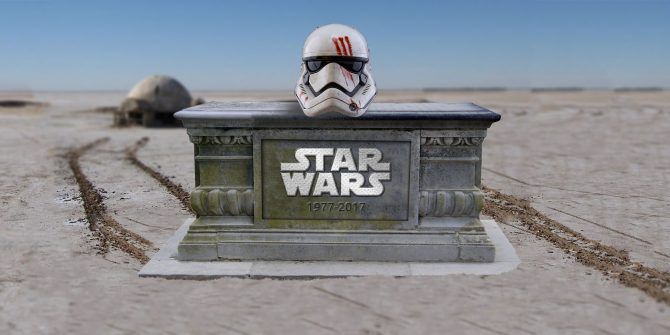
On the Demise of Star Wars

“You were the chosen one”? Or maybe “Strike me down
and I shall only become stronger.”

Forgive the provocative title.  My part of the internet bubble churns with much rage at the current incarnation of Star Wars, and especially at Kathleen Kennedy, at whose feet the perceived “Ruined Forever!” has been laid.  There is much angst and schadenfreude over the failure of Solo, but Solo is the crux of what inspired me to write this, as it’s the first Star Wars movie in a long time that wasn’t an instant “yes,” though not the first Star Wars product in a long time that I had looked forward to, and then changed my mind about.

Then I put this post on ice, because I hesitate to post anything that sounds remotely political in this day and age as discourse is getting extremely divisive and it’s hard to please both sides (and there are sides here) when you say anything, and because I have better things I should be putting my attention towards (the next post is almost done, I promise!). But as news continues to evolve and the corporate narrative of “a few disgruntled trolls vs the Last Jedi” explodes to reveal that the Star Wars franchise is Not Okay, I wanted to get my two cents in, especially given how my blog seems to eat, drink and breath Star Wars.

I hope you forgive this opinion piece.

Star Wars: Ruined Forever

Solo has not done well, and Grace Randolph of Beyond the Trailer sums up most of the arguments pretty succinctly in her video, (she has further news on Kathleen Kennedy; she’s a great one, Ms. Randolph) so I won’t repeat it here.  What I find interesting, and likely true, is her comparison to Batman V Superman/Justice League and the Last Jedi/Solo, in that the backlash of the first resulted in the failure of the second, regardless of the second’s merits.  I’ve been watching this backlash build up for awhile, and not a day goes by where I don’t see a video popping up claiming that Star Wars is dead, or that the Last Jedi is a terrible movie, which clashes strongly with the perception I get from the news or from sites like Wikipedia to the point where I wonder how much of it is real and how much is manufactured, though more on that later.
I feel like the only fandom that hates their fandom more than Star Wars is, perhaps, Doctor Who, which is something I talked about all the way back in the inaugural post about Psi-Wars.  This is, perhaps, just more of the same, but I wanted to tackle some of the arguments that I tend to see, to try to sift out some wheat from chaffe.

The New Star Wars Movies Suck!  Unlike True Star Wars Films!

This is the general thrust of most arguments that I see floating around the internet: once upon a time, the Good King George Lucas reigned over a Golden Age of Star Wars, in which all the films were good, and then the wicked stepmother Kathleen Kennedy took over and ruined it forever.  However, I must say, I find this black and white dichotomy more than a little weird, especially the calls for George Lucas to “come back” and fix his creation.
First off, most Star Wars movies suck, straight up.  Look, here’s all the Star Wars movies I can find, in order of release, with opinions based on what seems to be the general perception of those who dislike the new franchise:
  • Star Wars (A New Hope): Good
  • The Star Wars Holiday Special: Not Good
  • The Empire Strikes Back: Good
  • Return of the Jedi: Good (though a lot of people at the time really hated the Ewoks)
  • Caravan of Courage: an Ewok Adventure: Not Good
  • Ewoks: Battle for Endor: Not Good
  • The Phantom Menace: Not Good
  • Attack of the Clones: Not Good (Saaaaand)
  • Revenge of the Sith: Not Good
  • Clone Wars: Not Good (Though I must confess I enjoyed the series)
  • The Force Awakens: Good (but unoriginal)
  • Rogue One: Good
  • The Last Jedi: Not Good
  • Solo: Not Good
Mileage may vary (I personally liked the Phantom Menace the most of the original trilogy; a lot of people like Revenge of the Sith, I think Clone Wars is underrated; a lot of people might toss everything new into the “bad” bin, while I think people forget the early negative opinions of RotJ, etc), but this seems to be the current internet consensus, and I count 5 good films and 9 bad films.  Of the new films, half of them are “good,” and even if you press the most ardent Disney Star Wars hater, he’ll grudgingly admit that Rogue One “was sorta alright.” So the new stuff hasn’t been all bad, but this idea that Star Wars was good until Disney came along, is just absurd, as is the idea that Lucas “would fix it.”  Lucas has an even worse hit/miss ratio than Kathleen Kennedy, and she’s his hand-picked successor, so no, I don’t think Lucas will “save Star Wars.”

Kathleen Kennedy Ruined Star Wars with Politics
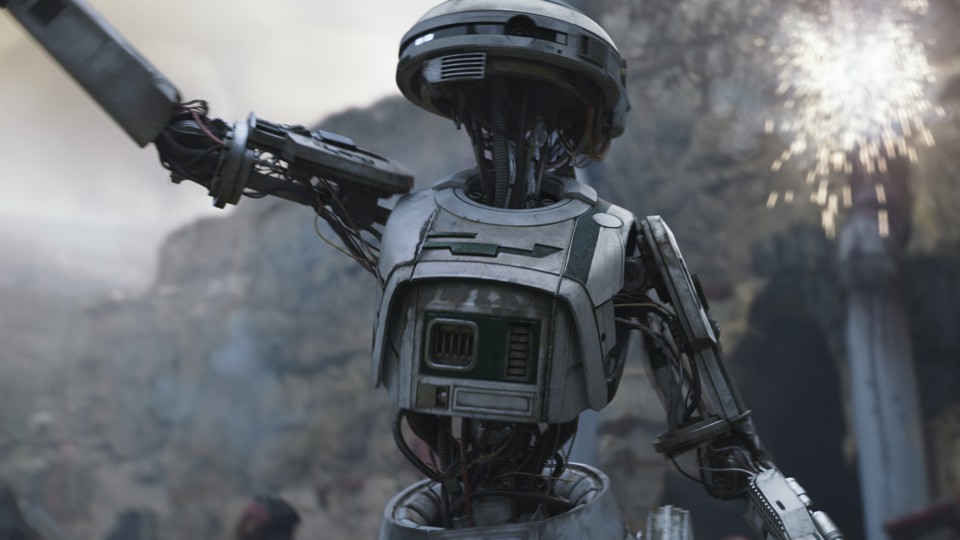
The first woke robot of Star Wars
The argument goes that Kathleen Kennedy, unlike George Lucas, has used Star Wars as a platform for injecting her own left-wing screed into Star Wars.  To this, I say: Have you seen Star Wars?
George Lucas compared the Ewoks to the Vietnamese, heroically defying a technologically superior enemy.  The US would be the Evil Empire in this analogy.  And before you think he cooled down with age, he tossed in a “You’re with us or you’re against us” swipe at George W. Bush in Revenge of the Sith, which in the context doesn’t even make sense (“Only the Sith see in black and white!” oh really, Obi-Wan “The force has a light side and a dark side” Kenobi?).
Star Wars has always been the fever dream of a 1960s activist, only two things changed.  First, George Lucas and Lucasfilms went from ardent hippy activist to more limousine liberal, which is one reason why Kathleen Kennedy is more worried about “representation” than rebellion.  The other, I think, is a cultural shift: Hollywood’s Overton window has moved a lot more than most of the populace.  I don’t think anyone minds the presence of “Strong Women” in Star Wars; Leia has been the prototypical “Strong Woman” of fiction for a long time, but now there’s a much stronger push for far, far more female representation in Star Wars, perhaps to the detriment of the male leads (Finn, at least, seems to suffer at the hands of the writer for no good reason that I can discern other than, perhaps, that the writers don’t actually understand comedy).

But I also want to come out and say that I don’t think it’s the politics that’s ruining Star Wars.  I think it’s a manufactured excuse to justify bad films, and I’ll get more into that later.  How much outcry do you remember about the Jedi Council being lead by a black man (Mace Windu)?  He has his own comic book series, numerous books, features in video games and in the Clone Wars series, and there were some people arguing he should get his own film.  What about female representation in Star Wars? Asoka Tano, a female character, was the break-out character of Clone Wars and nobody called her a Mary Sue, even when she became the Super Special Awesome Character of Awesome in Star Wars: Rebels.  Who was your favorite character in Rogue One? Those of you who aren’t voting for a robot are probably voting for Chirrut Imwe (Donnie Yen!), who is Chinese.  So this idea that “fans” are opposed to “inclusiveness” is nonsense.

It’s not the politics that’s ruining Star Wars.

Kathleen Kennedy hates the fans

 I don’t feel that I have a responsibility to cater in some way [to those particular fans]… I would never just seize on saying, ‘Well, this is a franchise that’s appealed primarily to men for many, many years, and therefore I owe men something.'” – Kathleen Kennedy

This one I think is true, especially given that Kathleen Kennedy is on the record as disparaging a certain segment of the Star Wars fanbase (as well as other writers and directors).  I find her defense, her attitude that she doesn’t “owe” fans something to be disingenuous.  Of course, she doesn’t “owe” people something, she offers a product and you can pay for it or not: that’s business.  But what she calls “fans,” I call her core market, and what she’s really saying is something along the lines of “I don’t feel the need to cater to my core market,” which is a daft thing to say in business.
I’m not saying that it’s wrong to try to branch out, but it’s generally not well advised to so do at the expense of your core supporters.  For example, there’s nothing wrong with SJGames pushing a simplified version of GURPS that focuses on the dungeon crawling crowd: that’s SJGames branching out.  But if they were to drop all support for GURPS to focus entirely on a new d20 clone, that would be a risky move at best.  Star Wars has a core audience that is remarkably faithful, despite their complaints and criticisms, to the brand, and I don’t think it’s wise to antagonize that core audience just because they happen to be white and male.  
That said, I don’t think that’s actually what’s going on.  I think all the “politics” and fan-bashing and such is a smoke screen for poor management, and Kathleen Kennedy isn’t the only one doing it.

Rent Seeking and Circling the Wagons 

“I know there’s a lot of controversy around this game, but c’mon, it’s Star Wars, I was never not going to buy it.” – Tech Deals

I first noticed this sort of behavior not with Disney, but with EA, especially the release of Battlefront 2 (If I’m honest, I find everything surrounding the business decisions that led up to the release of Battlefront 2 fascinating).  First, EA gains sole access to the Star Wars IP when it comes to games, which is typical for EA: find something that people love, and monopolize it.  So, if you want a Star Wars game, you must go through them.  Second, create a game that looks good: appearance is the most important, because it helps with the hype train.  Third, find a way to monetize the hell out of it, because you’ve got a Star Wars game, people have no choice but to pay, and then brag about it to your investors, to get more sweet investment capital.  When the fans inevitably complain, divert them with empty promises that you’re “listening,” and then wrap yourself in a cloak of some form of morality.  For example, they had a female lead character, and the actress acted as their spokesperson, which gave them the cover of “we’re supporting feminism;” to suggest that they’ve listened to the fans, they employed John Boyega, the actor who plays Finn, to talk about how much he liked the new Battlefront 2.  When criticism arose, they painted it as the rantings of an unreasonable, entitled minority, and fended off criticism of lootboxes and such by wrapping themselves under the mantle of “Free market!” and “Innovation!” But in the end, everything circles around extracting cash from people, nothing else remained.
I think the same can be safely said of Disney’s handling of Star Wars.  If Kathleen Kennedy were really such a feminist, then why has she hired only white, male directors?  If she’s so racially tolerant, then why do black characters get such poor treatment in her films?  If she hates the fans so much, why does she pepper so many of the Star Wars films with so much fan service?  If she hates Star Wars, why are all the films coming out right now such slavish remakes of the original trilogy, or direct references to the original films? Why has she not yet branched out into something truly new?
I think the truth is that making really good fan-based franchises is hard.  Of all the cinematic universes, only one has really been a success: Marvel, under Kevin Feige.  All the rest have failed.  There may be numerous reasons for this, but one take-away must be that it’s difficult, and Star Wars is going to be no different, because even the stuff most people currently agree is “good,” like Dave Filoni’s Rebels, or Rogue One, are still somewhat controversial (and largely seem to be considered good more in contrast with the things fans consider “Bad”), and the stuff most people agree is “bad,” like the prequels or even the Last Jedi, are equally contentious.  If you’ll pardon the electoral analogy, it’s not really red vs blue but a sea of shades of purple and general discontent, and that’s hard for the best people to navigate, and Kathleen Kennedy seems to not be the best of people.
So instead, we get the easy outs.  Ms. Kennedy just grabs directors and makes films, and when they become too different, she fires the directors and makes them “safer.”  When people criticize her work, she falls back and hides under the mantle of morality: if you hate her movies, you’re part of an “the toxic fandom” and you’re a bigot and a bully.  For me, this is a bridge too far, and really the core of this rant: you will never improve if you cannot take criticism.
I get criticized all the time, sometimes unreasonably in my opinion.  There are people who want Psi-Wars to be something that, in my opinion, it was never intended to be.  I see people who argue that it’s too like Star Wars, and that it’s not like Star Wars enough.  I get people who say they would do things completely differently.  But for me, these are not attacks, but valuable feedback.  Some I can use, some I cannot.  They give me a sign of where things are going, how audiences are shifting, and what I could do better.  Where are things too complicated? Where are they confusing?  What could I be doing better?  You have to pick and choose your criticism, and you cannot bow to what each and every person says, but feedback that is honest is feedback that is valuable.  You cannot learn without it.  Those who attack their critics will never improve.

This seems to be a trend, especially with poorly received films with strong female leads (Lady Ghostbusters, Oceans 8, the Star Wars franchise), but this is a mistake.  For an example of a franchise that took criticism to heart, see the Thor: Ragnarok.

Making a Better Star Wars

It seems like there’s a shake-up already in the works, though not before we get Episode IX.  What will happen? I don’t know, but weaker franchises than this have survived terrible treatment.  Star Wars itself is probably predated only by Star Trek for a franchise beloved by fans but abandoned or mishandled by the entertainment industry.  Star Wars endured all the years of neglect from RotJ to the prequels through books, comics and games, and it survived the prequels, and it will survive now: even if you don’t like the films, check out the new TV series or the animated series.  While there are precious few video games (because EA has seemingly forgotten how to make video games, and killed the lonely one Star Wars video game that was set to release), there’s still RPGs, books and comics being made, and some, I hear, are quite good.
Were it up to me, I’d encourage them to set aside this “Legends/Canon” split, or at least weaken it.  The Marvel films drank deep of their comic weirdness and embraced their legacy; they didn’t precisely copy everything, but they understood they had a huge well to draw on and did, and as a result, each film, while formulaic, has something interesting enough to offer that audiences flock to theaters.  By contrast, Star Wars fans feel like they’ve seen the films already (“The Force Awakens was just a New Hope reskinned; the Last Jedi was just the Empire Strikes Back reskinned, and Solo was so predictable that Red Letter Media released a Solo Trailer reaction video before the trailer released, and then edited in the actual trailer afterwords, and got it spot on”), and while I’m not sure that’s entirely fair, that perception makes going to the theater less of a priority, and that’s not what you want from your audiences.  Imagine if Lucasfilm released a KOTOR Star Wars film, or one featuring Thrawn, Mara Jade, the Yuhzon Vong, the Hutt Cartel, Darth Nihilus (or really any Sith from the past), or worlds like Corriban, Ryloth, or Tython?
But what makes me saddest about watching and listening to people talk about Star Wars is that they seem to have forgotten what came before it.  I’ve talked about how much Star Wars has borrowed from, for example, Dune, Flash Gordon, Foundation, samurai films and many more.  If you’re desperate for inspiration, why not draw from those films?  Why not borrow from history and instead of using the First Order as a way of replacing the Empire, why not look at the fracturing of the Empire and its internal wars and its warlords and the efforts of the Republic to reconquer the galaxy with the struggle between their ideals and the hard realities of war.  Want to be inclusive? Have General Leia in charge of everyone and put Gwendoline Christie in a role that doesn’t completely waste her talents.  Bring in Thrawn as one of said warlords, and Mara Jade as your dark and terrible menace, the Emperor’s Hand that the Republic fears.  Give a callout to the Jedi Academy series, with some of Luke’s students trying to help the Republic.  Give us a Dune-like world with a warrior-people who follow a jedi-like creed (the Guardians of the Whills?) who must be talked into fighting back against the nearby warlords or against the sweeping pirate menace. You might even draw from Seven Samurai, by having seven heroic characters gathered to defend that one world. There’s such a rich tradition you can draw from, and it’s such a waste to see it lie fallow.  People are forgetting their history.
What is killing Star Wars isn’t female leads, it’s not politics, it’s not toxic fandom, it’s just bad films and an inability to listen to criticism.  It’s an institutional problem, one that seems fairly ingrained into Lucas Film at this point, so I don’t see it changing soon.  But Star Wars is too beloved to die.  It’ll just do what it did through the 90s and go quiescent for a time, at worst.

On the Demise of Psi-Wars

So given the rancor and frustration around Star Wars, do I fear for Psi-Wars?
No.
I’m honestly more worried about my time and flagging interest in the series, though my backers still seem firmly committed to the cause, and I’m rounding a corner on a particularly sticky issue.  But even if Star Wars dies, which it won’t, I still wouldn’t worry about Psi-Wars because, despite much nudging and winking, it isn’t Star Wars.  That rich tradition I mentioned above is something I definitely draw on for my work, and other works besides, and those works still live on. 40k continues to churn forward, Dune has a new movie in the making, the Metabarons has a new series focused on the Metabaron, a new season of Killjoys is on the horizon, we can expect to see a Guardians of the Galaxy 3 (assuming they survive the turmoil of the Infinity War!) and people still love pulpy Space Opera, even if they sometimes forget it’s more than just Star Wars.
So I’m still here, and I’ll still be here when all the turmoil has died down and this Star Wars mess has sorted itself out one way or another.

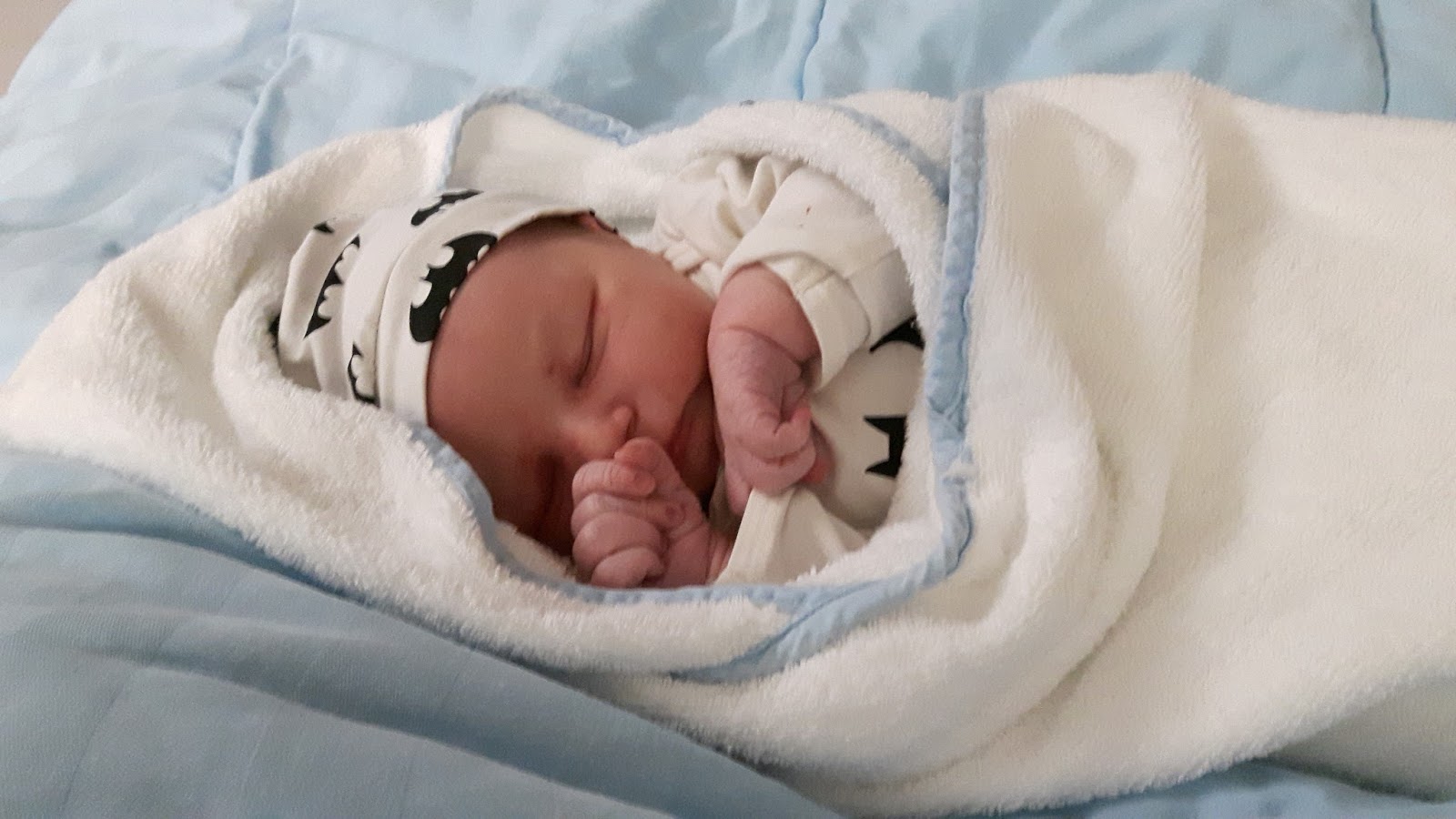
Presenting Theodore Cayden Dover

He was born April 21st, 2017.  He is the first born son of the first born son of the first born son of the first born son of the first born son of Flix Dover, and the third in that line to bear the name Theodore. He’s also super cute.

Obviously, as a first time dad, I have less time for things than I did before.  I don’t know what that’ll do for the blog, but it’ll be a little touch and go for a bit.  I appreciate your patience.

Mailanka Rants: It's okay to like bad movies

So, a friend recently linked me to this guy’s channel on movie editing and criticism, and he gets into some pretty deep stuff, but the one that leapt out at me, that I felt demanded greater discussion, was this video.  The question he is asked is this:

Jurassic World: I liked the movie because it felt like a bad B-movie.  Do you think movies can be genuinely good because of their “badness”?

 To which Folding Thoughts stumbles a bit, because how can you call something good because of its badness?  Then he begins to discuss genre, but I think his initial confusion signaled something important: the questioner framed his question badly, and I think I know why.

The question isn’t really “Can bad movies be good?”  but “Is it okay for me to like a critically panned movie?”

The answer is yes.  It’s also not the point.

The Emperor’s New Clothes and Status Anxiety

Perhaps I’m just projecting, but I often see this sort of question crop up, where someone will criticize a movie and those who genuinely like it will bristle and rise to its defense.  They might even hurl abuse at the critic.  Alternately, someone will pretend to dislike a movie that everyone else dislikes, because they do not want to seem to be foolish. This last, this appearance of foolishness, I think, drives the question.  Our audience member likes a film that the critic thinks is very bad.  Is he, then, a fool?
As a species, our desirability as mates is often tied to how smart we are and how much status we have, but these things are fundamentally abstract and hard to pin down.  If we want to know whether you or I are stronger, we can see who can lift the heaviest object and then have an objective notion as to who is stronger.  But what about who is smarter or who is “better” as a person, more virtuous and wiser?  Maybe you’re more feminist than I am, but is that actually virtuous?  Perhaps you know more scientific trivia than I do, but does that really make you smarter?  We don’t know, because it depends on too many other factors, many of which we do not (and maybe cannot) know.
This struggle drives the story of the Emperor’s New Clothes, where the con artists argue that they’ll create a garment so fine that only the wisest and best of people will be able to see it.  This highlights our insecurities: we secretly fear that we’re “not good enough” and we fear to admit this.  What if you’re the only person who cannot see the Emperor’s New Clothes? If you admit it, then people will think you a fool, and we’d rather secretly be fools than admit that we are fools.
So let’s get this out of the way right now: are you smart?  Are you high status?  Chances are, if you’re reading this, you’re probably of about average intelligence, like everyone else.  If you are smarter or stupider than everyone else, chances are that it’s not by very much, because intelligence lies on a bell curve: most people are about equally smart.  Are you high status?  That rather depends on what you mean.  Chances are, if you’re reading this, you’re not desperately poor (by which I mean, you’re not someone starving in a developing country), but you’re probably not the king of the world either, just from the sheer fact that most people are not the king of the world.  Chances are, you are not Bill Gates, Vladimir Putin or Donald Trump.  Chances are, you do not have millions of dollars or the  regular opportunity to sleep with super models..  Chances are, you are average (for someone in a  country with regular internet access and the sort of free time necessary to read blogs).
But the cool thing about intelligence and status is that they can improve.  By “intelligence” we often mean “knowledge and wisdom” and we gain those by learning.  Status often reflects the results of our knowledge, as we put lessons into practice and expand our personal power.  This is a key distinction, and why our vlogger gets flustered, because he’s talking about a completely different thing than the audience member.  The latter is seeking justification for his taste, while the former is trying to improve your knowledge on film making.

“Objectively good.”

Essentially,all models are wrong, but some are useful.
-George E.P. Box

Folding Thoughts mentions the phrase “objectively good,” which is a troublesome phrase.  People will begin to discuss personal taste and such,but he’s likely not concerned with this for the same reason I often am not when I discuss “how you should do X”, not because we’re stating that we know what your taste should be, but because we’re working from a model, and the purpose of that model is to entertain you.
Certain things generally work better than other things.  Do you prefer toast or bread? One of my favorite sayings is “With so little effort, bread and water can become toast and tea,” which is lovely for reasons I’ll get into some other time, but it assumes that toast is better than bread.  Why is that?  Well, the heating of the bread both caramelizes the natural sugars in the bread and creates a maillard reaction with the proteins, both of which are flavors that humans have evolved to love, creating a super-stimulus of better bread.  It’s why you like the thin crust on the outside of a well-seared steak, or why people love fried chicken, and its the basis for why gravy is so good (if made properly, from fond).
But some people like untoasted bread.  In fact, some people like bland, spongy, white wonder-bread, preferably with the crust cut off.  Are they wrong?  Are they stupid?  Well, no.  Heck, I’ll eat straight bread dough and like it. So what’s wrong with us?
Some of this is a matter of taste.  There’s a nice TED Talk that neatly skewers the idea of the “best” of anything (“There is no best spaghetti sauce, there are best spaghetti sauces”).  Different people want different things, or the same person wants different things at different times, and this is part of what Folding Ideas means when he dives into genre: what you want out of Pacific Rim is different from what you want out of Citizen Kane.  What makes one a good movie would make the other a bad movie.
More than that, consider the intent of art.  An artist attempts to convey an idea while entertaining you.  A chef tries to make a meal you will enjoy.  If you liked what the creator gave you, then the creator succeeded.  Period.  The point of a model is to have a mental grasp of what people will probably like.  If you have guests coming over, you’re probably better off feeding them toast and tea than bread and water, as in you’ll have a higher probability of pleasing them, and so we say that this is “better,” not because toast is fundamentally and always superior to bread, but because a loose collection of statistics and experiences have given us this rule of thumb.
When a film critic like Folding Thoughts expresses what generally works and what generally doesn’t, He’s not staking out critical ground and saying “Only fools like this”, but rather, he’s pointing to techniques that work and do not work.  If you’re going to make a movie, you’re probably better off listening to him than you are discarding his advice.  But if you’re an audience member, his advice is mostly good for getting a sense of whether or not to take a risk on a movie, not whether or not you should like it.
If we want to discuss flaws, of Jurassic World, I can totally cite some.  Given that the original Jurassic Park was a celebration of what we knew to be accurate about dinosaurs, why aren’t we updating the series with the latest paleontologist finds (such as feathered dinosaurs)?  What’s with the excessively long death scene of the children’s care-taker?  It seems almost pornographic to have that death go on and on in that daisy-chain of murder. And why is it relevant that the monster is “part velociprator?”  Humans aren’t part velociraptor yet Chris Pratt can control them and we spent the first half of the movie establishing that a relationship is vital to controlling them, evidently unless you have the right snippet of their DNA in which case you get magic powers over them.  And then, why do they suddenly become good at the end?  Nothing changed, as far as I could tell, other than that the writer first wanted a cool human to control velociraptors, then scary velociraptors killing people, then finally an awesome scene of velociraptors killing the big monster.  And what does it say about the themes of the film when we have a strong working woman who is shamed for her lack of attention towards children and her romantic frigidity towards a man, only to have it melt when he rescues her? 
At the same time, I definitely enjoyed Jurassic World more than I thought I would.  I liked the forays into genetic engineering and the creation of monsters from a pulpy perspective.  I’m also more politically conservative, and thus I’m less interested in feminist themes, and I must admit I quite enjoy the sight of an attractive woman fleeing monsters in a jungle while in heels (I also very much enjoy those old-time jungle movies where Tarzan rescues Jane from whatever, and this movie certainly had that vibe, which probably part of what appealed to our audience member, what might be one of the things he meant by “b-movie”).  I also found it visually exhilarating, and it tugged on some nostalgia for the original Jurassic Park.  So I liked it.  It worked for me.
Could it have been a better movie?  Sure.  And it’s important to see how, to take lessons from things that didn’t work or were unnecessary.  Perhaps the movie says something about the continuing appeal of a damsel in distress, if done right (and murdering a damsel in distress over several minutes is probably not an example of “done right.”).  Did the movie really need villainous velociraptors?  If you want to have a discussion about man’s relationship with dinosaur, why not go deeper into that, in a more consistent way, instead of making it the side-show to the film?  In fact, if you dive into what Folding Thoughts has to say about films, you’ll find most of his criticism has nothing to do with what you know or understand about film-making.  He’ll dive into the details of film editing, for the most part, much of which is very new to me.  By listening to his criticism, I’ll learn more about what would make a better movie than I did before!

I thought this was an RPG blog?

What I want you to take away from this is the realization that the point of “rules” and “what’s a good movie or not” aren’t there to tell you what you’re allowed to like and what you’re not allowed to like.  They’re there to advise you on the creation of quality content, and to warn you away from content that’s probably not great.
As a role-player, you create content.  We know GMs do this, but even players do it.  We have whole books dedicated to “doing it right” or entire swathes of criticism about which RPGs are good (GURPS is one, BTW) and which are bad (Rifts, totally Rifts).  These offer guidelines and observations.  Does it mean you and your group are “wrong” for “enjoying bad games” or for “playing wrong?” Of course not.  If it works for your group, it’s fine! The advice might be wrong, or maybe it’s trying to take your game to the next level: The games I ran as a teenager worked.  The games I run now are better.  They have tighter flow, better characterization, smoother mechanics.  It’s not a binary question of good or bad, but a messy graph with an axis of “better” and “worse” crossed with axes of taste, genre and interest.  “Quality” is a rich, complex map that’s difficult to navigate, and criticism offers some useful directions to explore.
Remember when I discussed how intelligence and status are both abstract and can be improved? If you take criticism personally, if you curl up defensively against criticism to protect your fragile status, then your status will never improve, and you’ll never grow as a person.  If you learn to unclench, if you realize that criticism cannot hurt you, only improve you and you use it to improve yourself in your own way, your intelligence will grow, and your ability to make things happen (your power) will also improve, and people will appreciate you more (that is,you’ll gain more status). Good criticism is not an attack, but a gift!

Burn Notice vs Covert Affairs

Burn Notice
A former CIA agent is mysteriously dismissed from his job, burned, and suddenly finds himself on the run from enemies he didn’t know he had, trying to uncover who burned him and why, with only the help of his extensive experience, a few old contacts, and a really cool car.
Covert Affairs
The girl next door with a knack for languages decides to serve her country by joining the CIA.  She quickly finds herself in over her head, but adapts quickly to the demands of the job with the help of a blind former field agent and her mysterious lover who vanished one day (and seems connected to the CIA in some fashion).
Both shows by USA, on USA right now, both solid shows about spies, and yet they have marked differences. The first is clearly meant for boys: It constantly shows flashes of hot chicks in bikinis, there’s lots of explosions, the main character is a tough loner that doesn’t need nobody (and yet has good friends, including the gorgeous girl who desperately wants into his pants and the drinking buddy), they drive a totally cool car, and Michael solves many of his problems with tactics, forethought, and sweet gadgets he invented himself by working in a garage.  The second is clearly meant forgirlss: It’s about a babe-in-the-woods character who needs to learn to adapt quickly.  There’s an interesting male character in every episode, and she tends to succeed by understanding the people involved and navigating a very tangled set of relationships in storylines that seem ripped from the pages of romance novels.
Bee and I enjoy both, and it certainly confirms my thoughts on spy series appealing both to men and women, since they contain elements that stereotypically fascinate both genders.  They also highlight, I think the difference between genders when it comes to roleplaying… and the common ground they usually find.  After all, everyone likes relationships, even if they approach them differently, and everyone likes totally sweet action, again, even if they approach it differently.  Mainly, the difference between the two comes down to angles and perspectives.
Personally, though, I’m hoping for an inevitable crossover ^_^

Subtext and the Art of Painting Without Words

Let me begin with two stories.

Recently, I turned my Arts of Rhetoric posts into actual lessons at recent Tea@Knights, which turned out to be quite popular.  Marco, in particular, enjoyed it.  He told me that he’d long had a dissatisfaction with how flat some scenes felt, and had begun (without knowing it) practicing elements I discussed, like “Show, don’t tell,” and “Active Voice,” only he called it “Painting with Words.”  Like me, he felt that showing people the world on a visceral level was a vital element of running a good game, that you had to let people see what the dungeon looked like, and that it wasn’t enough to tell them about it.

Further back, back at the Summer Weekend, returning to Desiree’s Steampunk Gypsies, I had another interesting experience, though it had little to do with Desiree herself.  I played this conservative, rugged gypsy with a horse, who (obviously) fell in love with a dancer gypsy.  Of course, he never claimed to be in love.  He worried too much about his kin to take the time to romance this beautiful girl. Instead, he taught her to ride horses, revealed his dream of rebuilding a whole herd of gypsy steeds, and worked on getting his brothers married while ignoring his own needs.  Every player could see that my character and she were madly in love, but neither of them admitted it, neither of them actually said those words.

In contrast, we had another player, and I’m not condemning his approach, merely highlighting the difference, who played a suave, sexy gypsy dancer-boy, who tried to sweep this innocent and younger girl off her feet.  After a dance, he said (and I quote), “I tell her, without sounding like some middle school kid, that I like her.”

Both of these stories touch on the truth that a story is about showing people what’s going on, rather than telling them.  In the first romance, we showed the audience everything they would see: awkward moments between two passionate people, the way a proud man refused to admit his need but still cast longing glances at the beautiful girl, or the way she tried to dance for him even while dancing with another man, or the way watching her dance with another man made him lose his concentration while playing his guitar.  In the second romance, the storyteller informs the audience “Hey, these two people are in love.”  Personally, I agree with Marco, and I prefer the former approach to the latter.  I feel it’s better to show, rather than tell.

While discussing description, Jozef touched on this very thing when he said “How to do you make something scary without saying that it’s scary?”  One of the key elements of Marco’s “Painting with Words” is that you don’t come out and say what things are.  Instead, you let the player draw his own conclusion.  When you describe a man as “Looming,” and “Dark eyed,” with a “sinister smile,” you don’t need to say “And he’s scary.”  The player is capable of deciding that for himself, and his scariness is rather obvious, if you paint the right picture.

But this applies to broader concepts as well.  When you begin to discuss situations, you can do so without saying “And this is going on.”  You can simply outline events: A boy brings a girl flowers, a bright smile on his face.  A girl laughs, covering her mouth.  The flowers end up on the ground, petals broken and drifting on the wind as the boy walks away.  The girl’s laughter fades as she watches him walk away, tears glistening in her eyes.  We don’t know what happened.  We can guess.  We might want to know more, but it’s more interesting than saying “A boy thought a girl loved him, and she did, but she feels they cannot be together and so broke his heart to chase him away.”

People like games.  People are clever.  You don’t explain the punchline of a joke to them, you let them ferret out the implications of your words.  Likewise, you don’t start the murder mystery by explaining whodunnit.  You don’t even point out the clues.  You let the reader realize what’s important and what isn’t and then put together the truth.  People don’t want to be told that two people are in love.  They want to see it, they want to guess, they want to gossip based on events.  People want to exercise their brains.  In many ways, the whole point of role-playing games is the art of turning abstract situations (“Three medieval warriors face ten ravening monsters under the ground.  What happens?”) into an immersive scenario where players lose themselves in what’s going on.

And that requires less, not more.  Sometimes, what you don’t say is more important than what you do.  Sometimes, you must paint without words.  Leave things unsaid, unspoken, and merely imply them with your silence.  Rather than show people something, refuse to talk about it and create powerful implications by describing everything around it.  Just as a tough, lone-wolf guy might never admit he’s in love, you might never actually describe the feelings involved and let the players guess (Oh, in WotG, we had one of those great, unspoken romances and the player in question was so angry when our Secret-Art-wielding Scholar tried to force them to talk about it…).  Leave gaps, and let the players fill it in with their own imagination and speculation while smiling and listening.

Real life doesn’t hand you answers.  It merely has events you witness, often without proper context.  The closer a role-playing game is to real life, the more immersive it is.  The next time you want to run a romance, I encourage you to not describe the feelings of those involved and merely imply them based on their actions.  The next time you run a horror, consider refusing the describe the monster beyond the evidence he leaves behind (the gashes in the victims, the sickly sweet smell that foreshadows his attacks).  Remember to show, rather than tell, and remember that some things you neither show nor tell, that you leave unsaid, that you merely imply with everything else.

Subtext.  Painting without words.

Allegria is already pregnant

I just finished the Spring Weekend, and I’ll tell you more about it when I’m better recovered.  Spoiler: It went great.  Probably one of the best weekends that I remember.  But with the weekend over, and Cherry Blossom Rain revealed to the world, it’s time for me to let that field lie a little fallow, lest I burn out, and to focus on my next big project: Extending Lady Blackbird for Bee, her birthday present.

Bee plays very differently than I do, and so expanding Lady Blackbird involves thinking very differently than I generally do.  What does this have to do with Allegria and why she’s pregnant?  Let me explain:

Desiree ran a game about “Steampunk Gypsies.”  I’ll tell you more about it later, but for now, I want to tell you what I discovered after the game was over and I peeked at her “notes.”  She had a few pictures of NPCs, a list of a few names, and a small list of events, including “Allegria is already pregnant.”  Allegria was one of the NPCs, a beautiful dancing girl who fell for my character, and at no point was she pregnant.  So why had she written this fact down? Because, as Desiree explained, she didn’t know how the story would play out until she actually began to run it.  She had listed numerous little “ideas” to draw inspiration from on the spur of the moment.  Perhaps a romance bloomed with Allegria too quickly and she needed conflict, and thus, it would occur that she was already pregnant.  Or perhaps Desiree would need some other complication to keep the game spicy, so she’d draw on something else.  Or perhaps, as was the case this time, the player would feed her a neat idea that she could run with.

In some ways, as I said to her, that’s really not different from how I run things.  She notes interesting ideas as a sentence, I note them as a full paragraph, but in retrospect, I don’t actually think that’s true.  When I put together a game, I envision it in great deal.  I can see scenes playing out in my mind.  For example, I ran a scene in Cherry Blossom Rain where the Witch of Jukai offers to “free” Yukiko from the terrible grasp of Ren.  I could see her fox, could smell the scent of her swamp, see her j-horror features looming in Yukiko’s mirror.  I write those paragraphs because I can see them, like a movie, and I need, very much, to make those scenes more likely, more probable.  I come in the game knowing, more or less, what I want.  I still need to be surprised, I still need the game to flow and change based on what the players do, but those scenes often drive my inspiration like no other source.

What she does, what Bee does, is ultimately different, I think.  I believe they simply walk into a game with no expectations.  They have a premise and little else, and what happens, happens.  They want to have a fun game, and like me, they want to drive the action, though they drive it less towards actual, concrete scenes and more towards general themes that they enjoy: Desiree drives her game towards romance and tragedy, and Bee drives her game towards action and adventure.  What they need isn’t details, but inspiration that they feed into the game like one feeds tinder into a dying flame.  They guide the flame, they stoke it, but they don’t truly control it.

Returning to Lady Blackbird, what I think Bee really needs amounts, essentially, to a giant book of lists containing things like “Allegria is already pregnant.”  Lady Blackbird, in particular, excels at this.  The game master needs only supply the difficulty level and, if necessary, the consequences of the players’ action.  It presents those difficulties in the form of story-ideas: “A sky-squid attacks! Difficulty X to defeat it, with the danger of being lost or wounded if you fail!”  It gives you a difficulty, yes, but mostly, it just suggests that Sky Squids exist, and offers the idea that, perhaps, one might attack.  Instantly, you have a potential story idea, one that’s useless for many GMs, but one that’s rich fodder for one like Desiree or Bee.  I need more, but they need less.  Simple, small and beautiful, little seeds that bloom into full stories.

That’s what my book will be: Little seeds.

HotBlooded: Release Day

I’ve heard nothing from my editors, meaning that there’s no disaster in my material, and that means: Release day. I have a few things to work out, but I’ll be editing this post with constant updates.  Because I know you guys are totally watching this blog breathlessly.  Look, I’m excited, awright?  Awright.

^_^

Release day!

EDIT: Character sheets separated, and PDFed.  Cover Sheets complete.  Waiting on word about release.

EDIT: They want to have a meeting first.  Ok.  But that means we won’t see release until sometime after 5:00 pm 😦

EDIT: They’ve decided they want to send all the sheets themselves, so I went to bed.  Got to zip them all up now.  It’ll be a bit.  Hopefully today, though.

EDIT: It should be out!  Enjoy!

Back from the Dead (Again)

I think I mentioned that I was fighting computer troubles before.  They finally metastasized into a full-blown crash (helped by human hands when a well-meaning Bee did exactly the same thing that lead to the crash I created the last time. Now we both know that’s a bad idea).

Fortunately, I learned a lot from the first crash, and since it had been flailing for a week, I had everything prepped and prepared, and so when it finally collapsed, I had it up and running again after a single night of work.  Better than I expected!  And no real loss of data (though I seem to have lost a CD I bought from iTunes, as it seems they don’t “keep” them the way pdf sites or Steam does.  Might think about that the next time I buy from them…).  Anyway, it’s good to be back.

After Action Reports: Your thoughts?

I’ve found some RPG blogs that simply sum up a previous session quickly, a few brief notes on what occurred, perhaps to refresh memory at a later time, or to give outsiders a little glimpse of what they’re doing.  Also, it’s pretty easy to do.  On the other hand, some seem to go all out, not just giving some description, but lavishly describing everything.  When I wrote an Actual Play of Slaughter City with such detail, I received a huge response from those reading it (but, due to the weight of it, never got to the second, especially with the fact we never got past three sessions).  I haven’t tried that here because I thought nobody wanted to read pages of After Action Report… but perhaps you would like to.

So what are your thoughts?  Like ’em short and sweet, or do you want to read depth and detail on what other people are playing?  Leave a comment!