The Problem with Poison

I want to complain.

I’m winding up Chivare and the last college, Primal Sorcery, which integrates certain aspects of herbalism/alchemy for our Lithian Witches and, pleased with the result, I began to work cautiously on some Wilwatiktan material (an unfortunate computer crash wiped out some of it, alas), and I began to work on poisons when I noticed something.

Poison is crazy.

My GM wouldn’t let me put cyanide on my rapier

Autumn Rain

I began by cataloging all of the various poisons to decide what precise toxins would show up in the Wilwatiktan environment when I noticed that some of these poisons are just insane. Sure, I expected something like Utra-Tech nerve poison to be dangerous. I didn’t expect primitive poisons to be absurd. Does anyone actually read these?

Let me explain what I mean. The Death potion, the most dreadful and terrible poison available to an alchemist, inflicts 4d toxic damage unless you succeed at an HT roll, in which case it’s so bad it still inflicts 2d toxic damage. TO me, this is the benchmark of a dangerous alchemical poison.

Cyanide, by contrast, deals 4d toxic damage with no roll to resist. It is more dangerous than the Death Potion.

Cyanide be like…

I’m not sure what to make of this. Presumably, if you’re investing deeply into malicious forms of alchemy, it’s to trade in more lethal poisons than what one can find in nature. How are we to fix this?

Continue reading “The Problem with Poison”

The Greatest GURPS Selling Points

So the Cabal of Bloggers got together and decided a topic to discuss, and it was “power-systems you’ve reworked.” And, uh… well, if you’re on this blog, you’re probably very familiar with the reworked version of Divine Favor for Psi-Wars called Communion. So I don’t especially feel the need to discuss it further, as there would be little new to discuss.

Instead, I want to take a runner up: what are GURPS’s selling points. Someone argued this was the same as “What do you like the most about GURPS” but I don’t actually agree: one is subjective taste, and the other is an marketing calculation. Now, I’m no expert at marketing, but I’ve picked up on a few things and I do work in businesses that think about this sort of thing a lot, so I thought I’d offer some thoughts on what I think are GURPS’ strongest selling points, as in the reasons people buy GURPS.

Continue reading “The Greatest GURPS Selling Points”

“All your NPCs are Sexy!”

So, this weekend I ran another session of Wanderers of Dhim, in which I explained that a certain character “was sexy” and then proceeded to describe her teeth and her thick, blood-red tongue in enormous detail (which, to me, should be a clue that she’s not actually sexy, and that there’s something wrong going on, which I think most of the players got), but I got this in response from one of my players, which touches on a bit of a peeve of mine.

Now, let me be the first to admit that I do like sexy characters. Naturally, I’m a fan of sexy female characters, as anyone who takes more than a passing glance at my Psi-Wars work can no doubt tell, but I also happen to really like sexy male characters, and I get rather frustrated when the male characters don’t get to be impressive or good-looking. Masculine beauty is a real thing, and I appreciate it when it gets a chance to shine in media, whether that be a film I’m watching or a game I’m running. So, yes, my NPCs do tend towards “sexy” where possible.

But my peeve is the notion that “all” my characters are sexy, especially the female characters, because people seem to have no idea how hard it is to describe a character without making them sexy, especially female characters. I go out of my way to include normal looking, or less attractive characters, and those very characters often get pegged as “sexy” even when I don’t intend them to be. This post is going to touch on why that happens.

This is going to be a very subjective post, because I’m going to discuss the psychology of the spoken and the written word, descriptions, and the response of the audience to these words. It will especially touch on the “theater of the mind” which is not just very different from person to person. What one person sees when I say “princess” or “knight” will be quite different from what another person sees, and a “generic shopkeeper” will look quite different to everone. Some people don’t even have a theater of the mind. I will ask some people to describe their character, and many people have no idea where even to begin, and when I say “Just tell me what you see in your mind” a lot of people still come up blank. Imagination is a skill, which some of us have developed more than others. So my reaction to the spoken and written word might not be the same as yours, and you might find yourself going “Huh?” at some of my post. Nonetheless, based on my experience, I do find the following to be generally true.

Still, it must be said that the technique I’m going to describe below mostly “holds up a mirror to the audience.” Unless the GM goes out of his way to explain that a character is, in fact, sexy, and you keep seeing sexy NPCs everywhere, it might say something more about you than the GM’s intent. As a GM, though, we can be aware of these tendencies, though it must be noted that these tendencies are deeply cultural, and different groups will react differently to them.

Continue reading ““All your NPCs are Sexy!””

Migration Woes: Mailanka's Musing is Suspended

 My apologies for being behind on my “the State of Psi-Wars” post, and pretty much everything else, as “vacation” has been rather intense this year.  But I tried to use the time to finally migrate the blog away from blogger.  After looking at a bunch of complex solutions, I decided to keep it simple and try WordPress.com.  I would do a simple import of my blog posts on a free version, see how it felt, and then if I liked it,  upgrade.  I had it imported, it looked okay, and it just lacked some functionality.  Given that I’m pretty sure I’d be crucified for not having the index up properly,  I wanted to find a way to implement a sidebar similar to the one Mailanka’s Musing already has. I couldn’t get that to work, so I parked it and went to bed.

When I woke up, my new blog was suspended.  Why? For violating terms and services.  Which one? Well, I could message them if I felt this was in error.  I scrutinized the terms and services and found nothing that I could think of as a violation (this is hardly a porn or gambling blog), but why should I guess at why they banned me?  Shouldn’t they tell me? If blogger didn’t ban me, why did they? So I sent them not one, but two messages. Nothing back.

And to think they want $50 a year for the privilege of throwing me off their platform with no explanation.  This is why I didn’t pay upfront.  I wasn’t even on there for two days, and literally the only content there was the content you see here on this blog.

I cannot recommend WordPress.com.  We’ll see if they reply.  Perhaps it’s “just a mistake” but I don’t think I’ll be using their services.

After stressing out about it to a friend, he suggested I park the migration.  Any existential threat posed by Blogger itself for an arbitrary ban like this (which, to be sure, is keeping me up at night now, because if WordPress.com somehow found something objectionable, is there something Blogger would find objectionable?) is mitigated by the fact that I’ve backed up the blog several times, and most of the posts still exist as raw files on my computer (not all of them, but I could completely recreate, for example, the wiki if I had to).  He pointed out that with all the other stresses in my life at the moment, if blogging relaxes me, to just focus on that, and worry about the migration when I’m more relaxed and have more room to maneuver.

So I’ll park it for now, unless WordPress.com returns with a sufficiently humble apology, though I’m not holding my breath on that (my experience watching the tech world is that sites like these just let the algorithm rampage across their platform, and if hundreds of innocent users get caught in the crossfire, well, they have tens of thousands, so they don’t care). Even if they get one, I expect I won’t use a service this shoddy and this prone to failure and miscommunication. So I wouldn’t expect to see a migration soon. My eventual solution will likely involve either self-hosting, or hosting on a remote server with a self-configured version of wordpress; the latter is less vulnerable to banning because the configuration will just exist and I can just find a different host if there’s yet another rogue algorithm.

Still, I needed to vent my frustration. Happy New Year!

Is Side Effect just Better than Affliction?

As I am wont to do, I’ve been tinkering with some psychic powers behind the scenes, pondering how best to use them. In particular, I’ve been thinking about Christopher Rice’s Reaving Hand and Mental Stun.  Both of these are handled as Afflictions, but afflictions create an all-or-nothing effect.  Either you succeed and your opponent is stunned, or you don’t, and they’re not.  Swapping it to an innate attack with a Side Effect creates more of a grey area, where your attack will have some impact, even if it doesn’t afflict your target outright.  I did this with the neurolash effect: it now deals about 1d fatigue and has Stun or Pain as a side effect, because this better reflects what we often see in cinematic fights against a neurolash weapon, where the hero heroically resists the effects of a pain whip or a stun baton, but is clearly being weakened by it until at last he succumbs.  With the default Affliction attack, he’s fine, fine, fine, fine until he’s not. Why not treat powers like that?

But if you do, you run into an unfortunate truth.  Is Side Effect better than Affliction?

A Fatigue Attack that deals 1d damage with a Stunning side effect is 15 points.  An Affliction that stuns the target is 10 points.  If the Fatigue Attack lands, it’ll deal an average of 3 fatigue damage and the target will have to roll HT-1 (on average) to resist being stunned.  The Affliction, by contrast, deals no damage, and is a straight HT roll.  The Innate Attack can potentially benefit from Extra Effort in Combat (depending on how you choose to handle that) for +2 damage, and if they’re psychic powers, you can use actual Extra Effort for, say, +1 level, which improves the fatigue attack to 2d (average 7 damage and -3 to the HT roll) and the Affliction is improved to HT-1.  If the attacks can be stopped by DR, then it takes 2 DR per +1 to HT for the Innate Attack, but you have the possibility of stopping it outright (2 DR on average will drop the fatigue attack to 1 damage and HT+0 to resist, while 3 DR will on average prevent the side effect completely, no roll at all), while with an Affliction, and this is a little less clear to me, doesn’t have that absolute limitation: 2 DR would change it to HT+2 to resist, 3 DR to HT+3, and DR 50 would change it to a relatively meaningless HT+50, though technically you can still screw that up on a critical failure, but I suspect at some point we have to say that it practically goes away, I just don’t know where that point is.  So far that’s not so bad.  Sure, the Side Effect version is better, but it’s more expensive. If you tried to do something foolish like go to Affliction level 2 to match the HT-1, it’s 15 vs 20 points, and then the innate attack is obviously better, but I think everyone acknowledges that Affliction should be cheaper when it comes to subsequent levels.  Going with Kromm’s proposed 3/additional level reduces it to 15 vs 13, which is fairer.

But then we get into wonky stuff if we push it further. Imagine I make a lethal toxic “ghost” attack that ignores DR.  It deals 1 damage, ignores DR (+300%) and has a Heart Attack as a Side Effect (+350%).  This clocks in at a whopping 8 points. I’m not kidding, that’s the price.  1 point of toxic damage that ignores DR, and since it inflicts at least 1 point of damage, the target has to roll HT to resist the side effect (ie Death) at +0. Even if he succeeds, he’s still taken 1 point of damage.  By contrast, the same effect for Affliction would clock in at 75 points.  That’s an insane difference! In this second case, the target has a straight HT+0 roll to resist, and if they succeed, there’s no additional impact.

“Well, that’s just point crock, Mailanka, don’t do that” 

I actually ran into this problem in a different context.  I wanted to give a lizard man based on the komodo dragon a dangerous, gangrenous bite. It was mostly a flavor thing, so I wanted it to be cheap, so I gave it to him as an Follow-Up Moderate Pain Affliction on its teeth.  This clocked in at 12 points, which is hardly what I think of as “cheap.” By contrast, a 1d toxic follow up attack with a moderate side-effect clocked in 7 points, and I could further reduce the toxic damage: 1 point actually makes a lot of sense here, or 1d-2 or something, because the toxic effect is more of a bonus atop the bite, rather than the main star.  This is a totally reasonable thing to want to do.  Why is the Affliction version so expensive?

“It’s not Affliction that’s broken, it’s Side Effect.” 

Okay.  Let’s imagine a malediction that instantly kills its target if they fail an HT roll.  For the Affliction version, that’s Malediction + Heart Attack, which clocks in at about 50 points. A 6d toxic malediction clocks in at 48 points, which is two points cheaper and generally does the same thing: on average it’ll inflict 20 damage that will bypass the target’s DR, and they’ll have to roll HT or die. The innate attack actually requires two rolls: one to resist the malediction and the other to not die, and it’s possible it won’t deal enough damage (though it’s also possible it’ll deal so much damage that the target will have to roll twice not to die), while the Affliction will kill you if you fail a single HT roll.  But if you do pass the roll for the Affliction, you’re fine.  Say your target has 14 HT, they’ll pass almost every time, and you’ll need to hit them over and over, and after each failure, nothing bad happens to you. By contrast, the toxic attack will likely drive the surviving target into unconsciousness, and it’ll certainly slow them down and likely stun them.  And if you hit them again and again, death is assured unless they have expensive advantages like regeneration and/or sufficient gobs of HP that they can shrug this attack off longer than they could repeated HT rolls.

Affliction usually represents shock to someone’s biological systems: a stunning blast of air, an injection of soporific venom, a surge of pain-inducing lightning, etc.  But innate attacks cause these same effects.  Hit someone with enough fatigue damage, and they’ll fall asleep too.  Hit them with burning damage, and it’ll hurt.  Concuss them with a blast of air for at least half their HP, and they’re stunned. This is the default of the damage system and you don’t even need side effects to do it! Afflictions do have the benefit of being non lethal. Maybe you don’t want your target to be harmed by the attack.  If you’re casting a sleep spell, they should just fall asleep, not take damage until forced to sleep, and those who resist it are pretty much unaffected.  But you’re paying a pretty high premium for this non-lethality, which discourages you from using it.  Is that what you actually want?

(And let’s not dive too deeply into the Side Effect No Wounding rabbit hole.  If you do that, you’ll realize you can entirely replace Afflictions at a fraction of the cost)

This is exacerbated in Psi-Wars because Psi-Wars reduces the cost of Innate Attacks to keep them competitive with ultra-tech weapons.  I’ve toyed with doing the same with Affliction, as the logic of the reduction is to make it cheaper to buy Armor Divisor and thus bypass ultra-tech armor more easily and remain competitive.  But then we run into the other problem with affliction: it’s overloaded.  GURPS decided “wouldn’t it be cool if” they bundled all of the traits that let one character affect another character into a single advantage.  This means granting someone an advantage is priced and handled the same way as harming them with an affliction.  While technically you could make “Grant Extra Life Advantage” a Side Effect, it’s kind of weird to have a power that inflicts toxic damage to resurrect them; not impossible, but it would leave some people scratching their head and wondering what the heck just happened.  But using Afflictions to grant advantages is messy anyway.  In computer programming, I’d say “Look, I get what you’re doing, but make that its own function.  It should have a single responsibility.”  If we had a Bestow advantage that was priced at a base of 10 points, with +1 point per point of the advantage, then it would be fine. None of this weird “Technically you can roll to resist but you don’t have to because this is an odd edge case” as it would be its own advantage.  Then you could reprice Affliction however you wanted (in the very least, the 10 + 3 per additional level, but I suspect you could drop the price further).

I don’t know if I’d necessarily change anything for Psi-Wars here, because I actually prefer Side Effects to Afflictions in most cases, and that means Affliction effectively becomes this “Bestow” trait.  But it is one of those things that makes me grit my teeth sometimes.

Corrosion Confusion

A lot of my recent work has focused on toxic and corrosive things, including slimes and nanoblooms (I’ve been quiet, but I have been working on things).  As such, I’ve done a lot of looking at Corrosion, and it’s… weird.

As best as I can tell, Corrosion works thus:

  • For every 5 points of basic (rolled) damage, the target’s DR is reduced by 1.
  • If a corrosive element continuously affects the same spot of certain materials, such as wood and stone, it treats it as Ablative (this is true of Burning too).
  • If you get hit in the face with Corrosive damage, you take 1.5x damage.

Alright, so far so good.  The examples of “real world” Corrosion are:

  • Acid: this deals 1d-3 if you get splashed with it, and 1d-1 if you’re immersed in it.
  • Alkahest: not a “real world” material, but still a standard one from Dungeon Fantasy. It deals 1d on a splash, and 2d-1 if you immerse yourself in it.
  • Nanobots. Devourers deal 1d(2) corrosion and disassemblers deal 1d-2(10) corrosion.
  • Disintegrators (and similar effects) deal whatever damage they feel like.

 So, in principle, we find that most forms of corrosion deal very little damage at all, which makes them of questionable use for me in a space opera game.

Acid deals 1, 1, 1, 1, 2 and 3 points of damage on a splash and will never reduce DR.  It is useless against any armor that its DR 3+, especially if sealed (ie, all Ultra Tech armor worth discussing).  If you swim through acid, it will deal 1, 1, 2, 3, 4, 5 damage, which means you have a one-in-six chance of losing one point of DR.

Alkahest is better, dealing 1-6 on a splash (taking off 1 DR on a roll of 5 or 6, or 1/3 the time), while swimming in the stuff inflicts 1-11 damage (6 on average), which means most rolls will take off at least 1 point of DR and possibly 2, which means your armor will be dissolved within seconds.

It’s nanobots where it starts to get weird.  Like, what benefit does armor divisor even provide to such low damage totals?  Consider the dreaded disassembler: it will deal 1, 1, 1, 2, 3 and 4, which will never reduce DR, but it will inflict 1 point of damage against DR 9 or less always, 19 or less on a roll of 4+ and 29 or less on a roll of 5+ and and against 39 or less on a roll of 6.  This is TL 11, so a typical opponent might be wearing a monocrys tac suit which is DR 20, so you’re looking at 1-2 points of damage at most… but what does that even mean?  Did they chew through the armor? Did it damage the seal? It says only sealed DR will protect against it, so when is it no longer considered sealed?  I’ve been hunting over books for rules on Sealed and what it takes to break it (After all, we have rules for armor patches) when I came across this little gem:

Sealed: Impervious to penetration by liquids and gases.  This corresponds to the Sealed advantage (p. B82). It prevents all harm from noncorrosive bioweapons, chemicals,  and nano, as well as ordinary rust and waterlogging -UT 171

So, uh, does sealed armor protect against “corrosive nano” like disassemblers or not?  Either it doesn’t at all, in which case, why does it say that “only sealed armor protects against it?” Does it protect fully against it unless the seal is broken? If so, at what point is the seal broken? The armor patch rules seem to imply if any damage penetrates it.  We also have armor damage rules, but only in an LT companion, which obviously doesn’t cover sealed armor as none existed in LT periods.  Or does it protect until all anti-corrosion DR has been dissolved, in which case, it’ll never be penetrated.

Upgraded Corrosion

I wonder if the intent was to make disassembler ‘more corrosive” than, say, devourer or acid.  But if that’s the case, we should buff the Corrosion effect.

We actually have a version of improved corrosion in Powers: the Weird, and it stems from a post here, which creates some interesting possibilities.  The core recipe is: Corrosion + Corrosion (No Wounding -50%).  Thus:

  1.  Basic Corrosion deals 1-6 damage, and dissolves 1 DR on a roll of 5 or 6
  2. One extra “non-wounding” die of Corrosion (equivalent to a +50% modifier) would double the corrosive effect.  You would lose 1 DR on a roll of 3 or 4, and 2 DR on 5 or 6.
  3. two extra “non-wounded” dice of Corrosion (equivalent to a +100%) modifier would triple the corrosive effect.  You would lose 1 DR on a roll of 2 or 3, and two DR on a 4, and three DR on a 5 or 6.
  4. three extra “non-wounding” dice of Corrosion (equivalent to +150% modifier) would quadruple the corrosive effect.  You would lose 1 DR on a roll of 2, 2 DR on a roll of 3, 3 DR on a roll of 4, 4 DR on a roll of 5-6.
  5. four extra “non-wounding” dice of Corrosion (+200% modifier, the one from the Weird) multiplies corrosion by 5 or, more simply, subtracts 1 DR per point of damage inflicted.

Thus we can get some modifiers here:

  • +50% intensified corrosion means that the corrosion effect subtracts 1 DR per three damage dealt (more or less).
  • +100% intensified corrosion means the corrosion effect subtracts 1 DR per two damage dealt (more or less).
  • +150% intensified corrosion gets difficult to measure and probably best to skip (I think it works out to 2/3 DR removed per damage dealt)
  • +200% works as the version in Powers: the Weird.

But as interesting an idea as that is as an alternative to Armor Divisors for Corrosive Damage, I’m still a little lost on exactly how corrosion is meant to interact with sealed vacc suits, and how armor divisors are meant to work on corrosive damage with sealed armor, and I can’t seem to find anything on it.

The Psi-Wars Fallacy

There’s a comment I often get from people who have read a lot of Psi-Wars, especially from the beginning, and it goes something like this:

“I like Psi-Wars, but it’s funny.  At the beginning you talked about getting a campaign done with a minimal amount of work, and then you proceed to put years of work into it.”

The comment is always given in a light-hearted “I don’t mean anything by it” sort of comment, but it reads to me as an attempt by the reader to resolve a tension: either I was selling you goods at the beginning by promising that something would be easier than it was, or I was wrong and setting design is, in fact, hard.

The problem here is a misunderstanding of the underlying meaning of minimal work.  I’ve been seeing some videos, and I got some time, so I wanted to talk about what I’m trying to show with Psi-Wars, why I do it the way I do, what I think you should be doing with your setting design and how you can avoid some major pitfalls.

“Minimal Work”

I think most people see RPG material and grow intimidated by the amount of work that it requires.  Something that I see from a lot of people who read Psi-Wars is this excitement that it means that they can do what takes most people years in mere days or weeks.  They think they can use my methods to write up their campaign with a fraction of the effort.  Is that true?
Well, it depends!
If you want to write the next Tekumel, nothing I’m going to suggest to you is going to make you write those million words in less than a million words.  Work is work, and if you plan on doing a project that takes X amount of work, sorry, you have to do X amount of work.
The first thing you should ask yourself if you’re taking my approach is “Do you actually need X amount of work?” Do you need to write the next Tekumel? Does anyone actually care? Would they be happy with a bog-standard D&D campaign with this one little twist? Because that’s a lot easier than writing Tekumel.  If you want to get a campaign up and running in no time, you do it by not writing the next Tekumel.

Write the minimal amount of material you need to achieve your objectives…

This is the first rule: create a minimal viable product: do the least work necessary to achieve your aims.  I think the fundamental misunderstanding is that Psi-Wars “still isn’t done.” It’s done, it was done ages ago.  Do you know what some of the most popular posts I have on this blog are? The original “Create, Don’t Covert” and my Iteration 1 stuff.  Iteration 1 was Psi-Wars.  It was done.  I even did a playtest.  It worked, and it only took me a couple of days.
Did I need the Ranathim or Communion? No.  Did I need intensely detailed vehicle design system and new version of action vehicular combat? No.  Did I need updated psionic rules, robot templates, and a list of bespoke templates as long as my arm? No.
Then why did I write those?

…then Iterate

Once you’ve finished your product, stop, look at it, see where the pain is, see what you want to change and update, and then do it.  And when you do it, do the minimum amount of work necessary to get your campaign up and running.
I tried to do this with Iteration 2, 3, 4 and 5, and I think I succeeded, but especially with Iteration 5. If you had to ask me what the “definitive” Psi-Wars was, I wouldn’t give you one version, but several, and the Iteration 5 rules would rank as number 2, with the eventually completed wiki as #1. You can still get the documents over there in the Psi-Wars index, and they’ll stay there.  To me, Iteration 5 was the “finished version” of Psi-Wars.
Why am I still working on it? Because my readers asked me to.  Because I talked to them and they said they wanted to see a specific setting.  I even said upfront “That will take a long time.” If we’re going to make a galactic setting with rich history and nuanced races and crazy-cool philosophies and a ton of character concepts, then we’re building a Tekumel.  Because that’s what we’ve decided we want.  So, yes, that takes a long time.
I think if I’ve done anything wrong at this point, it’s to sort of break out of the iteration cycles, at least, to not explicitly talk about what I’m doing. We’re not actually in Iteration 7.  We’re in Iteration 157 or so, and if you go back through the material, you can see what I mean: I pick a topic and spend a couple of months exploring that one specific topic until I’m happy with it.  Then it gets solidified, released and it’s done and I move on, and I keep doing this in tight little cycles of “the minimum necessary to achieve these ends.” I do this because it’s intuitively how I work.  By not explicitly calling it out, it gives these impressions of giant “Waterfall” approaches where I seem to say “I AAAM BUIIILLLDDING A SEEEEETTTTING!” as opposed to what’s really going on, which is little tiny whirlwind focuses on little things.  I just want to save on my numbers and keep from getting people confused as to where we are, because at this point I pretty much pick the bits that my readers want to know more about, or I want to work on, and I work on them.
Okay, but if that’s so, I hear you say, why aren’t you running Psi-Wars? If you’re “done” at all times and you could run Psi-Wars, why don’t you?
Well, that’s easy, it’s because…

I’m having fun

I write right now because I enjoy it.  It relaxes me.  It’s like exploring: I look at a topic, do some research, see how it all fits together, and then post it, and enjoy whatever comments and/or likes that i get from it. 
I’m very busy as a father and a husband, like busy like you wouldn’t believe.  Running a campaign requires carving out a niche of time at regular intervals and then carving out more time to make sure that material is prepped, and all of this means, in the zero sum game of scheduling, that something else has to go, and given that I can’t forego family or work, that means that writing would have to slow.  Of course, you can prep and write for a setting at the same time if writing for the setting is prep, but it doesn’t always work out that way.  I plan on doing something like that for Tall Tales of the Orochi belt, and it’s going to work fine because once I’ve finished with tech, the only thing we really have left is getting stuff on the wiki and doing detail work on specific areas which, oh look, campaign prep is.
I think some people have the impression that Psi-Wars “isn’t table ready,” but it’s not true.  I’ve run Psi-Wars, I’ve seen other people run Psi-Wars. The only thing you miss right now is the latest and greatest.  Running with the Iteration 5 rules right now is a bit like running the previous edition of a game when the next one is right around the corner and the writer keeps dropping tidbits of the great improvements he’s making.  So I can see why people say “Hurry up with your collation, man!” but it’s not strictly necessary.  Psi-Wars is table-top ready and has been for years.

Writing your own Campaign, the Psi-Wars way

Okay, so, you’re with me, right?
  • Create, don’t convert.  You’re going to build your own GURPS material using whatever actually inspires you, rather than sticking slavishly to someone else’s material.  Great.
  • The minimum viable product. You agree that you’re going to just grab what already exists in GURPS, as best you can, and get your game “tabletop ready” as soon as possible.
  • Iterate: And then you’re going to look at what doesn’t work and fix it.
Great! So… why don’t you have a campaign up yet?

#JustStart

So, this video is really what inspired today’s post.  I see this sort of mentality in people everywhere.  I have it myself.  “I need to lose weight but…” or “I’ll get back to dancing just as soon as…” or “I’ll buy this one RPG book, it’s key to getting my campaign up and off the ground.”
The purpose of the Psi-Wars method is to break you out of this “toolbox fallacy.”
  • Fact: you don’t need official permission from a major fandom to run your campaign, and you don’t need your game to play exactly like a fandom to run it.  People will show up for your bad Harry Potter knock-off as quickly as they’ll show up for your bad Harry Potter conversion, and the first is easier, so do the first.
  • Fact: you don’t need a constructed language, a richly detailed map, bespoke templates, and a million rules to run your game.  GURPS has given you everything you need to start and to start now on pretty much any game you want to run. It won’t be perfect, but it’ll be a game.
  • Fact: if you’re not happy with something, you can always change it later, and changing it later is not an excuse for not running your game now.
We use the weight of campaign design work as an excuse to not run our campaigns. “Oh, I don’t know GURPS well enough” (There’s no better way to learn than to run) “Nobody in my area runs GURPS” (If you start running, that ceases to be true) “Nobody will play in my games anyway” (Have you tried? And if so, ask them why they don’t like your games? Have you looked broader, on the internet perhaps? There are loads of people constantly complaining about their lack of game.  Surely one of them is interested). “I have a vision and I need to get it out” (But in the meantime, you can still run, right?)
We fear failure.  We fear putting together a game and getting it wrong. “No gaming is better than bad gaming” was a particularly destructive meme running around RPG.net for awhile, up there with the Fantasy Heartbreaker (I’ve noodled on a post called “the Myth of the Fantasy Heartbreaker for awhile), which suggests that you’re weird fantasy ideas about Gelfs and Gwarves is somehow stupider than Tolkien’s Elves and Dwarves and thus you should stop trying and be ashamed of yourself, because people like Tolkien and George R. R. Martin sprang fully formed from the brow of God with their sacred works intact and never made mistakes, unlike you, mere mortal.
Man, go make mistakes.  Sit through a bad game.  It won’t actually hurt you.  It will only waste  your time.  I’ve sat through a lot of bad games; a friend of mine joked that his game must have been the worst game I’ve ever had.  Of course, I’ve had worse, much worse, and some of my best, funniest stories come from these most horrible games.  And the people in them learned how to run games better.  Some of the best GMs I’ve played with have run some of the worst games I’ve played.
Life is about learning. You learn by doing.  If you design and run a campaign, than you’re doing.  The sooner you start doing, the sooner you learn what you’re doing wrong, and the sooner you know what you’re doing wrong, the sooner people start bitching about how horrible your game is, the sooner you’ll know how to fix it.  Often, what’s really wrong isn’t what we think it is (You might be super-worried about campaign balance, but it turns out people hate your GMPCs, or your NPC characterization, or  your poor grasp of the magic rules, or pacing).  The only way you can know is to test, and the best test is experience.

Reflections

Me, I’m still happy just writing, but not perfectly happy.  I have a lot of people on my discord that chat at me, and some of them are more annoying than others.  The most annoying are those who have the most divergent viewpoints from mine, who complain often about how I do things, and they’re annoying because they force me to get out of my rut and think about what they’re talking about.  One often talks about “just in time gaming” and he’s got me thinking that I probably worry overly much about what I plan for my sessions. so I’ve had to think about my scheduling and how I do things.  Is there a way I can balance my writing, my family and my gaming (in addition to the couple days a month I already game, once with my dad, and once with my gaming friends) so that I can squeak out another game? I’d need to manage expectations, but it should be possible.
Writers write; if you’re not writing, you’re not a writers.  Well, gamers game, so if you’re not gaming, you’re not a gamer.  If you want to be a gamer, start gaming!
I’ll have to talk to my wife about this, but I’d rather not wait until the kids are older, the days warm and golden and the stars align or, as my friend calls it in regards to Magic: the Gathering, “Magical Christmas land,” to start gaming.  Expect to see something soon.

The Frame vs the Game

Sometimes when I’m looking at my statistics, I notice that I’m getting a number of views from a particular source, such as a blog.  These are usually GURPS blogs (special shoutouts to Dungeon Fantastic, GURB and Let’s GURPS for sending traffic my way) and I noticed one I hadn’t seen before called the Disoriented Ranger. It seems my post on the Riddle of Systems triggered some thoughts from him.  It’s not really a rebuttal, so much that the post inspired him.

The thing that inspired him is a comment I often make about “the game” of D&D being about “killing monsters and taking their stuff,” vs other elements that other games do better. He wonders if D&D needs those elements and slides into a discussion on metanarratives and how RPGs are a sort of “controlled language,” which is an interesting discussion.

But it did get me to thinking about how many people reject the label of D&D being “about killing monsters and taking their stuff.”  He doesn’t seem to, not explicitly, but I do think about it.  And while I was thinking about it, I came across an idea that I wanted to offer you to sort of show something I think is critical to understanding the bounds of RPGs, what they do, and why people often get into arguments about whether a game is “broken.” It’s a conversation about what the game of an RPG is, and what isn’t “the game” of an RPG. It’s an arbitrary distinction as you’ll see, but it’s useful for having a particular sort of conversation about RPGs.

What is a game?

This is where things already begin to go horribly wrong, especially since a “game” is hard to define.  What I want to do is set an arbitrary definition, one that I think a large segment will agree with and the rest, I ask you to humor me, because while you might not agree with the model, the model is useful for what we’re discussing.  It creates an interesting distinction.

For our purposes a game is a series of interesting choices and options, a sort of constructed theoretical space through with a player can mentally explore by making a series of interesting choices.  The game of an rpg is that mental space which the rules put most of their focus on.

Rouges do it from behind.
Necromancers do it with the dead.
Barbarians do it better when they’re angry.
Clereics pray so they can do it.
Rangers do it with two hands.
Fighters do it hard and sometimes with chains.
Druids do it with animals.
Bards do it with music.
Wizards read books to do it.
Sorcerors do it spontaneously.
Illusionists pretend to do it.
Enchanters convince you to do it.
Psions do it with their minds.
Monks do it with out wearing a thing.
Mindflayers do it with tentacles.
Shadowdancers do it in the dark. -Ned the Undead, OotS Forum

When I say “D&D is about killing monsters and taking their stuff,” I mean that the game of D&D is mostly focused on killing monsters and taking their stuff.  The bulk of the page count, the majority of interesting options, focus on choices you make in how you want to go about killing monsters and taking their stuff, and in how you want to overcome the obstacles that the GM places between you and killing monsters and taking their stuff.

Most of D&D’s rules concern themselves with combat, dungeon exploration, trap evasion, etc.  Most of your character creation options, magic spell choices and loot mechanics (for example, the fact that there’s loot and that you get it by killing monsters and raiding dungeons) centers on how you choose to interact with the game.  The rogue chooses to use stealth, perception and physical agility to bypass most traps and monsters and, during combat, to outmaneuver opponents and attack them from a vulnerable state, for example. A barbarian will choose to attack straight forward with rage and strength and a giant weapon.  These are alternative approaches, alternative strategies, to the same problem of “How do I kill monsters and take their stuff?”

Okay, What’s a Frame

A frame, in this context, refers to a framing device, a narrative concept where you wrap the actual story you want to tell in a different story.  An example might be that we’re reading a horror story, but the events of the horror story are told through the personal experiences of the journalist who tracked down the horror story in the first place.  It is, if you will, the story around the story.

You can think of RPGs as having narrative “framing devices” around their central core gameplay. A common D&D example of this might be:

You’re in a tavern.  There’s a mysterious stranger in a shadowy corner.  He offers to sell you a map to {the dungeon}. You buy the map and you go to {the dungeon}. {Gaming things happen}. You return and sell loot.

But frames don’t have to be boring.  They can be terribly interesting in and of themselves. For example, the frame might be:

During this darkest hour of a kingdom, as the vile forces of the evil Orc warlord Gutterash gathers on the plains beyond, the magical princess Feylana falls ill with some malefic sorcery, cast by Gutterash’s ally and traitor to the kingdom, the former vizier Alistair von Evilstein.  However, the good wizard of the kingdom may know of a cure, but it requires the blood of the dragon found in the dreaded {dungeon}. Others have tried and failed to plumb its depths, here are the maps they drew. And so, the heroes begin their long and perilous journey to {the dungeon}. {Gaming things happen}. The heroes return, haggard but triumphant, bearing not only the necessary dragon’s blood, but also an enchanted blade and a tome that outlines the keys to Alistair von Evilstein’s power, and where those keys lay {in other dungeons of course}, which offers the kingdom hope of stymying his wicked rise.

They can be as detailed and nuanced as you want them to. They might even include their own “gameplay elements,” in that the GM might ask you to roll for something during them, or he may offer you choices that affect the rest of the campaign or change the tenor or themes of the eventual “actual gameplay.” And this is where, in my experience, the conversation tends to break down: for some people, the “actual gameplay” of a particular RPG is the draw, but for others, the frame they put around the “actual gameplay” is the real draw.

A Metaphor: JRPGs

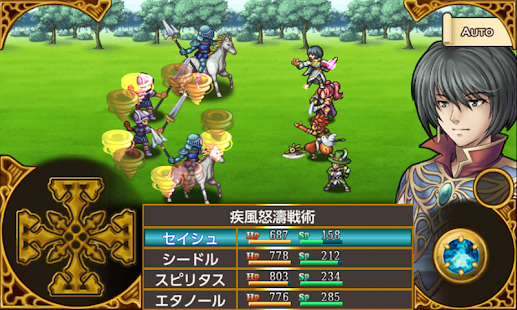
Consider, for a moment, the time-honored gameplay of your typical JRPG.  The “game” is pretty obvious in these: you have characters lined up on one side, and bad guys on the other and you both take turns whacking one another or using items or trying to run. If you lose it’s usually game over, and if you win, you get loot and experience. What characters you choose, how you build them, and what monsters you face, all determine your preferred tactics.
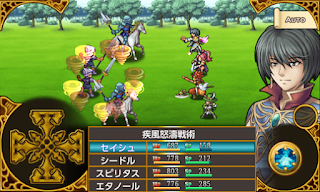
A JRPG fight

This is “the game,” but most JRPGs aren’t just an endless stream of such encounters.  Such a game is possibe! But they tend to be rare.  Instead, they wrap them in a frame: you walk around, you explore, you talk to people, or alternatively it can be beautiful, hand-drawn pictures with dialogue beneath them (like a visual novel) or it can be vivid cut-scenes. The purpose of all of these are to provide narrative context for all of the combat-based gameplay (for example, introducing you to the personality and agenda of the boss you’re about to fight, or the peril of the princess you’re trying to rescue).
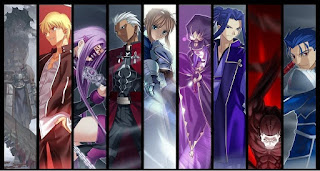
A visual novel

These frames can have their own gameplay elements, such as choices you make, or the opportunity to explore which can be rewarded with more combat-oriented gear, or the chance to “romance” on of your companions and get an, um, rewarding cut scene.  These “frame gameplay elements” can become outright mini-games: if they themselves can hold the players’ attention and they also have “builds” and “rewards” that allow the player to explore that specific “game space,” then they begin to rival the “central game” in value to the player.  Taken together, these can make for a pretty complex and rich experience:

So, we might begin with our visual novel frame, have some action, have some additional visual novel exposition, break it up with some minigames and dating sims, go back to exposition, then more combat, then more cut scenes, etc.

How people interact with these will vary, and you run the risk of cluttering your game or drawing attention away from what was meant to be the core of your game.  What if your JRGP combat is boring, but the visual novel compelling, so people grind through the combat so they can see more of the visual novel?  What if they really like the dating sim or the strategy layer, or the card game, and want to focus on playing that all the time?  This isn’t necessarily a problem for a computer game: people can play it how they like.  It does suggest maybe that your core mechanics aren’t very good, or that you’ve built a disjointed, broken-up sort of game that different people experience very differently, with everything but the bit they like getting in the way of their fun.

There’s sort of this conceit that because the core gameplay is the most important, and the core gameplay of JRPGs are traditionally combat-oriented, that combat is necessary or “more prestigious” than the rest, which can only be “frame.”  However, I would argue that if your combat sucks but some other element rocks, maybe you should make a different game.  Visual novels, dating sims, card games, strategy games, breeding games, etc, are all perfectly fine games.  If your “frame” is the most interesting part of your experience, maybe it shouldn’t be “the frame” at all.  Maybe it should the game.

The Frame is the Game? 

Addressing the disconnect

Tabletop games are a bit less forgiving of this sort of thing than single-player games because they’re fundamentally cooperative.  A pretty good example of a game with a divided focus might be Shadowrun, which is primarily about “killing corporate goons and taking their stuff,” but has these magical and hacking “mini-games” that, for some players, are more interesting than the core draw of the game.  In a computer game, they would just play characters that focus on those mini-games, but at the tabletop, their gameplay actively intrudes on other people’s gameplay because it takes time away from people.  One of the core elements that I understood came out of the indie Gameforge scene was the notion that you should know what your core gameplay is about and focus on it, and I highly recommend that.

For many RPG groups, the frame is the game.  This is especially true of overtly broken games.  A hopefully uncontroversial example of a broken game would be the classic Palladium Rifts game, which “has a great setting but terrible mechanics” as people love to say.  This dichotomy is largely born out of the fun people have in the frame.  Like many games from the 90s, it offers some sops towards “frame gameplay,” like non-combat skills, but the bulk of the game and its rules all turn around fighting monster or soldiers or soldier monsters or aliens or whatever.  This part is broken, with classic examples of weird, arbitrary and highly exploitable rules that tend to break suspension of disbelief, wildly unbalanced classes that make creating cohesive challenges difficult, and tedious gameplay that turns into slug matches where two fighters just use the same attacks over and over again until the other person runs out of MDC. 

Why would people like the game? Because of the context of their game.  They loved the imagery of oppressive Chi-Town with dogboys sniffing out psychics and stealing gifted children from wailing mothers while hackers, mystics, mutants and rogue scholars lurk in the underground, waging a resistance against the forces of intolerance and oppression, while exploring a dangerous, wild world of resurgent magic, high weirdness, apocalyptic ruin and uncharacteristically violent, shapeshifted baby dragons.  I played in many games where the core gameplay was dispensed with entirely and, if you will, the game turned entirely into a visual novel.  For these sorts of people, claims that Rifts (or whatever game) isn’t broken, because they had a good experience with the game.  They’re not deluded, they’re not crazy, they’re not fanboys, they’re just interfacing with the game differently, in a way that cuts out the parts they don’t like.

I’m not going to tell you that it’s wrong to play a game this way.  The point of many posts I’ve made in this vein is not that this sort of gameplay is wrong, but to highlight that this difference exists, that the frame is not the game, and that when people like me complain about the game, we’re complaining about the game, not the frame. I’m also trying to encourage you to see the difference and if you’re the sort that prefers the frame to the game, to realize what you’re doing, and once you do, I want you to ask yourself this question:

What is the core gameplay actually doing for me?

Is it okay to run D&D were no combat takes place?  Sure! No gaming police are going to take your books from you, but I have to ask you this: why are you using a game where 90% of the rules are about combat?  Wouldn’t your game be better supported by more closely aligning it to the actual gameplay that you find cropping up at your table?  (The examples below aren’t meant as necessarily to be replacements for D&D in this context, just a few RPGs I know that fit the description.  I’m sure there are better, more precise examples out there).

 By all means, keep D&D at your table if it provides you with value.  For many gamers, while the core mechanics might no longer be interesting, the book’s artwork and setting conceits provide inspiration, and the mechanics provide a sort of shared language that they can all understand (“My character is really strong!” “How strong?” “A 16.” “Oh, so really strong, but not like the strongest ever?” “Yeah.”).  Running D&D this way is a bit like “running Harry Potter” where everyone has access to those books and has sort of system they’ve agreed to, and they’re “playing” the game.  It’s fine and don’t let anyone tell you otherwise.

But there people who sort of lock themselves into a familiar space.  They want to do something fundamentally different than what the RPG they have on hand really does, but it’s all they know, so they sort of ignore the game and run what they’re going to run while “fighting the system.”  Don’t do that, man.  If you’re trying to do something specific, trust me, there’s a game out there for you.

Rant: My problem with flexible magic systems

If we can set aside Psi-Wars for a second, I came across a video that I want to comment on before I forget it.  The video discusses essentially why Avada Kadavra is a terrible spell, and he’s spot on, but this also has broader implications, especially in one of my pet peeves, and why I’ve not adapted RPM like the vast majority of GURPS fans seem to have.

The problem with flexible magic systems is that, despite purporting to allow unlimited flexibility in magic, they suck all the need for creativity out of a game.

(I was originally working on this when someone asked me for help on a flexible magic system so I, uh, paused it. It was also turning into something longer than I expected and I wanted to put my time on Psi-Wars, rather than a personal peeve of mine.  However, this was the Patron General Topic of the Month, so I posted it; well, actually it was a tie, but this was more ready than the other topic, so this topic went up.  If you’d like to vote on next month’s general topic, feel free to support me via the link in the sidebar.  All I ask is $1 a month).

The Sinister Temptation of Flexible Magic

Hmm, do I want to kill them with blue sparklies or red sparklies?
So, I’ve hated flexible magic every since I played a few thorough campaigns of Mage: the Ascension, and this often brings me into conflict with the sort of people who love the game, who are shocked when I say that flexible magic systems stifle creativity.  They counter by saying it liberated them to be as creative as they wanted to be.
The logic of their argument goes something like this: games like D&D have strictly defined spells, and you must work within the limitations of those spells.  For example, if you’d like to cast a spell that let you enter someone’s dreams and kill them from within their own dreamscape, and no such spell existed in D&D, you couldn’t do it.  D&D rewards knowledge of existing spells, not the creation of new spells.  By contrast, you could create such a spell in Mage: the Ascension, as it’s merely an application of the Mind Sphere (perhaps with a bit of Space, in case your target is far away).  Mage allows you to do whatever you want, within the limitations of your knowledge.
My counter argument is that while it allows unlimited creativity, it does not reward it.  While there are certainly some people out there who simply brim with the need to be creative at all times and come up with new and innovative things constantly, the average person does not, and in a contest between a wildly creative Mage, and a dull but calculating Mage who knows the rules in and out, the latter will win every time.
What Mage (and most games with flexible magic systems) rewards is results.  If you want to achieve success within the game, you need to solve problems, and the best tool you have to solve problems is magic, so you use the magic to solve the problem.  Say you need to kill an opponent, a common problem, you could come up with some clever, round-about way of doing it, like getting into a shape-shifting contest with them, or using name magic to blot their name from the book of God, but rather than do complicated stuff, you’re best off just stopping their heart or, better, something generic like “damaging their pattern.”  Every sphere or arcana has its own way of “dealing damage,” typically around level 3, you use that, and your target is hurt, and hurt enough, they die.  You can describe it however you want, but ultimately, it doesn’t matter. It’s just the flavor of your “I roll Arete to deal damage” or “I roll Arcana + Gnosis to deal damage”, depending on your particular edition.
Other problems can be solved in a similar way, and once you’ve learned the main ways of solving problems, you’ll use them over and over again, because why wouldn’t you?  And these tend to break down by sphere/arcana.  If you have mind magic and there’s a mystery, you read the target’s mind.  Why not?  He might have some defense against that, but that’ll defend against all other forms of mind magic too, so whether you dive into dreams or read minds or use suggestion to get him to tell you, or sense the truthiness of his words, his mind magic will protect him from all of those, so if mind reading worked once, just use it again.  Need to get somewhere fast and you have Space? Just teleport.  Don’t have space, but have forces? Fly.  Don’t have forces or space but do have Life? Change into a bird.
What you see, in the end, is that players use the least-effort solution, the least-creative solution, to solve their problem.  They use Avada Kadavra, and every fight turns into zaps of pattern-destroying energy, colored by the sphere/arcana used. They roll against “Magic” until the problem goes away.
(You see a similar problem with many golden age/silver age super-heroes who had unbounded powers, like the Green Lantern, where he could just summon the best thing over and over again; as a rule, the writers forced themselves to use different things to keep it from being boring, but as a GM or as an RPG system, you don’t want to rely on your players working hard to keep your game from being boring when they could just go and play a game that, in and of itself, isn’t boring).

The Power of Static Magic Systems

The strength of a good magic system is not in what it “allows you to do,” but in what its limitations are.  At its heart, magic is about wish fulfillment, and thus unrestrained magic allows for the tedium of “A wizard did it.”  In a fully unbridled, absolutely flexible magic system, you could solve every problem by “Rolling against Magic” until your problems went away, and that wouldn’t be fun.  People tend to bristle against that in fiction, because it sucks all the tension out of a story, and it can do the same for a game. While it might be fun to god-mode through a dungeon once or twice, once you know you how it’ll turn out every time, the GM will stop bothering with monsters who descriptions don’t matter, and players will stop bothering with clever spell descriptions when they don’t matter either.

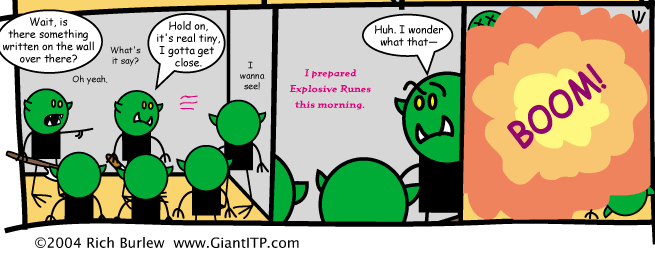
Contrast this with the tightly bound limitations of a spell-based system.  A clever idea, like using explosive runes to draw people close with an interesting message can be done in a flexible magic system, sure, but it’s clever in a spell-based system because it works within the constraints of interesting limits.  Explosive Runes is one of the only means of producing a mine-like effect, and those runes have text; using that text itself to tempt people over is, thus, clever.  In flexible magic, it’s unnecessarily complicated. You could just do something like blow them up from a distance, or set up a spell so it blows up when the enemy shows up.
Limitations foster creativity because they force the player to work around them.  They can use simple concepts, like early-level spells, to learn more complex concepts, and then as they move on to more complex magic, they can show their mastery by using clever applications of what they have available, similar to how a work of art that uses a collage of photos to create a larger image is more creative than simply creating the image, or writing an RPG in only 200 words is more impressive than just writing an RPG with no arbitrary limitation.
The magic systems that generate the most intense discussion and attention are those that create an interesting set of limitations that promotes a deep study of the system, that is dynamic (so a single spell is not best in all cases, and judging the best spell for the circumstances is itself interesting), and that creates interesting situations as it is used.  Given a choice, I would much prefer the magic of Exalted, or Cabal paired with either Path/Book magic or vanilla GURPS Magic, than a Realms/Sphere/Arcana based magic any day.

#NotAllFlexibleMagic

Unless using the same
magic over and over again
is your thing

“Hmmm,” I hear you say “But Mailanka, the magic of Full Metal Alchemist is flexible and interesting; the magic of Avatar is flexible and interesting and, wait, you hypocrite, you play Nobilis and it uses a realm-style system!  So you do like Flexible Magic!”

Fair cop.  Not all “flexible” magic systems are equally bad, and some of them are even very good.  I think you could argue that the potential behind a flexible magic system exceeds the potential of a static system provided you understand what makes a good magic system!
A good magic system needs to have interesting limitations that are internally self-consistent.  They don’t have to always appear to be internally self-consistent, but there must eventually be a pattern that someone can suss out.  These limitations must promote, rather than discourage, the sort of play you’re going for.  For me, I prefer systems that promote exploration, discovery, lore, non-combat applications of magic, and and dynamic situations that ensure that the same spell isn’t used over and over again.
Are there flexible magic systems that do that? Yes.  But the creator needs to put more thought into them than just assigning levels and a few generic rules and calling it a day.  There are systems that do this!

Specialization: Mage: the Awakening

I smacked Mage: the Awakening a bit above, and it’s my experience that it has problems, but it also did a lot to fix them, making it a tolerable experience.  The core difference between it and Mage: the Ascension was the ability to specialize in your magic in two different ways.

The first was your ability to buy a spell as a “rote” gaining a bonus with it.  This does tend to encourage players to use the same thing over and over again, but it defines what they can do and this encourages specialization.  If you can read minds, for example, you can always use that to solve mysteries, but you cannot turn around and use it to force people to walk off a tall building, at least not as easily.  You begin to interface with your specific form of flexible magic in a definable way.

The second way was in the ability to specialize in Mage “type.”  This gave you unique abilities that allowed you to break the rules in some specific way with some specific implications.  For example, if you have two characters with the Death Arcana, but one is a “Re-animator” and the other is a “Spirit Medium,” they might interact with the Death Arcana in fundamentally different ways. The Reanimator is far more concerned with corpses and what he can do with them to solve his problems while the Spirit Medium is more concerned with ghosts and their problems and with what she can do with them.

Taken together, you allow characters to start to develop unique expressions of their particular domains. Instead of punishing you for your weird specifics, the game rewards you, and you’re also rewarded for working within your specializations while not being disallowed from going outside of that specialization.

Limited Flexibility: Changeling: the Dreaming (and Geist)

One of the core problems of most flexible magic systems I hate is their attempt to cover everything and thus make themselves hopelessly generic.  A good example are the “damage” rules I discussed above: because the system needs to handle any form of possible damage, all the rules are largely the same and players become tempted to say “I damage him with my magic,” and if pinned down on specifics, get annoyed and use the most generic specific they can think of.

Changeling, by contrast, had highly specific spell-lists called Arts, but also had a system called  “Realms” that determined what your Arts could affect. Different characters specialized in different things. For example, the Naming Art allowed you to understand the nature of things and alter that nature by altering the name, while the Primal Art was much more straight-forward “combat magic.”  You couldn’t really use Naming to harm things, while you could definitely directly attack something with Primal.  However, what you would attack with Primal depended on your Realm; the obvious choice might be to attack people or magical creatures or animals, but others might learn to attack items, or magic itself.  Naming could let you see something’s true name and thus grasp its nature, but this has different applications with real people, magical creatures, or spells/enchanted items.  How well it handled it varied from Art to Art (the rule design’s quality varied a lot); Geist had a similar design, but a better understanding of how to handle the system.

The larger point here is that instead of trying to handle “everything” and creating a generic mess, with narrow flexibility, you can have highly flavorful ideas and highly specific spells, but allow player creativity in exactly how they want to apply their magic.  You encourage creativity with a good combination of limitation and freedom.

Flexible Rule Systems: Nobilis 3e

Nobilis doesn’t actually use magic so much as define the power of cosmic, god-like beings, but it amounts to a similar idea.  Each Power has a single estate over which they have power, so in a sense, all Powers are the “one-trick pony” character of Mage.  They even have “levels” of power.  Doing something like using your Domain to hurt/kill people is typically at least level 3, possibly 4.  So this looks a lot like Mage, why does it get a pass where Mage doesn’t?

Nobilis at its core is about defining your own rules. When you build your character you choose an estate and you define what you mean by that estate.  If you’re the power of Death, for example, what do you mean by death?  To answer that questions, you must come up with some rules/definitions.  For example, you might say that 
  • Death ends things
  • Death leaves grief in its wake
  • Death is permanent
And then you must abide by those rules.  For example, you can use “death magic” to “end things.”  You could kill someone, sure, but you could also end your class prematurely, or destroy a romantic rival’s relationship (“killing it”).  You might also “remove death” by declaring that something “isn’t really dead.”  Say, someone got into an accident, and in those moments before death was confirmed, you might declare that they don’t die, that they don’t “end” here.  What you couldn’t do is resurrect them, because by your definition, Death is permanent.  Thus, nobody should ever come back from death, even if that death is metaphorical (if you “killed” a relationship, it should never come back).  Any violation of this would violate the fundamental underpinnings of the world (and there are bad guys in the game who do just that).  There are lots of other things Death cannot do.  It cannot create new beginnings or do temporary things, or make people happy.  You might say “Well, but doesn’t death allow for new beginnings?” Not in this definitionPerhaps in other definitions of Death, but not in this one.

So, the rules of your estate become one of the fundamental playing blocks.  It defines your limits, yes, but it also creates new possibilities.  A lot of Nobilis gameplay turns on this sense of negotiation, and its often very personal.  Your definition of your estate is different from someone else’s, and it’s conceivable to have two different definitions of the same estate: I don’t think is allowed in Nobilis, but in your game, it might be.

Imagine a flexible magic system where you had limited “domains” that characters could manipulate, but each character had his own relationship with that domain.  For one person, death is “permanent and ends things and leaves grief in its wake,” but for another, it’s “Death is necessary to clear the way for new things; Death is scary but ultimately helpful; Death’s true nature cannot be truly understood.’  This creates a dynamic where one person can do different things compared to another.  This resembles the specializations above, but they’re dynamic and player defined, which gives infinite possibilities.  This also rewards research: if you find yourself facing off against a dangerous new necromancer, the question you ask yourself is not just “how powerful is he?” but “what rules govern his magic?”

This also suggests a world governed by arbitrary rules, similar to the geas rules from Celtic Myth: heroes have specific rules they need to follow, as well as monsters, as well as spells or enchanted items; prophets and astrologers aren’t seeing the future so much as grasping the shape of the rules that govern the world and events. This rewards research, because characters seek to understand what rules apply to particular domains or to particular spells or enchantments or monsters, so they can find out how best to deal with them.

Dynamic Rule Systems: GURPS Cabal (and Full Metal Alchemist)

One concept that I don’t see used that often, but I see all the tools in the world for, are magic systems where the rules change depending on where or when or on what you cast your spell.

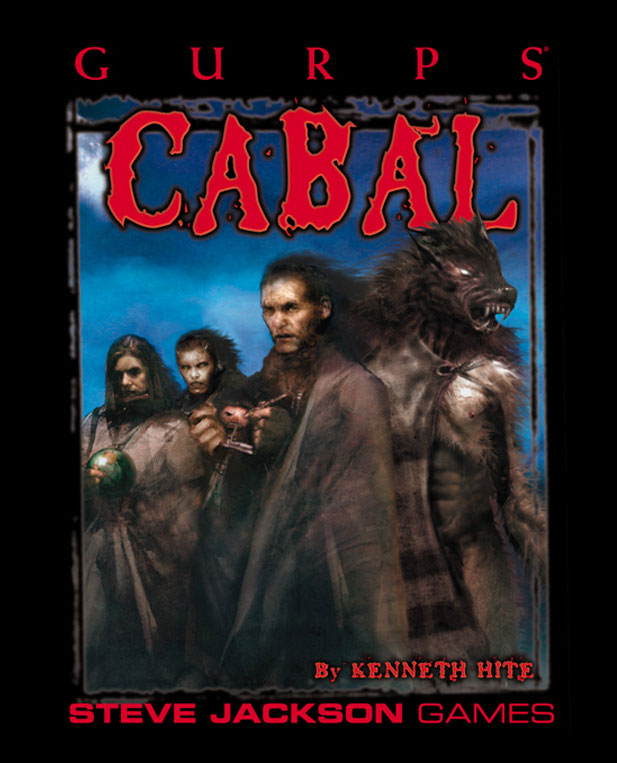
Cabal offers modifiers for casting particular spells at particular times. These tend to be pretty minor, but imagine if they were much more intense: if casting a death spell at a particular time of the year was much more potent, then you can predict when most death wizards will try to kill their opponents.  If particular areas are more vulnerable to that sort of magic and others less so, then when a death-wizard tries to kill you, he’s going to maneuver you into a vulnerable zone, and you’re going to try to move to a “safe zone.”

Full Metal Alchemist has a similar set of rules in its “law of sacrifice” or whatever its called.  The rule here is that the “value” of what you start with must match the “value” of what you end with.  This creates a highly environmentally limited sort of magic, as you must have the right sort of material on hand to accomplish the feat they set out to do and creates interesting exchanges because “value” can be subjective to you but perhaps not to the universe.

The core idea here is that our flexible magic not work the same way in all circumstances.  If it does, it tempts people to repetitively use what always worked, which you presumably want to limit (I certainly do) to encourage creativity.  There are lots of ways to do this, from modifiers to hard rules.  One idea might be to combine this with the “flexible rule systems” and redefine how magic works at all given a time and a place.  For example, each “domain” might have “three aspects,” for example, death might be “the Destroyer, the Greatest Mystery, and the Renewer.”  If you want to kill someone, you may need “the Destroyer” aspect, and you must find some way to align yourself with that, via location or time or the things around you.  Once so aligned, you might do anything with your Death domain that “the Destroyer” rules allow, and your level in the domain allows, but nothing outside of that.  This allows flexibility, but requires creativity in how you gain access to that flexibiltiy.

Trifle Not with Wizards

For me, the core lesson of flexible magic is that there’s definitely such a thing as “too much of a good thing.” The idea behind flexible magic is to reward creativity, but creativity is often best fostered with limitations rather than freedom.  A constrained thought-space can give us ideas that endless fields of possibility stymie with “analysis paralysis.” The problem with limitations, though, is that they themselves can grow stale, so we can use targeted flexibility to allow players to move out of a tedious space and give them the chance to explore something new.

Interesting gameplay often fosters exploration, a chance to see something new and master some new element.  Few things tend to interest players interested in that sort of exploration as a magic system.  The problem with most flexible magic systems, especially the overly simplified ones, is that they tend to be too easily explored (“There are 25 domains in the game, each with 5 levels, but they all basically do the same thing just with slightly different flavors, so if you’ve played with one, you’ve played with them all”).  But with sufficient thought, a flexible system can give players plenty of a chance to define their own characters and tons of material to dive into and explore and master.

Allow me to offer an example of a flexible magic system that I might find interesting (though this one is fairly involved)

  • There are 5 domains; players can purchase up to 5 levels in each; each is pretty distinct and perhaps a bit narrow (it might not cover every possible phenomenon in the world)
  • The domains has three aspects which govern some of their core rules, defining what is possible and what isn’t given the current state of the world.  You can change which aspect is present for a particular domain through your actions, by reshaping the world (“So below, so above”); this explains they evil wizards sacrifice a ton of people or whatever.
  • The world is also full of things that let you empower or weaken a particular domain (aspected mana regions, modifiers, etc)
  • Wizards interact with their domain via a “contract,” a set of rules that sets up their casting requirements, special exceptions to rules (such as, perhaps, always having access to a specific aspect for the purposes of a single spell).  They can also specialize in specific spells (techniques)
  • These contracts are codified in particular magic styles, but some powerful contracts have been lost and can be rediscovered, or researched and forged personally.

This creates a setting where players can specialize by type of magic, and then further specialize by magic tradition and personal contract.  They can also research the contracts of opponents or the nature of the world, or find “lost” contracts and see if they can exploit their power.  How their magic works might fundamentally change: they won’t become less powerful (that’s determined by their level of a particular domain), but old tactics might suddenly stop working and they might need to rethink their approach. You might even have skillsets and tactics focused around foreseeing these changes or trying to tickle the world into the configuration you want.  Players can be flexible, but they need to respond to a dynamic world, and there are some hard (but interesting) limitations and options that they can choose from, menu like, to define who they are as casters.

What about Communion?

“Say, isn’t Communion a sort of flexible magic system?  Did you apply these same rules in its creation?” I hear you ask?  Why yes, yes I did.

Divine Favor is already an excellent example of a good flexible magic system. By its nature, you have the option for specialization in that you can purchase Learned Prayers, which means two Divine Favor users don’t have to look the same.  The second key ingredient, and this is cheating a little, is that beyond that, the GM is allowed to apply whatever limitations he sees fit, or to grant whatever miracles he sees fit.  This acts as an outlet for creativity.  If you find players keep doing the same thing over and over again, you can arbitrarily declare that God no longer grants that miracle, because you bore him.  If someone just prays, you can drop the most epic, or the least epic, miracle that you want, and it’s all appropriate within the rules.

All I really added with Communion was the possibility of additional specialization via the Paths, path modifiers (which allow you to hit people with modifiers that they can deliberately manipulate), and some unique special abilities that let you interface/interact with Communion in unique and interesting ways (A True Communion Templar experiences Communion differently than an Ecstatic Divine Mask cultist).  It doesn’t really have much in the way of discovery, though.

Communion is sort of a simplified, basic answer to the flexible magic question.  It tends to generate a conversation between GM and player, offers the GM tools to keep the world dynamic, and still allows players to find a unique way of expressing or exploring Communion (but note that Psi-Wars also layers this over an existing system of reliable but fairly static psychic powers, which themselves have their own unique forms of flexibility in the form of techniques and extra effort)

The Eye of Providence Closes

If you follow my blog more than you follow the GURPS Facebook group or the SJGames forums, you might not have heard by Pyramid is closing down.  It’s been, what, nearly 30 years?

My own first pyramid was an actual magazine plucked from a store shelf.  I began following it back in the late 90s, and so I’ve had at least part of all three iterations of Pyramid, and fond memories of all three.  This is definitely a major blow, and I have quite a mix of emotions and thoughts about the announcement, as I’m sure you do as well, so I thought I would share some of them here.

Is GURPS Dying?!?!

Every time someone makes a change, any change, to GURPS, there’s always someone who comes out of the woodwork to cry doom and gloom.  Going to PDF? GURPS is dying. GURPS DF kickster? GURPS is dying.  Going to the free-to-play model with lootboxes? GURPS is dying. Pyramid closed? GURPS is dying.  Is there any merit to this doomsaying?
Yeah, I think so, depending on how you look at it.
Look, there was a time when SJGames could produce several hardbacks in a year and Pyramid, then a time when they could produce about a PDF a week and Pyramid, and then a PDF a month and Pyramid, and then a PDF sometimes and Pyramid, and now, Pyramid is dead.  There’s a clear line here, and it’s not on the up-and-up.  Pair this with the GURPS DF success-failure, and I would be worried.  I am worried!
But there’s dying and then there’s dead.  Things go up, they come down, they go around and around.  Bigger RPG companies, like White Wolf, went belly up years ago.. but White Wolf books are still made, just by new people (mostly old writers and fans).  It takes a lot to kill an RPG, because they are the most distributed sort of game.  If, for example, an MMO dies, you just can’t play it because the server is gone.  If a board game goes out of print, you can only play it as long as you have the board and chits.  But a role-playing game is a weird beast, as most of its content is not created by the company, but by individuals using their material.  I don’t mean fanmade supplements, though those are definitely part of it. I mean the fact that every time a GM sits down to write up an adventure and run it for you, that’s game material created by someone outside of the publishing company.  There are many GURPS experts who have never graced the halls of SJGames, and that will be true probably after Evil Stevie himself has passed into the grave, just like Gygax before him, because we keep these things alive.
Is GURPS dying? In the sense of SJGames losing money on it, probably.  Is it dying in the sense that less people are playing it? My modest research suggests that this is not the case.  GURPS occupies a pretty unique niche in the market, and while it has never been top 10, it definitely maintains a presence.  I don’t think that will go away soon.

Adapting to Changing Realities

One poster claims he spoke to Steve Jackson at a panel about Pyramid, and Steve claimed that Pyramid was a money sink.  That’s a shame, and if that’s so, I can see why Pyramid is being cut.  In fact, I think SJGames has made a lot of mistakes, but companies usually do, and it’s only the bad ones that don’t recognize it.  If SJGames did nothing and let GURPS slip into oblivion, then I’d be worried.  Acknowleding mistakes and changing markets is vital to surviving the game.
Let me ask you this: How many of my Pyramid articles have you, dear reader, read? Can you even name any of their titles? I’m guessing you can’t, because I haven’t written any.  I thought about it, but it seemed like such a hassle, and it’s intentionally so, because they wanted to weed out the weaker writers. SJGames acted as a gatekeeper on its material, to ensure the quality of its product.  But this is also an older mentality, one that doesn’t really fit anymore, and I can prove it by pointing to the fact that you are here, now, reading this post.  In fact, a lot of you pay me money to write these posts, some of you at least as much as a Pyramid issue is worth.  The world is no longer made up of “Official” RPG writers who get published in big, glorious books, but each RPG ecosystem is a rich cornucopia of authors, bloggers, vloggers and fans, whether it’s D&D, White Wolf or GURPS.
I don’t mean this as some kumbaya statement about how we’re all in this together, but as a hard statement of fact.  I get a lot of my extra material for ultra-tech stuff from Pyramid, sure, but I get at least as much from GURB.  I have a mess of links to blogging material that I draw on.  I’m also a patron of Christopher Rice.  I write a lot of what I write because people ask for it, and they can’t get it, for whatever reason, from SJGames.  Given all of this… why would you continue to subscribe to pyramid? Think about it for a second.  If the bloggers who blog too much really ramped up their game, would you even need Pyramid?
You might say something like “I want to support GURPS and their writers.”  For example, every pyramid you bought helped put money in Christopher Rice’s pocket.  But… why not just put it into his pocket?  Patreon offers entirely new avenues for sponsorship, and given that you’re not paying SJGames $8 a month for Pyramid anymore, why not pay the authors you like better that money?  I might talk to Chris about that, but I’m seriously considering upping my bid if it increased the chances of more complete articles from him (and I’m telling you this in an effort to convince you to do the same!)
So, from at least one perspective, it make sense to kill off Pyramid.  Pyramid belonged in the  era of the FLGS, and then in the era of dial-up and BBSes.  In the era of social media, youtube and blogs, I’m not sure it still has a place.  I think it actually makes more sense to encourage the bloggers to continue their reviews, their campaign summaries and their mini-supplements, and use the broader internet as your proving ground for new writers, and then focus your official muscle not on small articles, but on big, official works that will fuel that community.

The Silver Lining of the Storm Clouds

Times change, and change is scary.  Change often brings a lot of bad with it, but I would argue that the change has already happened.  It was happening before Pyramid’s closure was announced.  I’m not happy about it at all, but if I stop and I think, I’m forced to admit it’s probably overdue.  If I look back at what I consider to be SJGames’s big missteps, most of them seem to center around wanting the world to be as it was in the 90s and early 2000s, making efforts to cater to retailers and the three-tier supply chain that just isn’t there anymore.  Magazines were part of that model. Holding onto it wasn’t helping GURPS. Closing Pyramid acknowledges reality as it is, not as they would have it be, which is the right move.
So, what comes next?  Without the shackles of Pyramid, what can SJGames do?
Well, as Phil Reed points out, they can focus on bigger things.  Maybe Vehicles 4e, finally?  They mention consolidating the best rules from Pyramid (you could easily get an Ultra-Tech 2 out of that, I’ve nearly consolidated all the major tech articles into a single work just for my own purposes), and consolidation might mean a push for a new edition.  At least, not having to maintain Pyramid makes such a shift easier.  If they’re genuinely moving towards a more internet-oriented model, then an OGL for GURPS might be in the offing.  There are some indications that they’re more open to “third-party” GURPS products than before so.. maybe. 
Of course, they might just kill off Pyramid, continue to release a handful of small PDFs a year until the trickle dries up and GURPS blows away.  This is all speculation. The point is that killing a money sink frees up resources to tackle other things.  Those things might be all of your GURPSiest dreams, or it might be Munchkin, who knows.  But Pyramid was, evidently, a dead man walking. In retrospect, this was inevitable.

Together, we can save GURPS!

So, maybe you’re worried.  What can you do to help GURPS?  Well, I say you keep doing what you’re doing.  I think people who blog GURPS, or patronize GURPS writers, or set up discord channels, or even just run games, are “saving GURPS.”  That’s what a living, vibrant game looks like.  I’ve been a little out of the scene because I’m busy, but whenever I poke my head into the GURPS sphere, it’s always bustling.
The way we relate to games, whatever games, has been changing over the past few years, and a lot of gaming industries are in turmoil, from the rise of the indie game to the lootbox debacles of the AAA gaming industry to the collapsing golden age of the Eurogame to the rise of numerous RPGS (D&D is doing better than ever, apparently), from Tabletop Simulator to VTTs to social media RPG groups and RPG vloggers, everything is different now.  This is part of that difference.  We’re going to have to change how we relate to GURPS, just as SJGames evolves, we’ll have to evolve too.  In particular, we have to be less dependent on “official supplements” and be more proactive as a community.  This is true of all modern successful RPGs.
As for me, will I keep writing for GURPS?  I think so.  I will admit somethings about it really frustrate me (the lack of an OGL that means my work could be shut down with a single e-mail; the lack of a decent Vehicles book, etc), and I do go through moments where I consider moving on (Fudge/Fate looks like it’d be great, if I can shake off some of that community’s biases against the sort of gaming I like, and I keep flirting with EABA), but I keep returning to GURPS because it lets me explore a lot of the things I’d really like to explore.  There may be some changes in the future, but that’s always the case. For now, Psi-Wars remains on course.
Still, as much sense as it makes to kill it, I will very much mourn its passing.  Pyramid gave us Kenneth Hite’s Suppressed Transmission and introduced me to John Wick.  It gave me about half of my Psi-Wars material.  It gave us Christoper Rise and Douglas Cole.  Ahh, and how I will miss you, Murphy’s Rules.  Time marches on, but, allow me nostalgia for just this moment…

If you want to join me in supporting GURPS Bloggers, here’s a few you can check out (if you know more, or blogs of note that you want to comment on, leave a comment!)