Security Agents
If we’re going to have criminal thugs, and we’re going to feature characters like Smugglers and Con-Artists, we should feature law enforcement as well. After all, what is it that the smuggler is slipping past, and who are the criminals on the run from other than the police?
Star Wars is surprisingly mum on the topic. Wookiepedia has a terse couple of articles that say little more than what a law enforcement officer does and offers few examples. In the films themselves, we occasionally see storm troopers acting in a capacity similar to law enforcement, usually responding to crises and questioning random passerbys about droids. Even the Bounty Hunters of Star Wars are closer to paid hitmen than they really resemble people who collect fugitives from law enforcement.
So, in Psi-Wars, we’ll be charting our own course, borrowing from generic sci-fi works that seem to fit, and doing what space opera generally does, which is take the modern world and truss it up with sci-fi gadgetry.
The Concept of Security Agents
A Security Agent keeps the peace. They are well-trained, disciplined agents who act to settle disputes, watch their community for danger, and move against that danger when it is found. Combat is not their primary purpose, they all have combat training, and some security agents have paramilitary training, verging on full soldiers themselves.
The non-combat aspects of being a security agent fall outside the scope of this document. The intent here is to create the combat threat that those who oppose security agents might face. A con-artist is more worried about some investigator uncovering his crime than he is about the lethality of the security agent down the street, but in this document, we’re onlyworried about the latter.
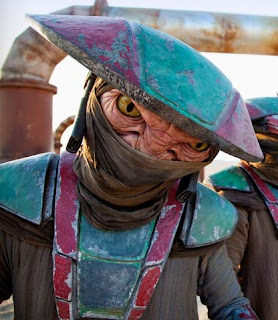 |
| Constable Zuvio |
Most security agents serve a local jurisdiction. They patrol neighborhoods, loiter threateningly outside of banks and space ports, flag down speeders that fly too fast through pedestrian areas, and enjoy the sci-fi equivalent of donuts. Local agents have considerable variety to them. Just as real-life police offers might wield pistol and shotgun from a car, or revolver and truncheon from a horse, we’d expect local agents to adapt to their local environment. I’d like to see if I can hit three variations: the “traditional” beat-cop, the mounted (on speeder or horse) agent, and the lightly armed or “ceremonial” agent, similar to the British bobby or the feudal Japanese police forces.
Paramilitary security agents represent what we most often seen in films: police in full armor and bristling in weapons, marching down on protestors or kicking in doors to blow away terrorists. These are they whom the other security agents call when things turn south. These represent the more present threat to the average hero, and thus are substantially more skilled.
Finally, we could envision ceremonial security agents, the so-called “royal guard” who stand watch over VIPs. Their role would be as much about impressing others, projecting the power of their client, as it would be about protecting their client.
Tactical Theory
As mentioned before, the average security agent represents the face of the security force: locals who regularly walk around an interact with the populace. They’re the “first responder” to various issues, and the danger they face varies all the way from getting cats out of trees up to fighting off armed and dangerous criminal gangs. We expect them to be competently trained, approximately on par with basic soldiers. Where security agents tend to differ a lot is in their terrain and culture.
In an urban environment, the standard security agent is the first to respond to a problem, usually your most numerous opponent, and often your only opponent. An elite security agent might head up a squad of agents. If the situation escalates, urban security agents will usually have at least one elite agent on hand, at least one squad of paramilitary agents, and support from a few security snipers. If the escalation is a riot, then they’ll go with Riot Control instead of paramilitary agents, but they may still have snipers, just in case.
In a rural environment, mounted security agents make up the bulk of your force and are often your only force. They might enjoy the support of security snipers, which will look substantially different, but you can use the security sniper stats. Most rural environments lack the resources for elite security agents, though in particularly rough country they might have elite security agents simply through experience, but you’ll have to modify the template somewhat.
In ceremonial circumstances, ceremonial agents will dominate the scene, with ceremonial guards standing watch over VIPs or deploying to face down particularly tough opponents (they act as the ceremonial equivalent to paramilitary forces in such a case). Ceremonial agents do not deploy Elite Security Agents because they are Elite Security Agents. If the especially long arm of the law is necessary is necessary, they might deploy snipers, who are polite enough to remain out of sight and expose themselves only by opening fire when absolutely necessary.
In all cases, the objective is the peaceful take-down of the suspect. Security Agents armed with lethal weapons will “cover the suspect” by pointing their weapon at their target, demanding he surrender, and Waiting to see if he acts, firing if he acts aggressively. The sniper will work in a similar way, aiming for his maximum bonus, and then waiting on a signal from a higher-up before firing. Ceremonial guards, ceremonial agents and riot control agents use non-lethal weapons, and can afford to take down their suspect first and ask questions later (often literally).
Skill Level Theory
Local Agents should be skill 12. They’re better than unskilled opponents, but they’re not high risk professionals or the cream of the crop. They have what training they need to put down basic criminals. Personally, I think local agents should be handily defeated by soldiers, but that arguably comes down to equipment rather than training.
Paramilitary agents, snipers and ceremonial agents are skill 15. They’re elites with extensive training, the cream of the security crop, and they regularly face high risk situations and need to excel at them.
Ceremonial Guards need to utterly protect their VIP and look good doing it. We could put their skill level nearly anywhere, from a “we’re mostly here for show” 12 to an elite 15, to a masterful 18. I’m going to choose 18 to reflect the real danger posed by going after someone as dangerous as a king or a high priest.
Technological Detail
The technology of most security agents would resemble a toned-down, pistol-oriented version of military armaments: professional, modern, expensive. They would also vary considerably from locale to locale, but I don’t have time to necessarily go into that sort of detail here.
The Blaster Pistol
We already have a slew of interesting blasters, and I don’t think I need to design any new ones. The “old, reliable” blaster represents the old reliable service revolver that many police would have, which might be sufficient for a typical local agent. The standard blaster pistol is likewise enough for the rest of our agents.
Other Blasters
Modern police officers often carry “riot shotguns,” weapons meant to be defensive. The closest equivalent to that would be a plasma weapon, but a burning explosive weapon isn’t very “defensive.” Rather, it’s highly destructive. On the other hand, it will work well for removing cover or blowing open doors, and a shotgun isn’t the safest weapon to use around civilians either.
For our assault agents, the imperial assault blaster would seem to do the job nicely. It’s more expensive than a basic carbine, but it’s small, compact and has a high rate of fire. We can borrow from the Imperial arsenal once again for the police sniper.
Other Weapons
When making a raid, agents will need to drop stun grenades on their opponents. We can use those from our standard Iteration 3 equipment.
Riot troopers will, of course, use the standard neurolash baton.
Finally, our ceremonial bodyguards need some sort of impressive melee weapon. We could use a vibro-glaive, which is impressive enough, but strikes me as “too primitive.” A force glaive is also an option, certainly lethal enough, but it might be overkill, especially if we want to keep people restrained and alive. A neurolash staff fits the bill better for control
Armor
For the average agent, I suggest a battle weave tactical vest without inserts. DR of 30 is enough to really slow a pistol attack down, turning a critical wound into a minor one. For assault agents, we can add the inserts, helmets and a visor, similar to imperial agents. Finally, riot agents use riot shields. Simple enough! Ceremonial Guard would wear a full hardsuit, one elegantly designed, of course.
Support Technology
There’s no reason for security agents to lack communication devices, so all come equipped with one. Paramilitary agents and riot control agents also have face-plated visors, granting then superior vision and accuracy. All security agents, furthermore, come with a light source and electronic cuffs, for taking down suspects.
Security Agents
All the following minions have been created in such a way that they’ll fit on two sides of an A6, so you should be able to print 4 per page. I have greatly reduced their complexity even further, so that most characters are virtually identical. Note that the listed tactics aren’t the only moves possible, just a helper for some of the more complex actions these characters might undertake.
Security Agent
This represents a standard security agent, the typical beat cop armed with pistol and operating in a vehicle. The plasma shotgun is an optional “defensive” weapon, or for breaching doors.
| ST 11 |
HP 11 |
Speed 5.25 |
| DX 10 |
Will 10 |
Move: 5 |
| IQ 10 |
Per 10 |
|
| HT 11 |
FP 11 |
SM +0 |
|
Dodge 8
|
Parry 8
|
DR: 30
|
Blaster Pistol (12):
3d(5) burn sur (Acc 5, Range 300/900 RoF 3, Bulk -2)
Plasma Shotgun (12): 10d(2) burn sur (Acc 8, Range 350/1000, RoF 3, bulk -3)
Skills: Area Knowledge (Neighborhood)-12, Criminology-12, Law (Police)-10, Pilot (Contragravity)-12, Savoir-Faire (Police)-12.
Traits: None
Notes: Human; Armor covers torso only. Carries communication device with 100-yard range, light source with 25 yard range, and a pair of electronic cuffs.
Security Agent Tactics
Cover Suspect (19): After aiming, announce that you have your target in his sights and demand that he give up. Make a Wait (Will fire if targets makes an Attack). If wait triggers, make a double-handed (Braced; +1 accuracy), sighted all-out attack (Determined) for your opponents’ torso. You may defend before your wait triggers, but not after.
Fire from Cover (11):When in cover, move from cover and make a pop-up (-2) all-out determined (+1) sighted shot using a double-handed grip. If you hit roll a random hit location if you hit. Return to cover. You may not defend.
Fire on the Move (10):While holding the pistol in two hands (reduce bulk by 1), make a Move and Attack. Move up to your full movement and attack, using full RoF 3. Successful hits strike a random hit location and deal deal 3d(5) burn. You may dodge, but you may not retreat or drop.
Mounted Security Agent
Mounted security agents primarily represent mounted officers, typically your more “wild west” deputies who serve under a frontier marshal and ride local, alien mounts, hence the older blaster pistol and the reliance on a plasma shotgun. A variation of this could also represent “speeder cops.”
| ST 11 |
HP 11 |
Speed 5.25 |
| DX 10 |
Will 10 |
Move: 5 |
| IQ 10 |
Per 10 |
|
| HT 11 |
FP 11 |
SM +0 |
|
Dodge 8
|
Parry 8
|
DR: 30
|
Old Blaster Pistol (12):
3d(5) burn sur (Acc 5, Range 150/450 RoF 3, Bulk -2)
Plasma Shotgun (12): 10d(2) burn sur (Acc 8, Range 350/1000, RoF 3, bulk -3)
Skills: Area Knowledge (Planetary Region)-12, Criminology-12, Law (Police)-10, Pilot (Contragravity)-12 orRide (Alien Mount)-12, Savoir-Faire (Police)-12, Tracking-12.
Traits: None
Notes: Human; Armor covers torso only. Carries communication device with 100-yard range, light source with 25 yard range, and a pair of electronic cuffs.
Mounted Security Agent
Cover Suspect (19): After aiming, announce that you have your target in his sights and demand that he give up. Make a Wait (Will fire if targets makes an Attack). If wait triggers, make a double-handed (Braced; +1 accuracy), sighted all-out attack (Determined) for your opponents’ torso. You may defend before your wait triggers, but not after.
Fire from Cover (11):When in cover, move from cover and make a pop-up (-2) all-out determined (+1) sighted shot using a double-handed grip. If you hit roll a random hit location if you hit. Return to cover. You may not defend.
Cavalry Charge (9): While your mount moves, make a shoulder-fired sighted all-out Determined (+1) cavalry attack (-4). Roll for a random hit location if you hit. You may not defend (but your mount may!). Setup: You’re on a horse (or the alien equivalent).
Ceremonial Security Agent
The Ceremonial Security Agent might be a lesser palace guard or an agent for a more peaceful civilization. He focuses on subduing his opponent non-lethally, using his martial arts and his neurolash baton. This explains his high-level excellence, as facing down a criminal with your bare hands is much more dangerous than facing him down armed with a blaster.
| ST 11 |
HP 11 |
Speed 6 |
| DX 12 |
Will 10 |
Move: 6 |
| IQ 10 |
Per 10 |
|
| HT 11 |
FP 11 |
SM +0 |
|
Dodge 9
|
Parry 10
|
DR: 20
|
Neurolash Baton (15): 1d+1 cr + linked HT-5 (5) (Reach 1, Parry 0)
Fist (15): 1d cr (Reach C)
Skills: Area Knowledge (Neightborhood)-15, Criminology-15, Law (Police)-12, Savoir-Faire-15.
Traits: None
Notes: Human; Armor covers torso only and can be hidden beneath clothes. Carries communication device with 100-yard range, light source with 25 yard range, and a pair of electronic cuffs. Often dressed in an impressive manner (+1 reaction).
Ceremonial Security Agent Tactics
Contain Threat (13): While in close-combat with an opponent, make a disarming(-2) attempt with Judo. If you succeed, roll a quick contest of 11 vs your opponent’s Retain Weapon skill (+2 if using a two-handed weapon). Success disarms your opponent. Setup: You’re in close combat with an armed opponent.
Take-Down (15): Step into close combat with your opponent and initiate a Judo Sweep using a stiff arm to the upper torso (requiring an empty hand). If you hit, roll 15 vs your opponent’s DX, Acrobatics or best Grappling skill. Success forces opponent prone. You may defend normally. Setup: Both you and your opponent are standing and you’re within one yard.
Deploy Baton (12): Make a defensive attack with your baton at your opponent’s vitals (-3). Your opponent defends normally. If you hit, inflict 1d-3 cr damage and HT-10(5) neurolash affliction. Any damage that inflicts shock requires a roll for stunning. You may defend at +1.
Elite Security Agent
These represent your chief investigators, detectives or the equivalent to “federal” agents. Use them if you want to give your security forces a bit of a boost.
| ST 11 |
HP 11 |
Speed 6 |
| DX 12 |
Will 12/14 |
Move: 6 |
| IQ 12 |
Per 10 |
|
| HT 11 |
FP 11 |
SM +0 |
|
Dodge 10
|
Parry 11
|
DR: 30
|
Blaster Pistol (15):
3d(5) burn sur (Acc 5, Range 300/900 RoF 3, Bulk -2)
Skills: Criminology-15, Fast-Draw-12, Pilot (Contragravity)-15, Savoir-Faire (Police)-15.
Traits: Combat Reflexes
Notes: Human; Armor covers torso only. Carries communication device with 100-yard range, light source with 25 yard range, and a pair of electronic cuffs.
Security Agent Tactics
Cover Suspect (22): After aiming, announce that you have your target in his sights and demand that he give up. Make a Wait (Will fire if targets makes an Attack). If wait triggers, make a double-handed (Braced; +1 accuracy), sighted all-out attack (Determined) for your opponents’ torso. You may defend before your wait triggers, but not after.
Fire from Cover (14):When in cover, move from cover and make a pop-up (-2) all-out determined (+1) sighted shot using a double-handed grip. If you hit roll a random hit location if you hit. Return to cover. You may not defend.
Fire on the Move (13):While holding the pistol in two hands (reduce bulk by 1), make a Move and Attack. Move up to your full movement and attack, using full RoF 3. Successful hits strike a random hit location and deal deal 3d(5) burn. You may dodge, but you may not retreat or drop.
Paramilitary Security Agents
These are the agents the other agents call in when things get dangerous. They excel at breaching tactics and quick take-down of dangerous suspects.
| ST 11 |
HP 11 |
Speed 6 |
| DX 12 |
Will 10/12 |
Move: 6 (5) |
| IQ 10 |
Per 10 |
|
| HT 11 |
FP 11 |
SM +0 |
|
Ddg 10 (9)
|
Parry 11
|
DR: 100/36
|
Assault Blaster (15):
4d+2(5) burn sur (Acc 3, Range 300/900 RoF 8, Bulk -3, Malf 16)
Stun Grenade (15): HT-8 or stunned (8 yard radius)
Skills: Criminology-12, Fast-Draw-12, Forced Entry-15, Gesture-15, Pilot (Contragravity)-12, Savoir-Faire (Police)-12, Stealth-12
Traits: Combat Reflexes
Notes: Human; DR 100 on the torso, 30 on the skull, 20 on the face. Helmet provides filtered air, IR vision (+2 to vision checks), a HUD and hearing protection (+5 to resist hearing damage) and -4 to sighted attacks. They also feature 100-mile communication devices. Carries set of electronic cuffs. Lightly encumbered.
Paramilitary Security Agent Tactics
Cover Suspect (17): After aiming, announce that you have your target in his sights and demand that he give up. Make a Wait (Will fire if targets makes an Attack). If wait triggers, make a double-handed (Braced; +1 accuracy), sighted (-4 masked) all-out attack (Determined) for your opponents’ torso at ROF 3. You may defend before your wait triggers, but not after.
Fire on the Move (15):While holding the assault blasterin two hands (reduce bulk by 1), make a Move and Attack. Move up to your full movement and attack, using full RoF 8. Successful hits strike a random hit location and deal deal 4d+2(5) burn. You may dodge, but you may not retreat or drop.
Sniper Security Agents
These usually work with Paramilitary agents, but they might also serve with Mounted agents or hidden from sight with ceremonial agents. In all cases, they represent the ultimate “long arm of the law,” able to take out a suspect at hundreds of yards away.
| ST 11 |
HP 11 |
Speed 6 |
| DX 12 |
Will 10/12 |
Move: 6 |
| IQ 10 |
Per 10 |
|
| HT 11 |
FP 11 |
SM +0 |
|
Dodge 10
|
Parry 11
|
DR: 30
|
Blaster Rifle (15): 7(5) burn sur
(Acc 10+3, RoF 3, Range 800/2400, Bulk -5, Malf 16)
Blaster Pistol (15): 3d(5) burn sur
(Acc 5, Range 300/900, RoF 3, Bulk -2)
Skills: Criminology-12, Fast-Draw-15, Forced Entry-15, Gesture-15, Pilot (Contragravity)-12, Savoir-Faire (Police)-12, Stealth-15
Traits: Combat Reflexes
Notes: Human; DR 30 on the torso. Carries communication device with 100-yard range, light source with 25 yard range, and a pair of electronic cuffs.
Sniper Security Agent Tactics
Cover Suspect (24):After three successive aiming actions, make a wait action (will fire if target attacks anyone), which if triggered results in a braced, sighted All-Out Attack (Aimed). Successful hit strikes the skull and deals 7d(5) burn sur. You may not defend.
Riot Control Agent
When crowds get out of control, security agents call in Riot Control. Consider them the more brutal, heavily armored equivalent of the ceremonial security agent, in that they both focus on non-lethal subdual of the populace.
| ST 12 |
HP 12 |
Speed 5.25 |
| DX 10 |
Will 10/12 |
Move: 5 (4) |
| IQ 10 |
Per 10 |
|
| HT 11 |
FP 11 |
SM +0 |
|
Dodge 8 (9)
|
Parry 8
|
DR: 100/36
|
Neurolash Baton (12): HT-5 (5) (Reach 1, Parry 0)
Blaster Pistol (12): 3d(5) burn sur
(Acc 5, Range 300/900, RoF 3, Bulk -2)
Riot Shield (12): DB +3, DR 60/HP 60
Skills: Criminology-12, Fast-Draw-12, Pilot (Contragravity)-12, Savoir-Faire (Police)-12
Traits: Fearlessness +2, Teamwork (Riot), Shield Wall Training
Notes: Human; DR 100 on the torso, 30 on the skull, 20 on the face. Helmet provides filtered air, IR vision (+2 to vision checks), a HUD and hearing protection (+5 to resist hearing damage) and -4 to sighted attacks. They also feature 100-mile communication devices. Lightly encumbered.
Riot Control Agent Tactics
Crowd Containment (12):If within one yard of your opponent, step close and make a defensive shove with your shield. Opponent defends normally. Roll 1d dkb damage. If you have an ally behind you, and you both have teamwork, add 1/5 of his ST to yours. If you knock your opponent back at least one yard (that is, roll at least his ST-2 damage), he needs to roll DX or be knocked down. You may defend at +1. Setup: You’re within one yard of an opponent and your shield faces him.
Deploy Baton (9):Make a defensive shortsword attack with your baton at your opponent’s vitals (-3). Your opponent defends normally. If you hit, inflict 1d-3 cr damage and HT-10(5) neurolash affliction. Any damage that inflicts shock requires a roll for stunning. You may defend at +1.
Discipline with Prejudice (11): If your opponent is down make a Telegraphic (+4) Committed (+1 damage) baton swing to the face (-5) of downed opponent. Your opponent defends at -1 due to being down. If you hit, inflict 1d+3 cr damage and an HT-10(5) neurolash affliction. You may not parry with your baton, but you may dodge or block at -2 and you may not retreat. Setup: Your opponent is down.
Elite Ceremonial Guard
This represents the ultimate in personal protection, able to subdue almost anyone who gets too close to the VIP they guard. This particular version focuses on the Neurolash Staff and uses a rather advanced martial art (which makes them somewhat complex to turn), but they could be adapted to use the Force Glaive.
| ST 12 |
HP 12 |
Speed 6 |
| DX 12 |
Will 12/14 |
Move: 6 (5) |
| IQ 12 |
Per 12 |
|
| HT 12 |
FP 12 |
SM +0 |
|
Ddg 9 (10)
|
Parry 12
|
DR: 100/60
|
Neurolash Staff (18): 1d+4 cr + linked HT-5 (5) (Reach 1,2, Parry +2)
Force Glaive (18): 9d(5) (Reach 2,3, Parry 0)
Skills: Criminology-15, Law (Police)-15, Savoir-Faire-18.
Traits: Combat Reflexes
Notes: Human; DR 100 for torso and skull, 60 for other hit locations. Armor and staff provides +1 to reaction. Helmet provides filtered air, IR vision (+2 to vision checks), a HUD and hearing protection (+5 to resist hearing damage) and -4 to sighted attacks. They also feature 100-mile communication devices. Lightly encumbered.
Elite Ceremonial Guard Tactics
Lightning Strikes Twice (11): Make a Defensive Rapid Strike (-6) using the neural-lash end of lance (Neurolash field defense: -1). Your attack is not vulnerable to a destructive parry. If you hit, strike the torso. You may defend at +1.
Walk Among Clouds (16): After making a riposte defense (-3), make a Riposte Swinging Neurolash Defended Push (-2) and spend 1 fatigue. Your opponent defends at -3. If you hit, inflict 1d+4 double knockback damage. You may defend normally.
Embrace Agony (14): Make an All-Out (+4) Deceptive (-4) field-defended (-1) thrust for the vitals (-3). Your opponent defends at -2. If you hit, inflict 1d-1 cr and HT-10(5) aff. Any crushing damage that inflicts shock requires a stun check. You may not defend.



 Mailanka's Musing