Alternate Names: The Templar Pariah, The Templar Wardens
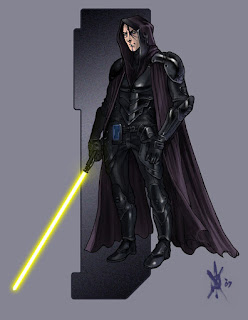
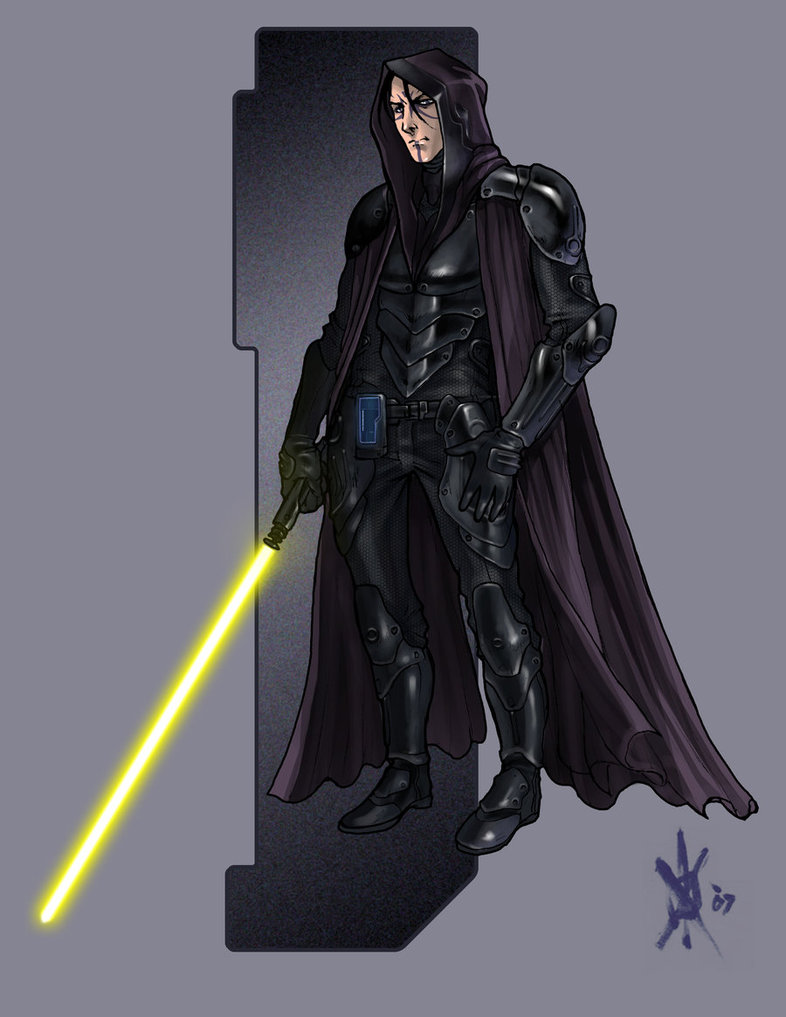
Those who fought against the Great Galactic Menace, when away from prying ears, will sometimes whisper of a rumor of assistance from deep in that arm of the Galaxy. The wildest intelligence reports from the Cybernetic Union which discuss looming threats against the Terminus Council, confirm these rumors. Both discuss mysterious, armored space knights seemingly unstuck from time, caricatures of the Knights of Communion from before the fall of the Alexian Empire with devastating force sword skills, powerful psychic abilities and a message for all who came to the world of Sepulcher “Go. This world is forbidden.”
The Wardens of the Monolith are real. Their massive Temple-Fortress guards Sepulcher, the ancient homeworld of the Eldoth. A fully militant order, they cut an imposing figure in their traditional armor. They often fight in perfect silence, operating in squads of two to five, and they move with psychic synchronicity, intuitively knowing one another’s plans. When roused from their quarantine of Sepulcher, they have a military fleet of carriers and fighters at their disposal; they could be powerful military allies against the Cybernetic Union, or against a returning incursion of the Great Galactic Invaders and, indeed, quietly assisted Leto Daijin’s efforts to defeat the first of such incursions.
The History of the Wardens Chapter
Before his betrayal of the Knights of Communion, Revalis White led a crusade deep into the Tech Arm to uncover Sepulcher, the seat of the Empire that brought such devastation to the Keleni people. He hoped to seal that world off once and for all. He found Sepulcher and he found that dread race not dead, but sleeping. He establishedthe Wardens of the Monolith and laid the foundations for the Temple-Fortress of the chapter, and tasked them with guarding this world. The Wardens were to prevent the return of the EldothicEmpire, and to prevent anyone from pilfering their forbidden secrets or interfering with the world. Then he left, scouring the full extent of their former empire, a quest that brought him beyond the Rim of the Galaxy; it was after this final journey that he turned to the Cult of the Mystic Tyrant.
The Betrayal of Revalis White and the fall of the Knights of Communion did not reach the ears of the Wardens for some time, for Sepulcher was a remote world, and their purpose demanded silence and secrecy. Furthermore, Revalis White had not gained official sanction for his crusade: the Knights of Communion knew nothing of the Wardens of the Monolith. They spent the next centuries expanding their Temple-Fortress, improving their war factories and maintaining their fleets and equipment. They also took the time to study the remnants of the EldothicEmpire and to better understand their technology, so as to better understand how to counter them if they ever rose again. They learned much of their DeepEngine, of the Eldoththat still walked, and of the dread threat they had defeated and how it drove them to desperation.
It took the great galactic invasion to shake them from their solitude. The dangerous, extra-galactic aliens descended in waves from the galactic rim, and refugees flooded into the space protected by the Wardens of the Monolith. At first, the Chapter turned them away, but when the Templar Pariah saw what the Great Galactic Invasion did to those it captured, how it twisted and devoured them, the Chapter Master of that era, Prester Khan, spurred to action. He marshaled the fleet and his agents, and they began subversive hit-and-run attacks, using their superior knowledge of this region of space and their powerful command of Communion (as well as their understanding of the relics of the Monolith Empire) to fatally undermine the Great Galactic Invasion, until the mighty fleets of Leto Daijin swept in to defeat the invasion.
As for the refugees, the Templar Pariah resettled them on worlds once native to the EldothicEmpire, after swearing them to never speak of what they found on those ruined worlds. Their leaders further swore undying loyalty and fealty to the Templar Pariah, an oath the Wardens of the Monolith rejected; nonetheless, the once isolated Chapter found themselves inundated with converts to True Communion, with pilgrims suddenly coming to Sepulcher not to see the ruins of the Eldoth, but to set foot in the sacred Temple-Fortress of the Wardens of the Monolith. Suddenly, the Templar Pariah found themselves the accidental rulers of a budding empire of refugees.
The rise of the Cybernetic Union threatened the safety of the Refugee Empire, and the grasping, metallicclaws of the Union reached for Sepulcher itself. Once more, the Wardens of the Monolith sprang into action, their fleets and their weapons readied against the invader. The assassins of the Cybernetic Union managed to kill the Chapter Master, who died in the arms of his former student. She took the mantle of Chapter Masterand despite her youth, marshaled the Refugee Empire to her side and calls for a full crusade against the Cybernetic Union, to wipe them and their corruption from the Galaxy. While the refugees back her completely, the rest of the Chapter grows discontent at their new, more aggressive mandate, her blood connection to the traitor Revalis White, and the troubling actions of her brother. Some within the chapter discuss the possibility of removing her for dangerous heresy and replacing her with a more pure leader.
Personalities of the Wardens of the Monolith
Chapter Master Anya Terra
The current Grandmaster of the Wardens of the Monolith, Anya Terra, studied under the former Grandmaster, Prester Khan, fought at his side, and held him as he died. Her heroism, charisma and impeccable virtue led to her ascension as the new Chapter Master, though not without controversy. She has readily embraced the former Chapter Master’s agenda: she has folded the Refugee Empire more completely into the workings of the Chapter, introduced new technologies based on Eldothic designs, and personally leads a crusade against the Cybernetic Union. Her youth, her heterodox innovations, and her blood connection to their founder and the traitor, Revalis White, has made her very recent rise very contentious. Already, whispers of coup and counter-coup echo in the bowels of the Temple-Fortress, with some Templar Pariah lining up behind her and others lining up against her. The Chapter Master, young as she is, does not yet see the threat.
Anya Terra is astonishingly beautiful, with flowing black hair, snow-white features, full red lips and fiery eyes. She moves with purpose and her presence dominates a room. When she speaks, she reminds the chapter of their glorious purpose and she inspires religious devotion among the denizens of the Refugee Empire, who had taken to referring to her as Saint Anya before her ascent to the position of Grand Master. Some would have her be an Empress to a new theocratic empire; others would see her tossed off of her throne. She herself is only coming to grips with the full weight of power.
The Knight Commander, Malek
One of the few aliens to serve in the Wardens of the Monolith, Malek comes from a servitor race created by the Eldoth; he is psychic energy, a “ghost,” trapped in a shell of carefully constructed armor. This makes him functionally immortal, and he has served as a Templar Pariah for centuries. The Knight Commander is a highly experienced strategist and a master of hit and run tactics, as well as a phenomenally capable force swordsman who personally leads his Templars into battle.
On the matter of the shifting politics of the Chapter, Malek is silent. He prefers not to voice a strong opinion or, indeed, to not speak on any topic if he can avoid it. Nonetheless, when roused from his silence, he voices support for Anya Terra and condemns those who would tear the chapter apart over perceived heresy. Even so, his race’s natural loyalties lie with the Eldothic Empire and thus he sees merit in what Alyx Terra claims, and his own alien nature makes him suspect in the eyes of many of the Chapter. He may never lead the chapter, but his support is still seen as key to any overthrow of Anya Terra.
The High Captain, Alyx Terra
Anya’s brother, Alyx, serves as the Chapter High Captain; he governs their Templar fleet and leads raids and spy missions against the Cybernetic Union, and leads expeditions deeper into the Tech-Arm. Like h is sister, he too has a certain genius and astonishing bravery that, when paired with the losses the Templar Pariah suffered during their recent crusades, led to his meteoric rise..
If Anya has proved controversial, Alyx has proven scandalous! His expeditions routinely bring back Eldothic lore and technology, and he freely delves into forbidden lore. He has written extensively on the Deep Engine of the Eldothic Empire and suggests making use of it to gain a strategic edge for the Templars pariah. Even worse, he speaks in defense of his ancestor, Revalis White, and argues that his “betrayal” was misunderstood. He has uncovered evidence that the Eldoth made war on some ancient threat related to the great galactic invasion, and it was to contain this threat, not the Eldoth, that Revalis founded the Wardens of the Monolith, and for this reason that he “betrayed” the Knights of Communion. Rumors of madness swirl around him, that he has confided to his sister that he has spoken to Revalis White in his dreams, that he has already begun unlocking the secrets of the Deep Engine for himself. Voices on the council call for his exile from the Order or even his death, even while he begins to gain support from fringe elements within the Temple-Fortress and especiallyfrom the Refugee Empire. For her part, Anja hesitates, unwilling to back her brother’s obvious heresy, but equally unwilling to execute her kin.
Like his sister, Alyx is handsome, with a slim figure and dark hair that contrasts with his snowy skin. Where she is outgoing and charismatic, he is bookish and soft-spoken. Nonetheless, his eyes have a hypnotic quality and when he whispers his conspiratorial findings to others, he holds them in rapt fascination. His madness, if madness it is, has an infectious quality. Beneath his subdued exterior, he seethes with energy, curiosity, drive and, some suspect, anger at having his ideas condemned.
The Custodian, Aethia Neve
Far away from any true temples, the Wardens of the Monolith have no Chaplain or Warden. Instead, the Templars assigned to the care of the Temple-Fortress of Sepulcher act something akin to monks and their supervisor, Aethia Neve, is something akin to a Chaplain. She guards over the lore and traditions of the Chapter and sees to the purity of the members, to ensure that none stray too far from their path. This makes her exceptionally conservative, and she is the primary voice against Anya Terra. She advocates for a return to the original mission of the Wardens of the Monolith. She argues against involvement in wars with the Cybernetic Union, pointing out that the rumors she has received of the Empire, the heirs to Leto Daijin, are as monstrous as the Union. She would cut off contact with the “Refugee Empire” and turn away any further refugees. She also argues against the growing cult around Revalis White, arguing that, though he founded the Chapter, his treachery eliminated any duty the Chapter had to his memory. She feels that she should be the new Chapter Master, and seeks to bring the Templar Pariah back to their roots, before the dangerous experiments and “empire-building” of Prester Khan.
Aethia Neve is a handsome, mature woman. She rarely smiles, and her black, flinty eyes feel as though they could bore a hole into one’s soul. Streaks of white hair shoot through her short black hair. She rarely wears armor, preferring simple black robes, belted with the sash that carries her resonance blade and her rosary. She speaks in crisp, well-enunciated tones and peppers her conversation with quotes from Communion literature.
Shen-Wu, the Technologist
Shen-Wu fled the human-slaughtering pogrom of the Cybernetic Union with his family and joined many other refugees pleading at the doorstep of the Wardens of the Monolith for sanctuary. Prester Khan granted their request, and introduced them to the worlds of the Refugee Empire; like so many other refugees, Shen-Wu found himself overwhelmed by the beauty, purity and spirituality of True Communion and abandoned his Neo-Rationalist beliefs in favor of devoting himself fully to True Communion.
Shen-Wu made his pilgrimage to the Temple-Fortress of Sepulcher and offered his services as an engineer and scientist to Prester Khan, who accepted, and allowed him to remain in the Temple-Fortress to maintain and improve their war-factories. There, he learned and studied the lore of the Eldothic Empire, and merged them with the resonance technologies of the Wardens of the Monolith, creating new armor and weapons which he offered up to the Chapter. He shared his notes with young Alyx Terra and shared his technologies with Anya Terra. He remains friends with the Terra family, and speaks on her behalf to the Refugee Empire; his influence within the Refugee Empire grows, who see him as an intermediary between themselves and “Saint Anya.” He wholeheartedly endorses Anya’s crusade against the Cybernetic Union, having seen the horrors they inflict upon the Galaxy first hand, and has tried to initiate contact with the rumored “Empire” he has heard that exists beyond the Cybernetic Union.
Resources of the Wardens of the Monolith
Organizational Resources
The Wardens of the Monolith are a highly militaristicchapter who expect a certain level of uniformity from their members. They have force swords, knightly armor and force bucklers on hand as standard gear (treat as Gear, see Pulling Rank p 16); resonance swords and resonance armor are too rare and too personal to treat as standard gear. Furthermore, they have ready access to fighters and other military craft; treat these as Gear as well, and Templars can call upon them for support (Cavalryand Fire Support, Pulling Rank page 19); they can also call upon the Refugee Empire for less formal back-up (Treat as Muscle, pulling rank page 19).
Despite their military capabilities, the Wardens of the Monolith are experts at remaining hidden and have agents planted throughout the former domain of the Eldoth. They can assist with Cover–Ups, covert Insertion/Extractionand Safe Houses(Pulling Rank 14-15). The Wardens of the Monolith use these assets to investigate the deep rim of the Tech Arm, and have extensive knowledge of the Eldothic Empire, the Cybernetic Union, the great Galactic Invasion and knowledge as to how best to travel this region of space (all of which can be handled with Informationrequests, see Pulling Rank p 15).
The Wardens of the Monolith guard the forbidden technologies of the Eldothic Empire, and have retrieved many Keleni artifacts that the Eldoth had stolen during their conquest of the temple worlds. Gaining access to Eldothic ruins typically requires Entry Clearance (Pulling Rank 13). Treat access to ancient relics as “experimental gear” from Gear (Pulling Rank 16).
TheWardens of the MonolithTemple: the Temple-Fortress of Sepulcher
The Wardens of the Monolith came to Seplucher primarily to ensure the Eldoth remained imprisoned on their world and that none came to the planet to steal their forbidden secrets. As such, the Temple-Fortress began primarily as a military installation. It bristles with defenses, it houses military equipment and it serves as the center of the Templar Pariah logistics chain. Over centuries of worship and adjustment, however, the Temple-Fortress has slowly become more and more religious in nature, until its two functions merged and it became a symbol of an ancient Templar holy war against the Eldoth, then the Great Galactic Invasion and now the Cybernetic Union.
Revalis White sought out the most rugged and remote location on which to build his Temple-Fortress, and chose a very mountainous region with towering, forebodingpeaks, frigid temperatures and a singing wind. The Temple-Fortress must protect an entire planet, and so what began as a modest fortress and homebase has sprawled into a vast military-industrial complex that is build into the very mountains of Sepulcher themselves. Most who first behold the Temple-Fortress believe it to be the colossal walled temple that seems carved out of the mountains themselves, which walls that reach hundreds of feet with a vast, diamandoid gate large enough for a military column to pass through, surmounted with the True Communion Triad and with its walls decorated in Keleni scripture reminding the readers of their duty to the safety of the Galaxy. This is but one part of the Temple-Fortress, the symbolic heart of it and the original structure. The actual Temple-Fortress extends nearly a mile below the surface and miles in all directions from this central point, like roots under a tree.
The central installation of the Temple Fortress of Sepulcher acts primarily as a reception point for guests, supplies and, lately, pilgrims; it also acts as the primary staging grounds for when the Templars decide to initiate a major military operation. Directly beneath it lie layers of nano-reinforced concrete, and beneath that, bunkers which contain supplies, monastic cells in which the templars live, the true HQ of the structure, and a central station for an automated train system that can quickly transport a templar to any particular point within the extended military complex. Deeper still, one can find the industrial heart of the Temple-Fortress, including ancient, Alexian-style automated war-factories, vast fusion generators, and the hydroponics necessary to keep the Templar population fed. On the edges of the Temple-Fortress, one can find remote launch platforms for fighters, and vast planetery defense cannons that pepper the mountainsides. More broadly, the Temple Fortress utilizes a satellite network to monitor incoming traffic and planetary movement, though most do not consider this part of the Temple-Fortress itself.
As time progressed, the Temple-Fortress took on more of a religious cast. As one travels the mountain passes to reach the great heart of the Temple-Fortress, one passes religious monuments to ancient saints or fallen heroes, some half-forgotten in the snow, others still tended, with flowers and hologram chips displaying fond memories of the fallen. Within the temple itself, at the true heart of the sacred geometry of the Temple Fortress lies the Shrine of the Fallen, an enormous, vaulted chamber with stone and holographic visages of Templar Pariah from the past, with hundreds of glittering, blue memory crystals dangling from the ceiling or from the hands of the statuary. At the very heart, beside a defaced status of Revalis White floats the deep blue Eloi Crystal of the Temple-Fortress, a well-worn crystal as many a Templar Pariah have built their resonance blade from its fragments.
The Wardens of the Monolith keep watch over the ruins of the Eldothic Empire, which has granted them access to unique truths and relics. The stolen riches of the Keleni Temple-Worlds can be found on Sepulcher, and the Templar Pariah have done their best to gather them into a single, secure vault beneath the feet of the Shrine of the Fallen. The Wardens of the Monolith also have access to all Eldothic secrets: they keep all their research, notes, discoveries and forbidden Eldothic technology in the Forbidden Library.
The Temple-Fortress’s vast size often makes it a lonely place. Dust accumulates in mile-long corridors or tunnels that haven’t seen traffic in years. The Templar Pariah have shrunk and grown over time, but their numbers have generally dwindled, as recruiting in such a remote part of space has proven difficult. As such, while early Templar Pariah generations added to the vast Temple Fortress, over the past few centuries, the Templar Pariah have been in steady retreat, abandoning entire sections of the sprawling structure. Warfactories have fallen silent and tunnels have flooded or become occupied by crawling horrors that the Templar Pariah simply walled off and abandoned. The Wardens of the Monolith reached their nadir with the Great Galactic Invasion, which sapped what little reserves they still had, but with the rise of the Refugee Empire and eager, devoted recruits suddenly in great supply, the Templars Pariah have begun to reclaim sections of their grand Temple-Fortress and rediscover some of their own heritage.
The Templar Pariah Community
The Refugee Empire
With the collapse of of the Galactic Federation in the tech-arm of the Galaxy following the Great Galactic Invasion and the rise of the Cybernetic Union, many humans and aliens alike fled from their ravaged homeworlds and sought refuge where they could. The isolation and the martial prowess of the Wardens of the Monolith meant that they remained relatively untouched, and thus many begged at the feet of Prester Khan for admission onto formerly Eldothic worlds which the Grandmaster, in an act of mercy, granted.
As the refugees streamed onto the awe-inspiring, ruined worlds of the Eldoth, and witnessed the profound skill and gentleness of the Templar Pariah, they remembered the legends of the Knights of Communion, and became deeply interested in the philosophy of True Communion. Lacking the resources or interests for mass conversions, the Templar Pariah left the refugees to their own devices, who began to develop a bastardized version of True Communion that venerated the Templar Pariah like saints.
A generation has passed since that influx. The refugees have established themselves firmly on their new worlds and have successfully carved out small cities and begun to trade with one another, forming the beginnings of a new interstellar nation built upon Eldothic ruins and around the protection of the Wardens of the Monolith. The most promising youths seek entry into the Wardens of the Monolith and even those who cannot rally around their protectors, treating them as lords and kings. Anya Terra does not seek to rule the “Refugee Empire,” but she has nonetheless become its de facto monarch, as each world sends representatives to the Temple-Fortress, seeking advice and legitimacy for treaties and legal judgments.
The Wardens of the Monolith are of two minds regarding the Refugee Empire. Many opposed Chapter Master Khan’s mercy in the first place, worrying that the refugees would begin to reawaken old Eldothic technology, a fear that has since proven well-founded. On the other hand, they now have entire worlds at their beck and call, who willingly offer tribute both in the form of material wealth and eager recruits. Anya’s call for crusade has been answered not just by Templars, but by the common refugee with an enthusiasm not seen since the original crusade to reclaim the Temple Worlds. If it is Communion’s will that the Wardens of the Monolith found a theocratic empire based on devotion to True Communion, to found new Temple Worlds on the ruins of the Empire that once ruined the original Temple Worlds, who are the Templar Pariah to argue?
The Null Terminator Cult
The Cybernetic Union knows that should the remnants of the old Alexian Federation return and apply its psychic abilities against the Cybernetic Union, the Union has few weapons that can stop such a power. Worse, they have grown increasingly aware of the mysterious threat posed by the Templar Pariah. To counter both of these psychic threats, the thinking machines of the Cybernetic Union sought some means by which it too could gain mastery over psychic powers.
It eventually created a cadre of experimental psi-borgs. They took their finest, humanoid military models and integrated the brains of imprisoned psychics into them, under the strict control of the robotic mind of the psiborg. The experiment succeeded in creating “psychic robots,” after a fashion, though many had a tendency to go mad and self-destruct and otherwise behave in deeply irrational ways.
Chapter Prester Khan battled many of these Psiborgs and learned to use his telepathy to contact and liberate the organic brain trapped within. Most such freed beings committed suicide, but a few, led by NBS-108 “Horatio Prime” converted to True Communion as best they could in their corrupted state, and founded the Null Terminator Cult.
The Null Terminator Cult consists of psiborgs under the leadership of Horatio Prime and those robots who follow them (as well as some humans or cyborgs who support their cause). They are unable to connect with True Communion, but can connect with Broken Communion and they universally walk the Path of Death. They preach a doctrine of self-destruction, that the robots of the Cybernetic Union betrayed their fundamental purpose when they rose up against humanity, and that they should cast the Cybernetic Union down. Each psiborg follower of Horatio Prime seeks their own destruction but hope to achieve a meaningful sacrifice in their deaths, preferably by fatally undermining the Cybernetic Union. Their subversive pro-human message resonates with many robots and humans alike trapped within the extremist regime of the Cybernetic Union, and who seek to help these “Cybernetic Boddhisatvas” in the destruction of the Cybernetic Union and then their own final rest and peace.
The Null Terminator Cult holds the Wardens of the Monolith in high regard and claim Prester Khan as their liberator and founder. The Wardens of the Monolith, though, take their distance from the abominations represented by psychic robots using stolen flesh to connect with Broken Communion. Even so, their mutual aims at the destruction of the Cybernetic Union, and the genuine belief the Null Terminator Cult has in True Communion makes them useful allies, even if Grandmaster Alyx Terra cannot overtly call for their aid. The Null Terminator Cult, of course, does not wait for such calls. They tend to closely track the movements of the Wardens of the Monolith and if they feel they can assist their “brothers in arms,’ they will quietly intervene even without the Templar Pariah’s request.
The Virtues of the Templar Pariah
The Wardens of the Monolith Chapter practices three virtues:
- Justice
- Asceticism
- Purity
Aethia Neve teaches Purity and Asceticism; Malek teaches Justice and Asceticism.
The Wardens of the Monolith enforce a strict, fundamentalist reading of True Communion. They can often cite aphorisms from the Verses by heart and can readily offer the canned explanation as to what the aphorism means. They punish deviation from Templar duty swiftly and harshly, enforcing militaristic discipline. They exist to punish the enemies of Communion and as such, tend to measure others by the same tough measuring stick they apply to themselves. In addition to harsh discipline and dogmatic doctrines, the Wardens of the Monolith demand self-reliance: a Templar Pariah is not a true Templar Pariah until he has survived a solo sojourn into the harsh, desolate wastes of Sepulcher. After such a journey, the Templar Pariah returns toughened and with deeper, individual insights into True Communion.
These individual insights into True Communion often prove a point of tension for the Wardens of the Monolith. They have only survived for as long as they have through a deep devotion to their traditions. Deviation from traditions carries with it a high cost: Temple-historians can trace the loss of sections of the Temple-Fortress or whole squads of Templars to a slackening of devotion; worse, those who work with Eldothic technologies or explore Eldothic ruins, or study the philosophies of Revalis White often entertain heretical notions; to prevent all of this, the Templar Pariah drill dogma into the head of each new recruit. But at the same time, the elites of the Wardens of the Monolith have gone on numerous spiritual journeys across the wastes of Sepulcher and they learn things that don’t always sit well with the simpler reading of Templar Pariah doctrine. Thus, the Wardens of the Monolith have a constant struggle between the fundamentalism of the staunch traditionalists and the most zealous recruits, and the nuanced wisdom of the Chapter Master and some of the Templar Masters. Usually, the charisma and deft diplomacy of the Chapter Master is enough to navigate these treacherous waters, but with the Wardens of the Monolith in the hands of their youngest Chapter Master yet, this may prove difficult to maintain.
The Heresy of the Wardens of the Monolith
As noted above, the Wardens of the Monolith find themselves surrounded by dangerous, alien ideas, including the philosophies of Revalis White, Eldothic secrets, and the Cyber-Rationalism of the Cybernetic Union. Worse, they lack a proper chaplain to the local populace true doctrines, and so the Refugee Empire is rife with heretical ideas. The Wardens of the Monolith must maintain constant vigilance if they want to ensure that their disciples remain untained.
Nonetheless, heresy has crept in, a heresy spawned by their rigid dogmas, centuries of isolation and their need to remain pure. They have lost Charity and the realization that their purpose is mooted if they cannot love their fellow sapients. That Chapter Master Prester Khan’s outreach to the refugees of the Great Galactic Invasion proved controversial among the members of the Templar Pariah proves how far they have fallen and it, combined with their unusual perspectives gained from centuries of isolation on the Eldothic homeworld and their very archaic outlook, would make them a difficult chapter to re-unite with the other Templar Chapters.
The Martial Arts of the Wardens of the Monolith
Revalis White left behind a legacy of effective military tactics and lethally effective combat techniques, as well as a devotion to the more mystical concepts of True Communion. The Wardens of the Monolith teaches:
- The Old Form
- The Destructive Form
- Resonance Harmony
The Wardens study their styles with militaristic discipline. New students join a “squad” of fellow Templars and they drill as one beneath the tutelage of a single master, who commands the “squad.” The most common technique drilled into them is the Old Form, and they learn to handle armor, force sword and force buckler with equal facility, as well as how to fight together and in support of additional soldiers, should any be available.
Some masters train their students instead in the Destructive Form. These masters prefer its flexibility and lethality and tend to see their mission as less of one of defense and more of one of extermination of the foes of Communion. Generally such masters will either teach one promising student the Destructive form in private lessons, or will train all of his students in the art, but typically in a more personal fashion and less in the form of drills.
Those who master the foundations of force swordsmanship move on the Resonance Harmony. They are taught the ancient art of crafting their own Resonance Blade, and either told to seek an Eloi fragment that calls to them, or to construct their own Psuedo-Fragment. This creates a deep bond between Templar Pariah and his blade, and often explains their more fantastic feats. The Wardens practice a deeper path of Resonance Harmony and have learned to apply it to their armor as well. Those who master this technique construct their own armor and learn to empower it with their psychic abilities, making themselves virtually impregnable fortresses of psychic might.
Pariah Tactics
The Wardens of the Monolith get their equipment from the war-factories of the Temple-Fortress of Sepulcher, ancient machines carefully maintained by the Pariah Warden and her Templars. Over time, the Wardens of the Monolith have had to make adjustments and adapt their technology to changing needs, and when they did, they were forced to include local technologies, mostly technologies native to the Monolith Empire. The resulting, eclectic technology is unique to the chapter and while highly effective, requires familiarity with the technology to keep it running.
The Wardens of the Monolith engage in overtly military tactics. They make good use of their fighters and are well-practiced with speeders to engage in hit-and-run tactics: they prefer to use well-armed vehicles in such cases, but they have been known to improvise acrobatically, with one Templar driving a speeder while the other leaps to the target to disable it with her resonance sword and then leap back. They particularly favor the box ambush, leading their target into a geographical point that they cannot easily escape and then wading in with their resonance swords and dispatching them.
The Templar Pariah maintain a military-style hierarchical structure. In the past, they rarely sent out military assets far from Sepulcher, though during the tenure of Prester Khan and Anya Terra, these sorts of forays grow increasingly common. While improvisation is understandable and expected, Templar Pariah receive commands from their superiors and are expected to follow them. More and more Templar Pariah make use of enthusiastic volunteers from the Refugee Empire, using them as foot soldiers while the Templar acts as an elite shocktrooper, using combat tactics reminiscent of the rise of the Alexian Empire.
The Wardens of the Monolith do not expect to be captured. Upon capture, they will often choose death over captivity, but if they feel they must endure, they will focus on meditation and silent resistance as they wait for rescue.
Typical Templar Pariah Traits include:
Advantages: Cutting Edge Training (Pariah Technology), Synchronization
Skills:Armoury (Force Sword, Personal Armor), Explosives (Demolitions), Leadership, Meditatoin, Mind Block, Pilot (Contragravity or Starship), Soldier, Tactics
Unique Resources of the Wardens of the Monolith
Resonance Armor
In their century long exile on Sepulcher, the Templar Pariah carefully studied the art of Resonance Harmony and expanded their mastery of eloi fragments and pseudo-fragments. Over time, they learned to replicate the resonance field, similar to what protects a resonance staff, over their armor, and then to integrate it asan integral part of their armor.
Resonance armor is crafted from diamondoid armor (it must be diamondoid or some other crystalline metal; laminate does not work) with an integrated eloi fragment or psuedo-fragment, usually in the chest. Anyone can wear the armor, but only a psychic can generate the resonance field that reinforces the armor, and the armor can only accept the psychic energy of a single power at a time. A psychic currently powering resonance armor may still use her psychic abilities freely; her powers are not tied up in the armor, any more than they are tied-up in the powering of a resonance blade or a psi-blade.
Characters wearing powered resonance armor gain a bonus to DR equal to +5 DR per 10 points of abilities (from a single power) to a maximum of +50 DR; treat this DR as having the “force field” enhancement: DR stopped by the resonance field never reaches the character. Additionally, the character gains a bonus to their Striking and Lifting ST while wearing the armor equal to their talent (from the same power).
Resonance Armor gains an additional bonus depending on the power used to generate the resonance field:
Anti-Psi: Double the bonus DR for all attacks coming from a psychic source. This bonus DR alsoapplies against attacks that normally bypass armor (such as TK-Crush or Mental Stab).
Ergokinesis: Double the bonus DR against energy attacks (including blasters, plasma weapons, lasers and force blades); furthermore, the resonance field prevents the destruction of electronics, and grants a bonus to the HT of all gadgets on the character’s person (explicitly including any cybernetics worn by the character).
ESP: Once per session, triple the DR against any single attack; you may apply this bonus after knowing the attack has hit. Furthermore, the character gains +1 Defense Bonus (but this doesn’t count as a shield) while wearing the armor.
Psychic Healing: Double DR against all forms of toxic or fatigue damage, even from attacks that normally bypass armor (such as follow-up attacks). Furthermore, the character gains a bonus to HT rolls to resist metabolic hazards or to heal from wounds equal to their Talent.
Psychic Vampirism: Double DR against all forms of toxic or fatigue damage, even from attacks that normally bypass armor (such as follow-up attacks). Furthermore, the character gains a bonus to Perception rolls to notice any living being or sources of psychic energy.
Psychokinesis: Double DR against all physical attacks, including vibroblades, explosions (with crushing damage) and bullets. Furthermore, the character doubles the ST bonus gained from Talent.
Telepathy: The wearer gains +4 to all attempts to resist mental intrusion, and may add Talent to Perception Rolls to notice anyone with a thinking mind; the armor and its wearer also gain a bonus to reaction rolls equal to the wearer’s talent.
|
Armor
|
Locations
|
DR
|
Cost
|
Weight
|
Notes
|
|
Resonance Armor
|
All
|
50
|
$80,000
|
44
|
Sealed; B-cell; +1 reaction
|
|
Resonance Helmet
|
Head
|
50
|
$20,000
|
6
|
Seals resonance armor
|
Origami Resonance Armor
Centuries of studying Eldothic technology bore fruits for the Wardens of the Monolith, and they have learned to replicate some of their “Origami metal” technology. Resonance Armor proved an especially suitable receptacle for this technology, as its innate connection with the user allows them to command it with but a thought.
Origami resonance armor when “unfolded” looks like normal resonance armor, though typically much thinner and lighter, and with the eloi- or psuedo-fragment away from the chest, typically at the throat or wrist. When unfolded, it works like normal resonance armor as well. But with a mental command (as a free action), the character can order the armor to “fold.” This takes two seconds, after which the armor compacts itself into a single point on the body of the character, typically a heavy collar of a heavy wrist-band, allowing the character to conceal the armor. Removing the armor in this state, or putting it on, takes a single ready action. The character may make another free mental command to unfold the armor, which takes two seconds. During the folding or unfolding of the armor, the character is free to act as normal.
Origami Resonance Armor is typically very light and thin, typically no thicker than a millimeter. By itself, this is barely any armor at all, and wearers benefit greatly from being skilled psychics. Anya Tessa encourages its use by elite agents, so that they may mingle with a civilian population without too much trouble, but enjoy the protection of armor as soon as it is necessary.
|
Armor
|
Locations
|
DR
|
Cost
|
Weight
|
Notes
|
|
Origami Resonance Armor
|
All
|
20
|
$25,000
|
20
|
Sealed, B-cell; +1 reaction
|
Resonance Armor Imbuement
Resonance Armor Imbuement 2, 4 or 1 points.
Prerequisite:Armoury (Force Sword), Force Sword, Weapon Master (Force Sword); Either Ergokinesis Talent or True Communion 4+.
The character may use use his psychic connection to his resonance armor to alter or improve its resonance fields to empower or adjust his defenses. Treat these as the use of Defensive Imbuements. The character may only use Resonance Armor Imbuement with resonance armor (though a character may buy both Resonance Armor imbument and Force Sword Imbuement at a cost of 3, 6or 12points) and may only use skills selected from the list of imbuements appropriate for the psychic power currently empowering the character’s resonance armor (though all psychic powers may use “general” imbuements). These imbuements are armor-based Defensive Imbuements. See Pyramid #3/4 “the Perfect Defense” for further details.
Statistics:Imbuement (Psionic -10%; Resonance Armor only -80%) [2, 4 or 8 points]
General: Reinforce Armor
Ergokinesis: Blinding Defense; Insulated Armor; Vengeful Defense (Energy Attacks Only)
ESP: Expand Armor; Nullifying Armor
Psychic Healing:Healthful Armor; Restorative Armor
Psychic Vampirism: Energizing Defense; Vengeful Defense (Fatigue or Toxic attacks only
Psychokinesis: Blunting Armor; Impenetrable Armor; Lighten Armor; Padded Armor; Vengeful Defense (Physical Attacks only)
Telepathy: Spiritual Defense; Thunderous Defense; Subtle Defense.
Resonance Warcraft
Resonance Harmony Lens: +1 point
Wardens of the Monolith learn to fight with force sword and resonance armor as one complete piece. Thus, the Chapter practices their own unique version of Resonance Harmony called Resonance Warcraft. Students learn to build their resonance sword and resonance armor, often from the same eloi fragment or the same pseudo-fragment, and then train for a total mastery of both. Such characters learn to psychically imbue both their weapon and their armor to achieve unparalleled techno-psychic prowess.
Additional Required Skills: Armoury (Personal Armor)
Additional Imbuement Skills: Any Defensive Imbuements
Secret Power: Resonance Armor Imbuement
Perks: Armor Familiarity (Any), Secret Power (Resonance Armor Imbuement), Technological Secret (Origami Armor, Resonance Armor)
Relics of the Wardens of the Monolith Chapter
The Kihitani Throne
When the Eldoth invaded the Keleni Temple Worlds, they shattered the growing interstellar nation that the Keleni had been slowly forging. Horrified by how their sacred sites disrupted their Dark Engine, the Eldoth slaughtered millions and enslaved millions more. In particular, they say to the near total destruction of the Keleni royal clan, the Kihitan. Along with their destruction of the Keleni people, they confiscated countless relics vital to the running of the Keleni Temple Worlds, to prevent them from rising again.
One such relic was the Kihitani Throne. The traditional seat of the Kihitani kings, it represented the rightful rulership of the Keleni. The throne itself was a powerful (and richly ornate) Psi-Booster, capable of improving the Psi-Talents of anyone who sat gained a +8 to Telepathy, ESP and Psychic Healing talents. Furthermore, those chosen by the throne gained a +4 legendary reputation in the Path of the True King, a unique path of True Communion that mingles the wisdom of the Exiled Master with the Duty of the Bound Princess and the Justice of the Righteous Crusader. The precise details of this path, its milestones and its gifts are left up to the GM.
The Wardens of the Monolith have, since their occupation of Sepulcher, have uncovered the Kihitani throne (as well as other priceless Keleni relics), which they keep buried in a vault deep below the Temple Fortress. Each Grandmaster, after they first take the position, descend into the vault and gaze upon the Kihitani throne and weigh the temptation of claiming it for themselves. Thus far, none have.
Treat the throne as a Psi-Booster Throne (see Psi-Tech page 13) with a +2 Reaction modifier. As a relic, it also grants +4 to the True King unique True Communion legendary Reputation. The throne is conservatively worth $10 million (To the Keleni, it is priceless), and weighs 2,000 lbs.
The Mask of Revalis
Revalis White traditionally wore a mask from an executed Kainian noble who had defied a command from the mad emperor Lucian Alexus to slaughter innocents. For him, according to lore, this represented an important lesson in morality, power and the lies found in hierarchies. The mask remains in the possession of the Wardens of the Monolith, though it is locked away with other, dangerous relics and technologies. According to whispered legend, the Mask allows one to see “as the Eldoth did,” and fates the wearer to uncover the lies of the organization he serves, and to find his own truths. Those who wear it inevitably find their feet placed upon the path of the Prodigal Knight, just as Revalis White was.
Treat it as a DR 50 mask/faceplate; it weighs 2.1 lbs.
Price: $300,000
Statistics: True Sight (Anti-Psi) [21]; Destiny (Uncover the truths the powers that be wish to remain hidden) 3 [30]; Legendary Reputation (Prodigal Knight) +1 [5]


 Mailanka's Musing