Patreon Poll: Trader Tech 2

Continuing from the poll earlier this week, I have a new set of polls for Trader Tech.  These cover the elements of their military technology that lie outside of the individual.  This includes:

This poll is open to all Patreons of the Companion ($5+) tier.  As usual, please leave a comment as to how you see their doctrine working or what nuance you’d like to add.  I definitely take comments into account.
I know I’ve not yet released the more detailed robot rules, but hopefully you’ll have a sense of what you can do with robots and how they might serve the Traders militarily.  You guys seem very interested in giving the Traders robots, so I hope that particular poll will be useful to you even without worked examples of robots from other cultures.

The Redjack Wildcat-Class Modular Heavy Fighter

ST/HP: 130

Hand/SR: +1/4*

HT: 13

Move:10/400(+13)*

LWt.:16.5

Load:7.25

SM: +5

Occ.:1ASV+1rx

DR:50/25

Range:20,000, 2jumps (Rating 1)

Cost:$8.75M

Loc.: g2Wi3rR

Stall:40*

Total Chase Roll:+14(+16with afterburner)

*The Wildcat is equipped with an Afterburner which improves the Move to 15/500(+14) and gains +1 handling and consumes four times as much fuel (reducing range to 5,000 miles, if used continuously). The Wildcat has an accessory module slot an armor module slot which, if loaded with a heavy slot, reduces the handling to +0/4, Move to 9/400 (+13) (14/500 (+14) with afterburners) for a total chase roll of +13 (+14 with afterburners) and increases the stall speed to 45. See additional modules for more.

†The Wildcat has 50 carbide composite DR on the front and 25 on the rest; double DR vs shaped charges or plasma attacks. The Wildcat has an accessory module slot and an armor module slot that may improve these numbers.

Notes

Redjack Heavy FighterElectronics:

  • Medium Tactical Ultra-Scanner: 30-mile scan, 3-mile imaging/bioscan; 360°;
  • Targeting Computer: +5 to hit target with a scan-lock.
  • Night Vision Sensors: +9 nightvision, ×8 magnification (up to +3 to aimed attacks, if the vehicle aims for three turns).
  • Distortion Jammer: -4 ECM penalty for missiles; +2 to jam missiles.
  • Tactical ESM: +1 to dodge missiles.
  • Medium Holographic Radio: 1,000 mile range (orbital); “palm sized” holographic console.
  • Security and Safety: Simple Locks; Ejection Seat.
  • Accommodations: Bunks for 2; Minimal galley/toiletries; Total life support.
  • Hyperdrive: Rating 1, with sufficient fuel for 2 jumps.
  • Hyperium Reactor: 24 hours endurance at full speed (6 hours with afterburners).

The Wildcat has room for a twopilots and an exposed slot for a robot assistant. The Wildcatuses computerized controls, allowing either pilot or the robot to take full control of the fighter; generally the “forward” pilot handles piloting and navigation, while the second pilot handles electronics and communications, and the robot handles navigation and maintenance.. The robot has access to the hyperium reactor, hyperdrive and traditionally handles hyperspatial navigation and on-the-fly repairs. Both pilots have “crawl spaces” that allow them to reach their minimal bunks located in the central part of the heavy fighter; it takes one minute to move from the cabin to the piloting controls.

The Wildcat has three Weapon Modules, one central in its body, allowing for a very heavy, one-ton nose-cannon, and two wing-mounted, half-ton modules. It takes 30 minutes with proper tools to change any of these modules, and 1 hour to change them without the proper tools.

Main Weapon Modules

The Main Weapon modules run the length of the body, positioned in the nose of the craft.

The B00-M Heavy Plasma Cannon Module: Sometimes called the “double-aught,” the B00-M Cannon is themost commonly used main weapon module for a Wildcat. This heavy fighter cannon exchanges rate of fire and reliability for devastating firepower. The B00-M can only fire once every three seconds, and risks overheating after firing more than three shots without waiting 10+ seconds between shots, and needs a full minute to cool down. However, it hits with an unparalleled force for a fighter, and many pirates prefer it to missiles for taking down hard targets, because then they needn’t carry stockpiles of weapons. In Action Vehicular Combat, the B00-M can technically fire once per turn, as an optional rule, the GM can require the pilot to wait one turn between turns to fire it, our to make a Gunnery (Beams)-4 roll to vent heat and cycle the charge faster. It can also aim at a spot nearits target, gaining a +4 to hit, but sacrificing the armor modifier.

The MIN-33Light Laser CannonModule:Sometimes called the “Minnie” the MIN-33Laser Cannon is a lighter variant of the MIN-3R Artillery laser cannon. Redjack advertises it as “light mining equipment” intended for carving up metallic asteroids, but it fares remarkably well against well armored ships, provided the fighter can close in enough to focus the full power of the weapon on the target, and keep it on the target.It deals full damage at Extreme range, and half damage at Distant.

The SP74-TRHeavy Plasma Gatling Module:Popular with Wildcat pilots who expect to dogfight, this gatling plasma cannon lays down a serious barrage of plasma shots more than powerful enough to kill other fighters. It can also aim at a spot nearits target, gaining a +4 to hit, but sacrificing the armor modifier; most Wildcats will simply lay down a barrage of fire, like a focused flak cannon, near their target and hope the saturation fire will hit their target.

The NUK-3 Disposable Torpedo Bay:A more popular weapon for third parties (especially the Alliance), the NUK-3 allows a full isomeric torpedo to be loaded where the main gun would normally. This results in an odd look for the craft, with a closed “launch bay” where the gun would normally be, unless the torpedo has been fired, in which case a gaping, open bay sits where the main cannon would be. Wildcat pilots that load the NUK-3 usually have at least one wing-cannon loaded, in case they get into a dog fight. The NUK-3 takes so long to load and, being a single-shot weapon, generally works best in large military formations where fighters can be “expended” in their attack and then return to their carrier for a 30-minute reload.

Weapon

Dmg

Acc

Range

Ewt

RoF

Shots

ST

Bulk

Rcl

Notes

NOV-4 Heavy Plasma Cannon Module

6dx30(2) burn ex

6

4 mi/12 mi

4000

1/3

15/2F

M

-10

3

[1]

MIN-3R Mining Laser Module

5d×15(10) cut inc

12

500/3 mi

4000

1

25/5E

M

-10

1

SP74-TR Heavy Plasma Gatling

6dx15(2) burn ex

6

3mi/
8mi

4000

8

88/
3F

M

-10

3

Isomeric Torpedo Bay

6d×500 cr ex

3

300/
10 mi

2500

1

3

150M

-15

1

Wing Weapon Modules

The Wildcat has two separate wing modules, one per wing, rated for 1200 lbs.

The BAN-6 Plasma Cannon Module: Redjack designed the BAN-6 for lighter vehicles, and the Wildcat rarely loads it. Ultimately, it’s a smaller, lighter version of the B00-M heavy plasma cannon, and follows the same rules: it risks overheating if it fires 3 shots in a row without letting the heat dissipate for 10 seconds between shots, at which point it needs a full minute to cool down. In Action Vehicular Combat, the BAN-6can technically fire once per turn, as an optional rule, the GM can require the pilot to wait one turn between turns to fire it, our to make a Gunnery (Beams)-4 roll to vent heat and cycle the charge faster. It can also aim at a spot nearits target, gaining a +4 to hit, but sacrificing the armor modifier.

The SC4-TRPlasma Gatling Module:Most Wildcat pilots consider this a good backup weapon, especially if they’re carrying heavy, anti-corvette or anti-capital weaponry in their primary weapon module slot.

The ZIP3RBlasterGatling Module:The most popular Redjack fighter weapon, the ZIP-3R works as a fairly standard blaster gatling weapon; its high rate of fire make it an excellent choice when dogfighting, and it retains the excellent penetration capacilities of blasters, allowing it to more easily punch throw composite or EMA armor, and their superior accuracy make them more popular with ace pilots and patient fighter pilots.

MSML Missile Module:Wildcats can also mount fairly standard 160mm Missile Bays into their wing modules. These tend not to be popular with the typical Redjack market, who don’t like to stock missiles, but third parties, especially the Alliance, love them for their added flexibility and firepower.

Weapon

Dmg

Acc

Range

Ewt

RoF

Shots

ST

Bulk

Rcl

BAN-6 Plasma Cannon

5dx20(2) burn ex

6

2mi/
10mi

1200

1/3

15/3E

M

-10

3

SC4-TR Plasma Gatling

6dx8(2) burn ex

6

3 mi/
10 mi

1200

8

160/F

M

-10

3

ZIP-3R Light Blaster Gatling

6d×4(3) burn

9

2mi/
5mi

1200

16

200/F

M

-10

2

160mm MSML
Plasma Burst Missile

6dx15 burn ex

4

1000/30mi

1200

1

4

M

-15

1

160mm MSML Plasma Lance Missile

6dx30 (10) burn ex

4

1000/30mi

1200

1

4

M

-15

1

Additional Modules

The Wildcat has two additional module socket: a centrally located “Accessory” module slot, and a series of nodes and sockets that allow the connection of an “armor” module slot that layers over the main armor of the vehicle. It takes 30 minutes with the proper tools to change the Accessory module, and an hour to change the armor module, and double if the character lacks the proper tools and environment to change the module.

The additional weight of the module complicates the calculations of the Wildcat’s speed and handling. If any Accessory or Armor module slot is loaded with a Heavy module (or if both are) reduces thehandling to +0/4, Move to 9/400 (+13) (14/500 with afterburners) and increases the stall speed to 45.

Accessory Modules

Redjack AM49 “Silverback” Force Screen Module

Heavy Module

4,000 lbs; $400,000.

The Wildcat can be loaded with a force screen module, the “Silverback” or the “AM49er” that contains two F-cells; the Force Screen lasts for 12 minutes of continuous use and provides 300 ablative, hardened DR; once depleted, the Force Screen can recharge off of the fighter’s hyperium reactor in 12 hours.

Redjack AM76 “Blackheart” ECM Module

Light Module

1000 lbs, $200,000.

The blackheart module, or the “76er” module provides additional ECM resources. It adds additional computing power necessary to engage in hyperspatial navigation without the assistance of a robot and improves the targeting of the Wildcat to +6 per lock rather than +5 per lock. It also provides a 2-mile radius Area Distortion Jammer which uses advanced, proprietary Distortion technology that improves the ECM value of the Wildcat and those in formation with it to -5; it has a Distortion Scrambler that can jam enemy communications out to 20 miles away; finally, it has FTL communication capabilities allowing it to communicate out to 3 parsecs away. Blackheart modules are so common among pirates that some people refer to Wildcats with pirate markings as “Blackhearts” or “76ers.”

Redjack AM420 “Holdout” Shielded Cargo Module

Light Module (Unless carrying more than 1000 lbs, in which case it’s a Heavy module)

Little more than a shielded box in place of an actual module, because the cargo module integrates just as any other module, it makes it difficult to notice and acts as a basic Smugglingtool. The cargo module is also climate controlled and shielded (-6 to scan its contents). It can be used to haul up to 4 passengers in a pinch, but the Wildcat’s life support was not built to handle so many people: either give them some form of breathing mask, or roll the Wildcat’s HT-1, -5 per additional stowaway after the first once per day; on a failure, the life support system begins to break down and will fail within 24 hours. If the “Holdout” module has more than 1000 lbs of cargo, reduces the Wildcat’s Move to 8/400 (or 10/500) and lowers handling by 1.. 100 lbs, $25,000.

Redjack AM110 “Longstrider” Fuel Capacity Module

Light Module

1000 lbs (fully fueled); $500.

The Longstrider module is a simple, self-sealing hyperium fuel tank. It provides four additional “fuel points,” which may be spent to shunt into hyperspace, or provide an additional 12 hours of flight time.

ArmorModules

Armor modules are less comprehensive in their protection of the wildcat than integrated, built-in armor. As an optional rule, called shots for armor chinks automaticallybypass Armor Modules in addition to halving the DR of the Wildat, and disabling the Wildcat’s armor destroysthe Armor Module.

Redjack “Snowflake” Armor Module

Light Module

1000 lbs; $50,000.

One of the most common and cheapest forms of armor available to the Wildcat, this adds gleaming white plates of Cerablate to the whole of the vehicle, giving it its nickname of a “Snowflake.” The Snowflake armor provides an additional +50 ablativeDR (+100 to the front) against blasters, plasma weapons and plasma warheads, and 15 non-ablative DR (+30 to the front)against everything else.

Redjack “Tank” Armor Module

HeavyModule

2500 lbs; $300,000.

The Tank armor module integrates EMA armor onto plates of heavy carbide armor, increasing the DR of the Wildcat to 110/55, with tripleDR against plasma attacks, plasma warheads or shaped charge attacks.

Redjack “Blackout” Armor Module

Light Module

1000 lbs; $100,000

Blackout Armor consists of smooth, matte black plates added to the top layer of the vehicle. These absorb Ultrascanner signals, providing an additional -4 ECM value. Additionally it increasing the DR of the Wildcat to 80/40, butremoves the composite nature of the armor (that is, it no longer doubles against plasma attacks or shaped charges).

ARC “Manticore” Armor Module

Light Module

1000 lbs, $500,000

Redjack, to better market its Wildcats, combined its efforts with ARC and they jointly created Diamondoid armor plates suitable for the Wildcat; Maradonian fleets tend to field Wildcats as a “poor man’s raptor,” and typically equips them with Manticore armor and Longstrider fuel for longer range, and then refers to them as a “Manticore-Pattern heavy fighter.”

Manticore armor increasesthe DR of the Wildcat to 110/55, and its elegant sculpting provides a +1 reaction bonus.

Junker” Armor Module

Heavy Module

2500 lbs; $25,000.

Some Wildcat pilots, unable to find or afford better armor, just bolt on whatever scrap metal they can. These can be acquired for free with a Scroungingroll, but free junker armor doubles the time required to load on the armor, and requires an Armoury(Vehicular armor)to apply properly. A failure of this roll reduces the Wildcat’s handling by 1 (in addition to the extra mass of a heavy modules!) and reduces the penalty to attack armor chinks from -10 to -5.

Junkerarmor increasing the DR of the Wildcat to 110/55, and removes the composite nature of the armor (that is, it no longer doubles against plasma attacks or shaped charges).

Common Wildcat Loadouts:

The Redjack “Wildcat” Medium Starfighter: If one purchases a “Wildcat,” this is generally what Redjack shipyards sell you. It focuses exclusively on plasma weaponry, has additional fuel to allow it to travel farther and make additional jumps, critical to many of their customers, and it uses Cerablate armor for that little bit of extra defense if they get caught in a bind. Their combined ROF from their Gatling Cannons are 16; Add +50 ablativeDR (+100 to the front) against blasters, plasma weapons and plasma warheads, and 15 non-ablative DR (+30 to the front)against everything else, and gain 4 “fuel points” which can add another 12 hours (or 10,000 miles) or another jump each.

  • B00-M Heavy Plasma Cannon Module
  • 2 SC4-TR Plasma Gatling Modules
  • LongstriderFuel Capacity Module
  • Snowflake” Armor Module

The ARC “Manticore” Heavy Starfighter:The Alliance sometimes purchases modified wildcats as cheap alternatives to their Raptors, often giving them to common-born Alliance Regulars to fly, especially in massed waves against capital ships. They use their own proprietary Manticore armor, and combine it with a force screen and a more familiar “missile and blaster” loadout.

Reducehandling to +0/4, Move to 9/400 (+13) (13/500 with afterburners) and increases the stall speed to 45; increasethe DR of the Manticoreto 110/55 and gain 300 points of hardened, ablative force screen DR.

  • SP74-TR Heavy Plasma Gatling or NUK-3 Disposable Torpedo Bay
  • 2 MSML Missile Module
  • AM49 “Silverback” Force Screen Module

  • Manticore” Armor Module

The RedjackJunker” Heavy Miner:Many asteroid miners, after purchasing a Wildcat, will remove the B00-M Heavy Plasma Cannon and replace it with a MIN-33 laser cannon and, once the Cerablate is gone, replace it with Episteel plating. This results in a slow, heavy fighter with considerable range that can assist in mining operations while also acting to defend the craft from pirate attack.

Reducehandling to +0/4, Move to 9/400 (+13) (13/500 with afterburners) and increases the stall speed to 45; increasethe DR of the Junkerto 110/55 but remove the composite bonus (no doubling DR against plasma attacks).

  • MIN-33 Light Laser Cannon Module
  • 2 SC4-TR Plasma Gatling Modules
  • LongstriderFuel Capacity Module
  • Junker” Armor Module

Look and Feel

The Wildcat is not an especially beautiful craft. Stripped of its modules, it looks more like a fighter frame, with naked attachment struts and gaps in the frame where the modules should go. Even completely put together, the vehicle isn’t especially beautiful, with seams visible between the additional plates and a bulky appearance to the vehicle. Nonetheless, many pilots swear by their Wildcat and its reputation for reliability.

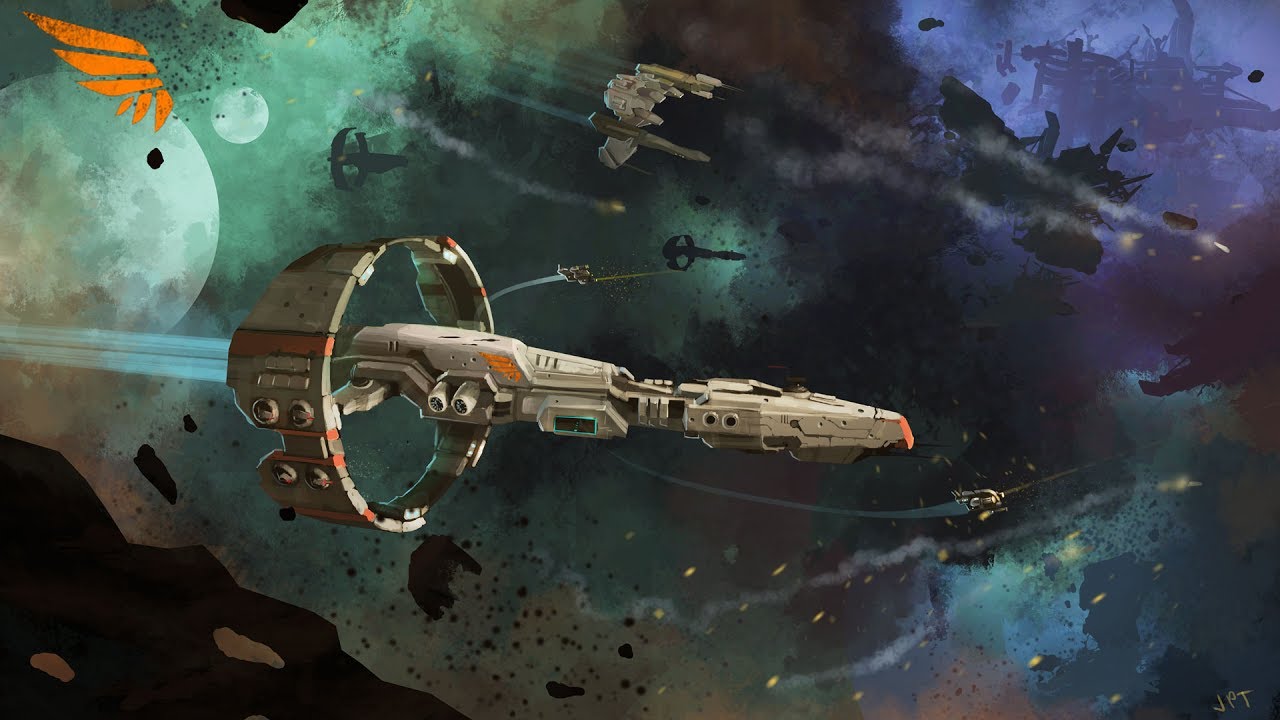
The Wildcat resembles a flattened out, wide rocket. Its large engines, with flaring manueuver plates arranged around the four main thrusters, dominate its back. Its small wings jut out to either side towards the top of the vehicle, providing a small amount of lift, but mostly acting as housing for fuel and weapon modules; the vehicle slopes towards its front, with a blunt cockpit “nose,” with the techbot slot just behind the cockpit, and the main weapon module jutting out from beneath, like an extended chin. The Wildcat’s accessory module sits atop the vehicle like an exaggerated spine or “hump.”

The cockpit has a comfortable design if a cheap look. The cockpit exposes the wires and framework of the underside of the controls, allowing the pilot to rapidly access them if he needs to make impromptu repairs. The pilot seat has a nice, comfortable cloth or leather surface. The Wildcat’s cockpit also sports a dash and most have a small clutter of collected gewgaws. The cockpit has sufficient room for a pilot in a vacuum suit, and it can withdraw the air provided by the life support system, like an airlock, if the character wishes to open the cockpit while in space to depart his vehicle. The character also has sufficient room to maneuver in the cockpit to exit and enter a cramped crawlspace to enter into a small “cubby” with a bunk, a tiny kitchenette, a small toilet and a small cargo space about the size of small footlocker. Wildcat pilots tend to call the accommodations the “coffin” and love to complain about it, but it represents a boon on especially long flights, and some pilots use their Wildcat as a personal transport, similar to a very cut down Ronin. The life support system within a manticore, once sealed, has a distinct “styrofoam” scent to it; the life support system of a Wildcat lasts nearly forever, and antique ones gain a sour, moldy scent, but remain perfectly functional (at least according to their pilots).

Like most fighters, the Wildcat rests on retractable runners. When ready to take off, the craft activates a repulsorfield and hovers on it as it retracts its runners. When activated, the engines prep with a distinctive and low “growl” and then flare a brilliant blue and the maneuver flaps extend around the engine, giving the impression that the Wildcat’s engines have grown, or that the Wildcat “has its hackles up.” The afterburners extend the maneuver flaps further and turn the “growl” into a full-throated roar. The Wildcat has extraordinarily powerful engines for its size, and it has a palpable, powerful acceleration, especially with its afterburners, which push it to 1.5 Gs. Thanks mainly to its small wings, the Wildcat turns sluggishly (and is even more noticably sluggish when loaded with heavy modules); skilled pilots learn to compensate for the wide turning radii with heavy use of braking and sudden, powerful thrusts.

Thanks to their modularity, Wildcats can fulfill nearly any role and are the go tocombat vessel for belters and pirates. They fare best when attacking corvettes, however. They can bring to bear some fairly powerful weapons against the relatively slow targets, and their weaker maneuverability doesn’t hurt them as much. Against capital ships, they need to invest in some highly specific weaponry (such as their torpedo bay or, if they’re patient, their mining lasers). Most lighters can outmaneuver them with ease, however, forcing the pilot to rely on sheer firepower and armor to engage their target; unfortunately for Imperial pilots who underestimate a Wildcat, reckless flying and a barrage of proximity plasma explosions can make up for a lot of poor maneuverability; the Wildcat needs only get lucky once to defeat most lighter fighters.

The Redjack Drifter-Class Light Modular Racer

ST/HP: 80

Hand/SR: +4/3*

HT: 12

Move:25/750(+15)*

LWt.:6.5

Load:2.5

SM: +4

Occ.:1S+1rx

DR:15

Range:12,000

Cost:$9.75M

Loc.: g2Wi3rR

Stall:55*

Total Chase Roll:+19(+19with afterburner)

*The Drifter is equipped with an Afterburner which improves the Move to 40/850(+15) and consumes four times as much fuel (reducing range to 3,000 miles, if used continuously). Furthermore, its thrusters are modular and different engine modules might alter the handling and move of the vehicle.

†Double DR vs plasma attacks and shaped charge weapons.

Notes

Redjack RacerElectronics:

  • Night Vision Sensors: +9 nightvision, ×8 magnification (up to +3 to aimed attacks, if the vehicle aims for three turns).
  • Medium Holographic Radio: 1,000 mile range (orbital); “palm sized” holographic console.
  • Security and Safety: Simple Locks.

Redjack Light Fighter Elecronics Package

Drifters don’t come with combat electronics, but the following package can be added for an additional $250,000. This has no appreciable effect on weight.

  • Medium Tactical Ultra-Scanner: 30-mile scan, 3-mile imaging/bioscan; 360°;
  • Targeting Computer: +5 to hit target with a scan-lock.
  • Distortion Jammer: -4 ECM penalty for missiles; +2 to jam missiles.
  • Tactical ESM: +1 to dodge missiles.

The Drifter has room for onepilot and an exposed slot for a robot assistant. The Drifteruses computerized controls, allowing either pilot or the robot to take full control of the fighter.

The Drifter has one weapon module and two “wing mounts” which can mount weapons (among other things). It takes 30 minutes with proper tools to change any of these modules, and 1 hour to change them without the proper tools.

Modules

The Drifter has four possible modules: an accessory module, a main weapon module, wing modules, and an engine module. This creates a fairly dynamic set of possible handling speeds. For handling, consider two possibilities, broken down in the Engine module section:

  • Standard Drifters use at least one weapon module, wing module or an accessory module, in addition to their engine module.
  • Stripped Down Drifters have no weapon modules, no wing modules, and no accessory module, to save weight. This is typical of a racing Drifter!
All modules take 30 minutes to swap out, or 1 hour if lacking the proper tools.

Engine Module:

Plasma Thruster Module:This is the standard, default engine for a Drifter. Make no changes to the characteristics of the vehicle. If purchased separately: 6000 lbs, $600,000.

  • Stripped Down: A Drifter with no modules improves its move to 30/750 (+15) and 50/900 (+15) and +5/3 handling with afterburners, improving the total chase roll to +19 (+20 with afterburners). All uses of Afterburners in this state count as High-G manuevers.

Next Gen Thruster Module:Syntech created a new, more powerful plasma thruster, which has found its way, via industrial sabotage, into the hands of the Empire and powers the Tempest-Class fighter. Sometimes, Drifter pilots get ahold of such models and integrate them into their Drifters. 6000 lbs, $3,000,000.

  • Standard: Move 35/900 (+15) or 55/1100 (+16); Handling becomes +5/3 for total Chase roll of +20 (+21 with after burners). All uses of Afterburners in this state count as High-G manuevers.
  • Stripped Down: Move 50/900 (+15) or 80/1100 (+16); Handling becomes +5/3 for a total Chase roll of +20 (+21 with afterburners). All moves actions with the Afterburner become High-G maneuvers with a -4 to the roll!

Hyperium Thruster Module:Redjack created the Hyperium thruster as an answer to the Syntech “Next Gen” engine. It makes direct use of Hyperium in the thruster, similar to an afterburner, but with greater efficiency, at the cost of potentially catastrophic failure. Use the same statistics as the Next-Gen Thruster, but apply a –1to HT and add the “x” tag! 6,000 lbs, $1,000,000.

Plasma Fan Module:Older starfighters used Plasma Fan modules, which had a lower thrust-to-mass ratio than modern plasma thrusters, and obsolete starfighters in various parts of the Galaxy still use them. They tend to be fairly robust compared to plasma thrusters, but Redjack already has fairly robust plasma thrusters compared to other makes and models. If the players have access to old starfighter parts, they can usually find one for free with a Scroungingroll, and then apply them with a Mechanicroll at –2(or +2if they’re Quick Gadgeteers); failure still installs the part, but reduces Handling by -1. 6000 lbs, $450,000 (or reducethe cost of the Drifter to $9.6M if purchased with Plasma Fans installed)

  • Standard: Move 15/600 (+14) or 25/700 (+15) with afterburners; Total Chase roll of +18 (+19 with afterburners).
  • Stripped Down:

Move 20/600 (+14) or 30/750 (+15); Total Chase roll of +18 (+19 with afterburners).

Main Weapon Modules

The Drifter has a single weapon module, for a weapon that hangs below the cockpit, rated for 1200 lbs.

The BAN-6 Plasma Cannon Module: Redjack designed the BAN-6 primarily for the Drifter, which grants it the firepower to seriously damage much slower and heavier vehicles, especially corvettes. Ultimately, it’s a smaller, lighter version of the B00-M heavy plasma cannon, and follows the same rules: it risks overheating if it fires 3 shots in a row without letting the heat dissipate for 10 seconds between shots, at which point it needs a full minute to cool down. In Action Vehicular Combat, the BAN-6can technically fire once per turn, as an optional rule, the GM can require the pilot to wait one turn between turns to fire it, our to make a Gunnery (Beams)-4 roll to vent heat and cycle the charge faster. It can also aim at a spot nearits target, gaining a +4 to hit, but sacrificing the armor modifier.

The SC4-TRPlasma Gatling Module:Drifter Pilots prefer this weapon if they expect to get into dogfights with other fighters, combining the best of their high manueverability and the “scattershot” approach of the SC4-TR weapon.

The ZIP3RBlasterGatling Module:Drifter pilots who aren’t familiar with plasma weaponry tend to favor this more familiar blaster.

Weapon

Dmg

Acc

Range

Ewt

RoF

Shots

ST

Bulk

Rcl

BAN-6 Plasma Cannon

5dx20(2) burn ex

6

2mi/
10mi

1200

1/3

15/3E

M

-10

3

SC4-TR Plasma Gatling

6dx8(2) burn ex

6

3 mi/
10 mi

1200

8

160/F

M

-10

3

ZIP-3R Light Blaster Gatling

6d×4(3) burn

9

2mi/
5mi

1200

16

200/F

M

-10

2

Wing Modules

The Drifer has two hardpoints that can attach two modules, including weapons.

Missile Hardpoints:The most common choice for Drifter combat pilots, the wings can mount three 100mm missiles each. This has no additional cost beyond the cost and weight of the missiles.

Weapon

Dmg

Acc

Range

Ewt

RoF

Shots

ST

Bulk

Rcl

100mm Plasma Lance Missile

6d×20(10) burn

3

2000/
10,000

25

1

6

11B

-8

1

100mm Plasma Missile

6d×10 burn ex

3

2000/
10,000

25

1

6

11B

-8

1

Fuel Pods:The Drifter can be equipped with a hyperium fuel pod; each pod contains enough fuel two “fuel points.” Each fuel-point may be spent for one hyperspace shunt(if the vehicle hasa hyperdrive!) oran additional 4hours of flight time. 600 lbs, $2000 each (up to 2).

Thruster Pods: The Driver can equip two plasma thrusters on either wing point, increasing its thrust considerably. How much this improves the vehicle depends on what engines have been installed (note that having thruster pods meansyou’re using a Standard module layout, rather than a stripped-down one). 1200 lbs; $150,000.

  • Plasma Thrusters: Move 30/800 (+15); Move 40/1000 (+16) with afterburners and +5/3 handling with afterburners; Total chase roll to +19 (+21 with afterburners). All uses of Afterburners in this state count as High-G manuevers.
  • Next Gen or Hyperium Thrusters: Move 40/1000 (+16) and +5/4 handling; Move 65/1200 (+16) with afterburners and +5/3 handling with afterburners; Total chase roll to +21 (+21 with afterburners). All moves actions with the Afterburner become High-G maneuvers with a -4 to the roll!
  • Plasma Fan: Move 20/700 (+15); Move 30/850 (+15) with afterburners. Total Chase roll +19 (+19 with afterburners).

Accessory Modules

The Drifter has one optional module located behind the cockpit, just below the robot access station.

Silverfish” Force Screen Module

1650 lbs; $200,000.

The Drifter can be loaded with a Force Screen that provides 150 ablative, hardened DR. This comes with an internal F-cell that provides 6 minutes (6 action vehicular turns) of power.

Hyperlight” Hyperdrive Module

1650 lbs; $500,000.

The Drifter can be loaded with a cutting edge, extra-compact Rating 1 hyperdrive. To use it, the Drifter must have an onboard Tech-Bot. The fuel (50 gallons of hyperium) provides enough fuel for one shunt and contains an energy that provides enough energy for a single, 8-hour jump; it is Rating 1.

Longstrider” Fuel Module

1600 lbs; $5000.

The Drifter can be loaded with additional fuel. This provides sufficient fuel for 5 “fuel points.” Each fuel-point may be spent onan additional 4 hours of flight time.

Look and Feel

A Redjack Drifter presents a distinct and Galaxy-famous image of a cockpit strapped to a great array of engines. The cockpit resembles the “beak” of the vehicle, with a stubby body behind it, proving room for the accessory module and the robotic control station. Behind that, a great set of engines makes a “top-heavy” triangle, with the top “T-bar” of the rear acting as the “wings” which mount the wing-modules of the Drifter. While technically armored, the vehicle exposes many surprisingly delicate struts and support work, with the body acting only as a sleek, hyperdynamic streamlining for the vehicle.

The cockpit itself provides very little in the way of space, and the pilot straps into it in a “leanback” rather than “sitting” position. The cockpit provides streamlining, but no interior atmosphere, which requires the pilot to wear a vacc suit. Sparse computer controls with exposed wires for ease of repair provide straightforward interfaces that require familiarity with the typical “console” like Redjack interface.

The Redjack Drifter normally rests (precariously) on three small runners. When it launches, it rises on a repulsorlift (powered by a small power-cell good for only about 10 minutes) and then accelerates extremely rapidly. Depending on the engine module installed, a Drifter’s acceleration varies from noticeably pressing the pilot back into his seat and all the way up to chest-crushing power. Lacking a proper G-seat, all but the most dedicated racers or fighter pilots prefer to avoid the more powerful engines available to the Drifter, but those who embrace them have shocking acceleration and speed. Regardless of engine module, all Drifters have extremely touchy controls and can easily spin out of control. Their light framework also means they collapse under pressure or damage more easily than most Redjack ships, especially with poorly installed modules. In exchange, a Drifter can turn on a dime and even fly backwards for short periods of time by relying on its inertia.

Officially, the Redjack Drifter is a civilian racer ship. Racers have set up Drifter circuits throughout the galaxy, but especially in parts of the Trader Belt, Grist, and the Orochi belt, though the Empire officially outlawed them for fear of Drifter pilots weaponizing their nimble craft, but have found it difficult to enforce the ban. The Orochi circuit remains the only legally open circuit.

When fully armed, a Drifter can be a terrifying weapon in the hands of a pirate or a rebel pilot. They can keep up with, or even outpace, a Tempest-class fighter, and mount weapons capable of threatening a corvette. Drifter combat pilots tend to act as forward scouts or skirmishers, racing ahead of slower fighters, like Wildcats, to soften up and disorganize enemy formations while the rest of their allies move into position.

Space Combat Techniques for Action Vehicular Combat

The ship styles need another look given the action vehicular combat update.
-Christopher Almquist

In previous iterations of Psi-Wars, I had used the default GURPS Spaceships system. When it came to differentiating fighter aces, officers and smugglers more finely with techniques, I had only to to use the techniques defined in GURPS Spaceships 4, and perhaps add a couple of my own. With the switch to the Chase rules, this became more complicated, as I had to define my own techniques, as Patron Christoper Almquist has tirelessly pointed out.

But do I even need techniques? I asked myself that question every time Chris pointed out its absence. On the one hand, I strongly believe that a group should all be able to operate as the same template and “feel different,” or the template is too narrow. A classic way to do that with, for example, Fighter Aces is to add techniques, in the same way that adding techniques to Space Knights helps differentiate their force sword abilities.

On the other hand, space doesn’t come up that much. How much it comes up will depend on the campaign: one might make it the center of their campaign, but that’s far from a sure thing. On a more planet-focused campaign, a fighter ace will twiddle their thumbs most of the time, while a smuggler usually at leasthas their underworld connections and their natural deception going for them. The more I encourage players to invest in space, the more likely they are to feel sidelined if space doesn’t come up. They can get around this by not playing space-based characters, but Psi-Wars, like most Space Opera, tends to zig and zag through settings, so I expect most campaigns will have fighter-based characters that get a chance to fly and fight sometimes.

(Incidentally, I’m not the only one to have this concern about fighter aces. SalsatheGeek played a fighter ace in Tinker Titan Rebel Spy intentionally, not just to see how they handled in space, but also planetside, and Patron Nemoricus has routinely recommended Wraith Squadron to me, precisely because it’s a series about fighter aces who double as commandos and spies).

So I left the question to my Patrons in a snap poll, to get a feeling for what they want. They voted, 2 to 1, for elaborate and detailed techniques, with the other third voting for simpler techniques. Nobody voted against techniques, or even shrugged at the question. So clearlythe people who invest in Psi-Wars want techniques, and they don’t mind them being highly detailed.

I find myself balking at Space Combat Styles, though. I’ve had them before, more as a guide for myself, a way of thinking about fighters, and I think, broadly speaking, there’s still room in my design space for thinkingabout how fighters approach space combat in terms of styles. Imperial Fighters tend to operate differently than Alliance fighters, who operate differently from pirates, and strike pilots tend to operate differently from dogfighters. That said, I hesitate to formalize them in the form of styles. Once a game has a style and numerous power-ups, certain players will be tempted to invest heavily. This is the intentbehind styles. If Kung Fu exists in a game, then this sort of player will want to master it, and perhaps a few additional side-styles, and then compare and contrast their style with others. This fits into force swordsmanship wonderfully, but if we add it to fighter aces, then, once again, we have characters who want to dump all of their points in space, when we want to encourage fighter aces and smugglers to at least thinkabout generalization a little.

We can also handle “space combat styles” by building them into specific templates. Quick, what do you call a corvette pilot that emphasizes evasion, deception and speed over aggression and attack? That’s right, a smuggler. And the opposite? A pirate. This follows how GURPS Action 3: Furious Fists handles “styles,” by breaking up your martial artists into “Fast, Strong, Weapons and Ninja.” We still run into a problem with the Fighter Ace and the Officer, in that they legitimately have some unique approaches (the heroic, leadership-oriented Officer should feel different from the brutal, “nuke them all and let God sort it out” Officer) that can be broken up along sub-divisions, but this might be better handled by discussing lenses, rather than introducing complete styles.

Avoiding a deeper work into space combat styles also works well for a first revision. I need to come up with techniques for the new rules, and so twenty or so should be a good start (and I already have ideas for a few more). Given the appreciation my patrons have shown for more complex techniques, we can proliferate a bit past the five or so in the original Spaceships rules, and see how things go. This is not a “final decision,” nothing ever is when you take an iterative approach to game design, but I’ll definitely be watching this space to see if it can tolerate more complexity.

What Sort of Techniques

I originally stumbled across this technique problem when looking at the Smuggler, who has some techniques. Thus, designing techniques for the smuggler became my first priority, but I found myself looking at other templates at least superficially.

Piloting

Piloting (and, to a lesser extent, Shiphandling) dominated my initial look. When people talk about space combat techniques, what they usually mean are “starfighter maneuvers.” Originally, this included “Aggressive Maneuvers, Defensive Maneuvers, Ambush, Escape and Reverse,” but these have shifted given the nature of the Chase rules. Aggressive and Defensive (now Evasive) maneuvers are too close to the base usage of Piloting in the Chase rules to really warrant a technique (though I have made one, to allow for Technique Mastery). Given that patrons have asked for more complex maneuvers, I have taken the opportunity to allow players to do more specific things that speak to the new, more cinematic nature of space combat, such as hugging close to asteroids to force another pilot to crash, or diving sideways through a narrow canyon, or performing some crazy, “all out” attack. I’ve also reintroduced Reverse as a subset of Move.

Gunnery and Artillery

While piloting might be what people think of when they talk about starfighter maneuvers, the ability to hit your target is just as important. These have always been easy for me, because you can just crib from Gun Fu and apply it to gunnery. A lot of the original techniques made it through, with a few new ones that take advantage of the more chase-oriented nature of the game.

ECM

It turns out ECM has all sorts of possible options. You can jam communications, you can jam missiles, you can hide your signature, you can spoof a target, you can trick sensors about what’s in your holds. So, I had some techniques draft ideas sketched out, but I’ve ditched them, at least for now. The problem that I see here is that techniques should in principle be able to proliferate well beyond your ability to buy them. The point of a technique is not just to specialize your skill, but to do so in a way that seperates it from hundredsof possible combinations. Unarmed techniques are a great example, as you can fill up handful of reasonable techniques with unarmed fist strikes without ever touching kicks or grapples. The problem here is that while I can come up with 6 or so things you can do with ECM, I can only come up with 6 or so things for ECM, so that suggests you’re probablybetter off just being forced to raise ECM. Worse, most people who want one will want the others too: if you want to jam missiles and spoof sensors, you probably want to cut off communications and hide what’s in your ship. So, I’ve set these aside for now until I can see real specialization forming.

Navigation

Navigation is in a similar situation to ECM in that I can think of quite a few things to do with it, but are they enough? In this case, yes, primarily because it makes sense to specialize by constellation. For example, smugglers of the Stygian Veil will be much better in the Veil than in the Maelstrom. This canbe handled by Area Knowledge, but Area Knowledge is broader than just navigational routes. I can also think of plenty of cool tricks that navigators could use to improve their speed, find shortcuts, speed up their jumps, etc. This one is a little up in the air, especially what should be in techniques and what should be in perks, but for now, I’ll make techniques available.

Dreadnoughts

I’ve not put much work into Officer techniques, not because I don’t intend to have any, but because I worry about them when I get there. I think this is a fairly rich space, with options for Leadership, Tactics and Shiphandling and I’ll borrow a lot from my previous work on officers once we get to them. Thus, this is not yet a finished list.

Technique Proliferation

I’ve been using an optional rule for awhile, and I think it’s time to institute it in Psi-Wars officially, since it’s beginning to creep into my template design: I’ve halved the cost of techniques. The justification for this is that it brings them in line with Perks (1 point for +2 to a highly specific aspect of a skill, aka a Technique) and to allow for more techniques (instead of 3 techniques for Force Sword, you can swing 5-7),which is really important for force swordsman, but matters here. This may also explain why I’ve chosen not to create ECM techniques: 6 might sound like plenty when you can only really swing 3 at most, but it’s not nearly enough when you can swing 6+.

The Techniques

Afterburner Slide

Hard
Prerequisite:
Piloting. Piloted vehicle must have a Stall Speed and Afterburners.
Default: Piloting-4; cannot exceed prerequisite skill.

Most targeting systems, and enemy pilots, track the target based on their velocity and direction. If this changes rapidly or the angle of movement doesn’t match the facing of the craft, targeting systems fail to track the craft adequately. While making a Move and Attack or a Stunt or Stunt Escape, the pilot activates his afterburners and then cuts all engines suddenly and “rides” his inertia, swiveling to face a different direction while still flying along their primary vector. This applies a +2 to all Dodge rolls for the turn.

Aggressive Maneuvering

Average
Prerequisite:
Piloting or Shiphandling.
Default: Piloting orShiphandling; cannot exceed prerequisite skill.

When making a non-static maneuver in a chase, roll Aggressive maneuvering in place of Piloting or Shiphandling when your vehicle pursues the target. This requires your front be pointed at the target, and you must choose to become Advantagedor shift range bands closer to your target.

Canyon Dive

Hard
Prerequisite:
Piloting.
Default: Piloting-5; cannot exceed prerequisite skill.

When confronted with a narrow space, the pilot orients their ship to present the narrowest cross-section to the obstacle (generally a crevice or alleyway). Treat the ship as one SM smaller for the purposes of bypassing an obstacle. This technique may be used as a Stuntor Stunt Escape, or to defeat an opponent who attempted a Mobility Escape. If used as a Stunt, it provides a +2 to Chase rolls.

This is a Cinematic Technique. Anyone can attempt it, but only Ace Pilots can improve it.

Collision Training

Hard
Prerequisite:
Piloting or Shiphandling.
Default:
Piloting orShiphandling; cannot exceed prerequisite skill+4.

When performing a Ram or Forcemaneuver or making a Boarding Action in action vehicular combat, use the Ram technique in place of Piloting or Shiphandling.

(Constellation) Navigator

Average
Prerequisite:
Navigation (Hyperspace).
Default:
Navigation (Hyperspace); cannot exceed prerequisite skill+5.

The character has learned the ins and outs of one specific constellation. When attempting to navigate that specific constellation, they may remove up to half of all penalties for any navigation roll.

Driving Fire

Hard
Prerequisite:
Gunner.
Default:
Gunner-2; cannot exceed prerequisite skill.

The character attacks the target in just such a way that their attacks miss in a specific way, forcing a target in a desired direction. The character states their intention with their attacks (“I want to push him closer into the asteroids” or “I want to drive him towards my wingman”) makes the attack as normal, and for every hit the character wouldhave made, the target instead has a -1 to any piloting or driving rolls that violate the stated intention. The target can ignore this penalty but must then defend against the attacks at -2 to defense.

Evasive Maneuvering

Average
Prerequisite:
Piloting or Shiphandling.
Default: Piloting orShiphandling; cannot exceed prerequisite skill.

When making a non-static maneuver in a chase, roll EvasiveManeuvering in place of Piloting or Shiphandling when your vehicle evadesthe target. This requires your back be pointed at the target, and you must choose to become Advantaged or shift range bands awayfrom your pursuers.

Fast Locking

Hard
Prerequisite:
Artillery.
Default: Prerequisite skill –4(or –2for Ace Pilots); cannot exceed prerequisite skill.

An action vehicular combat turn is a minute long, during which multiple possible missile locks is certainly possible! A character who has mastered fast-locking has learned to respond immediately to a missile lock, allowing him to fire more often than normal. He may use Fast Locking to fire a second missile, or two additional missiles with +1 Recoil. If the character chooses to engage multiple targets this way, apply an additional -6 per target!

Ghosting

Hard
Prerequisite:
Piloting or Shiphandling.
Default: Piloting-5 or Shiphandling-5; cannot exceed prerequisite skill.

Ultrascanners rely on the size of the sensor profile to differentiate a target from background noise. Skilled pilots can fly their ship so as to minimize their profile towards their target, generally flying “edge on.” This improves the vehicle’s ECM rating by -2 against a single target (or a single formation) only.

This is a Cinematic Technique. Anyone can attempt it, but only Ace Pilots can improve it (and they may not improve it for Shiphandling!).

Hugging

Hard
Prerequisite:
Piloting.
Default: Piloting; cannot exceed prerequisite skill+4.

Your character is exceptionally skilled at flying close to ships or obstacles without hitting them. When making any maneuvers while hugging a craft, add the bonus from this technique to the piloting roll. Furthermore, during a Stunt or Stunt Escape maneuver near obstacles, every -2 applies to your stunt also applies a -1 to your stability and to your opponent’s stability, up to a maximum of -4 to Stability; while doing so, apply your Hugging bonus to your Pilot roll. This represents moving closer and closer to obstacles as well as forcing your opponent to do the same until the margins for error become very thin.

Quick Salvo

Hard
Prerequisite:
Gunner or Artillery.
Default: Prerequisite skill -6 (or -3 for Ace Pilots); cannot exceed prerequisite skill.

The character can target multiple opponents or fire multiple systems. The number of attacks cannot exceed the total RoF of all weapons onboard the ship. Quick Salvo applies to firing both ones blasters and a missile, or dividing up ROF among several targets.

This is a Cinematic Technique. Anyone can attempt it, but only Ace Pilots can improve it.

Reacquire Target

Hard
Prerequisite:
Artillery.
Default: Prerequisite skill –6; cannot exceed prerequisite skill.

An Action Vehicular Combat turn takes a whole minute, and a great deal can happen in that minute. Missiles that miss can remain “active” and attack a target a second time, provided it has fuel and it doesn’t fly too wide of the target. When making a Reacquire Target attack with a guided missile, the attacker fires their missile in such a way that it their opponent dodges or jams it, it’s highly likely to hit a second target, or have time to reacquire the original target for a second pass. If the attack roll succeeds but the target defends, the attacker may make a second attack with the same missile against the same target or a different target. Apply the -6 for the technique to both attacks. The second attack inevitably comes from a strange angle and applies a -2 to defend against.

This is a Cinematic Technique. Anyone can attempt it, but only Ace Pilots can improve it.

Reckless Assault

Hard
Prerequisite:
Piloting.
Default: Piloting-8; cannot exceed prerequisite skill.

This technique comes with numerous names (the Maniac Maneuver, the Last Hope, the Charge of the Elegans), but in all cases it represents a total commitment to attacking a target. This requires a Move and Attackmaneuver and a separate Reckless Assault roll. On a failure, the character immediately suffers a Wipeout. On a success, the character gains +4 to any attacks against a single, chosen target, and +3 to the subsequent Chase roll. In all cases, the character cannot dodge for the whole of this round.

This is a Cinematic Technique. Anyone can attempt it, but only Ace Pilots can improve it.

Reverse

Hard
Prerequisite:
Piloting; a vehicle with a stall speed.
Default: Piloting-10; cannot exceed prerequisite skill-5.

This technique has numerous names and techniques (the Inversion, the Barrel Roll, the Denjuku Turn), but they all serve as a means to immediately close in on a pursuer, using their own speed against them. Making a Reverse requires a Move maneuver and an independent Reverse technique roll. If this roll fails, the character immediately Wipes Out. On a success, they immediately become Advantaged against their opponent, with their front facing their target. Success or failure, at Distant range, the distance between both vehicles immediately drops to Extreme, and at Extreme or closer, the distance between both vehicles drops to Collision Range. This technique cannot be attempted with pursuers at Beyond Visual or farther. The results of the roll have no bearing on the Chase roll, which continues as normal and the winner of that roll may apply their results normally (it ispossible with a Reverse for both targets to be Advantaged against one another! Such circumstances last for one turn, after which the loser of the Chase contest loses their Advantage).

This is a Cinematic Technique. Anyone can attempt it, but only Ace Pilots can improve it.

Shake

Hard
Prerequisite:
Piloting.
Default: Piloting-5; cannot exceed prerequisite skill.

Starships can attempt to “shed” a target lock by shifting their directions quickly and, especially, ensuring that their tails aren’t directly facing their target, if possible. This allows the target to disrupt an opponent’s electronics with onlytheir piloting skill. This technique requires a Move maneuver, and applies a +1 to Chase rolls to escape the target; furthermore, the character can make a free Piloting roll in place of Electronics Operations (EM) to disrupt a single pursuer’s target lock or to jam a single missile.

Skipjacking

Hard
Prerequisite:
Artillery.
Default: Prerequisite skill –5; cannot exceed prerequisite skill.

A missile is self-guided and self-propelled, and will thus orient itself towards the target no matter how it’s fired. However, some pilots have mastered the art of firing a missile in such a way that its jets fire later than expected, or it arks in some unusual way to hit its target from an unusual angle. Against an opponent who has never seen a skipjack before, this counts as a surprise attack and cannot be defended against. Against all other opponents, this applies a -2 to defense, similar to a runaround attack, and -2 to hit with point defense.

Stealthy Maneuvering

Hard
Prerequisite:
Piloting or Shiphandling; Stealth or Smuggling.
Default: Piloting orShiphandling; cannot exceed prerequisite skill +4.

When making a Hide maneuver in Action Vehicular Combat, roll this technique. Additionally, when rolling Smuggling or the lower of your Pilot or Stealth to see if you can avoid detection, improve the lowest of the involved skills by the difference between Stealthy Maneuvering bonus.

Storm Rider

Hard
Prerequisite:
Navigation (Hyperspace).
Default:
Navigation (Hyperspace); cannot exceed prerequisite skill+4.

Navigators dread few things as much as a Hyperspatial storm; however, experienced navigators know that the forces involved can greatly thin the hyperdynamic medium and propel ships! If the navigator suffers penalties from a hyperspace storm, they may increase the penalties up to double the penalty for the storm to a maximum of -4. For every -2 applied to their navigation roll this way, they increase their effective hyperspace drive rating by 1; hyperspace drives with a rating of 4 travel at 80 parsecs per hour, and those with a 5 travel at 160 parsecs per hour.

Targeted Attack (Gunnery)

Hard
Prerequisite:
Gunner (Beams or Torpedo).
Default:
Gunner (Beams or Torpedo)-5; cannot exceed prerequisite skill-3.

The character has learned how to hit a specificlocation on a ship. The most common is an armor gap, but the character can choose any specific subsystem when purchasing this technique; if the character successfully hits that subsystem, if the ships wounds result in a disabled or destroyed system, if always affects the targeted subsystem rather than a random one. The default for a specific hit location on a ship is -5, and the character can remove no more than half of these penalties. Targeted attacks can only affect Gunnery systems, not artillery systems (such as guided missiles); those hit what they hit.

Weave

Hard
Prerequisite:
Piloting.
Default: Piloting-3; cannot exceed prerequisite skill.

Some fighter pilots learn to maneuver with a wingman in such a way as to tempt the opponent fighter to pursue them in a movement that will bring them directly into the sights of their wingman. This technique requires a simple Move maneuver; anyone who pursues you suffers a -1 to their Dodge against any other fighters andan additional -1 per margin of victory in the final Chase contest; however, you may not gain Advantageor Shift Range Bandsin any direction if you win.

Well Diver

Average
Prerequisite:
Navigation (Hyperspace).
Default:
Navigation (Hyperspace); cannot exceed prerequisite skill+5.

A ship shunts into real-space typically one planetary radius from their destination world, but navigators can learn to compensate for the effects of a gravity well and shunt closer to the world. For every level of Well-Diver, eliminate -1 in penalties for coming out “too close” to a world.

Winding Course

Average
Prerequisite:
Navigation (Hyperspace).
Default:
Navigation (Hyperspace); cannot exceed prerequisite skill+5.

Most navigators treat their hypersatial route as a direct jump, focusing on the straightest path through 4D space possible. This, however, makes a target’s course easy to track by those in real-space, who need only note the direction in which you travel to guess at your final destination. However, one can maneuver in hyperspace. Those who take a Winding Course can apply an additional penalty to their Navigation roll: for every -1 they apply, add +10% travel time and apply a -1 to any attempt to guess your final destination. The Winding Course technique reduces these final penalties by up to half.


Alliance Space Vehicle – The Valkyrie-Pattern Light Psychotronic Fighter

ST/HP: 95

Hand/SR: +5/3

HT: 12

Move:15/600*(+14)

LWt.: 7.0

Load: 1.1

SM: +4

Occ.:1SV

DR:75

Range:18,000

Cost:$15M

Loc.: Wi3rR

Stall: 50

Total Chase Roll: +19 (+20 with afterburner)

*The Valkyrie is equipped with an Afterburner which improves the Move to 22/700 (+15) and consumes four times as much fuel (reducing range to 4,500 miles, if used continuously).

*The Valkyrie’s 75 DR covers the entire vehicle and comes from Diamondoid, and has half DR vs crushing damage. It also has a DR 300 force screen.

Notes

Psychotronic Alliance Fighter Vehicle Electronics:

  • Psiberface Controls: This allows a psychic character to directly control the vehicle with their mind. This provides a +1 handling (already included in its statline) and allows the character to add their level of the Ergokinetic Interface ability, if they have it, to all rolls with the vehicle. For additional optional benefits, see “One with the Machine” in Pyramid #3/30.
  • Medium Tactical Ultra-Scanner: 30-mile scan, 3-mile imaging/bioscan; 360°;
  • Targeting Computer: +5 to hit target with a scan-lock.
  • Night Vision Sensors: +9 nightvision, ×8 magnification (up to +3 to aimed attacks, if the vehicle aims for three turns).
  • Distortion Jammer: -4 ECM penalty for missiles; +2 to jam missiles.
  • Tactical ESM: +1 to dodge missiles.
  • Decoy Launcher: +1 to dodge missiles and +2 to jam missiles.
  • Medium Holographic Radio: 1,000 mile range (orbital); “palm sized” holographic console.
  • Security and Safety: Complex Biometric Locks. Ejection Seat
  • Life-Support: 5 days

The Valkyrie has room for a single pilot.

Lightly armed, the Valkyrie has two, standard fighter cannons mounted in its body.

All Valkyrie craft have design space for a singlepsychotronic module at no additional cost. This module is not modularin the sense that it can be easily replaced (but a skilled mechanic can replace it as easily as he can replace any other integral component), only in the sense that the module can be chosen when the vehicle is created, meaning that Valkyrie-Pattern fighters have individualized psychotronic capabilities.

Weapon

Dmg

Acc

Range

Ewt

RoF

Shots

ST

Bulk

Rcl

Fighter Cannon

6d×5(5) burn

9

2700/
8000

1000

3

200/Fp

75M

-10

2

Psychotronic Modules

All psychotronic modules make use of the psychic powers of the pilot. They are, in effect, just psychic powers that have been technologically augmented. As such, they are vulnerable to Anti-Psi effects. They do not require the character to have the abilityin question, though the character using the module will benefit from knowing the associated skill.

Valkyrie-Pattern (Grimshaw)

Electrokinetic Shield Module:This replacesthe force screen on the ship. The EK shield supplies 300 non-ablative, non-hardenedDR that provides half DR against non-energy attacks (missiles and collisions, primarily); if the character has the EK Shield skill, they can use an EK-Shield block to double the DR of the screen; this may be improved with extra-effortlike normal, or improved with any EK Shield technique the character knows (including suppression), but doublethe fatigue cost!

SurgeModule:If the character has the ability at any level, this module projects the ability to so that it faces no range modifiers: the character need only see the target (thus it may not be used “Beyond Visual” range) and rolls his Surge skill in a quick contest with the target vehicle’s HT. Success inflicts 30d non-woundingsurge damage that ignores DR.

Electronic Shadow Module:This replaces the Distortion Jammer. If the pilot concentrates, he can shroud his vehicle from the electronic detection. While so concentrating, the character may not attack or make any stunts (they demand too much attention). Any attempts to detect him with any active sensor (such as an ultrascanner) or to target him with missiles suffers a –6penalty. Instead of concentrating, he can focus his attention for just a moment to disrupt a targeted missile. This allows him to attack or make stunts normally, but he makes a Power Defense (using the better of their Electronics Operations (Psychotronics) or Machine Distortionskills) with a +3bonus against an incoming missile; success diverts the missile. If the character knows the Machine Distortionskill, he may use extra-effort to boost the working of the module, but double all fatigue costs.

Devil-Pattern (Sabine)

All Devil-Pattern variants of the Valkyrie lack a window(remove the “g” from the vehicle) and their cockpits mimic sensory deprivation chambers. Outside of the heat of battle, they can be used as such; in the heat of battle, characters with the Blind Psiperk may apply the benefit of the Perk to their psionic powers and their modules.

Tactical Awareness Module:This replacesthe ultra-scanneron the ship. The pilot is granted the equivalent of the Awareness ability with a range of 3 miles. This can be used to gain a “target lock” via integrations between the psiberface controls and the targeting computer. Use of the ability requires the higher of Per or IQ-based Electronics Operations (Psychotronics)or Awareness. The Tactical Awareness module is immune to distortion jammers, machine invisibility and the effects of a nebula, but not to Mind Clouding; the character can use any Awareness techniques he has as normal, but all fatigue costs are doubled.

Combat Sense Module: This grants the fighter a +2 to all dodge attempts. Characters with the Combat Sense skill may any Combat Sense techniques he knows, or attempt to improve it with Extra Effort, but all fatigue costs are doubled.

Crusader-Pattern (Elegans)

Dread Crusader Module:This amplifies the natural fear and uncertainty of combat and centers it around the fighter. Once per hour, the pilot of the Crusader may attempt to frighten any other pilot or vehicle crew memberthat can see him; roll a Will (or Instill Fearskill, if he has it) against the Will of his target. If he is successful, the target must either suffer a penalty to all rolls made in relation to the pilot (attack rolls, chase rolls, dodge rolls, etc) equal to the pilot’s margin of success, or roll on the Fright Check table with a penalty equal to the pilot’s margin of success (pilot’s choice). This follows the same rules as the Instill Fearpower, and the character may use the same techniques at doubled fatigue cost; the Group Scare technique is greatly expanded by the amplifier, and a standard use will apply the whole crew of a corvette or a fighter wing, a success by 5 or more will apply to a capital ship or a fighter squadron, and a success by 10 or more will affect a dreadnought.

Psychic Shadow Module:If the pilot concentrates, he can shroud his vehicle from the mind’s eye of others. While so concentrating, the character may not attack or make any stunts (they demand too much attention). Anyone who wishes to notice his vehicle by seeing it with their own eyes must roll Will vs the pilot’s IQ or suffer a -6 to all rolls to detect it; this value is halved for attempts to notice the character with electronics (the electronics will pick the Crusader just fine, but the target will find it hard to make the connection between the blip on his screen and the presence of the fighter). This does not penalize entirely electronic targeting systems, such as target locks or missiles, at all. Once the character has been detected, he must break line of sight on his vehicle (say, by diving deeper into a nebula, or flying into a debris field) if he wishes to apply this power again. Characters with the Mind Clouding skill may attempt to apply Extra-Effort to the module, but double all fatigue costs!

Look and Feel

The Valkyrie and its variants is among the oldest designs in the ARC arsenal. They date from the Communion War, when the Maradonian houses borrowed from the innovations of the Templar fighters and the Immortal Legion’s own psychotronics to create their own fighters worthy of the aristocracy. Today, only the Valkyrie, fighter of House Grimshaw, is especially common, and since each is created specifically for the nobleman intended to pilot it, the GM is within his rights to require a Valkyrie-pattern ship to be taken as signature gear. House Sabine and House Elegans have their own variations (the Devil-Pattern and the Crusader-Pattern respectively). While the vehicle has been updated, it lacks a hyperdrive, a slot for a robot or more modern missiles.

The Valkyrie-pattern psychotronic fighter has a dagger-shape to it, with thin, forward-swept, curving wings angling out of the body like the edges of a particularly baroque blade. Its diamondoid armor gleams with almost an inner light, and the armor is usually a brilliant silver or a deep, star-speckled black. The Devil-pattern fighter has no visible cockpit or window: it has a hatch that allows the pilot to enter the sensory deprivation tank at the heart of the vehicle, while the other forms of the vehicle have a visible hatch perched on the “central ridge” of the “body of the craft.” The Valkyrie and Crusader both have controls (at the GM’s discretion, a non-psion could pilot them, but hand/SR drops to 0/2), but in all three, once the pilot is comfortably seated with the vehicle, they close their eyes and make a Will-based Pilot(Starfighter) roll, or Meditatation, whichever is better, to gain control of the ship. The vehicle is controlled thereafter entirely with their mind (though they still roll the normal skills, such as DX-Based Pilot, etc, to actually control the ship). They “see” what the ship sees, and control the ship as they would control their own body.

The Valkyrie and its variants struggles to find a place in the modern Alliance. Its high acceleration and high top speed lets it compete directly with an Imperial Javelin, and it has superior defensive capabilities and equivalent firepower, which means it tends to win such engagements; it is one of the best dogfighters ever made, in the right hands. But as a “duelists” craft, it fares poorly when fighting larger craft, which means it contributes little to defeating dreadnoughts when compared to the Valiant or the Raptor. Worse, the fighter requiresa psychic character to pilot it, and the psychic skills to really master it properly, and while the Alliance is loathe to admit it, their blood purity has waned a great deal since their heights during the Alexian dynasty and relatively few aristocrats have the psychic mastery necessary to pilot a valkyrie. Thus, the vehicle sees no coordinatedeffort to mass produce, but some skilled nobles have one made for them, and bring it with them to battle. Thus, if one finds a Valkyrie parked in the hangar of their carrier, they know that someone onboard is either exceedingly pretentious or exceedingly deadly.

Alliance Space Vehicles – The Raptor-Pattern Strike Fighter

ST/HP: 140

Hand/SR: +2/4

HT: 11

Move:5/375(+13)*

LWt.: 24.5

Load: 5.5

SM: +6

Occ.:1SV+1rx

DR:100/50*

Range:21,000, 2jumps (Rating 1)

Cost:$20M

Loc.: g2Wi3rR

Stall: 20

Total Chase Roll:+15(+16 with afterburner)

*The Raptor is equipped with an Afterburner which improves the Move to 7/450(+13) and gains +1 handling and consumes four times as much fuel (reducing range to 5000 miles, if used continuously).

†The Raptor has 100carbide composite DR on the front and 50 on the rest; double DR vs shaped charges or plasma attacks. It also has a force screen with 300 ablative, hardened DR.

Notes

Alliance Strike-FighterElectronics:

  • Medium Tactical Ultra-Scanner: 30-mile scan, 3-mile imaging/bioscan; 360°;
  • Targeting Computer: +5 to hit target with a scan-lock.
  • Night Vision Sensors: +9 nightvision, ×8 magnification (up to +3 to aimed attacks, if the vehicle aims for three turns).
  • Distortion Jammer: -4 ECM penalty for missiles; +2 to jam missiles.
  • Tactical ESM: +1 to dodge missiles.
  • Medium Holographic Radio: 1,000 mile range (orbital); “palm sized” holographic console.
  • Security and Safety: Simple Locks; Ejection Seat.
  • Life-Support: 5 days
  • Hyperdrive: Rating 1, with sufficient fuel for 2 jumps.
  • Hyperium Reactor: 24 hours endurance at full speed (6 hours with afterburners).

The Raptor has room for a single pilot and an exposed slot for a robot assistant. The Raptor uses computerized controls, allowing either to take full control of the fighter. The robot has access to the hyperium reactor, hyperdrive and traditionally handles hyperspatial navigation and on-the-fly repairs.

Heavily armed, the Raptor has a single, forward mounted gatling cannonin its nose, 1 body mounted torpedo hardpoint as well as two wing-mounted torpedo hardpoints, and two missile-mounted hardpoints on the wings each with three missiles.

Weapon

Dmg

Acc

Range

Ewt

RoF

Shots

ST

Bulk

Rcl

Gatling Blaster

6dx5(5) burn

9

9mi/27mi

1600

3

200/F

M

-10

2

160 mm Plasma Burst Missile

6dx15 burn ex

4

1000/30mi

200

1

6

M

-15

1

160 mm Plasma Lance Missile

6dx30 (10) burn ex

4

1000/30mi

200

1

6

M

-15

1

Isomeric Torpedo

6d×500 cr ex

3

300/
10 mi

2500

1

3

150M

-15

1

Look and Feel

The Raptor-Pattern Strike-Craft matches its namesake. Engines dominate its thick, sleek body, and the cockpit sits at its middle, with the robot slot just behind it. Before the cockpit, the nose extends like a curving “beak” with the gatling blaster located just behind and beneath the tip of the point. Its impressively large wings, bristling with armaments, sweep forward like a bird in flight. In some ways, the Raptor resembles imperial craft, with their large, forward swept wings, but the Raptor is a far larger craft.

Compared to other fighters, the Raptor accelerates sluggishly, with about the acceleration of a motorcycle or a quick car. Its afterburners kick the acceleration up to a more noticeable push against the seat, but still less than 1 G. Fighter pilots comment on its slow acceleration, but enjoy the responsive handling afforded by the extensive and complex hyperdynamic wings, and the durability that the armor affords them, as well as the ability to launch torpedo after torpedo at a dreadnought.

The Raptor, like the Valiant, has the ability to make hyperspace jumps on its own, and has enough fuel to make a “hit and run” jump. The hyperdrive is slower than the Valiant’s, though, so it escorting ships often need to slow their hyperdrives to compensate. The Empire fears the Raptor: its armor brushes off most flak fire, and its speed makes it competitive with other fighters, and a wing has enough firepower to drop more than ten torpedoes on a capital ship, eliminating most dreadnoughts from the battlefield. The Raptor can’t outmaneuver imperial fighters, but a single light fighter struggles with a Raptor’s armor and force screens, though several Javelins or a single Tempest in the hands of a skilled pilot can seriously damage a Raptor.

The Alliance uses Raptors primarily to defeat enemy capital ships, as that’s their core design purpose. They tend to use Valiants as escort, as a Valiant in “agile” configuration is about as fast as a Raptor, and far more adept at defeating enemy fighters. Valiants can also join an attack wing of Raptors to defeat capital ships, but have a harder time contending with the flak. Similarly, Raptors have sufficient agility and speed to fight heavier fighters, and can double as orbital supremacy fighters when strictly necessary. Their heavy armor makes them formidable opponents to defeatand their missile complement makes them quite dangerous to even well-armored fighters, but they can’t keep up with the lightest fighters.

Alliance Space Vehicles – The Valiant-Pattern Multi-Role Fighter

ST/HP: 130

Hand/SR: +2/4

HT: 12

Move:9/530*(+14)

LWt.: 14.75

Load:2.2

SM: +5

Occ.: 1SV+1xr

DR: 15

Range:21,000*

Cost:$28M

Loc.: g3rR2Wi

Stall: 65/30

Total Chase Roll:+16(+17w afterburner in high speed or Agile configuration)

*The Valiant is equipped with an afterburner which improves the Move to 13/650 (+14) and handling to +3 and consumes four times as much fuel (reducing range to 5,025miles, if used continuously). It also has a hyperdrive with a rating of 2 and sufficient fuel for 2 jumps.

†The Valiant has variable geometry wings. “Speed Geometry” use the above stats; “Agility Geometry” halves its top speed (275(+12) or 325 (+13) with afterburner), gives it a +1 to handling and reduces the Stall speed to 30. While using both afterburner and Agility geometry, it has a total handling of +4 and a top speed of 300 (+13) for a chase roll of +17.

‡The Valiant has a force screen with DR 200. This may be angled to create 400 DR in a particular direction, but 100 DR in another directions.

Equipment

Alliance Fighter Electronics:

  • Medium Tactical Ultra-Scanner: 30-mile scan, 3-mile imaging/bioscan; 360°;
  • Targeting Computer: +5 to hit target with a scan-lock.
  • Night Vision Sensors: +9 nightvision, ×8 magnification (up to +3 to aimed attacks, if the vehicle aims for three turns).
  • Distortion Jammer: -4 ECM penalty for missiles; +2 to jam missiles.
  • Tactical ESM: +1 to dodge missiles.
  • Medium Holographic Radio: 1,000 mile range (orbital); “palm sized” holographic console.
  • Security and Safety: Simple Locks; Ejection Seat.
  • Life-Support: 5 days
  • Hyperdrive: Rating 2, with sufficient fuel for 2 jumps.
  • Hyperium Reactor: 24 hours endurance at full speed (6 hours with afterburners).
  • Cargo: Compartment with up to 50 lbs of supplies/gear.

The Valiant has a single pilot seat with computerized controls. It also has a slot for a robot equipped with a datajack to grant the robot access to all ship-board systems. This control station is exposed and has no life-support or armoring shell. The robot has access to the internal hyperium reactor and other power-systems, as well as the sensor and ECM systems and the hyperdrive, allowing the fighter to navigate hyperspace, to make repairs on the fly, and to allow the pilot to focus on flying and attacking while the robot monitors communication and sensors.

The Valiant has an underslung four-barrel gatling blaster, and a 160mm MSML with 8 missiles mounted in an internal bay; this missile bay can be removed and replaced with a torpedo bay mounted with a single isomeric torpedo.

Weapon

Dmg

Acc

Range

Ewt

RoF

Shots

ST

Bulk

Rcl

Gatling Blaster

6dx5(5) burn

9

9mi/27mi

1600

3

200/F

M

-10

2

160 mm Plasma Burst Missile

6dx15 burn ex

4

1000/30mi

200

1

8

M

-15

1

160 mm Plasma Lance Missile

6dx30(10) burn ex

4

1000/30mi

200

1

8

M

-15

1

Isomeric Torpedo

6d×500 cr ex

3

300/
10 mi

2500

1

1

150M

-15

1

Look and Feel

The Valiant is dominated by its long and elegantly sculpted fuselage. It is about as large as two cars end to end, with a high-seated cockpit which provides a full view of sides, forward and above, perched above a pointed nose. If sitting in a carrier or on the ground, its long, thin wings either hug its body, or sweep forward and low, like an inverted V. The carbide body has generally been colored and marked with Alliance sigils, denoting the house for whom the pilot flies.

Upon entering the craft, the cockpit will seal itself shut with a hiss, followed by cool air pumping from the vents as the local life support takes over. The pressure here is lower, similar to an airplane in flight, with a cool, slightly plastic scent. A complex array of controls lay before the pilot, with the stick controlling the vehicle’s movements and weapons, with a throttle control and afterburner to one side, and the control of the wings to another. A screen shows the output of the installed tech-bot, and another display reveals the output of the ultrascanner. The ECM, communication and sensor controls are marked with a different set of colors, indicating that they’re handled primarily by the installed tech-bot, but the pilot can override them in case of an emergency.

To launch, the craft first initiates the repulsorlift and then retracts the skids with a metallic thump. The force screen crackles to life with hair-raising sense of static. The wings then deploy, moving away from the body into the forward swept position of maximum agility, ideal for take-off. The shifting of the wings and their locking into position has a satisfyingly tactile vibration throughout the craft. Then, the pilot accelerates and launches, with about as much pressure as a quick car or a fighter jet. Once space-born, the pilot will shift the wings to a fully swept-back position, for maximum speed, and watch his speed output as the fighter achieves cruising speed. If the pilot wishes to shunt to hyperspace space, he usually does so now.

Valiant missions vary in length. The cockpit has a compartment for supplies, and so some missions take literally days, especially if the pilot has access to fuel stops or carefully husbands his fuel. At 1000 miles per hour, an intercept mission generally takes 3 hours of flight, but a Valiant will often act as an escort on a strike mission, especially if equipped with his own heavy missiles or torpedos. With their hyperdrive, they can also act as “first strike” vehicles, joining capital ships for lightning raids against the enemy without needing to “scramble” first. They have just enough fuel to jump away quickly as well.

When engaged in battle, a Valiant pilot tends to begin the battle aggressively, angling the force screen forward, and looking for a lock to launch a missile, especially if engaging fighters and using plasma burst missiles. Once fully enaged in a dogfight, he returns the screen to its standard, bubble configuration and shifts his wings to high agility and makes use of his afterburners, which push him with nearly 2Gs of force, to bring his gatling blaster cannon against his enemies, relying on superior maneuverability rather than speed, and on his superior durability. Against imperial forces, pairs of Valianttend to perform better than lone, maverick Valiant, as they can mutually support one another against the quick and light enemy.

The Valiant represents an interesting departure from normal Alliance approaches to combat. When High Admiral Lowellin Cole conceived of his alternatives to Grand Admiral Leto Daijin’s approach to defeating the Scourge, he approached Startrodder for help with a new fighter design. The Valiant resulted from that, a merging of Maradonian excellence with Startrodder practicality. It remains one of the most popular fighters of the Alliance to this day!

Imperial Vehicles: Peltast-Class Light Strike Fighter

ST/HP: 85

Hand/SR: +4/3

HT: 10f

Move:10/450*(+13)

LWt.: 7.2

Load: 3

SM: +4

Occ.:1S

DR: 15

Range:22,000

Cost:$15M

Loc.: g3rR2Wi

Stall: 50

*The Peltast is equipped with an Afterburner which improves the Move to 15/550 (+14) and consumes four times as much fuel (reducing range to 5,500 miles, if used continuously).

The wings of the Peltast include a combination of maneuver thrusters and contragravity that, when activated, reduces the stall to 20.

Notes

Standard Imperial Fighter Vehicle Electronics:

  • Medium Tactical Ultra-Scanner: 30-mile scan, 3-mile imaging/bioscan; 360°;
  • Targeting Computer: +5 to hit target with a scan-lock.
  • Night Vision Sensors: +9 nightvision, ×8 magnification (up to +3 to aimed attacks, if the vehicle aims for three turns).
  • Distortion Jammer: -4 to target with missiles; +2 to jam missiles.
  • Tactical ESM: +1 to dodge missiles.
  • Decoy Launcher: +1 to dodge missiles and +2 to jam missiles.
  • Medium Holographic Radio: 1,000 mile range (orbital); “palm sized” holographic console.
  • Security: Simple Electronic Locks.
  • G-Seat: +2 to resist G-lock.
  • Ejection Seat.

The Peltast has room for a single pilot. While sealed, the cockpit has no environmental controls, requiring the wearer to be in a vacc suit for the entire time they spend in the vehicle. The cockpit includes a cubic foot of cargo (up to 50 lbs), where the pilot typically stores a spare air cannister and perhaps some rations.

The Peltast has two, standard imperial fighter cannons mounted in the wings and four missile hardpoints (two per wing) each loaded with up to three 160mm plasma or plasma lance missiles and a central hardpoint on the body that can carry a single isomeric torpedo or a special electronics pod that grants the Peltast additional sensors and ECM.

ECM Pod: 100 mile low-probability intercept (-5 to detect) ultrascanner, forward 120° arc only; 10-mile radius Area Jammer (-4 to target with missiles). +$500,000.

Weapon
Dmg
Acc
Range
Ewt
RoF
Shots
ST
Bulk
Rcl
Imperial Fighter Cannon
6d×5(5) burn
9
2700/
8000
1000
3
200/Fp
75M
-10
2
160mm Plasma Missile
6d×15 burn ex
3
1000/
50,000
200
1
12
11B
-8
1
160mm Plasma-Lance Missile
6d×30(10) burn
3
1000/
50,000
200
1
12
23M
-11
1
Isomeric Torpedo
6d×500 cr ex
3
300/
10 mi
2500
1
1
150M
-15
1

Look and Feel

The Peltast resembles a much heavier version of the Javelin. It has a more sturdy looking body that sits just high enough off of the ground to give it space for its torpedo, with considerable wings sweeping out to either side with can cut off some of the pilots peripheral vision. It has the same carbide armor as the Javelin and thus a similar, glossy appearance.

Entering the craft, the Peltast has a roomy, comfortable cockpit with a spare compartment in which the pilot can store about 50 lbs worth of additional air or rations. While technically not rated for unaided vacuum survival, the cockpit was designed to hold enough air for about 30 minutes of breathing unaided, though the Empire insists that pilots wear their vaccsuits at all time and any rations stored tend to be consumed while on the ground. It has modern, computerised controls, with all of its output displayed as a HUD on the cockpit window. When sealed, the cockpit hisses as it lowers the pressure slightly to prevent any explosive blow-out if the cockpit is damaged, and then sound dampens until the only sound left is the pilot’s breathing within their vacc-suit and the crackle of their comm system. Once the pre-flight checks have completed, the pilot ignites his maneuver thrusters, activates the contragravity to aid the repulsor system, which creates a blue glow beneath the wings; he then retracts the skid and “floats” on his repulsorlift system, engages his plasma thrusters, and launches.

The Peltast is more sedate in its acceleration, never exceeding 2 gs even with its afterburners. However, thanks to its contragravity-assisted flying, while it cannot “stop and hover” it can move at extremely slow speeds, allowing it to loiter or turn more easily. It can take off in a mere 20 yards, and do so without bothering with pressor-launchers.

The vehicle is generally popular with the those who pilot it, though Peltast-pilots tend to be a breed apart from most imperial pilots. Where most imperial fighter pilots concern themselves with their ability to harass and destroy enemy fighters en masse, Peltast pilots tend to be less aggressive and more sociable, often spending time with the soldiers their strike fighters protect, or bragging about how many cap-ship kills they’ve racked up.

The Peltast is a multi-role fighter. It’s heavy carrying capacity and long endurance gives it quite a few interesting options. When equipped with an electronics pod, it can join a flight of javelins and assist in long distance patrols. On the offense, wings of Peltasts can hit capital ships with torpedos (though their light armor makes them vulnerable to plasma flak!). The Peltast is also used for close air support of imperial troops, with its low stall speed and its long endurance allowing it to fly low and loiter over the battlefield, though the area must be cleared of anti-air fire, as even accurate rifle fire can risk the comparably delicate imperial strike fighter.

Imperial Vehicle: Tempest-Class Orbital Superiority Fighter

ST/HP: 80

Hand/SR: +5/3*

HT: 10f

Move:30/750*(+15)

LWt.: 4.2

Load: 0.42

SM: +4

Occ.:1S

DR: 10†

Range:11,000

Cost:$12M

Loc.: g3rR2Wi

Stall: 30

*The Tempest is equipped with an Afterburner which improves handling to +6/3 the Move to 45/1000 (+16) and consumes four times as much fuel (reducing range to 2,750 miles, if used continuously). Using the afterburner counts as a high-G maneuver.

Double DR vs plasma and shaped charges.

Notes

Standard Imperial Fighter Vehicle Electronics:

  • Medium Tactical Ultra-Scanner: 30-mile scan, 3-mile imaging/bioscan; 360°;
  • Targeting Computer: +5 to hit target with a scan-lock.
  • Night Vision Sensors: +9 nightvision, ×8 magnification (up to +3 to aimed attacks, if the vehicle aims for three turns).
  • Distortion Jammer: -4 to target with missiles; +2 to jam missiles.
  • Tactical ESM: +1 to dodge missiles.
  • Decoy Launcher: +1 to dodge missiles and +2 to jam missiles.
  • Medium Holographic Radio: 1,000 mile range (orbital); “palm sized” holographic console.
  • Security: Simple Electronic Locks.
  • G-Seat: +2 to resist G-lock.

The Tempest has room for a single pilot. While sealed, the cockpit has no environmental controls, requiring the wearer to be in a vacc suit for the entire time they spend in the vehicle.

The Tempest has two, standard imperial fighter cannons mounted in the wings and two missile hardpoints (one per wing) each loaded with up to three 100mm plasma missiles.

Weapon
Dmg
Acc
Range
Ewt
RoF
Shots
ST
Bulk
Rcl
Imperial Fighter Cannon
6d×5(5) burn
9
2700/
8000
1000
3
200/Fp
75M
-10
2
100mm Plasma Missle
6d×10 burn ex
3
2000/
10,000
25
1
6
11B
-8
1

Look and Feel

The Tempest is an updated, elite version of a Javelin, which it resembles. Like the Javelin, it sits low to the ground on three skids with low-slung, forward-swept wings that take up a great deal of “ground-space.” The wing and body have a harsh, geometric design to them that hints at the ferocious speed the vehicle is capable of. The body is even smaller than the Javelin body and has a more delicate look, its light frame designed with more modern materials that gives its wings and its struts a distressingly thin appearance. Armored in a very light carbide composite, most Tempests have a flat black or dark grey color scheme, though ace pilots have been known to add decals and their own color schemes.

Entering the craft, the Tempest has an extremely tight cockpit that allows very little movement. Pilots describe it as feeling as though they’re strapping the whole fighter onto them. It has extremely sleek and highly modern controls, with all of its output displayed as a HUD on the cockpit window. When sealed, the cockpit hisses as it lowers the pressure slightly to prevent any explosive blow-out if the cockpit is damaged, and then sound dampens until the only sound left is the pilot’s breathing within their vacc-suit and the crackle of their comm system. Once the pre-flight checks have completed, the pilot retracts the skid and “floats” on his repulsorlift system, engages his plasma thrusters, and then launches.

The press of the acceleration is the equivalent to a shuttle taking off; a Tempest can go from “0 to 60” in less than a second, and the acceleration presses the pilot flat against his seat. Under the after-burner, it presses at nearly 5gs, which can cause blackouts in less skilled pilots and, when paired with its dark-color scheme, earns it the nickname of the “Blackout” fighter. While its extreme speeds, tight maneuverability and heavier armament make it a powerful craft, its lack of an ejection seat, uncomfortable cockpit and tendency to g-lock less experienced pilots has earned it a dark reputation among Imperial pilots: only the best dare fly them.

The craft is so light and its engines so powerful that it can take off with a mere 20 yards, and generally does so without bothering with pressor-launchers.

The Tempest has a very finely tuned design, using an advanced plasma thruster engine that produces about 25% more power per pound than most other engines, and it accounts for each and every pound it carries (thus why it eschews its ejection seat: too heavy and insufficient room in the delicate fuselage). When its perfectly maintained, they’re an amazing fighter craft, but maintenance can be a beast, and they tend to spend hours in the hangar bay after every flight, with each part being checked and rechecked. If not properly maintained, apply a -2 to HT.

A Tempest can only fly for about 8 hours, and pilots tend to complain after 4. While it can fly interception missions, imperial doctrine prefers to deploy it in a superiority role, as it can generally out-turn and outrun nearly any other fighter in the Galaxy. The Empire generally only allows the most skilled pilots to fly them, and they generally fly either defensive missions around their carrier, control orbit near the carrier, or join Javelin wings as a maverick elite to throw off Alliance or Union pilots with their unusual tactics, light missiles and extreme speed.

Imperial Vehicles: Javelin-Class Interceptor

ST/HP: 80

Hand/SR: +5/3

HT: 9f

Move:20/600*(+14)

LWt.: 4.6

Load: 0.4

SM: +4

Occ.:1S

DR: 15

Range:15,000

Cost:$8M

Loc.: Tt

Stall: 35

*The Javelin is equipped with an Afterburner which improves the Move to 30/750 (+15) and consumes four times as much fuel (reducing range to 3,750 miles, if used continuously).

Notes

Standard Imperial Fighter Vehicle Electronics:

  • Medium Tactical Ultra-Scanner: 30-mile scan, 3-mile imaging/bioscan; 360°;
  • Targeting Computer: +5 to hit target with a scan-lock.
  • Night Vision Sensors: +9 nightvision, ×8 magnification (up to +3 to aimed attacks, if the vehicle aims for three turns).
  • Distortion Jammer: -4 to target with missiles; +2 to jam missiles.
  • Tactical ESM: +1 to dodge missiles.
  • Decoy Launcher: +1 to dodge missiles and +2 to jam missiles.
  • Medium Holographic Radio: 1,000 mile range (orbital); “palm sized” holographic console.
  • Security: Simple Electronic Locks.
  • G-Seat: +2 to resist G-lock.
  • Ejection Seat.

The Javelin has room for a single pilot. While sealed, the cockpit has no environmental controls, requiring the wearer to be in a vacc suit for the entire time they spend in the vehicle.

Lightly armed, the Javelin has two, standard imperial fighter cannons mounted in the wings.

Weapon
Dmg
Acc
Range
Ewt
RoF
Shots
ST
Bulk
Rcl
Imperial Fighter Cannon
6d×5(5) burn
9
2700/
8000
1000
3
200/Fp
75M
-10
2

Look and Feel

The Javelin sits low to the ground on three skids: a single rear skid in the body and two forward skids on the wings. The vehicle’s wings are low slung and forward-swept and, though obviously thinner they take up more “ground space” than the body does. Two blaster cannons, as long as the body, jut out from the wings near the fuselage. The body itself is sculpted but stubby, and is mostly a large plasma thruster and a cockpit, with a rounded canopy that affords the pilot a forward, side and above view. Behind it, the rest of the fuselage is dominated by its powerful engine. The whole vehicle has a glossy, metallic grey and black color, afforded by its carbide armor.

Entering the craft, the Javelin has a comfortable cockpit, approximately as roomy as a civilian car’s driver seat. It has a relatively simple set of controls, arrayed around and above the seat; Its meters, ultrascanner readout and ESM warning info project onto the cockpit window as a HUD. When sealed, the cockpit hisses as it lowers the pressure slightly to prevent any explosive blow-out if the cockpit is damaged, and then sound dampens until the only sound left is the pilot’s breathing within their vacc-suit and the crackle of their comm system. Once the pre-flight checks have completed, the pilot retracts the skid and “floats” on his repulsorlift system, engages his plasma thrusters, and then launches.

The press of the acceleration is the equivalent to a top sports car at full acceleration. The Javelin can go from “0 to 60” in less than two seconds. Under the after-burner, it presses at nearly 3gs, and thus close to the acceleration of the Space Shuttle as it launches. The Javelin requires approximately 40 yards to take off, and it completes its take-off in less than 2 seconds; it can take off instantly with an EM or Pressor launch catapault, but most vehicles afford them at least 40 yards of take-off room regardless, for the sake of safety. Landing is usually a similar process: waiting for a tractor beam to catch them, but they can land in less than 40 yards of space as well.

Most Javelin missions require up to 3 hours to reach the target at a cruising speed of 1000 miles per hour. Once there, they rely on their ferocious acceleration, tight turning radius and cannons to take out any enemies they might face. Standard procedure is to scramble the comms of the enemy and jam their sensors while using your own for an ideal lock and perfect situational awareness, while maintaining communication with your own squadron (Javelins rarely deploy in anything less than 5-man wings). If hit, the unshielded hyperium is almost certain to catch fire or explode, and the ship is lightly armored. It relies on sheer speed and maneuverability to keep from being hit. Missions should not last more than about 10 hours, for the comfort and safety of the pilot, and the fighter itself has only about 12 hours of fuel at top speed.