Vampires are really, really old

I have a pet peeve that I’m sure I’ve mentioned before: When it comes to immortals, whether vampires, elves or highlanders, some series like to toss around numbers like they’re meaningless when they’re not.  The average person doesn’t really have a true grasp of the scope of history, hence my other project (History Lesson), beyond broad eras.  He knows about World War 2, and the Civil War, and then the Middle Ages (“That’s the bit with the knights and princesses, right?”) and then Rome, and then “a really long time ago,” and everything in between gets very fuzzy.  As a result, you have vampires from the Civil War, and then vampires from the Medieval Age, and nothing in between, which makes me grind my teeth.

To help you understand my frustration, I’ve built an infographic (Yay for pictures!).  For comparison, we’re going to use Vampire: the Requiem’s measure of immortality, as I think that’s a pretty well thought-out standard, though these ideas could probably apply to just about anything.

We start off, appropriately enough, with a baby:

What a cutey.  Imagine that this baby was born yesterday.  He’s represents the newest generation of humanity, those born in the 2010s.  We’ll let every child, European or American, Chinese or African, rich and poor, punk and straight-arrow, nerd and jock, all be represented by this one baby.

Neonates

If we assume his mother was 20 years old, and that her mother was 20 years old, and so on, we can go back in time one generation, and 20 years, at a time.  A human being lives, on average, 80 years, so if we have a child when we’re 20, and they have a child when they’re 20 (we’re 40), and our great-grand children are born when we’re 60, and our great-great grand children are born when we’re 80, so we have just a chance to see them born, touch finger to finger to pass on the torch, and then pass away.  That means the great-great grand-father of this child might have served in WW2.  This stretch of time, 4 generations, we tend to call “in living memory,” since the eldest among us were around to see those things.  Such a “living memory” might look like this:

You’ll have to forgive my choices here.  Obviously, I’m representing entire generations with a single person, a single picture, and anyone with a passing familiarity of these years will see the gross simplifications I’ve made.  Our punk girl represents children born in the 90s, with Gen-Y’s explosion of strange subcultures.  The gentleman with a phone represents a yuppie, which is more of an 80s thing, but he’ll serve to stand in for those  of us born during the 70s (we’re the businessmen right now anyway), with Gen-X’s tech savvy.  The hippy, of course, stands in for the Baby-boomers, those born during the 50s and got a chance to rebel during the 60s.  The soldier represents the silent generation.  Technically, if we followed our 20 year limit, he’d be born in the 30s, which is too young to participate in WW2, and so I’d plot a Noir character or one of the Mad Men there, but WW2 is very recognizable, so I’ll leave it there.

To get an idea of the scope of those years, stop and think of all the games you’ve played.  Have you played in each of these eras?  I’ve certainly played games set in both the cutting edge present (Gen-Y), and the present of my youth (Gen-X).  I’ve played in a Vietnam campaign (Baby-Boomers), and while I’ve (surprisingly) played in no game set in the era of the Silent Generation, I’ve certainly played computer games that celebrated their greatness.
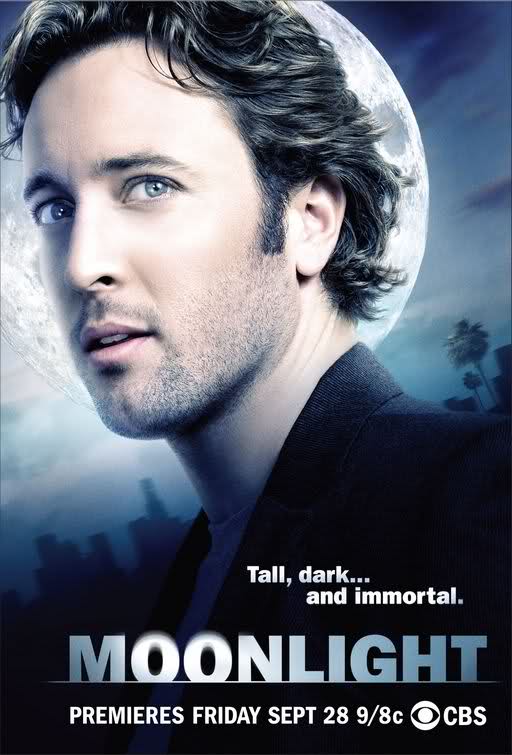
Vampire: the Requiem describes a neonate as a vampire who was embraced less than 50 years ago.  They typically maintain a great deal of their humanity because the people they knew in life are still around.  Towards the end of this phase, their supernatural nature is pretty obvious to anyone, as they haven’t aged while their friends and family have, but those friends and family are still around.  A good example of this sort of character in TV land is Mick St. John from Moonlight.  While the series isn’t great, I enjoyed the fact that he wasn’t an ancient vampire from the dawn of time, just a guy who had been around since world war 2.  He even met some very elderly people who recognized him and feared him because of his youth.  They also made a point of explaining how he’d spent his years as a vampire, giving the sense that they had accounted for time, something many series fail to do.

Ancilla

After neonates, Vampire: the Requiem classifies the second category of vampire as “Ancilla.”  These represent vampires who have been vampires for between 50 and 250 years.  These resemble what you’d expect a vampire to resemble: They’ve outlived friends and family and settled into their vampiric existence.  They squabble with other vampires over power and succulent vessels, and while they still retain some of their humanity, they are clearly monsters at this point.  To represent 250 years, we add to the previous infographic:
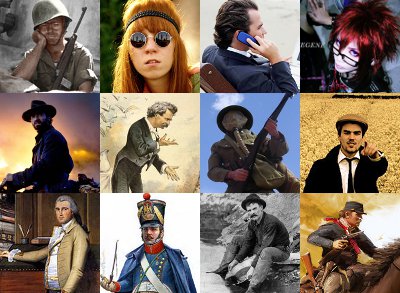
Technically, this is 240 years, but it still brings the point across.  An Ancilla would have been embraced somewhere in the second or third rows, and he’s lived one to two human lifetimes.  He comes from a different world, but not a completely alien one.  For example, a vampire born embraced in the 1790s likely grew up in America, and still is in America.  Firearms have been the weapon of choice all his life, and have merely improved over time.  He was born after the industrial revolution and while some of the changes wrought in his lifetime are surely shocking, the idea of things like machinery and science are nothing new to him.  The world has changed a great deal for him, but nothing we can’t conceive of.

Again, I remind you that each picture represents a single slice of life from that generation.  Our Napoleonic character could just as easily have been replaced by someone out of Pride and Prejudice, for example, or someone gothic like Lord Byron, or the gold miner replaced by a Mormon, and so on.  A vampire who has lived through this much has lived through more than “12 people,” but 12 generations, each with their own ideas and advancements.  I’d explain more of the little details, here, but you’ll have to forgive my lack of time.

For your own personal comparison, in your role-playing career, have you touched on every generation there? I certainly haven’t.  I’ve played pulp games (right between WW1 and the Depression), and games set in the Wild West, so I’ve got the first and second row, but the third is tricky.  I don’t think I’ve played in anything explicitly set there, though I’ve watched plenty of movies or TV shows inspired by that era.  Our vampire, however, has lived through every one of these moments…
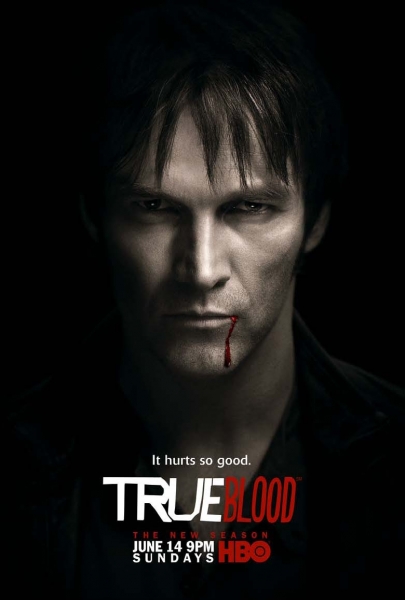
Bill Compton represents a pretty solid Ancilla.  He was embraced during the Civil War, putting him somewhere in the middle of that chart, and he behaves the way we would expect a vampire to behave.  He comes from a different world, with different manners and different values, but he’s forced himself to adapt.  He carries a lot of baggage too, having left his sire, embraced a childe of his own, and gone through several paradigm shifts over his long life.  The writers of True Blood also make a point of discussing his life.  Though there are some blank spots (What did he do during the 40s?  The 60s? The 1890s?) we do at least get to see more than just the civil war (we get to see the roaring 20s, for example).

Other solid examples of Ancilla include Louis, from Interview with a Vampire.  Unlike Bill above, Anne Rice accounts for every year of Louis life, and we can see exactly how he grew from a neonate to an Ancilla on the verge of becoming a true elder.

Elders


Vampire defines “Elders” as any vampire older than 250 years old, but in practice, it suggests that vampires older than a thousand years tend to get a death wish, and its rare to see elders beyond this, so we’ll classify elders as between 250 and 1000 years old.  In this amount of time, elders have often been elders longer than they’ve been Ancilla and Neonates combined, never mind human.  They tend to have almost no shred of humanity left, having completely embraced what they are.

To give you a visualization of what that looks like, here’s an infographic that took me hours to put together (don’t say I never gave you anything):
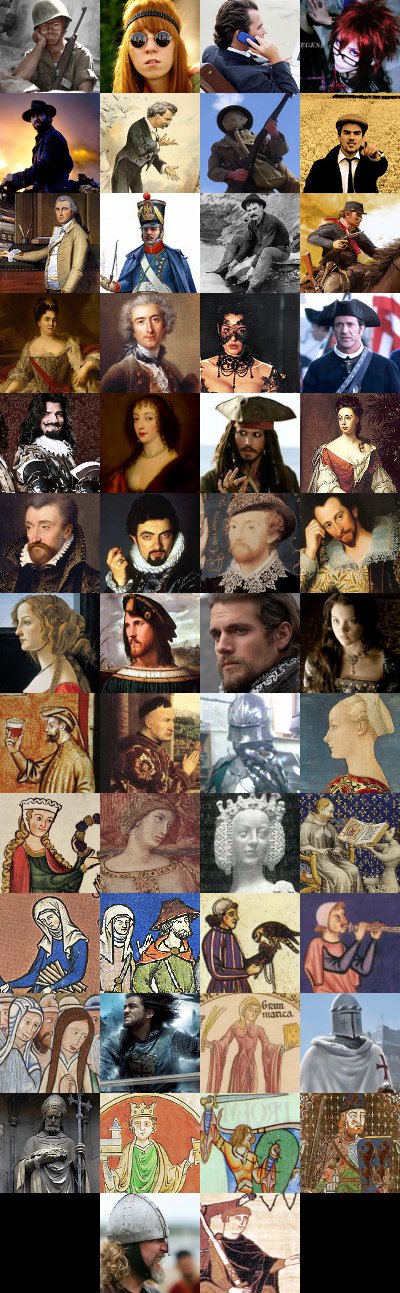
That’s… really really long, isn’t it?  It’s huge.  1000 years is 4 times as long as 250, and an Ancilla is already 3 times older than most humans will ever live to be, so an elder is well more than 10 times older than you’ll ever be.  But those are just numbers.  It’s easy to lose sight of what that really means.  Remember how I said that every picture wasn’t a person, but a generation, and that generations are diverse, filled with  numerous fashions and ideas and interesting people?  Every picture up there, every one, represents people our vampire could fall in love with, fight against, form alliances with, and embrace.  A vampire who has lived through all this has seen Christianity sweep away the pagan idols of Europe, watched knights rise from guys in chainmail with kite shields fighting vikings to becoming crusaders to becoming men with massive swords wrapped in steel, only to watch them get cut down by the rise of the gonne and pike… and then cavalry and infantry and bayonets.  He’s seen swashbucklers, pirates, revolutionaries, monarchies fall and democracies rise, all the way to our era of computers and spaceships.

To grasp just how much time there is, has your RPG career touched on every line (never mind generation) above?  Most of us have played in the top three, and the next two have been touched on in swashbuckling games, but we seldom distinguish them much.  The next three lines have grown more popular lately with the Tudors and the Borgias, but most of us haven’t played in that era unless we know a history buff, though things like Warhammer are set more-or-less around the early point of that.  The rest gets chucked together into “Fantasy gaming,” ignoring the nuance of the middle ages.  Again, every picture up there is a generation, thousands of people (sometimes millions).  Those people lived lives, loved, fought, had children, and died, and our hypothetical elder chronicled it all.
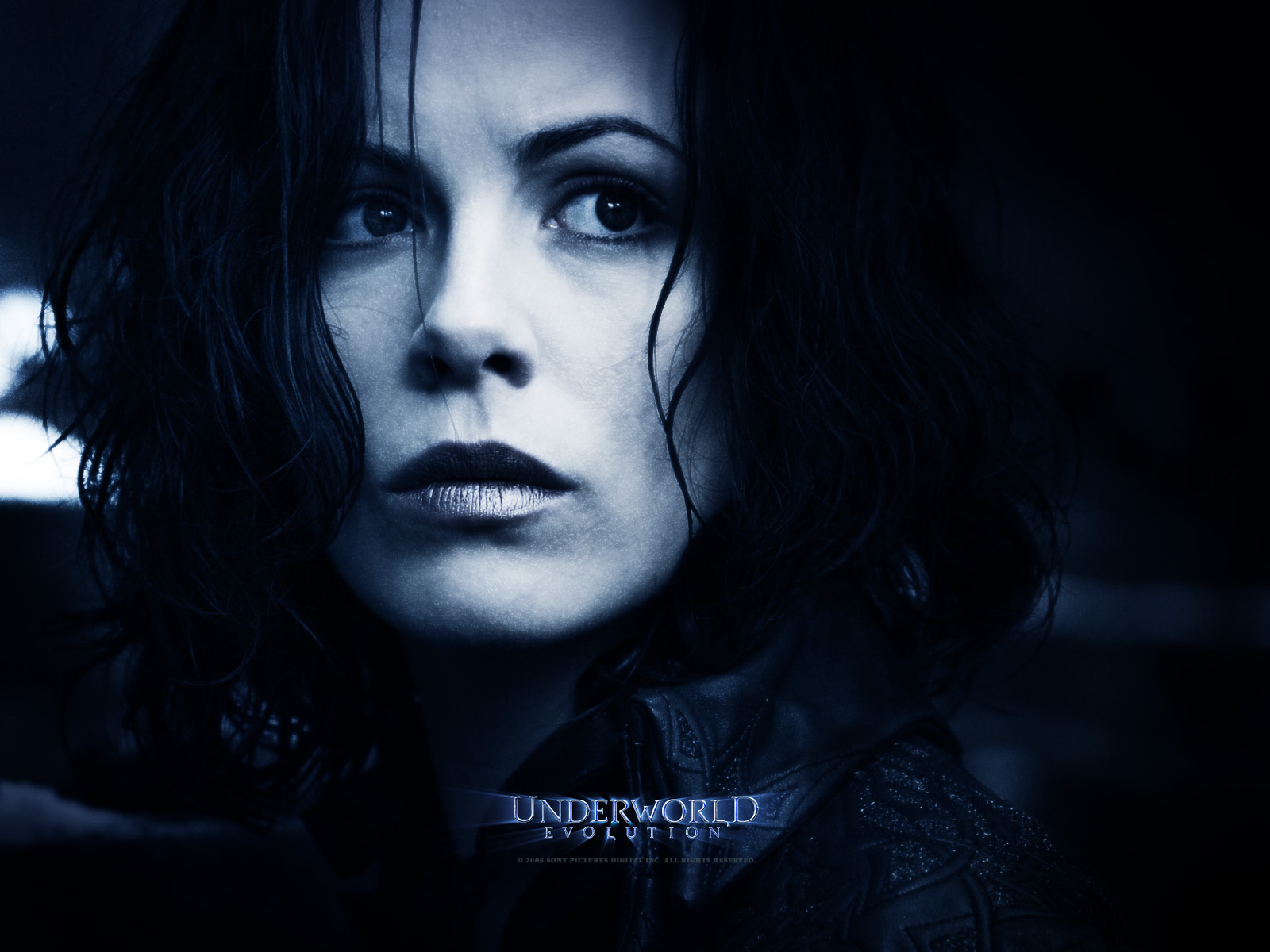
Selene from Underworld is an example of an elder, though I hesitate to call her a “good” example.  She was born in 1382, putting her at the 8th row.  She’s seen a huge swath of history, and yet all we hear is that she was embraced “in the middle ages” dot dot dot FIGHTING WEREWOLVES.  She’s an example of what not to do in a vampire game.  Despite all the lives she’s seen come and go, she never thought to question her orders until the movie starts rolling.  She’s never fallen in love until just now.  And for all her age, she’s not particularly powerful either.  She’s a great example of just picking an interesting era and/or a really big number (she’s over six-hundred! years old!) and not thinking about what that means.

Eric Northman, from True Blood, is another great example of that problem.  He’s over 1000 years old (from 900 AD), so one would think he’s vastly powerful, and yet he’s depicted as a peer to Bill Compton, who is less than a 5th of his age (It’d be like equating a 50 year-old professional with the work of a 10 year-old).  Clearly, the writer wanted VIKING GUY but didn’t think about what such a person would have experienced in his huge lifetime.  Why not just pick some 17th century swede?

Lestat and Armand from Interview with a Vampire work pretty well as elders.  Lestat barely qualifies (born in 1760), and yet we have a keen sense of the weight of his years.  Armand is significantly older at 500 years and close to Selene, above, and yet absolutely shows his years better than Selene does.  He comes across as an elder, as someone who’s a little alien, who’s shed his humanity so long ago that he barely remembers it.

Ancient


The new vampire doesn’t really have a word for those who are beyond elders.  The old Vampire called them “Methuselahs” and “Antediluvians.”  We have no real classification for them, but we can assume that they’re any vampire that has aged past 1000 years without succumbing to the death wish that tends to consume such vampires.  This makes them exceedingly rare, simply from attrition alone.  Ancients might be as alien to vampires as elder vampires are to humans, since there’s no upper limit on how old they can be.

I’m not going to present a graphic.  My fingers would break from all the pictures I would have to find, crop and paste into such a timeline.  I will point out a couple of characters, though.  First: Godric, Eric’s sire.  According to True Blood, he’s described as over 2000 years old.  So, take that bar above, and double it.  That’s how old Godric is.  Does he come across as Ancient?  Not to me.  He does come across as an elder, though.  If they’d made Eric more like 400 years old, and Godric 1000, they would have fallen far more in line with vampire’s philosophy (which isn’t necessarily better than having their own, but I do find the lack of difference between a 150 and 1000 year old vampire rather jarring, which suggests that something is off in True Blood).
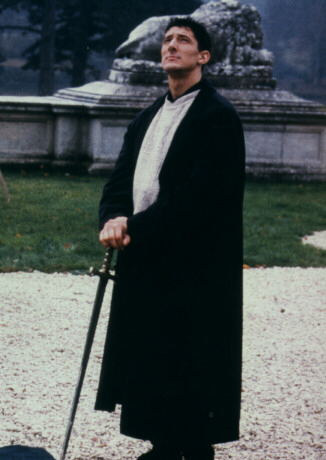
Methos, above, isn’t a vampire at all, but an Immortal from the Highlander (TV) series.  Now, Highlander’s actually pretty good at discussing the age and the weight of years that the Highlanders have, what with their constant flashbacks and their intertwining stories.  Methos, however, is over 5500 years old.  Take the bar above, and multiply it by 6 at least.  The amount of time he’s gone through simply breaks the mind.  To their credit, they suggest that he’s forgotten more than you’ll ever remember, and that such much time has certainly worn on him.

Still, I have yet to see an appropriately alien ancient as one might expect, except possibly the Queen of the Damned, but I never finished watching that movie.

So, the next time you’re thinking up a vampire (or an elf, or an immortal) I beg of you, rather than pick some well known point in history, consider the actual scope of time.  History is filled with interesting stories, and there’s nothing wrong with picking a more conservative age for your vampire.  300 years is still a hugely long time.  Save the 1000 year old vampires for the truly old, truly strange, truly powerful, not just “I want a knight in the modern day.”

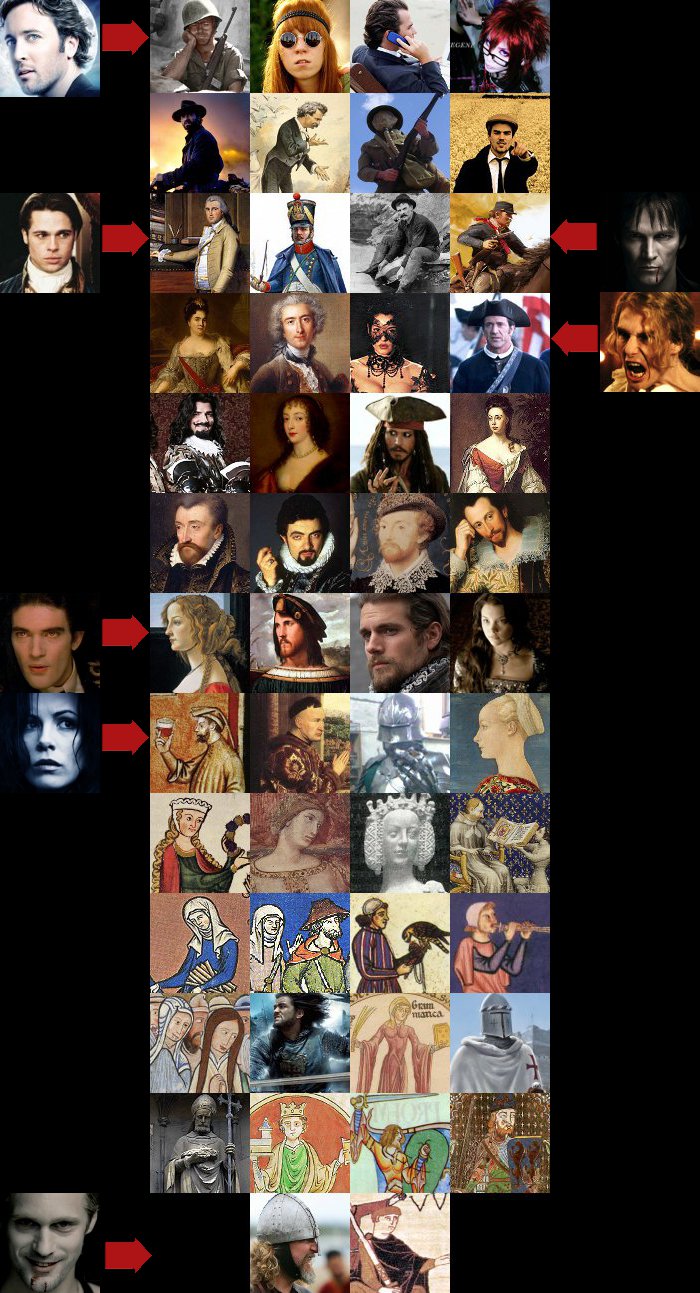
One last graphic, for your pleasure:
Slaughter City: the Dark Bond

I mentioned before that my players are splitting up far too often.  I’d like to encourage them to stay together, rather than brutally enforcing it via metagaming.  I could ask them to stick together, but I’d rather it “made sense” and that it was a tempting option, either to avoid sticks or gain carrots.

Talking with Roomie gave me an idea.  What if the coterie bond between the characters went deeper than expected (or perhaps this is normal among all coteries): When a vampire in a coterie awakens, he has within his twisted soul a faint measure of power and love for his fellow members.  Thus, once per day, he may pass on this bond in the form of a bonus.  To do so requires touch, or at least being in sight or hearing range, and this bonus must be applied immediately to a roll. You cannot “save it up.”

I was thinking the bonus would be a rote action: you can reroll any and all failed dice on a particular roll.  This is sort of like “giving a player joss” from WotG, except it requires you to actually be there.  This means if you’re going into a dangerous or important situation, it’s useful to bring your coterie mates along “just in case,” since they can directly lend you support via the dark bond.

What do you guys think?  The bonus too strong?  “Once per session per player” too weak?  Lemme know

Vampire: Frenzy

When you pick up a new game, you spend alot of time learning to master its intricacies, a dance I’m long familiar with due to my love of systems and my “Gamer ADD.” You try new things, make mistakes, re-read the book, and see things in a completely new light. And then you tell your players, they nod and agree, and life moves on.

World of Darkness is a very flexible, very “narrative” system. The rules function primarily to facilitate your telling of a story. They resolve disputes, tell you what happens next and, most importantly, help create “interesting choices,” the very core of “gameplay.”

Vampire’s frenzy rules work exactly so. They grant me a chance to step into the heads of my players’ characters and show them how alien a vampiric state really is. I can reveal how profound a vampire’s hunger or rage really is with the roll of a die. However, if I use too heavy a hand, I violate another rule that I must confess I often violate: do not tell the players what they are feeling. There’s two good reasons for this. First, it’s just bad form. A player is in control of his character (except when he’s not, the whole point of frenzy), and knows how that character feels better than I possibly can. Second, more importantly, it’s a crutch. If I say “You meet a scary guy. He’s scary. You’re scared,” most players generally dismiss the character. If I show you that he’s scary, with words like “looming” and “sinister” and “flashing eyes,” then most player characters will understand that fear and react accordingly. (There’s a third reason in a vampire game: Vampires often mess with your mind and emotions. “The vampire uses nightmare, therefore, you’re scared” creates different results, a different feel, than describing a scary character and letting the player react accordingly).

I think I over-used frenzy in the last game, though much of it was Predator’s Taint, something that always occurs. Perhaps my players wouldn’t agree: Many of Roomie’s frenzies came understandably from his hunger, while other characters (like Byler) hardly needed to roll for frenzy at all, as they were in a well-controlled environment and well-fed. According to the book, it’s “up to me” when characters should roll for frenzy, but it shouldn’t happen all the time.

The book also repeatedly states that vampires cling to their humanity to stave off the beast (ie frenzy), yet provides no mechanics for this. Thus, I propose a personal guideline: the higher your humanity, the less often I require you to roll for frenzy. Another book (I forget which) offered the idea of rolling a single die and comparing the results to your Humanity. A roll equal to or lower than your Humanity resulted in “virtuous” action, while higher than your Humanity resulted in “sinful” action. The book suggested this as a roleplaying tip, but I think it might serve well as a guide for frenzy: If I am in doubt as to whether or not you should frenzy, I will roll a die and note the above. Thus, Dave is far more likely to frenzy for “little things” than Roomie, thanks to his mounting madness after diablerizing that vampire last session.

Thoughts?

Slaughter City: Post-script

So, I ran my first Vampire game, and it exceeded all expectations. When I asked if they thought my notes made a difference, they unanimously agreed that it did (which surprised me, as I didn’t feel I could tell a difference). Roomie declared that “It felt like you’ve been running this game for a year, and we’re only just now getting to play it.” Since I generally take “a year” to get that much detail on my NPCs, I can see where he’s coming from on it. Both Roomie and Byler have asked when the next game will be, and very much want to see what happens next. The fact that everything has so much context likely contributes to this: Roomie’s character nibbled on someone he probably shouldn’t have. In a normal “first session” vampire game, you wouldn’t expect anything from this, as the character was probably someone tossed together last minute by the GM. In this game, you know I’ve already tied her into the setting, so he’s tugging on strings and he isn’t sure where they lead.

So, this technique is a resounding success. I can already tell that if someone asked me to run a game tomorrow, with like 30 minutes prep time, I could give them a session just as good. Now that they’ve been introduced to the setting, I have more than enough hooks and interesting story elements to keep them going for quite awhile. I should use this technique in my other campaigns as well, I think.

I have rarely seen the group so wildly excited after session 1 of any game.

Vampire itself turned out to be alot more interesting than I expected. I mean, alot more interesting. It’s fun when a system pleasantly surprises you, when it rewards you for choosing it. First, the Beast offered me an amazing amount of control. Just ask people to roll for frenzy and whisper in their heads whenever I want to emphasize something vampiric, or show them some of their vampire nature. I also like how keenly aware my players were of their blood pool, their hunger. Furthermore, their powers were awesome. Byler thoroughly enjoyed being the seductive Daeva loaded with Majesty and getting a small crowd to adore him and spill their guts about what they knew, or Cass pinning some dogs with her Animalism and turning them to her side, and so on. I can see where Vampire games quickly turn into “Dark Superheroes.” People complain that nVamp isn’t “epic enough.” I think my players would disagree after the last session.

Dramatic Combat is really such a wonderful hack. I expected that even with the hack, the combat would be boring, but nothing could be further from the truth. Both battles were fast, brutal, and awesome. I think the players were excited, scared occasionally frustrated, which is exactly what you want in a fight. Because the fights weren’t a stand-up, “Kill him before he kills you” affair, but a wild, shifting battle with highly mobile characters and lots of goals. Roomie pointed out that the fact the vampires tried to kidnap mortals helped, because we had multiple objectives going on.

Dave dropped two humanity in one session. He’s actually a little scared now. That’s awesome.

With so much detail, though, I forgot and flubbed some elements. I never described the streets of Nation Street despite Roomie visiting twice (It’s where the police station is located). Emma went a little mad after Vampires attacked her, and I gave her a phobia. I think I’ll change it to Narcissism to reflect her independent and fierce spirit (hopefully the players won’t mind). And I left Roomie out of the fights when I really should have found a way to include him, but he says he had fun anyway.

So, all in all, a big success. We’re all looking forward to the next session

Slaughter City: Preamble

Another long absence, huh? I’ve just been really busy writing up NPCs and setting material, and studying, and thus there really isn’t anything to say except “Wooh! 5 more NPCs!” and “Hey, I finally understand that bit about how computer memory management works.” And who wants to read that?

(Though, in retrospect, I think posting about my studies might be fun. I’ll be studying all next week, so maybe I’ll discuss exactly what it is and why it’s giving me problems.)

But, at long last, it’s time to run my game, so I have to put down my brush, step back, and let the audience get a glimpse of my work. And lemme tell you, that scares the crap out of me.

This game is something completely different, completely new. Most of my changes in approach and improvements in GMing skill have been gradual, an addition of one concept or two. This feels like a revolution, if I’m correct, and I’m just waiting for it to all go wrong. How? Well, I could overwhelm the players with a hojillion NPCs right off the bat, or I’ll “go McClellan” and refuse to let the players mess up my precious NPCs that took over a month to create!. Or, worst of all, the guys just go “meh” and the game ends before it begins.

I’m being irrational, of course, but stage-fright usually is, and I always get stage-fright right before a game. Never mind that every one of my players think of me as awesome. Never mind that I have to turn people away from my games. I still get butterflies in my stomach. Just how it goes, I suppose. It doesn’t help that alot of people on the internet want to see this game, and this will be my first “podcast” RPG. It’s one thing to impress a dozen players, it’s another to impress the internet. You can’t please everyone, of course, and so I have to remember that it’s my players that matter, not my external audience.

Even with all these doubts, even before I’ve run my game, I’m ready to pronounce this a success. This exercise has been mind blowing. Once upon a time, I used to just sit down at a game with no real idea of what was going to happen, and sort of improvised it. Then I learned to detail the game, to make sure I knew what things looked like and how they looked, and my games improved vastly, mainly because improvisation became alot easier when you had more material to work with. This feels the same, except for an entire campaign. If you told me to stop planning right now and just run a game until I ran out of material, I could probably complete three full stories before I even came close to running out of material.

So, paradoxically, in addition to being terrified, I have never felt more confident about a game! I can see how everything fits together. I know the history of my city, the character of my city, the characters of my city, and I have so many layers of intrigue and mystery that I could spend an entire evening just handing the players fascinating clues and they’d still not know it all (Thus, there’s no fear of someone being “too successful” on an investigation roll and forcing my hand too early).

I feel like a creative cannon, primed with more inspiration than I can handle. I’m filled to bursting with ideas, and finally, I get to show them to my players. It’ll be magnificent. I think they sense it alreayd.

I’ll keep you up to date on how it goes.

Slaughter City Update: Vampires

I finished the Slaughter City vampires. 25 in all! Woot! Wow, was that alot of work. I hope this is all worth it ^_^

Yeah, I haven’t been posting much. All I’ve done for the past week has been homework and work on Slaughter City, though I do have a few things I can talk about. Still, thanks for your patience

Vampires!

So, we made characters last night. Took far too long to get everyone together and organized, but on the plus side, Walter pulled money out of his pocket and took care of my microphone for me, god bless him. Isn’t even playing, as best as I can tell.

After four hours, we had five characters to play with. The group really reacted nicely to my outline and design, and we had some interesting concepts in short order:

(No, I don’t have names for characters yet. I’ll edit this post and fill them in as I get them)

Dave: Dave’s playing 7 and a half feet of ungodly strong Nosferatu. According to his concept, he was a family man ten years ago, when a car accident took the life of his family and his sanity with it. He wandered the streets, desolate and despairing, until his hard-luck life forced him to survive. That need to survive taught him to fight, and he became a street-fighting devil of the back-alleys. The Mafia took him in for some cage fights, but when he wouldn’t throw a fight, arranged for him to be eliminated. He’d picked up a fan in the form of a Nosferatu elder, who saved him as he lay dying, blessing him with unlife to keep that fighting spirit “alive.” Dave’s character has Vigor 2, Nightmare 1, Haunted, Disfigured, Mentor, Fighting Style: Brutal Strength, and Giant. He shares a Haven with Byler, and he and Cass’s character know one another. His Virtue is Fortitude, his Vice is Wrath.

Cass: Cass wanted to play a Ventrue, but shifted to Gangrel as it became obvious that her concept was pretty feral. Cass is a cat-lady, one of those crazy people that relates to animals better than people, and had like sixty pets. She took care of them in an abandoned animal shelter in the Shambles, until she found a wounded, half-mad wolf, and “nursed” it back to life. It remembered it’s human form and turned into a beautiful, terrible native american elder vampire, who granted her unlife in thanks, and then left. She has Animalism 2, Resilience 1, Behavior Blind, Animal Feature, Striking Looks, shares a Haven with Roomie (her broodmate) and knows Dave. Her Virtue is Charity, but we haven’t settled on a Vice yet.

Byler: Byler is playing what you would expect, which is fine, because I chose the game knowing he would want to play this sort of character. In life, he was a grey, outcast loner who had a beautiful knack for artwork. His sire, a hauntingly attractive Daeva from the 20s, fell in love withe “beauty of his soul” and embraced him, unaware of the dark resentment that lingered there. Her touch tainted him, and now he seeks a way to escape the worst of his curse and to exploit his powers for his own gains. He’s already caught the eye of a member of the Ordo Dracul, he seeks to steal him away from his Sire… He has Majesty 3, Obsession, Cursed (Cannot enter a house unless invited), Striking Looks, shares a haven with Dave (whom he sees as a kindred spirit), and his sire is friends with Shawn’s sire. His Virtue is Fortitude, his Vice is Pride.

Shawn: Shawn’s playing a Mekhet. Formerly a private investigator, he discovered some hidden truths regarding vampires and after successfully navigating the mental games of his brilliant sire, impressed the vampire sufficiently that he decided to keep Shawn. Shawn has Obfuscate 3, Light Sensitivity, a great haven and plenty of contacts, his sire knows Byler’s Sire, and he often deals with the cops (Roomie). His Virtue is Prudence, his Vice is Sloth.

Roomie: Roomie also went with Gangrel, and is playing what I consider quite unusual for him. Roomie’s character is a cop who’s very clean and does what it takes to get the job done. His soul is sufficiently pure that he intrigued the newly recovered Gangrel Elder, who stalked him and embraced him to see if damnation would break him or not. Now Roomie struggles to play cop by night, while holding back the hungry Beast within. He has Protean 3, Tooth and Claw, he has Honor and Animal Features, and he’s broodmates with Cass and knows Shawn. His Virtue is Justice, his Vice is Wrath.

All in all, a pretty good group, I think. What’s cool is I can already see their context in Slaughter City. Roomie hangs with the cops and likely already has a friendship with the mortuary girl. Byler and Dave hang out in Silverside, and Dave has connections in the Shambles. Cass also has connections in the Shambles and will be dealing with some Neat Supernatural Stuff I’ve had in mind. Shawn knows Mandarin, lives in Chinatown, and will naturally have connections with the mafia and the triad. It’ll be interesting to see how all the hooks play out.

Vampire: Reading List

There are more books in the WoD line than you can use, intentionally, as it’s become rather GURPS-like in its modularity. Thus, you have to pick and choose the books you want to include. Mine:

Vampire: the Requiem: For obvious reasons
World of Darkness: Ditto

The Book of Spirits
The Book of the Dead
WoD: Inferno: Demons
WoD: Slashers: Not all monsters are inhuman
Damnation City: City workbook, don’t leave home without it
Belial’s Brood: Just because you’re a vampire doesn’t mean you can’t enjoy killing bad vampires, amirite?
Mythologies: A big book of mysteries
Ghouls: Because, damn, it’s a great book.

More Vampire

The real reason I create games, beyond the fact that they’re fun and I like to entertain my friends with them, is that I can’t get them out of my head. I have three bouncing around right now, WotG, GURPS Space Opera (So much so that my next session is practically planned out already), and now Vampire.

I’m catching expected crap from unexpected sources, which leads to explanations and ideas floating around in my head all the damn time. Well, blog, that’s what you’re for, giving me a chance to let these things out (and, apparantly, to wake Bee in the middle of the night with the sound of my tapping keys).

So here’s why I want to run it, restated in slightly less dramatic terms of my last post:

Survival Horror

The core of a good horror game is the challenge to survive. On this challenge, Roomie, Shawn and Walter thrive. This is why they want to play Horror. Any horror game will do this, and all of the WoD lines touch on this at some level, but none of them underscore it quite like Vampire does. A vampire is a perfectly normal human whose life has been turned upside down by a dreadful curse. How would you survive such a thing? After we discard the common “I’d kill myself!” serious questions arise. How do you keep the sun from burning you alive? How do you get a meal without violating your own personal code (you can chase after animals for about a century, but after that, what? Do you kill criminals? Do you find someone willing to donate their blood and try to be sparing?)? How do you do all this without rousing suspicion from others? And how do you maintain social ties, talking to humans you want to eat and vampires who want to eat you, to keep yourself from going mad? And how do you tame the yammering beast inside your head?

It’s a challenge. Vampires have great power, but great weaknesses, forcing a player to struggle to figure out how they will live. It’s just as challenging as playing a human with a shotgun hunting down werewolves, except here, the challenge is as much internal as external.

Occult Mystery

The World of Darkness is filled with mysteries, which is one of the reasons I like it so much. Each line has their own things to explore: Mage has its inner sanctums and worlds of the mind, Werewolf has its Shadow and the convoluted nature of spirits, and vampire has its tangled social interactions and long and messed-up histories. All of them have their occult elements, their worlds within worlds filled with strange dreams, dark ruins and unexpected twists, so any of them would work. Someone might ask “Well, then, why not run one of them?” To which I say “The rest of the reasons given in this entry.” They might further reply “But… it’s vampire,” to which I reply “Bias much?”

The one thing I want to add: The Underworld. Ever since I figured out how Wraith really works, I’ve wanted to touch on the dark, strange and creepy world of the Dead in WoD. I’ve wanted to give Cass and others the chance to explore a world of broken memories and hurt emotions. You can do that in the other games (though I’m not sure why you’d bother in Werewolf), but Vampires have a special tie to the Dead, and the Book of the Spirits even grants them a new Discipline called the Blood Tenebrous which allows access to the Shadow. Hopefully, the upcoming Book of the Dead will offer more insight into this.

Violence

You can’t run a personal horror story without allowing Dave and Roomie to engage in some serious carnage. That’s why they love Werewolf, and that’s honestly why I think they would love Vampire. In the nWoD, a werewolf and a vampire are closely matched, which suits them, in my opinion. A vampire can regenerate, can fuel his physical prowess with blood, and every last vampire clan has access to their own physical discipline. While it’s true that vampires tend to be beautiful and social, I think the combat-fans forget that vampires are monsters first. They have sharp fangs, unnatural hungers, alien eyes and strange complexions. In their disdain of Twilight, they forget Van Helsing and Legacy of Kain. Vampire: the Requiem makes a point of highlighting how strange elders become, such as Unholy, the signature gangrel, whose hands have permanently become bird talons and who constantly hungers after the blood of vampires, no longer able to sate herself on human blood. She is a whispered legend among vampires, a boogey-man to boogey-men. There’s no reason players can’t be the same, eventually.

Social Intrigue

Vampire is a very social game, the most social of the three core lines, which is why I imagine several players object. Yet I point out that gaming is built on compromises, and the above three should be reason enough to, say, Roomie to allow, say, Cass to have her fun. Like 7th Sea or WotG, much of the action of driven by social interplay, though Vampire’s social play tends towards the vicious.

Social interaction has two major sources. First and foremost, like in WotG where every character has his master, every Vampire has his sire, who directs his childe, instructs him, and bestows his allies and enemies on his inheritor. Second, vampire is custom designed to let you play with your food. Like with Changeling, you are driven to interact with people, because they form the basis of your supernatural food-chain. You must either find wicked men to kill, find good people who will let you sip, starve, or lose your humanity as you slaughter the innocent. Given the benefits of the first two, it pays to get to know the wide cast of NPCs a vampire game inevitably brings.

These two interactions coalesce to create 90% of the social intrigue of a game, as the elder’s enemies and allies will swirl around you in a dance that has gone on for longer than you have existed, trying to steal your mortal assets from you as you try to steal theirs. But with my addition of the Underworld, I hope to add an interaction with the Dead too, both out of guilt (“You killed me”) and redemption (“and you have laid me to rest, so I will no longer haunt this world.”)

That’s it. Four solid reasons to play, I think, ones that hit every point on most of my players’ lists of wants and needs. Walter wants and needs a survival mystery game. This will provide it. Roomie and Dave need violent survival games. This provides. Cass and Byler need violent, mysterious social-intrigue games, and this is perfect.

Perhaps the most appealing aspect of Vampire is its flexibility. Between clan and covenant, you can customize your character far more than you could with the other lines. All werewolves are violent, and all mages are good at solving mysteries, but vampires are pretty good at both of the above. The Lancea Sanctum and the Circle of the Crone grant access to Blood Magic. The Ordo Dracul digs deep into the mysteries of the vampiric condition and reward research with power. Invictus and the Carthians grant social benefits. Everyone has a reason to fight.

Don’t beleive me? Lemme show you how I think the Clans would break down by player: Roomie: Daeva, Gangrel or Nosferatu (all great warriors). Dave: Gangrel or Nosferatu (monstrous warriors). Walter: Nosferatu or Mekhet (lurking mystery-solvers). Byler: Daeva, Ventrue, Nosferatu (Scary social power-houses). Cass: Ventrue, Daeva (social power-houses). Everyone can bring their own needs to the table, and have those needs met, in a way that I don’t think Werewolf or Mage would do (alas, especially for the latter, as I’m quite a fan, but I really think it would be Walter and I rooting for it, and nobody else understanding how to make it work)