Vampires are really, really old

I have a pet peeve that I’m sure I’ve mentioned before: When it comes to immortals, whether vampires, elves or highlanders, some series like to toss around numbers like they’re meaningless when they’re not.  The average person doesn’t really have a true grasp of the scope of history, hence my other project (History Lesson), beyond broad eras.  He knows about World War 2, and the Civil War, and then the Middle Ages (“That’s the bit with the knights and princesses, right?”) and then Rome, and then “a really long time ago,” and everything in between gets very fuzzy.  As a result, you have vampires from the Civil War, and then vampires from the Medieval Age, and nothing in between, which makes me grind my teeth.

To help you understand my frustration, I’ve built an infographic (Yay for pictures!).  For comparison, we’re going to use Vampire: the Requiem’s measure of immortality, as I think that’s a pretty well thought-out standard, though these ideas could probably apply to just about anything.

We start off, appropriately enough, with a baby:

What a cutey.  Imagine that this baby was born yesterday.  He’s represents the newest generation of humanity, those born in the 2010s.  We’ll let every child, European or American, Chinese or African, rich and poor, punk and straight-arrow, nerd and jock, all be represented by this one baby.

Neonates

If we assume his mother was 20 years old, and that her mother was 20 years old, and so on, we can go back in time one generation, and 20 years, at a time.  A human being lives, on average, 80 years, so if we have a child when we’re 20, and they have a child when they’re 20 (we’re 40), and our great-grand children are born when we’re 60, and our great-great grand children are born when we’re 80, so we have just a chance to see them born, touch finger to finger to pass on the torch, and then pass away.  That means the great-great grand-father of this child might have served in WW2.  This stretch of time, 4 generations, we tend to call “in living memory,” since the eldest among us were around to see those things.  Such a “living memory” might look like this:

You’ll have to forgive my choices here.  Obviously, I’m representing entire generations with a single person, a single picture, and anyone with a passing familiarity of these years will see the gross simplifications I’ve made.  Our punk girl represents children born in the 90s, with Gen-Y’s explosion of strange subcultures.  The gentleman with a phone represents a yuppie, which is more of an 80s thing, but he’ll serve to stand in for those  of us born during the 70s (we’re the businessmen right now anyway), with Gen-X’s tech savvy.  The hippy, of course, stands in for the Baby-boomers, those born during the 50s and got a chance to rebel during the 60s.  The soldier represents the silent generation.  Technically, if we followed our 20 year limit, he’d be born in the 30s, which is too young to participate in WW2, and so I’d plot a Noir character or one of the Mad Men there, but WW2 is very recognizable, so I’ll leave it there.

To get an idea of the scope of those years, stop and think of all the games you’ve played.  Have you played in each of these eras?  I’ve certainly played games set in both the cutting edge present (Gen-Y), and the present of my youth (Gen-X).  I’ve played in a Vietnam campaign (Baby-Boomers), and while I’ve (surprisingly) played in no game set in the era of the Silent Generation, I’ve certainly played computer games that celebrated their greatness.

Vampire: the Requiem describes a neonate as a vampire who was embraced less than 50 years ago.  They typically maintain a great deal of their humanity because the people they knew in life are still around.  Towards the end of this phase, their supernatural nature is pretty obvious to anyone, as they haven’t aged while their friends and family have, but those friends and family are still around.  A good example of this sort of character in TV land is Mick St. John from Moonlight.  While the series isn’t great, I enjoyed the fact that he wasn’t an ancient vampire from the dawn of time, just a guy who had been around since world war 2.  He even met some very elderly people who recognized him and feared him because of his youth.  They also made a point of explaining how he’d spent his years as a vampire, giving the sense that they had accounted for time, something many series fail to do.

Ancilla

After neonates, Vampire: the Requiem classifies the second category of vampire as “Ancilla.”  These represent vampires who have been vampires for between 50 and 250 years.  These resemble what you’d expect a vampire to resemble: They’ve outlived friends and family and settled into their vampiric existence.  They squabble with other vampires over power and succulent vessels, and while they still retain some of their humanity, they are clearly monsters at this point.  To represent 250 years, we add to the previous infographic:

Technically, this is 240 years, but it still brings the point across.  An Ancilla would have been embraced somewhere in the second or third rows, and he’s lived one to two human lifetimes.  He comes from a different world, but not a completely alien one.  For example, a vampire born embraced in the 1790s likely grew up in America, and still is in America.  Firearms have been the weapon of choice all his life, and have merely improved over time.  He was born after the industrial revolution and while some of the changes wrought in his lifetime are surely shocking, the idea of things like machinery and science are nothing new to him.  The world has changed a great deal for him, but nothing we can’t conceive of.

Again, I remind you that each picture represents a single slice of life from that generation.  Our Napoleonic character could just as easily have been replaced by someone out of Pride and Prejudice, for example, or someone gothic like Lord Byron, or the gold miner replaced by a Mormon, and so on.  A vampire who has lived through this much has lived through more than “12 people,” but 12 generations, each with their own ideas and advancements.  I’d explain more of the little details, here, but you’ll have to forgive my lack of time.

For your own personal comparison, in your role-playing career, have you touched on every generation there? I certainly haven’t.  I’ve played pulp games (right between WW1 and the Depression), and games set in the Wild West, so I’ve got the first and second row, but the third is tricky.  I don’t think I’ve played in anything explicitly set there, though I’ve watched plenty of movies or TV shows inspired by that era.  Our vampire, however, has lived through every one of these moments…
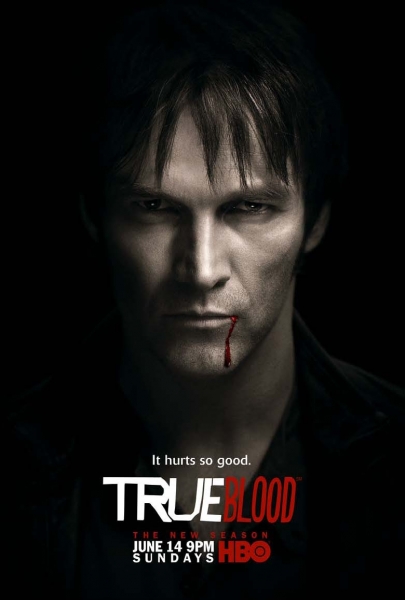
Bill Compton represents a pretty solid Ancilla.  He was embraced during the Civil War, putting him somewhere in the middle of that chart, and he behaves the way we would expect a vampire to behave.  He comes from a different world, with different manners and different values, but he’s forced himself to adapt.  He carries a lot of baggage too, having left his sire, embraced a childe of his own, and gone through several paradigm shifts over his long life.  The writers of True Blood also make a point of discussing his life.  Though there are some blank spots (What did he do during the 40s?  The 60s? The 1890s?) we do at least get to see more than just the civil war (we get to see the roaring 20s, for example).

Other solid examples of Ancilla include Louis, from Interview with a Vampire.  Unlike Bill above, Anne Rice accounts for every year of Louis life, and we can see exactly how he grew from a neonate to an Ancilla on the verge of becoming a true elder.

Elders


Vampire defines “Elders” as any vampire older than 250 years old, but in practice, it suggests that vampires older than a thousand years tend to get a death wish, and its rare to see elders beyond this, so we’ll classify elders as between 250 and 1000 years old.  In this amount of time, elders have often been elders longer than they’ve been Ancilla and Neonates combined, never mind human.  They tend to have almost no shred of humanity left, having completely embraced what they are.

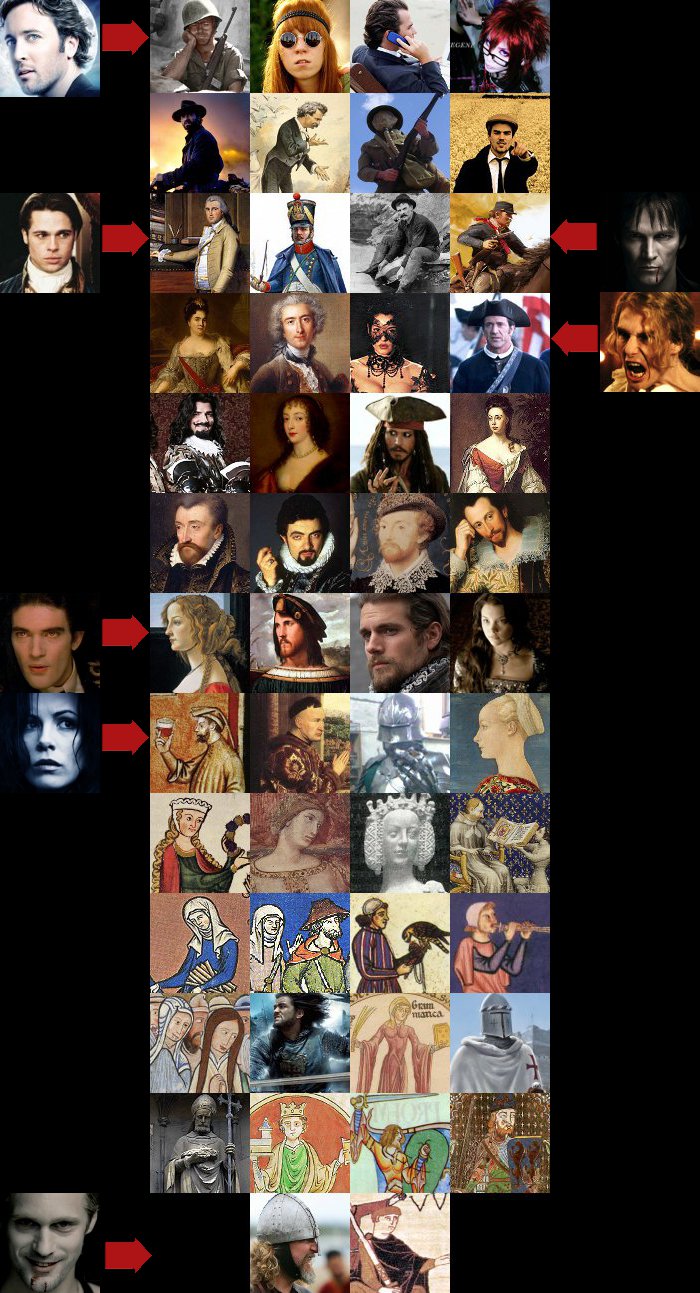
To give you a visualization of what that looks like, here’s an infographic that took me hours to put together (don’t say I never gave you anything):
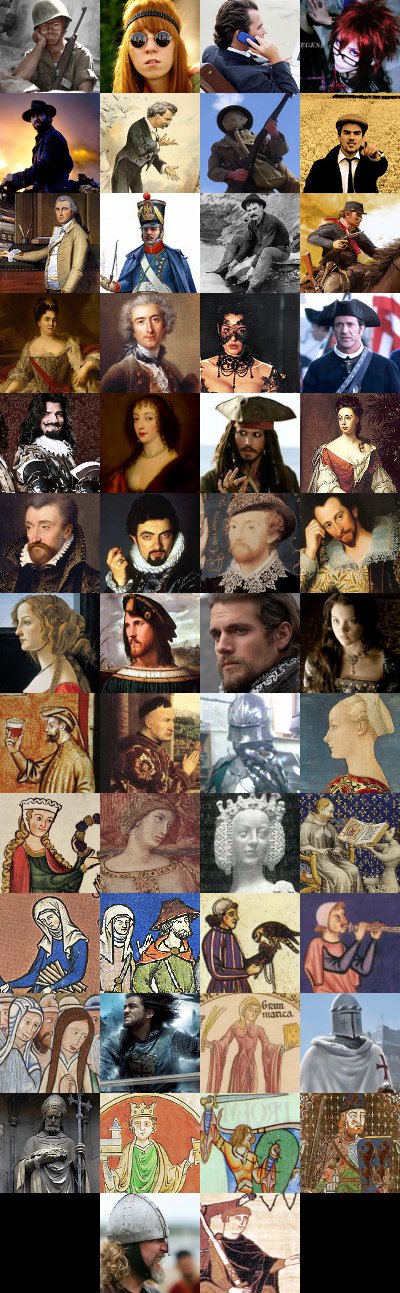
That’s… really really long, isn’t it?  It’s huge.  1000 years is 4 times as long as 250, and an Ancilla is already 3 times older than most humans will ever live to be, so an elder is well more than 10 times older than you’ll ever be.  But those are just numbers.  It’s easy to lose sight of what that really means.  Remember how I said that every picture wasn’t a person, but a generation, and that generations are diverse, filled with  numerous fashions and ideas and interesting people?  Every picture up there, every one, represents people our vampire could fall in love with, fight against, form alliances with, and embrace.  A vampire who has lived through all this has seen Christianity sweep away the pagan idols of Europe, watched knights rise from guys in chainmail with kite shields fighting vikings to becoming crusaders to becoming men with massive swords wrapped in steel, only to watch them get cut down by the rise of the gonne and pike… and then cavalry and infantry and bayonets.  He’s seen swashbucklers, pirates, revolutionaries, monarchies fall and democracies rise, all the way to our era of computers and spaceships.

To grasp just how much time there is, has your RPG career touched on every line (never mind generation) above?  Most of us have played in the top three, and the next two have been touched on in swashbuckling games, but we seldom distinguish them much.  The next three lines have grown more popular lately with the Tudors and the Borgias, but most of us haven’t played in that era unless we know a history buff, though things like Warhammer are set more-or-less around the early point of that.  The rest gets chucked together into “Fantasy gaming,” ignoring the nuance of the middle ages.  Again, every picture up there is a generation, thousands of people (sometimes millions).  Those people lived lives, loved, fought, had children, and died, and our hypothetical elder chronicled it all.

Selene from Underworld is an example of an elder, though I hesitate to call her a “good” example.  She was born in 1382, putting her at the 8th row.  She’s seen a huge swath of history, and yet all we hear is that she was embraced “in the middle ages” dot dot dot FIGHTING WEREWOLVES.  She’s an example of what not to do in a vampire game.  Despite all the lives she’s seen come and go, she never thought to question her orders until the movie starts rolling.  She’s never fallen in love until just now.  And for all her age, she’s not particularly powerful either.  She’s a great example of just picking an interesting era and/or a really big number (she’s over six-hundred! years old!) and not thinking about what that means.

Eric Northman, from True Blood, is another great example of that problem.  He’s over 1000 years old (from 900 AD), so one would think he’s vastly powerful, and yet he’s depicted as a peer to Bill Compton, who is less than a 5th of his age (It’d be like equating a 50 year-old professional with the work of a 10 year-old).  Clearly, the writer wanted VIKING GUY but didn’t think about what such a person would have experienced in his huge lifetime.  Why not just pick some 17th century swede?

Lestat and Armand from Interview with a Vampire work pretty well as elders.  Lestat barely qualifies (born in 1760), and yet we have a keen sense of the weight of his years.  Armand is significantly older at 500 years and close to Selene, above, and yet absolutely shows his years better than Selene does.  He comes across as an elder, as someone who’s a little alien, who’s shed his humanity so long ago that he barely remembers it.

Ancient


The new vampire doesn’t really have a word for those who are beyond elders.  The old Vampire called them “Methuselahs” and “Antediluvians.”  We have no real classification for them, but we can assume that they’re any vampire that has aged past 1000 years without succumbing to the death wish that tends to consume such vampires.  This makes them exceedingly rare, simply from attrition alone.  Ancients might be as alien to vampires as elder vampires are to humans, since there’s no upper limit on how old they can be.

I’m not going to present a graphic.  My fingers would break from all the pictures I would have to find, crop and paste into such a timeline.  I will point out a couple of characters, though.  First: Godric, Eric’s sire.  According to True Blood, he’s described as over 2000 years old.  So, take that bar above, and double it.  That’s how old Godric is.  Does he come across as Ancient?  Not to me.  He does come across as an elder, though.  If they’d made Eric more like 400 years old, and Godric 1000, they would have fallen far more in line with vampire’s philosophy (which isn’t necessarily better than having their own, but I do find the lack of difference between a 150 and 1000 year old vampire rather jarring, which suggests that something is off in True Blood).
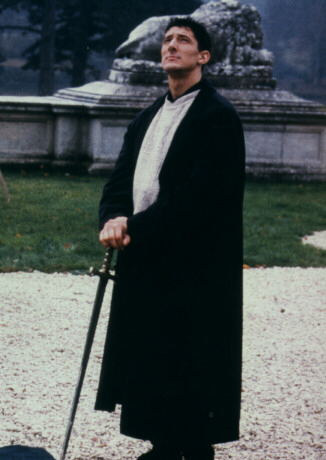
Methos, above, isn’t a vampire at all, but an Immortal from the Highlander (TV) series.  Now, Highlander’s actually pretty good at discussing the age and the weight of years that the Highlanders have, what with their constant flashbacks and their intertwining stories.  Methos, however, is over 5500 years old.  Take the bar above, and multiply it by 6 at least.  The amount of time he’s gone through simply breaks the mind.  To their credit, they suggest that he’s forgotten more than you’ll ever remember, and that such much time has certainly worn on him.

Still, I have yet to see an appropriately alien ancient as one might expect, except possibly the Queen of the Damned, but I never finished watching that movie.

So, the next time you’re thinking up a vampire (or an elf, or an immortal) I beg of you, rather than pick some well known point in history, consider the actual scope of time.  History is filled with interesting stories, and there’s nothing wrong with picking a more conservative age for your vampire.  300 years is still a hugely long time.  Save the 1000 year old vampires for the truly old, truly strange, truly powerful, not just “I want a knight in the modern day.”

One last graphic, for your pleasure:
Werewolf: the Final Offering After Action Report 2

So, with some work and some arguing, I managed to schedule my Final Offering session for the Open Evening and gave it a shot.  The second time around, things went much more smoothly.  I played down the depth of the NPCs, played up the interesting factors surrounding the demons (the fight, this time around, was much better), and I kept the pacing swift.  We, in fact, managed to finish the entire session in just under 4 hours, which is an excellent clip, and it left nobody feeling underwhelmed.  I had a player who played in both, and he felt it was quite an improvement and, in his words, “probably the best session I’ll ever get out of an open evening.”  Strong praise.

I still feel that the sandbox model I’ve developed works best for campaigns or “long-shots,” multi-session one shots.  I end up feeling as though I’m missing alot of the nuance in my game, and thus all the NPCs get a glimpse, and then we move on (a female player expressed interesting in Gill, surprisingly enough, but I lacked time to even touch on him further).  I think I can learn some solid lessons from this (that I’m at my strongest when I design characters and then work a plot around them, rather than the other way around), but it’s probably a model best left to my longer games.

Amusingly, we had very similar events in both games.  Zig-Zag, our assassin, opted to be a janitor once again, and got in a seriously lethal, though not killing, blow.  A female player chose Shadowheart and played as a student, fell in love with Dixon, and used Corpse Witness on a dead pigeon.  At least this time, she got to speak to the Pigeon King and, erm, make-out with Tom-Tim (Who is now her favorite spirit character evar).  All in all, an excellent session and a big improvement over the first time around.

Werewolf: the Final Offering After Action Report

Success!

We started the game promptly an hour late (But this wasn’t my fault: Dinner and clean-up ran long).  Even so, I bounced right into the story with my evocative beginning, brought the werewolves in and immediately hit that moment of “shared imagination space.”  They never left character.

By the time we were finished, we’d killed one of the three demons, the players had identified the remaining two demons, and they had a solid idea of what he was going after.  I suggested twice (at midnight and then at one) that we stop, but they kept going until 2 in the morning, at which point the girls were nearly asleep (and one was still willing to go on).  So, it seems very clear that they enjoyed it.

The high points: As with Slaughter City, you instantly get this sense that you’re stepping into a thriving world that’s “in progress.”  The players quickly identified with the NPCs and began to interact with them right away.  In particular, I think the fact that the spirit world was well defined (my description of the library earned an uttered “Oh wow,” from one of the players) really helped create this sense of exploration and world-space.  The players had the freedom to go where they wanted, the characters worked well together, and to be frank, my players were all excellent.  One player, a hard core D&Der, was the high point of the game actually, with his pompous laziness (the player himself kept his chin up at all times) and the fact that players constantly underestimated his ability to get things done.  He was also the only player to frenzy throughout the game (getting your ass beat by a punk with a burning baseball bat will do that).

The low points: I’m not sure that this sort of sandbox design is good for a one-shot.  With a more “railroady” story, I can get the players right to where I want them, and we can explore the whole story.  This almost overwhelmed them.  One of the players commented that she could barely keep the NPCs straight for the first half of the game, and indeed, it’s alot of NPCs and alot of stuff for a single session.  I also noticed that I hammered out lots of description at the beginning, and then I failed to keep it up.  The players didn’t seem to notice, but I did, and I think a couple of scenes suffered as a result (one player posed as a teacher and wanted to teach a class.  I should have settled down and offered some solid description, some dynamics, at that point).  Finally, the action felt scattered and undirected, which is part of doing it sandbox-style.

Still, I never lacked for something to do, and you could see that the players adored it.  A resounding success, but still in need of refinement.  I’d like to revisit it, clean it up, and see if the Newton group would like to play.

Werewolf – The Final Offering Impressions

With my new Dramatic Combat system and some minor modifications at the suggestion of gamers wise than me, I thought that, perhaps, it was time to revisit Werewolf and see if it could hold up to my expectations.  And so, I agreed to run a Werewolf one shot for the Knights: Final Offering


Young Uratha Initiates have on final task to be accepted among the Forsaken: they must slay a demon. A servant of the Maeljin has secreted himself in a boarding school, and it’s up to the werewolves to infiltrate the school and eliminate him. How hard can it possibly be for five werewolves to defeat one demon? Or pretend to be students?

I intend it to be like a mini-Slaughter City, a sandbox with about 20 NPCs, a rough direction for a storyline, and detailed setting information.  That way, it’ll play differently every time I run it, and I intend to run it several times (perhaps even for my werewolf fans back in Kansas).

I’m currently working on the pre-made characters (pulling away from my “detailed/Interesting PC” model of the past in favor of a more Lady Blacbird style “Here’s one character element that makes them interesting” and a solid build, as players never play “your” characters “correctly” anyway), and I must say, when you start getting into level 3 gifts, the characters quickly become more interesting than I anticipated.  I might be wrong about Werewolf being “too broken.”  If you just loosen up the gift restrictions (You do not have to take gifts “in order, and taking gifts during character creation works the same as it does during actual play) and give the werewolves about 35 experience, you get some fairly awesome characters.  I’ll share them later, perhaps.

Anyway, I’m excited, and that’s a good sign.

Slaughter City Session 3 After Action Report

The last session left me unsatisfied and disoriented, though I’m not entirely sure why.  It might simply be my lingering insomnia, actually, because overall, I thought it went really well.

We dragged Cass kicking and screaming into her story, but she quite enjoyed what she saw when she got there.  She didn’t do much, but that’s not the point.  She’s there to be an outsider looking in, watching all the cool drama and then, if she wishes, interacting or not interacting or bemoaning her situation or what have you.  The point is, she now has material to work with, and that’s good.

Roomie and Dave went crazy.  What is it with Dave?  Just because you can kill someone doesn’t mean you should.  And so, we have our first major named NPC death (with a mortal.  The other named NPC?  Also Phillip’s kill.  Stop pumping your fist and notching your belt, Dave, I can see you!), Danny Devlin, major mafioso.  Funny thing, though, that might actually work out really well for the story.  It’s certainly extraordinarily dramatic, and Roomie once commented on how he’d love to see how much damage he caused.  Well, there ya go, some serious damage.  I tell you, I’m seriously glad I statted everything up, because otherwise, this would have left me completely at a loss, but now I find myself mentally counting up the impact this will make on the world.

The group is really having a hard time adjusting to the game.  Shawn saw a serial killer nabbing someone and, without thinking, without hesitating, threw himself (unarmed) into the situation and, shock of shocks, nearly lost a limb, and sped out of there.  Likewise, Dave and Roomie just pounce on a major crime lord without thought of repercussions, and even Byler just walks up to a girl he knows belongs to someone else and tries to put the moves on her (while I’m sure it was unintentional and Byler was just trying to nom on pretty women, his complete disregard for the fact that the Crassus clearly belong to Marion and that, while Esther has been offered, she has not been given to him, really fits with his whole “spoiled bastard prince” persona. Daisy needs to raise him better, but she’s not really big on rules or discipline).  I spoke to Roomie about this, and he says we haven’t played at this power level in a long time.

Which isn’t true, our GURPS game as about this power level, possibly lower.  Of course, even there, Byler tried to kung-fu a guy who had a gun to his head executioner style with his 150 point character and was surprised when, shock of shock, it didn’t work.  Mad too, though he got over it.  I think it’s just the culture of the group: we play high-powered, epic games.  The guys are used to being uber heroes who answer to no one and seldom suffer consequences beyond dramatic, hilarious, soap-opera/comedy consequences, similar to much of the anime we like to watch.  I wasn’t kidding when I called vampire a “Dark, survival horror,” though, and the group is only slowly starting to grasp exactly what I meant.  Yes, you have kewl powers, but you’re not an Exalted vs a Mortal, you’re a former mortal with a curse.  Vampire is not a game about glory, it’s a game about consequences.

Plus the format is very strange for the group.  I generally only hit players with opponents they can handle.  They don’t expect, for example, that Porcelain, the pretty Korean woman draped all over Master Tiger in the very first session, is actually one of the most combat-capable mortals in all of Metzgerburg (up there with two of the characters the players faced yesterday).  That’s not generally how my games work.  You expect such a character at the long end of a line of increasingly bad-ass NPCs.  Instead, Metzgerburg is a sand box, the dragons are mixed in with the goblins, the bad-asses rub elbows with the mooks.  The guys really aren’t used to this.

In fact, I’ve noticed they’re really struggling with the whole format: they don’t investigate much, they don’t sit up and ask to do something much, they don’t think ahead and plan and ponder the deeper implications or this or that.  They watch, they wait, and they react.  They’re treating it like an action game when it’s a game of mystery, intrigue and horror.  But that’s to be expected: we’re a few sessions in, it’s a very different style, and they’re still adjusting.

I’m going to keep at it.  Now that we’ve established a base of the setting and sufficiently involved everyone (It would have been nice to involve Dave more in storyline material, but every time I do, he kills the people I’m offering him as hooks O.O), and we can get back to killing vampires and figuring out just who the Mother and Mortimer Tooms really are.  Once the arc is finished, we can sit back and reassess and see how people are or aren’t liking the game.

Werewolf: the F***ed-over [Past Lives]

So, during a monster discussion on rpg.net, the inestimable Jon Chung pointed out that Werewolves actually rank pretty low on the combat totem pole.  For his part, he mostly meant that other creatures lack the absurd flexibility of supernaturals like Mages, Changelings or Geists.  Nobody can really compete with a mage’s ability to kill you from half-way across the world, for example.

Still, Matt McFarland, White-Wolf developer, pointed out that in his games, he’s often found Werewolves to be “too weak,” and Armory Reloaded contains some options to fix that (the one I like the most is the 9-again for strength rolls in Gauru form).

After I posted my thoughts on why Werewolves were too weak, another poster suggested that you buff Gauru form 1 attribute dot per rank of Primal Urge.  While I think this is interesting, it gave me an idea.

In oWoD, Werewolves could have Past Lives.  In Rage, this Past Lives manifested as actual characters, and your character was the embodiment of this great hero.  I liked that idea, and thought it was a shame that it never actually worked that way in the game.

But what if it could?  At Gnosis 3, 5 and 7 (I believe), Mages gain access to “Legacies.”  Werewolves have Lodges (which suck), but what if they also had access to a Past Life?  You define your character’s past life, and he has a skill requirement, and a weakness associated with him, like a Ban.  When you hit Primal Urge 3, you can take this past life: If the required skill is at five, you raise that skill to 6. Furthermore, the Past Life has Attributes associated with it: that attribute is increased by +1 for either the near-man or near-wolf form (also defined by the past life), and +2 for the Gauru form.

I think that might be a way to give that guy’s special little rule some serious flavor.  What do you think?

Slaughter City: the Dark Bond

I mentioned before that my players are splitting up far too often.  I’d like to encourage them to stay together, rather than brutally enforcing it via metagaming.  I could ask them to stick together, but I’d rather it “made sense” and that it was a tempting option, either to avoid sticks or gain carrots.

Talking with Roomie gave me an idea.  What if the coterie bond between the characters went deeper than expected (or perhaps this is normal among all coteries): When a vampire in a coterie awakens, he has within his twisted soul a faint measure of power and love for his fellow members.  Thus, once per day, he may pass on this bond in the form of a bonus.  To do so requires touch, or at least being in sight or hearing range, and this bonus must be applied immediately to a roll. You cannot “save it up.”

I was thinking the bonus would be a rote action: you can reroll any and all failed dice on a particular roll.  This is sort of like “giving a player joss” from WotG, except it requires you to actually be there.  This means if you’re going into a dangerous or important situation, it’s useful to bring your coterie mates along “just in case,” since they can directly lend you support via the dark bond.

What do you guys think?  The bonus too strong?  “Once per session per player” too weak?  Lemme know

Slaughter City: Spilled Blood, Chapter 1

I should note that I tried to record the session, but ended up catching less than half of it, so alas, I cannot podcast this like I might have liked. Instead, I’ll do my best to simply describe it. Also please forgive me for not listing the full descriptions I gave for each scene. I can’t imagine anyone wants to read 6 hours of description

While I’ve advertised this game as a “Sandbox” game, you’ll note this game is fairly straightforward.  I’m trying to give the players “something to do,” introducing them to the setting and characters.  Hopefully, the next session will involve less listening and more playing.

Introduction
To put myself in a proper, storyteller frame of mind, I generally orient my imagination on a point within my fantasy space, most often the sun (sometimes the feel of the wind). But, of course, because this is a Vampire game, I describe instead the darkness and the denial of the sun, sweeping my words through the night-clad city of Metzgerburg, and finally settling on the waking dreams of a vampire.

Stray awakens to discover her head lies in the lap of the Outsider, her sire, who gently strokes her hair from her face and calls her one of the strange, Algonqian nicknames he has for her, and then seems to snap from his reverie, and asks her “Where is your brother?” To which she casually replies that “He’s probably at work.” And off they go to find him.

At my request, Phillip rolls for initiative and loses to his opponent. He finds himself in the middle of a qualifying cage match in an undeground fighting club as he returns to his former professional as boxer, and after taking a solid blow from his opponent, he retaliates with an attack that essentially floors his opponent in one shot. The fight actually lasts a couple more turns, but this basically consists of Phillip beating the guy until he finally fails his stamina check and falls into merciful unconsciousness. Phillip licks the blood from his knuckles.

(Actual interaction: Myself: “He’s already into lethal damage. Any further damage you do will break ribs and crack bones.” Phillip’s Player: (All excited): “Ok!”. Bloodthirsty bastard. This earns him a point of Willpower for his Vice of Wrath)

In the shadows outside the ring, only a few people observe, including a panicked referee who rushes in to keep Phillip from permanently disfiguring his opponent, and Danny Devlin, the leader of the criminal underworld. Danny recognizes him as the man who wouldn’t throw a fight no matter how much “leverage” Danny applied, and expresses some surprise that Phillip is still alive. After a bit of banter, Phillip’s sire, the Watcher, approaches under the cover of the Familiar Stranger, and draws him away, informing him that they must meet with the Prince of the city.

I begin Matthew’s scene by describing what he’s wearing for him. His sire, Daisy Bel Canto, dresses him in an old fashioned suit with waistcoat and anscot tie, and often touches him possessively, nails to skin and scalp, even going so far as to rearrange his hair to her liking. She finishes dolling her childe up by giving him a well-worn swordcane (“At least one hundred years old, well-used, has seen blood. You can almost smell the blood, in fact”). She then explains the three traditions to him, giving him a pocket mirror as a symbol for the Tradition of Masquerade, a silver ring as a symbol for the Tradition of Progeny, and a rose for the Tradition of Amaranth. Then off they go to meet the Prince.

Jie Kuei travels to Silk and Satin to meet the head of Chinatown’s Triad, Qingren “Master Tiger” Xiao, who is accompanied by a sultry and dangerous companion and a sullen, attractive young man. First, Qingren tries to bribe Jie Kuei into serving him as a personal investigator, which Jie Kuei declines. Then Qingren suggests that they declare a ceasefire, that the Triad will get in his way, if Jie Kuei avoids messing in the affairs of the Triad. When Jie Kuei further demures, Qingren grows angry and subtly suggests violence, when Jie Kuei’s sire, Nathaniel Lynch aka “Spider,” interrupts (also hidden under the mask of the Familiar Stranger) and informs Jie Kuei that “the Prince will see you now.” Jie Kuei bids Qingren a good day, resulting in the master of the Triad smashing a tumbler against the wall after Jie Kuei has departed.

Officer Alister McDermott, after a week of “being sick,” returns to the police department to join the night shift. He immediately bumps into the police chief, John Beckham (“Alister, you look awful, are you sure you don’t want to take another week off?”), who informs him that they’re considering him for a promotion to detective, and as a result, he’s been assigned a new partner, and he adds that an “someone from Forensics was looking for you, something about an EMT guy who wanted to get in touch with you”

(That would be his hospital contact for access to bags of human blood, and so he says “I run down there, trying not to look like I’m hurrying.”)

He can only find one person downstairs, a willowy, shy goth girl/lab technician by the name of Granya, who immediately takes a shine to him. She smells really good to him, more than one might expect from a normal human. She tells him “I have some blood an EMT guy said I was supposed to give you, something about a medical condition. I can get it for you if you’d like.”

(As she turns to go, I inform Alister’s player that I will give him two blood XP if he feeds off of her. He replies “Ohhhh you bastard.” My wife kibitz’s with “Don’t do it! It’s too good to be true!” Matthew’s player starts chanting “Drink! Drink Drink!” Alister decides to let a Willpower roll decide it for him, and refrains from nibbling)

So she gives him the blood and he runs off to the bathroom to gobble up all the blood he can for a grand total of one vitae. Woo. (“Shoulda drained her dry, dude,” says Phillip’s player. His humanity’s not gonna last >.>)

As he comes back upstairs to continue his duties, he senses the presence of his Sire and brood sister, who are currently discomfiting John Beckham. The Outsider informs him that they are looking for Alister and adds “I have a note!” presenting an official document that excuses Alister from work that day, and off they go to meet the Prince

Gathering

The player’s travel to the cathedral in the Campbell Ridge part of Metzgerburg, where the Kindred of the city have secured some privacy for their meeting and rituals. Matthew (with a unique weakness for things like Holy Ground) passes his Rotschreck, and then everyone makes a brief Predator’s Taint check, mainly to illustrate the nature of Predator’s Taint when meeting new Vampires. Everyone passes except Jie Kieu, who panics momentarily when he sees the mass of shadowed, hungry, unliving vampires who watch their entrance hungrily.

The Prince of the City, a Daeva named Palmer Jackson, and the Bishop, Avalyne arrive. The Prince asks for the characters to recite the three traditions, and they do so. Then the Prince informs them that their very existence violates the second Tradition, and orders their execution. After suitably dramatic reactions and an upbraiding of the various sires, Lily Fontaine, Daeva Oracle, interrupts and demands that the execution be halted, offering a prophecy that declares the importance of the player characters:

“Five together as one, lest the city fall.
Beast, Angel, Prince, Demon, Shadow, answer the call
Blood spil’t between kindred and kind
Sins of the Past burn ties that bind
Consume the void within, or it shall consume us all”

Palmer Jackson agrees, and Avalyne offers a “compromise,” revealing that an extraordinary number of mortals have gone missing, and that this draws undue attention to the activities of the Kindred. He suggests that if, perhaps, the players can solve this problem, the Kindred of Metzgerburg would accept them as one of their own. Palmer adds that all Kindred in the city must pay him tribute, and thus must bring him a blood doll before the month is out (He prefers intelligent, pretty young men).

With the melodrama over, the vampires swarm the character, introducing themselves, trying to get a feel for what the players are like. The Invictus express immediate interest in Matthew, competing to gain his attention; The Lancea Sanctum suggest that Alister might do well to join them; and Lily Fontaine reveals that she has strong feelings for the Outsider (who does not remember her), and expresses unsubtle jealousy at Stray.

I allowed the players to investigate one vampire that interested them. Jie Kuei investigates a Mekhet named Jasper Schuyler, a slim vampire with white hair, a high-collared coat and blue tea-glasses. Jasper lives with his three ghouls in Chinatown, which he rules (in theory. In practice, Chinatown belongs to Lily), and while he’s a member of the Invictus, he spends little time with them and some suspect he has a secret agenda.

Matthew wanted to know more about Havard Tyrson, a tall Ventrue with Nordic appearance, broad shoulders, a nice suit and white gloves. He’s the childe of Sebastian Caine, a vampire who is no longer with us, and the Sire of Marion Ethanson (In the words of one of the players a “Sexy librarian!” businesswoman) with whom he seems to have no relationship. Havard rules over the local university, where it is rumored he has romantic relationships with the students, but this is likely an urban legend that sprang up around his feeding habits. He’s very intellectual.

Phillip investigates the Inquisitor, a Nosferatu who wears mask of bone and leather strapped over his body, but fails to get any successes.

Alister investigated the Bishop, Avalyne, a beautiful boy reminiscent of an altar boy wearing black robes and cowl, and a blood-red rosary. Avalyne is old, though not as old as Alister’s own sire, sometimes called “the Blood Saint” and a worker of “dark miracles,” the most powerful of which turns day into night.

Stray investigates Lily, the gorgeous, snow-haired Daeva who moves so lightly on her feet she seems to almost float. She came to the city with the Outsider and his sire (though he doesn’t remember this), she lives in Chinatown, and she’s a practitioner of blood magic.

Finally, after everything has finished, the Sires advise the players as how best they might solve their problem. Daisy tries to insinuate herself into the project until Spider reminds her that it isn’t her place to assist them. The Watcher recommends that they investigate the projects (“the Shambles,”) Daisy suggests the nightclub district (“Silverside”), and Spider likes taking advantage of Alister’s police connections. The Outsider offers no advice, and merely leaves, allowing them to sink or swim on their own.

The players decide to take advantage of all three suggests, sending Alister to the police station, Jie Kuei and Matthew go to Silverside (Matthew’s player is pretty intent on nomming a chick), and Stray and Phillip head off to the Shambles.

“Investigating”

Alister stops off at a local (late night?) butcher to get a bottle of pig’s blood to try to sate his seemingly endless hunger (Too many of his powers cost him Vitae), and in his rush to feed, he manages to spill some on himself. Uncertain, now, if he should return to the police station (“I, uh, cut myself shaving…”), he uses the computer in his car to do some investigating and learns that most of the victims are seemingly random (mostly at night), or attractive young women (at all times of the day). Finally, lacking further resources, he buckles down and makes his way back to the station.

There, he finds Granya is getting ready to go home for the day, that she lacks a car, and that the buses don’t run this late. He also, finally, meets his partner, a tough Chinese woman named Serenity Liu. Torn between his concern for Granya’s safety, his need to use police resources to investigate the vampire problem and Serenity’s ferocious gaze, he finally decides to ditch work (great first impression with his partner) and offer Granya a ride home.

During the trip to her home in the wealthy Campbell Ridge district, near the cemetary (“You have to promise not to tell anyone where I live,” whispers an embarrassed Granya), she opens up to him about her job and interests, but he remains silent, struggling to control his hunger as her intoxicating scent permeates the car. Finally, when they get to her house, the temptation for more vitae and the offer of Blood Experience grows too much for Alister’s player and he “chooses not to resist frenzy.”

What follows is a dark scene involving fangs, hunger, a trembling woman, and a broken door. He finally manages to control his beast after he’d taken three blood points from her. The scene grows awkward and Alister tries, very unsuccessfully, to “comfort” (His words) the traumatized woman, who is torn between the ecstasy of the kiss and OMG you’re a vampire. Finally, she chases him from the house, and he leaves with slumped shoulders and guilty conscious.

He passed his Humanity roll.

In Liquid Blue, a club in Silverside, Matthew quickly makes himself the center of attention among the local clubbers with judicious use of Awe, and takes advantage of Revelation to gather some information (though he seems more interested in dazzling the pretty asian drug-user/raver, Jayde Liu, then figuring anything out about the actual mystery), and Jie Kuei slips into Obfuscation to keep watch over him, see if he catches anything that Matthew misses. A pair of women enter, a stripper from a local club and her friend, a doe-eyed, empty-headed bumpkin girl, Peggy, who is instantly enchanted with Matthew, but any possibility of romance ends when her younger brother slips past the bouncer and tells her that “Mother is looking for her.”

In the Shambles, Phillip and Stray meet a mechanic and his assistant, Charley Clark and Emma Bayman, and talk to them about any unusual events that might have occurred. Emma complains about this “creepy guy with a big belly and a bad smell” that keeps stalking her. A friend, Tommy, brings his truck by and joins them for the discussion, but gets uncomfortable, even defensive, after some of the questions, and then tries to leave.

Channeling Raymond Chandler

Suddenly, Phillip and Stray spot a group of rough men approaching the shop with a pair of dogs, and their leader, skinny and half-naked, triggers Predator’s Taint. Stray flips out and “climbs the big one like a cat climbs a tree.” She proceeds to drag him to the ground and devour him. Phillip goes toe to toe to this mysterious, enemy vampire while the other men try to run off with Emma, and after taking four aggravated damage, wrestles the vampire down and diablerizes him (and loses 2 humanity as a result of the battle. Wow). Stray manages to comport herself enough to lock gazes with the dogs and command them to fight the rest of the men and runs off with Emma, to keep her safe.

Nobody sees Tommy leave. Stray expresses her distrust of him.

Back in Liquid Blue, a man with a shotgun, another vampire (one that is described as “Lower in blood potency” than the players, despite the fact that they are Blood Potency 1), and a couple more rough men, take down the bouncer and start to cause chaos in the club as a couple of men make a bee-line for Jayde. Jie Kuei “reveals” he’d had an obfuscated shotgun the whole time, pulls it out of thin air, and takes down the man with a shotgun, and then goes toe to toe with the vampire, inflicting enough damage with repeated shots to take the vampire’s leg off, and then ash him. Matthew draws his sword cane and launches himself in Jayde’s defense, and in a spectacular roll, one-shots one of the thugs in a dazzling display of swordsmanship.

Jayde rests on her knees between the slain men, covered in their blood and so high on ecstasy and adrenaline that she practically launches herself at her Majesty-wrapped savior and they hurry off for some, er, porn. And feeding. He manages to feed her some of his own blood and steal about 3 vitae from her, and she’s so drug addled that she doesn’t really remember most of it, just how happy it all made her, and how good it felt.

And there we ended the game.